Moroccan architecture is a stunning fusion of Amazigh, Arab, Andalusian, and French influences. Every building tells a story of craftsmanship passed down through generations.
The Riad: A riad is a traditional house built around an interior courtyard garden. The word comes from the Arabic "ryad" meaning garden. The exterior walls are plain, revealing nothing of the paradise within, reflecting Islamic values of privacy and modesty.
Zellige Tilework: These hand-cut geometric tiles are Morocco's most recognizable decorative art. Made from clay, glazed in vivid colors, and hand-chipped into precise geometric shapes, each zellige installation contains thousands of individual pieces.
Carved Stucco: Known as "gebs," carved plaster decoration adorns walls and arches with intricate floral and geometric patterns. The craft requires years of apprenticeship, and master carvers are among Morocco's most respected artisans.
Cedar Woodwork: The painted cedar ceilings of Fes and Marrakech are masterpieces of Islamic decorative art. The muqarnas (honeycomb vaulting) technique creates three-dimensional geometric patterns that seem to defy gravity.
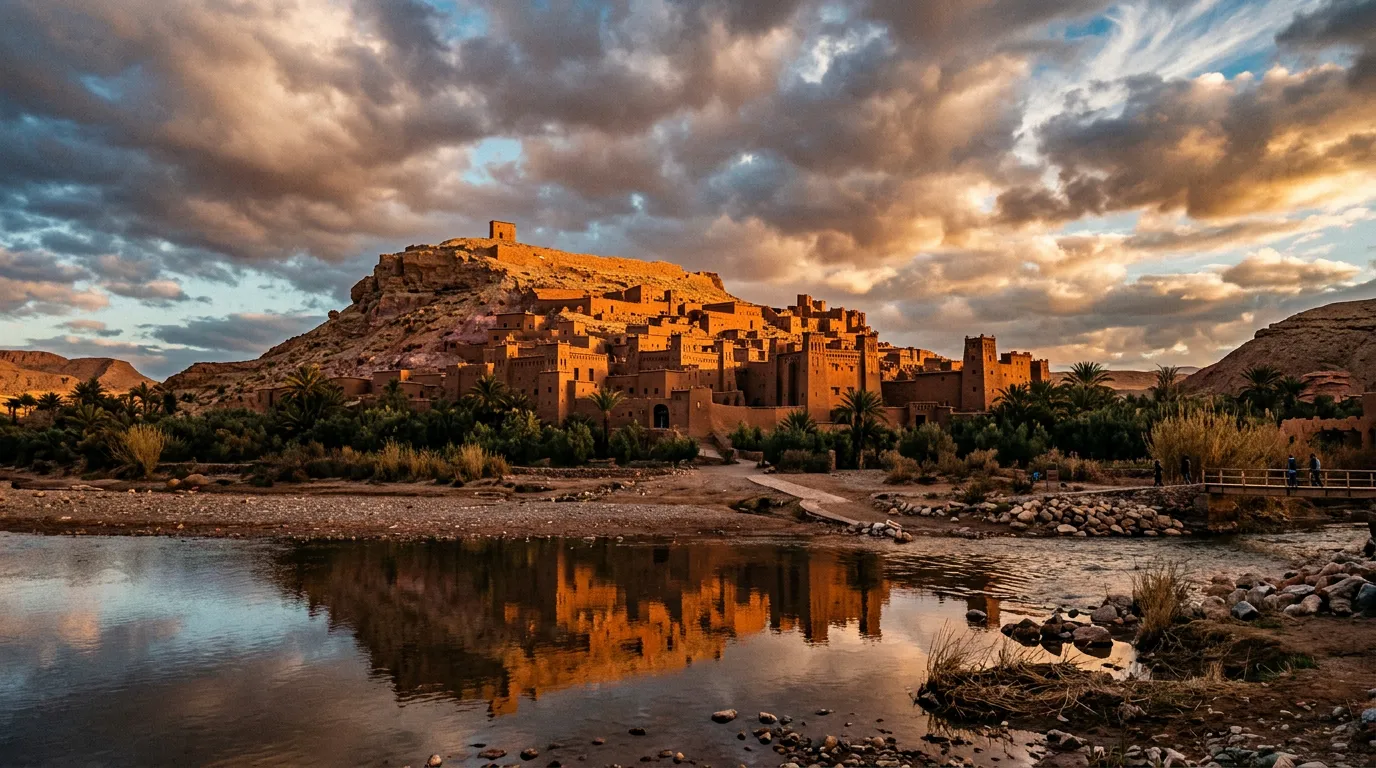
The Kasbah: Fortified citadels of packed earth and stone, kasbahs dot the southern landscapes. Ait Benhaddou is the most famous, a UNESCO site that has served as a backdrop for films from Gladiator to Game of Thrones.
French Colonial: The villes nouvelles (new cities) built during the French Protectorate introduced Art Deco architecture, creating a fascinating contrast with the ancient medinas. Casablanca has the finest collection of Art Deco buildings in Africa.

Written by
Youssef Amrani
Born in Fes, educated in Paris. 15 years in travel journalism covering North Africa and the Mediterranean.