Discovering...
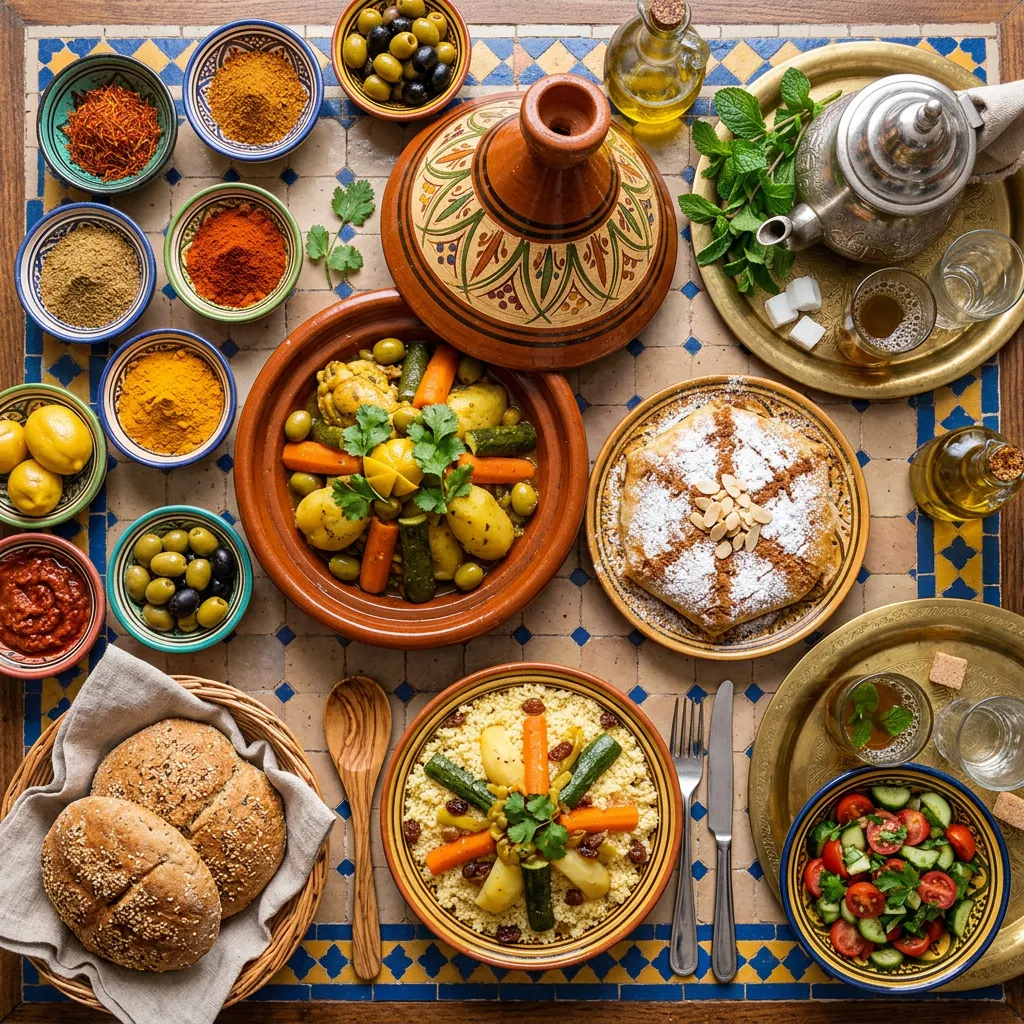
The Definitive Culinary Encyclopedia
Moroccan Cuisine Encyclopedia
From the slow-simmered tagines of Marrakech to the delicate pastilla of Fes, from fiery snail soup at Jemaa el-Fnaa to the sacred Friday couscous ritual. The most comprehensive guide to one of the world's great culinary traditions.
Moroccan cuisine is widely regarded as one of the most diverse, flavorful, and sophisticated in the world -- a vibrant testament to centuries of cultural exchange at the crossroads of Africa, Europe, and the Middle East. Rooted in ancient Amazigh (Berber) traditions and enriched by Arab, Andalusian, Ottoman, and French influences, Moroccan cooking transforms humble ingredients into extraordinary dishes through patient technique, bold spice work, and a deep reverence for communal dining.
The cuisine is defined by its masterful balance of sweet and savory -- lamb braised with prunes and honey, chicken paired with preserved lemons and olives, flaky pastry dusted with cinnamon and sugar over savory fillings. This interplay, inherited from the medieval Andalusian-Moorish culinary tradition, distinguishes Moroccan cooking from all other North African and Middle Eastern cuisines. The spice palette is among the most complex in the world, anchored by ras el hanout (a blend of up to 30 spices), saffron from Taliouine, cumin, ginger, cinnamon, and paprika.
In 2020, the tradition of couscous preparation was inscribed on UNESCO's Intangible Cultural Heritage list, recognizing the cultural significance of this communal practice. Moroccan cuisine as a whole is increasingly recognized by international culinary authorities as one of the great food traditions of the world, alongside French, Chinese, Indian, and Japanese cooking.
Eating in Morocco is far more than sustenance -- it is an act of hospitality, community, and celebration. Meals are shared from communal platters, mint tea is poured with ceremony and grace, and the simple act of breaking bread together forms the foundation of Moroccan social life. Whether you are savoring a 10-dirham street food sandwich or a twelve-course diffa (feast) in a palatial riad, Moroccan food will leave an indelible impression on your palate and your heart.
This encyclopedia covers iconic dishes, street food, Moroccan breads, salads and starters, sweets and desserts, the mint tea ceremony, spices, regional specialties across nine cities, cooking techniques, where to eat, vegetarian and vegan options, food safety, and a comprehensive glossary of Moroccan food terms.
Iconic Moroccan Dishes
The eight legendary dishes that define Moroccan cuisine -- each with a rich history, cultural significance, and flavors that have captivated palates for centuries.
طاجين
Tagine
The tagine is both the name of the conical clay cooking vessel and the slow-cooked stew prepared inside it. The cone-shaped lid traps steam, which condenses and drips back into the dish, basting the food continuously and creating impossibly tender, richly flavored results. This ancient Berber invention is the single most iconic element of Moroccan cuisine, found in every home, restaurant, and roadside eatery from Tangier to the Sahara.
Notable Varieties
Chicken with Preserved Lemon & Olives
The quintessential Moroccan tagine. Chicken braised with saffron, ginger, and turmeric, finished with salt-cured preserved lemon wedges and cracked green olives. The interplay of briny olives and tart preserved lemon against saffron warmth is uniquely Moroccan.
Lamb with Prunes & Almonds
A sumptuous sweet-and-savory masterpiece. Lamb shoulder slow-braised with caramelized onions, honey, cinnamon, and plump prunes until fork-tender, crowned with toasted almonds and sesame seeds. Reflects deep Andalusian influence on Moroccan cuisine.
Kefta Tagine with Eggs
Seasoned ground beef or lamb meatballs simmered in spiced tomato-onion sauce, with eggs cracked directly into the bubbling sauce and gently poached. Served straight from the pot with crusty khobz bread.
Fish Tagine (Tagine Hout)
A coastal specialty with firm white fish on a bed of potatoes, tomatoes, and peppers, marinated in chermoula. Beloved in Essaouira, Tangier, and all Atlantic coastal towns.
Vegetable Tagine (Tagine Khodra)
Seasonal vegetables slow-cooked with saffron, ginger, olive oil, preserved lemons, and olives. A deeply satisfying plant-based dish proving Moroccan cuisine excels at vegetarian cooking.
كسكس
Couscous
The undisputed national dish of Morocco and a UNESCO-recognized Intangible Cultural Heritage element (inscribed 2020). Hand-rolled semolina granules steamed three times in a couscoussier over fragrant broth produce grains that are impossibly light and fluffy. The tradition of hand-rolling couscous is a communal cultural ritual requiring generational skill.
Notable Varieties
Friday Couscous
Every Friday after noon prayer, families gather for couscous with lamb or chicken, seven vegetables, chickpeas, and saffron broth. Refusing a Friday couscous invitation is a serious social faux pas.
Royal Couscous
The most elaborate version with multiple meats -- lamb, chicken, and merguez -- plus vegetables, chickpeas, raisins, and caramelized onions. Served at weddings and celebrations.
Seven Vegetables (Seba Khodra)
Carrots, turnips, zucchini, cabbage, tomatoes, onions, and chickpeas. Seven holds special meaning in Moroccan-Islamic culture, representing abundance and blessings.
Sweet Couscous with Tfaya
A Fassi specialty: fine grains steamed, buttered, and dusted with cinnamon and sugar, topped with onions caramelized to deep mahogany with honey and raisins.
بسطيلة
Pastilla (Bastilla)
The crown jewel of Moroccan celebratory cuisine. Multiple layers of paper-thin warqa pastry encase shredded pigeon (or chicken), eggs scrambled with saffron, and toasted almonds sweetened with cinnamon. Baked golden, then dusted with powdered sugar and cinnamon patterns. Originated in Fes from Andalusian-Moorish court cuisine. A properly made pastilla takes an entire day to prepare.
Notable Varieties
Traditional Pigeon Pastilla
The original version with squab, which has a richer flavor than chicken. Found primarily in Fes at traditional restaurants and for special occasions.
Chicken Pastilla
The most widely available version today. Slightly lighter flavor but still magnificent with the same layered pastry and cinnamon-sugar dusting.
Seafood Pastilla
A coastal innovation with shrimp, white fish, and vermicelli noodles in crispy warqa. Popular in Essaouira and Casablanca as an elegant appetizer.
حريرة
Harira
Morocco's most beloved soup and the traditional dish served at sunset during Ramadan to break the fast. Lentils, chickpeas, diced lamb or beef, crushed tomatoes, vermicelli, and fresh herbs simmered until the flavors meld transcendently. The signature velvety texture comes from tedouira, a flour-and-water slurry. Seasoned with ginger, turmeric, cinnamon, pepper, and saffron. Always accompanied by dates, eggs, and chebakia during Ramadan.
طنجية مراكشية
Tanjia Marrakchia
A slow-cooked dish so identified with Marrakech it bears the city's name. Beef or lamb shanks placed in an amphora-shaped clay urn with preserved lemons, saffron, cumin, smen, and garlic. The sealed urn is delivered to the hammam furnace keeper (fernatchi) who buries it in wood-ash embers overnight. Eight to twelve hours of gentle heat produces impossibly tender meat. Traditionally made by men for weekend gatherings.
رفيسة
Rfissa
A ceremonial dish of shredded msemen flatbread layered with lentils and tender chicken, drenched in broth infused with fenugreek, ras el hanout, saffron, and pepper. Traditionally prepared for women after childbirth, as fenugreek promotes lactation and restores strength. Also served at celebrations and religious holidays. A true labor of love.
مشوي
Mechoui
Whole lamb slow-roasted five to six hours in an underground clay pit or on a spit until fall-off-the-bone tender with a crispy golden exterior. Seasoned simply with salt, cumin, and melted butter basted repeatedly. The centerpiece of feasts, weddings, and Eid al-Adha. Served by pulling tender meat directly with your hands, accompanied by cumin and coarse salt.
مروزية
Mrouzia
An ancient Marrakchi tagine from the medieval Berber-Andalusian tradition, associated with Eid al-Adha. Lamb cooked with an extraordinarily generous amount of ras el hanout, honey, raisins, toasted almonds, and smen. One of the sweetest, most richly spiced tagines, with honey and raisins creating a dense, jam-like glaze. Connects modern Moroccans to centuries of culinary heritage.
Street Food Guide
Morocco's street food scene is legendary -- affordable, delicious, and an essential part of daily life. Here are the essential street eats to seek out.
Msemen
مسمن
Square, multi-layered flatbread folded and pan-fried to flaky, buttery perfection. Stretched paper-thin by hand, brushed with oil and butter, then folded and cooked on a griddle until golden. Enjoyed at breakfast with honey and butter, as a street snack stuffed with spiced beef or vegetables, or alongside tagines.
Where: Every medina and neighborhood bakery
Baghrir
بغرير
Known as "thousand-hole pancakes," these spongy semolina crepes are a marvel of Moroccan baking. A thin batter poured onto a hot skillet forms hundreds of tiny bubbles creating a distinctive honeycomb surface. The porous texture perfectly absorbs the traditional topping of melted butter and honey. Beloved during Ramadan.
Where: Street vendors, bakeries, Ramadan food stalls
Harcha
حرشة
A dense, golden semolina griddle bread with a pleasantly gritty texture and crispy exterior. Made from coarse semolina, butter, and milk, cooked on a flat griddle until golden brown on both sides. Split open and stuffed with soft cheese (jben), butter and honey, or jam. A staple Moroccan breakfast and afternoon tea accompaniment.
Where: Bakeries, cafes, street vendors nationwide
Snail Soup (Babbouche)
الببوش
Small garden snails simmered in a fragrant, peppery broth infused with a dozen herbs and spices: thyme, licorice root, mint, caraway, anise, and black pepper. The broth is believed to have medicinal properties for digestion and immunity. Sold from steaming cauldrons at street stalls -- extract each snail with a toothpick, then drink the aromatic broth.
Where: Jemaa el-Fnaa (Marrakech), medina squares nationwide
Sfenj
سفنج
Moroccan doughnuts made from simple yeast dough shaped into rings by hand and deep-fried until golden and puffed. Light, airy, and slightly chewy with a delicate crust. Best eaten piping hot, dusted with sugar or dipped in warm honey. A classic morning ritual paired with mint tea or coffee. The best sfenj stalls attract long queues at dawn.
Where: Every neighborhood has a sfenj vendor, busiest at dawn
Brochettes
بروشيت
Skewered cubes of lamb, beef, chicken, or kefta (spiced ground meat) grilled over blazing charcoal until smoky and charred. Seasoned with cumin, paprika, salt, and pepper, served in crusty bread with sliced onion, tomato, and harissa. The smoke and sizzle of brochette vendors is one of the defining sensory experiences of Moroccan medinas.
Where: Jemaa el-Fnaa, medina food stalls, roadside grills
Grilled Sardines
سردين مشوي
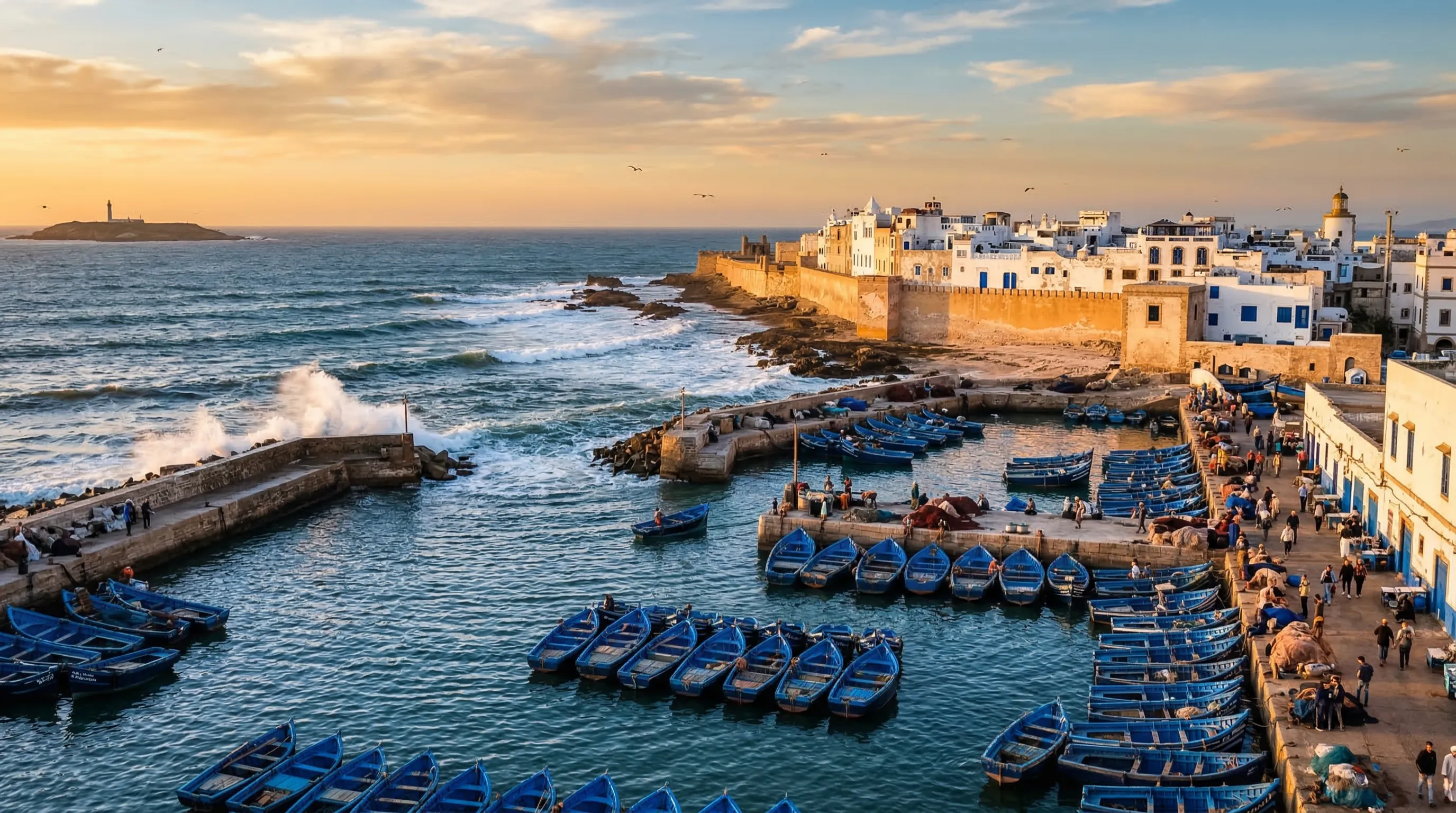
Morocco is the world's largest exporter of sardines. Whole sardines marinated in chermoula, threaded onto a metal grill rack, and charred over blazing coals. Served with bread, olives, and sliced tomatoes. The port stalls of Essaouira, Casablanca, and Tangier serve them fresh from the morning catch.
Where: Essaouira port, Casablanca market, Tangier fish stalls
Bocadillo
بوكاديلو
The Moroccan sandwich: a crusty baguette split and stuffed with an array of fillings -- grilled kefta, merguez sausage, fried fish, maakouda (potato fritters), tuna, or egg -- along with harissa, sliced vegetables, olives, and sometimes french fries. A legacy of the French Protectorate adapted into something entirely Moroccan. The ultimate cheap, filling street meal.
Where: Sandwich stalls in every medina and ville nouvelle
Maakouda
معقودة
Golden, crispy potato fritters seasoned with garlic, cumin, parsley, turmeric, and chili, deep-fried until perfectly crunchy. The king of Moroccan sandwich fillings, tucked into crusty khobz with harissa, olives, and sometimes a fried egg. Every medina has vendors frying these to order.
Where: Medina food stalls, sandwich vendors
Merguez
مرقاز
Fiery, thin lamb sausages colored vivid red with harissa and paprika, seasoned with cumin, coriander, and garlic, grilled over charcoal until charred and smoky. Served in a crusty baguette with harissa sauce, diced tomato, and hot chili peppers, or alongside grilled brochettes.
Where: Grill stalls throughout medinas and souks
Grilled Corn (Dra)
درة
Ears of corn roasted over charcoal until slightly charred and smoky, sprinkled with salt. A simple, satisfying snack sold from handcarts throughout Morocco, particularly popular in the cooler months and at outdoor markets.
Where: Street handcarts, market squares, roadsides
Sheep Head (Ras)
رأس الخروف
Whole sheep heads slow-steamed for hours until the meat is meltingly tender, then chopped and served with cumin and salt. The most prized parts are the cheeks, tongue, and brain. Not for the faint of heart, but deeply loved by locals. An adventurous street food experience.
Where: Jemaa el-Fnaa, Fes Rcif square, medina food stalls
Moroccan Breads
Bread is sacred in Moroccan culture. It serves as utensil, accompaniment, and symbol of sustenance and blessing. These are the essential breads you will encounter.
1
Khobz
خبزThe round, dense, crusty bread that is the foundation of every Moroccan meal. Made from a mixture of white and whole wheat flour, shaped into round loaves, and baked in communal wood-fired ovens (ferran) found in every neighborhood. Each family marks their dough with a distinctive stamp before sending it to the ferran. Khobz serves as both utensil and accompaniment -- torn into pieces and used to scoop tagines, dip into salads, and mop up sauces. Bread is sacred in Moroccan culture: never waste it, never place it upside down, and if you see bread on the ground, pick it up and place it aside respectfully.
2
Msemen (Rghaif)
مسمنSquare, multi-layered flatbread that achieves its flaky, buttery texture through a process of stretching the dough paper-thin, brushing with oil and softened butter, then folding into a square and pan-frying on a flat griddle. The result is layers upon layers of crispy, golden pastry. Msemen is eaten at breakfast drizzled with honey and butter, stuffed with savory fillings, or torn alongside tagines. In some regions it is called rghaif.
3
Baghrir
بغريرSpongy semolina pancakes with a honeycomb surface of hundreds of tiny holes -- the "thousand-hole crepes." A thin batter of semolina, flour, yeast, and warm water is poured onto a hot skillet and cooked on one side only. As it heats, bubbles form and burst, creating the distinctive porous texture that absorbs melted butter and honey like a sponge. Essential during Ramadan and a beloved breakfast year-round.
4
Harcha
حرشةA semolina griddle bread with a pleasantly gritty, cornbread-like texture. Made from coarse semolina, butter or oil, and milk or water, shaped into thick rounds and cooked on a flat griddle. Golden and crispy on the outside, soft and slightly crumbly inside. Split open and filled with cheese, butter and honey, or Laughing Cow cheese (a surprisingly popular Moroccan staple). Available at every bakery and cafe.
5
Batbout
بطبوطSmall, round, pillowy flatbreads cooked on a griddle or tagine lid. Similar to pita bread, batbout puffs up during cooking creating a pocket that can be stuffed with kefta, vegetables, or cheese. Particularly popular in the Fes and Meknes regions. Softer and lighter than khobz, making it ideal for sandwiches.
6
Khobz Dar (Home Bread)
خبز دارHomemade bread enriched with semolina, anise seeds, and sesame, giving it a more complex flavor and tender crumb than standard khobz. Many families bake this at home for special occasions or weekend meals. Often decorated with seeds on top and scored in a distinctive cross pattern before baking.
Moroccan Salads & Starters
Every Moroccan meal begins with a generous spread of cooked salads and starters (kemia) that showcase the cuisine's extraordinary vegetable cookery.
Zaalouk
Vegزعلوك
A silky, smoky cooked salad of fire-roasted eggplant and ripe tomatoes mashed together with garlic, olive oil, cumin, paprika, and a touch of chili. Served warm or at room temperature as a dip with crusty khobz. The eggplant is charred over an open flame for distinctive smokiness. Present on every Moroccan dining table as part of the traditional salad spread.
Taktouka
Vegتكتوكة
A vibrant cooked salad of roasted green peppers and tomatoes, slow-cooked down with garlic, paprika, and cumin, finished with olive oil and lemon juice. The peppers are blistered over a flame, peeled, then combined with tomatoes for a long, gentle simmer that concentrates the flavors into something rich and complex. Served alongside zaalouk.
Briouats
بريوات
Crispy triangular or cylindrical pastries made from warqa pastry sheets, folded around savory or sweet fillings and deep-fried until shatteringly crisp. Savory versions: spiced lamb, herbed cheese, shrimp with vermicelli, or chicken with olives. Sweet versions: almond paste with orange blossom water, dipped in warm honey. A fixture at weddings, Ramadan iftars, and celebrations.
Moroccan Carrot Salad
Vegسلطة خيزو
Cooked carrots sliced into rounds and dressed with cumin, paprika, garlic, olive oil, lemon juice, and fresh cilantro. Sometimes sweetened with a touch of honey and spiced with harissa for heat. A bright, colorful addition to the Moroccan salad spread that showcases the cuisine's ability to transform humble vegetables into something extraordinary.
Beetroot Salad
Vegسلطة باربا
Cooked beetroot cubed and dressed with cumin, orange blossom water, cinnamon, and olive oil. The combination of earthy beet with the floral note of orange blossom water is uniquely Moroccan and surprisingly sophisticated. Adds vibrant color to the salad spread.
Tomato & Onion Salad (Chlada)
Vegشلاضة
The simplest and most ubiquitous Moroccan salad: diced ripe tomatoes and thinly sliced onions dressed with olive oil, lemon juice, cumin, and fresh parsley or cilantro. Sometimes roasted green peppers are added. Fresh, bright, and present at virtually every meal. The quality depends entirely on the ripeness of Morocco's excellent tomatoes.
Kemia (Mixed Starters)
Vegكمية
The Moroccan equivalent of mezze or tapas: an array of 5-10 small dishes served at the beginning of a meal. Typically includes zaalouk, taktouka, carrot salad, beetroot salad, marinated olives, fresh bread, and seasonal preparations. Kemia showcases the breadth and sophistication of Moroccan vegetable cookery and sets the stage for the main course.
Moroccan Sweets & Desserts
Moroccan pastries and confections are works of art -- fragrant with orange blossom water, honey, almonds, and sesame. Many are tied to specific celebrations and seasons.
Chebakia
شباكيةIntricately shaped flower-like pastries that are Morocco's most iconic sweet. The sesame-studded dough is flavored with anise, cinnamon, saffron, and orange blossom water, hand-shaped into a distinctive rosette pattern, deep-fried until golden, then plunged into warm honey and finished with sesame seeds. The indispensable sweet of Ramadan, always served alongside harira. Skilled women can produce hundreds in a single day, and families guard their shaping techniques across generations.
Ghriba
غريبةCrackle-topped Moroccan cookies that come in numerous varieties. The most popular are ghriba dial louz (almond), ghriba dial smida (semolina with coconut), and ghriba dial coco (coconut macaroon-style). All share a characteristic cracked surface with a soft, chewy interior. Made from simple ingredients -- ground almonds or semolina, sugar, eggs, and butter -- yet achieving extraordinary texture. Found in every Moroccan patisserie and home.
Kaab el Ghazal (Gazelle Horns)
كعب الغزالPerhaps the most elegant of all Moroccan pastries. Crescent-shaped cookies with a thin, smooth pastry shell encasing a filling of ground almonds, sugar, and orange blossom water, scented with mastic and cinnamon. The dough must be rolled paper-thin yet hold together perfectly. A mark of a skilled pastry cook and a fixture at every celebration. The finest come from Fes and Meknes.
Sellou (Sfouf)
سلوA rich, no-bake confection of toasted flour, ground almonds, toasted sesame seeds, melted butter, honey, cinnamon, anise, and mastic. Mixed into a dense, crumbly mass and shaped into mounds or pressed into molds. A high-energy Ramadan staple, also prepared for Eid and for new mothers. The depth of toasting the flour -- a process requiring constant stirring over heat for up to an hour -- determines the richness of flavor.
Briwat bil Louz (Almond Briwat)
بريوات باللوزTriangular warqa pastry parcels filled with a fragrant almond paste perfumed with orange blossom water and cinnamon, deep-fried until crispy, then dipped in warm honey. The combination of shattering crisp pastry, aromatic almond filling, and honey glaze is irresistible. A quintessential accompaniment to mint tea and a star of Ramadan celebrations.
Makrout
مقروطDiamond-shaped semolina cookies filled with a date paste scented with orange blossom water and cinnamon, deep-fried and dipped in honey. The contrast between the slightly crunchy semolina exterior and the soft, sweet date filling is deeply satisfying. Popular across the Maghreb but particularly beloved in Morocco during Ramadan and tea time.
Halwa Shebakia
حلوة الشباكيةAssorted Moroccan halwa (sweets) sold by weight in patisseries and souks. Includes varieties made from sesame, peanuts, almonds, and dates pressed into bars and slices. Often elaborately displayed in pyramids of color at market stalls. A popular gift and Ramadan provision.
Pastilla au Lait
بسطيلة بالحليبA dessert version of pastilla: layers of crispy warqa pastry alternating with a delicate milk custard flavored with orange blossom water and cinnamon, topped with toasted almonds and a dusting of powdered sugar and cinnamon. Light, elegant, and fragrant -- a modern classic found in upscale restaurants.
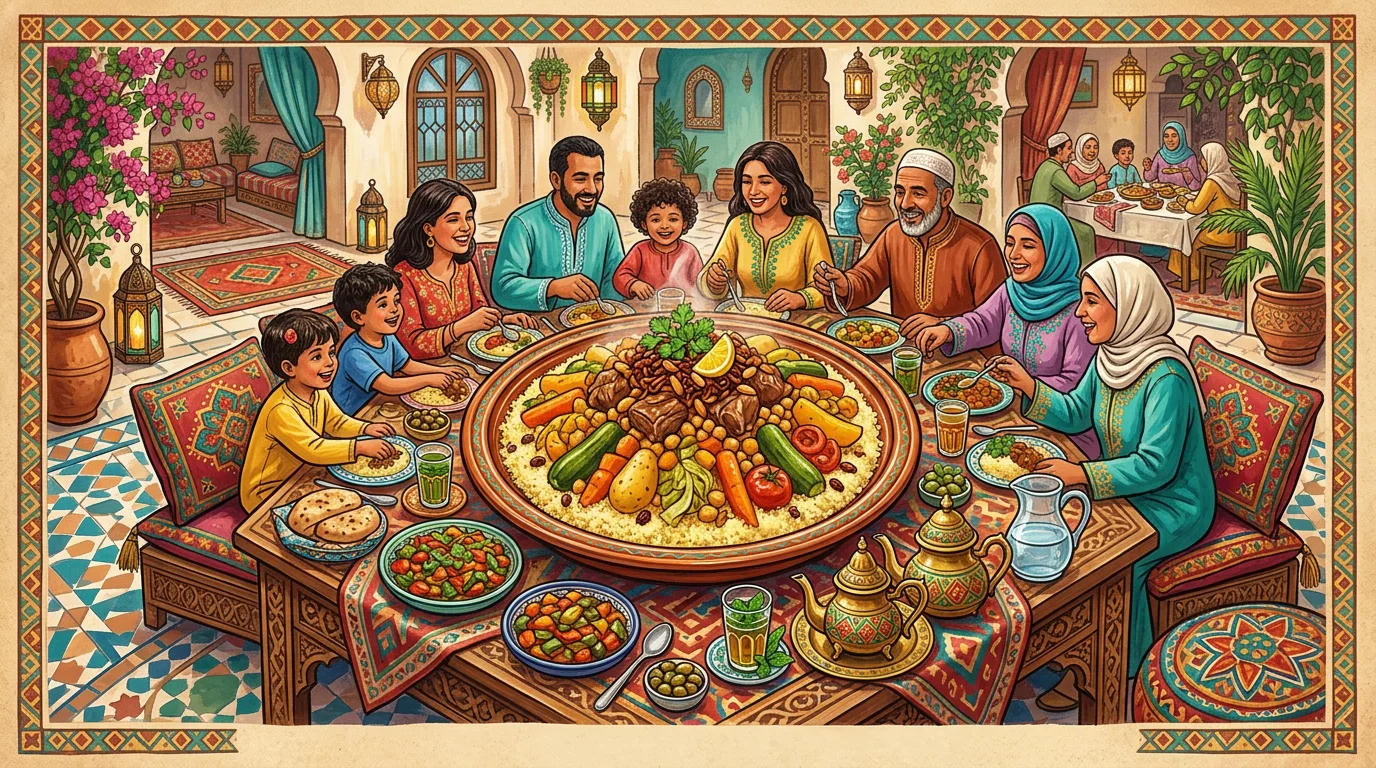
Moroccan Drinks
From the sacred mint tea ceremony to freshly squeezed orange juice and creamy avocado smoothies, Moroccan beverages are an essential part of the culinary experience.
Atay -- Moroccan Mint Tea
أتايMorocco's national drink and the cornerstone of social life. A sweet infusion of Chinese gunpowder green tea, generous bunches of fresh spearmint (nana), and ample sugar, brewed in a silver-plated teapot and poured from a height into ornate glasses to create a light foam. The tea ceremony is a ritual of hospitality offered to every guest. Refusing is considered impolite. Moroccans say the first glass is as gentle as life, the second as strong as love, the third as bitter as death. In summer, wormwood (shiba) or lemon verbena (louiza) may replace mint. The art of tea preparation is taken seriously: the correct ratio of tea to mint to sugar, the number of times the tea is poured back and forth (to mix), and the height of the pour all matter enormously.
The Ceremony
The host prepares the tea personally as a sign of respect. The pot is rinsed with a small amount of boiling water and tea, which is discarded (to remove bitterness). Fresh mint, sugar, and more boiling water are added. The tea is poured into a glass and returned to the pot several times to mix. Finally, it is poured from a height of 12 inches or more into each glass, creating the characteristic foam. Three glasses are customary.
Fresh Orange Juice
عصير البرتقالFreshly squeezed orange juice is ubiquitous across Morocco, sold from vibrant juice stalls and handcarts in every city. Moroccan oranges are renowned for their sweetness, particularly from the Berkane and Souss-Massa regions. A glass costs just 5-10 MAD. The juice stalls lining Jemaa el-Fnaa in Marrakech are one of the city's most photographed scenes, with pyramids of oranges stacked high and juice pressed to order.
Avocado Smoothie (Jus d'Avocat)
عصير الأفوكادوA thick, creamy blend of ripe avocado, milk, sugar, and sometimes almonds, dates, or argan oil. This unexpectedly popular Moroccan staple is a filling snack or breakfast drink, especially in the south around Agadir and Taroudant where avocados grow abundantly. Juice bars layer it with banana, strawberry, or almond milk in colorful striped "cocktail" glasses.
Nous-Nous (Half-Half Coffee)
نوص نوصMorocco's signature coffee: half espresso, half steamed milk, served in a small glass. The name literally means "half-half" in Darija. Ordered at every Moroccan cafe, nous-nous is the coffee of choice for Moroccans who gather at outdoor cafe terraces to socialize, watch football, or simply watch the world go by. Stronger than a latte, gentler than a straight espresso.
Lben (Buttermilk)
لبنFermented buttermilk, tangy and refreshing, traditionally served alongside couscous and used in some bread recipes. Available at grocery shops and from some street vendors in plastic bottles. An acquired taste for visitors but deeply refreshing once appreciated, especially in hot weather.
Raib (Fermented Milk)
رايبA thick, creamy fermented milk similar to drinkable yogurt, sold in shops and served at some traditional restaurants. Mildly tangy and naturally probiotic, raib is consumed as a cooling drink alongside spicy dishes or as a light snack.
Herbal Infusions
الأعشابBeyond mint tea, Moroccans brew a pharmacy of herbal infusions: wormwood (shiba) for digestion, thyme (zaatar) for colds, lemon verbena (louiza) for relaxation, pennyroyal (fliou) for stomach ailments, and sage for general wellness. These are widely available in cafes and herbal shops (attarine) throughout the souks.
Essential Moroccan Spices
The soul of Moroccan cooking lies in its spices. These ten essential flavors define the cuisine and are worth bringing home from the souks.
Ras el Hanout
رأس الحانوت
Meaning "head of the shop" -- the finest blend a spice merchant offers. Each merchant's recipe is a closely guarded secret, combining 12 to 30 or more spices: cumin, coriander, turmeric, cinnamon, black pepper, cardamom, cloves, nutmeg, ginger, paprika, allspice, anise, fennel, mace, galangal, dried rosebuds, lavender, and sometimes exotic additions like grains of paradise or cubeb pepper. No two blends are identical.
Uses: Tagines, couscous, rice, marinades, mrouzia, rfissa
Buying tip: Buy from a reputable spice merchant. A good ras el hanout should be aromatic and complex, never dusty or one-dimensional. Expect to pay 50-100 MAD per 100g for quality blends.
Cumin (Kamoun)
كمون
The most ubiquitous spice in Moroccan cooking. Earthy, warm, and slightly bitter, cumin adds depth to virtually every savory dish. Always present on Moroccan dining tables alongside salt -- a habit so ingrained that a Moroccan table without cumin feels incomplete. Used both ground and whole.
Uses: Grilled meats, soups, salads, kefta, mechoui, tagines, everything
Buying tip: Buy whole cumin seeds and grind at home for the freshest flavor. Moroccan cumin tends to be lighter in color and more delicate than Indian cumin.
Saffron (Zaafrane)
زعفران
Moroccan saffron from the Taliouine region in the Anti-Atlas Mountains is among the world's finest. These precious red threads impart a golden color, floral aroma, and subtle bittersweet flavor. Harvested by hand from crocus flowers each November during a brief two-week window, making it the world's most expensive spice by weight.
Uses: Tagines, rice, pastilla, tea, desserts, rfissa
Buying tip: Real saffron costs 15-30 MAD per gram. If it is cheap, it is likely safflower or artificial coloring. Real threads are deep red with slight orange tips and produce a golden-yellow color when steeped.
Preserved Lemons (Hamid Msayer)
حامض مصير
Not a spice but an essential flavor element unique to Moroccan cuisine. Lemons packed in salt and their own juice for a month or more until the rind softens and develops an intensely concentrated, salty-sour-citrus flavor unlike anything else. The rind is used (not the flesh), finely diced or sliced into tagines, salads, and marinades. No other ingredient defines Moroccan cooking so distinctly.
Uses: Tagines (especially chicken), salads, chermoula, grilled fish
Buying tip: Look for lemons that are soft, slightly translucent, and intensely fragrant. Avoid any with off-smells. Easy to make at home with just lemons and salt.
Cinnamon (Qarfa)
قرفة
Used in both savory and sweet dishes, cinnamon is a defining flavor of Moroccan cooking that bridges the sweet-savory divide. Both Ceylon (true) cinnamon and cassia are used. Essential in pastilla, lamb tagines with prunes, many desserts, and mint tea. Moroccan cuisine uses cinnamon more generously in savory dishes than almost any other world cuisine.
Uses: Pastilla, tagines, desserts, mint tea, smoothies, couscous
Buying tip: Moroccan spice merchants typically sell cassia cinnamon (thicker bark, stronger flavor). True Ceylon cinnamon (thinner, more delicate) is also available at higher prices.
Ginger (Skinjbir)
زنجبيل
Both fresh and ground ginger are essential in Moroccan kitchens, adding brightness and gentle heat. Ground ginger appears in almost every tagine and soup recipe. Fresh ginger is grated into marinades and herbal teas. Dried ginger is a core component of ras el hanout.
Uses: Harira, tagines, marinades, herbal teas, ras el hanout
Buying tip: Ground ginger should be pale yellow and pungent. Fresh ginger should be firm with smooth skin. Both are inexpensive in Moroccan markets.
Turmeric (Kharkoum)
كركم
Prized for its vibrant golden color and mild, slightly bitter flavor. Used across Moroccan cooking to add warmth, visual appeal, and subtle earthiness to dishes. Often paired with saffron to amplify the golden hue of tagine sauces.
Uses: Soups, tagines, marinades, rice dishes, chicken preparations
Buying tip: Buy in small quantities as ground turmeric loses its potency relatively quickly. Should be bright orange-yellow and aromatic.
Paprika (Felfla Hamra)
فلفل أحمر
Both sweet and smoked varieties are integral to Moroccan cuisine, lending deep red hue and gentle warmth to cooked salads, sauces, and grilled dishes. Moroccan paprika tends toward the mild-sweet end of the spectrum, providing color and subtle sweetness rather than heat.
Uses: Zaalouk, taktouka, chermoula, grilled meats, kefta, marinades
Buying tip: Look for vibrant, deeply colored paprika. The aroma should be sweet and warm, not musty. Store away from light.
Black Pepper (Ibzar)
إبزار
Freshly ground black pepper is foundational in Moroccan cooking, contributing sharp heat and aromatic pungency. Used more generously than in many cuisines, particularly in marinades, grilled meats, and soups. White pepper is also used in some delicate preparations.
Uses: Marinades, grilled meats, soups, ras el hanout, tagines
Buying tip: Always buy whole peppercorns and grind fresh. Pre-ground pepper loses its aroma quickly.
Harissa
هريسة
A fiery chili paste of roasted red peppers, garlic, caraway, coriander, and olive oil. While originating from Tunisia, harissa is widely used in Morocco as a condiment, particularly in sandwiches and alongside grilled meats. Moroccan harissa tends to be slightly milder than Tunisian versions.
Uses: Sandwiches, grilled meats, tagines, dipping sauce, soups
Buying tip: Available in tubes, cans, and jars at every Moroccan grocery. For the best quality, buy from a spice merchant who makes it in-house.
Regional Specialties by City
Each Moroccan city has its own culinary identity shaped by geography, history, and local traditions. Here are nine food destinations and what to eat in each.

Marrakech
The street food capital of Morocco. Jemaa el-Fnaa transforms nightly into the world's largest open-air food court. Tanjia is the city's signature dish, cooked in hammam ashes. Mechoui specialists slow-roast whole lambs. The Mellah and Rahba Kedima spice markets are essential stops.
Tanjia MarrakchiaMechouiMrouziaSnail SoupJemaa el-Fnaa Street FoodTangia bil Khodra
Fes
The spiritual capital of Moroccan gastronomy and home to the most refined, complex dishes. Centuries-old palace cuisine traditions survive here, guarded by legendary dadas. Pastilla originated here and remains at its finest. The spice and olive souks of Fes el-Bali are among Morocco's best.
PastillaRfissaSellouKaab el GhazalPalace CuisineCouscous Tfaya
Casablanca
Morocco's cosmopolitan capital blends traditional flavors with French bistro culture and modern fusion. Exceptional Atlantic seafood, from grilled sardines at the Central Market to sophisticated fish restaurants along the Corniche. The Habous Quarter is famous for its patisseries.
Fresh SeafoodFrench-Moroccan FusionGrilled SardinesHabous PastriesModern Bistros

Essaouira
Morocco's seafood capital with an ocean-to-table dining experience. The fishing port sells the freshest catch daily, grilled to order at open-air stalls. Also the center of argan oil production, adding a distinctive nutty finish to salads and couscous.
Grilled Fish & SeafoodSardine TagineFish ChermoulaArgan Oil CuisineAmlou
Tangier
At the crossroads of Africa and Europe, Tangier's cuisine reflects its international history with Spanish, Portuguese, and French influences. Excellent seafood, bocadillo culture, and the unique karantika (chickpea flour cake inherited from Spain).
KarantikaFried FishBocadillo SandwichesSeafood TagineSpanish-Moroccan Fusion
Chefchaouen
The Blue City's cuisine reflects its Rif mountain setting with hearty, rustic dishes. Bissara (fava bean soup) is the signature, and fresh local goat cheese is exceptional. Riverside restaurants serve trout tagine.
BissaraFresh Goat CheeseRif Mountain TaginesLocal HoneyTrout Tagine

Meknes
Surrounded by Morocco's most fertile land. The heart of olive oil production and the only significant wine region. Known for khliaa (preserved meat), excellent olives, and regional bread varieties.
Olive Oil DishesMoroccan WineKhliaaFresh ProduceRegional Breads
Agadir & Souss
The Souss-Massa region produces Morocco's finest argan oil, saffron (from Taliouine), almonds, and citrus. The cuisine is distinctly Amazigh, featuring tafarnout (Berber flatbread), amlou (argan-almond-honey dip), and saffron tagines.
Argan Oil & AmlouTaliouine SaffronAmazigh CuisineFresh SeafoodTafarnout Bread
Ouarzazate & Draa Valley
The gateway to the Sahara offers distinctive southern Berber cuisine. Madfouna ("Berber pizza") is a stuffed bread from the Draa Valley. Dates from Zagora are among the finest in Morocco. Desert cuisine features preserved meats and warming spices.
MadfounaZagora DatesDesert TaginesBerber BreadPreserved Meats
Moroccan Cooking Techniques
The methods that make Moroccan food distinctive -- from ancient clay-pot cooking to the art of hand-rolling couscous and making paper-thin warqa pastry.
1
Tagine Slow-Cooking
The conical tagine lid creates a self-basting cycle: steam rises, condenses on the cool cone, and drips back onto the food. This produces incredibly tender results with concentrated flavors, using minimal water or added fat. The clay pot also imparts a subtle earthy flavor. Traditional tagines are cooked over charcoal (majmar) for the most even, gentle heat.
2
Couscous Steaming (Tafwira)
Couscous is steamed three times in a couscoussier over the simmering broth that will accompany it. Between each steaming, the grains are broken up by hand, drizzled with water and oil, and raked to prevent clumping. This triple-steaming process is what produces the light, separate grains that distinguish hand-made couscous from the instant variety.
3
Charmoula Marinating
Charmoula is Morocco's master marinade: a vibrant paste of fresh cilantro, parsley, garlic, cumin, paprika, lemon juice, and olive oil. Fish, chicken, and vegetables are marinated in charmoula for hours before cooking. The combination of fresh herbs, acid, and spice both flavors and tenderizes the ingredients.
4
Preserving Lemons (Tkhliil)
Whole lemons are packed in coarse salt and their own juice in glass jars and left to cure for at least 30 days. The salt draws out moisture and preserves the lemons while transforming their flavor from fresh citrus to an intensely concentrated, complex salty-sour taste that is indispensable in Moroccan cooking.
5
Making Warqa Pastry
The paper-thin pastry used for pastilla and briouats is made by rapidly dabbing a ball of sticky dough against a hot, inverted pan, leaving behind a gossamer-thin layer that cooks in seconds. This requires extraordinary skill and years of practice. A single pastilla can require 20+ layers of warqa.
6
Smen Fermentation
Smen is Morocco's aged, fermented butter -- similar to Indian ghee but with a stronger, more pungent character. Butter is kneaded with salt, oregano or thyme, and sometimes a wash of warm water, then packed into clay pots and aged for weeks, months, or even years. Aged smen has a powerful, cheese-like flavor that adds enormous depth to tagines and rfissa.
7
Communal Bread Baking (Ferran)
Every Moroccan neighborhood has a ferran -- a communal wood-fired bread oven. Families prepare their dough at home, mark it with a distinctive stamp, and send it to the ferran for baking. The fernatchi (baker) manages dozens of loaves simultaneously. This ancient system persists today, connecting neighbors through daily bread.
8
Flame-Roasting Vegetables
Eggplant, peppers, and tomatoes are charred directly over an open flame -- either on a gas burner or over charcoal -- until the skins blacken and blister. The smoky, charred flesh is then peeled and mashed into the cooked salads (zaalouk, taktouka) that begin every Moroccan meal. This technique imparts a depth of flavor impossible to achieve otherwise.
9
Hand-Rolling Couscous
The art of hand-rolling couscous from scratch is a communal activity, typically performed by women. Coarse and fine semolina are sprinkled with salted water, then rolled between the palms in a circular motion until tiny, uniform granules form. The process is meditative and social, often accompanied by conversation and tea.
10
Tanjia Ash-Cooking
Unique to Marrakech, the tanjia vessel is sealed with parchment paper and string, then buried in the smoldering wood-ash embers of a hammam furnace for 8-12 hours. The extremely gentle, consistent heat produces results that no modern oven can replicate -- meat that literally dissolves on the tongue.
Where to Eat in Morocco
From palace restaurants to street food stalls and cooking classes, here is where to find the best food experiences across the kingdom.
Riad Restaurants
Many riads (traditional courtyard guesthouses) offer some of the finest dining in Morocco. Meals are prepared by skilled dadas using time-honored recipes, served in stunning architectural settings. Riad dining is often by reservation, with multi-course menus showcasing the best of Moroccan palace cuisine. Notable: Riad Yima (Marrakech), Dar Roumana (Fes), Riad Laaroussa (Fes).
Palace Restaurants
Converted palaces and grand houses that offer elaborate diffa (feast) experiences with multiple courses, live music, and spectacular decor. These are the ultimate Moroccan fine dining experiences. Notable: Dar Yacout (Marrakech), Palais Amani (Fes), Al Fassia (Marrakech -- women-run and exceptional).
Street Food Stalls
The heart and soul of Moroccan eating. From the spectacle of Jemaa el-Fnaa to the grills of any medina, street food is where Moroccans eat daily. The golden rule: eat where locals eat, choose stalls with high turnover, and watch your food being cooked fresh. Budget: 10-30 MAD per meal.
Local Restaurants (Snacks)
Small, no-frills eateries known locally as "snacks" serve honest, affordable Moroccan food to a local clientele. Expect tagines, grilled meats, sandwiches, and soups. The food is often excellent, the atmosphere authentic, and the prices low (30-60 MAD for a full meal). Ask locals for their favorite.
Cooking Classes
One of the best ways to experience Moroccan cuisine is to learn to cook it. Classes typically include a guided market tour to buy ingredients, followed by hands-on preparation and a communal meal. Available in every major city. Notable: La Maison Arabe (Marrakech), Cafe Clock (Fes), Souk Cuisine (Marrakech).
Modern Fusion Restaurants
A new generation of Moroccan chefs is reimagining traditional cuisine with modern techniques and international influences. Casablanca and Marrakech lead this movement with restaurants that bridge tradition and innovation. Notable: Nomad (Marrakech), Le Jardin (Marrakech), La Sqala (Casablanca).
Vegetarian & Vegan Options
While Moroccan cuisine centers on meat, there are more plant-based options than you might expect. With the right knowledge and a few key phrases, vegetarians and vegans can eat very well in Morocco.
12 Plant-Based Dishes to Try
Tagine Khodra
Seasonal vegetables slow-cooked with saffron, ginger, olive oil, preserved lemons, and olives. Available everywhere.
Zaalouk
Smoky cooked eggplant and tomato salad. Entirely plant-based and found at every restaurant.
Taktouka
Roasted pepper and tomato cooked salad. Vegan and gluten-free.
Bissara
Thick fava bean soup from northern Morocco. Naturally vegan and filling. Just 3-5 MAD.
Couscous bil Khodra
Request couscous "without meat" -- the vegetable broth version is a traditional Friday option.
Baghrir with Honey
Thousand-hole pancakes with butter and honey. A vegetarian breakfast staple.
Msemen with Herbs
Layered flatbread stuffed with herbed fresh cheese. Popular vegetarian street food.
Moroccan Salad Spread
Order "des salades" for 5-8 small vegetable dishes to start your meal.
Lentil Soup (Adess)
Simple lentil soup seasoned with cumin and tomato. Available at most eateries.
Amlou
Rich dip of ground almonds, argan oil, and honey. Vegan if made without butter.
Harcha with Cheese
Semolina griddle bread with soft cheese, jam, or honey.
Briouats bil Jben
Crispy pastry triangles filled with herbed goat cheese.
Essential Tips for Vegetarians
- 1Learn "bla lham" (without meat) and "ana nabati" (I am vegetarian) in Darija.
- 2Moroccan soups often contain meat stock. Ask "wash fiha lham?" (does it contain meat?).
- 3The traditional salad spread at the start of meals is almost always vegetarian or vegan.
- 4Tagines can always be made vegetarian. Ask for "tagine dial khodra" (vegetable tagine).
- 5Riads and cooking classes are the best places to request fully vegetarian meals.
- 6Eggs feature widely in dishes like shakshuka-style tagines and omelettes.
- 7Vegans: Moroccan cooking uses butter and smen liberally. Request olive oil ("zit zaytoun") instead.
- 8Marrakech and Essaouira have the most tourist-adapted menus with labeled vegetarian options.
Key Darija Phrases
- Bla lham -- Without meat
- Ana nabati / nabatiya -- I am vegetarian (m/f)
- Wash fiha lham? -- Does it contain meat?
- Ghir khodra -- Only vegetables
- Zit zaytoun -- Olive oil (request instead of butter)
- Bla zebda -- Without butter
Food Safety Tips
Practical advice for eating safely and confidently across Morocco, from street food stalls to restaurants. Most visitors experience no issues at all.
1
Follow the Locals
Eat where Moroccans eat. High turnover means fresh food and safe preparation. If a stall has a queue of locals, it is a good sign.
2
Watch It Being Cooked
Choose stalls and restaurants that prepare food in front of you. Avoid pre-cooked food sitting at room temperature, especially meat and fish dishes.
3
Drink Bottled Water
Stick to sealed bottled water (Sidi Ali and Ain Saiss are popular brands). Avoid ice from unknown sources. Hot tea and coffee are always safe.
4
Peel Your Own Fruit
Eat only fruits you can peel yourself (oranges, bananas, tangerines) or that have been thoroughly washed. Avoid pre-cut fruit from street vendors.
5
Ease In Gradually
If you have a sensitive stomach, start with cooked dishes and work up to raw salads and street food over a few days. Let your digestive system adapt to the new flavors and bacteria.
6
Carry Hand Sanitizer
Wet wipes and hand sanitizer are essential for street food eating where handwashing facilities may be limited. Use before and after every meal.
7
Cooked Is Safest
Fried, grilled, and stewed foods are the safest options at street stalls. Avoid raw salads at street vendors (fine at restaurants). Freshly fried sfenj and msemen are always safe.
8
Dairy Caution
Be cautious with fresh dairy products (milk, jben cheese) from unrefrigerated sources. Pasteurized dairy from shops is fine. Fermented dairy (lben, raib) is generally safe due to its acidity.
Glossary of Moroccan Food Terms
A comprehensive reference guide to Moroccan culinary vocabulary. Understanding these terms will help you navigate menus, markets, and cooking classes with confidence.
Tagine (Tajine)
طاجين
Both the conical clay cooking pot and the slow-cooked stew prepared in it.
Khobz
خبز
Round, dense Moroccan bread baked in communal wood-fired ovens. Served with every meal.
Smen
سمن
Aged, fermented butter with strong, pungent flavor. Prized in traditional cooking.
Chermoula
شرمولة
A vibrant marinade of cilantro, parsley, garlic, cumin, paprika, lemon, and olive oil.
Ras el Hanout
رأس الحانوت
"Head of the shop." A complex spice blend of 12-30 spices.
Warqa (Ouarka)
ورقة
Paper-thin pastry sheets for pastilla and briouats. Made by dabbing dough on a hot griddle.
Dada
دادة
A traditional Moroccan home cook, usually a woman with decades of experience.
Diffa
ديفة
An elaborate Moroccan feast of many courses, served at celebrations.
Lben
لبن
Fermented buttermilk, traditionally served with couscous.
Harissa
هريسة
Hot chili paste of roasted peppers, garlic, and spices.
Amlou
أملو
Amazigh dip of ground almonds, argan oil, and honey.
Fernatchi
فرناتشي
The hammam furnace keeper who also cooks tanjia pots in the ashes.
Msemen
مسمن
Square, layered, pan-fried flatbread. Also spelled rghaif in some regions.
Baghrir
بغرير
Semolina pancakes with a honeycomb of tiny holes. "Thousand-hole crepes."
Atay
أتاي
Moroccan mint tea. Gunpowder green tea with spearmint and sugar.
Maqla
مقلة
A flat, round griddle for cooking msemen, baghrir, and flatbreads.
Couscoussier
كسكاس
A two-part steaming pot for couscous: broth below, steamer basket above.
Gueddid
قديد
Sun-dried, salted strips of meat prepared after Eid al-Adha.
Khliaa
خليع
Preserved meat cooked and stored in its own fat with spices.
Tfaya
تفاية
Sweet caramelized onions and raisins topping, served over couscous.
Mahlaba
محلبة
Moroccan milk bar serving rice pudding, juices, smoothies, and milkshakes.
Ferran
فران
Communal wood-fired bread oven found in every neighborhood.
Nous-Nous
نوص نوص
Half espresso, half steamed milk. Morocco's signature coffee.
Jben
جبن
Fresh white cheese, often from goat milk. Soft and mild.
Kemia
كمية
Array of small starter dishes served at the beginning of a meal.
Majmar
مجمر
Traditional charcoal brazier used for cooking tagines.
Trid
تريد
Paper-thin torn bread sheets layered with chicken and lentil broth.
Madfouna
مدفونة
"Berber pizza" -- stuffed bread from the Draa Valley region.
Helba
حلبة
Fenugreek. Used in rfissa, believed to aid lactation.
Nana
نعناع
Fresh spearmint, the essential herb in Moroccan mint tea.
Batbout
بطبوط
Small, round, pillowy flatbreads that puff up to form a pocket for stuffing.
Bissara
بيصارة
Thick fava bean soup, a breakfast staple of northern Morocco.
Loubia
لوبيا
White bean stew cooked in a tomato-based sauce with cumin and paprika.
Tandir
تندير
Underground clay pit oven used for roasting whole lamb (mechoui).
Shiba
شيبة
Wormwood herb, used as a substitute for mint in tea during summer months.
Louiza
لويزة
Lemon verbena. A popular herbal tea infusion believed to aid relaxation.
Rghaif
رغايف
Regional name for msemen in some areas. Same layered, pan-fried flatbread.
Zaatar
زعتر
Thyme, used in herbal teas and as a seasoning. Also refers to an herb blend.
Fliou
فليو
Pennyroyal mint, brewed as a herbal tea for stomach ailments.
Continue Exploring
Dive deeper into Moroccan food culture with these related guides.
Moroccan Food Guide
Complete encyclopedia of every Moroccan dish you must try.
Street Food Guide
The best street food from Jemaa el-Fnaa to Fes medina alleys.
Cooking Classes
Learn to cook Moroccan cuisine with expert chefs across the country.
Moroccan Markets
Navigate the vibrant souks where Moroccans shop for food and spices.
Food Tours
Guided food tours through medinas with local experts.
Restaurants
Find the best restaurants from street food stalls to fine dining.
Moroccan Culture
Understand the cultural context behind Moroccan dining traditions.
Ramadan in Morocco
Experience the food traditions of the holy month of Ramadan.
Dining Etiquette
Understanding Moroccan dining customs will enrich your culinary experience and show respect for deeply held traditions of hospitality and communal eating.
1
Eat with Your Right Hand
In traditional Moroccan dining, food is eaten with the right hand, using bread as a utensil to scoop tagines and salads. The left hand is considered unclean. If eating from a communal dish, eat only from the section directly in front of you. Spoons are provided for soups and harira.
2
The Bismillah
Meals traditionally begin with "Bismillah" (in the name of God) and end with "Alhamdulillah" (praise be to God). As a guest, you do not need to say this yourself, but recognizing the phrase shows cultural awareness. Wait for the host to invite you to begin eating before you start.
3
Bread Is Sacred
Bread (khobz) holds a sacred place in Moroccan culture. Never waste it, place it upside down, or throw it away. If you see bread on the ground, it is customary to pick it up and place it aside respectfully. Bread serves as both utensil and accompaniment to every meal in Morocco.
4
The Tea Ceremony
Accepting mint tea is a sign of friendship and respect. It is traditionally poured from a height to aerate it and create a light foam. Refusing tea can be considered impolite. Three glasses are customary: the first is as gentle as life, the second as strong as love, the third as bitter as death.
5
Communal Dining
Many Moroccan meals are served on large communal platters. Eat from the portion closest to you and do not reach across to the other side. The host may place choice pieces of meat in front of you as a sign of honor and generosity -- accept graciously and with thanks.
6
Ramadan Considerations
During the holy month of Ramadan, most Moroccans fast from dawn to sunset. As a visitor, avoid eating, drinking, or smoking in public during daylight hours out of respect. Tourist restaurants remain open behind curtains. The iftar (fast-breaking) meal at sunset is a wonderful cultural experience.
7
Shoes and Seating
When invited to a Moroccan home, remove your shoes at the door. Seating is often on cushions around a low table. The most honored seat is farthest from the door. Accept the seat offered to you. It is polite to compliment the food generously and sincerely.
8
Tipping Customs
At restaurants, a tip of 10-15% is customary if service is not included. At street food stalls, tipping is not expected but rounding up is appreciated. At upscale restaurants, check if service is included ("service compris") before adding an additional tip on top.
Food Photography Tips
Moroccan food is among the most photogenic in the world. Expert tips for capturing the colors, textures, and atmosphere of the cuisine on camera.
The Golden Hour at Jemaa el-Fnaa
Arrive at Jemaa el-Fnaa around 5:30-6:00 PM as the food stalls are setting up. Billowing charcoal smoke, warm lantern light, and the last rays of sunset create the most atmospheric food photography conditions in the world. Position yourself on a rooftop cafe terrace for the best vantage point.
Shoot the Tagine Reveal
Ask your server to pause before lifting the tagine lid. Capture the moment the conical lid is removed and steam billows out -- this is the most photogenic moment in Moroccan dining. Shoot from a low angle to catch the steam against natural light from a nearby window.
Spice Market Colors
The conical mounds of powdered spices in the souks (cumin, paprika, turmeric, saffron) are irresistibly photogenic. Shoot from directly above for a flat-lay of color, or at eye level for dramatic cones receding into narrow souk lanes. Always ask permission before photographing merchants and their wares.
Tea Pouring Action Shots
The high-pour mint tea technique is uniquely photogenic. Use a fast shutter speed (1/500 or faster) to freeze the stream of golden tea, or a slower speed to capture the flowing motion. Side-angle shots with backlight through the tea stream produce the most striking images.
Overhead Flat-Lays of Moroccan Spreads
Moroccan meals are inherently photogenic because of the communal serving style. A table spread with tagine, bread, salads, olives, and tea shot from directly overhead makes a stunning flat-lay. Position dishes in a natural cluster, not a rigid grid, for the most authentic feel.
Natural Light in Riads
Moroccan riads have spectacular natural light flooding through their open courtyards. When dining in a riad, request a table near the courtyard for the best natural light. Avoid using flash in restaurants, which flattens the warm, textured look of Moroccan food.
The Foodie's Morocco Itinerary
A 12-day food-focused itinerary hitting the culinary highlights of five cities. From cooking classes and market tours to street food crawls and fine dining.
Days 1-3
Marrakech
- Take a cooking class with a guided market tour at La Maison Arabe or Souk Cuisine
- Spend an evening exploring the Jemaa el-Fnaa food stalls for grilled meats, snail soup, and sheep head
- Visit the Mellah spice market and Rahba Kedima for spices, argan oil, and preserved lemons
- Eat tanjia at a local restaurant (try Chez Lamine near Jemaa el-Fnaa for the authentic experience)
- Have a traditional breakfast of msemen, baghrir, and sfenj with mint tea at a neighborhood cafe
- Splurge on a refined Moroccan dinner at Al Fassia (women-run) or Le Jardin (modern setting)
Days 4-6
Fes
- Take a Fassi palace cooking class at Palais Amani or Cafe Clock
- Explore Souk el-Attarine for premium spices and commission a custom ras el hanout blend
- Eat traditional pastilla at Dar Roumana or Restaurant Fes el Bali in the medina
- Try rfissa and mrouzia at a local family restaurant recommended by your riad host
- Sample the finest kaab el ghazal and sellou pastries at the legendary Patisserie Bennis
- Enjoy a rooftop dinner overlooking the medina with harira, Fassi salads, and lamb tagine
Day 7
Meknes
- Visit the olive souk and taste some of Morocco's best olive oil
- Lunch on khliaa (preserved meat) dishes at a local restaurant
- Optional: wine tasting at Chateau Roslane or Les Celliers de Meknes
- Try the local pastries at the Habous-style shops near Place el-Hedim
Days 8-9
Chefchaouen
- Start mornings with a 5 MAD bowl of bissara from a street vendor
- Buy fresh goat cheese (jben) from Riffian women in the medina
- Eat trout tagine at one of the riverside restaurants near Ras el-Maa waterfall
- Take a cooking class at Lina Ryad focusing on Rif mountain cuisine
Days 10-12
Essaouira
- Buy fresh fish at the port and have it grilled to order at the port stalls
- Take a seafood cooking class at L'Atelier de Madada
- Try amlou (argan-almond-honey dip) and culinary argan oil at a local cooperative
- Eat fish tagine with chermoula at a medina restaurant
- Sample the freshest ocean-to-table dining at a Corniche seafood restaurant
Food Markets & Souks
The best food markets, spice souks, and fresh produce markets across Morocco where chefs and home cooks source the ingredients that define the cuisine.
Jemaa el-Fnaa Food Stalls
Marrakech
The world's largest open-air food court. Every evening, over 100 food stalls set up in the main square, each with its own specialty -- from grilled meats and snail soup to fried fish, harira, and fresh juices.
Best for: Street food experience, grilled meats, snail soup, atmosphere
Tip: Go to stalls where locals eat. Stall numbers 1, 14, and 31 are consistently popular with Marrakchis.
Rahba Kedima (Spice Square)
Marrakech
The historic spice square in the heart of the medina, where apothecaries and spice merchants have traded for centuries. Find ras el hanout, saffron, dried herbs, argan oil, and traditional remedies.
Best for: Spices, dried herbs, argan oil, ras el hanout
Tip: Buy saffron only from reputable merchants. Real saffron costs 15-30 MAD per gram.
Souk el-Attarine
Fes
The legendary perfume and spice souk of Fes, one of the oldest in Morocco. Narrow lanes lined with sacks of colorful spices, dried flowers, medicinal herbs, and essential oils.
Best for: Premium spices, rose water, orange blossom water, essential oils
Tip: The attarine can blend custom ras el hanout to your taste preferences. Ask for a tasting.
Essaouira Fish Port
Essaouira
Every morning, fishermen bring their catch to the port auction. Buy fish directly and have it grilled at one of the open-air stalls along the port wall.
Best for: Fresh seafood, grilled fish, port atmosphere
Tip: Arrive before 10 AM for the best selection. A full grilled fish plate costs 40-70 MAD.
Central Market (Marche Central)
Casablanca
A beautiful Art Deco covered market with fresh fish, meat, fruits, vegetables, olives, spices, and flowers. Small restaurants inside serve the freshest seafood in the city.
Best for: Fresh produce, seafood restaurants, artisanal products
Tip: The seafood restaurants inside the market offer better value than most restaurants in the city.
Grand Socco & Mendoubia Market
Tangier
Riffian women in traditional striped fouta cloths sell fresh produce, herbs, and homemade cheese. Surrounding streets are packed with bakeries, juice stalls, and bocadillo vendors.
Best for: Fresh produce, local cheese, bocadillo sandwiches
Tip: The Riffian women selling produce grow it themselves in nearby mountain villages.
Moroccan Food Gallery
A visual feast of Morocco's culinary heritage -- from sizzling street food stalls to elaborate family feasts.
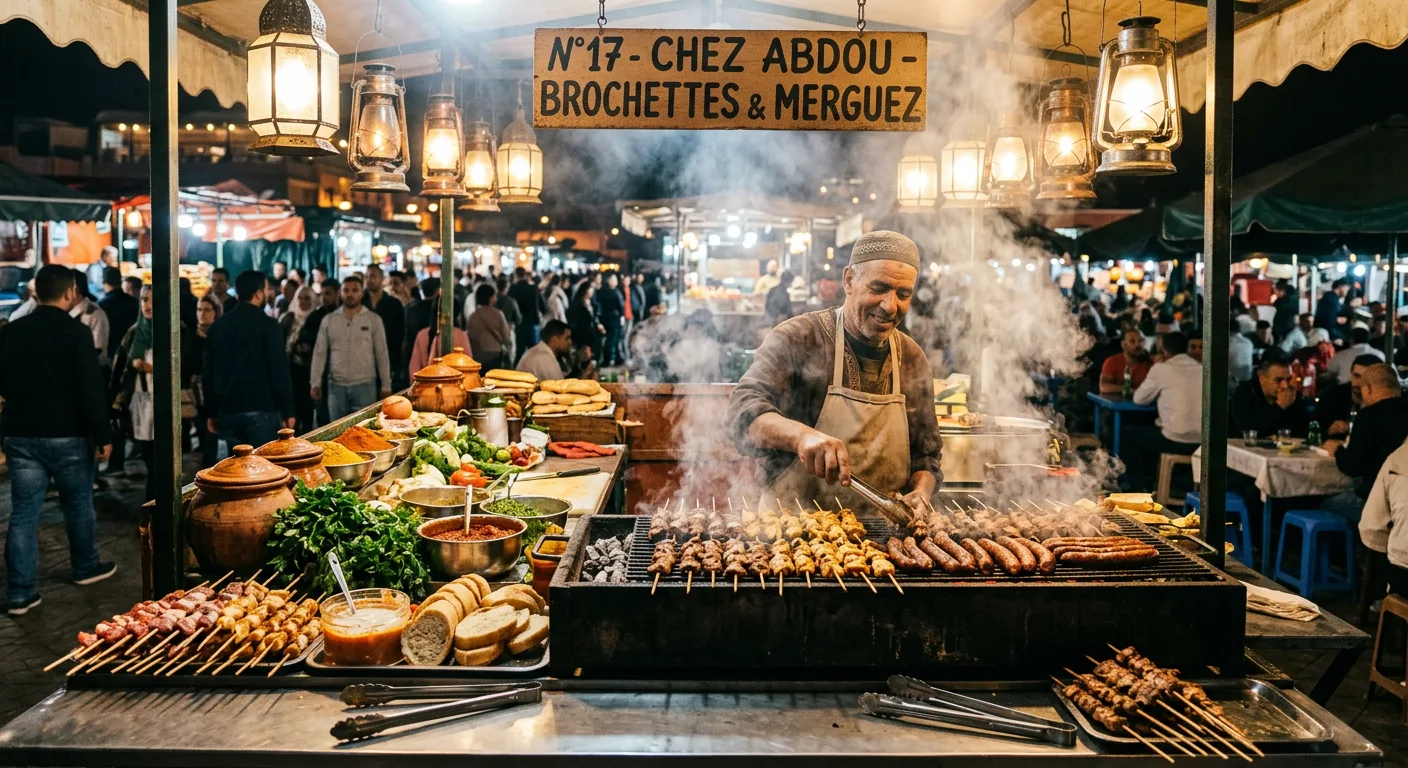
Bustling street food stall in Marrakech Jemaa el-Fna serving grilled meats and snails
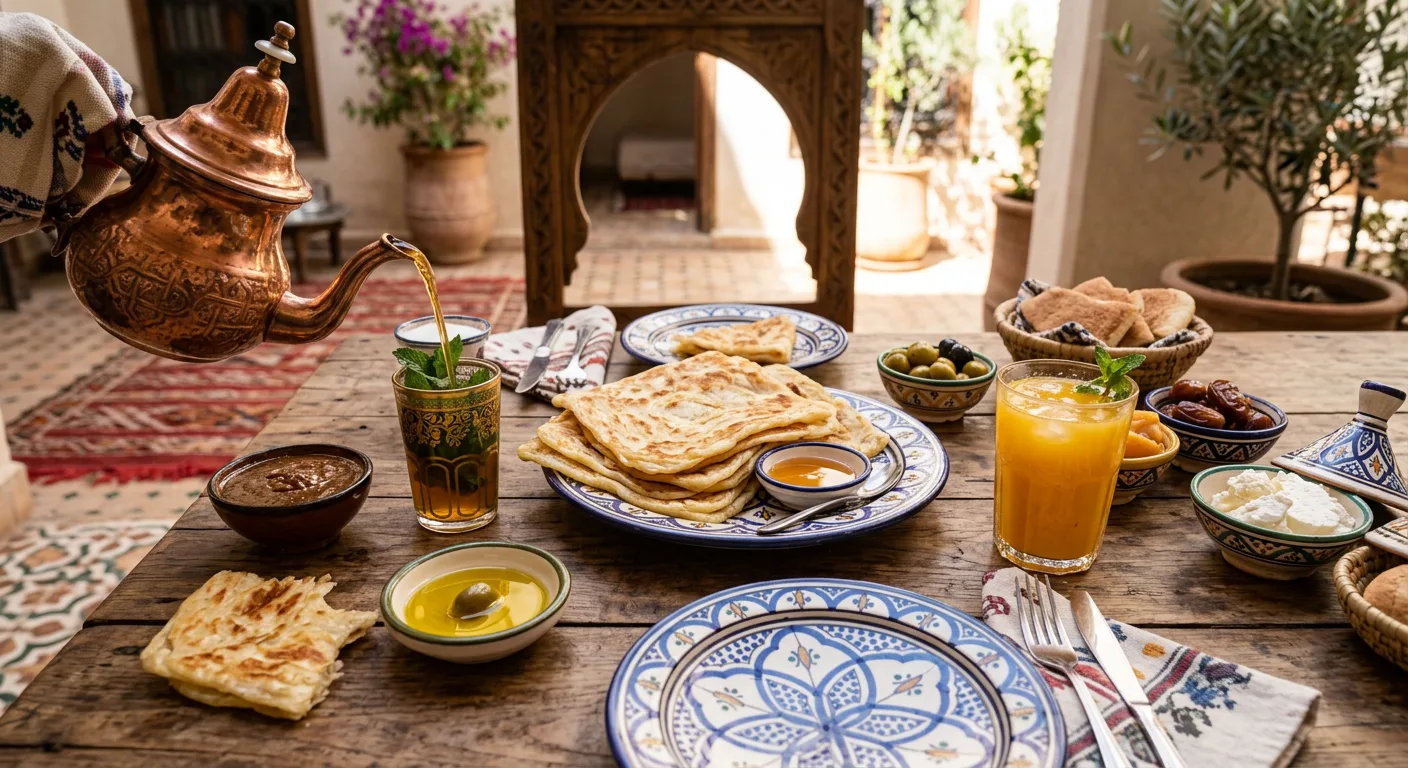
Traditional Moroccan breakfast spread with msemen, amlou, honey, olive oil, and mint tea
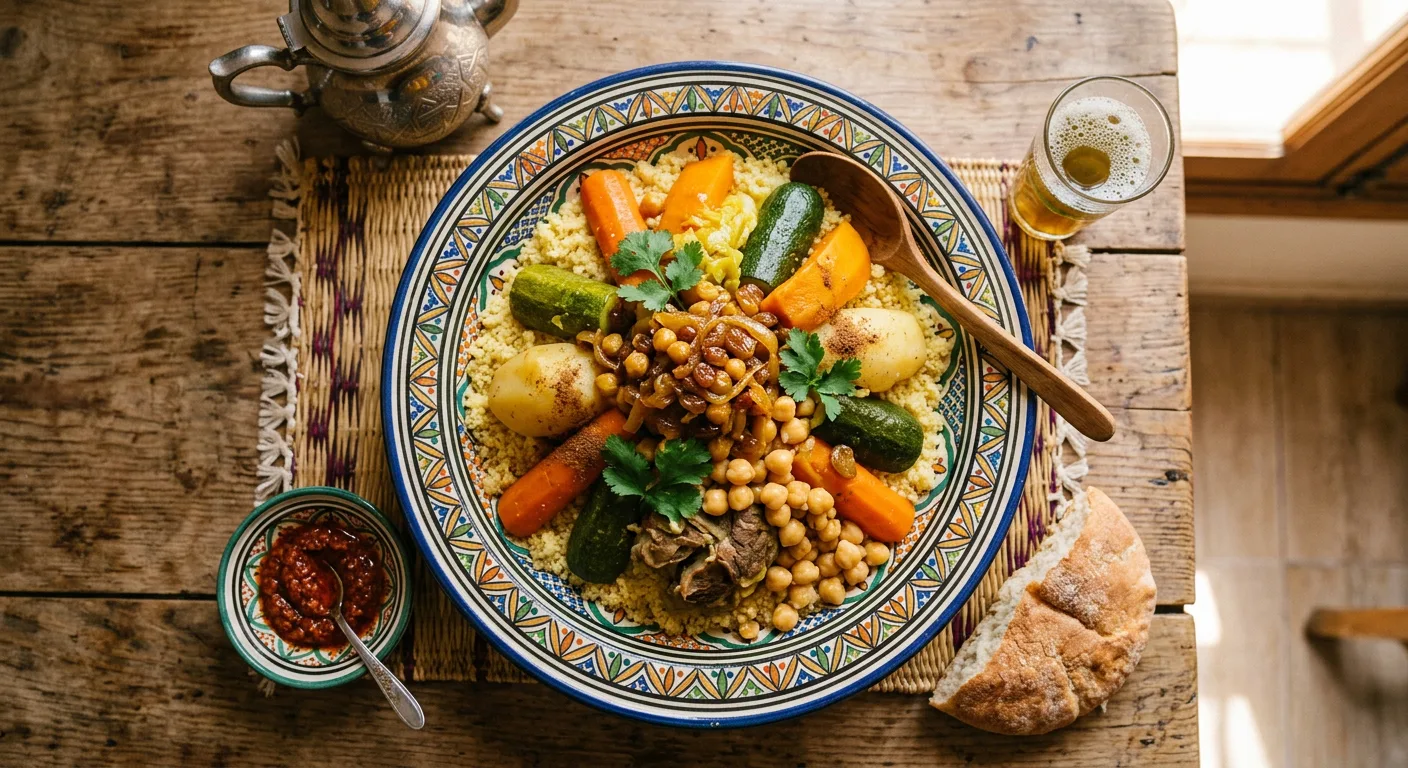
Platter of Friday couscous topped with seven vegetables and tender lamb
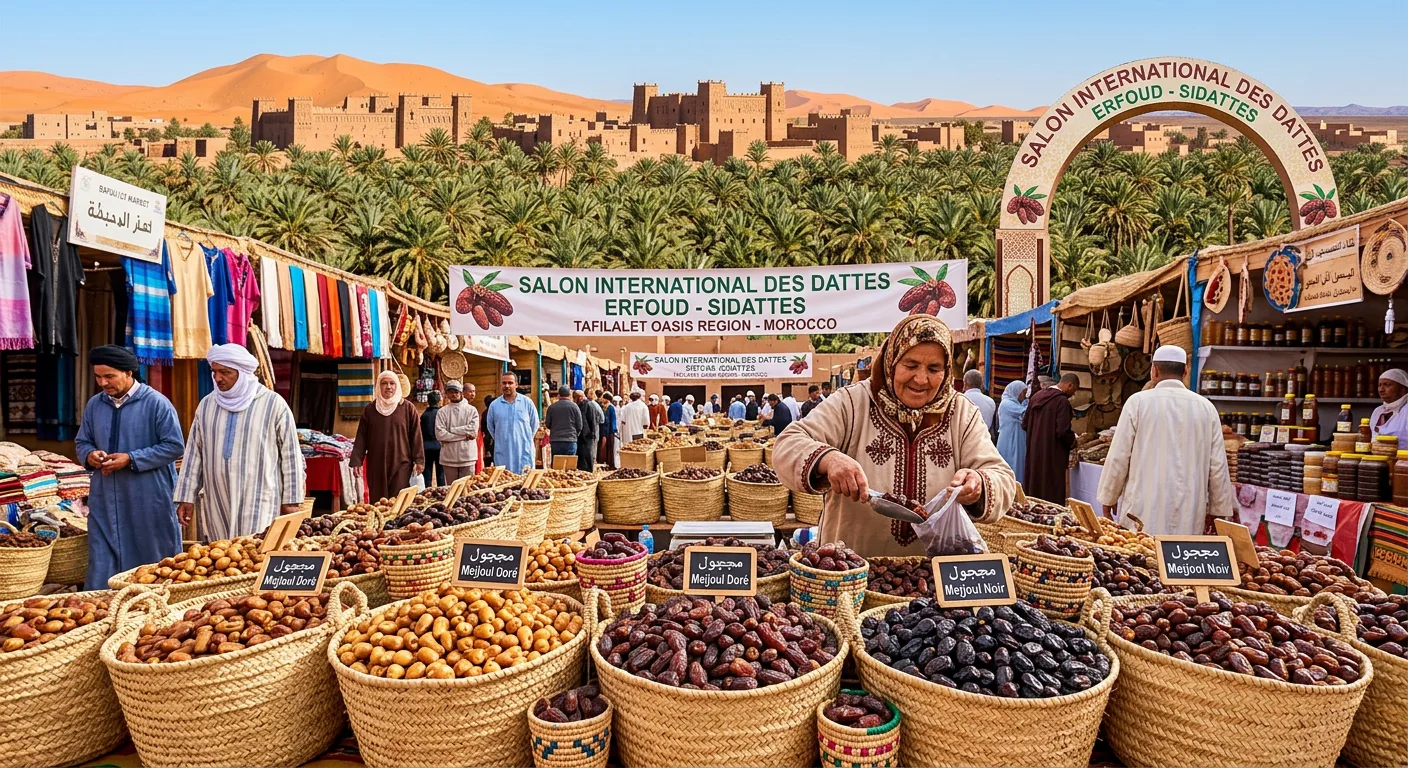
Fresh Medjool dates from the Draa Valley stacked at a Moroccan market
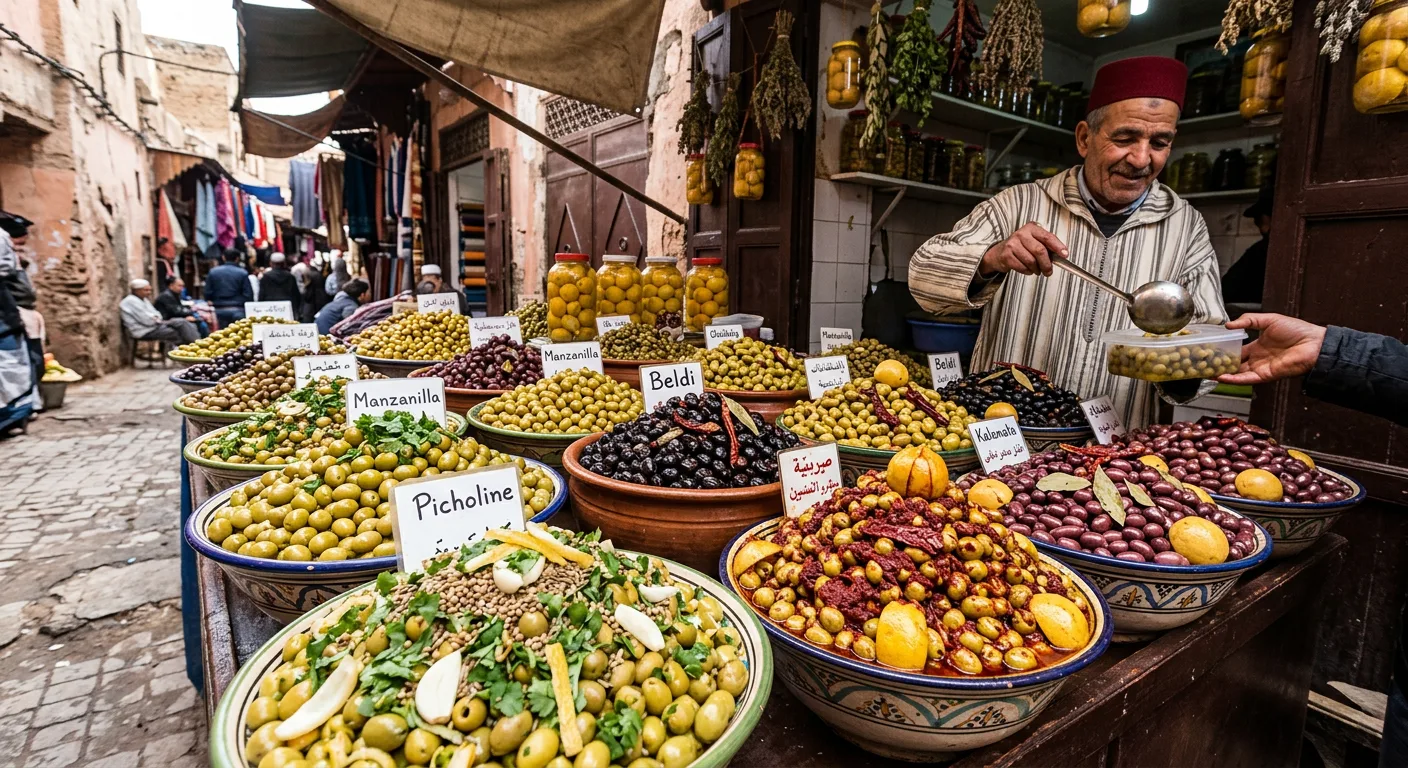
Colorful display of marinated Moroccan olives in a souk market stall
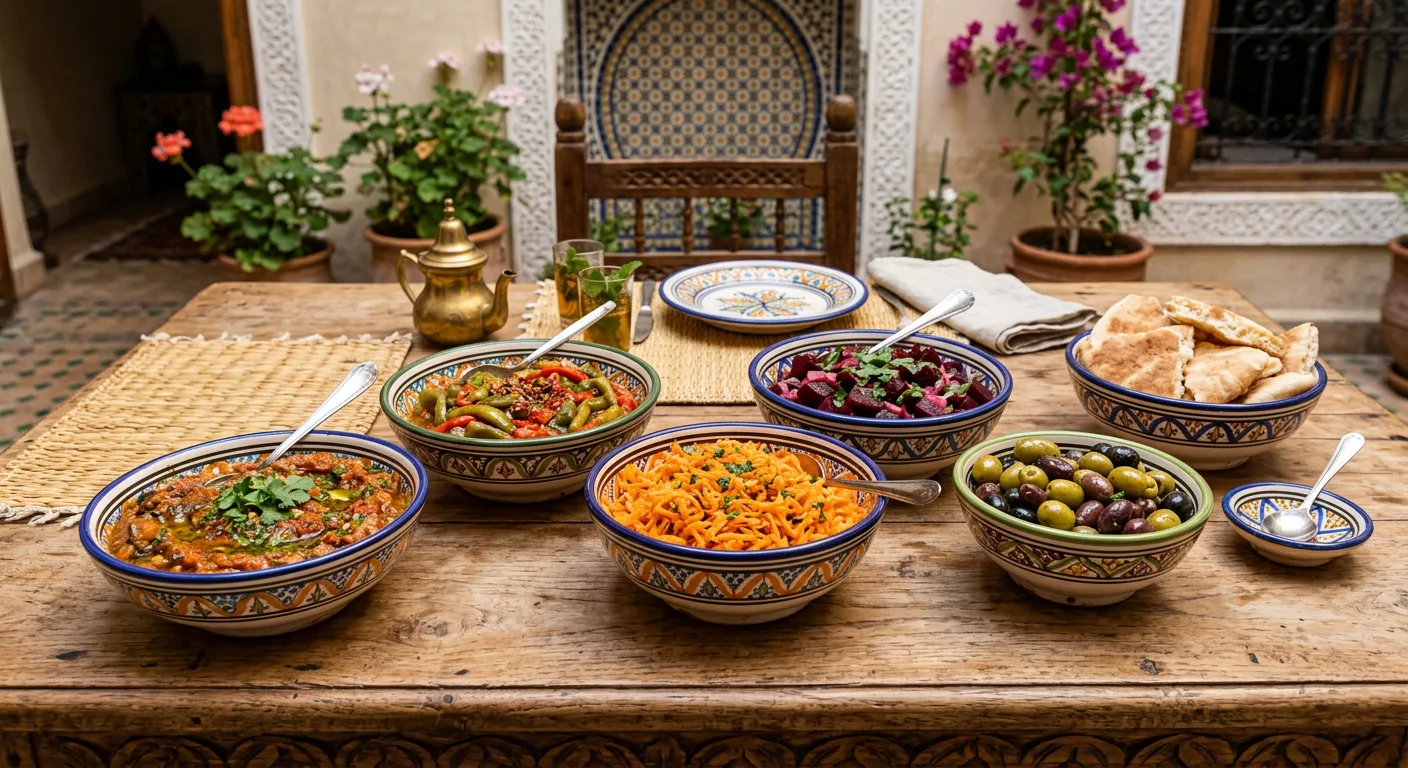
Array of traditional Moroccan salads including zaalouk, taktouka, and carrot salad
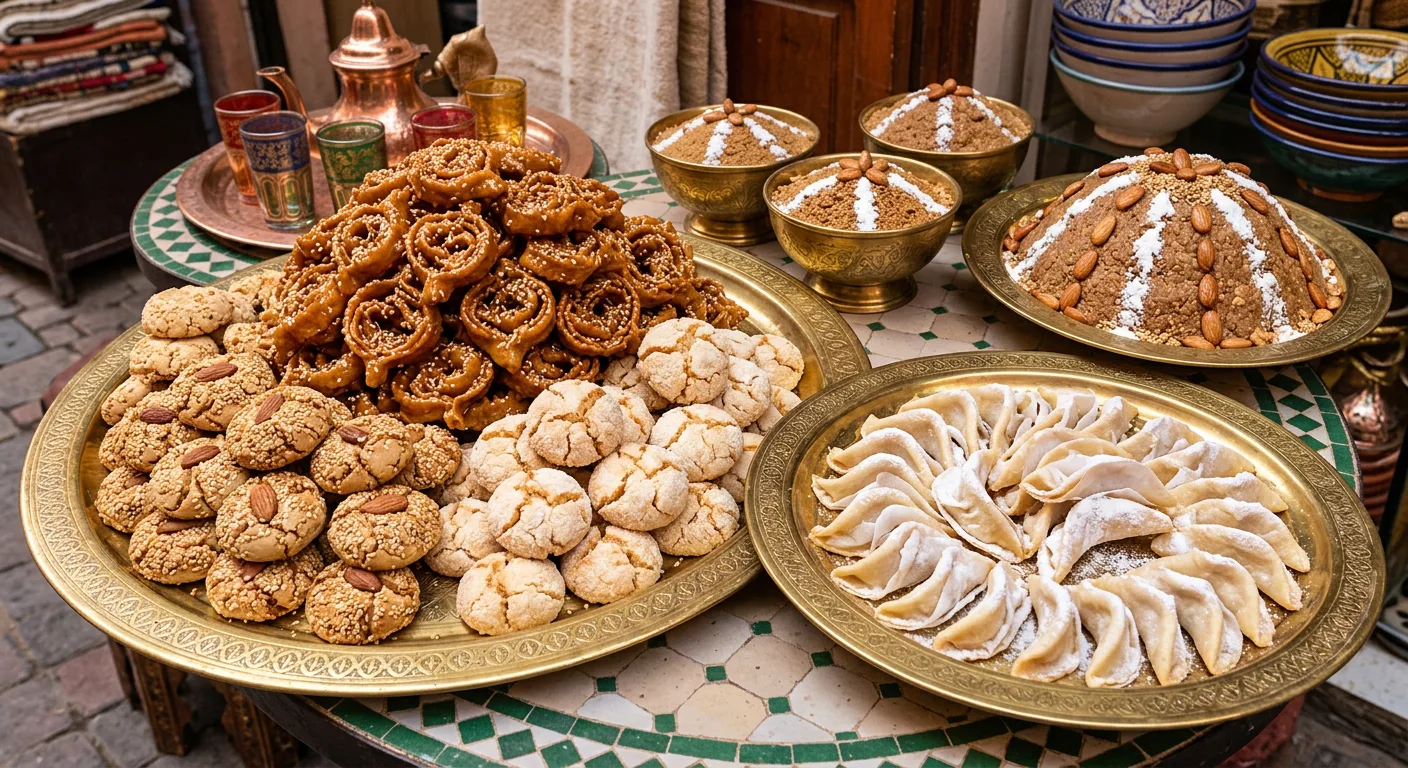
Plate of Moroccan pastries including chebakia, kaab ghzal, and ghriba
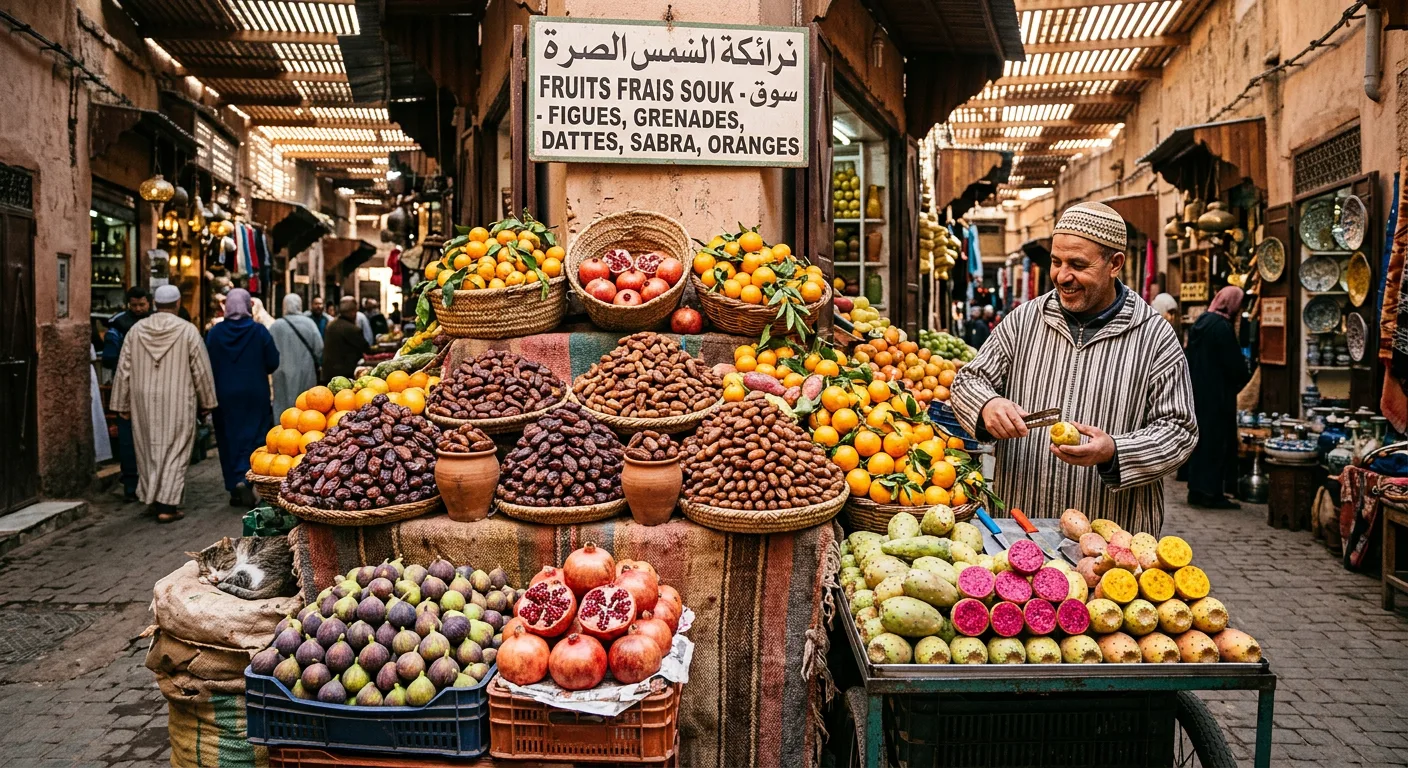
Pyramids of fresh fruit at a Moroccan market including oranges, pomegranates, and figs
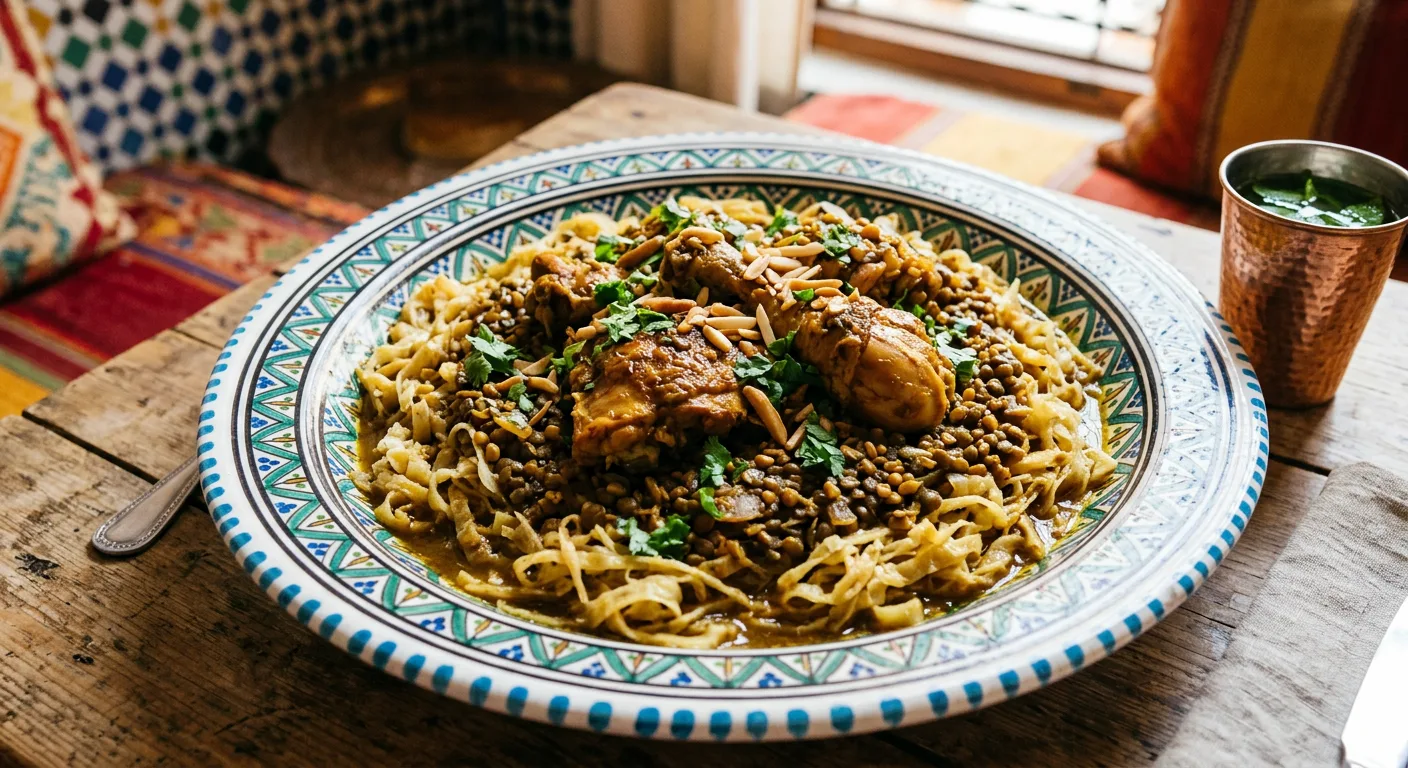
Traditional Moroccan rfissa dish with shredded msemen, lentils, and chicken in fenugreek sauce
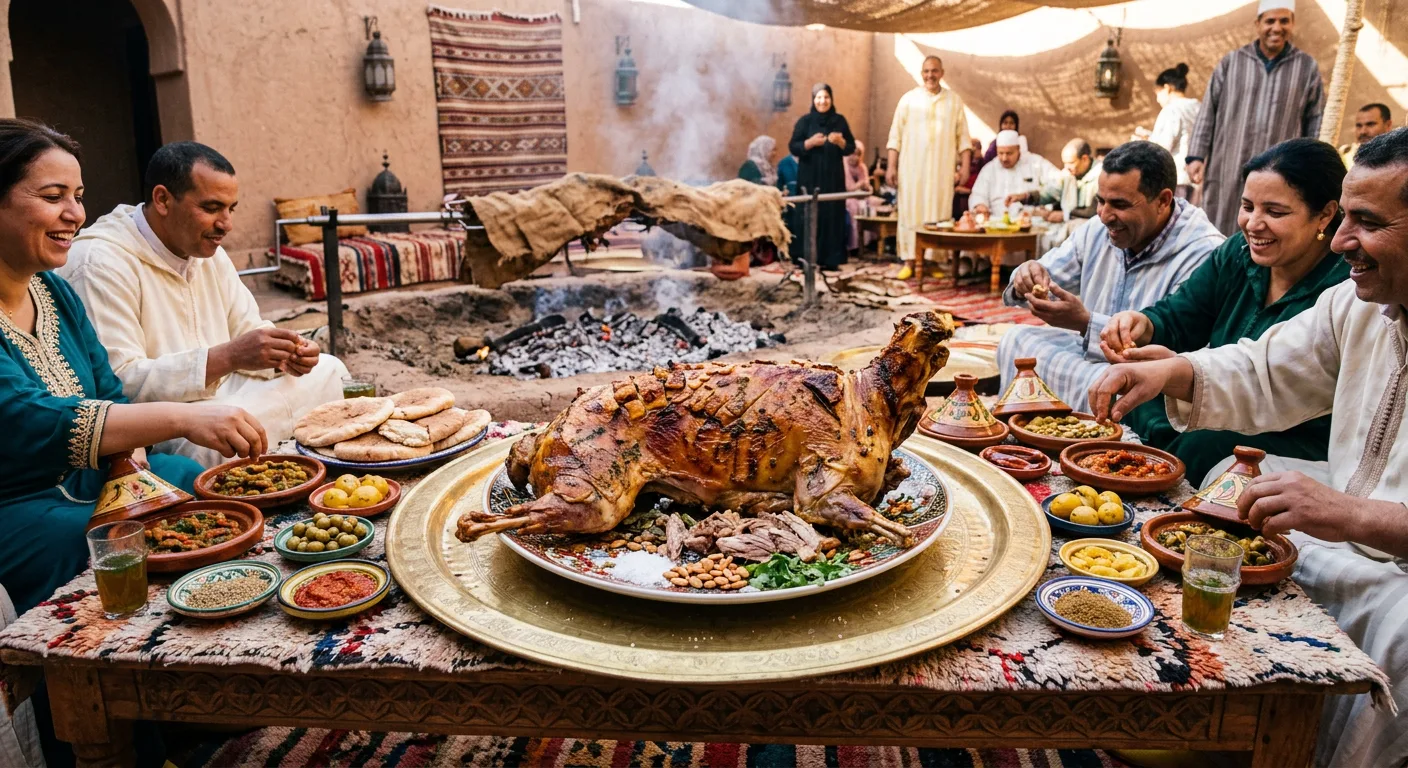
Whole roasted mechoui lamb served on a platter, a Moroccan celebration staple
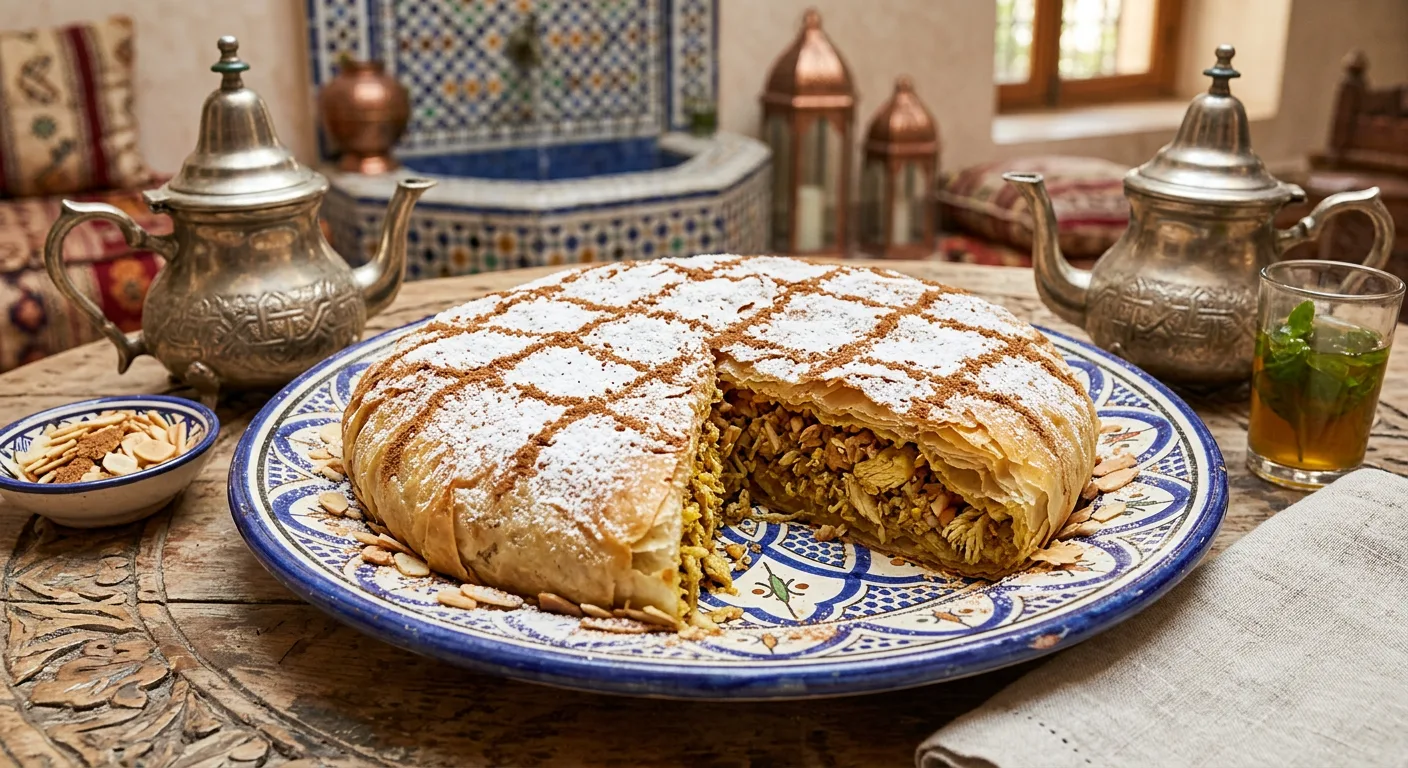
Golden Moroccan bastilla pastry dusted with powdered sugar and cinnamon
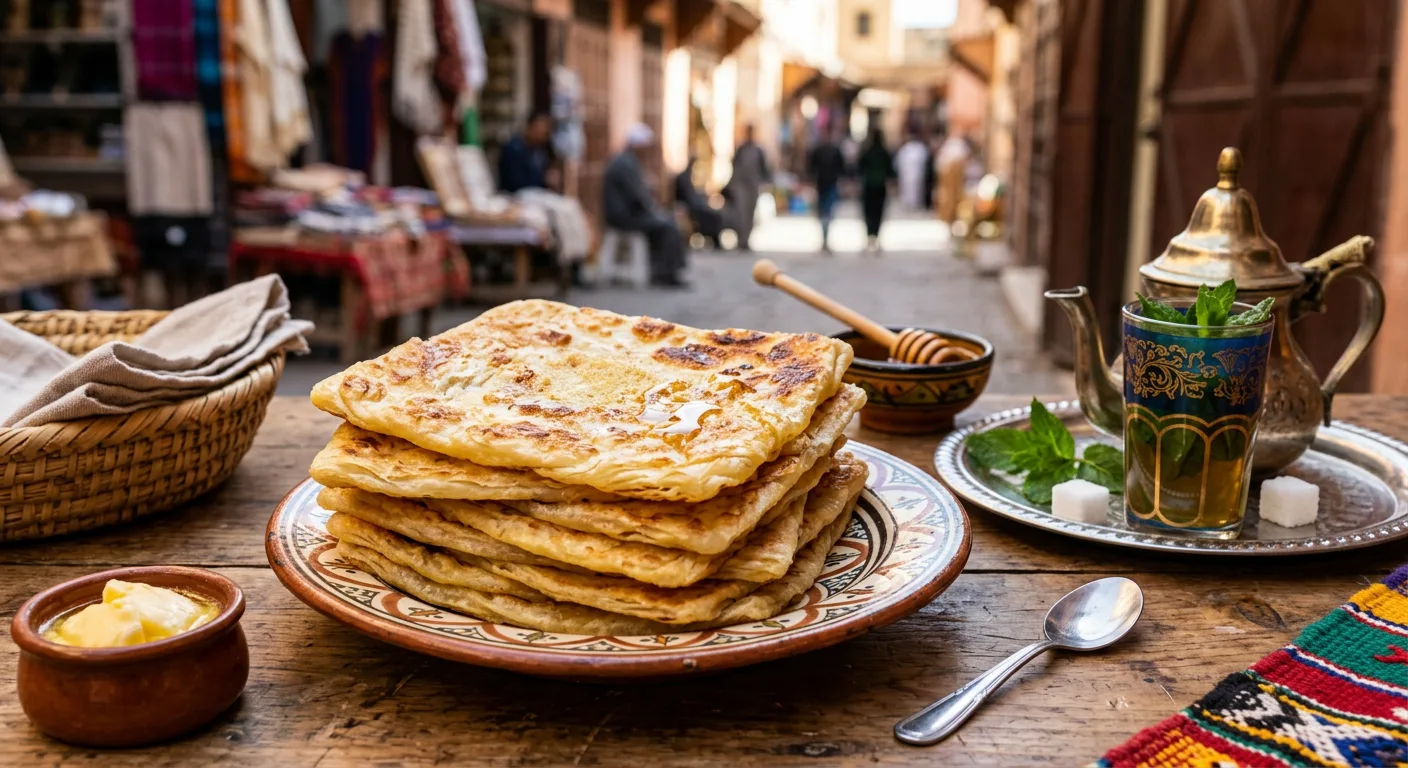
Freshly cooked Moroccan msemen flatbread with flaky layers on a griddle
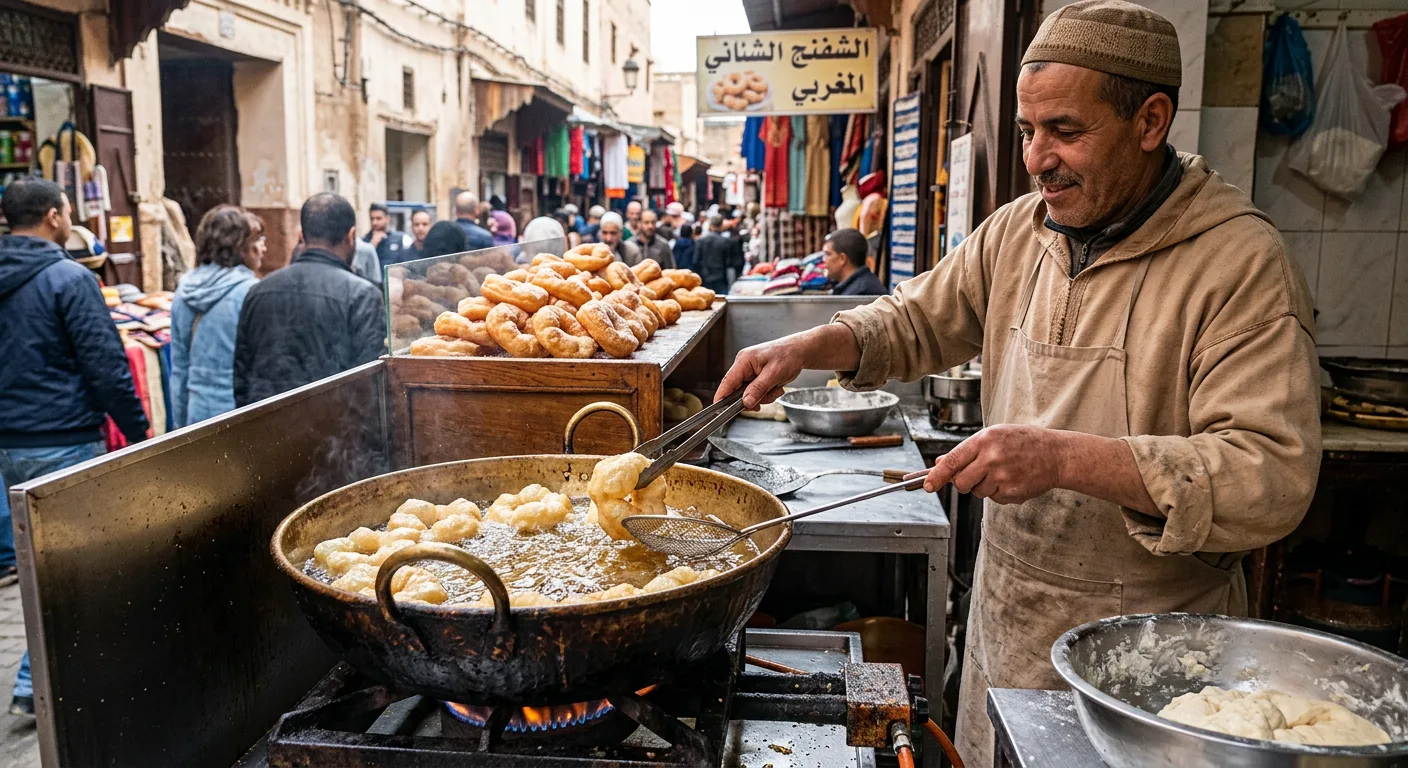
Golden Moroccan sfenj donuts freshly fried at a street vendor
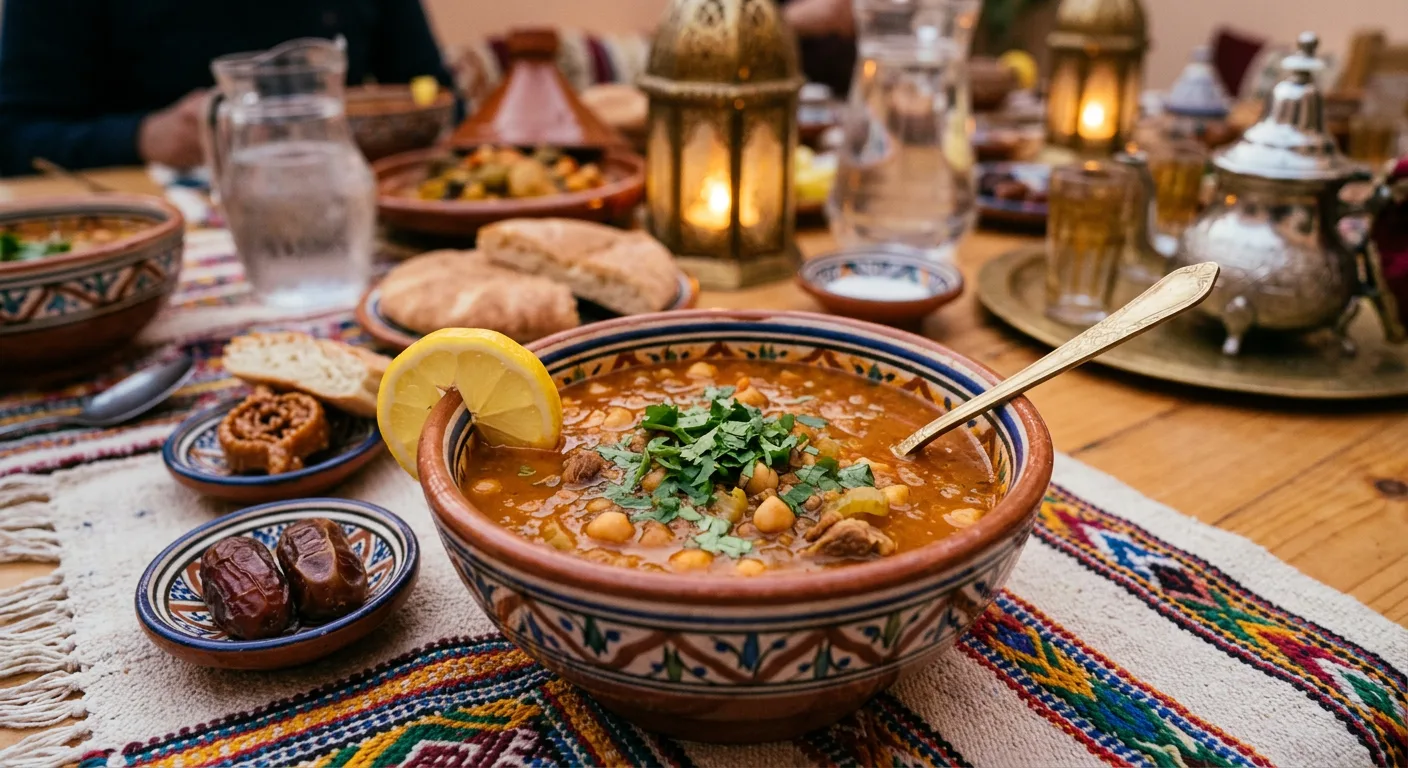
Bowl of hearty Moroccan harira soup with tomatoes, lentils, and chickpeas
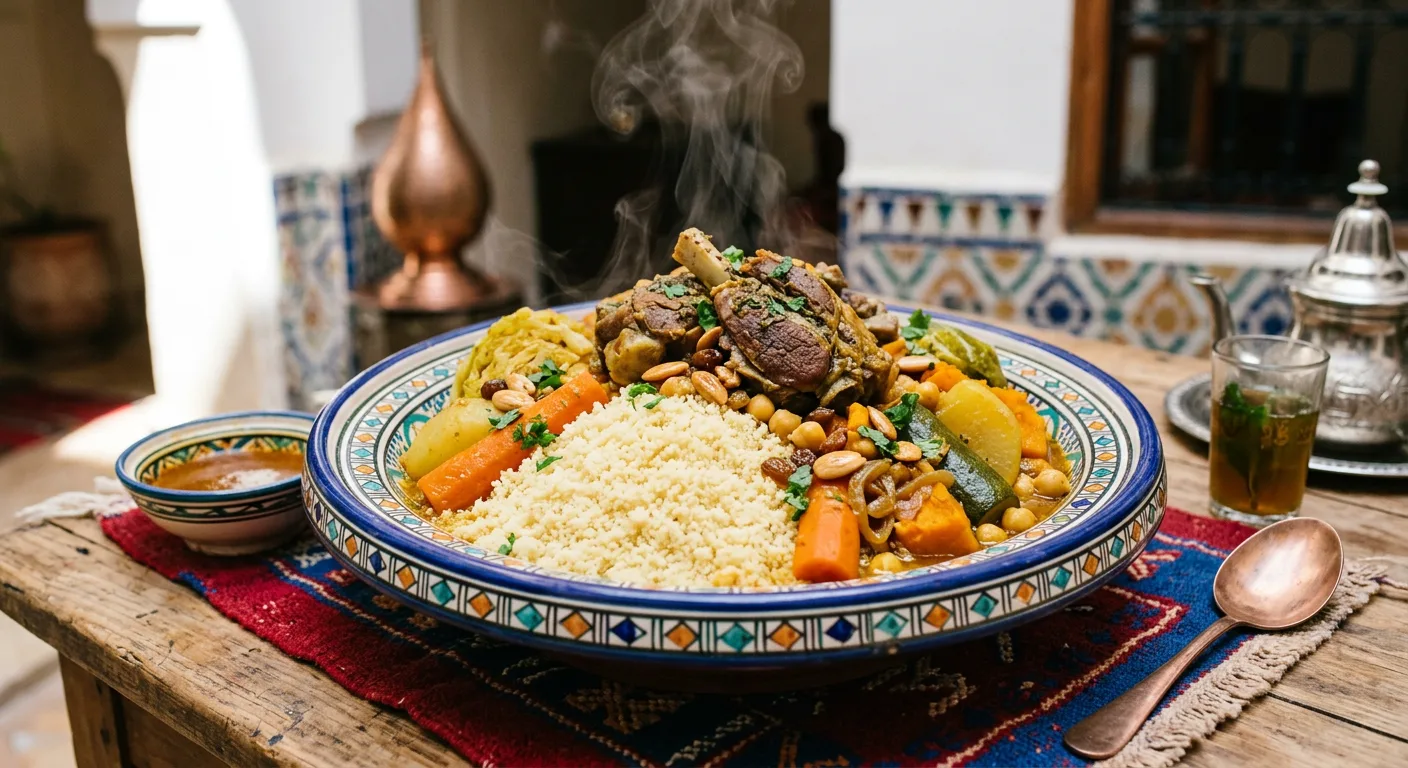
Close-up of traditional hand-rolled Moroccan couscous with seasonal vegetables
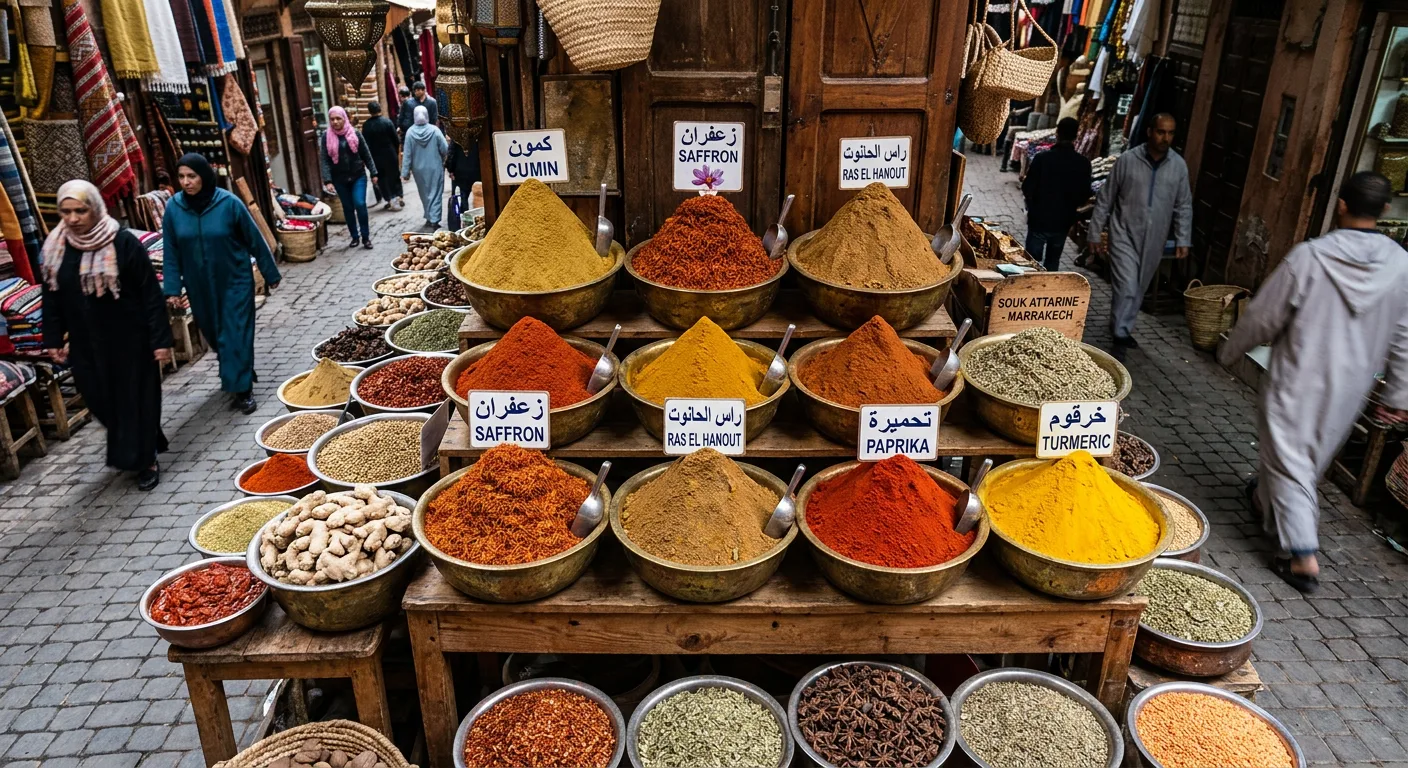
Vibrant spice cones at a Moroccan spice market including cumin, saffron, and ras el hanout
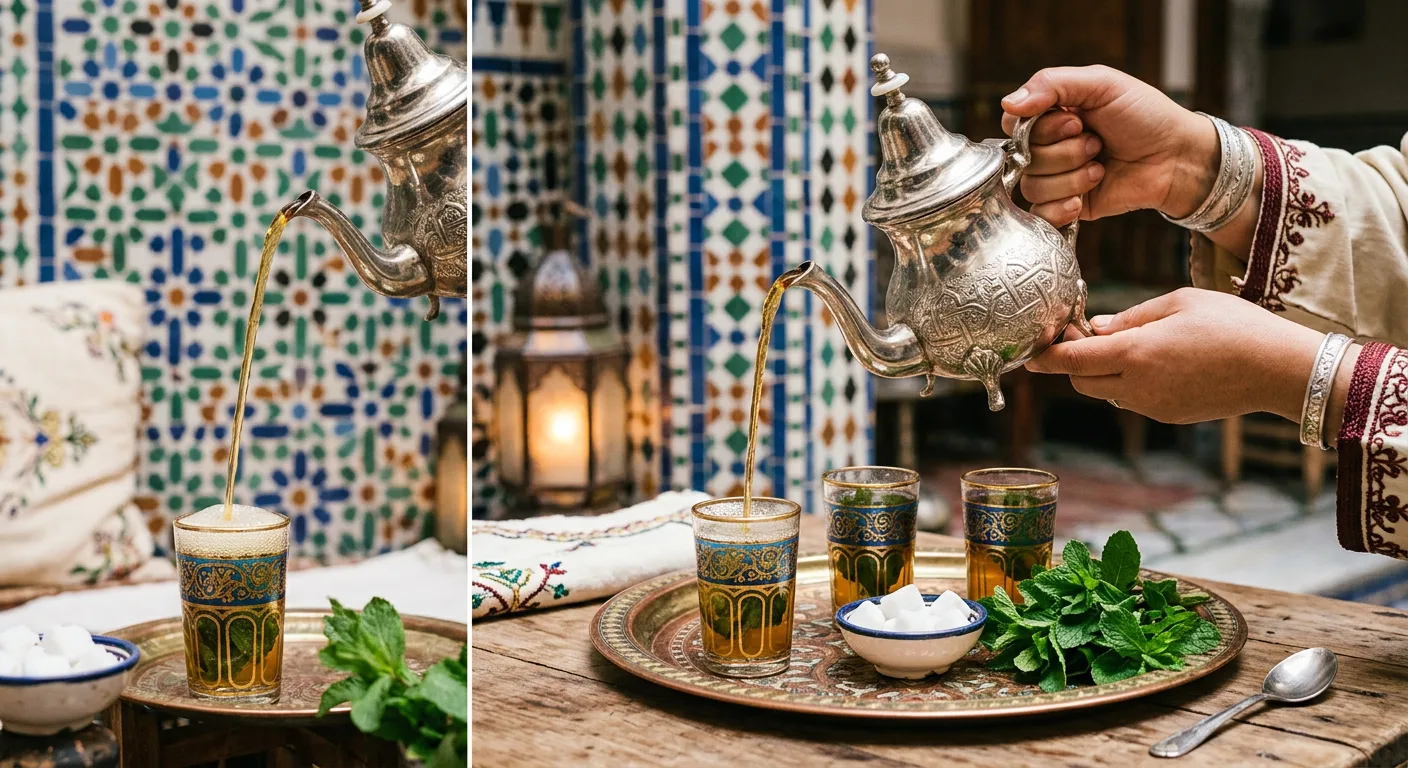
Moroccan mint tea being poured from height into traditional glasses
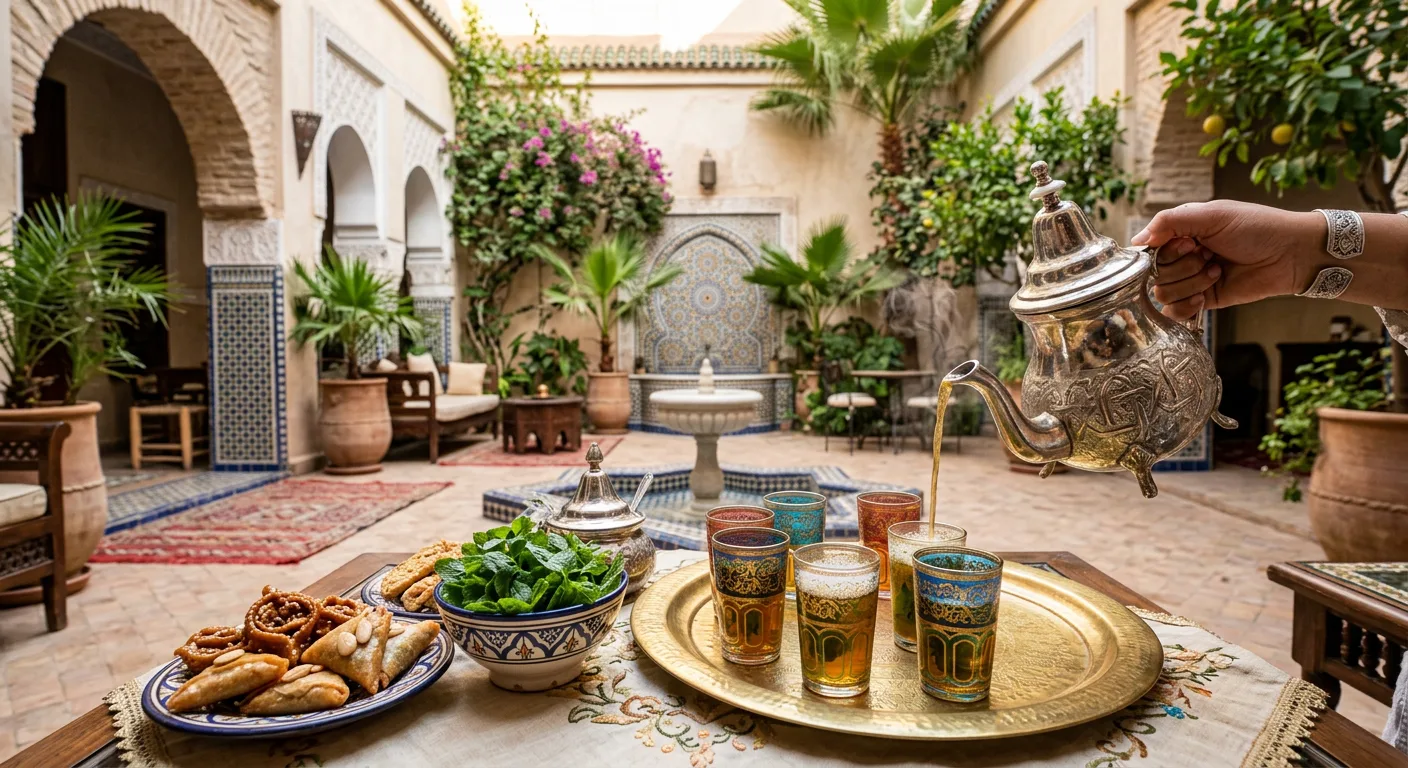
Ornate Moroccan silver tea set with engraved teapot and painted glasses
Ready to Taste Morocco?
Explore cooking classes to bring these flavors home, browse restaurant recommendations, or plan a food-focused itinerary across the kingdom.
More Food & Dining Guides
Best Food Tours in Morocco
Guided food tours in Marrakech, Fes, and Casablanca — taste the best of each city with local experts.
Vegan Food Guide
Complete guide to plant-based eating in Morocco — vegan restaurants, street food, and traditional dishes.
Halal Travel Guide
Muslim-friendly travel guide with halal dining, prayer facilities, and modest accommodation options.
Street Food Guide
From msemmen to snail soup — the best street food across Morocco with prices and where to find it.
Tipping Etiquette
Know how much to tip at restaurants, cafés, and for food tour guides across Morocco.
Cooking Classes
Learn to make tagine, couscous, and pastilla — top cooking class experiences across Morocco.