Discovering...
Adventure & Outdoors
Trekking & Hiking Guide
From the 4,167-meter summit of Mount Toubkal to gentle waterfall walks near Chefchaouen — Morocco offers world-class trekking through dramatic landscapes, ancient Berber villages, and some of North Africa's most spectacular wilderness.
Why Trek in Morocco?
Morocco is one of the great trekking destinations in the world, yet it remains far less crowded than Nepal, Peru, or the European Alps. The Atlas Mountains form the backbone of the country, stretching over 2,500 kilometers from the Atlantic coast to the Algerian border, with peaks exceeding 4,000 meters and valleys that have changed little in centuries.
What makes Morocco special is the combination of dramatic mountain scenery, living Berber culture, and accessibility. You can fly into Marrakech in the morning and be trekking through traditional villages by the afternoon. The infrastructure of guides, mountain refuges, and mule support makes multi-day treks manageable even for those new to trekking, while remote routes like the M'goun Traverse challenge experienced adventurers.
Year-round trekking is possible by shifting between regions: the High Atlas in spring and autumn, the Anti-Atlas and Jebel Saghro in winter, and the Rif Mountains whenever you seek green, forested landscapes. Morocco offers everything from gentle half-day walks to demanding week-long expeditions.
4,167m
Highest Peak (Toubkal)
15+
Major Trek Routes
Year-Round
Trekking Season
2,500km
Atlas Mountain Range
Mount Toubkal (4,167m) — North Africa's Highest Peak
Mount Toubkal is the highest peak in North Africa and the most popular trek in Morocco. Standing at 4,167 meters in the heart of the High Atlas, it is achievable for fit hikers with no technical climbing experience required. The standard 2-day route from the village of Imlil is the most common approach.
Despite being classified as a "walk-up" in mountaineering terms, Toubkal should not be underestimated. The altitude is significant, the final summit push is steep and exposed, and conditions can change rapidly. Proper preparation and equipment are essential.
Key Information
Difficulty
Moderate-Hard. No technical skills required, but fitness and altitude tolerance are essential.
Fitness Requirements
You should be able to hike 6-8 hours with a daypack and have experience with steep terrain. Regular cardio fitness is essential. Start training 8-12 weeks before.
Altitude Preparation
Spend at least 1 night in Imlil (1,740m) before starting. Hydrate aggressively. Consider an extra acclimatization day. 20-25% of trekkers experience altitude symptoms.
Best Season
April-June and September-October. Summer (July-August) is snow-free but very hot at lower elevations. Winter requires crampons and ice axe.
Typical Cost
DIY: 800-1,200 MAD ($80-120 USD) for refuge, meals, and mule. With guide: 2,500-4,000 MAD ($250-400 USD) all-inclusive for 2 days.
Standard 2-Day Route from Imlil
1
Imlil to Toubkal Refuge
Day 1
Begin at Imlil village (1,740m). Trek through the Armed valley, passing walnut groves and the village of Sidi Chamarouch (a pilgrimage site with a white-painted boulder). Steady uphill on a well-marked mule track to the Toubkal Refuge (Refuge du Toubkal), run by the CAF (Club Alpin Francais). Settle in, acclimatize, and prepare for the early morning summit push.
Elevation
1,740m to 3,207m (+1,467m)
Distance
10 km
Duration
5-6 hours
2
Summit and Descent to Imlil
Day 2
Pre-dawn start (around 5:00 AM) to reach the summit for sunrise. The trail climbs steeply through a boulder field and scree slopes. The final section is a scramble over large rocks, marked with cairns. On clear days, views extend from the Sahara to the Atlantic. After celebrating at the summit pyramid, descend the same route back to the refuge for tea, then continue down to Imlil.
Elevation
3,207m to 4,167m, then down to 1,740m
Distance
18 km
Duration
8-10 hours (3-4 up, 5-6 down)
Extended 6-Day Toubkal Circuit
The extended circuit adds Lac d'Ifni and remote valleys for a more comprehensive mountain experience. This route is best done with a guide and mule support.
1
Imlil to Around village
Gentle trek from Imlil through the Armed valley to the traditional village of Around (Aremd). Explore the village, visit a Berber household, and acclimatize to the altitude.
3 km1.5 hours
2
Around to Azib Tamsoult
Cross the Tizi Mzik pass (2,489m) and descend into the Azzaden Valley. Continue to the shepherd camp of Azib Tamsoult with stunning views of the southern Atlas.
14 km6-7 hours
3
Azib Tamsoult to Lac d'Ifni
Trek south over the Tizi n'Ouanoums pass (3,664m), the highest pass of the circuit. Descend to the stunning turquoise Lac d'Ifni, Morocco's largest natural mountain lake. Wild camp or use basic shelter.
12 km7-8 hours
4
Lac d'Ifni to Toubkal Refuge
Climb from the lake up the Ikhibi Sud valley to join the standard Toubkal route near the refuge. This is a long ascending day through increasingly barren terrain.
8 km5-6 hours
5
Summit and Descent to Refuge
Pre-dawn summit push. The route is the same as the standard ascent through the south cwm and scree slopes. Return to the refuge for a well-earned rest.
8 km6-8 hours
6
Refuge to Imlil
Final descent through the valley of the Mizane river. Stop at Sidi Chamarouch for tea, then continue down to Imlil. Celebration lunch in the village.
10 km3-4 hours
Top 15 Treks Ranked by Difficulty
From gentle waterfall walks to demanding multi-day mountain traverses, Morocco has a trek for every fitness level and ambition. Here are our top 15 routes, ranked and reviewed.
#1
Mount Toubkal Summit
High Atlas
Mount Toubkal Summit
High Atlas
The crown jewel of Moroccan trekking. The standard 2-day route from Imlil is achievable for fit hikers with no technical climbing required, though the final summit push is steep and demanding at altitude. The extended 6-day circuit adds the beautiful Lac d'Ifni and remote valleys.
moderate-hard2-3 days28 km round tripMax: 4,167m
North Africa's highest peakPanoramic views across the Atlas range to the SaharaOvernight at Toubkal Refuge (3,207m)Summit sunrise experience
Best season: April-June, September-October
#2
M'goun Traverse
Central High Atlas
M'goun Traverse
Central High Atlas
A challenging multi-day traverse through some of Morocco's most spectacular and remote mountain scenery. The route crosses high passes, descends through dramatic gorges, and passes through villages where traditional Berber life continues unchanged. This is serious trekking for experienced hikers.
hard5-6 days65-80 kmMax: 4,068mGuide recommended
Morocco's second-highest peakRemote valleys and gorgesTraditional Berber villages untouched by tourismDramatic river canyon crossings
Best season: June-September
#3
Jebel Saghro Circuit
Anti-Atlas
Jebel Saghro Circuit
Anti-Atlas
The ideal winter trek when the High Atlas is snow-covered. Jebel Saghro offers an otherworldly volcanic landscape of basalt towers, deep gorges, and arid plateaus. The terrain is more like Arizona than the Alps, and encounters with semi-nomadic Berber communities are a highlight.
moderate4-5 days55-65 kmMax: 2,712mGuide recommended
Volcanic desert landscapeDramatic rock formations and pinnaclesNomadic Ait Atta Berber campsPerfect winter trekking alternative to snowy Atlas
Best season: October-April
#4
Ait Bouguemez Valley
Central High Atlas
Ait Bouguemez Valley
Central High Atlas
Known as the "Happy Valley," Ait Bouguemez is a gentle, scenic trek perfect for those who want cultural immersion without extreme altitude. The valley is lined with traditional stone villages, irrigated terraces, and orchards. Homestays with Berber families are the highlight of this route.
easy-moderate3-4 days40-50 kmMax: 2,200m
"Happy Valley" - one of Morocco's most beautiful valleysTerraced fields and walnut grovesAncient granaries (agadirs)Warm Berber hospitality
Best season: April-October
#5
Ourika Valley Day Hike
High Atlas (near Marrakech)
Ourika Valley Day Hike
High Atlas (near Marrakech)
The easiest introduction to Atlas hiking, perfect for a half-day or full-day trip from Marrakech. Follow the Ourika River through terraced villages to a series of waterfalls. Riverside restaurants offer tagine lunches with stunning views. Be cautious near the river after rainfall.
easy1 day8-12 kmMax: 1,500m
Just 45 minutes from MarrakechSeven waterfalls trailBerber villages and tea housesSaffron gardens in Tnine Ourika
Best season: Year-round (avoid flash floods Nov-Mar)
#6
Setti Fatma Waterfalls
High Atlas (Ourika Valley)
Setti Fatma Waterfalls
High Atlas (Ourika Valley)
A popular day trip from Marrakech, the Setti Fatma waterfall trail is accessible to most fitness levels. The first two waterfalls are easy to reach; the upper falls require some scrambling over rocks. Local guides offer their services at the trailhead for a small fee. The village hosts a famous moussem (festival) each August.
easyHalf day4-5 km round tripMax: 1,400m
Seven cascading waterfallsNatural swimming pools in summerTraditional Berber villageRiverside lunch spots
Best season: April-October
#7
Akchour Waterfalls
Rif Mountains (near Chefchaouen)
Akchour Waterfalls
Rif Mountains (near Chefchaouen)
Located in the Talassemtane National Park near Chefchaouen, Akchour offers some of Morocco's most stunning waterfall scenery. Two trails split from the village: one leads to the waterfalls and natural pools, the other to God's Bridge, a dramatic natural rock arch spanning a gorge. Both can be combined in a full day.
easy-moderate1 day10-14 km round tripMax: 800m
Turquoise natural poolsGod's Bridge (natural rock arch)Lush green forested valleysSwimming in crystal-clear water
Best season: March-November
#8
Jebel Sirwa
Anti-Atlas
Jebel Sirwa
Anti-Atlas
Jebel Sirwa sits between the High Atlas and Anti-Atlas, offering a unique trek through saffron-growing country. The landscape is volcanic and dramatic, with far fewer trekkers than Toubkal or M'goun. October-November timing coincides with the saffron harvest, adding a cultural dimension to the adventure.
moderate4 days45-55 kmMax: 3,305mGuide recommended
Extinct volcanic peakSaffron-growing villagesDramatic basalt formationsVery few other trekkers
Best season: October-May
#9
Tazaghart Plateau
High Atlas
Tazaghart Plateau
High Atlas
The Tazaghart Plateau offers a rewarding alternative to the more popular Toubkal route, with dramatic high-altitude terrain and far fewer fellow trekkers. The route passes through the Azzaden Valley and climbs to the Tazaghart Refuge before reaching the exposed plateau. Excellent views of the entire Toubkal massif.
moderate2-3 days20-25 kmMax: 3,843m
Dramatic high-altitude plateauLess crowded alternative to ToubkalStunning views of Toubkal massifCAF refuge at Lepiney
Best season: May-October
#10
Imlil to Lac d'Ifni
High Atlas
Imlil to Lac d'Ifni
High Atlas
This route leads from the trekking hub of Imlil over a high pass to Lac d'Ifni, a stunning turquoise lake nestled at 2,312m. It is Morocco's largest natural mountain lake and offers superb wild camping. Often combined with a Toubkal summit as part of a 3-4 day circuit.
moderate2 days22-26 kmMax: 3,600m (Tizi n'Ouanoums pass)
Morocco's largest mountain lakeStunning turquoise glacial lakeHigh mountain passesLess crowded than Toubkal route
Best season: May-October
#11
Todra Gorge to Dades Valley
Eastern High Atlas
Todra Gorge to Dades Valley
Eastern High Atlas
Connecting two of Morocco's most dramatic gorges, this trek traverses the rugged terrain between the Todra and Dades valleys. The route passes through remote Berber villages, over mountain passes, and alongside dramatic cliff faces. Spring brings wildflowers; autumn offers perfect temperatures.
moderate3-4 days40-50 kmMax: 2,800mGuide recommended
Dramatic 300m-high gorge wallsPalm-lined river valleysKasbahs and fortified villagesRock climbing opportunities in Todra
Best season: March-May, September-November
#12
Bou Iblane Summit
Middle Atlas
Bou Iblane Summit
Middle Atlas
Bou Iblane is one of the least-visited major peaks in Morocco, offering true wilderness trekking in the Middle Atlas. Dense cedar forests give way to alpine meadows and rocky ridges. Wildlife sightings are common, including Barbary macaques, eagles, and wild boar. Infrastructure is minimal — this is for experienced trekkers.
moderate-hard2-3 days25-30 kmMax: 3,340mGuide recommended
Middle Atlas highest peakCedar and oak forestsBarbary macaque sightingsSolitude and untouched wilderness
Best season: June-September
#13
Paradise Valley
Western High Atlas (near Agadir)
Paradise Valley
Western High Atlas (near Agadir)
A chain of natural rock pools and small waterfalls set in a palm-fringed canyon between Agadir and Imouzzer. Paradise Valley is more of a nature walk and swimming excursion than serious trekking, making it ideal for families, casual hikers, or a day off from more demanding trails.
easyHalf day to 1 day5-8 kmMax: 600m
Natural rock pools and waterfallsPalm-fringed canyonSwimming in warm emerald poolsEasy access from Agadir or Taghazout
Best season: March-November
#14
Azzaden Valley Circuit
High Atlas
Azzaden Valley Circuit
High Atlas
The Azzaden Valley, just west of Imlil, is one of the High Atlas's best-kept secrets. A gentle circuit through terraced villages, walnut forests, and mountain streams offers an authentic glimpse of mountain life without the intensity of high-altitude trekking. The Azzaden Trekking Lodge provides comfortable accommodation.
easy-moderate2-3 days25-30 kmMax: 2,500m
Pristine valley with walnut grovesTraditional Berber villagesAzzaden Trekking LodgeQuieter alternative to Imlil trails
Best season: April-November
#15
Tichka Plateau
High Atlas
Tichka Plateau
High Atlas
The Tichka Plateau above the famous Tizi n'Tichka mountain pass offers easy trekking through pastoral landscapes. Berber shepherds graze their flocks across wide grasslands, and the views extend to snow-capped peaks. Spring covers the plateau in wildflowers. A good option for those seeking gentle walking with cultural encounters.
easy-moderate2 days18-22 kmMax: 2,260m
High pastoral plateauBerber shepherd encountersWildflower meadows in springGateway to the Tizi n'Tichka pass
Best season: Year-round
Hiring a Mountain Guide
While not legally required for most treks, hiring a certified mountain guide is strongly recommended for safety, navigation, cultural insight, and to support the local Berber economy. Guides make the difference between a good trek and an unforgettable one.
Why Hire a Guide?
- Safety in remote areas with no cell coverage
- Navigation on unmarked or confusing trails
- Cultural bridge to Berber communities
- Altitude sickness awareness and management
- Logistics: mules, accommodation, meals
- Local knowledge of weather and conditions
Certified Guides
Look for guides certified by CFAMM (Centre de Formation aux Metiers de Montagne) in Tabant. Certified guides carry an official card and have completed rigorous training in mountain safety, first aid, and navigation.
Bureau des Guides offices in Imlil, Tabant, and other trekking hubs are the official booking points. Avoid hiring unofficial guides who approach you at trailheads.
Your hotel, riad, or a reputable trekking agency can arrange certified guides with verified credentials. Book at least 2-3 weeks in advance during peak season (April-May, September-October).
Guide Costs (2025-2026)
- Day hike guide: 400-600 MAD/day ($40-60 USD)
- Multi-day trek guide: 500-800 MAD/day ($50-80 USD)
- Mule + muleteer: 200-300 MAD/day ($20-30 USD)
- Cook (multi-day): 250-400 MAD/day ($25-40 USD)
- Tip (standard): 50-100 MAD/day for guide, 30-50 MAD/day for muleteer
Mountain Refuges & Accommodation
CAF Mountain Refuges
The Club Alpin Francais (CAF) operates several mountain refuges (huts) in the High Atlas, with the Toubkal Refuge (Refuge du Toubkal) at 3,207m being the most famous and heavily used. These are basic shared dormitories with mattresses, blankets, a kitchen area, and a communal dining space.
The newly renovated Les Mouflons du Toubkal refuge offers a more comfortable alternative to the original CAF refuge, with better facilities and meal service. Both refuges fill up quickly during peak season — book in advance.
Refuge costs: 100-200 MAD ($10-20 USD) per night for a bunk. Meals are available at 50-100 MAD per meal. Bring your own sleeping bag for warmth as blankets alone may not suffice.
Other Accommodation
- Berber gites (homestays): Family-run guesthouses in villages along trekking routes. Simple but charming rooms with home-cooked meals. 150-300 MAD ($15-30 USD) half-board. The most authentic accommodation experience.
- Trekking lodges: More comfortable options like the Kasbah du Toubkal in Imlil and the Azzaden Trekking Lodge. Modern comforts with mountain views. 500-1,500 MAD ($50-150 USD) per night.
- Wild camping: Permitted in most mountain areas. Bivouac sites near refuges are popular. Bring a lightweight tent, sleeping bag rated for cold nights (-5 C and below above 3,000m), and pack out all waste.
- Shepherd shelters (azib): Basic stone shelters used by shepherds, sometimes available for trekkers on remote routes. Ask your guide to arrange. Bring your own food and sleeping equipment.
Trekking Seasons by Region
Morocco's diverse geography means there is always somewhere to trek. Understanding the seasonal conditions by region is crucial for planning a safe and enjoyable trip.
Spring
March - May | 10-25 C at lower altitudes, -5 to 15 C above 3,000m
High Atlas
Excellent. Snow melting, wildflowers blooming, rivers flowing. Higher passes may have snow until late May.
Anti-Atlas / Saghro
Perfect conditions. Not yet too hot, green landscapes after winter rains.
Rif Mountains
Ideal. Lush green forests, waterfalls at full flow, comfortable temperatures.
Recommendation: Best overall season for most treks. Book guides in advance for April-May.
Summer
June - August | 25-40 C at lower altitudes, 5-20 C above 3,000m
High Atlas
Good for high-altitude treks (above 2,500m). Snow-free passes. Very hot at lower altitudes.
Anti-Atlas / Saghro
Too hot for comfortable trekking. Temperatures exceed 40 C. Avoid.
Rif Mountains
Hot but manageable. Forest cover provides shade. Early morning starts recommended.
Recommendation: Best for Toubkal and high-altitude treks. Start early, carry extra water.
Autumn
September - November | 15-30 C at lower altitudes, 0-15 C above 3,000m
High Atlas
Excellent. Stable weather, clear skies, comfortable temperatures. The best month overall is October.
Anti-Atlas / Saghro
Becoming pleasant. October onward is ideal for Jebel Saghro and Sirwa.
Rif Mountains
Good. Warm but not hot. Harvest season adds cultural interest.
Recommendation: Arguably the best season. October is peak trekking month across all regions.
Winter
December - February | 5-18 C at lower altitudes, -15 to 5 C above 3,000m
High Atlas
Snow above 2,000m. Technical equipment needed for Toubkal. Beautiful but challenging.
Anti-Atlas / Saghro
Ideal for Jebel Saghro. Pleasant daytime temperatures, cold nights. The premier winter trekking destination.
Rif Mountains
Wet and cold. Not recommended unless you enjoy rain and mud.
Recommendation: Head to Jebel Saghro or Anti-Atlas. High Atlas for experienced winter trekkers only.
Packing List for Moroccan Treks
This packing list covers multi-day treks in the Atlas Mountains. Adjust based on season, duration, and whether you are using mule support (which carries heavier gear). For day hikes, take a lighter subset.
Clothing
- Moisture-wicking base layers (2-3 sets)
- Insulating fleece or down mid-layer
- Waterproof and windproof shell jacket
- Trekking trousers (zip-off legs useful)
- Warm hat and sun hat
- Buff or bandana (sun and dust protection)
- Warm gloves (essential above 3,000m)
- Thermal underwear for cold nights
- Comfortable camp clothes
Footwear
- Broken-in hiking boots with ankle support
- Merino wool trekking socks (3-4 pairs)
- Camp sandals or lightweight shoes
- Gaiters for scree sections (optional but useful for Toubkal)
- Blister prevention tape (Compeed or Leukotape)
Equipment
- Daypack (30-40L for multi-day, 20L for day hikes)
- Sleeping bag (comfort rating -5 C for refuges)
- Trekking poles (highly recommended for descents)
- Headlamp with spare batteries
- Sunglasses (UV400 protection, Category 3-4)
- Water bottles or hydration bladder (2-3L capacity)
- Water purification tablets or filter
- Lightweight dry bags for electronics
Health & Safety
- First aid kit (see our Health Guide for details)
- SPF 50+ sunscreen and lip balm with SPF
- Insect repellent
- Altitude sickness medication (consult doctor)
- Oral rehydration salts
- Personal medications with doctor's letter
- Emergency whistle
- Emergency blanket
Navigation & Tech
- Offline maps downloaded (Maps.me or AllTrails)
- Portable power bank (10,000+ mAh)
- Phone with GPS capability
- Physical map of the area (available in Imlil shops)
- Compass (optional but good backup)
- Camera with extra memory cards
Food & Drink
- High-energy snacks (nuts, dried fruit, energy bars)
- Electrolyte powder packets
- Instant coffee or tea bags (refuges have hot water)
- Reusable water bottle (LifeStraw or Grayl for purifying)
- Chocolate and sweets for quick energy
Altitude Management Tips
Altitude Is a Serious Concern on Toubkal
At 4,167m, Toubkal is high enough to cause acute mountain sickness (AMS) in 20-25% of trekkers. Most ascend too quickly from Marrakech (450m) to the summit in just 2 days, giving the body insufficient time to acclimatize.
Acclimatization Strategy
- Spend 1-2 nights in Imlil (1,740m) before starting your trek. This gives your body a head start on acclimatization.
- Climb high, sleep low. On your acclimatization day in Imlil, hike up to 2,500-3,000m and return to sleep at a lower elevation.
- Hydrate aggressively. Drink 3-4 liters per day at altitude. Dehydration worsens altitude symptoms. Avoid alcohol for the first 48 hours above 2,500m.
- Eat carbohydrate-rich meals. Your body burns more calories at altitude and works more efficiently on carbohydrates than fats or proteins.
Warning Signs
- Mild AMS: Headache, nausea, fatigue, loss of appetite, difficulty sleeping. Common above 2,500m. Rest and hydrate. Take paracetamol for headache. If symptoms do not improve in 24 hours, descend.
- Severe AMS / HACE: Confusion, loss of coordination (ataxia), severe headache unresponsive to medication. This is a medical emergency. Descend immediately and seek help.
- HAPE (High Altitude Pulmonary Edema): Breathlessness at rest, persistent cough, blue lips. Extremely serious. Descend immediately. This can be fatal if ignored.
- Diamox (acetazolamide): A prescription medication that can prevent and treat mild AMS. Consult your doctor before travel. Take 125mg twice daily starting 24 hours before ascending above 2,500m.
Berber Village Encounters
One of the great privileges of trekking in Morocco is passing through traditional Berber (Amazigh) villages where life follows ancient rhythms. Many of these communities have remained largely unchanged for centuries, with subsistence farming, traditional architecture, and a social structure centered on community and hospitality.
Berber hospitality is legendary. It is common to be invited for mint tea by villagers you meet along the trail. Accepting these invitations is one of the most rewarding aspects of trekking in Morocco. Your guide can facilitate conversations and cultural exchange.
Respectful Trekking Through Villages
- Ask before photographing. Always ask permission before taking photos of people, especially women and children. Some communities are uncomfortable with photography. A smile and a gesture go a long way.
- Dress modestly. Cover shoulders and knees when passing through villages, even if you are hot from trekking. This shows respect for conservative rural communities.
- Learn basic Amazigh greetings. "Azul" (hello) and "Tanmirt" (thank you) in Tamazight will delight your hosts and open doors that remain closed to less respectful visitors.
- Support the local economy. Buy supplies from village shops rather than bringing everything from the city. Stay in local gites when possible. Small purchases make a real difference.
- Do not give sweets or money to children. This encourages begging. If you want to help, donate to village schools or community projects. Ask your guide for appropriate ways to contribute.
Multi-Day Trek Logistics
Mules & Porters
Mules are the traditional pack animals of the Atlas Mountains and an essential part of multi-day trek logistics. Each mule can carry approximately 40-50 kg and is led by a muleteer (usually from a local village).
Cost: 200-300 MAD per day ($20-30 USD) for mule and muleteer combined. Tip the muleteer 30-50 MAD per day in addition.
Pack your gear in soft duffel bags (not hard-sided cases) for easy loading. Keep your daypack with essentials like water, snacks, camera, rain jacket, and sun protection.
Food & Meals
On guided multi-day treks, a cook typically prepares all meals. Expect hearty Moroccan food: tagines, couscous, lentil soup, fresh bread, fruit, and copious mint tea. Meals are usually excellent and plentiful.
Dietary requirements: Inform your guide of any allergies or dietary restrictions at booking. Vegetarian options are easily accommodated. Vegan and gluten-free require more advance planning.
Bring personal snacks for the trail: energy bars, nuts, dried fruit, and chocolate. These are not always available in mountain villages.
Water & Purification
Mountain streams in the High Atlas are generally clean above 3,000m, but purification is always recommended. Below this altitude, livestock and villages contaminate water sources.
Options: Water purification tablets (cheapest), SteriPEN UV purifier (fastest), Grayl or LifeStraw filter bottles (most convenient), or boiling water (refuges can provide hot water).
Carry 2-3 liters of water capacity and refill at every opportunity. At altitude, you need a minimum of 3-4 liters per day. Start each day with full bottles.
Trail Maps & GPX Downloads
Digital Navigation
- Maps.me: Free offline maps with hiking trails marked. Download the Morocco region before your trip. Excellent for basic navigation.
- AllTrails: User-uploaded trails with reviews and GPS tracks. Search for "Toubkal" or "Atlas Mountains" for downloadable GPX files.
- Wikiloc: Large database of user-contributed GPS tracks for Moroccan trails. Premium version allows offline use.
- Google Maps offline: Download the area for basic navigation. Trails are not always shown but useful for road access and villages.
Physical Maps & Guidebooks
- 1:50,000 topographic maps: Available from Division de la Cartographie in Rabat, or from shops in Imlil and Marrakech. Essential for serious off-trail navigation.
- Cicerone guidebook: "Trekking in the Moroccan Atlas" by Alan Palmer is the definitive English-language guide with detailed route descriptions and maps.
- West Col maps: "Toubkal" 1:50,000 map by West Col Productions is a classic trekking map specifically for the Toubkal area.
- Cell coverage note: Signal is available in Imlil and some valley villages but nonexistent on trails and at altitude. Always have offline navigation capability.
Responsible Trekking Practices
- Pack it in, pack it out. Carry all rubbish with you, including food waste, until you can dispose of it properly. Morocco's mountains face increasing litter problems, especially on popular routes like Toubkal.
- Stay on marked trails. Erosion is a growing concern in the Atlas Mountains. Cutting switchbacks damages vegetation and causes soil erosion. Stick to established paths.
- Respect water sources. Do not wash, swim, or use soap near rivers and streams that communities depend on for drinking water. Use biodegradable soap at least 60 meters from water sources.
- Toilet etiquette. Use facilities when available. Otherwise, dig a hole at least 15 cm deep and 60 meters from trails and water sources. Pack out toilet paper in a sealed bag.
- Hire local. Use local guides, muleteers, and guesthouses. Tourism income is the primary livelihood for many mountain communities. Choose operators that pay fair wages.
- Fair treatment of mules. Ensure your trekking operator does not overload mules (40-50 kg maximum). Report any signs of animal mistreatment to your guide or operator.
- Bring reusable items. A reusable water bottle with a filter, reusable bags, and a metal spork reduce waste. Avoid single-use plastic wherever possible.
- Community projects. Consider donating to organizations like the Education For All Morocco foundation, which builds girls' boarding houses in mountain villages, enabling education access.
Women Trekking in Morocco
Women trek safely and successfully in Morocco every day, both solo and in groups. The mountain areas are generally more conservative than cities but also more welcoming and less prone to the hassle that can occur in tourist hotspots. Berber mountain communities are known for their genuine hospitality toward all visitors.
Practical Advice
- Hire a guide. A local male guide provides an implicit "companion" that reduces unwanted attention and opens cultural doors. Female guides exist but are rare in the mountain guiding profession.
- Dress modestly in villages. Loose-fitting trekking clothes that cover shoulders and knees are both culturally appropriate and practical. A lightweight scarf is useful for visiting homes or mosques.
- Women-only group treks are offered by several operators. These can be a comfortable option for solo female travelers and often include female Moroccan staff where possible.
Safety Considerations
- On established routes like Toubkal, you will encounter many other trekkers. Solo female trekkers on these routes report feeling safe.
- For remote multi-day treks (M'goun, Saghro), solo female trekking without a guide is not recommended simply due to the isolation and navigation challenges.
- Bathroom privacy can be a concern. Carry a lightweight towel or sarong for privacy on the trail. Your guide will point out appropriate spots.
- Pack sufficient menstrual hygiene products as these may not be available in mountain villages. Bring sealed bags for disposal.
Family-Friendly Hikes
Morocco offers wonderful hiking experiences for families with children. The key is choosing routes with manageable distances, interesting features to keep children engaged, and easy access to food and water. The following hikes are suitable for families with children aged 6 and above.
Best Family Hikes
- Ourika Valley (near Marrakech): Easy riverside walk with waterfalls, Berber tea houses, and potential swimming. 45 minutes from Marrakech. Half-day excursion.
- Paradise Valley (near Agadir): Natural rock pools and gentle walking in a palm canyon. Children love swimming in the warm pools. Very accessible.
- Imlil village walks: Gentle walks around the village and to nearby hamlets. Mule rides available for tired legs. Use Imlil as a mountain base for 2-3 days.
- Ait Bouguemez Valley: Gentle valley walks with cultural interest. Dinosaur footprint sites fascinate children. Welcoming villages with family gites.
- Akchour (near Chefchaouen): The lower waterfall walk is manageable for older children. Natural swimming pools. God's Bridge is impressive but requires sure-footedness.
Tips for Hiking with Children
- Start early in the morning to avoid midday heat. Children overheat faster than adults.
- Carry extra water and snacks. Double what you think you need. Children dehydrate quickly at altitude and in heat.
- Apply sunscreen frequently and insist on hats. The Moroccan sun is strong, especially at altitude.
- Hire a mule for children who tire on longer walks. Muleteers are experienced with child riders.
- Do not attempt altitude above 3,000m with children under 10. Their bodies acclimatize less predictably than adults.
- A guide with family experience makes a huge difference. They know child-friendly stops and can tell stories that keep young trekkers motivated.
Atlas Mountains Gallery
Dramatic peaks, lush valleys, and ancient Berber trails -- Morocco's mountains offer world-class trekking.
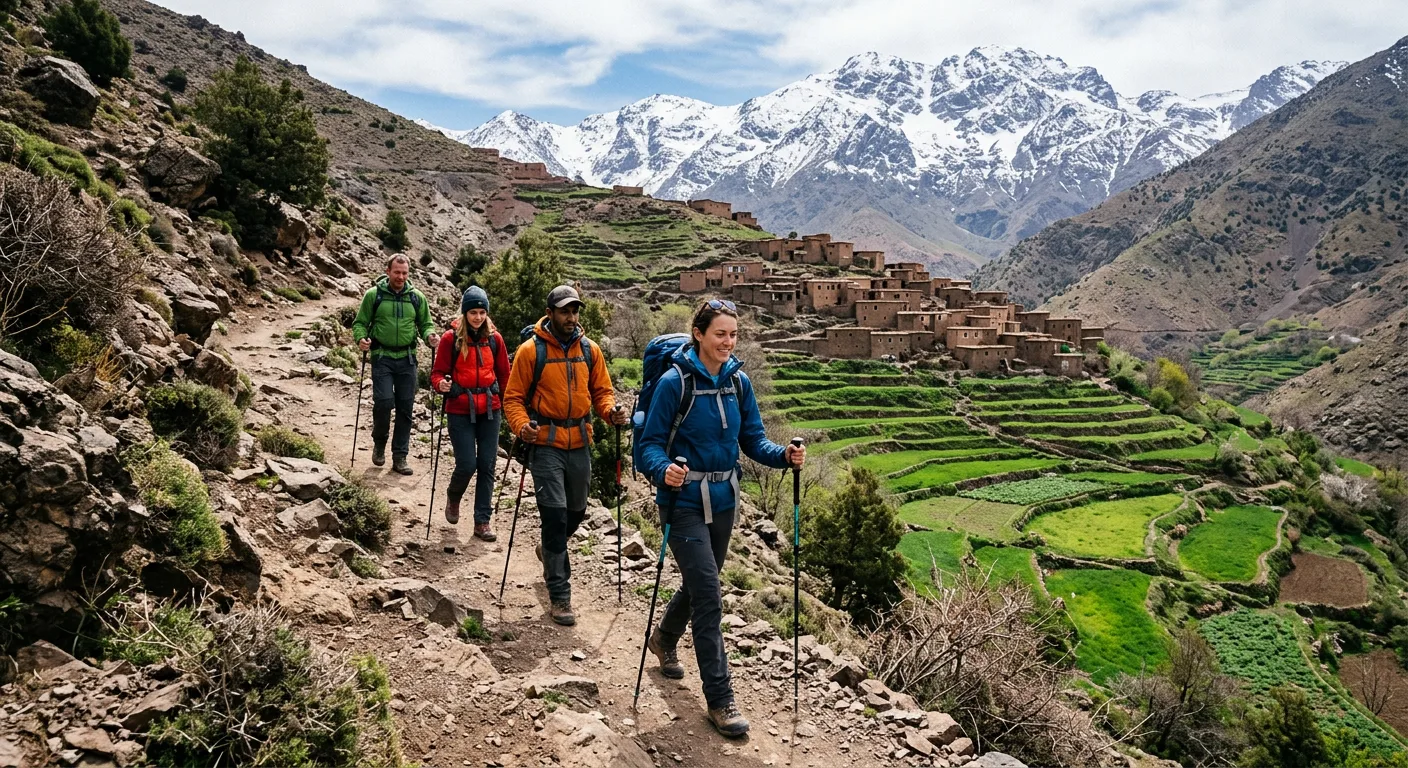
Trekking through the High Atlas Mountains
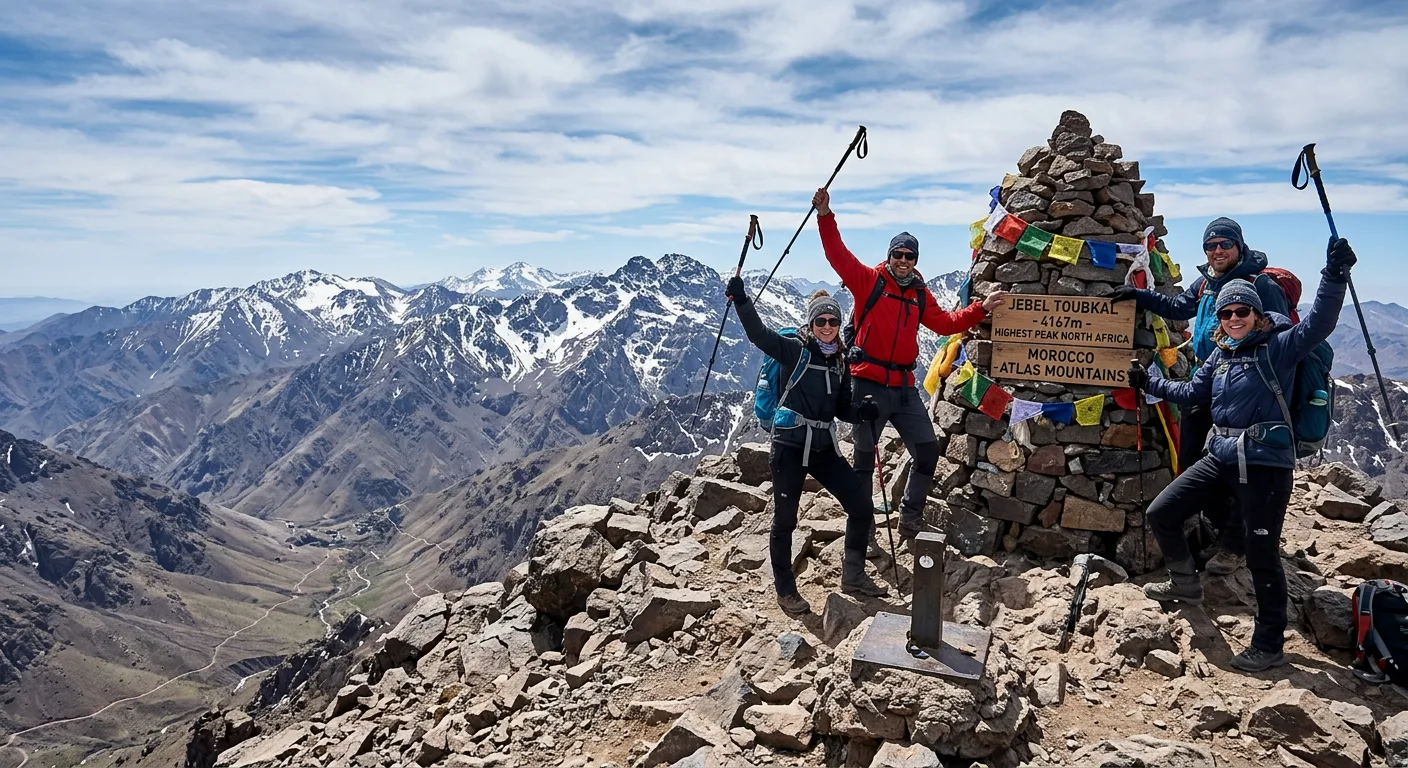
Jebel Toubkal -- North Africa's highest peak
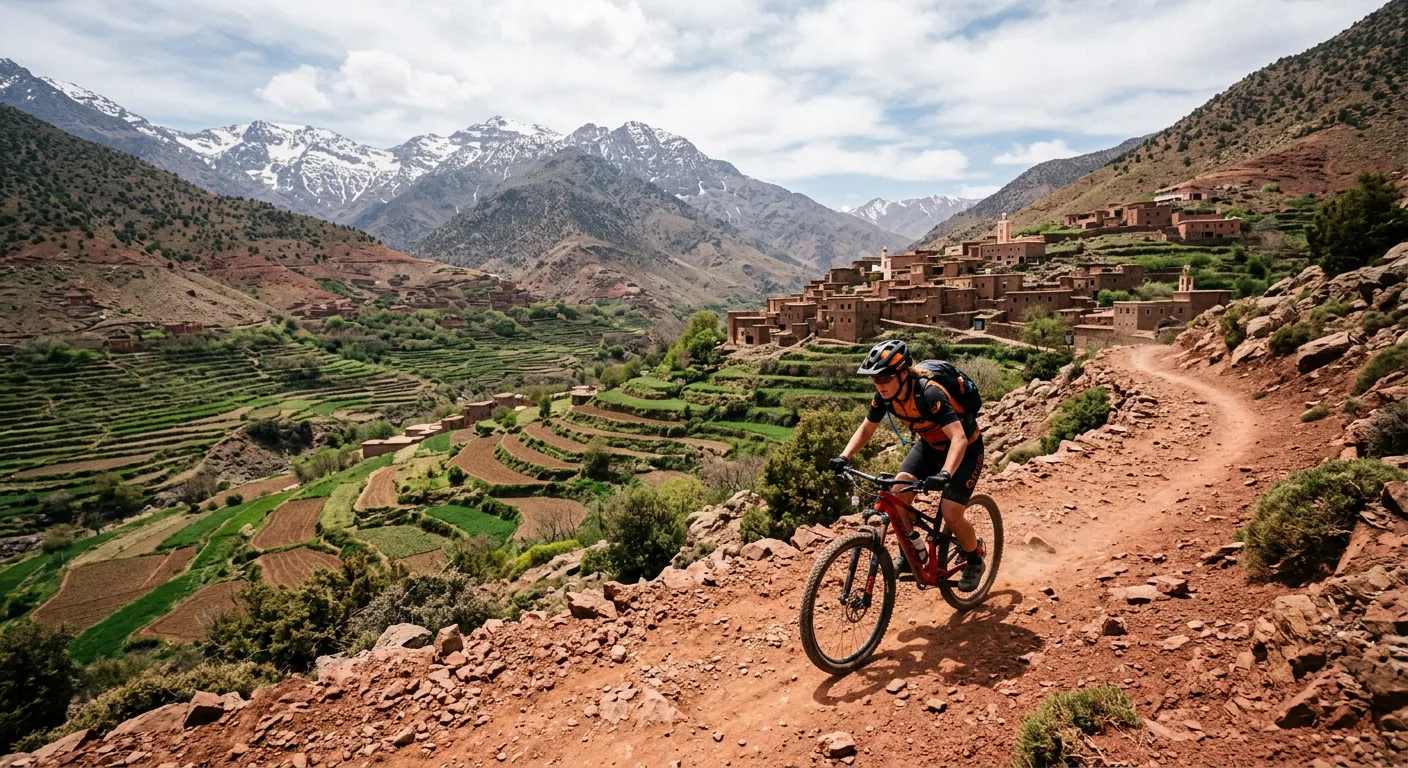
Mountain biking through the Atlas Mountains
Ready to Hit the Trails?
Whether you are summiting North Africa's highest peak or wandering through a flower-filled valley, Morocco's trails offer adventure, culture, and natural beauty in equal measure. Prepare well, respect the mountains, and you will be rewarded with memories that last a lifetime.