Discovering...
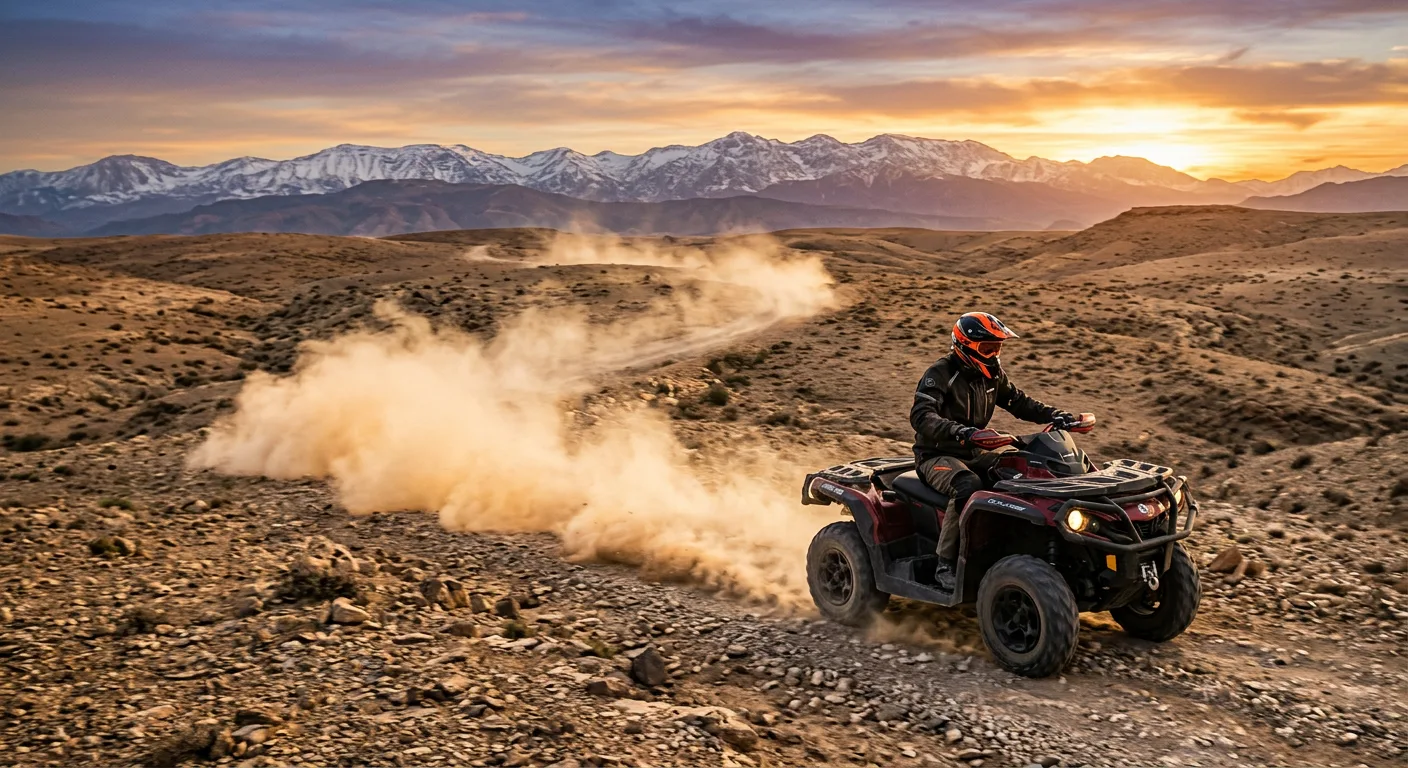
Morocco Quad Biking & ATV Guide 2026
From Marrakech palm groves to Saharan sand dunes — the complete guide to quad biking across Morocco with prices, routes, operators, and safety essentials.
Why Morocco Is a World-Class Quad Biking Destination
Morocco offers some of the most diverse quad biking terrain on Earth. Within a single country, you can ride through palm-shaded oases, across rock-strewn lunar deserts, up mountain switchbacks, along Atlantic beach flats, and over towering Saharan sand dunes. This range of landscapes, combined with year-round riding weather and competitive pricing, has made Morocco one of the top quad biking destinations globally.
The industry here has matured significantly over the past decade. Professional operators now run well-maintained fleets of automatic ATVs ranging from 150cc beginner machines to 450cc dune-spec powerhouses. Safety standards have improved across the board, with helmets, goggles, briefings, and support vehicles now standard on quality tours. Group sizes have also shrunk — most reputable operators cap rides at 8-12 quads to keep the experience manageable and safe.
Pricing remains highly accessible compared to similar experiences in the UAE, Australia, or the US. A solid 2-hour quad tour in Morocco starts from 350 MAD (roughly $35 USD), making it an adventure almost every traveler can afford. Full-day expeditions through the Atlas Mountains or across Erg Chebbi dunes deliver genuine expedition-level excitement without expedition-level costs.
from 350 MAD
Starting Price
6 Regions
Top Locations
1-8 Hours
Tour Duration
16 Years
Min. Age (solo)
Top 6 Quad Biking Destinations in Morocco
Each region delivers a distinct riding experience — from gentle Palmeraie trails to adrenaline-pumping Saharan dune runs. Here is what to expect at each location.
1
Marrakech Palmeraie
2 hours from 350 MAD Beginner-friendly
The most popular quad biking spot in Morocco. The Palmeraie stretches across 13,000 hectares of palm groves northeast of Marrakech. Trails wind through dusty paths between palm trees, past Berber farmsteads, and along irrigation channels. The flat terrain makes this perfect for beginners, and the proximity to Marrakech (15-minute transfer) keeps it convenient.
Terrain
Palm groves, dirt tracks, Berber villages
Best for
First-timers and families
Highlights
Hotel pickup included
Berber village visits
Mint tea break at local home
Flat, easy terrain
Known Operators
Palmeraie QuadMarrakech Quad AdventureAtlas Quad Excursions
2
Agafay Desert
2-4 hours from 600 MAD Intermediate
The Agafay stone desert lies just 30 km south of Marrakech, offering a dramatically different landscape from the Palmeraie. This lunar-like terrain of rocky hills and barren plateaus creates an otherworldly riding experience. The lack of sand makes handling more predictable than Saharan dunes, yet the terrain is far more challenging than the Palmeraie. Sunset rides here are spectacular, with the Atlas Mountains silhouetted against orange skies.
Terrain
Rocky desert, stone plateaus, dry riverbeds
Best for
Photographers and sunset seekers
Highlights
Atlas Mountain panoramas
Sunset tour option with dinner
Rocky desert landscape
Glamping camp stopovers
Known Operators
Agafay Desert QuadMorocco Desert AdventuresScarabeo Camp Quad Tours
3
Merzouga & Erg Chebbi Dunes
1-3 hours from 500 MAD Intermediate to Advanced
Riding ATVs across the towering Erg Chebbi sand dunes near Merzouga is the ultimate Moroccan quad experience. Dunes rise up to 150 meters, and the constantly shifting sands demand real skill. Operators use powerful 250cc-450cc machines built for deep sand. Sunrise rides launch from desert camps before the heat builds. The contrast between golden dunes, black rocky hammada, and green oasis palmeries creates a varied and visually stunning ride.
Terrain
Sand dunes, hard-packed desert, oasis trails
Best for
Thrill seekers and desert lovers
Highlights
Sahara sand dune riding
Sunrise and sunset tours
Desert camp combo packages
Powerful dune-spec quads
Known Operators
Merzouga Quad ExcursionsSahara ATV AdventuresErg Chebbi Quad Tours
4
Essaouira Beach & Dunes
2-3 hours from 450 MAD Beginner to Intermediate
Essaouira offers a unique coastal quad experience along wide Atlantic beaches and forested sand dunes south of the medina. Rides typically head along Sidi Kaouki beach, through argan tree forests where goats climb the branches, and across the coastal dune systems. The Atlantic wind keeps temperatures comfortable even in summer. Low-tide rides on hard-packed sand allow for exhilarating speed runs along the shoreline.
Terrain
Atlantic beach, coastal dunes, argan forest trails
Best for
Beach lovers and wind sports fans
Highlights
Beach riding at low tide
Argan forest trails
Cooler coastal temperatures
Combine with camel ride on beach
Known Operators
Essaouira Quad ToursAtlantic AdventuresMogador Quad Experience
5
Atlas Mountains
4-8 hours from 900 MAD Intermediate to Advanced
Full-day Atlas Mountain quad expeditions take riders through remote valleys, across riverbeds, and up mountain trails with breathtaking elevation changes. Routes typically depart from Marrakech heading toward the Ourika Valley or Toubkal foothills. You will pass through traditional Berber villages at altitude, ford seasonal streams, and navigate rocky switchbacks. The scenery shifts from arid lowlands to terraced green valleys as you climb.
Terrain
Mountain trails, river valleys, Berber villages
Best for
Experienced riders and nature enthusiasts
Highlights
Dramatic elevation changes
Berber village lunch stops
River ford crossings
Full-day adventure expeditions
Known Operators
Atlas Mountain Quad ToursHigh Atlas AdventuresToubkal Quad Expeditions
6
Ouarzazate & Draa Valley
3-6 hours from 700 MAD Intermediate
Ouarzazate sits at the crossroads between the Atlas Mountains and the Sahara, surrounded by the dramatic landscape used in countless Hollywood productions. Quad trails here wind past ancient kasbahs, through the Draa Valley palm groves, and across the vast Hammada desert. The terrain is predominantly hard-packed stone desert interspersed with sandy stretches. Routes often include stops at the Ait Benhaddou UNESCO kasbah and the Fint Oasis.
Terrain
Desert plains, kasbah trails, oasis tracks
Best for
Film location fans and culture seekers
Highlights
Film location landscape
Kasbah and oasis stops
Wide open desert riding
Less crowded than Marrakech
Known Operators
Ouarzazate Quad AdventuresDraa Valley ATV ToursKasbah Quad Expeditions
Group vs Private vs Sunset Tours
Choosing the right tour format makes a significant difference to your experience. Here is a direct comparison.
Group Tour
from 350 MAD
6-12 riders
Advantages
Most affordable option
Social atmosphere
Fixed departure times
Great for solo travelers
Considerations
Fixed pace set by slowest rider
Less flexibility for stops
Standard routes only
Private Tour
from 600 MAD
1-4 riders
Advantages
Custom pace and route
Unlimited photo stops
Flexible departure time
Personalized attention from guide
Considerations
30-50% higher cost
Less social
Need to book 24+ hours ahead
Sunset/Sunrise Special
from 500 MAD
4-8 riders
Advantages
Cooler riding temperatures
Stunning golden light
Often includes tea/snacks
Best for photography
Considerations
Limited availability
Shorter riding window
Early wake-up for sunrise tours
Safety Requirements & Best Practices
Quad biking carries inherent risks. Following these guidelines dramatically reduces the chance of injury.
Always wear the provided helmet — no exceptions
Follow the guide at all times; do not ride off the designated trail
Maintain a safe distance of at least 5 meters from the quad ahead
Avoid sudden braking on sand — use gradual deceleration
Keep both hands on the handlebars while the quad is moving
Do not stand up on the quad while riding over bumps or dunes
Signal the guide immediately if you feel unwell or your quad acts abnormally
Stay hydrated — heat exhaustion is the most common medical issue on desert rides
Important: Travel Insurance
Standard travel insurance often excludes motorized adventure activities. Before your trip, confirm your policy covers quad biking or purchase a specific adventure sports rider. Medical evacuation from remote desert or mountain locations can cost upward of 20,000 MAD without coverage. Several operators require proof of insurance before allowing participation.
What to Wear & Bring
Proper gear transforms a good quad ride into a comfortable one. Operators provide helmets and sometimes goggles — everything else is on you.
Closed-toe shoes or boots
Ankle support recommended for dune riding
Long trousers
Protects legs from sun, sand spray, and engine heat
Long-sleeved breathable top
Sun and wind protection without overheating
Sunglasses or goggles
Essential for dust and sand protection
Sunscreen SPF 50+
Apply before the ride; reapply is difficult with gloves
Buff or neck gaiter
Pull over nose and mouth in dusty conditions
Small backpack or waist bag
Secure phone, wallet, water — nothing loose
Water bottle (1-2 liters)
Most operators provide water but bring extra in summer
Camera with wrist strap
GoPro mounts available on some quads; secure everything
Light jacket (winter/Atlas)
Mornings can be cold at altitude or in the desert before sunrise
Morocco Quad Biking Price Guide 2026
Prices vary by location, duration, and tour type. Seasonal pricing can change — the figures below reflect current standard rates.
| Experience | Duration | Group Price | Private Price |
|---|---|---|---|
| Palmeraie Quad Tour | 2 hours | from 350 MAD | from 550 MAD |
| Agafay Desert Ride | 2-3 hours | from 600 MAD | from 900 MAD |
| Agafay Sunset + Dinner | 4 hours | from 800 MAD | from 1,200 MAD |
| Merzouga Dune ATV | 1-2 hours | from 500 MAD | from 800 MAD |
| Merzouga Full Experience | 3 hours | from 900 MAD | from 1,400 MAD |
| Essaouira Beach Quad | 2-3 hours | from 450 MAD | from 700 MAD |
| Atlas Mountain Expedition | 6-8 hours | from 900 MAD | from 1,500 MAD |
| Ouarzazate Desert Trail | 3-4 hours | from 700 MAD | from 1,100 MAD |
Prices are per person for the 2025-2026 season. Seasonal pricing can change. Most tours include hotel pickup/drop-off in the city center. Fuel and equipment are included in all prices listed above.
How to Choose a Reputable Operator
Not all quad tour companies deliver the same quality. Use these criteria to filter the best from the rest.
Check Recent Reviews
Look for operators with 100+ reviews on TripAdvisor or Google, with ratings above 4.5/5. Read the 1-star reviews carefully — repeated complaints about safety or vehicle condition are red flags.
Inspect the Machines
Quality operators maintain their fleet meticulously. Quads should have working brakes, functioning headlights, proper tire tread, and no visible fluid leaks. Ask when the last service was performed.
Ask About Insurance
The operator should carry third-party liability insurance. Ask to see their certificate. If they cannot produce one, walk away. Some premium operators also include rider injury coverage.
Verify Safety Equipment
At minimum: CE-rated helmets in good condition, goggles or face shields, and a first-aid kit. Better operators also provide gloves, knee guards, and carry a support vehicle with supplies.
Briefing Quality
A proper safety briefing lasts 15-20 minutes and covers quad controls, body positioning, terrain-specific techniques, hand signals, and emergency procedures. Skip anyone who rushes through this.
Guide-to-Rider Ratio
The best operators maintain a maximum ratio of 1 guide per 6 riders. Tours with 12+ riders and a single guide cannot provide adequate safety oversight. Ask about ratios before booking.
Best Time of Year for Quad Biking
Spring (Mar-May)
Excellent — 20-30°CGreen landscapes, comfortable temperatures, clear skies. Peak season for Atlas Mountain rides.
Summer (Jun-Aug)
Hot — 35-48°CDesert rides only at dawn/dusk. Essaouira coast stays comfortable thanks to Atlantic winds. Avoid midday rides.
Autumn (Sep-Nov)
Excellent — 22-32°CTemperatures cool from October. Crowds thin after summer. Ideal for all locations especially Sahara.
Winter (Dec-Feb)
Good — 12-22°CCool mornings, warm afternoons. Snow possible in Atlas above 2,000m. Desert days are pleasant, nights cold.
Insider Tips from Experienced Riders
Book the first morning slot (7-8 AM) for Palmeraie rides. The dust from previous groups settles overnight, and the light is golden for photos.
For Merzouga dune rides, request the newer 450cc Yamaha or Can-Am machines. Older 250cc quads struggle on steep dune faces and can get bogged down.
Negotiate prices if booking multiple activities with the same operator. A quad + camel ride combo in Marrakech can save 20-30% versus booking separately.
Eat a light breakfast before riding. Heavy meals combined with vibration and heat increase the risk of motion sickness on bumpy desert tracks.
If you have riding experience, tell your guide before departure. They can place experienced riders at the back of the group where the terrain is most churned up — which is actually more fun.
Apply sunscreen to the backs of your hands and your neck 30 minutes before riding. These areas burn fastest and cannot be protected once you are wearing gloves and a helmet.
Age Limits & Family Quad Biking
Age Requirements by Category
Solo riders (full-size quads 150cc+): Minimum 16 years old at most operators. Some require 18 for machines above 250cc.
Junior riders (small 90cc quads): Available for children aged 12-15 at select operators. Restricted speed, flat terrain only.
Passengers (riding with an adult): Children aged 6 and above can ride as passengers on tandem quads. The adult driver must be 18+.
Under 6: Not permitted on any quad tours for safety reasons. Consider a camel ride or horse-drawn carriage as a family alternative.
Family-Friendly Recommendations
The Marrakech Palmeraie is the best location for families. Flat terrain, short duration (2 hours), and proximity to the city make it convenient and safe. Several operators run dedicated family sessions with reduced group sizes and gentler pacing. The Essaouira beach runs are another solid family choice — the hard-packed sand is easy to ride and the coastal breeze keeps things cool.
Avoid taking children on Merzouga dune rides or Atlas Mountain expeditions. The terrain is unpredictable, distances from medical facilities are significant, and the physical demands can be too much for younger riders. Stick to the Palmeraie or Essaouira for anyone under 16.
Frequently Asked Questions
Common questions about quad biking in Morocco, answered by riders who have done it.
1
Do I need a license to ride a quad bike in Morocco?
No driving license is required for guided quad tours in Morocco. Tour operators provide all necessary training before each ride. However, if you want to rent a quad independently (rare), a valid driving license may be requested by some rental agencies.
2
What is the minimum age for quad biking in Morocco?
Most operators set the minimum age at 16 for solo riders, though some allow riders as young as 12 on smaller 90cc quads. Children aged 6 and above can typically ride as passengers with an adult on larger machines. Always confirm age policies with your chosen operator before booking.
3
What should I wear for a quad biking tour in Morocco?
Wear long trousers, closed-toe shoes or boots, and a long-sleeved top. Bring sunglasses or goggles to protect from dust and sand. Operators provide helmets and often goggles, but bringing your own sunglasses is recommended. Avoid loose scarves or clothing that could catch in moving parts.
4
Is quad biking safe in Morocco?
Quad biking is generally safe when done with reputable operators who provide proper safety equipment and briefings. Key safety measures include mandatory helmets, speed-limit enforcement on tours, trained guides riding alongside the group, and well-maintained machines. Always choose licensed operators with good reviews.
5
What is the best time of year for quad biking in Morocco?
The best months are October through April when temperatures are comfortable (18-28°C). Summer rides in the desert can exceed 45°C and are only recommended at sunrise or sunset. Spring (March-May) offers the best combination of pleasant weather and green landscapes, especially around the Palmeraie and Atlas foothills.
6
How much does quad biking cost in Morocco?
Prices vary by location and duration. A 2-hour Palmeraie tour starts from 350 MAD per person. Half-day Agafay desert rides run from 600 MAD. Full-day Merzouga dune adventures cost from 900 MAD. Sunset tours with tea and snacks are from 500 MAD. Private tours typically cost 30-50% more than group options.
7
Can beginners ride quad bikes in Morocco?
Absolutely. Most Morocco quad tours are designed for first-time riders. You will receive a 15-20 minute briefing covering acceleration, braking, steering, and terrain handling. Guides adjust the pace to the least experienced rider in the group. Automatic transmission quads are standard, so no gear-shifting knowledge is needed.
8
What happens if the quad bike breaks down during a tour?
Reputable operators carry basic repair kits and have backup quads available. Most guided tours include a support vehicle trailing the group with spare parts, water, and first-aid supplies. If a mechanical issue cannot be resolved on-site, the operator will arrange a replacement vehicle or transport you back. Breakdowns are covered in the tour price.
9
Should I book a group or private quad tour?
Group tours (6-12 riders) are more affordable and social. Private tours offer flexibility with pace, route, and stops for photography. For couples or families, private tours are often worth the premium. If you are an experienced rider wanting to push speed limits, private tours allow more freedom. Budget travelers will find group tours excellent value.
10
Can I take photos during a quad biking tour?
Yes. Most tours include 2-3 planned photo stops at scenic viewpoints. Some operators provide an action camera mount for your quad. Secure your phone in a zipped pocket or waterproof pouch to prevent loss from vibrations. Avoid using your phone while riding. Guides are usually happy to take photos of your group during stops.
Terrain-Specific Riding Techniques
Each Moroccan landscape demands different riding approaches. Understanding these basics before your tour gives you a significant advantage.
Sand Dunes (Merzouga)
Maintain momentum — stopping on soft sand means getting stuck. Keep a steady throttle through deep sections.
Lean back slightly when climbing dune faces to keep the front wheels from digging in.
On descents, shift your weight forward and use engine braking rather than the hand brake.
Follow your guide's tracks exactly. They know where the sand is firmest.
Rocky Desert (Agafay & Ouarzazate)
Stand slightly on the pegs when crossing rough patches to let the quad absorb impacts through its suspension.
Avoid sharp turns on loose gravel — the quad can slide sideways. Wide, sweeping turns maintain traction.
Watch for dry riverbeds (oueds) — the sandy bottom can be deceptively soft compared to the surrounding rock.
Keep your speed moderate over stone fields. A punctured tire in a remote location is a serious delay.
Beach Sand (Essaouira)
Ride on the hard-packed sand between the tide line and the dry sand. This zone offers the best traction.
Avoid riding too close to the waterline — incoming waves can catch you off-guard and saltwater damages quad components.
Wet sand is grippy but hides rocks and debris. Stay alert for obstacles partially buried by the tide.
Wind gusts along the Atlantic coast can push a quad sideways. Grip firmly and keep your body centered.
Mountain Trails (Atlas)
On uphill sections, lean forward over the handlebars and maintain consistent throttle. Hesitation causes wheel spin.
Approach river crossings slowly, in a low gear if available. Walk the crossing first if unsure of depth.
On narrow trails with drop-offs, keep your eyes on where you want to go — not on the edge. Target fixation is the main cause of trail-edge incidents.
Allow extra following distance on descents. Loose stones kicked up by the quad ahead can hit your visor or hands.
Riding Responsibly in Morocco
Quad biking has an environmental footprint. Noise disturbs wildlife, tires erode fragile desert crusts, and exhaust pollutes pristine air. Responsible operators are working to minimize these impacts, and riders can help by following a few principles.
Stay on designated trails at all times. Off-trail riding destroys desert flora that can take decades to recover.
Carry all trash out with you. The desert does not decompose plastic or aluminium — your water bottle will sit there for centuries.
Choose operators with newer, fuel-efficient machines. Four-stroke engines are significantly cleaner than older two-stroke models.
Respect local communities. Slow down through Berber villages, wave to residents, and avoid raising unnecessary dust near homes and livestock.
Booking & Practical Advice
Book Direct vs. Through Your Riad
Booking through your riad or hotel adds a 15-30% commission markup. Book directly with operators via WhatsApp, their website, or platforms like GetYourGuide and Viator for better rates. However, riad bookings offer convenience and accountability if something goes wrong.
How Far in Advance to Book
During peak season (October-April), book 2-3 days ahead for group tours and 3-5 days for private tours. In summer, same-day booking is usually possible. Sunset tours fill up fastest — book these as early as possible, especially for Agafay.
Tipping Etiquette
Tipping your guide is customary but not mandatory. A tip of 50-100 MAD per person for a half-day tour is generous and appreciated. For full-day expeditions with outstanding guides, 150-200 MAD is appropriate. Tip in cash at the end of the ride.
Cancellation Policies
Most operators offer free cancellation up to 24 hours before departure. Some weather-dependent tours (especially desert rides during sandstorms) may be rescheduled at no charge. Always confirm the cancellation policy at booking time and get written confirmation via email or WhatsApp.
Related Adventure Guides
Morocco Adventure Sports
Surfing, paragliding, rock climbing, and more extreme activities across Morocco
Read guideMorocco Desert Tour Guide
Complete Sahara desert tour planning: routes, camps, camel treks, and stargazing
Read guideMorocco Camel Trekking
Camel ride options from 1-hour Palmeraie walks to multi-day Sahara expeditions
Read guideMorocco Outdoor Activities
Hiking, cycling, horse riding, and every outdoor pursuit Morocco offers
Read guideMorocco Desert Glamping
Luxury desert camps with hot showers, gourmet dining, and star-filled skies
Read guideMorocco Surfing Guide
Atlantic coast surf spots from Taghazout to Essaouira for every skill level
Read guideReady to Hit the Trails?
Morocco's diverse terrain is waiting. From the palm groves of the Palmeraie to the towering dunes of Erg Chebbi, there is a quad biking adventure for every skill level and budget. Book with a reputable operator, gear up properly, and prepare for one of the most exhilarating ways to explore this country.