Discovering...
Desert Adventure & Wildlife
Morocco Camel Riding
Guide 2026
From one-hour sunset rides across Saharan dunes to multi-day caravan treks following ancient trade routes -- the complete guide to camel riding in Morocco with honest pricing from 150 MAD.
The Original Desert Transport, Now Your Most Memorable Ride
For over a thousand years, dromedary camels carried salt, gold, spices, and people across the Sahara on routes that connected Morocco to Timbuktu and beyond. Those trade caravans shaped the cities, cultures, and economies of North Africa. Today, the same animals carry travelers into the dunes for something far less commercial and far more personal: the chance to experience the desert the way it was meant to be crossed.
Morocco offers more variety in camel riding than almost any country on earth. You can ride across the towering golden dunes of Erg Chebbi near Merzouga, trek through the flat stony hammada near Zagora, loop through the rocky moonscape of Agafay within sight of the Atlas Mountains, or ride along the windswept Atlantic beaches near Essaouira. Each location delivers a distinct landscape, pace, and atmosphere.
This guide covers every practical detail: which destination suits your schedule, what to wear, how to choose an operator that treats its animals well, what the ride actually feels like, and how much you should expect to pay. All prices are listed in Moroccan Dirham (MAD) and reflect 2026 rates. Seasonal pricing can change during peak tourist periods.
Know Your Mount: The Dromedary Camel
One Hump, Not Two
Morocco's camels are dromedaries (Camelus dromedarius) with a single hump. The two-humped Bactrian camel lives in Central Asia. The dromedary's hump stores fat -- not water -- which the animal metabolizes for energy and hydration during long treks. A healthy hump stands firm and upright. A floppy or leaning hump indicates poor nutrition.
Built for the Desert
Dromedaries can go 7-10 days without water and then drink up to 100 liters in 10 minutes. Their wide, padded feet spread their weight across soft sand like natural snowshoes. Double rows of eyelashes and closeable nostrils protect against sandstorms. They can carry 150-200 kg at a walking pace of 5 km/h for hours without tiring.
Personality and Temperament
Camels have strong individual personalities. Some are calm and docile; others are stubborn or grumpy, especially during the mating season (winter months). They groan, grumble, and sometimes spit, but biting is rare with domesticated animals. Your guide will match you with a suitable camel based on your size and experience level.
The Riding Gait
A camel walks by moving both legs on the same side simultaneously, creating a distinctive side-to-side sway that earns them the nickname "ships of the desert." This rocking motion feels strange for the first 10 minutes. Relax your hips, keep your back straight, and let your body follow the rhythm. Most riders find it comfortable within 15 minutes.
Best Camel Riding Destinations in Morocco
Four distinct landscapes, four different riding experiences. Choose based on your available time, budget, and the scenery you want.
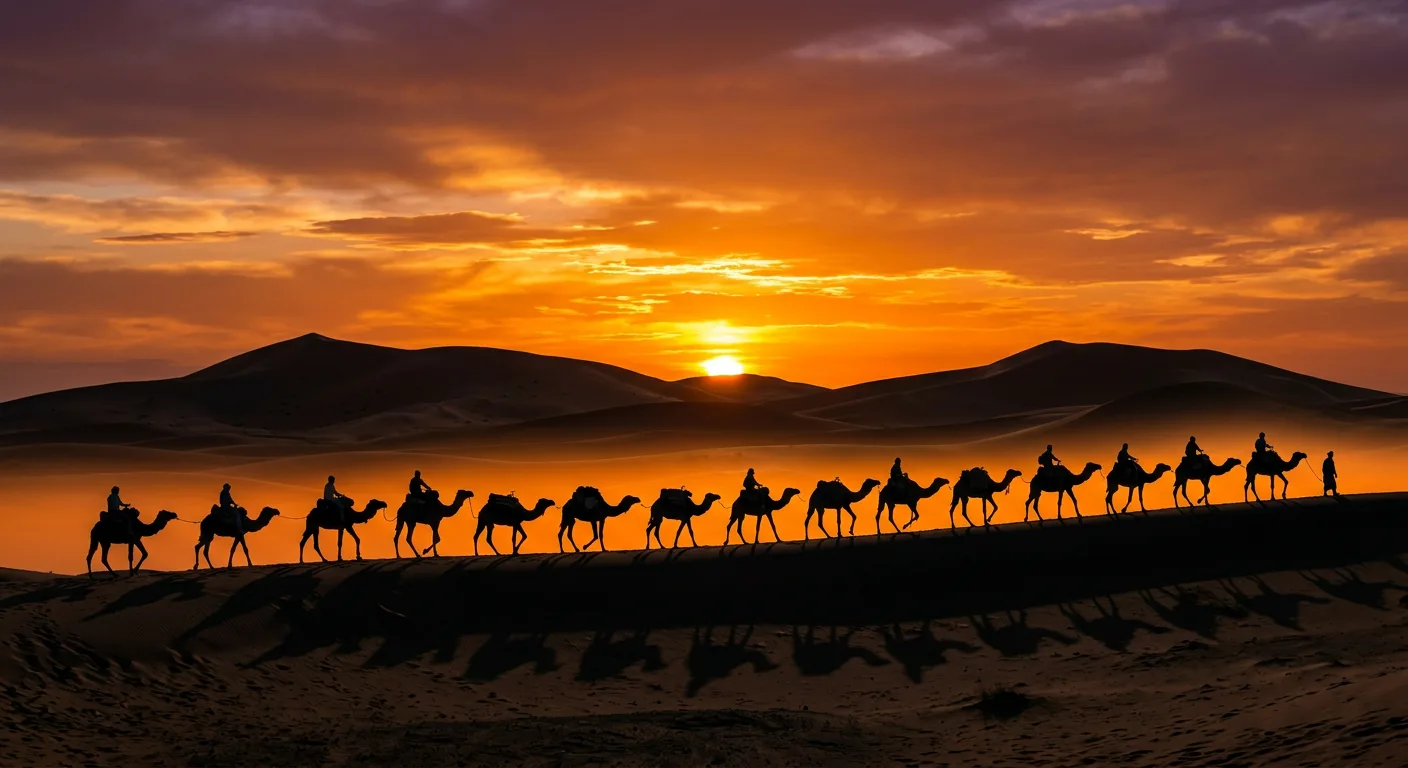
Merzouga (Erg Chebbi)
Towering golden dunes up to 150 meters9-10 hours from Marrakech, 5 hours from Fes
Erg Chebbi is Morocco's most spectacular dune field. The sand shifts from gold at midday to deep orange at sunset and rose-pink at dawn. Camps range from simple Berber tents with shared facilities to full-service glamping with private bathrooms, hot showers, and candlelit dining under the stars. The ride from the parking area to most camps takes about 45 minutes on camelback.
Best for: The iconic Sahara dune experience, overnight camps, astrophotography
Ride Options & Prices
Sunset ride to camp -- 1-1.5 hours -- From 250 MAD
Sunrise ride from camp -- 45 min-1 hour -- Included in overnight package
Overnight camp package -- 1 night -- From 500 MAD (basic) / from 1,500 MAD (luxury)
Multi-day trek (2-3 days) -- 2-3 days -- From 2,500 MAD per person

Zagora (Draa Valley)
Flat stony desert (hammada) with low dunes and palm oases6-7 hours from Marrakech
Zagora marks the northern gateway to the Sahara. The famous road sign reads "Tombouctou 52 Jours" -- a reminder that caravan routes once linked this town to Timbuktu. The terrain here is flatter and rockier than Merzouga, making for a steadier ride that suits nervous first-timers. The Draa Valley oasis with its million palm trees is a striking contrast to the surrounding desert.
Best for: Shorter desert trips, Draa Valley scenery, calmer riding terrain
Ride Options & Prices
Sunset ride -- 1-1.5 hours -- From 200 MAD
Overnight camp package -- 1 night -- From 400 MAD
Two-day Sahara circuit -- 2 days -- From 1,800 MAD per person
Agafay Desert
Rocky, barren desert plateau with Atlas Mountain views40 minutes from Marrakech
Agafay is not technically the Sahara -- it is a stony desert plateau 40 minutes south of Marrakech. There are no towering sand dunes here, but the stark, moon-like landscape backed by the snow-capped Atlas Mountains creates a dramatic setting. It is the best option for travelers short on time who want a desert camel ride without the 9-hour drive to Merzouga. Luxury glamping camps here rival any in Morocco.
Best for: Day trips from Marrakech, sunset rides, glamping without the long drive
Ride Options & Prices
Short ride -- 30 min -- From 150 MAD
Sunset ride with tea -- 1-1.5 hours -- From 300 MAD
Overnight glamping + ride -- 1 night -- From 800 MAD
Essaouira Beach
Wide sandy Atlantic beach and coastal dunes2.5-3 hours from Marrakech
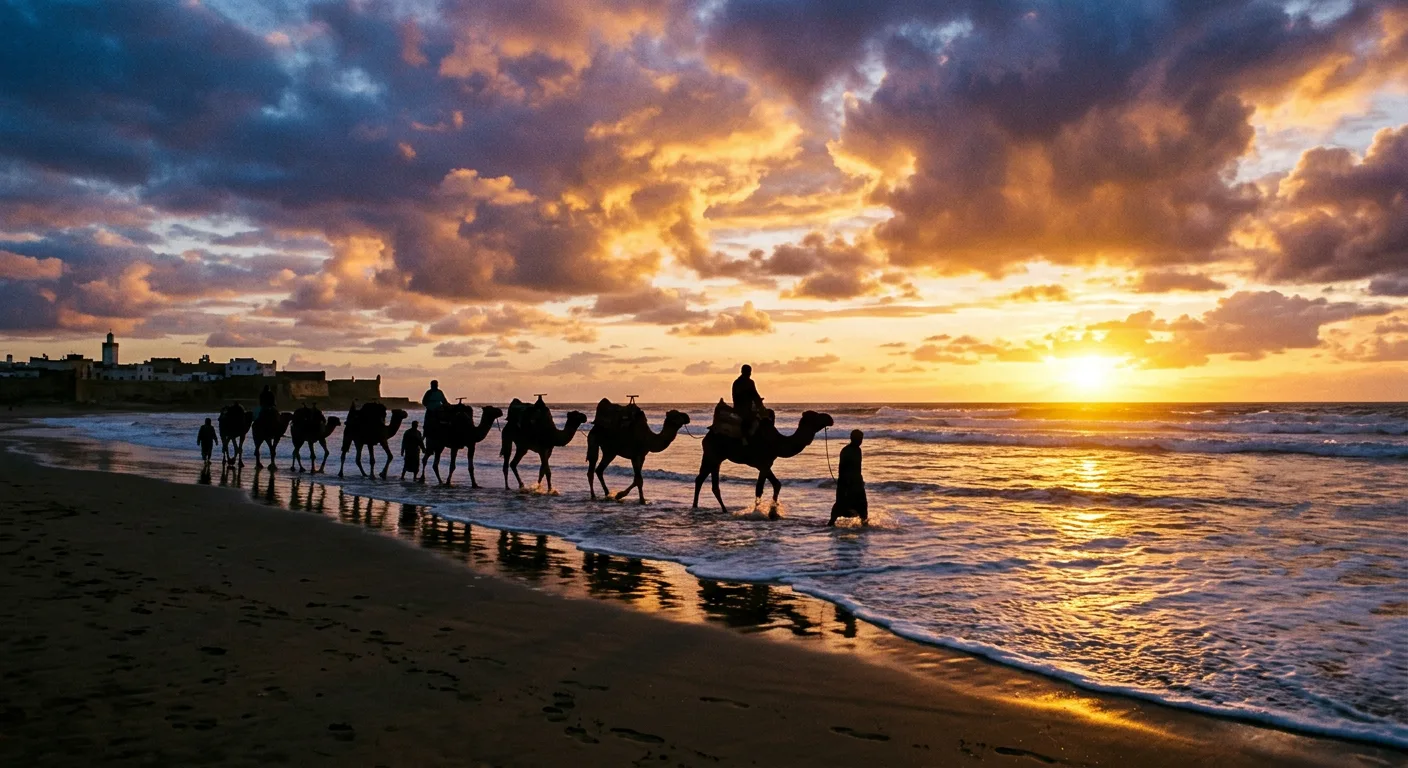
Riding a camel along the Atlantic coast is a completely different experience from the Sahara. The hard-packed sand at low tide allows for a smoother ride, and the ocean breeze keeps temperatures comfortable year-round. The wide beach south of Essaouira stretches for kilometers with almost no one else around. It is a strong choice for families with young children or travelers who prefer cooler conditions.
Best for: Beach camel rides, families, combining with Essaouira sightseeing
Ride Options & Prices
Beach ride -- 1 hour -- From 200 MAD
Extended coastal trek -- 2-3 hours -- From 400 MAD
Sunset beach ride -- 1.5 hours -- From 350 MAD
Sunrise Ride vs. Sunset Ride
Both are spectacular. The right choice depends on your priorities.
Sunrise Ride
When: 5:30-7:00 AM (varies by season)
Temperature: Cool -- often below 10°C in winter
Light: Soft pink-to-gold light on dunes, long shadows, misty horizon
Crowd level: Very few people; most camps offer private sunrise rides
Mood: Quiet, meditative, and serene. The desert is completely still.
Best for: Photographers, early risers, those wanting solitude on the dunes
Tip: Bundle up. Desert mornings are cold even in summer. Bring gloves from October to March.
Sunset Ride
When: 4:00-6:30 PM (varies by season)
Temperature: Warm to hot -- 25-40°C depending on month
Light: Deep orange and amber. Dunes glow like molten gold in the last hour.
Crowd level: Popular -- expect other groups on the same route near major camps
Mood: Dramatic, social, celebratory. Golden hour photography at its peak.
Best for: First-timers, families, groups, anyone wanting the classic postcard shot
Tip: Bring water and sunglasses. Even at sunset, sand reflects intense light and heat.
Duration Options: 30 Minutes to Multi-Day
Camel rides in Morocco range from a quick introduction to a week-long expedition. Choose the length that matches your fitness level and appetite for adventure.
30 Minutes
From 150 MADA short loop ride that gives you the experience of mounting, riding, and dismounting a camel. Enough for photos and a feel for the animal. No deep desert immersion.
Agafay, Essaouira, Marrakech outskirtsQuick introduction, families with small children, tight schedules
1-1.5 Hours
From 250 MADThe most popular format. Ride through dunes or along the beach at golden hour. Long enough to settle into the rhythm of the camel but short enough to avoid soreness. This is the standard ride included in overnight camp packages.
Merzouga, Zagora, Agafay, EssaouiraFirst-timers, the classic sunset or sunrise ride, leading into a camp stay
3-4 Hours (Half Day)
From 500 MADCovers significantly more terrain. Includes a break for tea at a nomad camp or oasis. You get far enough from the main camps to feel genuine remoteness. Some soreness is normal for first-timers at this length.
Merzouga, Zagora, M'HamidExperienced riders, deeper desert exploration, nomad camp visits
2-3 Day Trek
From 2,500 MAD per personSleep in a different camp each night. Ride 4-5 hours per day with lunch and rest stops. Meals cooked over fire by Berber guides. You reach areas of the Sahara that day-trippers never see. Moderate physical fitness required.
Merzouga to remote camps, Zagora to M'Hamid, Draa Valley circuitAdventure travelers, those wanting a caravan-style desert crossing
5-7 Day Expedition
From 4,000 MAD per person per dayFull caravan-style expedition following historic trade routes. Support vehicles carry supplies while you ride. Camps set up fresh each evening. Requires good physical condition. Available October through April only. Book at least 4 weeks in advance.
Deep Sahara routes from M'Hamid or MerzougaSerious adventurers, documentary filmmakers, off-grid enthusiasts
Overnight Desert Camps
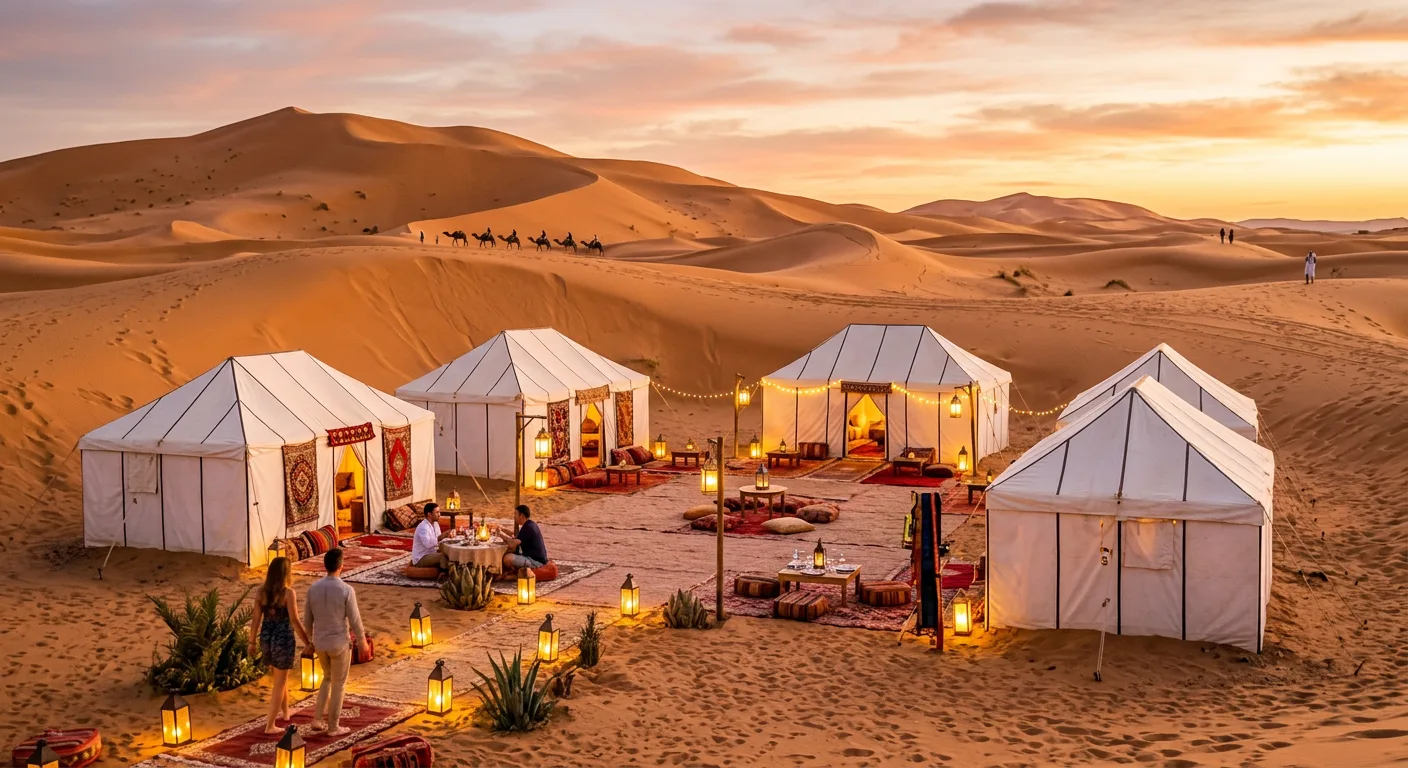
The overnight camp experience is what most travelers remember years later. The standard format: ride a camel from the trailhead to camp at sunset (45 minutes to 1.5 hours), watch the sun drop behind the dunes, eat a traditional Berber dinner by lantern light, listen to live drumming and Gnawa music around a fire, sleep under a sky with more stars than you have ever seen, then wake for a sunrise ride back.
Basic Berber Camp
From 500 MAD per person
Simple fabric tents with mattresses on the ground, shared bathroom facilities (basic toilets), communal dining tent. Dinner is tagine or couscous cooked over fire. The experience is authentic and stripped-back. Bring a headlamp, warm layers, and earplugs. These camps suit budget travelers and those who want the raw desert experience.
Mid-Range Camp
From 800 MAD per person
Larger tents with real beds, bedding, and sometimes electricity (solar or generator). Private or semi-private bathroom facilities. Multi-course dinner with salads, tagine, fruit, and mint tea. Some camps offer sandboarding and dune walks. A good balance between comfort and authenticity. The most popular tier for international travelers.
Luxury Glamping
From 1,500 MAD per person
Large canvas tents with king beds, private en-suite bathrooms with hot showers, electricity and charging points, designer interiors with Moroccan textiles and lanterns. Multi-course dinner with wine. Some luxury camps have heated plunge pools and spa treatments. The desert experience without sacrificing comfort. Book well in advance for peak season.
What to Wear for a Camel Ride
The right clothing makes the difference between a comfortable ride and a miserable one.
Long trousers (lightweight)
Protects inner thighs from saddle chafing. Cotton or linen works best.
Closed-toe shoes or sturdy sandals
Sand is scorching hot in afternoon. You will walk short stretches. Avoid flip-flops.
Headscarf or shesh (Tuareg wrap)
Blocks sun and sand from face and neck. Your guide can show you how to tie it.
Sunglasses with secure strap
Sand glare is harsh. A strap prevents losing them when the camel stands up.
Light long-sleeved shirt
Sun protection during the day. Layer over a t-shirt for warmth after sunset.
Warm fleece or jacket (for overnight)
Desert temperatures can drop to 5°C after dark, even in spring.
Buff or bandana
Pull it over your nose and mouth if wind kicks up sand. Common during spring winds.
Choosing an Ethical Operator
Animal welfare varies enormously between operators. Use this checklist to identify operators that treat their camels well.
Camels are not muzzled
A muzzle prevents a camel from eating, drinking, and regulating body temperature. Ethical operators never muzzle.
Maximum 1.5 hours per riding session
Longer rides should include rest breaks. Camels carrying riders non-stop for 3+ hours shows poor welfare standards.
Group size of 8 or fewer riders
Large groups of 15-20 stress camels and handlers. Smaller groups mean calmer, better-cared-for animals.
Camels have access to water and food
Look for water troughs and feed (hay, grain, or local grasses) at the starting point. Camels drink 30-50 liters per watering.
No visible sores, limping, or emaciation
Check for raw patches under the saddle, swollen joints, or protruding ribs. A healthy dromedary has a firm, upright hump.
Handlers treat animals calmly
Beating, kicking, or aggressive shouting at camels is a red flag. Good handlers use verbal cues and gentle taps.
Saddles are padded and properly fitted
A bare wooden saddle causes pressure sores. Look for thick blankets or padding between the saddle frame and the animal.
Operator answers welfare questions openly
Ask how many rides per day each camel does, where they rest, and who provides veterinary care. Evasive answers signal problems.
Red Flags to Walk Away From
Muzzled camels. Visible sores under saddles. Emaciated animals with collapsed humps. Handlers who beat or kick the animals. Groups of 15+ riders on a single trek. Operators who refuse to answer questions about animal care. Very low prices (under 100 MAD for a desert ride) often indicate corners cut on animal welfare. If something looks wrong, choose a different operator -- there are plenty of ethical options at every major riding location.
Photography Tips for the Desert
The Sahara is one of the most photogenic environments on earth. These tips will help you capture it properly.
Shoot During Golden Hour
The 30 minutes before sunset and after sunrise produce the best dune light. Sand turns from gold to copper to deep red. Midday light is flat and washed out.
Protect Your Gear from Sand
Bring a ziplock bag for your phone or camera between shots. Fine Sahara sand infiltrates everything. Carry a lens cloth. Avoid changing camera lenses in the wind.
Use the Caravan Silhouette
The most iconic desert photo is a camel caravan silhouetted against the dune ridge at sunset. Position yourself at the base of a dune and shoot upward toward the ridge line.
Capture the Scale of the Dunes
Place a person or single camel against a massive dune to convey scale. Wide-angle lenses make dunes look smaller; a telephoto lens (70-200mm) compresses perspective and makes them look towering.
Night Sky Photography
The Sahara has some of the darkest skies on earth. Use a tripod, set ISO 3200-6400, aperture f/2.8, and exposure 15-25 seconds for Milky Way shots. Align a tent or camp fire in the foreground.
Ask Permission for Portraits
Berber guides and camp staff are generally happy to be photographed, but always ask first. A genuine portrait with the desert behind them is worth more than a candid you had to sneak.
Physical Preparation & What to Expect
Mounting & Dismounting
The camel kneels for you to climb on. Hold the front handle (or the saddle frame) firmly with both hands. When the camel stands, it rises rear-first, pitching you forward sharply, then front-up, pushing you back. Lean back during the first lurch and forward during the second. The process takes about 5 seconds and is the most dramatic part of the ride. Your guide will walk you through it.
Soreness & Comfort
Inner thigh muscles do most of the work stabilizing you in the saddle. After 45 minutes, expect mild soreness. After 2+ hours, the soreness becomes significant if you are not used to riding. Wearing long trousers prevents chafing. Padded cycling shorts under your trousers help on longer rides. Stretch your legs during any dismount breaks.
Heat & Hydration
Summer afternoon temperatures in the Sahara regularly exceed 45°C. All rides should be scheduled for early morning or late afternoon. Carry at least 1.5 liters of water per person for a 1-hour ride, more for longer treks. Signs of heat exhaustion -- dizziness, nausea, headache -- mean you need shade, water, and rest immediately. Guides carry emergency supplies.
Pre-Existing Conditions
If you have chronic back pain, sciatica, or recent knee surgery, discuss this with your operator before booking. Some offer wider, more padded saddles or shorter custom routes. Pregnant travelers should avoid camel rides due to the jolting motion. Anyone with severe motion sickness may struggle with the swaying gait -- take medication 30 minutes before if prone to nausea.
Best Time of Year for Camel Riding
Peak Season: October -- April
Daytime temperatures of 18-28°C make riding comfortable all day. Nights drop to 5-10°C, cold enough for a campfire to feel essential. This is the busiest period and prices are highest. Book overnight camps at least a week ahead. December, January, and February offer the clearest skies for stargazing.
Shoulder: May & September
Warm but manageable. Daytime highs of 30-36°C. Fewer crowds and lower prices. Rides should be limited to early morning and late afternoon. Camps are available with less advance booking needed. A good compromise between weather and value.
Off-Season: June -- August
Extreme heat of 40-50°C. Only sunrise rides and post-sunset rides are safe. Some operators reduce schedules or close entirely. If you must ride in summer, start before 7:00 AM and carry extra water. Prices are lowest and camps are nearly empty. Essaouira beach rides remain comfortable year-round due to coastal breezes.
Camel Riding Prices in Morocco (2026)
All prices are per person. Seasonal pricing can change during peak tourist months (December, Easter, and summer for coastal rides).
| Service | Price | Note |
|---|---|---|
| Short camel ride (30 min, Agafay) | From 150 MAD | Basic ride, photo stop |
| Beach camel ride (1 hour, Essaouira) | From 200 MAD | Along the Atlantic coast |
| Sunset ride (1-1.5 hrs, Merzouga) | From 250 MAD | Ride to camp or return |
| Overnight camp (basic tent) | From 500 MAD | Includes ride, dinner, breakfast |
| Overnight camp (luxury glamping) | From 1,500 MAD | Private tent, hot shower, full board |
| Half-day trek (3-4 hours) | From 500 MAD | Deeper desert, tea at nomad camp |
| Full-day trek (5-7 hours) | From 800 MAD | Lunch included, remote terrain |
| Multi-day expedition (per day) | From 2,500 MAD | Full board, guide, support vehicle |
| Private sunrise/sunset ride | From 400 MAD | Solo or couple, no group |
| Tip for camel handler | From 50 MAD | Expected and appreciated |
Camel Riding in Morocco
Sunset Ride, Merzouga
Desert Caravan, Erg Chebbi
Overnight Desert Camp
Frequently Asked Questions
Answers to the questions travelers ask most about camel riding in Morocco.
How much does a camel ride cost in Morocco?
Short rides of 30 minutes to 1 hour start from 150 MAD per person near Marrakech or Essaouira. A 1.5-hour sunset trek in Merzouga costs from 250 MAD. Overnight desert camp packages with camel ride, dinner, and breakfast start from 500 MAD. Multi-day treks range from 1,500 to 4,000 MAD per day depending on the level of comfort. Seasonal pricing can change during peak months like December and Easter.
Is camel riding in Morocco ethical?
It depends entirely on the operator. Ethical operators limit riding time to 1.5 hours per session, keep group sizes under 8, never overload camels, provide adequate food and water, and rest animals during midday heat. Ask to see where the camels are kept. Healthy camels have clear eyes, smooth fur without sores, and walk without limping. Avoid operators who beat animals or use muzzles. Reputable agencies welcome questions about animal care.
What should I wear for a camel ride in Morocco?
Wear long trousers -- not shorts -- to protect your inner legs from chafing against the saddle. Choose closed-toe shoes or sturdy sandals with heel straps. Bring a lightweight scarf or shesh (Tuareg-style headwrap) for sun and sand protection. Layer clothing because desert temperatures drop sharply after sunset. Avoid skirts, flip-flops, and anything bright white that reflects sand glare.
Which is better for camel riding: Merzouga or Zagora?
Merzouga has taller dunes (Erg Chebbi, up to 150 meters), a more photogenic landscape, and a wider range of camp options from basic to ultra-luxury. Zagora offers a flatter, rockier terrain that suits travelers with less time since it is 2 hours closer to Marrakech than Merzouga. Both offer sunrise and sunset rides. Most first-time visitors prefer Merzouga for the classic towering dune experience.
How long is a typical camel ride in Morocco?
The most popular option is a 1 to 1.5-hour sunset ride to a desert camp. Short rides near Agafay or Essaouira last 30 minutes to 1 hour. Half-day treks run 3 to 4 hours. Full-day treks cover 5 to 7 hours of riding. Multi-day expeditions average 4 to 5 hours of riding per day with breaks and camp stops. First-timers do best with 1 to 1.5 hours to gauge comfort before committing to longer rides.
Can children do camel rides in Morocco?
Yes. Most operators accept children aged 4 and older. Younger children ride on the same camel as a parent, sitting in front. Children aged 6-12 can usually ride solo on a calm, experienced camel led by a handler. Shorter rides of 30 minutes to 1 hour work best for kids. Bring sunscreen, hats, and water. Avoid midday rides with small children as desert heat intensifies quickly.
Do I need to book camel rides in advance?
For Merzouga and Zagora overnight packages, book at least 2 to 3 days ahead, especially during October to April high season. Short rides in Agafay or Essaouira can often be arranged same-day through your hotel or a local agency. Multi-day treks require minimum 1 week advance booking. During Christmas, New Year, and Easter weeks, book 2 to 4 weeks ahead as camps sell out.
Is camel riding physically difficult?
Camel riding requires moderate core strength and balance. The mount and dismount are the trickiest parts -- camels stand up rear-first, pitching you forward. Hold the front handle firmly and lean back during this process. After 45 minutes, inner thigh soreness is normal. No prior experience is needed for rides under 2 hours. If you have back or knee issues, discuss this with the operator beforehand as some offer padded saddles or shorter routes.
Ready to Ride Into the Sahara?
Browse our curated desert tours with ethical operators, transparent pricing, and camps rated by real travelers. Sunset rides, overnight camps, and multi-day treks -- all bookable with free cancellation.
Related Travel Guides
Sahara Desert Guide
Everything about the Moroccan Sahara: geography, climate, routes, and travel logistics.
Read GuideDesert Glamping
Luxury desert camps in Merzouga, Zagora, and Agafay reviewed and compared by comfort level.
Read GuideSahara Stargazing
Astronomy sites, best months, and gear for stargazing in the Moroccan desert.
Read GuideDesert Adventures
Sandboarding, quad biking, 4x4 tours, and other desert activities beyond camel riding.
Read GuideMore Desert & Adventure Resources
Camel Trekking Deep Dive
Extended guide to multi-day camel treks with route maps, packing lists, and operator reviews.
Desert Tour Planner
Plan your full desert itinerary from Marrakech or Fes with day-by-day route options.
Sahara Overnight Guide
What to expect from a night in the Sahara: camp life, stargazing, music, and meals.
Desert Oasis Towns
Explore Tinghir, Skoura, and other palm oasis towns along the desert route.
Adventure Travel Morocco
Trekking, climbing, surfing, and outdoor activities across Morocco.
Best Time to Visit
Month-by-month weather, crowd levels, and pricing to plan your perfect Morocco trip.
Plan it with a local expert
Travel Morocco with Serenity Morocco Tours
Crafting extraordinary journeys through Morocco's timeless landscapes. 100% private journeys, handcrafted around you.
ONMT Licensed 100% Private Tours 100% private tours since 2018
 from $2,011
 5 days Marrakech → Erg Chebbi
Sahara Desert Luxury Expedition
 from $2,054
 7 days Marrakech · Fes · Meknes · Rabat
Essential Morocco: Imperial Cities Circuit
 from $5,978
 14 days Full-country circuit
Sahara to Sea: Morocco Complete