Stone guesthouse in Imlil village, High Atlas Mountains of Morocco
Imlil · Ouirgane · Ourika Valley

Where to Stay in the Atlas Mountains

Three bases, three very different experiences — from family-run Berber guesthouses at the Toubkal trailhead to boutique eco-lodges in Ouirgane. Here is how to pick the right one.

By City Tours Morocco Editorial Team

Published 17 June 2026 Last updated 29 October 2026

The best Atlas Mountains base depends entirely on what you want from the mountains. Imlil is the right answer if you are heading up Toubkal or planning multi-day trekking. Ouirgane is the right answer if you want scenery, comfort and a decent meal without earning any of it. The Ourika Valley is right if you want one easy night outside Marrakech, a waterfall walk, and a table by the river for lunch.

All three are within 90 minutes of Marrakech city centre. None requires a 4x4 in normal conditions (though the road above Asni gets rough in wet weather). The practical differences are altitude — Imlil sits at 1,740 m, the others closer to 1,000 m — and what you get for your money at the other end.

What follows is a frank look at each base: who it suits, what the accommodation is like, what it costs, and how to get there without unnecessary hassle.

The Three Main Atlas Bases

Each village sits on a different road out of Marrakech and serves a different travel style. You do not need all three; pick the one that fits your itinerary.

Imlil

Best for: Toubkal trekking & serious hikers

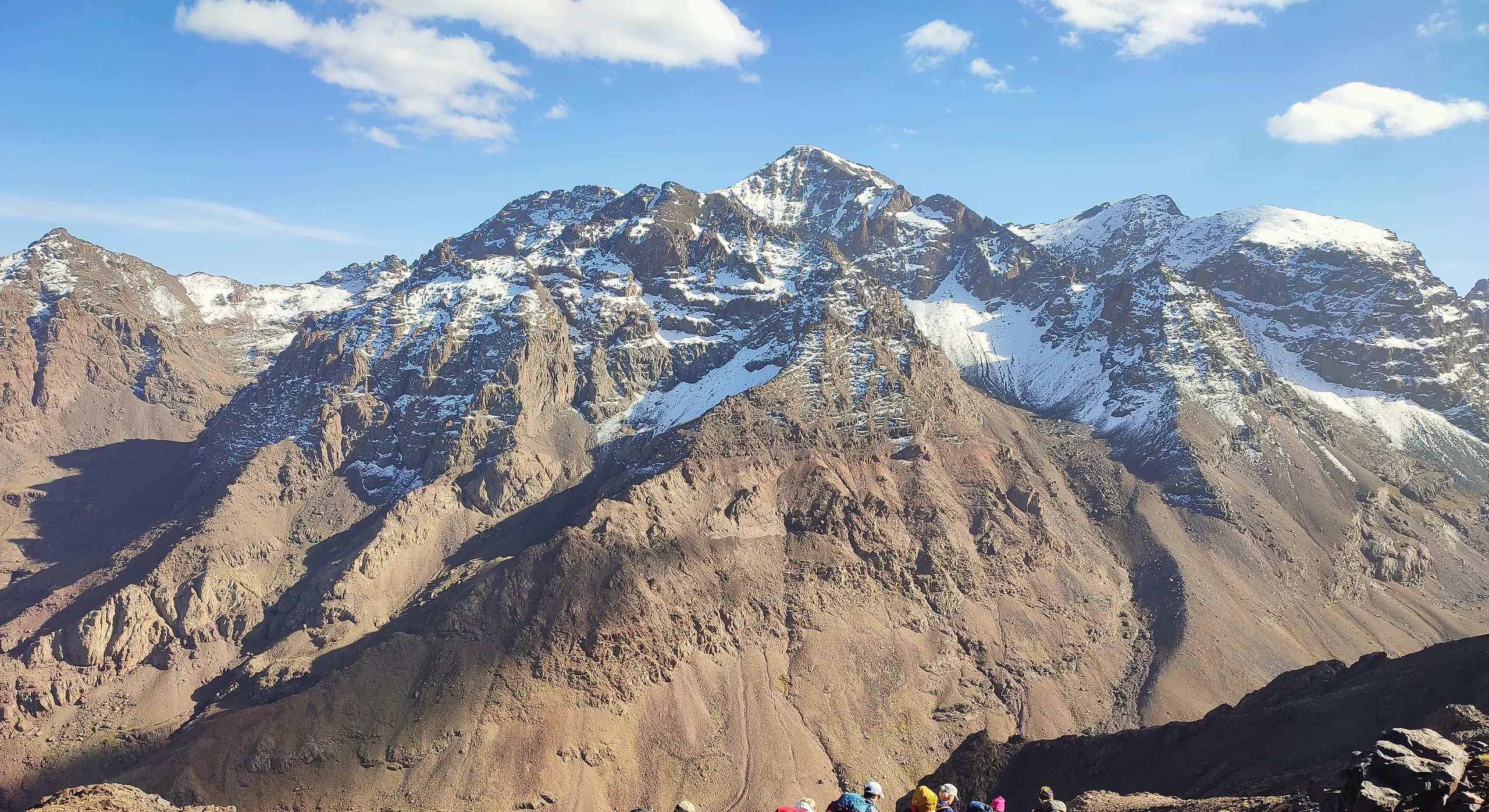
At 1,740 m, Imlil is the staging post for Jebel Toubkal (4,167 m) and the hub of the High Atlas trekking network. The village is a tight cluster of stone houses and walnut trees with a scattering of guesthouses — most run by Berber families who have hosted hikers for decades. Expect honest food (tagines, Berber omelettes, argan-honey bread), mountain air that genuinely cools at night, and the sound of mules rather than traffic. There is no alcohol and no nightlife; that is precisely the point.

Price range

From ~300–700 MAD / night (indicative)

From Marrakech

63 km south of Marrakech (1.5–2 hrs by car)

  • Base camp for Toubkal summit
  • Day hikes to Aroumd & Aremd villages
  • Mule-track walks through walnut groves
  • Cultural visits to local Berber homes
Ouirgane

Best for: Comfort-seekers & romantic escapes

About 60 km south of Marrakech on the N9 road (the same route that climbs to Tizi n'Tichka), Ouirgane sits in a broad valley at around 1,000 m. The landscape is wilder than you expect — cedar forest, boar, Barbary macaques — and the accommodation tier jumps noticeably. Several small boutique lodges and eco-hotels are here, some with pools, fireplaces, and proper restaurants. It is a comfortable base for moderate walking, horse-riding or simply arriving from Marrakech and doing very little, which is underrated.

Price range

From ~700–2,500 MAD / night (indicative)

From Marrakech

60 km south of Marrakech (~1 hr by car)

  • Boutique eco-lodges with pools
  • Horse riding & mountain biking trails
  • Barbary macaque spotting in cedar forest
  • Easy day return from Marrakech

Ourika Valley

Best for: First-timers & family day-to-night stays

The Ourika Valley runs south-east of Marrakech along the Ourika river, climbing from arid plains into cultivated terraces and eventually the Setti Fatma waterfalls. It is the most accessible slice of the High Atlas and sees the most day-trippers, but an overnight here — at one of the small riads or guesthouses dotted between Aghbalou and Setti Fatma — gives you the valley once the coaches have gone. The landscape is gentler than Imlil, the altitude lower (900–1,200 m), and the distances short.

Price range

From ~400–900 MAD / night (indicative)

From Marrakech

36–60 km from Marrakech depending on your guesthouse

  • Setti Fatma waterfalls (7 cascades)
  • Berber market on Mondays
  • Terraced farmland walks
  • Trout farms and riverside lunches

Quick Comparison: Which Base Is Right for You?

At a glance — because sometimes you just need the numbers side by side.

FeatureImlilOuirganeOurika Valley
Altitude1,740 m~1,000 m900–1,200 m
Distance from Marrakech63 km / ~2 hrs60 km / ~1 hr36–60 km / ~1 hr
Accommodation tierSimple guesthousesBoutique lodgesSmall riads / guesthouses
Best forTrekkingComfort & natureEasy escape
Indicative price / night300–700 MAD700–2,500 MAD400–900 MAD
Nightlife / restaurantsNone (family meals)On-site diningVery limited

All prices indicative and subject to change. Verify with accommodation directly before booking.

Terraced Berber village above the Ourika Valley, High Atlas Morocco

Terraced Berber farmland in the Ourika Valley — a gentler alternative to the Imlil high country.

Before You Book: Four Things Worth Knowing

The Atlas Mountains reward travellers who plan a little. These are the things that catch people off-guard.

Book ahead in spring and autumn

March–May and September–November are peak trekking seasons for Toubkal. Good guesthouses in Imlil fill up weeks in advance. In winter (Dec–Feb) the summit trail requires crampons and ice axes; some guesthouses close or reduce services.

Pack layers — always

Even in July, nights above 1,500 m can drop to 8–12°C. In October expect near-freezing after dark. Bring a fleece and a windproof shell regardless of the season. Most guesthouses supply blankets, but sleeping warm is your responsibility.

Mules, not wheels

Your taxi or car drops you at Imlil village or the Ourika road. Beyond the trailhead everything moves by foot or mule. If you have heavy bags a local mule-handler (20–40 MAD per bag, indicative) is a sensible investment.

Cash only in remote villages

ATMs exist in Asni (near Imlil) and along the main Ourika road, but not in the high villages. Carry enough dirhams before you leave Marrakech — guesthouses, mule handlers and tea stops are all cash-only.

Getting to the Atlas Mountains from Marrakech

There is no train and no direct bus. Your options narrow to three, and the honest truth is that private transport wins on comfort and flexibility.

Grand taxi (shared)

Marrakech Bab Rob stand → Asni (~30–40 MAD per seat). Change at Asni for a second taxi to Imlil or Ourika road. Budget 2–3 hrs total and accept no luggage space. Fine for light packers who know the system.

Rental car

The most flexible option if you are comfortable on Moroccan mountain roads — paved to Imlil village but narrow and shared with mules. Parking is tight in Imlil. The Ourika road is easier. Car rental from Marrakech from roughly 250–400 MAD/day (indicative).

Private guided tour or transfer

A private driver meets you at your riad, handles luggage, navigates the mountain roads, and drops you at the guesthouse door. For an overnight or multi-day Atlas stay, this removes the only real friction in the journey. A knowledgeable guide can also suggest the best local trails and introduce you to guesthouse owners personally.

Atlas Mountains Accommodation FAQs

What is the best village to use as a base in the Atlas Mountains?

For trekking — particularly the Toubkal summit — Imlil is the obvious answer. At 1,740 m it puts you at the trailhead with nothing to organise the next morning. For a more comfortable, relaxed stay with better food and a pool, Ouirgane is the better pick. If you want just one easy night away from Marrakech with some scenery and a waterfall walk, the Ourika Valley guesthouses are closest and most forgiving. Most visitors who plan more than a day trip choose Imlil; most who want a retreat choose Ouirgane.

Is it possible to stay overnight in the Atlas Mountains near Marrakech?

Yes, all three zones — Imlil, Ouirgane, and the Ourika Valley — are within 90 minutes of Marrakech and have guesthouses or small hotels open to independent and tour guests. An overnight stay is far more rewarding than a day trip: you see the valley light change at dusk, share a family dinner, and wake to the mountains before the day-tripper taxis arrive. Prices are very reasonable; even mid-range lodges cost less per night than an average Marrakech riad.

Are there riads or guesthouses in Imlil near Toubkal?

Imlil has a cluster of small, family-run guesthouses rather than formal riads (the riad style belongs to the medina lowlands). Most are stone-and-wood buildings with shared or en-suite bathrooms, communal dining rooms, and Berber host families who cook hearty mountain meals — think lamb tagine, Berber omelette, and flatbread baked on the open fire. Rates are indicative from around 300–700 MAD per person including dinner and breakfast. There is also a Club Alpin Français refuge higher up the trail for serious trekkers.

How cold is it in the Atlas Mountains at night?

Colder than most visitors expect. At Imlil (1,740 m) summer nights hover around 8–14°C and winter nights can fall well below freezing — occasional snowfall above 2,000 m from November through March. Ouirgane at 1,000 m is warmer but still cool after sunset. Pack a mid-layer fleece and a windproof jacket year-round. Guesthouses provide blankets, but good base layers are your responsibility. The temperature contrast with Marrakech (which can be 35°C in summer) is one of the main reasons visitors come.

Can you stay in a Berber home in the Atlas Mountains?

Many guesthouses in Imlil and the surrounding villages — Aremd, Aroumd, Tacheddirt — are genuinely family homes with rooms added for trekkers. The owner family usually cooks, eats nearby, and shares their space. It is as close to a home-stay as Morocco gets without a formal programme. A private guided tour can arrange meals and accommodation with specific Berber families who have hosted trekkers for years, which is significantly more personal than booking through a generic platform where quality varies widely.

How far is Imlil from Marrakech and how do you get there?

Imlil is about 63 km south of Marrakech — roughly 1.5 to 2 hours by car, depending on traffic leaving the city and road conditions after Asni. There is no direct public transport: shared grands taxis run from Marrakech to Asni (about 30–40 MAD per seat), and from Asni you take a second taxi to Imlil. The simplest option by far is a private driver or a guided day/overnight trip from Marrakech — you get door-to-door transport, no luggage hassle, and a knowledgeable guide who can introduce you to the right guesthouse and walking routes.

Plan it with a local expert

Travel Morocco with Serenity Morocco Tours

Crafting extraordinary journeys through Morocco's timeless landscapes. 100% private journeys, handcrafted around you.

  • Moroccan-owned
  • 100% Private Tours
  • 100% private tours since 2018
Sahara Desert Luxury Expedition — Marrakech → Erg Chebbi, Morocco

5 days Marrakech → Erg Chebbi

Sahara Desert Luxury Expedition

Essential Morocco: Imperial Cities Circuit — Marrakech · Fes · Meknes · Rabat, Morocco

7 days Marrakech · Fes · Meknes · Rabat

Essential Morocco: Imperial Cities Circuit

Sahara to Sea: Morocco Complete — Full-country circuit, Morocco

14 days Full-country circuit

Sahara to Sea: Morocco Complete

Browse the private tours, quoted on request →