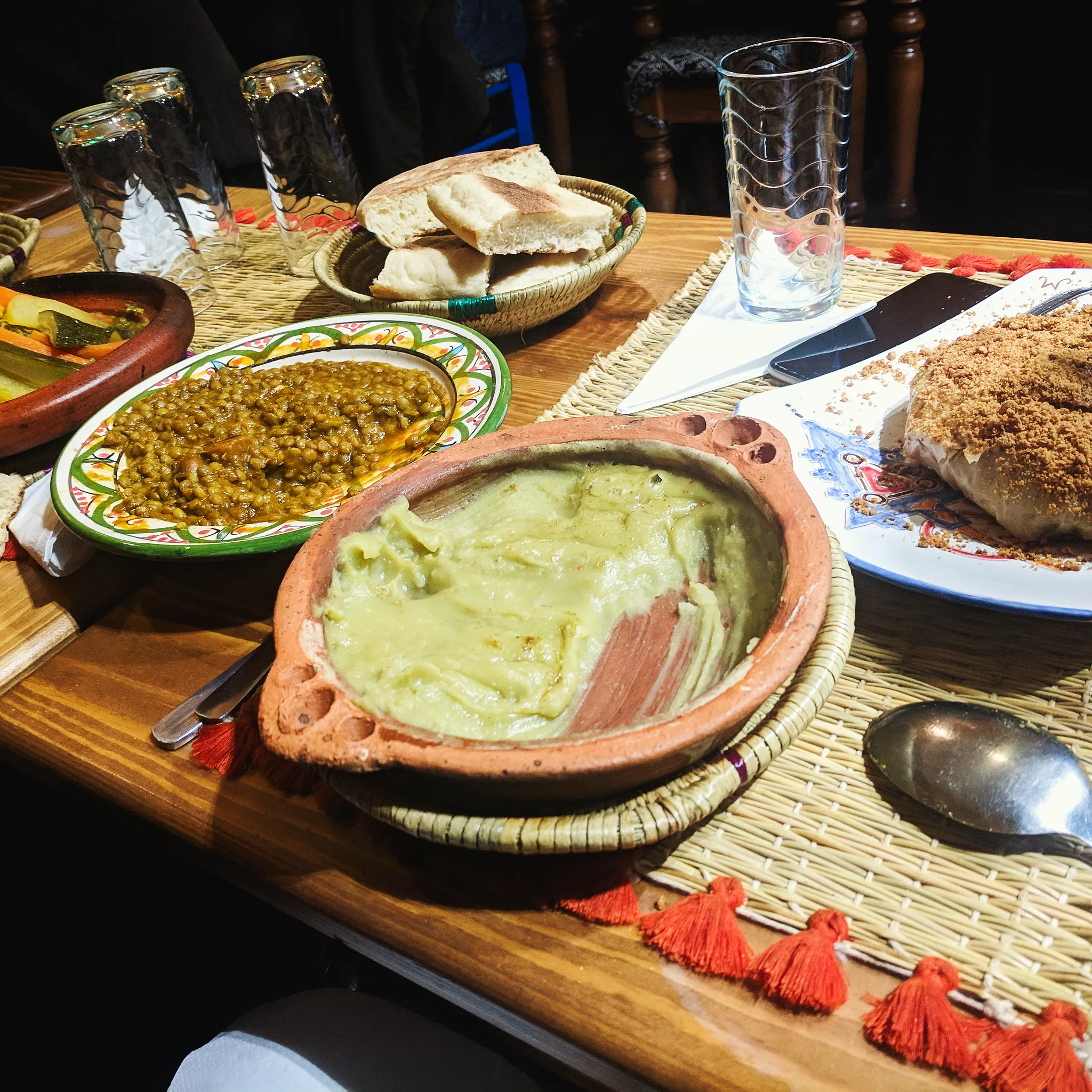
Moroccan Recipes
Over 150 authentic, cookable recipes from every region of Morocco. Tagines, couscous, pastries, salads, breads, and more.
The collection
A Real, Cookable Tour of Moroccan Cooking
Moroccan food is built on a handful of ideas repeated a thousand ways: slow-cooked stews from the conical clay tagine, hand-rolled semolina couscous, warm spices balanced against bright preserved lemon and olives, and the sweet-savoury interplay that defines dishes like chicken with apricots or the almond-dusted pastilla. This collection gathers 150 of those recipes in one place, every one written to be made in a home kitchen with ingredients you can actually source — no vague instructions, no substitutions that quietly change the dish.
Use the category bar below to jump straight to what you are cooking. The Main Course section covers the tagines, couscous, and kefta dishes that anchor a Moroccan table; Soup is where you will find harira, the lentil and tomato classic eaten to break the Ramadan fast. Salad spans the cooked and raw salades marocaines served at the start of a meal, while Bread walks you through everyday khobz, flaky msemen, and spongy baghrir. Round it off with the honeyed pastries in Dessert and the ritual of properly poured mint tea under Beverage. Dietary badges flag which dishes are vegetarian, vegan, or gluten-free at a glance.
If you want the story behind the plates as much as the method, our wider Moroccan cuisine guide, spice reference, and cooking class roundup go deeper into where these dishes come from and how they are made across the country. Bookmark this page, cook your way through a region at a time, and you will have a working repertoire of Moroccan cooking far beyond the single tagine most travellers come home with.
56 recipes
Main Course
Nationwide
Chicken Tagine with Preserved Lemon & Olivesطاجين الدجاج بالحامض المصير والزيتون
The quintessential Moroccan tagine and arguably the country's most beloved dish. Bone-in chicken pieces are braised low and slow with saffron, ginger, and turmeric until meltingly tender, then finished with briny cracked green olives and wedges of salt-cured preserved lemon. The magic lies in the interplay of tart, salty, and warmly spiced flavors. Every Moroccan family has their own version, passed from grandmother to mother to daughter. It is the dish most commonly served to honored guests and is a staple of both home kitchens and restaurant menus from Tangier to the Sahara.
- Prep 20 min
- Cook 1 hr 15 min
- Medium
- Gluten-free
Fes / Meknes
Lamb Tagine with Prunes & Almondsطاجين اللحم بالبرقوق واللوز
A masterpiece of Moroccan sweet-and-savory cooking that showcases the deep Andalusian influence on Fassi cuisine. Lamb shoulder is braised for hours with caramelized onions, cinnamon, honey, and plump prunes until fork-tender, then crowned with toasted almonds and a sprinkle of sesame seeds. The dish achieves a remarkable balance between the natural sweetness of the fruit and the earthy richness of the lamb. Traditionally served at celebrations and family gatherings, this tagine is considered a test of a cook's skill in balancing the complex flavor profile that defines refined Moroccan cuisine.
- Prep 25 min
- Cook 2 hr
- Medium
- Gluten-free
Nationwide
Kefta Tagine with Eggsطاجين كفتة بالبيض
One of Morocco's most comforting and accessible dishes, found in every roadside eatery and home kitchen. Hand-seasoned ground beef or lamb meatballs are simmered in a richly spiced tomato and onion sauce until the flavors meld together, then eggs are cracked directly into the bubbling sauce and gently poached. Served straight from the tagine pot with plenty of crusty bread for dipping, this is the ultimate Moroccan comfort food. The dish is quick enough for a weeknight dinner yet impressive enough for guests, making it a true everyday staple across all regions of Morocco.
- Prep 15 min
- Cook 35 min
- Easy
- Gluten-free
Essaouira / Atlantic Coast
Fish Tagine with Chermoulaطاجين الحوت بالشرمولة
A specialty of Morocco's Atlantic coastal towns, particularly Essaouira, Safi, and Agadir. Firm white fish fillets are marinated in chermoula — a vibrant paste of cilantro, parsley, garlic, cumin, paprika, and lemon juice — then arranged over a bed of sliced potatoes, tomatoes, and bell peppers. The tagine is slow-cooked until the fish is flaky and the vegetables are infused with the aromatic chermoula. This lighter alternative to meat tagines showcases the freshness of Morocco's abundant seafood and the bold flavors of its most celebrated marinade. Best enjoyed with a view of the ocean.
- Prep 25 min
- Cook 45 min
- Medium
- Gluten-free
Nationwide
Seven-Vegetable Tagineطاجين الخضر
A deeply satisfying plant-based dish that proves Moroccan cuisine excels at vegetarian cooking. Seasonal vegetables — typically carrots, zucchini, turnips, potatoes, squash, tomatoes, and chickpeas — are slow-cooked with saffron, ginger, olive oil, preserved lemons, and olives until they form a rich, fragrant stew. The number seven holds special significance in Moroccan-Islamic culture, symbolizing abundance and blessings. This tagine is the go-to option during Ramadan evenings and is served year-round in homes that observe meatless days. Each region adds its own seasonal twist based on local produce.
- Prep 20 min
- Cook 50 min
- Easy
- Vegan
- Gluten-free
Casablanca / Rabat
Beef Tagine with Olives & Potatoesطاجين اللحم البقري بالزيتون والبطاطس
A hearty, home-style tagine popular across Morocco's urban centers. Tender chunks of beef are braised with saffron and ginger until they fall apart, then paired with golden potatoes and briny purple olives. Unlike the more elaborate celebration tagines, this is the everyday version that Moroccan families cook for regular weekday dinners. The dish is simple but deeply satisfying, relying on quality beef and the slow marriage of a few key spices rather than a long ingredients list. It is often the first tagine recipe a new bride learns in Morocco.
- Prep 15 min
- Cook 2 hr
- Easy
- Gluten-free
Fes
Lamb Tagine with Artichokes & Peasطاجين اللحم بالقوق والجلبانة
A springtime celebration tagine from Fes that showcases the best of Morocco's seasonal produce. Tender lamb is slow-braised with fresh artichoke hearts and sweet green peas in a saffron and preserved lemon sauce. This dish appears on tables across Morocco when artichokes come into season in March and April, and it is considered one of the most refined tagines in the Fassi repertoire. The combination of earthy artichoke, sweet peas, and rich lamb creates a dish of remarkable elegance and depth that speaks to the sophistication of Morocco's culinary heritage.
- Prep 30 min
- Cook 1 hr 30 min
- Medium
- Gluten-free
Fes / Meknes
Lamb Tagine with Quinceطاجين اللحم بالسفرجل
An autumnal masterpiece that highlights the Moroccan genius for combining fruit with meat. Lamb is slow-cooked until spoon-tender, then paired with quince halves that transform from pale and hard to a deep ruby-red, honey-glazed marvel. The quince releases natural pectin as it cooks, creating a luscious, velvety sauce without any added thickener. This seasonal dish appears on tables from October through December when quince is in season. It is one of the most photographed Moroccan dishes due to its stunning caramelized golden appearance.
- Prep 20 min
- Cook 2 hr
- Medium
- Gluten-free
Marrakech
Chicken Tagine with Dried Apricotsطاجين الدجاج بالمشمش
A fragrant, golden tagine that balances the sweetness of dried apricots with aromatic spices. Popular in Marrakech's home kitchens and upscale restaurants alike, this dish uses the classic Moroccan technique of combining fruit and poultry. Chicken thighs are braised with onions, saffron, and cinnamon until tender, then crowned with plump apricots that have absorbed the spiced cooking juices. A final scattering of toasted almonds adds crunch. The dish represents the lighter, more accessible side of Moroccan sweet-and-savory cooking compared to the richer lamb versions.
- Prep 15 min
- Cook 1 hr
- Easy
- Gluten-free
Chefchaouen / Rif
Lamb Tagine with Figs & Walnutsطاجين اللحم بالكرموس والجوز
A Rif mountain specialty that showcases the region's famous fig orchards and walnut groves. Lamb shanks are braised until the meat falls from the bone, then adorned with honey-glazed dried figs and crunchy walnuts. The dish is particularly associated with the town of Chefchaouen, where fig trees line the surrounding hillsides. Unlike the cinnamon-heavy tagines of Fes, this version uses a blend of anise and cinnamon that gives it a distinctive Riffian character. Served at autumn harvest celebrations and family feasts.
- Prep 20 min
- Cook 2 hr 15 min
- Medium
- Gluten-free
Nationwide
Chicken Tagine with Caramelized Onions & Raisinsطاجين الدجاج بالبصلة والزبيب
A sweet and savory tagine featuring chicken nestled in a bed of deeply caramelized onions with plump golden raisins. The onions are cooked so slowly they dissolve into an almost jam-like consistency, creating a natural sauce that is rich, sweet, and deeply complex. This is one of the simplest tagines to prepare yet one of the most rewarding. It is a staple of Moroccan home cooking and is often the first tagine recipe taught to young cooks. The dish perfectly exemplifies the Moroccan philosophy that great food requires patience, not complexity.
- Prep 15 min
- Cook 1 hr 15 min
- Easy
- Gluten-free
Middle Atlas
Lamb Tagine with Pear & Cinnamonطاجين اللحم بالبوعويد والقرفة
From the orchards of the Middle Atlas mountains comes this elegant tagine pairing tender lamb with sweet, firm pears. The mountainous climate produces exceptionally sweet pears that hold their shape during braising, creating a beautiful contrast of textures. The pears are glazed with honey and cinnamon until they take on a deep amber color. This is a celebratory dish in Azrou and Ifrane, typically prepared for Eid al-Adha or when families gather for special occasions. The Middle Atlas region is known for some of Morocco's most fruit-forward cooking.
- Prep 20 min
- Cook 1 hr 45 min
- Medium
- Gluten-free
Rural Morocco
Rabbit Tagine with Raisins & Onionsطاجين الأرنب بالزبيب والبصل
A rustic countryside tagine that showcases Morocco's pastoral cooking traditions. Rabbit is lean, tender, and takes beautifully to the slow-braising technique of the tagine. The meat is cooked with a mountain of caramelized onions and sweet raisins until everything melds into a harmonious, richly flavored dish. While less common in city restaurants, rabbit tagine remains a beloved staple in rural households where families raise their own rabbits. The dish has a delicate, refined flavor that surprises those who try it for the first time.
- Prep 15 min
- Cook 1 hr 30 min
- Medium
- Gluten-free
Errachidia / Draa Valley
Lamb Tagine with Dates & Sesameطاجين اللحم بالتمر والجلجلان
From the date palm oases of southeastern Morocco comes this richly sweet and savory tagine. The Draa Valley and Errachidia region produce some of the world's finest Medjool dates, and locals use them generously in cooking. Tender lamb is braised with onions and spices, then stuffed Medjool dates are added in the final stage of cooking. The dates partially dissolve, creating a naturally sweet, caramel-like sauce. A generous topping of toasted sesame seeds adds a nutty contrast. This oasis dish is traditionally served during Ramadan iftar meals.
- Prep 20 min
- Cook 2 hr
- Medium
- Gluten-free
Northern Morocco
Chicken Tagine with Olives & Fennelطاجين الدجاج بالزيتون والبسباس
A lesser-known but delightful tagine from northern Morocco where fennel grows wild in the hillsides. Chicken is braised with fresh fennel bulb, which turns silky and almost sweet when slow-cooked, along with cracked green olives and a touch of preserved lemon. The anise-like flavor of fennel creates a distinctive character that sets this tagine apart from the more common versions. This is a home-cooking favorite in Tetouan and the Rif region, rarely seen in tourist restaurants but deeply loved by locals.
- Prep 15 min
- Cook 1 hr
- Easy
- Gluten-free
Souss-Massa
Beef Tagine with Sweet Potato & Honeyطاجين اللحم بالبطاطا الحلوة والعسل
A warming tagine from the Souss-Massa region around Agadir and Taroudant where sweet potatoes thrive in the warm climate. Chunks of beef are braised with spices until fall-apart tender, then sweet potato chunks are added and glazed with local honey from the argan forests. The natural sweetness of the potato harmonizes with the honey and cinnamon to create a deeply comforting dish. This tagine reflects the agricultural abundance of southern Morocco and the local preference for honey-sweetened dishes made with argan-region honey.
- Prep 15 min
- Cook 2 hr
- Easy
- Gluten-free
Middle Atlas
Lamb Tagine with Chestnutsطاجين اللحم بالقسطانة
A hearty winter tagine from the chestnut-growing regions of the Middle Atlas mountains, particularly around Azrou and Ifrane. When chestnut season arrives in November, Moroccan families prepare this rich, warming stew. The chestnuts absorb the saffron-infused braising liquid and develop a creamy, buttery texture that pairs magnificently with tender lamb. This is mountain food at its finest — substantial, warming, and deeply flavored. The dish is associated with cold winter evenings around a brazier in the traditional Moroccan living room.
- Prep 30 min
- Cook 2 hr
- Hard
- Gluten-free
Rabat / Kenitra
Chicken Tagine with Green Olives & Mushroomsطاجين الدجاج بالزيتون والفطر
A modern-classic tagine that has become popular in Morocco's urban areas over the past few decades. Earthy mushrooms and briny green olives create a savory, umami-rich sauce for braised chicken. This dish reflects the evolving nature of Moroccan cuisine, incorporating ingredients that were not traditionally common in tagines but have been adopted with enthusiasm. The combination of saffron, ginger, and mushrooms produces a sophisticated depth of flavor. Popular in Rabat and Kenitra, this tagine appeals to both traditional and modern palates.
- Prep 15 min
- Cook 1 hr
- Easy
- Gluten-free
Eastern Morocco / Sahara Edge
Lamb Tagine with Desert Trufflesطاجين اللحم بالترفاس
A rare and prized delicacy featuring terfass — desert truffles that emerge after spring rains in Morocco's arid eastern regions. Unlike European truffles, Moroccan desert truffles have a milder, nuttier flavor and a firm, potato-like texture. They are foraged by nomadic families who know the secret signs of truffle growth in the sandy soil. Paired with slow-braised lamb and a minimal spice palette that allows the truffle flavor to shine, this is one of Morocco's most luxurious seasonal dishes. Available only in March and April when the truffles are harvested.
- Prep 20 min
- Cook 1 hr 45 min
- Hard
- Gluten-free
Fes
Royal Couscousكسكس ملكي
The most elaborate and festive version of Morocco's national dish, reserved for weddings, religious holidays, and when hosting distinguished guests. Royal couscous features multiple meats — typically lamb, chicken, and spicy merguez sausage — arranged atop a mountain of steamed semolina with an abundance of vegetables and chickpeas. The broth is rich with saffron and the grain is steamed three times in a traditional couscoussier for impossible lightness. Preparing royal couscous is a daylong affair, often a communal family effort, and presenting it is a statement of hospitality and generosity.
- Prep 1 hr
- Cook 3 hr
- Hard
Fes
Couscous with Tfayaكسكس بالتفاية
A signature Fassi dish that tops fluffy couscous with tfaya — a magnificent crown of deeply caramelized onions cooked with honey, cinnamon, and golden raisins until they become a sweet, jammy compote. The contrast between the savory, buttered couscous and the sweet onion topping is extraordinary. Tfaya represents the pinnacle of Moroccan sweet-savory cooking and is a defining dish of Fes cuisine. Traditionally served at celebrations, this dish requires patience and skill to achieve the proper deep mahogany color and sticky, candied texture of the onion topping.
- Prep 30 min
- Cook 2 hr
- Medium
Nationwide
Friday Couscous with Seven Vegetablesكسكس بسبع خضار
The weekly ritual dish of Morocco, served every Friday after the noon prayer in virtually every household across the country. The number seven is sacred in Islamic tradition, representing completeness and blessing, and the seven vegetables are chosen for both symbolic and seasonal reasons. Typically carrots, turnips, zucchini, pumpkin, cabbage, tomatoes, and chickpeas are simmered in a fragrant saffron broth with lamb or chicken. Refusing a Friday couscous invitation is considered a serious social slight. This is more than a meal — it is Morocco's most important food tradition.
- Prep 30 min
- Cook 2 hr
- Medium
Essaouira / Coastal
Fish Couscousكسكس بالحوت
A coastal variation of Morocco's national dish that replaces the traditional lamb with fresh catch from the Atlantic. Popular in Essaouira, Safi, and Agadir, fish couscous features firm white fish steaks and sometimes prawns, simmered in a spiced tomato and pepper broth with fennel and celery. The broth is lighter and more aromatic than the meat version, with chermoula adding its characteristic punch of cilantro and cumin. This dish proves that couscous is endlessly adaptable and that Morocco's coastal communities have their own distinct culinary identity.
- Prep 25 min
- Cook 1 hr 15 min
- Medium
Nationwide
Couscous with Chicken & Caramelized Onionsكسكس بالدجاج والبصلة
A comforting everyday version of couscous that appears on weekday tables across Morocco. Unlike the elaborate Friday or royal versions, this simpler preparation pairs tender chicken with a flavorful saffron broth and a topping of slowly caramelized onions sweetened with a touch of honey. It is the couscous that Moroccan mothers make when they want something satisfying but not as labor-intensive as the full seven-vegetable spread. The caramelized onions add a layer of sweetness that transforms a simple meal into something truly special.
- Prep 20 min
- Cook 1 hr 30 min
- Easy
Marrakech
Couscous with Lamb, Raisins & Chickpeasكسكس باللحم والزبيب والحمص
A Marrakchi variation that emphasizes the sweet-savory dimension of couscous by adding golden raisins and chickpeas to the lamb broth. The raisins plump up as they absorb the saffron-spiced cooking liquid, bursting with sweetness against the savory lamb. Chickpeas add a creamy, nutty dimension. This is a popular street food version served in Marrakech's hole-in-the-wall lunch spots where a generous plate costs just from 30 MAD. It demonstrates that great Moroccan food does not need to be complicated or expensive.
- Prep 20 min
- Cook 2 hr
- Medium
Nationwide
Vegetable Couscousكسكس بالخضر
A plant-based version of Morocco's national dish that is just as beloved as the meat versions. Seven or more seasonal vegetables are simmered in a rich, spiced broth until tender, then served over fluffy steamed couscous. The key is the depth of flavor in the vegetable broth itself, enriched with saffron, ras el hanout, and a generous amount of olive oil. Many Moroccan families serve this during Ramadan or as a lighter alternative during the hot summer months. It proves that couscous needs nothing more than good vegetables and good spices to be extraordinary.
- Prep 25 min
- Cook 1 hr 30 min
- Easy
- Vegetarian
Souss / Atlas
Barley Couscous (Belboula)بلبولة
Belboula is an ancient Berber grain dish predating the more common semolina couscous. Made from cracked barley rather than wheat, it has a nuttier, earthier flavor and a slightly chewy texture. This rustic dish remains a staple in Amazigh (Berber) communities of the Souss plains and Atlas Mountains, where barley grows more readily than wheat. Typically served with buttermilk or a simple vegetable stew, belboula connects modern Moroccans to their pre-Islamic agricultural heritage. It is experiencing a revival in urban restaurants celebrating indigenous Amazigh cuisine.
- Prep 15 min
- Cook 1 hr
- Easy
- Vegetarian
Fes
Pastilla (Pigeon Pie)البسطيلة
The crown jewel of Moroccan cuisine and the dish that best embodies the country's sweet-savory philosophy. Layers of tissue-thin warqa pastry enclose a filling of slow-cooked pigeon (or chicken), eggs scrambled in the cooking juices, and toasted almonds sweetened with cinnamon and sugar. The assembled pie is baked until the pastry shatters at the touch, then dusted with powdered sugar and cinnamon in an intricate lattice pattern. Pastilla is a Fassi masterpiece that originated in the royal courts and remains the most prestigious dish served at Moroccan celebrations.
- Prep 1 hr
- Cook 1 hr 30 min
- Hard
Marrakech
Tanjia Marrakchiyaالطنجية المراكشية
Marrakech's signature dish and one of the most unique cooking methods in the world. Chunks of beef or lamb are placed in a special urn-shaped clay pot (also called a tanjia) with preserved lemons, saffron, cumin, garlic, and smen (aged butter). The sealed pot is then taken to the local hammam (bathhouse) and buried in the hot ashes of the furnace that heats the bathwater. It slow-cooks for 6-8 hours while the owner goes about his day. Tanjia is traditionally a men's dish — prepared by bachelors for their friends. It is the ultimate slow-cooked, hands-off meal.
- Prep 15 min
- Cook 6 hr
- Medium
- Gluten-free
Nationwide
Rfissaالرفيسة
A deeply comforting dish of shredded msemen bread soaked in a rich lentil and chicken broth flavored with fenugreek, the defining spice that gives rfissa its unmistakable aroma. This is Morocco's quintessential postpartum dish, traditionally prepared for new mothers because fenugreek is believed to stimulate milk production and promote recovery. The shredded bread absorbs the spiced broth and becomes a porridge-like base for the tender chicken. Rfissa is also served at celebrations and family gatherings, and its warm, nourishing character makes it perfect cold-weather comfort food.
- Prep 30 min
- Cook 1 hr 30 min
- Medium
Fes / Marrakech
Mrouziaالمروزية
A spectacular Eid al-Adha dish that is the most lavishly sweet of all Moroccan meat preparations. Lamb is slow-braised with ras el hanout, honey, cinnamon, and saffron, then adorned with raisins and toasted almonds and sesame seeds. The dish is deeply associated with the Eid sacrifice festival and represents the ultimate expression of Moroccan sweet-and-savory cooking. Mrouzia has ancient roots — it was documented in medieval Moroccan cookbooks from the 13th century. The combination of spices in the ras el hanout used for mrouzia is a special, more complex blend than the everyday version.
- Prep 30 min
- Cook 3 hr
- Hard
- Gluten-free
Marrakech / Atlas
Mechoui (Whole Roast Lamb)المشوي
A whole lamb roasted in a pit oven until the meat is so tender it can be pulled apart by hand — this is the king of Moroccan celebration dishes. Mechoui is prepared for weddings, religious festivals, and large family gatherings. The lamb is rubbed with butter, cumin, and salt, then sealed in a beehive-shaped clay oven (tandir) buried in the ground, where it roasts for hours over charcoal. The result is incredibly juicy, aromatic meat with crispy skin. Guests tear off pieces with their hands and dip them in bowls of ground cumin and salt.
- Prep 30 min
- Cook 4 hr
- Hard
- Gluten-free
Nationwide
Kefta Brochettes (Grilled Meatball Skewers)بروشيت كفتة
Morocco's most popular street food after sfenj — seasoned ground lamb or beef molded onto metal skewers and grilled over charcoal until charred on the outside and juicy inside. The kefta is seasoned with parsley, onion, cumin, paprika, and a touch of cayenne. Every city has its grill masters, and the scent of kefta brochettes cooking over charcoal is one of the defining aromas of Moroccan streets, especially in the evening when the grills fire up. Served in a batbout bread sandwich with tomato, onion, and harissa, this is a quintessentially Moroccan fast food.
- Prep 15 min
- Cook 10 min
- Easy
- Gluten-free
Nationwide
Merguez Sausagesالمرقاز
Spicy, brick-red lamb sausages seasoned with harissa, cumin, and paprika that are a North African culinary icon. In Morocco, merguez are grilled over charcoal at street stalls and served in bread sandwiches or alongside couscous and tagines. The distinctive red color comes from a generous amount of paprika and harissa in the meat mixture. Making merguez at home is a tradition in many families, especially before holidays when large batches are prepared. The sausages are thinner than European varieties and are meant to be cooked quickly over high heat until the casing snaps and the juicy, spicy interior is revealed.
- Prep 30 min
- Cook 10 min
- Medium
- Gluten-free
Essaouira / Coastal
Grilled Sardines Moroccan-Styleسردين مشوي
Morocco is one of the world's largest sardine producers, and grilled sardines are the definitive coastal dish. Whole fresh sardines are stuffed with chermoula, threaded onto charcoal grills, and cooked until the skin blisters and the flesh is moist and flaky. The fish grills of Essaouira port are legendary — diners choose their fish from the morning catch, and it is grilled to order for just from 30 MAD per plate. The combination of ultra-fresh sardines and smoky charcoal produces a dish of stunning simplicity and flavor that no fancy restaurant can replicate.
- Prep 15 min
- Cook 8 min
- Easy
- Gluten-free
Fes
Chicken M'qualliدجاج مقلي
A refined Fassi preparation where chicken is braised in a generous amount of olive oil with saffron and ginger until the meat is meltingly tender and the sauce is deeply golden and concentrated. M'qualli is distinguished from other chicken preparations by the lavish use of olive oil and the absence of tomato. The sauce is rich, silky, and intensely flavored from the slow reduction. This is home-cooking at its most elegant — a dish that requires nothing more than a few exceptional ingredients, time, and patience. It is the chicken dish that Fassi cooks are most proud of.
- Prep 15 min
- Cook 1 hr 15 min
- Easy
- Gluten-free
Casablanca / Coastal
Sardine Balls (Kefta de Sardines)كفتة السردين
A beloved Moroccan street food that transforms humble sardines into crispy, herb-packed fish balls. Fresh sardines are filleted, minced, and mixed with cumin, paprika, cilantro, and bread crumbs, then shaped into balls and fried until golden. They are a staple of the Casablanca street food scene and coastal restaurants. Sardine balls showcase the Moroccan talent for making extraordinary dishes from the most affordable ingredients. Served with a squeeze of lemon and spicy harissa sauce, they are both a popular snack and a satisfying main course.
- Prep 25 min
- Cook 15 min
- Medium
Marrakech
Home-Style Tangiaطنجية منزلية
An adapted home version of the famous Marrakchi tanjia that uses a Dutch oven or slow cooker instead of a clay urn in the hammam ashes. This recipe captures the essence of tanjia — extremely slow-cooked beef or lamb with minimal spices and maximum tenderness — adapted for the modern kitchen. The meat literally falls apart when done, and the sauce is intensely concentrated. It is a perfect weekend dish when you can let it cook unattended for hours. The result is remarkably close to the authentic street version.
- Prep 10 min
- Cook 5 hr
- Easy
- Gluten-free
Casablanca / Coastal
Seafood Pastillaبسطيلة بفواكه البحر
A modern coastal adaptation of the classic pigeon pastilla, featuring a luxurious mix of shrimp, fish, and sometimes squid in a creamy, herb-laced sauce, all wrapped in crispy phyllo pastry. Unlike the sweet-dusted traditional pastilla, the seafood version is entirely savory, with vermicelli noodles and Chinese-style glass noodles adding texture to the filling. This dish has become a modern Moroccan classic, found at upscale restaurants and catered events across the country. It is a showstopper presentation that combines the drama of pastilla with the freshness of Moroccan seafood.
- Prep 40 min
- Cook 30 min
- Hard
Nationwide
Grilled Lamb Chops with Cuminكوتليت الغنمي بالكمون
Simple perfection — lamb chops marinated with olive oil, cumin, garlic, and salt, then grilled over charcoal until the outside is charred and the inside is pink and juicy. This is the dish ordered at every Moroccan barbecue, grill restaurant, and holiday gathering. The simplicity is the point: excellent lamb needs nothing more than cumin and fire. Served with a bowl of ground cumin and salt for dipping, grilled lamb chops showcase Morocco's mastery of charcoal cooking. The best ones come from small roadside grill restaurants in the Atlas Mountains where the lamb is local.
- Prep 10 min (plus 1 hr marinating)
- Cook 8 min
- Easy
- Gluten-free
Fes
Chicken Bastillaبسطيلة بالدجاج
The more accessible version of the traditional pigeon pastilla, using chicken instead of the harder-to-find pigeon. Shredded chicken is layered with saffron-scrambled eggs and sweetened toasted almonds in crispy phyllo pastry, then dusted with powdered sugar and cinnamon. While purists insist on pigeon, chicken bastilla has become far more popular across Morocco due to chicken's availability and milder flavor. The dish retains all the drama and sweet-savory brilliance of the original and is the version most commonly served at modern Moroccan celebrations.
- Prep 45 min
- Cook 1 hr 30 min
- Hard
Fes / Meknes
Lham Lahlou (Sweet Lamb with Dried Fruits)لحم حلو
A luxuriously sweet meat dish traditionally served during Ramadan as a main course or dessert. Lamb is braised with a medley of dried fruits — prunes, apricots, raisins, and dates — in a sauce of honey, cinnamon, and orange blossom water. The name literally means "sweet meat." While it may sound unusual to Western palates, lham lahlou is a cornerstone of Fassi cuisine and represents the highest expression of Moroccan sweet-savory traditions. It is served at the most prestigious family gatherings and is the dish that most challenges foreign visitors' flavor expectations.
- Prep 20 min
- Cook 2 hr
- Medium
- Gluten-free
Atlas Mountains
Berber Omeletteعجة أمازيغية
A hearty, thick omelette loaded with tomatoes, peppers, onions, and fresh herbs that is the signature breakfast and lunch dish of Atlas Mountain Berber villages. Unlike a delicate French omelette, this is a substantial, rustic dish cooked in a tagine or cast iron pan until set. Berber omelettes are served at every mountain trekking lodge and rural guesthouse, and they represent the simple, honest cooking of Morocco's highland communities. Often served with freshly baked bread and mint tea, this is the meal that fuels hikers and mountain workers.
- Prep 10 min
- Cook 15 min
- Easy
- Vegetarian
- Gluten-free
Fes
Pastilla Fassia (Fes-Style)بسطيلة فاسية
The most traditional and elaborate version of pastilla, made exclusively with pigeon as it has been since the Andalusian refugees brought it to Fes in the 15th century. Fassi pastilla uses warqa pastry hand-made by specialized artisans, a filling of squab cooked in an onion and spice confit, eggs cooked in the reduced sauce, and an almond-sugar-cinnamon layer. The assembly is an architectural feat. This version is considered the gold standard against which all other pastillas are measured. It requires at least two days of preparation and is reserved for the most important celebrations.
- Prep 2 hr
- Cook 2 hr
- Hard
Agadir
Agadir-Style Fried Fishحوت مقلي على طريقة أكادير
Agadir's port fish market is legendary, and the city's fried fish stands are among Morocco's best street food experiences. Small whole fish or fish steaks are marinated in chermoula, dredged in semolina flour, and deep-fried until the coating is shatteringly crispy and the fish inside is perfectly moist. Served on newspaper with lemon wedges, tomato salad, and bread, this is the quintessential Agadir eating experience. The combination of ultra-fresh fish from the morning catch with the spiced semolina coating creates a dish of simple perfection.
- Prep 20 min
- Cook 10 min
- Easy
Marrakech
Vegetarian Tangiaطنجية نباتية
A modern vegetarian adaptation of Marrakech's famous tanjia that substitutes the traditional meat with a rich combination of root vegetables, chickpeas, and dried fruits. The slow-cooking technique remains the same — everything goes into one pot and cooks undisturbed for hours — producing vegetables of extraordinary tenderness in a deeply concentrated sauce. This version has gained popularity as more Moroccan restaurants cater to vegetarian visitors while keeping the traditional tanjia spirit alive. It proves that the magic of tanjia is in the method, not just the meat.
- Prep 15 min
- Cook 4 hr
- Easy
- Vegan
- Gluten-free
Tangier
Tangier Charcoal Chickenدجاج مشوي طنجاوي
Tangier's grill restaurants are famous for their whole chickens marinated in a distinctive blend of chermoula, paprika, and garlic, then roasted over charcoal until the skin is mahogany-crispy and the meat impossibly juicy. The Tangier version uses more garlic and a heavier hand with paprika than elsewhere in Morocco. The chicken is typically served with french fries, bread, harissa, and a simple salad. In the evening, the streets of Tangier glow with the light of charcoal grills, and the aroma of roasting chicken draws crowds from blocks away.
- Prep 15 min (plus 4 hr marinating)
- Cook 1 hr
- Medium
- Gluten-free
Dakhla
Dakhla Seafood Platterطبق فواكه البحر الداخلة
In the remote southern city of Dakhla, where the Sahara meets the Atlantic, an extraordinary seafood culture has developed. The Dakhla seafood platter is a celebration of the ultra-fresh catch from these pristine waters: oysters harvested from the lagoon (Dakhla is Morocco's only oyster-producing region), grilled lobster, fried calamari, and charcoal-grilled fish, all served on one massive platter with chermoula, lemon, and bread. This is the meal that drives food-lovers to make the long journey south, and it is available at astonishingly low prices compared to similar seafood in Europe.
- Prep 30 min
- Cook 20 min
- Medium
Ouarzazate
Ouarzazate Desert Tagineطاجين ورزازات الصحراوي
A rugged, deeply flavored tagine from the gateway to the Sahara. The cooking of Ouarzazate and the Draa Valley reflects the arid landscape — dishes are intensely spiced and use the region's famous dates, almonds, and desert herbs. This tagine combines lamb with dried apricots, local honey, and a particularly aromatic ras el hanout blend that includes dried desert roses. The meat is cooked until it practically melts, and the sauce achieves a remarkable concentration of flavor. This is the tagine served at kasbahs and desert lodges throughout the region.
- Prep 20 min
- Cook 2 hr 30 min
- Medium
- Gluten-free
Essaouira
Essaouira Seafood Tagineطاجين فواكه البحر الصويري
Essaouira is Morocco's seafood capital, and this tagine showcases the Wind City's culinary identity. A mix of fresh fish, shrimp, and mussels are cooked in a chermoula-spiced tomato and pepper sauce with potatoes and olives. Unlike meat tagines that cook for hours, the seafood version comes together quickly to keep the fish tender and moist. Every fish restaurant in Essaouira's harbor area serves their own version, each claiming theirs is the best. The tagine captures the essence of the Atlantic coast — fresh, bright, and deeply satisfying.
- Prep 20 min
- Cook 40 min
- Medium
- Gluten-free
Nationwide
Bouzelouf (Grilled Lamb Head)بوزلوف
A traditional Eid al-Adha dish where the lamb head is cleaned, rubbed with cumin and salt, and slow-grilled or roasted until the meat is fall-off-the-bone tender. Bouzelouf is prepared in the days following the sacrifice and is considered a delicacy. The cheeks and tongue are the most prized parts. While it may surprise foreign visitors, bouzelouf represents the Moroccan philosophy of using every part of the animal with respect and skill. Street vendors sell grilled lamb head portions in many Moroccan cities year-round.
- Prep 30 min
- Cook 3 hr
- Hard
- Gluten-free
Fes
Chicken Kdra with Almonds & Chickpeasقدرة الدجاج باللوز والحمص
A refined Fassi dish where chicken is braised in an onion-saffron sauce enriched with butter until silky smooth, then served with whole blanched almonds and chickpeas. Kdra (from the Arabic word for pot) is one of the four fundamental sauce styles of Moroccan cooking, characterized by abundant onions cooked down to a near-puree and liberal use of butter and saffron. The result is a sauce of extraordinary richness and golden color. This is classic Fassi court cuisine at its most elegant.
- Prep 20 min
- Cook 1 hr 30 min
- Medium
- Gluten-free
Nationwide
Moroccan Shakshukaشكشوكة مغربية
Morocco's version of the beloved North African egg dish features eggs poached in a spiced tomato and pepper sauce flavored with cumin, paprika, and a touch of harissa. While similar to its Middle Eastern cousins, the Moroccan version is distinguished by its use of preserved lemon and a heavier hand with cumin. Shakshuka is a quick, satisfying meal eaten at any time of day — breakfast, lunch, or a light dinner. It comes together in one pan in under 20 minutes and is beloved across all social classes for its simplicity and deliciousness.
- Prep 5 min
- Cook 20 min
- Easy
- Vegetarian
- Gluten-free
Nationwide
Lamb Tagine with Green Beansطاجين اللحم باللوبيا الخضراء
A simple, homestyle tagine that pairs tender lamb with fresh green beans in a saffron and tomato sauce. This is everyday Moroccan cooking at its finest — no elaborate spice blends or special techniques, just good ingredients cooked slowly until they become something greater than the sum of their parts. Green bean tagine appears on tables across Morocco during the summer months when beans are abundant and cheap. It is one of the first tagines children learn to cook and remains a comfort food favorite into adulthood.
- Prep 15 min
- Cook 1 hr 30 min
- Easy
- Gluten-free
Fes
Stuffed Pigeon with Couscousحمام محشي بالكسكس
An elaborate Fassi celebration dish where whole pigeons are stuffed with seasoned couscous, almonds, and raisins, then roasted until golden and crispy. Each bird is a self-contained feast: the couscous stuffing absorbs the juices of the pigeon as it roasts, creating an incredibly flavorful filling. This dish is reserved for the most special occasions and demonstrates the heights of Fassi culinary sophistication. The presentation — whole golden birds on an elaborate platter — is as dramatic as the flavor.
- Prep 45 min
- Cook 1 hr 30 min
- Hard
Coastal Morocco
Sardine-Stuffed Bell Peppersفلفل محشي بالسردين
A creative coastal Moroccan dish where bell peppers are stuffed with a fragrant mixture of sardines, rice, herbs, and chermoula, then baked until tender. This economical dish transforms affordable sardines into an impressive, presentable main course. It is particularly popular in working-class coastal neighborhoods where sardines are abundant and cheap. The peppers become sweet and soft during baking while the sardine filling becomes rich and aromatic. A complete meal in one colorful package.
- Prep 25 min
- Cook 40 min
- Medium
12 recipes
Soup
Nationwide
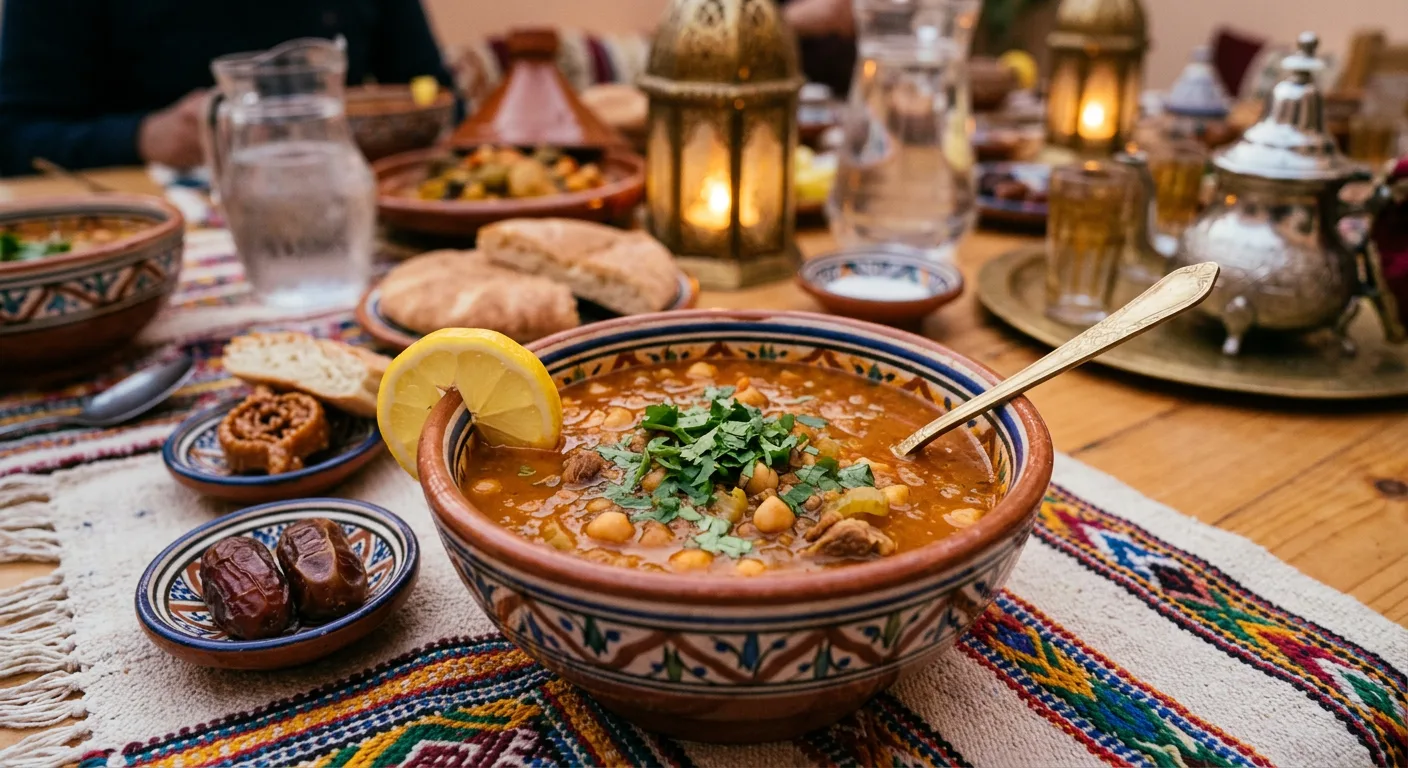
Harira
Morocco's most iconic soup and the dish that breaks the fast every evening during Ramadan. Harira is a thick, hearty tomato-based soup packed with lentils, chickpeas, and small pieces of meat, enriched with fresh herbs and thickened with a flour-and-water slurry called tadouira. The soup is deeply nourishing and warming, making it the perfect way to end a day of fasting. Every family has their own recipe, and the smell of harira simmering is synonymous with Moroccan evenings during the holy month. Outside Ramadan, it is enjoyed year-round as a starter or light meal.
- Prep 20 min
- Cook 1 hr 15 min
- Easy
Northern Morocco
Bessara (Dried Fava Bean Soup)البيصارة
A thick, creamy soup made from dried split fava beans that is Morocco's ultimate working-class comfort food. Simmered until the beans dissolve into a velvety puree, then served in bowls drizzled with olive oil, a dusting of cumin and paprika, and eaten with crusty bread. Bessara vendors are a fixture of northern Moroccan cities, especially in Fes, Meknes, and Chefchaouen, where they set up steaming cauldrons on street corners before dawn to serve workers their breakfast. At just from 3 MAD per bowl, it is one of the most affordable and nutritious meals in the country.
- Prep 10 min (plus overnight soaking)
- Cook 1 hr
- Easy
- Vegan
- Gluten-free
Atlas Mountains
Hssoua (Barley Soup)الحسوة
A thick, porridge-like barley soup from the Berber communities of the Atlas Mountains. Hssoua is the original comfort food of Morocco's mountain dwellers, predating the more famous harira by centuries. Cracked barley is simmered with onions, tomatoes, and fresh herbs until it forms a thick, warming soup that sustains shepherds and farmers through cold mountain winters. Some versions add dried meat (khlii) for extra protein and flavor. This ancient Amazigh dish is experiencing renewed interest as Morocco celebrates its indigenous culinary heritage.
- Prep 10 min
- Cook 1 hr 30 min
- Easy
- Vegan
Nationwide
Chorba with Vermicelliشربة بالشعرية
A lighter, broth-based soup that serves as a comforting starter throughout Morocco. Unlike the thick, hearty harira, chorba is a clear chicken or meat broth enriched with vermicelli noodles and fresh vegetables. It is the soup Moroccan mothers make when someone is feeling under the weather — warming, gentle, and deeply nourishing. Chorba is also a popular Ramadan iftar dish, served before the main course to gently reawaken the digestive system after a day of fasting. Its simplicity is its strength, allowing the quality of the broth to shine.
- Prep 15 min
- Cook 40 min
- Easy
Nationwide
Moroccan Lentil Soup (Adess)عدس
A velvety, warming soup that is a staple of the Moroccan winter diet. Red or brown lentils are simmered with onions, tomatoes, and a blend of cumin and paprika until they break down into a thick, comforting puree. Finished with a generous squeeze of lemon juice and a drizzle of good olive oil, this is the kind of simple, honest food that Moroccan grandmothers have been making for generations. It is one of the most affordable meals in Morocco and one of the most popular street food items in winter, sold from steaming cauldrons at market stalls.
- Prep 10 min
- Cook 35 min
- Easy
- Vegan
- Gluten-free
Nationwide
Moroccan Pumpkin Soupحساء القرع
A silky, golden soup that celebrates Morocco's abundant pumpkin harvest. Sweet pumpkin is roasted or simmered with onions, ginger, and cumin, then blended into a velvety puree. What sets the Moroccan version apart from Western pumpkin soups is the distinctive spice profile: cumin, ginger, and a touch of cinnamon create a warmly spiced flavor that is quintessentially North African. Finished with a swirl of argan oil or olive oil and a sprinkle of toasted cumin seeds, this soup has become popular in both traditional homes and modern Moroccan restaurants.
- Prep 15 min
- Cook 35 min
- Easy
- Vegan
- Gluten-free
Marrakech
Chickpea Soup with Cuminحساء الحمص بالكمون
A rustic, deeply flavored soup found at street stalls across Marrakech. Chickpeas are simmered until very soft, then partially mashed to create a thick, creamy base. Cumin is the dominant flavor, used both in the cooking liquid and as a generous finishing sprinkle. This humble dish is one of the cheapest meals available in Morocco — often just 5 MAD per bowl — yet it delivers satisfying protein, warmth, and flavor. Street vendors serve it in small bowls with a chunk of bread for dipping, and the morning queue at a good chickpea stall is a reliable sign of quality.
- Prep 10 min (plus overnight soaking)
- Cook 1 hr 30 min
- Easy
- Vegan
- Gluten-free
Nationwide
Moroccan Tomato Soup with Eggsحساء الطماطم بالبيض
A simple yet immensely satisfying tomato soup that appears on breakfast and dinner tables across Morocco. Ripe tomatoes are simmered with garlic, cumin, and paprika until they break down into a rich, flavorful broth, then eggs are poached directly in the bubbling soup. Served with bread for dipping, it is the kind of honest, uncomplicated cooking that defines everyday Moroccan home cuisine. This soup takes just 20 minutes from start to table, making it a go-to meal for busy families. It is also a popular hangover cure and cold-weather remedy.
- Prep 5 min
- Cook 20 min
- Easy
- Vegetarian
- Gluten-free
Marrakech
Babbouche (Snail Soup)الببوش
One of Morocco's most unique and beloved street foods. Small garden snails are simmered for hours in a complex broth of over a dozen herbs and spices — including thyme, licorice root, gum arabic, mint, and anise — creating a deeply aromatic, almost medicinal brew. Sold from steaming cauldrons in Jemaa el-Fnaa square and at street corners across Marrakech, babbouche vendors are a cultural institution. The snails are eaten with a toothpick and the broth is sipped from small bowls. Moroccans believe the broth has powerful digestive and warming properties.
- Prep 30 min
- Cook 3 hr
- Hard
- Gluten-free
Modern Morocco
Moroccan Sweet Potato & Ginger Soupحساء البطاطا الحلوة والزنجبيل
A velvety, warming soup that combines sweet potatoes with fresh ginger and Moroccan spices. This modern Moroccan creation has quickly become a cafe favorite, blending traditional flavors with contemporary presentation. The natural sweetness of the potatoes is balanced by the heat of ginger and the earthiness of cumin. Finished with a swirl of argan oil and toasted cumin seeds, it bridges traditional and modern Moroccan cuisine beautifully. Perfect for cold Atlas mountain evenings.
- Prep 10 min
- Cook 30 min
- Easy
- Vegan
- Gluten-free
Souss / Southern
Moroccan Peanut Soupحساء الكاوكاو
A thick, creamy soup from southern Morocco where peanuts grow in the warm Souss plains. Roasted peanuts are blended with onions, tomatoes, and spices to create a rich, protein-packed soup that is both warming and deeply satisfying. This is a lesser-known dish outside of southern Morocco but is a beloved winter staple in the Souss region. The peanut flavor is balanced by cumin and a touch of harissa, preventing it from being too rich. A uniquely Moroccan soup that surprises and delights anyone who tries it.
- Prep 10 min
- Cook 30 min
- Easy
- Vegan
- Gluten-free
Algiers / Northern Morocco
Chorba Beida (White Soup)شربة بيضاء
An elegant white chicken soup thickened with egg and lemon, served during celebrations and Ramadan. The silky broth is delicately spiced with cinnamon and pepper.
- Prep 20 min
- Cook 50 min
- Medium
15 recipes
Salad
Nationwide
Zaalouk (Smoky Eggplant & Tomato Salad)الزعلوك
Morocco's most popular cooked salad and a fixture on every restaurant and home table. Eggplant is roasted or grilled until smoky and collapsing, then mashed and simmered with tomatoes, garlic, cumin, and paprika until the flavors meld into a thick, rich spread. The texture falls somewhere between a dip and a side dish, and it is eaten with bread as part of the traditional Moroccan salad course that begins every meal. Zaalouk is one of those dishes that tastes better the next day as the flavors continue to develop. Every region has subtle variations in the spice balance.
- Prep 15 min
- Cook 30 min
- Easy
- Vegan
- Gluten-free
Nationwide
Taktouka (Roasted Pepper & Tomato Salad)التكتوكة
A vibrant cooked salad of roasted bell peppers and tomatoes that sits alongside zaalouk as one of Morocco's essential table salads. Peppers are charred over an open flame until blackened, then peeled and mixed with cooked tomatoes, garlic, and cumin. The result is a smoky, sweet, and gently spiced salad that is irresistibly good with bread. Taktouka showcases the Moroccan love of fire-roasted flavors and the alchemy that happens when simple vegetables meet smoke and spice. It is served at virtually every meal as part of the salad course.
- Prep 15 min
- Cook 25 min
- Easy
- Vegan
- Gluten-free
Nationwide
Moroccan Carrot Saladسلطة الجزر
A bright, sweet cooked salad that appears on tables across Morocco as part of the traditional salad course. Carrots are cut into rounds and simmered in a cumin and paprika-spiced broth until just tender, then dressed with olive oil, lemon juice, garlic, and a shower of fresh herbs. The result is a warm or room-temperature salad that is slightly sweet from the carrots, earthy from the cumin, and bright from the lemon and herbs. It is one of the most colorful dishes on the Moroccan table and a reliable favorite with both adults and children.
- Prep 10 min
- Cook 15 min
- Easy
- Vegan
- Gluten-free
Nationwide
Beet Salad with Orange & Cinnamonسلطة الباربا بالبرتقال والقرفة
An elegant, jewel-toned salad that combines the earthy sweetness of roasted beets with fresh orange segments and a whisper of cinnamon. This is one of Morocco's most visually stunning salads, with the deep ruby of the beets against the bright orange citrus. The flavor combination is unexpectedly harmonious — the cinnamon bridges the sweetness of both the beet and the orange, while a splash of orange blossom water adds an intoxicating floral note. This sophisticated salad is often served at dinner parties and celebrations as an impressive first course.
- Prep 15 min
- Cook 1 hr (for roasting beets)
- Easy
- Vegan
- Gluten-free
Nationwide
Orange & Cinnamon Saladسلطة البرتقال بالقرفة
The simplest and perhaps most refreshing salad in the entire Moroccan repertoire. Juicy orange slices are arranged on a plate and dusted with ground cinnamon, then drizzled with orange blossom water. That is it — three ingredients that create a salad of extraordinary elegance. Served as a palate cleanser between courses, as a light dessert after a heavy meal, or as part of the salad spread, this dish appears at virtually every Moroccan celebration. The combination of sweet citrus and warm cinnamon is quintessentially Moroccan and has been served this way for centuries.
- Prep 10 min
- Cook 0 min
- Easy
- Vegan
- Gluten-free
Northern Morocco / Tangier
Mechouia (Grilled Vegetable Salad)سلطة مشوية
A rustic salad of charcoal-grilled vegetables that is particularly popular in northern Morocco and shares roots with the Tunisian version of the same name. Tomatoes, peppers, onions, and sometimes eggplant are grilled whole over charcoal until blackened and smoky, then peeled, chopped, and dressed with olive oil, garlic, and cumin. The result is intensely smoky and deeply flavored — the kind of salad that tastes of summer barbecues and outdoor cooking. In Tangier and Tetouan, mechouia is often served as a dip with bread alongside grilled sardines or brochettes.
- Prep 15 min
- Cook 20 min
- Easy
- Vegan
- Gluten-free
Nationwide
Moroccan Tomato & Onion Saladسلطة الطماطم والبصل
The most ubiquitous salad in Morocco, appearing on every table at every meal. Ripe tomatoes and sweet onions are finely diced and tossed with olive oil, cumin, salt, and a generous amount of fresh herbs. Its simplicity is deceptive — when made with peak-season Moroccan tomatoes, which are exceptionally sweet and flavorful, this salad is absolutely addictive. It serves as both a side dish and a condiment, scooped up with bread alongside tagines and grilled meats. Every Moroccan restaurant places this on your table before you even order.
- Prep 10 min
- Cook 0 min
- Easy
- Vegan
- Gluten-free
Nationwide
Cucumber & Orange Saladسلطة الخيار بالبرتقال
A refreshing, hydrating salad that combines crisp cucumber with sweet orange segments, dressed with orange blossom water and a hint of sugar. This cooling salad is the perfect foil for spicy Moroccan dishes and is especially welcome during the hot summer months. The combination may seem unusual to outsiders, but the interplay of refreshing cucumber and sweet citrus is addictive. It is commonly served at summer lunches and as part of elaborate diffa (feast) spreads. The orange blossom water adds an unmistakably Moroccan floral dimension.
- Prep 10 min
- Cook 0 min
- Easy
- Vegan
- Gluten-free
Nationwide
Warm Lentil Salad with Cuminسلطة العدس بالكمون
A hearty, protein-rich salad that doubles as a side dish or light meal. Green or brown lentils are cooked until tender but still holding their shape, then dressed warm with olive oil, cumin, garlic, and lemon juice. Unlike the smooth lentil soup (adess), this salad keeps the lentils whole and features them front and center. It is a popular home-cooking staple, especially in households that observe meatless meals. Topped with a drizzle of good olive oil and eaten with bread, this humble salad is deeply satisfying and remarkably nutritious.
- Prep 5 min
- Cook 25 min
- Easy
- Vegan
- Gluten-free
Coastal Cities
Potato Salad with Chermoulaسلطة البطاطس بالشرمولة
A Moroccan twist on potato salad that replaces mayonnaise with vibrant chermoula — the herb and spice paste that defines coastal Moroccan cooking. Boiled potatoes are cubed and dressed while still warm with a mixture of cilantro, parsley, garlic, cumin, paprika, and lemon juice bound with olive oil. The result is infinitely more flavorful than any Western potato salad, with bright herbal notes and a pleasant cumin warmth. This salad appears alongside grilled fish in every coastal town from Tangier to Dakhla and is also a popular picnic and outdoor dining staple.
- Prep 10 min
- Cook 20 min
- Easy
- Vegan
- Gluten-free
Fes / Meknes
Roasted Pepper & Preserved Lemon Saladسلطة الفلفل المشوي بالحامض المصير
A refined salad that combines fire-roasted peppers with the distinctive tang of preserved lemons — two of Morocco's most important flavor elements. Sweet bell peppers are charred whole, peeled, and cut into strips, then dressed with diced preserved lemon rind, garlic, olive oil, and a light dusting of cumin. The salty-tart preserved lemon elevates the sweet smokiness of the peppers to something truly special. This salad is particularly associated with Fes and Meknes, where preserved lemons are a pantry staple used in everything from tagines to salads.
- Prep 15 min
- Cook 15 min
- Easy
- Vegan
- Gluten-free
Nationwide
Chickpea Salad with Cumin & Paprikaسلطة الحمص بالكمون والفلفل الحلو
A protein-packed salad that transforms humble chickpeas into something irresistible. Cooked chickpeas are tossed with a bold dressing of cumin, paprika, garlic, lemon juice, and olive oil, then showered with fresh herbs. This is the Moroccan answer to the question of what to eat when you want something filling but not heavy. Found in restaurants and homes alike, chickpea salad is a reliable part of the Moroccan salad course and a popular standalone snack. In Marrakech, vendors sell bowls of warm, cumin-dusted chickpeas as a grab-and-go street food.
- Prep 10 min
- Cook 0 min (using cooked chickpeas)
- Easy
- Vegan
- Gluten-free
Urban Morocco
Moroccan Rice Saladسلطة الأرز
A colorful, party-ready salad that has become a modern staple of Moroccan celebrations and buffets. Fluffy rice is tossed with a rainbow of finely diced vegetables — corn, peas, carrots, peppers, and olives — dressed with a cumin-lemon vinaigrette and fresh herbs. While not a traditional recipe, this salad has been wholeheartedly adopted into Moroccan cuisine over the past few decades, especially in urban areas. It appears at every birthday party, wedding buffet, and family gathering as a crowd-pleasing, colorful addition to the table.
- Prep 15 min
- Cook 15 min
- Easy
- Vegan
- Gluten-free
Nationwide
Cauliflower Zaaloukزعلوك القرنبيط
A lesser-known but equally delicious variation of the classic zaalouk that uses cauliflower instead of eggplant. The cauliflower is roasted until golden and slightly charred, then combined with the same tomato, garlic, cumin, and paprika sauce base. The result is a lighter, nuttier version of the traditional cooked salad. This variation is particularly popular in homes during winter when cauliflower is at its peak season. It demonstrates the endlessly adaptable nature of Moroccan cooked salads.
- Prep 10 min
- Cook 30 min
- Easy
- Vegan
- Gluten-free
Nationwide
Preserved Lemon Chicken Saladسلطة الدجاج بالحامض المصير
A modern Moroccan salad that shreds slow-cooked chicken and tosses it with preserved lemon, olives, fresh herbs, and a cumin-lemon dressing. This room-temperature salad is perfect for summer entertaining and makes excellent use of leftover roast chicken. The preserved lemon adds the signature Moroccan tang that elevates the dish beyond ordinary chicken salad. Increasingly popular at modern Moroccan restaurants and cooking classes for visitors, it bridges traditional Moroccan flavors with a universally appealing salad format.
- Prep 15 min
- Cook 0 min (using cooked chicken)
- Easy
- Gluten-free
12 recipes
Bread
Nationwide
Khobz (Moroccan Round Bread)الخبز
The essential bread of Morocco, present at every single meal. Khobz is a round, slightly flattened loaf with a dense, chewy crumb and a golden crust dusted with semolina or cornmeal. Every neighborhood has its communal bakery (ferrane) where families send their dough to be baked in wood-fired ovens, each loaf marked with the family's distinctive pattern. Khobz is far more than bread in Morocco — it serves as the primary eating utensil, used to scoop tagines, mop up sauces, and pinch salads. Wasting bread is considered sinful, and stale loaves are dried and ground into couscous or given to animals.
- Prep 20 min (plus 1.5 hr rise)
- Cook 25 min
- Easy
- Vegan
Nationwide
Msemen (Square Flat Bread)المسمن
Morocco's beloved flaky, square-shaped flatbread that is a breakfast and snack staple across the country. Msemen is made from a soft dough that is stretched paper-thin, folded into a square envelope with butter or oil between the layers, then cooked on a flat griddle until golden and crispy on the outside while remaining soft and layered inside. The technique of stretching and folding is an art form passed from mother to daughter, and experienced cooks can stretch the dough so thin you can read through it. Served with honey, jam, or cheese, or stuffed with savory fillings.
- Prep 30 min (plus 30 min rest)
- Cook 20 min
- Medium
- Vegetarian
Nationwide
Baghrir (Thousand-Hole Pancake)البغرير
One of Morocco's most distinctive and beloved breads — a spongy semolina pancake covered in hundreds of tiny holes on the surface, earning it the nickname "thousand-hole crepe." The batter ferments briefly, creating bubbles that rise to the surface as the pancake cooks on one side only, forming the characteristic honeycomb pattern. These holes are designed to absorb butter and honey, which are drizzled over the warm pancake at the table. Baghrir is a breakfast staple and an essential part of Ramadan iftar. Making perfect baghrir with evenly distributed holes is a mark of an accomplished Moroccan cook.
- Prep 10 min (plus 30 min rest)
- Cook 20 min
- Medium
- Vegan
Nationwide
Rghaif (Layered Flatbread)الرغايف
Similar to msemen but typically thinner and crispier, rghaif are layered flatbreads that can be served plain or stuffed with various fillings. The dough is stretched, oiled, and folded into a rectangular or square shape, then cooked on a griddle until shatteringly crispy outside while still flaky inside. Rghaif are the street food version of msemen — sold from carts and stalls across Morocco, especially in the late afternoon when people are looking for a quick, satisfying snack. Savory versions are stuffed with spiced onions and herbs, or with kefta (ground meat).
- Prep 25 min (plus 20 min rest)
- Cook 15 min
- Medium
- Vegetarian
Northern Morocco
Batbout (Pita-Style Bread)البطبوط
A soft, pillowy round bread cooked on a griddle rather than baked in an oven. Batbout resembles a thick pita and puffs up when cooked, creating a pocket that can be stuffed with various fillings. It has a softer, more cake-like texture than khobz and is the bread of choice in northern Morocco. Batbout is the perfect vehicle for sandwiches — stuffed with grilled kefta, merguez, or vegetables. At home, it is often served alongside tagines as a softer alternative to the denser khobz. The name comes from the Amazigh word meaning "to be round."
- Prep 15 min (plus 1 hr rise)
- Cook 20 min
- Easy
- Vegan
Nationwide
Meloui (Coiled Flatbread)الملوي
A distinctive Moroccan flatbread made by rolling the dough into a rope and then coiling it into a spiral before flattening and cooking on a griddle. This technique creates concentric layers that make meloui exceptionally flaky and fun to eat — you can peel it apart layer by layer. The spiral shape is visually beautiful and gives the bread its name, which means "rolled" in Arabic. Meloui is richer than regular bread thanks to the butter layered between the coils. It is a beloved breakfast bread, especially popular during Ramadan suhoor (pre-dawn meal).
- Prep 25 min (plus 30 min rest)
- Cook 20 min
- Medium
- Vegetarian
Nationwide
Harcha (Semolina Griddle Bread)الحرشة
A dense, golden griddle cake made entirely from coarse semolina that has a wonderful crumbly-yet-moist texture. Harcha looks like a large English muffin but tastes uniquely Moroccan — slightly sweet, buttery, and with a pleasingly gritty texture from the semolina. It is one of the simplest Moroccan breads to make, requiring no yeast and no rising time, making it a quick option for breakfast or an afternoon snack. Harcha vendors are found at every market and bus station in Morocco, selling them hot off the griddle, split and filled with soft cheese (jben) or butter and honey.
- Prep 10 min
- Cook 15 min
- Easy
- Vegetarian
Nationwide
Khobz Dar (Home Bread with Seeds)خبز الدار
A rustic, homestyle bread enriched with a mix of seeds and whole grains that many Moroccan families bake fresh daily. Unlike plain khobz, this version incorporates sesame seeds, nigella seeds, flaxseeds, and sometimes sunflower seeds into the dough, adding nutrition and a nutty flavor. The name literally means "house bread," distinguishing it from bakery bread. In rural areas, families often grind their own flour from locally grown wheat, producing bread with exceptional character. This is the kind of bread that makes Moroccan grandmothers say the bakery version will never compare.
- Prep 20 min (plus 1.5 hr rise)
- Cook 30 min
- Easy
- Vegan
Atlas Mountains / Rural
Matlou (Oven-Baked Flatbread)المطلوع
A thick, hearty flatbread baked in a traditional clay oven (ferrane) or over embers, common in rural and mountainous areas of Morocco. Matlou is denser and more substantial than city khobz, reflecting the energy needs of people doing physical labor in the fields and mountains. Made with a mix of whole wheat and barley flours, it has a deep, nutty flavor and a satisfyingly chewy texture. In Berber villages, women bake matlou fresh every morning on a clay griddle or in a pit oven, filling the house with the incomparable aroma of fresh bread.
- Prep 15 min (plus 1 hr rise)
- Cook 25 min
- Easy
- Vegan
Nationwide
Stuffed Msemen with Onions & Herbsمسمن معمر بالبصل والأعشاب
A savory variation of msemen that takes the layered flatbread to the next level by stuffing it with a mixture of finely chopped onions, fresh herbs, and spices before folding and cooking. The filling becomes fragrant and slightly caramelized during cooking, making each bite a burst of flavor. This is a popular street food and market snack, often sold warm from vendors who prepare them to order. Stuffed msemen are also a beloved home snack, especially during Ramadan when families prepare elaborate spreads for the iftar table.
- Prep 35 min
- Cook 20 min
- Medium
- Vegetarian
Nationwide
Quick Beghrir (Yeast-Free Version)بغرير بدون خميرة
A simplified version of the traditional thousand-hole pancake that uses baking powder instead of yeast, cutting preparation time dramatically. While purists prefer the yeast version for its slightly tangy flavor and more pronounced holes, this quick version is what busy Moroccan mothers make on weekday mornings when time is short. The result is still a beautifully holey, spongy pancake that soaks up butter and honey magnificently. This recipe has become increasingly popular as modern Moroccan life demands faster cooking times without sacrificing the beloved flavors of tradition.
- Prep 5 min
- Cook 15 min
- Easy
- Vegetarian
Sahara Desert
Taguella (Saharan Sand Bread)تاكلا
The iconic bread of the Saharan nomads, baked directly in hot sand and ashes beneath a campfire. A simple dough of flour, water, and salt is formed into a disc and buried in the sand that has been heated by the fire. After 20-30 minutes, the bread is dug up, brushed clean of sand, and broken open to reveal a perfectly cooked, slightly smoky interior. Taguella is the most primal and authentic bread in Morocco — a survival food of desert caravans that has been made for millennia. No desert camping experience is complete without sharing taguella under the stars.
- Prep 10 min
- Cook 30 min
- Medium
- Vegan
20 recipes
Dessert
Nationwide
Sweet Couscous with Cinnamon & Dried Fruitsسفوف
Known as seffa in Morocco, this is the sweet side of couscous that many visitors never discover. Fine-grain couscous is steamed until airy and light, then generously buttered and dusted with powdered sugar and cinnamon, creating beautiful decorative lines. Topped with toasted almonds, raisins, and sometimes dates, this can be served as a dessert course after a meal or as a celebration dish at weddings and births. The dish exists in a delightful space between savory and sweet, and children across Morocco grow up loving seffa as a special treat.
- Prep 15 min
- Cook 40 min
- Easy
- Vegetarian
Nationwide
Chebakia (Sesame Cookie Roses)الشباكية
Morocco's most iconic Ramadan pastry — flower-shaped cookies that are deep-fried to a golden crisp, then immediately dipped in warm honey and coated with toasted sesame seeds. The process of shaping chebakia is an art form: the dough is rolled thin, cut into strips, and woven into an intricate rose pattern before frying. Families gather in the weeks before Ramadan to make chebakia in enormous batches, turning it into a communal social event. The cookies keep for weeks and are traditionally served alongside harira soup to break the fast each evening.
- Prep 1 hr
- Cook 30 min
- Hard
- Vegetarian
Nationwide
Sellou (Toasted Flour Sweet)سلو
A unique Moroccan confection made from toasted flour, ground almonds, toasted sesame seeds, butter, and honey. Sellou (also called zamita or sfouf) has a distinctive crumbly, sandy texture that is unlike any other sweet in the world. The flour is painstakingly dry-roasted until golden and nutty — a process that can take over an hour of constant stirring. Sellou is a Ramadan essential, served in small bowls for its quick energy and nourishing properties. It is also traditionally prepared for new mothers and given to women after childbirth for its believed restorative powers.
- Prep 30 min
- Cook 1 hr
- Medium
- Vegetarian
Nationwide
Briouat with Almonds & Honeyبريوات باللوز والعسل
Elegant triangular pastries filled with a fragrant almond paste and sealed in crispy warqa or phyllo dough, then fried and dipped in warm honey. Briouats are Morocco's answer to baklava but with a distinctly Moroccan character from the orange blossom water and cinnamon in the filling. They are a fixture at celebrations, weddings, and Ramadan iftar tables. The triangular folding technique is a skill every Moroccan cook learns, and the contrast between the shatteringly crisp pastry and the soft, sweet almond interior makes them irresistible.
- Prep 40 min
- Cook 20 min
- Medium
- Vegetarian
Fes / Marrakech
Kaab Ghzal (Gazelle Horns)كعب الغزال
The most refined and elegant cookie in the Moroccan pastry repertoire. These crescent-shaped cookies have an impossibly thin, tender pastry shell encasing a filling of almond paste perfumed with orange blossom water and mastic gum. The name means "gazelle ankles," referring to their graceful curved shape. Making perfect kaab ghzal — with pastry so thin it is nearly translucent — is considered the ultimate test of a Moroccan pastry cook. They are the first thing offered to guests with mint tea and are the most prized pastry at weddings and celebrations.
- Prep 1 hr
- Cook 15 min
- Hard
- Vegetarian
Nationwide
Sfenj (Moroccan Doughnuts)السفنج
Morocco's beloved street doughnuts — golden, airy rings of yeasted dough deep-fried to crispy-outside, pillowy-inside perfection. Sfenj vendors are found on virtually every street corner in Morocco, especially in the morning when the scent of frying dough draws crowds. The dough is remarkably simple — just flour, water, yeast, and salt — but the technique of shaping and frying requires practice. Sfenj are sold hot, either plain, dusted with sugar, or drizzled with honey. They are the quintessential Moroccan breakfast, paired with mint tea for a perfect start to the day.
- Prep 15 min (plus 1 hr rise)
- Cook 20 min
- Medium
- Vegan
Nationwide
Makrout (Date-Filled Semolina Cookies)المقروط
Diamond-shaped semolina cookies stuffed with a spiced date paste, deep-fried until golden, then drenched in warm honey. Makrout are one of Morocco's most popular traditional sweets, found in every patisserie and bakery across the country. The contrast between the crunchy semolina exterior and the sweet, soft date filling is addictive. They are particularly associated with Ramadan and religious holidays. In the eastern regions near the Algerian border, makrout takes on an especially important cultural role and is the most common sweet served at celebrations.
- Prep 45 min
- Cook 20 min
- Medium
- Vegetarian
Fes
M'hanncha (Almond Snake Cake)المحنشة
A spectacular coiled pastry that resembles a snake, giving it the name m'hanncha (from the Arabic word for snake). A long tube of warqa or phyllo pastry is filled with almond paste perfumed with orange blossom water, then coiled into a tight spiral and baked until golden. The finished pastry is dusted with powdered sugar and decorated with cinnamon lines radiating from the center. M'hanncha is the centerpiece dessert at Moroccan celebrations and its dramatic spiral shape makes it one of the most photogenic pastries in the world. Cutting into it reveals beautiful almond swirls.
- Prep 45 min
- Cook 30 min
- Medium
- Vegetarian
Nationwide
Ghriba (Coconut Cookies)غريبة بجوز الهند
Morocco's most popular everyday cookie — crackle-topped rounds that are crispy on the outside and soft, chewy on the inside. Ghriba come in dozens of varieties, but the coconut version is the most ubiquitous, found in every bakery and home kitchen. The name means "strange" or "wonderful" in Arabic, referring to the cookie's unique cracked surface that forms during baking. Making ghriba is a rite of passage for Moroccan cooks, and bakeries are judged by the quality of their ghriba. They pair perfectly with mint tea and are the default accompaniment for afternoon guests.
- Prep 15 min
- Cook 15 min
- Easy
- Vegetarian
- Gluten-free
Nationwide
Fekkas (Moroccan Biscotti)الفقاص
Crunchy, twice-baked cookies studded with almonds, sesame seeds, and anise — Morocco's answer to Italian biscotti. Fekkas are baked in a log, sliced, and then baked again until dry and crunchy, making them perfect for dunking in mint tea or coffee. They are the longest-lasting Moroccan cookie, keeping for months in a tin, which made them a practical traveling food for caravans and merchants. Today they remain the default cookie jar staple in Moroccan homes and are the cookies most often served to drop-in guests with a glass of mint tea.
- Prep 20 min
- Cook 40 min
- Easy
- Vegetarian
Nationwide
Milk Pastilla (Pastilla au Lait)بسطيلة بالحليب
A modern Moroccan dessert that has become wildly popular across the country. Layers of crispy fried warqa pastry alternate with a silky vanilla-scented custard cream, creating a stunning layered dessert that is crunchy, creamy, and utterly indulgent. Topped with a dusting of cinnamon and powdered sugar, then decorated with toasted almonds, milk pastilla is the dessert that appears at every Moroccan celebration today. Though it is a relatively recent invention, it has been embraced so enthusiastically that it feels like it has always been part of the cuisine.
- Prep 30 min
- Cook 30 min
- Medium
- Vegetarian
Fes / Marrakech
Ghriba with Almondsغريبة باللوز
The most traditional and prestigious variety of ghriba, made with ground almonds instead of coconut. These cookies have a more refined flavor and melt-in-the-mouth texture. The almond version is what you will find in upscale Moroccan patisseries and is the cookie served at formal occasions. The dough is richer and more fragrant, perfumed with orange blossom water and a hint of almond extract. When done right, the exterior crackles beautifully while the interior remains soft and almost fudgy. These are the ghriba that Moroccan grandmothers are most proud of.
- Prep 20 min
- Cook 15 min
- Easy
- Vegetarian
- Gluten-free
Northern Morocco
Keneffa (Shredded Pastry with Custard)الكنافة
A dessert of shredded pastry (ktaif) layered with a rich cream or custard and soaked in honey syrup. Morocco's version of the Middle Eastern kunafa, keneffa has been adapted to local tastes with the addition of orange blossom water and cinnamon. Popular in northern Morocco and especially Tetouan, where the influence of Andalusian cuisine is strongest, keneffa is baked until the shredded pastry is golden and crunchy, then drenched in warm honey or sugar syrup. It is served warm, when the contrast between the crunchy exterior and creamy interior is at its peak.
- Prep 30 min
- Cook 35 min
- Medium
- Vegetarian
Errachidia / Draa Valley
Date & Walnut Halwaحلوى التمر والجوز
A dense, fudge-like confection made from dates, walnuts, and butter that originated in the oasis regions of southeastern Morocco. Fresh Medjool dates are mashed and cooked with butter until they form a caramel-like paste, then mixed with chopped walnuts, cinnamon, and orange blossom water. The mixture is pressed into molds and sliced into diamonds or squares. This is the traditional sweet of the date-growing regions and is given as a gift between families during Eid celebrations. Its natural sweetness comes entirely from the dates, with no added sugar needed.
- Prep 20 min
- Cook 15 min
- Easy
- Vegetarian
- Gluten-free
Nationwide
Meskouta (Moroccan Orange Cake)المسكوتة
Morocco's most beloved everyday cake — a simple, moist orange cake that is found in every bakery, cafe, and home across the country. Meskouta is made with whole oranges (juice and zest), eggs, sugar, oil, and flour, producing a tender crumb with bright citrus flavor. It is the cake Moroccan mothers bake for their children after school, the cake served to unexpected guests, and the cake that accompanies every glass of mint tea in every cafe. Its simplicity is its charm — no frosting, no decoration, just honest, orange-scented comfort.
- Prep 15 min
- Cook 40 min
- Easy
- Vegetarian
Souss / Southwest
Amlou (Argan Almond Butter)أملو
A luxurious Berber spread made from toasted almonds, argan oil, and honey — often called Morocco's Nutella. Amlou is indigenous to the Souss region of southwest Morocco, where argan trees grow exclusively. The almonds are roasted and ground to a paste, then mixed with precious argan oil and local honey to create a rich, nutty spread with an addictive flavor. It is served at breakfast spread on bread or msemen, drizzled over baghrir, or eaten by the spoonful as a nourishing snack. Amlou represents the culinary heritage of the Amazigh people.
- Prep 20 min
- Cook 10 min
- Easy
- Vegetarian
- Gluten-free
Nationwide
Briouats with Cheese & Honeyبريوات بالجبن والعسل
A sweet-savory pastry that stuffs crispy phyllo triangles with a mixture of soft fresh cheese (jben), honey, and a touch of cinnamon. When fried and dipped in honey, the cheese melts into a creamy, sweet filling that contrasts magnificently with the crunchy pastry exterior. This version of briouats bridges the sweet and savory divide that Moroccan cuisine navigates so masterfully. They are especially popular during Ramadan as part of the elaborate iftar spread and are quick to assemble when unexpected guests arrive.
- Prep 25 min
- Cook 15 min
- Easy
- Vegetarian
Tetouan
Tetouan Sweet Pastillaبسطيلة تطوانية حلوة
A dessert version of pastilla unique to Tetouan that fills crispy warqa pastry layers with a rich almond cream and tops it with toasted pine nuts and orange blossom-scented custard. This is a purely sweet pastilla with no savory elements, reflecting the Andalusian pastry traditions that Tetouan preserved after the Moorish expulsion from Spain. The city's pastry artisans are renowned across Morocco, and this sweet pastilla represents their finest work. Served at weddings and the most special celebrations, it is a dessert of extraordinary elegance.
- Prep 45 min
- Cook 30 min
- Hard
- Vegetarian
Nationwide
Ghriba with Sesame Seedsغريبة بالجلجلان
A delightful variation of Morocco's classic ghriba cookie rolled entirely in toasted sesame seeds before baking. The result is a cookie with a nutty, crunchy sesame exterior and a soft, crumbly interior. Sesame ghriba are among the most popular cookies at Moroccan bakeries and are the variety most often served alongside mint tea at cafes. The sesame adds a beautiful golden color and a rich, toasty flavor that pairs perfectly with the sweetness of the cookie dough.
- Prep 20 min
- Cook 15 min
- Easy
- Vegetarian
Fes
Fes Almond Milk Pastillaبسطيلة بحليب اللوز الفاسية
A Fassi variation of milk pastilla that uses a rich almond milk custard instead of regular dairy custard between the crispy pastry layers. The almond milk is thickened with cornstarch and perfumed with orange blossom water and mastic gum, creating a luxuriously smooth, nutty cream. This version is considered more refined than the standard milk pastilla and is the dessert of choice at Fassi celebrations and upscale restaurants. The almond flavor harmonizes perfectly with the cinnamon and powdered sugar decoration.
- Prep 35 min
- Cook 30 min
- Medium
- Vegetarian
11 recipes
Beverage
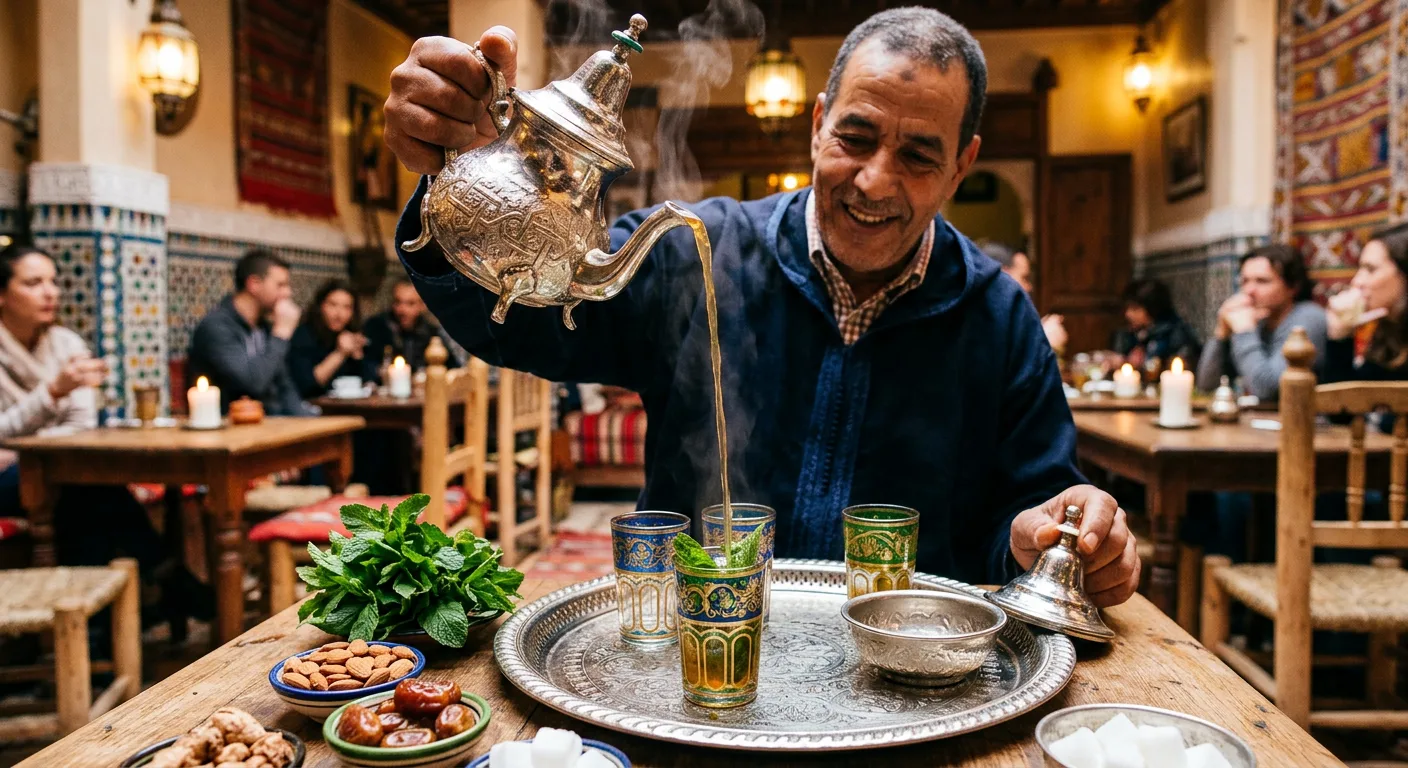
Nationwide
Moroccan Mint Tea (Atay)
The national drink of Morocco and the country's most important symbol of hospitality. Chinese gunpowder green tea is brewed with copious fresh spearmint and sugar, then poured from a height into small glasses to create a frothy top. The tea is traditionally served three times: the first glass is gentle as life, the second strong as love, the third bitter as death. Refusing mint tea is considered deeply impolite. The preparation and pouring ritual is performed by the head of household and is a social ceremony as much as it is a beverage. Morocco is the world's largest importer of Chinese green tea.
- Prep 5 min
- Cook 10 min
- Easy
- Vegan
- Gluten-free
Nationwide
Fresh Squeezed Orange Juiceعصير البرتقال
Morocco is one of the world's great citrus producers, and fresh orange juice is available everywhere for astonishingly low prices — often just from 5 MAD per glass. Orange juice vendors with their towering pyramids of bright fruit are iconic figures in Moroccan cities, especially in Jemaa el-Fnaa in Marrakech where dozens of stalls compete for customers. The juice is squeezed to order and served without water, ice, or added sugar. Moroccan oranges are naturally very sweet, producing juice that is liquid sunshine. It is customarily drunk at breakfast and as a refreshing street drink.
- Prep 5 min
- Cook 0 min
- Easy
- Vegan
- Gluten-free
Nationwide
Avocado Smoothie (Jus d'Avocat)عصير الأفوكا
A thick, creamy smoothie that is one of Morocco's most popular cafe drinks. Ripe avocado is blended with cold milk, sugar, and sometimes a hint of orange blossom water to create a rich, velvety shake. Morocco grows abundant avocados, especially in the Souss and Gharb regions, making them affordable and available year-round. The avocado smoothie is typically served in a tall glass as an afternoon pick-me-up or as a filling breakfast drink. It is a favorite with children and is seen as a nourishing, healthy treat across all economic classes.
- Prep 5 min
- Cook 0 min
- Easy
- Vegetarian
- Gluten-free
Fes / Meknes
Almond Milk Drinkحليب اللوز
A refreshing traditional drink made by blending blanched almonds with water, sugar, and orange blossom water, then straining to produce a silky, fragrant milk. This drink predates the modern commercial almond milks by centuries and has a much richer, more complex flavor thanks to the orange blossom water and real almond flavor. Particularly popular in Fes, where almond orchards surround the city, this drink is served cold in summer and is a traditional Ramadan beverage. It is also the drink of choice at Moroccan weddings, where it is served to arriving guests.
- Prep 15 min (plus soaking)
- Cook 0 min
- Easy
- Vegan
- Gluten-free
Fes / Meknes
Fresh Pomegranate Juiceعصير الرمان
When pomegranates are in season from October to January, the deep ruby juice appears at street stalls across Morocco. The fruit is pressed fresh, producing a juice that is simultaneously sweet, tart, and slightly astringent. Pomegranate juice vendors are found in every market and medina, and a glass costs just from 8 MAD. The juice is believed to have powerful health properties in Moroccan folk medicine, particularly for the blood and heart. The Fes and Meknes regions produce some of Morocco's finest pomegranates, and the juice from these areas is particularly prized.
- Prep 5 min
- Cook 0 min
- Easy
- Vegan
- Gluten-free
Southern Morocco
Bissap (Hibiscus Tea)كركديه
A deep ruby-red drink made from dried hibiscus flowers that is popular across southern Morocco and the Saharan regions. The flowers are steeped in hot water, sweetened, and served either hot or cold. When served cold with ice, bissap is one of the most refreshing drinks available during the scorching southern summers. The drink has West African origins and arrived in Morocco via trans-Saharan trade routes, making it particularly common in towns with historical links to sub-Saharan Africa like Rissani, Erfoud, and Zagora. Its tartness is beautifully balanced by sugar and sometimes mint.
- Prep 5 min
- Cook 15 min
- Easy
- Vegan
- Gluten-free
Nationwide
Leben (Moroccan Buttermilk)اللبن
A tangy, refreshing fermented milk drink that is the traditional accompaniment to couscous in Morocco. Leben is made by churning milk until the fat separates to become butter, leaving behind a thin, tangy liquid similar to buttermilk. It has a pleasantly sour taste and a slightly effervescent quality. In rural Morocco, leben is still made the traditional way — by agitating a goatskin bag filled with milk. In cities, commercial leben is available in every corner store. It is considered essential with Friday couscous and is valued for its cooling, digestive properties.
- Prep 0 min
- Cook 0 min
- Easy
- Vegetarian
- Gluten-free
Nationwide
Nous-Nous (Half-Half Coffee)نص نص
Morocco's signature coffee order — a glass of half espresso, half steamed milk, from which it gets the name nous-nous (half-half in Darija). Served in a small glass rather than a cup, this drink is the fuel of Moroccan cafe culture. Men gather at sidewalk cafes across the country to sip nous-nous while watching the world go by, discussing politics, or watching football. The coffee is typically made with a dark Italian-style espresso blend, and the milk is steamed to a light froth. Ordering a nous-nous is the fastest way to feel like a local at any Moroccan cafe.
- Prep 2 min
- Cook 3 min
- Easy
- Vegetarian
- Gluten-free
Nationwide
Verbena Tea (Louiza)لويزة
A fragrant herbal infusion made from fresh lemon verbena leaves that is one of Morocco's most cherished digestive and relaxation drinks. Louiza (lemon verbena) grows abundantly in Moroccan gardens and is valued for its calming, sleep-inducing properties. The tea has a beautiful pale gold color and a bright, lemony aroma that is instantly soothing. It is traditionally served after dinner to aid digestion and before bedtime to promote restful sleep. During winter, louiza tea with honey is the go-to remedy for colds and sore throats.
- Prep 2 min
- Cook 5 min
- Easy
- Vegan
- Gluten-free
Nationwide
Panache (Mixed Fruit Juice)بناشي
A thick, layered fruit smoothie that is the showpiece of Morocco's juice bars. Multiple fruits — typically banana, apple, avocado, strawberry, and orange — are blended separately and layered in a tall glass to create a stunning striped effect. Each sip delivers a different fruit flavor. Panache vendors compete to create the most visually impressive and delicious combinations, and ordering one is a favorite activity for Moroccan families on evening outings. The drinks are exceptionally generous in portion size and represent outstanding value compared to Western smoothie shops.
- Prep 10 min
- Cook 0 min
- Easy
- Vegetarian
- Gluten-free
Nationwide
Moroccan Herb Tea Blendأعشاب مغربية
A soothing caffeine-free herbal infusion blending dried chamomile, verbena, mint, and rosemary — the most popular post-dinner digestive drink in Morocco. Every family has their preferred blend, and dried herb bundles hang in kitchens across the country ready for steeping. This tea is valued for its calming and digestive properties, and Moroccan grandmothers prescribe it as a remedy for everything from stomachaches to insomnia. Unlike the caffeinated green mint tea, this herbal version is gentle enough for children and evening drinking.
- Prep 2 min
- Cook 5 min
- Easy
- Vegan
- Gluten-free
12 recipes
Snack
Nationwide
Maakouda (Potato Fritters)المعقودة
Crispy, golden potato fritters that are one of Morocco's most popular street foods. Mashed potatoes are seasoned with cumin, parsley, and garlic, shaped into thick patties, and deep-fried until they have a crunchy golden exterior and a soft, fluffy interior. Maakouda vendors are found at every market and street corner, and the fritters are commonly tucked into sandwiches with harissa and salad for a filling, inexpensive meal. At just from 2 MAD per fritter, maakouda is the ultimate Moroccan budget food and a beloved comfort snack across all social classes.
- Prep 20 min
- Cook 15 min
- Easy
- Vegetarian
Nationwide
Bocadillo (Moroccan Sandwich)بوكادي
Morocco's most popular fast food — a crusty baguette or batbout bread stuffed with a customizable combination of grilled meats, fried eggs, cheese, tuna, harissa, maakouda, french fries, and salad. The bocadillo (from the Spanish word for sandwich) reflects Morocco's historical connections to Spain. Every city has its legendary bocadillo stand, and the sandwiches are made to order, assembled at lightning speed by vendors who have been perfecting their craft for years. at just 10 MAD for a filling sandwich, bocadillos are the go-to meal for students, workers, and late-night snackers.
- Prep 5 min
- Cook 5 min
- Easy
Nationwide
Savory Briouats with Keftaبريوات بالكفتة
Crispy, triangular pastry parcels filled with spiced ground beef or lamb — the savory counterpart to the sweet almond briouats. These are the ultimate Moroccan party appetizer and a Ramadan iftar staple. The warqa or phyllo dough is wrapped around a seasoned kefta filling, then baked or fried until shatteringly crispy. Each bite delivers a burst of cumin-spiced, herb-flecked meat encased in flaky pastry. Briouats are one of the most practical Moroccan snacks — they can be assembled ahead of time and fried just before serving.
- Prep 30 min
- Cook 15 min
- Medium
Fes / Meknes
Khlii (Preserved Dried Meat)الخليع
Morocco's ancient preserved meat — beef is dried, spiced, then preserved in rendered fat and olive oil. Khlii is the Moroccan equivalent of confit and was historically the primary means of preserving meat through the hot summer months before refrigeration. The meat is cooked until tender, then shredded and packed in jars of fat, where it keeps for months. Khlii is used as a flavoring agent in eggs (khlii with eggs is a beloved breakfast), added to hssoua barley soup, or eaten on bread as a rich, savory snack. It remains a specialty of Fes and Meknes.
- Prep 30 min
- Cook 4 hr
- Hard
- Gluten-free
Nationwide
Spiced Roasted Nutsالمكسرات المحمصة
A fragrant mix of roasted almonds, peanuts, and chickpeas seasoned with cumin, paprika, and salt — the snack sold at every corner in Morocco. Nut vendors roast fresh batches in large, sand-filled rotating drums that ensure even toasting. The aroma of roasting nuts is one of the defining scents of Moroccan medinas and souks. A small paper cone of warm, freshly roasted nuts costs just from 5 MAD and is the perfect accompaniment to an evening stroll. The seasoning blend varies by vendor but cumin and salt are always present.
- Prep 5 min
- Cook 15 min
- Easy
- Vegan
- Gluten-free
Urban Morocco
Msemen with Nutella & Bananaمسمن بالنوتيلا والموز
A modern Moroccan street food creation that has taken the country by storm over the past decade. A freshly cooked msemen is spread with Nutella and topped with sliced banana, then folded into a pocket and served warm. This is the young generation's favorite snack, available at night-time food stalls across urban Morocco. It represents the creative fusion of traditional Moroccan bread-making with global flavors — a combination that would horrify purists but delights millions. The warm, flaky msemen combined with melted chocolate hazelnut spread and soft banana is admittedly irresistible.
- Prep 5 min (using pre-made msemen)
- Cook 5 min
- Easy
- Vegetarian
Nationwide
Dried Fruit & Nut Mixفواكه جافة مشكلة
A gorgeous mix of dried dates, figs, apricots, almonds, walnuts, and sometimes dried roses that is the traditional accompaniment to mint tea and an essential Ramadan staple. Displayed in towering pyramids at spice shops and markets across Morocco, dried fruits and nuts are both a daily snack and a gift given during holidays and celebrations. The Draa Valley produces the country's best dates, the Souss region supplies the figs, and the Atlas mountains provide walnuts and almonds. A small plate of mixed dried fruits appears on every Moroccan coffee table for guests.
- Prep 5 min
- Cook 0 min
- Easy
- Vegan
- Gluten-free
Nationwide
Egg & Cumin Sandwichساندويش بالبيض والكمون
The simplest and most ubiquitous Moroccan breakfast — a fried or hard-boiled egg dusted with cumin and salt, served in bread. This humble sandwich is available at every corner store and food stall in the country and costs just from 5 MAD. The combination of egg with cumin is quintessentially Moroccan and surprisingly addictive. Workers, students, and travelers rely on egg sandwiches as a quick, cheap, protein-rich start to the day. The bread is typically batbout or a fresh baguette, and harissa or olives are common additions.
- Prep 2 min
- Cook 5 min
- Easy
- Vegetarian
Nationwide
Fried Eggplant with Honeyباذنجان مقلي بالعسل
Thick slices of eggplant are fried until golden and crispy, then drizzled with honey and sprinkled with sesame seeds. This sweet-savory combination is served as a side dish, appetizer, or snack and showcases the Moroccan talent for combining unexpected flavors. The creamy, almost meaty interior of the eggplant pairs magnificently with the floral sweetness of honey. This dish appears as part of the salad course at restaurants and is a popular home-cooking dish that comes together in under 15 minutes.
- Prep 10 min
- Cook 10 min
- Easy
- Vegetarian
- Gluten-free
Meknes / Fes
Marinated Olives Moroccan-Styleزيتون معلل
Morocco is one of the world's great olive-producing nations, and marinated olives are present at every meal and social gathering. Green, purple, and black olives are dressed in a mixture of olive oil, preserved lemon, garlic, cumin, paprika, and fresh herbs. The Meknes region, known as the Versailles of Morocco, produces some of the country's finest olives. A small bowl of marinated olives appears on every restaurant table alongside bread and harissa before the meal begins. The variety and quality of Moroccan olives astonishes visitors accustomed to bland commercial olives.
- Prep 10 min
- Cook 0 min
- Easy
- Vegan
- Gluten-free
Nationwide
Boulfaf (Grilled Lamb Liver Kebabs)بولفاف
The quintessential Eid al-Adha snack — cubes of fresh lamb liver are wrapped in caul fat and grilled over charcoal with cumin and salt. Boulfaf is prepared immediately after the Eid sacrifice and eaten as the first taste of the holiday. The caul fat bastes the liver as it grills, keeping it moist and adding richness. Outside of Eid, boulfaf is a popular street food, especially in grill restaurants and at market stalls. It is quick to cook and intensely flavorful.
- Prep 15 min
- Cook 8 min
- Easy
- Gluten-free
Nationwide
Msemen Stuffed with Kefta & Eggمسمن معمر بالكفتة والبيض
A substantial, meal-in-one street food creation that stuffs a freshly cooked msemen with seasoned ground meat and a fried egg. This is the heavy-duty version of the stuffed msemen, popular at night-time food stalls and with anyone looking for a quick, filling meal. The combination of flaky bread, savory spiced meat, and a runny egg yolk is extraordinary. It has become one of the most popular late-night snacks in urban Morocco, rivaling the bocadillo for street food supremacy.
- Prep 10 min
- Cook 10 min
- Easy
9 recipes
Preserve
Nationwide
Preserved Lemonsالحامض المصير
The single most important condiment in Moroccan cuisine. Lemons are packed in salt and their own juice and left to cure for at least 30 days, transforming from fresh and tart to soft, intensely flavored, and deeply savory. Only the rind is used in cooking — it adds a unique salty-citrus dimension that is impossible to replicate with fresh lemons. Preserved lemons appear in tagines, salads, and countless other dishes. Every Moroccan kitchen has a jar of preserved lemons on the counter, and making a new batch is a ritual that marks the change of seasons when lemons are cheapest.
- Prep 15 min
- Cook 0 min (30 days curing)
- Easy
- Vegan
- Gluten-free
Nationwide
Harissa (Hot Chili Paste)الهريسة
A fiery, aromatic chili paste that is the primary source of heat in Moroccan cuisine. Made from dried red chilies, garlic, cumin, caraway, and olive oil, harissa adds depth and fire to tagines, soups, grilled meats, and sandwiches. While harissa is often associated with Tunisia, Morocco has its own distinct version that is smoother and more cumin-forward. A small bowl of harissa appears on every restaurant table alongside bread and olives, and it is an essential condiment for kefta sandwiches and grilled meats. Homemade harissa is miles ahead of store-bought versions.
- Prep 20 min
- Cook 0 min
- Easy
- Vegan
- Gluten-free
Nationwide
Ras el Hanout (Spice Blend)رأس الحانوت
The name means "head of the shop" — the spice merchant's finest blend of his best spices. Ras el hanout can contain anywhere from 12 to over 30 individual spices, including cinnamon, cumin, coriander, turmeric, ginger, black pepper, cardamom, cloves, nutmeg, allspice, and dried rose petals. Every spice merchant has their own secret recipe, and buying ras el hanout from a trusted vendor is a personal relationship. This is the spice blend that defines complex Moroccan dishes like mrouzia and royal couscous. Making your own allows you to customize the blend to your taste.
- Prep 15 min
- Cook 5 min
- Easy
- Vegan
- Gluten-free
Coastal Morocco
Chermoula (Herb & Spice Marinade)الشرمولة
Morocco's most versatile marinade and the defining flavor of coastal Moroccan cooking. Chermoula is a vibrant green paste made from fresh cilantro, parsley, garlic, cumin, paprika, and lemon juice blended with olive oil. It is used as a marinade for fish, a dressing for salads, a flavoring for tagines, and a dip for bread. The combination of fresh herbs with bold spices creates a flavor that is unmistakably Moroccan. Every cook has their own chermoula recipe, varying the ratio of herbs to spices. It is the marinade that makes Moroccan fish dishes among the most flavorful in the world.
- Prep 10 min
- Cook 0 min
- Easy
- Vegan
- Gluten-free
Nationwide
Smen (Aged Moroccan Butter)السمن
A unique Moroccan ingredient that has no real equivalent in other cuisines — butter that is salted, washed, and aged in a sealed clay pot for months or even years. Freshly made smen has a sharp, tangy, almost cheese-like flavor. As it ages, it develops increasingly complex, pungent notes. Smen is used sparingly as a flavoring agent in couscous, tanjia, and rfissa, adding a depth of flavor that nothing else can replicate. In traditional Moroccan culture, a family would bury a pot of smen on the birth of a daughter, to be opened on her wedding day — decades later.
- Prep 30 min
- Cook 0 min (30+ days aging)
- Medium
- Vegetarian
- Gluten-free
Nationwide
Onion Jam (Confit d'Oignons)مربى البصل
A sweet, sticky onion confit that is used as a condiment and topping in Moroccan cuisine. Onions are very slowly cooked with honey, cinnamon, raisins, and a touch of vinegar until they collapse into a dark, jammy, intensely flavored preserve. This is essentially the tfaya topping from couscous, elevated into a standalone condiment. It accompanies grilled meats, adds sweetness to sandwiches, and is served as part of the salad course at upscale restaurants. Making onion jam requires patience — the onions need at least an hour of slow cooking.
- Prep 10 min
- Cook 1 hr 15 min
- Easy
- Vegetarian
- Gluten-free
Souss / Essaouira
Culinary Argan Oilزيت أركان
The world's most precious culinary oil, produced exclusively from the nuts of the argan tree endemic to southwestern Morocco. Culinary argan oil is made from toasted nuts, giving it a dark amber color and an intoxicating nutty, toasted flavor. It is never heated — always used as a finishing oil drizzled over couscous, salads, tagines, and amlou. The production is labor-intensive: women crack the extremely hard shells by hand using stones, a skill passed through generations. Argan oil cooperatives have become a vital source of income for rural Berber women and a model of sustainable agriculture.
- Prep 0 min
- Cook 0 min
- Easy
- Vegan
- Gluten-free
Nationwide
Moroccan Pickled Vegetablesالخضر المخللة
Bright, tangy pickled vegetables that accompany virtually every Moroccan sandwich and many meals. A mix of carrots, turnips, peppers, and sometimes cauliflower are pickled in vinegar with garlic and spices. The pickles add a crunchy, acidic contrast to rich tagines and grilled meats. Every neighborhood shop in Morocco sells jars of these colorful pickles, and they are a standard offering at grill restaurants. The brine is characteristically tinted yellow from turmeric, giving the pickles their signature color.
- Prep 20 min
- Cook 5 min (plus 3 days pickling)
- Easy
- Vegan
- Gluten-free
Southern Morocco
Moroccan Chili Pepper Jamمربى الفلفل الحار
A sweet-spicy condiment made from red chilies, sugar, and vinegar that adds a fiery kick to any meal. This modern Moroccan preserve bridges the gap between harissa and fruit jam, creating something entirely unique. The chilies are cooked down with sugar until they reach a jammy consistency, with the sweetness taming the heat while the vinegar adds brightness. Used as a glaze for grilled meats, a spread on bread with cheese, or a condiment alongside tagines, this versatile preserve has become a staple of modern Moroccan pantries.
- Prep 15 min
- Cook 30 min
- Easy
- Vegan
- Gluten-free
Explore More of Morocco
Discover Moroccan cuisine in depth, from street food guides to cooking classes and regional specialties.