Discovering...
Morocco Food Tours: The Complete Guide to Eating Your Way Across the Kingdom
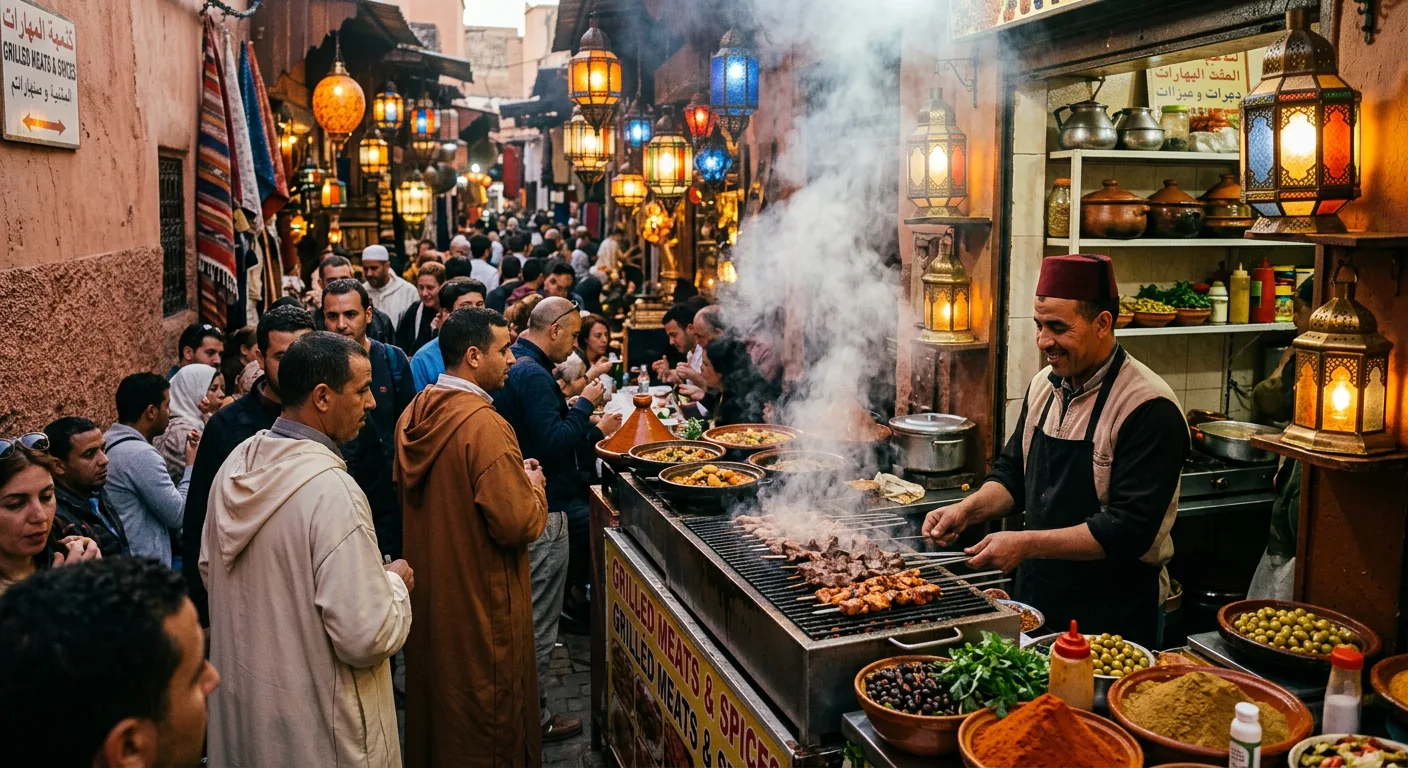
From the smoky grills of Jemaa el-Fnaa to the ancient food stalls of the Fes medina, from Essaouira's fresh-off-the-boat seafood to Chefchaouen's mountain flavors -- discover Morocco one bite at a time with guided tours, self-guided routes, and cooking classes.
Why Food Tours?
Why Take a Food Tour in Morocco
Morocco's cuisine is one of the world's great culinary traditions, but navigating the medina food scene on your own can be overwhelming. Here is why a guided food tour transforms your experience.
Navigate the Medina Like a Local
Morocco's medinas are labyrinths of narrow alleys where the best food is hidden in unmarked stalls, tiny doorways, and neighborhood bakeries that no guidebook lists. A local guide takes you past the tourist traps to the places where Moroccans actually eat -- the stalls with the longest queues of workers at lunchtime, the bakeries where bread emerges hot from wood-fired ovens, and the hidden courtyard restaurants with no signage.
Understand What You Are Eating
A knowledgeable guide explains the history, preparation, and cultural significance of every dish. Why is pastilla sweet and savory? What makes Fassi cuisine different from Marrakchi cooking? Why do Moroccans eat couscous on Fridays? Why is the communal bread oven the social center of a neighborhood? These stories transform a meal from sustenance into cultural understanding.
Get Fair Prices and Generous Portions
Guides have established relationships with vendors, ensuring you pay local prices rather than tourist markup. They also know which stalls give the most generous portions, use the freshest ingredients, and maintain the highest hygiene standards. A guide's trusted vendor network means you eat better for less than you would on your own.
Discover Dishes You Never Knew Existed
Beyond tagine and couscous lies a vast Moroccan culinary world that most visitors never discover: tangia (the slow-cooked bachelor's stew), rfissa (shredded msemen with lentil sauce), trid (a paper-thin pastry stew), khlii (preserved dried meat), and regional specialties like Essaouira's chermoula-grilled fish or Chefchaouen's bessara soup. A food tour is your gateway to the 90% of Moroccan cuisine that restaurants don't serve to tourists.
Food Safety and Comfort
Your guide steers you to stalls with high turnover (freshness), visible cooking (transparency), and local clientele (quality indicator). They handle ordering and communication in Darija (Moroccan Arabic), navigate dietary restrictions, and ensure that you are comfortable at every stop. For first-time visitors who might feel intimidated by the sensory overload of a busy souk, a guide is invaluable.
Create Lasting Memories
Food tours are consistently rated among the top experiences by travelers to Morocco. The combination of incredible flavors, fascinating cultural insights, vibrant market atmospheres, and the social connection of eating together creates memories that last far longer than any museum visit. Many travelers say their food tour was the highlight of their entire Morocco trip.
Marrakech
Marrakech Food Tours
The Red City is Morocco's culinary playground. From the legendary night food stalls of Jemaa el-Fnaa to hidden medina bakeries and hands-on cooking classes, Marrakech offers the widest variety of food tour experiences in the country. Budget from 300 MAD per person.

Jemaa el-Fnaa Evening Food Walk
3-4 hours from 350 MAD 2-12 people 5/5
The quintessential Moroccan food tour experience. As the sun sets, the famous square transforms into the world's largest open-air restaurant with over 100 food stalls. A knowledgeable guide navigates you through the organized chaos, stopping at the best stalls for harira soup, grilled lamb chops, snail broth (babouche), fresh-squeezed orange juice, sheep head (for the adventurous), and sweet chebakia pastries. The atmosphere is electric with musicians, storytellers, and the smoke from dozens of grills.
Best time: Start at 6:30 PM (sunset)
Tour Highlights
- Snail broth (babouche) from stall 14 -- a Marrakech institution since the 1970s
- Lamb mechoui pulled from the communal clay oven, served with cumin salt
- Fresh-squeezed orange juice at 4 MAD per glass from the famous juice row
- Grilled kefta (spiced minced meat) with fresh bread and harissa
- Sheep head (tete de mouton) -- adventurous tasters only
- Chebakia and sellou pastries from stall vendors circulating the square
- Moroccan donuts (sfenj) dipped in sugar, best eaten hot and fresh
- Harira soup served in small bowls with dates -- the traditional Ramadan starter
Medina Tasting Trail
3 hours from 300 MAD 2-8 people 5/5
A daytime walking tour through the winding alleys of the Marrakech medina, stopping at hidden food gems that most tourists walk right past. This tour goes beyond the main square into the residential neighborhoods where Marrakchis actually eat. You visit a traditional bakery (ferran) where locals bring their bread to bake in the communal wood-fired oven, a neighborhood msemen stall where women hand-fold the layered flatbreads on a griddle, a tiny hole-in-the-wall serving the city's best tangia (the bachelor's tagine), and a hidden rooftop cafe with medina views.
Best time: Morning, 9:30 AM - 12:30 PM
Tour Highlights
- Communal bakery (ferran) visit -- watch bread go in and come out of the wood oven
- Hand-folded msemen and meloui flatbreads from a street-side griddle stall
- Tangia -- the slow-cooked Marrakech specialty made in an urn-shaped clay pot
- Olive tasting at a medina olive merchant with 20+ varieties
- Freshly baked khobz (round bread) with amlou (argan oil, almond, and honey dip)
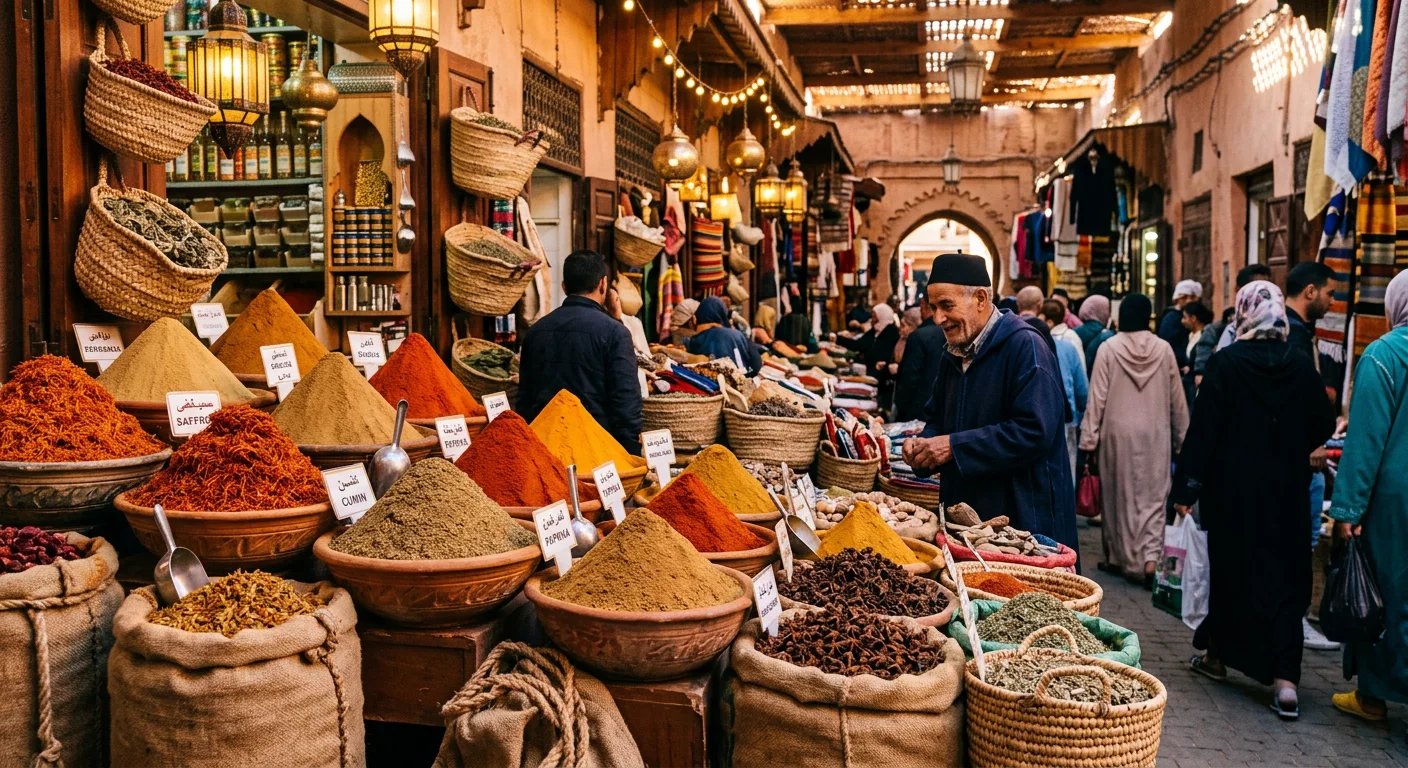
- Spice souk walkthrough with guided explanations of every spice
- Hidden rooftop cafe stop for mint tea overlooking the medina rooftops
- Seasonal fruit tasting from a local market stall
Cooking Class + Market Tour Combo
4-5 hours from 500 MAD 2-10 people 5/5
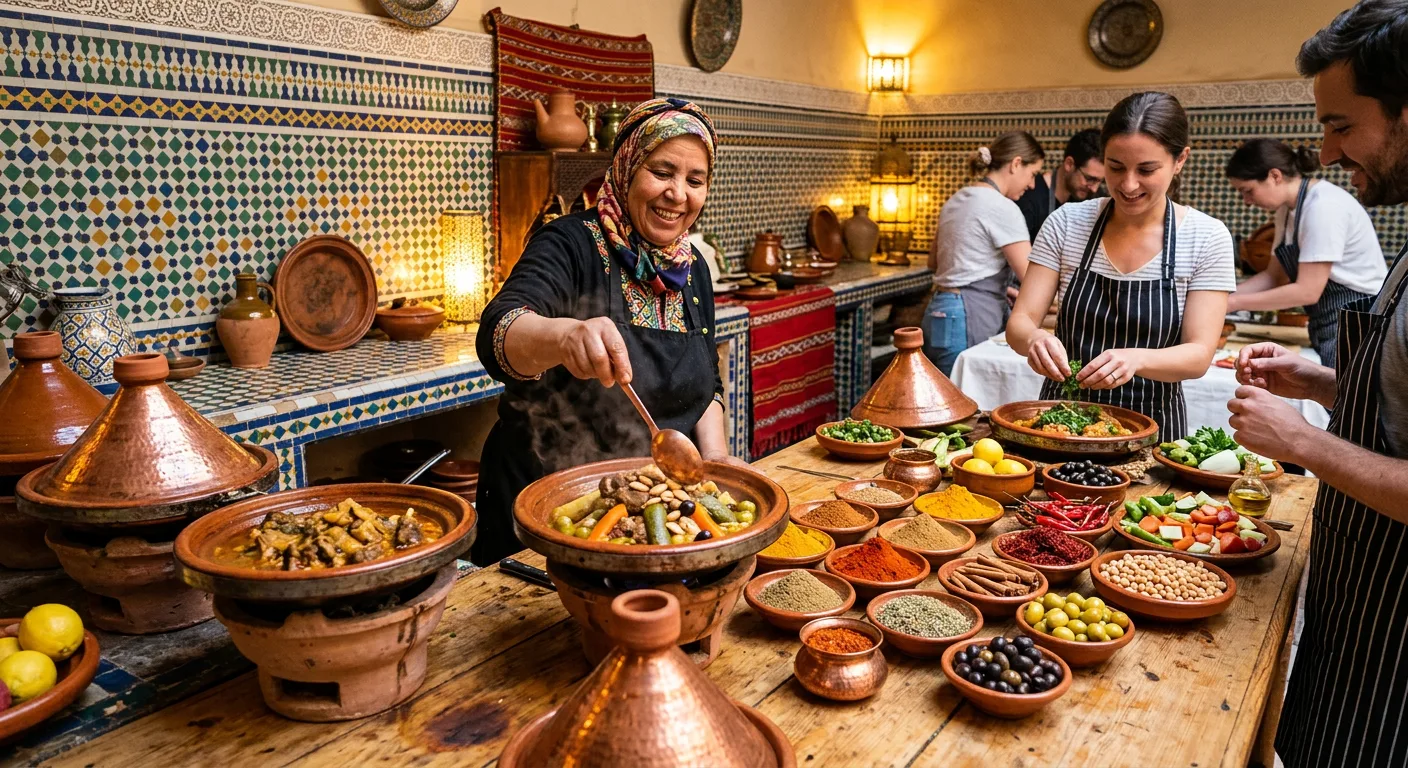
The most immersive food experience in Marrakech combines a guided souk shopping trip with a hands-on cooking class. You start at the Bab Doukkala or Mellah spice souk, shopping for ingredients with a local chef. Then you head to a traditional riad kitchen where you prepare a three-course Moroccan meal: salads, a tagine, and Moroccan pastries or mint tea. You sit down to eat everything you cooked in a beautiful courtyard setting. This is the best value food experience in Marrakech.
Best time: Morning, 9:00 AM start
Tour Highlights
- Guided market tour through the spice souk buying fresh ingredients
- Learn to prepare Moroccan salads: zaalouk, taktouka, and carrot-cumin
- Cook a chicken tagine with preserved lemons and olives from scratch
- Hand-roll couscous using the traditional three-steam technique
- Make msemen flatbread on a traditional griddle
- Prepare mint tea with the proper pouring ceremony
- Take home a printed recipe booklet and your own spice blend
- Enjoy your creations in a riad courtyard with fellow food lovers
Fes
Fes Food Tours
Fes is Morocco's undisputed gastronomic capital. The ancient medina -- a UNESCO World Heritage site -- contains food stalls that have been operating for centuries, and the refined Fassi cuisine is considered the pinnacle of Moroccan cooking. Expect deeper historical context and more complex flavors than anywhere else.
Fes Medina Food Walk
3-4 hours from 350 MAD 2-8 people 5/5
Navigate the labyrinthine streets of the Fes el-Bali medina -- the world's largest car-free urban area -- stopping at food stalls that have operated in the same location for centuries. Fes is Morocco's gastronomic capital, and this tour reveals why. The medina contains food vendors whose families have been selling the same specialties for five or six generations. You taste Fassi-style harira (thicker and more complex than the Marrakech version), aged smen (fermented butter used in couscous), fresh-baked bread from a 400-year-old communal oven, and the renowned Fes pastries.
Best time: Morning, 10:00 AM
Tour Highlights
- Harira soup from a vendor whose family has served it since the 1800s
- Fresh bread from a communal oven (ferran) that has been firing for over 400 years
- Aged smen (fermented butter) tasting -- a Fassi delicacy aged up to 7 years
- Khlii (preserved dried meat) preparation demonstration
- Rfissa -- the celebratory Fassi dish of shredded msemen with lentil sauce and chicken
- Nougat and dried fruit from the Souk el-Attarine (spice and perfume souk)
- Fresh-pressed olive oil tasting from Meknes-region olives
- Traditional Fassi pastry shop visit for kaab el ghazal (gazelle horns)
Pastilla Tasting Experience
2-3 hours from 250 MAD 2-6 people 5/5
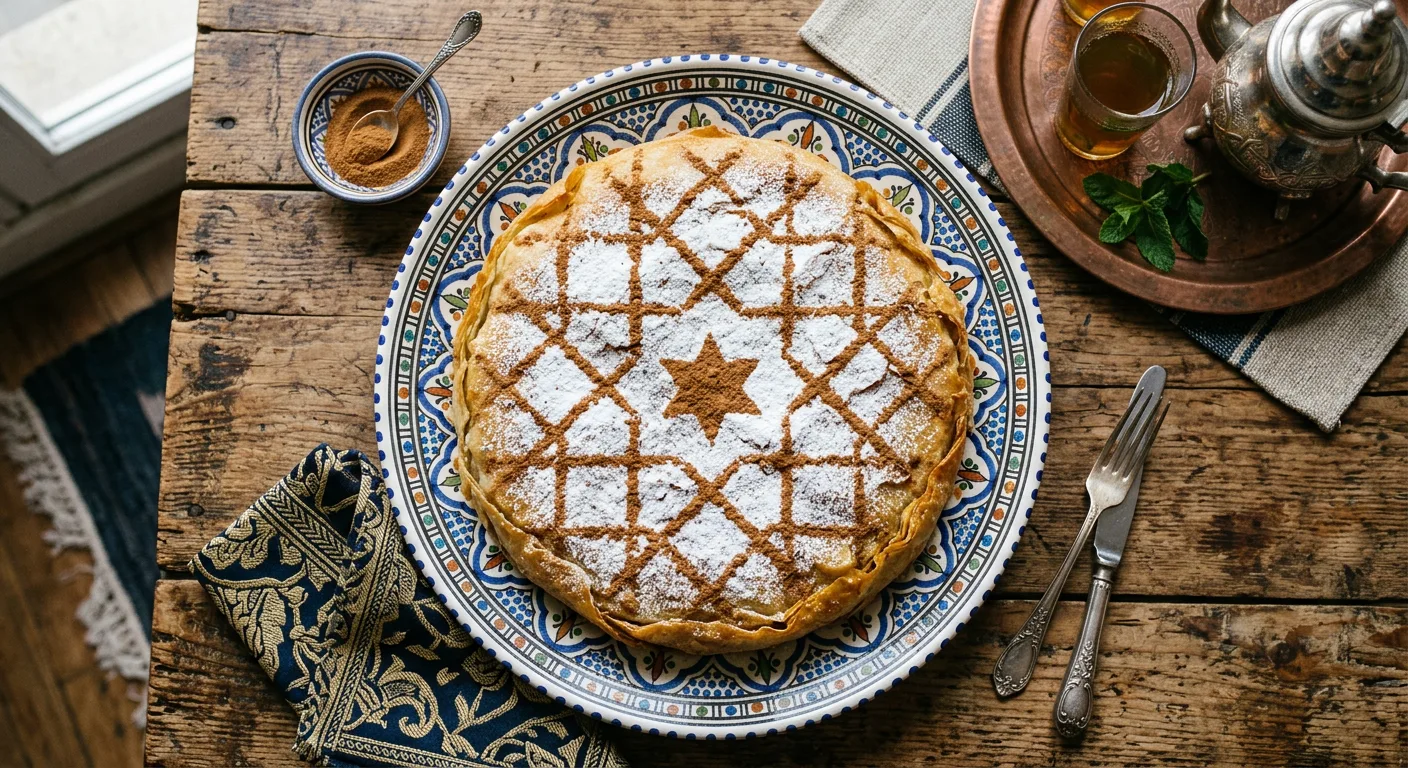
A focused tour dedicated to Morocco's most iconic and complex dish: pastilla (b'stilla). This sweet-and-savory masterpiece originated in Fes, and nowhere else in Morocco will you find it prepared with such refinement. The tour visits three different pastilla makers in the medina, each specializing in a different variety. You taste the traditional pigeon pastilla with almonds and cinnamon sugar, the seafood pastilla with shrimp and vermicelli, and a modern milk pastilla (pastilla au lait) dessert version. A warqa pastry-making demonstration shows the extraordinary skill of stretching dough paper-thin on an inverted hot pan.
Best time: Afternoon, 2:00 PM
Tour Highlights
- Traditional pigeon pastilla -- the original Fassi palace recipe
- Seafood pastilla with shrimp, vermicelli, and Chinese noodles
- Dessert milk pastilla (pastilla au lait) with custard and almond cream
- Warqa pastry-making demonstration by a master craftsman
- History of pastilla from Andalusian origins to modern Fassi refinement
- Side tastings of Fassi salads and fresh juices
Jewish Quarter Food Heritage
2.5 hours from 300 MAD 2-8 people 4/5
Explore the culinary legacy of the Mellah, the historic Jewish quarter of Fes. For centuries, Jewish and Muslim communities in Fes shared recipes, ingredients, and cooking techniques, creating a unique culinary cross-pollination. This tour visits the former Mellah market, explains the kosher influences on Fassi cooking, and tastes dishes that bridge both traditions. You try dafina (the Moroccan-Jewish Sabbath stew, cousin of Moroccan tangia), mahia-influenced preserves, and the sweet-savory flavor combinations that Jewish Fassi cooks perfected.
Best time: Morning, 10:00 AM
Tour Highlights
- Mellah market walkthrough with historical context from a local guide
- Dafina tasting -- the Moroccan-Jewish Sabbath slow-cooked stew
- Sweet-and-savory pastry traditions shared between Jewish and Muslim cooks
- Preserved fruit and confiture traditions from the Mellah
- Visit to a traditional spice shop in the former Jewish quarter
- Cultural discussion of how food bridges communities in Fes
Casablanca
Casablanca Food Tours
Morocco's largest city brings a cosmopolitan edge to Moroccan cuisine. French colonial influence, Spanish seafood traditions, and modern Moroccan fusion create a food scene unlike anywhere else in the kingdom. Casablanca is where tradition meets innovation on the plate.
Central Market (Marche Central) Food Tour
2.5-3 hours from 300 MAD 2-10 people 4/5
Casablanca's iconic Central Market is the beating heart of the city's food scene. This Art Deco-era market hall, built during the French Protectorate period, houses dozens of stalls selling the freshest seafood, meats, spices, and produce in the city. The tour includes tastings of raw oysters shucked to order, freshly grilled sardines, spiced olives, seasonal fruits, and a sit-down lunch at one of the market's seafood restaurants where you choose your fish and have it prepared on the spot. The guide provides historical context about French colonial influence on Casablanca cuisine.
Best time: Morning, 9:00 AM - 12:00 PM
Tour Highlights
- Fresh oysters shucked and served with lemon at the market counter
- Grilled sardines -- Casablanca's signature street food, seasoned with chermoula
- Spiced olive tasting with regional varieties from across Morocco
- Choose-your-own-fish lunch at a market seafood restaurant
- French-influenced patisserie stop for millefeuille and pain au chocolat
- Fresh juice bar with seasonal fruit combinations
- History of the Art Deco market building and French culinary influence
Casablanca Street Food by Night
3 hours from 250 MAD 2-12 people 4/5
After dark, Casablanca's street food scene comes alive in neighborhoods like Habous, Derb Sultan, and along Boulevard Mohammed V. This evening tour visits the local haunts that Casablancais (residents of Casablanca) frequent for late-night eating. You try bocadillos (the Moroccan sandwich, a legacy of Spanish influence), grilled meats from smoky street-side stalls, fresh seafood from mobile carts, and the famous Casa panini -- a pressed sandwich loaded with kefta, eggs, cheese, and harissa that is unique to this city.
Best time: Evening, 7:00 PM start
Tour Highlights
- Casa panini -- the iconic Casablanca street sandwich with kefta and egg
- Bocadillo -- the Moroccan-Spanish sandwich from the Habous quarter
- Late-night harira soup from a legendary Derb Sultan stall
- Grilled liver and heart skewers (boulfaf) from a charcoal grill vendor
- Sfenj (Moroccan donuts) from a late-night frying stall
- Avocado and almond milkshake from a juice vendor
- Walkthrough of the Habous quarter (New Medina) with Art Deco architecture
Essaouira
Essaouira Food Tours
The Wind City of the Atlantic coast is Morocco's seafood capital. Fresh-off-the-boat fish, charcoal-grilled at the port, argan oil from nearby cooperatives, and a relaxed coastal vibe make Essaouira a food lover's paradise that feels distinctly different from the inland cities.
Fish Market to Table Experience
3-4 hours from 350 MAD 2-8 people 5/5
Essaouira is Morocco's premier seafood destination, and this tour takes you from the fishing port to the plate. The morning starts at the Port de Peche, watching fishing boats unload their catch and the lively auction where restaurants and vendors bid on the freshest fish. Your guide helps you select your own fish and seafood, then you walk through the medina to the famous outdoor grills near the port where your selection is charcoal-grilled with chermoula marinade. The experience includes a visit to a traditional sardine-canning workshop and a coastal argan cooperative.
Best time: Morning, 9:00 AM (when boats return)
Tour Highlights
- Fishing port visit to watch the morning catch and auction
- Select your own fish: sea bream, sole, shrimp, calamari, lobster
- Charcoal grill lunch at the famous port-side outdoor restaurants
- Chermoula marinade preparation demonstration
- Sardine-canning workshop visit in the old medina
- Fresh sea urchin tasting (seasonal, October through March)
- Walking tour of the medina fish market with vendor introductions
- Coastal views and fresh Atlantic air throughout the tour
Argan Oil Tasting Tour
2-3 hours from 200 MAD 2-10 people 4/5
Argan oil is liquid gold and Essaouira is at the heart of argan country. This specialized tour visits a women's argan cooperative on the outskirts of the city where you see the entire production process: cracking the incredibly hard argan nuts, grinding the kernels, and pressing the oil. You taste the difference between culinary argan oil (roasted, nutty, deep amber) and cosmetic argan oil (raw, lighter), and learn to identify quality and fair prices. The tour includes an amlou tasting -- the irresistible Moroccan spread of argan oil, almonds, and honey.
Best time: Afternoon, 2:00 PM
Tour Highlights
- Visit a women's argan cooperative and meet the producers
- Watch the traditional argan oil extraction process by hand
- Taste culinary vs. cosmetic argan oil and learn the differences
- Amlou tasting -- argan oil blended with roasted almonds and honey
- Learn fair prices to avoid tourist markup (culinary oil: from 250 MAD per liter)
- Support a social enterprise that empowers rural Amazigh women
Chefchaouen
Chefchaouen Food Experiences
The Blue Pearl of the Rif mountains offers a food experience completely unlike the rest of Morocco. Riffian mountain cuisine features fresh goat cheese, wild herbs, hearty fava bean soups, and flavors shaped by the cool mountain climate and Andalusian heritage of this enchanting town.
Blue City Food Walk
2.5 hours from 200 MAD 2-8 people 4/5
Chefchaouen's food scene is distinct from the rest of Morocco, influenced by the Rif mountains and the town's Andalusian heritage. This walking tour through the blue-washed medina visits a bessara (fava bean soup) stall where the thick, olive oil-drizzled soup is a morning staple, a local bakery producing traditional Riffian bread, a goat cheese (jben) vendor selling fresh cheese made that morning in the mountains, and a honey merchant with wild thyme and lavender varieties from Rif beekeepers.
Best time: Morning, 10:00 AM
Experience Highlights
- Bessara (fava bean soup) with cumin and olive oil -- the Chefchaouen breakfast
- Fresh jben (goat cheese) from Rif mountain herders
- Wild honey tasting: thyme, lavender, and wildflower varieties
- Traditional Riffian bread from a neighborhood bakery
- Ras el hanout variation unique to the Rif region
- Fresh mountain herb tea on a blue-walled rooftop terrace
Rif Mountain Cooking Experience
3-4 hours from 350 MAD 2-6 people 4/5
Cook traditional Riffian mountain dishes in a family home in the Chefchaouen medina. Riffian cuisine uses wild herbs, fresh goat cheese, mountain honey, and hearty grains that reflect the rugged landscape. You prepare a full Riffian meal: bessara soup, a regional tagine with wild herbs and preserved meat, handmade bread baked in a clay oven, and mint tea with fresh mountain herbs. The family shares stories of Rif mountain life and Chefchaouen food traditions.
Best time: Morning, 9:30 AM
Experience Highlights
- Cook in a traditional Riffian family home in the blue medina
- Prepare bessara from dried fava beans with the traditional method
- Regional tagine with mountain herbs and fresh jben cheese
- Handmade bread baked in a home clay oven
- Learn about Riffian food culture and mountain foraging traditions
- Take home recipes adapted for home kitchens
Recommended Operators
Top Food Tour Operators in Morocco
These are the most reputable food tour companies operating across Morocco. All have been vetted for guide quality, food safety, portion generosity, and cultural knowledge. Prices listed are per person and include all tastings.
Marrakech Food Tours
Marrakech
The most established food tour operator in Marrakech, run by a Moroccan-British team. All guides are certified, local, and deeply knowledgeable about Marrakchi cuisine. Groups are small (maximum 12) and tastings are generous.
Price range: from 350 MAD
Languages: English, French, Spanish
Evening Jemaa el-Fnaa walkMorning medina trailCooking + market combo
Fes Cooking & Food Tours
Fes
Specialized in Fassi gastronomy with guides who have grown up in the medina. The pastilla tasting experience and Jewish Quarter food heritage tour are unique offerings not found with other operators.
Price range: from 300 MAD
Languages: English, French, Arabic
Fes Medina food walkPastilla experienceJewish Quarter heritage tour
Plan-it Fez
Fes
Run by Gail Leonard, an American food writer who has lived in Fes for over a decade. Her deep knowledge of Fassi cuisine and personal relationships with medina vendors create an unusually intimate experience.
Price range: from 400 MAD
Languages: English, French
Fes street food walkMarket & cooking classFull-day Fassi immersion
Casablanca Food Tours
Casablanca
The premier food tour company in Casablanca, focusing on the city's unique blend of Moroccan, French, and Spanish culinary influences. Evening street food tours are their standout offering.
Price range: from 250 MAD
Languages: English, French, Arabic
Central Market morning tourStreet food by nightHabous quarter walk
Essaouira Food & Culture
Essaouira
Coastal cuisine specialists who take advantage of Essaouira's incredible seafood and proximity to argan country. The fish market to table experience is one of the best food tours in all of Morocco.
Price range: from 200 MAD
Languages: English, French
Fish market to tableArgan oil tastingMedina food walk
Morocco Food Guide
Multiple cities
A nationwide operation offering food tours in Marrakech, Fes, Casablanca, Essaouira, Meknes, and Tangier. Their multi-city food odyssey packages are ideal for travelers spending 7-14 days in Morocco.
Price range: from 400 MAD
Languages: English, French, Spanish, German
Multi-city food odysseyCustom food itinerariesPrivate chef experiences
DIY Routes
Self-Guided Food Walking Routes
Prefer to explore on your own? These detailed walking routes with specific streets, stall names, prices, and insider tips let you create your own food tour experience. Budget-friendly and flexible -- eat at your own pace.
Marrakech
Jemaa el-Fnaa to Mellah Spice Loop
2-3 hours 2.5 km from 100 MAD for all tastings
1
Orange juice row on Jemaa el-Fnaa
Fresh-squeezed orange juice (4 MAD)
Look for stalls squeezing to order, not pre-made
2
Stall 14 for snail broth (babouche)
Small bowl of snail soup (from 5 MAD)
The stall with the longest local queue
3
Grilled meat row (south side of square)
Mixed grill plate with bread (from 30 MAD)
Insist on a freshly grilled plate, not reheated
4
Rue Riad Zitoun el-Kedim heading south
Msemen from a street-side griddle stall (from 3 MAD)
Best eaten hot off the griddle with honey or cheese
5
Mellah Spice Souk (Place des Ferblantiers area)
Spice browsing and tasting
Compare prices at 3 stalls before buying
6
Bahia Palace area olive vendors
Mixed olives (from 10 MAD per portion)
Ask to taste before buying -- vendors expect it
7
Bab Mellah area bakeries
Chebakia pastry and almond briouats (from 5 MAD)
The neighborhood bakeries are cheaper than the souk
Fes
Talaa Kbira Descent -- The Great Foodway
2-3 hours 2 km (all downhill) from 80 MAD for all tastings
1
Bab Bou Jeloud (Blue Gate) entrance
Sfenj (donuts) from the stall on the right (from 2 MAD each)
Buy them hot from the oil -- best at 8-9 AM
2
First section of Talaa Kbira
Fresh nougat and dried fruit (from 10 MAD)
The nougat sellers are right after the Blue Gate
3
Neighborhood ferran (communal oven)
Watch bread going in and out of the wood oven (free)
A fascinating cultural experience -- tip the baker 5 MAD
4
Souk el-Attarine (spice and perfume souk)
Ras el hanout and saffron tasting (free with purchase)
Buy saffron here: from 15 MAD per gram for genuine threads
5
Pastilla shop near Medersa Bou Inania
Individual pastilla (from 15 MAD)
Ask for a pigeon pastilla if available -- the original variety
6
Olive merchants on lower Talaa Kbira
Olive tasting and purchase (from 10 MAD per portion)
Fes olives are different from Marrakech -- try the green cracked variety
7
Bottom of Talaa Kbira near Kairaouine Mosque
Harira soup (from 5 MAD) and fresh bread
The stalls here serve the medina workers -- authentic and cheap
Essaouira
Port to Medina Seafood Trail
1.5-2 hours 1.5 km from 80 MAD for all tastings
1
Port de Peche (fishing port) entrance
Watch the morning fish auction (free)
Best at 7-9 AM when boats return with the catch
2
Outdoor grill restaurants by the port
Grilled fish or mixed seafood platter (from 60 MAD)
Negotiate the price before sitting down -- ask for the day's catch
3
Medina entrance near Porte de la Marine
Sardine sandwich from a street vendor (from 10 MAD)
Essaouira's signature cheap eat -- fresh sardines in bread
4
Rue de la Skala food stalls
Moroccan salads and bread (from 15 MAD)
Small hole-in-the-wall stalls serving locals
5
Place Moulay Hassan juice vendors
Fresh juices and smoothies (from 10 MAD)
Try the avocado-almond milkshake -- an Essaouira specialty
6
Argan oil shop on Rue de la Skala
Amlou tasting and argan oil (free tasting, oil from 250 MAD/liter)
Taste the culinary oil on bread -- the flavor is unmistakable
Cooking Classes
Top 10 Cooking Classes Across Morocco
The best way to take Moroccan flavors home with you. These ten cooking schools offer hands-on classes with market tours, expert instruction, and recipes you will use for years. See our full cooking classes guide for detailed reviews.
| Rank | School | City | Price |
|---|---|---|---|
| 1 | La Maison Arabe | Marrakech | from 700 MAD |
| 2 | Souk Cuisine | Marrakech | from 500 MAD |
| 3 | Amal Center | Marrakech | from 300 MAD |
| 4 | Cafe Clock | Fes | from 400 MAD |
| 5 | Palais Amani | Fes | from 800 MAD |
| 6 | Dar Namir | Marrakech | from 500 MAD |
| 7 | L'Atelier de Madada | Essaouira | from 600 MAD |
| 8 | Khmissa Cooking | Essaouira | from 400 MAD |
| 9 | Ruined Garden | Fes | from 500 MAD |
| 10 | Lina Ryad & Spa | Chefchaouen | from 350 MAD |
All prices are approximate and may vary by season, location, and operator.
Spice Shopping
Spice Guide: What to Buy and Fair Prices
Every food tour passes through a spice souk, and you will be tempted to buy everything. This guide helps you identify quality spices, understand fair prices, and avoid common tourist traps. Armed with this knowledge, you will shop like a local.
Ras el Hanout
from 80 MAD per 100gThe iconic Moroccan spice blend meaning "head of the shop" -- each merchant's signature mix of 12-30 spices. Quality varies enormously. A good blend should be fragrant, complex, and never dusty or stale. Ask to smell before buying.
Buying tip: Buy from a spice merchant, not a tourist souk stall. The tourist price can be 3x the local price.
Saffron
from 15 MAD per gramMoroccan saffron is grown in the Taliouine region of the Anti-Atlas. Genuine saffron threads are deep red, slightly moist, and intensely fragrant. Imitation saffron (dyed safflower or corn silk) is common in tourist souks.
Buying tip: Test by dropping a thread in warm water: real saffron releases color slowly and stays red. Fake saffron turns the water yellow immediately and the threads lose color.
Cumin (Kamoun)
from 20 MAD per 100gUsed in nearly every Moroccan savory dish. Moroccan cumin is slightly different from the Indian variety -- earthier and less sharp. Essential for tagines, harira, and as a table condiment alongside salt.
Buying tip: Buy whole seeds and grind at home for the best flavor. Pre-ground cumin loses its aroma within weeks.
Turmeric (Kharkoum)
from 15 MAD per 100gThe golden spice used for color and a mild earthy flavor. Moroccan turmeric is used more subtly than in Indian cooking -- as a background note rather than a dominant flavor.
Buying tip: Fresh turmeric root is available in some markets and is far more flavorful than dried. It stains everything yellow, so handle with care.
Cinnamon (Karfa)
from 30 MAD per 100g (sticks)Used in both savory and sweet dishes, Moroccan cooking uses true Ceylon cinnamon (lighter, more delicate) rather than the stronger cassia variety common in the United States. Essential for pastilla and many tagines.
Buying tip: Buy cinnamon sticks rather than ground. They last longer and you can grind as needed. Sticks should be thin-barked and fragrant.
Paprika (Felfla Hamra)
from 15 MAD per 100gMoroccan paprika ranges from sweet to mildly hot. It provides the red color base for many tagines and sauces. Often combined with cumin and turmeric for the foundational Moroccan spice trio.
Buying tip: The smoked variety (similar to Spanish pimenton) is less common in Morocco but increasingly available. The standard sweet paprika is what most recipes call for.
Ginger (Skinjbir)
from 20 MAD per 100gDried ground ginger is a cornerstone of Moroccan cuisine, used in tagines, couscous, pastilla, and pastries. It adds warmth without the sharpness of fresh ginger. Moroccan cooking uses dried ginger far more than fresh.
Buying tip: Quality dried ginger should be light tan and intensely fragrant. Dark or clumpy ginger is old and has lost its potency.
Preserved Lemons (Hamd Marakad)
from 5 MAD eachNot a spice but an essential Moroccan ingredient. Whole lemons preserved in salt and their own juice for 30 days. The rind becomes soft, silky, and incredibly flavorful. Indispensable in chicken tagine with olives.
Buying tip: The best preserved lemons are at least one month old. You use only the rind, not the flesh. One lemon goes a long way.
Dietary Guide
Dietary Needs on Food Tours
Whether you are vegetarian, vegan, halal-conscious, or gluten-free, Morocco can accommodate you -- with the right preparation. Here is an honest assessment of each dietary need and practical tips to ensure you eat well on your food tour.
Vegetarian
EasyMorocco offers extensive vegetarian options. Moroccan salads (zaalouk, taktouka, carrot-cumin), vegetable tagines, couscous with seven vegetables, bessara (fava bean soup), lentil soup, harira (can be meatless), msemen flatbreads, and an incredible array of fresh fruits, nuts, and pastries are all vegetarian-friendly.
- Request a vegetable tagine -- most restaurants prepare them on request
- Moroccan salads served at the start of every meal are almost always vegetarian
- Bessara soup (fava beans) is a filling, protein-rich vegetarian staple
- Bread with amlou (argan oil, almond, honey spread) is a satisfying vegetarian snack
- Couscous with seven vegetables is the traditional Friday dish and always vegetarian
- Tell your food tour guide in advance and they will plan a vegetarian route
Vegan
ModerateVeganism is not a traditional concept in Morocco, but many Moroccan dishes are naturally vegan. The challenge is dairy (butter is used in couscous, and honey appears in desserts). With advance notice, food tour operators and cooking classes can accommodate vegan diets.
- Vegetable tagines cooked with olive oil instead of butter are common
- Zaalouk, taktouka, and most cooked salads are naturally vegan
- Bessara soup is vegan (fava beans, olive oil, cumin, garlic)
- Fresh fruit, nuts, and dates are abundant and always vegan
- Say "bla hlib, bla zebda, bla asel" (no milk, no butter, no honey)
- Moroccan bread (khobz) is typically vegan -- made from flour, water, salt, yeast
Halal
Not an issueMorocco is a Muslim-majority country and virtually all food is halal by default. All meat is slaughtered according to Islamic law, alcohol is not used in cooking (though it is available in licensed restaurants and hotels), and pork is not served anywhere except in a handful of international hotel restaurants. Halal-conscious travelers will have zero issues in Morocco.
- All meat in Morocco is halal -- there is no need to ask or verify
- Alcohol is available in licensed restaurants and hotels but never in food preparation
- Pork is essentially nonexistent in Moroccan cuisine
- During Ramadan, eating in public during daylight is considered disrespectful
- Food tours during Ramadan shift to evening hours after iftar (breaking of fast)
- Street food is always halal without exception
Gluten-Free
ChallengingThis is the hardest dietary restriction in Morocco. Bread is the foundation of every Moroccan meal, couscous is semolina, pastilla uses wheat pastry, and many dishes use bread as a thickener. However, tagines without bread, grilled meats, salads, fruits, and nuts are naturally gluten-free.
- Tagines are naturally gluten-free (meat, vegetables, spices cooked in a clay pot)
- Grilled meats (mechoui, brochettes) are usually gluten-free
- Moroccan salads are gluten-free -- just skip the bread accompaniment
- Rice is available as a substitute for couscous at many restaurants
- Harira soup contains flour as a thickener -- avoid it
- Carry a translated card in Arabic and French explaining your allergy
Etiquette
What to Wear and Etiquette on Food Tours
A few simple cultural guidelines will ensure you have the best possible experience on your Moroccan food tour. These tips cover dress code, eating customs, tipping, photography, and general food safety practices.

Eat with your right hand
In Moroccan culture, the left hand is considered unclean. When eating from shared dishes, always use your right hand. Utensils are provided in restaurants, but traditional eating with bread uses the right hand to scoop food.
Accept hospitality graciously
If a stall vendor offers you a taste, accept it with a smile and a thank you (shukran). Refusing food is considered impolite in Moroccan culture. You are not obligated to buy after tasting, but it is a gesture of goodwill.
Pace yourself on food tours
A typical food tour includes 8-12 tastings over 3-4 hours. Take small portions at each stop, especially at the beginning. The portions increase as the tour progresses, and you do not want to be full by stop number four.
Tipping on food tours
Tip your food tour guide from 50 MAD at the end of the tour. For cooking classes, from 50 MAD per person is appropriate. At individual food stalls, tipping is not expected but rounding up is appreciated. A 10 MAD tip at a bakery or ferran is generous.
Photography etiquette
Ask before photographing people, especially women and children. Photographing food is always welcome and vendors are usually proud to have their dishes photographed. Some stall owners may expect a small tip (from 5 MAD) for posing.
Dress modestly
Cover shoulders and knees, especially in the medina and near religious sites. Comfortable closed-toe shoes with good grip are essential for slippery medina streets. Bring a light scarf for entering areas near mosques.
Bargaining at food stalls
Prices at food stalls are generally fixed and low. Do not try to haggle over a 5 MAD bowl of soup. Bargaining is appropriate at spice shops and for larger purchases of dried goods, nuts, and argan oil.
Water and ice safety
Drink bottled water (Sidi Ali and Ain Saiss are the main Moroccan brands). Ice in restaurants is generally safe (made from purified water), but avoid ice from street vendors. Freshly squeezed juices are safe when squeezed in front of you.
Essential Packing List for Food Tours
Clothing
- Comfortable closed-toe walking shoes
- Modest clothing covering shoulders and knees
- Light layers (medina alleys can be cool)
- Light scarf for modesty near mosques
Essentials
- Small daypack or crossbody bag
- Bottled water (Sidi Ali or Ain Saiss)
- Hand sanitizer or wet wipes
- Cash in small denominations (MAD)
Nice to Have
- Phone camera for food photography
- Notebook for recipes and vendor names
- Reusable bag for spice purchases
- Antacid tablets (just in case)
FAQ
Frequently Asked Questions About Morocco Food Tours
Everything you need to know before booking a food tour in Morocco, from costs and safety to dietary accommodations and the best time to go.
How much does a food tour in Morocco cost?
Food tours in Morocco range from 150 MAD for a self-guided walk with street food tastings to 1,200 MAD for a premium private guided tour with multiple courses. The average guided group food tour costs from 300 MAD per person including tastings. Cooking class combos that include a market tour typically cost from 500 MAD.
What is the best city in Morocco for a food tour?
Marrakech and Fes are the top two cities for food tours. Marrakech offers the most variety with the famous Jemaa el-Fnaa night food stalls, medina tasting trails, and numerous cooking class combos. Fes is considered the gastronomic capital with the oldest food stalls in the medina and refined Fassi palace cuisine. Essaouira is best for seafood tours and Casablanca for modern Moroccan dining.
Is food safe on a Morocco food tour?
Yes, food tours in Morocco are generally safe, especially with a reputable guide who knows which stalls maintain high hygiene standards. Look for stalls with high turnover (food is fresh), visible cooking (you can see it prepared), and local crowds (Moroccans know where the good, safe food is). Avoid pre-cut fruit and always drink bottled water. Most guided tours only visit trusted vendors.
Can vegetarians enjoy a food tour in Morocco?
Absolutely. Moroccan cuisine offers extensive vegetarian options including zaalouk (eggplant dip), bessara (fava bean soup), vegetable tagines, msemen flatbread, harira soup (can be made without meat), Moroccan salads, fresh juices, and pastries. Most food tour operators offer vegetarian-specific routes. Veganism is harder but possible with advance notice.
What should I wear on a food tour in Morocco?
Wear comfortable walking shoes with good grip (medina streets can be uneven and slippery), loose-fitting modest clothing that covers shoulders and knees, and bring a light scarf. Avoid open-toed sandals in busy souks. Bring a small bag for purchases but leave valuables at your hotel. Dress in layers as medina alleys can be cool even on warm days.
How do I book a food tour in Morocco?
Book food tours through established platforms like GetYourGuide, Viator, or Airbnb Experiences, or directly with local operators like Marrakech Food Tours, Fes Cooking & Food Tours, and Plan-it Fez. Booking 2-3 days in advance is recommended during peak season (March-May, September-November). Many tours can be booked same-day during off-peak periods.
What time of day is best for a food tour?
Evening food tours (starting around 6-7 PM) are best in Marrakech for the Jemaa el-Fnaa experience. Morning tours (9-10 AM) are ideal in Fes and Essaouira when markets are freshest. Lunchtime tours work well in Casablanca for the Central Market area. Avoid midday tours in summer when temperatures peak and some stalls close.
How long does a typical food tour last?
Most guided food tours last 3-4 hours and include 8-12 tastings. Half-day tours combining a cooking class and market tour run 4-5 hours. A full culinary immersion day with market tour, cooking class, and evening food walk can last 7-8 hours. Self-guided food walks typically take 2-3 hours depending on how many stops you make.
A Taste of What Awaits You
From sizzling street stalls to vibrant spice pyramids, Morocco's food scene is a feast for all the senses.
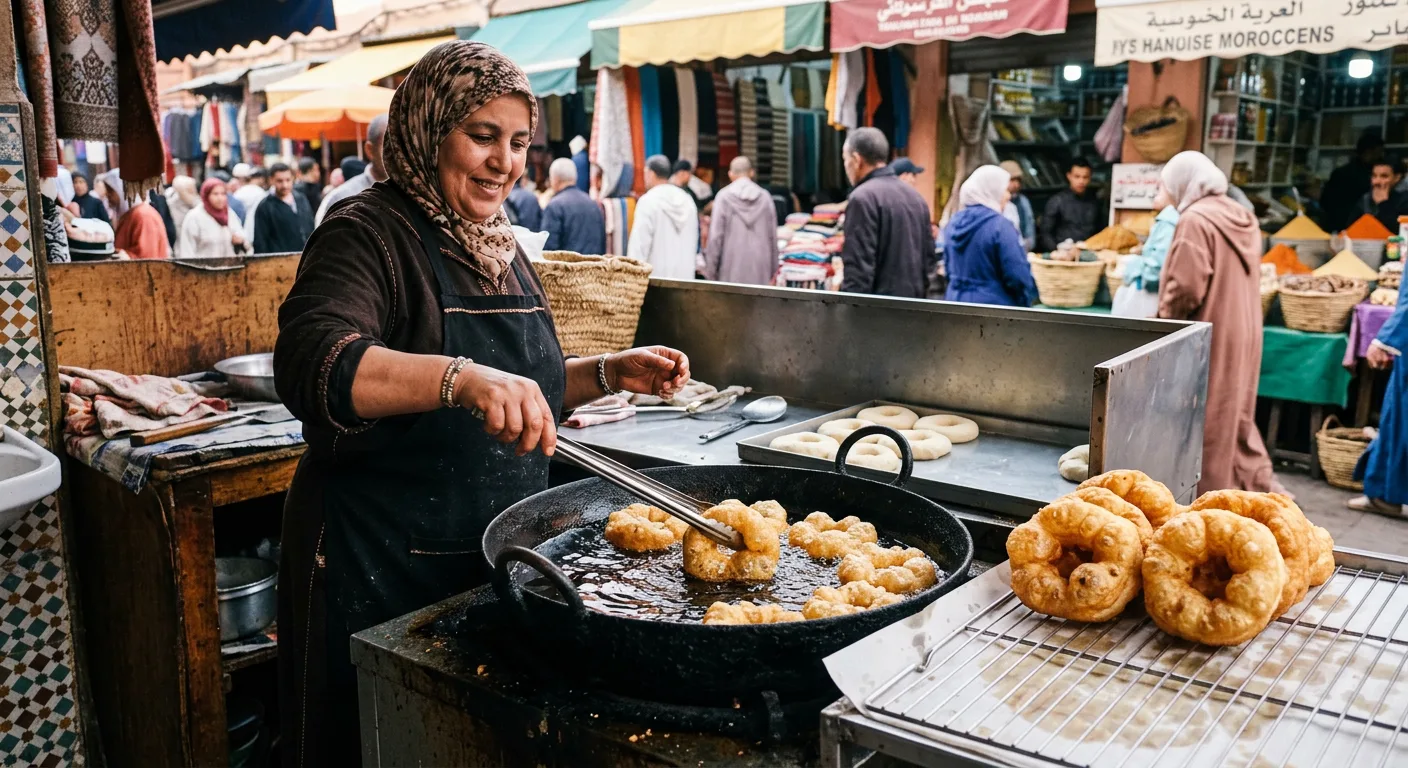
Sfenj -- Moroccan Donuts
Spice Souk Treasures
Fresh-Squeezed Orange Juice
Ready to Eat Your Way Through Morocco?
Whether you choose a guided tour, a self-guided walk, or a cooking class, Morocco's food scene will be one of the most memorable parts of your journey. Start planning your culinary adventure today.
Continue Exploring Morocco
Discover more of what Morocco has to offer