Best Day Trips from Fes
in 2026
10 incredible day trips from Roman ruins and imperial cities to cedar forests, mountain lakes, and ancient cave houses. Guided tours from 200 MAD, DIY from 10 MAD.
Which Day Trips from Fes Should You Take?
The best day trips from Fes are Meknes and Volubilis (about 2 hours of driving in total), Ifrane (60 km, 1 hour), the Azrou cedar forests with Barbary macaques (75 km, 1.5 hours), Moulay Idriss Zerhoun (55 km, 1 hour) and Sefrou (28 km, 30 minutes). Guided tours start from 200 MAD; DIY trips from 10 MAD.
Why Fes Is an Excellent Base for Day Trips
Fes sits at a geographical crossroads between the Rif Mountains to the north, the Middle Atlas to the south, and the fertile Saiss plain stretching west toward Meknes. This strategic position makes it one of Morocco's best bases for day trips, with imperial cities, Roman ruins, alpine hill towns, ancient cedar forests, and hidden villages all within a 1-2 hour drive.
Unlike Marrakech, where the main day trips require long drives over mountain passes, many of Fes's best excursions are remarkably close. Sefrou and Bhalil are just 30 minutes away, Meknes is an hour by train, and even the cedar forests with their Barbary macaques are only 1.5 hours south. This means less time on the road and more time exploring.
This guide covers the 10 best day trips from Fes with honest advice on transport options, costs, what is included on guided tours, the best season for each trip, and whether to go DIY or book a tour.
10 Best Day Trips from Fes
From 20-minute escapes to full-day adventures, these are the top excursions from Fes for every type of traveler.
All prices are starting prices and may vary by season, group size, and provider. Always confirm current rates before booking.
Meknes & Volubilis
Guided: From 450 MAD per person | DIY: From 100 MAD per person
The combined Meknes and Volubilis day trip is the single most popular excursion from Fes and one of Morocco's must-do experiences. Meknes, one of Morocco's four imperial cities, was built by Sultan Moulay Ismail in the 17th century with monumental gates, vast granaries, and a grand square rivaling Marrakech's Jemaa el-Fna. Volubilis, 33 km north, is Morocco's best-preserved Roman archaeological site with stunning floor mosaics, triumphal arches, and columns dating to the 2nd and 3rd centuries AD.
Highlights
Getting There
Grand taxis from Fes to Meknes from 30 MAD (1 hour), then grand taxi from Meknes to Volubilis from 40 MAD. Trains also run Fes-Meknes from 25 MAD. By car, take the A2 motorway.
Guided Tour Includes
Hotel pickup in Fes, transport, licensed guide at Volubilis and Meknes, entry fees, and lunch in Meknes
Tip: Visit Volubilis first thing in the morning when the light is best for photography and before tour buses arrive. Bring a hat and water as the ruins have no shade. The Meknes medina is compact and walkable.
Ifrane (Switzerland of Morocco)
Guided: From 400 MAD per person | DIY: From 35 MAD per person
Ifrane is unlike anywhere else in Morocco. Built by the French as a hill station in 1929, this immaculate mountain town looks transplanted from the Swiss Alps with its red-roofed chalets, manicured gardens, and tree-lined avenues. At 1,665 meters elevation, Ifrane is noticeably cooler than Fes and even receives heavy snowfall in winter, making it Morocco's unofficial ski destination. The famous stone lion sculpture in the town center is one of Morocco's most photographed landmarks.
Highlights
Getting There
Grand taxis from Fes main station from 35 MAD per person (1 hour). CTM buses also serve the route. By car, take the N8 south. The road is modern and well-maintained.
Guided Tour Includes
Hotel pickup in Fes, transport, guided walk of Ifrane, cedar forest visit, and sometimes lunch
Tip: Combine with Azrou and the cedar forests for a full Middle Atlas day. In summer, Ifrane is a cool escape from Fes's 40C heat. In winter, bring warm layers as temperatures drop below zero.
Middle Atlas Cedar Forests & Azrou
Guided: From 450 MAD per person | DIY: From 50 MAD per person
The Middle Atlas cedar forests between Ifrane and Azrou are home to some of Morocco's oldest and largest cedar trees, many over 800 years old. The star attraction is the colony of Barbary macaques (the only wild monkey species in Africa north of the Sahara) that live in the Cedre Gouraud forest. These curious primates are accustomed to visitors and often approach for photos. The nearby town of Azrou is a traditional Berber settlement known for its Tuesday and Thursday markets and carpet-weaving cooperatives.
Highlights
Getting There
Grand taxis to Azrou from Fes from 40 MAD (1.5 hours). From Azrou, hire a local taxi to the cedar forest for from 50 MAD return. By car, continue south from Ifrane on the N13.
Guided Tour Includes
Hotel pickup in Fes, transport, Ifrane stop, cedar forest walk, Azrou visit, and lunch
Tip: Do not feed the monkeys as it disrupts their natural diet and makes them aggressive. Visit the Azrou carpet cooperative to see traditional Berber weaving. The forest is stunning in autumn when the leaves change color.
Moulay Idriss Zerhoun
Guided: From 350 MAD per person | DIY: From 50 MAD per person
Moulay Idriss Zerhoun is the spiritual heart of Morocco, built around the tomb of Moulay Idriss I who brought Islam to Morocco in 789 AD and founded the first Moroccan dynasty. The town tumbles down two hills in a cascade of whitewashed houses with green-tiled roofs, and was closed to non-Muslims until 2005. While non-Muslims still cannot enter the shrine itself, the town is a fascinating and atmospheric place to wander. The panoramic terrace offers sweeping views over the Saiss plain to the Rif Mountains.
Highlights
Getting There
Grand taxis from Meknes to Moulay Idriss from 15 MAD (30 minutes). From Fes, go via Meknes or take a direct grand taxi for from 50 MAD. Easily combined with Volubilis, which is only 4 km away.
Guided Tour Includes
Hotel pickup in Fes, transport, guided walk, Volubilis entry and guide, and lunch
Tip: Visit on a Saturday for the weekly moussem (market). Try the local specialty of nougat and roasted almonds. Be respectful around the shrine area. Combine with Volubilis for a half-day cultural experience.
Sefrou
Guided: From 300 MAD per person | DIY: From 20 MAD per person
Sefrou is a charming small town just 30 minutes south of Fes, known for its annual Cherry Festival (Fete des Cerises) held every June since 1920, one of Morocco's oldest cultural festivals. The town has a well-preserved medina bisected by Oued Aggay river, creating a unique waterside atmosphere with old bridges and mill houses. Sefrou was historically home to a large Jewish community, and the restored mellah (Jewish quarter) with its synagogue is one of the best preserved in Morocco.
Highlights
Getting There
Grand taxis from Fes to Sefrou from 20 MAD per person, departing frequently (30 minutes). The road is straightforward. By car, take the P20 south from Fes.
Guided Tour Includes
Hotel pickup in Fes, transport, medina walk, mellah visit, waterfall stop, and lunch
Tip: Time your visit for the Cherry Festival in mid-June for parades, music, and cherry-themed celebrations. Visit the small waterfall (Cascades de Sefrou) on the edge of town. The souk on Thursday is particularly vibrant.
Bhalil (Cave Houses)
Guided: From 300 MAD per person | DIY: From 20 MAD per person
Bhalil is one of Morocco's hidden gems, a colorful hillside town where some residents still live in troglodyte cave houses carved into the rock face centuries ago. Local families welcome visitors into their cave homes, which are surprisingly spacious and naturally cool in summer. The town itself is a painter's dream with its pastel-colored houses tumbling down the hillside, and it sees almost no tourists compared to nearby Fes. Bhalil is also known for its traditional djellaba-sewing workshops.
Highlights
Getting There
Grand taxis from Fes to Bhalil from 20 MAD (35 minutes). From Sefrou, grand taxis to Bhalil cost from 5 MAD (10 minutes). Easily combined with Sefrou for a half-day trip.
Guided Tour Includes
Hotel pickup in Fes, transport, local cave house visits, Sefrou stop, and lunch
Tip: Ask locals to guide you to the cave houses; they will happily show you around for a small tip (from 20 MAD). Combine with Sefrou for a full day exploring two of Morocco's most authentic small towns. Photography of the colorful houses is best in morning light.
Taza
Guided: From 500 MAD per person | DIY: From 60 MAD per person
Taza sits at a strategic mountain pass between the Rif and Middle Atlas ranges, the famous Taza Gap that has been a crucial corridor throughout Moroccan history. The old medina perches on a rocky hilltop with commanding views over the surrounding plains. Taza's Great Mosque dates to the Almohad era (12th century) and is one of Morocco's oldest. The nearby Friouato Caves (Gouffre du Friouato), 26 km southwest, are among the deepest caves in Africa at 272 meters, with a dramatic descent on 500+ steps.
Highlights
Getting There
Trains from Fes to Taza from 50 MAD (1.5 hours), running several times daily. Grand taxis also available from 60 MAD. By car, take the A2 motorway east. The Friouato Caves require a local taxi or car from Taza.
Guided Tour Includes
Hotel pickup in Fes, transport, medina tour, Friouato Caves guide and entry, and lunch
Tip: The Friouato Caves require a guide (available at the site from 100 MAD) and moderate fitness for the 500+ step descent. Wear sturdy shoes and bring a flashlight. The old medina in Taza is best explored with a local guide.
Sidi Harazem Thermal Springs
Guided: From 200 MAD per person | DIY: From 10 MAD per person
Sidi Harazem is the closest excursion from Fes, a small spa town built around natural thermal springs that have been used for bathing and healing since Roman times. The thermal water is naturally warm and mineral-rich, said to benefit skin conditions and joint pain. The town has a relaxed, local feel with public bathing pools, traditional hammams, and picnic areas shaded by eucalyptus trees. It is where Fassis (residents of Fes) go for a quick half-day escape and is a fascinating glimpse into everyday Moroccan leisure culture.
Highlights
Getting There
Grand taxis from Fes to Sidi Harazem from 10 MAD per person (20 minutes). Buses also run frequently. By car, head east from Fes on the N6. This is an easy half-day trip.
Guided Tour Includes
Hotel pickup, transport, hammam session, and guide to explain the thermal traditions
Tip: Visit on a weekday for a quieter experience; weekends are crowded with local families. Bring your own towel and swimwear. The thermal pools are gender-separated. Combine with a morning exploring the Fes medina for a full day.
Immouzzer Kandar
Guided: From 300 MAD per person | DIY: From 25 MAD per person
Immouzzer Kandar is a pleasant Middle Atlas hill town at 1,345 meters, known for its crisp mountain air, apple orchards, and the scenic Dayet Aoua lake nearby. Founded as a French resort town, it retains some charming colonial architecture mixed with traditional Berber houses. The town comes alive during the Apple Festival (Fete des Pommes) in October. Dayet Aoua, a natural lake 9 km from town, is surrounded by cedar and oak forests and is a peaceful spot for walking and birdwatching.
Highlights
Getting There
Grand taxis from Fes to Immouzzer Kandar from 25 MAD (45 minutes). Located on the N8 road to Ifrane. By car, it is a straightforward drive south. Can be combined with Ifrane for a Middle Atlas loop.
Guided Tour Includes
Hotel pickup in Fes, transport, town walk, Dayet Aoua lake visit, and lunch
Tip: Visit Dayet Aoua in the early morning for the best birdwatching. The lake sometimes dries up in late summer. Combine with Ifrane and Azrou for a full Middle Atlas day trip. Try the local apple juice and apple-blossom honey.
Full Middle Atlas Loop
Guided: From 550 MAD per person | DIY: From 150 MAD per person
The full Middle Atlas loop is the ultimate day trip from Fes for nature lovers, combining the best of the Middle Atlas in one circular route. The typical itinerary runs south from Fes to Immouzzer Kandar, continues to Ifrane, then southeast to the Cedre Gouraud cedar forest for Barbary macaques, through Azrou for its Berber market, and back to Fes via the N8. This full-day circuit passes through some of Morocco's most varied landscapes: from the Saiss plain to mountain lakes, alpine towns, ancient forests, and Berber highlands.
Highlights
Getting There
Best done by rental car or guided tour as the loop covers multiple stops. By grand taxi, you would need to arrange separate taxis for each leg. A rental car gives maximum flexibility for stops.
Guided Tour Includes
Hotel pickup in Fes, full-day transport, guide, all stops, and lunch at a local restaurant in Azrou or Ifrane
Tip: Start early (8 AM) to complete the full loop comfortably. Pack a picnic to eat at one of the forest clearings. The loop works equally well in either direction. In winter, check road conditions as snow can close mountain passes.
Quick Comparison Table
All 10 day trips at a glance with distances, prices, and difficulty levels.
| Day Trip | Distance | Drive Time | Guided Price | DIY Price | Difficulty |
|---|---|---|---|---|---|
| Meknes & Volubilis | 60 + 33 km | 2 hrs total | From 450 MAD | From 100 MAD | Easy |
| Ifrane | 60 km | 1 hr | From 400 MAD | From 35 MAD | Easy |
| Cedar Forests & Azrou | 75 km | 1.5 hrs | From 450 MAD | From 50 MAD | Easy |
| Moulay Idriss Zerhoun | 55 km | 1 hr | From 350 MAD | From 50 MAD | Easy |
| Sefrou | 28 km | 30 min | From 300 MAD | From 20 MAD | Easy |
| Bhalil | 30 km | 35 min | From 300 MAD | From 20 MAD | Easy |
| Taza | 120 km | 1.5 hrs | From 500 MAD | From 60 MAD | Moderate |
| Sidi Harazem | 15 km | 20 min | From 200 MAD | From 10 MAD | Easy |
| Immouzzer Kandar | 45 km | 45 min | From 300 MAD | From 25 MAD | Easy |
| Full Middle Atlas Loop | 160 km loop | 3-4 hrs | From 550 MAD | From 150 MAD | Full day |
Guided prices are per person for group tours. Private tours are typically 2-3x higher. All prices are starting prices and seasonal pricing may apply.
DIY vs Guided Tours: Which Should You Choose?
Many day trips from Fes are easy to do independently by grand taxi or train. Others benefit from a guide and organized transport.
Best for DIY
DIY saves 60-80% compared to guided tours and many Fes day trips have excellent public transport links.
Better with a Guide
Guided tours include hotel pickup, knowledgeable guides, and often lunch. Book through your riad or a reputable agency.
Getting Around: Transport from Fes
Fes has excellent transport connections to nearby cities and towns. Here are your options for each mode.
Grand Taxis
Shared taxis (6 passengers) depart from the main gare routiere when full. The cheapest and most flexible option for most destinations. Fares are fixed per route.
Trains & Buses
ONCF trains serve Meknes (from 25 MAD, 50 min) and Taza (from 50 MAD, 1.5 hrs). CTM and Supratours buses cover wider routes including Ifrane and Azrou.
Rental Car
The best option for the Middle Atlas loop and multi-stop trips. Rental cars from 300 MAD/day from agencies near Fes train station. Roads are generally well-maintained.
Best Season for Each Day Trip
Fes has hot summers and mild winters, while the Middle Atlas mountains add altitude and cooler temperatures to the mix.
Spring (March-May)
The best season for most day trips from Fes. Wildflowers carpet the Middle Atlas, Volubilis fields are green, and temperatures are perfect. Cherry blossoms in Sefrou add color.
Best Trips This Season
Summer (June-August)
Fes is extremely hot in summer, making mountain day trips essential for relief. Ifrane and the cedar forests are 10-15 degrees cooler. Sidi Harazem springs are popular for cooling off.
Best Trips This Season
Autumn (September-November)
Excellent for day trips with warm but comfortable temperatures and fewer tourists. The cedar forests show autumn colors, and Immouzzer Kandar celebrates its Apple Festival in October.
Best Trips This Season
Winter (December-February)
Mild in Fes with cool evenings. Snow covers Ifrane and the cedar forests, creating a magical landscape. Fewer tourists at Volubilis and Meknes mean a more intimate experience.
Best Trips This Season
Landscapes Around Fes
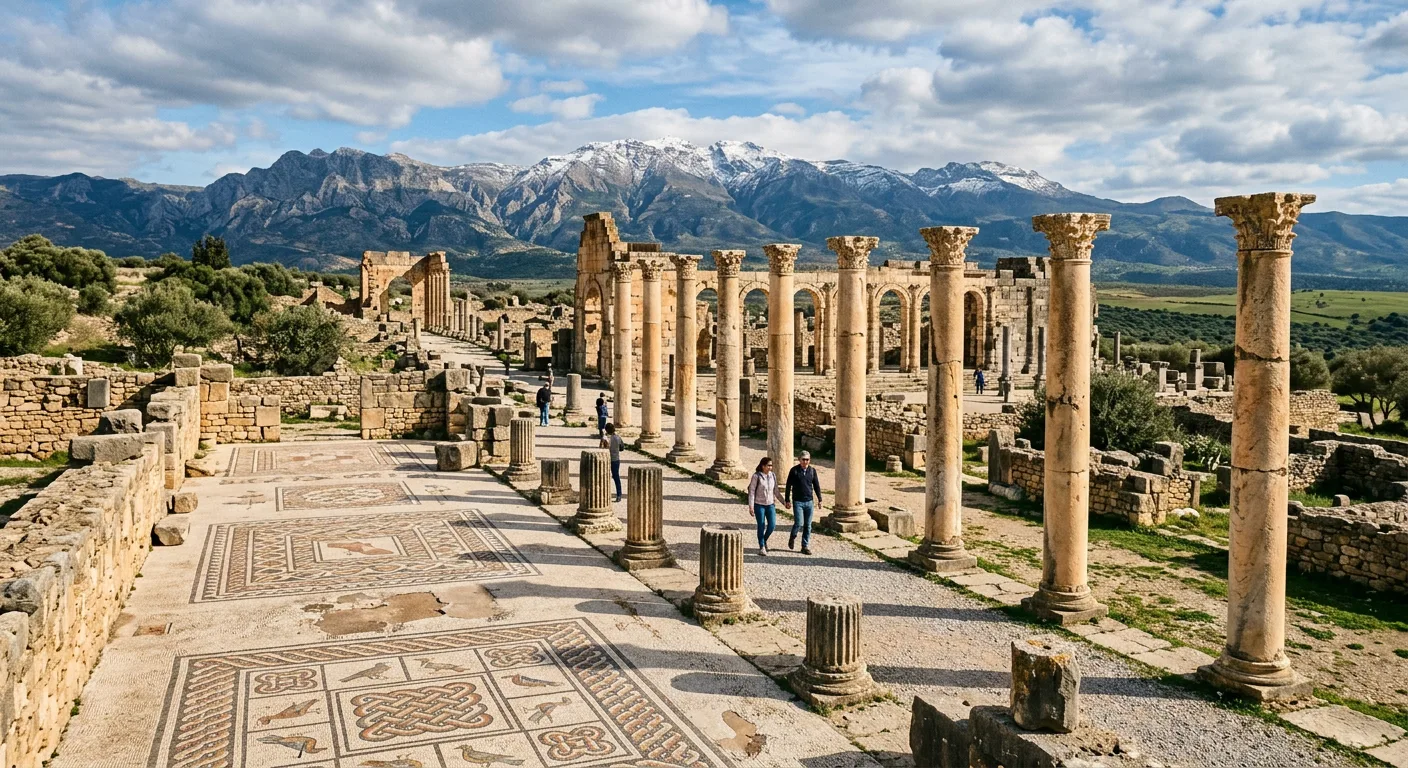
Volubilis Roman Ruins
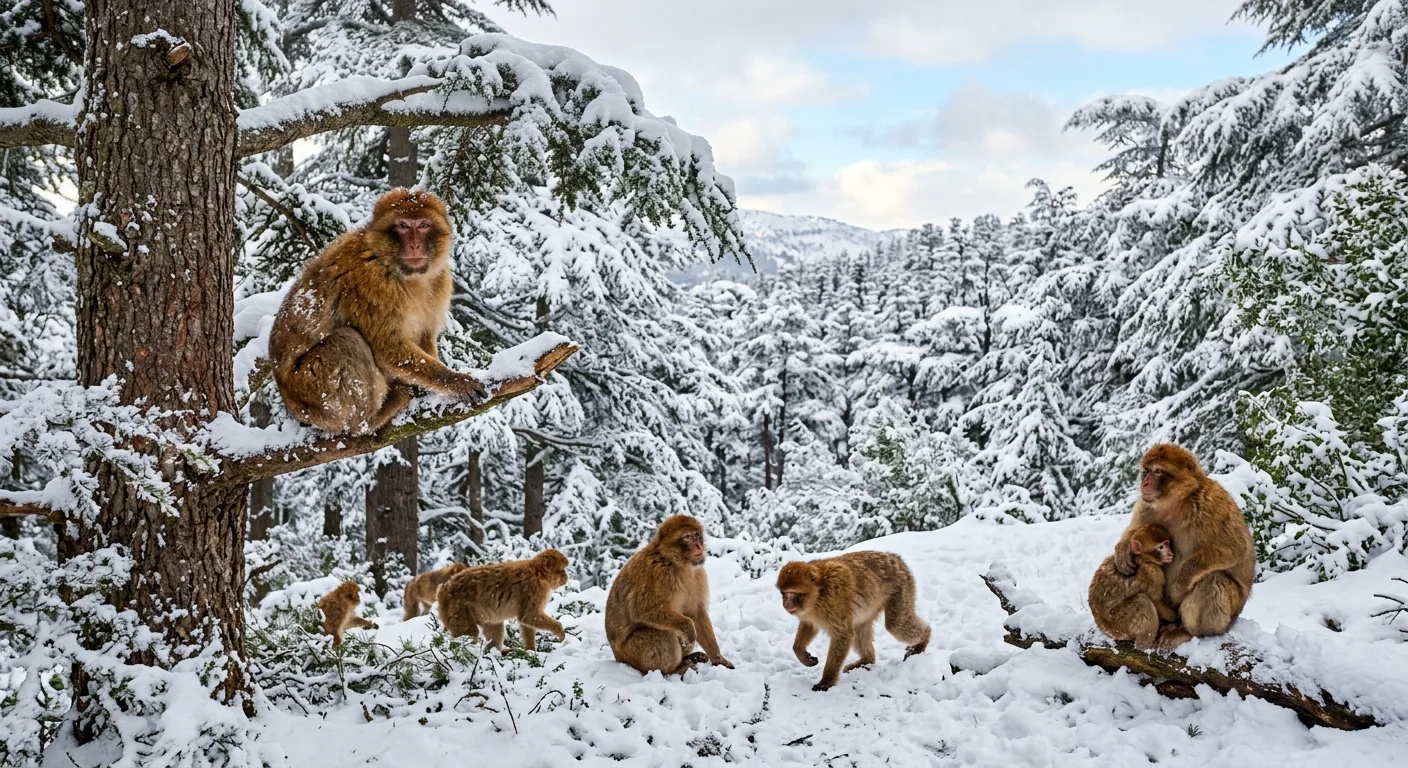
Middle Atlas Cedar Forest
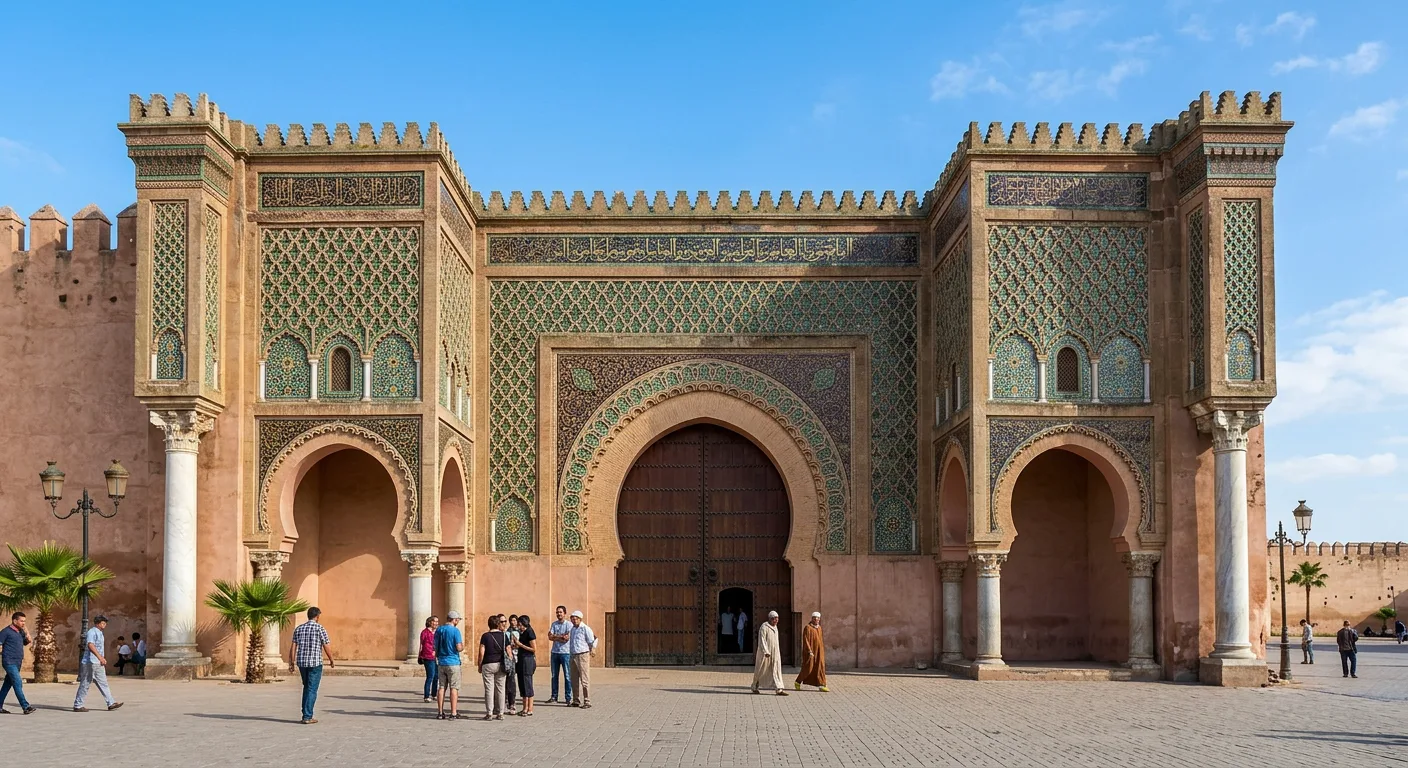
Bab Mansour, Meknes
Practical Tips for Day Trips from Fes
Frequently Asked Questions
What are the best day trips from Fes?
The most popular day trips from Fes are Meknes and Volubilis (Roman ruins and imperial city, 1-2 hours away), Ifrane (alpine hill town, 1 hour), Middle Atlas cedar forests with Barbary macaques near Azrou (1.5 hours), and Moulay Idriss Zerhoun (Morocco's holiest town, 1 hour). For a shorter trip, Sefrou, Bhalil, and Sidi Harazem are all within 30-35 minutes of Fes.
How much do day trips from Fes cost?
DIY day trips can cost as little as from 10 MAD per person for Sidi Harazem (grand taxi fare). Guided group day tours range from 300 MAD to 550 MAD per person depending on the destination and inclusions. The most popular guided trip (Meknes and Volubilis) is typically from 450 MAD with lunch included. Private guided tours start from 1,000 MAD per vehicle. Prices are seasonal and may change during peak periods.
Can I visit Meknes and Volubilis in one day from Fes?
Yes, this is the most popular day trip from Fes and works perfectly as a single-day excursion. Most tours visit Volubilis first in the morning, then continue to Meknes for lunch and sightseeing. By DIY, take a grand taxi to Meknes (from 30 MAD, 1 hour), then another to Volubilis (from 40 MAD). By car, the total driving is about 2 hours. Allow 2 hours at Volubilis and 3-4 hours in Meknes.
How do I get to Ifrane from Fes?
Grand taxis from Fes to Ifrane depart from the main taxi station and cost from 35 MAD per person (1 hour). CTM buses also run the route. By car, take the N8 highway south; the road is modern and well-maintained. You can combine Ifrane with Azrou and the cedar forests for a full Middle Atlas day trip. Guided tours including all stops cost from 400 MAD per person.
What is the best season for day trips from Fes?
Spring (March-May) and autumn (September-November) offer the most pleasant temperatures and scenery. Summer (June-August) is very hot in Fes (35-40C) but Middle Atlas destinations like Ifrane offer cool relief. Winter is mild in Fes but cold in the mountains, with snow adding charm to Ifrane. The Cherry Festival in Sefrou (June) and Apple Festival in Immouzzer Kandar (October) are seasonal highlights.
Where can I see Barbary macaques near Fes?
Barbary macaques live in the cedar forests near Azrou, about 75 km south of Fes. The Cedre Gouraud forest is the most reliable spot. Most Ifrane/Middle Atlas tours include this stop. You can also drive yourself and park at the forest viewpoints along the N13. The monkeys are usually visible from the roadside. Do not feed them as it is harmful and can make them aggressive.
Is Moulay Idriss Zerhoun worth visiting?
Absolutely. Moulay Idriss Zerhoun is Morocco's holiest town, built around the tomb of the founder of the first Moroccan dynasty. The hilltop setting offers stunning panoramic views, the whitewashed medina is atmospheric, and the town sees few tourists. Non-Muslims cannot enter the shrine, but the town is wonderful to explore. It is easily combined with Volubilis, only 4 km away, for a half-day cultural trip.
Should I book a guided tour or go independently from Fes?
For Meknes alone, Sefrou, and Sidi Harazem, going independently by grand taxi is simple and much cheaper. For the Meknes-Volubilis combination, a guided tour is more convenient. For Ifrane, Azrou, and the cedar forests, a tour provides a logical loop route. For Bhalil and Taza, independent travel works but a guide adds valuable context. Most riad owners in Fes can arrange tours the day before your trip.
Related Guides
Fes City Guide
Everything you need to know about Fes: medina, tanneries, riads, food, and practical travel tips.
Read moreThings to Do in Fes
The complete guide to attractions, activities, and experiences within the Fes medina and beyond.
Read moreDay Trips from Marrakech
12 best day trips from Marrakech including Ouzoud Falls, Ourika Valley, Essaouira, and Ait Ben Haddou.
Read moreMorocco Road Trip Guide
Self-drive routes, rental car tips, road conditions, and scenic driving itineraries across Morocco.
Read moreMeknes City Guide
Imperial city of Moulay Ismail: Bab Mansour, granaries, medina, and Morocco's underrated gem.
Read morePublic Transport in Morocco
Trains, buses, grand taxis, and getting around Morocco on a budget with practical transport tips.
Read morePlan it with a local expert
Travel Morocco with Serenity Morocco Tours
Crafting extraordinary journeys through Morocco's timeless landscapes. 100% private journeys, handcrafted around you.
 from $2,011
Sahara Desert Luxury Expedition
 from $2,054
Essential Morocco: Imperial Cities Circuit
 from $5,978
Sahara to Sea: Morocco Complete