Discovering...
Shopping & Culture
Morocco's Best Markets & Souks
From the legendary labyrinth of Marrakech's medina to the silver workshops of Tiznit, Morocco's souks are where centuries of craft tradition meet the art of negotiation. Your complete guide to shopping smart with prices in MAD.
All prices are approximate and may vary by season, location, and operator.
Souks Ranked
10
Fair Price Target
50-60% of ask
Products Covered
7 Categories
Scams Listed
6 to Avoid
Ranked & Reviewed
Top 10 Souks in Morocco
Ranked by quality of crafts, authenticity, value for money, and overall experience. Each offers something unique worth the visit.
1
Marrakech
Marrakech Medina Souks
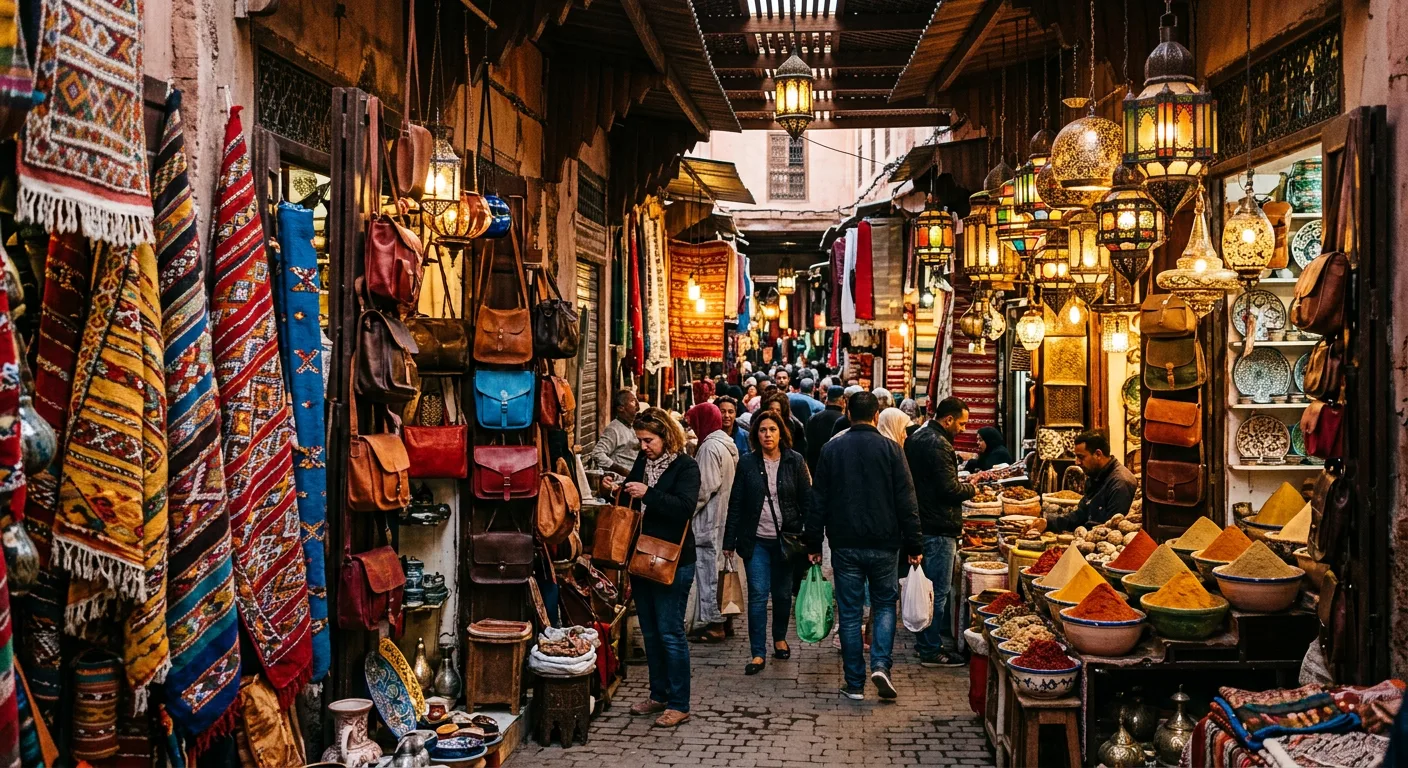
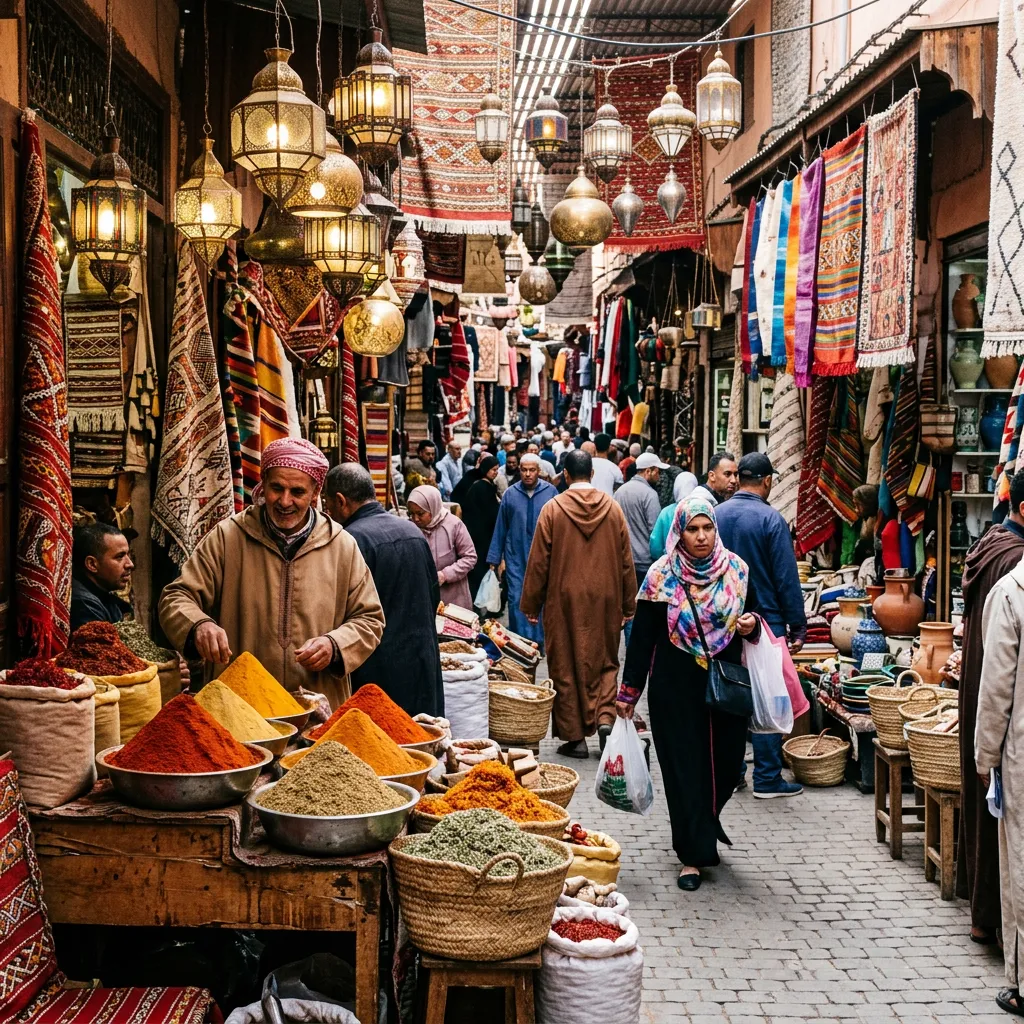
The most famous souks in the world. A labyrinthine network of covered alleys radiating from Jemaa el-Fnaa square, organized by trade: Souk Semmarine (textiles, clothing), Souk des Teinturiers (dyers), Souk Haddadine (metalwork), Souk Chouari (woodwork), Souk Attarine (spices). Over 3,000 shops in a space that has not changed fundamentally in centuries.
What to buy:
Leather goods (bags, belts, babouche slippers)Berber rugs and carpetsBrass lanterns and metalworkSpices and ras el hanoutArgan oil products
Prices
Budget to high-end. Start haggling at 30-40% of asking price.
Best time
Morning (9-11 AM) for fewer crowds. Avoid midday heat.
Pro tip
The deeper you go into the souk, the better the prices. Tourist-facing stalls near Jemaa el-Fnaa charge 2-3x more.
2
Fes
Fes El Bali (Old Medina)
The world's largest car-free urban zone and a UNESCO World Heritage Site. Fes el Bali has over 9,000 alleys and is home to the most authentic artisan traditions in Morocco. The tanneries, pottery workshops, and brass workshops here have operated for centuries using the same techniques. Less touristic than Marrakech, with more genuine interactions and better prices.
What to buy:
Fes blue ceramics and potteryLeather from the famous tanneriesBrass and copper workEmbroidered textilesTraditional Fassi sweets
Prices
Generally 20-30% cheaper than Marrakech for similar items.
Best time
Morning (9-12). The medina is quieter and artisans are at work.
Pro tip
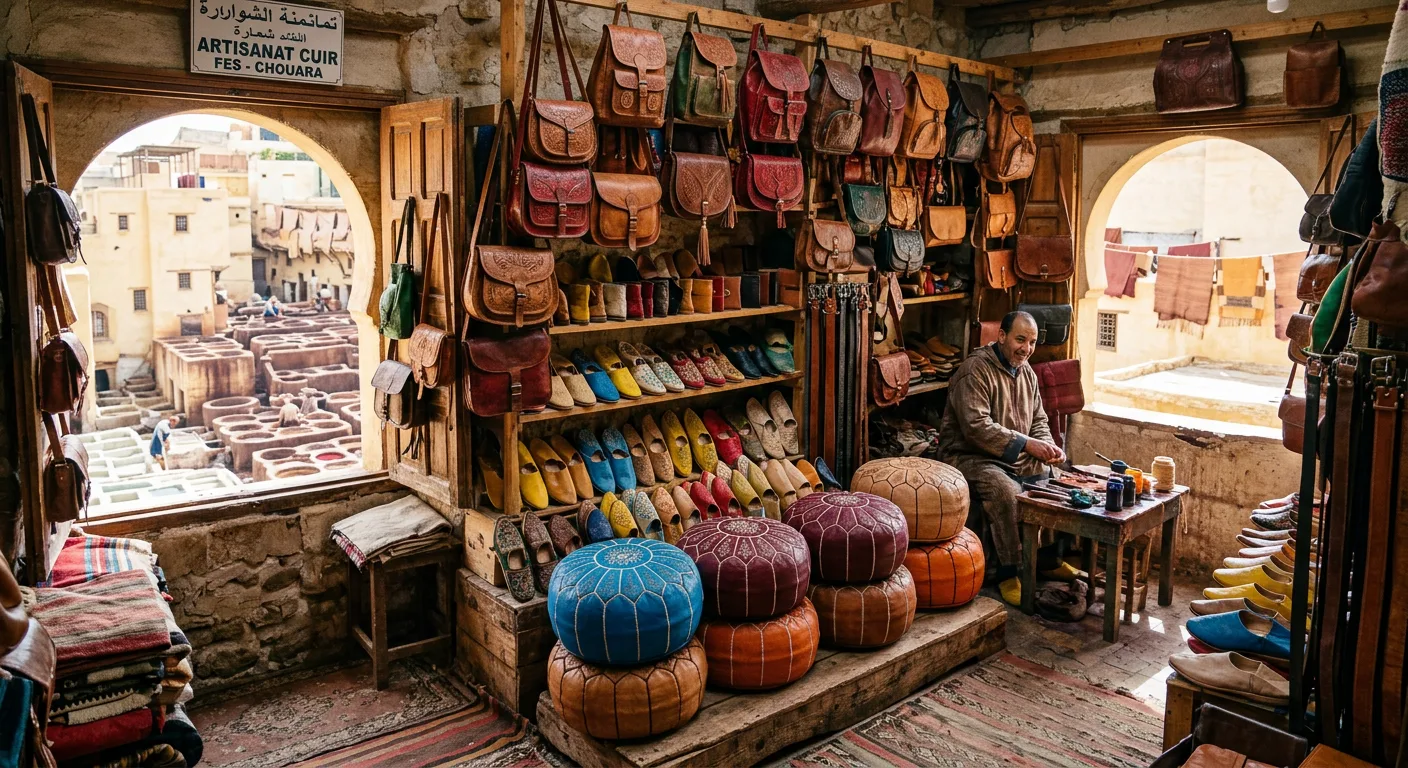
Visit the Chouara Tannery from a leather shop rooftop (they will try to sell you leather, but you are not obligated to buy). The blue ceramics from Fes are genuinely world-class.
3
Chefchaouen
Chefchaouen Medina
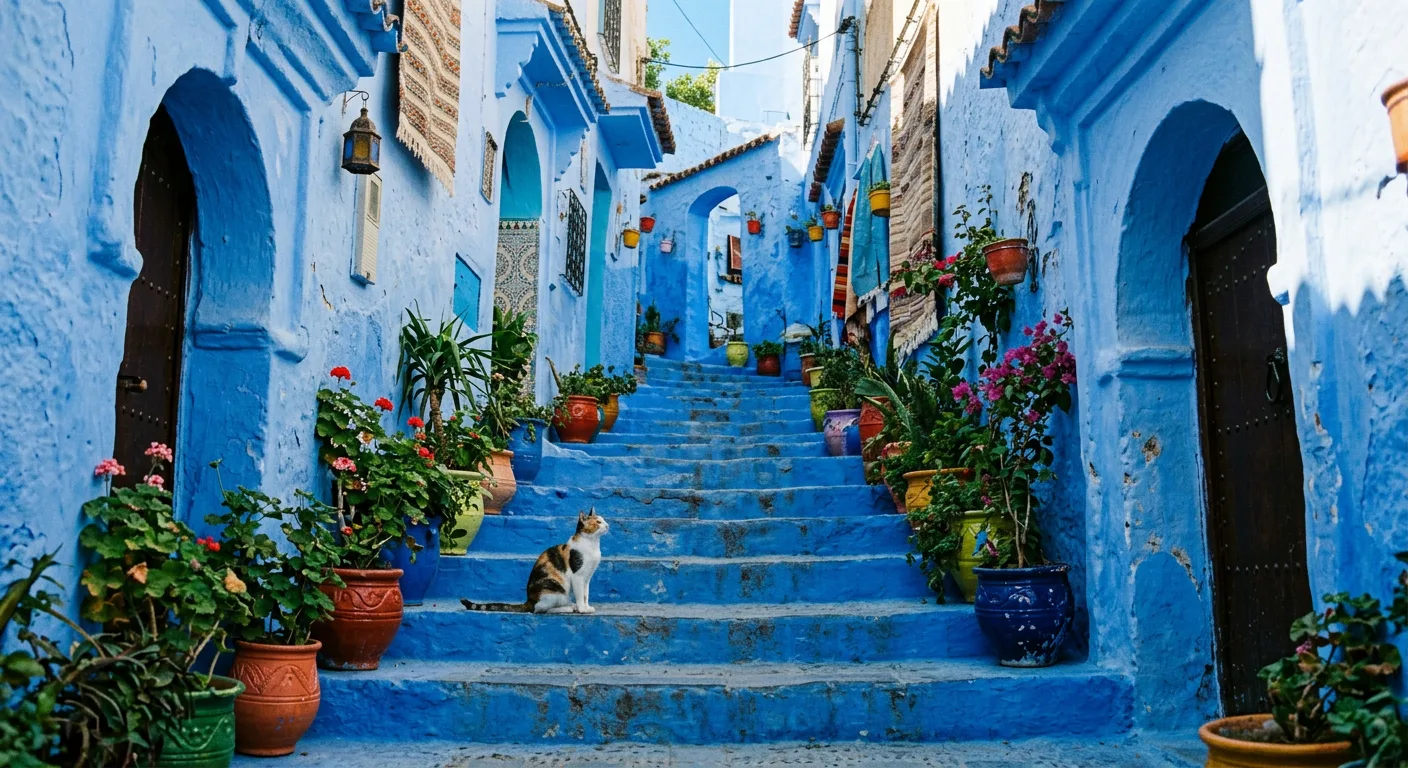
The blue-washed medina of Chefchaouen is one of the most photogenic shopping experiences in Morocco. Smaller and easier to navigate than Marrakech or Fes, with a relaxed, bohemian atmosphere. The town is known for woven blankets, goat cheese, and kif-related souvenirs (decorative, since cannabis is technically illegal). Artists and craftspeople give the town a creative energy.
What to buy:
Woven blankets and textiles (Rif tradition)Handmade leather goodsLocal goat cheese (jben)Paintings and photographyHandwoven baskets
Prices
Moderate. Less aggressive haggling than Marrakech.
Best time
Late afternoon when the blue walls glow in golden light.
Pro tip
Prices are already fairer here. Haggling is expected but the starting prices are more reasonable than in Marrakech.

4
Essaouira
Essaouira Medina
A UNESCO-listed medina with a more laid-back, artistic vibe. Essaouira is known for its thuya wood craftsmanship (a fragrant cedar-like wood unique to the region), art galleries, silver jewelry, and a thriving surfwear scene. The grid-like medina is easy to navigate. Argan oil cooperatives are nearby and offer the best prices for pure argan products.
What to buy:
Thuya wood boxes and furnitureSilver Berber jewelryArgan oil (food and cosmetic grades)Art and photographySurf gear and beachwear
Prices
Fair. Essaouira merchants are generally less pushy.
Best time
Any time. The medina is compact and pleasant year-round.
Pro tip
Buy argan oil from the women's cooperatives outside town for guaranteed quality and fair-trade practices. The Skala de la Ville has the best thuya wood workshops.
5
Tangier
Tangier Grand Socco & Medina
Tangier's market scene blends Moroccan, Spanish, and international influences. The Grand Socco (large market square) is the gateway to the medina, while the Petit Socco inside is the heart of the old city. The medina is smaller and easier to navigate. Tangier has been a cosmopolitan trading port for centuries, and its markets reflect that diversity.
What to buy:
Moroccan-Spanish leather goodsAntiques and vintage itemsSpices and preserved foodsEmbroidered kaftansFrench-Moroccan homeware
Prices
Moderate. Less tourist markup than Marrakech.
Best time
Morning for the produce market at Grand Socco.
Pro tip
The medina has several excellent antique shops. Tangier's proximity to Europe means interesting vintage finds from the international zone era.

6
Rabat
Rabat Medina & Les Oudaias
The capital's medina is clean, well-organized, and refreshingly low-pressure. Rue des Consuls is the main shopping street with fixed-price craft shops alongside traditional souks. The carpet cooperative here has government-set prices, making it a stress-free place to buy Moroccan rugs. The Kasbah des Oudaias artisan quarter has upscale boutiques.
What to buy:
Carpets and rugs (government-priced cooperative)Embroidered textilesPottery and ceramicsTraditional musical instrumentsBooks and prints
Prices
Fair to fixed. Less haggling needed than other cities.
Best time
Any time. The medina is calm and pleasant.
Pro tip
If carpet shopping intimidates you, start in Rabat. The cooperative has transparent pricing -- you can learn what rugs should cost before visiting Marrakech or Fes.
7
Meknes
Meknes Medina
Often overlooked by tourists, which makes it one of the best places for authentic, unpressured shopping. The medina has excellent craftsmen, especially in damascene metalwork (gold and silver inlay on steel). Prices are significantly lower than Marrakech and Fes. The food souk near Place el-Hedim is outstanding.
What to buy:
Damascene metalwork (unique to Meknes)Embroidered fabricsOlive oil and olives (Meknes region is Morocco's olive capital)Traditional clothingPottery
Prices
Very affordable. Locals shop here, not tourists.
Best time
Morning for the best atmosphere.
Pro tip
Meknes is the most "real" shopping experience in Morocco. Prices are what locals pay. The damascene work makes a unique, lightweight souvenir.
8
Tetouan
Tetouan Medina
A UNESCO World Heritage medina with distinct Andalusian-Moroccan character. Tetouan was a refuge for Muslims and Jews expelled from Spain in the 15th century, and its architecture and crafts reflect that heritage. The medina is less touristic, with genuine artisan workshops. Excellent for textiles and embroidery.
What to buy:
Tetouan embroidery (distinct from other Moroccan styles)Leather goodsCeramicsTextiles and fabricsTraditional Andalusian-style items
Prices
Very affordable. Few tourist markups.
Best time
Morning hours.
Pro tip
The Artisan School (Ecole des Arts et Metiers) is open to visitors and sells student-made crafts at excellent prices.
9
Taroudant
Taroudant Souks
Often called "little Marrakech" but with a fraction of the tourists. Taroudant's twin souks -- the Arab Souk and the Berber Souk -- offer excellent leather goods, Berber jewelry, saffron, and argan products at local prices. The town is surrounded by argan forests and is close to the source for many products.
What to buy:
Berber silver jewelryLeather sandals and bagsSaffron (excellent quality)Argan oilDried fruits and nuts
Prices
Very affordable. Local market prices.
Best time
Thursday (weekly souk day) is the most vibrant.
Pro tip
Taroudant is where Moroccan traders from Marrakech come to buy stock. That tells you everything about the prices.
10
Tiznit
Tiznit Silver Souk
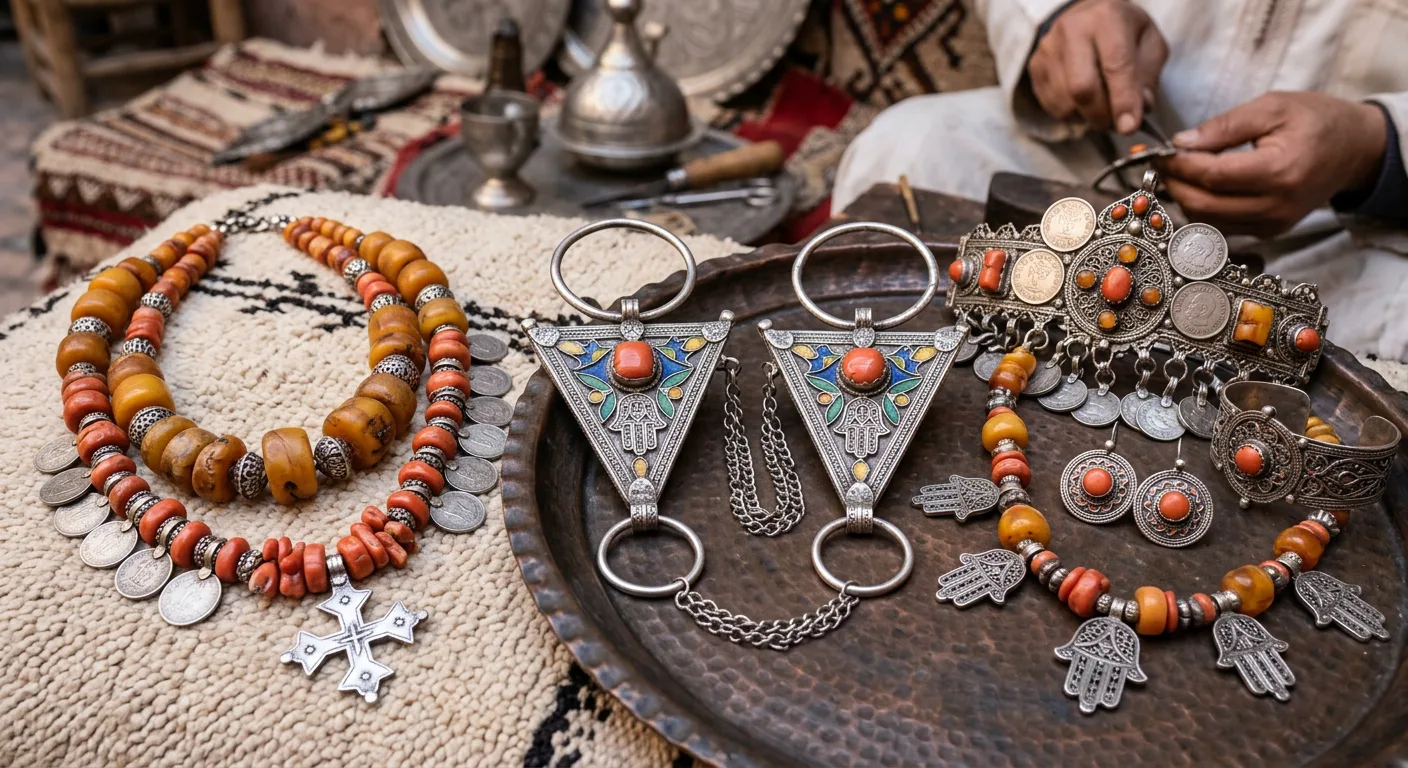
Tiznit is the silver capital of Morocco. The town has been the center of Berber silver jewelry making for centuries. The jewelry souk has dozens of silversmiths producing traditional Amazigh designs -- fibulas, bracelets, necklaces, and rings with coral, amber, and enamel. If you want authentic Berber silver jewelry, this is the source.
What to buy:
Silver Berber jewelry (the specialty)Coral and amber jewelrySilver teapots and household itemsLeather goodsHoney and local produce
Prices
Excellent value for silver. Direct from makers.
Best time
Any day. Thursday weekly souk adds rural vendors.
Pro tip
Learn to distinguish real silver (stamped with purity marks) from cheaper alloys. The best shops will explain the tradition behind each design.
Shopping Guide
What to Buy in Morocco
These are the products Morocco is genuinely world-class at producing. Real prices in MAD and expert buying tips so you get quality and value.
Berber Rugs & Carpets
500-8,000+ MADHand-knotted or hand-woven by Berber women, each rug tells a story through its patterns. Beni Ourain rugs (white with black geometric patterns) are the most sought-after internationally. Azilal and Boujaad rugs feature colorful abstract designs. A genuine hand-made rug takes 2-6 months to produce.
Buying Tips:
Ask about the weaving origin (tribe/region). Check the back -- hand-knotted rugs show the pattern on both sides. Price depends on size, knot density, age, and materials. Wool rugs are standard; silk adds cost.
Best Places:
Fes, Marrakech, Rabat (carpet cooperative)
Leather Goods
from 50 MADMorocco is famous for its leather, especially from the ancient tanneries of Fes. Bags, wallets, belts, babouche slippers, and poufs are the most popular items. Moroccan leather is traditionally vegetable-tanned using plant-based dyes, though some modern workshops use chemical processes.
Buying Tips:
Smell the leather -- strong chemical smell means chrome-tanned (lower quality). Vegetable-tanned leather has a subtle, pleasant smell. Check stitching quality. Babouche slippers should fit snugly as they stretch.
Best Places:
Fes (tanneries), Marrakech, Taroudant
Ceramics & Pottery
from 30 MADFes is the ceramic capital, famous for its blue-and-white zellige patterns. Safi produces colorful painted ceramics. Each city has its own style and color palette. Handmade ceramics are painted by artisans using traditional geometric and floral patterns.
Buying Tips:
Handmade ceramics have slight imperfections -- that is the point. Machine-made items are perfectly uniform. Ask to see the workshop if possible. Fes blue ceramics are the most refined; Safi ceramics are more rustic and colorful.
Best Places:
Fes (blue ceramics), Safi (painted pottery), Marrakech
Spices
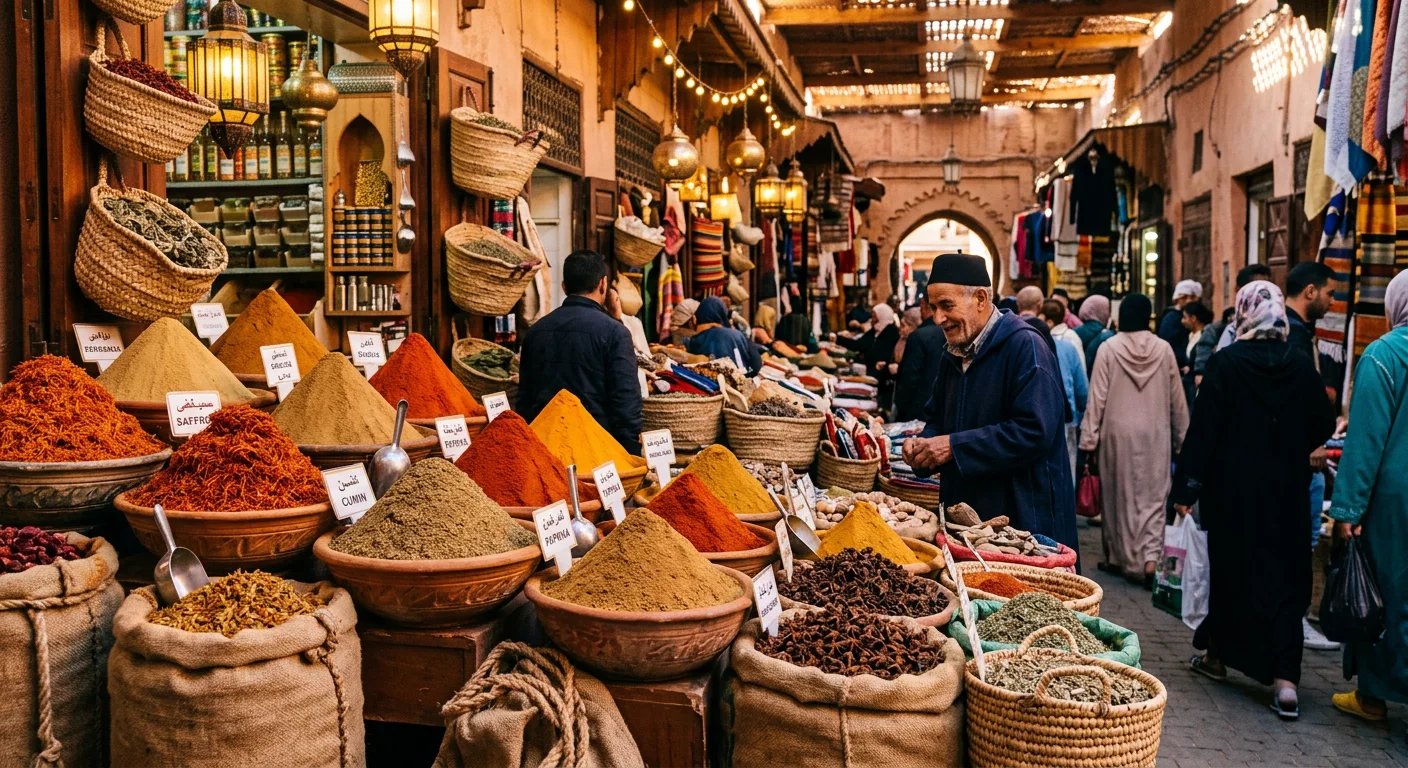
from 10 MAD per bagRas el hanout (the "head of the shop" spice blend), saffron, cumin, paprika, preserved lemons, and harissa. Moroccan saffron from Taliouine is world-class. Each spice merchant blends their own proprietary ras el hanout with 20-35 ingredients.
Buying Tips:
Buy from reputable shops with high turnover (fresh stock). Saffron should have deep red threads with no yellow stamens. Cheap saffron is likely safflower (a common substitute). Sealed packages travel better than loose.
Best Places:
Fes (Souk Attarine), Marrakech (Rahba Kedima), Taliouine (saffron)
Argan Oil
from 100 MAD per liter (cosmetic) / from 150 MAD per liter (culinary)Morocco is the world's only source of argan oil, pressed from the nuts of the argan tree found only in the Souss region. Cosmetic-grade argan oil is cold-pressed from raw nuts and is lighter; culinary-grade comes from roasted nuts and has a rich, nutty flavor.
Buying Tips:
Buy from women's cooperatives for guaranteed authenticity and fair pricing. Real argan oil is not cheap -- suspiciously low prices mean it is cut with other oils. Cosmetic grade should be nearly odorless; culinary grade has a strong nutty aroma.
Best Places:
Essaouira cooperatives, Agadir region, Taroudant
Brass Lanterns & Metalwork
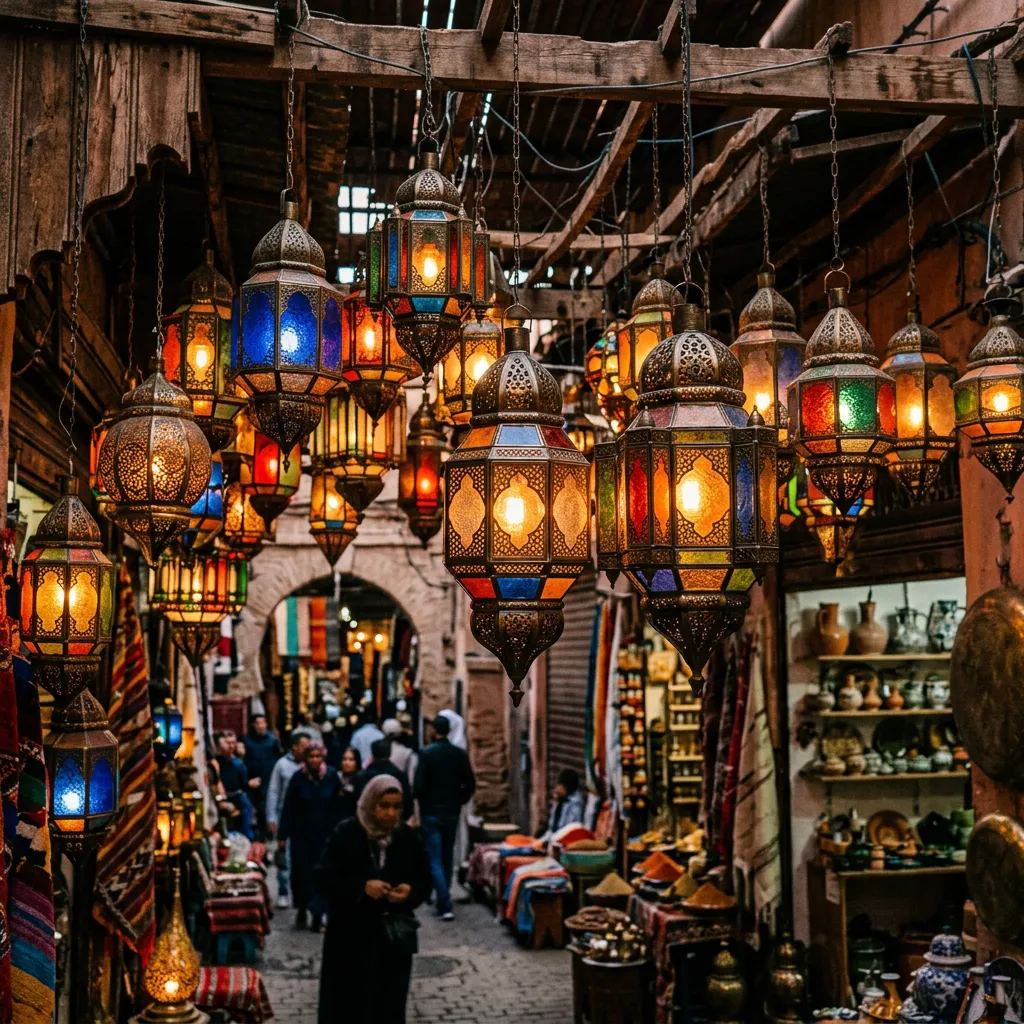
from 100 MADIntricately pierced brass and copper lanterns that cast mesmerizing shadow patterns. Also available: tea sets, trays, mirrors, and door knockers. The metalwork is done by hand using centuries-old techniques -- hammering, piercing, and engraving.
Buying Tips:
Quality varies enormously. Better lanterns have finer, more intricate piercing. Ask if it is brass (heavier, warmer color) or tin-plated steel (lighter, cheaper). Larger lanterns can be shipped by the shop.
Best Places:
Marrakech (Souk Haddadine), Fes
Silver Jewelry
from 50 MADBerber silver jewelry carries deep cultural significance. Traditional pieces include fibulas (cloak pins), hand of Fatima pendants, stacking bracelets, and ornate rings. Designs feature geometric Amazigh symbols, coral, amber, and enamel inlay.
Buying Tips:
Real silver is stamped with purity marks. Ask the weight -- silver is priced by weight plus craftsmanship. Antique pieces command higher prices but are rarer. Tiznit is the best source for authentic Berber silver.
Best Places:
Tiznit, Essaouira, Taroudant
The Art of the Deal
How to Bargain in Morocco
Bargaining is a social art form in Morocco, not a confrontation. Done right, both you and the merchant enjoy the process and walk away satisfied. Here is your step-by-step guide.
1
Browse without buying
Walk through the souk first without stopping. Get a feel for prices and what is available. Never show immediate interest in something you want.
2
Ask the price casually
When you find something interesting, ask "Bshhal?" (How much?). The first price is always the "tourist price" -- typically 2-4x the fair price. Show no reaction.
3
Counter at 30-40%
Make your first counter-offer at about 30-40% of the asking price. This is not insulting -- it is expected and part of the social ritual. The merchant may act shocked -- this is theater.
4
Negotiate gradually
Move up in small increments (from 10 MAD at a time). The merchant will come down. Meet somewhere around 50-60% of the original asking price. Both parties should feel satisfied.
5
Be ready to walk away
The most powerful tool. If you cannot agree on a price, politely thank them and start walking. If the price is fair for them, they will call you back. If not, you were probably close to their real bottom.
6
Seal with a smile
Once you agree on a price, shake hands and pay without trying to renegotiate. The deal is made. Chat, drink tea together if offered. You have made a connection, not just a purchase.
Key Bargaining Phrases in Darija
Bshhal?
How much?
First thing you ask
Ghali bezaf!
Too expensive!
Express shock at the price
Akhir taman?
Last price?
Ask for the final offer
La, shukran
No, thank you
Decline politely
Momkin nqes shwiya?
Can you reduce a little?
Request a discount
Wakha, ana ghadi nakhod
OK, I will take it
Close the deal
Stay Alert
Scams to Avoid
The vast majority of Moroccan merchants are honest. But tourist areas attract opportunists. Awareness is your best defense.
Unsolicited guides
Someone offers to "show you the way" through the medina, then demands payment. Politely decline: "La, shukran" (No, thank you). If lost, ask a shopkeeper for directions instead.
Tannery rooftop bait
In Fes, someone leads you to a tannery rooftop view, then pressures you into buying leather. The view is worth seeing, but you are under no obligation to buy. State this clearly upfront.
Fake quality claims
Items described as "pure silver" may be alloy, "100% argan oil" may be diluted, "antique" rugs may be new with artificial aging. Buy from reputable shops and cooperatives.
The "my shop is closing" trick
A merchant claims they are closing and offers a "special" last-minute price. This creates false urgency. The shop will be open tomorrow. Walk away and return if interested.
Bait and switch
You agree on a specific item, but a different (inferior) version gets wrapped up. Always watch the item being wrapped and check before paying.
Calculator manipulation
When using a calculator to negotiate, some merchants "accidentally" add a zero. Always double-check the numbers yourself. Bring your phone calculator.
Beyond the Medina
Types of Moroccan Markets
Daily Souks (Medina Markets)
Permanent covered markets in every medina, organized by trade. These are the classic souks tourists visit. Open every day, usually 9 AM to 7 PM, closed for Friday midday prayer.
Examples: Marrakech medina, Fes el Bali, Tangier medina
Weekly Rural Souks
Once-a-week markets in towns and villages where farmers, herders, and traders gather. Named by the day they operate (Souk el-Arba = Wednesday market, Souk el-Khamis = Thursday market). The most authentic Moroccan market experience -- far from the tourist trail.
Examples: Souk el-Had (Sunday) Agadir, Souk Sebt Oulad Nemma (Saturday)
Spice Markets
Specialized sections within larger souks dedicated to spices, herbs, dried flowers, and traditional remedies. The merchants often double as traditional herbalists offering remedies for everything from headaches to lovesickness.
Examples: Rahba Kedima (Marrakech), Souk Attarine (Fes)
Leather Markets
Areas near or connected to tanneries where finished leather goods are sold. The Chouara Tannery district in Fes is the most famous. Marrakech's leather souk near Bab Debbagh is another major center.
Examples: Chouara Tannery area (Fes), Souk des Teinturiers (Marrakech)
Carpet Markets
Dedicated shops and market areas for Moroccan rugs and carpets. Some operate as cooperatives with fixed prices; others require negotiation. Carpet merchants are Morocco's most skilled salespeople -- be prepared for mint tea and a long presentation.
Examples: Criee Berbere (Marrakech), Carpet cooperative (Rabat)
Ready to Shop Morocco?
Dive deeper into Moroccan crafts, explore our city guides for local shopping tips, or learn about the artisans behind the products.
Continue Exploring Morocco
Discover more of what Morocco has to offer