Moroccan cuisine is widely regarded as one of the most diverse and flavorful in the world, a vibrant testament to centuries of cultural exchange at the crossroads of Africa, Europe, and the Middle East. Rooted in ancient Amazigh (Berber) traditions and enriched by Arab, Andalusian, Ottoman, and French influences, Moroccan cooking transforms humble ingredients into extraordinary dishes through patient technique, bold spices, and a deep respect for communal dining.
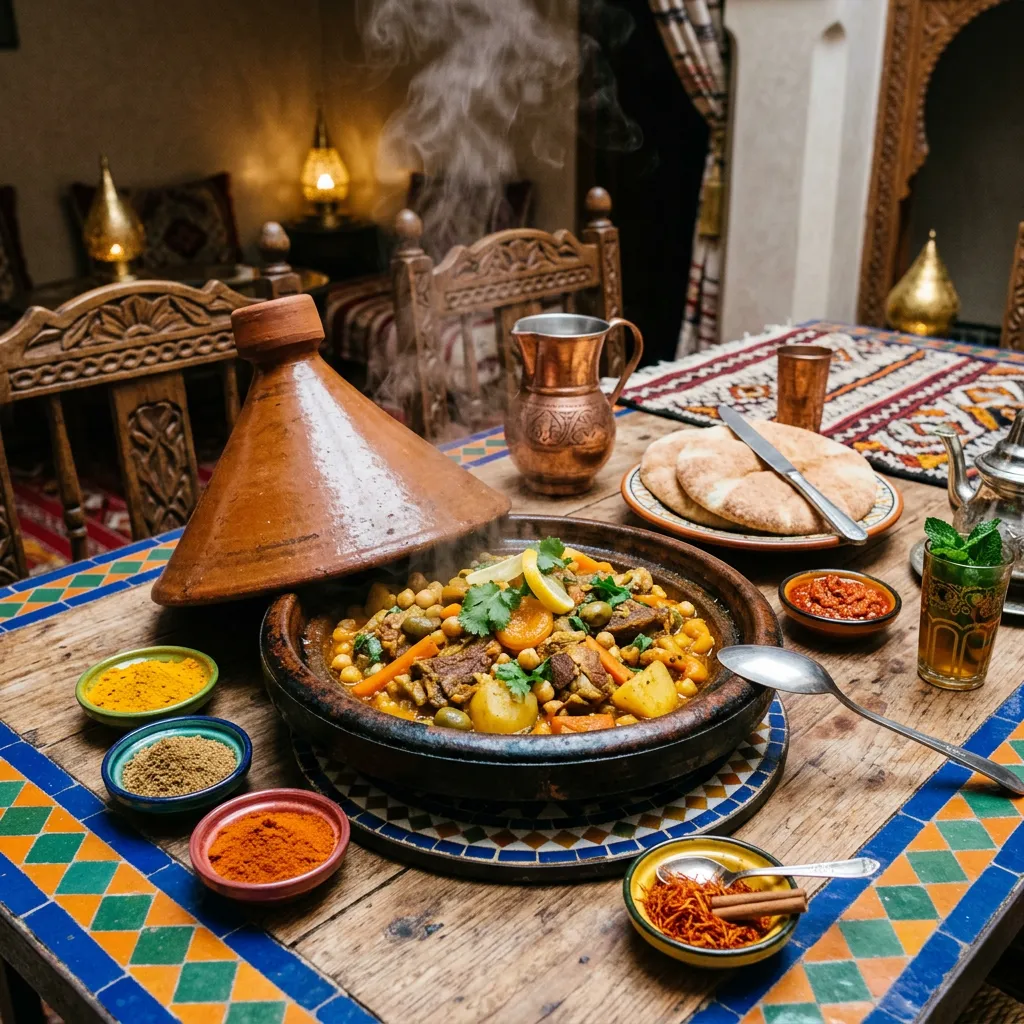
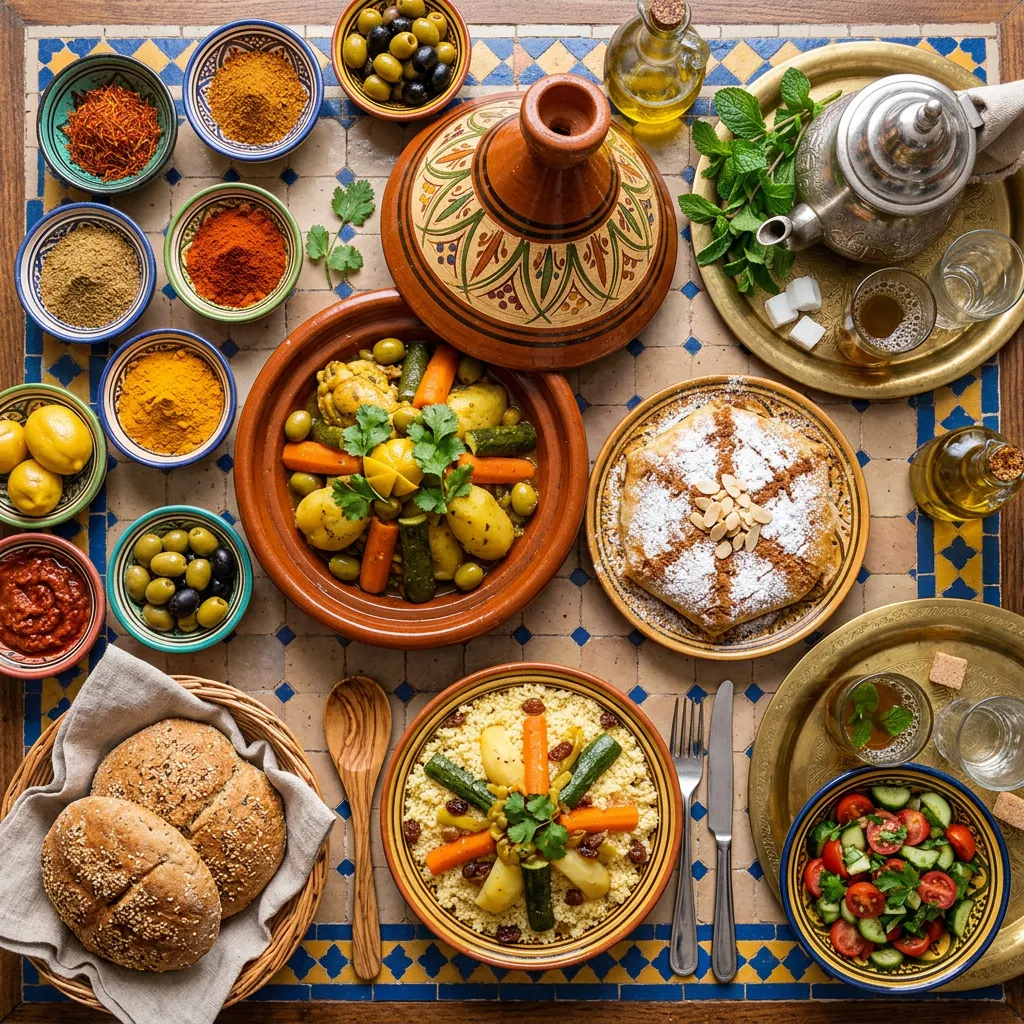
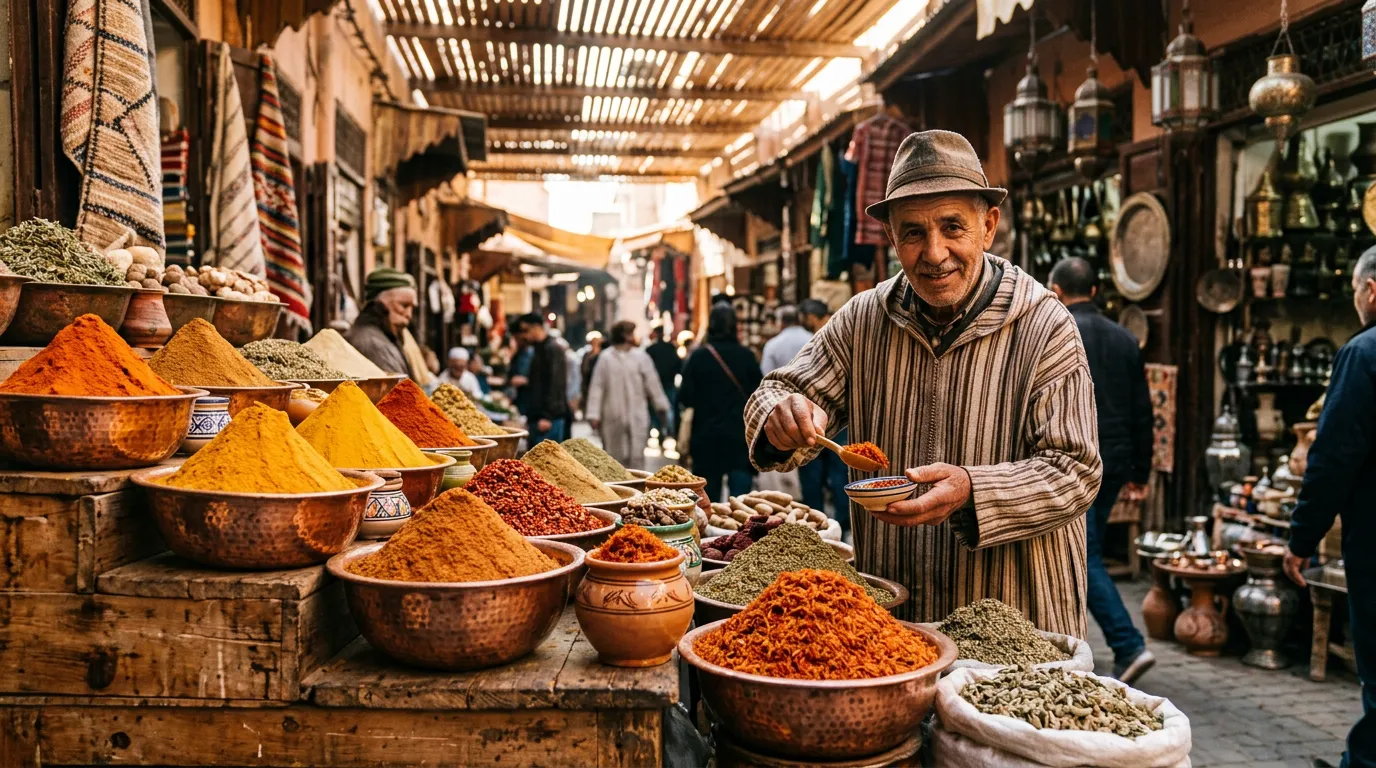
The cuisine is defined by its masterful balance of sweet and savory -- lamb braised with prunes and honey, chicken paired with preserved lemons and olives, pastry dusted with cinnamon and sugar over savory fillings. This interplay, inherited from the medieval Andalusian-Moorish culinary tradition, distinguishes Moroccan cooking from all other North African cuisines. The spice palette is among the most complex in the world, anchored by ras el hanout (a blend of up to 30 spices), saffron from Taliouine, cumin, ginger, cinnamon, and paprika.
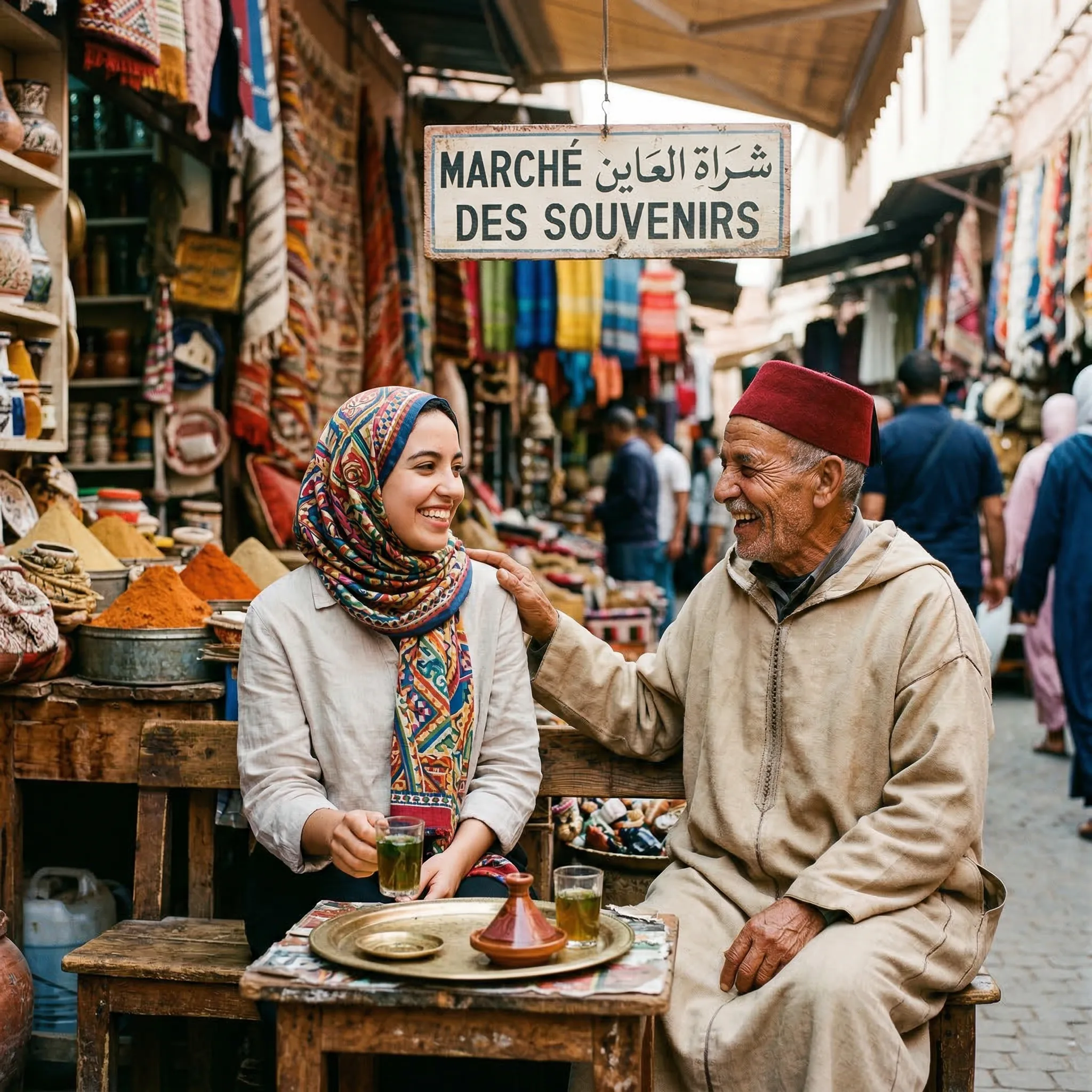
Eating in Morocco is far more than sustenance -- it is an act of hospitality, community, and celebration. Meals are shared from communal platters, mint tea is poured with ceremony and grace, and the simple act of breaking bread together forms the foundation of Moroccan social life. Whether you are savoring a 10-dirham street food sandwich or a twelve-course diffa (feast) in a palatial riad, Moroccan food will leave an indelible impression on your palate and your heart.
This guide covers over 30 essential dishes, regional specialties from eight cities, a complete street food primer, spice market navigation, vegetarian and vegan strategies, food photography tips, and a full glossary of Moroccan culinary terms. It is your companion for eating your way through Morocco.