Discovering...

Wellness & Tradition
Moroccan Hammam & Spa Guide
Discover the ancient art of the Moroccan bathhouse. A thousand-year-old ritual of steam, exfoliation, and renewal that remains at the heart of daily life across the kingdom.
Duration
1-3 hours
Full ritual experience
Public Price
15-30 MAD
About $1.50-$3
Temperature
38-50 C
Progressive heat
Gender
Separated
Separate hours/rooms
Best For
Skin & Wellness
Deep cleansing ritual
Availability
Every City
1000s across Morocco
What Is a Moroccan Hammam?
The Moroccan hammam is far more than a bathhouse — it is a sacred social institution that has been woven into the fabric of Moroccan life for over a thousand years. Derived from the Arabic word for “spreader of warmth,” the hammam combines Roman bathing traditions brought to North Africa with Islamic purification rituals, creating a unique wellness practice that serves body, mind, and community in equal measure.
Historically, the hammam was one of the most important public buildings in any Moroccan city or village, second only to the mosque. In fact, hammams were traditionally built adjacent to mosques, sharing the same furnace to heat both buildings. The ritual ablution before prayer made the hammam an essential part of religious life, but its role extended far beyond spiritual cleansing. The hammam became the social hub of the neighborhood, a place where women gathered to share news, arrange marriages, and celebrate life milestones, and where men conducted informal business and strengthened communal bonds.
Today, even as modern plumbing has brought hot water into Moroccan homes, the hammam remains a beloved weekly ritual for millions of Moroccans. The combination of intense steam, vigorous exfoliation with the kessa mitt, nourishing natural products like savon beldi and ghassoul clay, and the deeply social atmosphere creates an experience that no shower can replicate. For visitors, the hammam offers one of the most authentic and transformative cultural experiences available in Morocco — a chance to participate in a living tradition that connects the present to the very origins of Moroccan civilization.
The Traditional Hammam Experience
Step by step through the ancient bathing ritual that has cleansed and renewed Moroccans for centuries.
Step 15 min
Preparation & Undressing
You enter the changing area (maslakh) and undress. In public hammams, Moroccans typically wear underwear; in private spa hammams, disposable underwear is often provided. Store your belongings in a locker or cubby. Take a moment to relax and prepare mentally for the experience ahead.
Step 210-15 min
The Warm Room (Bayt al-Wastani)
You move into the first heated room, where the temperature is moderate and humid. This acclimatization phase opens your pores and begins to relax your muscles. Sit on the warm marble or tile floor, let the steam envelop you, and allow your body to adjust to the heat for 10-15 minutes.
Step 310 min
Black Soap Application (Savon Beldi)
A thick, dark olive-oil-based paste called savon beldi is applied generously all over your body. This traditional black soap, enriched with eucalyptus, is left on the skin for several minutes to soften dead skin cells and deeply nourish the skin. The soap has been used in Moroccan hammams for centuries.
Step 410-15 min
The Hot Room (Bayt al-Sakhun)
You proceed to the hottest room, where intense steam fully opens your pores. The black soap continues to work on your skin while the heat relaxes deep muscle tension. The temperature here can reach 45-50 degrees Celsius. Breathe slowly and let the steam cleanse your respiratory system.
Step 515-20 min
Gommage Scrub (Kessa)
The signature moment of the hammam experience. Using a rough exfoliating mitt called a kessa, the tayaba (hammam attendant) vigorously scrubs your entire body with firm, rhythmic strokes. Rolls of dead skin visibly peel away, revealing fresh, glowing skin beneath. The scrub is thorough and can feel intense but is deeply satisfying.
Step 610 min
Ghassoul Clay Mask
A mineral-rich clay called ghassoul (or rhassoul), sourced exclusively from the Atlas Mountains, is applied as a full-body mask. This natural clay draws out impurities, tightens pores, and leaves skin incredibly smooth. Some hammams also apply it to the hair and scalp for deep conditioning.
Step 710 min
Rinse & Cool Down
Buckets of alternating warm and cool water are poured over you to rinse away the clay and close your pores. Some hammams use rose water in the final rinse for a luxurious, fragrant finish. You gradually move back through the rooms, allowing your body temperature to return to normal.
Step 815-30 min
Relaxation & Mint Tea
You return to the resting area, wrapped in warm towels, where you relax on cushions and are served traditional Moroccan mint tea. This final phase is essential: the combination of deep cleansing and total relaxation leaves you feeling profoundly renewed. Many hammams also offer argan oil massage at this stage.
Types of Hammams
From neighborhood public baths to world-class luxury spas, Morocco offers hammam experiences for every budget and preference.
Public Hammams (Hammam Baladi)
15-30 MAD$1.50-$3
The authentic neighborhood experience. Public hammams are where Moroccans of all backgrounds come to bathe, socialize, and unwind. They are an essential part of community life, especially in medinas. The facilities are basic but functional: tiled rooms with communal buckets, hot and cold water taps, and separate sessions for men and women. You bring your own supplies or buy them at the door. The tayaba (scrubber) charges an additional 30-50 MAD for a gommage. Public hammams offer the most genuine cultural immersion and are an experience every visitor should try at least once.
Pros
- Authentic cultural experience
- Incredibly affordable
- Meet local Moroccans
- Found in every neighborhood
Cons
- Basic facilities
- Bring your own supplies
- Language barrier possible
- Can feel overwhelming for first-timers
Hotel Hammams
300-800 MAD$30-$80
Many riads and hotels in Morocco feature private hammams for their guests, offering a comfortable introduction to the bathing ritual. These hammams provide all supplies, a private or semi-private setting, and an attendant who guides you through each step. The facilities are clean, well-maintained, and beautifully decorated with traditional zellige tiles and tadelakt plaster. Hotel hammams are ideal for travelers who want the authentic experience in a more controlled, intimate setting. Most riads in Marrakech and Fes offer hammam sessions as part of their services or at a modest additional charge.
Pros
- Private & comfortable
- All supplies provided
- English-speaking staff
- Beautiful traditional decor
Cons
- Less authentic than public
- Higher price point
- Smaller facilities
- Limited availability at small riads
Luxury Spa Hammams
500-2000 MAD$50-$200
Premium spa hammams elevate the traditional ritual into a world-class wellness experience. These establishments combine the authentic Moroccan bathing ceremony with modern spa treatments: argan oil massages, rose petal baths, full-body wraps, facial treatments, and multi-hour relaxation packages. The interiors are architectural marvels featuring hand-carved plaster, intricate zellige mosaics, candlelit chambers, and heated marble slabs. Spa hammams in Marrakech are internationally renowned and attract wellness travelers from around the world. Advance booking is essential, especially during high season.
Pros
- World-class facilities
- Comprehensive packages
- Highly trained therapists
- Stunning architecture
Cons
- Premium pricing
- Must book in advance
- Can feel commercialized
- Tourist-oriented atmosphere
Top 12 Hammams in Morocco
Our curated selection of the finest hammam experiences across the kingdom, from authentic public baths to palatial spa retreats.
MarrakechLuxury Spa
Le Bain Bleu
32 Derb Fernatchi, Bab Doukala, Medina, Marrakech
400-1500 MAD
A stunning boutique spa housed in a beautifully restored riad in the heart of the medina. Le Bain Bleu offers an intimate, refined hammam experience with exceptional attention to detail. The traditional hammam ritual is followed by optional argan oil massages and beauty treatments in candlelit treatment rooms.
Intimate boutique settingTraditional ritual with modern luxuryArgan oil massage packagesCandlelit relaxation rooms
MarrakechLuxury Spa
Hammam de la Rose
130 Dar el Bacha, Medina, Marrakech
500-1800 MAD
One of the most celebrated hammams in Marrakech, Hammam de la Rose combines centuries-old bathing traditions with contemporary wellness design. The space features a succession of beautifully tiled rooms, a hot plunge pool, and a rose-petal-strewn relaxation lounge. Their signature rose-infused treatments are legendary.
Signature rose treatmentsHot plunge poolMultiple treatment roomsAward-winning spa
MarrakechLuxury Spa
Les Bains de Marrakech
2 Derb Sedra, Bab Agnaou, Kasbah, Marrakech
600-2000 MAD
A palatial spa near the Saadian Tombs offering the most comprehensive hammam and wellness experience in Marrakech. Spread across multiple levels of a grand riad, Les Bains de Marrakech features a traditional hammam circuit, private treatment suites, a swimming pool, and a rooftop terrace. Half-day and full-day packages are available.
Palatial multi-level venueSwimming poolFull-day spa packagesCouples treatments available
MarrakechLuxury Spa
Heritage Spa
40 Arset Aouzal, Bab Doukkala, Medina, Marrakech
500-1600 MAD
A beautifully designed spa in the medina that masterfully blends Moroccan architectural heritage with world-class spa services. Heritage Spa is known for its exceptional gommage technique and its use of premium, locally sourced products including argan oil from Essaouira and rose water from the Dades Valley.
Locally sourced productsExpert gommage techniqueBeautiful architectureCentral medina location
FesThermal Springs
Hammam Moulay Yacoub
Moulay Yacoub Village, 22 km from Fes
50-300 MAD
A legendary thermal spa 22 kilometers from Fes, renowned for its naturally heated sulfurous spring water that emerges at 54 degrees Celsius. Moroccans have visited these therapeutic springs for centuries to treat skin conditions, rheumatism, and respiratory ailments. The recently renovated complex includes public and private bathing areas.
Natural thermal springsTherapeutic sulfur watersBoth public & private areasCenturies-old healing tradition

FesRiad Spa
Spa Laaroussa
3 Derb Bechara, Talaa Sghira, Fes el-Bali
400-1200 MAD
Located within the exquisite Riad Laaroussa in the heart of the Fes medina, this intimate spa offers a deeply authentic hammam experience in a 17th-century palace setting. The hammam chamber features original tadelakt walls and is heated by a traditional wood-fired boiler, preserving the centuries-old method.
17th-century palace settingWood-fired traditional heatingOriginal tadelakt wallsIntimate private experience
FesLuxury Hotel Spa
Riad Fes Spa
5 Derb Ben Slimane, Zerbtana, Fes el-Bali
500-1500 MAD
The spa at the five-star Riad Fes is one of the most luxurious wellness experiences in the imperial city. Built into the ancient riad architecture, the spa features a marble hammam, a swimming pool, and treatment rooms overlooking the medina rooftops. Their signature Ceremony of the Senses package combines hammam with a full aromatherapy journey.
Five-star luxuryMarble hammam chamberMedina rooftop viewsCeremony of the Senses package
CasablancaTraditional Spa
Hammam Ziani
12 Rue de Fes, Maarif, Casablanca
200-600 MAD
A modern take on the traditional hammam in Casablanca cosmopolitan Maarif district. Hammam Ziani is popular with both locals and visitors for its clean, well-maintained facilities and professional staff. The hammam circuit is complemented by massage rooms, a relaxation lounge, and a range of beauty treatments.
Clean modern facilitiesPopular with localsFull beauty treatment menuCentral Casablanca location
CasablancaLuxury Hotel Spa
La Sultana Spa
La Sultana Hotel, 3 Rue du Port, Casablanca
600-2000 MAD
The crown jewel of Casablanca wellness, La Sultana Spa is a 2,500-square-meter sanctuary within the prestigious La Sultana Hotel. Featuring an indoor pool, vitality pool, hammam, and extensive treatment menu, it combines Moroccan traditions with international spa standards. The hammam uses heated black marble and hand-mixed products.
2,500 sqm spa complexIndoor & vitality poolsBlack marble hammamInternational spa standards
EssaouiraEco Hammam
Hammam Lalla Mira
14 Rue d Algerie, Medina, Essaouira
150-500 MAD
A pioneering eco-friendly hammam in Essaouira old medina, housed in a beautifully restored 18th-century building. Hammam Lalla Mira is heated entirely by a solar and recycled-oil system, making it one of the greenest hammams in Morocco. The experience is authentic, the products are organic, and the setting is enchanting.
Eco-friendly solar heatingOrganic products18th-century buildingSustainable tourism pioneer
RabatHistoric Public Hammam
Hammam Balima
Avenue Mohammed V, near Balima Hotel, Rabat
20-50 MAD
One of the oldest public hammams in Morocco capital city, located near the iconic Balima Hotel on Avenue Mohammed V. This is a true neighborhood hammam where Rabati families have bathed for generations. The simple, no-frills experience offers a window into authentic daily life in the capital.
Historic neighborhood hammamUltra-affordableAuthentic local experienceCentral Rabat location
TangierTraditional Public Hammam
Hammam Kasbah
Rue de la Kasbah, Kasbah, Tangier Medina
15-40 MAD
Nestled in the ancient Kasbah quarter of Tangier overlooking the Strait of Gibraltar, this historic hammam has served the neighborhood for centuries. The atmospheric stone chambers and the proximity to the Kasbah Museum make it a cultural experience as much as a bathing one. Separate hours for men and women.
Historic Kasbah locationCenturies-old stone chambersNear Kasbah MuseumAuthentic neighborhood vibe
Hammam Etiquette
Ten essential rules to ensure a respectful, comfortable, and authentic hammam experience.
1
Gender Separation Is Absolute
Public hammams have strictly separate sessions or hours for men and women, and this rule is never broken. Women typically visit in the morning and afternoon, while men go in the evening. Hotel and spa hammams often offer mixed-gender sessions for couples by request, but always confirm in advance.
2
Understand the Nudity Norms
In public hammams, most Moroccan women bathe in underwear, and men wear shorts or underwear. Full nudity is uncommon in public settings. In private spa hammams, disposable underwear is usually provided. If you are uncomfortable, wearing a swimsuit is always acceptable. Follow the lead of other bathers.
3
Bring Your Own Supplies to Public Hammams
Public hammams do not provide supplies. Bring your own black soap (savon beldi), exfoliating mitt (kessa), ghassoul clay, shampoo, towel, flip-flops, and a plastic bag for wet items. You can purchase a basic hammam kit from nearby shops or supermarkets for around 30-50 MAD.
4
Tip the Tayaba Generously
The tayaba (hammam attendant who performs the scrub) works incredibly hard. In public hammams, the gommage service costs 30-50 MAD, but an additional tip of 20-30 MAD is customary and appreciated. In spa hammams, a 10-15% tip on top of the service price is standard practice.
5
Respect Personal Space and Quiet
While hammams are social spaces where conversation is welcome, be mindful of the meditative atmosphere. Avoid being excessively loud, splashing water carelessly, or taking up more space than necessary. The hammam is a place of relaxation and communal respect.
6
Do Not Rush the Experience
A proper hammam session takes at least 60-90 minutes. Rushing through defeats the purpose. Allow time for each phase: acclimatization, black soap, steam, scrub, clay, rinse, and rest. The post-hammam relaxation with mint tea is an integral part of the ritual, not an optional add-on.
7
Communicate Your Comfort Level
The gommage scrub can be vigorous. If the tayaba is scrubbing too hard, say "shwiya shwiya" (gently, gently) or "bezzaf" (enough). In spa hammams, staff usually ask about your pressure preference beforehand. There is no shame in asking for a lighter touch.
8
Hydrate Before and After
The intense heat and steam cause significant fluid loss. Drink plenty of water before your hammam session and continue hydrating afterward. Avoid eating a heavy meal less than two hours before your visit. The mint tea served after the hammam helps with rehydration.
9
Remove All Jewelry
Leave rings, necklaces, bracelets, and watches in the changing room locker. Metal jewelry heats up in the steam rooms and can cause burns. The vigorous scrubbing can also damage delicate jewelry. Bring only what you need into the hammam rooms.
10
Photography Is Strictly Forbidden
Never bring a phone or camera into the bathing areas of any hammam. This is a serious breach of etiquette and privacy. Phones should be left in the changing room locker. Some spa hammams allow photos in the relaxation lounge, but always ask first.
Hammam Products Guide
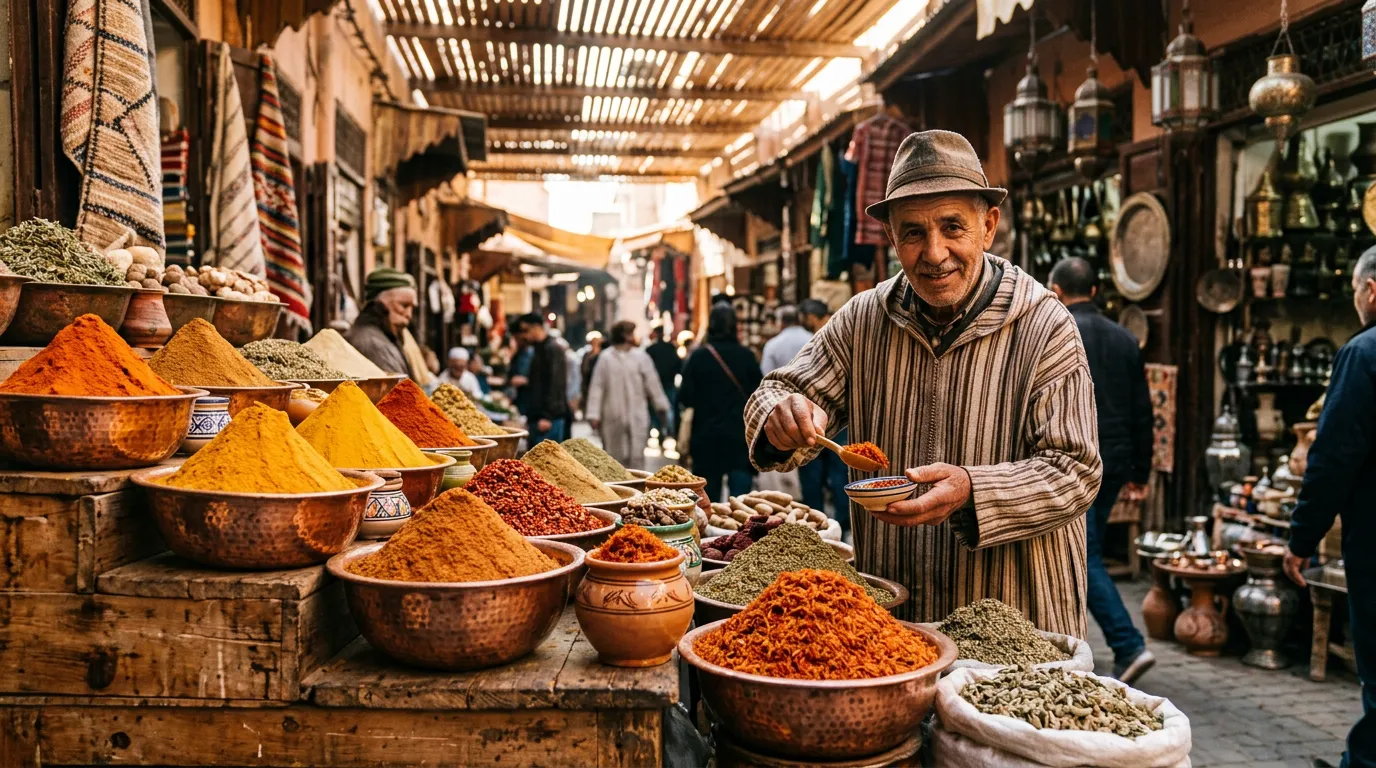
The natural, time-tested products that power the hammam ritual. All are available in Moroccan souks and make excellent souvenirs.
Savon Beldi (Black Soap)
صابون بلدي
A thick, dark olive-oil-based paste that has been the cornerstone of the Moroccan hammam ritual for centuries. Made from a blend of olive oil, crushed olives, and sometimes infused with eucalyptus or argan oil, savon beldi deeply nourishes the skin while softening dead cells for removal during the gommage scrub. Unlike Western soaps, it does not lather but rather coats the skin in a rich, emollient layer.
How to use: Apply a thick layer over damp skin. Leave on for 10 minutes in the steam room. Scrub off with a kessa mitt.
Buying tip: Look for pure olive oil black soap in medina herb shops. Avoid versions with artificial colors. A 250g jar costs 20-40 MAD.
Ghassoul Clay (Rhassoul)
الغاسول
A unique mineral-rich clay found exclusively in the Atlas Mountains of Morocco, ghassoul has been used for over 1,400 years as a natural cleanser and skin treatment. Rich in silica, magnesium, iron, sodium, and potassium, this rare clay absorbs impurities, tightens pores, and leaves skin remarkably smooth. It is also used as a hair wash and scalp treatment.
How to use: Mix clay powder with warm water or rose water to form a paste. Apply as a body and hair mask for 10-15 minutes. Rinse thoroughly.
Buying tip: Buy from Berber cooperatives or reputable spice shops. Authentic ghassoul is grey-brown, never bright white. 250g costs 15-30 MAD.
Argan Oil
زيت أركان
Called "liquid gold" by Berber women, pure argan oil is extracted from the nuts of the argan tree, which grows only in southwestern Morocco. Cosmetic argan oil (unroasted) is rich in vitamin E, essential fatty acids, and antioxidants, making it an exceptional moisturizer for skin and hair. After the hammam, argan oil is applied to nourish and protect the freshly exfoliated skin.
How to use: Apply a few drops to damp skin immediately after the hammam rinse. Massage gently into face, body, and hair ends.
Buying tip: Buy from women cooperatives in Essaouira or Agadir for guaranteed quality. Pure cosmetic oil costs 150-250 MAD per 100ml.
Rose Water (Eau de Rose)
ماء الورد
Distilled from Damascena roses cultivated in the Dades Valley and M Gouna region, Moroccan rose water is prized worldwide for its delicate fragrance and skin-soothing properties. In the hammam, it is used as a final rinse, toner, and body mist. Rose water tightens pores, reduces redness, and imparts a heavenly floral scent that lingers long after your visit.
How to use: Splash onto face and body as a final rinse after ghassoul clay. Use as a daily toner by applying with cotton pads.
Buying tip: The best rose water comes from Kelaat M Gouna. Buy during the Rose Festival in May for peak quality. 250ml costs 30-60 MAD.
Moroccan Hammam vs Western Spa
Understanding the key differences between the traditional Moroccan hammam and a typical Western spa experience.
| Feature | Moroccan Hammam | Western Spa |
|---|---|---|
| Origin | Roman-Arab bathing traditions, 1000+ years | European thermal bath traditions |
| Core Element | Steam, exfoliation, and ritual cleansing | Massage, aromatherapy, and relaxation |
| Temperature | Progressively hotter wet rooms (38-50 C) | Sauna (dry heat 70-100 C) or steam room |
| Exfoliation | Vigorous full-body gommage with kessa mitt | Gentle body scrub or peel (optional) |
| Products | Natural: black soap, ghassoul clay, argan oil | Commercial spa product lines |
| Social Aspect | Deeply communal and social tradition | Generally private and individual |
| Duration | 90 minutes to 3 hours | 60-90 minutes per treatment |
| Atmosphere | Warm marble, zellige tiles, candlelight | Minimalist, white linens, soft music |
| Cost (Morocco) | 15-2000 MAD ($1.50-$200) | 500-3000 MAD ($50-$300) |
| Frequency | Weekly for most Moroccans | Occasional luxury treat |
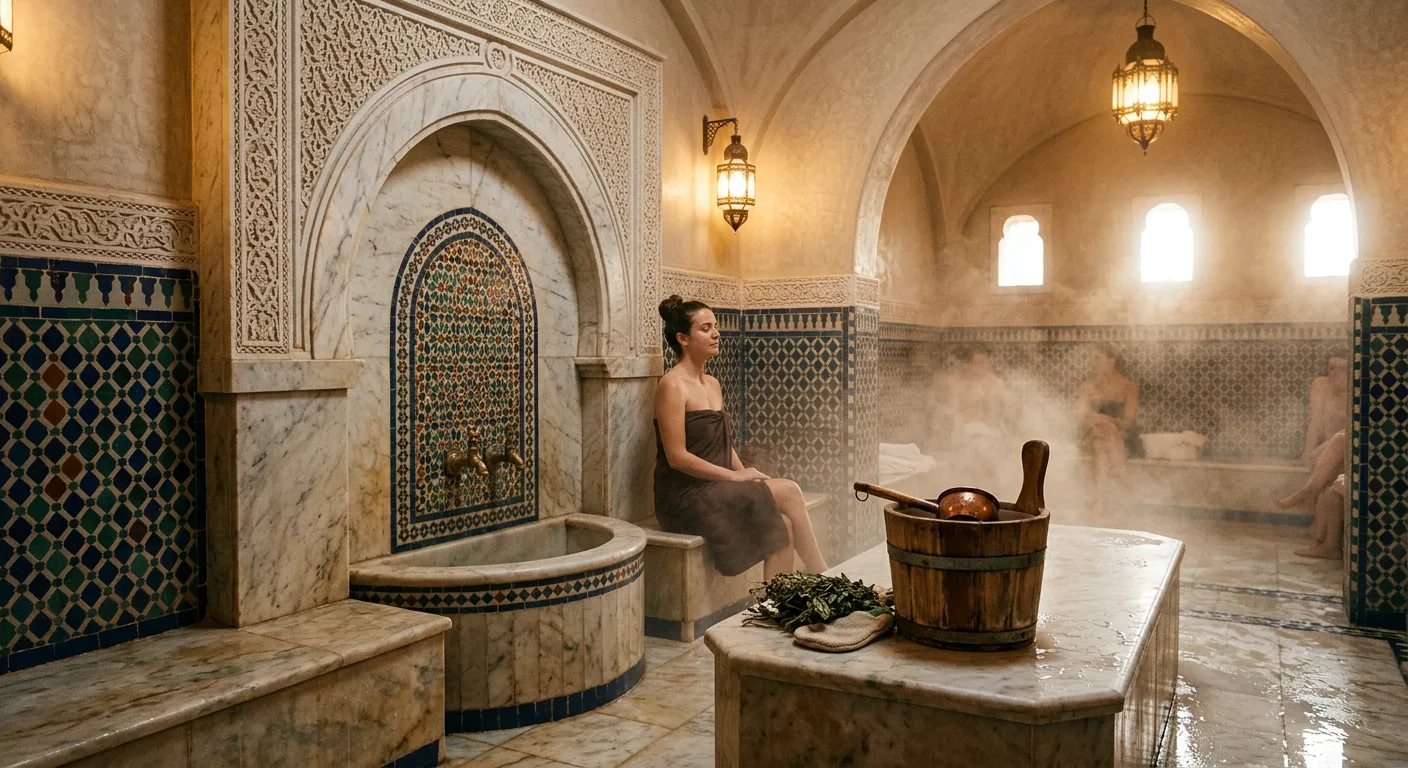
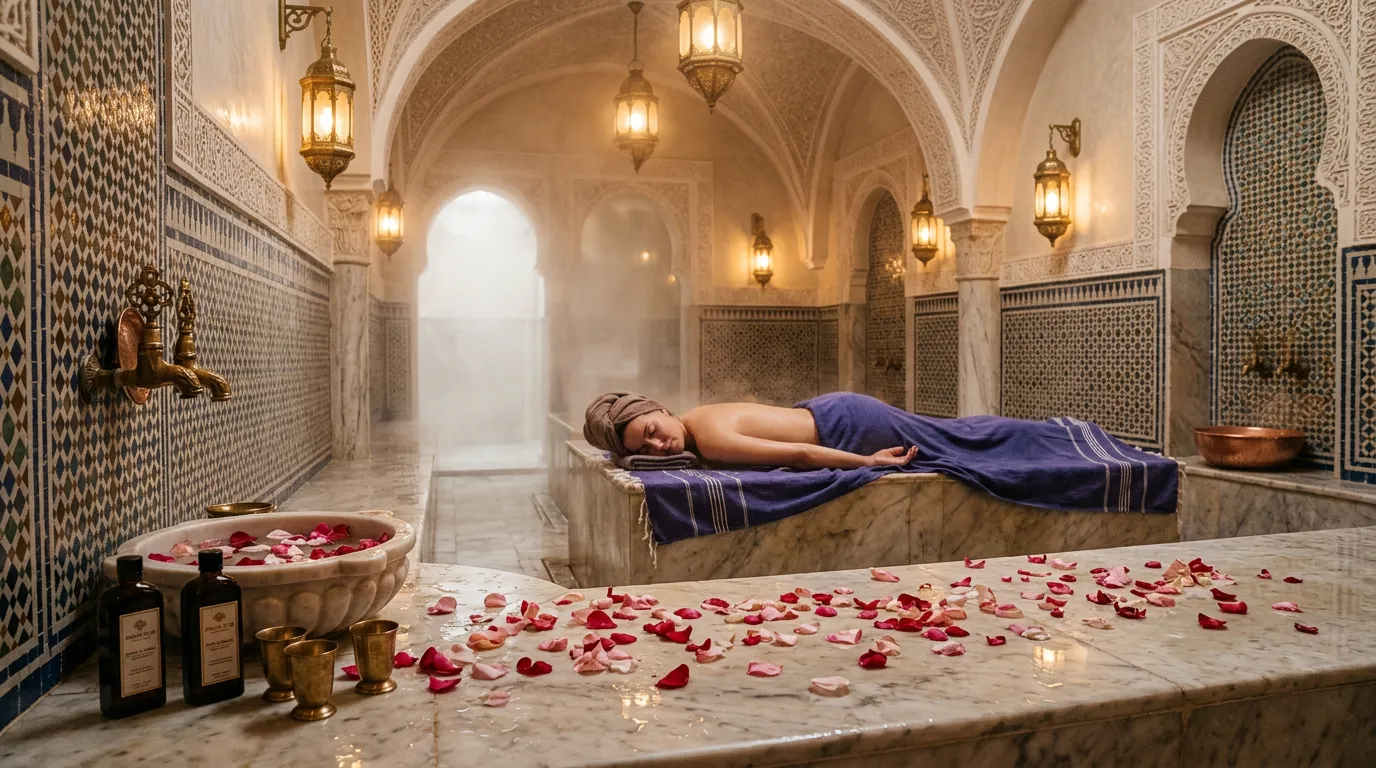
Inside a Traditional Hammam
The warm room (wusta) where the cleansing ritual unfolds -- a tradition that has remained unchanged for centuries.
Ready for Your Hammam Experience?
Explore our city guides to find the perfect hammam near your accommodation, or browse our spa recommendations for a luxury wellness retreat.