Discovering...
Indigenous Heritage
Amazigh Heritage: Morocco's Indigenous Culture
Over 3,000 years before the Arab conquest, before the Romans, before the Phoenicians, the Amazigh people called North Africa home. Their language, art, architecture, and traditions remain the living bedrock of Moroccan identity — a heritage that continues to shape the kingdom today.
Who Are the Amazigh?
The indigenous people of North Africa whose civilization predates every other on the continent.
The Amazigh (singular: Amazigh; plural: Imazighen) are the indigenous peoples of North Africa, with a continuous presence in the region stretching back at least 10,000 years. The name Amazigh means “free people” or “noble people” in Tamazight, the collective term for the family of Amazigh languages. The word “Berber,” derived from the Greek barbaros (foreigner), was historically applied by outside conquerors but remains widely used internationally.
In Morocco, the Amazigh are not a minority — they are the demographic majority. Estimates suggest that 60% or more of Morocco's 37 million people have Amazigh ancestry, with approximately 26-40% speaking a Tamazight language as their mother tongue. Three major dialect groups exist: Tarifit in the Rif Mountains of the north, Central Tamazight in the Middle and eastern High Atlas, and Tashelhit (Shilha) in the western High Atlas, Souss Valley, and Anti-Atlas.
The Amazigh predate every other civilization in North Africa. They were present when the Phoenicians founded Carthage, when the Romans built Volubilis, when Islam arrived in the 7th century, and when the French established their protectorate in 1912. Through all of these seismic changes, the Amazigh maintained their languages, customs, and identity — often retreating to mountain and desert strongholds where they could live on their own terms. The Almohad and Almoravid dynasties that once ruled an empire spanning from Spain to Senegal were themselves Amazigh in origin.
Since Morocco's independence in 1956, the Amazigh identity movement has grown steadily. A watershed moment came in 2011, when a constitutional amendment recognized Tamazight as an official language alongside Arabic. The Royal Institute of Amazigh Culture (IRCAM), founded in 2001 in Rabat, works to standardize the language, develop educational materials, and promote Amazigh cultural heritage. In 2023, Morocco declared Yennayer (the Amazigh New Year, January 13) an official national holiday — a powerful symbolic recognition of the country's indigenous heritage.
Key Facts About the Amazigh
Population in Morocco: 60%+ of 37 million (ancestry)
Native Speakers: 10-15 million Tamazight speakers
Written Script: Tifinagh (2,000+ years old)
Official Status: Constitutional language since 2011
Geographic Spread: Morocco to Egypt, Sahel to Mediterranean
Major Dynasties: Almoravids, Almohads, Marinids (all Amazigh origin)
UNESCO Recognition: Multiple Amazigh traditions inscribed
National Holiday: Yennayer (Jan 13) since 2023
Amazigh Regions & Tribal Groups
Morocco's Amazigh communities span from the Mediterranean Rif to the Saharan borderlands, each with distinct languages, traditions, and cultural identities.

Rif Berbers (Irifiyen)
Tarifit (Riffian) Rif Mountains of northern Morocco, Mediterranean coast
The Rif Berbers inhabit the rugged mountains of northern Morocco, from Tangier to the Algerian border. Historically fiercely independent, they resisted Spanish colonial rule under the legendary Abd el-Krim, who founded the short-lived Republic of the Rif (1921-1926). The Rif region is known for its dramatic mountain landscapes, the iconic blue-washed town of Chefchaouen, and a strong sense of regional identity. Rifians speak Tarifit, a distinct Amazigh language with its own literary tradition.
Tribes: Rifian confederations including Ait Waryaghar, Igzennayen, Ait Touzine, Temsamane
Traditions: Rifian women are renowned for their distinctive striped skirts (foutas) and elaborate broad-brimmed straw hats decorated with pompoms and tassels. Traditional Rifian music features the gasba (reed flute) and the adjoun (frame drum). The region is known for its fine fig and olive cultivation, beekeeping, and distinctive red-and-white pottery.
Key Locations:
Chefchaouen Al Hoceima Nador Ketama Tetouan
Atlas Berbers (Imazighen n Waṭlas)
Central Tamazight Middle Atlas, High Atlas, and eastern High Atlas plateaus
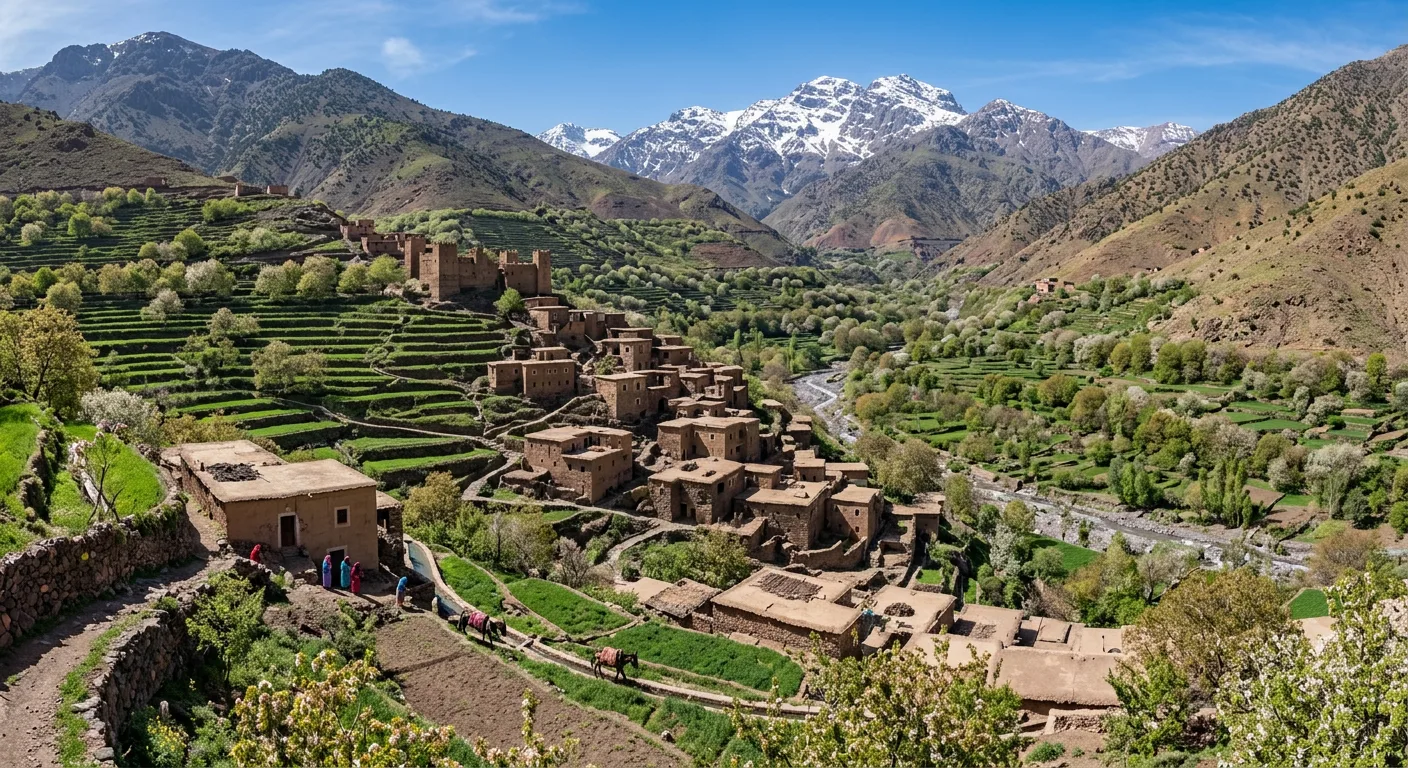
The heartland of Amazigh culture, the Atlas Mountains shelter communities that have maintained their traditions for millennia. The Middle Atlas is home to semi-nomadic pastoral groups like the Zayane, who move their herds between summer and winter pastures. The High Atlas communities, such as the Ait Atta confederation, built the iconic kasbahs and fortified villages that define the southern Moroccan landscape. These communities practice terraced agriculture, growing barley, walnuts, almonds, and apples in the fertile mountain valleys.
Tribes: Ait Atta, Ait Hadiddou, Ait Sokhman, Ait Merghad, Ait Ouaouzguite, Zayane
Traditions: Atlas Berbers are the custodians of ahidous and ahwash dance traditions, performed at community gatherings and festivals. Women are master carpet weavers, producing the famous Beni Ourain, Azilal, and Boucherouite rugs. The annual Imilchil Marriage Festival draws the Ait Hadiddou tribe for a celebration of betrothal and community. Communal grain storage in fortified agadirs (granaries) reflects the cooperative social organization of Atlas communities.
Key Locations:
Imlil Ait Ben Haddou Dades Valley Todra Gorge Azrou Imilchil Ouarzazate
Souss Berbers (Ishelhin)
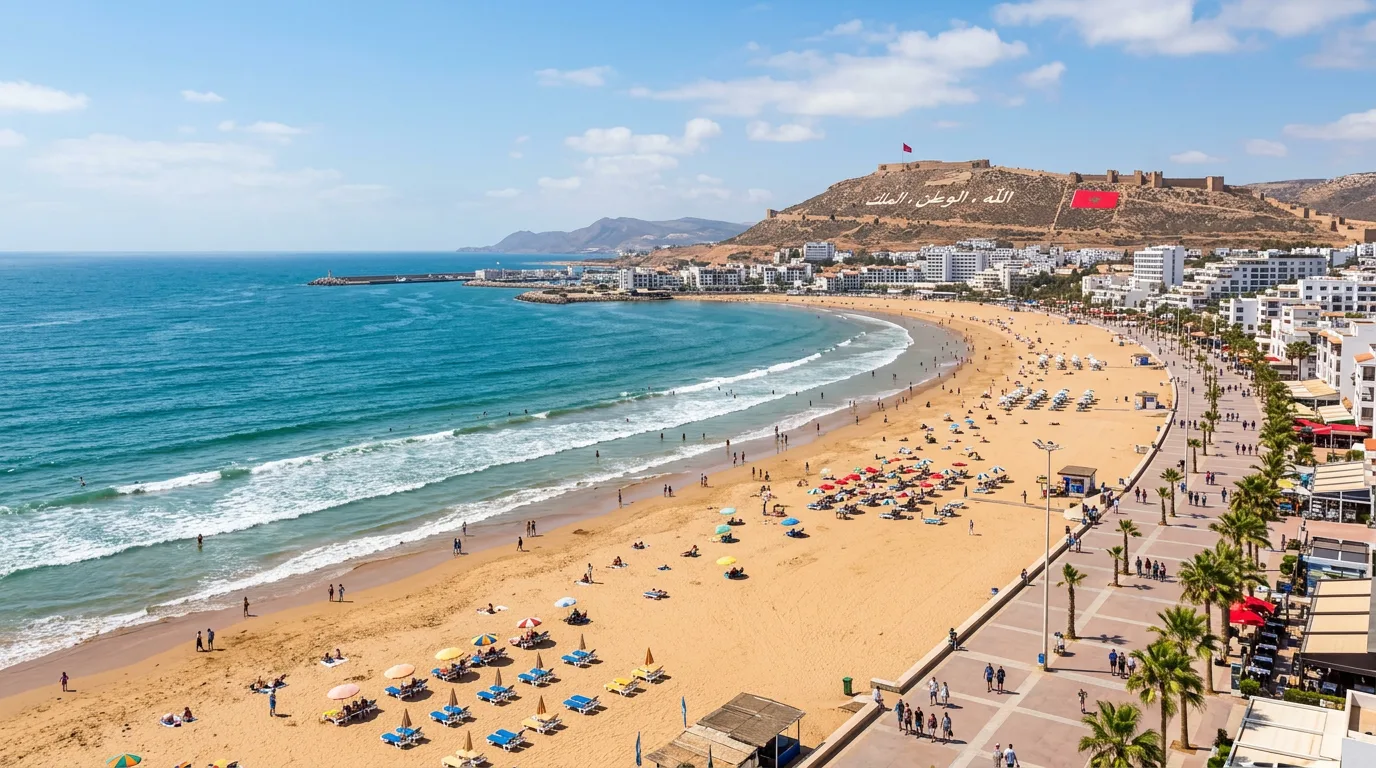
Tashelhit (Shilha) Anti-Atlas, Souss Valley, western High Atlas, Agadir region
The Chleuh (Souss Berbers) are the largest Amazigh group in Morocco, spanning from the western High Atlas through the Souss Valley to the Anti-Atlas mountains and the Atlantic coast around Agadir. Historically, they were renowned merchants and traders whose commercial networks extended throughout Morocco and beyond. The Souss Valley is one of Morocco most agriculturally productive regions, famous for its argan trees, saffron cultivation in Taliouine, and citrus orchards. Tashelhit has the richest literary tradition of any Amazigh language in Morocco.
Tribes: Chleuh confederations including Haha, Ida Ou Tanane, Ait Baamrane, Ammeln
Traditions: The Anti-Atlas is Morocco center of silver jewelry craftsmanship, particularly in Tiznit, where Berber and Jewish silversmiths developed distinctive filigree and enamel techniques. The region produces amlou, a prized almond and argan oil spread. Painted adobe granaries (agadirs) in the Anti-Atlas, some perched on dramatic cliff faces, represent remarkable communal architecture. The harvest festivals of the Souss celebrate almonds, dates, and roses with communal feasting and ahwash performances.
Key Locations:
Agadir Taroudant Tiznit Tafraout Taliouine Tafraoute Ait Mansour
Saharan Berbers & Tuareg
Various Amazigh dialects, Hassaniya Arabic in some areas Draa Valley, Tafilalet, Erg Chebbi, southeastern oases, Saharan borderlands
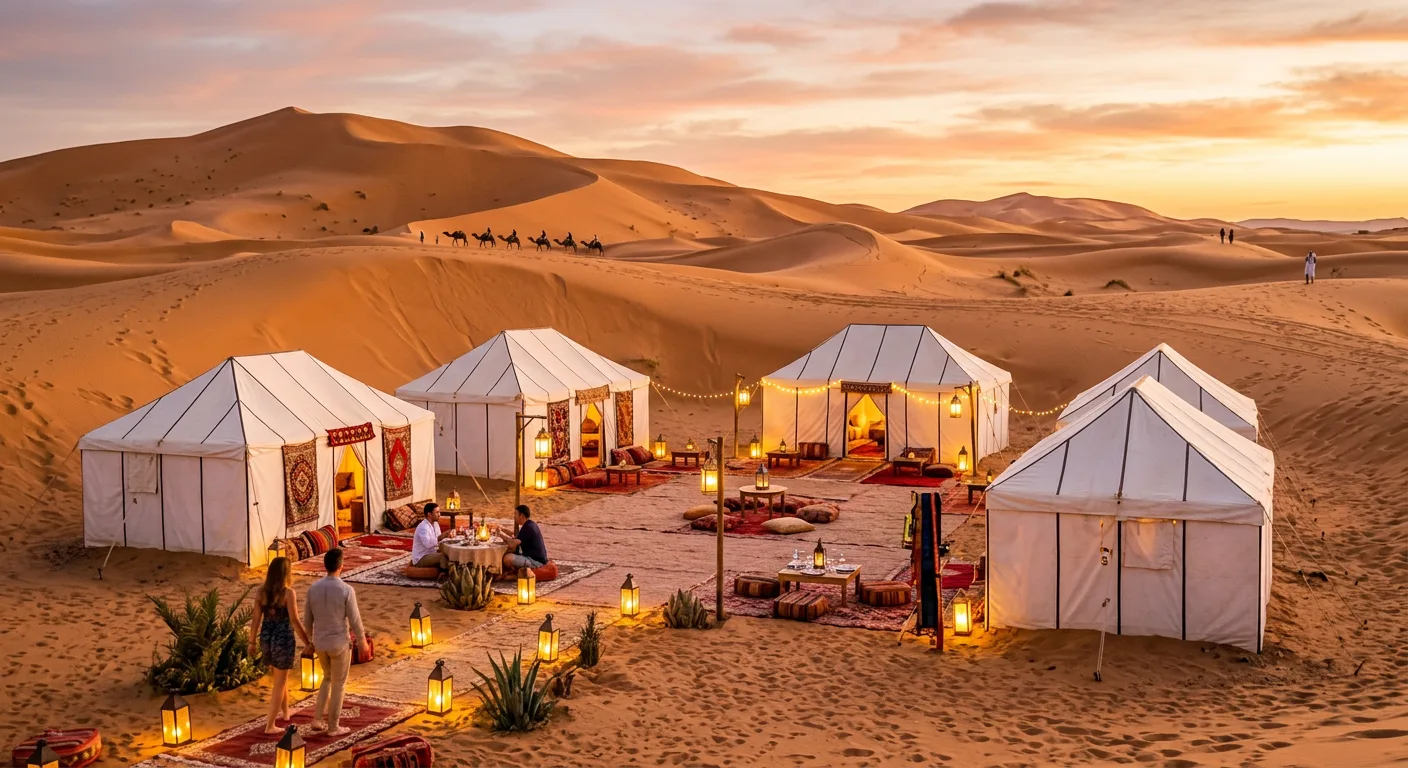
The Saharan Berbers inhabit the vast pre-Saharan zone from the Draa Valley through the Tafilalet oasis region to the sand seas of Erg Chebbi and Erg Chigaga. This includes settled oasis communities who developed sophisticated irrigation systems (khettaras) and the semi-nomadic groups who traded across the Sahara. The Tuareg, famous as the "blue people" for their indigo-dyed garments, maintain a small but culturally significant presence in Morocco southeastern borderlands. The region legendary ksour (fortified villages) and kasbahs were built along ancient caravan routes connecting sub-Saharan Africa to Mediterranean ports.
Tribes: Ait Khebbach, Ait Isfoul, Drawa, and Tuareg groups in the far southeast
Traditions: Saharan Berber culture revolves around the oasis economy of date palms, henna, and subsistence farming. The guedra is a mesmerizing trance dance performed by women kneeling before a clay pot drum, unique to the Saharan region. Hospitality is sacred in the desert, where offering tea and shelter to travelers is a fundamental moral obligation. The region is also known for its distinctive architectural style: tall, multi-story earthen towers (tighremts) decorated with geometric patterns in raised adobe.
Key Locations:
Merzouga Zagora Rissani Tata M'Hamid Erfoud Tinghir
Tamazight Language & Tifinagh Script
One of Africa's oldest living languages, now an official language of Morocco with its own ancient script.
Tamazight belongs to the Afroasiatic language family and has been spoken in North Africa for thousands of years. In Morocco, three main dialect groups exist: Tarifit (approximately 4 million speakers in the Rif), Central Tamazight (approximately 5 million speakers in the Middle and High Atlas), and Tashelhit (approximately 8 million speakers in the Souss, western High Atlas, and Anti-Atlas). While mutually intelligible to varying degrees, these dialects have distinct vocabularies and phonological features.
The Tifinagh script is one of the oldest writing systems in the world, with inscriptions found across the Sahara and North Africa dating back over 2,000 years. The script is thought to be derived from ancient Libyan alphabets and is unique to the Amazigh people. In 2003, Morocco's Royal Institute of Amazigh Culture (IRCAM) adopted a standardized version called Neo-Tifinagh as the official script for writing Tamazight. The distinctive geometric characters of Tifinagh now appear on Moroccan banknotes, passports, road signs, government buildings, and school textbooks.
The Royal Institute of Amazigh Culture (IRCAM), established by royal decree in Rabat in 2001, is the primary institution responsible for the promotion and standardization of Tamazight. IRCAM develops educational curricula, publishes dictionaries and grammars, creates digital tools and fonts for Tifinagh, and conducts research into Amazigh history and culture. Since 2003, Tamazight has been introduced into public schools, and the number of Tifinagh-literate Moroccans is growing steadily.
Essential Tamazight Phrases
| Tamazight | Tifinagh | English |
|---|---|---|
| Azul | ⴰⵣⵓⵍ | Hello |
| Azul fellawen | ⴰⵣⵓⵍ ⴼⵍⵍⴰⵡⵏ | Hello to you (plural) |
| Tanemmirt | ⵜⴰⵏⵎⵎⵉⵔⵜ | Thank you |
| Ieh / Yah | ⵢⴰⵀ | Yes |
| Uhu / La | ⵓⵀⵓ | No |
| Manzakin? | ⵎⴰⵏⵣⴰⴽⵉⵏ | How are you? |
| Labas | ⵍⴰⴱⴰⵙ | I am fine / No problem |
| Mshta iga? | ⵎⵛⵜⴰ ⵉⴳⴰ | How much is it? |
| Ayyuz | ⴰⵢⵢⵓⵣ | Bravo / Well done |
| Ar tufat | ⴰⵔ ⵜⵓⴼⴰⵜ | See you tomorrow |
| Bslama | ⴱⵙⵍⴰⵎⴰ | Goodbye |
| Aman | ⴰⵎⴰⵏ | Water |
Recognizing Tifinagh Script
Tifinagh characters are distinctive geometric shapes: circles, dots, lines, and angles. You will see them on Moroccan banknotes (look below the Arabic text), road signs (the third line after Arabic and French), and government buildings. The script reads left to right and has 33 characters in its modern standardized form. The letters ⵣ (yaz) and ⵜ (yat) are among the most recognizable. The Amazigh flag, a horizontal tricolor of blue, green, and yellow with a red Tifinagh “yaz” character (ⵣ) in the center, is increasingly visible at cultural events and on buildings across Morocco.
Traditional Amazigh Architecture
From soaring kasbahs to cliff-perched granaries, Berber architecture represents one of the world's great earth-building traditions.
Amazigh architecture is a masterclass in building with the land. Using rammed earth (pise), sun-dried mud brick (adobe), stone, and timber from local forests, Berber builders created structures that are perfectly adapted to Morocco's extreme climate: thick walls insulate against both scorching summer heat and freezing mountain winters, small windows minimize heat gain while maximizing defense, and flat rooftops provide additional living space for drying grain, weaving, and sleeping under the stars.
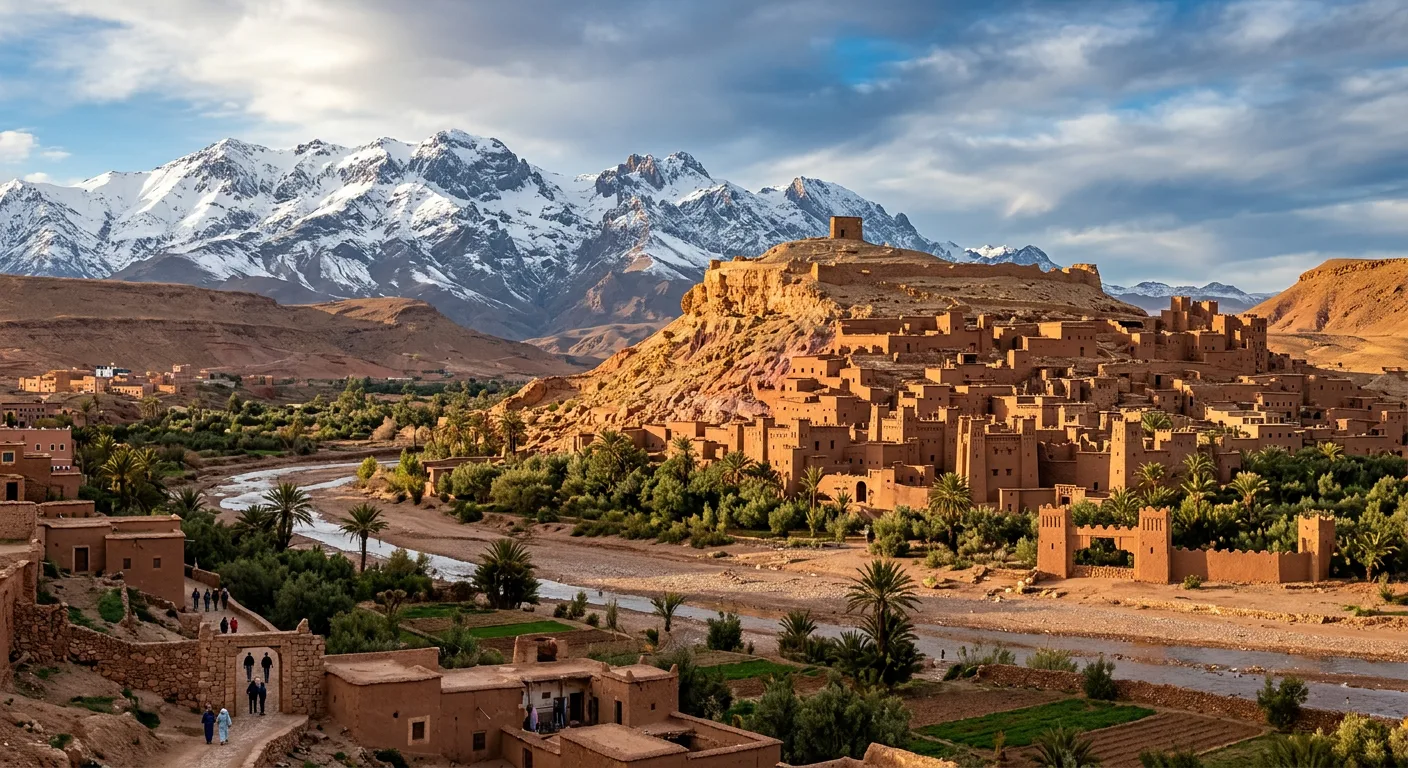
The most iconic Amazigh structures are found in southern Morocco, along the ancient caravan routes of the Draa Valley, Dades Valley, and Tafilalet region. Here, the landscape is punctuated by towering kasbahs and fortified ksour that rise from the red earth like organic extensions of the terrain. Ait Ben Haddou, a UNESCO World Heritage Site near Ouarzazate, is the most spectacular example: a fortified village of interlocking kasbahs climbing a hillside above the Ounila River, inhabited continuously for centuries and now famous as a film location for productions including “Gladiator,” “Game of Thrones,” and “Lawrence of Arabia.”
Kasbah
Tamazight: Tighremt
A kasbah (tighremt in Tamazight) is a fortified residence built from rammed earth (pise) and sun-dried mud brick. Typically four stories tall with corner towers, kasbahs served as the strongholds of local chieftains and wealthy families. The walls are thick for insulation, with small windows on lower floors for defense and larger openings above for light and ventilation. The exteriors are often decorated with geometric relief patterns created by protruding and recessed bricks. The Draa Valley alone contains over a thousand kasbahs, many dating to the 17th-19th centuries.
Location: Draa Valley, Dades Valley, Ouarzazate region
- Rammed earth (pise) and adobe construction, 3-4 stories
- Corner watchtowers with crenellated parapets
- Geometric decorative patterns on upper facades
- Interior courtyard with communal living spaces
- Ground floor for livestock and storage, upper floors for family
Ksar (plural: Ksour)
Tamazight: Ighrem
A ksar is a fortified village, essentially a collective version of the kasbah. Surrounded by high defensive walls with watchtowers at intervals, a ksar contains densely packed houses, narrow alleys, a mosque, a communal bread oven, and a central open space for gatherings. The most famous ksar in Morocco is Ait Ben Haddou, a UNESCO World Heritage Site near Ouarzazate, which has appeared in films including "Gladiator," "Game of Thrones," and "Lawrence of Arabia." The Tafilalet region around Rissani and Erfoud contains some of the largest and oldest ksour in Morocco.
Location: Southern Morocco, particularly Draa-Tafilalet region
- Fortified perimeter walls with defensive towers
- Single main entrance gate (bab) for security
- Narrow, shaded alleys to minimize heat exposure
- Communal facilities: mosque, bread oven, grain storage
- UNESCO-listed examples: Ait Ben Haddou, Ksar of Rissani
Agadir (Communal Granary)
Tamazight: Agadir / Igherm
An agadir is a fortified communal granary where families in a village stored their harvest, valuables, and important documents in individually locked chambers. Often built on hilltops or cliff faces for defensive advantage, these structures represent a remarkable system of communal trust and resource management. Each family held a key to their own storage cell but the entire building was managed collectively. Some agadirs in the Anti-Atlas, such as Agadir Id Aissa near Amtoudi and Agadir Inoumar near Tafraout, are perched on seemingly inaccessible rock outcrops and are centuries old.
Location: Anti-Atlas, western High Atlas, Souss region
- Hilltop or cliff-face positioning for natural defense
- Hundreds of individual locked storage cells (rooms)
- Communal management under elected guardian (amin)
- Some examples are 400-800+ years old
- Notable sites: Amtoudi, Inoumar, Tizourgane, Ait Kine
Taddart (Traditional House)
Tamazight: Taddart
The taddart is the traditional Amazigh family home, built from locally available materials: stone in the mountains, adobe in the valleys, and rammed earth throughout. The design is adapted to the harsh climate, with thick walls providing insulation against both summer heat and winter cold. Most taddarts have a central courtyard open to the sky, with rooms arranged around it on multiple levels. The ground floor typically houses livestock and grain storage, while the family lives on the upper floors. Flat rooftops serve as additional living and working space where grain is dried, carpets are woven, and families sleep during hot summer nights.
Location: Throughout Amazigh regions of Morocco
- Thick stone or adobe walls for thermal insulation
- Central open courtyard for light and ventilation
- Multi-level: animals below, family above
- Flat rooftop used for drying, weaving, and sleeping
- Minimal windows on ground floor for security and climate control
UNESCO World Heritage Site
Ait Ben Haddou: Crown Jewel of Berber Architecture
Located 30 km from Ouarzazate on the former caravan route between Marrakech and the Sahara, Ait Ben Haddou is the finest surviving example of a southern Moroccan ksar. The fortified village consists of a collection of earthen buildings surrounded by high walls, with corner and above-wall towers. The site has been inscribed as a UNESCO World Heritage Site since 1987 and remains partially inhabited. A handful of families still live within the ksar walls, maintaining the structures using traditional building techniques. The village has served as a filming location for over 20 major productions, bringing international attention to Amazigh architectural heritage.
Entry: Free (donations appreciated)
Guide: 100-200 MAD recommended
From Ouarzazate: 30 min drive
Amazigh Arts & Crafts
From world-famous carpets to ancient silver jewelry, Berber artisans produce some of the most sought-after handcrafts on the planet.
Amazigh arts and crafts are not merely decorative — they are a living language. Every motif woven into a carpet, hammered into a silver bracelet, or painted onto a pot carries meaning: protection against the evil eye, prayers for fertility, markers of tribal identity, or records of family history. For Berber women, weaving is both artistic expression and cultural communication, with patterns serving as a visual vocabulary passed from mother to daughter across generations. For men, metalwork, woodcarving, and leatherwork encode equally rich symbolic traditions.
Beni Ourain Carpets
The most internationally sought-after Moroccan carpet style, Beni Ourain rugs originate from the Beni Ourain tribe of the Middle Atlas mountains. Characterized by thick, plush ivory wool with bold black or dark brown geometric diamond patterns, these carpets were traditionally woven by women for use as sleeping mats and blankets in cold mountain homes. Each rug tells a personal story through its symbols: diamonds represent femininity and protection, zigzag lines symbolize water or mountains, and X-shapes ward off evil spirits. The wool comes from the region indigenous sheep and is hand-spun and hand-knotted on traditional looms.
Regions: Middle Atlas (Azrou, Khemisset, Ifrane region)
Price Range: 2,000-8,000 MAD for small (1.5x2m); 5,000-15,000 MAD for large (2x3m+)
Buying Tip: Authentic Beni Ourain rugs use undyed natural wool in cream and brown/black only. If it has bright colors, it is not a true Beni Ourain. Feel the pile: genuine rugs have a deep, soft pile of at least 2-3 cm. Buy from cooperatives in Azrou or Khemisset for the best prices and authenticity.
Azilal Carpets
Azilal rugs from the central High Atlas are a joyful explosion of color and abstract design. Unlike the restrained palette of Beni Ourain, Azilal carpets feature vibrant reds, yellows, blues, and greens woven into freeform geometric and figurative motifs on a cream or white background. Many Azilal rugs include representations of human figures, animals, eyes, and architectural elements, making each one a unique artistic narrative. These rugs have gained enormous popularity with contemporary interior designers who prize their bold, modernist aesthetic.
Regions: Azilal province, central High Atlas
Price Range: 1,500-6,000 MAD for small; 4,000-12,000 MAD for large
Buying Tip: Look for hand-spun wool with natural irregularities in the weave, a sign of authentic handcraft. The best selection is found in Azilal town itself and in curated cooperatives in Marrakech. Beware of factory copies with overly uniform patterns.
Boucherouite Rugs
Boucherouite (from the Arabic "bu sherwit," meaning torn cloth) rugs are made from recycled fabric strips rather than wool. Born from necessity in communities where wool was scarce or expensive, these textiles are woven from scraps of old clothing, cotton, nylon, and synthetic materials into dazzling patchworks of color and pattern. No two boucherouite rugs are alike. Once considered humble domestic textiles, they have been embraced by the international art world as outsider art, with some exceptional examples exhibited in galleries and museums.
Regions: High Atlas, particularly Ourika Valley and Azilal
Price Range: 500-3,000 MAD for small; 2,000-8,000 MAD for large vintage pieces
Buying Tip: Vintage boucherouite rugs (30+ years old) are more valuable and have softer, more faded colors. New productions tend to use brighter synthetic materials. Check the density of the weave: tighter is better. Marrakech souks have the widest selection.
Tamegroute Green Pottery
The village of Tamegroute, near Zagora in the Draa Valley, produces pottery with a distinctive green glaze that has become synonymous with Moroccan artisan craft. The unique green color comes from a combination of manganese, copper oxide, and silica applied to earthenware before firing in traditional wood-burning kilns. The glaze naturally crazes (develops fine surface cracks) over time, creating a prized antique appearance. Tamegroute pottery ranges from simple bowls and cups to elaborate candle holders, vases, and decorative tiles. The craft has been practiced in the village for generations, associated with the nearby Nassiriyya Sufi zaouia.
Regions: Tamegroute village, Draa Valley (near Zagora)
Price Range: 30-100 MAD for small bowls; 100-500 MAD for larger pieces; 50-200 MAD for candle holders
Buying Tip: Buy directly from the potters workshops in Tamegroute village for the best prices and widest selection. The pieces are fragile, so pack carefully. The green glaze will naturally develop more crazing over time, which is considered desirable, not a defect.
Tiznit Silver Jewelry
The Anti-Atlas town of Tiznit is the undisputed capital of Berber silver jewelry. For centuries, Jewish and Amazigh silversmiths worked side by side in Tiznit creating bold, geometric pieces rich in symbolic meaning. The tradition includes massive fibulae (tizerzai) used to pin garments, chunky bangles and cuffs, ornate headpieces and forehead chains, Hand of Fatima (khamsa) pendants, and elaborate pectoral necklaces incorporating coral, amber, amazonite, and colored enamel. Each piece encodes tribal identity: specific patterns identify the wearer community, marital status, and social standing.
Regions: Tiznit, Anti-Atlas, southern Morocco
Price Range: 100-500 MAD for simple bangles; 500-3,000 MAD for necklaces; 2,000-10,000+ MAD for antique or museum-quality pieces
Buying Tip: The silver souk in Tiznit (near the central mechouar) has the best prices and selection. Test for real silver by checking for a hallmark or using a magnet (silver is not magnetic). Antique pieces command premium prices. Be aware that many new pieces are silver-plated over base metal. A reputable dealer will guarantee the silver content.
Berber Woodwork
Amazigh woodworking encompasses a wide range of functional and decorative objects carved from local woods including cedar, walnut, olive, and argan. Traditional items include ornate wooden doors with iron stud decorations, carved ceiling beams in kasbahs, kitchen utensils (large communal couscous bowls, ladles, butter churns), and furniture. The town of Essaouira is famous for its thuya burl wood marquetry, while High Atlas villages produce carved doors and chests decorated with symbolic geometric patterns that mirror carpet motifs.
Regions: High Atlas, Essaouira, Anti-Atlas
Price Range: 50-200 MAD for utensils; 200-1,500 MAD for carved boxes; 1,000-5,000+ MAD for doors and chests
Buying Tip: In mountain villages, look for hand-carved items with tool marks that indicate genuine handcraft rather than machine production. Cedar items should have a fragrant scent. In Essaouira, buy thuya items from the cooperative near the port for fair prices.
Amazigh Music & Dance
Communal performance traditions that unite poetry, rhythm, and movement in celebrations that can last from dusk until dawn.
Music is inseparable from Amazigh identity. Unlike the solo performer traditions of Arabic music, Berber music is fundamentally communal: it is performed by groups, for groups, and as a form of social bonding that reinforces community ties. The core instruments are the bendir (a large frame drum made from a wooden hoop and goatskin), the lotar (a four-stringed lute), the ribab (a single-string bowed instrument), and the guembri (a three-stringed bass lute central to Gnaoua music). Hand clapping, foot stamping, and call-and-response chanting form the rhythmic foundation of most Amazigh performance traditions.
Ahwash
High Atlas & Souss Valley (Tashelhit-speaking areas)Ahwash is the great communal performance tradition of the Shilha (Tashelhit-speaking) Berbers of southern Morocco. Performed at weddings, festivals, and harvest celebrations, ahwash features large groups of men and women arranged in opposing lines or semicircles. The performance begins with poetry recitation by a lead poet (amyaz), followed by rhythmic clapping and swaying that gradually builds in intensity. Drums (bendirs and tallunt) drive the rhythm while the group responds in complex call-and-response patterns. Ahwash can last hours, building through successive phases of increasing speed and intensity until reaching an ecstatic climax. The performance under moonlight in a mountain village is one of Morocco most profound cultural experiences.
Instruments: Bendir (large frame drum), Tallunt (cylindrical drum), Hand clapping, Voice/chanting
When: Weddings, harvest festivals, community celebrations, especially summer and autumn
Ahidous
Middle Atlas (Central Tamazight-speaking areas)Ahidous is the signature musical tradition of the Middle Atlas Berbers, performed by the Zayane, Ait Merghad, and other central Amazigh groups. Men and women stand shoulder to shoulder in a tight line or circle, swaying rhythmically while stamping their feet in unison. The poetry is improvised by a lead singer (izli), with the group responding in powerful chorus. The bendir frame drums provide a hypnotic, driving pulse. Ahidous is both entertainment and social cohesion ritual, reinforcing community bonds and providing a rare context for interaction between young men and women. The dance is performed at moussems, weddings, and national celebrations.
Instruments: Bendir (frame drum), Voice (call-and-response), Foot stamping, Hand clapping
When: Moussems, weddings, national holidays, Imilchil Festival
Guedra
Saharan south (Draa-Tafilalet, Guelmim-Oued Noun)The guedra is a mesmerizing trance dance unique to the Saharan Berber communities of southern Morocco. Named after the clay pot (guedra) that serves as a drum, the performance centers on a single female dancer who kneels before the drum, gradually entering a state of trance. Beginning with subtle finger movements and gentle swaying, the dancer builds in intensity, whipping her hair and moving her hands in intricate patterns as the drumming accelerates. The guedra is traditionally performed at celebrations and has deep spiritual significance, considered a prayer expressed through movement. The audience sits in a circle around the dancer, clapping and chanting in support.
Instruments: Guedra (clay pot drum covered with skin), Hand clapping, Chanting
When: Celebrations, weddings, cultural festivals in the south
Rwais (Rwayes)
Souss Valley and Anti-Atlas (Tashelhit-speaking areas)The rwais are professional itinerant musician-poets of the Shilha Berber tradition, comparable to West African griots or European troubadours. Traveling in small groups, rwais perform at festivals, weddings, and markets, singing extended poetic narratives that address love, politics, morality, and current events. The lead performer (arrays) is accompanied by a small ensemble. The rwais tradition produced legendary artists like Rais Lhaj Belaid, whose recordings from the 1920s-30s are considered national treasures. The tradition continues today, with rwais performing at moussems and cultural festivals throughout the Souss region.
Instruments: Lotar (4-stringed lute), Ribab (single-string fiddle), Naqus (metal percussion), Voice
When: Festivals, weddings, moussems, cultural events
Gnaoua (Gnawa) Berber-African Fusion
Essaouira, Marrakech, and nationwideWhile Gnaoua music has Sub-Saharan African roots, it has deeply intertwined with Amazigh culture over centuries of shared geography in Morocco. Gnaoua masters (maalems) play the guembri, a three-stringed bass lute, accompanied by iron castanets (qraqeb) and chanting. The music is central to spiritual healing ceremonies called lilas that can last all night, invoking various spiritual entities through specific rhythmic patterns and melodies. UNESCO inscribed Gnaoua practices on the Representative List of the Intangible Cultural Heritage of Humanity in 2019. The annual Gnaoua World Music Festival in Essaouira draws international audiences.
Instruments: Guembri (3-stringed bass lute), Qraqeb (iron castanets), Tbel (large drum), Voice/chanting
When: Year-round; Gnaoua Festival in Essaouira (June); lilas throughout the year
Festivals & Celebrations
From the legendary Imilchil Marriage Festival to the Amazigh New Year, Berber celebrations are among Morocco's most authentic and vibrant cultural events.
Imilchil Marriage Festival (Moussem of Betrothal)
September (usually mid-to-late September, dates vary) Imilchil, High Atlas (Ait Hadiddou tribal territory)
The most famous Amazigh festival in Morocco, the Imilchil Marriage Festival is an annual gathering of the Ait Hadiddou tribe where young men and women choose their spouses. According to legend, the festival originated from the story of two lovers from rival clans, Isli and Tislit, whose parents forbade their union. The lovers wept so copiously that their tears formed two lakes (Isli and Tislit) near Imilchil. Moved by their grief, the elders decreed that henceforth, young people could freely choose their partners at an annual festival. Today, the moussem combines genuine marriage ceremonies with a lively souk, ahidous performances, horse riding, and feasting. While increasingly touristic, the core tradition remains alive.
Practical Info: Imilchil is remote: allow a full day to drive from Marrakech or Fes via winding mountain roads. Accommodation is limited; most visitors camp or stay in basic guesthouses. Book guides in advance. The festival dates are set according to the agricultural calendar and local tribal council, so confirm dates before traveling. Expect cold nights at 2,100m altitude.
Yennayer (Amazigh New Year)
January 13 each year Celebrated nationwide, especially in Atlas Mountains, Rif, and Souss
Yennayer marks the first day of the Amazigh agrarian calendar, corresponding to January 13 in the Gregorian calendar (the calendar year 2975 in the Amazigh calendar began on January 13, 2025). Recognized as an official national holiday in Morocco since 2023, Yennayer is celebrated with communal feasts featuring special dishes like couscous with seven vegetables, tagine with dried fruits, and urkimen (a hearty grain porridge). Families gather, homes are cleaned and decorated, and communities organize music and dance performances. In some regions, children receive small gifts and new clothes. Yennayer celebrations carry a strong dimension of cultural affirmation and Amazigh identity.
Practical Info: As a newly recognized national holiday, Yennayer celebrations are growing in visibility every year. Major cities like Rabat and Agadir hold public events. The most authentic celebrations are in Atlas Mountain villages and Souss Valley communities. Some riads and cultural centers in Marrakech host Yennayer dinners open to tourists.
Moussem of Tan-Tan (UNESCO)
May-June (varies annually) Tan-Tan, Guelmim-Oued Noun region, southern Morocco
Inscribed on the UNESCO Representative List of the Intangible Cultural Heritage of Humanity, the Moussem of Tan-Tan is a massive annual gathering of nomadic peoples from across the Saharan region. Originally a commercial fair and religious pilgrimage, the moussem features camel racing, fantasia (horse riding displays), guedra dancing, poetry contests, and a vast souk. The gathering celebrates the oral traditions, music, and social practices of the nomadic and semi-nomadic communities of the southwest Saharan borderlands. After a period of decline in the 1970s-90s, the moussem was revived with UNESCO support and has become a major cultural event.
Practical Info: Tan-Tan is a long drive from Agadir (about 6 hours) or can be reached via domestic flight to Guelmim plus a 2-hour drive. Accommodation options are limited during the festival. The event draws large crowds. Bring sun protection and layers for cool desert evenings.
Almond Blossom Festival
Late January to mid-February Tafraout, Anti-Atlas
When the almond trees of the Anti-Atlas burst into delicate pink and white blossoms against the dramatic red granite landscape of the Ameln Valley, the town of Tafraout celebrates with a week-long festival of music, dance, and community gathering. Ahwash performances, traditional song competitions, and almond-themed culinary events fill the program. The visual spectacle of blooming almond orchards set against the painted rocks of Tafraout and the towering red cliffs of the surrounding valley is extraordinary. The festival also features a souk selling local almonds, amlou (almond-argan butter), and regional crafts.
Practical Info: Tafraout is accessible from Agadir (about 3-4 hours by road). The town has a good selection of small hotels and guesthouses. Book ahead during festival week. The exact dates depend on the almond bloom, which varies with winter weather. Mid-February is usually peak bloom.
Rose Festival
May (usually first or second weekend) Kelaat M'gouna (El Kelaa des Mgouna), Dades Valley
The Dades Valley around Kelaat M'gouna is known as the "Valley of Roses" for the millions of Damask roses cultivated there to produce rosewater and rose essential oil. The annual Rose Festival celebrates the harvest with a three-day program of ahwash and music performances, a parade through town featuring the election of a "Rose Queen," souk stalls selling rose products, and communal feasting. The festival coincides with the peak rose harvest when the valley air is heavy with fragrance and rose petals are spread to dry on rooftops throughout the town. Local cooperatives sell rosewater, rose oil, rose cream, and rose soap at excellent prices.
Practical Info: Kelaat M'gouna is located between Ouarzazate and Tinghir on the main N10 highway. Accommodation is available in town and at nearby kasbahs. The festival draws large crowds from across Morocco. Rose products purchased directly from cooperatives during the festival cost a fraction of prices in Marrakech or international markets.
Date Festival (Moussem of Dates)
October (usually third week) Erfoud, Tafilalet region
The Tafilalet oasis is the heart of Morocco date palm cultivation, and the annual harvest is celebrated in Erfoud with a three-day festival featuring exhibitions of over 30 date varieties, agricultural shows, fantasia horse displays, Gnawa music, and cultural performances. The region produces the prized Medjool date (dating back to the original "Medjool" mother palms) along with other varieties like Bouskri, Jihl, and Boufeggous. The festival is a genuine agricultural celebration, deeply rooted in the oasis economy, and offers visitors a chance to taste date varieties not found outside the region.
Practical Info: Erfoud is accessible from Fes (about 8 hours) or from Ouarzazate (about 5 hours via the Dades Valley). Hotels fill up during the festival, so book early. The nearby village of Rissani has additional accommodation and a famous twice-weekly souk. Combine with a visit to the Erg Chebbi sand dunes at Merzouga, just 50 km away.
Traditional Amazigh Cuisine
The original cuisine of Morocco — earthy, communal, and deeply connected to the land, the seasons, and the mountain harvest.
Much of what the world knows as “Moroccan cuisine” has its deepest roots in Amazigh culinary traditions. The tagine, couscous, mint tea ceremony, and communal eating style all originated in Berber culture before being adopted and elaborated upon in the urban kitchens of Fes, Marrakech, and Meknes. Traditional Amazigh cooking emphasizes simplicity, fresh seasonal ingredients, and the communal sharing of food from a single dish — a reflection of the collective values at the heart of Berber society.
Tagine (Origin Story)
The tagine is perhaps Morocco most iconic dish, and it is fundamentally a Berber invention. Named after the conical earthenware pot in which it is cooked, the tagine was developed by nomadic and semi-nomadic Amazigh peoples who needed a portable, fuel-efficient cooking method. The conical lid traps steam and returns condensation to the dish, creating a slow-braised, intensely flavored stew using minimal water, perfect for arid regions. Traditional Berber tagines are simpler than the elaborate versions found in urban restaurants: a base of onions, tomatoes, and olive oil with seasonal vegetables, preserved lemons, olives, and whatever protein is available (chicken, lamb, or beef).
Originated with Atlas and Saharan Berber communities, now nationwide
Couscous (Friday Tradition)
Couscous is the quintessential Berber grain dish, hand-rolled from semolina wheat and steamed in a special two-tiered pot called a couscoussier. In Morocco, Friday couscous lunch is a near-sacred family tradition: after the communal midday prayer, families gather to eat couscous with seven vegetables and lamb or chicken, served on a large communal platter. The preparation of couscous is a ritual in itself, with the semolina grains being rolled by hand, steamed three times, and fluffed with butter between steamings. In mountain communities, barley couscous (tchicha) is more traditional than the wheat variety, served with buttermilk (lben) or topped with caramelized onions and raisins.
Universal across all Amazigh communities
Tangia (Marrakchi Bachelor Pot)
The tangia is a distinctive Marrakech slow-cooked dish with Berber roots, traditionally prepared by bachelors and working men. Chunks of lamb or beef are placed in a tall urn-shaped clay pot (the tangia) with preserved lemons, garlic, cumin, saffron, and smen (aged preserved butter). The sealed pot is taken to the local hammam and buried in the hot ashes of the furnace that heats the bathwater, where it slow-cooks for 6-8 hours. The result is meltingly tender meat in a rich, concentrated sauce. In Marrakech, the tradition continues: you can drop your tangia pot at specific hammams in the morning and collect your cooked meal in the evening.
Marrakech and surrounding areas
Mechoui (Whole Roasted Lamb)
Mechoui is the Berber tradition of slow-roasting a whole lamb in an underground earthen oven (tafarnoute) or over a wood fire pit. Reserved for major celebrations: weddings, religious holidays, tribal gatherings, and the feast of Eid al-Adha. The lamb is rubbed with butter, cumin, and salt, then roasted for hours until the meat falls from the bone at the slightest touch. The most prized portions are the tender shoulder meat, which guests pull apart with their hands. Mechoui is often the centerpiece of large communal feasts serving dozens or even hundreds of people in Atlas Mountain villages.
Widespread across all Amazigh regions, particularly Atlas Mountains
Amlou (Amazigh Almond Butter)
Amlou is a rich, sweet spread made from ground roasted almonds, argan oil, and honey, sometimes described as the "Berber Nutella." Originating in the Souss Valley and Anti-Atlas where all three ingredients grow abundantly, amlou is traditionally served at breakfast with fresh bread (khobz) or msemen (layered flatbread). The preparation involves roasting almonds over a charcoal fire, grinding them in a stone mortar, then blending with argan oil and local honey. The best amlou has a coarse, slightly chunky texture and a deeply nutty, sweet flavor. It is rich in healthy fats, protein, and vitamin E.
Souss Valley, Anti-Atlas, Essaouira region
Tchicha (Barley Couscous)
In the High Atlas and Middle Atlas, where wheat was historically less available, barley couscous (tchicha) was the traditional staple grain. Coarser than wheat couscous, tchicha has a nuttier flavor and more substantial texture. It is typically served with buttermilk (lben) poured over the top, or with a simple stew of root vegetables and dried meat. During winter months, mountain communities prepare a thick tchicha porridge called tagella, cooked with olive oil, herbs, and sometimes dried figs. Tchicha represents the original Berber grain tradition before wheat couscous became dominant in Morocco.
High Atlas and Middle Atlas mountain communities
Mint Tea Ceremony
While mint tea (atay) is universal across Morocco, the elaborate ceremony of its preparation has deep Amazigh roots tied to hospitality culture. Gunpowder green tea is steeped with fresh spearmint (or wormwood in the south) and generous amounts of sugar, then poured from a height into small glasses to create a frothy surface. A minimum of three glasses is offered to guests (the Berber proverb says: "the first glass is gentle like life, the second is strong like love, the third is bitter like death"). In Atlas Mountain villages, tea preparation is an art form and a negotiation ritual: no business, sale, or discussion begins without tea.
Universal across Morocco, ceremonial origins in Amazigh hospitality traditions
Khobz n Tafarnout (Amazigh Bread)
Traditional Amazigh bread is baked in a clay oven (tafarnout) or on a flat stone over coals. Several varieties exist: khobz (round loaf bread), tafarnout (flatbread cooked directly on embers), batbout (steamed bread), and harcha (semolina griddle bread). In mountain villages, bread-baking remains a daily ritual, with the dough prepared in the morning and baked fresh. Many villages have a communal oven (ferran) where families bring their loaves. Bread is treated with deep respect in Amazigh culture; it is never placed upside down, never thrown away, and stale bread is given to animals rather than discarded.
Throughout Amazigh communities, with regional variations
Visiting Berber Communities
Authentic experiences that connect you with living Amazigh culture — from mountain homestays to desert camps, guided treks to artisan workshops.
Atlas Mountain Homestay
Stay with a Berber family in a traditional village home in the High Atlas. Experience daily life firsthand: help prepare meals, learn to bake bread in a clay oven, walk to the local souk with your host family, and sit on the roof terrace under the stars with mint tea. Most homestays include home-cooked meals featuring recipes passed down through generations. Villages around Imlil, the Ourika Valley, and the Ait Bougmez Valley offer some of the most authentic and well-organized homestay programs, with proceeds directly supporting local families and community infrastructure.
Imlil, Ourika Valley, Ait Bougmez Valley, Setti Fatma
200-500 MAD per person per night including meals
1-3 nights recommended
Guided Village & Valley Trek
Explore the Atlas Mountains on foot with a local Amazigh guide who knows every trail, village, and story in the landscape. Multi-day treks traverse mountain passes, descend into hidden valleys, and pass through Berber villages where life has changed little in centuries. The classic Toubkal Circuit (3-4 days) takes you around North Africa highest peak. The less-traveled Ait Bougmez to Mgoun Valley trek (5-7 days) traverses the "Happy Valley" through some of the most pristine Berber communities in Morocco. Mules carry your luggage while you walk, and nights are spent in village guesthouses or mountain refuges.
Toubkal region, Mgoun Valley, Ait Bougmez, Jebel Saghro
400-800 MAD per person per day (guide, meals, accommodation, mule)
2-7 days depending on route
Carpet Weaving Workshop
Visit a women carpet weaving cooperative in the Atlas Mountains and learn the basics of traditional loom weaving. Watch master weavers create intricate patterns from memory, learn about the symbolism encoded in Berber carpet motifs, and try your hand at weaving a small piece to take home. Several cooperatives in the Ourika Valley and around Azrou offer half-day or full-day workshops. These visits directly support women artisans and help preserve traditional weaving knowledge that is at risk as younger generations migrate to cities.
Ourika Valley, Azrou, Ait Ben Haddou area
150-350 MAD per person for a half-day workshop
Half day (3-4 hours)
Saharan Desert Camp Experience
Ride camels into the Erg Chebbi dunes near Merzouga or the remote Erg Chigaga near M'Hamid, arriving at a Berber desert camp as the sun sets over the Sahara. Dine on traditional desert cuisine (tagine, mechoui, desert bread baked in sand), listen to Gnawa drumming around the campfire, and sleep under a canopy of stars. Many camps are family-run operations led by Saharan Berbers who share stories of nomadic life, desert navigation, and the changing climate. Sunrise over the dunes from your tent is an unforgettable experience.
Merzouga (Erg Chebbi), M'Hamid (Erg Chigaga), Zagora
500-1,500 MAD per person per night (standard camp); 2,000-5,000 MAD (luxury camp)
1-2 nights (longer desert treks available)
Berber Cooking Class
Learn to prepare authentic Amazigh dishes with a local family or at a community-run kitchen. Start with a visit to the village souk or family garden to gather fresh ingredients, then learn to roll couscous by hand, prepare a traditional tagine, bake bread in a clay oven, and make amlou (almond-argan spread). Meals are eaten communally, seated on cushions around a low table, in the traditional Berber manner. Classes in the Ourika Valley and Imlil area are particularly popular, offering stunning mountain scenery alongside culinary education.
Imlil, Ourika Valley, Ait Ben Haddou, Todra Gorge area
200-500 MAD per person including meal
Half day (4-5 hours)
Kasbah & Ksar Heritage Tour
Explore the monumental earthen architecture of southern Morocco with a guide who can explain the history, construction techniques, and social organization of kasbahs and ksour. The Draa Valley between Ouarzazate and Zagora contains the greatest concentration of kasbahs in Morocco, while Ait Ben Haddou (UNESCO World Heritage Site) is the most spectacular individual ksar. The Skoura palm oasis contains several impressive kasbahs including the restored Amridil Kasbah. Many kasbahs have been converted into guesthouses, allowing visitors to sleep within these extraordinary structures.
Ait Ben Haddou, Draa Valley, Skoura, Ouarzazate, Tamnougalt
100-300 MAD for guided tour; 400-1,200 MAD per night for kasbah guesthouses
Half day to full day for tours; overnight for kasbah stays
Responsible Tourism
How to visit Amazigh communities in a way that respects their culture, supports their economy, and preserves their heritage for future generations.
Support Local Communities Directly
Choose locally owned guesthouses and homestays over international chains. Hire local guides rather than using agencies that send guides from cities. Buy crafts directly from artisans and cooperatives. Your money has the greatest impact when it stays in the community you visit.
Ask Before Photographing
Always ask permission before photographing people, especially women, children, and elders. Many Berber communities feel strongly about photography. If someone says no, respect their wishes immediately. Consider offering to share photos via messaging apps or to send prints.
Learn a Few Amazigh Words
Even simple greetings in Tamazight ("Azul" for hello, "Tanemmirt" for thank you) demonstrate respect and create immediate warmth. Your hosts will be delighted and impressed. It acknowledges that their language and culture matter.
Respect Cultural Boundaries
Dress modestly in rural communities (cover shoulders and knees). Remove shoes before entering homes. Accept tea when offered. Do not enter mosques or sacred spaces unless invited. Follow your guide instructions regarding sacred sites and community protocols.
Pay Fair Prices
While bargaining is expected in souks, remember that artisans need fair compensation for their work. A carpet that took months to weave deserves a fair price. Ask cooperatives about fair trade pricing. Tipping guides and hosts 10-15% is customary and appreciated.
Minimize Environmental Impact
Mountain and desert communities have fragile ecosystems. Carry out all trash (including on treks). Use water sparingly, as many villages rely on limited water sources. Stay on marked trails to prevent erosion. Support eco-lodges and sustainable tourism initiatives.
A Note on “Berber Shows” and Staged Experiences
Some tourism operators in Morocco offer “Berber shows” or “Berber dinners” that are commercially staged performances with little connection to authentic Amazigh culture. While these can be entertaining, they should not be confused with genuine cultural engagement. For authentic experiences, seek out community-based tourism initiatives, family-run guesthouses in actual Berber villages, and cooperatives run by local artisans. A good test: if the experience is in a tourist hotel rather than a village, it is likely staged. The real thing requires traveling to where Amazigh people actually live.
Practical Information
Everything you need to know before visiting Amazigh communities in Morocco.
Best Time to Visit
- Spring (April-May): Ideal weather, wildflowers blooming, pleasant trekking
- Autumn (Sep-Oct): Warm days, cool nights, Imilchil Festival, harvest season
- Summer (Jun-Aug): Hot in valleys but good for high-altitude treks above 2,500m
- Winter (Nov-Mar): Cold in mountains (snow above 2,000m), clear Saharan skies, Yennayer celebrations in January
What to Bring
- Layers: temperatures swing 20-30 degrees Celsius between day and night in mountains
- Sturdy walking shoes or hiking boots for village paths and mountain trails
- Headlamp/flashlight: many villages have limited or no street lighting
- Small gifts: school supplies, tea, or sugar are appreciated when visiting families
- Cash in small denominations (20-50 MAD notes): ATMs are scarce in remote areas
- Sun protection: hat, sunscreen, sunglasses (UV is intense at altitude)
Cultural Etiquette
- Greet everyone you pass on village paths: "Azul" or "Salam alaykum"
- Accept mint tea when offered; refusal can be seen as rude
- Use your right hand for eating, giving, and receiving
- Remove shoes before entering homes and some guesthouses
- Women should cover shoulders and knees in traditional communities
- Ask permission before entering cemeteries or shrines
Photography Tips
- Always ask before photographing people, especially women and children
- Some families will happily pose; others will firmly decline. Respect both.
- Offering to show people their photo on your screen builds goodwill
- Avoid photographing military installations or border areas
- Golden hour light in the Atlas and desert is extraordinary; plan sunrise/sunset shoots
- Consider bringing a Polaroid or portable printer to give instant prints as gifts
Frequently Asked Questions
Common questions about visiting Berber communities and experiencing Amazigh culture in Morocco.
What is the difference between "Berber" and "Amazigh"?
Amazigh (plural: Imazighen) is the indigenous self-designation, meaning "free people" or "noble people." The term "Berber" derives from the Greek "barbaros" (foreigner) and was applied by outside conquerors. Today, Amazigh is the officially preferred term in Morocco, used in the constitution and by cultural institutions like IRCAM. However, "Berber" remains widely used internationally and is not considered offensive in most contexts. Many Amazigh people use both terms interchangeably.
Can I visit Berber villages independently or do I need a guide?
While it is possible to visit some Berber villages independently, hiring a local guide is strongly recommended. A guide provides cultural context, helps navigate language barriers (many villagers speak only Tamazight), ensures you follow local customs, and contributes directly to the community economy. For trekking in the mountains, a guide is essential for safety and navigation. In villages near tourist hubs like Imlil or Ourika Valley, you can arrange guides locally. For remote areas, arrange through your accommodation or a Marrakech-based agency that employs local Berber guides.
Is it safe to travel to remote Berber communities?
Yes, Morocco Berber communities are among the safest places to travel in the country. Rural Amazigh communities have extremely low crime rates, and the cultural tradition of hospitality to travelers (diyafa) means visitors are treated as honored guests. The main safety considerations are practical: mountain weather can change rapidly, roads to remote villages may be unpaved or flooded in spring, and medical facilities are limited. Travel with a guide, inform your accommodation of your plans, and ensure you have adequate water and supplies.
What language should I use when visiting Berber areas?
In tourist-facing areas (Imlil, Ourika, Ait Ben Haddou), most guides and guesthouse owners speak French and often some English, in addition to Arabic and Tamazight. In more remote villages, Tamazight may be the only language spoken, though most younger men also speak Darija (Moroccan Arabic) from school and military service. Learning a few Tamazight greetings (Azul, Tanemmirt) is deeply appreciated. French is more useful than English in most situations outside major tourist centers.
How much should I budget for a Berber village experience?
Budget travelers can experience Berber hospitality for 200-400 MAD per person per day, covering basic homestay accommodation and home-cooked meals. Mid-range travelers should budget 500-1,000 MAD per day for comfortable guesthouses, guided excursions, and meals. A multi-day guided trek with mules, guide, cook, and accommodation costs 400-800 MAD per person per day. Luxury kasbah stays and upscale desert camps run 2,000-5,000+ MAD per night. Craft purchases, tips, and transport are additional.
What is the best way to buy an authentic Berber carpet?
For the most authentic experience and fairest prices, buy from women weaving cooperatives in the Atlas Mountains (Azrou, Ourika Valley, Ait Bougmez). Examine the back: handmade rugs have slight irregularities, while machine-made rugs are perfectly uniform. Ask about the wool origin (local sheep is best), dye type (natural dyes from plants vs. synthetic), and the time to make (a quality rug takes 2-6 months). For Beni Ourain rugs, expect to pay 2,000-8,000 MAD for small sizes and 5,000-15,000+ MAD for large ones. Always negotiate, but remember that the weaver deserves fair compensation for months of labor.
Is Tamazight a written language?
Yes. Tamazight has been written in the Tifinagh script for over 2,000 years, making it one of the oldest writing systems still in use. The modern standardized version, Neo-Tifinagh, was adopted by Morocco Royal Institute of Amazigh Culture (IRCAM) in 2003 and is now taught in schools and used on official signage, currency, and public buildings. Historically, Tamazight was also written in Arabic script and Latin characters depending on the region. Today, you will see Tifinagh characters on Moroccan banknotes, road signs, government buildings, and increasingly in digital communication.
Can women travel safely to Berber communities?
Yes, women can travel very safely in Berber areas, and many women report feeling more comfortable in rural Amazigh communities than in large Moroccan cities. Berber culture places high value on respect for guests regardless of gender. However, modest dress is important: cover shoulders and knees. In some communities, interaction between unmarried men and women is limited by custom, so a female guide or host family member may facilitate interactions. Solo female travelers should still exercise standard precautions and ideally travel with a guide in remote areas.
Continue Exploring Morocco
Dive deeper into the traditions, landscapes, and experiences connected to Amazigh heritage.
Atlas Mountains
Trekking, villages, and stunning landscapes in the heartland of Amazigh culture.
ExploreMoroccan Crafts
Complete guide to 16 traditional crafts, master artisans, and workshops.
ExploreCooking Classes
Learn to prepare authentic tagines, couscous, and traditional Berber dishes.
ExploreTrekking Guide
Multi-day treks through Berber villages with local Amazigh guides.
ExploreExperience Amazigh Heritage Firsthand
Book a guided journey through Atlas Mountain villages, stay in a traditional Berber homestay, or join the celebrations at an ancient festival.