Discovering...

Outdoor AdventuresUpdated 2026
Camping & Glampingin Morocco
From Sahara desert luxury camps beneath the Milky Way to wild bivouacs in the High Atlas, Morocco offers some of the most extraordinary camping experiences on Earth. Sleep under a billion stars, wake to sunrise over towering dunes, and discover a land where outdoor adventure meets ancient hospitality.
8+
Regions to Camp
100+
Desert Camps
365
Days of Sun
4,167m
Highest Camp
Why Camp in Morocco
A Land Made for Sleeping Under the Stars
Camping in Morocco ranges from free wild bivouacs to luxury Sahara glamping at 2,500-9,000 MAD per night, with budget desert camps from around 400 MAD. The best season is autumn (September to November), and wild camping is widely tolerated outside protected and military zones.
Morocco is one of the few countries where you can camp in the Sahara Desert on Monday, pitch your tent at the base of a 4,000-meter mountain on Wednesday, and fall asleep to Atlantic waves on Friday. With over 300 days of sunshine, a tradition of outdoor hospitality stretching back millennia, and landscapes that range from snow-capped peaks to tropical palm oases, Morocco is a camper's paradise. Whether you are a budget backpacker seeking free bivouac spots, a family looking for a safe and memorable glamping experience, or a luxury traveler wanting a desert camp with king-size beds and private chefs, this guide covers every option.
Perfect Climate
Over 300 days of sunshine annually. Dry, clear skies from the coast to the Sahara make camping comfortable most of the year.
Diverse Landscapes
Sahara dunes, High Atlas peaks, Atlantic beaches, cedar forests, limestone gorges, and volcanic desert mountains. All within one country.
Berber Hospitality
Moroccan outdoor culture is deeply hospitable. Local families and guides welcome campers with mint tea, shared meals, and genuine warmth.
Destinations
Best Camping Spots in Morocco
From towering Sahara dunes to thundering waterfalls, these are the finest places to pitch a tent or roll out a sleeping bag in Morocco.

DesertSahara Desert
Erg Chebbi, Merzouga
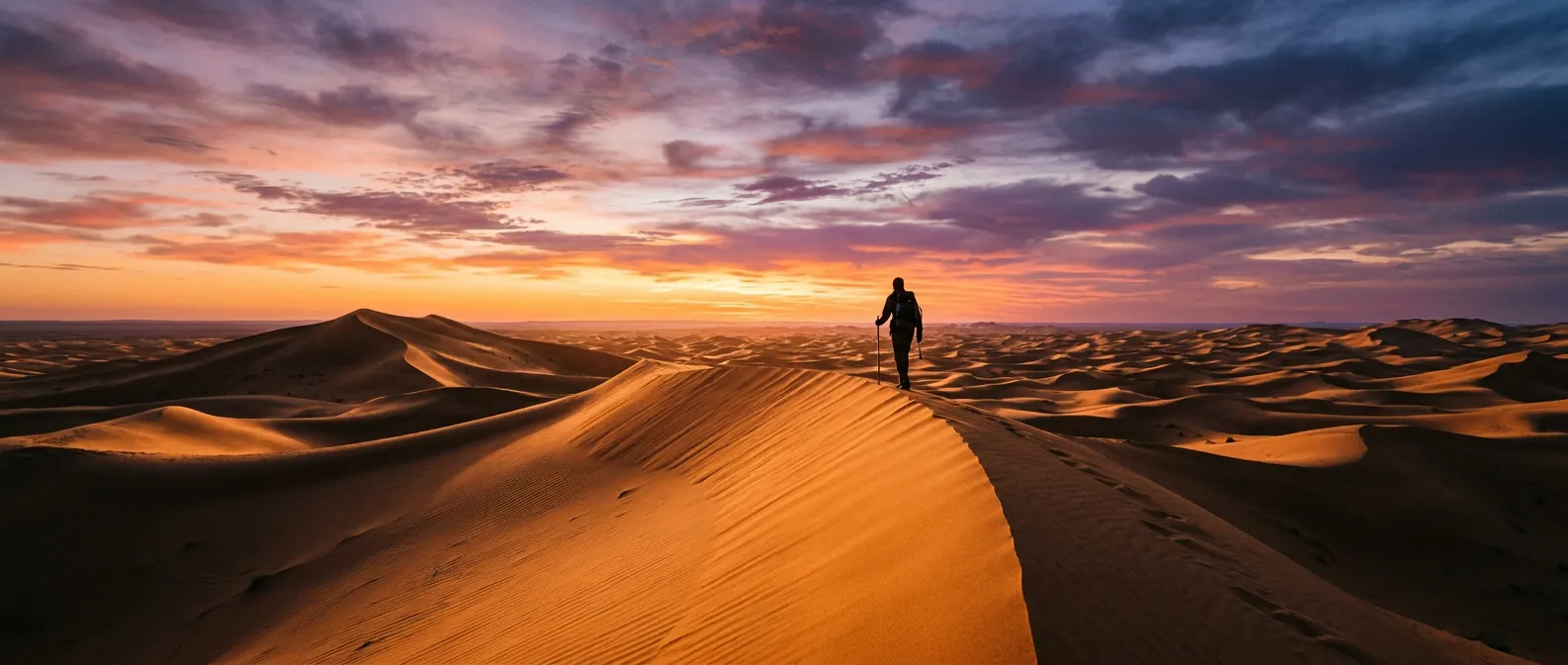
The most iconic camping destination in Morocco. Towering orange dunes reaching 150 meters provide the backdrop for unforgettable nights beneath the Milky Way. Over 100 camps line the western edge of the dune field, ranging from basic bivouacs where you sleep on mats under the stars to ultra-luxury glamping with king-size beds, en-suite bathrooms, and private chefs. The sunrise and sunset light shows here are legendary, painting the dunes in shades of gold, rose, and deep purple.
October-April
400-8,000+ MAD/night
Merzouga (0 km) / Rissani (35 km)
700m
- Tallest sand dunes in Morocco (150m)
- Bortle 1-2 dark sky rating for stargazing
- Gnaoua music at Khamlia village nearby
- Camel trekking into the dune field
- Sandboarding on pristine slopes
MountainHigh Atlas Mountains
Jebel Toubkal Base Camp
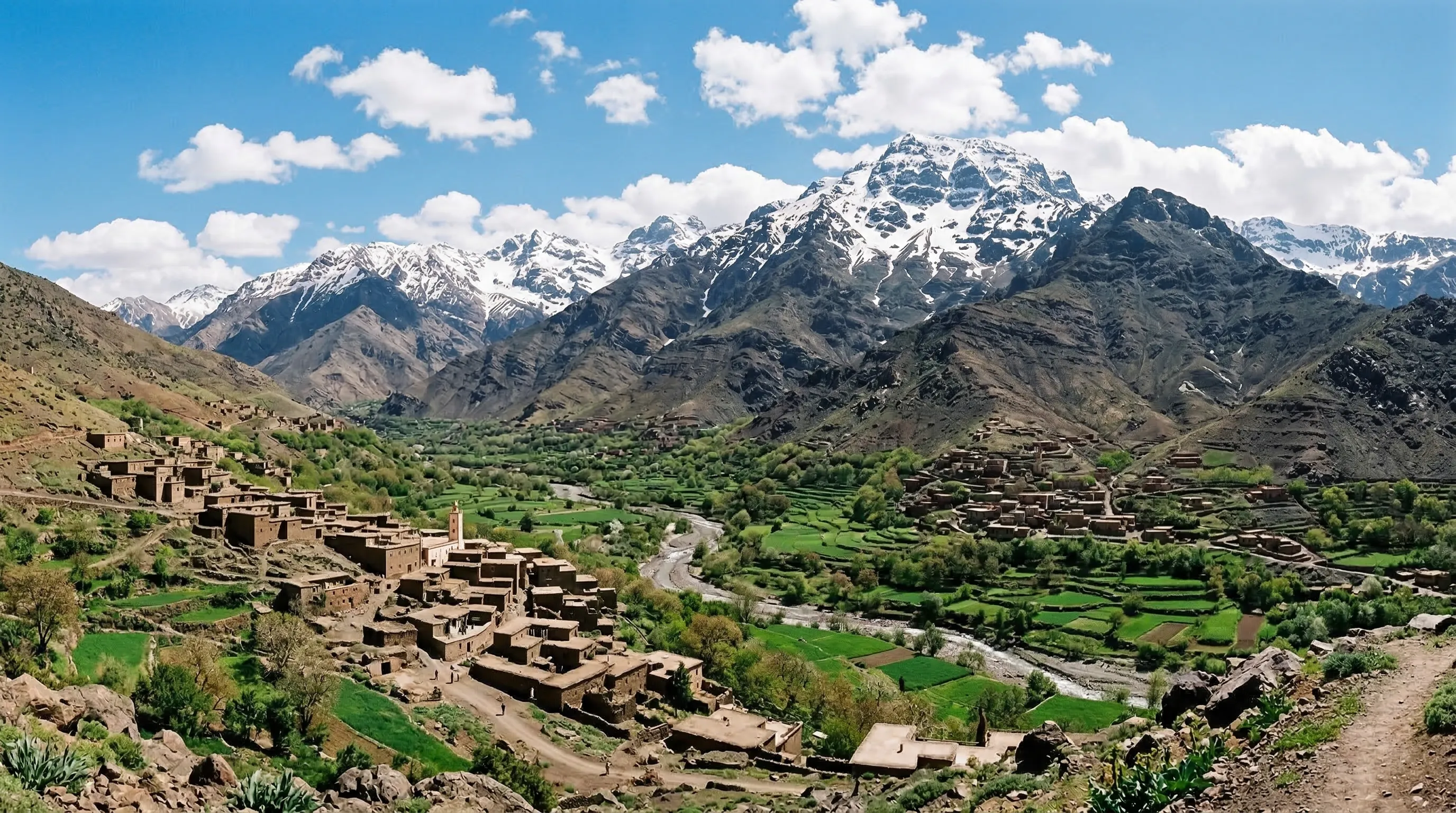
The base camp for North Africa's highest peak sits at 3,207 meters in a dramatic cirque of rock and scree. The Toubkal Refuge serves as the primary overnight point, but wild camping is permitted in the surrounding area during summer months. The scenery is raw and alpine, with views across the Atlas range stretching to the Anti-Atlas on clear days. In spring, the lower slopes come alive with wildflowers, while winter brings serious snow and ice that transforms the mountain into a genuine mountaineering challenge.
April-June, September-October
150-500 MAD/night (refuge), Free (wild camping)
Imlil (9 km trail)
3,207m (refuge)
- Gateway to Mount Toubkal (4,167m)
- Alpine scenery above the treeline
- Lac d'Ifni on the extended circuit
- Berber villages on approach from Imlil
- Spring wildflower meadows at lower elevations
GorgeEastern High Atlas
Todra Gorge
A spectacular limestone canyon where sheer walls rise 300 meters on either side of a narrow river passage. Camping at the base of the gorge or in the wider valley upstream offers a dramatic natural amphitheater experience. The gorge is also a world-class rock climbing destination with over 150 bolted routes. At dawn, the first light creeps down the east-facing walls in a golden curtain that photographers travel thousands of miles to capture. Several organized campsites sit near the gorge mouth, while wilder camping options lie further up the valley.
March-May, September-November
50-300 MAD/night
Tinghir (14 km)
1,400m
- 300m sheer limestone canyon walls
- World-class rock climbing (150+ routes)
- River swimming in summer months
- Palmeries and Berber villages upstream
- Dawn light photography in the gorge
ValleyCentral High Atlas
Dades Valley & Gorge
The Dades Valley stretches from Ouarzazate eastward, carved by the Dades River through a landscape of red rock formations, crumbling kasbahs, and terraced almond orchards. The gorge section features the famous serpentine road with its hairpin bends climbing through dramatic rock towers. Camping in the valley offers solitude among some of Morocco's most extraordinary geology. The "Monkey Fingers" rock formations near Tamellalt are particularly surreal, rising like organ pipes from the valley floor.
March-May, September-November
50-400 MAD/night
Boumalne Dades (25 km to gorge)
1,500-1,800m
- Dramatic red rock formations (Monkey Fingers)
- Famous serpentine road through the gorge
- Ancient kasbahs dotting the valley
- Almond blossom season (February)
- Rose harvest in nearby Kelaat M'Gouna (May)
ValleySouss-Massa (near Agadir)
Paradise Valley
A hidden gem tucked into the western foothills of the Anti-Atlas, Paradise Valley is a series of natural rock pools, waterfalls, and palm-shaded swimming holes connected by a winding river gorge. The valley feels almost tropical, with oleander, carob, and argan trees lining the pools. Camping here is unofficial but widely practiced on the flat terraces above the river. The water is crystal clear and deep enough for cliff jumping in several spots. It is a favorite escape for surfers and travelers based in Agadir or Taghazout.
April-October
Free (wild camping) / 50-100 MAD (local sites)
Agadir (30 km) / Taghazout (20 km)
300-500m
- Natural rock pools and swimming holes
- Cliff jumping into deep turquoise pools
- Lush palm and argan tree canopy
- Only 30 minutes from Agadir/Taghazout
- Peaceful riverside wild camping

WaterfallMiddle Atlas
Ouzoud Falls
Morocco's most spectacular waterfall plunges 110 meters in three tiers surrounded by olive groves and red cliff faces. The mist from the falls creates a microclimate of lush vegetation and rainbows. Several campgrounds and guesthouses sit near the rim, and it is possible to camp on the plateau above the falls for stunning sunset views. Barbary macaques inhabit the cliffs and are a constant source of entertainment. The base of the falls has a natural swimming pool that is refreshing in summer heat.
March-June, September-November
30-200 MAD/night
Azilal (32 km)
900m
- 110-meter triple-tiered waterfall
- Barbary macaque colony on the cliffs
- Rainbow mist at the waterfall base
- Olive grove campgrounds near the rim
- Natural swimming pool at the base
DesertDeep Sahara (M'Hamid)
Erg Chigaga
Morocco's largest and most remote dune field stretches 40 km long and 15 km wide, with dunes reaching 300 meters. Accessible only by 4x4 or multi-day camel trek from M'Hamid El Ghizlane, Erg Chigaga offers the kind of desert solitude that Erg Chebbi can no longer match. Fewer than a dozen camps operate here, and it is entirely possible to have a dune field the size of a small country to yourself. The silence is total and the night sky rivals the best observatories on Earth.
October-April
600-6,000 MAD/night
M'Hamid El Ghizlane (50 km off-road)
450m
- Morocco's largest dune field (40 km long)
- Dunes up to 300 meters high
- True wilderness with minimal camps
- 4x4 or camel-only access
- Taragalte Music Festival (October)
BeachAtlantic Coast (South)
Legzira & Sidi Ifni Coast
The dramatic red stone arches of Legzira Beach create one of the most photogenic camping backdrops in all of Morocco. While one of the two original arches collapsed in 2016, the remaining arch and the surrounding cliffs of layered red and ochre sandstone are still breathtaking. The beach stretches for kilometers with virtually no development. Wild camping on the sand or the cliff tops is common among surfers and overlanders. Nearby Sidi Ifni, a former Spanish colonial town, provides supplies and a charming Art Deco atmosphere.
Year-round (best April-October)
Free (wild camping)
Sidi Ifni (10 km)
0-50m
- Iconic red stone natural arch
- Kilometers of empty beach
- Reliable surf breaks nearby
- Sidi Ifni's Art Deco colonial architecture
- Spectacular sunsets over the Atlantic
Premium Experiences
Luxury Glamping in Morocco
For those who want the magic of sleeping outdoors without sacrificing comfort. These camps offer king-size beds, gourmet dining, and private bathrooms in some of the most spectacular settings on Earth.
5/5
2,500-5,000 MAD/night
Scarabeo Camp
Agafay Desert, near Marrakech
Set against the stark beauty of the Agafay stone desert with the snow-capped Atlas Mountains as a backdrop, Scarabeo Camp is the most accessible luxury camping experience in Morocco. Just 40 minutes from Marrakech, it offers an authentic desert atmosphere without the 10-hour drive to the Sahara. Each tent is individually designed with Berber textiles, vintage furniture, and private terraces. The communal areas feature fire pits, a pool, and a restaurant serving farm-to-table Moroccan cuisine. At night, the camp goes dark and the stargazing is remarkable given the proximity to the city.
- Only 40 minutes from Marrakech
- Designer Berber tents with private terraces
- Swimming pool with Atlas Mountain views
- Farm-to-table restaurant and bar
Best for: Couples, luxury seekers, short trips from Marrakech
5/5
3,000-6,500 MAD/night
Desert Luxury Camp Merzouga
Erg Chebbi, Merzouga
One of the highest-rated luxury camps in the Erg Chebbi dune field, this camp sets the standard for Sahara glamping. Each tent features a proper king-size bed with premium linens, hand-woven Berber carpets, lantern lighting, and a private en-suite bathroom with hot shower. The camp sits deep enough in the dunes that you cannot see any roads, buildings, or other camps. Dinner is a multi-course affair prepared by a dedicated chef, served by candlelight with the dunes glowing under the moonlight.
- Private tents with king beds and en-suite bathrooms
- Deep dune location with zero visual pollution
- Multi-course gourmet dinner by candlelight
- Private sunrise and sunset camel treks
Best for: Honeymooners, photographers, bucket-list travelers
5/5
4,500-9,000 MAD/night
Kam Kam Dunes
Erg Chebbi, Merzouga
An ultra-premium camp that pushes the boundaries of what is possible in the middle of a sand desert. The signature experience is the private candlelit dinner on top of a dune, accessible only by camel, where your table for two is set with white linen and silverware against a backdrop of infinite sand. The tents are among the largest in any Sahara camp, with separate living and sleeping areas, heated in winter, and each decorated with museum-quality Berber antiques.
- Private dune-top dining experience
- Oversized luxury tents with living areas
- Heated tents in winter months
- Museum-quality Berber antique decor
Best for: Ultra-luxury travelers, special celebrations, proposals
4/5
1,200-3,500 MAD/night
Terres d'Amanar
Atlas Mountains, near Marrakech
An eco-lodge and adventure park set in a 12-hectare forest of pine, olive, and carob trees in the Atlas foothills, just one hour from Marrakech. Accommodation includes treehouse cabins, Berber tents, and traditional stone lodges. The adventure activities range from zip-lining and rock climbing to mountain biking and horse trekking. It is one of the best family glamping options in Morocco, combining comfortable accommodation with genuine outdoor adventure in a safe, managed environment.
- Treehouse cabins in a pine forest
- Zip-line and adventure park on-site
- Mountain biking and horse trekking
- Traditional Berber cooking workshops
Best for: Families, adventure seekers, eco-conscious travelers
5/5
3,500-7,000 MAD/night
Erg Chigaga Luxury Desert Camp
Erg Chigaga, M'Hamid
The most exclusive camp in Morocco's largest dune field. Reaching this camp requires a 2-hour 4x4 drive across the stony desert from M'Hamid, which keeps visitor numbers low and the experience genuinely remote. Each of the 12 tents is a private suite with handcrafted furniture, thick Berber carpets, and full en-suite facilities including hot rain showers. The isolation means zero light pollution and some of the best stargazing conditions on the African continent.
- Only 12 tents for maximum exclusivity
- Full en-suite with hot rain showers
- 2-hour 4x4 transfer included in price
- Multi-day camel expeditions available
Best for: Adventurers seeking luxury, solitude lovers, photographers
4/5
800-2,500 MAD/night
Bab El Oued Eco Lodge
Taghazout, Atlantic Coast
A boho-chic surf and glamping retreat perched on the cliffs above one of Morocco's best surf breaks. The lodge combines Moroccan architecture with coastal bohemian style, offering bell tents, yurts, and surf shacks with ocean views. The rooftop terrace is the social hub, with yoga sessions at sunrise and communal dinners at sunset. The surf guides know every break from Taghazout to Imsouane, and boards and wetsuits are available for all levels.
- Clifftop location above premium surf breaks
- Bell tents and yurts with ocean views
- Daily surf guiding and equipment rental
- Rooftop yoga at sunrise
Best for: Surfers, yoga practitioners, digital nomads
Know the Difference
Bivouac vs Established Campsites
Understanding your options is the first step to planning the right camping experience in Morocco.
Bivouac (Wild Camping)
Setting up your own tent or sleeping under the stars in an undeveloped location. You carry your own gear and supplies, choose your own spot, and are fully self-sufficient.
Advantages
- Complete freedom to camp where you choose
- Free (no fees in most locations)
- Solitude and connection with nature
- Flexibility to move daily
- Authentic wilderness experience
Considerations
- No facilities (water, toilets, showers)
- Must carry all gear and supplies
- Safety responsibility is entirely yours
- Requires experience and preparation
- No security for belongings
Best for: Experienced campers, overlanders, budget travelers, trekkers
Established Campsite
Organized camping grounds with marked pitches, basic facilities, and often a guardian or manager. Morocco has a network of municipal and private campsites, particularly along the major tourist routes.
Advantages
- Running water, toilets, and sometimes hot showers
- Security (often gated with a guardian)
- Electricity hookups for campervans
- Social atmosphere with other travelers
- Local knowledge from campsite staff
Considerations
- Fees range from 30-150 MAD per person/night
- Can be basic and poorly maintained
- Less flexibility in location choice
- May be noisy with other campers
- Peak season crowding at popular sites
Best for: Families, campervans/overlanders, first-time campers, those wanting facilities
Regulations
Wild Camping Rules & Regulations
What you need to know about camping freely in Morocco.
1
Wild camping is generally tolerated across Morocco
There is no specific law prohibiting camping in the open countryside. Moroccan authorities are generally relaxed about camping in rural and desert areas. However, "tolerated" is not the same as "legally guaranteed." Use common sense and respect for the land.
2
Always ask permission near villages or private land
If you are near a settlement, ask the nearest resident or village elder for permission. This is both respectful and practical, as it ensures locals know you are there and may even offer hospitality, directions to water, or warnings about local hazards.
3
National parks and protected areas may have restrictions
Toubkal National Park, Souss-Massa National Park, and other protected areas may require permits or restrict camping to designated areas. Check with local park offices before setting up camp. Fines exist but are rarely enforced.
4
Beach camping is common but varies by location
Remote Atlantic beaches south of Agadir are popular for wild camping, especially among overlanders. Some popular beaches near tourist towns have informal restrictions. Avoid camping on beaches within municipal boundaries of towns.
5
Military and border zones are strictly off-limits
Areas near the Algerian and Mauritanian borders, and zones marked as military, are restricted. This applies particularly to the eastern Sahara and parts of the Western Sahara. Obey all signage and checkpoints.
6
Leave No Trace principles are expected
Morocco has a growing litter problem in natural areas. Pack out all trash, bury human waste at least 20 cm deep and 60 meters from water sources, and leave your campsite cleaner than you found it. This is non-negotiable for responsible camping.
When to Go
Seasonal Camping Guide
Morocco's camping season varies dramatically by region. Here is when to go where for the best experience.
Autumn
September - November
18-32C day / 8-20C night
Desert
Perfect. Warm days, cool nights, clear skies. The absolute best window. October is peak season, so book desert camps well in advance.
Mountains
Excellent. Comfortable hiking temperatures, stable weather, and the autumn colors in walnut and poplar groves are stunning. September can still be warm at lower elevations.
Coast
Great. Water is still warm from summer, beach crowds thin out, and the surf season begins in earnest. Perfect for beach camping without the August heat.
Highlights
Date harvest in the oases (Oct-Nov)Taragalte Festival at Erg Chigaga (Oct)Atlas autumn foliageSurf season begins
Spring
March - May
16-30C day / 6-18C night
Desert
Excellent. Comfortable temperatures and occasional wildflowers in the oases. Slightly less crowded than autumn and prices may be lower.
Mountains
Best for lower elevations and gorges. Higher passes may still have snow until May. Wildflowers carpet the valleys in April. Some treks above 3,000m require snow gear until late May.
Coast
Good. Pleasant temperatures for beach camping. Water is still cool (16-19C) but warms through the season. Almond and argan blossoms inland.
Highlights
Almond blossom season (Feb-Mar)Rose harvest in Kelaat M'Gouna (May)Atlas wildflower meadows (Apr)Comfortable desert temps
Winter
December - February
12-22C day / 0-10C night
Desert
Cold nights (can drop below freezing) but pleasant days. Pack serious warm layers for evenings. Desert camps provide extra blankets. Fewer tourists means better deals.
Mountains
Snow at higher elevations makes many treks impassable without winter gear. Lower valleys and gorges remain accessible and pleasantly cool. Toubkal becomes a winter mountaineering objective.
Coast
Mild and pleasant for camping. Daytime temperatures are comfortable. Rain is possible but brief. Atlantic storms bring the biggest surf swells of the year.
Highlights
Cheapest camp prices of the yearSnow-capped Atlas photographyBig wave surf seasonClearest desert skies
Summer
June - August
30-48C day / 18-30C night
Desert
Dangerously hot. Daytime temperatures exceed 45C regularly. Most Sahara camps close entirely June-August. Strongly advised against for desert camping.
Mountains
The best and only comfortable camping zone in summer. High Atlas and Rif mountains offer cool temperatures and green landscapes. This is peak trekking season for Toubkal and M'goun.
Coast
Hot inland but the Atlantic coast is tempered by ocean breezes. Beach camping is popular but crowded, especially with Moroccan families during school holidays (July-August).
Highlights
High Atlas trekking seasonBeach camping on the coastMountain festivalsEscape the heat at altitude
Packing List
Essential Camping Gear for Morocco
What to bring, what to buy locally, and what you can leave at home.
Shelter & Sleep
Tent (3-season minimum)
Freestanding preferred for sandy/rocky ground where stakes may not hold. A 4-season tent is needed for winter Atlas camping above 2,500m.
Sleeping bag
Desert: comfort rating 5C for winter, 15C for spring/autumn. Mountains: comfort rating -5C to -10C for winter, 5C for summer.
Sleeping pad
Inflatable pad for comfort. Closed-cell foam pad as backup (doubles as camp seat). R-value 3+ for desert winter, 5+ for mountain winter.
Pillow (compressible)
Luxury item but transformative for sleep quality. Stuff sack filled with clothes works as a free alternative.
Cooking & Water
Camping stove + fuel
Butane canisters (Butagaz brand) are available at hardware stores and some grocery shops in Moroccan towns. Screw-top canisters are rarer. Bring an adapter if using international brands.
Cookware set
A small pot, pan, and utensil set is sufficient. Titanium saves weight for trekking. Consider a Moroccan tagine pot for car camping authenticity.
Water purification
Essential. Carry purification tablets (Micropur or Aquatabs) or a filter (Sawyer Squeeze / LifeStraw). Municipal tap water in cities is generally safe but taste varies. Stream water in mountains should always be treated.
Water containers
Carry minimum 4L per person per day in the desert. Collapsible water containers (10-20L) for base camp. Hard-sided Nalgene bottles for daily use.
Clothing
Layering system
Desert temperatures swing 25-30C between day and night. Pack lightweight sun protection for day and warm fleece/down for evenings. Merino wool base layers work in all conditions.
Sun protection clothing
Lightweight long-sleeve shirt with UPF rating, wide-brim hat, and a cheche (desert headscarf, buy locally for 30-50 MAD). Buff/neck gaiter for dust protection.
Sturdy footwear
Hiking boots for mountains, sandals for desert camps, and closed-toe water shoes for gorge swimming. Break in boots before your trip.
Rain jacket
Lightweight packable rain shell. Useful for Atlas Mountains spring/autumn and unexpected coastal weather. Not needed for Sahara camping.
Safety & Navigation
Headlamp + spare batteries
Essential for every camping scenario. Red light mode preserves night vision for stargazing. Rechargeable models with USB-C are most practical.
First aid kit
Include blister treatment, antihistamines, electrolyte packets, antiseptic, bandages, tweezers, and any personal medications. Pharmacies in Moroccan towns are well-stocked for resupply.
Navigation tools
Downloaded offline maps (Maps.me or Google Maps offline) are essential. Physical compass as backup. GPS tracks for remote treks. Cell coverage is spotty in mountains and nonexistent in deep desert.
Emergency whistle + mirror
Universal distress signal: 6 blasts per minute. A signal mirror can be seen for 30+ km in the desert. Weigh almost nothing and could save your life.
Pro Tip: Buy Locally
Morocco's medina markets sell excellent camping supplies at a fraction of Western prices. The cheche (desert headscarf) sold in every souk for 30-50 MAD is the single most useful piece of camping gear in Morocco. It serves as sun protection, dust mask, towel, pillow, and turban. Wool blankets from Berber cooperatives are warm, durable, and make great souvenirs. Butane gas canisters (Butagaz) are available at hardware stores in every town for 15-25 MAD. Marrakech has several outdoor equipment shops near Place Jemaa el-Fna for last-minute needs.
Stay Safe
Safety Tips for Camping in Morocco
Morocco is a safe country for outdoor activities, but the natural environment demands respect and preparation.
Wildlife
- Scorpions are present in both desert and mountain environments. Always shake out shoes, clothing, and sleeping bags before use. Use a headlamp when walking at night.
- Snakes (horned vipers in the desert, Montpellier snakes in mountains) are shy and rarely encountered. Watch where you step and place your hands when scrambling over rocks.
- Barbary macaques near Ouzoud and in the Middle Atlas can be aggressive around food. Secure all food in your tent or vehicle and never feed them directly.
- Feral dogs near rural settlements can be territorial at night. A strong headlamp beam and firm voice are usually sufficient to deter them. Carry a walking stick if concerned.
Weather
- Desert temperatures can drop below freezing in winter and exceed 50C in summer. Always check forecasts and pack for both extremes during shoulder seasons.
- Flash floods are a serious risk in gorges and dry riverbeds (oueds), especially from October to April. Never camp in a wadi or dry riverbed. Even distant rainfall can cause sudden flooding.
- Sandstorms can arise with little warning in the Sahara. If caught in one, turn your back to the wind, cover your face, and wait. They rarely last more than 30 minutes but visibility drops to zero.
- Mountain weather changes rapidly. Afternoon thunderstorms are common in the Atlas from June to September. Start hikes early and plan to be off ridgelines and summits by early afternoon.
Terrain
- Loose rock and scree are common on Atlas Mountain trails. Trekking poles provide stability and reduce knee strain on descents. Gaiters keep stones out of boots.
- Soft sand in the Sahara makes walking exhausting. Expect to cover distance at one-third your normal pace. Wear gaiters or wrap ankles with a scarf to keep sand out of shoes.
- River crossings in mountain valleys can be tricky after rain. Unbuckle your backpack waist strap before crossing so you can shed it if you fall. Use trekking poles for balance.
- Cliff edges near gorges and waterfalls are often unfenced and can be undercut. Stay well back from edges, especially with children. Rock near waterfalls is often slippery with spray.
Cultural Immersion
Nomadic Camping with Berber Communities
The most memorable camping experiences in Morocco are not about the tent but about the people. Sharing a fire with Berber families connects you to traditions stretching back thousands of years.
Homestay with Berber Families
Stay with a local Berber family in their traditional home in the Atlas Mountains or desert-edge villages. You will share meals cooked on a communal fire, sleep on thick carpets in the family salon, and learn about a way of life that has persisted for millennia. These homestays are often arranged through local guides and provide a far more meaningful cultural exchange than any hotel could offer. Expect warm hospitality, endless mint tea, and possibly some help with the day's farming or herding tasks.
Cost: 200-500 MAD per person including meals. Arrange through licensed mountain guides or recommended guesthouses. Bring a small gift (sugar, tea, fruit, school supplies for children). Dress modestly. Learn a few Tamazight phrases: "Azul" (hello), "Tanmirt" (thank you).
Nomad Camp Experience
Join semi-nomadic families who still migrate with their goat herds between seasonal pastures in the Saharan fringe and the High Atlas. These are not staged tourist experiences but genuine encounters with families living as their ancestors did. You may help gather firewood, milk goats, bake bread in sand ovens, and share a meal of tagine cooked over an open fire. The experience is rustic, the hospitality is extraordinary, and the insights into traditional Amazigh life are priceless.
Best arranged through guides from Zagora, M'Hamid, or Jebel Saghro area. Cost: 300-800 MAD per person per night. Bring your own sleeping bag. Facilities are basic (no running water, no electricity). Best season: October-April when nomads are in the lower desert areas.
Communal Camping with Local Guides
Many licensed Moroccan mountain and desert guides offer multi-day camping trips where you trek together, camp together, and eat together around the same fire. These trips often include a muleteer (for carrying gear in the mountains) or cameleer (in the desert) and a cook who transforms basic ingredients into remarkable meals over a camp stove. The pace is relaxed, the conversation rich, and the insider knowledge about local plants, geology, and culture is invaluable.
Cost: 500-1,200 MAD per person per day (all-inclusive: guide, food, camping gear, mule/camel). Licensed guides carry official credentials (carte de guide). Verify through the local Bureau des Guides. Tip: 50-100 MAD per day per guide is standard.
Coastal Adventures
Beach Camping Along the Atlantic Coast
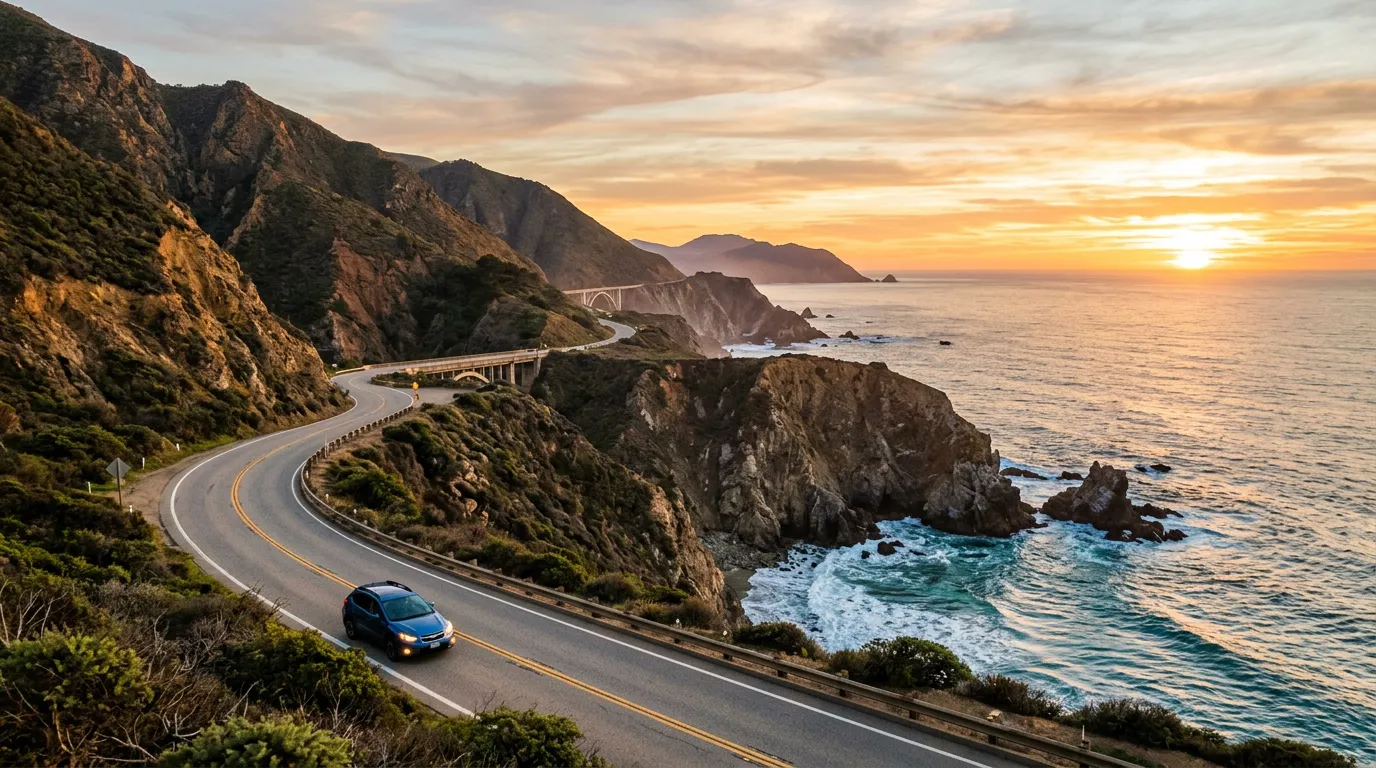
Morocco's 3,500 km coastline is dotted with wild beaches, surf breaks, and clifftop camping spots that rival anything in Europe or California.
Taghazout to Imsouane Coast
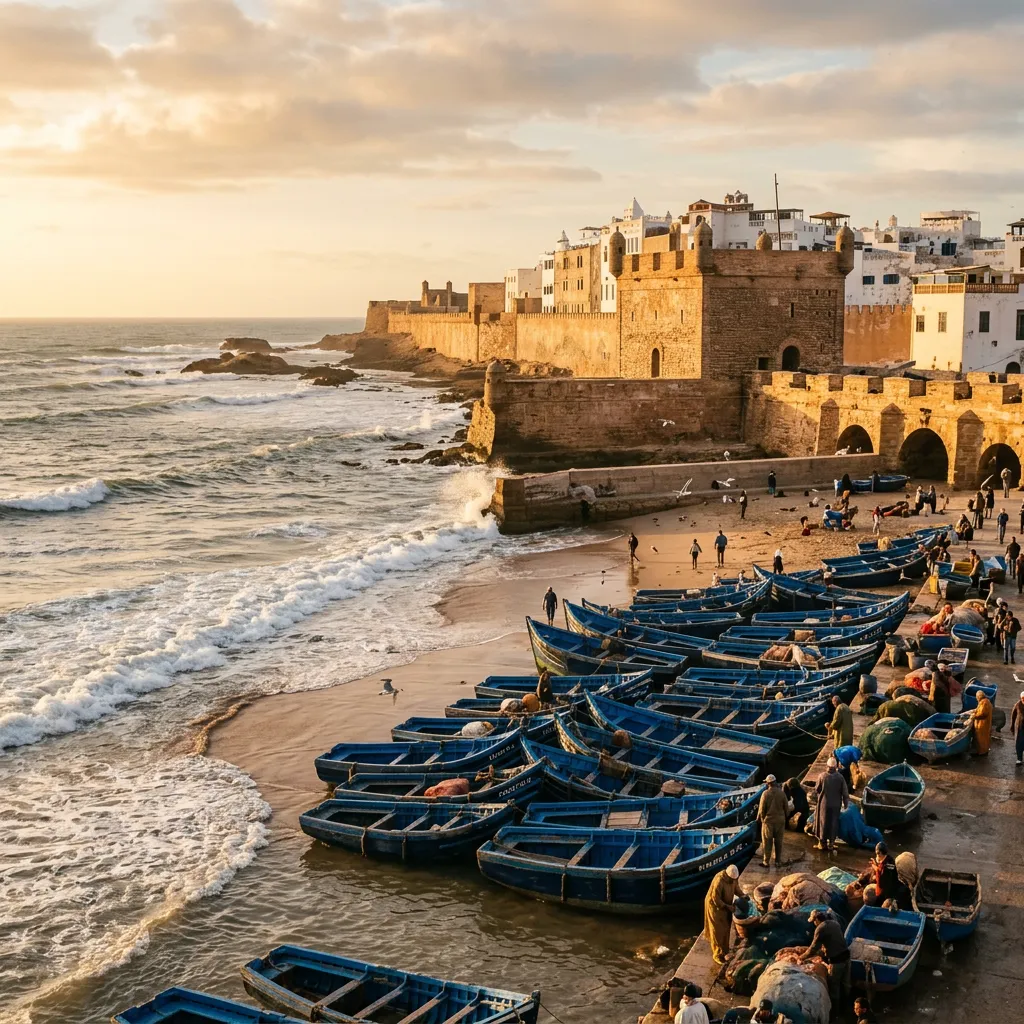
The surf coast between Agadir and Essaouira is Morocco's premier beach camping corridor. Dozens of secluded coves and long sandy beaches offer free wild camping with world-class surf right in front of your tent. The fishing village of Imsouane has one of the longest right-hand point breaks in Africa.
Best for: Surfers, vanlifers, long-term travelers
Legzira Beach
Famous for its dramatic red stone arches (one collapsed in 2016, one remains). Kilometers of empty beach south of Sidi Ifni with reliable camping conditions. Sunsets here are among the most spectacular on the Moroccan coast.
Best for: Photography, solitude seekers, overlanders
Moulay Bousselham Lagoon
A vast coastal lagoon on the Atlantic north of Rabat, renowned for birdwatching (flamingos, spoonbills, terns). Camping on the sand spit between the lagoon and the ocean offers a unique dual-water experience.
Best for: Birdwatchers, families, nature lovers
Sidi Kaouki
A windswept beach 25 km south of Essaouira popular with surfers and kiters. A handful of informal campgrounds sit behind the dunes, and the village has basic supplies and surf rentals.
Best for: Windsurfers, kitesurfers, budget travelers
Mirleft
A charming small town perched on cliffs above a series of sheltered coves. Each beach has its own character, from surf-pounded strands to calm swimming bays. The cliff-top views are extraordinary for coastal camping.
Best for: Families, mixed-activity travelers, cliff camping
High Country
Mountain Camping in the Atlas & Rif
Morocco's mountain ranges offer alpine-quality camping with a North African twist: Berber villages, walnut groves, and dramatic geological formations.
High Atlas Central (Toubkal Region)
1,500-4,167m April-October for trekking camps; December-March for experienced winter camping only
Terrain: Alpine valleys, scree slopes, glacier remnants, and dramatic cirques. Below 2,500m, walnut and almond groves line the valleys with Berber villages.
Best camping: Flat terraces along the Imlil to Toubkal trail. Azzaden Valley offers beautiful riverside camping with fewer trekkers. The Tacheddirt Plateau has wide open camping with 360-degree mountain views.
Key Areas
Imlil Valley, Toubkal Refuge area, Lac d'Ifni, Azzaden Valley, Tacheddirt Plateau
Rif Mountains (Chefchaouen Region)
500-2,456m (Jebel Tidiquin) April-June and September-November. Winter is wet and cold. Summer can be hot at lower elevations.
Terrain: Dense cedar and oak forests, limestone ridges, deep river valleys, and the distinctive blue-washed towns. More humid than the Atlas with a Mediterranean climate.
Best camping: Forest clearings in Talassemtane offer the most atmospheric camping in the Rif, with ancient cedars overhead and the sound of running water. The Akchour area has riverside camping near the waterfalls.
Key Areas
Talassemtane National Park, Akchour Waterfalls trail, God's Bridge, Jebel Kelti, Bab Taza forests
Jebel Saghro
1,200-2,712m October-April (too hot in summer). This is the premier winter trekking and camping destination in Morocco.
Terrain: Volcanic desert mountains with dramatic basalt pillars, natural rock arches, and boulder-strewn plateaus. The landscape resembles Arizona more than Africa. Sparse vegetation except after rain.
Best camping: The wide valleys around Bab n'Ali offer flat camping with extraordinary rock scenery. The Handour Valley has sheltered spots between boulder fields. This is nomad country, and encounters with goat herds are common.
Key Areas
Bab n'Ali (iconic rock formation), Handour Valley, Tizi n'Ouarg pass, Amalou n'Mansour
M'goun Massif & Central Atlas
1,800-4,068m June-September for high altitude; April-November for lower valleys
Terrain: High plateaus, deep gorges, and North Africa's second-highest peak. The M'goun Gorge is one of Morocco's most spectacular canyoning routes. Nomadic Berber camps dot the highland pastures.
Best camping: The Ait Bouguemez Valley floor offers idyllic camping among fields and walnut groves with mountain walls on all sides. The highland plateaus above 3,000m provide wild alpine camping with zero facilities.
Key Areas
M'goun summit circuit, Arous Gorge, Ait Bouguemez Valley (Happy Valley), Imilchil plateau
For Every Traveler
Family & Solo Camping Tips
Camping with Families
- Choose established campsites or organized glamping over wild camping for safety, facilities, and social interaction for children.
- The Agafay Desert near Marrakech is ideal for a family introduction to desert camping, as it is close to medical facilities and not as extreme as the Sahara.
- Terres d'Amanar in the Atlas foothills combines glamping with a full adventure park (zip-lines, rope courses, pony rides) and is only one hour from Marrakech.
- Pack familiar snacks and foods for children. Moroccan cuisine is generally mild but tagines may be too spicy for young palates. Most camps can prepare plain options if asked.
- Carry a dedicated first aid kit for children including fever medication, oral rehydration salts, antihistamine cream for insect bites, and sun protection.
- Avoid desert camping with children under 5 during winter (too cold at night) or summer (dangerously hot). Spring and autumn are the safest seasons.
- Beach camping at places like Essaouira or Mirleft offers the easiest family camping: warm weather, swimming, and nearby town amenities.
- Pre-book glamping accommodations with real beds for younger children who may not sleep well in tents on the ground.
Solo Camping
- Share your detailed itinerary with someone at home and check in regularly when you have cell coverage.
- Morocco is generally safe for solo camping, but avoid extremely remote areas without telling someone your plans.
- Join organized group treks for Atlas Mountain camping. The Bureau des Guides in Imlil, Marrakech, and Ouarzazate can connect you with licensed guides and other trekkers.
- For solo desert camping, always go with an organized camp or guide. The Sahara is genuinely dangerous if you get lost, as landmarks shift with the sand.
- Hostels in Marrakech, Fes, and Merzouga often organize group camping trips that are perfect for solo travelers seeking company.
- As a solo female camper, organized camps and established campsites are recommended over wild camping. Morocco is generally safe but solo women may attract unwanted attention in very remote areas.
- Carry a personal locator beacon (PLB) or satellite messenger (Garmin inReach) if camping solo in remote mountain or desert areas without cell coverage.
- Learn basic Arabic or French greetings. Even a few words dramatically change how local people interact with you and can open doors to invitations and assistance.
Budget Guide
Budget Camping in Morocco
Morocco is one of the most affordable camping destinations in the world. Here is what things cost and how to stretch your budget.
Wild camping / bivouac
Everywhere except restricted areas
Municipal / basic campsite
Per person, tent pitch included
Private campsite (with facilities)
Per person, hot shower and electric
Budget desert camp (Sahara)
Includes dinner, breakfast, camel ride
Mid-range desert camp
Private tent, en-suite, meals
Luxury glamping
Full luxury with all amenities
Butane gas canister
Butagaz brand, hardware stores
Cheche (desert headscarf)
Essential multi-purpose gear
Budget Camping Daily Estimate
A budget camper carrying their own gear and cooking their own food can comfortably travel Morocco for 150-250 MAD per day (15-25 USD). This covers occasional campsite fees, food from local markets (fresh bread 1-3 MAD, vegetables from souks, tagine ingredients for 30-50 MAD), transport between locations on local buses, and the occasional hot shower at a campsite. Wild camping with your own food and water can bring costs close to zero outside of transport.
Common Questions
Camping in Morocco: FAQs
Prices, seasons, regulations and safety, answered for campers and glampers alike.
How much does camping in Morocco cost?
Wild camping (bivouac) is free in most areas. Municipal and basic campsites charge around 30-80 MAD per person per night, and private sites with facilities 60-150 MAD. Sahara desert camps run from about 400-800 MAD per night for a budget camp (including dinner, breakfast and a camel ride), 1,200-2,500 MAD for mid-range, and 2,500-9,000 MAD for luxury glamping with en-suite tents and gourmet dining.
Is wild camping legal in Morocco?
Wild camping is generally tolerated across rural and desert Morocco, with no specific law banning it, though "tolerated" is not the same as legally guaranteed. Always ask permission near villages or private land, avoid military and border zones (especially near the Algerian and Mauritanian frontiers), check rules in national parks like Toubkal, and follow Leave No Trace principles by packing out all rubbish.
When is the best time to camp in Morocco?
Autumn (September to November) is the best all-round window, with October the peak for desert camps. Spring (March to May) is also excellent, especially for the gorges and lower mountains. Summer (June to August) is mountain-only, as the Sahara is dangerously hot and most desert camps close. Winter (December to February) gives the cheapest prices and clearest desert skies, but nights can drop below freezing.
What gear do I need for camping in Morocco?
Essentials are a 3-season (or 4-season for winter Atlas) tent, a sleeping bag rated for big day-night temperature swings, an insulated sleeping pad, a headlamp, water purification, and at least 4 litres of water per person per day in the desert. A cheche (desert headscarf, 30-50 MAD in any souk) is the single most useful local buy. Butane gas canisters are widely available in town hardware shops.
Is camping in Morocco safe, including for families and solo travellers?
Morocco is generally safe for camping. Families are best served by established campsites and glamping such as the Agafay Desert near Marrakech or Terres d'Amanar in the Atlas. Solo travellers, especially solo women, are advised to use organized camps or guided group treks rather than remote wild camping. Watch for scorpions (shake out shoes and bags), never camp in dry riverbeds due to flash-flood risk, and carry a first aid kit.
Do I need to book desert camps in advance?
Yes, especially for October (peak season) and for the more remote or luxury camps in Erg Chebbi and Erg Chigaga. Reaching Erg Chigaga requires a 2-hour 4x4 transfer from M'hamid, which is usually arranged as part of the camp booking. Booking ahead secures the better camps and the deep-dune locations away from roads and other camps.
Ready to Camp in Morocco?
Whether you choose a luxury desert glamping tent with a private chef or a simple bivouac under the Atlas stars, camping in Morocco will give you memories that last a lifetime. The key is choosing the right season, the right region, and the right level of comfort for your travel style.
Choose Your Style
Luxury glamping, established campsite, or wild bivouac. Morocco has options for every budget and comfort level.
Pick Your Season
Autumn (Oct-Nov) is the sweet spot for most regions. Summer is mountain-only. Winter is beautiful but cold at night.
Plan Your Route
Combine desert, mountains, and coast for the ultimate camping road trip through Morocco.
More Outdoor Adventure Guides
Desert Adventures
Explore thrilling Sahara excursions from camel treks to 4x4 dune bashing across Morocco's vast desert landscapes.
Stargazing Guide
Discover Morocco's best dark-sky sites for unforgettable nights under the Milky Way in the Sahara and Atlas Mountains.
Road Trip Routes
Plan epic driving itineraries through mountain passes, coastal roads, and desert highways across Morocco.
Atlas Mountains
Your complete guide to trekking, villages, and adventures in the High Atlas, Middle Atlas, and Anti-Atlas ranges.
Overlanding Guide
Everything you need for self-sufficient vehicle-based travel through Morocco's most remote and scenic terrain.
Best Time to Visit
Season-by-season breakdown of weather, crowds, and prices to help you pick the perfect time for your trip.