Discovering...
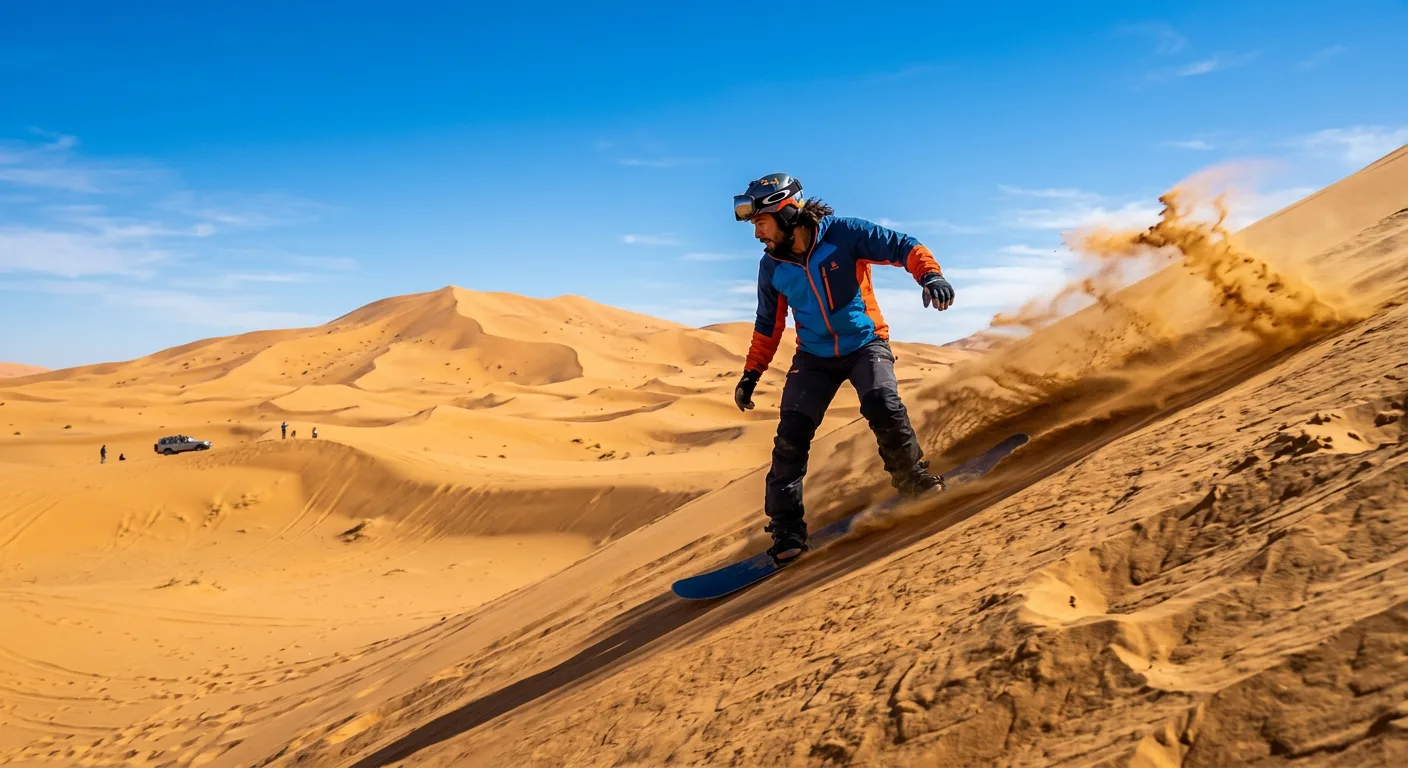
Desert Adventure
Sandboarding the Sahara
Ride the towering dunes of Merzouga and Erg Chebbi on a board -- surfing golden sand at sunrise and sunset in one of the world's most dramatic desert landscapes.
From 200
MAD standalone
1-2 hrs
Session time
Oct-Apr
Best season
Surfing Sand, Not Waves
Sandboarding in Morocco costs from around 200 MAD for a standalone session (often free at desert camps), needs no experience, takes 1 to 2 hours, and is best at sunrise or sunset between October and April on the dunes of Merzouga.
Sandboarding takes the basic principle of snowboarding and transplants it to the Sahara Desert. You strap your feet to a board (or simply sit on one), point yourself downhill, and slide down dunes that can reach 150 meters or more in height. The sensation is unlike anything else -- faster than you expect, quieter than snow, with fine golden sand spraying in your wake and nothing but empty desert stretching to the horizon in every direction.
Morocco is one of the world's best destinations for sandboarding thanks to its accessible, towering dune fields. Erg Chebbi near Merzouga is the most popular site, with dunes rising dramatically from the desert floor just minutes from comfortable hotels and desert camps. For a more remote and raw experience, the massive dunes of Erg Chigaga offer solitude and scale that rival anywhere on Earth.
The activity requires no prior experience. Most sessions begin with a few runs on smaller dunes to get a feel for the board, then progress to steeper faces as your confidence grows. The biggest challenge is not the boarding itself but the climb back up -- trudging up a steep sand dune in desert heat is a genuine workout. This is why sunrise and sunset sessions are strongly recommended, when temperatures are manageable and the light turns the sand into liquid gold.
Where to Ride
Top Sandboarding Destinations
Site 1Beginner to Intermediate
Erg Chebbi (Merzouga)
Draa-Tafilalet
from 200 MAD standalone
Up to 150 meters
Best: Sunrise and sunset
Erg Chebbi is Morocco's most famous sand sea and the premier sandboarding destination in the country. The dunes rise abruptly from the flat, rocky hamada on the outskirts of Merzouga, creating a dramatic wall of golden-orange sand that stretches roughly 22 kilometers from north to south and 5 kilometers east to west. The tallest dunes reach an astonishing 150 meters, offering long, thrilling descents for confident boarders. For beginners, there are countless smaller dunes in the 20-50 meter range that provide a gentler introduction. The sand here is fine-grained and soft, making falls relatively forgiving. Most desert camps and hotels in Merzouga include sandboarding in their activity offerings, or you can arrange a standalone session through village guides. The golden hour light at Erg Chebbi -- both sunrise and sunset -- transforms the dunes into an otherworldly landscape of light and shadow that makes for extraordinary photographs.
Morocco's tallest dunes (up to 150m) Fine soft sand ideal for boarding Included in most desert camp stays Spectacular sunrise and sunset sessions Accessible from Merzouga village
Site 2Intermediate to Advanced
Erg Chigaga
Draa-Tafilalet
Included in desert tours (from 2,000 MAD)
Up to 300 meters
Best: Early morning before heat builds
Far more remote and significantly larger than Erg Chebbi, Erg Chigaga is Morocco's greatest sand sea -- a vast wilderness of dunes covering over 100 square kilometers deep in the Sahara, accessible only by 4x4 from M'hamid El Ghizlane. The remoteness is the point: there are no hotels here, no roads, no sounds except the wind. You reach the dunes after a two-hour 4x4 journey across the stony desert, and when you arrive the silence and scale are overwhelming. The dunes here reach 300 meters, dwarfing Erg Chebbi, and the sandboarding potential is extraordinary for experienced boarders willing to climb steep faces for epic descents. The sand is coarser than at Erg Chebbi, which means faster speeds but harder impacts. Sandboarding here is typically part of multi-day desert expeditions from M'hamid, with nights spent at remote luxury or bivouac camps.
Morocco's largest dune field Dunes up to 300 meters high Total desert isolation and silence Multi-day expedition atmosphere Coarser sand for faster descents
Site 3Beginner
Tinfou Dunes (Near Zagora)
Draa-Tafilalet
from 100 MAD
30-50 meters
Best: Late afternoon
For travelers who want a taste of sandboarding without the commitment of reaching Merzouga or Erg Chigaga, the small dune field at Tinfou near Zagora offers an easy and accessible option. These isolated dunes sit right beside the main road between Zagora and M'hamid, making them a convenient stop on any Draa Valley itinerary. The dunes are modest -- topping out around 50 meters -- but they are perfect for first-timers and families with children. The sand is firm and the slopes are gentle, reducing the intimidation factor while still providing genuine sliding thrills. Several roadside operators rent boards and offer basic instruction. The dunes look particularly beautiful in late afternoon when the low sun casts long shadows across the rippled sand.
Roadside access, no 4x4 needed Perfect for beginners and families Gentle slopes and firm sand Convenient Draa Valley stop Budget-friendly option
Best Seasons for Sandboarding
The desert dictates the calendar. Summer is dangerously hot; autumn through spring is superb.
October - November
15-30C
The ideal window. Comfortable temperatures for climbing dunes, clear skies, and the sand has cooled from summer. The light is extraordinary for photography. Book desert camps in advance as this is peak season.
December - February
5-22C
Pleasantly cool days but desert nights can drop near freezing. Layer up for sunrise sessions. The dunes may have moisture from rare winter rain, which firms the sand and increases speed. Fewer tourists mean emptier dunes.
March - April
15-32C
Excellent conditions return with warming days. Occasional sandstorms (chergui) can cancel sessions but also create dramatic skyscapes. The desert wildflowers may bloom after spring rains.
May - September
30-50C+
Dangerously hot. Sand surface temperatures can exceed 60C, making climbing and falling painful. Only very early morning sessions (before 8 AM) are safe. Most operators reduce or pause sandboarding in peak summer.
What to Bring
Closed-toe shoes or boots
Sand temperature can exceed 60C in afternoon sun. Sneakers or hiking boots are essential.
Sunscreen SPF 50+
Desert sun is intense and sand reflection doubles the exposure. Reapply frequently.
Scarf or buff for face
Sand gets everywhere, especially during windy sessions. A light scarf protects your face and neck.
Sunglasses with strap
Essential for visibility. Prescription wearers should use sports straps to prevent loss.
Water (minimum 2 liters)
You will sweat more than you realize climbing dunes. Dehydration in the desert is dangerous.
Camera with lens protection
Fine sand can damage camera equipment. Use a protective bag between shots.
Photography Tips
The Sahara dunes are one of Morocco's most photogenic settings. Maximize your shots.
Golden Hour Is Everything
The first and last 45 minutes of sunlight create extraordinary shadows and textures on the dune ridgelines. Midday sun flattens the landscape and washes out colors.
Protect Your Gear
Fine Sahara sand will find its way into every opening. Keep your camera in a sealed bag between shots and avoid changing lenses in the field. A UV filter protects your front element.
Use the Ridgelines
The sharp crests of sand dunes make powerful compositional elements. Shoot along ridgelines for dramatic leading lines, or silhouette boarders against the sky from below.
Action Shots
Use burst mode or continuous shooting for boarders in motion. A shutter speed of at least 1/1000s freezes sand spray. Position yourself at the base of the dune for dramatic angles.
Heat Safety
Desert heat can be lethal. Never sandboard alone, always carry water, and stop immediately if you feel dizzy, nauseous, or stop sweating. Sunrise sessions (starting before 7 AM) are strongly recommended over midday. If the sand is too hot to touch with your hand, it is too hot to board on safely.
Good to Know
Sandboarding in Morocco: FAQs
How much does sandboarding cost in Morocco?
A standalone session with board rental and a guide starts from around 200 MAD at Erg Chebbi (Merzouga) and from about 100 MAD at the small Tinfou dunes near Zagora. At Erg Chigaga, sandboarding is usually bundled into a multi-day desert tour costing from 2,000 MAD. At many Merzouga desert camps, sandboarding is included free for guests.
Do I need experience to go sandboarding?
No experience is needed. Most sessions start with a few runs on smaller dunes to get a feel for the board before progressing to steeper faces. Basic balance is enough. Erg Chebbi and the gentle Tinfou dunes are great for beginners and families, while the towering 300-metre faces of Erg Chigaga reward more confident boarders.
When is the best time to go sandboarding in the Sahara?
October to April is the season. October and November are ideal, with comfortable temperatures and superb light. Always ride at sunrise or sunset, when the sand is cooler and the dunes glow gold. From May to September the desert is dangerously hot, with sand surface temperatures topping 60C, so only very early morning sessions are safe and most operators pause sandboarding in peak summer.
What should I wear and bring for sandboarding?
Wear closed-toe shoes or boots (sand can exceed 60C), long sleeves to prevent abrasion, and bring a scarf or buff for your face, sunglasses with a strap, SPF 50+ sunscreen and at least 2 litres of water. Protect any camera gear from fine sand with a sealed bag.
How long does a sandboarding session take?
Plan on 1 to 2 hours, which includes the climb back up the dunes between runs. Most people manage 5 to 10 descents in a session. The climb is the real workout, which is another reason cooler sunrise and sunset slots are recommended.
Is sandboarding in the Sahara safe?
It is safe with sensible precautions. Never board alone, always carry water, ride at cooler times of day, and stop immediately if you feel dizzy or nauseous. A simple rule: if the sand is too hot to touch with your hand, it is too hot to board on safely.