Discovering...
Empowering Women to Explore Morocco
Women's Travel Guideto Morocco
Morocco is a destination that rewards the curious, the bold, and the open-hearted. This guide is your companion for an unforgettable journey, with practical advice from women who have walked these paths before you.
Your Journey Starts Here
Morocco Is Waiting for You
Let us start with the most important thing: Morocco is a wonderful destination for women travelers. Millions of women visit Morocco every year and come home with stories of extraordinary hospitality, life-changing experiences, and a deep love for this beautiful country. The internet is full of fearful warnings about Morocco, but the reality on the ground is far more nuanced, and overwhelmingly positive.
Morocco is a country where a stranger will invite you into her home for tea and refuse to let you leave without trying her couscous. Where a riad host will walk you to a restaurant because she wants to make sure you find the best food. Where women in cooperatives will teach you to press argan oil and share stories that bridge cultures and continents.
This guide is designed to be practical, honest, and empowering. We will share tips that help you travel comfortably and confidently, from what to wear and how to navigate the medinas to the best women-led experiences and cooperatives that deserve your support. Think of this not as a list of warnings, but as insider knowledge from women who adore Morocco and want you to love it too.
A Destination Like No Other
Why Morocco Is Amazing for Women Travelers
From the warmth of its people to the richness of its culture, Morocco offers experiences that are uniquely rewarding for women.
Rich Tradition of Women's Hospitality
Moroccan culture places enormous value on welcoming guests. Women play a central role in hospitality, and female travelers are often warmly embraced by local women who are eager to share their homes, recipes, and stories.
Vibrant Women's Cooperatives
Morocco has a thriving network of women-run cooperatives producing argan oil, rugs, saffron, and ceramics. Visiting these cooperatives supports economic independence for local women and offers authentic cultural exchange.
World-Class Sensory Experiences
From the intoxicating spice markets and traditional hammam rituals to rooftop dinners under the stars and sunrise over the Sahara, Morocco delivers the kind of travel experiences that stay with you forever.
Growing Tourism Infrastructure
Morocco has invested heavily in tourism safety and infrastructure. Tourist police are present in major cities, female-friendly accommodations are widespread, and women-led tour companies are flourishing.
Diverse Landscapes in a Compact Country
Beaches, mountains, deserts, ancient medinas, and modern cities are all within a few hours of each other. You can surf in the morning, explore a 1,000-year-old medina in the afternoon, and sleep under Saharan stars at night.
Affordable Luxury
Morocco offers extraordinary value. Stay in a beautifully restored riad for a fraction of what a boutique hotel costs in Europe, enjoy multi-course meals for under $10, and book private guided experiences at accessible prices.
Where to Go
Best Cities and Regions for Women Travelers
Each Moroccan city has its own personality. Here are the destinations that women travelers consistently rate highest for comfort, safety, and experience.
Essaouira
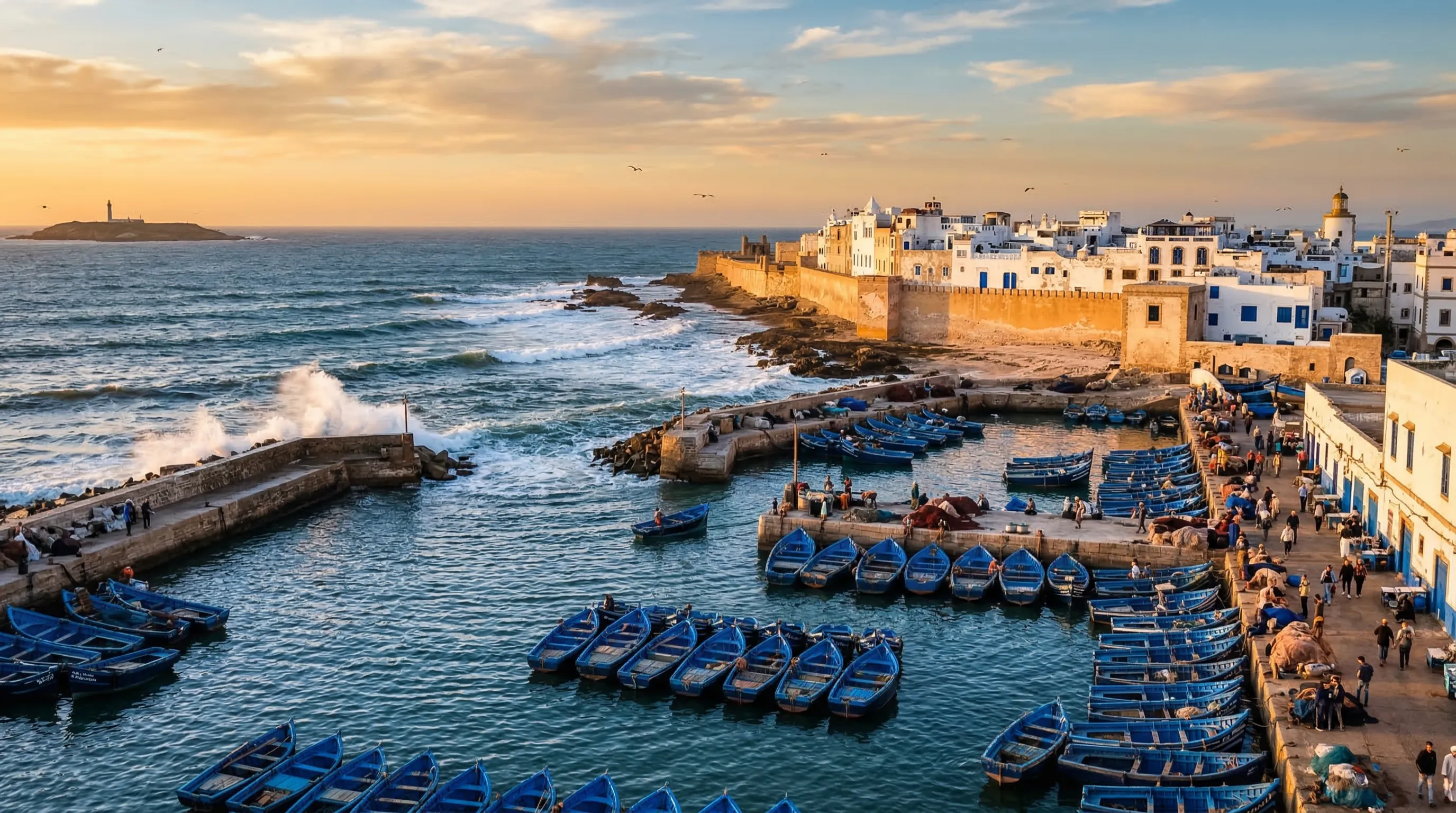
Relaxed coastal charm
Widely considered the most comfortable city in Morocco for solo women travelers. The compact, walkable medina is impossible to get truly lost in. The laid-back Atlantic coast vibe, thriving art scene, and friendly locals create a welcoming atmosphere. The surf community is inclusive and the seafood is outstanding.
Compact, safe medinaThriving art and surf sceneRelaxed atmosphereFriendly, non-pushy locals
Chefchaouen
Photogenic mountain serenity
The famous blue city nestled in the Rif Mountains is a haven for women travelers. Small, safe, and incredibly photogenic, Chefchaouen moves at a gentle pace. The hiking trails, rooftop cafes, and artisan shops make it easy to spend several relaxing days here. Locals are accustomed to tourists and very welcoming.
Extremely safe and walkableStunning photography everywhereGreat hiking trailsCalm, peaceful energy

Rabat
Modern and cosmopolitan
Morocco's capital is clean, orderly, and cosmopolitan. As a government city with a large diplomatic community, Rabat feels modern and progressive. The medina is well-maintained and calm, the Kasbah of the Udayas is stunning, and the tramway makes getting around effortless. Street hassle is virtually nonexistent.
Modern and organizedMinimal tourist hassleExcellent museumsBeautiful coastline
Marrakech
Exhilarating sensory overload
Morocco's most famous city is an unforgettable experience. Yes, the medina is intense and the energy is high, but that is precisely the magic. With a well-reviewed riad as your base, a good map on your phone, and confident body language, Marrakech rewards you with extraordinary food, architecture, and culture. Millions of women visit every year.
World-class food and cultureStunning riads and gardensVibrant arts sceneExcellent women-led tours available
Fes
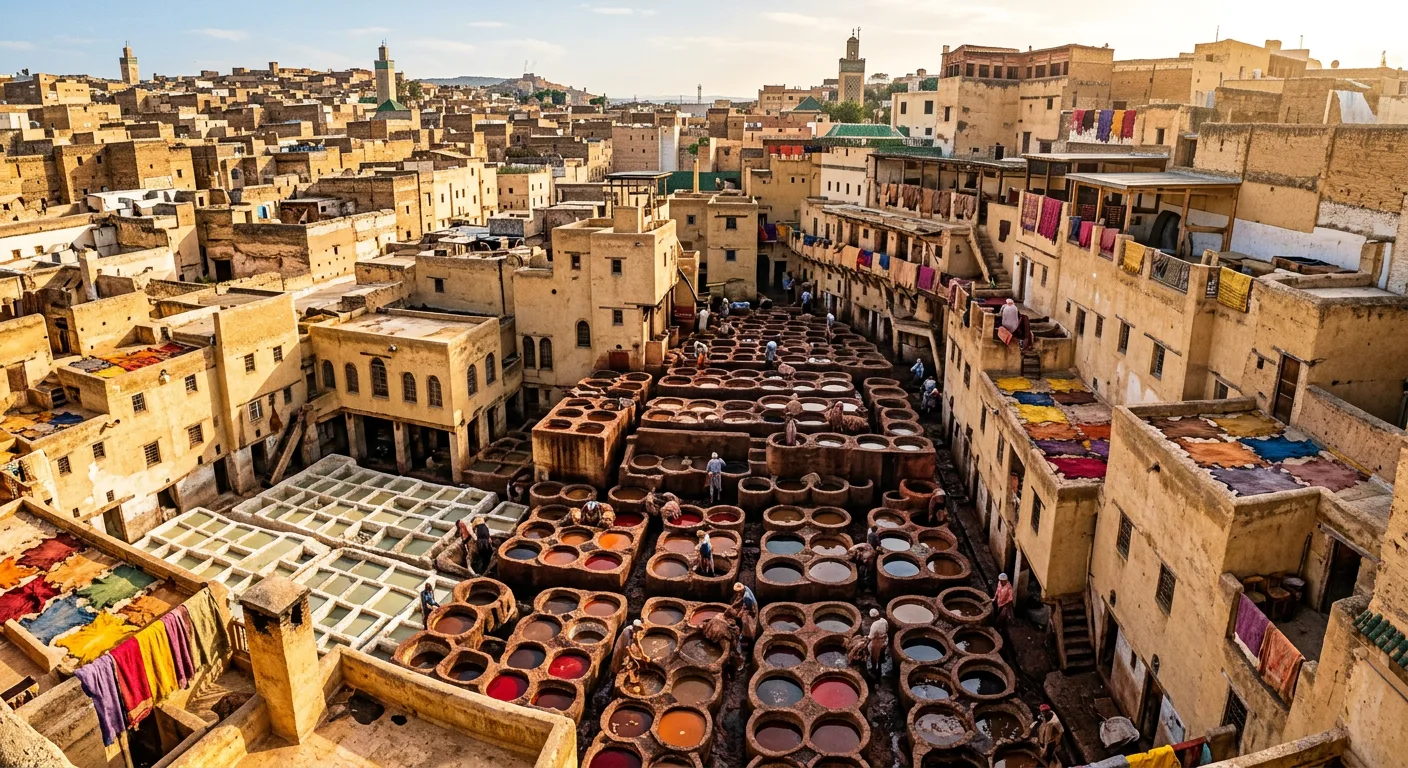
Deep cultural immersion
The spiritual and cultural capital of Morocco offers the most authentic medina experience in the country. The Fes el-Bali medina is a UNESCO World Heritage site and the world's largest car-free urban area. Hiring a guide for your first day is recommended, and once you find your bearings, the cultural richness is unmatched.
Deepest cultural experienceIncredible artisan traditionsOutstanding food sceneLess crowded than Marrakech
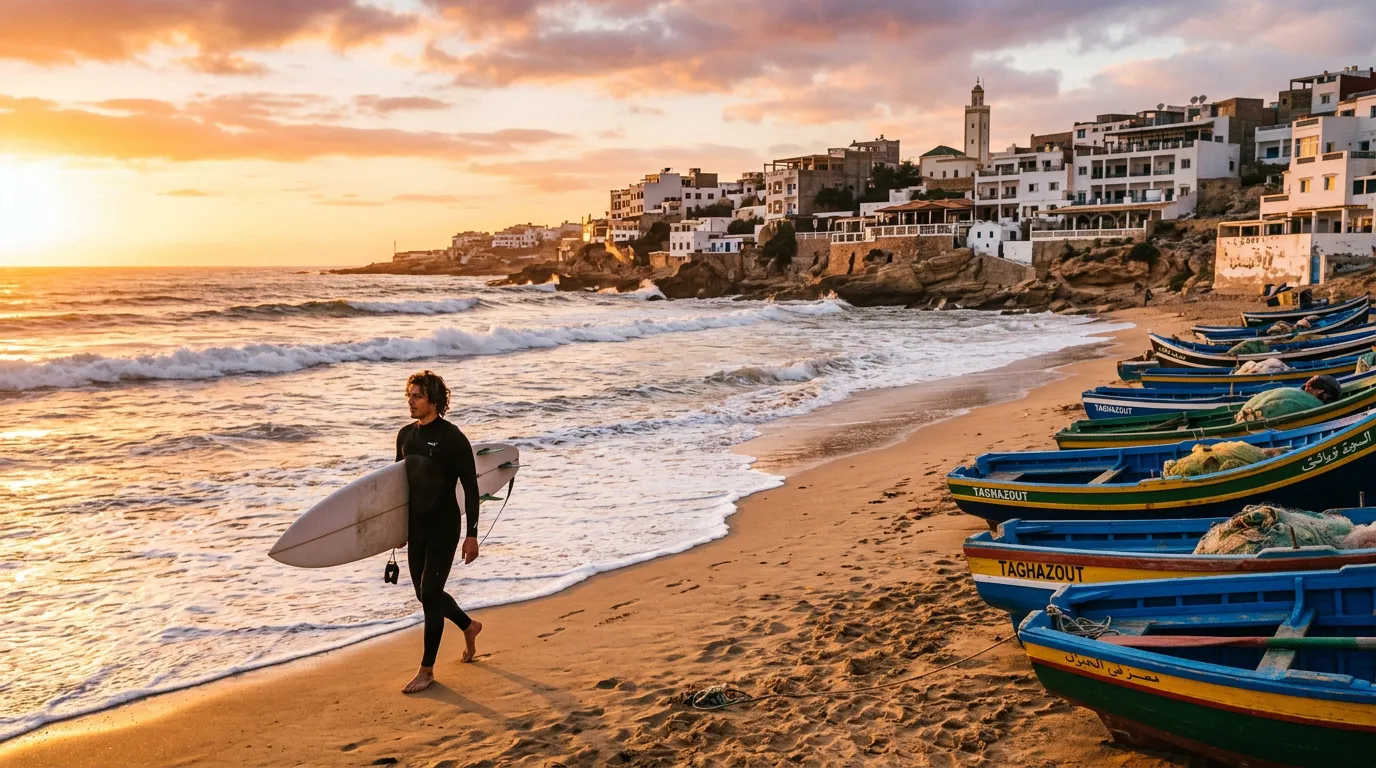
Taghazout
Surf village community
This small coastal village north of Agadir has become a magnet for women surfers, yoga practitioners, and digital nomads. The surf-and-yoga lifestyle creates an instant welcoming community. Surf camps with female instructors are easy to find, and the village feels safe and friendly at any hour.
Instant surf communityWomen-friendly surf campsYoga and wellness sceneBeautiful coastline
Dress with Confidence
What to Wear: Practical, Respectful, Comfortable
Dressing modestly in Morocco is less about strict rules and more about comfort and respect. You do not need to cover your head. Think loose, breathable, and stylish.
Medinas and Old Cities
Cover shoulders and knees. Loose-fitting linen or cotton pants, midi or maxi skirts, and tops that cover the shoulders are ideal. A lightweight scarf draped over the shoulders works perfectly for coverage and sun protection.
Modern City Centers (Ville Nouvelle)
Dress codes are more relaxed in modern neighborhoods of Casablanca, Rabat, and Marrakech Gueliz. You will see Moroccan women in everything from djellabas to jeans and blouses. Smart casual is comfortable here.
Beach Towns (Essaouira, Taghazout, Agadir)
Swimwear is fine on the beach itself. When walking through town, a cover-up or sundress is appreciated. Agadir is the most liberal beach city. In smaller beach villages, modest beachwear is more appropriate.
Rural Areas and Mountains
Conservative dress is most appreciated in rural communities. Long pants or skirts, covered shoulders, and avoiding tight-fitting clothing shows respect for local customs and will earn you warmer welcomes.
Mosques and Religious Sites
Non-Muslims cannot enter most mosques in Morocco (Hassan II Mosque in Casablanca is the notable exception). When visiting the Hassan II Mosque, cover your arms and legs and bring a headscarf. Remove shoes at the entrance.
Restaurants and Hotels
Upscale restaurants and hotels are quite cosmopolitan. Smart casual is perfect. For rooftop bars and fine dining, you can dress as you would in any European city.
The Golden Rule of Dressing in Morocco
Think of it this way: if you would wear it to a casual family gathering, it works in Morocco. Covering shoulders and knees in the medinas is the single most effective way to reduce unwanted attention and blend in more comfortably. Loose-fitting natural fabrics like linen and cotton are your best friends in the Moroccan heat. Many women find that a large, versatile scarf becomes their most-used travel accessory: sun cover, shoulder wrap, picnic blanket, and impromptu pillow.
Where to Stay
Accommodation Tips for Women
From intimate riads with motherly hosts to hostels with lively female-only dorms, Morocco has accommodation to suit every style and budget.
Riads with Female-Friendly Reputations
Many riads in Morocco are managed by women and have cultivated reputations as safe havens for female travelers. Look for properties that specifically mention "female-friendly" or "women travelers welcome" in their listings. Reviews from solo women on Booking.com and TripAdvisor are invaluable.
- Look for riads with female managers or owners mentioned in reviews
- Check for female-only dorm options in hostels
- Read recent reviews from solo female travelers specifically
- Consider riads that offer airport pickup, especially for late arrivals
Women-Only Hammams
Traditional public hammams have separate hours for men and women, so you will always be bathing with other women. Private hammams in riads and spas are also exclusively female spaces. The hammam is one of the most authentic cultural experiences Morocco offers, and it is completely designed for women's comfort.
- Public hammams typically have dedicated women's hours (often mornings)
- Private hammam experiences at riads range from 200-800 MAD
- Bring your own toiletries or purchase savon beldi (black soap) at the entrance
- A kessa (exfoliating glove) is provided or can be purchased for 15-30 MAD
Hostels with Female Dorms
Budget-conscious women travelers will find excellent hostels across Morocco with dedicated female-only dormitories. These hostels often have communal spaces that naturally foster connections between travelers. Many organize group activities, making them ideal for solo women.
- Equity Point and Waka Waka in Marrakech have great female dorms
- Hostel Kif Kif in Marrakech is popular with solo women
- Many hostels organize group dinners and excursions
- Lockers and secure storage are standard in reputable hostels
Getting Around Safely
Transportation Safety and Tips
Morocco has a solid transport network. Knowing your options empowers you to move around the country confidently and comfortably.
Trains (ONCF)
Morocco's train network connects major cities and is very safe. First-class carriages are comfortable and well-maintained. The Al Boraq high-speed train between Tangier and Casablanca is modern and efficient. Trains are used daily by Moroccan women traveling alone.
Book first class for more space and comfortThe Marrakech-Tangier route has scenic viewsBuy tickets at the station or online via ONCF app
Intercity Buses (CTM & Supratours)
CTM and Supratours are the two premium bus companies. Both are reliable, comfortable, and safe. Supratours connects to ONCF train routes. Seats are assigned, luggage is stored securely, and the buses are air-conditioned.
Book in advance during holidaysCTM and Supratours have online bookingSupratours stations are often near train stations
Petit Taxis (City Taxis)
Petit taxis operate within cities. Always insist on the meter being turned on. Ride-hailing apps like inDrive and Careem offer transparent pricing and trackable routes, which many women prefer for the added security of a digital record.
Always insist on the meterUse inDrive or Careem for price transparencyShare your ride location with a friendNote the taxi number when you get in
Grand Taxis (Shared Long-Distance)
Grand taxis are shared long-distance taxis, usually older Mercedes sedans that seat six passengers. They depart when full. While perfectly safe, the experience can feel cramped. You can purchase extra seats for more space and privacy.
Buy two seats for more comfortThey leave from designated stationsAgree on the price before departingAsk your riad to help arrange one
Domestic Flights
Royal Air Maroc and Air Arabia Maroc operate frequent domestic flights. Useful for covering long distances quickly, such as Marrakech to Tangier or Casablanca to Ouarzazate. Airports are modern and well-staffed.
Book early for best faresUseful for the Marrakech to Tangier routeSmall airports are easy to navigate
Curated Experiences
Women-Led Tours and Experiences
Travel deeper with experiences designed by and for women. These tours and activities offer perspectives and access that standard tourism simply cannot match.
Group Tour
Intrepid Travel - Women's Expeditions
Intrepid offers dedicated women-only small group tours of Morocco led by female guides. Itineraries include medina tours, cooking classes, desert camps, and visits to women's cooperatives. Groups are kept small (max 12) for an intimate experience.
8-15 days
$2,000 - $3,500
Adventure Tour
Wild Women Expeditions
Focused on active and adventurous women, these tours combine trekking in the Atlas Mountains, camel riding in the Sahara, surfing in Essaouira, and cultural immersion in Marrakech. All guides and support staff are women.
10-14 days
$2,500 - $4,000
Day Experience
Local Female Guides in Marrakech
Several Marrakech-based female guides offer private and small group tours of the medina, souks, and surrounding areas. A female guide provides a completely different perspective on Moroccan culture, sharing insights into women's daily life, traditions, and challenges.
Half-day to full-day
500 - 1,200 MAD
Cultural Experience
Cooking Classes with Local Women
Home cooking classes hosted by Moroccan women are among the most rewarding experiences in the country. Learn to prepare tagine, couscous, pastilla, and Moroccan salads in a home kitchen while hearing stories and learning about family life. Many include a market visit.
3-5 hours
300 - 800 MAD
Overnight Experience
Desert Camps with Female Staff
Several luxury desert camps in the Merzouga and Zagora areas employ female staff and offer women-friendly facilities including private tents with en-suite bathrooms, separate bathing areas, and female guides for camel treks.
1-3 nights
800 - 3,000 MAD/night
Wellness Retreat
Surf and Yoga Retreats for Women
Taghazout and Essaouira host several women-focused surf and yoga retreats. These combine daily surf lessons with female instructors, yoga sessions, healthy meals, and a supportive community atmosphere. Perfect for solo travelers looking to connect.
5-10 days
$600 - $1,800
Support Local Women
Women's Cooperatives: Where Travel Meets Impact
Visiting women's cooperatives is one of the most meaningful things you can do in Morocco. Your visit and purchases directly support women's economic independence and preserve traditional crafts.

Argan Oil Cooperatives (Essaouira Region)
Products: Argan oil, cosmetics, culinary oil
The Essaouira-Agadir corridor is home to dozens of women's argan oil cooperatives. Women crack, roast, and press argan nuts by hand using traditional methods passed down through generations. Visiting a cooperative lets you see the labor-intensive process, taste fresh argan oil, and purchase products that directly support the women's livelihoods.
Impact: Employs over 6,000 women across the region, providing financial independence and education access
Carpet Weaving Cooperatives (Middle Atlas)
Products: Handwoven Berber rugs and textiles
Berber women in the Middle Atlas Mountains have been weaving carpets for centuries. Each rug tells a story through its patterns and colors. Cooperatives in Azrou, Ifrane, and the villages around the Middle Atlas offer visitors the chance to watch weavers at work and purchase rugs at fair prices without middleman markups.
Impact: Preserves ancient Amazigh weaving traditions while providing sustainable income for rural women
Saffron Cooperatives (Taliouine)
Products: Saffron, saffron-infused products
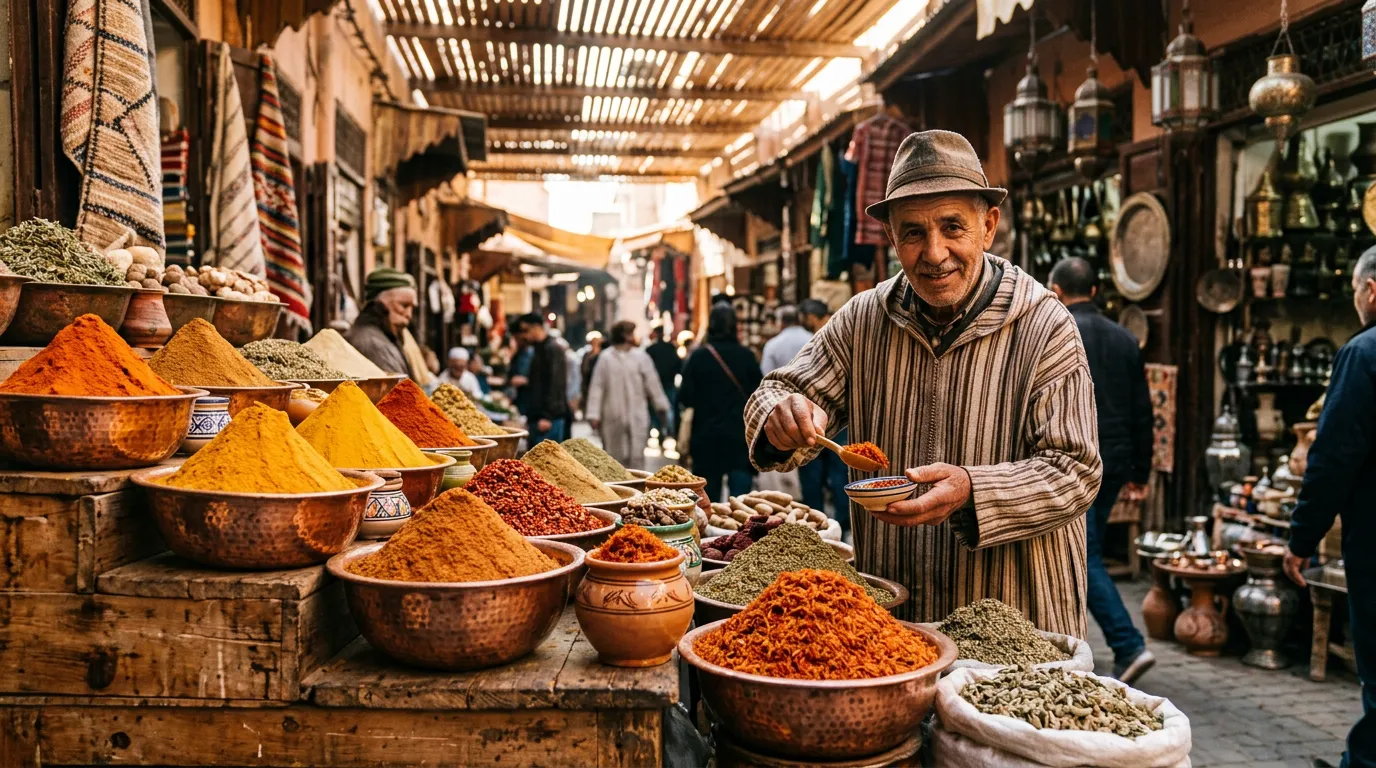
Taliouine in the Anti-Atlas is Morocco's saffron capital. Women's cooperatives here harvest and process the delicate saffron crocus flowers by hand each November. The saffron produced here rivals the finest in the world. Visits include learning about the harvest process and tasting saffron tea.
Impact: Supports families in one of Morocco's most remote regions and promotes sustainable agriculture
Pottery Cooperatives (Safi & Fes)
Products: Hand-painted ceramics and pottery
While pottery in Fes and Safi has traditionally been a male craft, women's cooperatives have emerged that train women in the art of ceramic painting and glazing. These cooperatives produce beautiful hand-painted tagine pots, bowls, and tiles using traditional Moroccan motifs.
Impact: Opens traditionally male industries to women and provides artisan training for younger generations
Embroidery and Textile Cooperatives (Fes)
Products: Embroidered garments, table linens, caftans
Fes has a long tradition of fine embroidery. Women's cooperatives in the medina produce exquisite hand-embroidered caftans, tablecloths, and cushion covers. The intricate needlework can take weeks or months to complete. Visitors can watch artisans at work and commission custom pieces.
Impact: Provides income and social connection for women, many of whom work from home to balance family responsibilities
Navigate with Grace
Handling Unwanted Attention
Occasional unwanted attention happens in Morocco, as it does in many countries. The vast majority is verbal and easily managed. Here are proven strategies from experienced women travelers.
Verbal Comments on the Street
The most common form of unwanted attention is verbal comments or catcalling. The most effective response is simply to keep walking without acknowledging it. Do not make eye contact, do not respond, and do not smile. This is culturally understood and is not considered rude.
Useful Phrase
"La, shukran" (No, thank you)
Persistent Following
If someone is following you, walk confidently toward a busy area, shop, or restaurant. Ducking into any shop and telling the owner someone is bothering you will almost always result in them helping you. Moroccan shopkeepers and women are very protective of female visitors.
Useful Phrase
"Sir f-halek" (Go away / Mind your own business)
Aggressive Touts or Fake Guides
A firm "la shukran" while continuing to walk is usually sufficient. Do not stop, do not engage in conversation, and do not explain yourself. If someone grabs your arm, a loud and firm "No" draws attention and they will back off. This behavior is condemned by Moroccans themselves.
Useful Phrase
"Barak Allahu fik, la" (God bless you, no)
Unwanted Photography
If someone is photographing you without permission, it is perfectly acceptable to ask them to stop. Similarly, always ask permission before photographing local women, particularly in rural areas. A smile and a gesture toward the camera is usually enough to ask.
Useful Phrase
"Momkin nsawwrek?" (May I take your photo?)
Uncomfortable Taxi Situations
If a taxi driver makes you uncomfortable, ask to be let out at the next well-lit public area. Share your taxi ride location with a friend using your phone. Using ride-hailing apps like inDrive creates a digital record of your trip. Sit in the back seat and keep your phone visible.
Useful Phrase
"Wakfni hna, afak" (Stop here, please)
The Most Important Tip: Confidence Is Your Best Ally
Walk with purpose, wear sunglasses, and project the energy of someone who knows where she is going, even if you are happily lost. Confident body language is the single most effective way to minimize unwanted interactions. Remember: the overwhelming majority of Moroccans are kind, helpful, and proud to welcome visitors to their country.
If you are ever truly uncomfortable, walk into the nearest shop, restaurant, or hotel. Moroccan women and shopkeepers are incredibly protective of female visitors and will help without hesitation. You are never truly alone in Morocco.
Unforgettable Experiences
Activities and Experiences for Women
From ancient hammam rituals to Saharan sunrises, these are the experiences that women travelers rave about long after coming home.
Traditional Hammam Experience
The hammam is perhaps the quintessential women's experience in Morocco. Public hammams are social spaces where local women gather to bathe, chat, and relax. Being welcomed into this ritual is an intimate cultural experience. Private hammams in riads offer a more luxurious but equally memorable version.
Available in every city
Moroccan Cooking Classes
Learn the secrets of tagine, couscous, and pastilla from Moroccan women in their home kitchens. Many classes include a visit to the local market to select fresh ingredients. This is one of the best ways to connect authentically with local women.
Marrakech, Fes, Essaouira, Chefchaouen
Henna Art Sessions
Rather than the tourist-trap henna artists in the squares, book a private henna session at your riad or through a local women's cooperative. A skilled henna artist will create beautiful, intricate designs while explaining the cultural significance of different patterns.
Marrakech, Fes
Yoga and Wellness Retreats
Morocco has become a top destination for yoga retreats, particularly along the Atlantic coast. Taghazout, Essaouira, and the Atlas Mountains host retreats ranging from surf-and-yoga combos to intensive meditation weeks. Many are women-focused.
Taghazout, Essaouira, Atlas Mountains
Photography Walks
Morocco is one of the most photogenic countries on earth. Guided photography walks through the medinas of Marrakech, Fes, and Chefchaouen are a wonderful way to explore with purpose. Several female photographers offer guided walks specifically for women.
Marrakech, Fes, Chefchaouen
Surfing with Female Instructors
Morocco's Atlantic coast offers world-class surfing. Taghazout and Essaouira have several surf schools with female instructors who create welcoming, supportive learning environments. Surf camps often include accommodation and meals.
Taghazout, Essaouira, Imsouane
Artisan Workshop Visits
Watch master artisans create zellige tiles, leather goods, metalwork, and pottery. Many workshops welcome visitors and some offer hands-on experiences where you can try your hand at traditional crafts under expert guidance.
Fes, Marrakech, Safi
Sahara Desert Camping
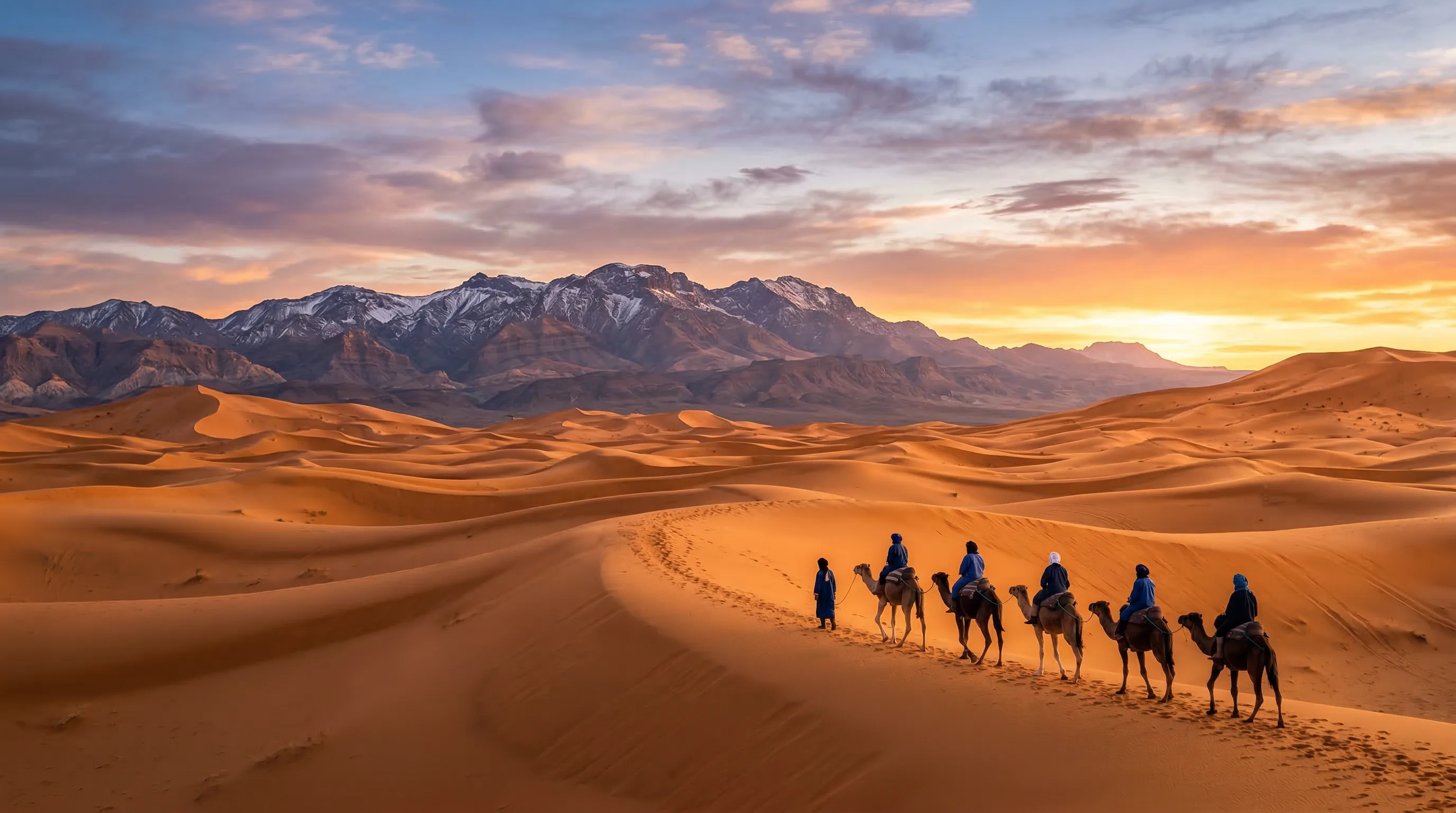
A night in the Sahara is transformative. Luxury desert camps offer private tents, camel treks at sunset, traditional Berber music around the campfire, and a sky full of stars like you have never seen. Many camps have excellent facilities for women.
Merzouga, Zagora
Choose Your Style
Group Tours vs. Solo Travel
Both are wonderful ways to experience Morocco. The best choice depends on your travel experience, personality, and what you want from the trip.
Solo Travel
Advantages
- Complete freedom to set your own pace and itinerary
- Deeper personal growth and confidence building
- More authentic local interactions and invitations
- Budget flexibility to splurge or save as you choose
- Opportunity to truly disconnect and be present
Considerations
- Navigating medinas alone can be challenging at first
- May receive more unwanted attention than in a group
- No one to split costs on private guides or transport
- Can feel lonely during meals without companions
Best For
Experienced travelers, those seeking personal growth, or women who value independence and flexibility
Group Tours
Advantages
- Built-in safety net and companionship
- Expert local guides handle all logistics
- Access to experiences that are difficult to arrange solo
- Instant community of like-minded women
- Less stressful navigation and planning
Considerations
- Fixed itineraries with limited flexibility
- Higher cost than independent travel
- Less opportunity for spontaneous local connections
- Group dynamics may not suit everyone
Best For
First-time visitors to Morocco, women who prefer structure, or those who want a social travel experience
Be Prepared
Packing Essentials for Women
A well-packed bag makes all the difference. Here is what experienced women travelers recommend bringing to Morocco.
Clothing Essentials
- Lightweight linen or cotton pants (2-3 pairs)
- Long maxi skirts or midi skirts (2-3)
- Loose-fitting tops that cover shoulders (4-5)
- A lightweight cardigan or shawl for layering
- One versatile dress for dinners
- Comfortable walking shoes with good grip
- Sandals for riads and beach
- Swimsuit for hammams, pools, and beaches
Essential Accessories
- Large scarf or pashmina (multi-purpose: sun cover, mosque visits, warmth)
- Sunglasses (helps avoid unwanted eye contact)
- Wide-brimmed hat for sun protection
- Cross-body bag with secure zipper closure
- Money belt or hidden pouch for passport and cash
- Reusable water bottle with filter
Toiletries and Health
- High SPF sunscreen (expensive in Morocco)
- Insect repellent
- Hand sanitizer
- Wet wipes and tissues (public restrooms vary widely)
- Feminine hygiene products (available in cities but bring favorites)
- Any prescription medications with documentation
- Basic first-aid kit
- Stomach remedies (Imodium, Pepto-Bismol)
Technology and Safety
- Unlocked phone for local SIM card (Maroc Telecom or Orange)
- Portable charger / power bank
- European plug adapter (Type C/E)
- Offline maps downloaded (Google Maps or Maps.me)
- Photocopies of passport and travel insurance stored separately
- Door wedge or portable door lock for extra security
Real Voices
Stories from Women Who Love Morocco
Hear from real women who have explored Morocco and returned home transformed. Their stories are the best proof that this country is worth the journey.
“I was nervous before my first solo trip to Morocco, but within hours of arriving in Essaouira, those fears melted away. A local woman at the market taught me how to pick the best spices, my riad host became like a second mother, and by the end of two weeks, I had a network of Moroccan women friends who still message me regularly. Morocco did not just meet my expectations, it completely transformed my idea of what solo travel could be.”
Sarah, 28
London, UK
2 weeks, Marrakech - Essaouira - Chefchaouen
“As a woman in my forties who had never traveled alone, booking a women-only group tour to Morocco was the best decision I ever made. We visited argan oil cooperatives, learned to cook tagine in a Berber village, rode camels at sunset, and stayed in the most beautiful riads. The Moroccan women we met were strong, warm, and hilarious. I went expecting a vacation and came home with a new perspective on life.”
Michelle, 45
Toronto, Canada
10-day women's group tour
“I spent a month in Morocco as a digital nomad, splitting my time between Marrakech and Taghazout. The coworking spaces are great, the cost of living is low, and the surf community in Taghazout is incredibly welcoming to women. I surfed every morning, worked in the afternoon, and explored on weekends. The biggest surprise was how safe I felt, even walking home alone at night in Taghazout.”
Yuki, 33
Tokyo, Japan
1 month, Marrakech and Taghazout
“Morocco was deeply meaningful for me as a Black American woman. The warmth and lack of racial tension was immediately noticeable. People were curious about where I was from and genuinely friendly. Visiting the women's cooperatives and seeing how they support each other inspired me. The Sahara desert at sunrise brought me to tears. Morocco felt like coming home to a place I had never been.”
Amara, 52
Atlanta, USA
12 days, Casablanca - Fes - Merzouga - Marrakech
Stay Informed
Emergency Resources and Contacts
Save these numbers before your trip. Morocco has a reliable emergency system, and tourist police in major cities are specifically trained to assist visitors.
Police Emergency
19
National police in urban areas
Gendarmerie (Rural Police)
177
Rural areas and highways
Ambulance / Medical Emergency
150
SAMU emergency medical services
Fire Department
15
Fire and rescue services
Tourist Police (Brigade Touristique)
Available in major cities
Specially trained to assist tourists, many speak English and French
SOS Femmes (Women's Helpline)
0801 002 020
Support for women experiencing violence or harassment
Additional Safety Resources
- Register with your country's embassy in Rabat before traveling
- Purchase comprehensive travel insurance that covers medical evacuation
- Share your itinerary with a trusted person at home
- Keep digital and physical copies of your passport, insurance, and emergency contacts
- Download offline maps and translation apps before arriving
Morocco Is Ready for You
Every woman who visits Morocco writes her own story. Some come for the food and stay for the friendships. Others come for the desert and discover a piece of themselves they did not know was missing. Whatever brings you to Morocco, trust that this country will give you far more than you expect. Pack your bags, trust your instincts, and prepare for the adventure of a lifetime.
Your Morocco Travel Companion
Save or share this quick-reference guide for women traveling in Morocco.