Discovering...
Surf Guide
Taghazout Surf Guide
Morocco's premier surf destination. World-class point breaks, consistent Atlantic swells, affordable surf camps, and a laid-back village vibe that has drawn wave riders from around the world for decades.
3,000+
MAD/week camp
200
MAD/day board
Sep-Apr
Surf season
Africa's Surf Capital
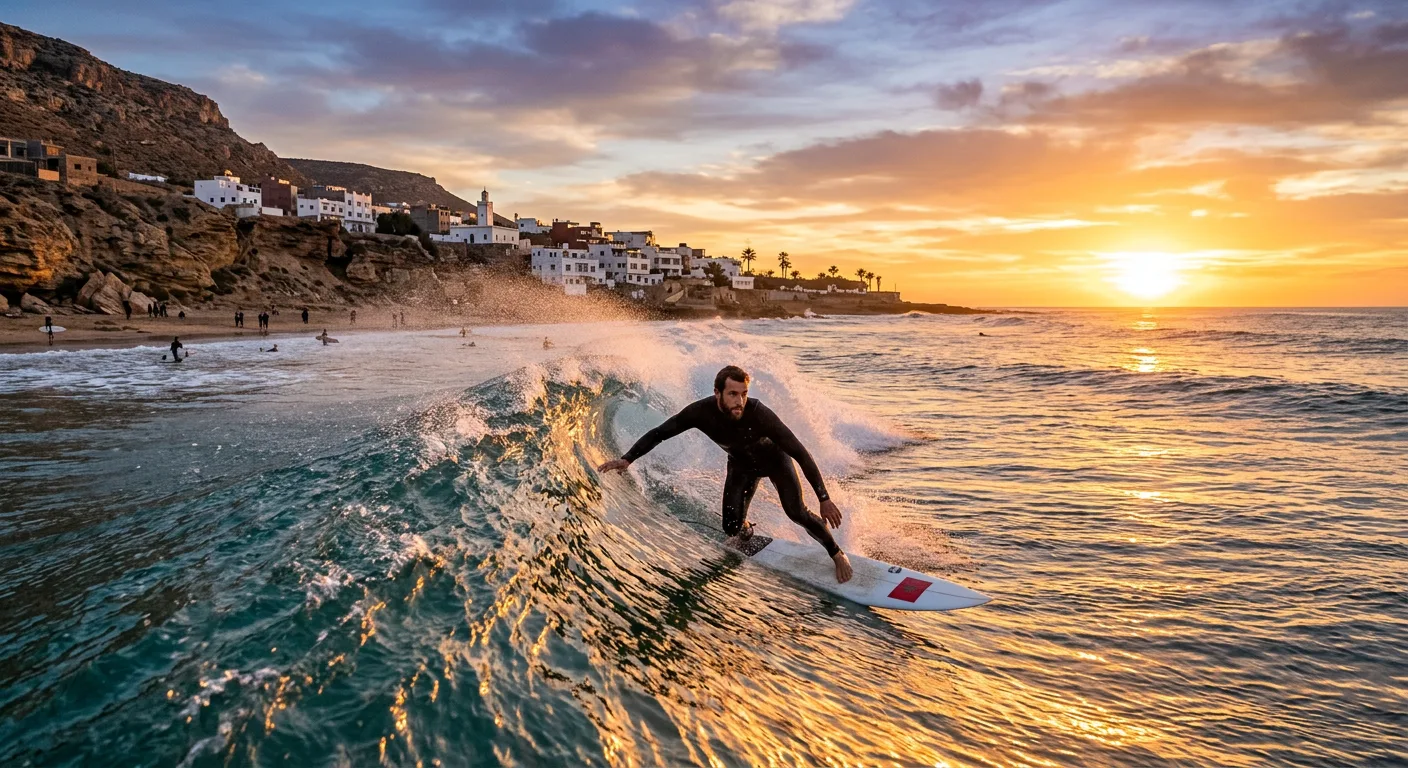
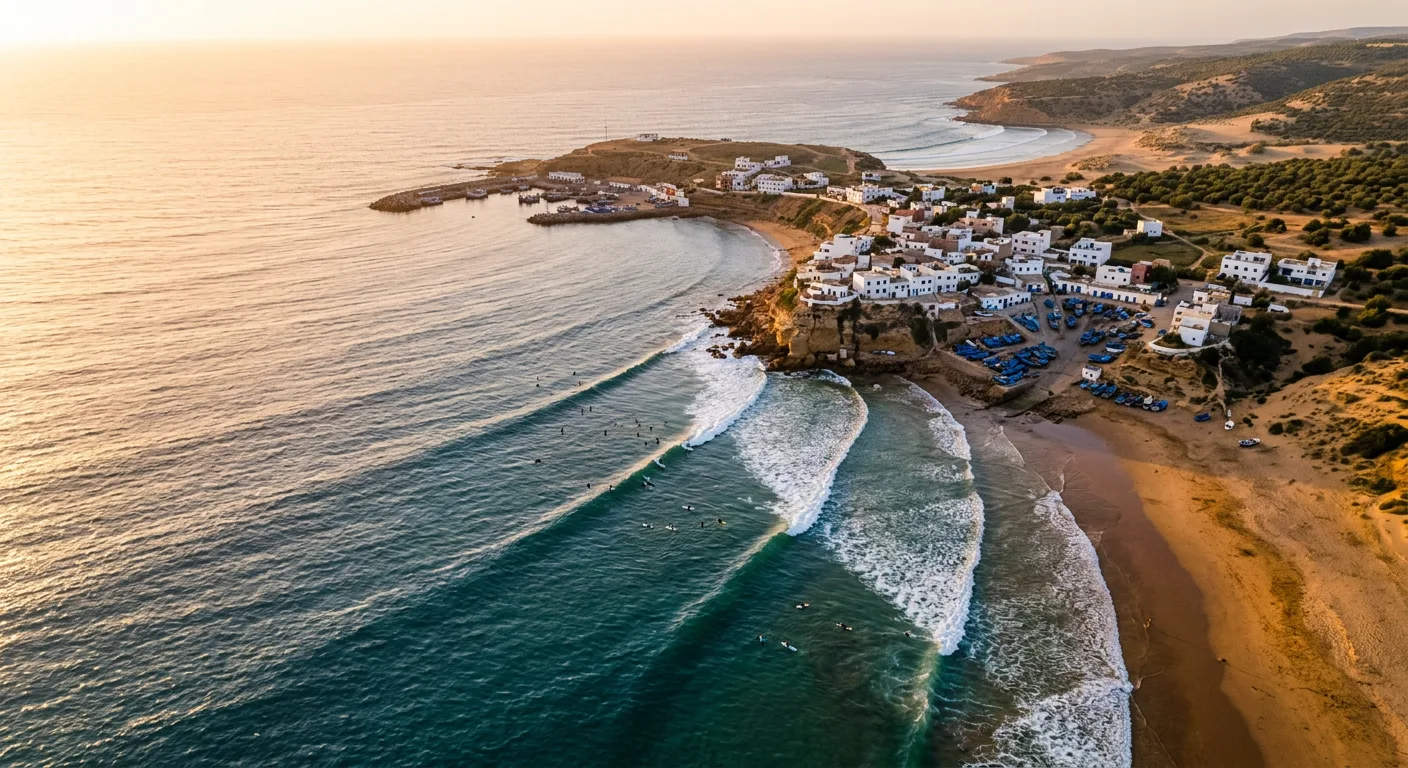
Taghazout is a small fishing village perched on rocky cliffs above the Atlantic, 20 kilometers north of Agadir on Morocco's southwest coast. Over the past two decades, it has evolved from a hippie backpacker stop into one of the world's most popular surf destinations -- and for good reason. The 15-kilometer stretch of coastline around Taghazout contains more quality surf breaks per kilometer than almost anywhere else in the Atlantic, with waves to suit every level from first-time beginners to professional competitors.
The magic of Taghazout lies in its geography. The coastline faces northwest, directly in the path of the Atlantic storm systems that generate consistent swells from September through April. A series of rocky points, reefs, and bays along the coast shape these swells into perfectly formed right-hand point breaks -- the type of wave that surfers dream about. When a solid swell arrives, each point along the coast breaks in sequence, giving surfers a choice of waves based on their skill level and crowd tolerance.
Beyond the waves, Taghazout offers affordable living, consistent sunshine (over 300 days per year), a growing community of international surfers and digital nomads, excellent Moroccan food, and the kind of relaxed, salt-crusted atmosphere that makes surfers extend their stays from weeks to months. The nearby village of Imsouane, 80 kilometers north, offers the longest wave in Africa for those willing to make the day trip.
The Breaks
Taghazout Surf Spots
Five world-class waves within easy reach, from mellow beginner breaks to powerful barrels.
1Intermediate to Advanced
Anchor Point
Right-hand point break
1-3m (occasionally 4m+)
Wave height
Rock and reef bottom Tide: Mid to high tide Wind: Northeast (offshore) Swell: NW swell 4ft+
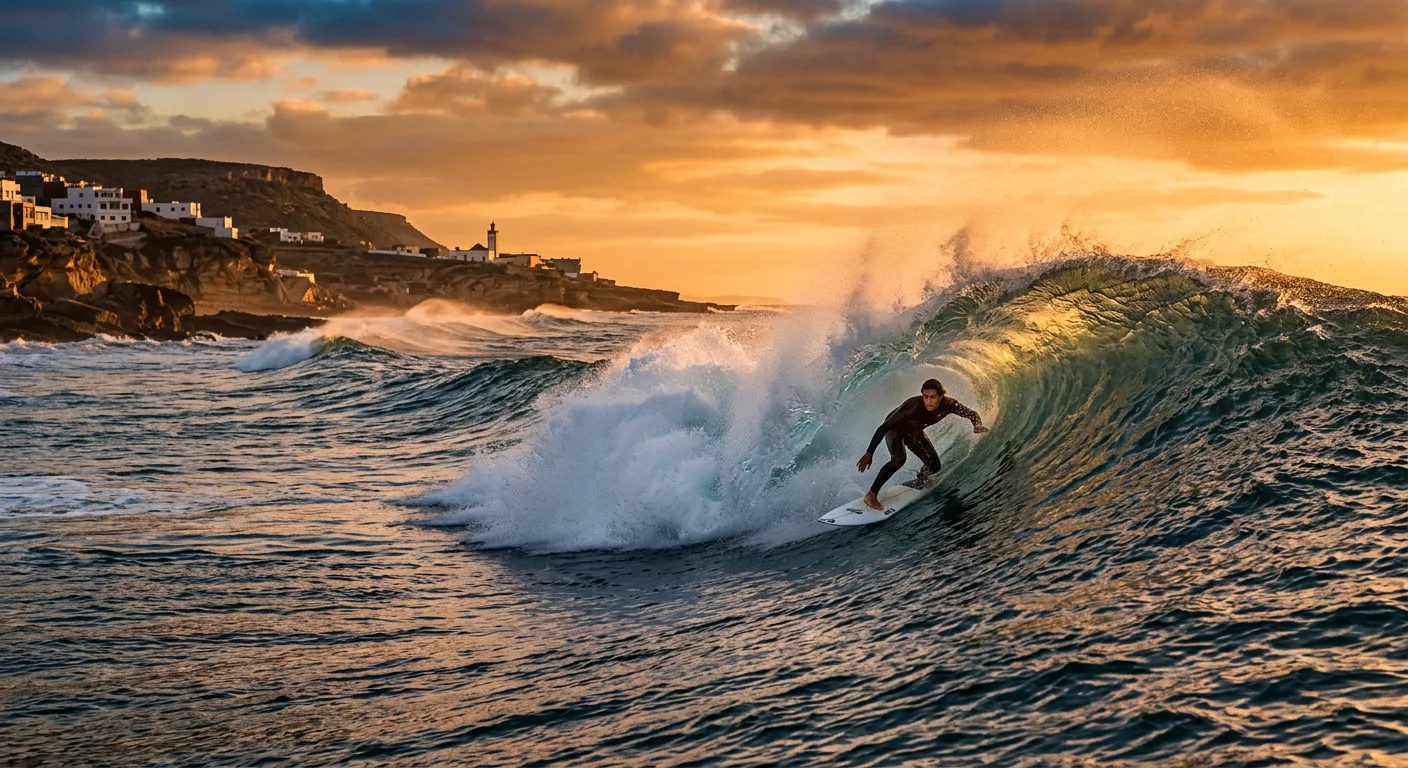
Anchor Point is the jewel of Moroccan surfing and one of the finest right-hand point breaks in the world. When a solid northwest swell hits the reef at the right angle, the wave peels for up to 300 meters along the rocky point, offering long, hollow, and powerful rides that have appeared in surf films for decades. The wave breaks over a shallow reef, producing fast, barrelling sections in the middle of the ride and a more workable shoulder toward the end. The paddle out can be challenging, especially at high tide, and the line-up is often crowded with international surfers during peak season. Anchor Point needs a solid swell (4 feet minimum) to start working and is at its best with a northeast wind. At its peak, this is a genuinely world-class wave that stands comparison with anything in Europe or the Canary Islands.
World-class right-hand point break Rides up to 300 meters long Hollow and powerful barrel sections Featured in international surf films Handles large swells up to 4m+
2Beginner to Intermediate
Hash Point (Pointe des Ancres)
Right-hand point break
0.5-2m
Wave height
Sand and rock bottom Tide: All tides (best mid) Wind: Northeast/calm Swell: NW swell 2-5ft
Hash Point is the most popular surf spot in Taghazout and the first break that most visitors surf. Located right in front of the village, the wave breaks over a mixed sand and rock bottom, producing a forgiving right-hander that is perfect for improving surfers. The wave is more mellow than Anchor Point -- slower, less hollow, and with a gentler takeoff that gives beginners time to pop up and find their feet. On small days, it is an ideal learning wave; on bigger days, the inside section can produce surprisingly fun, punchy rides. The spot is a social hub of the Taghazout surf scene, with surfers gathering on the rocks to watch sets roll in, share stories, and drink mint tea from the cafes above. It is also the main teaching spot for the village's numerous surf schools, so expect crowds during peak season. Early mornings and the last hour of daylight offer the emptiest line-ups.
Most accessible break in Taghazout Forgiving wave ideal for improving surfers Right in front of the village Social hub of Taghazout surf scene Surf schools and cafes above the break
3Intermediate
Panoramas (Panorama Point)
Right-hand point break
0.5-2.5m
Wave height
Rock bottom Tide: Mid tide Wind: Northeast (offshore) Swell: NW swell 3-6ft
Named for the spectacular panoramic views from the cliffs above, this point break sits between Hash Point and Anchor Point and offers an excellent intermediate wave. The takeoff is steeper than Hash Point but less critical than Anchor, making it a natural progression spot for surfers building their skills. The wave walls up nicely on mid-size swells, offering open face turns and the occasional cover-up on the inside section. The paddle out over the rocks requires care at low tide. Panoramas picks up slightly less swell than Anchor Point but offers a less crowded and more relaxed atmosphere. On days when Anchor Point is too big or too crowded, Panoramas often provides the sweet spot of manageable power and open space.
Natural progression from Hash Point Less crowded than Anchor Point Walling faces for open turns Spectacular cliff-top viewpoint Works on moderate swells when Anchor is big
4Advanced
Killer Point
Right-hand reef break
1.5-4m+
Wave height
Sharp reef bottom Tide: Mid to high tide Wind: Northeast (offshore) Swell: NW swell 6ft+
Killer Point is Taghazout's heaviest wave and should be approached with serious respect. The name comes not from the wave itself but from the orca whales that were once sighted in the bay, though the wave's power does justice to the intimidating moniker. Breaking over a shallow, sharp reef, Killer Point produces fast, hollow, and powerful barrels that are among the most intense in Morocco. The take-off is critical -- a steep, fast drop into a pitching lip that tests even experienced surfers. The wave handles the biggest swells that hit the coast and often works when other spots are maxed out. Access is via a steep scramble down the cliffs, and the paddle out through the impact zone requires timing and commitment. This is emphatically not a spot for beginners or intermediate surfers.
Taghazout's heaviest and most powerful wave Fast hollow barrels over shallow reef Handles the biggest swells on the coast Cliff access adds to the adventure For experienced surfers only
5Beginner to Intermediate
Imsouane (Nearby)
Right-hand point break (The Bay)
0.5-2m
Wave height
Sand bottom Tide: Low to mid tide Wind: Northeast/calm Swell: NW swell 3-6ft
Imsouane sits about 80 kilometers north of Taghazout and offers what many consider the longest wave in Morocco -- and possibly in all of Africa. "The Bay" is a gentle, incredibly long right-hander that peels for up to 800 meters along the sandy bay on the right swell. The wave is slow, mellow, and perfect for longboarding, making it a pilgrimage destination for longboard enthusiasts and beginners who want to experience the pure joy of gliding along an endless wave. The village itself retains a laid-back, fishing-village charm that Taghazout has largely outgrown, with simple accommodation, fresh seafood restaurants, and a community of surfers and fishermen living side by side. Beyond The Bay, "The Cathedral" offers a steeper, more powerful wave at the other end of the bay for intermediate and advanced surfers. A day trip or overnight stay in Imsouane is highly recommended for any surfer visiting the region.
Longest wave in Morocco (up to 800m rides) Perfect mellow longboard wave Charming fishing village atmosphere Fresh seafood restaurants on the harbor The Cathedral break for intermediate surfers
Where to Stay
Surf Camps and Pricing
Taghazout has dozens of surf camps and houses. Here is what to expect at each price point.
Budget Surf Camp
from 3,000 MAD/week
Shared dorm, breakfast, 5 surf lessons, board rental, transport to breaks. Basic but social atmosphere.
Best Value
Mid-Range Surf House
from 4,500 MAD/week
Private/shared room, breakfast + dinner, 5 surf lessons or guiding, board rental, yoga sessions, airport transfer.
Premium Surf Retreat
from 7,000 MAD/week
Private room with ensuite, all meals, daily surf coaching, video analysis, yoga, massage, excursions, premium board selection.
Board Rental Only
200 MAD/day
Shortboard, longboard, or funboard. Wetsuit rental additional from 50 MAD/day. Weekly rates available.
Surf Season Guide
The Atlantic swells run September through April. Summer is the off-season.
September - November
20-28C
The start of the prime season. Atlantic swells return with increasing consistency as the North Atlantic storm track activates. September can still have flat spells, but October and November deliver reliable surf at all spots. Water is still warm from summer. Crowds are building but not yet at peak. This is many regulars' favorite window.
December - February
15-22C
Peak surf season. Large, consistent northwest swells deliver the best waves of the year. Anchor Point and Killer Point fire regularly, and even small-wave spots like Hash Point are rarely flat. The downside: this is peak tourist season, and the lineup at popular spots can be very crowded. Early mornings are essential for uncrowded waves. Water temperatures drop to 17-18C; a 4/3mm wetsuit is recommended.
March - April
18-25C
The swells begin to ease but still deliver regularly through March. April can be inconsistent but produces memorable sessions when swells arrive. Crowds thin significantly after European school holidays end. Water temperatures begin to warm. This is a sweet spot for those who want good surf without the winter crowds.
May - August
22-30C
The off-season. Swells become rare and small, and the prevailing wind shifts onshore (southwest). Occasionally a summer swell produces fun waves at protected spots, but most days are flat or choppy. This is the time for surf camps to offer discounted rates and for beginners to practice in small, forgiving conditions. The Bay at Imsouane may still work on small swells.
Surf Safety and Etiquette
Respect the locals, respect the lineup, respect the ocean.
Know Your Level
Be honest about your ability. Surfing Anchor Point or Killer Point without the skills to handle the wave puts you and others at risk. Start at Hash Point and progress as your ability grows.
Respect Locals
Taghazout\'s local surfers have been riding these waves their entire lives. They have priority in the lineup. Be respectful, patient, and do not paddle-battle for waves. A smile and greeting go far.
Lineup Rules
The surfer closest to the breaking part of the wave has priority. Do not drop in (take off in front of someone already riding). Do not snake (paddle around someone to gain position). Wait your turn.
Ocean Awareness
Rip currents, rocks, and urchins are present at most Taghazout breaks. Wear booties for reef protection. Study the break from the cliffs before paddling out. Know how to handle a rip current.
Board Damage Deposits
Most surf camps and rental shops require a deposit (typically from 500 MAD) against board damage. Dings on rocky Moroccan reef breaks are common. Carrying basic repair supplies (solarez or sun-cure resin) can save you money and keep you in the water. Ask your camp about their ding repair policy before renting.
Plan it with a local expert
Travel Morocco with Serenity Morocco Tours
Crafting extraordinary journeys through Morocco's timeless landscapes. 100% private journeys, handcrafted around you.
ONMT Licensed 100% Private Tours 100% private tours since 2018
 from $2,011
 5 days Marrakech → Erg Chebbi
Sahara Desert Luxury Expedition
 from $2,054
 7 days Marrakech · Fes · Meknes · Rabat
Essential Morocco: Imperial Cities Circuit
 from $5,978
 14 days Full-country circuit
Sahara to Sea: Morocco Complete