Discovering...

Dark Sky Destinations
Stargazing in Morocco
From the pristine Bortle Class 1 skies of the Sahara to the high-altitude observatories of the Atlas Mountains, Morocco offers some of the finest stargazing in the Northern Hemisphere. Witness the Milky Way in all its glory, learn ancient Berber star navigation, and capture the cosmos from one of Earth's last great dark-sky refuges.
Bortle 1-2
Dark Sky Rating
6+
Prime Locations
7.0+
Limiting Magnitude
300+
Clear Nights/Year
Why Morocco for Stargazing
One of Earth's Last Great Dark-Sky Refuges
While light pollution erases the night sky across much of the developed world, Morocco's vast Saharan wilderness, remote mountain valleys, and sparse desert populations preserve some of the darkest accessible skies remaining on the planet. Situated between 29 and 35 degrees north latitude, Morocco offers access to a vast swath of the celestial sphere, from Polaris in the north to constellations invisible from Europe.
Pristine Dark Skies
The Sahara desert and Anti-Atlas regions register Bortle Class 1-2 on the dark-sky scale, matching the finest observatory sites worldwide. Zero artificial light on the horizon in the most remote locations.
300+ Clear Nights
Morocco's semi-arid climate delivers over 300 cloud-free nights per year in the south and east. Low humidity means exceptional atmospheric transparency for sharp, bright star images.
Year-Round Comfort
Unlike high-latitude observing, Morocco's mild climate allows comfortable stargazing from spring through autumn. Even winter nights, while cool, rarely reach the extreme cold of northern sites.
Altitude Advantage
The Atlas Mountains rise to 4,167 meters, placing observers above much of the atmosphere's turbulence and moisture. Higher altitude means steadier seeing and greater transparency.
Southern Latitude Access
Morocco's southerly position (29-35 N) reveals objects invisible from northern Europe, including Canopus, Omega Centauri, and the Southern Cross from the most southern locations.
Living Star Traditions
The Amazigh (Berber) people have navigated and farmed by the stars for millennia. Their living astronomical traditions add a cultural dimension found nowhere else.
Understanding Sky Quality
The Bortle Dark-Sky Scale
The Bortle scale measures night sky darkness on a scale of 1 (pristine) to 9 (inner city). Morocco's best locations score Class 1-2, putting them among the finest dark-sky sites on Earth, comparable to the Atacama Desert in Chile or Namibia's NamibRand Nature Reserve.
1
Excellent Dark-Sky Site
Zodiacal light, gegenschein, and zodiacal band visible. Milky Way casts shadows. M33 visible with direct vision.
Morocco
2
Typical Truly Dark Site
Airglow may be visible. M33 easy naked-eye. Milky Way highly structured with dark lanes obvious.
Morocco
3
Rural Sky
Some light pollution on horizon. Milky Way still appears complex. Globular clusters visible in binoculars.
4
Rural/Suburban Transition
Light pollution domes visible in several directions. Milky Way still impressive but losing detail.
5
Suburban Sky
Milky Way is weak or invisible near horizon. Light pollution domes obvious. Only brighter Messier objects visible.
6
Bright Suburban Sky
Milky Way only visible near zenith. Sky brightness noticeably affects naked-eye limiting magnitude.
7
Suburban/Urban Transition
Entire sky has a grayish-white hue. Milky Way may be totally invisible. Strong light sources visible in all directions.
8
City Sky
Sky is light gray or orange. Many constellations unrecognizable. Only bright planets and stars visible.
9
Inner-City Sky
Only the Moon, planets, and a few bright stars visible. Many people have never seen the Milky Way.
Top Destinations
Best Stargazing Locations in Morocco
From the iconic dunes of Erg Chebbi to the high plateaus of the Atlas, these are Morocco's premier dark-sky destinations, each offering unique landscapes and conditions for observing the cosmos.

Bortle Class 1
31.1500 N, 4.0167 W
Draa-Tafilalet
Erg Chebbi, Merzouga
The towering 150-meter dunes of Erg Chebbi offer some of the most pristine dark skies accessible anywhere on Earth. Far from any city lights, the Sahara provides a natural dark-sky preserve where the zodiacal light, gegenschein, and the full extent of the Milky Way are visible to the naked eye. The dunes themselves become silhouetted sculptures against the star-filled sky, creating an otherworldly landscape for both observation and photography.
Naked-eye limiting magnitude of 7.0+ on clear moonless nights
Zodiacal light visible as a bright pyramid extending from the horizon
Gegenschein (counter-glow) visible opposite the Sun
Airglow visible as a faint green shimmer on the clearest nights
The Milky Way casts faint shadows on the white sand
Best: March-May, September-November
Fly to Errachidia or drive 8 hours from Marrakech via the N10
Bortle Class 2
30.3289 N, 5.8381 W
Draa-Tafilalet
Zagora & Draa Valley
The vast, flat desert plains south of Zagora toward Mhamid el Ghizlane present an unobstructed 360-degree horizon with minimal light pollution. The famous "Timbuktu 52 Days" sign marks the beginning of ancient caravan routes that traders navigated by the stars for centuries. The Draa Valley oases provide stunning foreground interest, with palm groves silhouetted against the Milky Way. The area around Erg Lihoudi and Erg Chigaga is particularly dark.
Unobstructed 360-degree horizon for full sky coverage
Ancient caravan route where Berber traders used stellar navigation
Erg Chigaga dunes offer Bortle Class 1 conditions
Excellent for southern hemisphere objects low on the horizon
Less touristy than Merzouga with fewer camp lights
Best: Year-round, best March-May and September-November
Drive 6.5 hours from Marrakech via the Tizi n'Tichka pass
Bortle Class 2
31.0600 N, 7.9150 W
Marrakech-Safi / Beni Mellal-Khenifra
High Atlas Mountains
The High Atlas Mountains reach over 4,000 meters at Jebel Toubkal, providing not only dark skies but also the advantage of altitude, which reduces atmospheric turbulence and water vapor. The thinner atmosphere at elevation means sharper star images and better transparency. Mountain passes such as Tizi n'Tichka and remote valleys like the Ait Bouguemez ("Happy Valley") offer superb viewing conditions with dramatic mountain silhouettes framing the sky.
High altitude reduces atmospheric distortion and light scatter
Mountain ridgelines create dramatic framing for the Milky Way
Cooler temperatures mean more stable atmospheric seeing
Ait Bouguemez valley is exceptionally dark and remote
Traditional Berber villages provide cultural immersion
Best: May-October (clear mountain skies, accessible passes)
Imlil is 90 minutes from Marrakech; deeper valleys require 4x4
Bortle Class 3
31.2064 N, 7.8664 W
Marrakech-Safi
Oukaimeden Observatory
Perched at 2,750 meters in the High Atlas, Oukaimeden hosts Morocco's premier astronomical observatory, operated jointly by Cadi Ayyad University of Marrakech and international partners. The observatory is equipped with a 0.6-meter Ritchey-Chretien telescope and has contributed to the discovery of several near-Earth asteroids. While the observatory itself is primarily a research facility, the surrounding plateau offers excellent public stargazing, and the nearby ski resort infrastructure means good road access year-round.
Morocco's primary astronomical research observatory
Contributed to near-Earth asteroid discovery programs
2,750m altitude provides excellent atmospheric transparency
Year-round road access via paved mountain road
Educational programs and occasional public viewing nights
Best: June-September (best transparency, lowest humidity)
75 km south of Marrakech, paved road, 1.5-hour drive
Bortle Class 2
29.7214 N, 8.9758 W
Souss-Massa
Tafraout & Anti-Atlas
The rose-granite landscape of Tafraout in the Anti-Atlas mountains creates a surreal stargazing backdrop. Massive pink boulders, sculpted by wind into impossible shapes, stand against the night sky like abstract sculptures. The Ameln Valley, ringed by these granite formations, is exceptionally dark and sheltered from wind. The famous "Painted Rocks" by Belgian artist Jean Verame add a touch of the surreal to daytime exploration between stargazing sessions.
Unique rose-granite boulder formations as foreground elements
Sheltered valleys with minimal wind for stable viewing
Extremely low population density and light pollution
Warmer winter temperatures than the High Atlas
Almond blossom season (February) adds daytime beauty
Best: October-April (mild temperatures, clear skies)
Drive 4 hours south of Agadir via the R106
Bortle Class 1
29.8283 N, 5.7231 W
Draa-Tafilalet
M'hamid el Ghizlane
The last outpost before the open Sahara, M'hamid el Ghizlane sits at the end of the paved road where the Draa Valley dissolves into endless desert. The Erg Chigaga dunes, reached only by 4x4 or camel, offer arguably the darkest accessible skies in all of Morocco. With zero artificial light in any direction and an elevation of 700 meters, the sky here reveals structures invisible from more populated locations, including the faintest outer spiral arms of the Milky Way and the Large Magellanic Cloud on the southern horizon.
Among the darkest accessible skies in North Africa
Erg Chigaga dunes provide pristine Bortle Class 1 conditions
Zero artificial light on the horizon in any direction
Faint deep-sky objects visible to the naked eye
Authentic nomadic camps with traditional Berber hospitality
Best: Year-round, peak season October-April
Drive 7.5 hours from Marrakech; Erg Chigaga requires 4x4 from M'hamid
Celestial Wonders
What You Can See in Morocco's Dark Skies
Under Bortle Class 1-2 conditions, the night sky transforms from a backdrop into a spectacle. Here is what awaits you above Morocco's desert and mountain horizons.
The Milky Way
From Morocco's dark-sky locations, the Milky Way is not a faint smudge but a brilliant river of light stretching from horizon to horizon. The galactic core, visible from April through October, rises in the southeast and presents extraordinary detail, including dark dust lanes, star clouds, and bright nebulae visible to the naked eye.
April-October, galactic core visible after midnight in spring, evening in summer
- Galactic core rises in Sagittarius/Scorpius in the southeast
- Great Rift dark lane clearly bisects the Milky Way band
- Scutum Star Cloud visible as a bright patch within the band
- In Bortle 1 conditions, the Milky Way casts visible shadows
- Zodiacal light visible as a pyramid of light before dawn or after dusk
Planets
Morocco's southerly latitude (29-35 degrees N) provides excellent views of all naked-eye planets. The steady atmospheric seeing in the desert, combined with low humidity, creates ideal conditions for planetary observation through telescopes. Jupiter's cloud bands, Saturn's rings, and Mars's polar caps are all achievable with modest equipment.
Varies by planet and year; check ephemeris for current positions
- Venus blazes at magnitude -4.5, visible as "evening star" or "morning star"
- Jupiter shows cloud bands and four Galilean moons in binoculars
- Saturn's rings are visible in any telescope above 25x magnification
- Mars shows surface features during favorable oppositions
- Mercury is easier to spot from Morocco's lower latitude
Meteor Showers
Morocco's dark skies transform meteor shower viewing from a casual pastime into a spectacular experience. Without light pollution washing out faint meteors, rates of 100+ per hour become genuinely visible during peak showers. The warm desert climate means comfortable all-night viewing without the chill of northern latitudes.
Major showers: Perseids (August), Geminids (December), Quadrantids (January)
- Perseids (Aug 11-13): 100-150/hour, warm summer nights, best after midnight
- Geminids (Dec 13-14): 120-150/hour, the richest annual shower, bright meteors
- Quadrantids (Jan 3-4): 80-120/hour, brief peak but spectacular when caught
- Eta Aquarids (May 5-6): 50/hour, Halley's Comet debris, predawn viewing
- Orionids (Oct 21-22): 20-25/hour, fast meteors from Halley's Comet
Constellations & Deep-Sky Objects
Morocco's latitude provides access to a wide range of constellations, from the circumpolar stars of Ursa Major to southern objects like Canopus and the Southern Cross (Crux), which grazes the southern horizon from the southernmost locations. Deep-sky objects like the Andromeda Galaxy, Orion Nebula, and the Pleiades are stunning to the naked eye under dark skies.
Year-round; different constellations dominate each season
- Orion Nebula (M42): Visible as a fuzzy patch below Orion's belt, binoculars reveal extent
- Andromeda Galaxy (M31): Naked-eye, appears as a large elongated smudge in autumn
- Pleiades (M45): The Seven Sisters, 6-9 stars visible naked-eye under dark skies
- Double Cluster in Perseus: Two open clusters, stunning in binoculars
- Omega Centauri: Visible from southern Morocco, the largest globular cluster
Timing Your Visit
Best Times for Stargazing in Morocco
Every season brings different celestial treasures. Plan your visit to coincide with the events that interest you most, and always consider the Moon phase.
Spring (March - May)
Sky Highlights
- Milky Way core begins rising in the predawn sky by late March
- Leo, Virgo, and the spring galaxy clusters dominate the evening sky
- Eta Aquarid meteor shower peaks in early May (50/hour)
- Longer nights than summer, with mild desert temperatures
Warm days (25-30C), cool nights (10-15C). Occasional sandstorms (chergui) in April.
Plan around the new Moon for the darkest skies. The week centered on new Moon is ideal.
Summer (June - August)
Sky Highlights
- Milky Way core visible in the evening, arching overhead by midnight
- Summer Triangle (Vega, Deneb, Altair) dominates the zenith
- Perseid meteor shower peaks August 11-13 (100-150/hour)
- Noctilucent clouds occasionally visible on the northern horizon
Very hot days (38-45C in the Sahara), warm nights (25-30C). Go to the Atlas Mountains for cooler stargazing.
Summer heat makes desert camping challenging. Mountain locations above 2,000m are much more comfortable.
Autumn (September - November)
Sky Highlights
- Milky Way core still visible in early evening, setting by midnight
- Andromeda Galaxy reaches prime viewing position high in the east
- Orionid meteor shower in October (20-25/hour)
- Taurid fireballs in November (low rate but spectacular bright meteors)
Perfect temperatures: 25-32C days, 12-18C nights. Minimal cloud cover.
Autumn offers the best combination of comfortable temperatures, dark skies, and celestial events.
Winter (December - February)
Sky Highlights
- Orion, Taurus, and the winter hexagon dominate the sky
- Geminid meteor shower in December (120-150/hour, the year's best)
- Quadrantid meteor shower in January (80-120/hour)
- Longest nights of the year: 13+ hours of darkness
Cool days (15-22C), cold nights (0-8C in the desert, below freezing in the Atlas). Clear skies.
Bring serious warm clothing. Desert nights in winter are genuinely cold. A sleeping bag rated to -5C is recommended for overnight camps.
Cultural Heritage
Berber Astronomical Traditions & Star Lore
For thousands of years, the Amazigh (Berber) people have read the stars as a calendar, compass, and cultural touchstone. Their astronomical traditions represent one of the oldest living star-knowledge systems in the world.
Amanar (Orion)
The Amazigh (Berber) people know Orion as Amanar, the guide. For centuries, Saharan caravans used Orion's belt as a directional marker, its east-to-west movement across the sky serving as a natural compass. The three belt stars were called "the line of camels," reflecting the endless caravans that crossed the desert by their light.
Elders would teach children to find Amanar first, as the constellation's position indicated both direction and approximate time throughout the night.
Tallit (Pleiades)
The Pleiades cluster, known as Tallit or "the little ones," played a critical role in the Berber agricultural calendar. Their heliacal rising in June signaled the start of the harvest season, while their evening appearance in autumn marked planting time. Farmers across the Atlas Mountains and Souss Valley timed their entire agricultural cycle to this cluster.
A popular Berber proverb states: "When Tallit appears at dawn, sharpen your sickle." The number of stars visible in the cluster was also used to predict the coming season's rainfall.
Aggenni n Wass (Polaris & Navigation)
Polaris, the North Star, was essential for trans-Saharan navigation and is referred to by various Amazigh names depending on the region. Desert traders memorized the positions of key stars relative to Polaris to maintain course during nights when landmarks were invisible. Star navigation was a specialized skill passed from father to son, and accomplished navigators commanded great respect.
Even today, elderly nomads in the Sahara can navigate by the stars with remarkable precision, a living connection to thousands of years of stellar wayfinding tradition.
Izi (Venus)
Venus, the brightest object in the sky after the Sun and Moon, held special significance in Berber cosmology. Known as Izi or "the bright one," its appearance as both morning and evening star led to rich mythological traditions. In some Amazigh traditions, Venus was associated with beauty and guidance, and its first appearance after conjunction with the Sun was celebrated.
Berber women in the Rif mountains historically associated Venus with femininity and protection. The planet's brilliant appearance at dusk was considered a blessing for evening gatherings.
The Milky Way as the Celestial River
The Amazigh viewed the Milky Way as a great river flowing across the sky, sometimes called "the path of straw" or "the river of night." In Tuareg tradition, the dark lanes within the Milky Way were seen as the banks of this celestial river, and the bright star clouds were its rushing waters. This cosmic river mirrored the seasonal rivers (oueds) that flow through the desert after rain.
Storytellers would gather under the Milky Way to share tales, believing the celestial river carried the souls of ancestors. This oral tradition continues in some desert communities today.
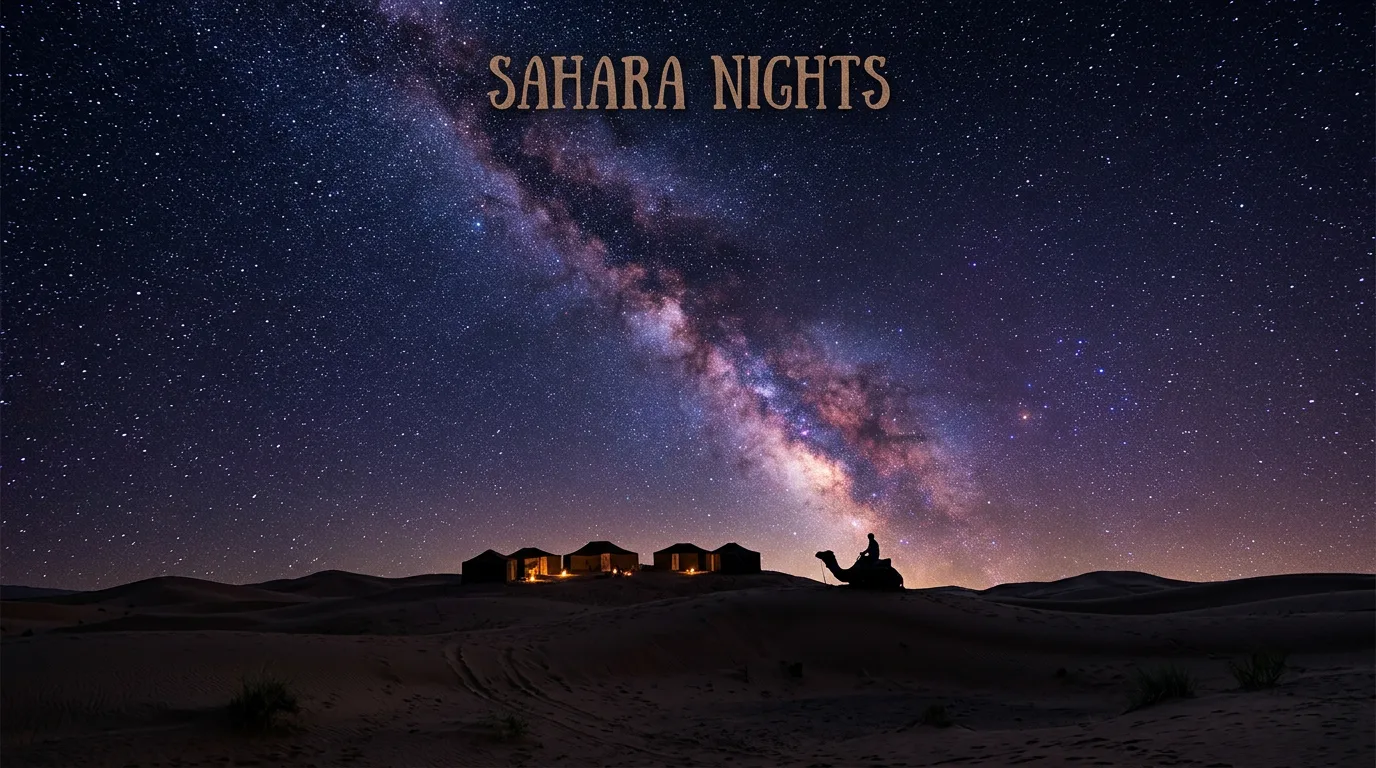
Guided Experiences
Stargazing Tours & Desert Camps
From single-night telescope sessions to multi-day Saharan expeditions, these curated experiences connect you with Morocco's dark skies through expert guidance and authentic desert hospitality.
Sahara Astronomy Expedition
Merzouga / Erg Chebbi
From 4,500 MAD
per person
A dedicated astronomy experience deep in the Sahara dunes. Travel by 4x4 to a remote desert camp, far from any light source. Professional astronomer guides provide high-powered telescopes and laser-pointed constellation tours. Each night features a different theme: planets and the Moon, deep-sky objects, and astrophotography.
3 nights4-12 peopleEasy
What's Included
Professional astronomer guide with Dobsonian telescope
Luxury desert camp with private tents
Camel trek to sunset viewpoint
Astrophotography workshop with tripods provided
Traditional Berber dinner and music
Night sky mythology and storytelling session
Atlas Mountain Observatory Night
Oukaimeden / High Atlas
From 1,800 MAD
per person
Journey to the High Atlas for an evening of serious astronomy at altitude. Drive up from Marrakech to the Oukaimeden plateau at 2,750 meters, where the thinner atmosphere and distance from city lights create excellent conditions. Observe through research-grade equipment while an astronomer explains what you are seeing.
1 night6-15 peopleEasy
What's Included
Transport from Marrakech and return
Access to high-quality telescopes (8" and 12" Dobsonians)
Expert astronomer guide and lecture
Hot Moroccan mint tea and snacks
Warm blankets and seating provided
Star map and red-light flashlight to take home
Erg Chigaga Dark Sky Trek
M'hamid / Erg Chigaga
From 6,200 MAD
per person
The ultimate dark-sky experience in Morocco. Trek by camel caravan from M'hamid into the vast Erg Chigaga dune field, one of the darkest accessible locations in North Africa. Three nights under Bortle Class 1 skies with no artificial light on any horizon. Combines serious astronomy with authentic Saharan adventure.
4 nights4-8 peopleModerate
What's Included
Camel caravan through the desert
Three nights in nomadic bivouac camps
Professional astronomer with portable telescope
Astrophotography guidance and camera setup assistance
Full board with traditional Saharan cuisine
Berber star lore and navigation workshop
All camping equipment and bedding
Zagora Stargazing & Oasis Retreat
Zagora / Draa Valley
From 3,200 MAD
per person
Combine dark-sky stargazing with the beauty of the Draa Valley oases. Stay in a boutique desert lodge surrounded by date palm groves, with unobstructed views of the night sky. Two guided observation sessions focus on seasonal highlights, constellation identification, and binocular deep-sky touring.
2 nights2-10 peopleEasy
What's Included
Boutique desert lodge accommodation
Two guided stargazing sessions with telescopes
Binoculars provided for personal use
Draa Valley palm grove walk at sunset
Traditional Moroccan meals
Constellation identification workbook
Photography Settings & Gear
Astrophotography in Morocco
Morocco's dark skies and dramatic desert landscapes create world-class astrophotography conditions. Here are the settings and techniques to capture the cosmos from the Sahara and Atlas Mountains.
Subject
Lens
Aperture
Shutter
ISO
Focus
Tips
Milky Way Wide-Field
14-24mm f/2.8 (or widest available)
f/2.8 (wide open)
15-25 seconds (use 500 rule: 500 / focal length)
ISO 3200-6400
Manual focus on a bright star using live view at 10x zoom
Shoot during astronomical twilight for foreground detail. Stack 10-15 frames to reduce noise. Use a sturdy tripod and remote shutter or 2-second timer.
Star Trails
14-35mm f/2.8-4
f/4
30 seconds per frame, 100-200 frames stacked
ISO 800-1600
Manual focus on Polaris or bright star
Point north for circular trails around Polaris, or east/west for diagonal trails. Use an intervalometer for consistent gaps. Stack in StarStaX or Photoshop. Include a foreground element like a dune ridge or tent.
Lunar Photography
200-600mm telephoto
f/8-f/11
1/125 - 1/250 second
ISO 100-400
Autofocus on the Moon's terminator (shadow line)
The Moon is surprisingly bright. The "looney 11" rule: f/11, 1/ISO shutter speed. Shoot during crescent phase for dramatic shadows on craters. The terminator (day/night line) reveals the most surface detail.
Planet Close-ups
Telescope with camera adapter (1000mm+ effective)
Determined by telescope
1/30 - 1/250 second (video mode preferred)
ISO 100-800
Manual focus, fine-tune on planet edge
Shoot video at high frame rate (60fps+) and stack best frames in RegiStax or AutoStakkert. Atmospheric seeing matters more than aperture. Wait for moments of steady air. Best 2-3 hours after sunset when the atmosphere stabilizes.
Meteor Showers
14-24mm f/2.8
f/2.8 (wide open)
20-30 seconds continuous shooting
ISO 3200-6400
Manual focus on a bright star
Point toward the radiant but not directly at it; meteors are longer away from the radiant. Shoot continuously all night and review later. A wide angle captures more sky area. Battery grip and spare batteries are essential in cool desert nights.
Desert Camp Under Stars
14-24mm f/2.8
f/2.8
20-30 seconds
ISO 1600-3200
Manual focus on the stars, then recompose
Light-paint the tent or camp gently with a warm-colored flashlight during the exposure (2-3 seconds of light during a 25-second exposure). This creates the iconic "glowing tent under the stars" shot. Use a headlamp with a red filter to preserve your night vision.
The 500 Rule for Sharp Stars
To avoid star trails in wide-field Milky Way photography, divide 500 by your focal length to get the maximum shutter speed in seconds. For example: 500 / 14mm = 35 seconds (though 25 seconds is safer for sharp results on modern high-resolution sensors). For crop-sensor cameras, use 500 / (focal length x crop factor).
14mm 25 sec
24mm 20 sec
35mm 13 sec
Gear Guide
Equipment Recommendations by Level
You do not need expensive equipment to enjoy Morocco's dark skies. Your naked eyes are the best place to start. Here is what to bring at each level of investment.
Naked Eye
Budget: Free- Your own eyes (allow 20-30 minutes for full dark adaptation)
- Red-light headlamp or flashlight (preserves night vision)
- Star chart or mobile app (SkySafari, Stellarium) with red-screen mode
- Reclining chair, blanket, or sleeping pad for comfort
- Warm layers (desert temperatures drop dramatically at night)
Best for: Constellations, Milky Way, meteor showers, bright planets, satellites
Binoculars
Budget: 500-3,000 MAD- 10x50 binoculars (ideal for astronomy: bright, wide field)
- Tripod adapter for binoculars (eliminates shake at high magnification)
- Sturdy tripod with fluid head
- All naked-eye equipment listed above
Best for: Star clusters, Andromeda Galaxy, Moon craters, Jupiter's moons, double stars, comets
Telescope
Budget: 3,000-15,000 MAD- 8" Dobsonian reflector (best value for visual astronomy)
- Or 80-100mm refractor on equatorial mount (portable option)
- Eyepiece set: 25mm (low power), 10mm (medium), 6mm (high power)
- Barlow lens (2x, doubles the magnification of each eyepiece)
- Collimation tool for reflectors
- Dew shield and dew heater strips
Best for: Planets, galaxies, nebulae, globular clusters, lunar detail, double stars
Astrophotography
Budget: 8,000-50,000+ MAD- Full-frame or APS-C mirrorless camera with good high-ISO performance
- Fast wide-angle lens (14-24mm f/2.8)
- Sturdy carbon fiber tripod
- Intervalometer or remote shutter release
- Star tracker mount (Sky-Watcher Star Adventurer or iOptron SkyGuider)
- Spare batteries (cold drains batteries faster)
- Rocket blower and lens cloth (sand is everywhere in the Sahara)
- Laptop with Lightroom/Photoshop for field review
Best for: Milky Way landscapes, star trails, tracked deep-sky, time-lapses
Multi-Experience Trips
Combine Stargazing With Other Adventures
Stargazing pairs naturally with Morocco's other great experiences. Build a multi-dimensional trip that fills your days with adventure and your nights with the cosmos.
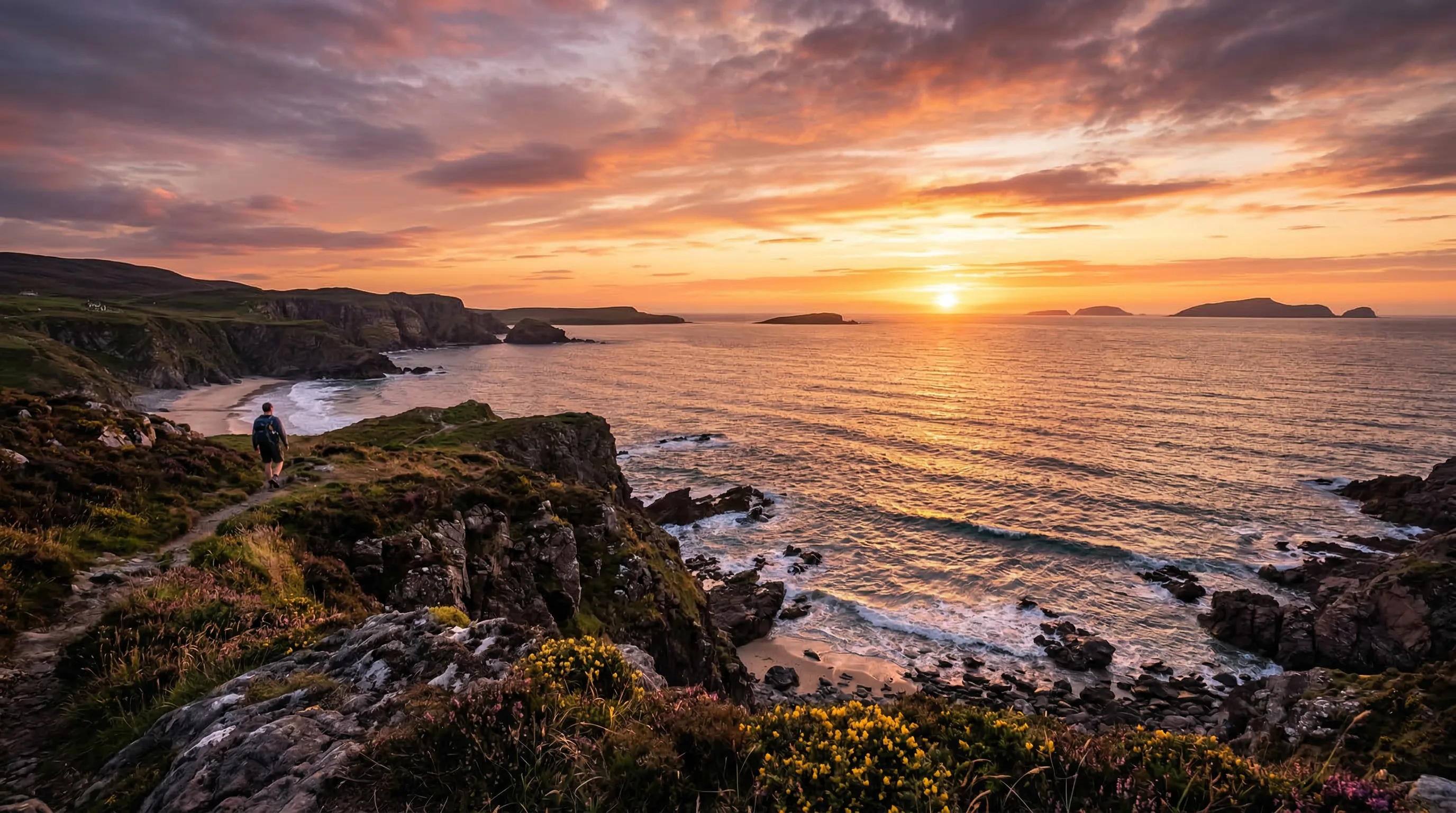
1-3 nightsMerzouga or M'hamid
Stargazing + Camel Trekking
Ride a camel caravan into the dunes at sunset, dine under the stars at a desert camp, and stargaze from the top of a dune with a guide. The quintessential Morocco experience.
3-5 daysToubkal National Park
Stargazing + Atlas Trekking
Hike through the High Atlas during the day and observe the stars from mountain camps at night. The altitude provides both physical challenge and astronomical rewards.

1-2 nightsErg Chebbi or Erg Chigaga
Stargazing + Desert Luxury Camp
Experience the stars from a luxury desert camp with king-size beds, private terraces, hot showers, and gourmet dining. Combines comfort with pristine dark skies.
2-4 nightsMerzouga or Zagora
Stargazing + Photography Workshop
Join a professional astrophotographer for hands-on instruction in capturing the Milky Way, star trails, and desert landscapes under the stars. All skill levels welcome.
2-3 nightsDraa Valley or Anti-Atlas
Stargazing + Cultural Immersion
Stay with a Berber family, learn traditional star navigation techniques, hear ancient star myths, and experience Saharan hospitality with mint tea, tagine, and music under the cosmos.
3-5 nightsZagora or Tafraout
Stargazing + Yoga & Wellness Retreat
Combine predawn yoga sessions, meditation under the stars, sound healing in the desert silence, and guided stargazing for a holistic mind-body-cosmos experience.
Essential Knowledge
Practical Stargazing Tips
Make the most of your dark-sky experience with these essential tips on preparation, comfort, and preserving your night vision.
Moon Phase Planning
- The single most important factor in stargazing quality is the Moon phase
- New Moon offers the darkest skies; plan your trip around it
- The week centered on new Moon (3 days before to 4 days after) is ideal
- A crescent Moon sets early and can actually add beauty to photos
- Full Moon ruins deep-sky viewing but is perfect for landscape photography
- Use apps like PhotoPills or The Photographer's Ephemeris for Moon phase planning
Dark Adaptation
- Your eyes need 20-30 minutes in complete darkness to fully adapt
- Even a brief flash of white light resets your adaptation to zero
- Use only red-filtered light (headlamp with red mode) to preserve night vision
- Set your phone to red-screen mode (accessibility settings) before going out
- Avoid looking at car headlights or camp fires when observing
- After full adaptation, you can see stars 50x fainter than your initial view
Desert Night Comfort
- Desert temperatures can drop 20-25 degrees C after sunset
- Layer clothing: thermal base, fleece mid-layer, windproof outer
- A warm hat and gloves are essential, even in spring/autumn
- Bring a thermos of hot mint tea or coffee for long sessions
- A sleeping pad or reclining chair keeps you off cold sand
- Hand warmers are useful for keeping fingers nimble on camera controls
Sand & Gear Protection
- Sand is the enemy of optical equipment in the Sahara
- Keep lens caps on until the moment you shoot, then replace immediately
- Carry a rocket blower (never canned air) to remove sand from lenses
- Store cameras in sealed dry bags or Ziploc bags when not in use
- Change lenses inside a tent or jacket to minimize sand exposure
- A UV filter on your lens acts as a sacrificial barrier against sand scratches
The Ultimate Experience
Desert Overnight Stargazing Camps
Sleeping under the stars in the Sahara is a transformative experience. Morocco offers camps ranging from authentic nomadic bivouacs to luxury glamping with king-size beds and private terraces. All share one thing in common: a night sky that must be seen to be believed.
Luxury Desert Camps
Private tents with en-suite bathrooms, hot showers, and gourmet dining. Erg Chebbi and Erg Chigaga have several world-class options. Prices from 2,000-5,000 MAD per night.
Mid-Range Bivouacs
Comfortable shared camps with clean facilities, traditional meals, and campfire gatherings. The social atmosphere adds to the experience. From 500-1,500 MAD per night.
Authentic Nomadic Camps
Sleep on traditional rugs under camel-hair tents, just as Saharan nomads have for centuries. The most immersive and affordable option. From 200-500 MAD per night.
Desert Camp Stargazing Checklist
Red-light headlamp (preserve your night vision and your neighbors')
Warm layers: thermal base, fleece, windproof jacket, hat, and gloves
Sleeping pad or mat for lying on the sand (much more comfortable than standing)
Binoculars (10x50 recommended for astronomy)
Star chart app with red-screen night mode enabled
Camera with wide-angle lens and tripod for astrophotography
Spare batteries (cold nights drain batteries rapidly)
Dry bag or Ziploc bags to protect gear from sand
Rocket blower for cleaning sand from lenses
Thermos for hot tea or coffee during long observing sessions
Sleeping bag rated to at least 5C (even in spring and autumn)
Patience: allow 30 minutes for your eyes to fully dark-adapt
Important Notes for Desert Stargazing
Sandstorms
The chergui (sirocco) wind can bring sandstorms, particularly in March-April. Check weather forecasts and have a backup plan. Sandstorms can last 1-3 days.
Navigation
Never venture into the desert alone without a local guide. Dunes look identical after dark, and it is extremely easy to become disoriented. Always go with experienced operators.
Dehydration
The desert air is extremely dry. Drink 3-4 liters of water per day minimum, even when it feels cool at night. Bring more water than you think you need.
Scorpions & Snakes
Shake out shoes and clothing left on the ground. Avoid reaching into dark spaces. Keep tent zipped. Encounters are rare but preparation prevents problems.
Morocco's Night Sky Gallery
A glimpse of what awaits above Morocco's desert and mountain horizons.
Milky Way over Sahara dunes
Star-filled sky over the Atlas Mountains
Deep space stars visible from the Sahara
Desert camp under the night sky
Star trails over Moroccan landscape
Luxury tent under the Milky Way
Camel caravan silhouetted against the twilight sky
Atlas Mountain peaks under starlight
Tools & Resources
Recommended Apps & Planning Tools
Stellarium
iOS, Android, DesktopPlanetarium App
Free, open-source planetarium for desktop and mobile. Shows the exact sky from any location and time. Essential for planning what to observe each night.
SkySafari
iOS, AndroidStar Chart & Telescope Control
Professional-grade astronomy app with detailed object descriptions, telescope control, and an excellent augmented reality mode for identifying stars and constellations.
PhotoPills
iOS, AndroidPhotography Planner
Plan Milky Way shots, star trails, and Moon photography with precision. Shows the Milky Way position, Moon phase, and golden hour for any location and date.
Light Pollution Map
WebDark Sky Finder
Interactive map showing global light pollution levels. Essential for finding the darkest spots in any region and understanding Bortle scale readings.
Clear Outside
Web, iOS, AndroidAstronomy Weather
Specialized weather forecast for astronomers. Shows cloud cover, transparency, seeing conditions, and humidity hour by hour for your observing location.
ISS Detector
iOS, AndroidSatellite Tracker
Track the International Space Station and other bright satellites passing over Morocco. The ISS is one of the brightest objects in the sky and visible to the naked eye.
Common Questions
Frequently Asked Questions
Do I need a telescope to enjoy stargazing in Morocco?
Absolutely not. The naked eye is the best instrument for many of Morocco's celestial highlights, including the Milky Way, meteor showers, planets, and constellations. Under Bortle Class 1-2 skies, you can see roughly 4,500 stars with the naked eye compared to just 200-300 from a city. Binoculars (10x50) are an excellent and affordable next step that reveal star clusters, the Andromeda Galaxy, and Jupiter's moons.
What is the single best location for stargazing in Morocco?
Erg Chigaga, reached from M'hamid el Ghizlane, offers the darkest accessible skies (Bortle Class 1) due to its extreme remoteness. However, Erg Chebbi near Merzouga is more accessible and offers nearly as dark skies (Bortle 1-2) with better tourism infrastructure. For a first trip, Merzouga is the easier choice. For the purist seeking the darkest skies, Erg Chigaga is unmatched.
When is the best time to see the Milky Way in Morocco?
The Milky Way's galactic core is visible from April through October. In April-May, it rises in the predawn hours. By July-August, it is visible in the evening sky, arching overhead at its most dramatic. September-October offers the core visible at dusk before it sets. Always plan around the new Moon for the darkest possible sky.
How cold does it get in the Sahara at night?
Desert temperatures drop dramatically after sunset. In summer (June-August), nights are warm (25-30C). In spring and autumn, expect 10-18C. In winter (December-February), nights can drop to 0-5C, occasionally below freezing. Always bring more warm clothing than you think you need. Layering is essential.
Can I do astrophotography with a smartphone?
Modern smartphones (iPhone 15 Pro, Samsung Galaxy S24, Pixel 8) have night modes that can capture surprisingly good Milky Way photos when propped against a rock or placed on a small tripod. Results will not match a dedicated camera, but they are a great starting point. The key requirements are: a phone with manual/night mode, a mini tripod or stable surface, and a 15-30 second exposure.
Are stargazing tours worth the cost?
For most visitors, yes. A knowledgeable astronomer guide transforms the experience from passively looking up to actively understanding what you see. Guides provide telescopes, laser pointers for constellation identification, cultural context, and help with astrophotography setup. The cost of hiring a guide is typically less than renting equivalent telescope equipment.
Is it safe to stargaze in the desert at night?
With an organized tour or reputable camp, yes. Never wander alone in the desert at night, as dunes look identical and disorientation is a genuine danger. Stick close to your camp, follow your guide's instructions, and always tell someone where you are going. Wildlife encounters (scorpions, snakes) are rare but possible; wear closed shoes and use a red-light headlamp.
How do I protect my camera gear from sand in the Sahara?
Sand is the biggest threat to optical equipment. Keep lens caps on when not shooting. Store cameras in sealed dry bags or padded Ziploc bags. Never change lenses in the open; do it inside a tent or jacket. Carry a rocket blower (not canned air) to remove sand particles. A UV filter on your lens acts as a sacrificial barrier. After the trip, have your camera professionally cleaned.
Continue Exploring Morocco
Discover more experiences that pair perfectly with a stargazing adventure.
Sahara Desert Guide
Complete guide to Morocco's Sahara, from camel treks to luxury camps.
ExplorePhotography Guide
Top 20 photo spots, gear tips, and golden hour timing across Morocco.
ExploreAtlas Mountains
Trekking, villages, and high-altitude experiences in the High Atlas.
ExploreDesert Tours
Guided desert experiences from day trips to multi-day expeditions.
ExploreYour Window to the Cosmos Awaits
In a world where 80% of the population has never seen the Milky Way, Morocco remains one of the last places where the full majesty of the night sky is accessible. Plan your dark-sky journey and experience the universe as our ancestors did, in breathtaking, humbling clarity.
Related Outdoor Experiences
Camping Guide
From wild desert bivouacs to mountain glamping, discover the best camping experiences across Morocco.
Sahara Desert Guide
Plan your Sahara adventure with tips on erg dunes, desert camps, camel treks, and oasis visits.
Desert Adventures
Explore thrilling Sahara excursions from camel treks to sandboarding and 4x4 dune expeditions.
Road Trip Routes
Epic driving itineraries through mountain passes, coastal roads, and desert highways across Morocco.
Best Time to Visit
Season-by-season breakdown of weather, crowds, and prices to help you plan the ideal Morocco trip.
Photography Guide
Master the art of capturing Morocco's landscapes, medinas, and night skies with expert photography tips.