Discovering...
December - March Season
Skiing in Morocco: Africa's Surprising Winter Playground
Snow-capped Atlas peaks, affordable lift passes, and the most unlikely ski destination on the continent. Yes, you can ski in Morocco, and it is an experience like no other.
Yes, You Can Ski in Morocco
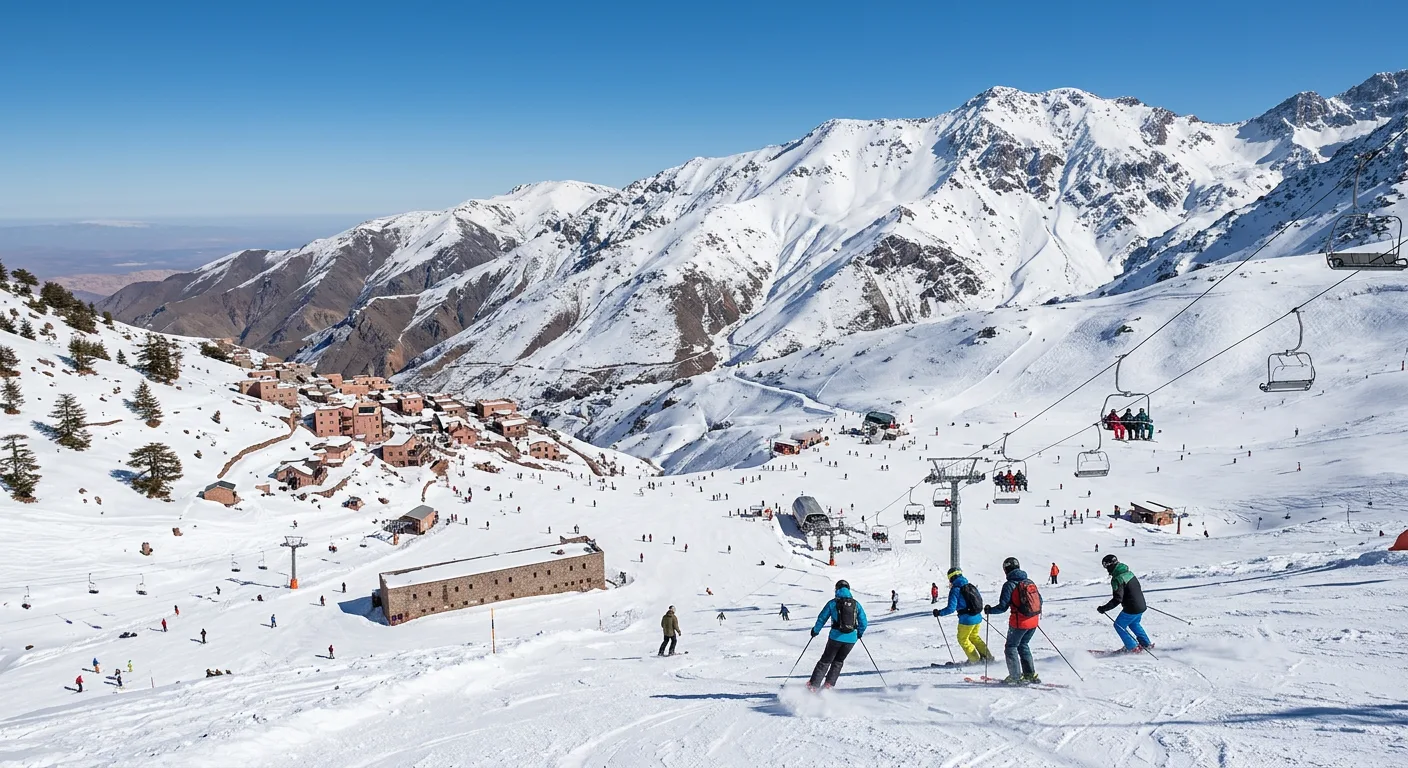
When people think of Morocco, they picture sun-baked medinas, sweeping sand dunes, and Atlantic surf breaks. Snow-covered mountains rarely enter the picture. But the Atlas Mountains, stretching 2,500 kilometers across Morocco, Algeria, and Tunisia, regularly receive heavy snowfall from December through March, transforming the highest peaks into a genuine winter sports destination. Morocco is home to the highest ski resort in Africa, and the Atlas Mountains offer everything from groomed resort runs to untouched backcountry powder.
The skiing is not world-class by Alpine standards. The infrastructure is modest, the lift systems are aging, snowmaking is nonexistent, and conditions are dependent entirely on natural snowfall. But that honesty is part of the appeal. What Morocco offers is something no European resort can: the chance to ski above the Sahara, to descend runs with views stretching from snow-covered peaks to desert plains, and to finish the day with a tagine and mint tea in a Berber village. You can ski in the morning and be wandering the souks of Marrakech by afternoon. In an ambitious day, you can even ski and reach the Atlantic coast before sunset.
Morocco's ski season runs from December to March, with January and February offering the most reliable conditions. The main resort, Oukaimeden, sits at 2,600 meters in the High Atlas just 75 kilometers from Marrakech and has been operating since the 1930s. A second resort at Michlifen in the Middle Atlas near Ifrane serves the northern cities of Fes and Meknes. Beyond the resorts, backcountry skiers are beginning to discover the untouched potential of peaks like Jebel Bou Iblane and Jebel Ayachi, where powder days rival anything in the Alps but with zero crowds.
Highest Resort
3,258m (Oukaimeden)
Season
December - March
Day Pass
150-200 MAD ($15-20)
From Marrakech
75 km (1.5 hours)
Oukaimeden
High Atlas, 75 km south of Marrakech
Altitude
2,600m base - 3,258m summit (Jebel Oukaimeden)
Lifts / Runs
5 lifts / 10 runs
Lift Pass
150-200 MAD/day (approx. $15-20 USD)
Season
December to March (peak: January-February)
Oukaimeden is Morocco's premier ski resort and the highest ski area in Africa. Nestled in the High Atlas Mountains at 2,600 meters, it sits in a natural bowl that collects snow from Atlantic weather systems crossing the mountains. The resort has been operating since the 1930s when the French protectorate built the first ski infrastructure here. Today it features 5 lifts including a chairlift and several T-bars, serving around 10 marked runs that range from gentle beginner slopes to more challenging intermediate terrain. The setting is spectacular: on clear days you can see from the snow-covered peaks all the way to the haze above Marrakech on the plains below. The resort has a unique atmosphere where Moroccan families, Marrakech weekenders, and international visitors mix on slopes that would feel familiar to any European skier, albeit with notably less infrastructure. The village at the base has several cafes, equipment rental shops, and a handful of hotels. Ancient petroglyphs (rock carvings dating back thousands of years) dot the landscape around the resort, adding a layer of historical depth absent from any Alpine resort.
Highlights
Highest ski resort in Africa at 3,258m summit
Just 75 km from Marrakech (1.5 hours drive)
Affordable lift passes at 150-200 MAD/day
Ancient petroglyphs scattered around the resort
Spectacular Atlas Mountain panoramas
Operating since the 1930s (French colonial era)
Natural snow bowl that collects Atlantic weather systems
Mix of beginner and intermediate terrain
Several cafes and restaurants at the base
Ski school with French and Arabic-speaking instructors
Getting There
From Marrakech: 75 km south via the S513 road through the Ourika Valley. The drive takes approximately 1.5 hours via paved road, though the final section is winding mountain road. Grand taxis from Marrakech can be hired for the day (500-800 MAD round trip). Several tour operators in Marrakech offer day trips including transport, equipment, and lift pass. In winter, snow chains may be required for the final stretch, and the road can occasionally close in heavy snowfall.
Accommodation
Hotel Chez JuJu (the classic resort hotel, from 400 MAD/night). CAF Refuge (Club Alpin Francais, from 150 MAD/night for members). A handful of smaller guesthouses in the village (200-500 MAD/night). Most visitors stay in Marrakech and day-trip to the resort. For multi-day stays, booking in advance during peak weekends (January-February) is advisable.
Dining
Several cafes at the base serve Moroccan staples: tagine, harira soup, grilled meats, and mint tea. Chez JuJu has a full restaurant. Prices are reasonable (50-120 MAD for a meal). There are no fine-dining options; the atmosphere is casual and hearty.
Snow Reliability
Variable. The resort relies entirely on natural snow from Atlantic weather systems. Good years see consistent coverage from mid-December through March with base depths of 30-80 cm. Poor years may have only intermittent coverage with weeks of bare ground between storms. There is no artificial snowmaking. January and February are the most reliable months. The north-facing aspect and high altitude help preserve snow once it falls. Always check local conditions before making the trip.
Best For
BeginnersIntermediate skiersFamiliesDay trippers from MarrakechSnowboardersCultural travelers
Equipment Rental
200-300 MAD/day for full ski or snowboard set. Rental shops are located at the base area. Arrive early on weekends for the best selection.
Michlifen
Middle Atlas, near Ifrane (18 km)
Altitude
1,800m base - 2,036m summit (Jebel Michlifen)
Lifts / Runs
3 lifts / 5 runs
Lift Pass
100-150 MAD/day (approx. $10-15 USD)
Season
December to February (shorter, less reliable than Oukaimeden)
Michlifen is Morocco's second ski area, located in the Middle Atlas Mountains near the town of Ifrane, sometimes called "Morocco's Switzerland" for its European-style architecture and cedar forests. The resort sits on Jebel Michlifen, a dormant volcanic crater that creates a natural amphitheater for skiing. At a lower altitude than Oukaimeden (peaking at 2,036m versus 3,258m), Michlifen receives less snow and has a shorter, less reliable season. The infrastructure is more basic, with just a few drag lifts serving gentle slopes. However, the setting is beautiful: Barbary macaque monkeys inhabit the surrounding cedar forests, and the nearby town of Ifrane offers a surprisingly Alpine atmosphere with its red-roofed chalets and manicured gardens. Michlifen is particularly popular with families from Fes and Meknes (both about 1.5-2 hours away) for weekend snow days. Cross-country skiing through the surrounding Middle Atlas cedar forests is arguably a bigger draw than the downhill skiing here, offering peaceful routes through pristine forest populated by Barbary macaques.
Highlights
Volcanic crater setting (natural amphitheater)
Near Ifrane, "Morocco's Switzerland"
Cedar forests with Barbary macaque monkeys
Popular with families from Fes and Meknes
Cross-country skiing through cedar forests
Most affordable skiing in Morocco
Gentle slopes ideal for beginners and children
Michlifen Ifrane Suites & Spa luxury hotel nearby
Getting There
From Fes: approximately 80 km south (1.5 hours drive) via Ifrane. From Meknes: approximately 70 km (1.5 hours). From Marrakech: approximately 450 km (5-6 hours, not practical for a day trip). The road from Ifrane to Michlifen is paved but can require chains in winter. Ifrane itself is well-connected by road from northern Morocco.
Accommodation
Michlifen Ifrane Suites & Spa (luxury, from 2,000 MAD/night). Hotels in Ifrane town (18 km away) from 300-800 MAD/night. Ifrane has a good range of accommodation from budget to upscale. Azrou (30 km) offers cheaper options from 150 MAD/night.
Dining
Limited facilities at the resort itself (basic snack stands). Ifrane town has a range of restaurants including Moroccan, French, and pizza. The Michlifen resort hotel has upscale dining. Street food vendors at the ski area sell roasted corn, hot tea, and snacks on busy weekends.
Snow Reliability
Less reliable than Oukaimeden due to lower altitude. Good snow coverage is possible from December to February, but the season is shorter and more dependent on individual storms. Some winters see very little snow. The volcanic crater shape helps retain snow when it falls. Cross-country routes in the forests may have coverage even when the resort slopes are thin.
Best For
BeginnersChildrenFamilies from Fes/MeknesCross-country skiersNature loversThose combining with Ifrane visit
Equipment Rental
150-250 MAD/day for basic ski equipment. Rental shops are located at the base area. Arrive early on weekends for the best selection.
Jebel Bou Iblane
Middle Atlas, near Taza (80 km south)
Altitude
2,000m base area - 3,190m summit
Lifts / Runs
1 lifts / 2 runs
Lift Pass
50-100 MAD/day (when operational)
Season
January to February (very short, snow dependent)
Jebel Bou Iblane is Morocco's most remote and least developed ski destination, and for adventurous skiers it offers the most exciting potential. Rising to 3,190 meters in the eastern Middle Atlas near Taza, Bou Iblane receives heavy snowfall from Mediterranean weather systems that the more western resorts miss. The mountain has a single old drag lift that operates intermittently (frequently broken down), but the real appeal is backcountry skiing: the upper reaches of Bou Iblane offer wide, open snowfields and couloirs that see virtually no other skiers. On a powder day after a Mediterranean storm, Bou Iblane offers skiing that would be recognizable to anyone who has toured in the European Alps, but in complete solitude. The mountain is remote, the infrastructure is minimal, and self-sufficiency is essential. Local shepherds sometimes act as informal guides. There is a small ski club (Club Alpin de Taza) that maintains some presence on the mountain, but do not expect organized services. For experienced backcountry skiers willing to accept the logistical challenges, Bou Iblane represents genuine frontier skiing in Africa.
Highlights
Heaviest snowfall in Morocco (Mediterranean storms)
Backcountry powder potential
Complete solitude (almost no other skiers)
Summit at 3,190m with wide open snowfields
Couloirs for advanced skiing
True frontier skiing experience
Local ski club presence (Club Alpin de Taza)
Untouched terrain for ski touring
Getting There
From Fes: approximately 120 km east to Taza, then 80 km south on mountain roads to the base area. The drive from Fes takes about 3-4 hours total. Roads beyond Taza are unpaved and can be impassable in winter without a 4x4. From Oujda: approximately 200 km west. No public transport to the mountain; a 4x4 vehicle is essential.
Accommodation
Very basic. A small refuge near the base area may or may not be open. Most visitors camp or stay in Taza (80 km away, hotels from 200 MAD). Some local homes near the mountain may offer informal hospitality. Self-sufficiency is key.
Dining
No formal dining facilities on the mountain. Bring all food and supplies. Taza has basic restaurants. Local villages in the valley below may have small shops for essentials.
Snow Reliability
Paradoxically the most snow-reliable area in Morocco due to its position catching Mediterranean weather systems. Heavy snowfalls can deposit 50-100 cm in a single storm. However, the lack of grooming means conditions vary from powder to windblown crust. The season is short but can be excellent when conditions align.
Best For
Experienced backcountry skiersSki tourersAdventure seekersSelf-sufficient winter mountaineers
Equipment Rental
Very limited rental available; bring your own equipment. This is a backcountry destination. Bring all your own equipment, safety gear, and supplies.
Other Skiing & Touring Spots
Beyond the established resorts, Morocco's mountains offer scattered opportunities for ski touring, backcountry exploration, and impromptu snow experiences. None of these have formal resort infrastructure, but each offers something unique.
Jebel Hebri
Middle Atlas, near Azrou | 2,104m
A small peak in the Middle Atlas cedar forests near Azrou and Ifrane. Jebel Hebri receives enough snow in good years for informal skiing and snowshoeing through the cedar forests. There are no lifts or formal infrastructure, but the forested slopes offer pleasant cross-country touring and snowshoeing. The Barbary macaque population in the area makes for unique wildlife encounters while skiing through the trees. Local forest tracks provide natural ski touring routes.
Best for: Cross-country skiing, snowshoeing, nature walks in snow
Access: From Azrou: approximately 20 km south. 4x4 recommended in winter conditions.
Tichka Pass Area
High Atlas, Tizi n'Tichka (N9 highway) | 2,260m at the pass, higher on surrounding peaks
The Tizi n'Tichka pass on the main Marrakech-Ouarzazate highway crosses the High Atlas at 2,260 meters. In winter, the pass and surrounding peaks receive regular snowfall that sometimes closes the road. The terrain around the pass offers informal ski touring on the slopes above the road. This is not a resort and there is no infrastructure, but for ski tourers passing through on the way to or from the Sahara, it can provide an unexpected snow experience. The slopes above the pass reach over 3,000 meters and can hold good snow into March.
Best for: Ski touring, impromptu snow stops on the Marrakech-Ouarzazate route
Access: On the N9 highway between Marrakech and Ouarzazate. The pass is approximately 100 km from Marrakech (2 hours drive). The road is paved but chains may be required in winter.
Jebel Ayachi
Eastern High Atlas, near Midelt | 3,747m summit
Jebel Ayachi is one of the highest mountains in Morocco at 3,747 meters and the dominant peak of the eastern High Atlas. The mountain receives substantial snowfall and retains snow cover well into spring at higher elevations. There is no ski resort infrastructure, but the wide, open slopes above the treeline offer excellent ski touring terrain for experienced mountaineers. The approach from Midelt is long (full day approach to base camp) but the reward is vast, untracked snowfields with views across the Moulouya plain. Some international ski touring groups have started including Ayachi in their Morocco itineraries.
Best for: Ski mountaineering, ski touring, winter summiting
Access: From Midelt: approximately 30 km south to trailhead, then full day approach on foot/mule. 4x4 required to trailhead. Remote and requires full mountaineering self-sufficiency.
Cross-Country Skiing
Morocco's Middle Atlas cedar forests and High Atlas plateaus offer a setting for cross-country skiing that is unlike anything in Europe. No groomed tracks, no trail fees, just you, the snow, and an ancient forest inhabited by Barbary macaques. Bring your own equipment; there is no rental infrastructure for cross-country skiing in Morocco.
Michlifen Cedar Forest Loop
Middle Atlas, near Ifrane8-15 km (variable depending on route)
The cedar forests surrounding Michlifen and Ifrane offer Morocco's best cross-country skiing when snow conditions permit. Well-spaced Atlas cedar trees (Cedrus atlantica) create natural corridors through the forest, and the relatively gentle Middle Atlas terrain provides rolling routes that are manageable for intermediate cross-country skiers. The forest is home to Barbary macaques, and skiing past a troop of monkeys huddled in snow-dusted cedars is one of Morocco's most surreal winter experiences.
Atlas cedar forest setting
Barbary macaque encounters
Rolling, manageable terrain
Multiple route options
Beautiful forest photography
Oukaimeden Plateau Circuit
High Atlas, Oukaimeden5-10 km
Above the ski resort, the Oukaimeden plateau extends across a high-altitude tableland at around 2,800-3,000 meters. When snow coverage is good, this plateau offers Nordic-style touring with dramatic mountain views in every direction. The terrain is more exposed than the Michlifen forests, so wind can be a factor, but the views of Jebel Toubkal and the High Atlas ridge are extraordinary. The altitude means this route is physically demanding despite the gentle gradients.
High-altitude plateau at 2,800-3,000m
Panoramic Atlas Mountain views
Views toward Jebel Toubkal (4,167m)
Above the ski resort for solitude
Ancient petroglyphs along the route
Azrou Forest Trails
Middle Atlas, near Azrou5-20 km (multiple trails)
The protected cedar forests around Azrou, part of the Cedre Gouraud forest, provide gentle, well-shaded terrain for cross-country skiing after snowfall. The famous cedar tree "Cedre Gouraud" (a massive 800-year-old Atlas cedar) marks the heart of this forest. Trails follow forest roads and tracks that are used by hikers and mountain bikers in other seasons. The canopy provides wind protection and the flat to gently rolling terrain is suitable for beginners.
800-year-old Cedre Gouraud cedar tree
Protected forest ecosystem
Gentle terrain suitable for beginners
Forest road network for easy navigation
Possible Barbary macaque sightings
Middle Atlas Moonlight Skiing
Michlifen or Azrou forests3-8 km
An unforgettable experience for those willing to venture out after dark. On clear nights with a full or near-full moon, the snow-covered cedar forests of the Middle Atlas glow with an ethereal silver light. The silence is total except for the swish of skis and occasional owl call. This is not an organized activity but rather something that adventurous cross-country skiers arrange independently. Headlamps are essential as backup, and familiarity with the route in daylight is strongly recommended. The best months for moonlight skiing are January and February when snow cover is deepest and cold, clear nights are common.
Moonlit cedar forest experience
Total silence and solitude
Silver-lit snowscapes
January-February full moon dates ideal
Truly unique Moroccan winter experience
Snowshoeing in the Atlas Mountains
Snowshoeing is arguably the most accessible and rewarding winter activity in Morocco. The High Atlas villages around Toubkal and the Middle Atlas forests near Ifrane offer guided and independent snowshoe treks through landscapes that combine winter beauty with living Berber culture.
Imlil to Armed Village Winter Trek
Toubkal National Park, High Atlas4-6 hours round tripStart: Imlil (1,740m)
Imlil, the gateway village to Jebel Toubkal, transforms in winter into a snowshoeing base camp. The trail from Imlil up the Mizane Valley to the village of Armed (also spelled Aremd or Aroumd) at 1,940 meters is one of Morocco's most accessible and beautiful snowshoe treks. The path winds through terraced walnut orchards buried under snow, past Berber villages with smoke rising from flat rooftops, and alongside the frozen river valley with Toubkal's massive white flanks looming above. The village of Armed itself is a traditional Berber settlement where life continues through the winter months largely as it has for centuries. Local guides from Imlil know the terrain intimately and can adjust routes based on conditions.
Gateway to North Africa's highest peak
Snow-covered Berber villages
Terraced walnut orchards under snow
Views of Jebel Toubkal (4,167m)
Traditional Berber mountain culture
Professional guides available in Imlil
400-600 MAD/day for a licensed mountain guide, plus snowshoe rental 100-200 MAD/day
Toubkal Refuge Winter Approach
Toubkal National Park, High Atlas2 days (overnight at refuge)Start: Imlil (1,740m)
For experienced winter hikers, the snowshoe approach to the Refuge du Toubkal at 3,207 meters is a serious but rewarding undertaking. The trail gains nearly 1,500 meters of elevation through increasingly alpine terrain, from the village of Imlil through Armed and up the Mizane Valley past the shrine of Sidi Chamharouch (2,310m) to the refuge. In winter, this is a full mountaineering day requiring snowshoes, possibly crampons for icy sections, and proper winter clothing. The refuge (run by the CAF - Club Alpin Francais) is heated and serves meals, providing a warm base for the night. The winter summit of Toubkal from the refuge requires ice axe and crampons and is a serious mountaineering objective, not a snowshoe trip.
Approach to 3,207m refuge
Serious winter mountaineering environment
Heated CAF refuge with meals
Shrine of Sidi Chamharouch at 2,310m
Gateway to winter Toubkal summit attempt
Nearly 1,500m of elevation gain
600-800 MAD/day for a licensed mountain guide (mandatory for Toubkal in winter), refuge overnight 200-350 MAD including dinner and breakfast
Oukaimeden to Tacheddirt Valley
High Atlas, south of Marrakech5-7 hoursStart: Oukaimeden (2,600m)
Starting from the Oukaimeden ski resort, this snowshoe route crosses a high pass (Tizi n'Eddi at approximately 3,000m) and descends into the remote Tacheddirt Valley. The route traverses alpine terrain above the treeline with expansive views of the High Atlas ridge. The village of Tacheddirt (2,314m) on the far side is a traditional Berber settlement that sees very few winter visitors. The descent into the valley through snow-covered fields with the village appearing below is one of the most photogenic winter scenes in Morocco. A vehicle pick-up from Tacheddirt or a return over the pass is needed to complete the day.
High pass crossing at 3,000m
Remote Tacheddirt Valley
Traditional Berber village in winter
Expansive High Atlas panoramas
Connects two valleys
Photogenic descent into snow-covered valley
500-700 MAD/day for a licensed mountain guide, transport arrangements additional
Ifrane National Park Winter Walk
Middle Atlas, Ifrane2-4 hoursStart: Ifrane town
The easiest and most accessible snowshoe experience in Morocco. Ifrane National Park, immediately adjacent to the town, offers flat to gently rolling terrain through atlas cedar and oak forests. After a snowfall, the park transforms into a winter wonderland that looks more like the Swiss Alps than North Africa. Well-maintained trails and the proximity to Ifrane's hotels and cafes make this ideal for families and those new to snowshoeing. Barbary macaques are active year-round and are often easier to spot against the white snow. The famous carved stone lion of Ifrane is a popular snow-covered photo stop.
Flat, accessible terrain
Cedar and oak forest setting
Barbary macaque encounters
Family-friendly
Adjacent to Ifrane town amenities
Famous stone lion photo opportunity
Not required for park trails. Snowshoe rental in Ifrane from 100-150 MAD/day (limited availability, bring your own if possible)
Equipment & Rentals
Be honest with yourself about what you need to bring. Morocco's rental infrastructure is functional for basic downhill skiing at Oukaimeden, but limited for everything else. Here is a straightforward assessment of what is available locally and what you must bring from home.
Equipment Reality Check
If you are a casual skier visiting Oukaimeden for a day trip from Marrakech, rental equipment will do the job. If you are planning cross-country skiing, backcountry touring, snowshoeing, or multi-day winter activities, bring your own equipment. Morocco does not have the rental infrastructure for specialized winter sports.
| Equipment | Available Locally | Quality | Rental Cost | Our Recommendation |
|---|---|---|---|---|
| Skis & Bindings | Basic to intermediate. Rental fleet is aging but functional. Mostly older models from European resorts. | 150-250 MAD/day at Oukaimeden, 100-200 MAD at Michlifen | Acceptable for casual skiing. Serious skiers should bring their own. Check bindings carefully before heading to the slopes. | |
| Snowboard & Bindings | Limited selection. A few rental shops at Oukaimeden have snowboards but choice is very restricted. | 200-300 MAD/day at Oukaimeden | Bring your own if snowboarding is important to you. Local selection is limited and sizes may not match. | |
| Ski Boots | Variable. Some well-maintained boots, some worn out. Size range can be limited for larger feet. | Usually included with ski rental | Bring your own boots if you have them. Ill-fitting rental boots are the most common complaint. Try several pairs. | |
| Ski Poles | Basic but functional. | Usually included with ski rental | Rental poles are fine. Not worth packing your own unless you are particular about grip and length. | |
| Helmet | Not commonly available for rent. | N/A | Bring your own. Helmets are not standard at Moroccan resorts and are rarely available for rent. Strongly recommended, especially for children. | |
| Goggles & Sunglasses | Basic sunglasses available in resort shops. Proper ski goggles rarely available for rent. | Purchase only: 50-200 MAD for basic sunglasses | Bring your own ski goggles. The Atlas sun at altitude is intense and proper UV protection is essential. Snow blindness is a real risk. | |
| Ski Clothing | Not available for rent. | N/A | Bring all your own ski clothing. Waterproof jacket, ski pants, thermal layers, gloves, and a warm hat are essential. Marrakech markets sell warm clothing but not technical ski gear. | |
| Snowshoes | Limited availability. Some guides in Imlil have snowshoes for clients. Ifrane has very limited rental. | 100-200 MAD/day where available | Bring your own for guaranteed availability and proper fit. If booking with a guide in Imlil, confirm snowshoe provision in advance. | |
| Cross-Country Skis | Not available for rent anywhere in Morocco. | N/A | Must bring your own. Cross-country skiing in Morocco is entirely a bring-your-own-equipment activity. | |
| Touring Skis & Skins | Not available for rent. | N/A | Must bring your own. Backcountry skiing at Bou Iblane or Ayachi requires full self-sufficiency in equipment. |
Must Bring From Home
- Ski goggles with UV protection (essential at altitude)
- Helmet (not available for rent)
- Waterproof ski jacket and pants
- Thermal base layers (merino wool recommended)
- Ski gloves (warm, waterproof)
- Warm hat and neck gaiter
- Sunscreen SPF 50+ (Atlas sun is fierce)
- Cross-country skis (if planning Nordic skiing)
- Snowshoes (if planning snowshoeing, limited local rental)
- Touring equipment (if backcountry skiing)
Fine to Rent Locally
- Downhill skis and bindings (basic but functional at Oukaimeden)
- Ski boots (try several pairs for fit)
- Ski poles (included with ski rental)
- Snowboard (limited selection at Oukaimeden only)
Pro Tips for Rental
- Arrive early (before 9 AM) for the best equipment selection
- Inspect ski bindings before heading to the slopes
- Negotiate rental prices, especially for groups or multi-day
- Check boot buckles and soles for excessive wear
- Ask for a slightly shorter ski if the conditions are icy
Practical Guide
Everything you need to plan a skiing trip to Morocco, from the best months for snow to driving in winter conditions and combining skiing with a Marrakech city trip.
Monthly Snow Conditions
| Month | Oukaimeden | Michlifen | Bou Iblane | Overall |
|---|---|---|---|---|
| November | Rare early snow possible above 3,000m | Very unlikely | Possible at summit | Too early for most years |
| December | Season opens if snow arrives. Hit or miss. | Possible opening in good years | Snow accumulating at altitude | Early season, check conditions |
| January | Best month. Most reliable snow coverage. | Best chance for snow coverage | Peak snow depth potential | Prime skiing month |
| February | Strong month. Good accumulation. | Good coverage in strong years | Excellent backcountry potential | Prime skiing month |
| March | Declining but sometimes good. Spring storms possible. | Season ending. Patchy. | Late season possible at altitude | Late season, unpredictable |
| April | Rare. Only at highest elevations. | Season over | Remnant snow at summit only | Season effectively over |
Best Months to Visit
BEST
January - February: Most reliable snow coverage at all areas. Deepest snowpack, coldest temperatures, and the longest continuous skiing windows. If you can only come once, come in mid-January.
GOOD
December: Season opening, but snow is not guaranteed. Some years see excellent early coverage; others do not see significant snow until late December or January.
LATE
March: Season winding down. Spring storms can bring fresh snow but coverage is increasingly patchy. Warm afternoons cause rapid melt. Best for late-season ski touring at higher elevations.
Snow Reports & Information
Morocco does not have a centralized ski report system like European countries. Here is how to check conditions:
- Social media: Search "Oukaimeden" or "Michlifen" on Instagram and Facebook for recent photos from visitors
- Local contacts: Hotels at the resorts can report conditions by phone
- Weather forecasts: Check mountain weather forecasts for the Atlas Mountains (above 2,500m)
- Webcams: Oukaimeden occasionally has webcam feeds, but reliability varies
- Tour operators: Marrakech-based ski tour operators monitor conditions and can advise
- Satellite imagery: Snow cover maps can show general accumulation at altitude
Driving in Winter Conditions
Snow chains are essential. Here is what you need to know:
- Snow chains are required on the road to Oukaimeden when there is snow above 2,000m. Police enforce this and will turn you back without chains.
- Chains can be purchased in Marrakech hardware stores (150-300 MAD) or rented at the entrance to the Oukaimeden road.
- The Tizi n'Tichka pass (Marrakech to Ouarzazate) can close in heavy snowfall. Check conditions before crossing.
- The road to Ifrane and Michlifen from Fes/Meknes is generally kept clear but chains are advisable.
- 4x4 vehicles with all-terrain tires are strongly recommended for reaching Jebel Bou Iblane.
- Moroccan rental car companies may not allow chains on their vehicles. Check your rental agreement.
- Road conditions can change rapidly. A clear morning drive can become an icy return in the afternoon.
Where to Stay
For Oukaimeden:
Most visitors base in Marrakech and day-trip. If staying at the resort: Hotel Chez JuJu (from 400 MAD/night) is the classic choice. CAF Refuge (from 150 MAD/night) for budget mountaineers. A few basic guesthouses offer rooms from 200 MAD. Book ahead for January/February weekends.
For Michlifen:
Stay in Ifrane (18 km away). The town has hotels ranging from budget (300 MAD) to the luxury Michlifen Ifrane Suites and Spa (from 2,000 MAD). Azrou (30 km) offers cheaper alternatives. Fes is feasible for a day trip but it is 1.5 hours each way.
Combining with Marrakech:
The ideal trip combines 3-4 nights in Marrakech with 1-2 day trips to Oukaimeden. This gives you the cultural experience of the medina, the souks, and Moroccan cuisine alongside the unique experience of skiing in the Atlas Mountains. Many riads in Marrakech can arrange ski day trips including transport.
Safety Considerations
On the Slopes
- No ski patrol at Moroccan resorts. You are responsible for your own safety.
- No avalanche control. Backcountry skiers must assess avalanche risk independently.
- Medical facilities are basic. The nearest hospital to Oukaimeden is in Marrakech (1.5 hours).
- Altitude sickness is possible at Oukaimeden (2,600-3,258m). Allow time to acclimatize.
- The Atlas sun is intense at altitude. Sunscreen, lip balm, and goggles are essential.
- Lift infrastructure is older. Exercise caution on T-bars and drag lifts.
Winter Trekking & Snowshoeing
- Licensed mountain guides are mandatory for Toubkal in winter (and strongly recommended everywhere).
- Weather can change rapidly in the Atlas Mountains. Carry warm layers even on sunny mornings.
- Rivers and streams swell with snowmelt and can be dangerous to cross.
- Mobile phone signal is unreliable in mountain valleys. Carry a map and compass.
- Travel insurance with mountain rescue coverage is essential for backcountry activities.
- Inform your accommodation of your planned route and expected return time.
Ski Morocco, Beach by Afternoon
One of Morocco's most extraordinary travel claims: the possibility of skiing in the morning and reaching the Atlantic coast by afternoon. It is tight, it requires planning, and it is not relaxing, but it is genuinely possible, and it makes for an unforgettable story.
The Ski-to-Beach Itinerary
7:00 AM
Depart Marrakech
Leave your riad early and drive south toward Oukaimeden (75 km, approximately 1.5 hours).
8:30 AM
Arrive at Oukaimeden
Rent equipment, purchase lift pass, and begin skiing. The slopes are usually quietest in the early morning.
8:30 - 11:30 AM
Ski the Atlas
Three hours of skiing on snow-covered Atlas Mountain slopes at 2,600-3,258 meters altitude.
11:30 AM
Return equipment and depart
Return rental gear and head back down the mountain road toward Marrakech.
1:00 PM
Quick stop in Marrakech (optional)
Grab lunch at a roadside restaurant or continue straight to the coast. Marrakech to Essaouira is approximately 190 km (2.5-3 hours).
3:30 - 4:00 PM
Arrive at the Atlantic coast
Reach Essaouira or the beaches between Essaouira and Agadir. Walk on the beach, feel the sand. You were skiing six hours ago.
4:00 PM onward
Beach time and sunset
Watch the Atlantic sunset from the ramparts of Essaouira or a beach bar in Taghazout. Consider that this morning you were at 3,000 meters in snow.
Morning
Skiing at 3,000m+ in the Atlas
Midday
Drive through Marrakech plains
Afternoon
Atlantic beach and sunset
Reality Check
This itinerary is more of a bucket-list adventure than a relaxing day. The total driving time is roughly 5-6 hours. You will not get a full day of skiing or a full day at the beach. But you will have done something almost no one else has done: gone from snow to sand in a single day in Africa. The surfing version (ski in the morning, surf in the afternoon in Taghazout) is even more ambitious but has been done.
Morocco vs. European Ski Resorts
An honest comparison. Morocco is not trying to compete with the Alps. It offers a fundamentally different experience at a fraction of the cost. Here is how the numbers compare.
| Category | Morocco | Europe (Budget) | Europe (Popular) |
|---|---|---|---|
| Day Lift Pass | 150-200 MAD ($15-20) | EUR 30-50 ($33-55) | EUR 55-75 ($60-83) |
| Equipment Rental (Full Day) | 200-300 MAD ($20-30) | EUR 25-40 ($28-44) | EUR 35-55 ($39-61) |
| Ski Lesson (2 hours) | 200-400 MAD ($20-40) | EUR 40-60 ($44-66) | EUR 60-100 ($66-110) |
| On-Mountain Lunch | 50-120 MAD ($5-12) | EUR 12-20 ($13-22) | EUR 15-30 ($17-33) |
| Budget Hotel (per night) | 200-500 MAD ($20-50) | EUR 50-80 ($55-88) | EUR 80-200 ($88-220) |
| Crowd Levels | Low to moderate (weekends busier) | Moderate | High to very high |
| Number of Lifts | 5 (Oukaimeden) | 10-30 | 50-200+ |
| Groomed Runs | Minimal grooming | Well-groomed | Immaculately groomed |
| Snow Reliability | Variable (natural snow only) | Moderate (some snowmaking) | High (extensive snowmaking) |
| Apres-Ski Scene | Mint tea and tagine | Local bars and restaurants | Extensive nightlife and dining |
| Cultural Experience | Unique: Berber culture, medinas, desert nearby | Alpine village charm | Well-developed resort culture |
| Overall Daily Cost | $50-100 (all-in from Marrakech) | $120-200 | $200-400+ |
Where Morocco Wins
- Cost: 3-5 times cheaper than European resorts for everything
- Crowds: Almost never crowded, even on peak weekends
- Uniqueness: No other destination offers this cultural-skiing combination
- Cultural depth: Berber villages, medinas, desert within easy reach
- Food: Moroccan cuisine is world-class and incredibly affordable
- Climate diversity: Ski and beach in the same country (same day)
- Warmth: Base temperatures often milder than European Alps
- Adventure factor: Raw, unpolished experience that feels authentic
Where Europe Wins
- Infrastructure: Modern lifts, groomed runs, snowmaking, ski patrol
- Snow reliability: Artificial snowmaking guarantees coverage
- Terrain variety: Hundreds of runs versus a handful
- Safety: Professional ski patrol and mountain rescue
- Equipment rental: Modern, well-maintained gear
- Apres-ski: Extensive dining, nightlife, and entertainment
- Ski schools: Multilingual, professional instruction programs
- Accessibility: Easy to reach from major European cities
The Bottom Line
Do not come to Morocco expecting Val d'Isere or Verbier. Come expecting a warm, affordable, culturally rich experience that happens to include skiing. The slopes are a bonus on top of a Morocco trip, not the reason for the trip. If you adjust your expectations accordingly, you will have an extraordinary time. The best approach is to plan a Morocco holiday that includes a ski day or two, rather than a ski holiday that happens to be in Morocco.
Frequently Asked Questions
Can you really ski in Morocco?
Yes. Morocco has been a skiing destination since the 1930s. Oukaimeden in the High Atlas is the primary resort, with 5 lifts and 10 runs at 2,600-3,258 meters altitude, just 75 km from Marrakech. Michlifen near Ifrane in the Middle Atlas is the second resort. The season runs from December to March, depending entirely on natural snowfall. The skiing is modest by European standards but genuine, affordable, and set against spectacular mountain scenery.
Is it worth going to Oukaimeden if I am an advanced skier?
Honestly, probably not for the on-piste skiing alone. Oukaimeden has mostly beginner and intermediate terrain with limited vertical. However, the surrounding mountains offer ski touring potential above the resort, and the cultural experience of skiing in Africa combined with a Marrakech trip can make it worthwhile. Advanced skiers looking for challenging terrain should consider backcountry ski touring on Jebel Bou Iblane or Jebel Ayachi instead.
Do I need to book a ski trip in advance?
For Oukaimeden day trips from Marrakech, no advance booking is usually necessary outside of peak weekends (January-February Saturdays). Equipment rental is first-come-first-served. For accommodation at the resort or guided backcountry trips, booking in advance is recommended, especially during the short peak season.
Can I snowboard at Oukaimeden?
Yes. Snowboarding is allowed on all runs. A few rental shops at the base have snowboards available, though the selection is more limited than skis. If you are particular about your board or bindings, bring your own. The terrain is best suited to beginner and intermediate snowboarders.
Is there artificial snowmaking at Moroccan ski resorts?
No. Neither Oukaimeden nor Michlifen has snowmaking equipment. The resorts rely entirely on natural snowfall. This means conditions are unpredictable, and there will be winters (or weeks within a winter) with little to no skiable snow. Always check conditions before making the trip.
How does altitude affect skiing at Oukaimeden?
At 2,600-3,258 meters, altitude sickness is a possibility, especially if you fly into Marrakech (at 450 meters) and drive up to the resort the same day. Symptoms include headache, nausea, and shortness of breath. Take it easy on your first runs, drink plenty of water, and descend if you feel unwell. Most people acclimatize quickly at these altitudes, but it is worth being aware of.
Can I take ski lessons at Oukaimeden?
Yes. The resort has a ski school with instructors who speak French and Arabic (some speak English). Group and private lessons are available at reasonable prices (200-400 MAD for a private lesson). The gentle beginner slopes at the base are well-suited for learning. Quality of instruction varies, but the gentle terrain is forgiving for beginners.
What about ski insurance and mountain rescue?
There is no organized mountain rescue service at Moroccan ski resorts. Travel insurance with winter sports coverage and emergency evacuation is strongly recommended. For backcountry skiing, mountaineering-grade insurance with helicopter evacuation coverage is essential. The nearest hospitals to Oukaimeden and Michlifen are in Marrakech and Ifrane respectively, both at least 1.5 hours away.
Is the road to Oukaimeden safe in winter?
The road is paved but narrow and winding in the upper sections. Snow chains are required when there is snow (police check at a checkpoint). The road can close temporarily in heavy snowfall. Drive carefully, especially on the descent when ice forms in the afternoon shade. Grand taxis and tour operators from Marrakech are experienced with the winter road conditions.
Can I combine skiing with a Sahara desert trip?
Absolutely, and this is one of Morocco's unique travel propositions. A 7-10 day itinerary could include: Marrakech (2-3 nights), ski day trip to Oukaimeden, drive over the Atlas via Tizi n'Tichka to Ouarzazate and Merzouga (2-3 nights for desert and dunes), return to Marrakech or continue to Fes. In January-February, you could experience snow in the Atlas and mild desert sunshine in the Sahara on the same trip.
How do locals react to skiing in Morocco?
Skiing at Oukaimeden is popular with Moroccan families from Marrakech, especially on weekends. Many Moroccans from the mountains grew up playing in the snow and are comfortable in winter conditions. The resort has a festive, family atmosphere on busy weekends, with children sledding, families picnicking in the snow, and a generally warm, welcoming vibe. You will not be the only person on the slopes.
What is the best base for a skiing holiday in Morocco?
Marrakech is the best base for Oukaimeden (75 km away). You get world-class cultural experiences, dining, and accommodation combined with easy day-trip access to the slopes. For Michlifen, Ifrane is the closest base (18 km), with Fes (80 km) as a larger city alternative offering more cultural attractions. For backcountry skiing at Bou Iblane, Taza is the nearest town.
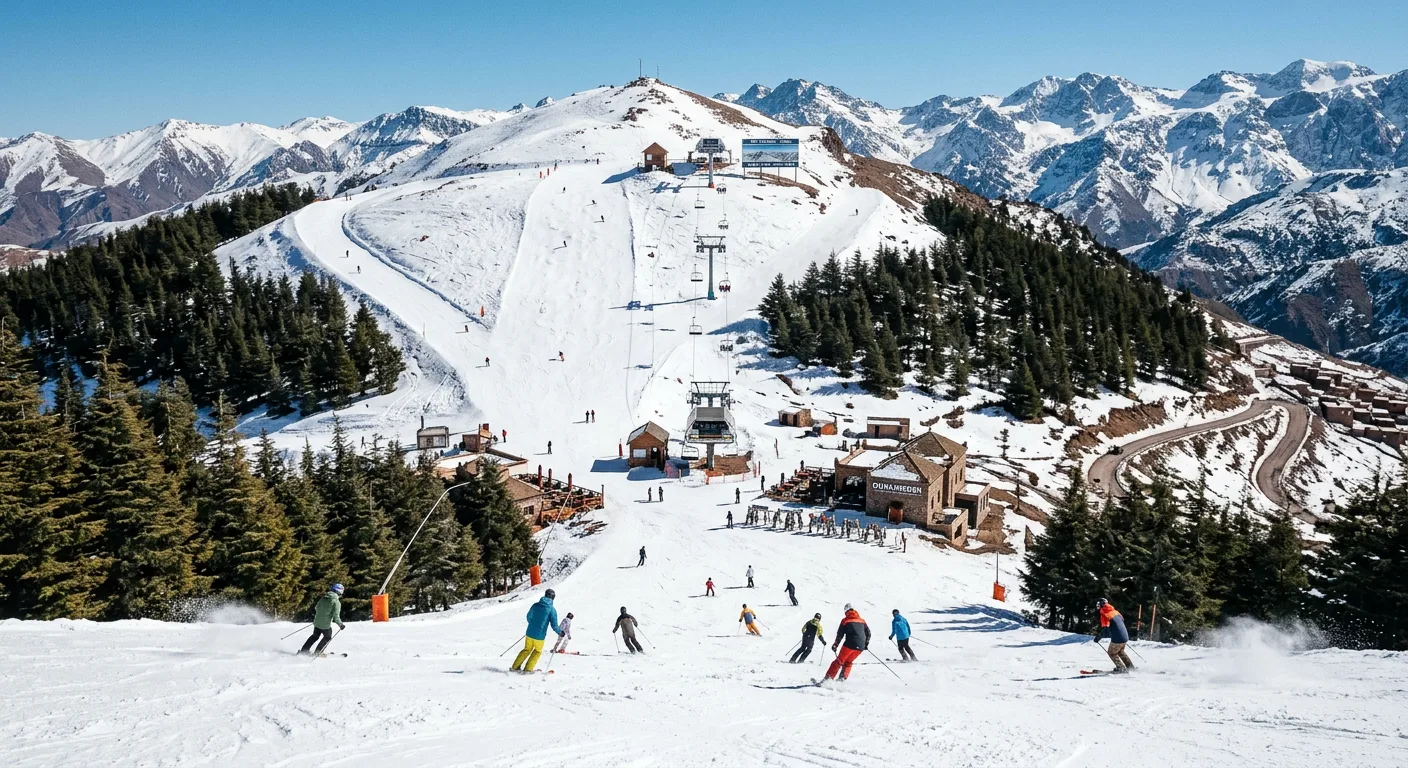
Oukaimeden -- Africa's Highest Ski Resort
At 3,200 meters in the High Atlas, just 80 km from Marrakech. Season runs December through March.
Plan Your Morocco Winter Adventure
Combine Atlas Mountain skiing with Marrakech's medinas, Saharan dunes, and Atlantic surf. No other destination on earth offers this range of experiences in a single trip.