Discovering...
Ouarzazate
The Hollywood of Africa — Gateway to the Sahara
Where the Atlas Mountains meet the Sahara Desert, a city of ancient kasbahs, world-famous film studios, and landscapes so dramatic they have served as the backdrop for over 200 major international productions. Ouarzazate is where desert dreams become cinematic reality.
Film Capital UNESCO Kasbahs Desert Gateway Photography Paradise
Altitude
1,160 m
Climate
Semi-arid desert
Airport
OZZ
Best Season
Mar-May, Sep-Nov
Population
72,000
Province
Draa-Tafilalet
Language
Arabic, Tamazight
Time Zone
GMT+1
Gateway Between the Atlas Mountains and the Sahara
Ouarzazate (pronounced “war-za-zat”) sits at 1,160 meters above sea level on a vast plateau where the High Atlas Mountains give way to the hammada, the stony pre-Saharan desert stretching south toward the dunes. This strategic position at the crossroads of ancient caravan routes between sub-Saharan Africa and the Mediterranean made it a trading hub for centuries, controlled by powerful Berber warlords who built the magnificent kasbahs that still dot the landscape.
The French Protectorate transformed Ouarzazate into a garrison town in the 1920s, but it was the film industry that gave the city its modern identity. The extraordinary desert light — 330 days of sunshine per year with crystal-clear visibility — combined with a landscape that can convincingly double for ancient Egypt, biblical Jerusalem, imperial Rome, or the surface of another planet, has made Ouarzazate the most in-demand filming location in Africa and one of the busiest in the world.
Today, Ouarzazate serves a triple role: it is Morocco's cinematic capital, the administrative center of the Draa-Tafilalet region, and the primary gateway for travelers heading into the Sahara. From here, the great valleys of the Draa, the Dades, and the Todra radiate outward like the fingers of an open hand, each offering its own distinct landscape of gorges, oases, kasbahs, and palm groves.
Whether you come for the film studios, the UNESCO-listed ksar of Ait Ben Haddou, the roses of the M'Goun Valley, the towering walls of the Todra Gorge, or the silence of the Sahara dunes at dawn, Ouarzazate is the starting point for adventures that will redefine your understanding of what Morocco has to offer.
When to Visit Ouarzazate
The desert climate means extreme temperature variations between seasons and between day and night. Planning your visit around the weather makes all the difference.
Spring (Mar-May)
25-32 C high|10-18 C low
The ideal season. Warm days, pleasant evenings, wildflowers in the valleys, and the rose harvest in May. Clear skies and excellent visibility for photography.
Summer (Jun-Aug)
38-45 C high|22-28 C low
Extremely hot. Daytime temperatures regularly exceed 40 degrees Celsius. Sightseeing is best done early morning or late afternoon. Many visitors avoid this period.
Autumn (Sep-Nov)
25-35 C high|12-20 C low
Excellent conditions similar to spring. The date harvest in the Draa Valley adds a cultural dimension. Fewer tourists than spring. Perfect for desert excursions.
Winter (Dec-Feb)
15-20 C high|0-8 C low
Comfortable days but cold nights, sometimes near freezing. Snow caps the Atlas Mountains, creating dramatic backdrops. The Tichka pass may be icy. Low tourist numbers.
Top Attractions in Ouarzazate
From the world's largest film studios to a UNESCO ksar that has featured in dozens of blockbusters, Ouarzazate's attractions are unlike anything else in Morocco.
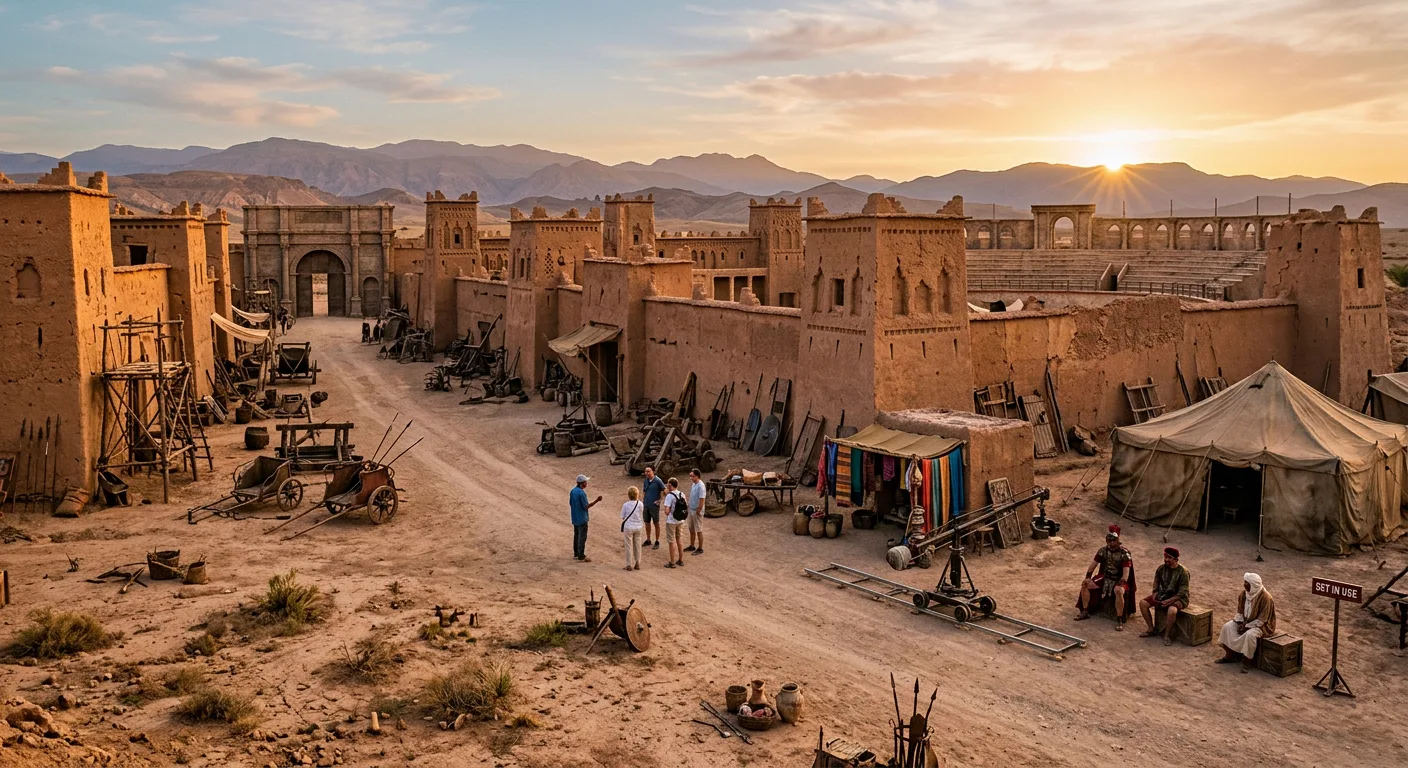
Film Studios
4.6
Atlas Film Studios
The Largest Film Studio in the World
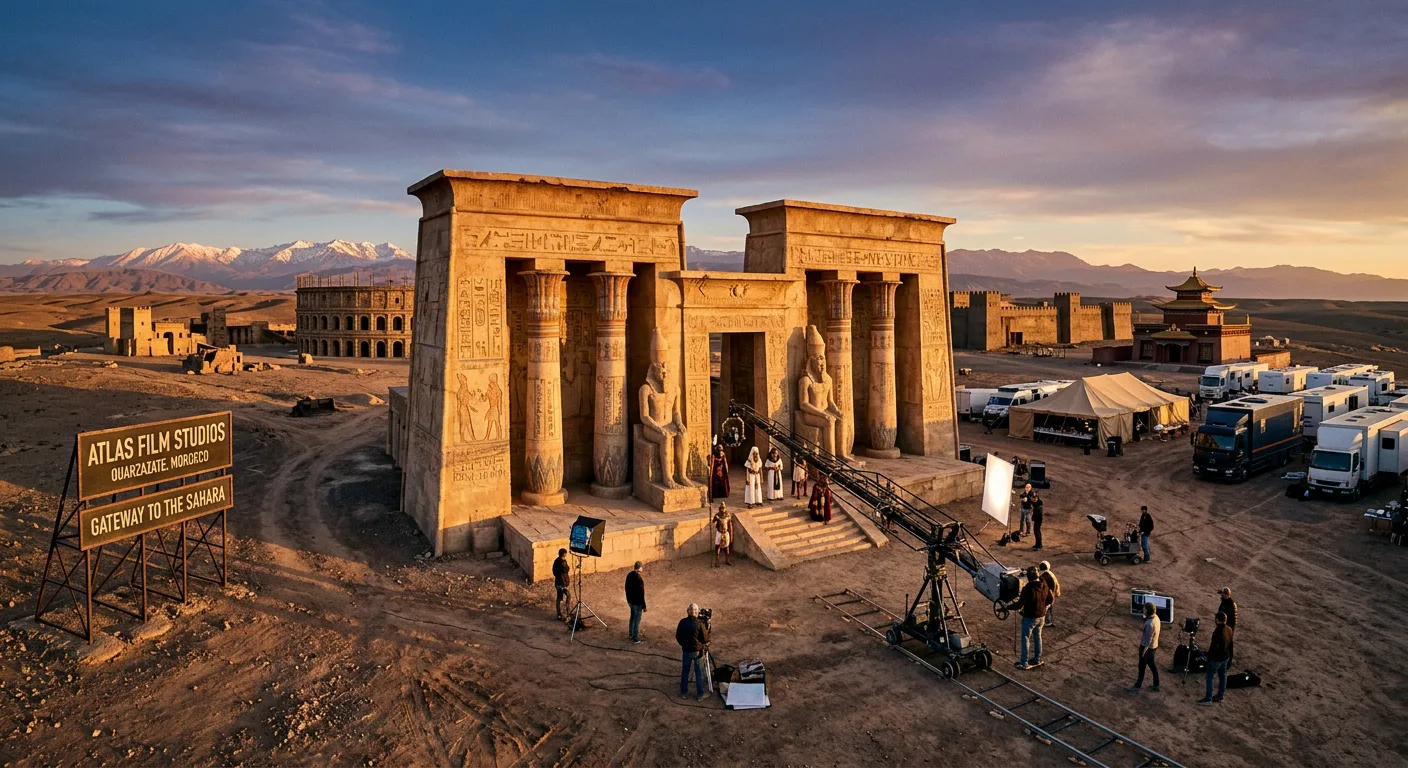
Spanning over 322,000 square meters on the outskirts of Ouarzazate, Atlas Film Studios is the largest film studio complex in the world and the reason this city earned its legendary nickname. Since opening in 1983, more than 200 major international productions have been filmed here. Walking through the studios is like stepping through a time machine: you pass ancient Egyptian temples built for "The Mummy," a full-scale Tibetan monastery from "Kundun," Roman colosseum sets from "Gladiator," and the imposing walls of Astapor from "Game of Thrones." Every set is left standing after production wraps, creating a surreal landscape where civilizations and centuries collide in the Moroccan desert light.
8:15 AM - 6:15 PM (summer), 8:15 AM - 5:15 PM (winter) 60 MAD
Tip: Hire a local guide at the entrance for 100-150 MAD. They know every set intimately and will take you to hidden corners that self-guided visitors miss. The morning light creates the most dramatic photographs of the Egyptian sets.

UNESCO World Heritage
4.9
Ait Ben Haddou
UNESCO World Heritage Ksar
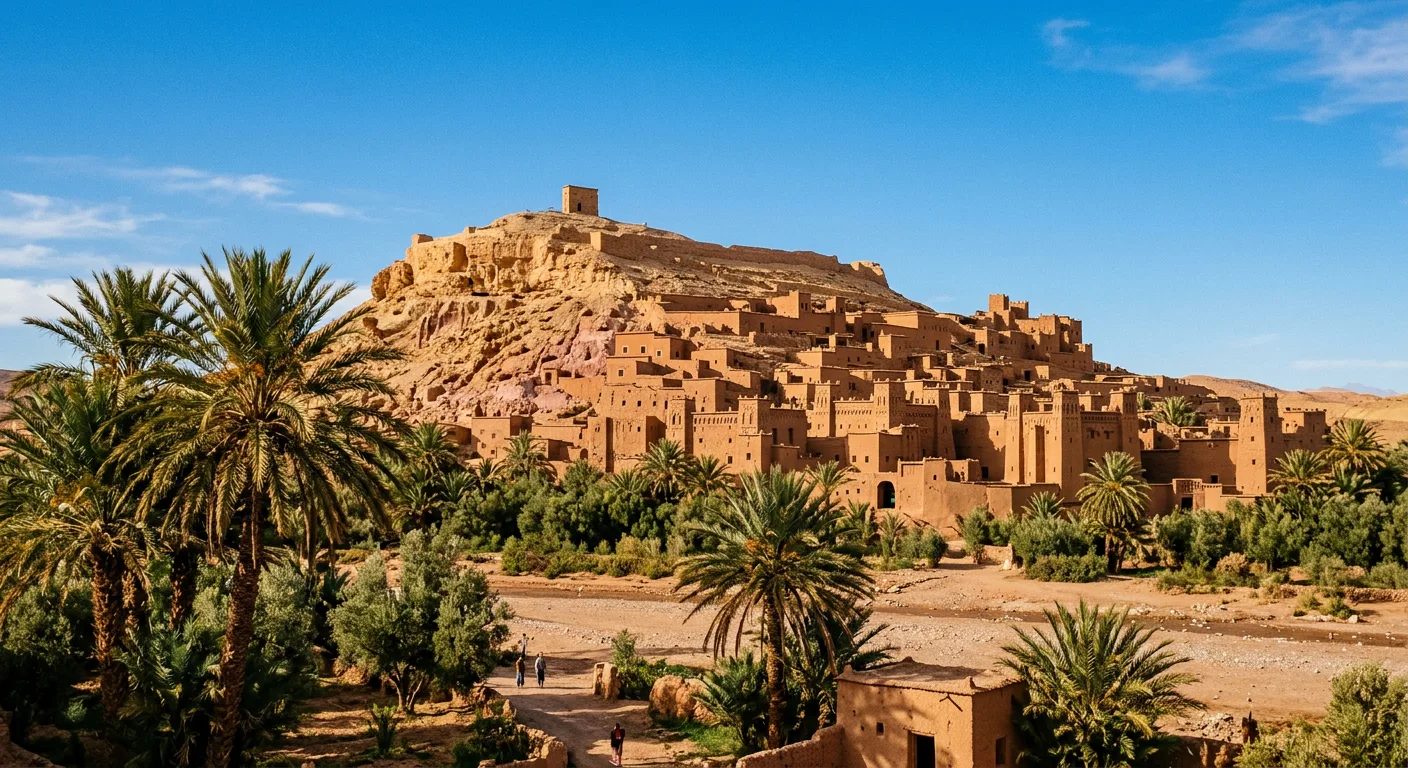
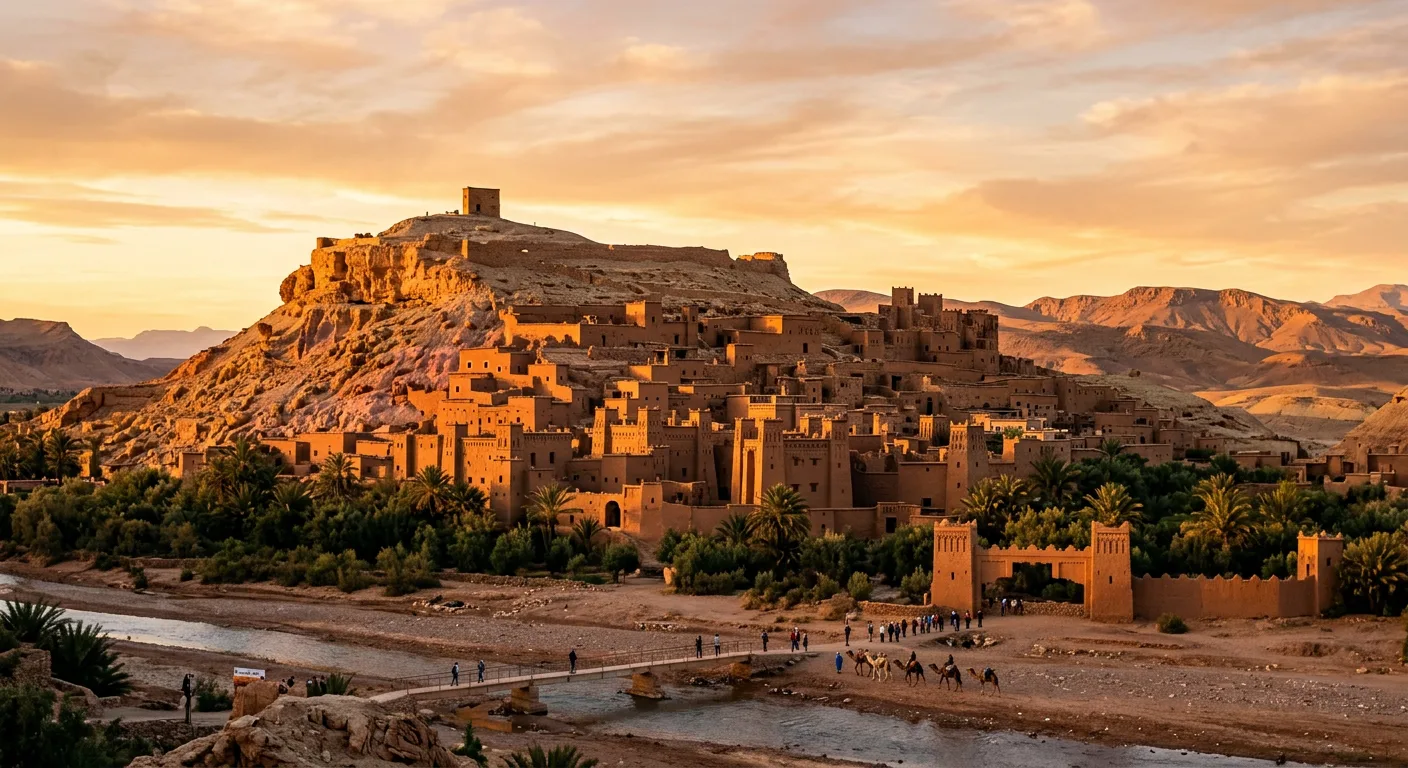
Rising from the banks of the Ounila River like a vision from another age, Ait Ben Haddou is the most spectacular fortified village in Morocco and one of the most photographed sites in all of North Africa. This UNESCO World Heritage Site is a masterpiece of pre-Saharan earthen architecture: a cluster of kasbahs and homes built from rammed earth, straw, and red clay, stacked dramatically up a hillside and crowned by a communal granary. The ksar has been a major filming location for decades, appearing in "Lawrence of Arabia," "Gladiator," "Game of Thrones" (as the city of Yunkai), "The Mummy," "Prince of Persia," and "Kingdom of Heaven." A handful of families still live within the ancient walls, maintaining a living connection to centuries of history.
Open daily, sunrise to sunset Free (guides available 150-200 MAD)
Tip: Cross the river at dawn when the first light paints the kasbah walls in shades of amber and gold. Climb to the granary at the summit for a 360-degree panorama. The view from across the river is equally magnificent and is the classic postcard angle.
Historic Fortress
4.5
Kasbah Taourirt
The Glaoui Fortress in the Heart of Ouarzazate
Kasbah Taourirt dominates the eastern end of Ouarzazate and is the city's most important historical monument. This sprawling fortress was once the seat of power of the Glaoui family, the powerful Berber lords who controlled the caravan routes between the Sahara and Marrakech for centuries. The kasbah is a labyrinth of over 300 rooms, narrow passageways, hidden staircases, and decorated reception chambers with ornate painted ceilings and carved stucco walls. The restored reception rooms showcase the finest examples of traditional Amazigh craftsmanship in southern Morocco. The adjacent Ensemble Artisanal offers high-quality local crafts at fixed prices.
8:30 AM - 6:00 PM daily 20 MAD
Tip: The rooftop terrace offers sweeping views over the city toward the Atlas Mountains. Visit in the late afternoon when the warm light illuminates the earthen walls and the fortress takes on its most photogenic hue.
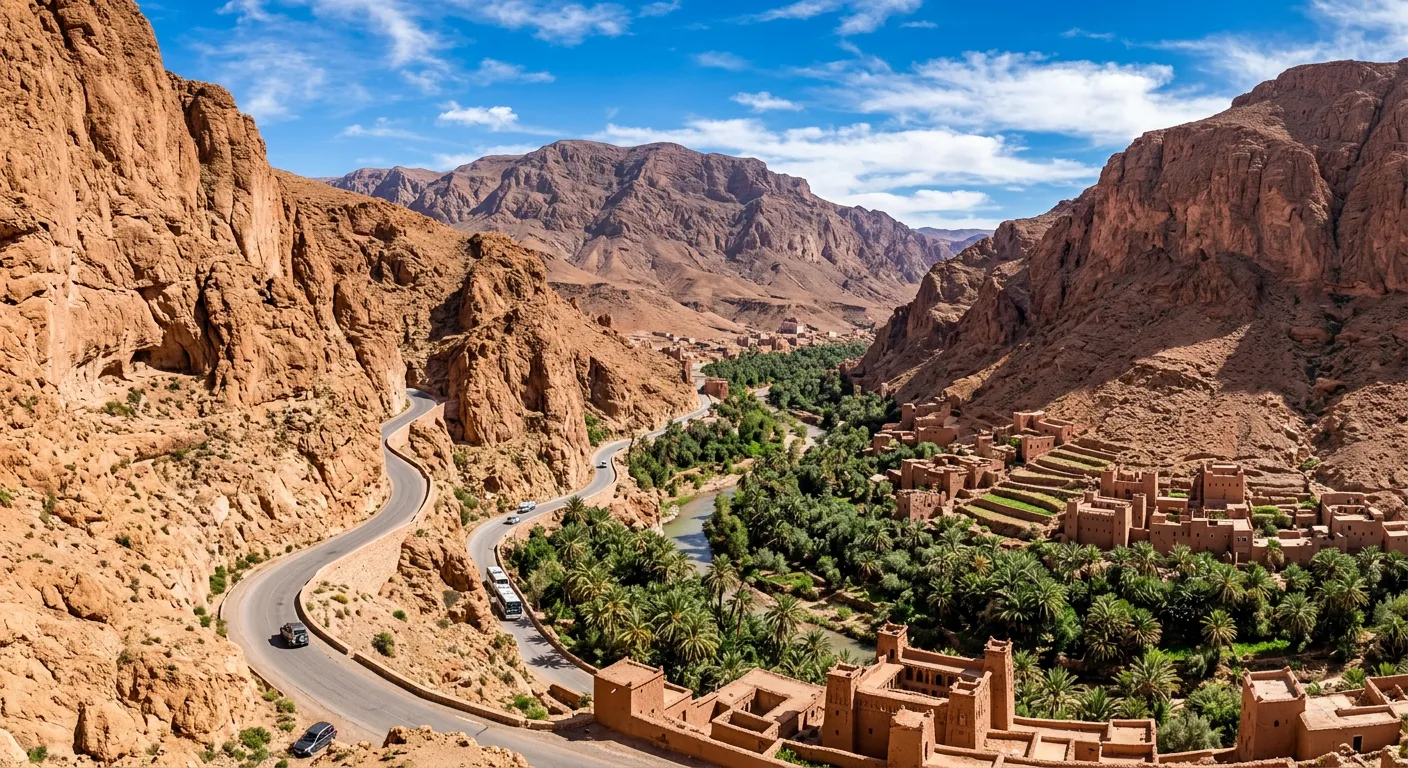
Natural Oasis
4.7
Fint Oasis
A Hidden Paradise in the Desert
Just 15 kilometers south of Ouarzazate, Fint Oasis is one of Morocco's most beautiful and least-visited natural wonders. Hidden in a dramatic canyon where the arid stony desert suddenly gives way to a lush palm grove fed by natural springs, Fint feels like a mirage made real. The oasis is home to a small Berber village where life follows ancient rhythms: farmers tend date palms, olive groves, and vegetable gardens irrigated by a traditional khettara water system. The contrast between the verdant green palms and the stark red-brown desert cliffs creates a landscape of extraordinary beauty. Several films have used Fint as a location, including scenes from "The Hills Have Eyes."
Open access (daylight hours recommended) Free
Tip: Arrange a visit through your hotel or hire a local driver. The unpaved road requires a sturdy vehicle. Bring water and snacks. The oasis is most magical in the early morning when mist rises from the palms.
Ouarzazate on Screen: 60 Years of Cinema History
From David Lean's epic masterpiece in 1962 to the latest HBO productions, Ouarzazate has been the backdrop for some of the most iconic scenes in film and television history.
The story of Ouarzazate as a film destination begins in 1962, when David Lean arrived to film scenes for “Lawrence of Arabia,” arguably the greatest epic ever committed to celluloid. Lean was captivated by the desert light and the landscapes around Ait Ben Haddou, and his production established the template that would make Ouarzazate the default location for Hollywood whenever a script called for desert, ancient cities, or biblical landscapes.
The construction of Atlas Film Studios in 1983 by Italian producer Mohamed Belghmi formalized what had been an informal arrangement. CLA Studios followed, and together these facilities have hosted an unbroken stream of major productions. Ridley Scott filmed “Gladiator” here in 2000, reconstructing the Roman Colosseum in the desert. Martin Scorsese built a Tibetan monastery for “Kundun.” HBO transformed the landscape into the slave cities of Astapor and Yunkai for “Game of Thrones.”
Today, the studios and surrounding desert remain among the most active filming locations in the world. The combination of 330 days of sunshine, diverse landscapes within a short drive, low costs, experienced local crews, and the Moroccan government's film-friendly policies continue to attract productions from around the globe. Walking through the studios, you encounter the physical remnants of these productions: Egyptian temples, Roman arenas, medieval fortresses, and alien planets, all standing side by side in the Moroccan desert sun.
Lawrence of Arabia
1962 · David Lean
The Man Who Would Be King
1975 · John Huston
The Living Daylights
1987 · John Glen
The Sheltering Sky
1990 · Bernardo Bertolucci
Kundun
1997 · Martin Scorsese
The Mummy
1999 · Stephen Sommers
Gladiator
2000 · Ridley Scott
Kingdom of Heaven
2005 · Ridley Scott
Babel
2006 · Alejandro G. Inarritu
Prince of Persia
2010 · Mike Newell
Game of Thrones
2012 · Various
Ben-Hur
2016 · Timur Bekmambetov
Prison Break
2017 · Various
The Physician
2013 · Philipp Stolzl
The Draa Valley: Morocco's Longest River and Grandest Palm Groves
Stretching over 1,100 kilometers from the High Atlas to the Atlantic (though it rarely reaches the sea anymore), the Draa is Morocco's longest river. The valley it carves south of Ouarzazate is one of the most beautiful and historically significant landscapes in North Africa.
The road from Ouarzazate to Zagora (160 km, roughly 3 hours) passes through a continuous ribbon of palm groves, ancient kasbahs, and Berber villages where the rhythms of life have changed little in centuries. The Draa Valley was a vital link in the trans-Saharan trade routes, and the kasbahs that line the river were built to protect the precious date harvests and control the caravan trade.
Agdz
The gateway town to the Draa Valley, where the road descends from the Tizi n Tinifift pass into a world of palm groves and kasbahs. The Thursday souk is one of the most authentic in the region.
Tamnougalt Kasbah
A stunning 16th-century kasbah perched above the Draa River near Agdz. Once the administrative center for the entire valley, its decorated rooms and rooftop views are exceptional.
Zagora
The main town of the Draa Valley, famous for its iconic road sign reading "Timbuktu 52 Days" by camel. The starting point for desert excursions to the dunes of Erg Chigaga.
Palm Groves
The Draa Valley contains over six million date palms stretching for 200 kilometers, making it the longest palm grove in Morocco. The dates harvested here in autumn are among the finest in the country.
Tamegroute
A sacred village known for its ancient Koranic library containing manuscripts dating to the 13th century, and its distinctive green-glazed pottery workshops that have operated for generations.
Erg Chigaga
The most remote and spectacular sand dunes in Morocco, accessible from Zagora. These towering golden dunes reach heights of 300 meters and offer an untouched Saharan wilderness experience.
Skoura: The Palm Grove of a Thousand Kasbahs
Just 42 kilometers east of Ouarzazate on the road to the Dades Gorge, the Skoura palm grove is one of the most enchanting landscapes in southern Morocco. This vast oasis, watered by the Dades River and a network of ancient irrigation channels called seguias, contains over 700,000 palm trees and dozens of historic kasbahs in various states of preservation.
The palm grove is best explored on foot, by bicycle, or on a mule, allowing you to discover hidden kasbahs, cross ancient bridges, and meet the farmers who tend the palms, almond trees, and olive groves that have sustained life here for centuries.
Kasbah Amridil
One of the best-preserved kasbahs in all of Morocco, Amridil appears on the 50-dirham banknote. This 17th-century fortress features four decorative towers, painted ceilings, and a small museum showcasing traditional Amazigh life. The family who owns it has lived here for twelve generations.
Skoura Palm Grove
A vast oasis of over 700,000 palm trees, almond trees, and olive groves stretching along the Dadès River. Walking or cycling through the palm grove reveals hidden kasbahs, traditional irrigation channels, and Berber villages untouched by mass tourism.
Kasbah Ait Ben Moro
A beautifully restored 17th-century kasbah now operating as a characterful guest house. Even if you do not stay the night, the architecture and setting among the palms make it worth a visit.
Bird Watching
The Skoura palm grove is a paradise for birdwatchers. Species include the desert warbler, Tristram's warbler, Egyptian nightjar, and various raptors. Spring and autumn migrations bring dozens of additional species.
Dades and Todra Gorges: Day Trips into the Atlas
Two of Morocco's most spectacular natural wonders are within easy reach of Ouarzazate. The Dades and Todra gorges carve dramatic paths through the eastern High Atlas, creating landscapes of towering rock walls, verdant valley floors, and winding mountain roads that rank among the finest drives in the country.
Dades Gorge
110 km from OuarzazateThe Dades Gorge carves a dramatic path through the eastern High Atlas, creating towering walls of rust-red rock that soar hundreds of meters above the valley floor. The road through the gorge is one of the most spectacular drives in Morocco, winding through a landscape of bizarre rock formations known as the "monkey fingers" or "human bodies" due to their eroded shapes. The valley floor is surprisingly green, with walnut, almond, and fig trees fed by the Dades River. Several kasbahs and guest houses perch dramatically on the canyon walls.
Highlights
The famous hairpin bends of the Dades road, among the most photographed roads in Morocco
Monkey Fingers rock formations: towering pillars of eroded conglomerate
Kasbah Ait Arbi: a crumbling fortress perched on the canyon rim
Hiking trails ranging from easy valley walks to challenging canyon scrambles
Traditional Berber villages accessible only on foot along the river
Tip: The road through the gorge is paved for about 30 kilometers and then becomes a rough track. The most dramatic scenery is in the first 25 kilometers. Stay overnight at a guesthouse in the gorge to enjoy the silence and stargazing.
Todra Gorge
160 km from OuarzazateTodra Gorge is one of the most dramatic natural landscapes in Morocco. At its narrowest point, sheer limestone walls rise 300 meters on either side while the gap between them narrows to just 10 meters, creating a natural cathedral of rock. A crystal-clear river flows through the canyon floor, and the play of light on the orange and pink rock walls changes by the hour. The gorge is world-renowned among rock climbers, with over 400 bolted routes on the canyon walls attracting climbers from around the globe.
Highlights
The narrow canyon passage where 300-meter walls are just 10 meters apart
World-class rock climbing with routes graded from beginner to expert
The palmerie at the gorge entrance, a lush contrast to the desert surroundings
Traditional carpet cooperatives in the nearby town of Tinghir
The old Jewish quarter (mellah) in Tinghir with its historic silver workshops
Tip: The gorge is most dramatic in the morning when sunlight penetrates the narrow canyon from above. Arrive before 10 AM for the best light. The walk through the narrowest section is easy and suitable for all fitness levels.
The Valley of Roses and Kelaat M'Gouna
Between the Dades and Todra gorges lies the Valley of Roses (Vallee des Roses), centered on the town of Kelaat M'Gouna (also spelled El Kelaa des Mgouna). Each spring, millions of Damask roses bloom across the valley, transforming the landscape into a fragrant tapestry of pink and green. The roses were originally brought from Damascus by pilgrims returning from Mecca centuries ago, and they have thrived in the valley's unique microclimate ever since.
The Rose Festival (Moussem des Roses)
The annual Moussem des Roses (Rose Festival) takes place in mid-May and is one of Morocco's most colorful celebrations. For three days, the town erupts in parades, traditional music, dancing, a Rose Queen competition, and the intoxicating scent of millions of fresh roses. The festival attracts visitors from across Morocco and around the world.
Best Time: The rose harvest runs from mid-April to mid-May. Visit during this window to see the valley at its most beautiful and fragrant. The festival is typically held in the second week of May.
Rose Products of the Valley
Rose water (eau de rose): used in Moroccan cooking, cosmetics, and traditional medicine
Rose essential oil: Morocco is the fourth-largest producer of rose oil in the world
Rose-scented soaps, creams, and cosmetics produced by local cooperatives
Dried rosebuds for tea and cooking, available year-round in the local souks
Rose-flavored nougat and sweets unique to the valley
Where to Eat in Ouarzazate
Ouarzazate's dining scene reflects its position at the crossroads of Berber, Arab, and French culinary traditions. From simple local eateries to refined kasbah restaurants, the city offers excellent food at every price point.
Restaurant Douyria
Traditional Moroccan80-150 MAD
Set inside a beautifully restored kasbah near the center of town, Douyria serves some of the best traditional Moroccan cuisine in Ouarzazate. The lamb tagine with prunes and almonds is legendary, and the rooftop terrace offers views over the city toward the Atlas Mountains.
Must try: Lamb tagine with prunes and almonds
Chez Dimitri
Moroccan-European100-200 MAD
A Ouarzazate institution since 1928, Chez Dimitri has fed film crews from nearly every major production shot in the region. The walls are covered with signed photos from actors and directors. The menu blends Moroccan and European dishes, and the atmosphere is a living museum of the city's cinematic history.
Must try: Brochettes and the house couscous
Restaurant 3 Thes
Moroccan60-120 MAD
A welcoming family-run restaurant near Avenue Mohammed V offering generous portions of home-style Moroccan cooking at reasonable prices. The Berber omelette for breakfast and the chicken tagine with preserved lemons for lunch are both excellent.
Must try: Berber omelette and chicken tagine
La Kasbah des Sables
Moroccan Fine Dining150-300 MAD
Located within a converted kasbah, this upscale restaurant offers refined Moroccan cuisine in an elegant setting. The tasting menu is an excellent introduction to the region's culinary traditions, featuring local specialties like pastilla, mechoui, and rosewater desserts.
Must try: The tasting menu with rosewater pastries
Accord Majeur
French-Moroccan Fusion120-250 MAD
A stylish restaurant run by a French-Moroccan couple, blending the best of both culinary traditions. The duck confit with ras el hanout and the chocolate fondant with orange blossom water are standout dishes. The wine list features Moroccan and French selections.
Must try: Duck confit with ras el hanout
Habous Restaurant
Moroccan Traditional50-100 MAD
A no-frills local favorite near the main roundabout, serving hearty portions of traditional food at honest prices. The harira soup is perfect for cold desert evenings, and the mixed grill platter feeds two generously.
Must try: Harira soup and mixed grill platter
Where to Stay in Ouarzazate
Ouarzazate offers accommodation ranging from converted historic kasbahs to comfortable riads, guest houses, and even luxury desert camps. Sleeping in a centuries-old kasbah is an experience unique to this region of Morocco.
Kasbah Hotels
Dar Ahlam
From 5,000 MAD/night
Often called the most beautiful hotel in Morocco, Dar Ahlam is a lovingly restored 19th-century kasbah surrounded by 12 hectares of palm groves in Skoura. The experience is entirely bespoke: no menus, no schedules, no other guests in sight. Every meal, every excursion, and every detail is tailored to you. This is where celebrities and discerning travelers come to disappear from the world.
Ksar Ighnda
From 1,200 MAD/night
A stunning boutique hotel built in the traditional kasbah style near Ait Ben Haddou, with panoramic views of the UNESCO ksar. The infinity pool overlooking the desert landscape is extraordinary, and the restaurant serves excellent Moroccan cuisine using local ingredients.
Kasbah Ait Ben Moro
From 600 MAD/night
A 17th-century kasbah in Skoura transformed into a characterful guest house with thick earthen walls, traditional furnishings, and a peaceful garden. The rooms retain their historic character while offering modern comforts.
Riads & Guest Houses
Riad Salam
From 400 MAD/night
A centrally located riad with a beautiful courtyard garden, rooftop terrace with Atlas views, and warm Moroccan hospitality. The breakfast spread is generous and features local ingredients.
Le Temple des Arts
From 500 MAD/night
An art-filled guest house celebrating Ouarzazate's cinematic heritage. Each room is themed after a different film shot in the region, and the owner is a walking encyclopedia of local film history.
Dar Chamaa
From 350 MAD/night
A friendly, family-run guest house with comfortable rooms, home-cooked meals, and an owner who can arrange every possible excursion. Excellent value in a convenient location.
Desert Camps
Erg Chigaga Luxury Camp
From 2,500 MAD/night
A luxury desert camp in the remote Erg Chigaga dunes, accessible only by 4x4 from Zagora. Traditional Berber tents with real beds, hot showers, and gourmet dining under the stars. The silence and the night sky are worth every dirham of the journey.
Bivouac Erg Lihoudi
From 800 MAD/night
A more accessible desert camp in the smaller but beautiful Erg Lihoudi dunes, just an hour south of Ouarzazate. Camel rides at sunset, traditional Berber music around the campfire, and a sky full of stars.
Nomad Palace
From 500 MAD/night
A mid-range camp offering an authentic desert experience without the extreme remoteness of Erg Chigaga. Comfortable tents, traditional meals, sandboarding, and stargazing sessions with telescopes.
Getting to Ouarzazate
Reaching Ouarzazate is part of the adventure. The drive from Marrakech over the Tizi n'Tichka pass is one of the most spectacular road journeys in Morocco.
From Marrakech via Tizi n'Tichka Pass
200 km4-5 hours
The most popular and dramatic route to Ouarzazate. The N9 highway climbs from Marrakech through the High Atlas Mountains via the Tizi n'Tichka pass at 2,260 meters, the highest mountain pass in Morocco. The drive is one of the most scenic in the country, winding through Berber villages, terraced hillsides, and dramatic mountain scenery. The road is well-maintained but features many hairpin bends. Stop at the Tizi n'Tichka summit for photographs and hot mint tea from the roadside vendors.
Leave Marrakech early in the morning to cross the pass in the best light
The road can be icy in winter (December-February); check conditions before departing
Stop at the Argan oil cooperatives on the northern side of the pass
Consider hiring a driver if you are not comfortable with mountain driving
Many tours combine this drive with a stop at Ait Ben Haddou en route
By Air to Ouarzazate Airport (OZZ)
3 km from city centerDirect flights from Casablanca (1h)
Ouarzazate Airport (OZZ) receives domestic flights from Casablanca and seasonal charter flights from European cities. The airport is small and efficient, located just 3 kilometers from the city center. A petit taxi to the center costs about 30-40 MAD. Royal Air Maroc operates the most reliable domestic service.
Book domestic flights through Royal Air Maroc for the most reliable schedule
Seasonal charter flights operate from Paris, Lyon, and other European cities
The airport has limited facilities; eat before arriving
Car rental is available at the airport from major agencies
Pre-arrange airport transfer through your hotel for the easiest arrival
By Bus from Major Cities
VariousMarrakech 5h, Errachidia 5h, Zagora 3h
CTM and Supratours operate comfortable bus services connecting Ouarzazate with Marrakech, Errachidia, Zagora, Tinghir, and other cities. The buses are modern, air-conditioned, and reasonably priced. The Marrakech route crosses the Tizi n'Tichka pass and is an affordable alternative to a private transfer, though the mountain driving can be intense for nervous passengers.
CTM buses depart from the central bus station on Avenue Mohammed V
Book tickets in advance during peak season (Easter, summer, Christmas)
The Marrakech-Ouarzazate CTM bus costs approximately 90-120 MAD
Supratours buses connect with the ONCF train network in Marrakech
Sit on the right side for the best mountain views on the Tichka crossing
Self-Drive Road Trips
Varies by routeMultiple days recommended
Ouarzazate is the ideal base for one of Morocco's greatest road trips: the circuit through the Valley of a Thousand Kasbahs. From here you can drive east through Skoura, the Dades Gorge, and Todra Gorge to Errachidia, then south to the Sahara dunes at Merzouga or Erg Chebbi, creating a spectacular loop through the most dramatic landscapes in Morocco.
A 4x4 is recommended for off-road excursions but regular cars handle main routes
Fuel stations are available in Ouarzazate, Skoura, Kelaat M'Gouna, Boumalne, and Tinghir
Roads are generally good but watch for livestock and slow-moving vehicles
International driving license required alongside your national license
Consider downloading offline maps as mobile signal is patchy in the gorges
Photography Guide: Capturing Ouarzazate
Ouarzazate and its surroundings are a photographer's paradise. The extraordinary desert light, dramatic landscapes, ancient architecture, and vivid contrasts between oasis greens and desert reds create endless opportunities for stunning images.
The same qualities that attract the world's film industry — 330 days of sunshine, crystalline air, and landscapes that change character by the hour — make this region one of the most rewarding photography destinations in all of North Africa.
Ait Ben Haddou at Sunrise
The classic view from across the Ounila River captures the entire ksar bathed in golden dawn light. The warm tones of the earthen buildings against the clear desert sky create an image that belongs on a magazine cover.
Best light: Sunrise to 9:00 AM
Gear: Wide-angle lens for the full ksar, telephoto for architectural details. Tripod essential for dawn shots.
Atlas Studios Egyptian Sets
The monumental Egyptian temple sets against the stark desert backdrop offer surreal compositions. The scale of the sets creates dramatic leading lines and the desert light provides natural studio lighting.
Best light: 8:00 AM - 10:00 AM (front-lit) or 4:00 PM - 6:00 PM (golden hour)
Gear: Standard zoom covers most needs. Polarizing filter to deepen the sky contrast.
Dades Gorge Hairpin Bends
The serpentine road climbing through the Dades Gorge is one of the most dramatic road photographs in the world. The view from the viewpoint above the hairpins looking down over the switchbacks is breathtaking.
Best light: Late afternoon for warm light on the red rock walls
Gear: Telephoto lens to compress the switchbacks. Drone photography is spectacular here (check regulations).
Todra Gorge Canyon
The towering 300-meter canyon walls create dramatic vertical compositions. The narrow slit of sky above and the play of light and shadow on the rock make every shot unique.
Best light: 10:00 AM - 12:00 PM when direct sunlight enters the narrow canyon
Gear: Ultra-wide lens essential. High ISO capability for the deep shadows. Include a person for scale.
Kasbah Taourirt Rooftop
The rooftop of Kasbah Taourirt provides a panoramic view over Ouarzazate with the snow-capped Atlas Mountains as a backdrop. The decorative towers in the foreground add depth and local character.
Best light: Sunset for warm light and dramatic shadows on the kasbah towers
Gear: Wide-angle for panoramas, medium telephoto for isolating the Atlas peaks.
Fint Oasis
The striking contrast between the lush green palms and the barren desert canyon creates compositions of extraordinary color contrast. The small scale of the oasis feels intimate and otherworldly.
Best light: Early morning when mist rises from the palms or late afternoon for warm light
Gear: Standard zoom for landscapes. Macro lens for palm details and wildflowers.
Draa Valley Palm Groves
Endless rows of date palms stretching to the horizon, punctuated by crumbling kasbahs and the silver ribbon of the Draa River. The layered landscape of palms, kasbahs, and mountains is deeply photogenic.
Best light: Golden hour in either direction; the valley runs roughly north-south
Gear: Telephoto lens to compress the layers of palms and kasbahs. ND grad filter for balanced exposures.
Night Sky from the Desert
The desert south of Ouarzazate offers some of the darkest skies in Morocco. The Milky Way is visible to the naked eye, and astrophotography conditions rival the best in the world.
Best light: New moon periods, 10:00 PM - 4:00 AM
Gear: Fast wide-angle lens (f/2.8 or wider), sturdy tripod, remote shutter release. Star tracker for deep-sky shots.
General Photography Tips for the Region
Golden hours are paramount: The desert light is harsh from 11 AM to 3 PM. Shoot early morning and late afternoon for the warm, directional light that makes this region so photogenic.
Protect your gear: Fine desert dust is the enemy of cameras. Bring lens cleaning supplies, use a UV filter as lens protection, and keep your camera bag sealed when not shooting.
People photography: Always ask permission before photographing locals. Many Berber people are happy to be photographed but appreciate being asked first. A small tip of 5-10 MAD is customary.
Carry backup power: The cold desert nights drain batteries quickly. Bring at least two spare batteries and keep them warm in your pocket. Charging opportunities in remote areas can be limited.
Scale and context: The landscapes are vast and can appear flat in photographs. Include people, vehicles, or animals to convey the enormous scale of the gorges, kasbahs, and desert panoramas.
Drone regulations: Drone use in Morocco requires authorization from the DGAC (civil aviation authority). Many tourists fly drones informally, but be aware of the legal requirements and avoid flying near military areas.
Practical Information
Essential tips for making the most of your visit to Ouarzazate and the surrounding region.
Safety
Ouarzazate is extremely safe for tourists. The local population is hospitable and accustomed to visitors. Standard travel precautions apply: keep valuables secure, drink bottled water, and use licensed guides for remote excursions. The tourist police can be reached at 19.
Connectivity
Mobile coverage (Maroc Telecom, Orange, inwi) is good in Ouarzazate city and along main roads. Signal becomes patchy in the gorges and remote areas. Wi-Fi is available in most hotels and cafes. Download offline maps before heading into the countryside.
Getting Around Town
Ouarzazate is a small, manageable city. The center can be explored on foot. Petit taxis (blue in color) are inexpensive for trips within the city. For excursions to Ait Ben Haddou, the gorges, or the Draa Valley, hire a private car with driver through your hotel or a local agency.
Sun Protection
The desert sun is intense year-round. SPF 50+ sunscreen, a wide-brimmed hat, and quality sunglasses are essential. The UV index regularly exceeds 10 in summer. Stay hydrated by drinking at least 3 liters of water per day, more if hiking or exploring.
Local Guides
A knowledgeable local guide transforms the experience of visiting Ait Ben Haddou, the studios, and the kasbahs. Official guides wear badges and can be arranged through your hotel or the tourist office on Avenue Mohammed V. Expect to pay 300-500 MAD for a full-day guide.
Local Specialties
The cuisine of the Ouarzazate region features desert specialties: tangia (slow-cooked lamb), madfouna (Berber pizza), dates from the Draa Valley, almond-based sweets, and the fragrant tagines that are the staple of every Moroccan table. Local mint tea here tends to be sweeter than in the north.
Suggested 3-Day Ouarzazate Itinerary
Three days gives you time to explore the city, visit the major sites, and take an unforgettable day trip into the gorges or the Draa Valley.
01
Day 1: Ouarzazate City and Ait Ben Haddou
Morning
Visit Atlas Film Studios when they open at 8:15 AM for the best light and fewest crowds
Explore the Egyptian, Roman, and Game of Thrones sets with a local guide
Stop at the Cinema Museum near the studios for additional context
Afternoon
Lunch at Chez Dimitri, the legendary restaurant of film crews
Drive 30 minutes to Ait Ben Haddou (arrange through your hotel)
Cross the river and explore the ksar, climbing to the granary summit
Evening
Watch the sunset paint Ait Ben Haddou in amber and gold tones
Return to Ouarzazate for dinner at Restaurant Douyria
Stroll along Avenue Mohammed V and enjoy mint tea at a local cafe
02
Day 2: Dades Gorge and the Valley of Roses
Morning
Early departure east through Skoura palm grove
Stop at Kasbah Amridil in Skoura for a guided tour
Continue through Kelaat M'Gouna (Rose Valley) to the Dades Gorge
Afternoon
Drive the famous hairpin bends of the Dades road
Lunch at a guesthouse in the gorge with canyon views
Photograph the Monkey Fingers rock formations
Evening
Return via the Valley of Roses, stopping at a rosewater cooperative
Dinner at Accord Majeur for French-Moroccan fusion
Stargazing from your hotel rooftop (the desert skies are remarkable)
03
Day 3: Kasbah Taourirt, Fint Oasis, and Departure
Morning
Visit Kasbah Taourirt when it opens for crowd-free exploration
Explore the decorated rooms and climb to the rooftop terrace
Browse the Ensemble Artisanal next door for fixed-price crafts
Afternoon
Drive or arrange transport to Fint Oasis (30 minutes)
Walk through the hidden palm grove and meet local farmers
Enjoy a simple traditional lunch prepared by a local family
Evening
Final walk through Ouarzazate as the afternoon light softens
Pick up last souvenirs: rosewater, dates, or Berber jewelry
Depart for Marrakech via the Tichka pass or continue south to the Sahara
Frequently Asked Questions About Ouarzazate
Everything you need to know before visiting Morocco's cinematic capital and Sahara gateway.
1How many days do I need in Ouarzazate?
A minimum of two days allows you to visit Atlas Studios, Ait Ben Haddou, and Kasbah Taourirt. Three to four days lets you add the Dades and Todra gorges, Skoura, and the Draa Valley. A full week allows you to explore the entire region at a relaxed pace, including a desert excursion to Erg Chigaga or Merzouga.
2Is Ouarzazate worth visiting?
Absolutely. Ouarzazate is the gateway to some of the most spectacular landscapes in Morocco: the Atlas Film Studios, UNESCO-listed Ait Ben Haddou, dramatic gorges, palm-filled valleys, and the edge of the Sahara Desert. It is essential for anyone interested in film history, desert landscapes, or Berber culture.
3What is the best time to visit Ouarzazate?
Spring (March to May) and autumn (September to November) offer the most pleasant temperatures, between 20 and 30 degrees Celsius. Summer (June to August) is extremely hot, regularly exceeding 40 degrees. Winter (December to February) has comfortable daytime temperatures but cold nights, and the Atlas passes can be icy.
4How do I get from Marrakech to Ouarzazate?
The most common route is by road over the Tizi n'Tichka pass (200 km, 4-5 hours). You can drive yourself, hire a private driver, or take a CTM/Supratours bus. The mountain road is spectacular but involves many hairpin bends. There are also domestic flights from Casablanca.
5Can I visit Ait Ben Haddou as a day trip from Marrakech?
Yes, many visitors combine the Tizi n'Tichka drive with a stop at Ait Ben Haddou as a day trip from Marrakech. However, this makes for a very long day (10+ hours). It is far better to stay overnight in Ouarzazate or near Ait Ben Haddou to enjoy the ksar at dawn or dusk when the light is magical and the tour buses have departed.
6What movies were filmed in Ouarzazate?
The list is extraordinary: Lawrence of Arabia (1962), The Man Who Would Be King (1975), The Living Daylights (1987), The Sheltering Sky (1990), Kundun (1997), Gladiator (2000), Kingdom of Heaven (2005), Babel (2006), Prince of Persia (2010), Game of Thrones (2012-2019), The Mummy (1999), Ben-Hur (2016), and many more. Over 200 major productions have used Ouarzazate and its surroundings.
7Is Ouarzazate safe for tourists?
Ouarzazate is one of the safest cities in Morocco for tourists. The crime rate is very low, the people are friendly and welcoming, and the tourism infrastructure is well-established. Standard travel precautions apply: keep valuables secure, be aware of your surroundings, and use reputable guides and transport.
8What should I pack for Ouarzazate?
Sun protection is essential year-round: SPF 50+ sunscreen, a wide-brimmed hat, and quality sunglasses. Comfortable walking shoes for exploring kasbahs and gorges. Layers for temperature swings between hot days and cool evenings. A headlamp or torch for exploring dim kasbah interiors. A camera with plenty of storage for the extraordinary landscapes.
9Can I see the Sahara Desert from Ouarzazate?
Ouarzazate itself is on the edge of the pre-Saharan zone rather than the Sahara proper. For true Saharan sand dunes, you need to travel further south: Erg Chigaga (6-7 hours by 4x4 from Zagora) or Erg Chebbi near Merzouga (6 hours by road via the Dades Valley). Both offer spectacular overnight desert camp experiences.
10Do I need a 4x4 to visit Ouarzazate and surroundings?
Not necessarily. The main roads between Ouarzazate, Ait Ben Haddou, Skoura, the Dades Gorge, and Todra Gorge are all paved and accessible in a regular car. A 4x4 is needed for off-road excursions to Fint Oasis, Erg Chigaga, and some remote kasbahs. Most hotels can arrange 4x4 excursions with local drivers.
Ouarzazate in Pictures
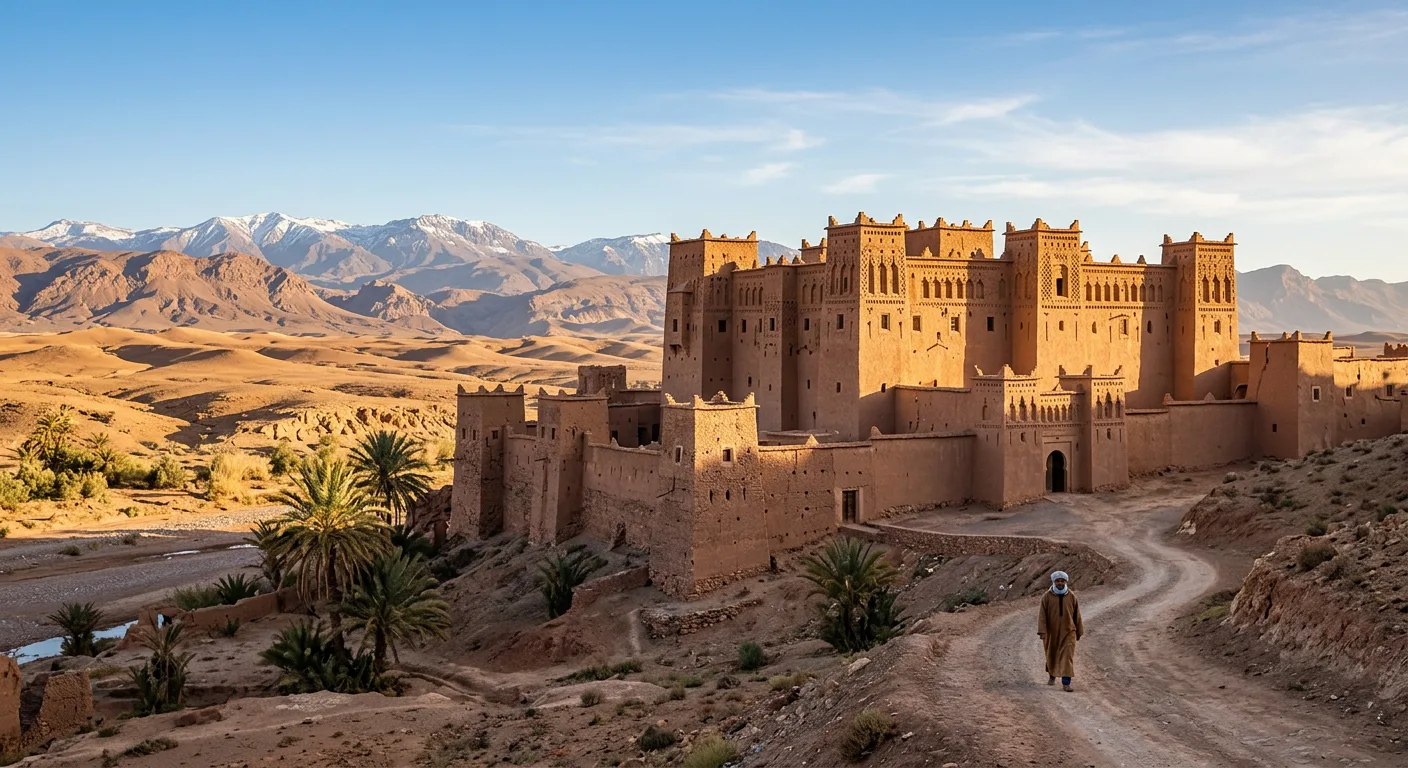
Where ancient kasbahs meet Hollywood film sets — the cinematic landscapes of Morocco's desert heartland captured at the golden hour.
Ouarzazate Awaits
Where the Atlas Mountains yield to the Sahara, where ancient kasbahs stand sentinel over palm-filled valleys, and where the world's greatest filmmakers have come for over sixty years to capture the light that exists nowhere else on Earth. Ouarzazate is not just a destination — it is the gateway to adventures that will stay with you for a lifetime. Start planning your journey to the Hollywood of Africa today.
Continue Exploring Morocco
Discover more of what Morocco has to offer