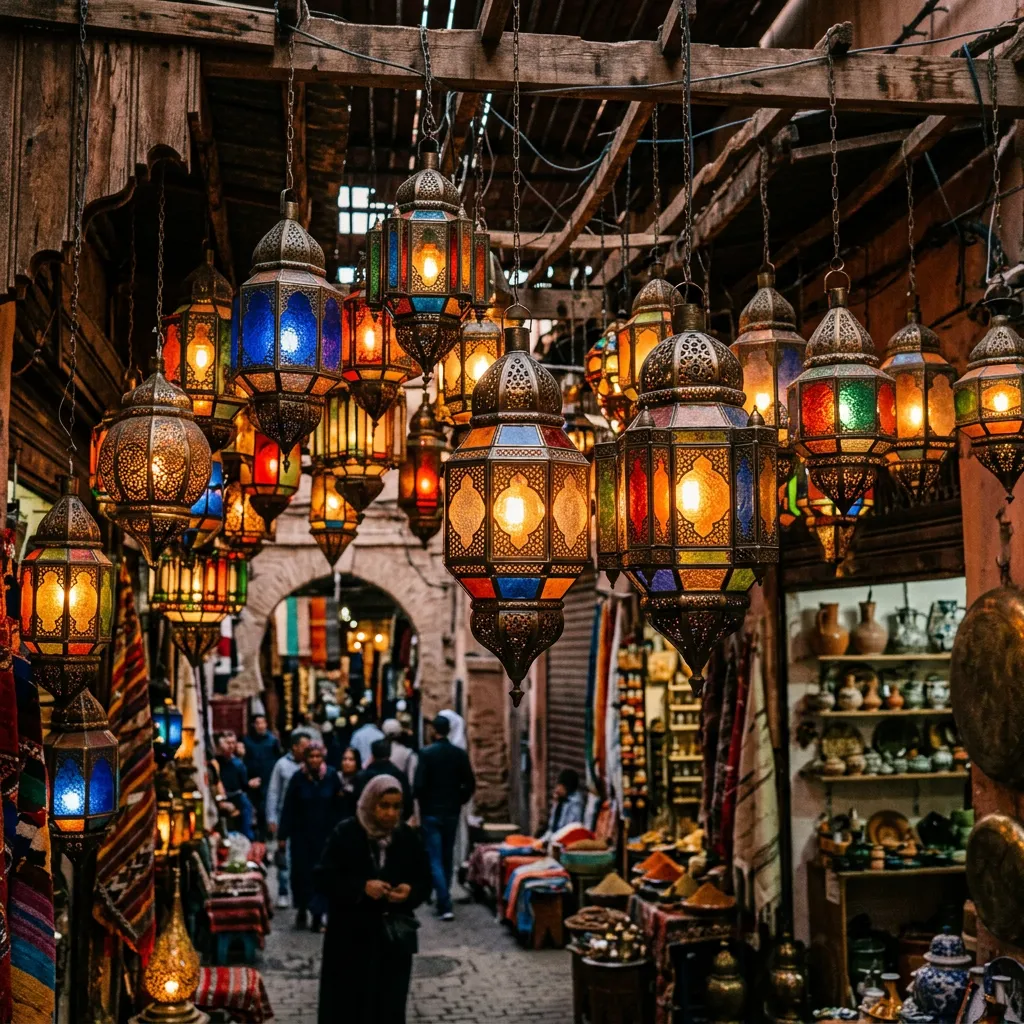
Colorful Moroccan souk with handmade lanterns and crafts

Souks & Markets

Shopping in Morocco

From hand-knotted Berber rugs to fragrant spice blends, discover the 20 must-buy treasures of Morocco's legendary souks and learn to shop like a local.

Shopping in Morocco is an immersive sensory experience unlike anywhere else in the world. The labyrinthine souks of Marrakech and Fes overflow with handcrafted treasures — vibrant textiles, gleaming metalwork, aromatic spices, and artisanal goods that represent centuries of living craft traditions. Every item tells a story, and the art of haggling transforms a simple purchase into a memorable cultural exchange.

This guide covers the 20 essential items to buy in Morocco, where to find the best quality, how to verify authenticity, and practical tips for negotiating fair prices. Whether you are seeking a hand-woven Beni Ourain rug, a bottle of pure argan oil, or a souvenir that captures the magic of your journey, you will find everything you need to shop with confidence and bring a piece of Morocco home.

20 Must-Buy Items

Our curated selection of the most authentic, beautiful, and memorable things to buy in Morocco, with expert tips on price, quality, and where to find them.

Category

Showing 20 items

Moroccan Rug
Textiles

Moroccan Rug

500 - 10,000 MAD
Marrakech, Fes, Ouarzazate, Chefchaouen

Hand-knotted or hand-woven carpets in styles ranging from thick, plush Beni Ourain rugs with minimalist geometric patterns to vibrant, flat-woven Kilim and Boucherouite textiles. Each rug is unique, woven by Berber women who embed personal stories and protective symbols into the design.

Leather Babouches
Leather

Leather Babouches

80 - 300 MAD
Fes, Marrakech, Taroudant

Traditional Moroccan slippers crafted from soft, naturally tanned leather. Available in pointed or round-toe styles, in every color imaginable. Babouches are the quintessential Moroccan footwear, worn daily by locals and making elegant, lightweight souvenirs.

Argan Oil
Beauty

Argan Oil

150 - 400 MAD
Essaouira, Agadir, Taroudant, Marrakech

Liquid gold from the argan forests of southwestern Morocco, available in culinary (roasted, nutty flavor) and cosmetic (cold-pressed, lighter) grades. Used for skincare, haircare, and cooking. Morocco is the only significant producer of argan oil in the world.

Ras el Hanout
Spices

Ras el Hanout

30 - 150 MAD
Fes, Marrakech, Meknes, Essaouira

The legendary "head of the shop" spice blend, containing up to 30+ ingredients including cardamom, nutmeg, cinnamon, cloves, dried rosebuds, and more. Every spice merchant has a secret family recipe, making each blend unique.

Tagine Pot
Ceramics

Tagine Pot

50 - 500 MAD
Safi, Fes, Marrakech, Meknes

The iconic conical clay cooking vessel used to prepare Morocco's signature slow-cooked stews. Available in functional unglazed cooking versions and decorative painted versions. The shape traps steam and returns condensed liquid to the dish, keeping it moist.

Moroccan Lantern
Decor

Moroccan Lantern

100 - 2,000 MAD
Marrakech, Fes, Casablanca

Handcrafted metal lanterns in brass, copper, or iron, featuring intricate pierced and hammered designs. When lit, they cast mesmerizing geometric shadow patterns across walls and ceilings. Available from small table-top sizes to large hanging fixtures.

Silver Jewelry
Jewelry

Silver Jewelry

100 - 3,000 MAD
Tiznit, Essaouira, Marrakech, Fes

Traditional Berber silver jewelry featuring bold geometric designs, semi-precious stones (coral, amber, amazonite), and symbolic motifs. Fibulae (cloak pins), chunky bracelets, elaborate headpieces, and Tuareg crosses are among the most distinctive pieces.

Zellige Tiles
Decor

Zellige Tiles

50 - 1,500 MAD
Fes, Meknes, Marrakech

Handcut geometric mosaic tiles in vivid jewel tones, arranged into mesmerizing Islamic geometric patterns. Available as individual loose tiles, framed decorative panels, or small table tops. Smaller pieces make beautiful, packable souvenirs.

Handmade Basket
Decor

Handmade Basket

30 - 300 MAD
Marrakech, Essaouira, Taroudant

Woven baskets made from palm leaf, doum, or raffia in natural and dyed colors. Market baskets, bread baskets, and large storage baskets are practical and decorative. The round woven "belly baskets" and colorful market totes have become global design favorites.

Embroidered Kaftan
Textiles

Embroidered Kaftan

300 - 5,000 MAD
Fes, Casablanca, Marrakech, Rabat

Elegant long robes adorned with intricate hand-embroidery, beading, and braiding (sfifa and akaad trimmings). Kaftans range from simple everyday cotton versions to lavish silk-and-gold celebration gowns. The Moroccan kaftan is considered one of the world's great garment traditions.

Berber Blanket
Textiles

Berber Blanket

400 - 2,000 MAD
Azrou, Ifrane, Marrakech, Ouarzazate

Thick, hand-loomed wool blankets (handira) from the Middle Atlas, traditionally made as bridal gifts. Characterized by cream or white backgrounds with distinctive colored stripes and sequin embellishments. These blankets are now prized globally as throws, wall hangings, and bedspreads.

Thuja Wood Box
Decor

Thuja Wood Box

50 - 800 MAD
Essaouira, Marrakech

Beautifully crafted boxes, chess sets, and decorative items made from aromatic thuya burl wood, unique to the Essaouira region. The swirling grain patterns of the burl wood are naturally ornate, and artisans enhance them with cedar, lemon wood, and mother-of-pearl inlays.

Ceramic Bowls
Ceramics

Ceramic Bowls

30 - 200 MAD
Fes, Safi, Marrakech, Meknes

Hand-painted ceramic bowls in the distinctive styles of different Moroccan cities: Fes blue-and-white, Safi multicolor, and Tamegroute green. Used for serving tagines, salads, and olives, these versatile pieces are both functional and decorative.

Moroccan Tea Set
Decor

Moroccan Tea Set

200 - 1,500 MAD
Fes, Marrakech, Meknes, Tangier

An ornate silver or nickel-silver teapot with matching engraved tea glasses, often presented on a hammered metal tray. The tea set is central to Moroccan hospitality and makes an impressive, culturally meaningful gift.

Saffron
Spices

Saffron

30 - 150 MAD per gram
Taliouine, Marrakech, Fes, Taroudant

Premium saffron threads from the Taliouine region of southern Morocco, considered among the finest in the world. These precious red stigmas of the Crocus sativus flower impart a golden color, floral aroma, and unique flavor to dishes, teas, and desserts.

Orange Blossom Water
Food

Orange Blossom Water

20 - 80 MAD
Kelaat M'gouna, Fes, Marrakech, Meknes

Distilled from the blossoms of bitter orange trees, this fragrant water is used in Moroccan pastries, salads, drinks, and as a refreshing face mist. The Dades and Kelaat M'gouna valleys are the primary production regions.

Handwoven Scarf
Textiles

Handwoven Scarf

50 - 400 MAD
Marrakech, Fes, Chefchaouen, Ouarzazate

Lightweight scarves and shawls in cotton, silk, or wool, handwoven on traditional looms. Options range from simple monochrome wraps to intricately patterned pieces with fringed edges. Cactus silk (sabra) scarves from the south have a distinctive sheen.

Copper Tray
Decor

Copper Tray

200 - 1,500 MAD
Fes, Marrakech, Meknes

Large, round hammered and engraved copper or brass trays used as serving platters and decorative wall hangings. The intricate geometric and arabesque engravings are done entirely by hand, taking skilled artisans days to complete a single piece.

Amlou (Almond Spread)
Food

Amlou (Almond Spread)

40 - 120 MAD
Essaouira, Agadir, Taroudant, Marrakech

A rich, creamy spread made from roasted almonds, argan oil, and honey, often called "Moroccan peanut butter." Amlou is a traditional Berber breakfast staple from the Souss region, served with bread. It makes a delicious, authentic, and easy-to-pack food souvenir.

Fossilized Trilobites
Decor

Fossilized Trilobites

50 - 2,000 MAD
Erfoud, Midelt, Marrakech, Ouarzazate

Morocco is one of the world's richest sources of fossils, particularly trilobites dating back 300-500 million years. Available as individual specimens, polished plates, and decorative items. The Erfoud and Alnif regions in the southeastern desert are the primary fossil hunting grounds.

Souk-by-Souk Guide

Each Moroccan city offers a distinct shopping experience. Here is your guide to the best souks and what to look for in each one.

Souks of the Marrakech Medina

Marrakech

The most famous shopping destination in Morocco, the Marrakech souks radiate outward from the central Jemaa el-Fna square in a labyrinth of covered alleyways. Each souk specializes in a different craft: Souk Semmarine for textiles and clothing, Souk des Teinturiers for dyed fabrics, Souk Haddadine for metalwork, Souk Chouari for woodworking, and Souk Smata for babouches and leather goods.

Insider Tips

  • The further you walk from Jemaa el-Fna, the lower the prices tend to be
  • Visit in the morning (9-11 AM) for a calmer, less crowded experience
  • The fixed-price Ensemble Artisanal near the Koutoubia Mosque is excellent for benchmarking fair prices
  • Gueliz (the new town) has modern boutiques selling curated Moroccan crafts at fixed prices

Best For

Lanterns, leather goods, textiles, spices, Berber jewelry

Price Level

Tourist prices (negotiate firmly)

Fes el-Bali Medina

Fes

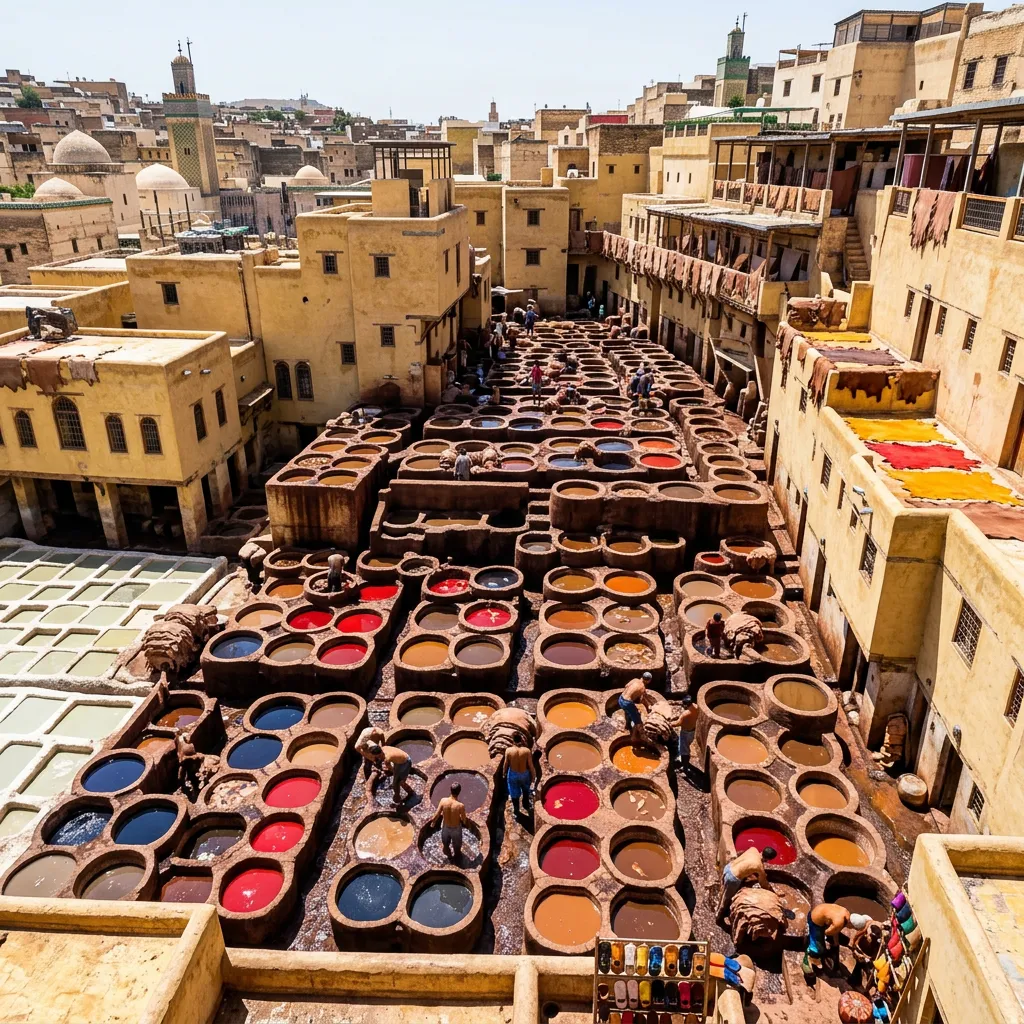
The world's largest car-free urban zone, Fes el-Bali is a UNESCO World Heritage Site with over 9,000 narrow alleyways. The medina's souks are more authentic and less tourist-oriented than Marrakech. Key areas include the tanneries district (Chouara Tannery), the pottery quarter near Bab el-Amer, the brass and copper souk near Place Seffarine, and the spice and perfume alley near Attarine Medersa.

Insider Tips

  • Hire an official guide (250-400 MAD for a half-day) to navigate the maze-like medina on your first visit
  • The tanneries area has persistent touts; be firm about which leather shop you visit
  • Fes blue ceramics and embroidered textiles are notably higher quality than elsewhere
  • Wednesday and Sunday are local market days when rural vendors sell at the outskirts

Best For

Ceramics, leather (tanneries), zellige tiles, embroidery, brass

Price Level

Fair prices (less tourist inflation than Marrakech)

Essaouira Medina & Art Galleries

Essaouira

Essaouira's compact, grid-planned medina (also UNESCO-listed) is one of the most pleasant shopping experiences in Morocco. The relaxed atmosphere means less aggressive selling and easier negotiation. The town is particularly famous for thuya woodwork, silver jewelry, argan oil, and art. Avenue de l'Istiqlal and the streets around Place Moulay Hassan are the main shopping areas.

Insider Tips

  • Visit the women's argan oil cooperatives on the road to Marrakech for the purest oil at fair prices
  • The Skala de la Ville (sea ramparts) area has many woodworking ateliers
  • Essaouira has a thriving contemporary art scene; galleries in the medina sell original paintings
  • Prices are generally 20-30% lower than Marrakech for similar items

Best For

Thuya woodwork, argan oil, silver jewelry, contemporary art, amlou

Price Level

Moderate (lower than Marrakech, relaxed negotiation)

The Blue City Medina

Chefchaouen

Chefchaouen's photogenic blue-washed medina is small enough to explore without getting lost, making it a stress-free shopping experience. The town specializes in handwoven blankets, goat cheese, locally made soaps, woven goods from the Rif Mountains, and distinctive blue-painted pottery. The main shopping streets run from Place Outa el-Hammam toward Ras el-Ma (the source).

Insider Tips

  • The locally made goat cheese (jben) is unique to the region and makes a great edible souvenir
  • Handwoven Rif Mountain blankets and woolens are less expensive here than in Marrakech
  • Blue-painted items are made specifically for the tourist market but are charming nonetheless
  • Monday and Thursday are the main souk days when rural Berber vendors come to town

Best For

Woven blankets, goat cheese, handmade soaps, wool goods, blue pottery

Price Level

Budget-friendly (least tourist inflation)

Morocco's Pottery Capitals

Fes & Safi

For serious ceramics shoppers, Safi and Fes are the essential destinations. Safi, on the Atlantic coast, is the industrial pottery capital where you can visit large workshops and buy directly at wholesale prices. Fes is home to the more refined, hand-painted blue-and-white ceramic tradition. In both cities, visiting the workshops where artisans shape, paint, and fire the pieces adds immense value to the purchase.

Insider Tips

  • In Safi, the Colline des Potiers (Potters' Hill) has dozens of workshops open to visitors
  • Fes ceramics use traditional natural pigments (cobalt blue, antimony black) that are food-safe
  • Negotiate sets (6 bowls, a tagine, and serving dishes) for significant volume discounts
  • Ask about shipping; many workshops in Safi have experience packing and mailing internationally

Best For

Tagines, bowls, plates, decorative tiles, ceramic lamps

Price Level

Wholesale prices in Safi, moderate in Fes

Silver Capital of Morocco

Tiznit

This small walled town in southern Morocco is the undisputed center of Berber silver jewelry production. The circular souk in the town center has dozens of silver workshops where you can watch jewelers at work and buy directly. Prices here are a fraction of what you would pay in Marrakech or Essaouira for the same quality.

Insider Tips

  • Visit the Souk des Bijoutiers (jewelers' souk) inside the old medina walls
  • Bring a small magnifying glass to check for silver hallmarks (925 for sterling)
  • Antique Berber pieces are increasingly rare; most "antique" pieces in tourist markets are reproductions
  • Combine a Tiznit silver shopping trip with nearby Taroudant for leather and Agadir for the beach

Best For

Silver jewelry, Berber fibulae, Tuareg crosses, amber pendants

Price Level

Lowest prices in Morocco for silver

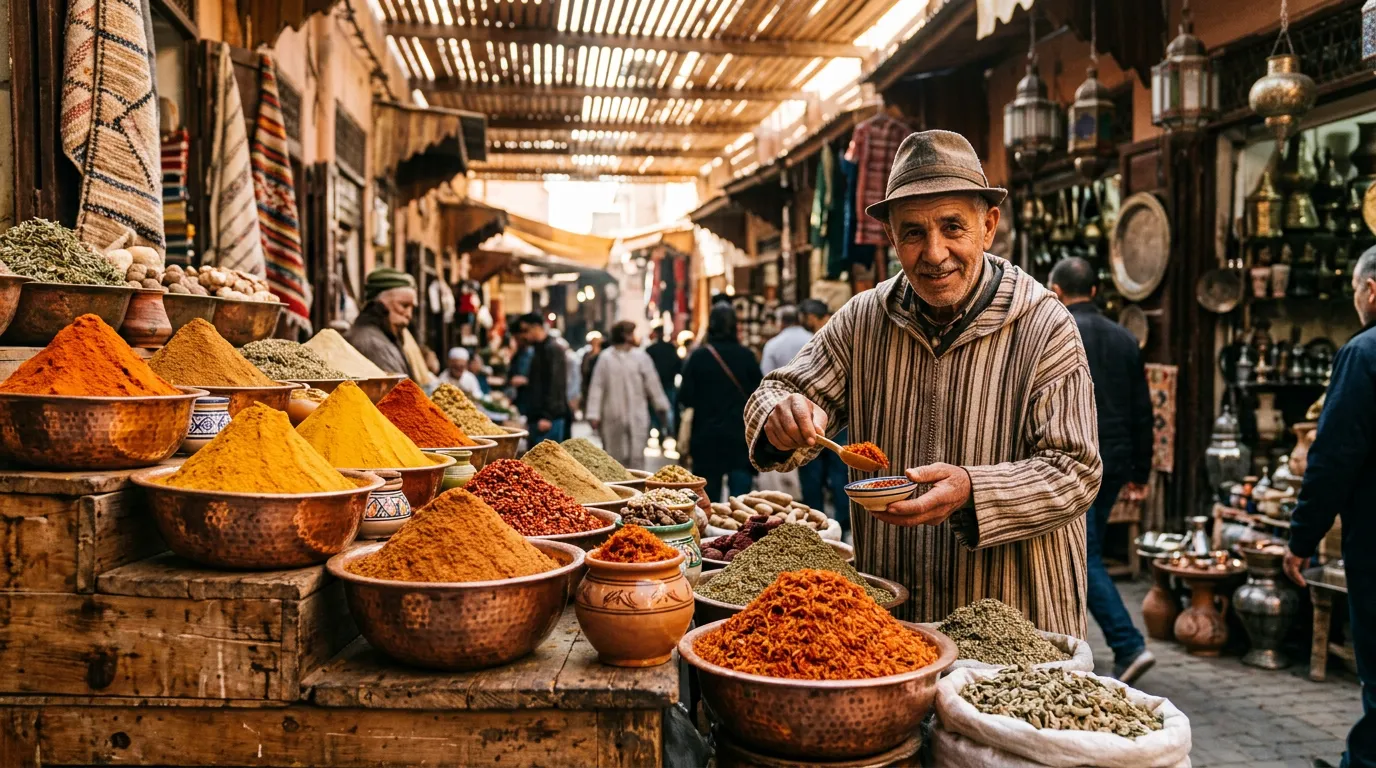
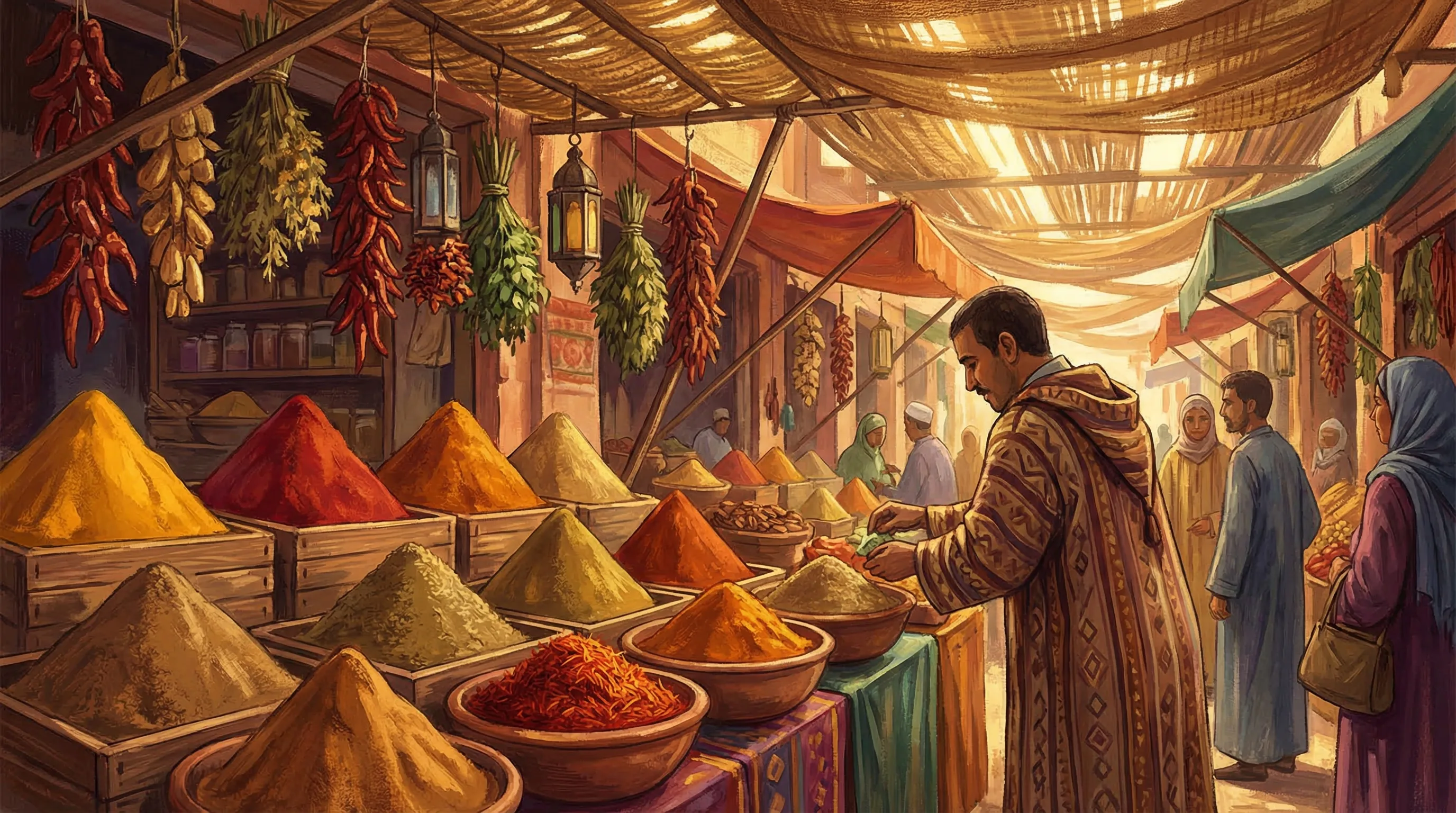
Vibrant Moroccan spice market with colorful pyramids of cumin, saffron, paprika, and ras el hanout in traditional copper bowls

Bargaining Scripts

Real-world negotiation scripts you can adapt for your own shopping encounters. Practicing these before you arrive will save you money and boost your confidence.

Opening a Negotiation

You

"Salaam! These are beautiful. How much for this one?" (point casually)

S

"For you, my friend, special price: 800 dirhams."

You

"Oh, that is more than I expected. I was thinking around 350." (smile warmly)

S

"350?! Impossible! This is genuine handmade. I can do 700."

You

"I understand it is quality work. What about 400? That is fair."

Pro Tip

Start at about 40-50% of the asking price. The seller expects this and has priced accordingly. Stay relaxed and friendly throughout.

Using the Walk-Away

You

"500 is the most I can spend today. Thank you, but I will keep looking."

S

"Wait, wait! Okay, for you because you are nice: 550."

You

"I really like it, but 500 is my budget. 500 and we have a deal?"

S

"Okay, 500. You are killing me, but okay!" (both laugh)

Pro Tip

The walk-away is your strongest card. Once you physically turn and start to leave, the real price appears. Only use this if you are genuinely prepared to leave.

Buying Multiple Items

You

"I like these three scarves. What is the best price if I take all three?"

S

"Each one is 200, so 600 for three."

You

"For three I would expect a volume discount. 400 for all three?"

S

"I can do 500 for three. That is already a good deal."

You

"450 and I will buy right now, cash." (show the money)

S

"Okay, 450. Deal!"

Pro Tip

Bundling items is an excellent strategy. Sellers prefer larger transactions and will give better per-item prices. Having cash visibly ready closes deals faster.

Price Guide: What Things Really Cost

Know before you go. This table shows the typical tourist price versus the fair local price for the most common purchases. All prices are in Moroccan Dirham (MAD). 10 MAD is approximately 1 USD / 0.90 EUR.

ItemTourist PriceFair Price
Leather babouches (basic)200-300 MAD80-120 MAD
Leather babouches (embroidered)400-600 MAD200-300 MAD
Leather bag (medium)600-1,000 MAD300-500 MAD
Small Beni Ourain rug (1x1.5m)3,000-5,000 MAD1,200-2,500 MAD
Large Beni Ourain rug (2x3m)8,000-15,000 MAD3,500-7,000 MAD
Boucherouite rug (medium)2,000-4,000 MAD800-1,500 MAD
Argan oil (1 liter, cosmetic)400-600 MAD200-300 MAD
Argan oil (1 liter, culinary)300-500 MAD150-250 MAD
Ras el hanout (100g)80-150 MAD30-60 MAD
Saffron (1g, Taliouine)100-200 MAD50-80 MAD
Tagine pot (cooking)150-300 MAD50-120 MAD
Tagine pot (decorative)300-600 MAD150-300 MAD
Ceramic bowl (medium)80-150 MAD30-60 MAD
Metal lantern (small)200-400 MAD100-200 MAD
Metal lantern (large)1,000-2,500 MAD500-1,200 MAD
Tea set (teapot + 6 glasses)400-800 MAD200-400 MAD
Silver Berber bracelet300-600 MAD150-300 MAD
Cotton scarf100-200 MAD50-100 MAD
Cactus silk (sabra) scarf200-400 MAD100-200 MAD
Thuya wood box (small)100-200 MAD50-100 MAD
Prices as of 2025. Fair prices assume good-quality handmade goods purchased from established artisan shops or cooperatives. Prices vary by season, location, and quality.

Shopping Tips & Advice

Master the art of shopping in Morocco with these practical tips on haggling, choosing markets, and getting your treasures safely home.

How to Haggle

  • 1Always greet the shopkeeper warmly and take your time. Rushing signals that you are an easy target.
  • 2Start at 40-50% of the asking price and be prepared to settle at 50-70%. The first price is never the real price.
  • 3Be prepared to walk away. This is the most powerful negotiation tool. If the seller stops you, the price will drop.
  • 4Compare prices at multiple shops before committing. This gives you a realistic sense of fair market value.
  • 5Buy multiple items from the same seller for a better overall deal. Shopkeepers prefer larger transactions.
  • 6Keep the mood friendly and light. Haggling is a social ritual, not a battle. Humor goes a long way.
  • 7Know that fixed-price shops exist (look for "prix fixe" signs) and are useful for establishing baseline prices.

Best Markets & Souks

  • Marrakech Medina Souks

    The most famous market in Morocco. Sprawling, chaotic, and endlessly fascinating. Best for lanterns, leather, textiles, and spices.

  • Fes Medina (Fes el-Bali)

    The world's largest car-free urban area. More authentic and less touristy than Marrakech. Best for ceramics, leather, zellige, and metalwork.

  • Essaouira Medina

    A relaxed, artistic coastal town with excellent thuya woodwork, silver jewelry, argan oil, and art galleries.

  • Chefchaouen Medina

    The blue city's compact medina is ideal for woven goods, goat cheese, and locally made soaps in a relaxed atmosphere.

  • Tiznit Souk

    The silver capital of Morocco. Best destination for authentic Berber silver jewelry at fair prices.

  • Safi Pottery Quarter

    Morocco's pottery capital, where you can watch artisans work and buy directly at workshop prices.

Shipping Your Purchases Home

  • 1Most shops in tourist areas can arrange shipping. Get a written receipt with a tracking number.
  • 2For large items (rugs, furniture), use a professional shipping company like Morocco Logistics or DHL.
  • 3Hand-carry small, valuable items (saffron, argan oil, jewelry) in your luggage for safety.
  • 4Check your home country's customs rules for duty-free allowances. Many countries allow 200-400 USD/EUR of goods.
  • 5Wrap ceramics and fragile items in your clothing inside your checked bag. Bubble wrap is available in medina shops.
  • 6Ask for a certificate of origin for high-value artisanal goods. This can help with customs and proves authenticity.

Scam Awareness

Be cautious of unsolicited “guides” who lead you to specific shops (they earn a commission that inflates your price). Avoid buying from aggressive sellers in tourist hotspots where prices are heavily marked up. If a deal seems too good to be true — especially for saffron, argan oil, or silver — it probably is. Take your time, trust your instincts, and remember that the best shopping experiences happen when you wander off the beaten path and discover your own favorite shops.

Shipping & Customs Guide

Everything you need to know about getting your Moroccan treasures home safely, from postal services and couriers to customs duties and restricted items.

Carrying Items in Luggage

The simplest option for small to medium purchases. Most airlines allow 23 kg checked baggage. Pack ceramics wrapped in clothing in the center of your bag. Spices, argan oil (sealed in bags), and small crafts travel well in carry-on. Liquids in carry-on must follow the 100ml rule; pack larger bottles in checked luggage.

Estimated Cost

Free (within baggage allowance) or 200-600 MAD for extra bag

Morocco Post (La Poste)

The national postal service offers affordable international shipping. A 5 kg package to Europe costs approximately 200-350 MAD, to North America 300-500 MAD. Delivery takes 2-4 weeks. Available at post offices in every city. Registered mail with tracking is recommended.

Estimated Cost

200-500 MAD for a 5 kg package

DHL / FedEx / UPS

International couriers offer the fastest and most reliable shipping. DHL has offices in Marrakech, Casablanca, Fes, and Agadir. A 5 kg package to Europe costs 500-900 MAD with 3-5 day delivery. More expensive but includes full tracking and insurance.

Estimated Cost

500-1,500 MAD depending on weight and destination

Shop-Arranged Shipping

Many established shops, especially rug dealers and furniture sellers, have their own shipping arrangements with freight companies. They handle packing, customs documentation, and door-to-door delivery. Get everything in writing: total cost, delivery timeline, tracking number, and refund policy if items arrive damaged.

Estimated Cost

Varies (1,000-5,000+ MAD for large items like rugs)

Customs Duties

Most countries allow a duty-free personal allowance (typically 200-800 USD/EUR depending on country). Above this threshold, expect to pay import duty (usually 5-20%) plus local sales tax (VAT/GST). Textiles, leather goods, and handicrafts often have lower duty rates than luxury goods. Keep receipts; customs may ask you to declare high-value items.

Estimated Cost

5-20% import duty above your duty-free allowance

Prohibited & Restricted Items

Most Moroccan crafts can be exported freely. However, genuine antiques (over 100 years old) require an export permit from the Ministry of Culture. Certain fossils require documentation. Food items (spices, argan oil, amlou) are generally fine but check your destination country's regulations on agricultural products. Never attempt to buy or export protected wildlife products.

Ready to Shop Like a Local?

Explore Morocco's legendary medinas and souks. Browse our city guides for detailed market maps, or book a guided souk tour for the ultimate shopping experience.