Best Day Trips from Marrakech
in 2026
12 incredible day trips from waterfalls and Atlas Mountain valleys to coastal towns and desert landscapes. Guided tours from 350 MAD, DIY options from 50 MAD.
Which Day Trips from Marrakech Should You Take?
The top day trips from Marrakech are Ourika Valley (45 km, 1 hour), Imlil (65 km, 1.5 hours), Ouzoud Falls (150 km, 2.5 hours), Essaouira (190 km, 2.5-3 hours) and Ait Ben Haddou (185 km, 3.5 hours). Guided group tours cost 350-800 MAD per person; DIY trips by grand taxi start from 50 MAD.
Why Marrakech Is the Best Base for Day Trips in Morocco
Marrakech's central location at the foot of the Atlas Mountains makes it the perfect launchpad for some of Morocco's most spectacular day trips. Within a 2-hour drive, you can reach soaring waterfalls, mountain villages, desert landscapes, and historic kasbahs. Go a little further and you hit the Atlantic coast at Essaouira or the film studios of Ouarzazate.
Whether you prefer an organized guided tour with hotel pickup or the independence of doing it yourself by grand taxi and local bus, there is a day trip for every budget. The closest excursions like Ourika Valley and Agafay Desert cost as little as from 50 MAD by public transport, while guided tours to farther destinations like Ait Ben Haddou start from around 500 MAD with everything included.
This guide covers the 12 best day trips from Marrakech with honest advice on transport options, costs, what is included on guided tours, the best season for each trip, and whether to go DIY or book a tour.
12 Best Day Trips from Marrakech
From 45-minute escapes to full-day adventures, these are the top excursions from Marrakech for every type of traveler.
All prices are starting prices and may vary by season, group size, and provider. Always confirm current rates before booking.
Ouzoud Falls
Guided: From 400 MAD per person | DIY: From 150 MAD per person
Ouzoud Falls is the most dramatic natural attraction near Marrakech and the tallest waterfall in North Africa. The falls cascade 110 meters down through olive groves into a deep gorge where you can swim, take a small boat ride, and spot wild Barbary macaques swinging through the trees. The path down to the base takes about 20 minutes and is well-maintained with cafes along the way.
Highlights
Getting There
No direct public bus. Grand taxis from Bab Ghmat are unreliable. Best by guided tour or rental car. Drive via Beni Mellal road (N8 then R304).
Guided Tour Includes
Hotel pickup, transport, guide, lunch, and boat ride at the falls
Tip: Visit on a weekday to avoid weekend crowds from Casablanca and Beni Mellal. The falls are most powerful in spring after winter rains. Bring a swimsuit for the pools at the base.
Ourika Valley
Guided: From 350 MAD per person | DIY: From 50 MAD per person
The Ourika Valley is the easiest and closest Atlas Mountains escape from Marrakech. The road follows the Ourika River upstream through a lush valley dotted with traditional Berber villages, terraced farms, and small waterfalls. At the end of the road, a 45-minute hike leads to the Setti Fatma waterfalls. The valley floor has excellent riverside restaurants where you can eat tagine with your feet almost in the water.
Highlights
Getting There
Shared grand taxis from Bab Rob in Marrakech cost from 25-40 MAD per person. They run frequently throughout the day. Return taxis are easy to find in the valley.
Guided Tour Includes
Hotel pickup, transport, Berber village visit, lunch, and saffron garden tour
Tip: Combine with a visit to a traditional Berber house and an argan or saffron cooperative. Go early to avoid afternoon heat in summer. Flash floods can occur in autumn; check conditions.
Essaouira
Guided: From 450 MAD per person | DIY: From 160 MAD per person
Essaouira is a laid-back Atlantic coast town that offers a complete contrast to the heat and intensity of Marrakech. The UNESCO-listed medina is painted in blue and white, the fishing port is alive with activity, and the wide beach stretches for miles. It is windier and cooler than Marrakech, which makes it a perfect summer escape. The medina is compact and easy to explore on foot without getting lost.
Highlights
Getting There
CTM and Supratours buses from Marrakech bus station from 80 MAD one-way, 2.5 hours. Runs multiple times daily. By car, the road is modern and fast. Grand taxis also available.
Guided Tour Includes
Hotel pickup, transport, guided medina walk, argan cooperative visit, free time, and sometimes lunch
Tip: This is a long day trip (5-6 hours of travel). Consider staying overnight for a more relaxed visit. Budget at least 3-4 hours to explore the medina, port, and eat fresh seafood.
Ait Ben Haddou
Guided: From 500 MAD per person | DIY: From 250 MAD per person
Ait Ben Haddou is Morocco's most famous kasbah and a UNESCO World Heritage Site. This stunning fortified village of red earth buildings has been used as a filming location for Gladiator, Game of Thrones, and Lawrence of Arabia. The ksar sits on a hillside overlooking the Ounila River valley with dramatic desert mountains behind. You can walk through the narrow lanes, climb to the top for panoramic views, and visit artisan workshops.
Highlights
Getting There
No direct public transport. Drive via the Tizi n'Tichka pass (N9) or take a guided tour. The road is mountainous but well-maintained. Some tours combine with Ouarzazate.
Guided Tour Includes
Hotel pickup, transport over Atlas Mountains, local guide at the ksar, lunch, and sometimes Ouarzazate visit
Tip: Visit early morning for the best light on the kasbah and fewer tour groups. The drive over the Tizi n'Tichka pass is spectacular in itself. Combine with a stop at the Ouarzazate film studios for a full day.
Imlil & Toubkal Region
Guided: From 450 MAD per person | DIY: From 100 MAD per person
Imlil is a small Berber village nestled at 1,740 meters in the High Atlas, serving as the base for climbing Mount Toubkal (4,167 m), North Africa's highest peak. Even without climbing Toubkal, Imlil makes an excellent day trip for its mountain scenery, traditional villages, and fresh air. A popular half-day hike goes from Imlil to the village of Armed (1 hour each way), passing through walnut groves with views of Toubkal.
Highlights
Getting There
Grand taxis from Marrakech to Asni (from 30 MAD), then transfer to Imlil (from 20 MAD). By car, drive via Asni on the Tizi n'Test road (S501). Parking available in Imlil.
Guided Tour Includes
Hotel pickup, transport, licensed mountain guide, village visit, and traditional Berber lunch
Tip: Hire a local guide in Imlil (from 300 MAD/day) for the best experience. They know hidden trails and can arrange lunch in a Berber home. Snow blocks higher trails December-March.
Agafay Desert
Guided: From 600 MAD per person | DIY: From 200 MAD per person
The Agafay Desert is a rocky, lunar-like landscape just 45 minutes from Marrakech that offers a taste of the desert without the 10-hour drive to the Sahara. While not a sand desert (it is more of an arid stony plain), Agafay has dramatic scenery with the Atlas Mountains as a backdrop. Most visitors come for sunset camel rides, quad biking, or an overnight stay in one of the luxury glamping camps.
Highlights
Getting There
No public transport. Drive via the road to Amizmiz or take a guided tour. Most tours include hotel pickup. Taxis can take you but negotiate a return pickup time.
Guided Tour Includes
Hotel pickup, transport, camel ride, quad biking option, Berber tea, and sunset dinner
Tip: The best experience is an overnight stay at a desert camp, but a half-day sunset trip works well as a day excursion. Combine with a camel ride and traditional dinner for the full experience.
Ouarzazate
Guided: From 550 MAD per person | DIY: From 250 MAD per person
Known as the "Hollywood of Africa," Ouarzazate is home to the Atlas Film Studios where movies like Gladiator, Kingdom of Heaven, and The Mummy were filmed. The town sits on the edge of the desert beyond the Atlas Mountains and serves as the gateway to the Sahara. The Kasbah Taourirt in the town center is worth exploring, and the drive over the Tizi n'Tichka pass is one of Morocco's most scenic roads.
Highlights
Getting There
CTM and Supratours buses from Marrakech (from 90 MAD, 4 hours). By car via N9 over Tizi n'Tichka pass. Often combined with Ait Ben Haddou.
Guided Tour Includes
Hotel pickup, transport, film studios entry, Ait Ben Haddou visit, guide, and lunch
Tip: This is a very long day trip. Most travelers combine Ouarzazate with Ait Ben Haddou in a single guided tour. Consider an overnight stay to break up the journey and visit the film studios without rushing.
Paradise Valley
Guided: From 500 MAD per person | DIY: From 200 MAD per person
Paradise Valley is a hidden gorge between Marrakech and Agadir filled with natural rock pools, palm trees, and crystal-clear water perfect for swimming. The valley is reached by a short hike from the road (about 30 minutes) through a beautiful palm-shaded canyon. The rock pools are deep enough for swimming and there are natural cliff-jumping spots for the adventurous. Local guides at the trailhead will show you the best pools.
Highlights
Getting There
No public transport. Drive via the Agadir road, turning off near Imouzzer Ida Outanane. Best with a rental car or guided tour. The last section is a rough track.
Guided Tour Includes
Hotel pickup, transport, local guide, swimming time, and sometimes lunch at a local restaurant
Tip: Bring water shoes for the rocky riverbed. Visit between May and September when the pools are fullest and the weather is warm enough for swimming. The pools can be crowded on weekends.
Imi n'Ifri (Natural Bridge)
Guided: From 400 MAD per person | DIY: From 100 MAD per person
Imi n'Ifri, meaning "Mouth of the Cave" in Berber, is a spectacular natural rock bridge and cave near the town of Demnate. The massive natural arch spans a river gorge and contains a cathedral-like cavern with stalactites, nesting birds, and dappled light. It is one of Morocco's most impressive geological formations and remains relatively unknown to tourists. The walk from the parking area takes about 15 minutes.
Highlights
Getting There
No direct public transport to the site. Grand taxis to Demnate from Marrakech (from 50 MAD) then a local taxi to Imi n'Ifri (from 30 MAD). Best by car or guided tour.
Guided Tour Includes
Hotel pickup, transport, local guide, Demnate town visit, and lunch
Tip: Combine with a visit to the town of Demnate, known for its pottery and olive oil. Bring a flashlight to explore deeper into the cave. The site is peaceful on weekdays with almost no other visitors.
Lalla Takerkoust Lake
Guided: From 350 MAD per person | DIY: From 50 MAD per person
Lalla Takerkoust is a large artificial lake just 45 minutes south of Marrakech, backed by the snow-capped Atlas Mountains. The lake is a popular local escape with jet skiing, boat rides, and camel treks along the shore. Several lakeside restaurants serve excellent Moroccan food with views of the water and mountains. It is one of the closest and easiest day trips from Marrakech, perfect for families.
Highlights
Getting There
Grand taxis from Marrakech (from 30 MAD per person). By car, drive south via the road to Amizmiz. Some tours combine with Agafay Desert or Kik Plateau.
Guided Tour Includes
Hotel pickup, transport, boat ride, camel trek, and lunch at a lakeside restaurant
Tip: Visit on a weekday for a quieter experience. The water level varies by season; spring has the most water. Combine with Agafay Desert for a full day of desert and lake scenery.
Three Valleys & Atlas Mountains
Guided: From 400 MAD per person | DIY: From 100 MAD per person
The "Three Valleys" tour is one of the most popular organized day trips from Marrakech, taking you through three distinct Atlas Mountain valleys: Asni, Ouirgane, and Imlil. Each valley has its own character, from the bustling Saturday market at Asni to the peaceful lake at Ouirgane and the mountain village of Imlil. The tour provides a well-rounded introduction to Berber culture and Atlas Mountain life.
Highlights
Getting There
Best as a guided tour for the three-valley combination. By car, drive south on the Tizi n'Test road. Grand taxis serve Asni directly from Marrakech.
Guided Tour Includes
Hotel pickup, transport through three valleys, Berber village visits, argan cooperative, and traditional lunch
Tip: Try to visit on a Saturday when Asni has its vibrant weekly market. Each valley is interesting in its own right, so do not rush. The Ouirgane valley is the most peaceful and least visited.
Kik Plateau & Atlas Views
Guided: From 400 MAD per person | DIY: From 80 MAD per person
The Kik Plateau is an elevated tableland south of Marrakech that offers some of the most spectacular panoramic views of the High Atlas Mountains. Unlike the more popular Ourika Valley, the Kik Plateau sees far fewer tourists, giving you an authentic glimpse of rural Berber life. The plateau is dotted with small villages, grazing flocks, and ancient stone walls, all set against the dramatic backdrop of snow-capped peaks.
Highlights
Getting There
No public transport. Drive via the Amizmiz road, turning off onto a plateau track. A 4x4 or high-clearance vehicle is recommended. Best as a guided tour.
Guided Tour Includes
Hotel pickup, 4x4 transport, Berber village visit, panoramic stops, and traditional lunch
Tip: Combine with Lalla Takerkoust lake for a full day. The plateau is windy; bring a light jacket even in summer. Sunset from the Kik Plateau is extraordinary.
Quick Comparison Table
All 12 day trips at a glance with distances, prices, and difficulty levels.
| Day Trip | Distance | Drive Time | Guided Price | DIY Price | Difficulty |
|---|---|---|---|---|---|
| Ouzoud Falls | 150 km | 2.5 hrs | From 400 MAD | From 150 MAD | Easy |
| Ourika Valley | 45 km | 1 hr | From 350 MAD | From 50 MAD | Easy |
| Essaouira | 190 km | 2.5 hrs | From 450 MAD | From 160 MAD | Easy |
| Ait Ben Haddou | 185 km | 3.5 hrs | From 500 MAD | From 250 MAD | Moderate |
| Imlil / Toubkal | 65 km | 1.5 hrs | From 450 MAD | From 100 MAD | Moderate |
| Agafay Desert | 40 km | 45 min | From 600 MAD | From 200 MAD | Easy |
| Ouarzazate | 200 km | 4 hrs | From 550 MAD | From 250 MAD | Long day |
| Paradise Valley | 185 km | 2.5 hrs | From 500 MAD | From 200 MAD | Moderate |
| Imi n'Ifri | 80 km | 1.5 hrs | From 400 MAD | From 100 MAD | Easy |
| Lalla Takerkoust | 40 km | 45 min | From 350 MAD | From 50 MAD | Easy |
| Three Valleys | 60 km | 1.5 hrs | From 400 MAD | From 100 MAD | Easy |
| Kik Plateau | 55 km | 1.5 hrs | From 400 MAD | From 80 MAD | Moderate |
Guided prices are per person for group tours. Private tours are typically 2-3x higher. All prices are starting prices and seasonal pricing may apply.
DIY vs Guided Tours: Which Should You Choose?
Some day trips are easy to do independently, while others are much better with a guide. Here is an honest comparison.
Best for DIY
DIY saves 50-70% compared to guided tours and gives you total flexibility with your schedule.
Better with a Guide
Guided tours include hotel pickup, knowledgeable guides, and often lunch. Book through your riad or a reputable agency.
Best Season for Each Day Trip
Morocco's climate varies dramatically between coast, mountains, and desert. Here is when to take each day trip.
Spring (March-May)
The best season for most day trips. Wildflowers in the Atlas, full waterfalls at Ouzoud, and pleasant temperatures everywhere. Green landscapes and clear mountain views.
Best Trips This Season
Summer (June-August)
Extremely hot in Marrakech and desert areas. Mountain and water day trips provide welcome relief. Essaouira's coastal breeze is a perfect escape from the heat.
Best Trips This Season
Autumn (September-November)
Excellent for day trips with warm but manageable temperatures. Fewer tourists than spring. Harvest season in the Atlas with dates, walnuts, and saffron being gathered.
Best Trips This Season
Winter (December-February)
Mild and pleasant in Marrakech with cool evenings. Snow in the Atlas above 2,000 m makes mountain trips spectacular. Fewer tourists and lower prices on tours.
Best Trips This Season
Landscapes Around Marrakech
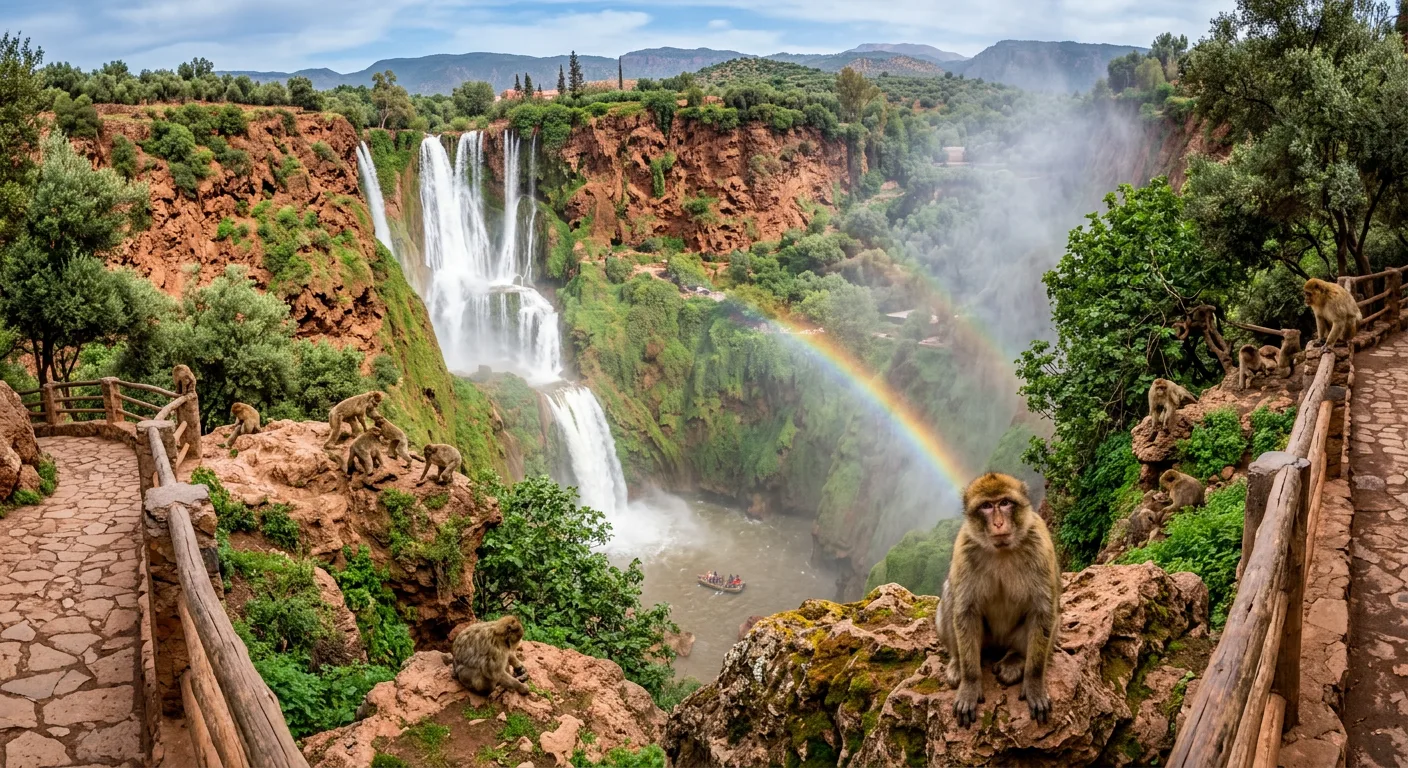
Ouzoud Falls
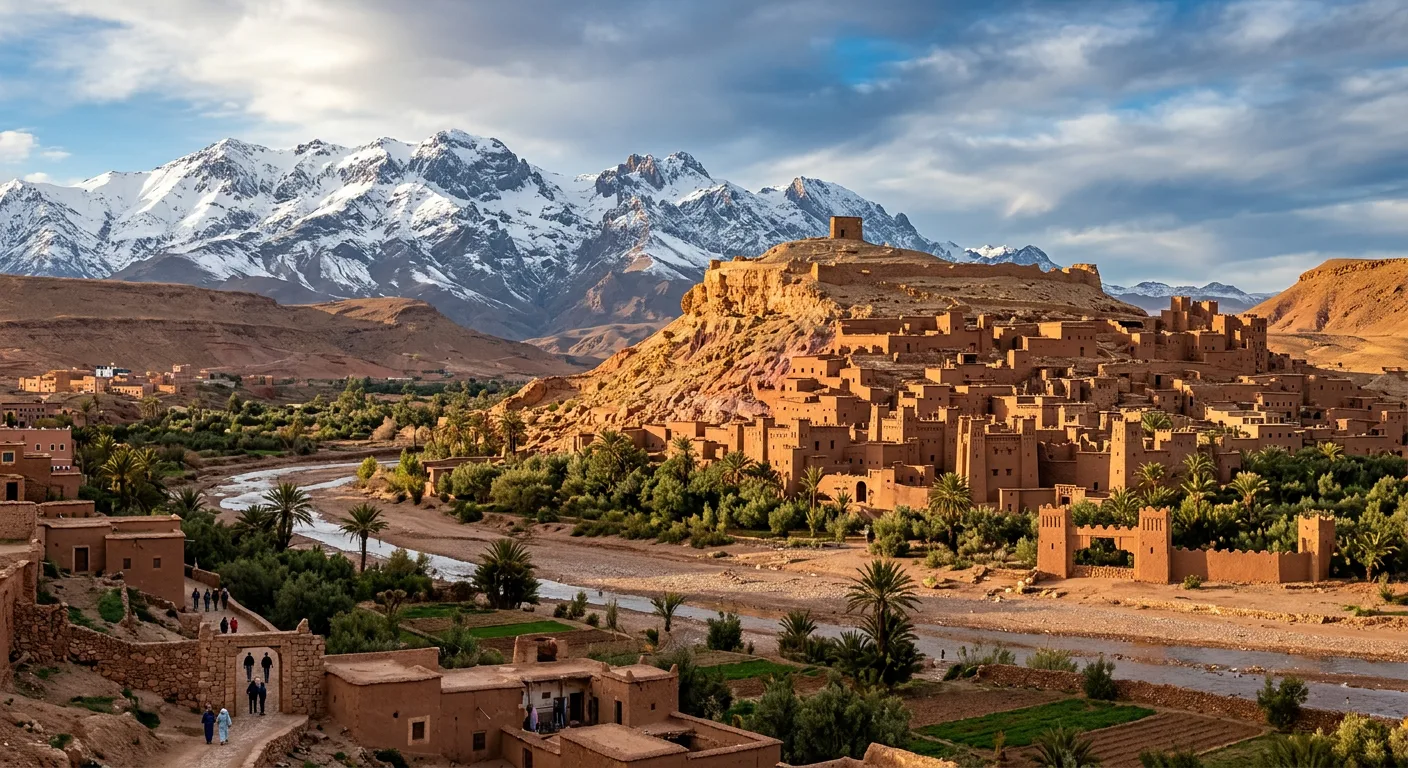
Ait Ben Haddou
Essaouira
Practical Tips for Day Trips from Marrakech
Frequently Asked Questions
What are the best day trips from Marrakech?
The most popular day trips from Marrakech are Ouzoud Falls (stunning 110m waterfalls, 2.5 hours away), Ourika Valley (closest Atlas Mountains escape, just 1 hour), Essaouira (laid-back coastal town, 2.5 hours), Ait Ben Haddou (UNESCO kasbah, 3.5 hours), and Imlil (mountain village and Toubkal gateway, 1.5 hours). Other excellent options include Agafay Desert, Paradise Valley, and the Three Valleys tour.
How much do day trips from Marrakech cost?
DIY day trips can cost as little as from 50 MAD per person for nearby destinations like Ourika Valley or Lalla Takerkoust (grand taxi fare). Guided group day tours range from 350 MAD to 800 MAD per person depending on the destination and what is included. Private guided tours start from 1,200 MAD per vehicle. Prices are seasonal and may change during peak periods.
Can I do day trips from Marrakech without a guide?
Yes, many day trips are easy to do independently. Ourika Valley and Lalla Takerkoust are reachable by grand taxi for from 25-40 MAD. Essaouira has CTM and Supratours buses from 80 MAD. However, Ouzoud Falls and Ait Ben Haddou have limited public transport, so a guided tour or rental car is recommended for those destinations.
What is the best day trip from Marrakech for families?
Ourika Valley is ideal for families: it is only 45 minutes from Marrakech, offers gentle walks along the river, Berber village visits, and riverside restaurants. Lalla Takerkoust lake is another family-friendly option with boat rides, jet skiing, and lakeside cafes. For older children, Ouzoud Falls combines hiking and wildlife spotting.
How far is Essaouira from Marrakech?
Essaouira is approximately 190 km from Marrakech, which takes 2.5 to 3 hours by car or bus. CTM and Supratours buses run multiple times daily from 80 MAD one-way. It makes a long but rewarding day trip. You will have about 4-5 hours to explore the medina, port, and eat fresh seafood before heading back.
Is Ouzoud Falls worth visiting from Marrakech?
Absolutely. Ouzoud Falls is the tallest waterfall in North Africa at 110 meters and one of Morocco's most impressive natural sights. The trip takes about 2.5 hours each way. You can swim in natural pools, spot Barbary macaques, and take a boat ride. Most visitors spend 2-3 hours at the falls. Visit on a weekday to avoid crowds.
What is the best season for day trips from Marrakech?
Spring (March-May) and autumn (September-November) are ideal for most day trips with pleasant temperatures and fewer crowds. Summer (June-August) is extremely hot (40+C), though coastal (Essaouira) and mountain (Ourika, Imlil) trips offer relief. Winter (December-February) is mild in Marrakech but cold in the mountains.
Should I book a guided tour or go independently?
For Ourika Valley, Essaouira, and Lalla Takerkoust, going independently is easy and cheaper. For Ouzoud Falls, Ait Ben Haddou, and Ouarzazate, a guided tour is more practical due to limited public transport. For Imlil and mountain hikes, a local guide adds cultural context and ensures safety on trails. Most tours can be booked the day before from your riad.
Related Guides
Morocco Day Trips Guide
Day trips and excursions from every major city in Morocco including Fes, Casablanca, and Tangier.
Read moreThings to Do in Marrakech
The complete guide to attractions, activities, and experiences within Marrakech itself.
Read moreAtlas Mountains Guide
Hiking, trekking, and exploring the High Atlas, Middle Atlas, and Anti-Atlas mountain ranges.
Read moreMorocco Road Trip Guide
Self-drive routes, rental car tips, road conditions, and scenic driving itineraries across Morocco.
Read moreMarrakech City Guide
Everything you need to know about Marrakech: medina, souks, riads, food, and practical travel tips.
Read morePlan it with a local expert
Travel Morocco with Serenity Morocco Tours
Crafting extraordinary journeys through Morocco's timeless landscapes. 100% private journeys, handcrafted around you.
 from $2,011
Sahara Desert Luxury Expedition
 from $2,054
Essential Morocco: Imperial Cities Circuit
 from $5,978
Sahara to Sea: Morocco Complete