Best Day Trips from Tangier
in 2026
11 incredible day trips from the blue medina of Chefchaouen and artistic Asilah to the Caves of Hercules and Rif Mountain waterfalls. Guided tours from 300 MAD, DIY from 15 MAD.
Why Tangier Is a Perfect Base for Day Trips
Tangier sits at the crossroads of Africa and Europe, perched on the northwestern tip of Morocco where the Atlantic Ocean meets the Mediterranean Sea. This unique position makes it one of the best bases for day trips in the country, with the blue city of Chefchaouen, the artistic beach town of Asilah, and the UNESCO-listed medina of Tetouan all within easy reach.
The diversity of experiences is remarkable. Within a morning's drive you can stand at Africa's northwestern edge at Cap Spartel, cross into a Spanish enclave at Ceuta, explore Phoenician ruins at Lixus, hike to thundering waterfalls in the Rif Mountains, or even take a ferry to Gibraltar. Closer to home, the Caves of Hercules are just 20 minutes from the city center.
This guide covers the 11 best day trips from Tangier with honest advice on transport options, costs, what is included on guided tours, the best season for each trip, and whether to go DIY or book a tour.
11 Best Day Trips from Tangier
From 20-minute escapes to cross-continental adventures, these are the top excursions from Tangier for every type of traveler.
All prices are starting prices and may vary by season, group size, and provider. Always confirm current rates before booking.
Chefchaouen (The Blue City)
Guided: From 500 MAD per person | DIY: From 50 MAD per person
Chefchaouen is Morocco's most photogenic town, a dreamy cascade of blue-washed buildings nestled in the Rif Mountains. The medina is a labyrinth of powder-blue alleys, vibrant doorways, and flower-draped staircases that feels like stepping into a painting. Founded in 1471 as a fortress against Portuguese invasions, the town's famous blue color is said to have been introduced by Jewish refugees in the 1930s. The central Plaza Uta el-Hammam, the 15th-century kasbah, and the Ras el-Maa waterfall at the edge of town are essential stops.
Highlights
Getting There
CTM buses from Tangier to Chefchaouen from 50 MAD (3-3.5 hours via Tetouan). Grand taxis from 60 MAD per person (2.5 hours). By car, take the N2 through Tetouan, then the scenic mountain road. The drive is winding but stunning.
Guided Tour Includes
Hotel pickup in Tangier, transport, licensed guide in the medina, free time for photos, and lunch
Tip: Arrive early to photograph the medina before day-trip crowds arrive around 11 AM. The best blue streets are in the old medina around Bab Onsar. Consider an overnight stay to enjoy sunset from the Spanish Mosque viewpoint and the quiet morning hours.
Asilah (Artistic Beach Town)
Guided: From 300 MAD per person | DIY: From 20 MAD per person
Asilah is a charming Atlantic coastal town that perfectly blends Portuguese heritage, Moroccan culture, and contemporary art. The medina's whitewashed walls serve as an outdoor gallery, covered in colorful murals repainted each year during the Asilah Arts Festival. The 15th-century Portuguese ramparts frame dramatic ocean views, while the town's beaches stretch for kilometers to the south. Asilah has a relaxed, bohemian atmosphere that feels worlds apart from the bustle of Tangier, making it one of the easiest and most rewarding half-day trips.
Highlights
Getting There
Trains from Tangier Ville station to Asilah from 20 MAD (45 minutes), running several times daily. Grand taxis from Tangier from 25 MAD per person. By car, take the N1 coastal road south.
Guided Tour Includes
Hotel pickup in Tangier, transport, guided walk of the medina, free time for beach and lunch
Tip: Visit on a Thursday for the weekly souk outside the medina walls. The murals are freshest in September after the August arts festival. Walk the ramparts at sunset for stunning Atlantic views. The seafood restaurants on the harbor serve excellent grilled fish from 60 MAD.
Tetouan (The White Dove)
Guided: From 350 MAD per person | DIY: From 25 MAD per person
Known as the White Dove for its dazzling whitewashed medina, Tetouan has one of Morocco's most authentic and least-touristed old towns, inscribed as a UNESCO World Heritage Site. The medina shows a strong Andalusian influence from the refugees who settled here after the fall of Granada in 1492, visible in the ornate doorways, tiled fountains, and balconied houses. The Spanish colonial new town (Ensanche) adds another architectural layer with its art deco buildings and wide boulevards. The Royal Artisan School (Dar Sanaa) is one of Morocco's finest, where students learn traditional zellige, woodcarving, and leatherwork.
Highlights
Getting There
Grand taxis from Tangier to Tetouan from 25 MAD per person (1 hour). CTM and local buses also serve the route. By car, take the fast A6 motorway. Frequent departures throughout the day.
Guided Tour Includes
Hotel pickup in Tangier, transport, licensed medina guide, Dar Sanaa visit, and lunch
Tip: Visit the Dar Sanaa (Royal Artisan School) to watch young artisans practice traditional crafts. The mellah (old Jewish quarter) has fascinating architecture. Tetouan is often combined with a stop at Martil beach, only 10 km further east. The medina requires no guide but having one enriches the experience.
Cap Spartel & Caves of Hercules
Guided: From 300 MAD per person | DIY: From 15 MAD per person
Cap Spartel is the northwestern tip of Africa where the Atlantic Ocean meets the Mediterranean Sea, marked by an iconic 19th-century lighthouse. The panoramic views from the cape are breathtaking, with Spain visible across the Strait of Gibraltar on clear days. Just below, the Caves of Hercules are legendary sea grottoes where, according to Greek mythology, Hercules rested after his eleven labors. The cave's ocean-facing opening is naturally shaped like the map of Africa, making it one of Morocco's most photographed natural wonders. Between the cape and the caves, Robinson Beach (Plage Robinson) offers pristine, often-deserted sand.
Highlights
Getting There
Grand taxis from Tangier to Cap Spartel from 15 MAD per person or negotiate from 100 MAD for a private round trip with waiting time at both sites. No public bus. By car, drive west on the coastal road past the Rmilat forest. This is an easy half-day trip.
Guided Tour Includes
Hotel pickup in Tangier, transport, both sites, beach stop, and sometimes a seafood lunch at a clifftop restaurant
Tip: Combine Cap Spartel and the Caves of Hercules in one half-day trip. Visit in the late afternoon for the best light and dramatic sunset views from the cape. The Caves entry fee is from 10 MAD. Walk along Robinson Beach if time permits. Bring a jacket as the cape can be windy.
Ceuta (Spanish Enclave)
Guided: From 400 MAD per person | DIY: From 30 MAD per person
Ceuta is a fascinating Spanish autonomous city on the northern tip of Morocco, a surreal enclave where Europe meets Africa. Crossing the border at Fnideq/Tarajal takes you from Morocco into Spain without crossing the sea, complete with a currency change from dirhams to euros. The city has impressive fortifications including the Royal Walls (Murallas Reales), a scenic seaside promenade, the Cathedral of Our Lady of the Assumption, and duty-free shopping. It is a unique cultural experience, blending Spanish architecture, tapas bars, and Arabic influences in a compact, walkable city.
Highlights
Getting There
Grand taxis from Tangier to Fnideq (border town) from 30 MAD per person (1.5 hours). From the border, walk across into Ceuta (bring your passport). By car, take the N13 east to the Fnideq/Tarajal border crossing. Allow 30-60 minutes for border formalities.
Guided Tour Includes
Hotel pickup in Tangier, transport to border, assistance with border crossing, guided walk of Ceuta, and return
Tip: Bring your passport as this is an international border crossing. EU, US, and UK citizens do not need a visa for Ceuta. Euros are needed in Ceuta; exchange money in Tangier beforehand or use ATMs in Ceuta. The duty-free shopping is best for electronics and Spanish goods. Avoid the border during Friday afternoons when it is extremely crowded.
Larache & Lixus Ruins
Guided: From 400 MAD per person | DIY: From 35 MAD per person
Larache is an underrated Atlantic port town with a distinctive Spanish-Moroccan character, sitting at the mouth of the Loukkos River. The town has a beautiful crescent-shaped plaza, a lively fishing port, and a relaxed medina that sees very few tourists. Just 4 km north of Larache, the ancient ruins of Lixus are one of Morocco's hidden archaeological treasures, a Phoenician trading post established around 1100 BC that later became a Roman city. The hilltop site offers commanding views over the river estuary and the remains of a Roman amphitheater, baths, temples, and a fish-salting complex.
Highlights
Getting There
Trains from Tangier to Larache from 35 MAD (1.5 hours). Grand taxis also available from 40 MAD per person. The Lixus ruins are a 15-minute taxi ride from Larache center (from 10 MAD). By car, take the N1 south along the coast.
Guided Tour Includes
Hotel pickup in Tangier, transport, guided tour of Lixus ruins, Larache medina walk, and seafood lunch
Tip: Visit Lixus in the morning when the hillside catches the best light. Entry to the ruins is free. Combine with lunch at one of Larache's excellent fish restaurants on the port. The beach at Larache (Plage Ras R'mel) is reached by a small boat across the river for from 5 MAD.
Ksar el-Kebir
Guided: From 400 MAD per person | DIY: From 40 MAD per person
Ksar el-Kebir (the Great Fortress) is a historic inland town best known as the site of the Battle of the Three Kings in 1578, one of the most decisive battles in Moroccan and European history. In this single battle, three kings died: the Moroccan sultan, his rival, and the young Portuguese king Sebastian I, whose death ended Portuguese expansion in Morocco. Today the town is a bustling agricultural center with a large weekly souk, crumbling Almohad walls, and a deeply authentic atmosphere untouched by tourism. It offers a genuine glimpse into everyday Moroccan life.
Highlights
Getting There
Trains from Tangier to Ksar el-Kebir from 30 MAD (1 hour direct). Grand taxis from 40 MAD. Located at a railway junction, the town has frequent connections. By car, take the N1 south then the N4 east.
Guided Tour Includes
Hotel pickup in Tangier, transport, historical walking tour, market visit, and lunch
Tip: Visit on a Sunday for the massive weekly souk which draws farmers and traders from across the region. The town is best appreciated as a cultural immersion rather than for specific monuments. Combine with Larache and Lixus for a full day exploring the Loukkos region.
Akchour Waterfalls
Guided: From 600 MAD per person | DIY: From 80 MAD per person
Akchour is the gateway to some of the most spectacular natural scenery in northern Morocco, located within Talassemtane National Park in the heart of the Rif Mountains. Two main trails lead to extraordinary natural wonders: the shorter trail (1.5 hours each way) reaches God's Bridge (Pont de Dieu), a massive natural rock arch spanning a gorge with emerald pools below; the longer trail (3 hours each way) reaches the Grand Cascade, a dramatic 300-meter tiered waterfall tumbling down the mountainside. Both trails follow the Oued Farda river through pristine forest.
Highlights
Getting There
No direct public transport from Tangier. Grand taxi to Chefchaouen (from 60 MAD, 2.5 hours), then local taxi to Akchour village (from 20 MAD, 30 minutes). By car, drive to Chefchaouen then follow signs to Akchour. The last 15 km is unpaved but manageable.
Guided Tour Includes
Hotel pickup in Tangier, 4x4 transport, hiking guide, packed lunch, and swimming stop
Tip: The God's Bridge trail is easier and shorter; the Grand Cascade trail is more demanding but rewarding. Wear proper hiking shoes as the trail is rocky and can be slippery. Bring plenty of water and snacks. Start early to complete the longer trail before afternoon heat. Swimming is possible in the natural pools in warmer months.
Jebha (Fishing Village)
Guided: From 600 MAD per person | DIY: From 70 MAD per person
Jebha is a small Mediterranean fishing village perched on a rocky headland along one of Morocco's most dramatic coastal roads. The drive from Tangier via Tetouan follows a winding corniche road carved into the Rif Mountains, with vertiginous views over turquoise bays and hidden coves. Jebha itself is a working fishing village where colorful boats bob in a sheltered harbor and the day's catch is grilled on the waterfront. The surrounding coastline has pristine, often empty beaches accessible by foot or small boat. This is Morocco at its most raw and undiscovered.
Highlights
Getting There
Grand taxis from Tetouan to Jebha from 50 MAD per person (2 hours). No direct service from Tangier; change in Tetouan. By car, take the scenic coastal road N16 from Tetouan eastward. The road is paved but winding with many hairpin turns.
Guided Tour Includes
Hotel pickup in Tangier, transport via coastal road, beach stops, seafood lunch in Jebha, and return
Tip: This trip is best combined with an overnight or done as a long day trip. The coastal road is one of Morocco's most scenic drives but is slow going. Stop at the beaches east of Tetouan along the way. Have lunch at one of the simple seafood restaurants on the harbor where fish is grilled to order.
Gibraltar (Ferry Day Trip)
Guided: From 800 MAD per person | DIY: From 300 MAD per person
A day trip from Tangier to Gibraltar offers the extraordinary experience of visiting a piece of Britain at the southern tip of Spain, all while gazing back at Morocco across the strait. FRS ferries run from Tangier Ville port to Tarifa (35 minutes), from where a bus or taxi takes you to Gibraltar (1 hour). The iconic Rock of Gibraltar rises 426 meters above sea level and is home to the only wild Barbary macaques in Europe. The Upper Rock Nature Reserve includes St Michael's Cave, the Great Siege Tunnels, and the Moorish Castle. This cross-continental day trip requires a passport and possibly visas for both Spain and Gibraltar.
Highlights
Getting There
FRS ferry from Tangier Ville to Tarifa from 300 MAD one-way (35 minutes). From Tarifa, bus to La Linea de la Concepcion (1 hour, from 100 MAD). Walk across the border into Gibraltar. Alternatively, ferry from Tangier Med to Algeciras (1-2 hours, from 250 MAD) and bus to La Linea.
Guided Tour Includes
Hotel pickup in Tangier, ferry tickets, transport in Spain, Rock of Gibraltar tour, and return ferry
Tip: Book ferry tickets in advance online for the best prices. Bring your passport and check visa requirements for Spain and the UK (Gibraltar). Euros are used in Tarifa; Gibraltar uses pounds but accepts euros. The cable car to the top of the Rock costs about 160 MAD equivalent. Allow a full day from early morning to evening.
Moulay Bousselham (Bird Lagoon)
Guided: From 500 MAD per person | DIY: From 50 MAD per person
Moulay Bousselham is a tranquil fishing village on the Atlantic coast, famous for the Merja Zerga (Blue Lagoon), one of North Africa's most important wetlands for migratory birds. Designated as a Ramsar site and a Biological Reserve, the lagoon hosts over 200 bird species including flamingos, spoonbills, herons, ospreys, and thousands of wintering waders. Local fishermen offer boat tours through the calm lagoon waters, gliding past flocks of birds against a backdrop of dunes and marshland. The village itself has a laid-back charm with a wide sandy beach, a small whitewashed shrine, and excellent seafood.
Highlights
Getting There
Grand taxis from Tangier to Moulay Bousselham from 50 MAD per person (2 hours) via Larache or Souk el Arbaa. No train service. By car, take the N1 south to the Moulay Bousselham turn-off. The road is well-maintained.
Guided Tour Includes
Hotel pickup in Tangier, transport, lagoon boat trip, birdwatching guide, and lunch in the village
Tip: Boat trips on the lagoon cost from 150 MAD per boat (fits 6-8 people) and last about 1.5 hours. The best birdwatching is at dawn from November to March during migration season. Bring binoculars if you have them. Combine with Larache and Lixus for a full-day Atlantic coast itinerary.
Quick Comparison Table
All 11 day trips at a glance with distances, prices, and difficulty levels.
| Day Trip | Distance | Drive Time | Guided Price | DIY Price | Difficulty |
|---|---|---|---|---|---|
| Chefchaouen | 115 km | 2 hrs | From 500 MAD | From 50 MAD | Full day |
| Asilah | 46 km | 45 min | From 300 MAD | From 20 MAD | Easy |
| Tetouan | 60 km | 1 hr | From 350 MAD | From 25 MAD | Easy |
| Cap Spartel & Caves | 14 km | 20 min | From 300 MAD | From 15 MAD | Easy |
| Ceuta | 85 km | 1.5 hrs | From 400 MAD | From 30 MAD | Moderate |
| Larache & Lixus | 87 km | 1.5 hrs | From 400 MAD | From 35 MAD | Easy |
| Ksar el-Kebir | 110 km | 1.5 hrs | From 400 MAD | From 40 MAD | Easy |
| Akchour Waterfalls | 150 km | 2.5 hrs | From 600 MAD | From 80 MAD | Challenging |
| Jebha | 155 km | 3 hrs | From 600 MAD | From 70 MAD | Long day |
| Gibraltar | Ferry | 1-2 hrs | From 800 MAD | From 300 MAD | Full day |
| Moulay Bousselham | 140 km | 2 hrs | From 500 MAD | From 50 MAD | Full day |
Guided prices are per person for group tours. Private tours are typically 2-3x higher. All prices are starting prices and seasonal pricing may apply.
DIY vs Guided Tours: Which Should You Choose?
Several day trips from Tangier are easy to do independently by grand taxi or train. Others benefit from organized transport and a knowledgeable guide.
Best for DIY
DIY saves 60-80% compared to guided tours. Tangier has excellent grand taxi and train links to nearby towns.
Better with a Guide
Guided tours include hotel pickup, knowledgeable guides, and often lunch. Book through your hotel or a reputable agency.
Getting Around: Transport from Tangier
Tangier has good transport connections along the coast and to nearby cities. Here are your main options.
Grand Taxis
Shared taxis (6 passengers) depart from the main gare routiere when full. The cheapest and most common option for nearby destinations. Fares are fixed per route.
Trains & Buses
ONCF trains serve Asilah (from 20 MAD, 45 min) and Larache (from 35 MAD, 1.5 hrs). CTM buses cover wider routes including Chefchaouen and Tetouan.
Ferries & Rental Cars
FRS and other operators run ferries to Spain from Tangier Ville and Tangier Med. Rental cars from 300 MAD/day are ideal for the Rif Mountains and multi-stop trips.
Best Season for Each Day Trip
Tangier enjoys a mild Mediterranean-Atlantic climate, but mountain and inland destinations vary significantly by season.
Spring (March-May)
The best season for day trips from Tangier. Wildflowers fill the Rif Mountains, Akchour waterfalls are at peak flow, and temperatures are ideal for exploring medinas and hiking trails.
Best Trips This Season
Summer (June-August)
Warm but the Atlantic breeze keeps coastal towns pleasant. Asilah hosts its arts festival in August. Inland trips to Chefchaouen and Ksar el-Kebir are hotter. Beach destinations shine in summer.
Best Trips This Season
Autumn (September-November)
Excellent conditions with warm days, fewer crowds, and comfortable temperatures for mountain and inland trips. Asilah murals are freshest after the August festival. Bird migration begins at Moulay Bousselham.
Best Trips This Season
Winter (December-February)
Mild in Tangier with occasional rain. The Rif Mountains can be cold and wet, making Chefchaouen and Akchour less ideal. Coastal and nearby trips remain enjoyable. Peak birdwatching season at Moulay Bousselham.
Best Trips This Season
Landscapes Around Tangier
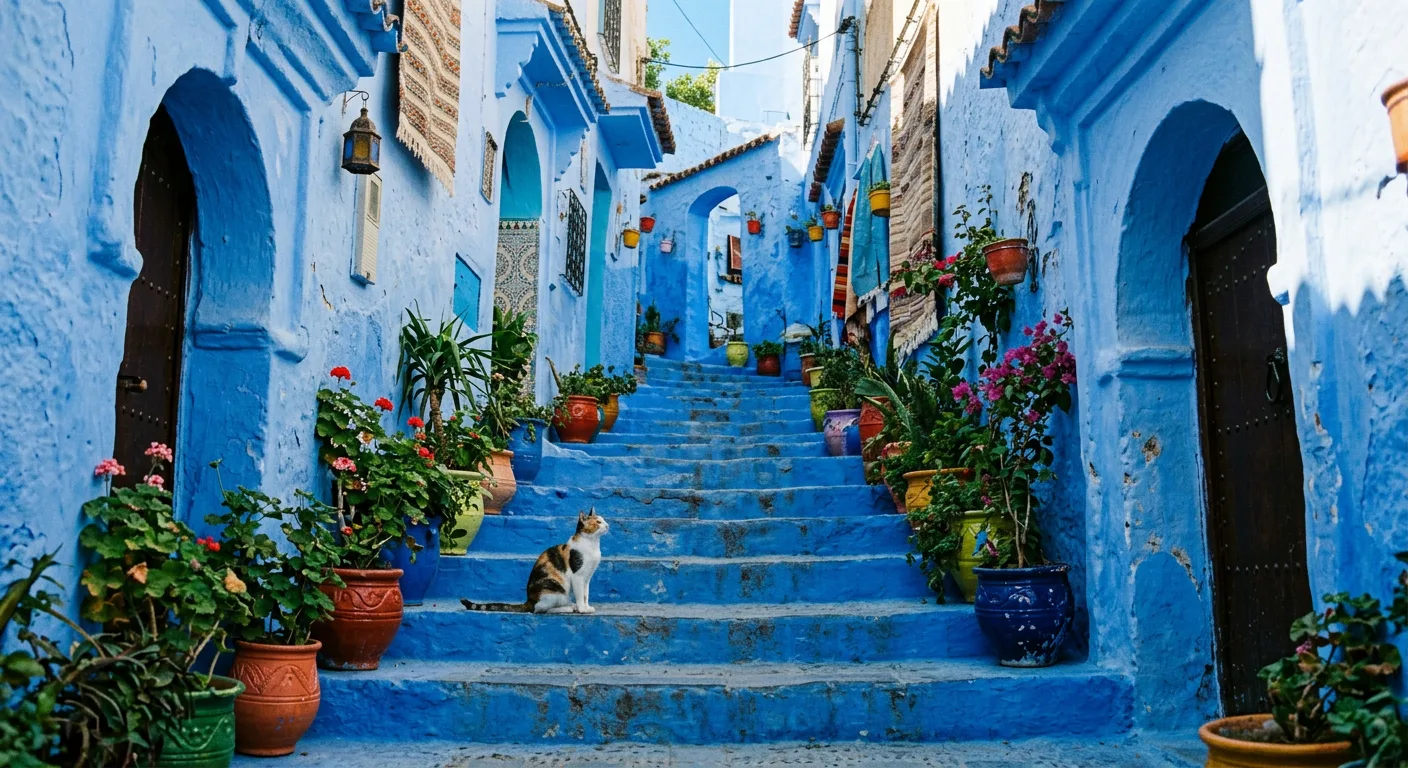
Chefchaouen Blue Medina
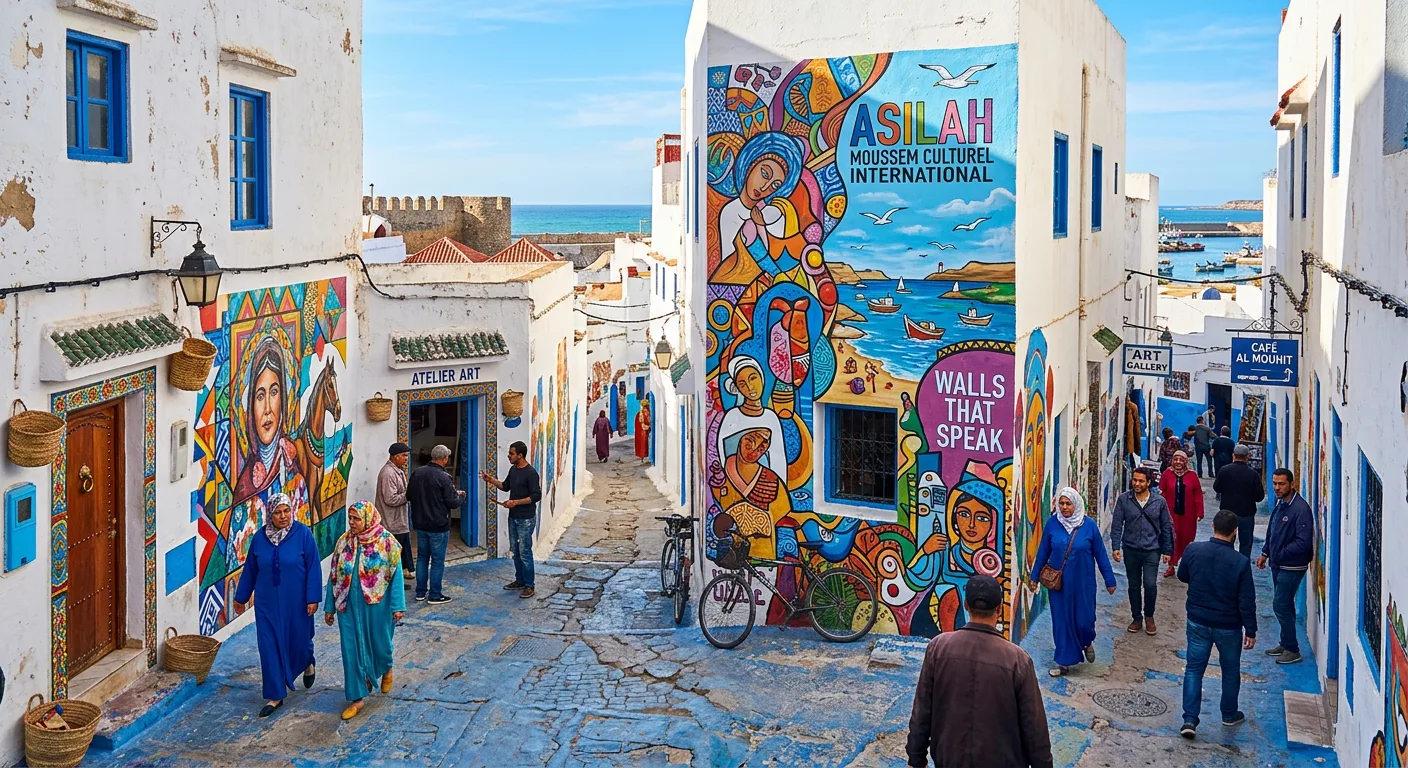
Asilah Street Murals
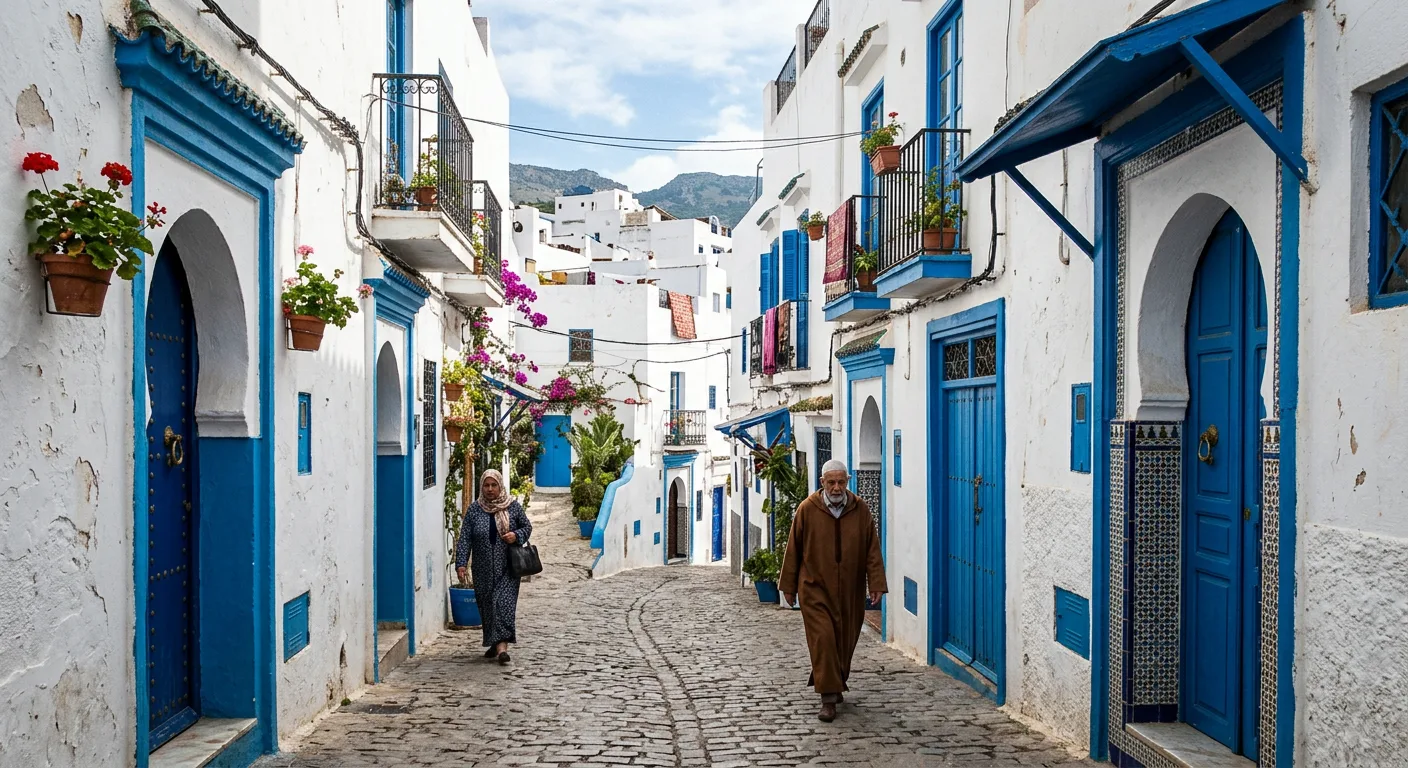
Tetouan, the White Dove
Practical Tips for Day Trips from Tangier
Frequently Asked Questions
What are the best day trips from Tangier?
The most popular day trips from Tangier are Chefchaouen (the blue city, 2 hours), Asilah (artistic beach town, 45 minutes), Tetouan (UNESCO medina, 1 hour), Cap Spartel and the Caves of Hercules (20 minutes), and Akchour waterfalls (2.5 hours). For a unique cross-border experience, Ceuta (Spanish enclave) and Gibraltar (via ferry) are also excellent options. Closer destinations like Cap Spartel work as half-day trips.
How much do day trips from Tangier cost?
DIY day trips can cost as little as from 15 MAD per person for Cap Spartel by grand taxi. Guided group day tours range from 300 MAD to 800 MAD per person depending on the destination and inclusions. The most popular guided trip to Chefchaouen is typically from 500 MAD with lunch included. Private guided tours start from 1,200 MAD per vehicle. Prices are seasonal and may change during peak periods.
Can I visit Chefchaouen as a day trip from Tangier?
Yes, Chefchaouen is doable as a day trip from Tangier, though it is a long day. The drive takes about 2 hours each way via the Rif Mountain road. Most guided tours depart at 8 AM and return by 7 PM, giving you 4-5 hours in the blue city. However, many travelers prefer to stay overnight to enjoy Chefchaouen at sunset and in the quiet morning hours. If doing a day trip, go on a weekday to avoid weekend crowds.
How do I get to Cap Spartel and the Caves of Hercules?
Cap Spartel is only 14 km from Tangier center. Grand taxis from Tangier cost from 15 MAD per person one-way, or you can negotiate from 100 MAD for a private round trip with waiting time at both Cap Spartel and the Caves. There is no public bus service. By car, drive west through the Rmilat forest area. The Caves of Hercules have a small entry fee of from 10 MAD. This is an easy half-day trip.
Can I take a ferry to Gibraltar from Tangier?
Yes, FRS ferries run from Tangier Ville port to Tarifa in Spain (35 minutes, from 300 MAD one-way). From Tarifa, take a bus to La Linea (1 hour), then walk across the border into Gibraltar. You will need a valid passport and possibly visas for Spain and the UK (Gibraltar). Alternatively, ferries from Tangier Med reach Algeciras. Allow a full day and book ferry tickets in advance for the best prices.
What is the best season for day trips from Tangier?
Spring (April-June) and autumn (September-November) offer the best weather at 20-28C with clear skies. Summer is warm but the Atlantic breeze keeps Tangier and coastal towns pleasant. Winter is mild at 12-18C but the Rif Mountains can be cold and rainy. For birdwatching at Moulay Bousselham, November to March is peak season. Akchour waterfalls are best in spring when water levels are highest.
Is Tetouan worth visiting from Tangier?
Absolutely. Tetouan has a UNESCO World Heritage medina that is one of Morocco's most authentic, with strong Andalusian-Spanish influences. The journey is only 1 hour by grand taxi (from 25 MAD) making it one of the easiest day trips from Tangier. Tetouan sees far fewer tourists, offering a genuine experience. The Royal Artisan School (Dar Sanaa), Archaeological Museum, and the old mellah are standout attractions.
Should I book a guided tour or go independently from Tangier?
For Asilah, Tetouan, and Cap Spartel, going independently by grand taxi or train is easy and much cheaper. For Chefchaouen, a guided tour is more practical due to the winding mountain road and limited parking. For Akchour, a guide is recommended as trails can be unclear. For Gibraltar or Ceuta, independent travel works well via ferry or grand taxi. Most hotels in Tangier can arrange tours the day before your trip.
Related Guides
Tangier City Guide
Everything you need to know about Tangier: the kasbah, medina, beaches, food, and practical travel tips.
Read moreThings to Do in Tangier
The complete guide to attractions, activities, and experiences in Tangier and its surroundings.
Read moreChefchaouen Guide
Morocco's blue city: best viewpoints, where to stay, restaurants, and how to get there from Tangier and Fes.
Read moreDay Trips from Marrakech
12 best day trips from Marrakech including Ouzoud Falls, Ourika Valley, Essaouira, and Ait Ben Haddou.
Read moreDay Trips from Fes
10 best day trips from Fes: Meknes and Volubilis, Ifrane, cedar forests, Moulay Idriss, and the Middle Atlas.
Read moreDay Trips from Casablanca
Best excursions from Casablanca: Rabat, El Jadida, Azemmour, Mohammedia, and coastal escapes.
Read morePlan it with a local expert
Travel Morocco with Serenity Morocco Tours
Crafting extraordinary journeys through Morocco's timeless landscapes. 100% private journeys, handcrafted around you.
 from $2,011
Sahara Desert Luxury Expedition
 from $2,054
Essential Morocco: Imperial Cities Circuit
 from $5,978
Sahara to Sea: Morocco Complete