Discovering...
Food & Cuisine
Complete Moroccan Food Guide
From tagine slow-cooked over charcoal to freshly squeezed orange juice for 4 MAD, Moroccan cuisine is one of the world's great food traditions. This is your complete guide to every dish, every street snack, every drink -- with real prices and where to find the best versions.
All prices are approximate and may vary by season, location, and operator.
Dishes Covered
30+
Street Food From
1 MAD
UNESCO Heritage
Couscous 2020
Influences
Berber, Arab, French
The Essentials
Iconic Main Dishes
These are the cornerstone dishes of Moroccan cuisine -- the dishes that define the country's culinary identity and that every visitor should experience at least once.
Tajine
Tagine
from 35 MAD (street) / from 80 MAD (restaurant)
The undisputed icon of Moroccan cuisine. Named after the conical clay pot it is cooked in, tagine is a slow-cooked stew where the cone-shaped lid traps steam, returning moisture to create impossibly tender meat and deeply concentrated flavors. Every region, every family has their signature version.
Popular Varieties:
- Chicken with Preserved Lemon & Olives -- the classic
- Lamb with Prunes & Almonds -- sweet and savory masterpiece
- Kefta (meatball) with Eggs -- comfort food at its finest
- Fish Tagine (Hout) -- coastal specialty from Essaouira and Tangier
- Vegetable Tagine -- seasonal vegetables with saffron and olive oil
Best in: Marrakech (Jemaa el-Fnaa food stalls), Fes (Cafe Clock), Essaouira (fish tagine)
Kseksu
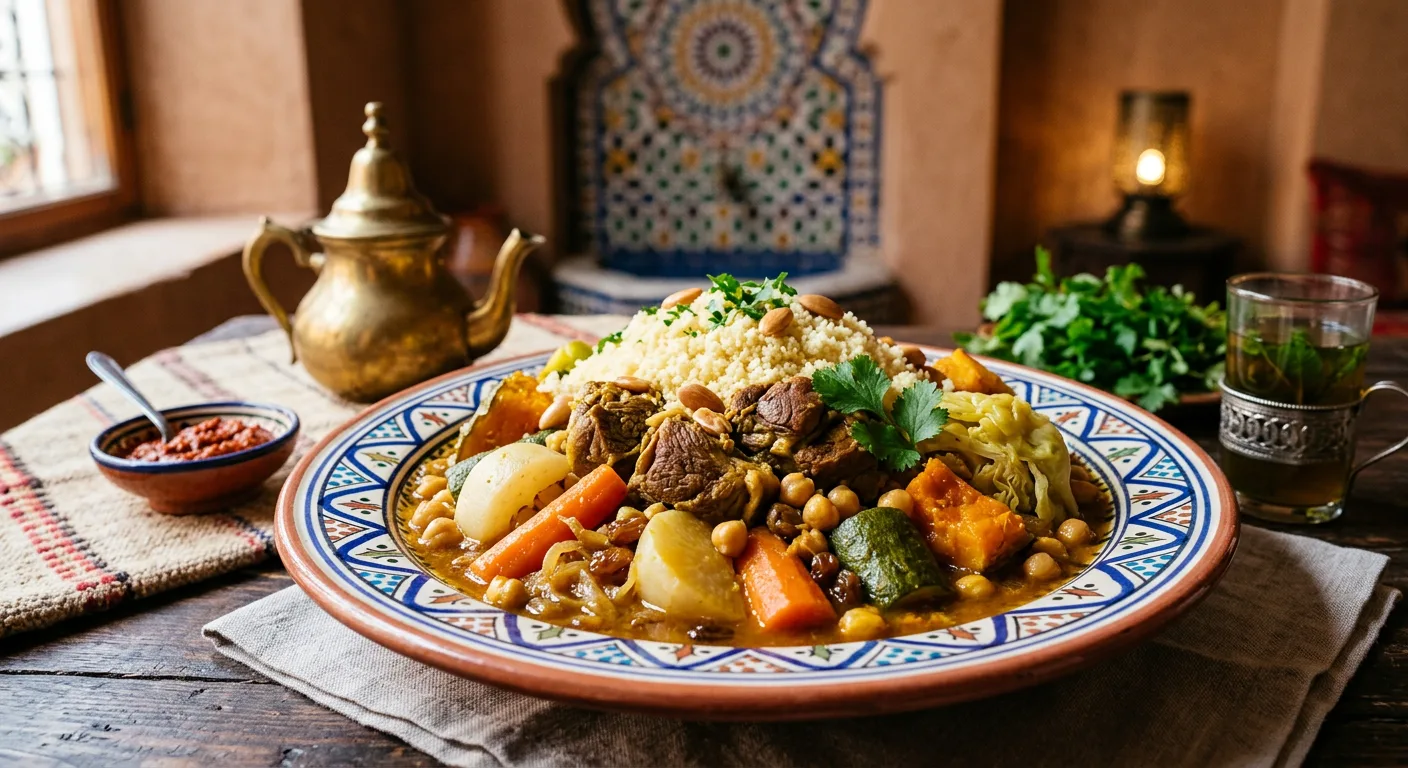
Couscous
from 40 MAD (street) / from 80 MAD (restaurant)
The national dish, UNESCO-recognized Intangible Cultural Heritage since 2020. Hand-rolled semolina granules are steamed three times over aromatic broth in a couscoussier, producing impossibly light, fluffy grains. Every Moroccan family eats couscous on Friday after noon prayer -- it is a weekly ritual as sacred as the day itself.
Popular Varieties:
- Friday Couscous -- lamb or chicken with seven vegetables and chickpeas
- Royal Couscous -- multiple meats, raisins, and caramelized onions for celebrations
- Tfaya Couscous -- Fassi specialty with sweet caramelized onions and raisins
- Seven Vegetables (Seba Khodra) -- the most traditional version
Best in: Fes (home-cooked), Casablanca (La Sqala), Rabat (Dar Zaki)
Bastilla
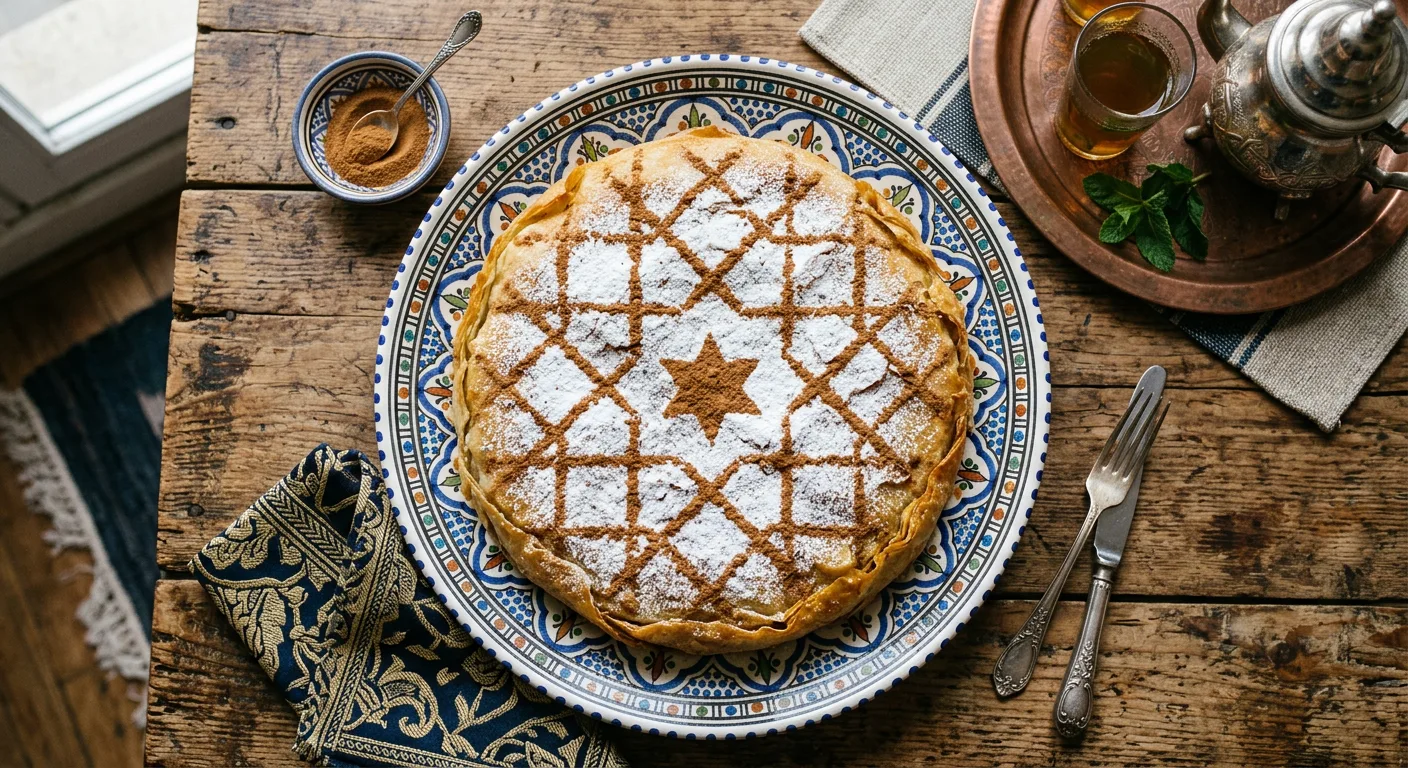
Pastilla (Bastilla)
from 60 MAD (restaurant)
The crown jewel of Moroccan celebratory cuisine. Layers of paper-thin warqa pastry encase shredded pigeon or chicken, saffron-scrambled eggs, and toasted almonds, then dusted with powdered sugar and cinnamon. The sweet-savory contrast is uniquely Moroccan. Originated in Fes from Andalusian-Moorish court cuisine and takes an entire day to prepare properly.
Popular Varieties:
- Traditional Pigeon Pastilla -- the original, richest version
- Chicken Pastilla -- more widely available, slightly lighter
- Seafood Pastilla -- shrimp and fish version from coastal cities
Best in: Fes (Dar Roumana, Riad Fes), Casablanca (Rick's Cafe)
Harira
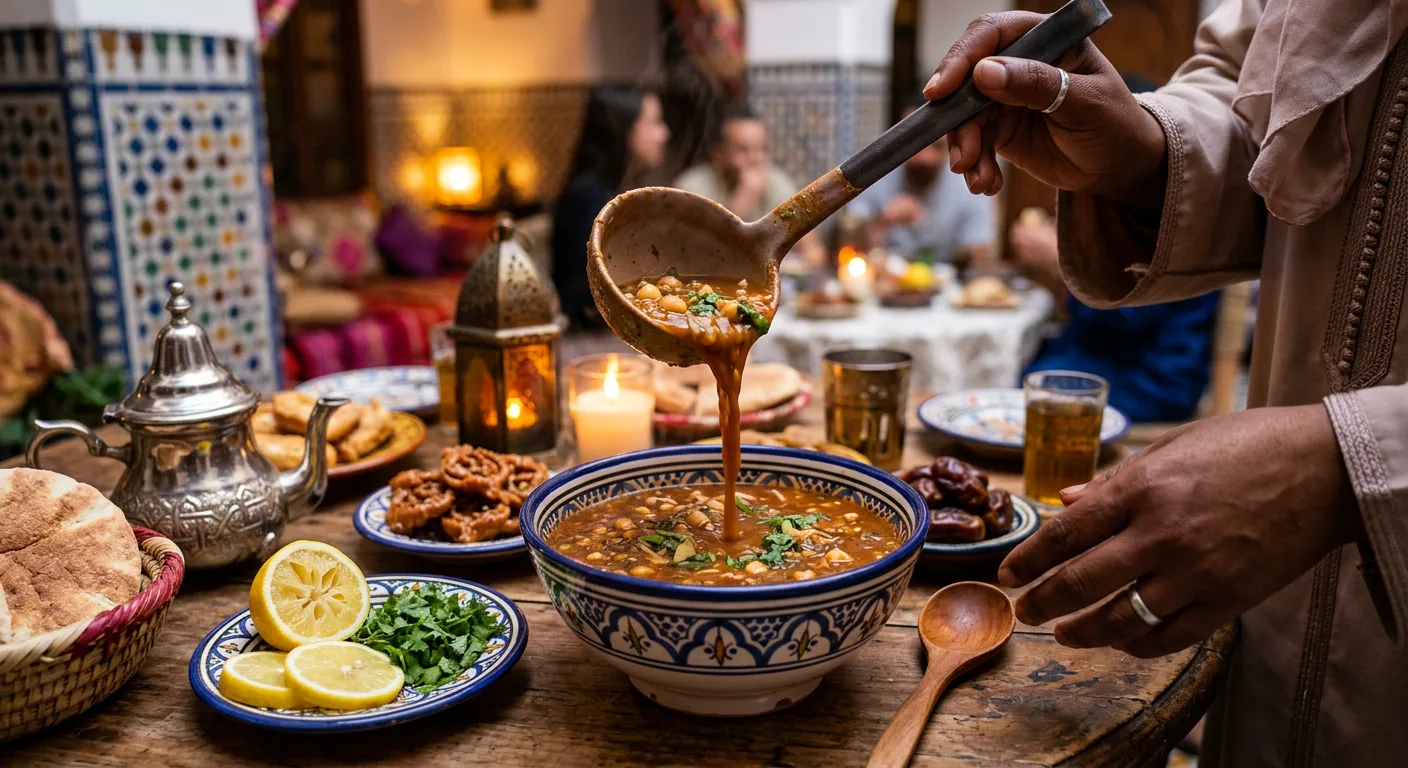
Harira Soup
from 5 MAD (street) / from 20 MAD (restaurant)
Morocco's most beloved soup and the traditional dish that breaks the fast during Ramadan at sunset. A hearty, velvety blend of lentils, chickpeas, diced lamb or beef, crushed tomatoes, vermicelli, and fresh herbs. The signature texture comes from tedouira, a flour-water slurry that thickens the broth. Seasoned with ginger, turmeric, cinnamon, pepper, and saffron. During Ramadan, always served alongside dates and chebakia pastries.
Popular Varieties:
- Classic Ramadan Harira -- with meat, lentils, and chickpeas
- Vegetarian Harira -- lentil and chickpea version, equally delicious
Best in: Everywhere during Ramadan; year-round at Jemaa el-Fnaa food stalls (Marrakech)
Tanjia
Tanjia Marrakchia
from 80 MAD per person
A dish so uniquely Marrakchi that it bears the city's name. Beef or lamb shanks are placed in a clay urn with preserved lemons, saffron, cumin, smen (aged butter), and garlic. The sealed urn is delivered to the hammam furnace keeper (fernatchi) who buries it in wood-ash embers for 8-12 hours. The result is impossibly tender, falling-apart meat with deep, complex flavors. Traditionally a bachelor's dish -- men prepare it for weekend gatherings.
Popular Varieties:
- Classic Beef Tanjia -- the original with saffron and preserved lemon
- Lamb Tanjia -- a richer variation preferred by some
Best in: Marrakech only (Chez Lamine, Mechoui Alley in the medina)
Rfissa
Rfissa
from 60 MAD (restaurant)
A ceremonial dish of shredded msemen flatbread layered with lentils and tender chicken, drenched in broth infused with fenugreek, ras el hanout, saffron, and pepper. Traditionally prepared for women after childbirth to restore strength, as fenugreek promotes lactation. Also served at celebrations and religious holidays. A true labor of love that takes hours to prepare.
Best in: Home-cooked is best; available at traditional restaurants in Fes and Marrakech
Mechoui
Mechoui
from 50 MAD per portion / from 2,000 MAD whole lamb
Whole lamb slow-roasted 5-6 hours in an underground clay pit until fall-off-the-bone tender with a crispy golden exterior. Seasoned simply with salt, cumin, and melted butter basted repeatedly. The centerpiece of weddings, Eid al-Adha, and celebrations. In Marrakech, Mechoui Alley in the medina has stalls selling it by the portion.
Best in: Marrakech (Mechoui Alley in the medina), available at celebrations nationwide
Eat Like a Local
Street Food
Morocco's street food scene is legendary. For just a few dirhams you can eat extraordinarily well -- from freshly fried sfenj at dawn to sizzling brochettes at midnight.
from 1 MAD per piece
Msemen
Msemen
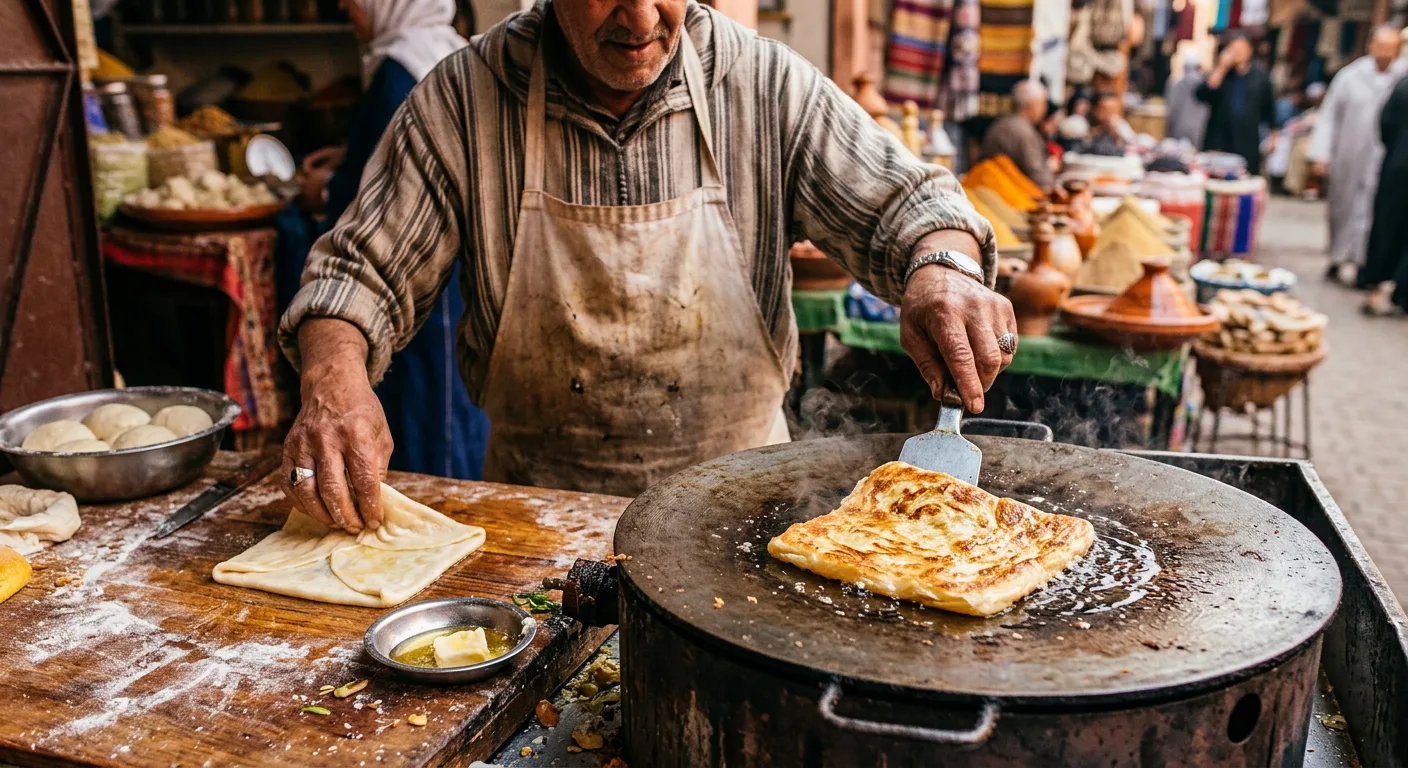
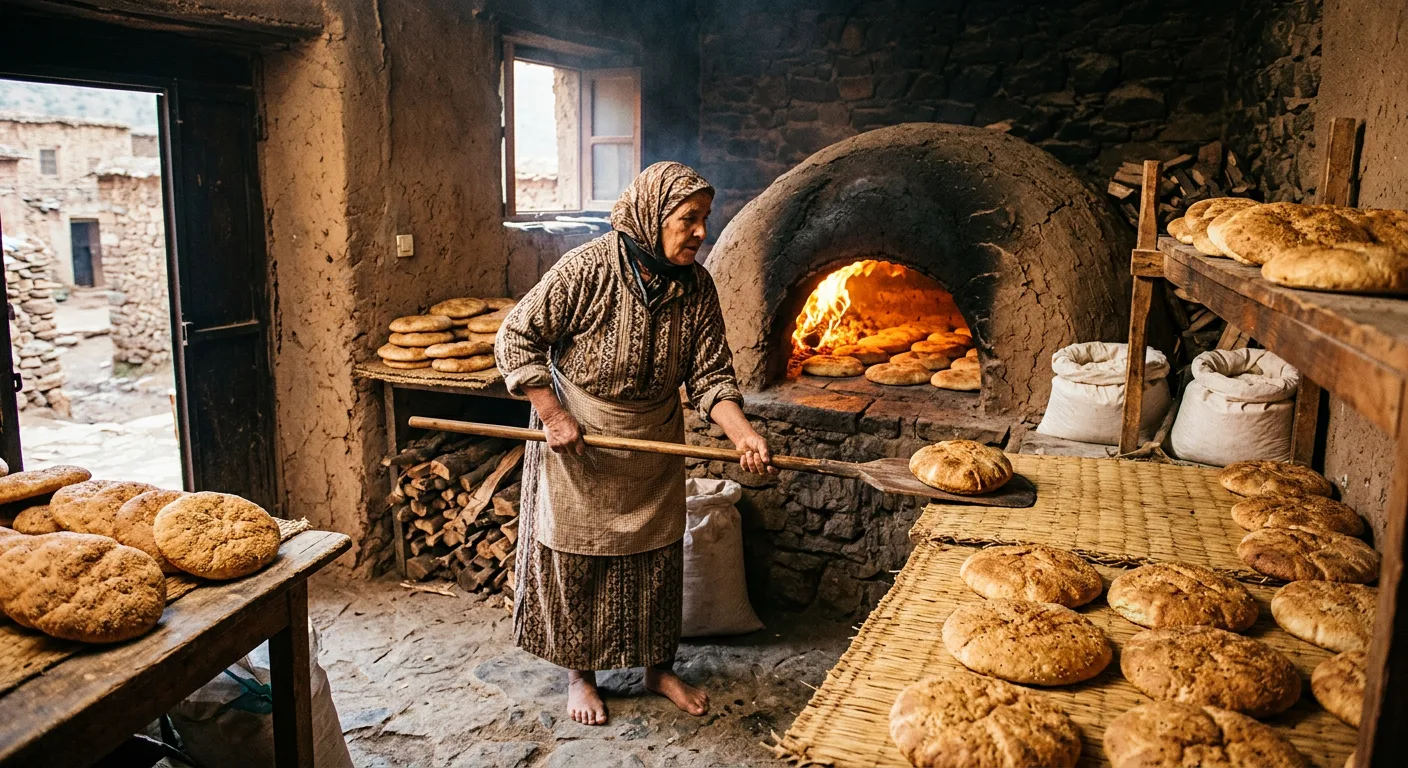
Square, flaky, pan-fried flatbread made from layers of dough stretched paper-thin, folded repeatedly, then cooked on a griddle until golden and crispy. Eaten at breakfast with honey and soft cheese, or stuffed with spiced meat and vegetables as a street snack. Watch the women in market stalls stretch the dough with mesmerizing skill.
from 1 MAD each
Sfenj
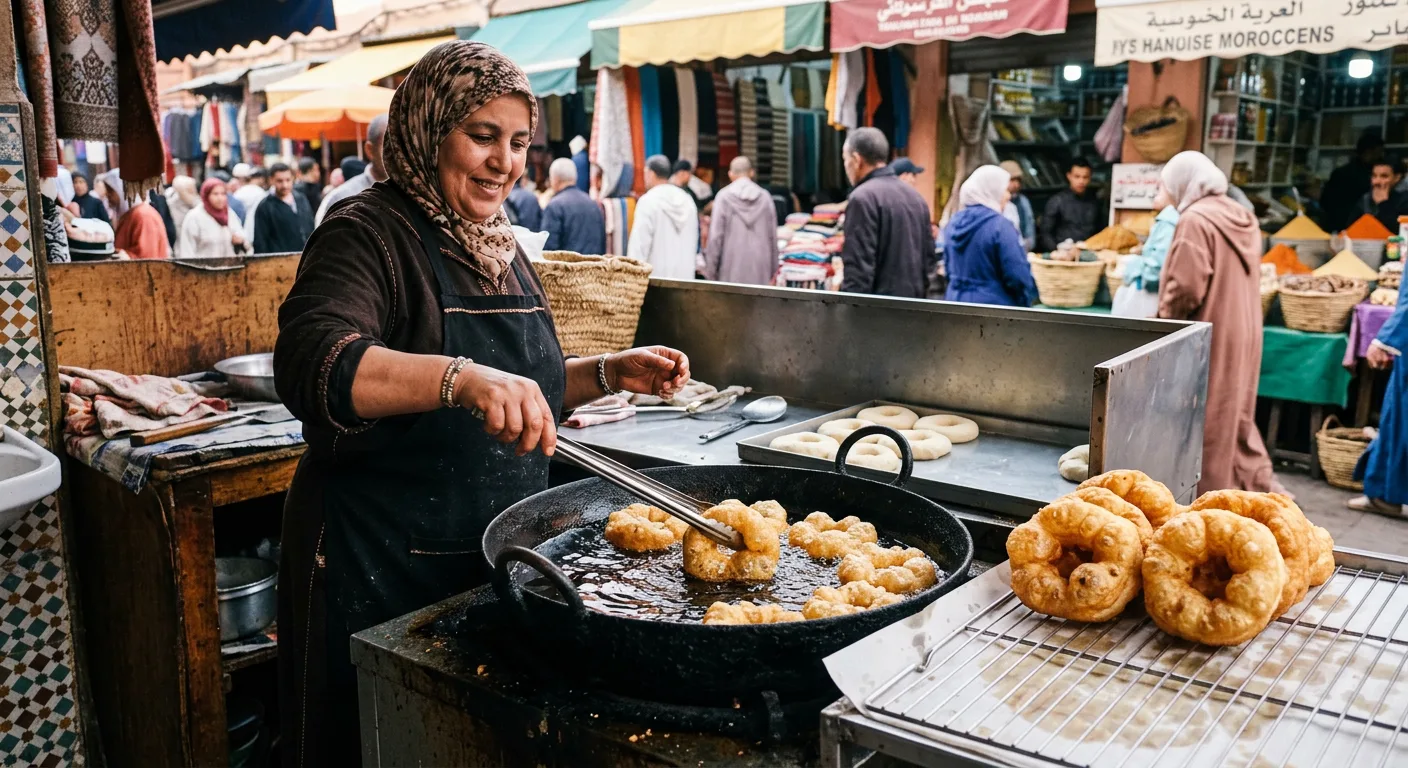
Sfenj
Moroccan doughnuts -- rings of yeasted dough deep-fried to golden perfection. Crispy outside, pillowy inside. Eaten plain, dusted with sugar, or dipped in honey. The best sfenj vendors have queues wrapping around the block in the morning. Best consumed within minutes of frying.
from 10 MAD per skewer
Brochettes
Brochettes
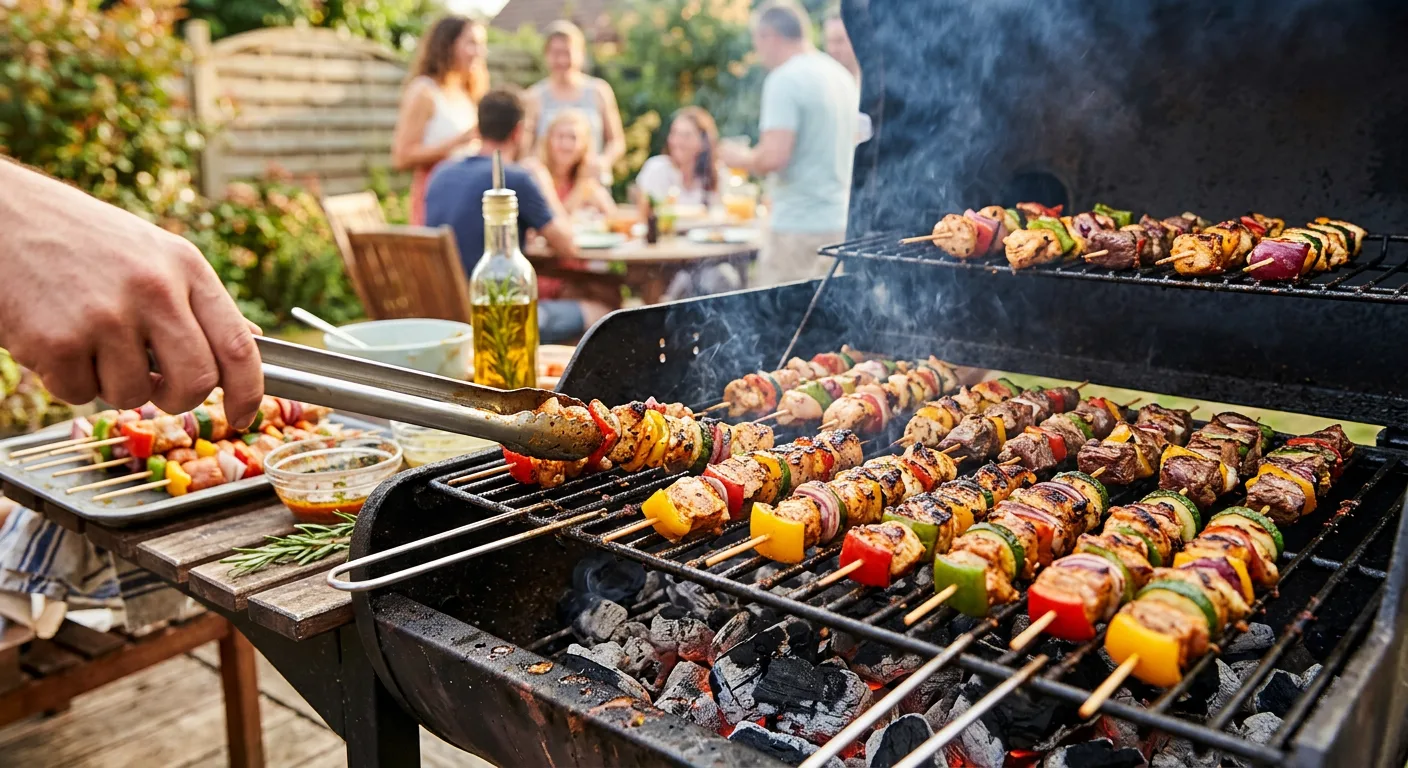
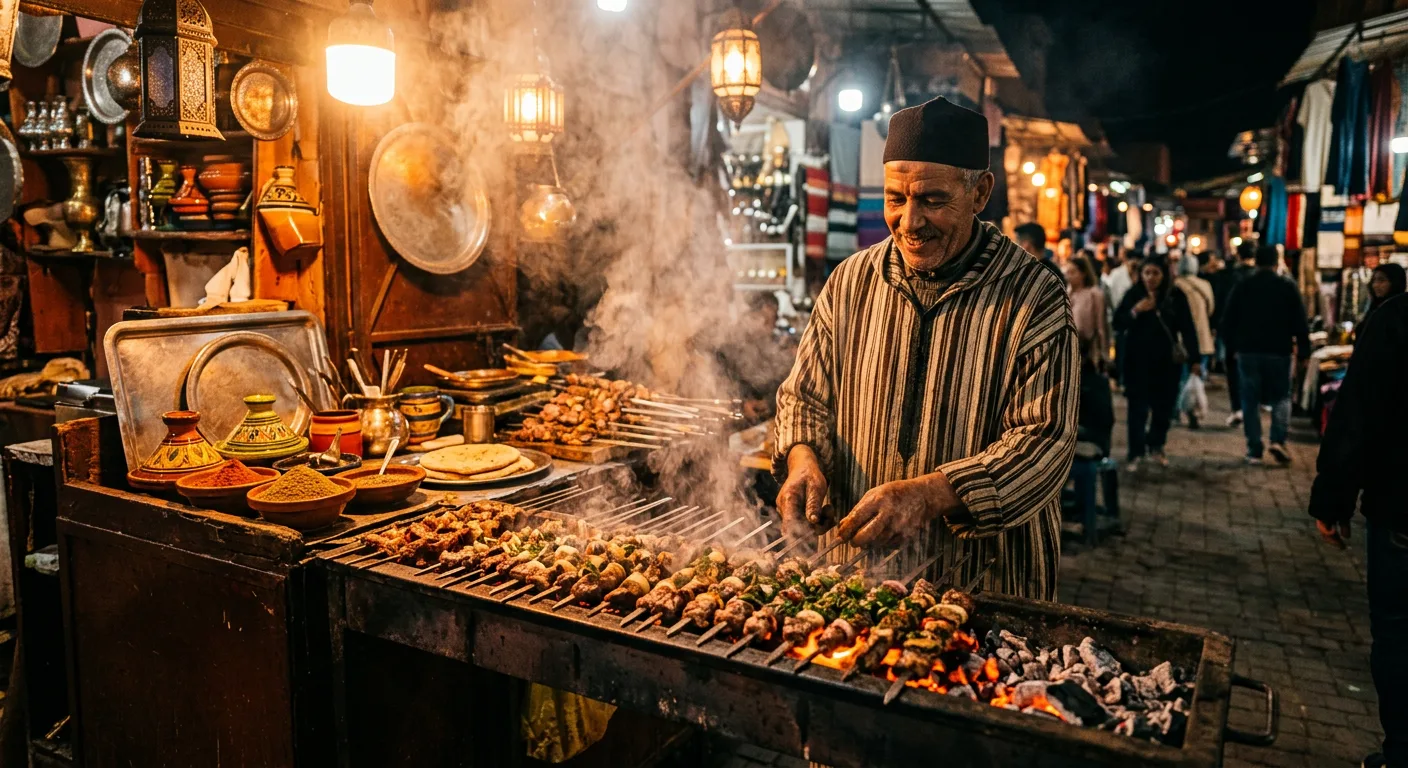
Meat skewers grilled over charcoal at countless street stalls. Lamb, beef, chicken, or kefta (spiced ground meat) marinated in cumin, paprika, and salt. Served with khobz bread, harissa, and cumin-salt dip. The smoky aroma wafting through any Moroccan medina at lunchtime is almost certainly brochettes.
from 15 MAD
Bocadillo
Bocadillo
A Moroccan sandwich evolution from Spanish influence. A crusty baguette filled with grilled kefta, merguez sausage, fried eggs, chips, and a generous drizzle of harissa and mayonnaise. The ultimate late-night street food. Bocadillo carts appear after dark in every Moroccan city.
from 5 MAD per bowl
Snail Soup (Babbouche)
Babbouche
A beloved Moroccan street food that surprises visitors. Small snails simmered in a fragrant herbal broth of thyme, licorice root, caraway, anise, and pepper. Served in a bowl with the broth for sipping and a toothpick for extracting the snails. Considered therapeutic by Moroccans -- good for digestion and colds. Most common in Marrakech and Fes.
from 10 MAD
Moroccan Sandwich (Khobz Mahshi)
Khobz Mahshi
Round Moroccan bread sliced open and stuffed with tuna, olives, harissa, boiled eggs, and fresh vegetables. A staple lunch for Moroccan workers and students. Available at every neighborhood hanout (corner shop) and market stall.
The Jemaa el-Fnaa Experience
Every evening, Marrakech's central square transforms into the world's largest open-air restaurant. Over 100 food stalls serve everything from grilled meats and fresh seafood to snail soup and sheep heads. Navigate by nose -- follow the smoke and the crowds. Stall #1 and #14 are local favorites.
Morning Ritual
Moroccan Breakfast
The Moroccan breakfast is an event -- a spread of breads, pastries, dips, and the ever-present mint tea. Most riads include a generous breakfast, but the real experience is at a neighborhood cafe.
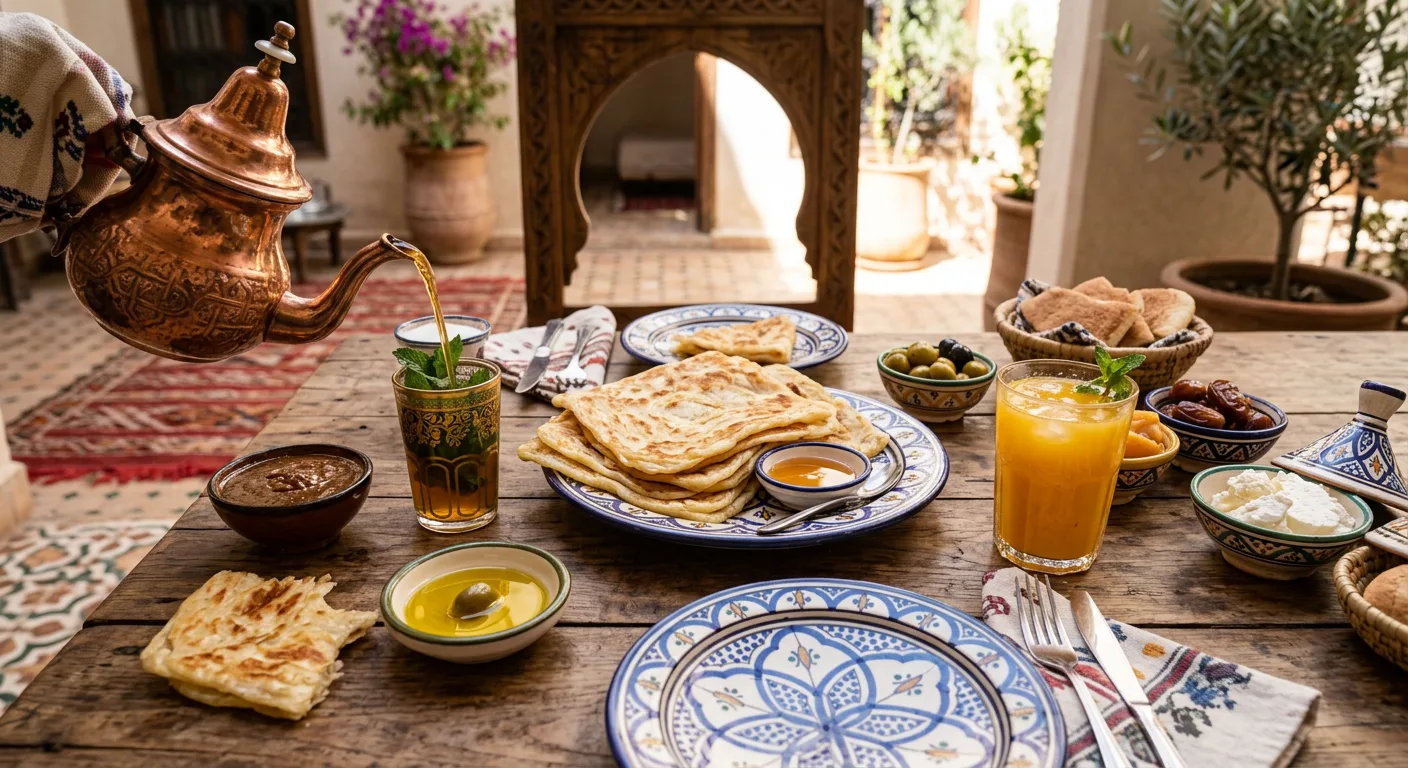
Ftour
Full Moroccan Breakfast
from 30 MAD (riad/cafe)A Moroccan breakfast is a feast of small dishes: msemen, baghrir, and rghaif flatbreads alongside crusty khobz bread, served with honey, amlou (argan-almond butter), olive oil, labneh cheese, olives, and fresh orange juice. Riads typically serve this as part of the stay. Accompanied by mint tea or nous-nous coffee.
Baghrir
Baghrir (Thousand-Hole Pancakes)
from 1 MAD per pieceSpongy semolina pancakes riddled with hundreds of tiny holes on the surface that soak up butter and honey like a sponge. The batter is a pourable mix of semolina, flour, and yeast, cooked on one side only. The holes form naturally as the batter ferments and bubbles rise. A breakfast staple drizzled with melted butter and honey.
Rghaif
Rghaif
from 2 MAD per pieceThin, layered flatbread similar to msemen but folded into rectangular shape. Can be plain or stuffed with kefta, onions, and spices (rghaif mahshi). When plain, eaten with honey and butter at breakfast. The stuffed version makes a satisfying street snack any time of day.
What to Expect at a Riad Breakfast
Msemen, baghrir, and rghaif flatbreads
Freshly made each morning
Khobz (round bread) with olive oil and amlou
Argan oil-almond butter spread
Moroccan crepes with honey
Light and delicate
Fresh orange juice
Squeezed to order
Mint tea or nous-nous coffee
Your choice
Olives, soft cheese (jben), and jam
Homemade preserves
Hard-boiled eggs with cumin
A Moroccan staple
Seasonal fruit platter
Oranges, figs, pomegranate
Sweet Traditions
Moroccan Desserts & Sweets
Moroccan sweets are works of art -- intricate pastries perfumed with orange blossom water, drenched in honey, and studded with almonds. Most are prepared for celebrations and religious holidays.
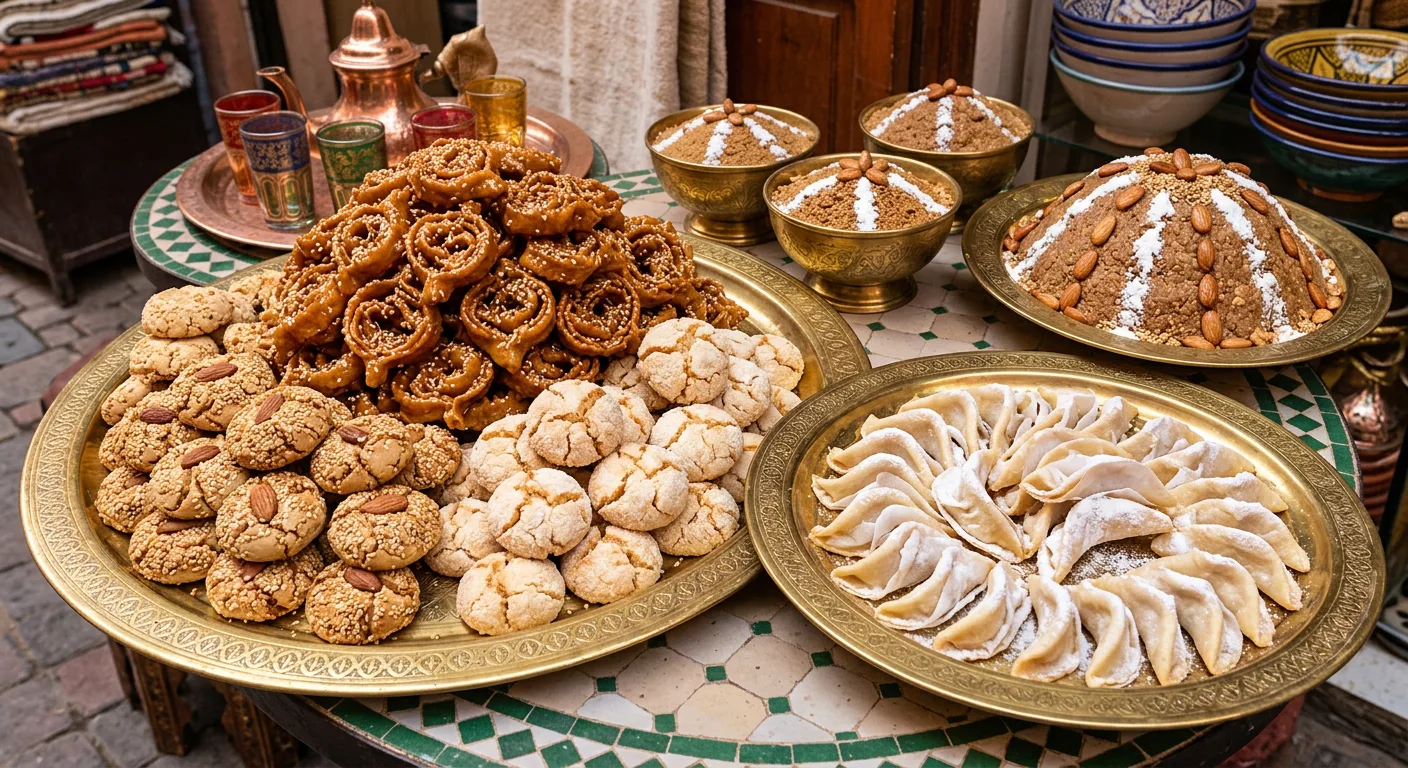
Chebakia
Chebakia
from 1 MAD per piece / from 60 MAD per kg
An intricate flower-shaped cookie made from strips of dough twisted into a rosette, deep-fried, then dipped in warm honey and sprinkled with sesame seeds. The essential Ramadan accompaniment to harira soup. Making chebakia is a communal family activity -- women gather days before Ramadan to prepare hundreds in advance.
Kaab el Ghazal (Gazelle Horns)
Kaab el Ghazal
from 2 MAD per piece / from 80 MAD per kg
Crescent-shaped pastries filled with almond paste scented with orange blossom water, wrapped in paper-thin dough and baked until barely golden. The most elegant Moroccan pastry -- delicate, not overly sweet, with the haunting fragrance of orange blossom. A staple at weddings and celebrations. The best come from Fes.
Sellou (Sfouf/Zamita)
Sellou
from 40 MAD per kg
A unique no-bake confection made from toasted flour, ground almonds, sesame seeds, butter, honey, and warming spices like cinnamon and anise. Rich and energy-dense, it is traditionally prepared for Ramadan as a quick energy source when breaking the fast. Also given to new mothers for strength. The texture is somewhere between cookie crumble and halvah.
Briouats
Briouats
from 2 MAD per piece
Triangular or cigar-shaped pastries made from warqa or filo pastry. The sweet version is filled with almond paste, fried, and dipped in honey. The savory version contains spiced kefta, goat cheese, or vermicelli. Served at celebrations and during Ramadan.
Sip & Savor
Moroccan Drinks
Morocco is a Muslim-majority country, so alcohol is not the social lubricant -- tea is. The drink culture revolves around mint tea, fresh juices, and coffee, all consumed in generous quantities throughout the day.
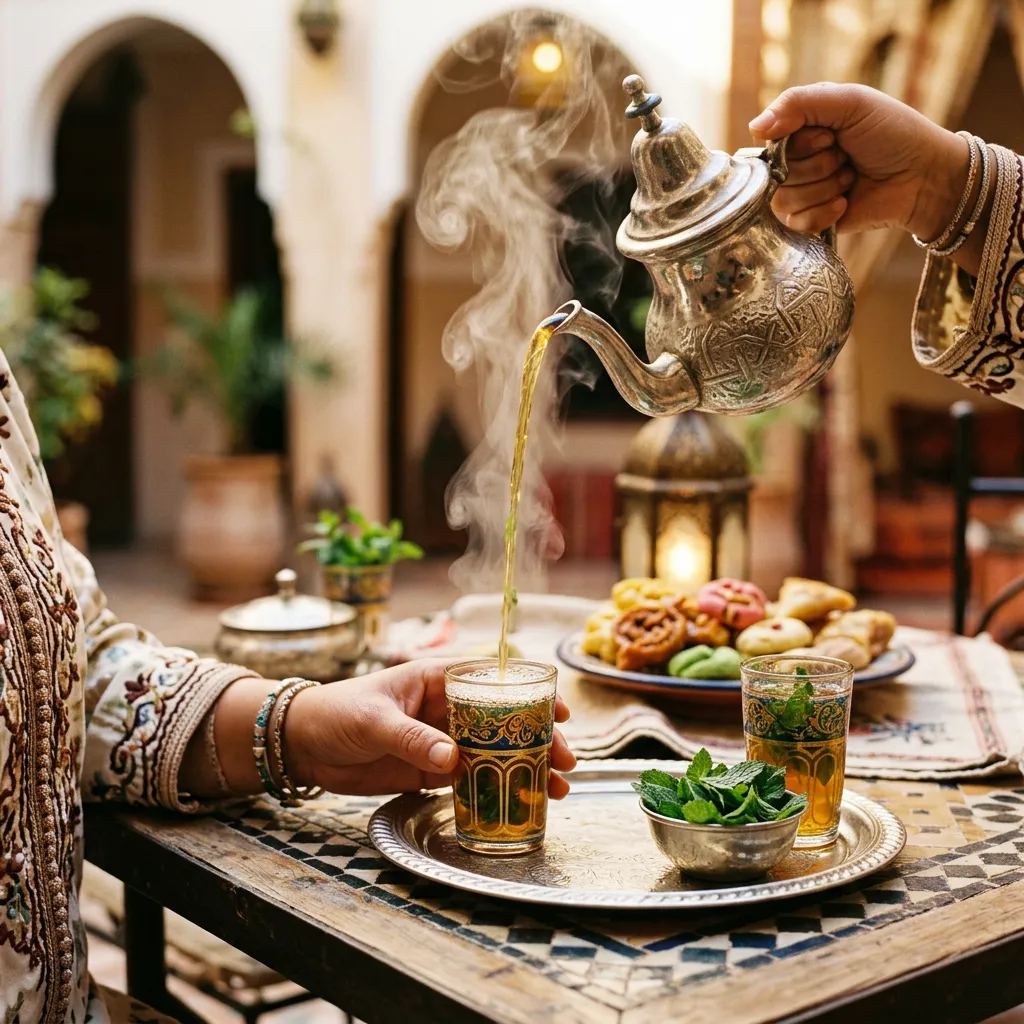
Moroccan Mint Tea (Atay)
Atay
from 5 MAD per glass
The national drink, symbol of hospitality, and a daily ritual. Chinese gunpowder green tea brewed with generous handfuls of fresh spearmint and large amounts of sugar. Poured from height to create a frothy top. Refusing mint tea is considered rude. It is served three times: the first glass is gentle like life, the second is strong like love, the third is bitter like death.
Where: Everywhere. Every cafe, riad, shop, and home in Morocco.

Fresh Orange Juice
Assir Limoun
from 4 MAD per glass
Morocco is a citrus paradise, and freshly squeezed orange juice is available at stalls throughout the country for almost nothing. The most famous spot is Jemaa el-Fnaa square in Marrakech, where dozens of vendors compete for your business. The juice is sweet, cold, and vibrant -- no sugar needed. Morocco exports millions of tons of oranges but reserves the best for domestic consumption.
Where: Jemaa el-Fnaa (Marrakech), everywhere year-round. Best October-April.
Avocado Smoothie
Jus d'Avocat
from 15 MAD
A surprisingly common and beloved Moroccan drink. Ripe avocado blended with milk, sugar, and sometimes almonds or orange juice. Rich, creamy, and filling -- practically a meal. Available at juice stalls in every city. Moroccans eat avocado as a sweet ingredient, which surprises many visitors.
Where: Juice stalls in every major city. Best in Agadir where avocados are locally grown.
Nous-Nous Coffee
Nous-Nous
from 8 MAD
Morocco's signature coffee drink. "Nous-nous" means "half-half" in Darija -- half espresso, half steamed milk. Similar to a Spanish cortado. A beloved mid-morning ritual at any Moroccan cafe, where men gather to discuss news and politics over nous-nous. Ask for "qahwa kehla" for a straight black espresso.
Where: Every cafe in Morocco. Best enjoyed at a sidewalk cafe watching street life.
Almond Milk (Raibi)
Raibi
from 10 MAD
Fresh almond milk blended with sugar and orange blossom water. A traditional refreshment especially popular during summer and Ramadan. Some versions are thicker, almost like a milkshake. The almond flavor combined with the floral orange blossom is distinctly Moroccan.
Where: Juice stalls and traditional cafes, especially in Fes and Marrakech.
Flavor Foundations
Essential Spices & Staples
The magic of Moroccan cooking lies in its spice blends. These are the ingredients that give the cuisine its distinctive character.
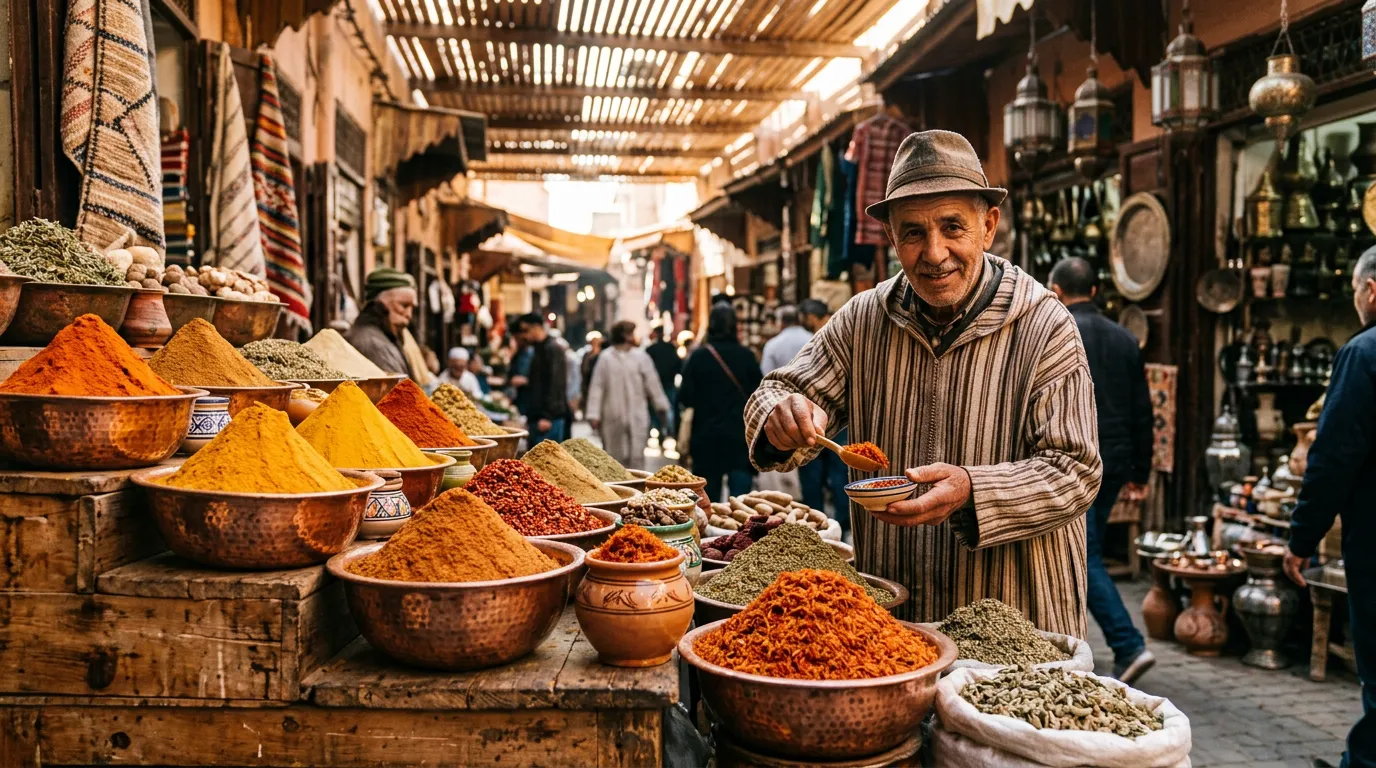
Ras el Hanout
The "head of the shop" -- a complex blend of 20-35 spices. Every spice merchant has their secret recipe. Contains cardamom, mace, nutmeg, cinnamon, dried roses, and more.
Saffron
Moroccan saffron from Taliouine is among the world's finest. Used in tagines, couscous, and tea. Buy directly from cooperatives for best quality.
Cumin
The most ubiquitous Moroccan spice. Present on every table alongside salt. Used in virtually every savory dish. Moroccan cumin has a distinctive warm, earthy flavor.
Preserved Lemons
Lemons salt-cured for 30+ days until the rind is soft and intensely flavored. Essential for tagines. A uniquely Moroccan ingredient that defines the cuisine.
Harissa
A fiery chili paste made from dried red peppers, garlic, olive oil, and spices. Used as a condiment alongside many dishes. Moroccan harissa is milder than Tunisian versions.
Smen (Aged Butter)
Salted butter aged in clay pots for months or even years, developing an intense, funky, cheese-like flavor. Essential for couscous and tanjia. An acquired taste that rewards the adventurous.
Amlou
A Moroccan nut butter made from argan oil, roasted almonds, and honey. Often called "Moroccan Nutella." A Berber specialty from the Souss region served at breakfast with bread.
Where to Buy Spices
Marrakech
Rahba Kedima (spice square) in the medina
Compare prices at multiple stalls before buying
Fes
Souk Attarine near the Qarawiyyin Mosque
Oldest and most authentic spice souk
Essaouira
Spice shops near Place Moulay Hassan
Less pressure, fair prices
A Visual Feast
Traditional Moroccan tagine with chicken, preserved lemons, and olives
Hand-rolled Moroccan couscous served with vegetables and meat
Golden pastilla dusted with powdered sugar and cinnamon from Fes
Bowl of hearty Moroccan harira soup
Freshly cooked Moroccan msemen flatbread with flaky layers
Golden Moroccan sfenj donuts freshly fried
Moroccan brochettes grilling over charcoal
Traditional Moroccan breakfast spread at a riad
Fresh orange juice stall in Jemaa el-Fnaa Marrakech
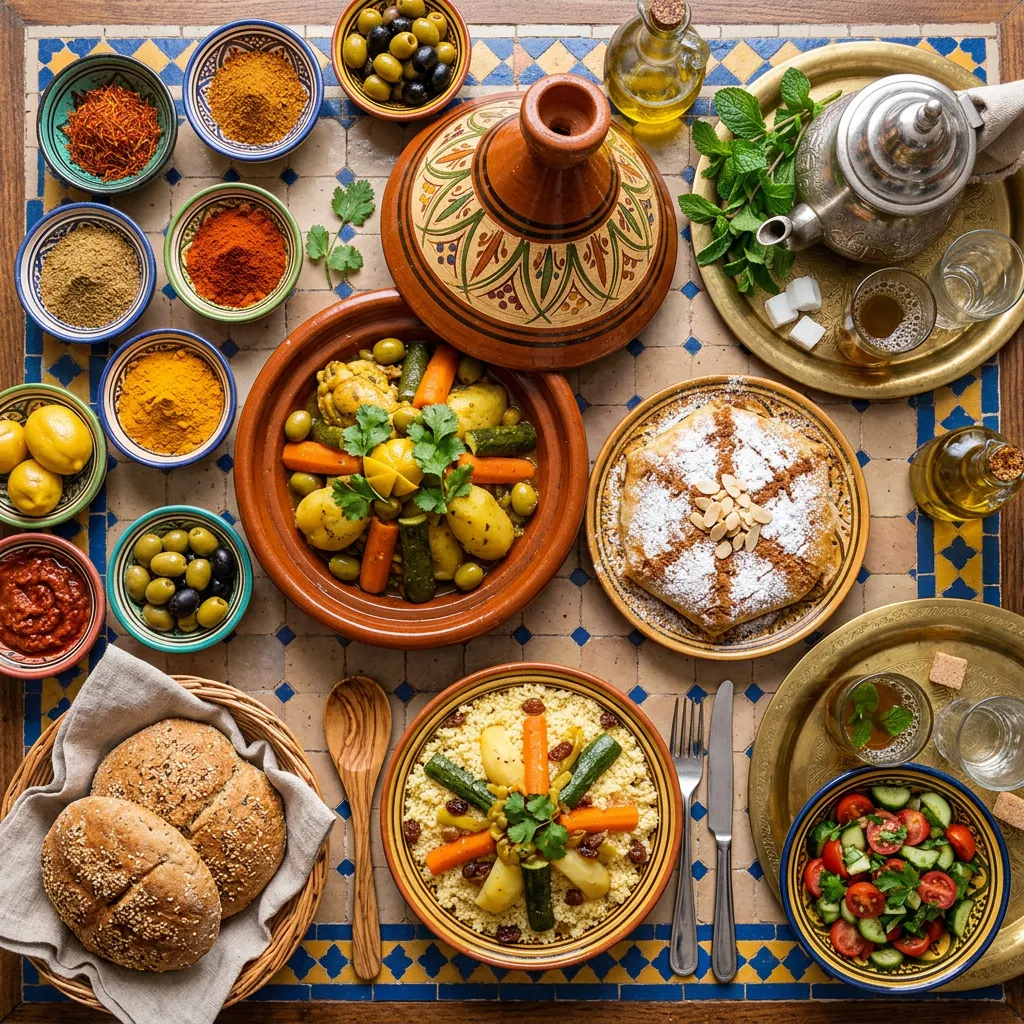
Aerial view of Moroccan feast with multiple dishes
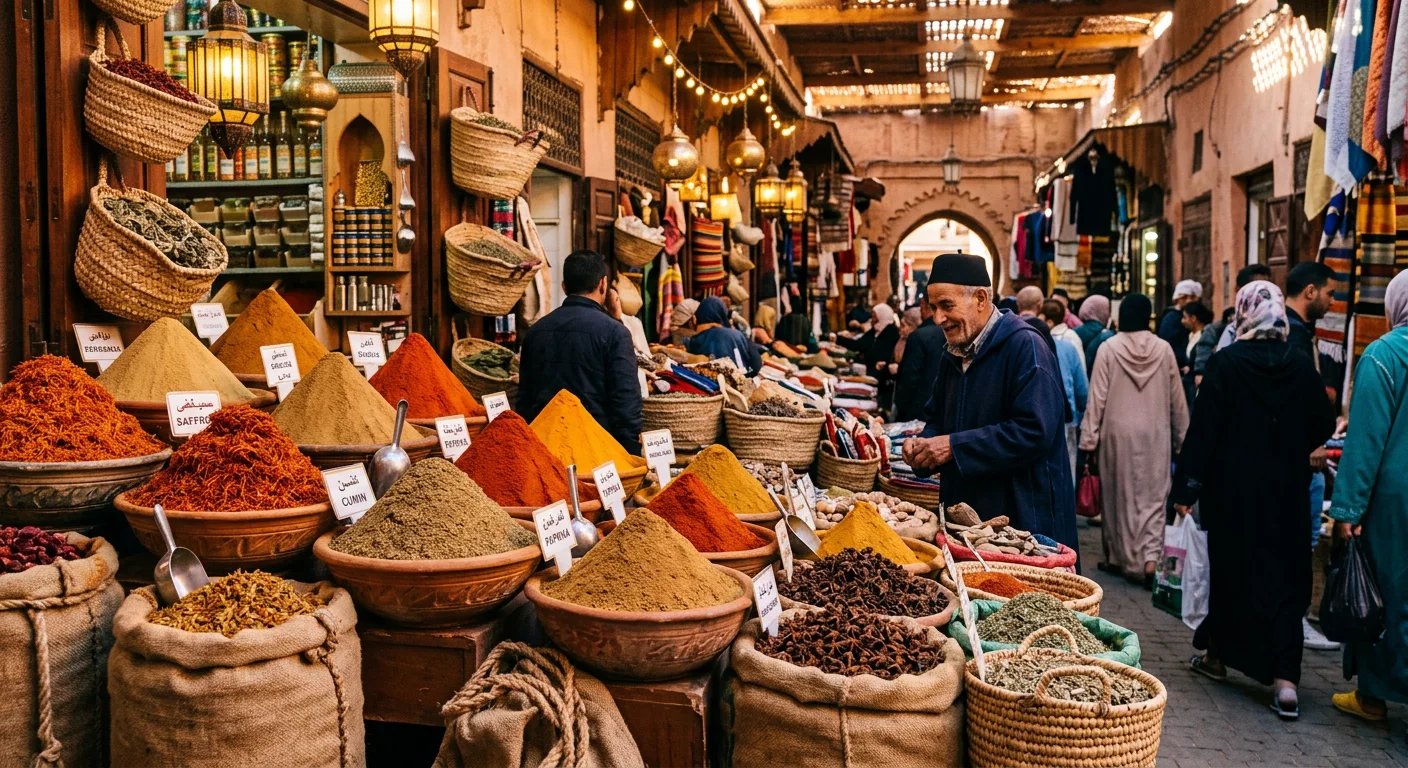
Colorful spice display at a Moroccan souk
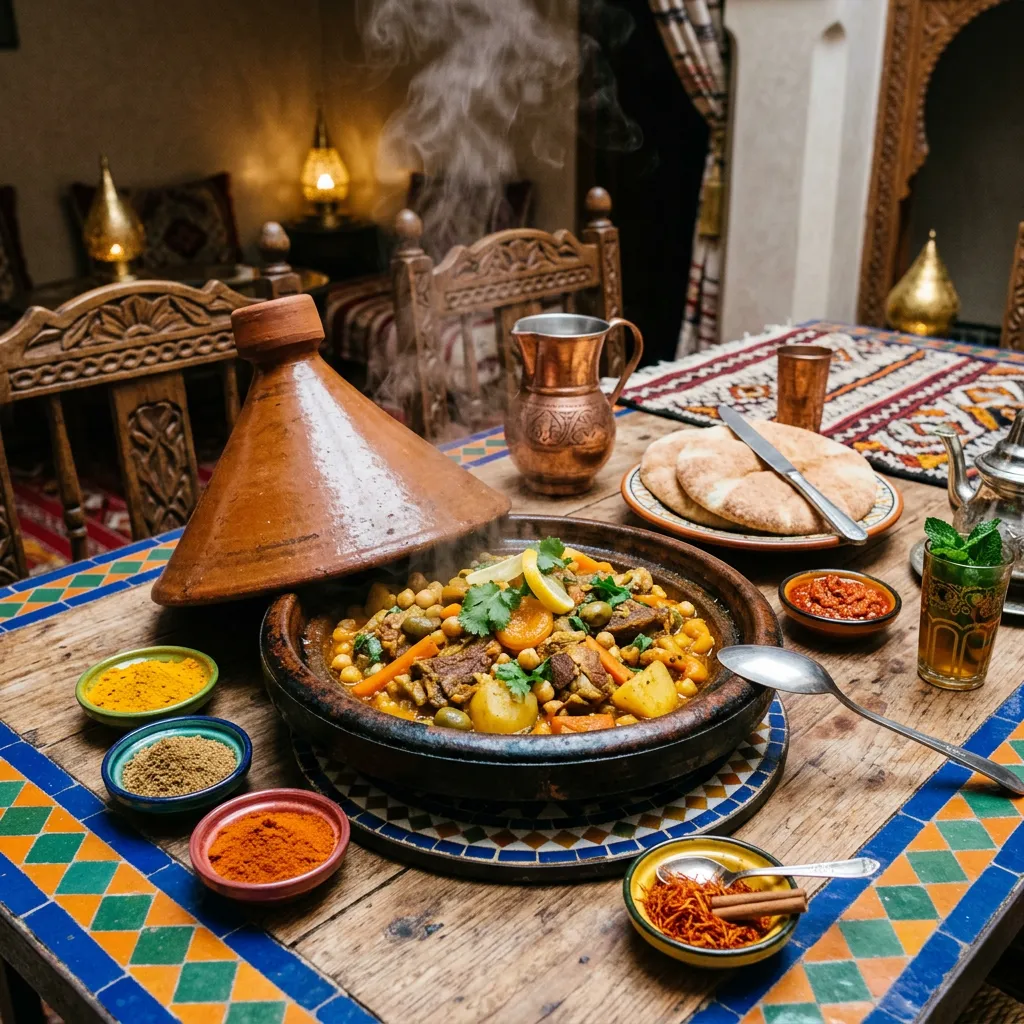
Beautifully presented Moroccan tagine dish
Stay Healthy
Food Safety Tips
Street food is generally safe
Choose stalls with high turnover -- busy stalls mean fresh food. If locals are eating there, it is a good sign. The grill stalls at Jemaa el-Fnaa have been serving millions safely for decades.
Drink bottled water
Tap water is treated in major cities but may cause stomach upset for visitors. Stick to bottled water (Sidi Ali or Ain Saiss brands). Ice in tourist restaurants is usually made from purified water.
Wash fruits and vegetables
Peel fruit yourself or ensure it has been washed with purified water. Cooked food is always safe. Salads in reputable restaurants are washed properly.
Start slowly
Rich Moroccan food combined with new spices can overwhelm some stomachs. Start with lighter dishes and work up to the richer tagines and mechoui. Bring antacids just in case.
Eat with your right hand
When eating communal dishes (tagine, couscous), eat with your right hand only. Use bread as your utensil. Eat from the section of the dish directly in front of you.
Allergies and restrictions
Morocco is naturally accommodating for many diets. Vegetarian options abound. Nuts are in many dishes (especially almonds) -- alert your host. All meat is halal. Pork and alcohol are available only in tourist establishments.
Cultural Knowledge
Moroccan Dining Etiquette
Eat with your right hand
The left hand is considered unclean in Moroccan culture. When eating communal dishes like tagine or couscous, use your right hand only. Use bread as your utensil to scoop food. Eat from the section of the dish directly in front of you -- never reach across.
Bismillah before eating
Your host will say "Bismillah" (in the name of God) before the meal begins. You do not need to repeat it, but waiting for this signal before eating shows respect. At the end of the meal, say "Hamdullah" (praise God) to express satisfaction.
Accept hospitality graciously
Moroccans are extraordinarily generous hosts. Refusing food can be seen as an insult. Accept at least a small portion, and compliment the cooking. If invited to a home, bring pastries or sugar as a gift -- not wine unless you know the family drinks.
Communal dining is normal
Most traditional Moroccan meals are served in a large communal dish. Tagine is placed in the center and everyone eats from it using bread. This is not a hygiene concern -- it is a fundamental social ritual that bonds families and friends.
Shoes off at the door
When invited to a Moroccan home, remove your shoes at the entrance. You will usually be seated on cushions around a low circular table. The host may bring a basin for hand-washing before the meal (ewer and basin called tasa).
Tipping at restaurants
Tipping is customary in Morocco. At restaurants, leave 10-15% of the bill or round up generously. At street food stalls, rounding up is appreciated but not expected. For exceptional meals, 15-20% is a generous gesture.
Restaurant Picks
Where to Eat by City
Marrakech
Jemaa el-Fnaa food stalls
Street food
Cafe Clock
Fusion/Traditional
Mechoui Alley
Roasted lamb
Al Fassia
Fine dining
Fes
Cafe Clock Fes
Traditional/Creative
Dar Roumana
Fine dining
Thami's stall (Talaa Kebira)
Street food
Ruined Garden
Modern Moroccan
Casablanca
La Sqala
Traditional
Central Market restaurants
Seafood
Rick's Cafe
Fine dining
Brasserie La Tour
French-Moroccan
Essaouira
Port fish stalls
Fresh seafood
Triskala Cafe
Cafe/Light meals
Loft Essaouira
Rooftop dining
La Table by Madada
Fine Moroccan
Rabat
Dar Zaki
Traditional home-style
Le Dhow
River boat dining
Cosmopolitan
Modern Moroccan
Market stalls in Medina
Street food
Tangier
El Morocco Club
Fine Moroccan
Cafe Hafa
Tea/Light meals
Saveur de Poisson
Fish set menu
Grand Socco food stalls
Street food
Ready to Taste Morocco?
Take a cooking class to bring these flavors home, explore our complete cuisine encyclopedia, or find the best restaurants across the kingdom.
Continue Exploring Morocco
Discover more of what Morocco has to offer