Discovering...
Master the Craft
Morocco Photography Techniques Guide
From the mathematics of golden hour light on Sahara dunes to the etiquette of street portraits in Fes, master the techniques that transform tourist snapshots into gallery-worthy images of one of the world's most photogenic countries.
Techniques
8 Disciplines
Covered in depth
Locations
15+ Spots
Across 5 cities
Best Season
Oct - Apr
Ideal light conditions
Gear Tips
3 Kits
Camera, phone, drone
Workshops
5 Listed
From 600 MAD
Top Spot
Sahara Sunrise
Erg Chebbi dunes
Morocco is a photographer's paradise -- but it is also a place where the obvious shot is rarely the best one. Every year, millions of visitors photograph the same blue walls, the same spice pyramids, the same tannery pits. This guide is about going deeper: understanding the light, mastering the techniques, respecting the culture, and finding the angles that make your Morocco images truly extraordinary.
Whether you are carrying a professional mirrorless setup or the phone in your pocket, the principles are the same. Great Morocco photography comes from patience, cultural sensitivity, technical knowledge, and the willingness to wake before dawn and stay out past dark. The reward is images that capture not just how Morocco looks, but how it feels.
Top Photo Locations by City
The best spots in Morocco's five most photogenic cities, with specific technique recommendations, ideal timing, and insider tips for each location.
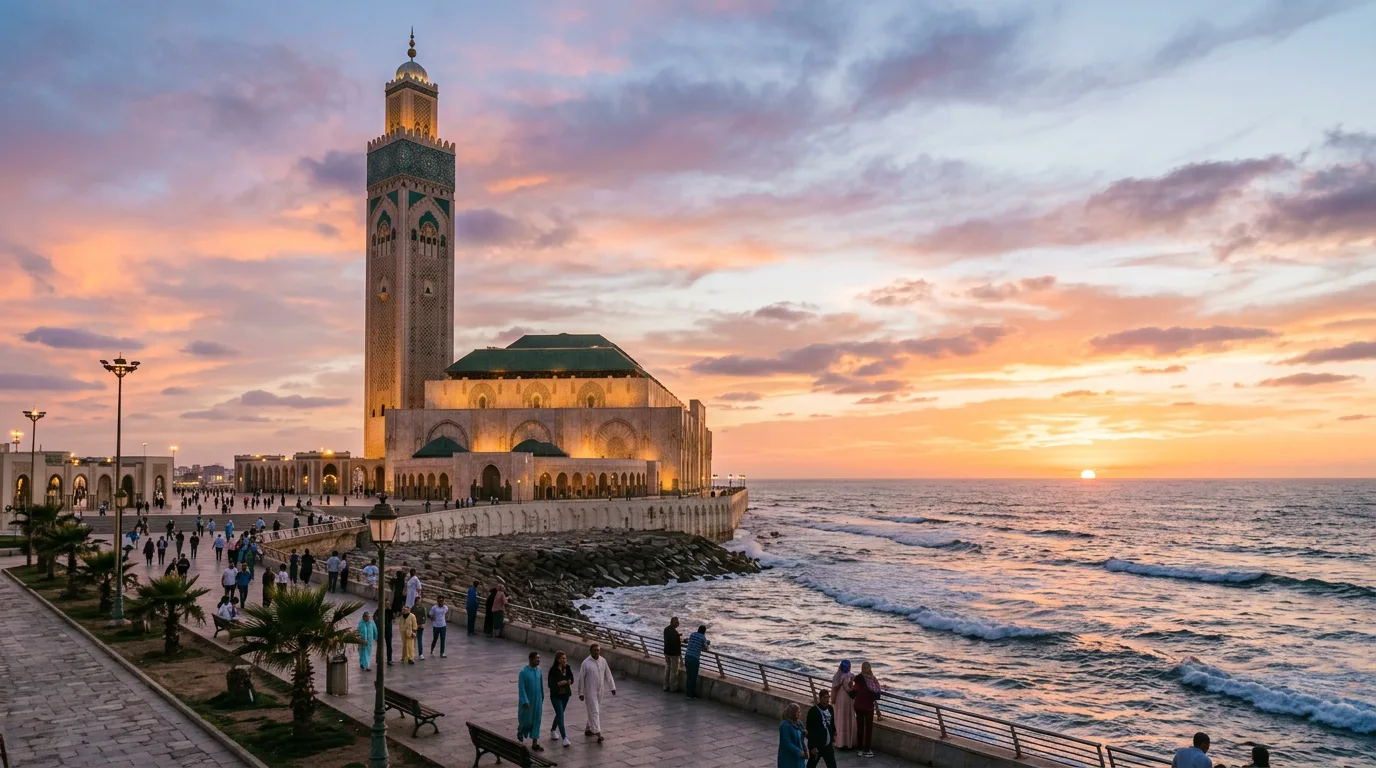
Marrakech
Marrakech
Jemaa el-Fnaa from Above
Sunset (golden hour) from a rooftop cafe
Technique: Wide-angle panorama with slow shutter to blur crowd movement
Tip: Cafe de France and Nomad rooftop offer the best elevated angles. Arrive 45 minutes before sunset to secure a spot.
Ben Youssef Madrasa Interior
Opening hour (09:00) for empty courtyards
Technique: HDR bracketing to capture both shadow detail in the alcoves and bright courtyard light
Tip: Bring a wide-angle lens (16-24mm). The symmetry of the courtyard rewards precise composition with the central basin as a reflection pool.
Koutoubia Mosque at Sunset
Golden hour, western sky behind the minaret
Technique: Silhouette shot with the minaret against a vivid sky; expose for the sky, let the tower go dark
Tip: The gardens south of the mosque give the best angle. Palm trees provide natural foreground framing.
Chefchaouen
Chefchaouen
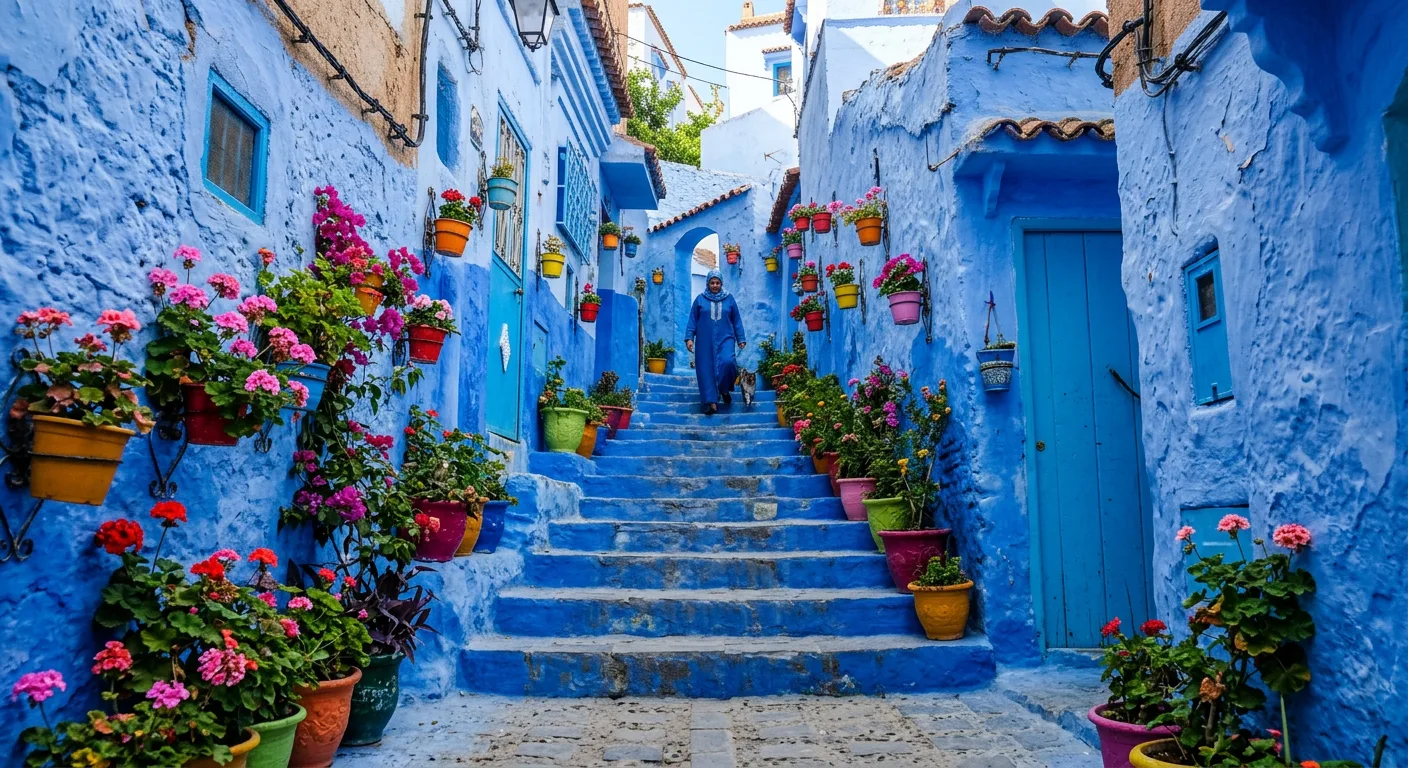
Blue Medina Stairways
Early morning (07:00-08:30) before crowds, soft diffused light
Technique: Leading lines using stairways; shoot from low angles to emphasize the blue walls rising above
Tip: The blue washes are repainted regularly. The most vivid streets are near Place Outa el Hammam. Overcast days actually saturate the blue tones better than direct sun.
Spanish Mosque Hilltop
Sunset for the town against the Rif Mountains backdrop
Technique: Telephoto compression (70-200mm) to stack the blue buildings against the mountain peaks
Tip: The 20-minute uphill walk is worth it. Bring a tripod for the fading light after sunset when the town lights begin to glow.
Ras el-Maa Waterfall
Mid-morning when locals do laundry at the water source
Technique: Environmental portrait combining people with the cascading water and surrounding greenery
Tip: This is where daily life happens. Be respectful and ask permission. A 35mm or 50mm lens gives an intimate but not intrusive field of view.
Sahara (Erg Chebbi & Erg Chigaga)
Sahara (Erg Chebbi & Erg Chigaga)
Dune Ridgelines at Sunrise
First 30 minutes after sunrise when shadows define every ripple
Technique: Side-lighting to reveal texture; expose for highlights and let shadow areas go rich and dark
Tip: Climb the dune the evening before and mark your spot. In the morning, walk in your own footprints to avoid creating tracks in the pristine sand.
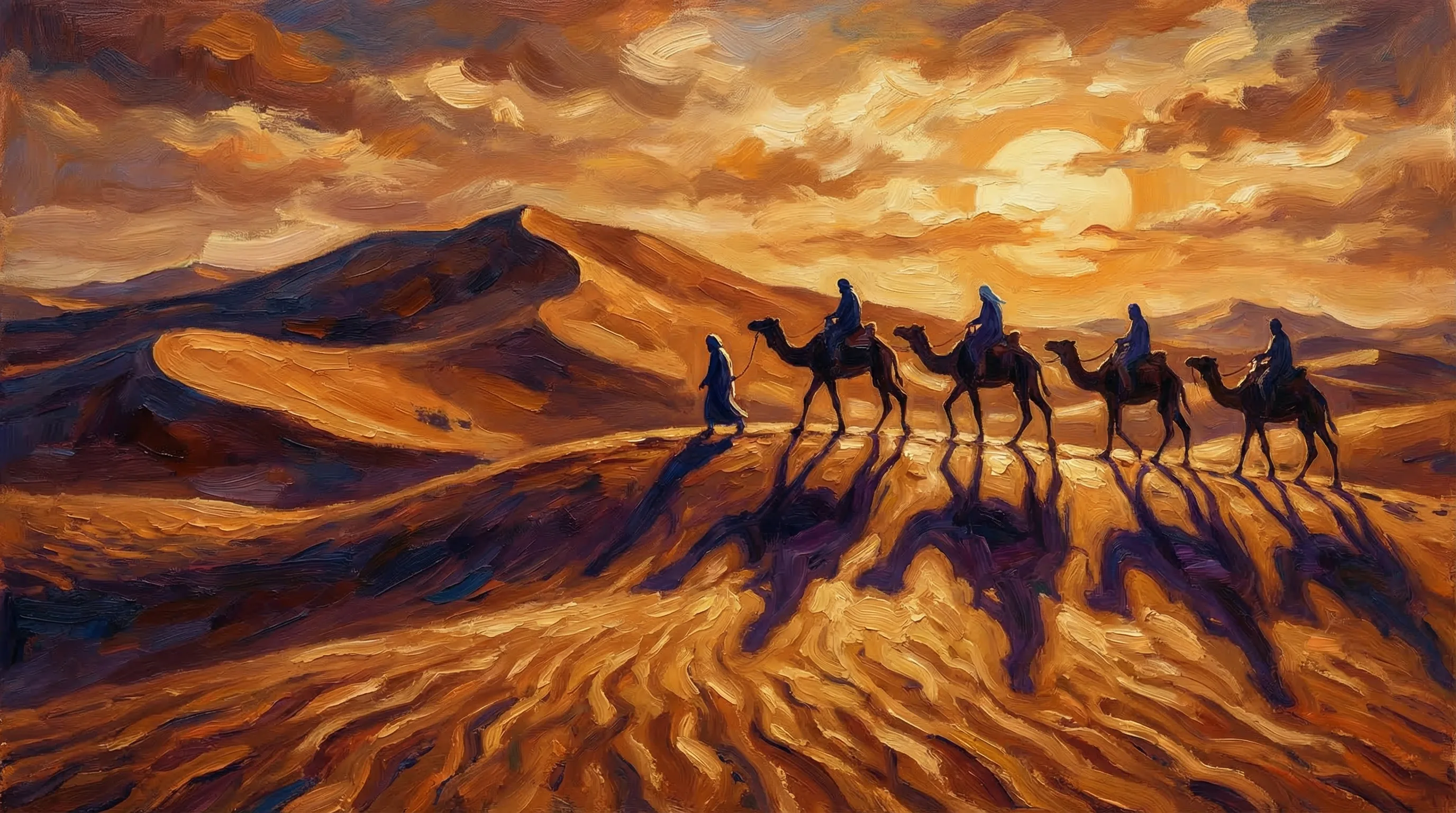
Camel Caravan Silhouettes
Last 15 minutes before sunset, shooting toward the sun
Technique: Extreme underexposure (-2 to -3 EV) to create pure black silhouettes against an orange sky
Tip: Position yourself on a parallel dune ridgeline. Camel caravans are arranged for photography between 16:00-17:30. A 70-200mm lens isolates individual camels.
Night Sky Over Desert Camp
After midnight when the Milky Way core is overhead (best March-October)
Technique: Tripod, 14-24mm f/2.8, ISO 3200-6400, 20-second exposure (500 rule for star trails)
Tip: New moon periods are essential. Camps near Merzouga have minimal light pollution. Include a tent or camel as foreground interest.
Essaouira
Essaouira
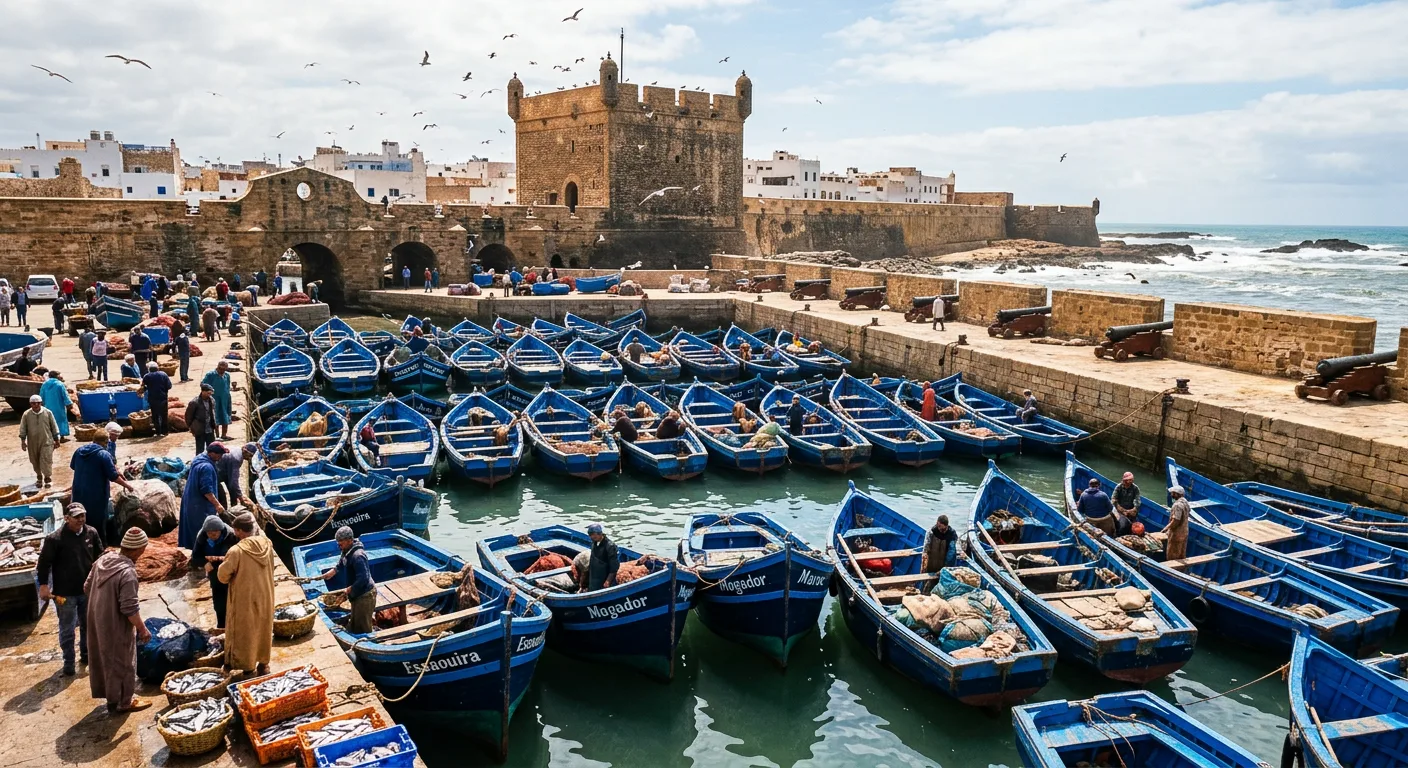
Fishing Port Blue Boats
Early morning (07:00-08:00) when fishermen unload and repair nets
Technique: Color blocking using the vivid blue boats against weathered stone walls and orange nets
Tip: The port is a working environment. Stay out of the way of moving fish crates. A 24-70mm zoom gives flexibility in tight spaces.
Ramparts & Atlantic Waves
Late afternoon when the Alizee wind creates dramatic wave spray against the fortifications
Technique: Slow shutter (1/4 to 1 second) with a neutral density filter to blur wave motion against the sharp stone walls
Tip: The Skala de la Ville cannon batteries offer the most dramatic foreground. Protect your gear from sea spray with a rain sleeve.
Sqala du Port Sunset
Golden hour with the setting sun illuminating the Portuguese-era fortification
Technique: Long exposure from the seawall with the fortress and Mogador island in frame
Tip: Wind is constant in Essaouira. A heavy tripod or sandbag is essential. The wind also creates photogenic hair and clothing motion for portraits.
Fes
Fes
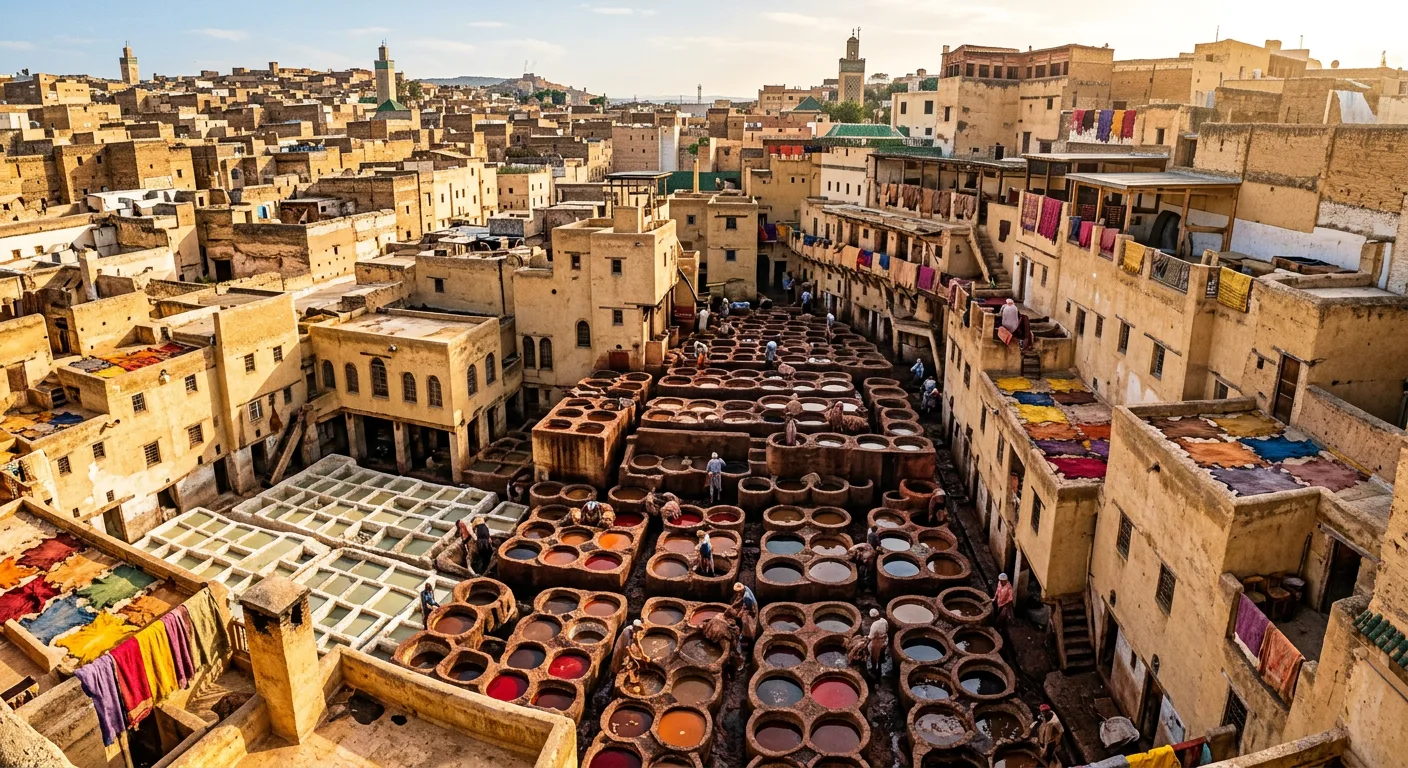
Chouara Tanneries
Late morning (10:00-12:00) when the dye vats are most colorful and workers are active
Technique: Overhead angle from the surrounding leather shops; use a telephoto to isolate individual workers in the colorful vats
Tip: Shops offer free rooftop access (they expect you to browse). The smell is intense; a mint sprig is offered at the entrance. Morning light illuminates the eastern-facing vats best.
Bab Boujloud (Blue Gate)
Blue hour (just after sunset) when the blue tiles glow against the deep sky
Technique: Frame the gate as a portal with the medina street visible through the arch; use people walking through for scale
Tip: The blue tiles face outward; the green tiles face the medina. Shoot from the Place Boujloud side for the iconic blue view.
Medina Alleyways
Midday when shafts of light penetrate the narrow passages
Technique: High contrast light-and-shadow compositions; expose for the light shafts and let shadows go deep black
Tip: The medina has over 9,000 alleyways. Getting lost is part of the experience. A 35mm prime is ideal for the tight spaces.
Golden Hour Guide by Season
Morocco sits between 27 and 36 degrees north latitude, giving it dramatically different light qualities through the year. Planning your shoot around these times transforms your results.
Winter
December - February
Sunrise
07:15 - 07:30
Sunset
17:30 - 18:00
Morning Golden Hour
07:15 - 08:15
Evening Golden Hour
16:30 - 17:30
Low sun angles all day create warm, directional light. Best season for dramatic long shadows. Clear Sahara skies perfect for astrophotography.
Spring
March - May
Sunrise
06:15 - 06:45
Sunset
18:30 - 19:30
Morning Golden Hour
06:15 - 07:30
Evening Golden Hour
18:00 - 19:30
Wildflowers carpet the Atlas foothills. Longer golden hours. Occasional Saharan dust creates hazy, painterly atmospheres.
Summer
June - August
Sunrise
05:45 - 06:15
Sunset
19:30 - 20:00
Morning Golden Hour
05:45 - 07:00
Evening Golden Hour
19:00 - 20:00
Very harsh midday light (avoid 11:00-16:00 for outdoor shooting). Medina alleyways and covered souks work well at midday. Dawn and dusk are magical.
Autumn
September - November
Sunrise
06:30 - 07:00
Sunset
17:45 - 18:45
Morning Golden Hour
06:30 - 07:45
Evening Golden Hour
17:00 - 18:45
Arguably the best photography season. Warm light, manageable temperatures, date harvest in oases, clear mountain views after summer haze lifts.
Street Photography Ethics & Etiquette
Morocco is not a theme park. The people you photograph are going about their daily lives. Respectful photography produces better images and better experiences for everyone.
Always Ask Permission for Portraits
Moroccan culture values personal dignity and consent. Many people are delighted to be photographed and will strike a pose, but others may object for religious or personal reasons. Asking "Mumkin suwwar?" (May I take a photo?) shows respect and usually gets a warm response.
Do This
Make eye contact, smile, gesture toward your camera, and wait for a nod or verbal consent. Show people the photo on your screen afterwards -- they love it.
Avoid This
Never use a telephoto lens to sneak portraits from a distance. Never photograph women without explicit permission. Never photograph children without a parent present and consenting.
Tipping for Portraits
When someone poses for you, a small tip is customary and appreciated. This is especially true for water sellers in traditional dress, snake charmers, henna artists, and market vendors who interrupt their work.
Do This
Offer 5-20 MAD per portrait. For elaborate setups (water seller in full regalia, henna artist demonstration), 20-50 MAD is appropriate. Agree on the amount before shooting if approached.
Avoid This
Do not treat tipping as transactional. It is a gesture of gratitude, not a purchase. Do not pay and then demand multiple poses or extended sessions.
Sacred Spaces and Sensitivity
Non-Muslims cannot enter most mosques in Morocco (the Hassan II Mosque in Casablanca and the Tin Mal Mosque in the Atlas are exceptions). Even exterior photography should be done respectfully. Cemeteries, shrines, and zaouias (religious lodges) require particular care.
Do This
Photograph mosque exteriors and minarets freely. Ask before photographing people in prayer. Remove shoes and cover shoulders when entering any religious or sacred space where photography is permitted.
Avoid This
Never point a camera into a mosque interior through an open door. Never photograph funeral processions. Never use flash near religious ceremonies.
Market and Souk Photography
Souks are incredibly photogenic but also people's workplaces. Vendors are generally happy to be included in atmospheric shots but may object to close-up portraits or photos of their merchandise (some believe it invites the evil eye or enables price comparison by competitors).
Do This
Buy something small before photographing a stall in detail. A glass of mint tea (5-10 MAD) buys enormous goodwill. Zone focusing and shooting from the hip captures candid souk energy.
Avoid This
Do not block narrow passages with tripods. Do not photograph merchandise close-up without buying. Do not use flash in covered souks where it disrupts the atmosphere.
Military, Police, and Government Buildings
Photography of military installations, police stations, government buildings, and royal palaces is strictly prohibited in Morocco. This is enforced and violations can result in equipment confiscation or detention.
Do This
Be aware of your surroundings. If a security official asks you to stop, comply immediately and delete the images if requested.
Avoid This
Never photograph soldiers, police officers, military vehicles, or checkpoints. Avoid photos near royal palaces, prisons, and border posts.
Landscape Photography Techniques
From the snow-capped Atlas to the endless Sahara, Morocco offers four radically different landscape environments, each demanding distinct techniques.
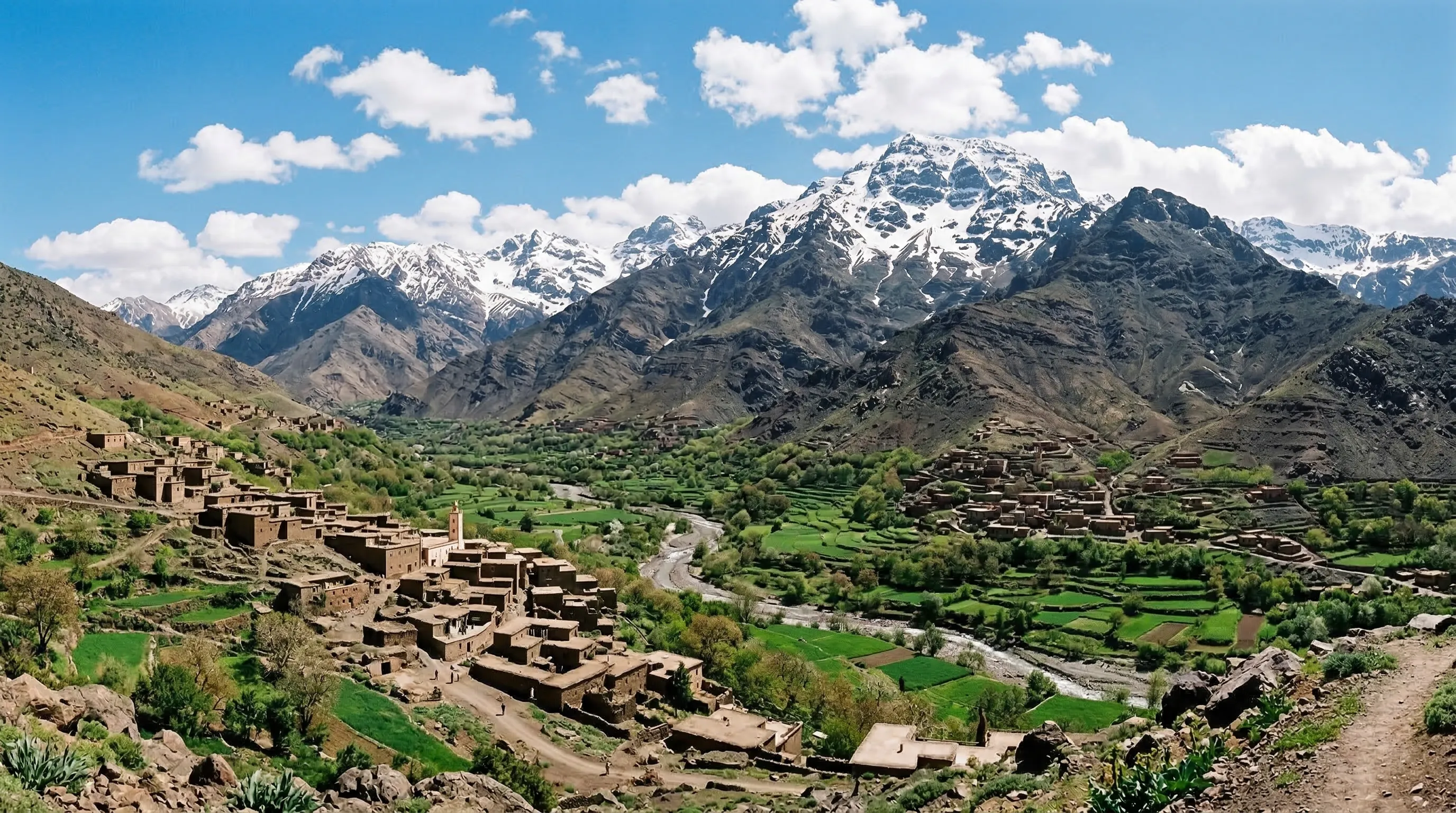
Atlas Mountains
Layer composition with foreground wildflowers, terraced villages in the mid-ground, and snow-capped peaks in the background. Use a polarizing filter to deepen blue skies and cut haze.
Gear: Wide-angle (16-35mm), polarizing filter, graduated ND filter for balancing bright sky and shadowed valleys
Best Conditions: Early morning after overnight rain clears the air. Spring (March-May) for wildflowers and snow on peaks simultaneously.
Composition: Include a winding mountain road or river as a leading line. Berber villages with their flat-roofed earthen houses provide human scale against the massive peaks.
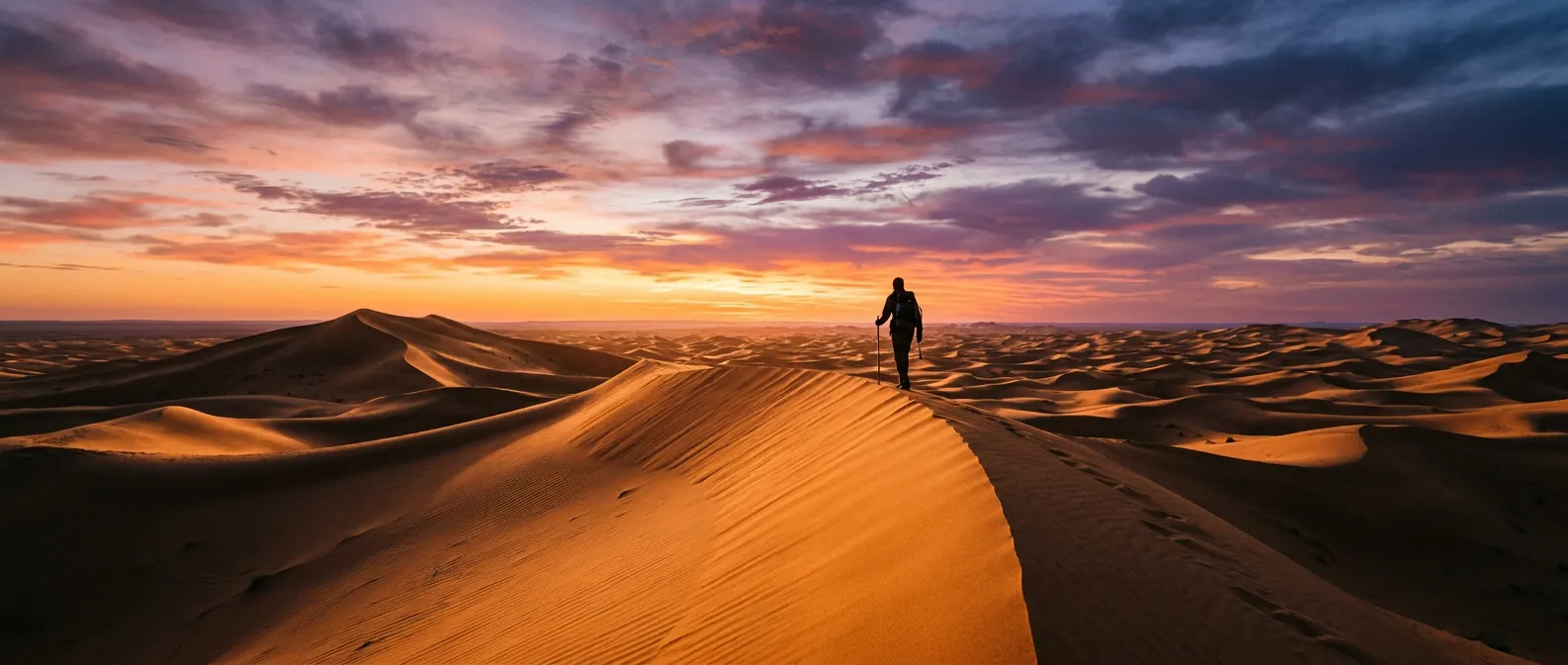
Sahara Desert
Side-lighting is everything. The interplay of light and shadow on sand ripples creates the drama. Shoot from the ridge of a dune, placing the light source 90 degrees to your left or right for maximum texture.
Gear: Telephoto (70-200mm) for dune abstracts, wide-angle for star fields, lens cloth (sand gets everywhere), ziplock bags for storage
Best Conditions: First 30 minutes after sunrise or last 30 minutes before sunset. Sand temperature differentials create heat shimmer in midday -- avoid unless you want abstract effects.
Composition: The S-curve of a dune ridge is one of the most powerful natural leading lines. Place the horizon in the upper or lower third, never the center, unless reflecting perfect symmetry.
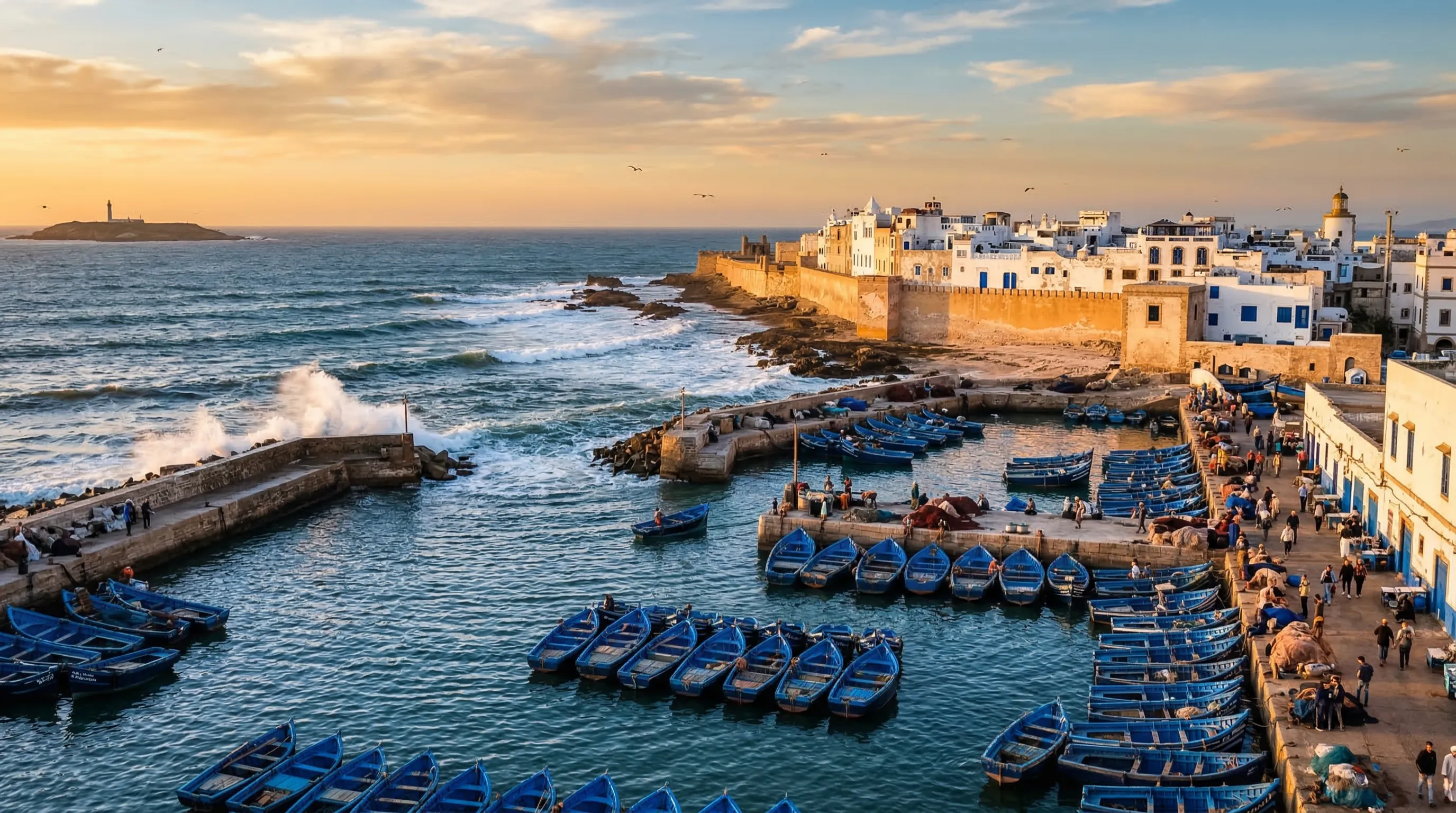
Atlantic Coastline
Long exposures transform crashing waves into ethereal mist against rugged volcanic rock. Use shutter speeds of 1-30 seconds with ND filters. Essaouira, Legzira, and the coast near Sidi Ifni offer the most dramatic formations.
Gear: 6-stop or 10-stop ND filter, sturdy tripod, remote shutter release, rain cover for sea spray
Best Conditions: Stormy weather creates the most dramatic wave action. High tide at sunset produces the best conditions along the Essaouira ramparts.
Composition: Use foreground rocks as anchors. The receding water patterns in sand create natural leading lines toward the horizon. Include the silhouette of a fisherman for human interest.
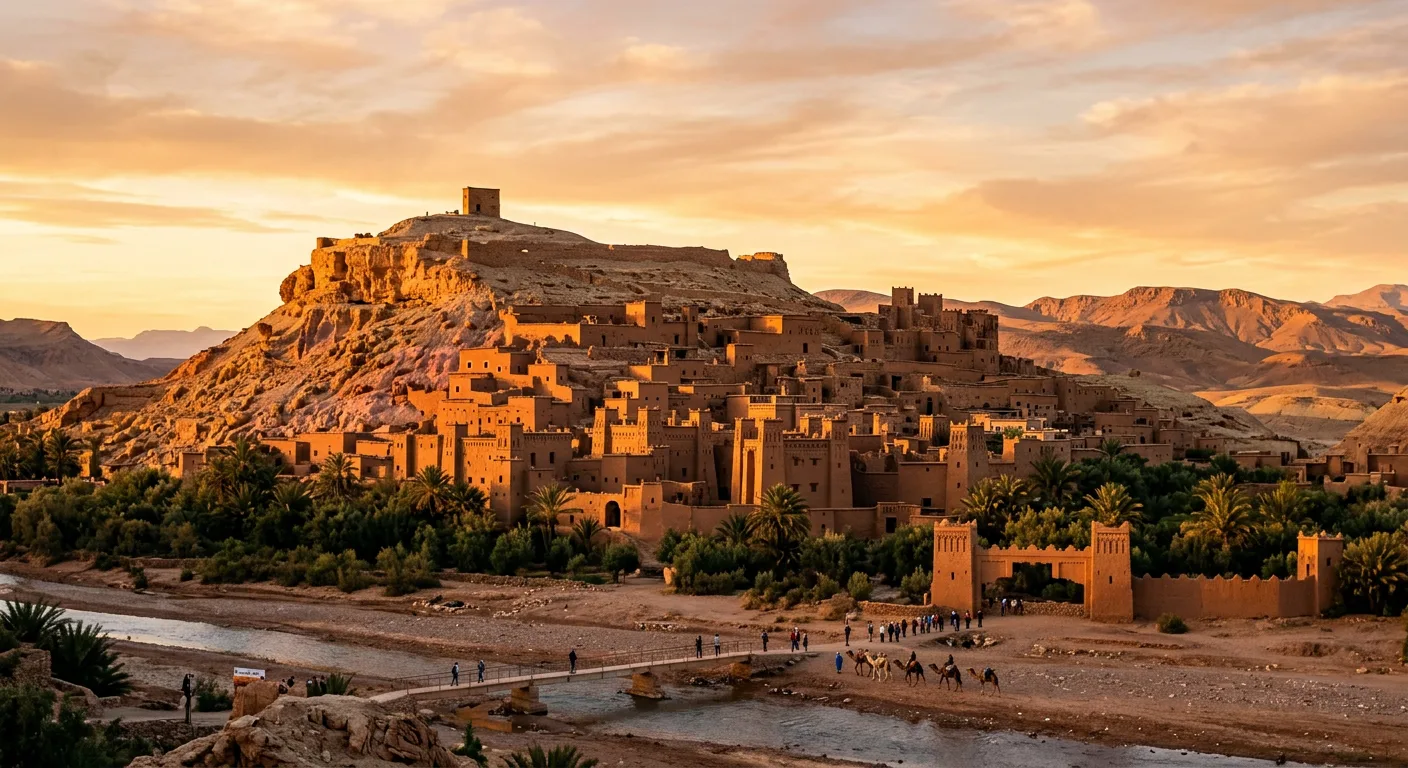
Draa Valley & Oases
The contrast between lush palm oases and barren desert hills is visually stunning. Shoot from elevated viewpoints (kasbah rooftops, hillsides) to show the dramatic boundary between green and ochre.
Gear: Standard zoom (24-70mm), telephoto for kasbah details, polarizing filter to cut palm frond reflections
Best Conditions: Late afternoon when the low sun turns the rammed-earth kasbahs golden against the deep green of date palms. Post-harvest season (October-November) when the oasis is lush.
Composition: Frame a distant kasbah through an archway of palm fronds. The repeating pattern of palm trunks creates natural leading lines. Use depth of field to keep everything sharp (f/8 to f/11).
Architecture & Detail Photography
Morocco's architectural heritage -- from thousand-year-old mosques to hand-cut zellige mosaics -- demands specific techniques to capture its extraordinary detail and scale.
Mosques & Minarets
Use a tilt-shift lens or perspective correction in post-processing to keep vertical lines parallel. Shoot minarets from across a plaza or rooftop for a clean silhouette against the sky. Include the call-to-prayer speaker for authentic detail.
Challenges
Interior access is restricted for non-Muslims at most mosques. Shoot through open doorways with a telephoto, or visit the Hassan II Mosque which offers guided tours of the stunning interior.
Best Examples: Koutoubia Mosque (Marrakech), Hassan II Mosque (Casablanca), Bab Boujloud blue gate (Fes), Qarawiyyin exterior (Fes)
Riads & Courtyards
The central courtyard is best shot looking straight up (zenith composition) with a wide-angle to capture the rectangular sky framed by ornate walls. Shoot the reflection in the central fountain basin for a unique perspective. Morning light entering from the east illuminates zellige on the western wall.
Challenges
Tight spaces require ultra-wide lenses (12-16mm). Dynamic range is extreme between the bright open sky and shadowed archways; use HDR bracketing or expose for shadows and recover highlights.
Best Examples: Bahia Palace (Marrakech), Riad Laaroussa (Fes), Dar Si Said Museum (Marrakech), Riad Idrissy (Meknes)
Kasbahs & Earthen Forts
The warm tones of rammed earth glow at golden hour. Use a telephoto to compress the stacked towers of Ait Benhaddou. Look for the geometric patterns created by projecting bricks in the pise walls -- they produce fascinating shadow patterns that change throughout the day.
Challenges
Many kasbahs are crumbling and access can be unstable. Dust kicks up on windy days. UV and haze filters protect your front element and cut atmospheric haze in desert environments.
Best Examples: Ait Benhaddou (Ouarzazate), Kasbah Taourirt, Telouet Kasbah, Todra Gorge villages
Zellige & Decorative Details
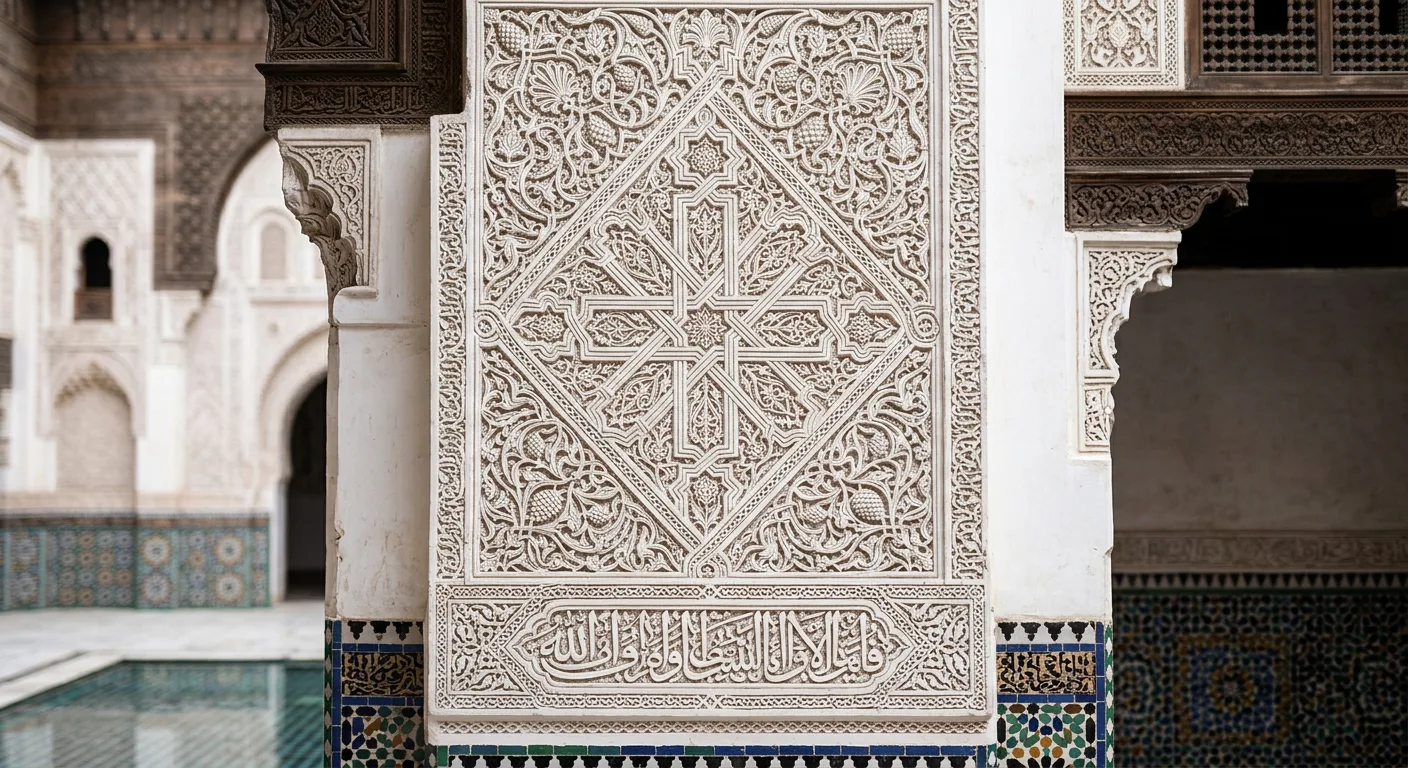
Macro or close-focus photography reveals the astonishing hand-cut precision of zellige tilework. Fill the frame entirely with the pattern for abstract compositions. Include the edge where zellige meets carved stucco to show the layered decorative system.
Challenges
Interiors are often dimly lit. Use a high ISO (1600-3200) or a small tripod. Avoid on-camera flash which flattens the three-dimensional texture. A small LED panel provides better controlled light for details.
Best Examples: Bou Inania Madrasa (Fes), Ben Youssef Madrasa (Marrakech), Saadian Tombs (Marrakech), Bahia Palace (Marrakech)
Ornate Doorways
Morocco has thousands of spectacular doors. Shoot them straight-on with precise alignment to avoid keystoning. Include the full surround -- the carved stone or zellige frame is as important as the door itself. A person walking through provides scale and narrative.
Challenges
Narrow streets mean you cannot always step back far enough. A 24mm lens solves most access problems. Midday light on south-facing doors avoids the deep shadows cast by overhanging eaves.
Best Examples: Royal Palace doors (Fes), Bab Mansour (Meknes), riad doors throughout Marrakech medina, blue doors of Chefchaouen
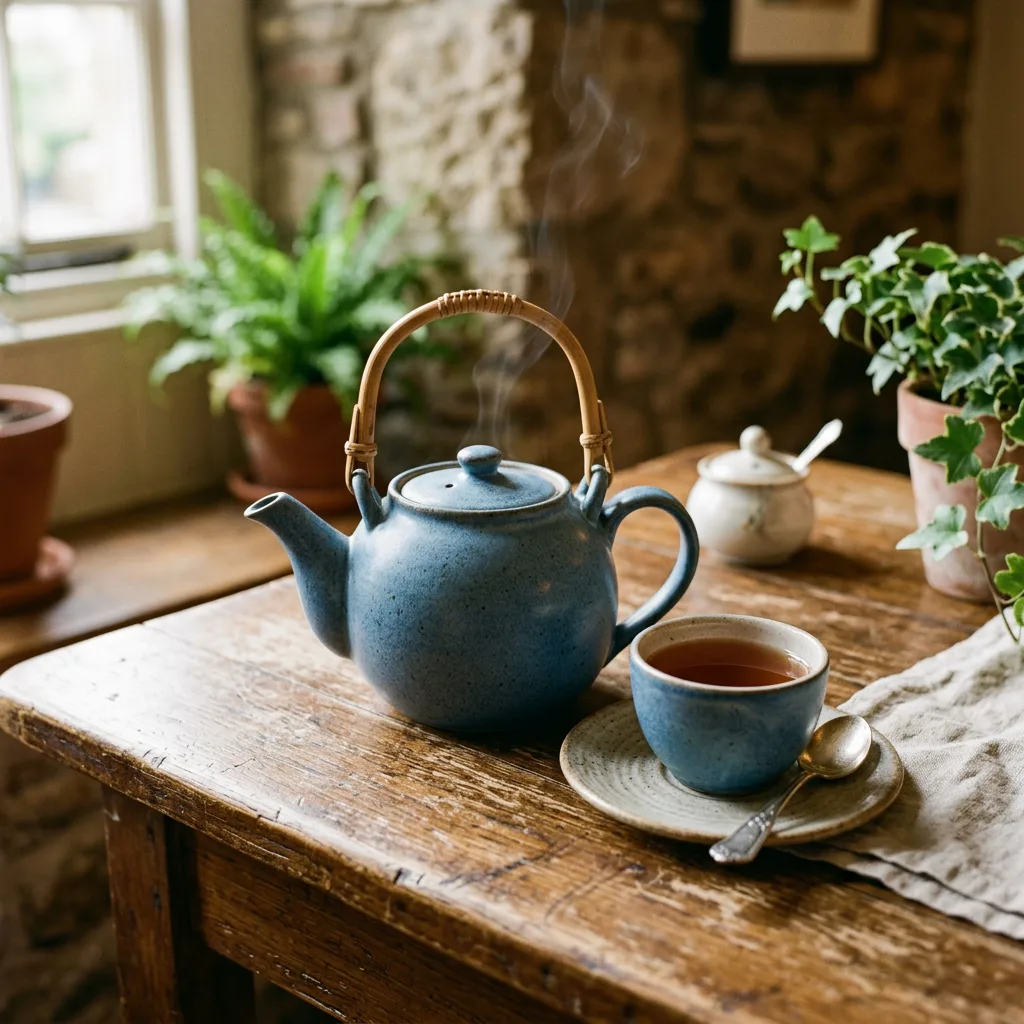
Portrait Photography
The faces of Morocco tell its story as powerfully as any landscape. Authentic, respectful portrait photography requires technique, patience, and genuine human connection.
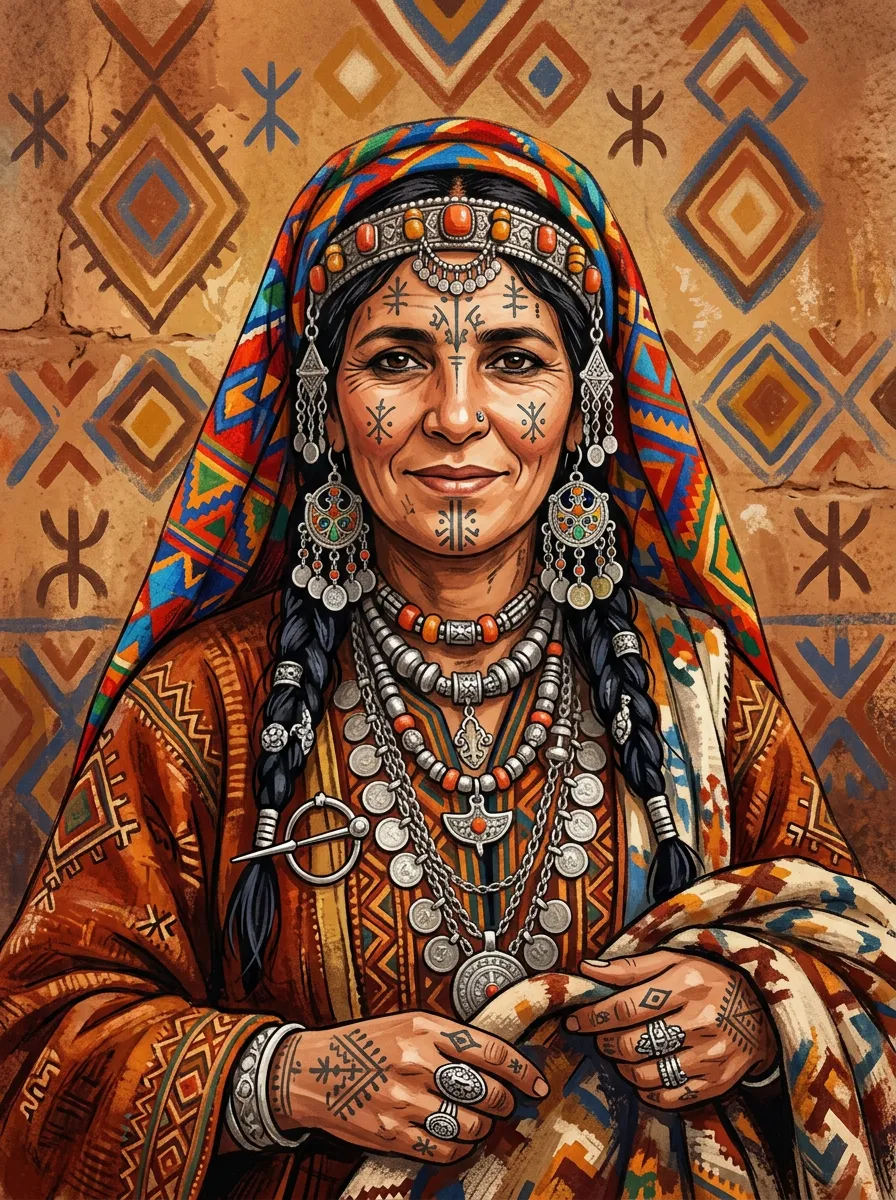
Berber People of the Atlas
Berber communities are generally warm and welcoming to photographers who take the time to engage. Share tea, learn a few Tamazight greetings ("Azul" for hello), and show genuine interest in their daily life before reaching for the camera. Environmental portraits that include the mountain landscape, livestock, or craft work tell a richer story.
Technical: Use an 85mm or 50mm lens for flattering compression. Open shade (under a tree, in a doorway) provides soft, even light without harsh shadows. The weathered skin and bright traditional textiles create stunning natural contrast.
Cultural Notes: Offer to share images by email or WhatsApp -- many rural Berber families treasure printed photos of themselves. Small gifts of tea, sugar, or school supplies for children are appreciated more than cash in remote villages.
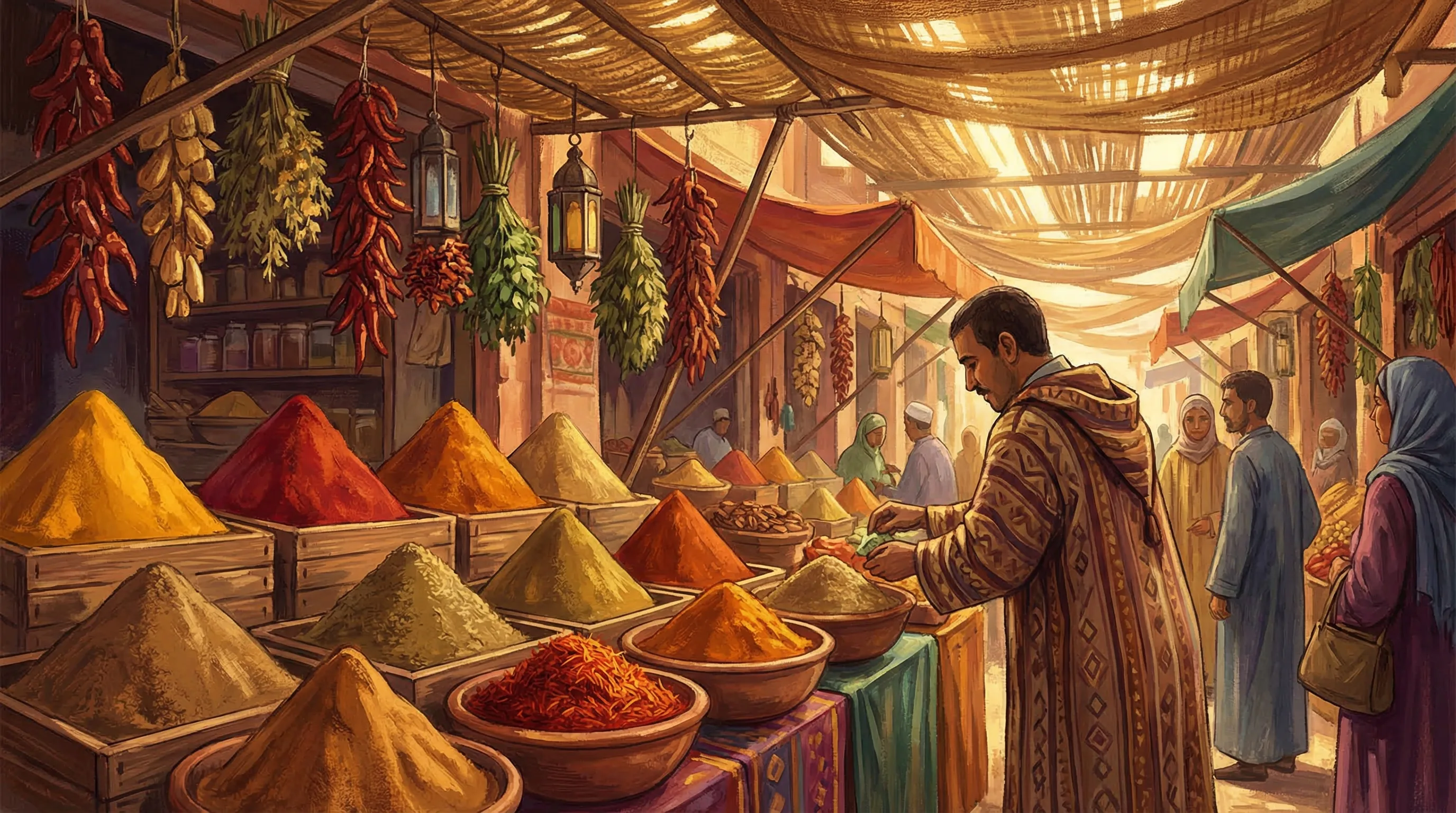
Market Vendors & Artisans
The best vendor portraits come from building a relationship. Buy something first -- even a small item -- and then ask to photograph the vendor at work. Artisans in particular (leather workers, metalworkers, weavers) are proud of their craft and enjoy demonstrating their skills for an appreciative audience.
Technical: Fast lenses (f/1.4 to f/2.8) are essential in the dim light of covered souks. Focus on the hands at work for powerful detail shots. A longer exposure (1/30 to 1/60 second) can convey the motion of hammering, spinning, or weaving while keeping the face sharp.
Cultural Notes: A tip of 10-20 MAD is customary for posed portraits of vendors. Showing the image on your camera screen builds trust. In leather workshops and tanneries, buy a small leather item to thank your host for rooftop access.
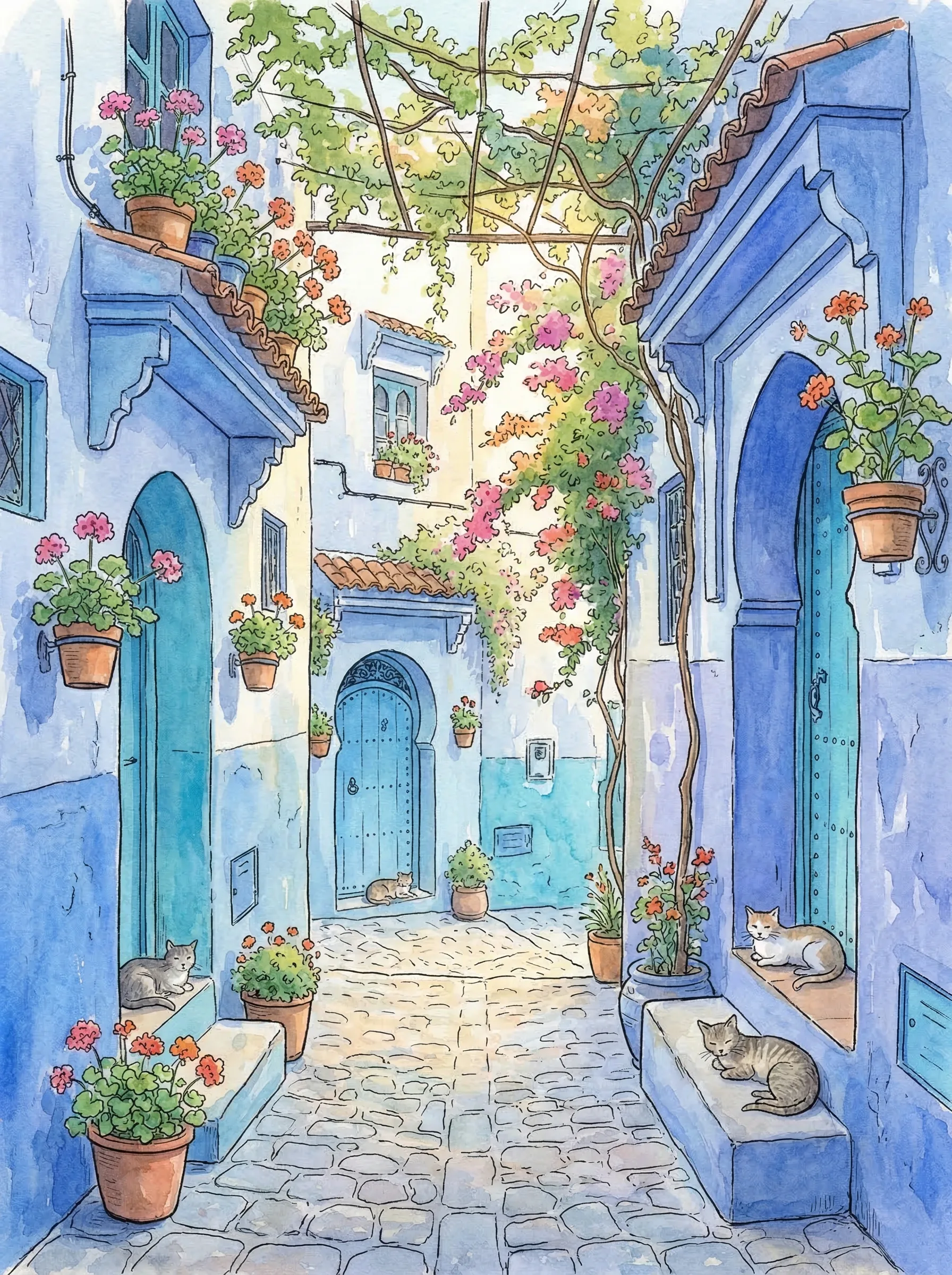
Chefchaouen Residents
The people of Chefchaouen are accustomed to photographers but appreciate courtesy. Elderly residents in traditional djellabas against the blue walls create iconic images. The women who paint the blue walls themselves make fascinating documentary subjects if they consent.
Technical: The blue walls act as an enormous softbox, reflecting cool blue light everywhere. White balance correction toward warm tones prevents portraits from looking too cold. The blue background simplifies compositions and makes subjects pop.
Cultural Notes: Chefchaouen is a conservative Rif Mountain town. Women here are more likely to decline photography than in cosmopolitan Marrakech. A respectful approach and a cheerful "La, shukran" (No, thank you) when declined goes a long way.
Camera Gear Recommendations
What to pack -- and what to leave at home -- for a Morocco photography trip. Dust, heat, crowds, and narrow alleyways dictate a specific approach to gear.
Camera Bodies
Essential
- Full-frame mirrorless (Sony A7 IV, Canon R6 II, Nikon Z6 III) for the best low-light performance in dim medinas and night sky work
- A weather-sealed body is advisable for desert sand and Atlantic sea spray
Nice to Have
- Second body to avoid lens changes in dusty environments
- APS-C crop body (Fuji X-T5, Sony A6700) as a lighter travel alternative
Skip It
Heavy DSLR rigs that draw attention and weigh down your daypack in 40-degree medina heat.
Lenses
Essential
- Wide-angle zoom 16-35mm f/2.8 (architecture, landscapes, star fields)
- Standard zoom 24-70mm f/2.8 (versatile workhorse for souks, streets, food)
- Fast prime 50mm f/1.4 or 35mm f/1.4 (low-light medina streets, portraits)
Nice to Have
- Telephoto 70-200mm f/2.8 (tannery details from rooftops, camel caravan compression, distant kasbahs)
- Macro lens or extension tubes for zellige detail work
Skip It
Super-telephoto lenses (300mm+) that attract unwanted attention and are impractical in narrow medina alleys.
Accessories
Essential
- Circular polarizing filter (deepens blue skies, cuts reflections on zellige and water)
- Microfiber lens cloths (at least 3 -- sand dust is constant)
- Ziplock bags for sand and dust protection in the Sahara
- Spare batteries (cold desert nights drain batteries faster)
Nice to Have
- ND filter set (6-stop and 10-stop for long exposures at Essaouira coast)
- Small LED light panel for illuminating zellige details in dark interiors
- Carbon fiber travel tripod (lightweight, does not corrode from salt air)
- Sensor cleaning kit for desert sand intrusion
Skip It
Drone without proper permits (risk of confiscation). Oversized camera bags that do not fit through narrow medina doorways.
Phone Photography Tips
You do not need a professional camera to capture Morocco beautifully. Modern smartphones, used with intention and technique, produce remarkable results.
Use ProRAW or RAW Mode
iPhone ProRAW and Samsung Expert RAW capture far more dynamic range than standard JPEG. Essential for the extreme contrast between bright Moroccan sun and deep medina shadows. Edit in Lightroom Mobile for professional results from your phone.
Lock Exposure and Focus
Tap and hold on your subject to lock focus and exposure. Then slide your finger up or down to adjust exposure compensation. In bright Moroccan light, slightly underexposing (-0.5 EV) preserves highlight detail in white buildings and blue skies.
Use the Ultra-Wide Lens
The 0.5x ultra-wide on modern phones is perfect for riad courtyards, medina alleyways, and sweeping desert panoramas. Get close to foreground subjects (doorways, archways, pattern details) and let the wide angle pull in the background.
Portrait Mode for People
Computational bokeh simulates an f/1.4 look that separates your subject from busy souk backgrounds. Works best at arm's length with a single subject. Check the edges of the blur mask -- hair and djellaba hoods can confuse the algorithm.
Night Mode for Medinas After Dark
Modern phone night modes produce remarkable results in the lantern-lit medinas. Keep your phone very still (brace against a wall or table) during the 3-5 second exposure. The warm tones of Moroccan lanterns (fanoos) photograph beautifully on phones.
Clean Your Lens Constantly
Desert sand, fingerprints, and sunscreen on your phone lens are the number one cause of hazy, low-contrast phone photos. Wipe with a microfiber cloth before every shot. Carry a small cloth in your pocket at all times.
Drone Photography Rules & Regulations
Morocco has strict drone regulations. Understanding and complying with the rules is essential to avoid equipment confiscation and legal trouble.
Critical Warning
Flying a drone in Morocco without prior DGAC authorization is illegal. Drones are regularly confiscated at airports and border crossings. Even if you bring a drone into the country, flying without a permit can result in confiscation, fines from 2,000 to 20,000 MAD, and potential criminal prosecution. Always declare your drone on your customs form.
Legal Requirements
- All drone flights require authorization from Direction Generale de l'Aviation Civile (DGAC)
- Apply at least 30 days before your trip at dgac.gov.ma
- Provide drone specifications, flight plan, dates, and insurance documentation
- Commercial operators need additional Exploitation Authorization
- Registration of the drone with Moroccan authorities is mandatory
Flight Restrictions
- Maximum altitude: 150 meters above ground level
- No flights within 5 km of airports or military bases
- No flights over medinas, royal palaces, or government buildings
- No flights over crowds or populated urban areas
- No flights at night without special authorization
- Line-of-sight operation only (no autonomous waypoint flights)
Penalties
- Flying without authorization: drone confiscation and fine from 2,000 to 20,000 MAD
- Flying in restricted zones: criminal prosecution possible
- Importing a drone without declaration at customs: confiscation at airport
- Always declare your drone on your customs entry form
Best Drone Spots (With Permit)
- Ait Benhaddou (with permit) -- the ksar from above is breathtaking
- Erg Chebbi dunes at sunrise -- dune patterns visible only from the air
- Todra Gorge -- the narrow canyon creates dramatic vertical compositions
- Atlantic coastline near Legzira -- natural rock arches and crashing waves
- Dades Valley -- the winding road through the Valley of a Thousand Kasbahs
Instagram-Worthy Spots & Crowd Avoidance
Morocco's most famous spots are famous for a reason, but timing and alternative angles make the difference between a cliched tourist shot and an original image.
Jardin Majorelle Blue Wall
Beat the Crowds
Arrive at opening (08:00). The iconic blue wall with the YSL Memorial is empty for about 15 minutes. By 09:00, queues form for the same shot.
Alternative Angle
Skip the wall and shoot the yellow Art Deco building through the bamboo grove for a more original composition.
Chefchaouen Blue Steps
Beat the Crowds
Before 08:00 or during Friday prayers (12:30-14:00) when the medina empties. Most tourists arrive on day-trip buses at 10:00.
Alternative Angle
Explore the upper medina near Ras el-Maa. The lower medina is more photographed; the upper streets are equally blue but far less crowded.
Fes Tanneries
Beat the Crowds
Weekday mornings at 09:00 before tour groups arrive. Workers begin dyeing early and the vats are most colorful when freshly filled.
Alternative Angle
Instead of the standard overhead shot, descend into the tannery (with a guide) and shoot upward at workers against the sky for a powerful perspective.
Ait Benhaddou
Beat the Crowds
Late afternoon when day-trippers from Marrakech have departed. The sunset light on the ksar is incomparably better than the harsh midday light most tourists photograph.
Alternative Angle
Cross the river and climb the opposite hillside for the classic postcard view. Most tourists stay on the main path through the ksar itself.
Bahia Palace Marrakech
Beat the Crowds
The first 30 minutes after opening (09:00) or the last hour before closing. Midday is packed with tour groups filling the courtyards.
Alternative Angle
Focus on ceiling details and doorway framing rather than the standard wide courtyard shot. The painted cedar ceilings are stunning and most visitors walk past them.
Night & Astrophotography
From Sahara star fields to lantern-lit medina alleyways, Morocco after dark offers some of the most atmospheric photography opportunities in the country.
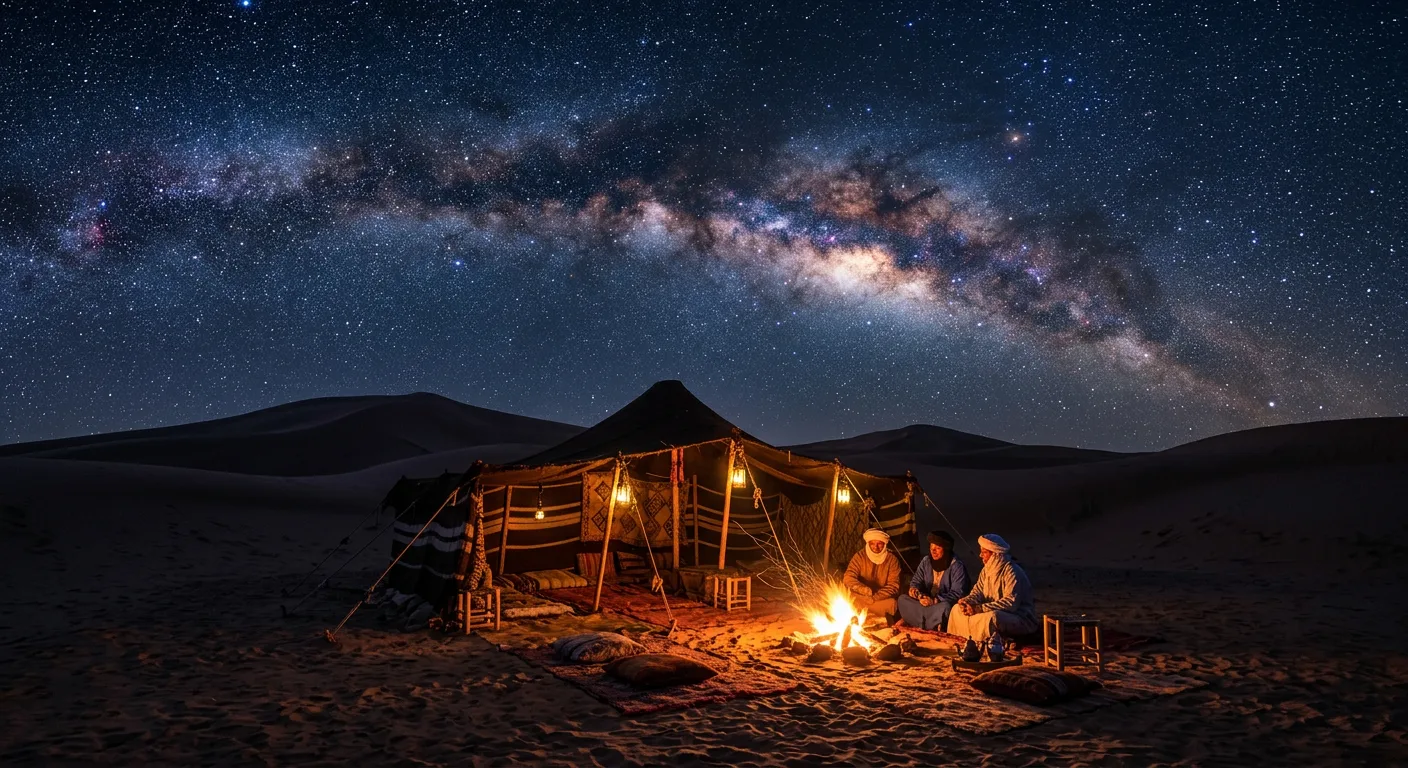
Sahara Desert (Merzouga / M'Hamid)
Milky Way and star trails over sand dunes
Camera Settings
14-24mm, f/2.8, ISO 3200-6400, 15-25 seconds. Use the 500-rule (500 / focal length = max exposure before star trailing).
Plan around new moon phases. The Sahara has some of the darkest skies in North Africa. Include a lit tent, campfire, or camel silhouette as foreground interest. Light-paint the foreground dune with a headlamp during the exposure.
Jemaa el-Fnaa, Marrakech
Night market chaos with food stall smoke and lantern light
Camera Settings
35mm f/1.4, ISO 1600-3200, 1/60 second handheld. Use continuous autofocus to track moving subjects.
The smoke from grilling food creates atmospheric haze that catches the artificial light beautifully. Shoot from the elevated Cafe de France terrace for an overview, then descend into the chaos for intimate street-level shots.
Fes Medina After Dark
Lantern-lit alleyways with long shadows and warm pools of light
Camera Settings
50mm f/1.4, ISO 3200, 1/30 second. Brace against a wall for stability without a tripod.
The medina empties after 21:00 and the remaining pedestrians cast dramatic silhouettes in the lantern light. Doorways spilling warm light into dark passages create natural spot-lit compositions.
Chefchaouen Blue Hour
Blue walls under twilight with warm interior light spilling through windows
Camera Settings
24mm f/2.8, ISO 800, 1-4 seconds on tripod. Bracket exposures for HDR blending.
The 20-minute window between sunset and darkness is magical when the deep blue sky matches the blue walls. The few lit windows and doorways add warm accent points. A resident passing through adds human scale.
Atlas Mountains (Oukaimeden, Toubkal)
Star fields over mountain silhouettes and Berber villages
Camera Settings
16mm f/2.8, ISO 6400, 20 seconds. Incorporate moonlight on snow-capped peaks for a balanced exposure.
High altitude (2,600m+) means thinner atmosphere and sharper stars. Winter brings both clear skies and snow on the peaks, creating stunning contrast. The glow of village lights at the mountain base adds depth.
Food Photography
Moroccan cuisine is as visually stunning as it is delicious. Tagines, mint tea ceremonies, and spice market displays are among the most photographed food subjects in the world.
Tagine
Styling
Photograph with the conical lid partially lifted, steam rising, to create mystery and appetite appeal. The moment of the reveal is the money shot. Ask your server to bring it covered and lift the lid for you.
Lighting
Side-lighting from a window creates depth and shows the glossy sauce texture. Avoid direct overhead restaurant lighting which flattens the dish.
Composition
Include the traditional tagine vessel -- the terracotta cone is as photogenic as the food. Shoot from a 45-degree angle to show both the dish contents and the iconic vessel shape.
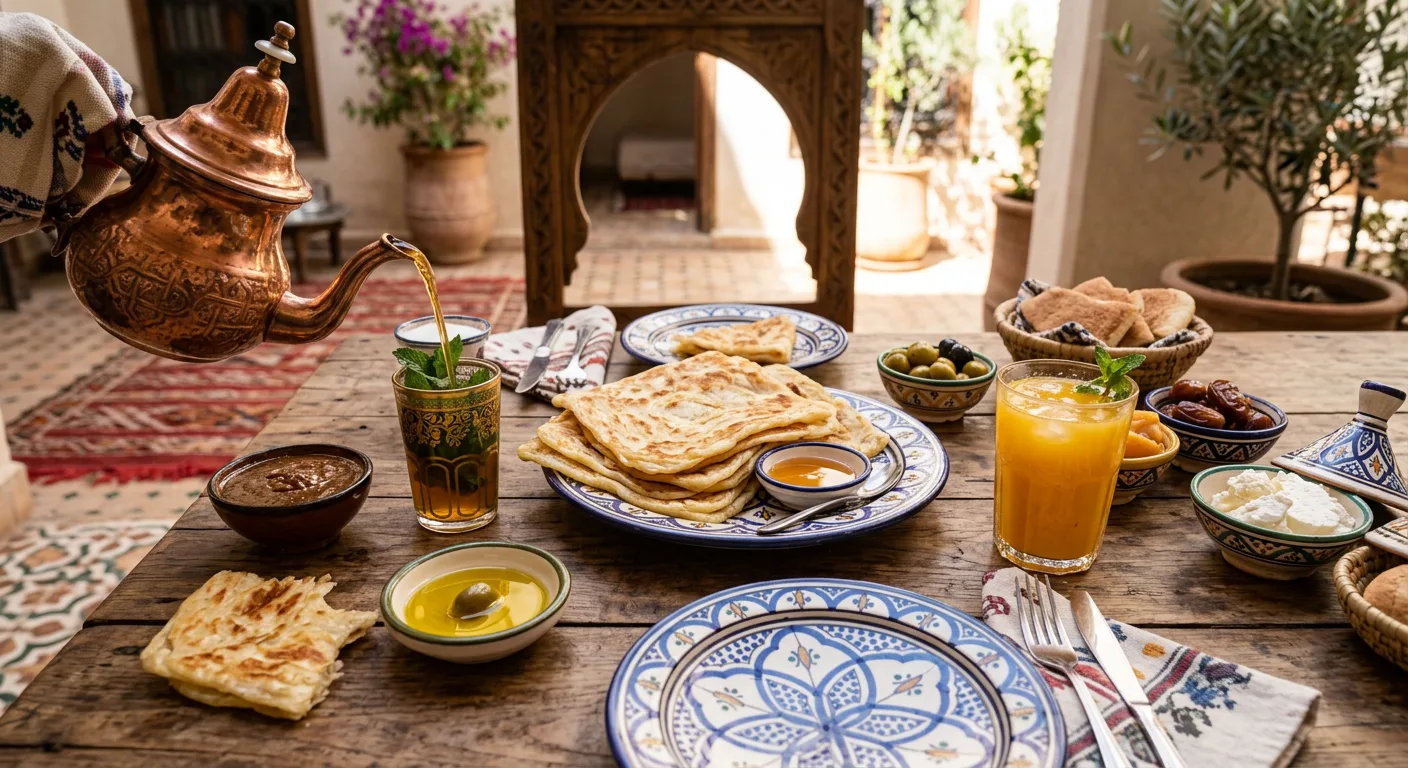
Mint Tea Ceremony
Styling
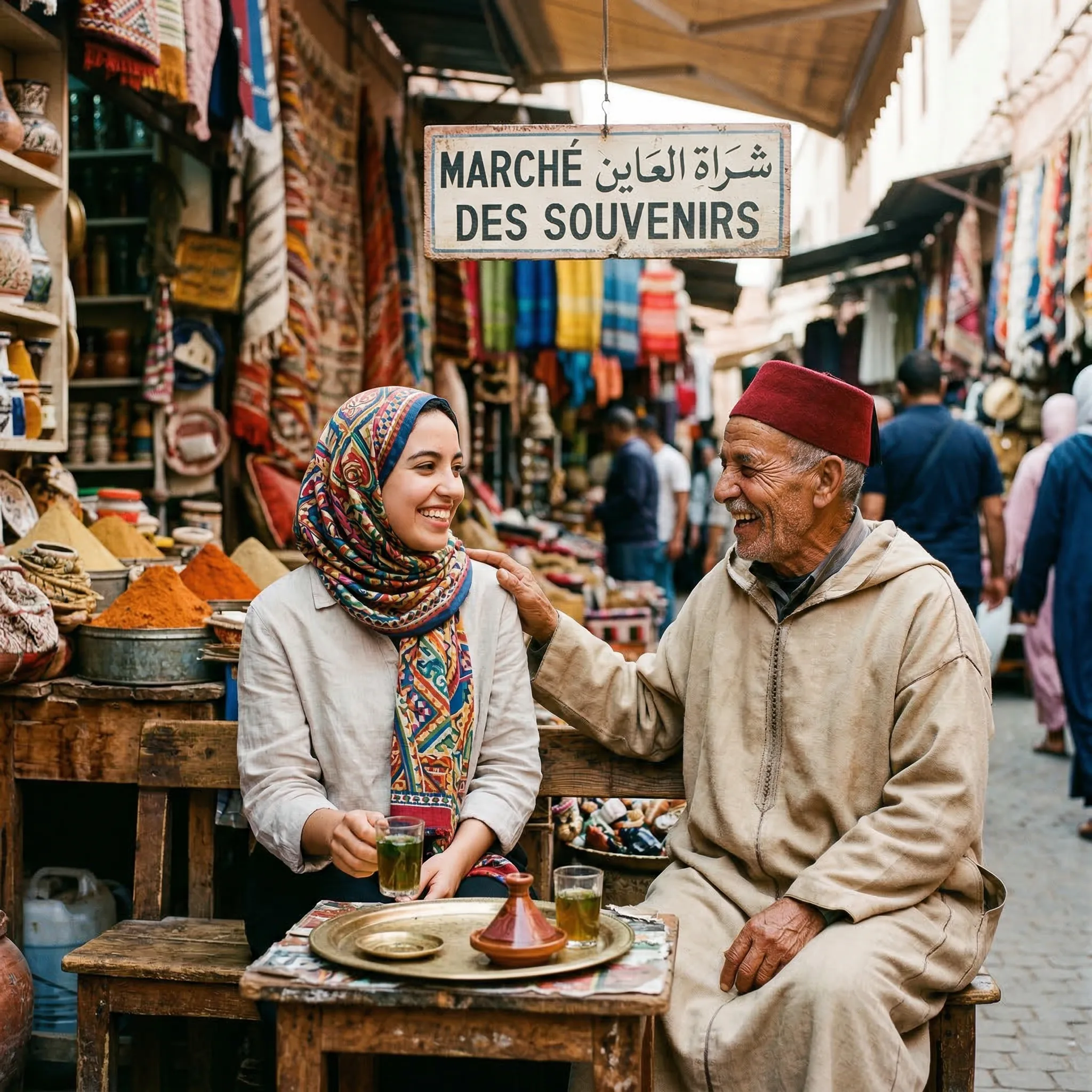
The pour is the shot. Moroccan tea is poured from a height to create foam. Ask your host to pour slowly while you shoot at 1/500 second or faster to freeze the stream. The golden liquid against a silver teapot is gorgeous.
Lighting
Backlighting through the tea glass shows the amber color and makes the liquid glow. Position yourself with a window behind the tea set.
Composition
Include the ornate silver teapot, the colorful tea glasses, and sugar cones in a flat-lay or low-angle arrangement. A hand reaching for a glass adds human connection.
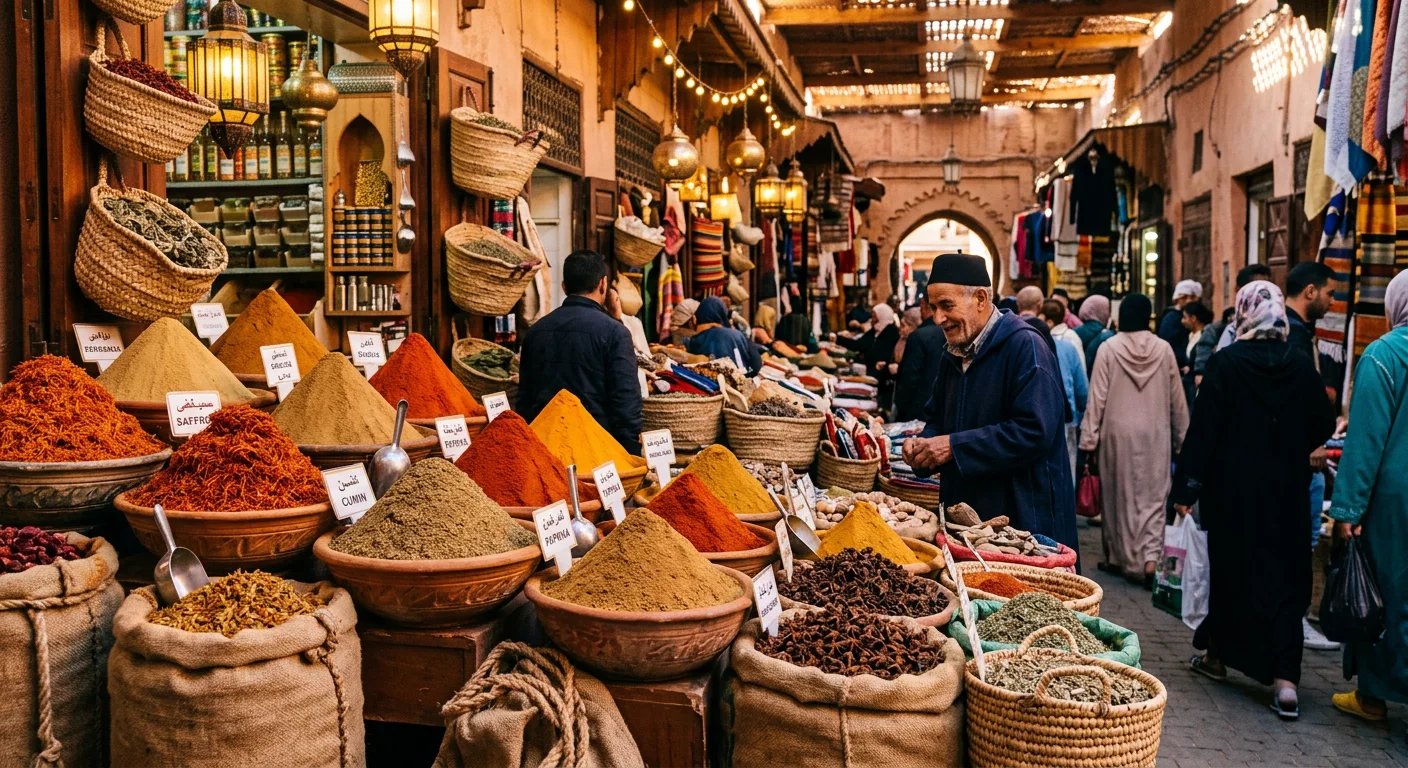
Spice Market Displays
Styling
The conical spice mounds in Marrakech souks are pre-styled by vendors who consider the display an art form. Do not touch or rearrange. The natural color progression from golden turmeric to crimson paprika to green herbs is stunning as-is.
Lighting
The dappled light filtering through souk roofing creates natural spotlighting on the spice mounds. Overcast days or shaded stalls provide more even, saturated color.
Composition
Fill the frame with the repeating pattern of conical mounds for abstract color studies. Include the vendor behind the display for environmental context and human scale.
Moroccan Breakfast Spread
Styling
Riad breakfasts are naturally photogenic: msemen flatbread, amlou (argan butter), honey, fresh juice, eggs, olives, and seasonal fruit on a zellige-tiled table. Shoot the full spread as a flat-lay from directly above.
Lighting
Morning riad courtyard light is soft and warm. Position the spread where natural light falls. A reflector or white napkin can fill shadows on the far side.
Composition
The overhead flat-lay shows the full abundance. Include the zellige table or woven placemat as a distinctly Moroccan background. A hand tearing bread adds narrative energy.
Photography Workshops & Tours
Guided photography experiences with local experts who know the best light, the best angles, and how to navigate the cultural landscape for authentic images.
Marrakech
Marrakech Medina Photo Walk
Street photography, market scenes, architecture. Small groups (max 6) with a local photographer guide who handles introductions and permissions.
3-4 hours (morning or golden hour)
From 600 MAD per person
Local guide, entry to 2-3 monuments, mint tea stop, post-walk image review session.
Merzouga / Erg Chebbi
Sahara Photography Expedition
Sunrise/sunset dune photography, camel caravan shots, night sky astrophotography, Berber portrait sessions at a nomad camp.
2 nights / 3 days
From 4,500 MAD per person
Desert camp accommodation, all meals, camel trek, 4x4 transport, photography instruction. Note: seasonal pricing applies; summer rates may differ.
Fes
Fes Artisan & Architecture Workshop
Tannery photography from exclusive rooftop access, madrasa interior details, souk life, artisan portraits in metalwork and pottery workshops.
2 full days
From 3,200 MAD per person
Expert local guide, exclusive rooftop access at Chouara tanneries, artisan workshop visits, all entry fees, daily image critiques.
Chefchaouen
Chefchaouen Blue City Intensive
Blue wall compositions, environmental portraits, Spanish Mosque sunset, blue hour techniques. The full arc of a day in the Blue Pearl.
1 full day (sunrise to blue hour)
From 800 MAD per person
Local photography guide, rooftop access to private homes, lunch in a traditional house, image review session.
Imlil / Ourika Valley
Atlas Mountains & Berber Villages
Mountain landscapes, Berber village life, agricultural scenes, portrait photography with community engagement.
1 full day
From 900 MAD per person
Transport from Marrakech, Berber guide, traditional lunch, community donation, photography instruction throughout.
Pricing Note
All workshop prices shown are starting rates in MAD and may vary by season, group size, and specific itinerary. Peak season (October-April) prices may be 20-30% higher. Private workshops for individuals or couples typically cost 2-3x the per-person group rate. Always confirm current pricing directly with the operator.
10 Essential Morocco Photography Tips
01
Wake before dawn. The 30 minutes before and after sunrise are consistently the most magical light in Morocco.
02
Shoot in RAW format. The extreme dynamic range (bright sky, deep medina shadows) needs the latitude that RAW provides.
03
Protect your gear. Ziplock bags, lens cloths, and a camera rain cover protect against sand, dust, and sea spray.
04
Learn five Arabic phrases. "Salam alaikum" (peace), "Shukran" (thank you), "Mumkin suwwar?" (may I photograph?), "Bezzaf" (beautiful), and "La" (no) cover 90% of situations.
05
Stay for blue hour. The 20-minute twilight period after sunset produces Morocco's most atmospheric color palettes.
06
Back up daily. Carry a portable SSD and back up every evening. Loss or theft happens, and Morocco's internet is not fast enough for cloud backup of RAW files.
07
Dress respectfully. Conservative dress (covered shoulders and knees) earns trust and opens doors to photography opportunities that a tank-top tourist will never see.
08
Use a prime lens for medina walks. A 35mm f/1.4 on full-frame is the perfect balance of width, speed, and inconspicuousness in tight alleys.
09
Photograph the in-between moments. The pauses between actions -- a vendor rearranging spices, a cat crossing a blue stairway, steam rising from a teapot -- are often more evocative than the "hero" shots.
10
Return to the same spot. Visiting a location at different times of day reveals how dramatically Moroccan light transforms a scene. Your best shot is rarely your first.
Continue Exploring
Dive deeper into Morocco's photographic possibilities