Discovering...
2022 World Cup Semi-Finalists • 2030 World Cup Co-Hosts
Football in Morocco
From the roaring terraces of Casablanca to the 2030 FIFA World Cup, Morocco's football story is one of passion, pride, and a nation on the rise. Experience the beautiful game in the heart of North Africa.
1st
African/Arab nation in WC semis
2030
FIFA World Cup co-host
93,000
Seat mega-stadium planned
16
Botola Pro teams
The Atlas Lions
Morocco's Football Story
In December 2022, Morocco wrote the most extraordinary chapter in African and Arab football history. The Atlas Lions — led by coach Walid Regragui — defeated Belgium, Spain, and Portugal to reach the FIFA World Cup semi-finals in Qatar, becoming the first African and first Arab nation ever to achieve this feat. The images of players celebrating with their mothers on the pitch, of millions pouring into the streets of Casablanca, Rabat, and Marrakech, became iconic moments that transcended sport. Morocco did not just compete — they captured the hearts of the entire world.
But Morocco's football passion did not begin in 2022. The Atlas Lions have been a force in African football for decades, winning the Africa Cup of Nations in 1976 and consistently qualifying for World Cups throughout the 1980s, 1990s, and beyond. What makes Moroccan football unique is how deeply it is woven into everyday life. In every city, town, and village, you will find children playing football in narrow medina streets, on dusty pitches beside the Atlas Mountains, and on beaches along the Atlantic coast. Football is not just a sport in Morocco — it is a shared language, a source of identity, and a bridge between generations.
Now, Morocco stands on the threshold of its greatest sporting moment yet. As co-host of the 2030 FIFA World Cup alongside Spain and Portugal, the kingdom is investing billions of dirhams in world-class stadiums, transport infrastructure, and hospitality. For tourists, this creates an unprecedented opportunity: visit Morocco not just for its breathtaking landscapes, ancient medinas, and legendary cuisine, but for a world-class football experience that is passionate, affordable, and utterly unforgettable.
Qatar 2022
The Historic 2022 World Cup Run
Match by match, Morocco wrote the most extraordinary chapter in African and Arab football history. Here is how it happened.
G1
Group Stage
Morocco 0 - 0 Croatia
A disciplined, organized defensive display against the 2018 World Cup finalists. Morocco showed the world they were not in Qatar to make up numbers. Bono commanded the goal; Amrabat dominated midfield.
G2
Group Stage
Belgium 0 - 2 Morocco
The match that announced Morocco to the world. Goals from Sabiri and Aboukhlal stunned second-ranked Belgium. Moroccan fans erupted across the globe. The Haouz chant echoed through Al Thumama Stadium.
G3
Group Stage
Canada 1 - 2 Morocco
Ziyech and En-Nesyri scored to secure top spot in Group F. Morocco finished above Croatia and Belgium, the two 2018 World Cup finalists. Seven points from three games. Zero goals conceded from open play.
R6
Round of 16
Morocco 0 - 0 Spain (3-0 pens)
An iconic penalty shootout victory. Bono saved two penalties, Hakimi scored the winning penalty with a nerveless Panenka chip. Spain had 77% possession but zero shots on target. Morocco's defensive structure was perfect.
Ql
Quarter-Final
Morocco 1 - 0 Portugal
En-Nesyri's towering header sent Morocco to the semi-finals. Ronaldo watched from the bench as Morocco outfought and outplayed Portugal. Boufal's post-match dance with his mother became the tournament's most iconic image.
Sl
Semi-Final
France 2 - 0 Morocco
The run ended against the defending champions, but Morocco left Qatar with their heads held high. They had become the first African and Arab nation ever to reach a World Cup semi-final. A nation of 37 million people had captured the hearts of billions.
Te
Third Place
Croatia 2 - 1 Morocco
A narrow loss in the consolation match, but fourth place in the world was Morocco's best-ever World Cup result. The squad returned home as national heroes, greeted by millions lining the streets of Rabat.
Key Players of the 2022 Run
Yassine Bounou (Bono)
The Wall
Saved two penalties against Spain. Conceded just one goal from open play in the entire tournament. His composure under pressure was extraordinary.
Sofyan Amrabat
The Engine
Named man of the match twice. His tireless midfield work broke up opposition attacks and launched Moroccan counters. Arguably the tournament's best defensive midfielder.
Achraf Hakimi
The Heartbeat
Scored the winning Panenka penalty against Spain. His pace, crossing, and leadership made him Morocco's most important outfield player.
Walid Regragui
The Tactician
Appointed just three months before the World Cup. His pragmatic, disciplined tactical approach was perfectly suited to knockout football. Now a national icon.
The Cultural Impact
Morocco's 2022 World Cup run was more than sport. It was a moment of unity for the entire Arab world and Africa. Millions who had never watched football before became passionate fans overnight. The images of Sofiane Boufal dancing with his mother on the pitch, of Achraf Hakimi's Panenka penalty, of the streets of Casablanca filled with millions — these became defining cultural moments of 2022. The run proved that a nation of 37 million people with a GDP smaller than many European cities could stand toe-to-toe with the world's best. In Morocco, December 2022 is remembered the way other countries remember winning the World Cup itself.
A Historic Tri-Continental Tournament
2030 FIFA World Cup
Morocco, Spain, and Portugal will co-host the first World Cup spanning two continents — a landmark event that puts Morocco firmly on the global sporting map.
Massive Investment
Morocco is building the Grand Stade de Casablanca (93,000 seats) and renovating stadiums across 6 cities. New roads, rail links, and airports will transform the country's infrastructure for decades to come.
What It Means for Tourists
Expect expanded flight routes, new hotels, improved public transport, and a country fully geared toward welcoming the world. Morocco will be easier than ever to visit, with world-class hospitality at Moroccan prices.
Plan Ahead for 2030
Ticket sales will begin through FIFA's official platform. Book accommodation early — Casablanca, Marrakech, and Tangier hotels will fill up fast. Consider visiting host cities now to scout the experience.
Morocco's 2030 World Cup Venues
| Stadium | City | Capacity | Status |
|---|---|---|---|
| Grand Stade de Casablanca | Casablanca | 93,000 | Under Construction |
| Grand Stade de Rabat | Rabat | 70,000+ | Planned / Renovation |
| Grand Stade de Marrakech | Marrakech | 50,000+ | Planned / Renovation |
| Stade Ibn Batouta | Tangier | 65,000 | Existing / Upgrade |
| Stade de Fes | Fes | 50,000+ | Planned / Renovation |
| Stade d'Agadir | Agadir | 45,000+ | Existing / Upgrade |
Inwi Botola Pro
Moroccan Football League
The Botola Pro is Morocco's top-flight football league, featuring 16 teams competing from August to May. It is one of the strongest leagues in Africa, producing world-class talent and hosting some of the continent's most electrifying derbies.

Africa's Biggest Derby
Wydad vs Raja: The Casablanca Derby
When Wydad and Raja meet at Stade Mohammed V, Casablanca transforms. This is widely considered the biggest derby in Africa and one of the most intense in world football. The city divides into red and green, the stadium shakes with 67,000 voices, and the tifos are works of art. If you can attend only one match in Morocco — make it this one.
Wydad AC (Red)Raja CA (Green)67,000 Capacity
Ticket Prices
Botola Pro matches are remarkably affordable. Standard terrace tickets cost 50–80 MAD (approximately $5–8 USD), covered stands run 100–150 MAD, and VIP seating tops out at around 200 MAD ($20 USD). For major derbies and international matches, prices may be slightly higher and tickets sell out fast.
Top Clubs
Wydad Athletic Club (WAC)
Est. 1937CasablancaRed & White
The most successful club in Moroccan football history. Wydad's ultras, known as "Winners," create an atmosphere that rivals any in the world.
22x Moroccan league titles, 3x CAF Champions League
Raja Club Athletic (RCA)
Est. 1949CasablancaGreen & White
Raja represents the working-class soul of Casablanca. Their supporters, the "Green Boys," are famous for spectacular choreographed displays called tifos.
12x Moroccan league titles, 3x CAF Champions League
AS FAR
Est. 1958RabatRed & Green
The Royal Armed Forces club, known as the "Military Club." AS FAR has a storied history and is one of the most decorated clubs in the country.
13x Moroccan league titles, 1x CAF Champions League
RS Berkane
Est. 1938BerkaneOrange & Black
The pride of eastern Morocco. RS Berkane has emerged as a continental force, winning the CAF Confederation Cup and representing Moroccan football on the African stage.
2x CAF Confederation Cup, multiple top-4 Botola finishes
MAS Fes
Est. 1946FesGreen & White
Representing Morocco's spiritual capital, MAS Fes carries the weight of history. Known for developing talented youth players who go on to represent Morocco internationally.
4x Moroccan league titles, Botola Pro regulars
Moghreb Athletic de Tetouan
Est. 1922TetouanWhite & Black
One of the oldest clubs in Morocco with a passionate northern fanbase. Their 2012 league title was a fairy-tale achievement for the small Rif city.
2x Moroccan league titles
Hassania Union Sport Agadir
Est. 1946AgadirYellow & Green
The Souss region's flagship club. Hassania Agadir plays in one of Morocco's most scenic stadiums and benefits from the passionate Amazigh sporting culture.
Multiple Botola Pro campaigns, CAF competition regulars
Your Match Day Guide
How to Watch a Match in Morocco
Attending a live football match in Morocco is an unforgettable experience. Here is everything you need to know to make the most of your match day.
Buying Tickets
- Purchase tickets at the stadium box office on match day (open 2-3 hours before kick-off)
- For big derbies (Wydad vs Raja), try to buy tickets 2-3 days in advance
- Prices range from 50 MAD (basic terrace) to 200 MAD (VIP/covered stand)
- Carry cash in dirhams — card payment is not always available at kiosks
- Official club websites sometimes sell tickets online for major matches
Match Day Experience
- Arrive at least 1 hour before kick-off to soak in the pre-match atmosphere
- Food vendors outside the stadium sell grilled meats, sandwiches, and msemen
- The atmosphere builds gradually — drums, chants, and tifos start well before kick-off
- Half-time is a great time to grab Moroccan mint tea from nearby vendors
- Post-match, the celebrations (or commiserations) spill into nearby cafes
What to Wear & Bring
- Wear the home team colors to blend in with the fans and share the experience
- Official jerseys can be bought outside stadiums from vendors (80-150 MAD for replicas)
- Bring a light jacket for evening matches, even in summer — it cools down
- Comfortable shoes are essential — you will be standing and jumping
- Small bags only; large backpacks may not be allowed past security
Safety Tips
- Moroccan stadiums are generally safe, but stay aware of your surroundings
- Stick with the home supporters section unless you know which end is which
- Avoid wearing rival team colors in the wrong section of the stadium
- Keep your phone and valuables secure, especially in crowded areas
- Follow steward instructions and exit calmly after the final whistle
- Police presence at stadiums is strong and ensures a secure environment
Best Stadiums to Visit
- Stade Mohammed V (Casablanca) for the Wydad vs Raja derby — unmissable
- Stade Ibn Batouta (Tangier) for the most modern facilities
- Stade de Marrakech for a match with Atlas Mountain views
- Stade Adrar (Agadir) for an ocean-breeze football experience
- Any stadium for an Atlas Lions international — the national pride is palpable
Fan Culture & Chants
- Moroccan ultras groups are among the most passionate in the world
- Learn a few chants before you go — "Dima Wydad" or "Dima Raja" will make you friends
- Tifos (large choreographed displays) are common at big matches — arrive early to see them
- The drumming sections create an unforgettable rhythm that carries the team
- Respect the fan culture — photography of ultras sections may be unwelcome without asking
Watching from a Cafe
If you cannot make it to the stadium, watching a match at a Moroccan cafe is an experience in itself. Almost every cafe in Morocco has a television tuned to football. Grab a mint tea or a nous-nous (half coffee, half milk), and join the locals as they cheer, debate, and celebrate together. It is one of the most authentic ways to experience Moroccan daily life.
Morocco's Sporting Venues
Stadiums Guide
From the historic Stade Mohammed V to the futuristic Grand Stade de Casablanca, Morocco's stadiums are destinations in their own right.
Stade Mohammed V
Casablanca
Wydad AC, Raja CA
The beating heart of Moroccan football. Home to Africa's fiercest derby between Wydad and Raja, this iconic stadium has hosted countless historic matches and is the most electric venue in the country.
Getting There: Take the Casablanca tramway to Stade Mohammed V station, or taxi from Casa Voyageurs train station (15 min).
Complexe Sportif Prince Moulay Abdallah
Rabat
AS FAR, FUS Rabat
The national stadium and home of the Atlas Lions for major internationals. Located in the capital, it offers a grand setting for both league matches and high-profile fixtures.
Getting There: Accessible via Rabat tramway or a short taxi ride from Rabat Agdal train station.

Stade de Marrakech
Marrakech
Kawkab Marrakech, Chabab Atlas
A modern arena set against the backdrop of the Atlas Mountains. Built to international standards, it regularly hosts AFCON qualifiers, CAF Champions League matches, and major cultural events.
Getting There: Located near Menara district. Take a petit taxi from Jemaa el-Fnaa (20 min) or bus line 19.
Stade Ibn Batouta
Tangier
Ittihad Tanger, MAS
One of the largest and most modern stadiums in Africa. Named after the famous Tangier-born explorer, it features world-class facilities and has hosted FIFA Club World Cup matches.
Getting There: Take the city bus or taxi from Tangier Ville train station (25 min). Ample parking available.
Grand Stade de Casablanca
Casablanca
2030 World Cup Venue
Morocco's crown jewel, currently under construction for the 2030 FIFA World Cup. When completed, it will be the largest stadium in Africa and one of the largest in the world, featuring a retractable roof and cutting-edge design.
Getting There: Will be served by a new tramway extension and dedicated transport links. Located in the south of Casablanca.
Stade Adrar
Agadir
Hassania Agadir
A stunning seaside stadium in the sunny resort city of Agadir. Watching a match here is a unique experience — you can feel the Atlantic breeze and catch glimpses of the ocean from the upper tiers.
Getting There: Short taxi ride from Agadir city center (10 min). Close to the beach and main tourist hotels.
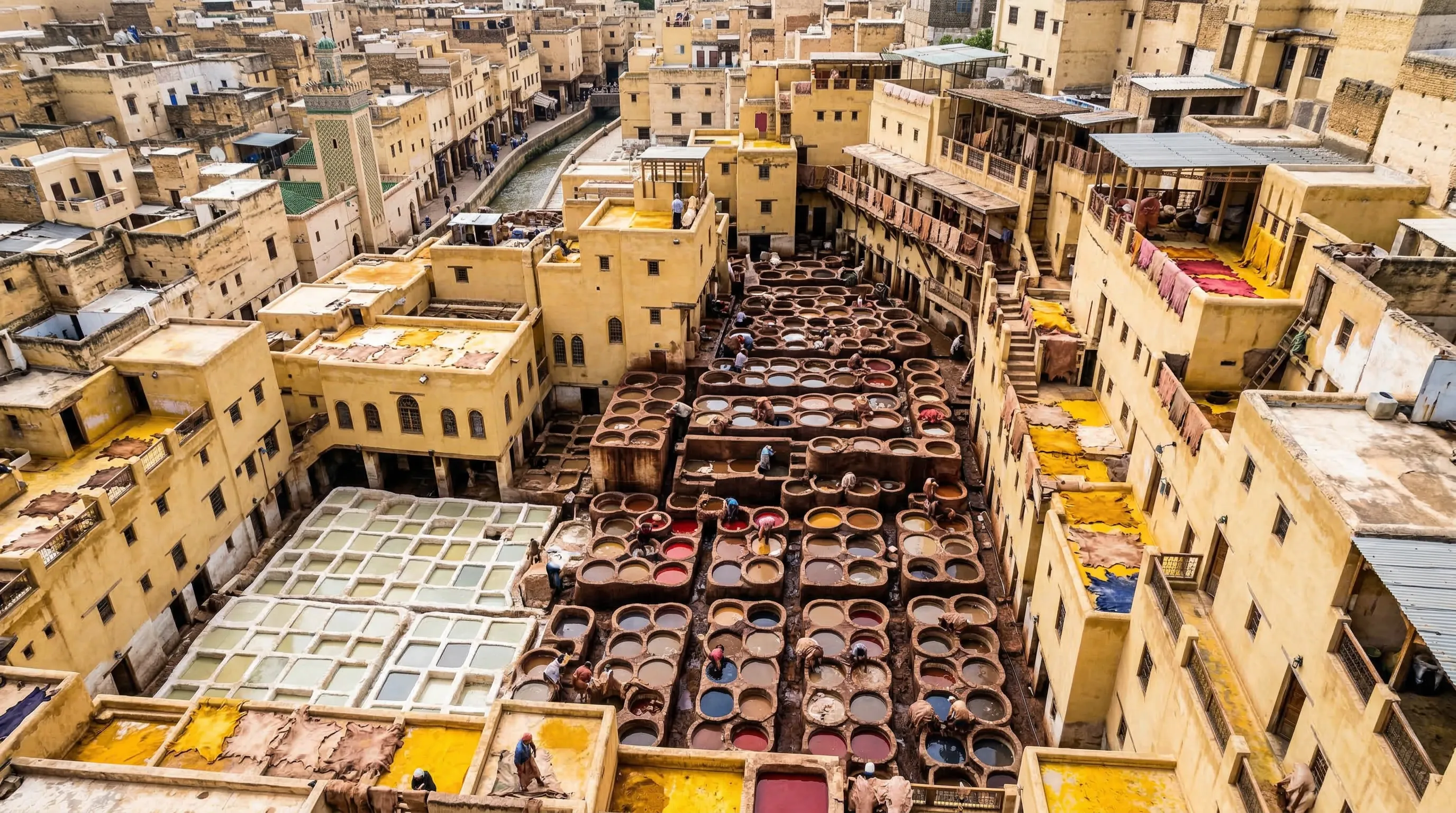
Complexe Sportif de Fes
Fes
MAS Fes, Wydad Fes
Located in Morocco's spiritual capital, this modern complex sits in contrast to the ancient medina nearby. Fes fans are known for their passion and intellectual approach to the beautiful game.
Getting There: Taxi from Fes train station (20 min). City bus routes 16 and 29 serve the stadium area.
Stade Saniat Rmel
Tetouan
Moghreb Tetouan
Nestled in the foothills of the Rif Mountains, Tetouan's stadium offers an intimate atmosphere. The city's Andalusian heritage infuses the fan culture with a distinctive character found nowhere else in Morocco.
Getting There: Walking distance from Tetouan city center. Take a grand taxi from Tangier (1 hour) for day trips.
Heroes of the Atlas Lions
Moroccan Football Legends
These are the players who have put Morocco on the world football map — from the 2022 World Cup heroes to the trailblazers who came before them.
Right-Back
Achraf Hakimi
Real Madrid, Borussia Dortmund, Inter Milan, Paris Saint-Germain
Key player in Morocco's 2022 World Cup semi-final run. One of the best full-backs in the world, known for his blistering pace and attacking prowess.
Winger / Attacking Midfielder
Hakim Ziyech
Ajax, Chelsea, Galatasaray
The creative maestro of Moroccan football. His left foot is considered one of the most gifted in world football, capable of delivering devastating crosses and long-range strikes.
Goalkeeper
Yassine Bounou (Bono)
Girona, Sevilla, Al-Hilal
Hero of the 2022 World Cup with sensational saves against Spain and Portugal. Winner of the 2023 UEFA Europa League with Sevilla, cementing his status as a world-class goalkeeper.
Winger
Sofiane Boufal
Lille, Southampton, Celta Vigo, Al-Rayyan
Known for his mesmerizing dribbling skills. His iconic celebration dancing with his mother after Morocco's historic World Cup win over Portugal became one of the tournament's defining images.
Left-Back / Right-Back
Noussair Mazraoui
Ajax, Bayern Munich, Manchester United
A versatile and technically gifted defender who can play on either flank. Mazraoui was instrumental in Morocco's defensive solidity during the 2022 World Cup.
Midfielder (Historic)
Azzedine Oughahi
FAR Rabat, French league clubs
A pioneer of Moroccan football who helped establish the national team's reputation in the 1970s and 1980s. Oughahi represents the golden era that laid the foundation for today's success.
Attacking Midfielder
Mustapha Hadji
Sporting CP, Deportivo La Coruna, Coventry City, Aston Villa
African Footballer of the Year 1998. A magician on the pitch, Hadji was Morocco's creative heartbeat during the late 1990s and early 2000s, inspiring a generation of Moroccan players.
Continental Glory
Africa Cup of Nations
Morocco won the Africa Cup of Nations (AFCON) in 1976 on home soil and has been a consistent contender ever since, reaching the final in 2004 and the quarter-finals multiple times. With the current golden generation of talent playing at Europe's biggest clubs, Morocco is among the heavy favorites for every AFCON tournament.
For fans traveling to Morocco, AFCON qualifying matches are a treat. The Atlas Lions typically play home qualifiers in Rabat or Casablanca, and the atmosphere is electric. Expect sold-out stadiums, passionate chanting, and an incredible display of national pride. International match days are unofficial holidays — the entire country stops to watch.
Morocco has also hosted the AFCON tournament (1988 and 2025), and the country's growing infrastructure makes it a leading candidate for future editions. If you time your visit with an AFCON qualifier or a friendly international, you will experience Moroccan football patriotism at its peak.
1976
AFCON Winners
20+
AFCON Appearances
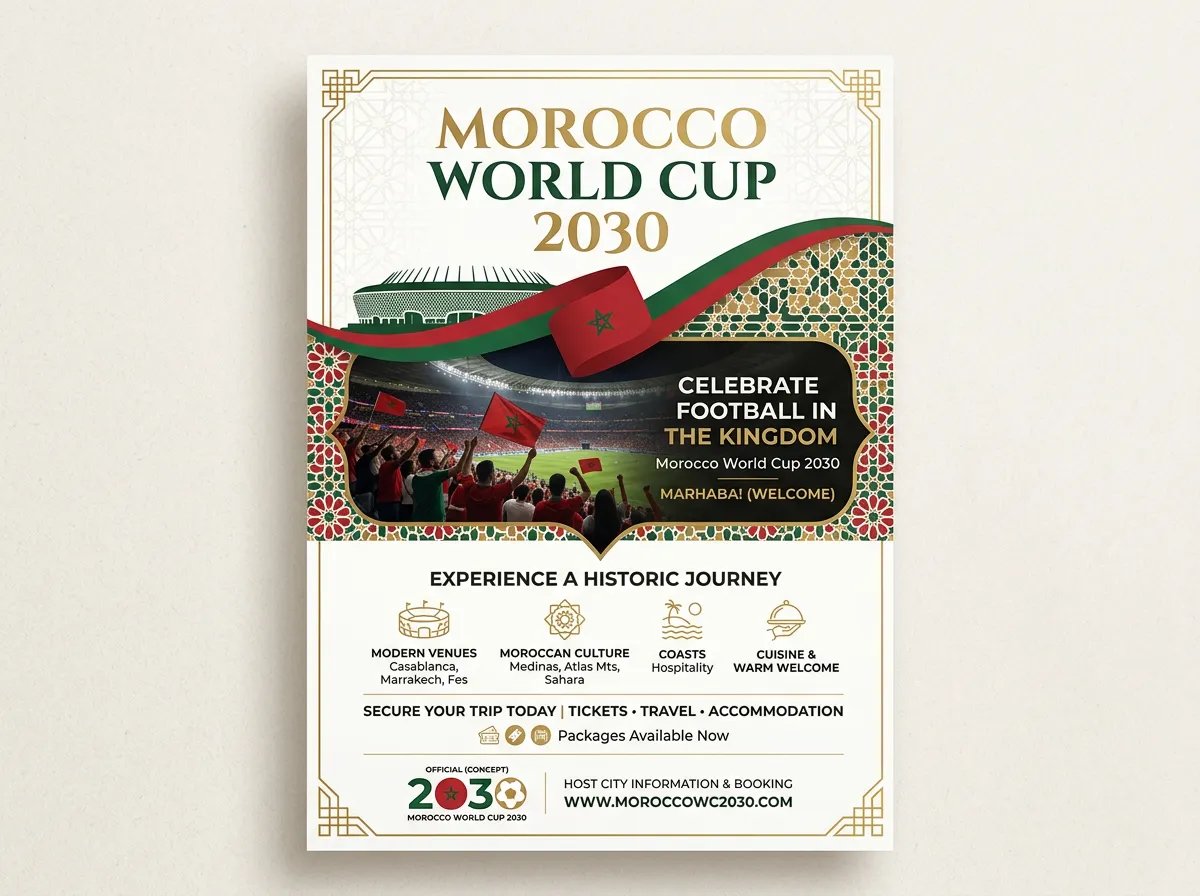
“Morocco does not just play football. Morocco lives football.”
— Walid Regragui, Head Coach
The Soul of the Game
Street Football Culture
Long before the World Cup and the gleaming stadiums, Moroccan football was born in the streets. Walk through any neighborhood in Casablanca, Fes, or Marrakech and you will hear the familiar sound of a ball bouncing off ancient walls. Children play barefoot in narrow derbs (alleyways), using sandals for goalposts and a rolled-up sock for a ball when nothing else is available.
This street football culture is where Morocco's world-class talent is forged. Players like Achraf Hakimi and Hakim Ziyech honed their close control and quick thinking not on manicured academy pitches, but in tight spaces where creativity and technical skill were the only currencies that mattered. As a tourist, stumbling upon a pickup game is one of Morocco's most genuine cultural moments — join in and you will be welcomed with open arms.
Medina KickaboutsBeach FootballNeighborhood Derbies
Plan Your Football Trip to Morocco
Whether you are here for a Botola Pro derby, an Atlas Lions international, or the 2030 World Cup, CityGuide has everything you need to plan the perfect football trip.