Is Moroccan Food Spicy?
Quick answer
Moroccan food is richly spiced but not chilli-hot. It’s aromatic and warm — cumin, cinnamon, ginger, saffron and the ras el hanout blend — rather than fiery. Heat usually comes from a side of harissa you add yourself.
“Spicy” means two different things, and that trips up a lot of first-time visitors. Moroccan cuisine is one of the most spiced in the world — but “spiced” here means fragrant and complex, not tongue-burning. If you don’t like chilli heat, you’ll still be very comfortable.
Here’s what the flavours are actually like, and how to dial the heat up if you want it.
Spiced, not hot
The backbone of Moroccan cooking is warm, aromatic spices: cumin, coriander, cinnamon, ginger, turmeric, paprika, saffron and the famous ras el hanout (a blend that can include a dozen or more spices). These build deep, layered flavour without significant chilli heat.
Classic dishes — chicken-and-preserved-lemon tagine, lamb with prunes, couscous, harira soup, pastilla — are savoury, sweet-savoury or tangy rather than spicy-hot.
Where the heat hides
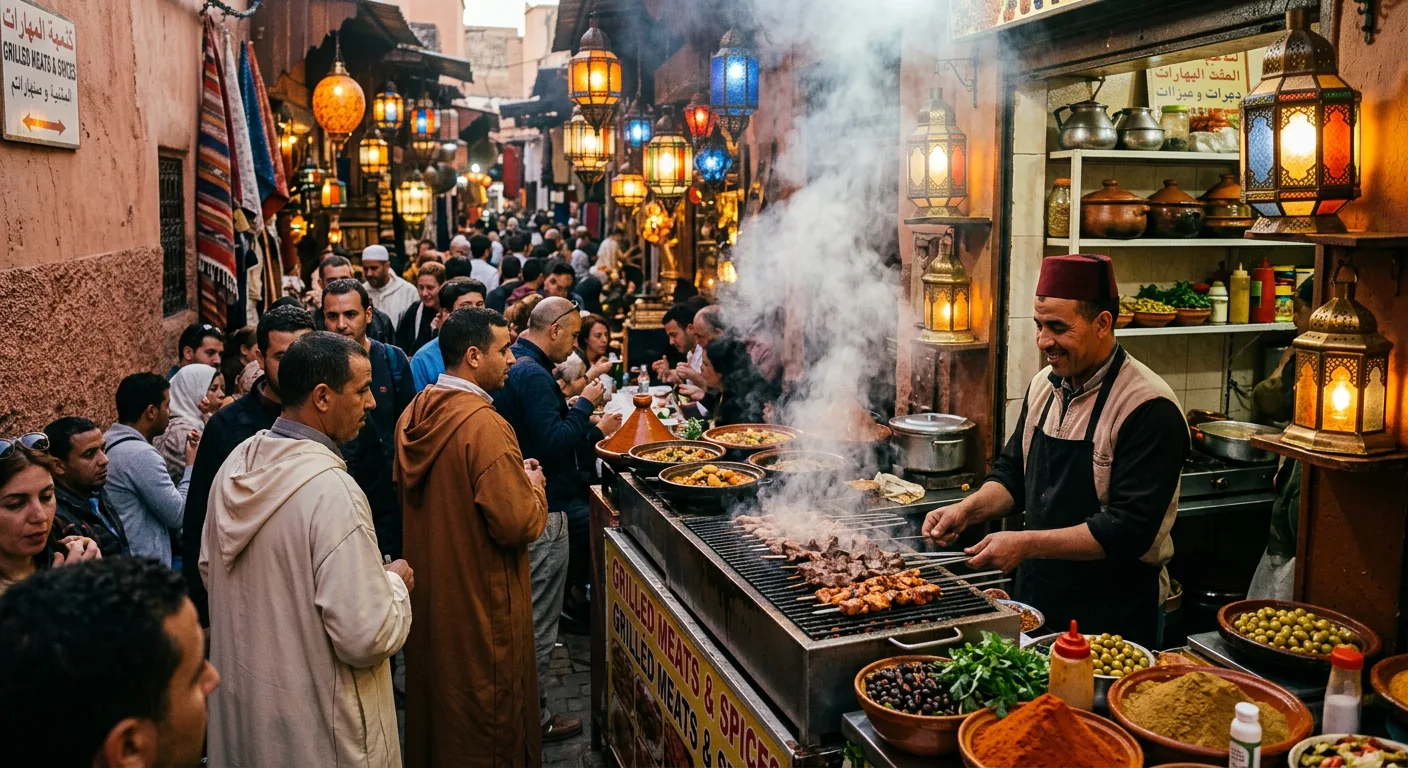
When Moroccan food is hot, it’s usually thanks to harissa — a fiery chilli paste — served on the side so you control the heat. Some grilled-meat and merguez-sausage dishes carry a gentle warmth, and regional or home cooking can be spicier than tourist restaurants.
If you love heat, ask for harissa (“harissa, afak”). If you’re heat-sensitive, you’ll rarely be caught out, but it’s fine to ask whether a dish is “hot/piquant.”
What to order
Start with a tagine (tomato-based vegetable, chicken-lemon-olive, or lamb-prune), couscous (traditionally Friday), harira soup, zaalouk (smoky aubergine dip) and fresh bread. For something sweeter, pastilla layers spiced poultry with cinnamon and icing sugar.
Mint tea — sweet, hot and ubiquitous — cools the palate and is part of every meal. A cooking class is a great way to learn the spice balance yourself.
Key takeaways
- Moroccan food is aromatic and warmly spiced, not chilli-hot.
- Key spices: cumin, cinnamon, ginger, saffron, ras el hanout.
- Heat comes mainly from harissa, served on the side.
- Safe for spice-sensitive eaters and kids; ask for harissa if you want heat.
Frequently asked questions
Is Moroccan food too spicy for kids?
Generally no — it’s aromatic rather than chilli-hot, so most tagines, couscous and breads are kid-friendly. Heat comes from harissa served separately.
What is ras el hanout?
A signature Moroccan spice blend — literally “head of the shop,” a mix of the merchant’s best spices, often a dozen or more, giving warmth and depth without strong heat.
How do I make Moroccan food spicier?
Ask for harissa, the chilli paste usually served on the side, and add it to taste.
Plan it with a local expert
Travel Morocco with Serenity Morocco Tours
Crafting extraordinary journeys through Morocco's timeless landscapes. 100% private journeys, handcrafted around you.
 from $2,011
Sahara Desert Luxury Expedition
 from $2,054
Essential Morocco: Imperial Cities Circuit
 from $5,978
Sahara to Sea: Morocco Complete