Discovering...
Safety & Travel Advisory
Is Morocco Safe?
Complete 2026 Safety Guide
Crime statistics, scam awareness, city-by-city safety ratings, health tips, and emergency contacts. Everything you need for a worry-free Morocco trip.
The Short Answer: Yes, Morocco Is Safe for Tourists
"Is Morocco safe?" is one of the most searched travel safety questions online, and the answer is reassuring. Morocco welcomes over 16 million tourists annually and has invested heavily in tourism security. It is rated Level 2 ("Exercise Increased Caution") by the US State Department — the same level as France, Germany, the United Kingdom, and Spain.
Morocco's violent crime rate is low by global standards. Its homicide rate of 1.2 per 100,000 people is lower than the United States (6.3), comparable to Portugal (0.8), and well below the global average (6.1). The country has a dedicated Tourist Police force in major cities, a strong counter-terrorism apparatus, and a culture that values hospitality above almost everything else.
That said, Morocco is not without risks. Petty crime, scams targeting tourists, persistent touts, and cultural differences can make visitors uncomfortable if unprepared. This guide covers every safety dimension so you can travel with confidence and awareness.
Morocco Safety at a Glance
Key safety statistics and indicators for Morocco in 2026.
84th / 163
Global Peace Index Rank
Safer than USA (131st), Brazil, Turkey
Level 2
US State Dept Advisory
Exercise Increased Caution (same as France, UK)
16.3 Million
Tourist Arrivals (2025)
Record year, up from 14.5M in 2024
Low
Violent Crime Rate
Homicide rate 1.2 per 100K (US: 6.3)
Safety by Traveler Type
Every traveler has different concerns. Here is a tailored safety assessment for each type.
Solo Travelers
Generally SafeMorocco is a popular solo travel destination with well-established tourist infrastructure. Solo travelers are common in Marrakech, Fes, Essaouira, and Chefchaouen. The main challenges are persistent touts and navigating medinas alone.
Share your itinerary with someone back home and check in regularly
Download offline maps (Google Maps works well in Morocco)
Stay in well-reviewed riads or hostels with social common areas
Join organized day tours for desert and mountain excursions
Learn basic French or Darija phrases for better interactions
Keep your phone charged and carry a portable battery pack
Women Travelers
Safe with PrecautionsWomen can and do travel Morocco safely, including solo. Verbal harassment (catcalling, unwanted attention) is the most common issue, particularly in busy medinas and less touristy areas. Physical harassment is rare. Moroccan women themselves deal with this daily, and it is a societal issue, not a tourist-specific one.
Dress modestly in conservative areas (shoulders and knees covered)
Wear a wedding ring, even a fake one, to reduce unwanted attention
Ignore catcalls completely; engagement encourages persistence
Use registered taxis (petit taxi) rather than walking alone at night
Choose female-friendly riads with women staff members
Consider a female guide for medina tours; many are available
Families with Children
Very SafeMorocco is exceptionally family-friendly. Moroccan culture reveres children, and your kids will receive warm attention and smiles everywhere. Restaurants are accommodating, riads often have family rooms, and the variety of experiences (beaches, desert, mountains, medinas) keeps children engaged.
Book riads with courtyards where children can play safely
Carry snacks and water, especially when exploring medinas
Use sunscreen and hats; the sun is intense, especially in summer
Choose family-friendly restaurants that serve mild tagines and couscous
The camel rides and desert camps are highlights for children
Keep children close in crowded souks; use a wrist strap for toddlers
LGBTQ+ Travelers
Caution RequiredSame-sex relations are criminalized in Morocco under Article 489 of the penal code, with penalties of up to 3 years imprisonment and fines from 1,200 MAD. While enforcement against foreign tourists is extremely rare, this law creates a hostile legal environment. That said, many LGBTQ+ travelers visit Morocco without incident by exercising discretion.
Avoid all public displays of affection with same-sex partners
Be cautious with dating apps; scams and entrapment have been reported
Choose accommodations in Marrakech or Essaouira, which are more cosmopolitan
Book a private riad rather than shared accommodation for privacy
Do not discuss your sexuality with strangers or casual acquaintances
Carry your embassy contact information at all times
Elderly Travelers
Generally SafeMorocco respects its elders deeply, and older travelers are treated with great courtesy. The main challenges are physical: medina streets are uneven and hilly, summer heat can be extreme, and accessibility infrastructure is limited. With proper planning, Morocco is a rewarding destination for older travelers.
Choose ground-floor riad rooms to avoid steep stairs
Visit in spring (March-May) or autumn (September-November) for mild weather
Hire private guides and drivers rather than navigating independently
Carry any prescription medications in original packaging with a doctor letter
Ensure travel insurance covers pre-existing conditions and medical evacuation
Private hospitals in Marrakech and Casablanca offer good emergency care
Common Scams & How to Avoid Them
Being aware of these common tactics is the best defense. None are dangerous, but they can cost you money and sour your experience.
The Fake Guide
Very CommonA friendly local offers to show you a "shortcut" or help you find your riad, then leads you to a carpet shop or demands payment for guiding. They sometimes claim your destination is closed today.
Prevention: Only use licensed guides (they carry ID cards). Politely decline help from strangers offering directions. Use Google Maps offline. If someone insists, firmly say "La, shukran" (No, thank you).
Taxi Fare Inflation
Very CommonDrivers refuse to use the meter or claim it is broken. They then charge 3-5x the real fare. Grand taxis may pick up extra passengers and still charge you the full amount.
Prevention: Always agree on the price before getting in. Petit taxis in cities should use the meter (insist or find another). Ask your hotel for typical fares. Use the InDriver or Careem apps where available.
The Henna Trap
CommonA woman grabs your hand in Jemaa el-Fna or a busy tourist area and starts applying henna before you consent. When she finishes, she demands from 200-500 MAD for poor quality work that stains for weeks.
Prevention: Keep your hands in your pockets or crossed when walking through busy squares. If someone grabs your hand, pull away immediately and firmly say no. If henna is applied without consent, you are not obligated to pay.
Carpet Shop Pressure
CommonYou are led to a carpet shop (often by a "friend" or fake guide) where a charming host serves tea, shows dozens of carpets, and creates intense pressure to buy. Quoted prices may be 5-10x the actual value.
Prevention: Never feel obligated to buy. Drinking tea is not a contract. If interested in carpets, research fair prices beforehand. A good Berber rug starts from 800 MAD for small, from 2,000 MAD for medium. Walk away if pressured.
The "Closed Mosque" Redirect
CommonNear popular attractions, someone tells you the mosque, garden, or market is "closed today" or "closed for prayer" and offers to take you somewhere "better" (their friend's shop).
Prevention: Verify information yourself. Check opening hours in advance. Walk to the entrance and check. Tourist attractions in Morocco are almost never closed unexpectedly.
Monkey and Snake Photo Scam
Common in MarrakechIn Jemaa el-Fna, handlers place monkeys or snakes on you without permission and then demand from 100-200 MAD for a photo. The animals are often poorly treated.
Prevention: Do not make eye contact with animal handlers. If an animal is placed on you, calmly remove it and walk away. You do not owe money for unsolicited contact. Consider ethical tourism and avoid supporting this practice.
Restaurant Overcharging
OccasionalTourist-facing restaurants in Jemaa el-Fna and some medina areas may present inflated bills with items you did not order, or charge different prices from the menu.
Prevention: Always check the menu prices before ordering. Confirm the total before paying. Avoid restaurants with aggressive touts at the door. Ask your riad for restaurant recommendations.
Money Exchange Tricks
OccasionalUnofficial money changers offer great rates but use sleight of hand to shortchange you, or mix in lower-denomination notes. Some count the money so fast you cannot follow.
Prevention: Only exchange money at banks, official exchange bureaus (bureau de change), or ATMs. Count money carefully before leaving the counter. ATMs offer the best rates.
Safety by City
Each Moroccan city has a different safety profile. Here are detailed ratings for the six most visited destinations.

Marrakech
Safe for tourists
Morocco's most visited city has heavy tourist police presence and well-lit main areas. The biggest risks are petty scams and overcharging, not violent crime. The medina can be disorienting but is generally safe during the day.
Safety Highlights
Dedicated Tourist Police station in Jemaa el-Fna
Well-lit main thoroughfares and busy squares
Thousands of tourists daily create a safe atmosphere
Excellent riad accommodations in the medina
Things to Watch
Jemaa el-Fna attracts touts, scammers, and pickpockets
Dark medina alleyways should be avoided after midnight
Motorcycle theft (snatching bags) reported on quiet streets
Fake guides are extremely persistent near major sights
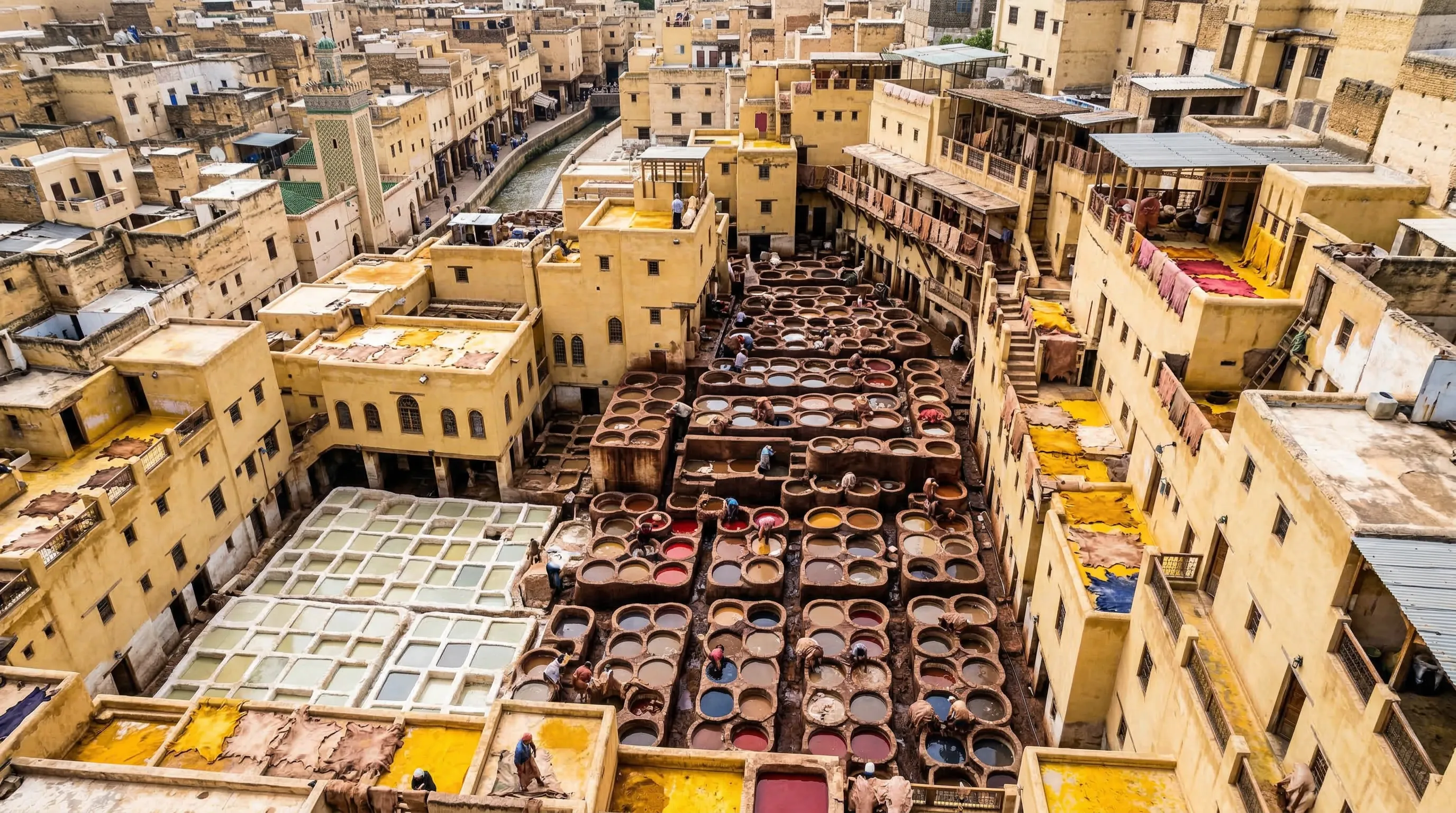
Fes
Safe for tourists
The world's largest car-free urban area is surprisingly safe. The medina is confusing to navigate but locals are generally helpful. Fes sees fewer tourists than Marrakech, so scam pressure is lower. The tanneries area has the most aggressive touts.
Safety Highlights
Lower tourist numbers mean fewer scammers than Marrakech
Medina residents are generally welcoming and helpful
Good police presence near Bab Bou Jeloud and main routes
Well-established network of licensed guides
Things to Watch
Very easy to get lost in the medina (1,000+ dead ends)
Tannery area touts are extremely persistent
Some narrow alleys feel isolated, especially at night
Unofficial guides may approach aggressively near gates
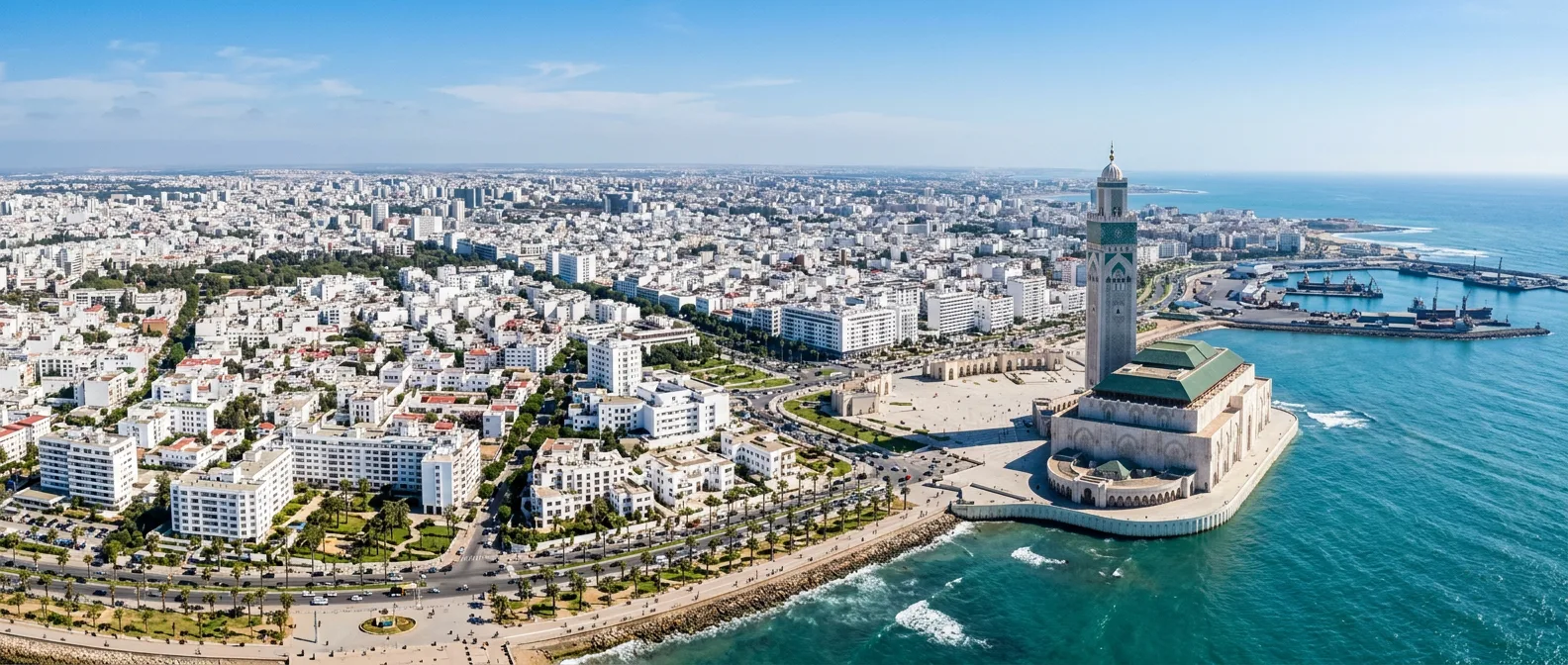
Casablanca
Safe with awareness
Morocco's largest city and economic capital has a different feel from tourist cities. It is a working city first and a tourist destination second. Most areas visited by tourists (Hassan II Mosque, Corniche, Habous Quarter) are safe, but it has more urban crime than Marrakech or Fes.
Safety Highlights
Hassan II Mosque area is heavily policed and very safe
Corniche beachfront is busy and well-lit
Modern malls and restaurants have good security
Reliable tram system for safe city transport
Things to Watch
Avoid Derb Sultan, Sidi Moumen, and Hay Mohammadi areas at night
Higher petty crime rate than other Moroccan tourist cities
Less tourist infrastructure means fewer English speakers to help
Central train station area can feel unsafe after dark
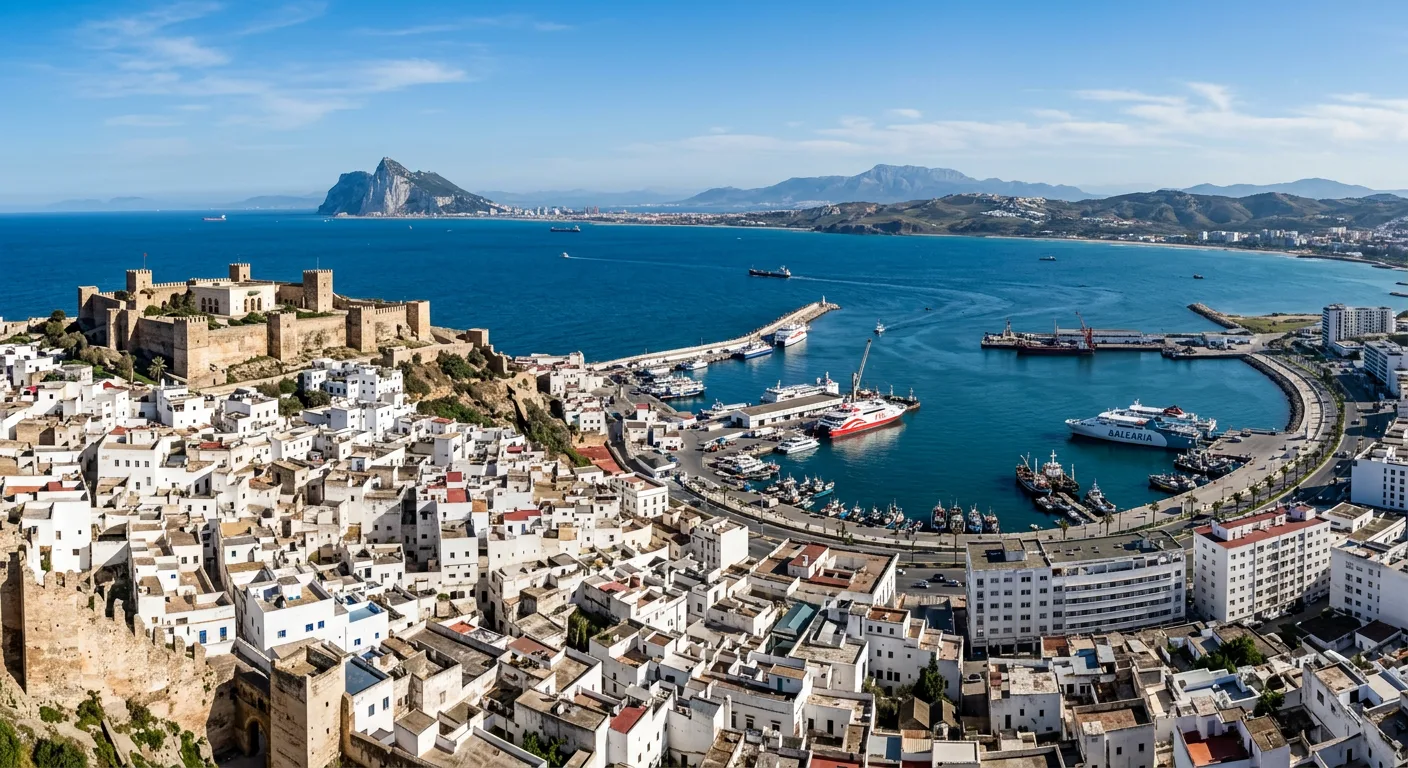
Tangier
Safe for tourists
Tangier has undergone a major transformation in the past decade. The new port area, Corniche, and renovated medina are all safe and pleasant. Its reputation from decades past as a dodgy port city is outdated. The massive investment in infrastructure has made it one of Morocco's safest cities.
Safety Highlights
Major renovation and cleanup in the past decade
New Tangier-Ville port area is modern and well-policed
Corniche beachfront is busy, safe, and family-friendly
Medina is compact and relatively easy to navigate
Things to Watch
Some areas near the old port remain run-down
Drug dealers may approach tourists in certain medina areas
Beach vendors can be pushy during summer months
Ferry port area has pickpocket activity
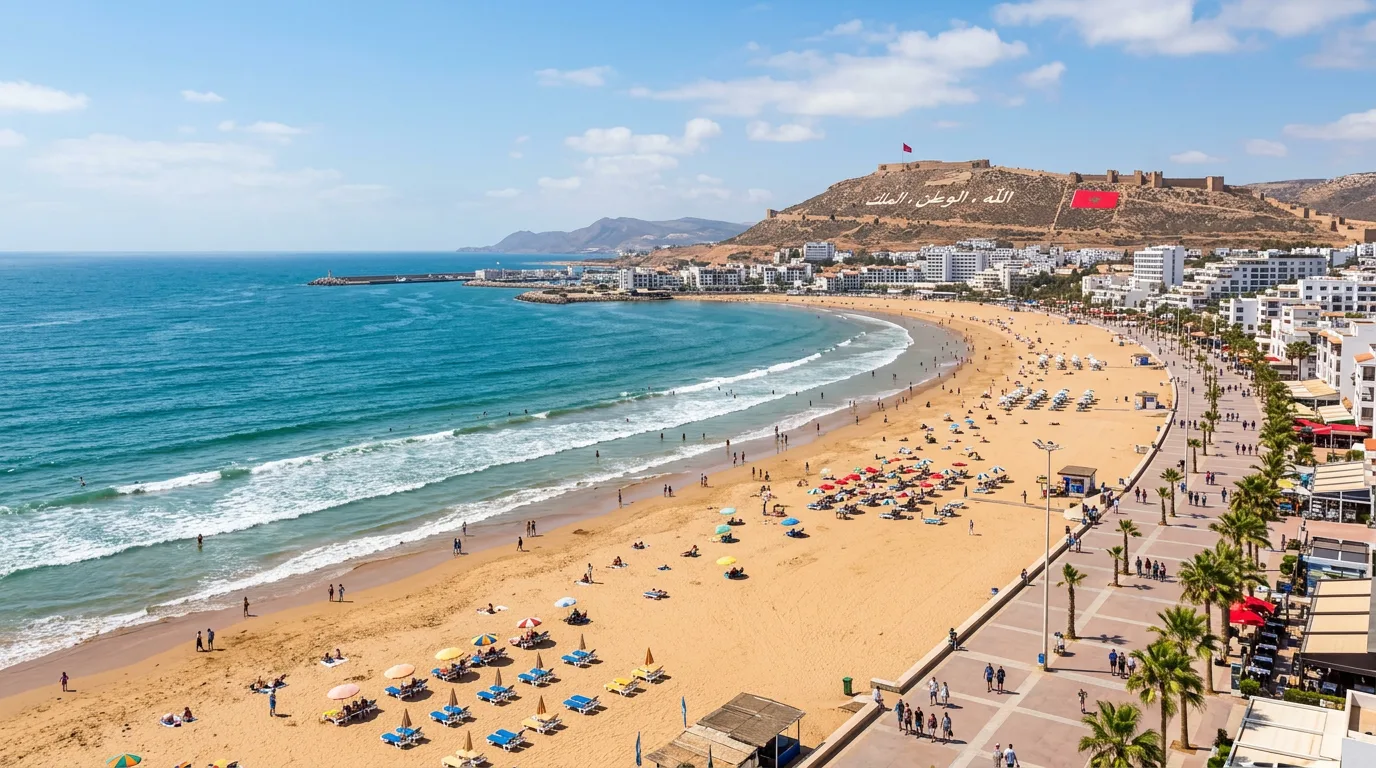
Agadir
Very safe
Rebuilt after the 1960 earthquake as a modern resort city, Agadir is arguably Morocco's safest tourist destination. Wide boulevards, well-lit beachfront, resort hotels, and a relaxed atmosphere make it feel more like a European beach town than a traditional Moroccan city.
Safety Highlights
Modern grid layout is easy to navigate
Beachfront promenade is well-lit, policed, and busy until late
Resort hotels provide a secure base for families
Very low incidence of scams compared to Marrakech or Fes
Things to Watch
Beach vendors can be persistent but are not dangerous
Some nightlife areas attract petty crime after midnight
Jet ski and water sports operators may overcharge
Less culturally authentic, which some travelers find disappointing

Chefchaouen
Very safe
The Blue City is one of the safest places in Morocco. Small, walkable, and incredibly photogenic, it has a relaxed mountain atmosphere. Crime is very low, and the local community is accustomed to tourists. The biggest danger here is tripping on the uneven blue-painted steps.
Safety Highlights
Very low crime rate; feels like a small mountain village
Compact medina is impossible to get seriously lost in
Welcoming, relaxed local community
Perfect for solo travelers and women travelers
Things to Watch
Cannabis is openly offered to tourists (possession is illegal)
Steep hills and uneven steps require good footwear
Limited medical facilities for emergencies
Can be cold and rainy in winter; mountain weather changes fast
Political Stability & Terrorism Assessment
Morocco's security situation assessed across four key dimensions.
Political Stability
StableMorocco is a constitutional monarchy under King Mohammed VI. The political system is stable and has weathered regional upheavals (Arab Spring, Libya, etc.) without major disruption. Morocco held peaceful parliamentary elections in 2021. The country has strong institutions and a professional security apparatus.
Terrorism Risk
LowMorocco has not experienced a major terrorist attack since the Marrakech cafe bombing in 2011. The BCIJ (Bureau Central d'Investigations Judiciaires) has dismantled hundreds of terror cells pre-emptively. Morocco is a key counter-terrorism partner for Western nations and maintains strong intelligence capabilities. Tourist areas have visible security.
Civil Unrest
LowProtests occur occasionally, usually related to economic grievances. They are typically peaceful, localized, and focused on government buildings. Tourist areas are almost never affected. The last significant protests were in Al Hoceima (Rif region) in 2016-2017.
Border Security
ControlledMorocco's borders with Algeria are closed. The southern border (Western Sahara) is controlled by Morocco with military presence. The northern border with Spain (Ceuta and Melilla) is heavily monitored. Entry points (airports, ports) have modern security screening.
Areas to Avoid or Exercise Caution
Most of Morocco is safe for tourists. These are the specific areas where extra caution is warranted.
Rif Mountains (Ketama Area)
Exercise CautionThe Ketama area in the Rif Mountains is Morocco's primary cannabis cultivation region. Travelers driving through may be stopped by locals trying to sell cannabis. Roadside ambushes and intimidation have been reported. The road between Chefchaouen and Al Hoceima passes through this zone.
Our Advice: Drive through without stopping. Keep doors locked and windows up. Do not accept anything from roadside sellers. Purchasing cannabis is illegal and can result in imprisonment.
Algeria Border Region
AvoidThe Morocco-Algeria border has been closed since 1994. The eastern border region is remote, poorly served, and has military presence. There is no reason for tourists to visit this area, and some Western governments advise against travel near the border.
Our Advice: Stay well away from the Algerian border. If traveling to eastern Morocco (Oujda, Figuig), stick to main roads and cities.
Western Sahara (South of Guelmim)
Check AdvisoriesThe Western Sahara is a disputed territory administered by Morocco. The area is generally safe for tourists (Dakhla is a popular surfing destination), but some governments advise checking current conditions. Military checkpoints are common.
Our Advice: Check your government's latest travel advisory before visiting. Carry your passport at all times. Dakhla and Laayoune are the safest towns. Stay on main roads.
Casablanca Outer Neighborhoods (Night)
Exercise CautionNeighborhoods including Derb Sultan, Sidi Moumen, Hay Mohammadi, and parts of Ain Sebaa are working-class areas with higher crime rates. They offer nothing for tourists and are best avoided, especially at night.
Our Advice: Stick to the main tourist areas: Hassan II Mosque, Corniche, Habous Quarter, central Maarif district. Use taxis to move between areas at night.
Deserted Medina Alleyways (After Midnight)
Exercise CautionThe maze-like medinas of Marrakech and Fes are generally safe during the day and evening. However, deserted narrow alleyways after midnight can pose risks. Muggings, though rare, are most likely in these conditions.
Our Advice: Return to your riad by 11pm if walking through the medina. Use a taxi for late returns. Save your riad's location on your phone. Many riads offer pickup from a nearby landmark.
Health & Medical Safety
Morocco has no major health risks for travelers. Here is what to know about common health concerns.
Tap Water
Risk Level: ModerateTap water in major cities is treated and technically safe, but the different mineral content can upset tourist stomachs. In rural areas, water quality is less reliable.
Prevention: Drink bottled water (from 3 MAD at shops, from 10 MAD at restaurants). Check that seals are intact. Use bottled water for brushing teeth in rural areas. Ice in tourist restaurants is generally safe.
Food Safety
Risk Level: Low-ModerateStreet food is generally safe if cooked fresh in front of you. The main risks are salads washed in tap water, undercooked meat, and food left sitting out in heat. Most tourists eat in Morocco without any issues.
Prevention: Eat at busy stalls where food turnover is high. Choose freshly cooked items. Avoid pre-prepared salads at street stalls. Peel fruits yourself. Tagines and grilled meats are almost always safe as they are cooked thoroughly.
Sun and Heat
Risk Level: High (Summer)Summer temperatures in Marrakech, Fes, and the desert regularly exceed 40 degrees Celsius. Heatstroke and dehydration are real risks, especially during medina walks where shade is limited and airflow is poor.
Prevention: Carry at least 2 liters of water per person. Wear a hat and sunscreen (SPF 50). Explore medinas in early morning or late afternoon. Rest during 12pm-3pm in summer. Desert trips should include air-conditioned transport.
Pharmacies and Medication
Risk Level: LowMorocco has an excellent network of pharmacies (green cross signs). Pharmacists are well-trained and can recommend treatments for common ailments. Many medications available only by prescription elsewhere are sold over the counter in Morocco.
Prevention: Bring essential medications from home in original packaging. Carry a doctor's letter for controlled substances. Pharmacies are on every main street and many are open late or 24 hours in cities.
Insect-Borne Disease
Risk Level: Very LowMorocco is malaria-free. There is no risk of dengue, Zika, or yellow fever. Sandfly bites in desert areas can cause leishmaniasis, but this is extremely rare in tourist areas.
Prevention: Use insect repellent in desert areas and during evening hours in rural regions. Sandflies are most active at dusk. Bed nets are not necessary in hotels and riads.
COVID-19 (2026)
Risk Level: LowMorocco has lifted all COVID-related entry requirements. No vaccination proof, negative test, or health declaration is required for entry as of 2026. The healthcare system managed the pandemic effectively with high vaccination rates.
Prevention: Carry a mask for your comfort in crowded spaces. Pharmacies sell rapid tests from 80 MAD if needed. Private clinics can provide PCR tests from 400 MAD. Travel insurance covering COVID-related illness is advisable.
Seasonal Safety Considerations
Morocco's safety profile changes with the seasons. Here is what to expect throughout the year.
Spring (March-May)
Safety: ExcellentThe best and safest time to visit. Mild temperatures (20-28 degrees Celsius), minimal rain, and all regions are accessible. Roads are in good condition and daylight hours are long.
Key Risks: Occasional sandstorms in the south during March. Allergies may flare in areas with blooming flowers. Easter period is busy, so prices are higher.
Summer (June-August)
Safety: Good (Heat Caution)Safe but extremely hot inland. Marrakech and Fes regularly exceed 40 degrees Celsius. Coastal cities (Essaouira, Agadir) are comfortable at 25-30 degrees. The desert is dangerously hot and multi-day treks should be avoided.
Key Risks: Heatstroke and dehydration are real dangers. Wildfires occur in northern forests (Rif Mountains). Jellyfish appear on Mediterranean beaches in August. Crowded beaches in Agadir and Tangier.
Autumn (September-November)
Safety: Good (Flood Caution)Pleasant temperatures return. October and November bring the first rains after summer, which is generally welcome. However, flash floods are a genuine safety concern in desert regions and mountain valleys.
Key Risks: Flash floods kill several people annually in Morocco. Desert wadis (dry riverbeds) can fill in minutes. Mountain roads may be blocked by landslides. November can bring heavy rain to coastal areas.
Winter (December-February)
Safety: Good (Cold in Mountains)Mild in coastal and low-lying cities (15-20 degrees Celsius). Cold in the mountains with snowfall in the High Atlas. The Sahara is cold at night (near freezing). Fewer tourists mean less scam pressure but shorter daylight hours.
Key Risks: Mountain passes (Tizi n'Tichka, Tizi n'Test) may close due to snow. Desert nights are very cold. Rain can make medina streets slippery. Some mountain villages may be temporarily inaccessible.
Emergency Contacts
Save these numbers in your phone before arriving in Morocco.
For life-threatening emergencies, call 15 (SAMU) or 19 (Police). Your embassy can assist with passport loss, arrest, or serious emergencies.
Service
Number
Note
Police (Urban)
19
Available in all cities, some English spoken
Gendarmerie Royale (Rural)
177
For rural areas and highways
Ambulance / SAMU
15
Emergency medical services
Fire Department
15
Fire and rescue services
Tourist Police (Marrakech)
+212 524 384 601
English and French spoken
Tourist Police (Fes)
+212 535 622 870
Near Bab Bou Jeloud
SOS Doctors (Marrakech)
+212 524 404 040
English-speaking doctors, house calls
Polyclinique du Sud (Marrakech)
+212 524 447 999
Private hospital, 24hr emergency
Travel Insurance Recommendations
Travel insurance is not mandatory for Morocco entry but is strongly recommended. Here is what your policy should cover.
Medical Coverage
Ensure minimum coverage of 50,000 EUR for medical expenses. Private clinic consultations start from 500 MAD. A night in a private hospital can cost from 3,000 MAD. Emergency dental treatment starts from 300 MAD.
Medical Evacuation
Critical for serious conditions. Morocco's best hospitals are in Casablanca and Rabat, but complex surgeries may require evacuation to Europe. Air ambulance to Spain costs from 15,000 EUR without insurance.
Adventure Activities
Standard policies may not cover quad biking, camel trekking, surfing, sandboarding, or mountain trekking above 2,500m. If you plan adventure activities, verify your policy explicitly covers them or add a rider.
Trip Cancellation
Covers non-refundable costs if you must cancel. Useful given Morocco's occasional flight disruptions, especially in winter. Look for "cancel for any reason" policies for maximum flexibility.
Practical Tips for Staying Safe
Common-sense tips organized by category to help you travel confidently in Morocco.
Money and Valuables
Use ATMs inside banks, not standalone street ATMs
Carry small bills for taxis and tips; avoid flashing large notes
Keep your passport in your riad safe; carry a photocopy
Use a money belt or hidden pouch in crowded medinas
Do not wear expensive jewelry or watches in markets
Divide your cash between multiple locations on your person
Transportation
Use only official petit taxis (color-coded by city) or ride apps
Agree on taxi fares before departing or insist on the meter
Avoid driving in medinas; park outside and walk in
Take CTM or Supratours buses between cities (safest options)
Train travel (ONCF) is safe, reliable, and comfortable
For grand taxis, agree on whether the price is per person or whole car
Communication
Buy a local SIM card at the airport (Maroc Telecom, Orange, Inwi) from 30 MAD
Download offline Google Maps for all cities before your trip
Learn basic French phrases; it opens more doors than English
Save your riad address in Arabic on your phone for taxi drivers
Share live location with trusted contacts when exploring alone
WhatsApp is used universally in Morocco; exchange numbers with guides
Behavior and Dress
Dress modestly in medinas and conservative areas (cover shoulders and knees)
Ask permission before photographing people, especially women
Remove shoes when entering mosques (non-Muslims cannot enter most)
Use your right hand for greetings and eating (left hand is considered unclean)
Do not drink alcohol in public outside licensed establishments
Respect Ramadan; avoid eating, drinking, or smoking in public during fasting hours
Frequently Asked Questions
Is Morocco safe for tourists in 2026?
Yes, Morocco is generally safe for tourists in 2026. It is rated Level 2 ("Exercise Increased Caution") by the US State Department, the same level as France, Germany, and the UK. Morocco has invested heavily in tourism security with dedicated Tourist Police in major cities. Over 16 million tourists visited in 2025 without major incident. The main concerns are petty crime and scams, not violent crime.
Is Morocco safe for solo female travelers?
Morocco is generally safe for solo female travelers with precautions. Verbal harassment (catcalling) is the most common issue but rarely escalates to physical contact. Dress modestly in conservative areas, use registered taxis at night, stay in well-reviewed accommodations, and consider hiring a female guide for medina tours. Many women travel Morocco solo every year and have wonderful, enriching experiences.
What are the most common scams in Morocco?
The most common scams include fake guides leading you to carpet shops for commission, inflated taxi fares (always agree on price beforehand), the henna trap (unsolicited henna then demanding payment), carpet shop pressure sales with prices 5-10x above value, and the "your destination is closed today" redirect. Being aware of these makes them easy to avoid. None involve violence or danger.
Is it safe to drink tap water in Morocco?
Tap water in Morocco is treated and technically potable in major cities, but it is not recommended for tourists due to different mineral content that can cause stomach upset. Drink bottled water (from 3 MAD at shops, from 10 MAD at restaurants). Always check that bottle seals are intact. Ice in tourist restaurants is generally made from purified water and is safe.
Are there areas to avoid in Morocco?
Most of Morocco is safe. Exercise extra caution in the Rif Mountains around Ketama (cannabis cultivation area), remote border areas near Algeria, certain Casablanca neighborhoods at night (Derb Sultan, Sidi Moumen), and deserted medina alleyways after midnight. The Western Sahara is generally safe but check current advisories. All major tourist cities and attractions are safe during normal visiting hours.
Is Morocco safe for LGBTQ+ travelers?
Same-sex relations are illegal in Morocco under Article 489 of the penal code, with penalties of up to 3 years imprisonment. While enforcement against foreign tourists is extremely rare, the legal environment is hostile. Exercise complete discretion: avoid public displays of affection, be cautious with dating apps, and choose accommodations in cosmopolitan cities like Marrakech or Essaouira. Many LGBTQ+ travelers visit Morocco without incident.
What emergency numbers should I know in Morocco?
The key emergency numbers are: Police 19 (urban areas), Gendarmerie Royale 177 (rural areas and highways), and SAMU/Ambulance 15 for medical emergencies. Tourist Police are available in Marrakech, Fes, Casablanca, and other major cities with English and French speakers. Save your embassy's emergency number and your travel insurance assistance line in your phone before arrival.
Do I need travel insurance for Morocco?
Travel insurance is not mandatory for Morocco entry but is strongly recommended. Private clinic consultations start from 500 MAD, and a hospital stay can cost from 3,000 MAD per night. Ensure your policy covers at least 50,000 EUR in medical expenses and includes emergency medical evacuation, as serious conditions may require transfer to Europe. If you plan adventure activities (desert quad biking, mountain trekking), verify they are explicitly covered.
Continue Exploring Morocco
Morocco Travel Tips
Essential tips for first-time visitors covering money, transport, culture, and packing.
Read moreMarrakech City Guide
Complete guide to Morocco's most popular city with neighborhood details and local tips.
Read moreMorocco Packing List
Season-specific packing guide to ensure you are prepared for Morocco's diverse climate.
Read more