Two Millennia of Jewish Life in Morocco
A story of coexistence spanning more than two thousand years, unique in the Arab and Muslim world.
Jews have lived in Morocco for over 2,000 years, making the Moroccan Jewish community one of the oldest and most deeply rooted in the world. Archaeological evidence suggests Jewish settlements in the region from as early as the 2nd century BCE, possibly dating back to the destruction of the First Temple in Jerusalem in 586 BCE. Some scholars believe that Phoenician and Jewish traders arrived together on Morocco's shores, establishing communities along the Atlantic coast and in the interior long before the arrival of Islam.
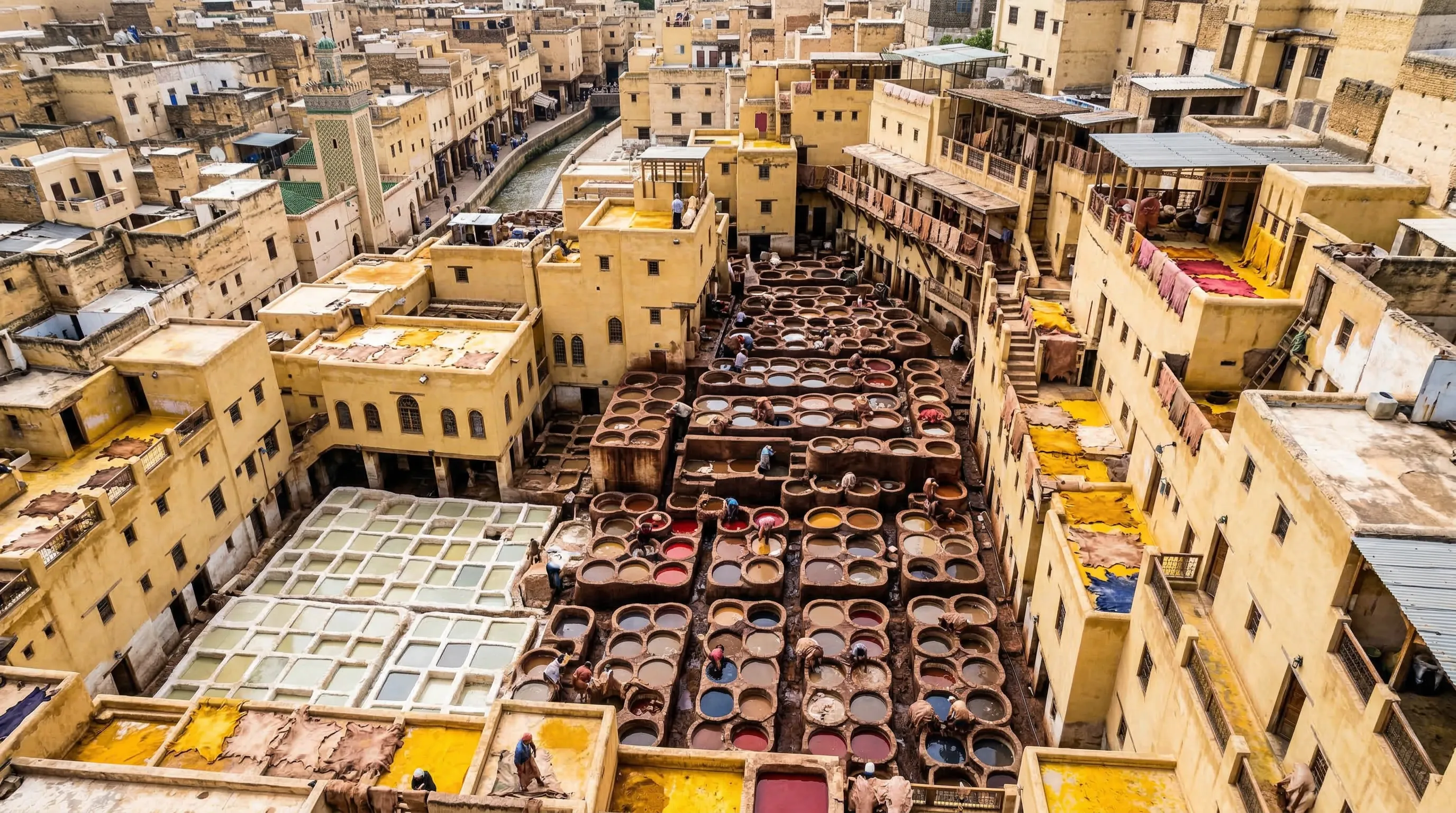
The golden age of Moroccan Jewry flourished under the great Berber and Arab dynasties. Jewish scholars, physicians, merchants, and diplomats played vital roles in the courts of the Almoravids, Marinids, and Saadians. The mellah districts — named after the Arabic word for salt — were established starting in 1438 in Fes as protected quarters where Jews could live, worship, and conduct business under royal protection. While the mellahs were sometimes restrictive, they also fostered vibrant, self-governing communities with their own synagogues, schools, courts, and markets.
The arrival of Sephardic Jews expelled from Spain in 1492 and Portugal in 1497 enriched Moroccan Jewish culture immeasurably. These "Megorashim" brought with them the intellectual, musical, and culinary traditions of Al-Andalus, merging with the indigenous "Toshavim" to create a uniquely vibrant community. The Sephardic influence is still visible in synagogue architecture, liturgical music, and family names across Morocco.
At its peak in the 1940s, Morocco's Jewish population numbered approximately 250,000 — the largest Jewish community in the Arab world. Following the creation of Israel in 1948 and Moroccan independence in 1956, the vast majority of Moroccan Jews emigrated — primarily to Israel, France, and Canada. Today, approximately 2,000-3,000 Jews remain in Morocco, primarily in Casablanca, but the community's heritage is carefully preserved and honored by the Moroccan state. King Mohammed VI has invested significantly in restoring synagogues, cemeteries, and Jewish quarters across the country, recognizing Jewish heritage as an integral part of Moroccan identity.