Discovering...
Desert Tours & Itineraries
Marrakech to Sahara Desert:
Complete Tour Guide 2026
From 1,500 MAD group tours to luxury private camps under the stars. Everything you need to plan the trip of a lifetime across the Atlas Mountains to the golden dunes of Erg Chebbi.
The Journey from Marrakech to the Sahara
The trip from Marrakech to the Sahara Desert is not just a transfer from A to B. It is one of the greatest road journeys in the world. In 560 kilometers, you cross the snow-capped High Atlas Mountains, walk through a UNESCO World Heritage kasbah, drive along the Road of a Thousand Kasbahs, thread between 300-meter canyon walls, and arrive at the edge of the largest desert on earth.
The destination is Erg Chebbi near Merzouga, where golden sand dunes rise up to 150 meters high. Here, you ride a camel into the desert, sleep under a sky with more stars than you have ever seen, and wake to a sunrise that paints the dunes in shades of gold, orange, and crimson.
Whether you choose a budget group tour from 1,500 MAD or a luxury private experience from 8,000 MAD, this guide covers everything: tour options, prices, route stops, desert camp types, what to pack, and when to go. Read on to plan the perfect Sahara adventure.
560 km
Marrakech to Merzouga
9-10 hrs
Driving time (one way)
2,260 m
Highest point (Tizi n'Tichka)
150 m
Tallest dunes (Erg Chebbi)
Tour Options: 2-Day, 3-Day & 4-Day Itineraries
Choose your ideal itinerary based on your time, budget, and how deeply you want to experience the route.
All prices are starting prices per person based on double occupancy. Seasonal pricing applies during peak months (October-April) and holiday periods.
2-Day Express Tour
1 night in desert
Time-limited travelers who want a taste of the Sahara
The fastest way to experience the Sahara from Marrakech. This is a demanding tour with long driving days (9-10 hours each way), but you still get the full desert camp experience with a camel trek and sunrise over the dunes.
Day-by-Day Itinerary
1
Marrakech to Merzouga
Depart Marrakech early morning (5:00-6:00 AM). Cross the Tizi n'Tichka Pass (2,260m). Brief photo stop at Ait Benhaddou. Lunch in Ouarzazate. Continue through Tinghir and the Ziz Valley. Arrive in Merzouga late afternoon. Transfer to camels for a 1-hour ride to the desert camp. Watch the sunset over Erg Chebbi. Dinner under the stars with traditional Berber music and drumming.
2
Merzouga to Marrakech
Wake before dawn for the sunrise over the dunes. Camel ride back to Merzouga. Breakfast and shower. Depart for the long drive back to Marrakech via the same route or alternative road through Rissani and Errachidia. Arrive in Marrakech late evening (9:00-10:00 PM).
Pricing
Budget Group
From 1,200 MAD per person (group)
Mid-Range Private
From 2,500 MAD per person (private)
Luxury Private
From 5,000 MAD per person (private luxury)
Advantages
Maximum desert time for minimum days off
Still includes camel trek and desert camp
Most affordable option
Drawbacks
Extremely long driving days (18-20 hours total)
Limited stops at attractions along the way
Tiring, especially for children or elderly travelers
3-Day Classic Tour
1 night in desert, 1 night in Dades/Todra
The most popular option, balancing time with sightseeing
The classic Marrakech-to-Sahara tour and by far the most popular option. Three days allows comfortable driving with proper stops at every major attraction along the route. You spend one night in the Dades or Todra Gorge area and one night in a desert camp.
Day-by-Day Itinerary
1
Marrakech to Dades Gorge
Depart Marrakech morning (8:00 AM). Cross the Tizi n'Tichka Pass with photo stops at scenic viewpoints. Visit the UNESCO World Heritage site of Ait Benhaddou kasbah (1.5 hours). Lunch in Ouarzazate with optional visit to Atlas Studios. Drive through the Valley of Roses and the Road of a Thousand Kasbahs. Arrive at Dades Gorge for overnight. Dinner at hotel/riad.
2
Dades Gorge to Merzouga
Morning walk in Dades Gorge. Drive to Todra Gorge for a 1-hour walk between the 300-meter canyon walls. Continue through Tinejdad, Goulmima, and Erfoud (optional fossil workshop visit). Arrive in Merzouga mid-afternoon. Camel ride to desert camp in Erg Chebbi (1 hour). Sunset over the dunes. Dinner, Berber music, and stargazing at camp.
3
Merzouga to Marrakech
Sunrise over the dunes. Camel ride back. Breakfast, shower, and optional sandboarding. Depart Merzouga for the return to Marrakech via Errachidia, Midelt, and the Middle Atlas (different route back). Lunch in Midelt. Pass through Ifrane and Beni Mellal. Arrive Marrakech evening (7:00-8:00 PM).
Pricing
Budget Group
From 1,500 MAD per person (group)
Mid-Range Private
From 3,500 MAD per person (private)
Luxury Private
From 8,000 MAD per person (private luxury)
Advantages
Best value for money and time
Comfortable driving distances each day
Covers all major route highlights
Different outbound and return routes
Drawbacks
Day 3 return drive is still long (8-9 hours)
Only one night in the desert
Group tours may feel rushed at stops
4-Day Extended Tour
2 nights in desert area, 1 night in gorge
Travelers who want a deeper, more relaxed Sahara experience
The extended tour adds a second night near the desert, giving you a full day to explore Merzouga, visit nomad families, take a 4x4 desert excursion, or simply relax at your camp. No rushing, no exhausting long drives, and the richest experience of the route.
Day-by-Day Itinerary
1
Marrakech to Dades Gorge
Depart Marrakech (8:00 AM). Cross Tizi n'Tichka Pass. Extended visit to Ait Benhaddou with guided tour of the kasbah interior. Lunch in Ouarzazate with visit to Taourirt Kasbah. Drive through the Rose Valley with optional stop at a rose water distillery (seasonal, April-May). Arrive Dades Gorge. Evening walk and dinner at hotel.
2
Dades Gorge to Merzouga
Morning exploration of the dramatic hairpin bends of upper Dades Gorge. Drive to Todra Gorge for a leisurely walk and tea at the canyon. Continue through the Ziz Valley palm groves with photo stops. Arrive Merzouga mid-afternoon. Camel trek to desert camp. Sunset, dinner under the stars, traditional music, and stargazing.
3
Full Day in the Desert
Sunrise over the dunes. After breakfast, choose your activities: 4x4 excursion to visit Khamlia village to hear Gnawa music, visit a nomad family for tea, explore a fossil quarry, try sandboarding on the dunes, or simply relax at the camp with a book. Optional quad biking or buggy tour. Second sunset over the dunes. Second night at desert camp or upgrade to a luxury camp.
4
Merzouga to Marrakech
Final sunrise. Camel ride back. Breakfast and departure. Return via the scenic route through Errachidia, over the Middle Atlas through the cedar forests of Azrou (optional Barbary macaque spotting), and through Ifrane. Lunch stop in Beni Mellal or Midelt. Arrive Marrakech evening (7:00-8:00 PM).
Pricing
Budget Group
From 2,200 MAD per person (group)
Mid-Range Private
From 5,000 MAD per person (private)
Luxury Private
From 12,000 MAD per person (private luxury)
Advantages
Full day to explore the desert properly
Visit Khamlia, nomads, and local sights
Two sunrises and two sunsets over the dunes
Most relaxed pace with no rushing
Drawbacks
Requires more time off
Higher total cost
Day 4 return is still a long drive
Tour Prices & What's Included
Detailed breakdown of what you get at each price level for a standard 3-day Marrakech to Sahara tour.
All prices are starting prices. Seasonal pricing applies during peak tourist months (October-April) and holiday periods, when prices may increase by 20-30%.
Budget Group Tour
From 1,500 MAD per person (3-day)
15-20 people per bus
The most affordable way to reach the Sahara. You travel in a minibus with other travelers, share a standard desert camp, and follow a fixed itinerary. Meals are basic but filling. Stops are shorter to keep the schedule.
Included
Transport in air-conditioned minibus
Hotel/riad accommodation (shared rooms)
Standard desert camp (shared tent)
Camel ride to/from camp
Breakfast and dinner daily
English-speaking guide/driver
Not Included
Lunches (from 60-100 MAD at roadside restaurants)
Drinks and snacks
Entry fees to sites (from 20-70 MAD each)
Tips for driver and camp staff
Travel insurance
Mid-Range Private Tour
From 3,500 MAD per person (3-day)
Private: 2-6 people per vehicle
A private tour with your own driver-guide, a comfortable 4x4 or minivan, and better accommodation. You control the pace and can linger at stops. Meals are included at better restaurants and the desert camp is upgraded.
Included
Private 4x4 or minivan with driver-guide
Mid-range hotel/riad accommodation (private rooms)
Mid-range desert camp (private tent with beds)
Camel ride to/from camp
All meals (breakfast, lunch, dinner)
English-speaking licensed guide
Entrance fees to major sites
Bottled water in vehicle
Not Included
Alcoholic drinks
Optional activities (quad biking, sandboarding)
Tips for driver, guide, and camp staff
Travel insurance
Luxury Private Tour
From 8,000 MAD per person (3-day)
Private: 2-4 people in luxury 4x4
The premium Sahara experience. Travel in a luxury Land Cruiser or similar, stay at the best hotels along the route, and sleep in a luxury desert camp with private tented suites, real beds, en-suite bathrooms, and gourmet dining under the stars.
Included
Luxury 4x4 (Land Cruiser or similar)
Boutique hotel/riad accommodation (superior rooms)
Luxury desert camp (private suite with en-suite bathroom)
Private camel trek with experienced guide
All gourmet meals and drinks (including wine with dinner)
Licensed English/French-speaking expert guide
All entrance fees and activities
Welcome mint tea and pastries at each stop
Sandboarding equipment
Stargazing with telescope at camp
Private sunrise/sunset viewing
Not Included
International flights
Travel insurance
Personal shopping
Tips (recommended: from 200-400 MAD per day for guide)
The Route: Major Stops from Marrakech to Merzouga
Every stop along the route is an attraction in itself. Here is what you will see on the way to the Sahara.
1
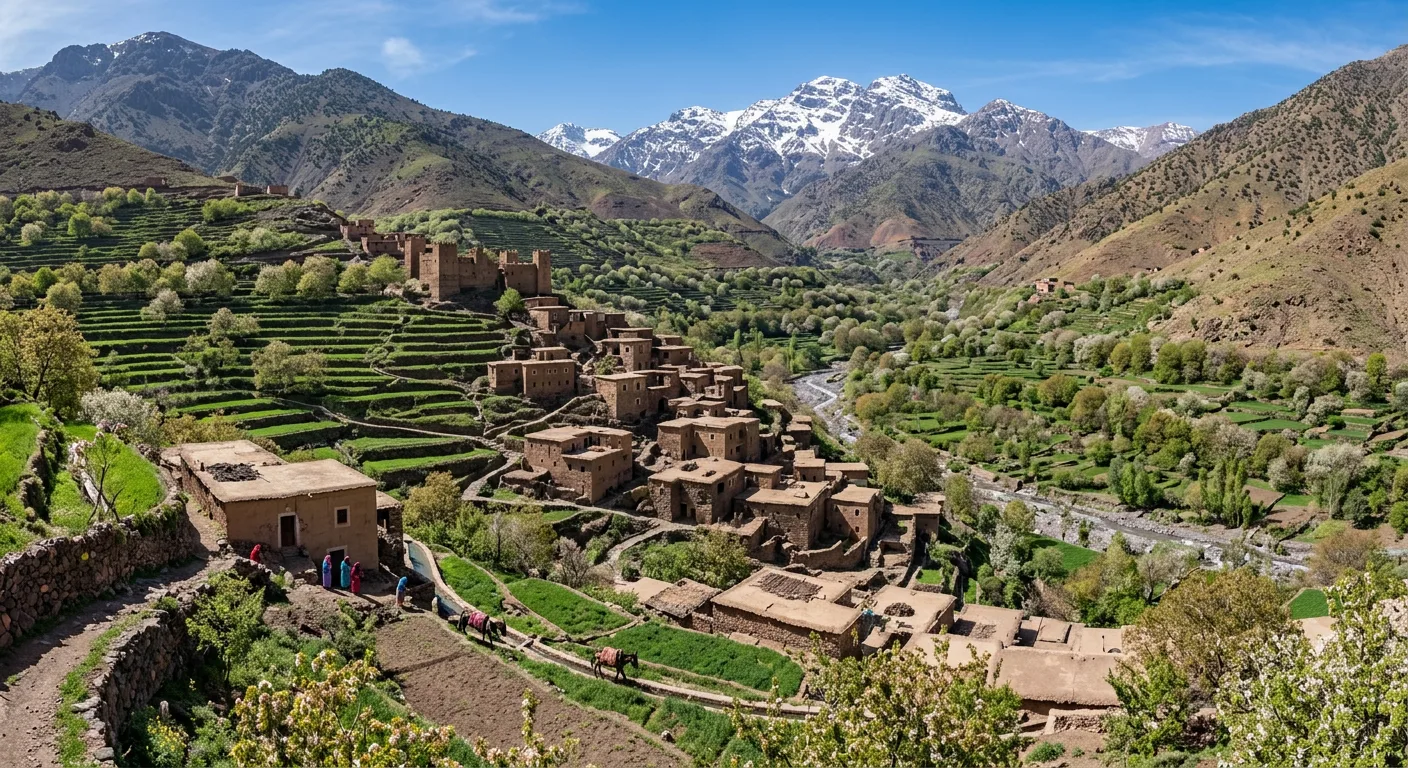
Tizi n'Tichka Pass
2,260 meters altitude100 km (2 hours) from Marrakech
The highest paved mountain pass in North Africa. Built by the French Foreign Legion in the 1930s, this winding road through the High Atlas offers breathtaking views of snow-capped peaks, terraced Berber villages, and deep valleys. In winter, the pass can be snow-covered but is almost always open.
Panoramic mountain views
Roadside mineral sellers
Berber villages visible from road
Snow in winter months
Tip: Stop at the summit viewpoint for photos. The roadside sellers offer argan oil products at good prices, but quality varies.
Time needed: 30-45 minutes for photo stops
2
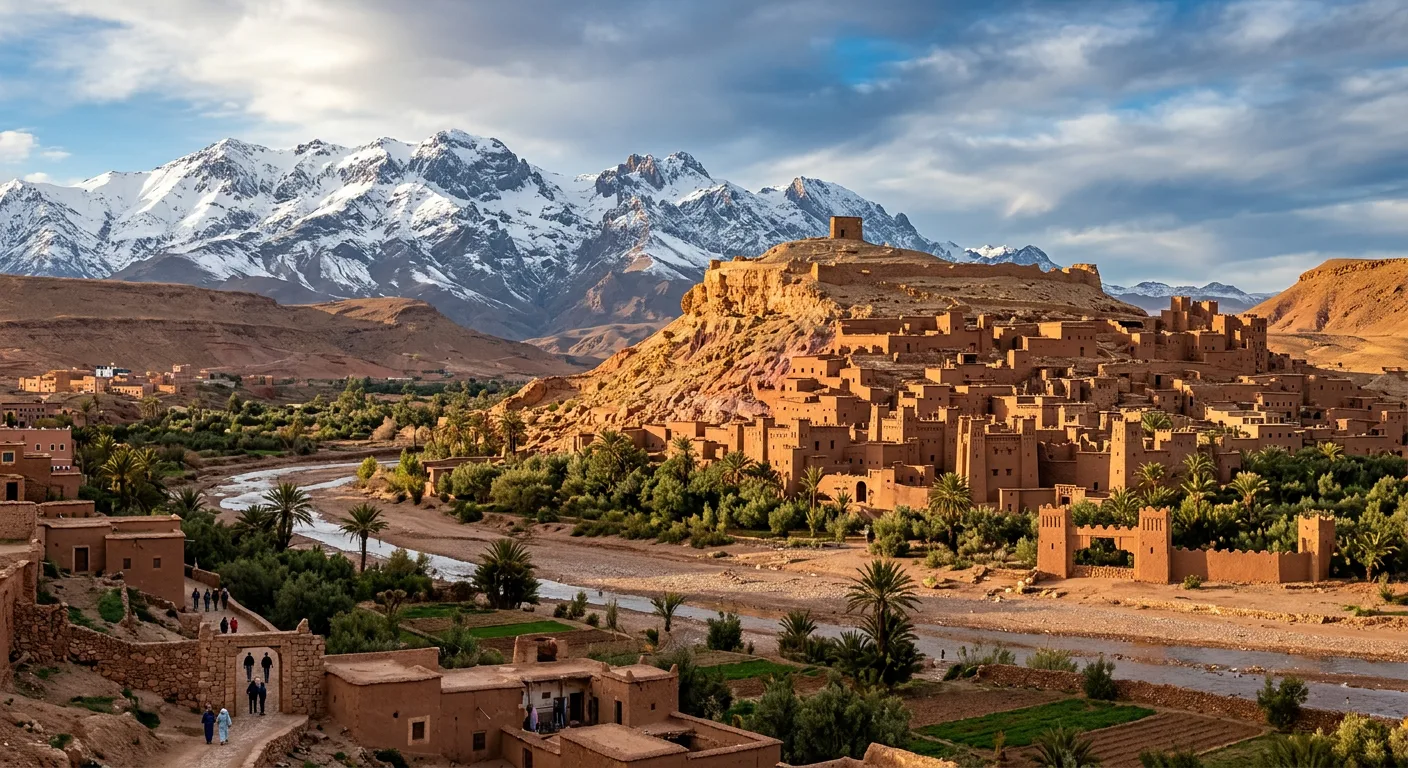
Ait Benhaddou
1,300 meters altitude190 km (3.5 hours) from Marrakech
A UNESCO World Heritage Site and one of Morocco's most iconic sights. This fortified ksar (village) is a masterpiece of southern Moroccan earthen architecture. Used as a filming location for Gladiator, Game of Thrones, and Lawrence of Arabia. Climb to the top for views across the oasis and river below.
UNESCO World Heritage Site
Film location for Hollywood productions
Stunning earthen architecture
River crossing to reach the kasbah
Tip: Allow at least 1.5 hours to properly explore. The climb to the top is moderate and well worth it. A local guide (from 50 MAD) adds context to the history.
Time needed: 1.5-2 hours
3
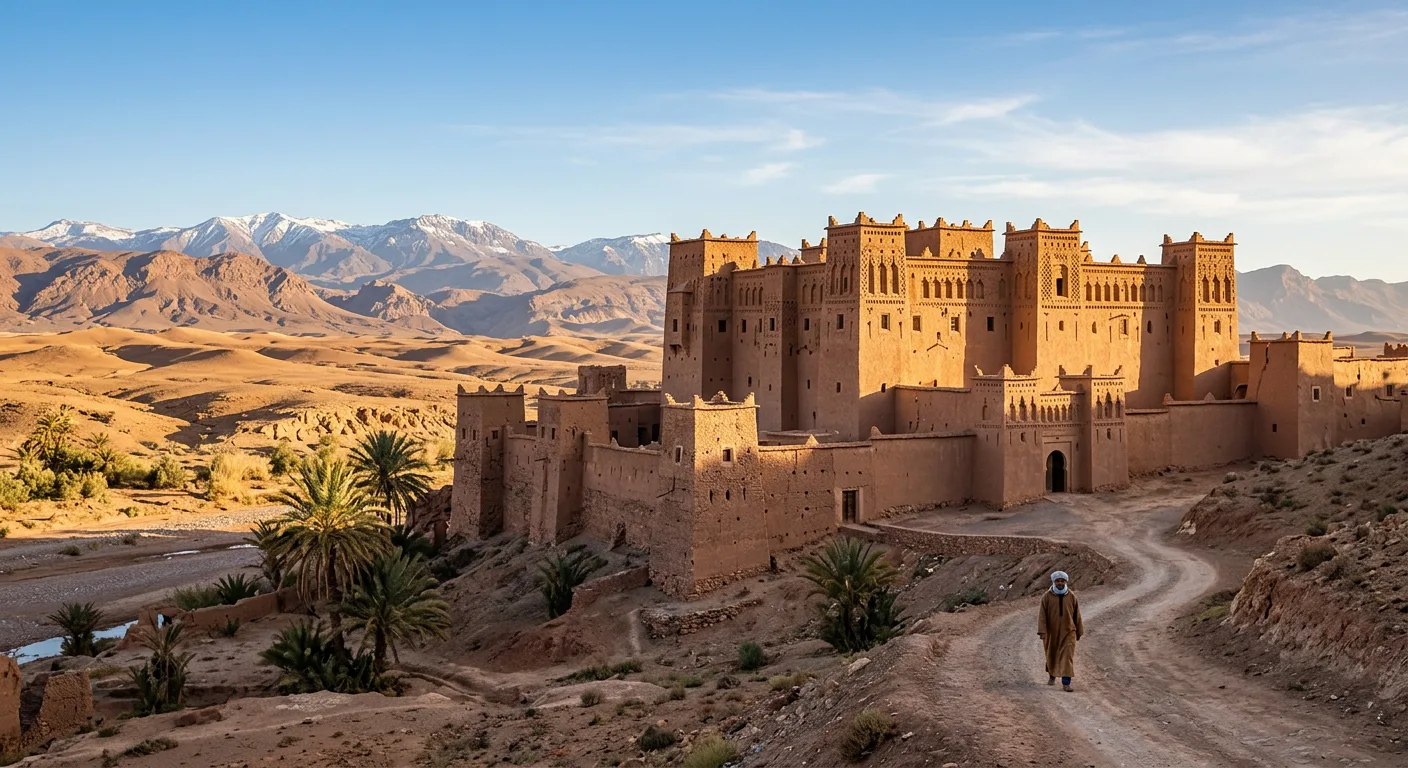
Ouarzazate
1,160 meters altitude200 km (4 hours) from Marrakech
Known as the "Gateway to the Sahara" and the "Hollywood of Africa." Home to Atlas Studios, the largest film studio in the world by area. The Taourirt Kasbah in the center is a remarkable example of southern Moroccan architecture. Most tours stop here for lunch.
Atlas Studios tour available
Taourirt Kasbah
Gateway to the desert
Good lunch stop with restaurants
Tip: Atlas Studios (from 60 MAD entry) is interesting for film buffs. If short on time, the Taourirt Kasbah is the quicker stop. Great restaurants along the main boulevard.
Time needed: 1-2 hours (or more for Atlas Studios)
4
Dades Gorge
1,500-1,800 meters altitude330 km (5.5 hours) from Marrakech
A dramatic river canyon carved by the Dades River over millions of years. The gorge features the famous "Road of a Thousand Kasbahs" and a series of hairpin bends that are among the most photographed roads in Morocco. The upper gorge narrows to just 20 meters wide with 300-meter-high walls.
Famous hairpin bends
Road of a Thousand Kasbahs
Dramatic canyon walls
Overnight stop on 3-day tours
Tip: The hairpin bends of the upper gorge are a must-see. Most hotels in the gorge have terraces overlooking the canyon. This is where you spend your first night on a 3-day tour.
Time needed: Overnight stop recommended
5
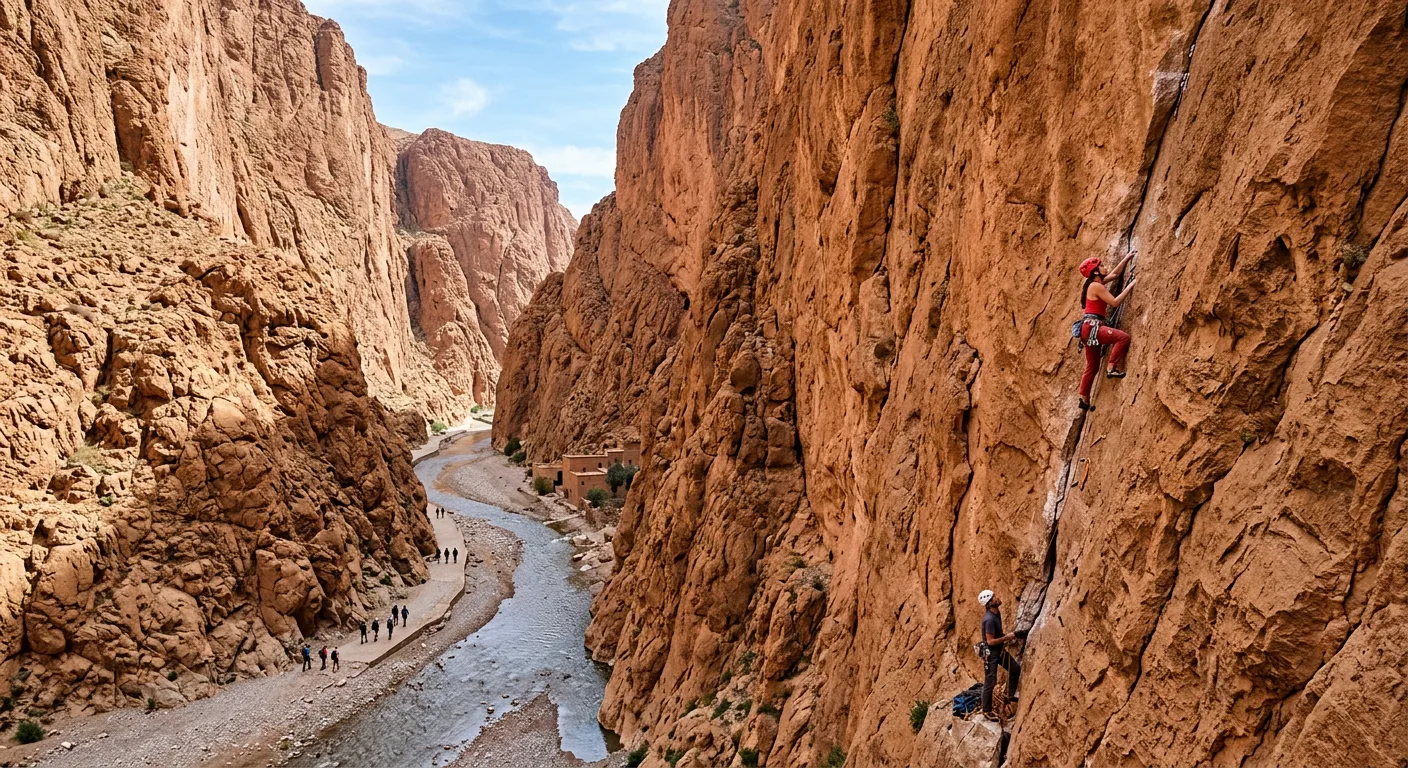
Todra Gorge
1,400 meters altitude370 km (6.5 hours) from Marrakech
One of the most spectacular natural landmarks in Morocco. At its narrowest point, the canyon walls rise 300 meters on either side of the river with a gap of only 10 meters. The morning light illuminating the canyon is unforgettable. A popular rock-climbing destination with routes for all levels.
300-meter canyon walls
Only 10 meters wide at narrowest
Rock climbing opportunities
Morning light is spectacular
Tip: Arrive in the morning when sunlight enters the canyon floor. Walk at least 1 km into the gorge for the best narrows. Rock climbing guides available from 300 MAD for a half-day.
Time needed: 1-1.5 hours
6
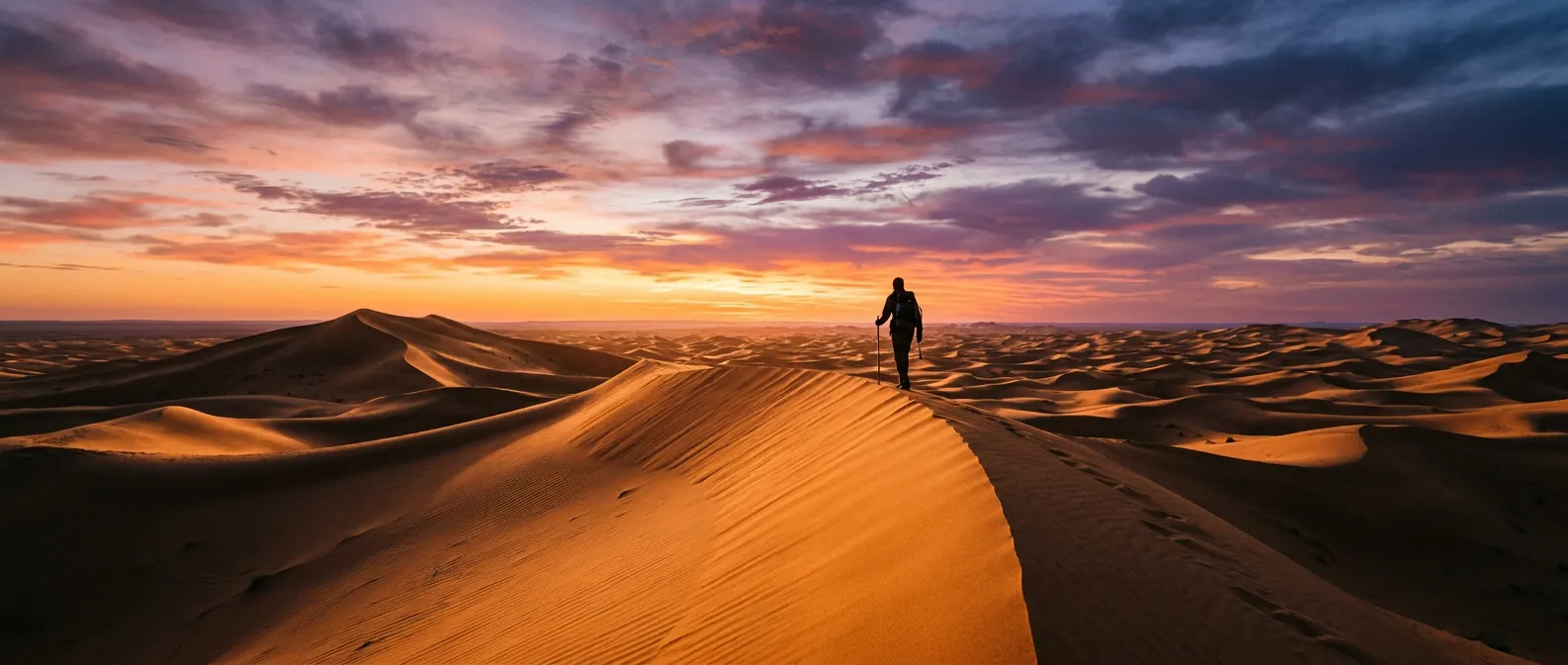
Merzouga & Erg Chebbi
700 meters (desert floor) altitude560 km (9-10 hours) from Marrakech
The final destination. Merzouga is a small village at the edge of Erg Chebbi, the largest sand sea in Morocco with dunes reaching up to 150 meters. This is where you board your camel for the ride into the desert camp. The golden-orange dunes against the blue sky create an otherworldly landscape.
Dunes up to 150 meters high
Camel treks into the desert
Desert camps with stargazing
Sunrise and sunset spectacles
Tip: The camel ride to camp takes about 1 hour. Bring a scarf to wrap around your face against the sand. Camera batteries drain fast in extreme cold or heat.
Time needed: 1-3 nights recommended
Desert Camp Types
Your desert camp is where the magic happens. Choose the level of comfort that suits your style and budget.
All prices are starting prices per person per night. Seasonal pricing applies during peak months.
Budget Camp
From 250 MAD per person
Basic Berber-style tents with mattresses on the floor, shared blankets, and communal toilet facilities. The experience is authentic and you are right among the dunes. Meals are simple but traditional: tagine, couscous, bread, and mint tea.
Berber tent accommodation (shared)
Mattress and blankets on floor
Shared bathroom facilities
Basic lighting (candles or battery lamps)
Traditional dinner and breakfast
Camel ride to/from camp
Berber music around campfire
Best for: Budget travelers, backpackers, and those wanting a raw desert experience
Basic comfort, maximum authenticity
Standard Camp
From 500 MAD per person
Upgraded tents with proper beds, clean linens, and pillows. Each tent typically sleeps 2-4 people. Shared but cleaner bathroom facilities with basic showers. Better meals with more variety and sometimes a communal dining tent.
Private or semi-private tent
Real beds with clean linens and pillows
Shared bathroom with shower
Solar or generator lighting
Improved dinner and breakfast
Camel ride to/from camp
Berber music and campfire
Sandboarding available
Best for: Couples, families, and travelers wanting comfort without luxury pricing
Good comfort, good value
Luxury Camp
From 1,500 MAD per person
The five-star desert experience. Private tented suites with en-suite bathrooms, hot showers, flushing toilets, and sometimes even air conditioning. Real beds with premium bedding. Gourmet dining with multiple courses. Some luxury camps have a swimming pool.
Private tented suite (30+ sqm)
En-suite bathroom with hot shower and toilet
King-size bed with luxury bedding
Electricity and device charging
Gourmet multi-course dinner
Private camel trek
Stargazing with telescope
Welcome tea ceremony
Desert excursions included
Some camps have swimming pools
Best for: Honeymoons, special occasions, luxury travelers, and those who want comfort in the wilderness
Maximum comfort, unforgettable experience
What to Expect: Desert Experiences
The Sahara offers experiences you cannot find anywhere else on earth. Here is what awaits you among the dunes.
Camel Trek
1-2 hours each way
The quintessential Sahara experience. Ride a dromedary camel through the golden dunes to your desert camp. The swaying rhythm of the camel, the silence of the desert, and the changing light on the dunes create a memory that lasts a lifetime. All tours include a camel trek.
Tip: Wear long trousers to avoid chafing. Hold the saddle handle, lean back when going downhill, forward when going uphill. Bring a scarf to wrap your face against blowing sand.
Sunrise & Sunset
30-60 minutes each
The dunes of Erg Chebbi shift from gold to orange to crimson as the sun rises and sets. Watching the sunrise from the top of a dune, with the desert stretching in every direction, is one of the most profound natural spectacles you will ever witness. Your camp host will wake you in time.
Tip: Climb the dune behind your camp for the best views. Sunrise is at approximately 6:30 AM in winter, 5:30 AM in summer. Bring warm layers as pre-dawn temperatures can be near freezing.
Sandboarding
1-2 hours
Strap on a board and slide down the steep faces of the Erg Chebbi dunes. It works best on the harder-packed slopes and is easier to learn than snowboarding. Most desert camps have boards available, and the dunes near camp serve as the slopes. No experience necessary.
Tip: Best done in the early morning or late afternoon when the sand is cooler and firmer. Wax the bottom of your board with candle wax for faster runs.
Stargazing
1-2 hours
The Sahara is one of the darkest places on earth, free from light pollution. On a clear night, the Milky Way is clearly visible with the naked eye, and shooting stars are common. Luxury camps provide telescopes and sometimes a guide to explain the constellations. The silence adds to the intensity.
Tip: New moon nights offer the best stargazing. Check the moon phase before booking. Bring a warm blanket to lie on the sand.
Khamlia Village & Gnawa Music
1-1.5 hours
Khamlia is a small village near Merzouga inhabited by descendants of sub-Saharan African people who settled centuries ago. The village is famous for Gnawa music, a spiritual trance music with roots in West Africa. Local musicians perform for visitors and the experience is deeply moving.
Tip: A donation of from 50-100 MAD per person is customary. The music sessions are informal and you can stay as long as you like. CDs and instruments are available for purchase.
Nomad Family Visit
30-60 minutes
Visit a semi-nomadic Berber family living in the desert near Merzouga. They will welcome you with tea and show you their way of life, including how they make bread, tend goats, and survive in the harsh desert environment. A humbling and eye-opening encounter.
Tip: Bring a small gift: sugar, tea, school supplies, or cooking oil. These are appreciated far more than money. Ask before photographing people.
Self-Drive Option: Marrakech to Merzouga by Car
Prefer to drive yourself? The route is fully paved and a standard rental car handles it fine. Here is the road broken down into segments.
Car rental from 350 MAD per day. Fuel for the round trip approximately 800 MAD. Total self-drive cost from 2,500 MAD for 4 days including car, fuel, and accommodation.
1
Marrakech to Ouarzazate
200 km4 hoursN9 over Tizi n'Tichka Pass
Well-paved but very winding mountain road with many hairpin bends. The Tizi n'Tichka Pass reaches 2,260 meters. Take it slow, use low gears on descents, and watch for trucks. In winter, check conditions as snow is possible.
Fuel: Fill up in Marrakech. Fuel available in Ouarzazate.
2
Ouarzazate to Tinghir
170 km2.5 hoursN10 (Road of a Thousand Kasbahs)
A beautiful and well-maintained road through the Dades Valley. Relatively flat and easy to drive. Passes through the Valley of Roses (bloom season: April-May) and numerous kasbahs. Watch for slow-moving trucks and donkeys.
Fuel: Fuel stations in Boumalne Dades and Tinghir.
3
Tinghir to Erfoud
120 km2 hoursN10 continuing east
Good paved road through increasingly arid landscape. The Ziz Valley section is spectacular with palm groves and the Ziz Gorge. A French Foreign Legion outpost is visible along the way. The landscape shifts from mountain to desert.
Fuel: Fuel available in Tinejdad and Erfoud.
4
Erfoud to Merzouga
50 km45 minutesN13 south to Rissani, then local road
The final stretch. Good paved road to Rissani, then a decent road to Merzouga. The first sight of the Erg Chebbi dunes appearing on the horizon is unforgettable. Your accommodation can arrange parking and camel transfer.
Fuel: Last fuel in Erfoud or Rissani. No fuel in Merzouga.
Self-Drive Tips
Fill your tank before the Tizi n'Tichka Pass and before entering Merzouga
International driving license required alongside your home license
Speed limits: 120 km/h highways, 60 km/h towns, 40 km/h villages
Watch for radar traps, especially approaching towns
Avoid driving at night on mountain roads: livestock, unlit vehicles, and pedestrians
Download offline Google Maps for the entire route before departing
Desert Packing List
What to bring for your Sahara adventure. Pack light but pack smart: desert temperatures swing from scorching days to near-freezing nights.
Clothing & Protection
Headscarf or turban (cheche)
Essential sand protection. Available in Merzouga from 30 MAD
Warm jacket or fleece
Desert nights can drop to 5 degrees Celsius, even in spring
Long trousers
Protect against camel chafing and sun exposure
T-shirts and light layers
Daytime temperatures can be warm; layering is key
Warm socks and sleepwear
Desert camps get cold at night, even with blankets
Comfortable closed-toe shoes
For walking on sand and rocky terrain
Sandals or flip-flops
For camp and quick trips outside the tent
Sun & Health
Sunscreen SPF 50+
Desert sun is intense even in winter. Reapply every 2 hours
Sunglasses (UV protection)
The sand reflects sunlight and can damage eyes
Lip balm with SPF
Desert air is extremely dry and lips crack quickly
Moisturizer
Dry desert air dehydrates skin rapidly
Refillable water bottle
Stay hydrated. Aim for 3+ liters per day in the desert
Basic first aid kit
Plasters, antiseptic, any personal medications
Gear & Essentials
Headlamp or flashlight
Desert camps have limited lighting. Essential for night walks
Portable power bank
Limited or no charging at budget/standard camps
Camera with extra batteries
Batteries drain fast in extreme temperatures
Small daypack
For items you need on the camel ride (leave main bag in Merzouga)
Ziplock bags
Protect phone and camera from sand
Wet wipes and toilet paper
Basic camps have limited supplies
Earplugs and eye mask
Camp can be noisy with wind or other guests
Best Time to Visit the Sahara
Timing is critical for a Sahara trip. The difference between the best and worst months is the difference between paradise and dangerous heat.
Peak Season (Oct-Nov)
ExcellentDay: 25-32 CNight: 12-18 CCrowds: High
The most popular time to visit. Summer heat has broken, days are warm and sunny, and nights are pleasantly cool. Dunes have the best golden color in the autumn light. Book well in advance as desert camps fill up quickly.
Peak pricing. Tours cost 20-30% more than low season.
Winter (Dec-Feb)
GoodDay: 18-22 CNight: 0-8 CCrowds: Medium
Days are mild and perfect for sightseeing and camel riding. Nights are genuinely cold, sometimes near freezing, so bring proper warm layers. Snow is possible on the Atlas passes. Fewer crowds and lower prices.
Standard pricing. Good deals available on group tours.
Spring (Mar-Apr)
ExcellentDay: 22-30 CNight: 10-16 CCrowds: High
Many consider this the best time to visit. Temperatures are warm but not extreme, the Valley of Roses blooms in April, and the Atlas Mountains still have snow caps for dramatic photography. Nights are cool but not freezing.
Peak pricing, especially around Easter.
Early Summer (May-Jun)
FairDay: 35-42 CNight: 20-25 CCrowds: Low
Temperatures rise significantly but are manageable, especially in May. June can be very hot in the desert. The advantage is smaller crowds and lower prices. Early morning and evening activities are most enjoyable.
Discounted pricing. Negotiate hard for better rates.
High Summer (Jul-Sep)
Not RecommendedDay: 42-50+ CNight: 25-32 CCrowds: Very Low
Extreme heat makes the desert dangerous and unpleasant. Daytime temperatures regularly exceed 45 degrees Celsius. Sand is too hot to walk on barefoot. Even nights offer little relief. Most responsible operators discourage summer tours.
Lowest prices, but the heat makes it not worthwhile.
The Sahara Desert Experience
Erg Chebbi Dunes, Merzouga
Ait Benhaddou Kasbah
Todra Gorge Canyon
Frequently Asked Questions
How long does it take to get from Marrakech to the Sahara Desert?
The drive from Marrakech to Merzouga (Erg Chebbi) takes approximately 9-10 hours one way via the N10 through Ouarzazate. The total distance is about 560 km. Most tours split this into a 2 or 3-day journey with stops at Ait Benhaddou, the gorges, and other attractions along the way. Nobody should try to do this as a day trip.
How much does a Marrakech to Sahara desert tour cost?
Budget group tours start from 1,500 MAD per person for a 3-day trip. Mid-range private tours cost from 3,500 MAD per person. Luxury private tours with premium desert camps start from 8,000 MAD per person. The price varies based on season (October-April is peak), group size, accommodation level, and what is included. Solo travelers often pay a supplement of 300-500 MAD.
What is the best time to visit the Sahara Desert from Marrakech?
The best months are October to April when daytime temperatures are comfortable (18-32 degrees Celsius). March and April offer the best balance of mild weather, clear skies, and the Valley of Roses in bloom. Avoid June to September when temperatures can exceed 50 degrees Celsius in the desert. Winter (December-February) is good for daytime but pack warm layers as nights can drop near freezing.
Can I drive myself from Marrakech to the Sahara?
Yes, the road from Marrakech to Merzouga is fully paved and in good condition. A standard rental car works fine for the main road. The journey is approximately 560 km via Ouarzazate and takes 9-10 hours. You will need a 4x4 only to reach some remote desert camps off the main road. Fuel stops are available every 100-150 km. A rental car costs from 350 MAD per day plus fuel (around 800 MAD total for the round trip).
What should I pack for a Sahara Desert trip?
Essential items include a headscarf or turban (cheche) for sand protection (available in Merzouga from 30 MAD), sunscreen SPF 50+, warm layers for cold desert nights (temperatures can drop to 5 degrees Celsius even in spring), comfortable walking shoes, a headlamp or flashlight, sunglasses, a refillable water bottle, and a portable power bank. Desert camps provide blankets but bring a warm jacket for stargazing.
What is the difference between Erg Chebbi and Erg Chigaga?
Erg Chebbi (near Merzouga) has the tallest dunes reaching 150 meters and is more accessible from Marrakech (560 km). Most tours go here. Erg Chigaga (near M'Hamid) is more remote and less touristy but requires a 4x4 for the last section and takes longer to reach. Erg Chebbi is better for first-time visitors and those short on time. Erg Chigaga suits those seeking complete solitude and a more off-grid adventure.
Is the camel ride difficult or uncomfortable?
The camel ride to camp takes about 1 hour and most people find it enjoyable once they get used to the swaying motion. It is not physically demanding but can cause thigh chafing if you wear shorts. Wear long trousers, hold the saddle handle, and lean back when the camel goes downhill. If you have mobility issues, most camps can arrange a 4x4 transfer instead of a camel ride at no extra charge.
Is it safe to travel from Marrakech to the Sahara?
Yes, the Marrakech to Merzouga route is very safe and well-traveled by thousands of tourists every week. The roads are in good condition, the towns along the route are welcoming, and the desert camps have years of experience hosting international visitors. Standard travel precautions apply: keep valuables secure, stay hydrated, and follow your guide's instructions in the desert.
Continue Exploring Morocco
Marrakech City Guide
Your complete guide to exploring Marrakech: medina, souks, riads, and the best things to do.
Read moreAtlas Mountains Guide
Trekking, day trips, and mountain experiences in the High Atlas from Marrakech.
Read moreMorocco Adventure Guide
From desert safaris to mountain treks: the ultimate adventure travel guide for Morocco.
Read morePlan it with a local expert
Travel Morocco with Serenity Morocco Tours
Crafting extraordinary journeys through Morocco's timeless landscapes. 100% private journeys, handcrafted around you.
ONMT Licensed 100% Private Tours 100% private tours since 2018
 from $2,011
 5 days Marrakech → Erg Chebbi
Sahara Desert Luxury Expedition
 from $2,054
 7 days Marrakech · Fes · Meknes · Rabat
Essential Morocco: Imperial Cities Circuit
 from $5,978
 14 days Full-country circuit
Sahara to Sea: Morocco Complete