Narrow alleyway in a Moroccan medina with colorful textiles and sunlight

Navigate Like a Local

How to Navigate Morocco's Ancient Medinas

Your complete survival guide to the labyrinthine old cities that are the beating heart of Morocco — from the world's largest car-free zone to the blue wonder of the Rif.

What Is a Medina?

Living heritage, not museum pieces — Morocco's medinas are the most complete medieval urban environments in the world.

The Arabic word "medina" simply means "city," but in Morocco it refers specifically to the historic walled centers that predate the French colonial period. These are not ruins or tourist recreations — they are living, breathing urban environments where hundreds of thousands of people live, work, pray, and conduct business exactly as their ancestors have done for centuries, within the same walls, along the same streets, and often in the same buildings.

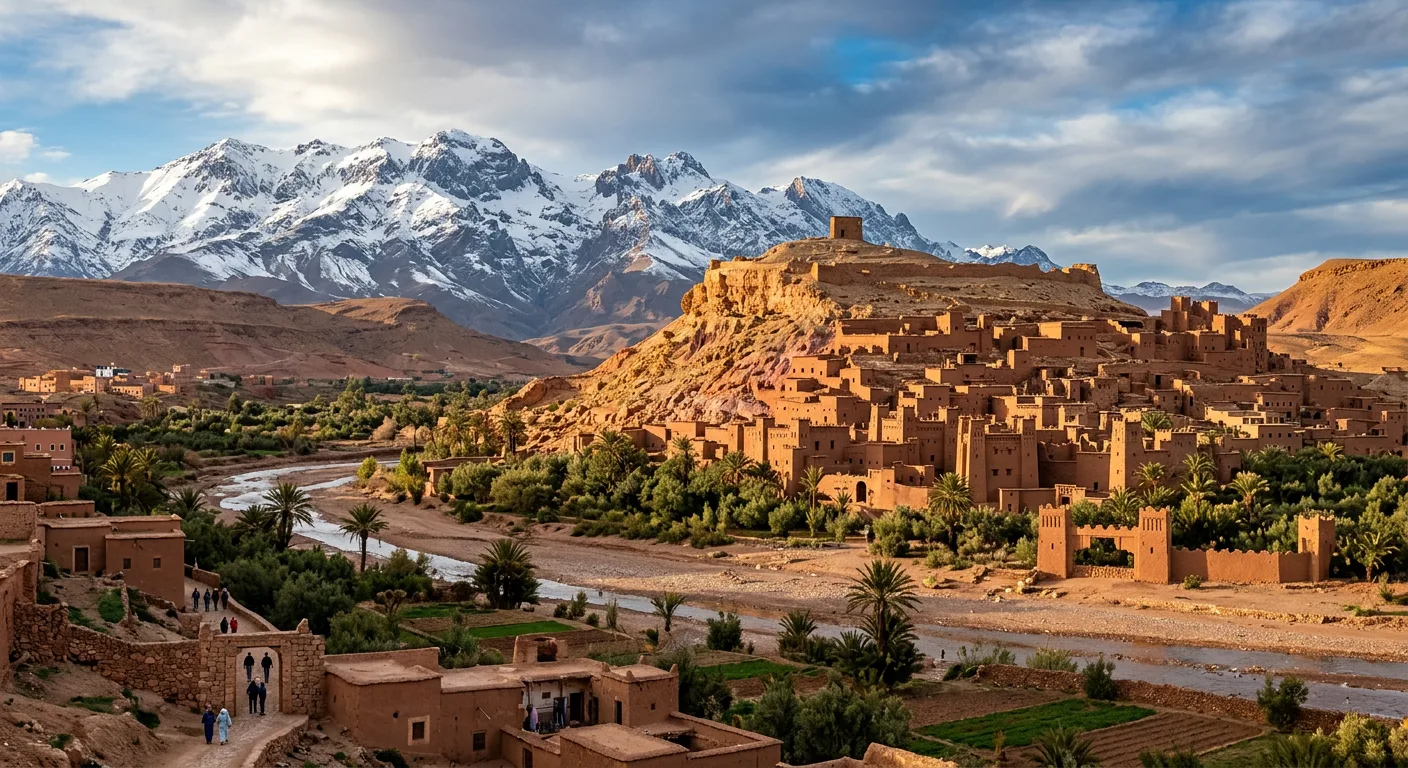
Morocco is home to some of the finest preserved medinas in the Islamic world. Four of them — Fes el-Bali, Marrakech, Tetouan, and Essaouira — are UNESCO World Heritage Sites, recognized for their outstanding universal value. Others, like Chefchaouen, Meknes, and Rabat, are equally captivating though less internationally celebrated. Together, they represent over a thousand years of Islamic urban planning, architectural innovation, and community life.

A typical Moroccan medina is organized around a central mosque, with a hierarchy of streets radiating outward: wide main thoroughfares for commerce (where you find the souks), secondary streets for residential access, and narrow dead-end alleys (derbs) leading to private homes and riads. The entire system is enclosed within defensive walls pierced by monumental gates (babs). This is not random chaos — it is a sophisticated urban design that maximizes shade, privacy, and community cohesion, principles that modern urban planners are only now beginning to rediscover.

Morocco's Greatest Medinas, Ranked

Our definitive ranking of eight medinas, from the overwhelming grandeur of Fes to the raw authenticity of Sale. Each offers a distinct character and experience.

Fes el-Bali medina in Fes
#1UNESCO
Fes · Difficulty: Challenging

Fes el-Bali

The world's largest car-free urban zone

Fes el-Bali is the undisputed king of Moroccan medinas and one of the most extraordinary urban experiences on Earth. Founded in the 9th century, this UNESCO World Heritage Site is a living medieval city of over 9,000 narrow alleyways, 300 mosques, and countless fountains, workshops, and hidden gardens. Getting lost is not a risk here — it is a certainty, and arguably the whole point. The medina is too narrow for cars; only donkeys, handcarts, and human feet navigate its labyrinthine passages. The sensory overload is total: the smell of fresh bread mixing with tanning leather, the sound of hammering from copper workshops, the sight of shafts of sunlight illuminating hidden courtyards.

Highlights

  • Over 9,000 alleyways in the world's largest car-free urban area
  • Al-Qarawiyyin, the oldest continuously operating university (founded 859 CE)
  • The legendary tanneries with their stone vats of colorful dye
  • Exquisite Marinid madrasas (Bou Inania, Attarine)
Marrakech Medina medina in Marrakech
#2UNESCO
Marrakech · Difficulty: Moderate

Marrakech Medina

The spectacle of Jemaa el-Fnaa

If Fes is the intellectual heart of Morocco, Marrakech is its pulsing, theatrical soul. The medina revolves around Jemaa el-Fnaa, the iconic square that transforms from a daytime marketplace into an otherworldly carnival of storytellers, musicians, acrobats, snake charmers, and food stalls every evening. Designated by UNESCO as a Masterpiece of the Oral and Intangible Heritage of Humanity, it is unlike anything else on the planet. From the square, a vast network of covered souks stretches northward, each specializing in a different craft: leatherwork, spices, carpets, metalwork, textiles.

Highlights

  • Jemaa el-Fnaa — the world's greatest open-air performance space
  • The vast covered souks radiating north from the square
  • Ben Youssef Madrasa, Bahia Palace, Saadian Tombs
  • Vibrant nightlife and rooftop terrace culture
Tetouan Medina medina in Tetouan
#3UNESCO
Tetouan · Difficulty: Moderate

Tetouan Medina

Andalusian charm meets Riffian culture

Tetouan's medina is a hidden gem — a UNESCO World Heritage Site that remains remarkably off the tourist trail. Built by Moorish refugees expelled from Andalusia in the 15th century, the medina has a distinctly Spanish character: whitewashed walls, wrought-iron balconies, and tiled courtyards that evoke Granada or Seville. The souk system is well-organized by craft, and the hassle factor is minimal compared to larger medinas. The Tetouan medina offers what many travelers dream of but rarely find: an authentic, uncrowded, deeply atmospheric experience.

Highlights

  • Best-preserved Andalusian medina in Morocco
  • Whitewashed houses with Spanish-influenced architecture
  • Royal Artisan School preserving traditional crafts
  • Significantly fewer tourists than Fes or Marrakech
Essaouira Medina medina in Essaouira
#4UNESCO
Essaouira · Difficulty: Easy

Essaouira Medina

Manageable, coastal, and laid-back

If you are intimidated by the labyrinthine complexity of Fes, Essaouira is the perfect medina introduction. Designed by a French architect in the 18th century for Sultan Mohammed III, Essaouira's medina follows a relatively logical grid pattern within its impressive Portuguese-built fortifications. The relaxed Atlantic coastal vibe, the ever-present sound of seagulls, the smell of grilling sardines from the port, and the wind-sculpted thuya wood workshops give this medina a character entirely its own. It is the most approachable medina in Morocco.

Highlights

  • Compact, grid-like layout — nearly impossible to get truly lost
  • Atlantic breeze and dramatic rampart walks
  • Thriving arts scene with galleries and woodworking ateliers
  • Fresh seafood grills at the harbor every afternoon
Chefchaouen Medina medina in Chefchaouen
#5
Chefchaouen · Difficulty: Easy

Chefchaouen Medina

The blue wonder of the Rif Mountains

Chefchaouen's medina is pure visual magic — a cascade of blue-washed buildings tumbling down a mountainside in the heart of the Rif. The blue-painting tradition, which some attribute to Jewish refugees who settled here in the 1930s (blue symbolizing the sky and heaven in Jewish tradition), has created what is arguably the most photogenic small town in the world. The medina is compact and hilly, with small squares shaded by ancient trees and workshops selling the distinctive striped blankets woven by Riffian women.

Highlights

  • Every surface painted in mesmerizing shades of blue
  • Stunning mountain backdrop of the Rif range
  • Excellent local crafts: woven blankets, goat cheese, olive oil
  • One of the most photographed places in all of Africa
Meknes Medina medina in Meknes
#6UNESCO
Meknes · Difficulty: Moderate

Meknes Medina

Imperial grandeur, fewer crowds

Meknes is the most underrated of Morocco's four imperial cities, and its medina rewards the traveler who ventures beyond the better-known destinations. The monumental Bab Mansour gateway is one of the most impressive architectural achievements in Morocco, and the vast imperial complex built by Sultan Moulay Ismail in the 17th century — with its massive granaries, stables for 12,000 horses, and miles of defensive walls — is staggering in scale. The medina itself is authentic and lived-in, with prices and hassle levels well below Marrakech or Fes.

Highlights

  • Bab Mansour — arguably the finest gateway in all of North Africa
  • Moulay Ismail's vast granaries and stables
  • Genuine local atmosphere with minimal tourist infrastructure
  • Excellent food scene at a fraction of Marrakech prices
Rabat Medina & Kasbah Udayas medina in Rabat
#7UNESCO
Rabat · Difficulty: Easy

Rabat Medina & Kasbah Udayas

The capital's polished gem

Rabat's medina offers the most genteel medina experience in Morocco. As the capital city, it is cleaner, calmer, and more orderly than its counterparts. The star attraction is the Kasbah of the Udayas, a 12th-century Almohad fortress perched dramatically above the mouth of the Bou Regreg river, with blue-and-white painted houses, an exquisite Andalusian garden, and panoramic ocean views. The main medina stretching south from the kasbah has excellent carpet shops, leather goods, and a relaxed atmosphere ideal for first-time visitors.

Highlights

  • Kasbah Udayas — a fortress-within-a-medina overlooking the Atlantic
  • Andalusian garden inside the kasbah walls
  • Clean, well-maintained streets with upscale boutiques
  • Adjacent to the atmospheric Chellah necropolis
Sale Medina medina in Sale
#8
Sale · Difficulty: Moderate

Sale Medina

Authentic and untouristy

Just across the river from Rabat, Sale is its polar opposite in character: raw, authentic, and almost entirely unvisited by tourists. Once the base of the infamous Sale Rovers (Barbary pirates who terrorized Atlantic shipping in the 17th century), the medina retains a rough-hewn, workaday character that provides an unfiltered glimpse into traditional Moroccan urban life. The 14th-century Medersa of Abu al-Hassan is an architectural gem that rivals anything in Fes, yet you will likely have it entirely to yourself.

Highlights

  • Virtually no tourist infrastructure — the real Morocco
  • Historic pirate republic with fascinating maritime history
  • Beautiful Medersa of Abu al-Hassan (14th century)
  • Great views of Rabat across the Bou Regreg river
Artistic illustrated map of Morocco highlighting major medina cities, trade routes, and cultural landmarks

Morocco's greatest medinas span the kingdom from the Rif Mountains to the Atlantic coast

10 Survival Tips for Navigating the Medina

Tested advice from years of wandering Morocco's most bewildering alleys. Master these and you will navigate any medina with confidence.

1

Use Landmarks, Not Street Names

Medina streets rarely have visible names or signs. Navigate by landmarks: mosques (listen for the call to prayer), fountains, notable doorways, and major gates (bab). Identify 2-3 major landmarks near your riad and memorize the route from the nearest main street.

2

Download Offline Maps Before You Go

Download maps.me or the offline Google Maps layer for your destination before arriving. While GPS can be unreliable in narrow alleys, these apps are surprisingly useful for general orientation and finding your way back to main arteries. Maps.me has the best medina coverage.

3

Follow the Flow of People

In the morning, people flow inward toward the market center. In the evening, they flow outward toward the gates. Follow the crowd and you will generally head in a useful direction. If an alley is empty and getting narrower, you are heading into a residential dead end.

4

Ask Shopkeepers, Not Random Strangers

When asking for directions, approach someone seated at their shop — they have no motive to mislead you. Random people who approach offering directions often expect a tip or will guide you to their cousin's shop. Shopkeepers will generally point you in the right direction for free.

5

Embrace Getting Lost (Intentionally)

The medina's magic lies in unexpected discoveries: a hidden courtyard, a craftsman working by candlelight, a stunning doorway you would never find on a map. Budget time to wander aimlessly. The medina is finite — you will always eventually reach a wall, a gate, or a main road.

6

Learn the "Balak!" Warning

When you hear someone shouting "Balak!" (also spelled "Belek"), press yourself against the nearest wall immediately. It means a loaded donkey, handcart, or motorbike is coming through the narrow alley and needs the right of way. This is the single most important safety word in the medina.

7

Memorize Your Riad's Phone Number

Save your accommodation's phone number and address (in Arabic if possible). If completely lost, any shopkeeper can call your riad, and many riads will send someone to guide you home. This is standard practice — do not feel embarrassed.

8

Walk Uphill to Find Your Way Out

Most medinas are built on hillsides, with the main gates and thoroughfares at higher elevations. If disoriented, walking uphill will generally lead you toward a main road or a gate. In Fes specifically, walking downhill leads to the river (Fes el-Bali) or uphill to the major boulevards.

9

Carry a Hotel Business Card

Take a business card from your riad or hotel with the address printed in Arabic. This is invaluable when asking for directions or taking a taxi. Many riads provide small maps of the immediate area — photograph these on your phone as well.

10

Mark Your Route with Photos

Photograph distinctive doorways, turns, and landmarks on your way in. When you need to retrace your steps, scroll through your photo gallery in reverse. This low-tech trick works remarkably well, especially in the first days before you develop spatial awareness.

Artistic painting depicting the bustling Fes souk with merchants, colorful goods, and narrow alleyways under shafts of light

The souks of Fes have inspired artists for centuries -- a sensory feast of color, craft, and commerce

Souk Guide: What to Buy Where

Each souk specializes in a particular craft or product. Know what to expect and what to pay before you start bargaining.

Souk des Teinturiers (Dyers)

Buy: Dyed fabrics, scarves, wool skeins

Best in: Marrakech, Fes

Visit early morning when freshly dyed fabrics hang overhead like colorful waterfalls.

Souk des Epices (Spices)

Buy: Ras el hanout, saffron, cumin, argan oil

Best in: Marrakech (Rahba Kedima), Fes

Buy from shops with high turnover for freshness. Expect to pay 30-50 MAD for quality ras el hanout.

Souk des Tapis (Carpets)

Buy: Berber rugs, kilims, Rabat carpets

Best in: Marrakech (Criee Berbere), Fes, Rabat

Never buy the first carpet you see. Compare at 3-4 shops. A good Berber rug starts around 800-1500 MAD.

Souk des Babouches (Slippers)

Buy: Traditional leather slippers in every color

Best in: Fes (near the tanneries), Marrakech

Quality babouches have stitched (not glued) soles. Expect 80-200 MAD for a good pair.

Souk Seffarine (Metalworkers)

Buy: Brass lanterns, tea sets, trays, copper pots

Best in: Fes (Seffarine Square), Marrakech

The rhythmic hammering is part of the experience. Custom work can be commissioned and shipped.

Souk des Potiers (Pottery)

Buy: Tagine pots, plates, bowls, vases

Best in: Fes, Safi, Tamegroute

Fes blue-and-white is iconic. For cooking tagines, buy unglazed. For display, glazed is fine.

Safety Tips & Scams to Avoid

Morocco's medinas are overwhelmingly safe, but petty scams targeting tourists exist. Forewarned is forearmed — knowing these tricks makes them powerless.

The "Helpful" Guide

Common

Someone approaches saying the road ahead is closed or your hotel is "this way" and leads you to a shop instead. Politely decline. If truly lost, ask a shopkeeper seated in their store.

The Tannery Bait-and-Switch

Very Common

In Fes, people offer to show you the "secret" tannery viewpoint, then lead you to a leather shop with sky-high prices. Tip for the view (10-20 MAD is fine) but do not feel obligated to buy.

The Henna Grab

Common

A woman approaches and grabs your hand to apply henna without asking, then demands an exorbitant payment. Keep your hands in your pockets in Jemaa el-Fnaa and firmly say "La, shukran" (No, thank you).

The "Free" Friendship Bracelet

Moderate

Someone ties a bracelet on your wrist while chatting, then demands payment. Do not let strangers tie anything to you. If caught, offer 5-10 MAD and walk away.

Inflated Starting Prices

Universal

Not a scam per se, but first prices in tourist-heavy souks may be 5-10x the fair price. Research typical prices before shopping. Start your counter-offer at roughly 25-30% of the asking price and negotiate from there.

The Restaurant Tour

Moderate

Someone asks where you are from, engages in friendly conversation, then insists on taking you to their "family restaurant" where prices are heavily inflated. Choose your own restaurants based on reviews.

Best Times to Visit the Medina

Timing transforms the medina experience. The same alley can feel magical or miserable depending on when you walk it.

Early Morning (7:00-9:00)

The absolute best time. Soft golden light filters through the alleys. Shopkeepers sweep their doorsteps and sip mint tea. Fresh bread is being delivered. The medina is calm, cool, and photogenic. You will see the real daily life of the medina without the tourist crowds. This is when professional photographers shoot.

Best for: Photography, peaceful exploration, authentic atmosphere

Golden Hour (16:00-18:00)

As afternoon heat fades, the medina comes alive again. Warm light paints the walls in amber and gold. Locals emerge for evening shopping and socializing. The souks reach peak energy. In Marrakech, Jemaa el-Fnaa begins its nightly transformation. This is the most atmospheric time for general exploration.

Best for: Souk shopping, people-watching, Jemaa el-Fnaa

After Dark (20:00-22:00)

The medina at night is an entirely different world. Lantern light creates dramatic shadows. The crowds thin out. In Marrakech, the food stalls of Jemaa el-Fnaa are in full swing. In Fes, the medina is quiet and mysterious. Stick to lit, populated areas and main thoroughfares. Going with a guide or group is recommended after 21:00.

Best for: Atmosphere, dinner, Marrakech nightlife

Guided vs. Self-Guided: Which Is Right for You?

Both approaches have genuine merits. The right choice depends on your personality, experience level, and what you want from the medina.

With a Guide

  • 1Essential for first-time visits to Fes el-Bali — the complexity is genuinely overwhelming without local knowledge.
  • 2Access to hidden workshops, rooftop terraces, and private homes that independent visitors simply cannot find.
  • 3Protection from common scams and aggressive touts who back off when you are with a guide.
  • 4Deep historical context and storytelling that transforms sightseeing into understanding.
  • 5Invaluable for medina shopping — a good guide helps you get fair prices.

Cost: Official guides 300-500 MAD for half day, 500-800 MAD for full day. Always use licensed guides (they carry official ID cards).

Self-Guided

  • 1Complete freedom to linger, wander, and follow your curiosity into unexpected discoveries.
  • 2More spontaneous encounters with locals — people are more likely to invite you for tea when you are alone.
  • 3No time pressure — you can spend two hours in a single workshop if the mood strikes.
  • 4Significantly less expensive, especially on multi-day visits.
  • 5A deeper sense of personal accomplishment and adventure.

Best for: Essaouira, Chefchaouen, Rabat (easy to navigate). In Fes, do one guided day first, then explore independently.

Accessibility in Medinas: An Honest Assessment

We believe in transparency. Medinas present significant challenges for visitors with mobility impairments, but options do exist.

Moroccan medinas were built centuries before accessibility was a consideration, and the reality is that they present serious obstacles for wheelchair users and people with significant mobility limitations. Surfaces are uneven cobblestone or packed earth, streets include steep gradients, steps are ubiquitous, and passages can be extremely narrow. There are no ramps, elevators, or accessible public facilities within most medina walls.

That said, visitors with limited mobility are not entirely excluded. The main arteries of larger medinas (Marrakech, Essaouira, Rabat) are relatively flat and wide enough for careful navigation. Jemaa el-Fnaa in Marrakech is a large, mostly flat open space. The Essaouira medina, with its grid-like layout and flat terrain, is the most accessible option. Some riads have ground-floor rooms, though most traditional riads involve stairs.

Most Accessible

Essaouira — flat, grid layout, wide streets

Moderately Accessible

Marrakech — main streets passable, souks narrower

Challenging

Fes, Chefchaouen — steep hills, very narrow alleys

Recommendation

Hire a local assistant (150-250 MAD/day) for personalized support

Ready to Explore the Medina?

Whether you choose the overwhelming labyrinth of Fes or the gentle charm of Essaouira, Morocco's medinas promise the adventure of a lifetime. Take a deep breath, step through the gate, and let the ancient city work its magic.