Discovering...
Inclusive Travel Planning
Morocco Accessible Travel
Guide 2026
An honest, practical guide for travelers with disabilities. City-by-city wheelchair ratings, accessible hotels from 700 MAD, adapted transport, specialist tour operators, and tips for every type of impairment.
The Honest Truth About Accessibility in Morocco
Morocco is not an easy country for wheelchair users. That needs to be said clearly before anything else. Centuries-old medinas were built for foot traffic and pack animals, not wheelchairs. Pavements crack and vanish. Curb cuts are rare. Ramps exist at modern hotels but not at most restaurants, shops, or historical sites. The gap between Morocco's accessibility ambitions and its current reality is significant.
That said, Morocco is absolutely possible for disabled travelers -- and thousands make the trip each year. The country has been investing in accessibility infrastructure since passing disability rights law 10-03. Modern cities like Agadir and Rabat have accessible tram systems, flat wide streets, and international hotels built to ADA standards. A growing number of specialist tour operators run adapted vehicles, plan wheelchair-friendly routes, and know exactly which hotel rooms actually deliver on their accessibility promises.
This guide gives you the unfiltered picture: what works, what does not, and how to plan a trip that plays to Morocco's strengths while avoiding its genuine barriers. The reward for that planning is a country of extraordinary warmth, culture, and beauty that few other destinations can match.
Accessibility at a Glance
Key facts for disabled travelers considering Morocco.
Overall Progress
Improving Steadily
Morocco adopted disability rights law 10-03 and is modernizing infrastructure in major cities
Accessible Hotels
50+ Properties
International chains and select adapted riads across Agadir, Marrakech, Rabat, Casablanca
Airport Assistance
All Major Airports
Free wheelchair service and priority boarding at Mohammed V, Menara, Fes-Saiss, and more
Specialist Tour Operators
Local and International
Multiple operators offering adapted vehicles, trained guides, and accessible itineraries
City-by-City Accessibility Ratings
Honest ratings based on wheelchair infrastructure, hotel options, transport, and pavement conditions.
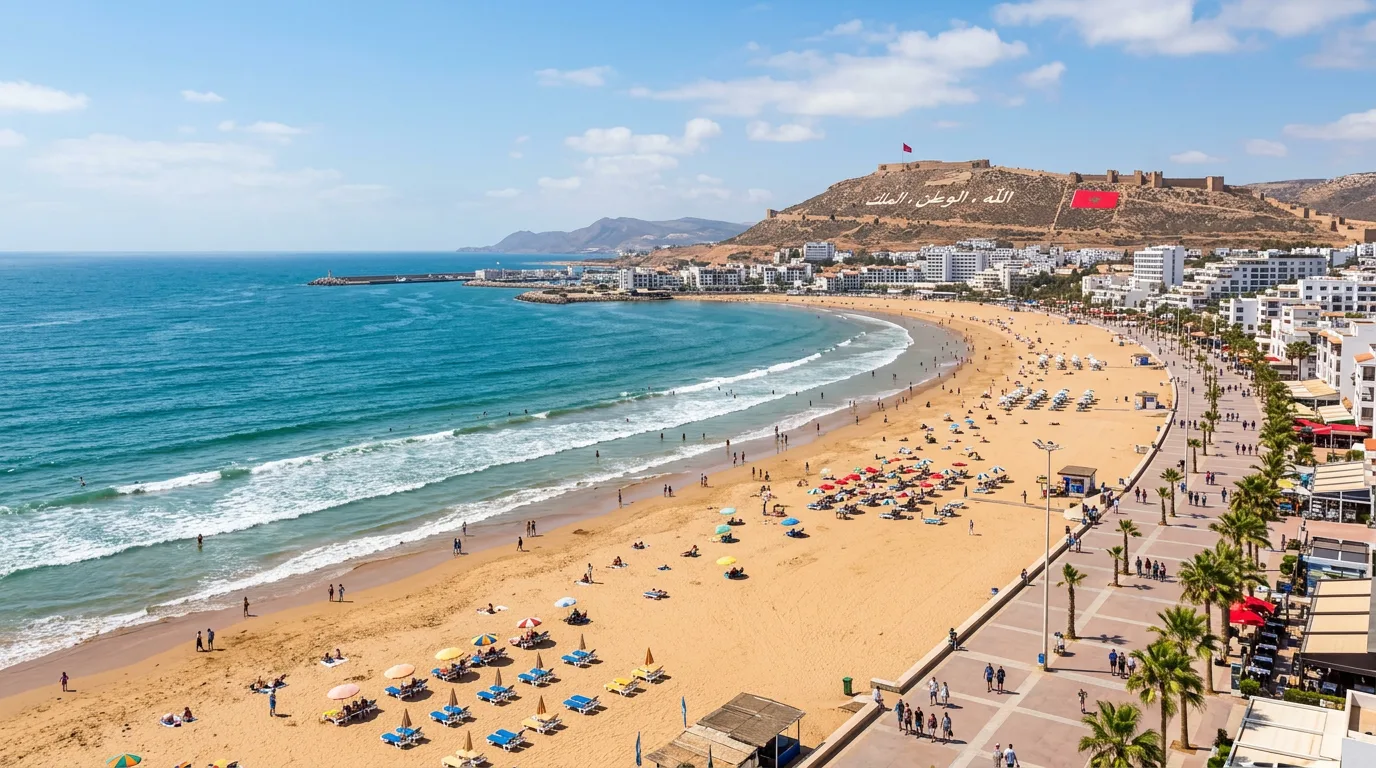
Agadir
Best wheelchair accessibility in Morocco
Rebuilt after the 1960 earthquake, Agadir is a modern resort city with wide flat streets, smooth pavements, and buildings designed with ramps and elevators. The 6-kilometer beachfront promenade is perfectly flat and wheelchair-friendly. All-inclusive resorts offer fully accessible rooms with roll-in showers and pool hoists. The Souss-Massa hospital meets international accessibility standards.
- Flat, wide streets and modern infrastructure throughout
- Accessible beachfront promenade stretching 6 kilometers
- All-inclusive resorts with full wheelchair access from 1,200 MAD per night
- Modern hospital with disability-adapted facilities
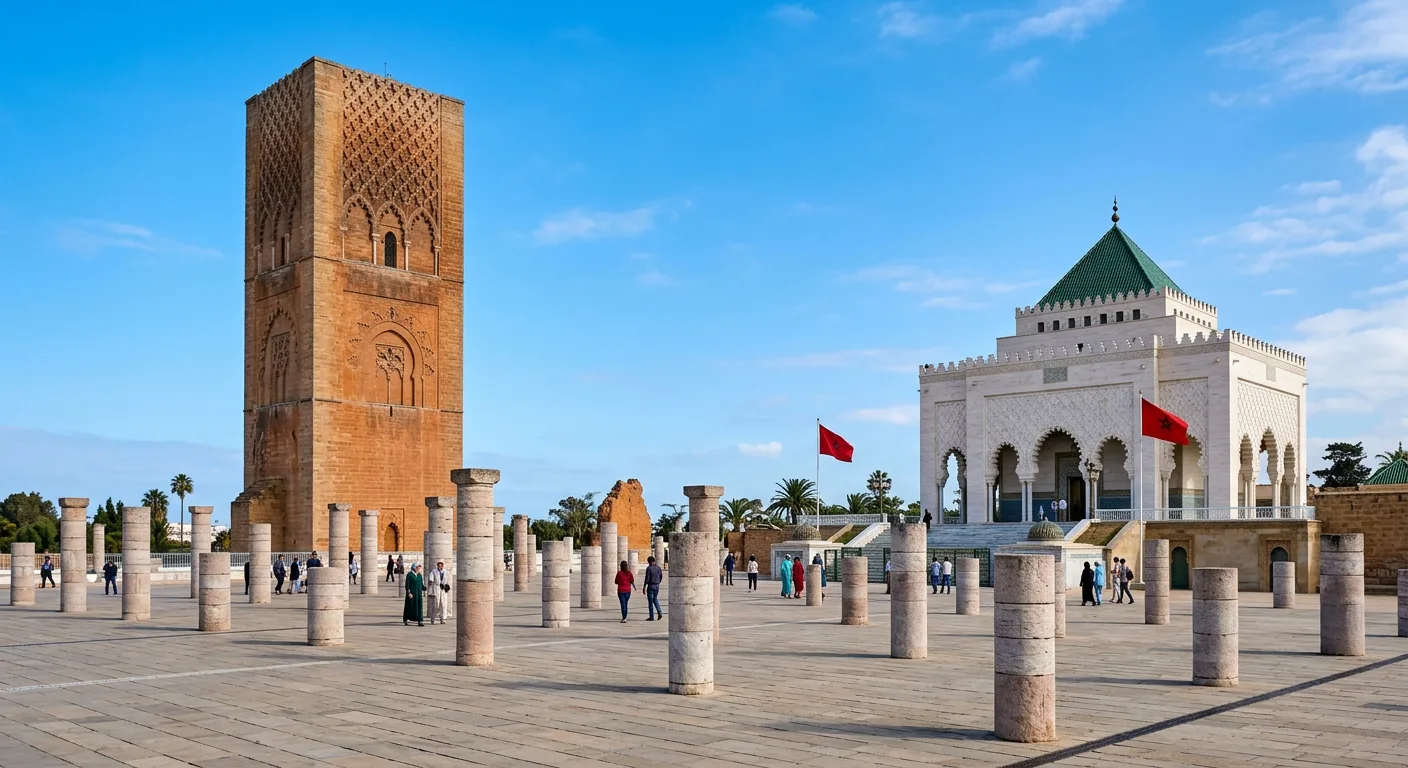
Rabat
Modern capital with accessible tram system
Morocco's capital has the best public transport for disabled travelers. The tram system has step-free access at all stops with tactile paving and audio announcements. Wide boulevards in the Agdal and Hassan districts are wheelchair-navigable. Hassan Tower and the Mausoleum of Mohammed V sit on flat ground. Modern government buildings and international hotels provide reliable accessibility.
- Tram system with step-free access, tactile paving, and audio announcements
- Wide, flat boulevards in Agdal and Hassan districts
- Hassan Tower and Mausoleum accessible on level ground
- Clinique Agdal with disability experience and modern equipment
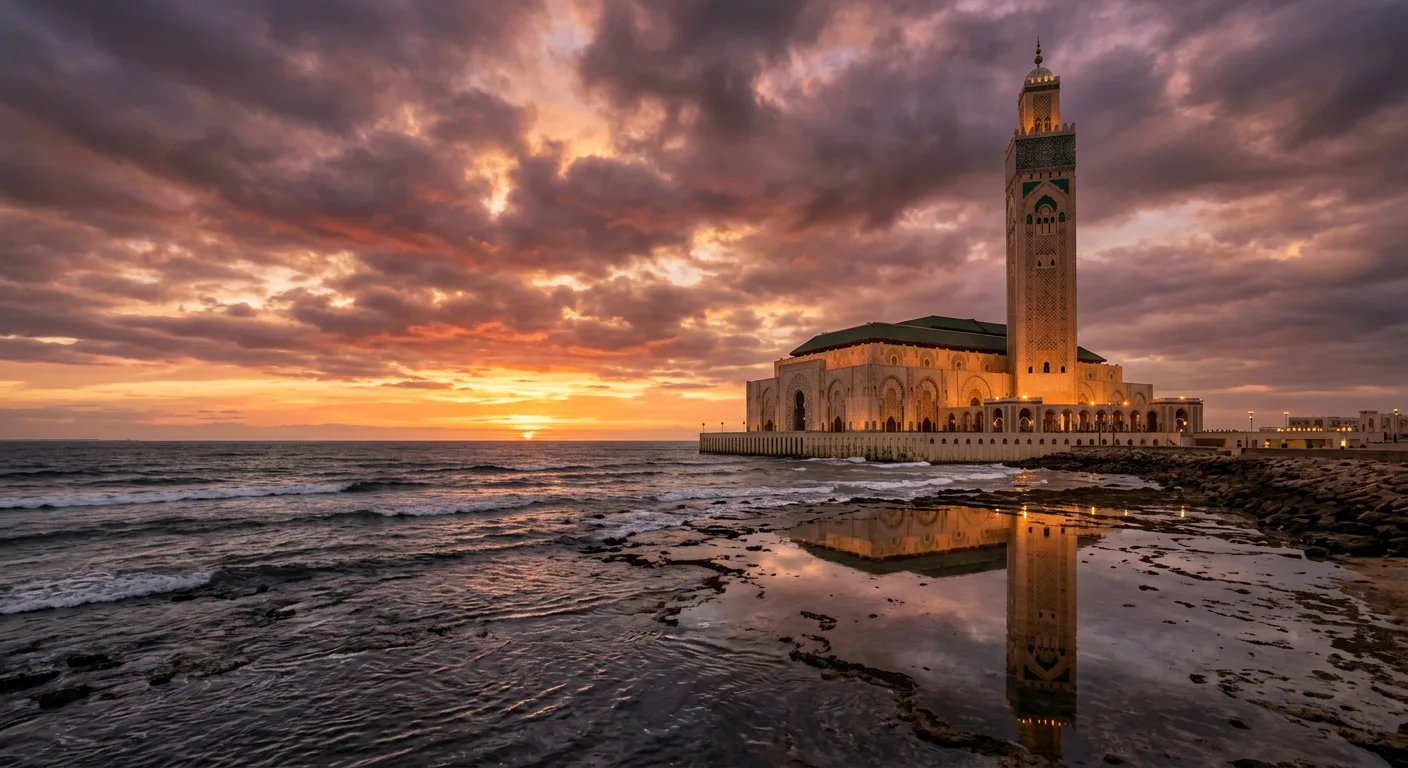
Casablanca
Modern infrastructure, accessible tram
Morocco's largest city has good hotel accessibility and a tram system with step-free access. The Corniche waterfront is wheelchair-accessible. Hassan II Mosque has ramp access to the exterior esplanade. The Maarif and Anfa districts have the smoothest sidewalks. Traffic and crowded pavements can be challenging, but adapted taxis and private drivers are readily available.
- Tram system with wheelchair access at all stations
- Hassan II Mosque esplanade accessible via ramps
- International hotels with full ADA-standard accessible rooms
- Private hospitals with disability services and English-speaking staff

Marrakech
Luxury hotels accessible, medina very difficult
Marrakech presents a mixed picture. The Gueliz new town has modern hotels with excellent wheelchair access. Properties like Four Seasons, Royal Mansour, and La Mamounia have full accessible facilities including pool hoists and adapted rooms. However, the medina is extremely difficult for wheelchair users -- narrow alleys, steps, donkey traffic, and uneven surfaces make independent navigation nearly impossible.
- World-class accessible hotels in Gueliz and Hivernage districts
- Four Seasons and Royal Mansour with fully adapted suites
- Multiple accessible tour operators based in the city
- Gueliz has flat, modern streets suitable for wheelchairs
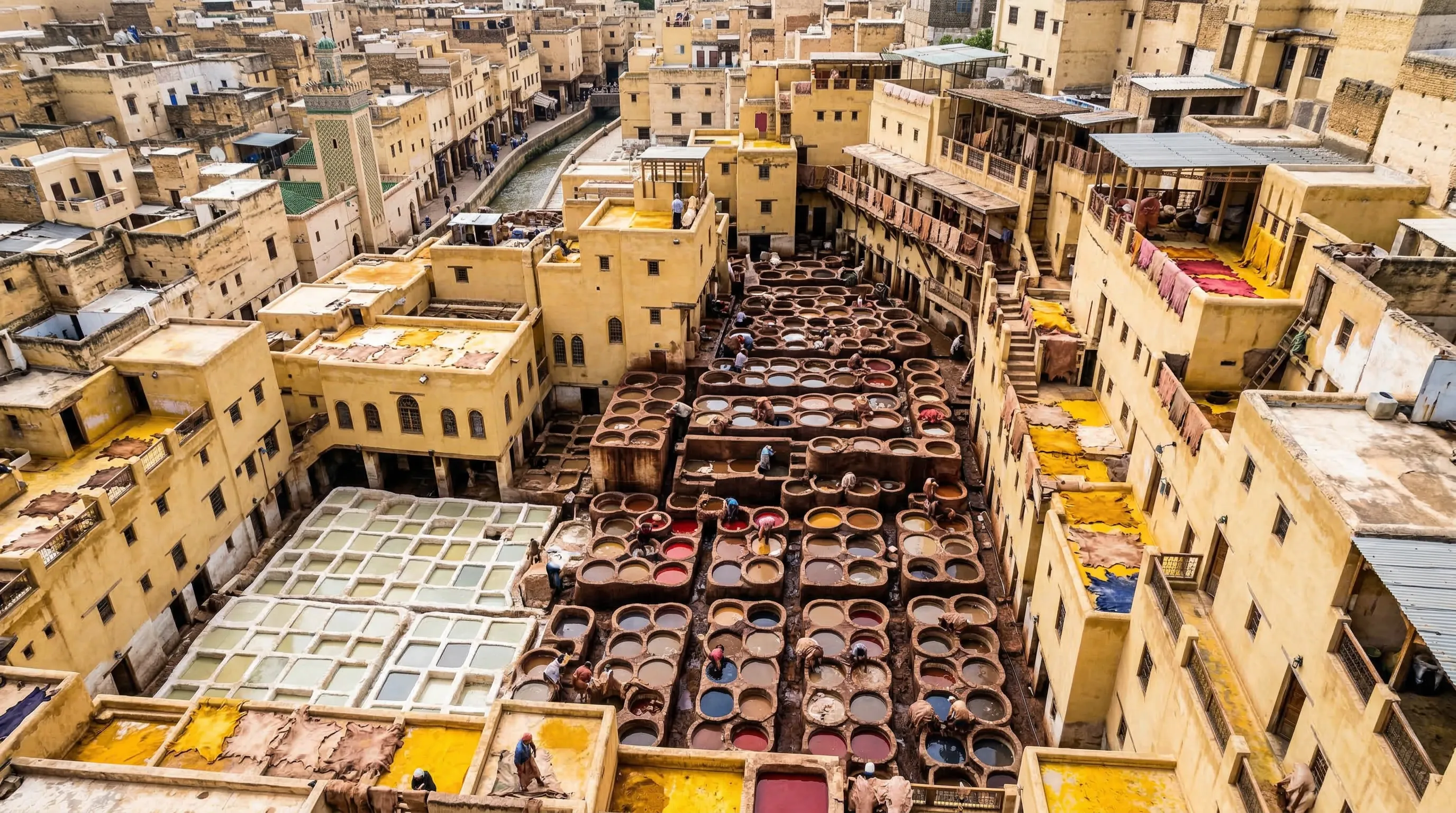
Fes
Culturally extraordinary but very challenging
Fes offers deep cultural immersion but is the most challenging city for wheelchair users. The ancient medina has steep hills, passages as narrow as one meter, constant donkey traffic, and steps at every turn. The Ville Nouvelle is more manageable with wider streets. Luxury hotels outside the medina offer full accessibility. Consider experiencing the medina through rooftop terraces and panoramic viewpoints at Borj Nord instead.
- Ville Nouvelle has wider, flatter streets for wheelchairs
- Luxury hotels like Palais Faraj offer accessible rooms with medina views
- Borj Nord viewpoint provides panoramic medina views without entering
- Accessible restaurants and galleries in the new town
Accessible Accommodations
Where to stay with reliable wheelchair access, from international hotels to adapted riads.
Five-Star International Hotels
From 1,500 MAD / night
Best for: Full wheelchair accessibility, trained staff, medical support
International chains offer the most dependable accessibility in Morocco. Four Seasons Marrakech, Sofitel Rabat, Fairmont Royal Palm, and Marriott properties provide ADA-standard rooms with roll-in showers, grab bars, lowered fixtures, wide doorways (minimum 82 cm), and visual fire alarms. Staff receive disability awareness training. On-call medical assistance is standard.
- Request accessible rooms with roll-in showers when booking -- standard accessible rooms may only have grab bars
- Four Seasons Marrakech has the best wheelchair-accessible pool with a hoist
- Fairmont Royal Palm provides adapted golf carts for moving across the resort grounds
- Ask for room photos showing doorway widths and bathroom layout before confirming
All-Inclusive Beach Resorts
From 1,200 MAD / night
Best for: Minimal logistics, beach wheelchairs, self-contained stays
All-inclusive resorts in Agadir provide the easiest accessible experience in Morocco. RIU, Iberostar, and Sofitel Agadir offer adapted rooms, pool hoists, accessible restaurants, and beach wheelchairs. All meals and activities are on-site, removing the stress of navigating unfamiliar streets. Some resorts have on-site physiotherapy services.
- RIU Tikida Beach in Agadir has excellent wheelchair-accessible beach facilities
- Reserve a beach wheelchair in advance -- availability is limited to 2-3 per resort
- All-inclusive removes the daily challenge of finding accessible restaurants
- Seasonal pricing can change; book shoulder season (April-May or October) for best availability
Adapted Luxury Riads
From 900 MAD / night
Best for: Authentic Moroccan atmosphere with accessibility modifications
A small number of luxury riads have been adapted with ground-floor accessible rooms, widened doorways, roll-in showers, and courtyard-level dining. These are rare finds that combine genuine Moroccan architecture with wheelchair access. Book well in advance as adapted rooms are extremely limited -- most properties have just one.
- Riad Star in Marrakech has a ground-floor wheelchair-accessible room with roll-in shower
- Always verify accessibility claims directly with the riad -- "accessible" can mean different things
- Most traditional riads have steep staircases and are NOT wheelchair accessible despite marketing
- Ask for photos or a video call showing the doorway widths, bathroom, and courtyard access
Accessible Apartments and Villas
From 700 MAD / night
Best for: Extended stays, self-catering, privacy and independence
Rental apartments and villas in modern districts can work well for longer stays. Look for ground-floor units or buildings with elevators in Agadir, Rabat Agdal, or Marrakech Gueliz. Self-catering removes restaurant accessibility concerns entirely. You control your own schedule and space.
- Use Booking.com wheelchair-accessible filter for verified listings with measured doorways
- Ground-floor apartments in Agadir Founty district are frequently fully accessible
- Request a video walkthrough of the property before booking to verify real-world access
- Hire a part-time assistant or carer through your tour operator if needed for daily tasks
Adapted Transport Options
How to get around Morocco with a wheelchair or mobility equipment.
Private Adapted Vehicles
The single best transport option for wheelchair users in Morocco. Specialist operators provide Mercedes Sprinters and Ford Transits with wheelchair ramps or lifts, tie-down systems, and experienced drivers. Available for city tours, day trips, and multi-day itineraries across the country.
- From 1,500 MAD per day including fuel, driver, and vehicle
- Book through specialist tour operators at least 2 months ahead
- Specify your wheelchair dimensions when booking to ensure the correct vehicle
- Drivers double as assistants and know accessible routes in each city
Tram Systems (Rabat & Casablanca)
Both the Rabat-Sale and Casablanca tram systems are fully accessible with step-free boarding, tactile paving at stops, and audio announcements. Platforms are level with the tram floor. Dedicated wheelchair spaces are inside each carriage.
- All stops have step-free access and tactile paving
- Dedicated wheelchair space inside each tram carriage
- Rabat tram connects Hassan Tower, the medina entrance, and Agdal
- Tickets from 6 MAD per journey; rechargeable cards available
Al Boraq High-Speed Train
The Al Boraq train between Tangier and Casablanca has dedicated wheelchair spaces, an accessible restroom, and staff assistance for boarding. Modern stations have elevators and ramps. Standard ONCF trains have limited and inconsistent accessibility.
- Dedicated wheelchair space in each Al Boraq train set
- Request boarding assistance 48 hours in advance through the ONCF website
- Tangier Ville, Kenitra, and Casa Voyageurs stations have the best access
- Standard ONCF trains have narrow corridors -- wheelchair access varies by station
Domestic Flights (Royal Air Maroc)
Royal Air Maroc provides full wheelchair assistance at all Moroccan airports. Aisle wheelchairs are available for boarding, and your own wheelchair is carried free in the hold. Airport assistance covers check-in, security, and gate transfer.
- Request WCHR (ramp), WCHS (steps), or WCHC (cabin seat) codes when booking
- Your wheelchair is carried free -- specify manual, electric, or lithium battery type
- Arrive 3 hours before departure to allow time for assistance procedures
- Marrakech Menara and Casablanca Mohammed V have the best airport accessibility
Transport to Avoid
Standard petit taxis and grand taxis are not wheelchair accessible. CTM and Supratours buses do not have wheelchair lifts or ramps. City buses have no accessibility features. Horse-drawn carriages (caleches) in Marrakech and Meknes are not suitable for wheelchair users. Stick to private adapted vehicles, trams, and the Al Boraq train for reliable access.
Accessible Attractions
Sites that wheelchair users can realistically visit, with honest access levels.
Hassan II Mosque, Casablanca
The vast exterior esplanade is accessible via ramps and offers spectacular ocean views. The interior prayer hall is reached via stairs, but staff can assist wheelchair users through a side entrance with ramp access during guided tours. Contact the mosque administration at least 48 hours ahead to arrange access.
Book a guided tour and inform them about wheelchair needs in advance. The esplanade alone is worth the visit.
Majorelle Garden, Marrakech
The main paths are paved and relatively flat, allowing wheelchair access to most garden areas and the iconic blue villa exterior. The YSL Museum next door is fully wheelchair accessible with an elevator. Some narrow garden paths between plant beds are tight for wider wheelchairs.
Visit early morning when paths are less crowded. The YSL Museum is the fully accessible highlight.
Agadir Beach and Promenade
The 6-kilometer beachfront promenade is flat, smooth, and perfect for wheelchairs. Some resort sections offer beach wheelchairs for sand access. Accessible cafes, restrooms, and viewpoints line the entire length. The best wheelchair-friendly beach experience in Morocco.
Request a beach wheelchair from your resort. Best conditions before noon when the wind is lighter.
Hassan Tower and Mausoleum, Rabat
The esplanade around Hassan Tower and the Mausoleum of Mohammed V is on flat ground with smooth stone paving. The mausoleum interior is reached via a gentle ramp. Guards are generally helpful with wheelchair users. One of the most wheelchair-friendly historical sites in Morocco.
Arrive via the accessible Rabat tram. The entire complex is on level ground with no steps.
Menara Gardens, Marrakech
Wide, flat pathways surround the central reflecting pool with Atlas Mountain views. The olive groves are on level ground. The pavilion has a few steps but the main garden experience -- the reflecting pool, the open-air setting, the mountain backdrop -- is fully accessible.
Late afternoon offers the best light on the Atlas Mountains. Spacious and rarely crowded.
Adapted Desert Tours
A Sahara desert experience is possible for wheelchair users with the right operator. Accessible Morocco Tours and Friendly Morocco run adapted desert excursions using 4x4 vehicles with transfer assistance. They work with desert camps that have ground-level tent accommodation with firm sand paths between tents.
Vehicle
Adapted 4x4 with transfer assistance from wheelchair to vehicle seat
Accommodation
Ground-level luxury tents with firm sand paths and accessible bathroom facilities
Camel Rides
Possible with assistance for some mobility levels -- discuss with operator in advance
Cost
Adapted 2-day/1-night desert tours from 3,500 MAD per person including transfers and meals
Specialist Tour Operators
Operators with adapted vehicles, trained guides, and proven accessible itineraries.
Accessible Morocco Tours
Local Operator (Marrakech)
Marrakech-based operator specializing in wheelchair-accessible tours across the country. Offers adapted Mercedes Sprinter vehicles, disability-trained guides, and customized itineraries covering cities, desert camps, and coastal towns. Can arrange accessible accommodations and airport transfers.
Book at least 3 months ahead for peak season. Specify all mobility needs, wheelchair dimensions, and battery type.
Friendly Morocco
Local Operator (Marrakech)
Focused on inclusive tourism with adapted vehicles featuring ramps, disability-aware local guides, and careful accessible route planning. Offers half-day city tours and multi-day accessible itineraries covering Marrakech, the coast, and adapted desert experiences.
Half-day accessible city tours from 800 MAD. Full-day excursions from 1,500 MAD. Seasonal pricing can change.
Wheel the World
International Platform
International platform connecting disabled travelers with pre-vetted accessible experiences worldwide, including Morocco. Each listing has detailed accessibility information, photos of doorways and bathrooms, and real traveler reviews from wheelchair users.
Check their Morocco listings for pre-verified experiences. Useful for comparing accessible accommodations side by side.
Accessible Travel Solutions
International Operator (UK-based)
UK-based operator offering fully managed accessible holidays in Morocco. Packages include adapted flights, wheelchair-accessible hotels, adapted ground transport, and experienced tour leaders who handle all logistics. Covers Marrakech, Essaouira, Agadir, and the coast.
Package holidays from 15,000 MAD per person for 7 days including flights and adapted transfers.
Navigating the Medina in a Wheelchair
The hardest part of accessible travel in Morocco -- and how to handle it.
Traditional medinas are the biggest accessibility challenge in Morocco. These medieval walled cities were designed for pedestrians and donkeys. Alleys can narrow to under a meter. Steps appear without warning. Cobblestones are uneven and sometimes missing. Drainage channels cut across pathways. Motorbikes and donkeys share the same narrow lanes as pedestrians, and there is nowhere to move aside.
That does not mean you should skip the medina experience entirely. Here is how wheelchair users and mobility-impaired travelers can still engage with medina life:
Hire a Local Accessible Guide
A guide who knows the medina can identify the widest routes, avoid steps, and warn about obstacles. Some specialist tour operators have guides specifically trained in wheelchair-accessible medina routes.
Use Rooftop Terraces
Many riads and restaurants have rooftop terraces accessible by elevator or located on the ground level of the Ville Nouvelle. These give panoramic views over the medina rooftops, minarets, and daily life below.
Visit Medina Edges
The main entrances and wider arteries of medinas are more accessible than the deep interior. In Marrakech, Jemaa el-Fnaa square and the first stretch of Rue Semarine are manageable. In Fes, the Bab Boujloud area is relatively flat.
Choose Essaouira
If medina exploration matters to you, Essaouira has the most accessible medina in Morocco. Its Portuguese-influenced grid layout means streets are wider and flatter than in other cities. Not perfect, but the most feasible for wheelchairs.
Accept What You Cannot Access
Some parts of Moroccan medinas are genuinely inaccessible. The tanneries of Fes, the narrow souk alleys of Marrakech, the steep kasbah passages -- these are not accessible and may never be. Focus on what you can reach rather than what you cannot.
Tips by Disability Type
Specific advice for different types of impairments.
Wheelchair and Mobility Impairments
- Bring essential spare parts for your wheelchair: inner tubes, casters, and a basic toolkit
- Electric wheelchair users need a universal charger adapter -- Morocco uses type C and E plugs at 220V
- Request a portable ramp from your tour operator for locations with a few steps
- Carry a lightweight folding wheelchair as backup if your primary chair is electric
- Download Wheelmap or AccessibleGO apps to find user-rated accessible locations
- Cobblestones and cracked pavements are the norm outside modern districts -- front caster wheels take a beating
Visual Impairments
- Morocco has very limited tactile paving -- it exists only at tram stations in Rabat and Casablanca
- Uneven pavements, open drains, bollards, and parked motorbikes on sidewalks are constant obstacles
- A sighted guide or travel companion is strongly recommended for street navigation
- Download Be My Eyes app and ensure your phone has robust offline maps with voice navigation
- Hotels can arrange a staff member to walk you through the property layout on arrival
- Moroccan people are generally very willing to offer physical guidance when asked
Hearing Impairments
- Morocco is generally manageable -- Moroccan communication naturally involves gestures and visual expression
- Few tourist sites have induction loops, captioning, or sign language interpretation
- Download offline Google Translate with French and Arabic for written communication with locals
- Carry a card in Arabic and French explaining your hearing impairment for taxi drivers and shopkeepers
- Emergency services (19 police, 15 ambulance) do not have text-based alternatives -- have someone call for you
- The visual richness of Morocco -- architecture, markets, landscapes -- is fully experienced without hearing
Chronic Conditions and Hidden Disabilities
- Carry a medical ID bracelet or card in French and Arabic listing conditions, medications, and emergency contacts
- Heat is a serious factor from June through September -- plan outdoor activities for early morning or late afternoon
- Pharmacies are on every block in Moroccan cities and pharmacists speak French; many speak English
- Bring a complete supply of specialized medications -- specific brands may not be available locally
- Private clinics in Marrakech, Casablanca, and Rabat have English-speaking doctors and modern equipment
- Travel insurance must explicitly cover pre-existing conditions and disability-related medical situations
Medication, Equipment & Insurance
Practical guidance for bringing medical equipment and medication into Morocco.
Medications Through Customs
Carry all medications in original packaging with a doctor's letter in French or English listing each medication, its generic name, dosage, and the medical reason. Controlled substances (opioid painkillers, some muscle relaxants) require a copy of your prescription. Moroccan customs rarely cause issues but having documentation prevents delays. Keep medications in your carry-on luggage.
Wheelchair and Mobility Equipment
Airlines carry wheelchairs and mobility equipment free of charge. Tag your wheelchair with your name and contact details. Remove detachable parts (cushions, joysticks, footrests) and carry them in the cabin. For electric wheelchairs, disconnect the battery and tape the terminals. Bring a lightweight backup fold-up chair if possible, as repairs can take days.
Travel Insurance
Standard travel insurance often excludes pre-existing conditions and disability-related claims. Specialist providers like AllClear and Staysure cover pre-existing conditions including those requiring mobility equipment. Your policy must cover wheelchair damage, loss, replacement costs, medical evacuation, and repatriation with equipment. Read the fine print. Seasonal pricing can change between providers.
Emergency Contacts
Emergency numbers: 19 (police), 15 (ambulance), 150 (fire). Buy a local SIM at the airport from 30 MAD for reliable local calls. Save your hotel address in Arabic on your phone. Carry a medical card in French and Arabic listing your conditions, medications, and emergency contact. Your hotel concierge can call for medical assistance at any hour.
Frequently Asked Questions
Real questions from travelers with disabilities planning a Morocco trip.
Is Morocco wheelchair accessible?
Morocco is improving but remains challenging for wheelchair users. Modern cities like Agadir and Rabat have the best infrastructure with ramps, accessible hotels, and smooth sidewalks. Traditional medinas are largely inaccessible due to narrow alleys, steps, and cobblestones. With advance planning and the right tour operator, wheelchair users can have a rewarding trip focusing on accessible areas and attractions.
Which Moroccan city is most accessible for wheelchair users?
Agadir is the most wheelchair-friendly city in Morocco. Rebuilt as a modern city after the 1960 earthquake, it has wide flat streets, an accessible 6-kilometer beach promenade, modern resort hotels with full wheelchair access, and smooth pavements throughout. Rabat is the second best choice thanks to its accessible tram system, wide boulevards, and modern infrastructure.
Can wheelchair users visit Moroccan medinas?
Traditional medinas are extremely difficult for wheelchair users due to narrow alleys, steps, uneven cobblestones, and steep slopes. Essaouira has the most manageable medina with a relatively flat grid layout. In Marrakech, main arteries like Rue Semarine are wider but side alleys are impassable. A local guide who knows accessible routes is essential. Many wheelchair travelers experience medina life from accessible rooftop terraces and cafes instead.
Are there wheelchair-accessible hotels in Morocco?
Yes. International hotel chains like Four Seasons, Sofitel, Fairmont, and Marriott offer fully accessible rooms with roll-in showers, grab bars, wide doorways, and elevator access. Prices start from 1,500 MAD per night. Some luxury riads have ground-floor accessible rooms, but most traditional riads have narrow staircases and are not wheelchair accessible. Always confirm accessibility features directly with the hotel before booking.
What adapted transport options exist in Morocco?
Private drivers with adapted vehicles are the best option, available from specialist tour operators from 1,500 MAD per day. The Rabat and Casablanca tram systems have step-free access at all stops. The Al Boraq high-speed train between Tangier and Casablanca has dedicated wheelchair spaces. Standard taxis and grand taxis are not wheelchair accessible. Royal Air Maroc provides wheelchair assistance on all domestic flights.
Are there tour operators in Morocco specializing in accessible travel?
Yes. Several operators specialize in accessible Morocco tours. Accessible Morocco Tours and Friendly Morocco are locally based operators with adapted vehicles, trained guides, and wheelchair-accessible itineraries. International operators like Wheel the World also offer Morocco packages. Book at least 3 months in advance to ensure adapted vehicle and accommodation availability.
Can I bring my electric wheelchair to Morocco?
Yes. Airlines carry wheelchairs free of charge. Inform your airline about the wheelchair type and battery (lithium or dry cell) at least 48 hours before departure. Bring a universal power adapter as Morocco uses type C and E plugs (220V). Carry spare parts, a toolkit, and know the dimensions of your chair so tour operators can arrange correctly sized vehicles. Charging at hotels is straightforward.
What medical facilities are available for disabled travelers in Morocco?
Private hospitals in Marrakech, Casablanca, Rabat, and Agadir have modern equipment and English-speaking doctors. Clinique Internationale Marrakech, Clinique du Parc Casablanca, and Clinique Agdal Rabat handle wheelchair repairs, prosthetic issues, and disability-related medical needs. Pharmacies are widespread. Bring a full supply of specialized medications as specific brands may not be available. Travel insurance covering disability-related medical needs and equipment damage is essential.
Related Travel Guides
First-Time Visitor Guide
Everything first-timers need to know about visiting Morocco, from visas to cultural norms.
Read GuideTransport Guide
Trains, buses, taxis, and rental cars -- how to get around Morocco safely and efficiently.
Read GuideHealth & Safety
Medical facilities, vaccinations, travel insurance, and safety tips for Morocco travelers.
Read GuideLuxury Hotels
The finest hotels and resorts in Morocco, many with excellent accessible facilities.
Read GuideMorocco Is Worth the Journey
With the right planning, a specialist tour operator, and accessible accommodations, disabled travelers can experience the extraordinary culture, food, and warmth that make Morocco one of the most captivating destinations on earth. The country is not perfect for accessibility -- but it rewards those who make the effort.