Discovering...
Culinary Experiences
Morocco Cooking Classes
Guide 2026
Hands-on workshops in Marrakech, Fes, Essaouira, and Chefchaouen. Shop the souks with local chefs, master tagine and couscous techniques, and eat everything you cook. Prices from 300 MAD.
Why a Cooking Class Is the Best Thing You Can Do in Morocco
Moroccan cuisine ranks among the world's most complex and satisfying food traditions. Tagine, couscous, pastilla, harira -- these dishes look straightforward on a restaurant plate, but each one relies on layered spice techniques passed down through generations of family cooks. A cooking class gives you access to those techniques in a way no cookbook or video tutorial can replicate.
The best classes begin in the market. You walk through the souk with a local chef, selecting cumin, saffron, ras el hanout, preserved lemons, and seasonal produce. That market tour alone teaches more about Moroccan food culture than a week of eating out. Back in the kitchen, you prepare three to five dishes from scratch, then sit down and eat the results with your instructor. Recipes go home with you, so the learning continues long after you leave Morocco.
Prices start from 300 MAD for a group session at Cafe Clock in Fes and go up to 2,500 MAD for a private class at La Maison Arabe in Marrakech. Most fall in the 450-700 MAD range. For the quality of instruction, ingredients, and the full meal included, cooking classes are among the best-value cultural experiences Morocco offers. Seasonal pricing can change during peak tourist months (March-May, September-November).
What to Expect: Step by Step
Most half-day Moroccan cooking classes follow this four-stage format, lasting 3-5 hours total.
1
Market Tour (30-60 min)
Your instructor meets you at a souk entrance or picks you up from your riad. You walk through spice stalls, vegetable sellers, and butcher shops. The chef explains ras el hanout ingredients, how to spot quality saffron versus dyed safflower, and which produce is in season. You buy everything needed for the class together.
2
Prep & Mise en Place (30-45 min)
Wash and chop vegetables, measure spices, and prepare marinades like chermoula. The instructor demonstrates knife skills and the logic behind each spice combination: cumin and paprika for tagines, cinnamon and sugar for pastilla, anise and sesame for bread. You smell and taste each spice individually before it goes into the dish.
3
Hands-On Cooking (1.5-2 hours)
Each participant works on their own dish at an individual station. Tagines go on low heat; while they simmer, you prepare salads, bread, or pastry. The instructor circulates, corrects technique, and shares family food stories. The kitchen fills with the scent of cumin, coriander, and saffron. This is the longest and most engaging stage.
4
The Shared Meal (45-60 min)
Sit down and eat everything you cooked. Mint tea is prepared ceremonially -- poured from a height to create a frothy top. The instructor joins the table, answering questions about food culture, substitutions, and where to buy ingredients at home. Recipes are emailed or handed out as printed cards.
Marrakech Cooking Classes
Morocco's culinary capital has the widest selection of cooking schools, from nonprofit training kitchens to luxury riad experiences with dedicated dada home cooks.
Prices are starting prices per person and may vary by season. Book directly with each school for current rates.
Amal Women's Training Center
4.8 on TripAdvisor (2,900+ reviews)Instructor: Chef Nora Fitzgerald-Belkabir (founder) & rotating local women trainees
A nonprofit restaurant and training program that teaches disadvantaged Moroccan women professional culinary skills. Classes run in a bright, open kitchen in Gueliz. You start at the nearby Marche Central, picking up spices and seasonal vegetables with your guide. Back at Amal, you prepare a three-course meal: typically a salad, tagine, and dessert. The atmosphere is relaxed and personal. All profits fund the training program, so your class fee directly supports women entering the workforce.
Sample menu:
Chicken tagine with preserved lemonsMoroccan salad trio (zaalouk, taktouka, carrot)Orange-cinnamon dessert
From 350 MAD per person (group)
4 hours (including market visit)
4-10 guests
Marrakech
Souk Cuisine
4.9 on TripAdvisor (3,200+ reviews)Instructor: Gemma van de Berg (Dutch-Moroccan founder) & Chef Khadija
A medina-based school that starts every session deep inside the Mellah spice market. Gemma leads the market walk herself, explaining spice blends, haggling customs, and seasonal produce. The cooking happens on a rooftop terrace with a direct view of the Koutoubia minaret. Dedicated vegetarian sessions run twice a week. Each participant gets their own station and prepares every dish individually. Recipes are emailed after class in PDF format.
Sample menu:
Vegetable or meat tagineZaalouk and taktouka saladsMsemen flatbreadMint tea ceremony
From 500 MAD per person (group), from 1,500 MAD private
5 hours (including 1-hour market tour)
4-12 guests
Marrakech
La Maison Arabe
4.7 on TripAdvisor (1,800+ reviews)Instructor: Dada (traditional family cook) supervised by Chef Mohammed
Morocco's original cooking school, operating since 1999 inside a restored 1946 riad in the medina. The "dada" system pairs you with an experienced home cook who learned from her mother and grandmother. No market tour here -- ingredients are pre-sourced for quality control. Classes take place in a traditional kitchen with zellige tile and copper cookware. The focus is precision: how to layer spices in a tagine, the exact steaming technique for couscous, the fold pattern for pastilla. You eat your creation in the riad's courtyard garden.
Sample menu:
Lamb tagine with prunes and almondsHand-rolled couscousPastilla (pigeon or chicken)
From 850 MAD per person (group), from 2,500 MAD private
3 hours
2-8 guests
Marrakech
Fes Cooking Classes
Fes is Morocco's gastronomic heart. Fassi cuisine is the most refined in the country, shaped by Andalusian, Arab, and Amazigh influences over 1,200 years. Pastilla was born here.
Palais Amani Cooking School
4.8 on TripAdvisor (950+ reviews)Instructor: Chef Ouafae & Chef Houda
Set inside a restored 17th-century palace in the Fes medina, Palais Amani runs daily morning classes. The session begins with a walk through the Rcif souk, one of the city's oldest food markets. Chef Ouafae explains how to identify quality saffron, when preserved lemons are ready, and why Fassi cuisine uses more sugar than other Moroccan regions. Back at the palace kitchen, you cook a four-dish menu that always includes pastilla, the city's signature dish. The final meal is served in the palace's Andalusian garden.
Sample menu:
Pastilla (chicken and almond)Fassi lamb tangiaBriouats (stuffed pastry)Harira soup
From 650 MAD per person (group), from 1,800 MAD private
4.5 hours
2-8 guests
Fes
Cafe Clock
4.6 on TripAdvisor (700+ reviews)Instructor: Chef Ahmed & rotating guest cooks from the medina
Cafe Clock runs casual, affordable cooking workshops from its restored townhouse near the Bou Inania medersa. The vibe is informal compared to palace settings. Ahmed teaches one signature dish per session, breaking it down step by step. The famous camel burger workshop draws the most attention, but bread-making classes (khobz, msemen, baghrir) and tagine sessions are the most educational. The cafe also hosts occasional "supper club" events where local grandmothers cook family recipes for a seated dinner.
Sample menu:
Camel burgerMsemen and baghrir breadLamb tagine Fassi-style
From 300 MAD per person (group)
2.5-3 hours
4-14 guests
Fes
Essaouira Cooking Classes
Atlantic seafood meets Moroccan spice. Essaouira's cooking scene revolves around the daily fish auction at the port, where classes begin with selecting the day's catch.
L'Atelier Madada
4.9 on TripAdvisor (600+ reviews)Instructor: Chef Mouna & Chef Fatima
Run by the team behind Heure Bleue Palais hotel, L'Atelier Madada occupies a whitewashed townhouse steps from the fishing port. Classes start at 9:30am with a walk through the port fish auction, where you pick the day's catch directly from the boats. Mouna teaches Souiri-style seafood: chermoula-marinated fish tagine, grilled sardines with cumin, and seafood pastilla. The afternoon session focuses on traditional dishes. The kitchen is compact and modern, and groups stay small.
Sample menu:
Fish tagine with chermoulaSeafood pastillaGrilled sardines with cuminMoroccan cookies
From 700 MAD per person (group), from 2,000 MAD private
4 hours
2-6 guests
Essaouira
Chefchaouen Cooking Classes
The blue city offers intimate, home-style cooking with Riffian recipes you rarely encounter in southern Morocco. Mountain herbs, goat cheese, and rfissa dominate the menu.
Lala Mesouda Cooking Class
4.7 on Google Reviews (200+ reviews)Instructor: Lala Mesouda & family members
A family-run class in the heart of the blue medina. Lala Mesouda, a Riffian grandmother, teaches recipes from the mountainous north that rarely appear in Marrakech or Fes kitchens. The menu leans on goat cheese, fresh herbs from her rooftop garden, and seasonal mountain vegetables. No market tour here -- ingredients come from her own suppliers in the souk. The kitchen is her actual home kitchen, and the meal is served on her family terrace overlooking the valley. Groups stay intimate, rarely exceeding four guests.
Sample menu:
Rfissa (shredded msemen with chicken)Mountain herb tagine with goat cheeseRiffian mint tea with wormwood
From 400 MAD per person (group), from 1,000 MAD private
3.5 hours
2-4 guests
Chefchaouen
Dishes You'll Learn to Cook
From slow-simmered tagines to hand-rolled couscous and layered pastilla, these are the core dishes taught across Morocco's cooking schools.
Tagine
Beginner-friendlyThe slow-cooked clay-pot dish that defines Moroccan cooking. You learn to build flavor in layers: onions and oil first, then spice paste (chermoula or ras el hanout), then protein, then slow-cooked vegetables and fruit. The conical lid traps steam and returns it to the dish. Chicken with preserved lemons and olives is the most common class recipe. Lamb with prunes and almonds is a close second. A basic tagine takes 90 minutes on low heat.
Couscous
IntermediateHand-rolling couscous from scratch takes patience. You rub semolina flour with salted water in a wide gsaa bowl, breaking clumps between your palms until fine granules form. The couscous steams three separate times in a couscoussier, with oil and fluffing between rounds. Most classes pair it with a seven-vegetable stew. Friday couscous is sacred in Moroccan households, so learning this dish carries cultural weight.
Pastilla (Bastilla)
Intermediate-AdvancedA layered pie of warqa pastry, slow-cooked pigeon or chicken, almonds, eggs, and a cinnamon-sugar dusting. The sweet-savory combination surprises first-time tasters. Making warqa from scratch is an advanced skill (thin dough tapped onto a hot surface), so most classes use pre-made sheets. You layer, fold, and bake. Fes claims pastilla as its own dish, and Palais Amani teaches the most traditional version.
Msemen & Baghrir (Moroccan Breads)
Beginner-friendlyMsemen is a square, pan-fried flatbread folded in layers like a laminated dough, served at breakfast with honey and butter. Baghrir (thousand-hole pancakes) use a fermented batter that creates tiny bubbles on one side only. Both are staples you can learn to make in under an hour. Cafe Clock in Fes runs dedicated bread-making sessions covering msemen, baghrir, and round khobz.
Harira Soup
Beginner-friendlyThe thick tomato-lentil-chickpea soup served every evening during Ramadan and year-round in homes and cafes. The base is tomato puree, onion, celery, and fresh herbs. Lentils and chickpeas add body. A flour-and-water slurry called tadouira gives harira its distinctive silky texture. Finishing touches: fresh lemon juice and chopped coriander. Each family guards its own harira recipe, and your instructor will share theirs.
Moroccan Pastries (Kaab el Ghazal & Chebakia)
IntermediateKaab el ghazal (gazelle horns) are crescent-shaped pastries filled with almond paste and scented with orange blossom water. Chebakia is a sesame-coated, flower-shaped cookie dipped in hot honey, traditionally made for Ramadan. Both require careful hand-shaping. Pastry workshops run as add-ons to full-day classes or as standalone sessions at La Maison Arabe.
Moroccan Spice Essentials
Every cooking class begins with spice education. These six spices define Moroccan cuisine, and your instructor will teach you how to smell, taste, and combine each one.
Ras el Hanout
From 30 MAD per 100g
Morocco's signature blend of 15-30 spices: cardamom, clove, cinnamon, black pepper, nutmeg, turmeric, dried rose petals, and long pepper. Every merchant guards their own recipe. Buy from a specialist attarine, not a tourist stall.
Cumin (Kamoun)
From 10 MAD per jar
The backbone of Moroccan savory cooking. Appears in tagines, kefta, harira, and chermoula. Moroccan cumin is earthier than Indian cumin. Whole seeds are toasted and ground fresh by market vendors. Buy small quantities -- ground cumin loses potency within a month.
Saffron (Za'fran)
From 40 MAD per gram
Nearly all Moroccan saffron comes from Taliouine in the Anti-Atlas. Genuine threads are deep crimson with no yellow tips and release color slowly in warm water. Cheap saffron (under 20 MAD/gram) is almost certainly dyed safflower. Every cooking class teaches you to spot the difference.
Paprika & Cayenne
From 8 MAD per 100g
Sweet paprika gives tagines and chermoula their red color; cayenne adds heat. Moroccan cooks combine both in a single dish, adjusting the ratio to taste. Souk paprika is brighter than supermarket versions because it is freshly ground from locally dried peppers.
Ginger & Turmeric
From 5 MAD per 50g
Dried ginger is used in nearly every tagine recipe. Turmeric adds golden color to rice, soups, and rubs. Together with cumin, these two form the base trio of Moroccan dry spice mixes. Fresh ginger is less common but shows up in some modern Moroccan kitchens.
Cinnamon (Qarfa)
From 5 MAD per stick
Bridges savory and sweet: dusts pastilla, flavors lamb-prune tagines, and appears in tea blends. Moroccan cinnamon is mostly cassia, stronger and more pungent than Ceylon. Ground cinnamon from 15 MAD for 100 grams at any souk.
Home Kitchen vs. Professional Kitchen
Two distinct experiences, both authentic. Your choice depends on what matters more to you: personal connection or technical precision.
Home Kitchen Classes
- Cook alongside a grandmother using multi-generational family recipes
- Intimate groups of 2-4 guests in a real family home
- Regional recipes unavailable at restaurant-style schools
- Shared family meal on a rooftop terrace or courtyard
- Best example: Lala Mesouda in Chefchaouen (from 400 MAD)
Professional Kitchen Classes
- Individual workstations with professional equipment
- Structured instruction with technique breakdowns
- Larger groups (4-14) with international participants
- Meal served in a riad courtyard or palace garden
- Best examples: La Maison Arabe (from 850 MAD), Palais Amani (from 650 MAD)
Cooking Riads: Stay & Cook Daily
Some riads build cooking into the accommodation itself. Stay multiple nights and join a different workshop each day without leaving the property.
La Maison Arabe (Marrakech)
Morocco's original cooking riad, operating since 1946. Overnight guests book daily dada-led workshops without leaving the property and receive priority booking at a discounted rate. Weekend pastry workshops also available. Zellige-tiled kitchen with copper cookware.
From 2,800 MAD/night (room + daily class)Medina, Marrakech
Riad Monceau (Marrakech)
A boutique guesthouse near the Bahia Palace offering afternoon cooking sessions to overnight guests. Chef Khadija tailors each session to what you want to learn. Rooftop kitchen with medina views. Maximum 8 guests per class ensures personal attention.
From 1,200 MAD/night (room + class)Kasbah, Marrakech
Palais Amani (Fes)
This restored 17th-century palace doubles as one of the city's best cooking schools. Overnight guests join the morning class at a reduced rate. Chef Ouafae picks fresh herbs from the Andalusian garden minutes before class starts.
From 1,800 MAD/night (room + class)Medina, Fes
Farm-to-Table Cooking Experiences
Step outside the cities and cook with ingredients you harvest yourself. These day trips combine rural exploration with hands-on cooking.
Ourika Valley Organic Farm
Ourika Valley, 45 min from Marrakech
A family-run organic farm where you pick herbs, tomatoes, and peppers from the garden before cooking lunch in an outdoor kitchen with Atlas Mountain views. Spring brings fava beans and artichokes; autumn yields figs and pomegranates. A Berber grandmother leads the cooking.
From 900 MAD per person (including transport)
Herb garden harvesting
Atlas Mountain kitchen
Berber family-hosted
Seasonal menus
Toubkal Herb & Tagine Day
Imlil village, High Atlas
Walk with a local guide to terraced gardens at the foot of Jebel Toubkal, where families grow mint, thyme, and rosemary at altitude. Cook on a traditional wood-fired tagine brazier outdoors. Lunch is served on a rooftop terrace above the walnut groves.
From 800 MAD per person (including transport)
High Atlas setting
Wood-fired tagine
Herb education
Guided village walk
Oualidia Oyster & Seafood Class
Oualidia lagoon, Atlantic coast
Morocco's oyster capital. Visit the oyster beds, stop at the lagoon fish market, then cook chermoula-spiced fish, grilled oysters, and a seafood tagine at a guesthouse overlooking the Atlantic. About 3 hours from Marrakech or Essaouira.
From 1,500 MAD per person (including transport)
Oyster bed visit
Lagoon-fresh seafood
Atlantic coast setting
Full-day experience
Quick Price Comparison
Starting prices per person for group classes. Private classes cost more. Seasonal pricing can change during peak months.
| School | City | Group Price | Duration | Market Tour |
|---|---|---|---|---|
| Cafe Clock | Fes | From 300 MAD | 2.5-3 hrs | No |
| Amal Center | Marrakech | From 350 MAD | 4 hrs | Yes |
| Lala Mesouda | Chefchaouen | From 400 MAD | 3.5 hrs | No |
| Souk Cuisine | Marrakech | From 500 MAD | 5 hrs | Yes |
| Palais Amani | Fes | From 650 MAD | 4.5 hrs | Yes |
| L'Atelier Madada | Essaouira | From 700 MAD | 4 hrs | Yes (port) |
| La Maison Arabe | Marrakech | From 850 MAD | 3 hrs | No |
Booking Tips & Practical Advice
Get the most out of your Moroccan cooking experience with these planning pointers.
Book 3-5 Days Ahead in Peak Season
March-May and September-November fill up fast. Off-season, 1-2 days notice is usually enough. Email the school directly for the best rate rather than booking through aggregator sites that charge commissions.
Morning Classes Offer the Best Market Experience
Markets are freshest between 9am and 11am. Most schools schedule their souk tour for morning sessions. Afternoon classes skip the market or visit quieter stalls with less selection.
Group vs. Private: Know the Trade-Offs
Group classes (from 300 MAD to 850 MAD per person) mix nationalities and keep pace brisk. Private classes (from 1,000 MAD to 2,500 MAD total) let you choose the menu and go at your speed. Families of 3-4+ get better value with private sessions.
Dietary Accommodations Are Standard
Souk Cuisine runs dedicated vegetarian sessions. Most schools swap meat tagine for vegetable tagine, add zaalouk, bessara, or stuffed peppers on request. Vegan and gluten-free needs require advance notice so instructors can plan alternatives.
What Your Class Fee Covers
Market tour, all ingredients, apron, printed or emailed recipes, mint tea, and the full meal. Some schools add a take-home spice kit or riad transfer. Tip from 50 MAD to 100 MAD if the instruction was excellent.
Allergies: Declare at Booking
Nuts appear everywhere: almonds in pastilla, argan oil in amlou, walnuts in salads. Gluten is in bread, couscous, and pastry. Severe allergies should opt for a private session where the kitchen can be fully controlled.
Taking Recipes & Skills Home
The class ends, but the cooking continues. Here is how to recreate Moroccan dishes in your own kitchen.
Spices to Buy Before You Leave
Ras el hanout, cumin, saffron, dried ginger, and paprika travel well in sealed bags. Buy from a reputable attarine recommended by your instructor. Budget from 100 MAD to 200 MAD for a full set that lasts months at home.
Essential Equipment to Pack
A clay tagine pot is the most useful purchase. Small tagines cost from 80 MAD; large ones from 150 MAD. Wrap in clothing for your suitcase. A gsaa bowl (from 50 MAD) for rolling couscous and a couscoussier are also worth the weight.
Cookbooks for Continued Learning
"Mourad: New Moroccan" by Mourad Lahlou, "Taste of Marrakesh" by Nargisse Benkabbou, and "Couscous and Other Good Food from Morocco" by Paula Wolfert. Most schools email recipe PDFs after class, giving you the exact dishes you cooked.
Sourcing Moroccan Ingredients at Home
Make preserved lemons at home: pack unwaxed lemons in salt in a jar and wait 30 days. Harissa, ras el hanout, and orange blossom water are stocked at Middle Eastern grocery stores worldwide. Order saffron directly from Taliouine cooperatives online.
Scenes from Moroccan Cooking Classes
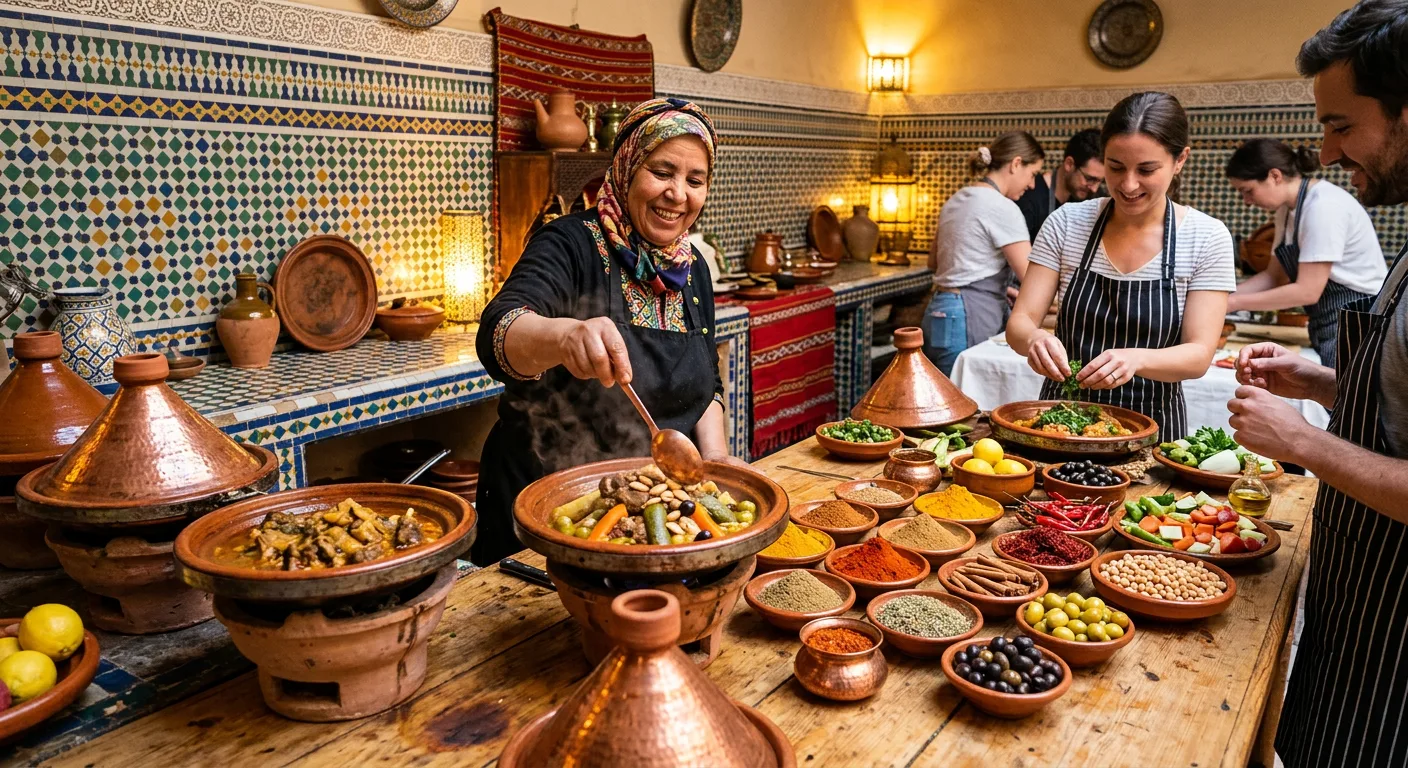
Tagine Preparation
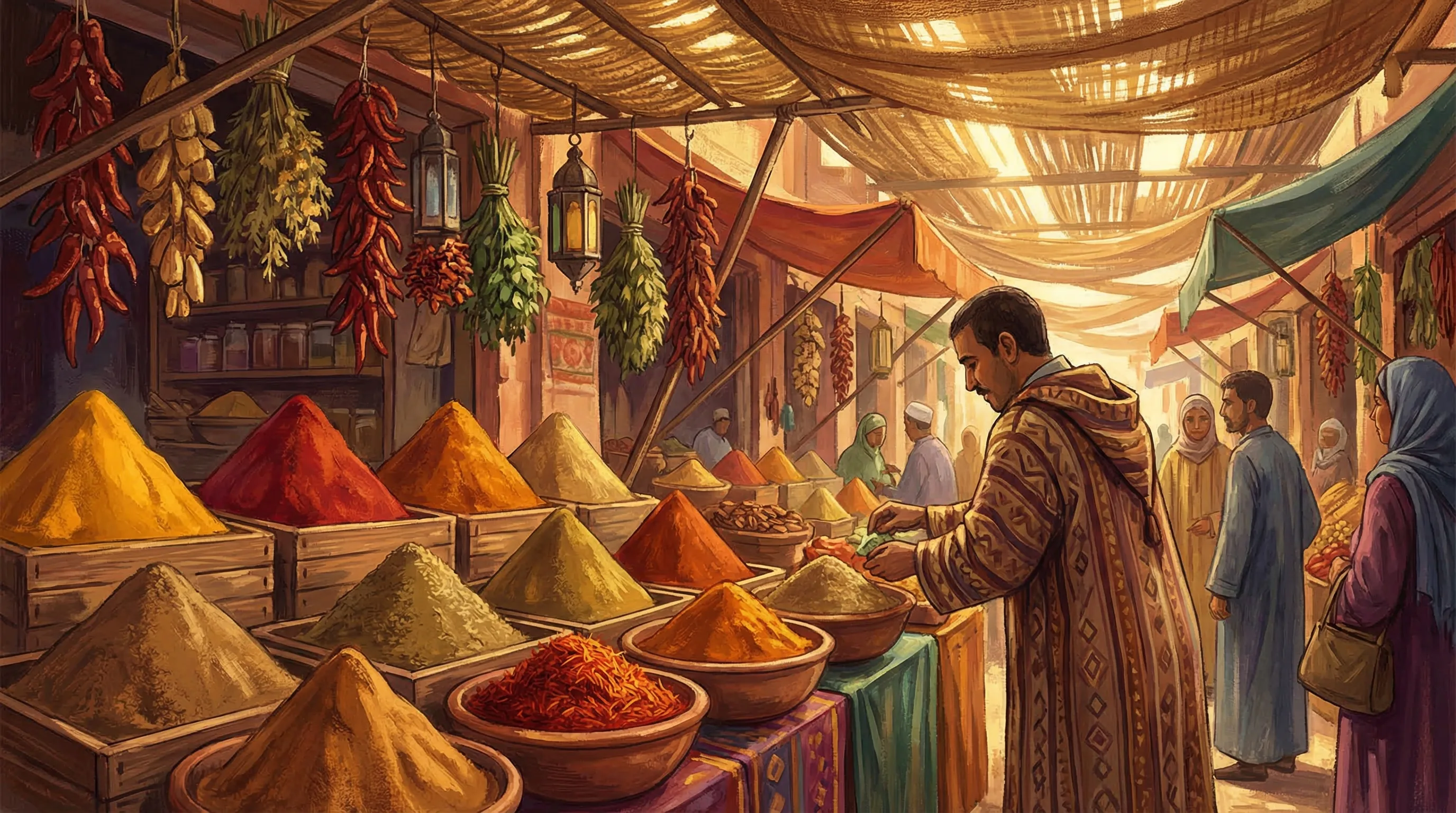
Spice Market Tour
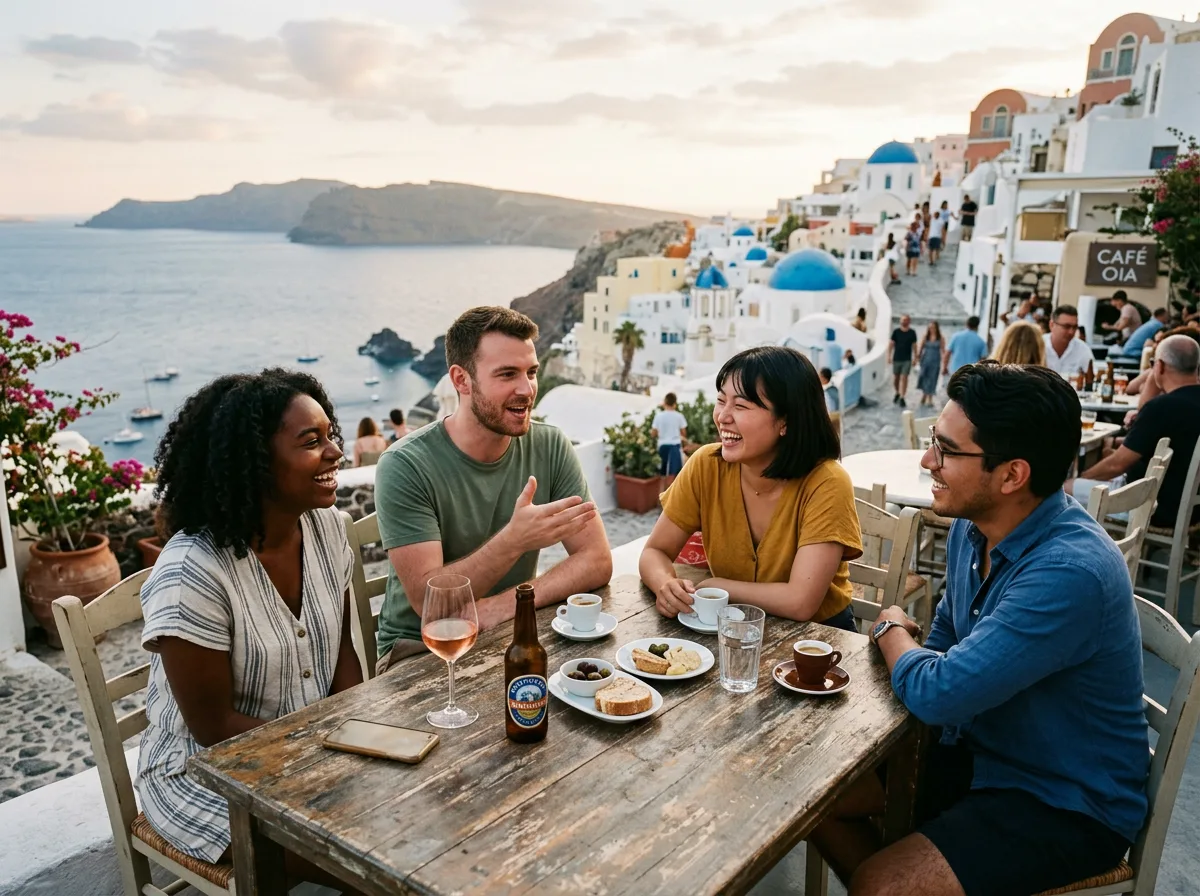
Workshop in Action
Frequently Asked Questions
Answers to the most common questions about Moroccan cooking classes, booking, and pricing.
How much does a cooking class in Morocco cost in 2026?
Group cooking classes range from 300 MAD at Cafe Clock in Fes to 850 MAD at La Maison Arabe in Marrakech. Most mid-range schools charge from 450 MAD to 700 MAD per person. Private classes run from 1,000 MAD to 2,500 MAD total. Prices typically include a market tour, all ingredients, recipes, and the meal you prepare. Seasonal pricing can change during peak months.
Do Moroccan cooking classes include a souk market tour?
Most cooking classes start with a 30-60 minute guided walk through a local souk. You buy spices, vegetables, meat, and bread alongside your instructor, who explains ingredients and haggling customs. La Maison Arabe is one exception -- they pre-source all ingredients for quality control and skip the market visit entirely.
Are vegetarian or vegan Moroccan cooking classes available?
Nearly every school accommodates vegetarian guests on request. Souk Cuisine in Marrakech runs dedicated vegetarian sessions twice a week. Moroccan cuisine has many naturally plant-based dishes: vegetable tagine, zaalouk, bessara (fava bean soup), harira (can be made vegan), and couscous with seven vegetables. Vegan requests require advance notice to avoid butter and honey.
What dishes will I learn in a Moroccan cooking class?
A standard half-day class covers 3-4 dishes. Common menus include chicken or lamb tagine with preserved lemons, hand-rolled couscous, Moroccan salads (zaalouk, taktouka), and ceremonial mint tea. Full-day classes add pastilla, harira soup, msemen flatbread, or pastries like gazelle horns. Some schools offer focused bread-making or seafood sessions.
Can children join cooking classes in Morocco?
Many schools welcome children aged 6 and older. Souk Cuisine, La Maison Arabe, and Palais Amani all accept families. Kids enjoy kneading bread dough, rolling couscous by hand, and assembling pastilla layers. Private family sessions work best because instructors adjust pace and tasks for younger participants. Mention ages when booking.
What is the difference between a private and group cooking class?
Group classes seat 4-14 participants of mixed nationalities and cost from 300 MAD to 850 MAD per person. Private classes are for your party only, cost from 1,000 MAD to 2,500 MAD total, and let you choose the menu, pace, and schedule. Families of three or more often get better value with a private session. Private classes also accommodate dietary restrictions more easily.
Should I take a cooking class in a home kitchen or a professional kitchen?
Home kitchens (like Lala Mesouda in Chefchaouen) offer intimate, family-style experiences where you cook alongside a grandmother using family recipes. Professional kitchens (like La Maison Arabe or Palais Amani) have individual workstations, better equipment, and more structured instruction. Home classes feel personal; professional classes focus on technique. Both are worthwhile.
What spices should I buy after taking a Moroccan cooking class?
Buy ras el hanout (from 30 MAD per 100g), cumin (from 10 MAD), saffron threads from Taliouine (from 40 MAD per gram), dried ginger, sweet paprika, and cinnamon sticks. Purchase from a reputable attarine (spice specialist) rather than tourist shops. A full set costs from 100 MAD to 200 MAD and lasts months. Your instructor can recommend trusted vendors.
Related Travel Guides
Morocco Food Guide
Complete guide to Moroccan dishes, street food, regional specialties, and the best places to eat.
Read GuideMoroccan Spice Guide
Deep dive into ras el hanout, saffron, cumin, and the spice blends that define Moroccan cuisine.
Read GuideMarrakech City Guide
Everything to see, do, and eat in Morocco's most popular city, from the medina to Gueliz.
Read GuideCulture & Etiquette
Customs, social norms, tipping, and cultural tips for respectful travel in Morocco.
Read GuideReady to Cook Like a Moroccan?
From market stalls to simmering tagines, a cooking class is one of the most memorable and delicious experiences Morocco offers. Book ahead, bring your appetite, and prepare to eat everything you make.
Plan it with a local expert
Travel Morocco with Serenity Morocco Tours
Crafting extraordinary journeys through Morocco's timeless landscapes. 100% private journeys, handcrafted around you.
ONMT Licensed 100% Private Tours 100% private tours since 2018
 from $2,011
 5 days Marrakech → Erg Chebbi
Sahara Desert Luxury Expedition
 from $2,054
 7 days Marrakech · Fes · Meknes · Rabat
Essential Morocco: Imperial Cities Circuit
 from $5,978
 14 days Full-country circuit
Sahara to Sea: Morocco Complete