Discovering...
Morocco Desert Tours
Erg Chebbi dunes, camel treks, overnight Sahara camps, and multi-day itineraries through the Atlas Mountains, Dades Gorge, and Draa Valley.
The Sahara Desert Experience
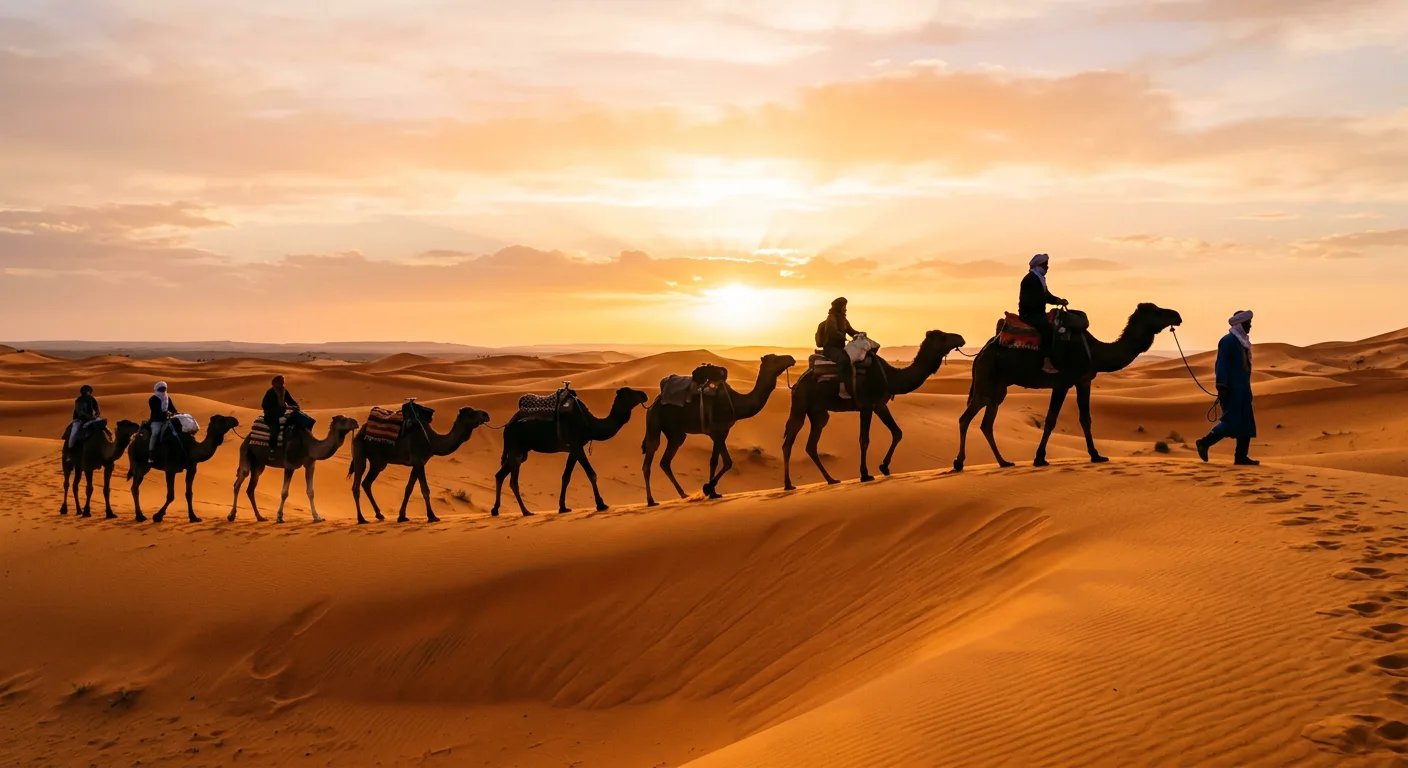
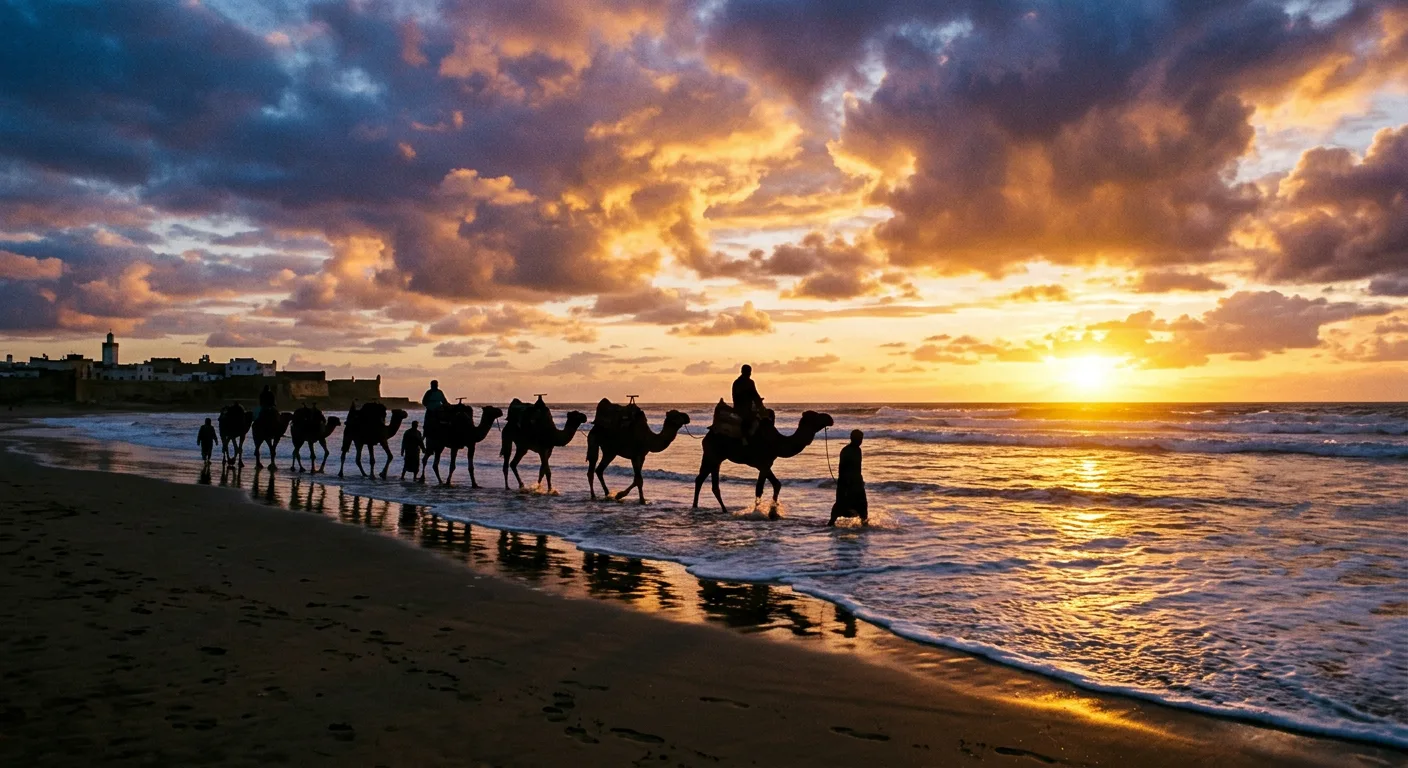
The Sahara is the image most people carry when they think of Morocco. A line of camels silhouetted against towering golden dunes, a sky full of stars with zero light pollution, and the silence that only a desert can deliver. For many travelers, the desert overnight is the single most memorable part of their trip.
Morocco's two main desert destinations are Erg Chebbi near Merzouga and Erg Chigaga beyond Zagora. Both offer camel trekking, overnight camps, and the full Saharan experience, but they differ in accessibility, scale, and crowd levels. This guide breaks down exactly how to choose between them, what each multi-day itinerary looks like, how much to budget, and what the tours actually involve hour by hour.
Every route from Marrakech crosses the High Atlas Mountains via the Tizi n'Tichka Pass and passes through landscapes that shift from green valleys to red-earth kasbahs to barren hamada before the sand sea begins. The journey itself is half the attraction.
Merzouga vs Zagora: Which Desert?
The two main gateways to Morocco's Sahara offer different experiences. Here is a direct comparison.
Feature
Merzouga / Erg Chebbi
Zagora / Erg Chigaga
Distance from Marrakech
560 km (9-10 hours driving)
360 km (6-7 hours driving)
Dune Field
Erg Chebbi — dunes up to 150 m tall
Erg Chigaga (50 km past Zagora) or smaller dunes at Tinfou
Minimum Trip Length
3 days / 2 nights from Marrakech
2 days / 1 night from Marrakech
Tourist Volume
Higher — more camps, more organized tours
Lower — especially at Erg Chigaga
Camp Options
Budget to ultra-luxury (50+ camps)
Fewer options, mostly mid-range and basic
Road Access
Fully paved to the dune edge
Paved to Zagora; 4x4 only to Erg Chigaga
Best For
First-timers, photographers, luxury seekers
Short trips, off-the-beaten-path travelers
Erg Chebbi, Merzouga
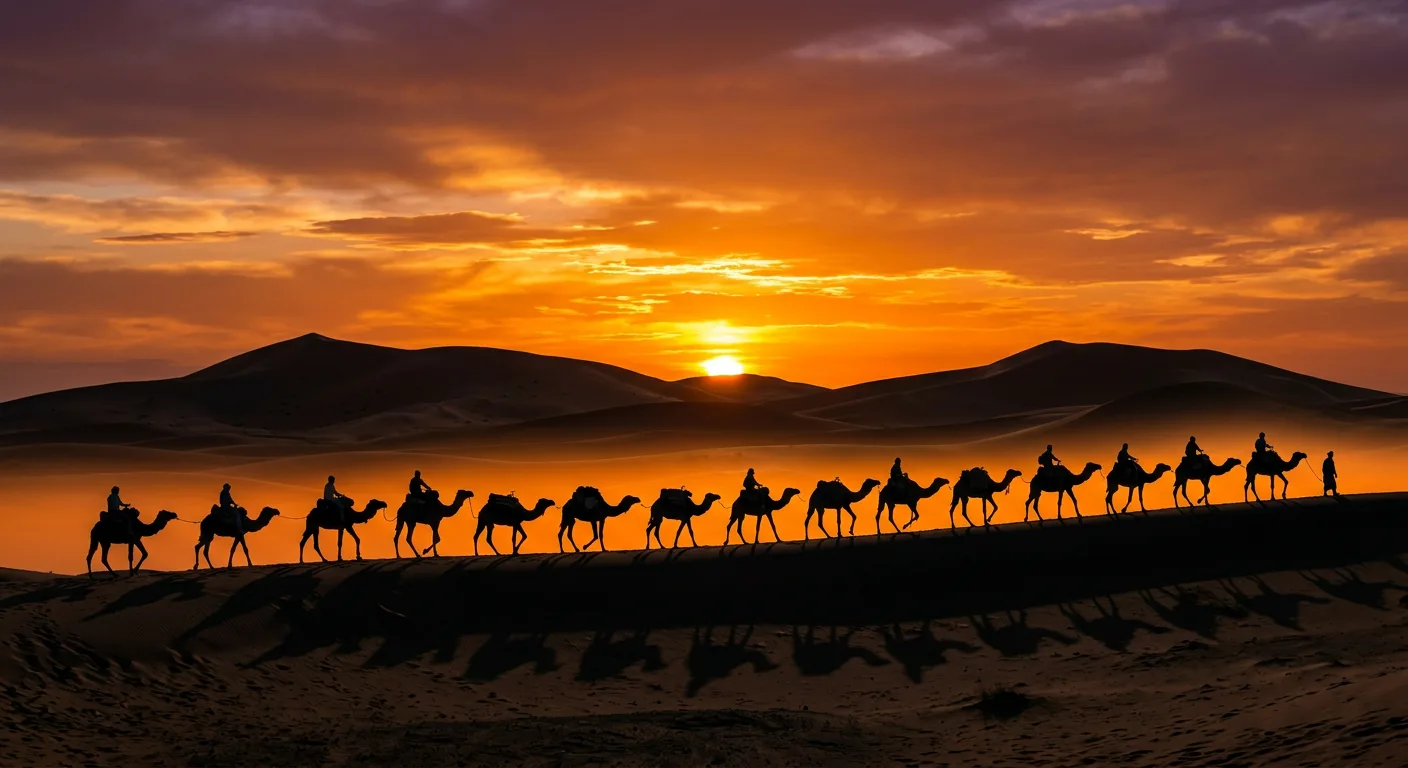
Erg Chebbi is Morocco's postcard desert. Dunes tower up to 150 meters and shift color from gold at midday to deep orange at sunset to pink at dawn. The town of Merzouga sits right at the dune edge, so you can literally walk from your hotel into the sand. Over 50 camps operate here, from basic bivouacs to properties with swimming pools. The area also offers sandboarding, quad biking, and visits to Khamlia village for Gnawa music. The downside: popularity means you will share the sunrise with other groups.

Erg Chigaga, Zagora
Erg Chigaga stretches 40 km long and 15 km wide, making it Morocco's largest dune system. Reaching it requires a 4x4 journey across 50 km of rough piste from M'Hamid el Ghizlane, which keeps mass tourism out. Dunes here are lower (40-60 meters) but the isolation is powerful — at night you may be the only camp in sight. The Draa Valley route to Zagora passes through date palm oases and Berber villages that feel untouched. The downside: longer travel time and fewer camp choices.
Key Stops Along the Way
The drive from Marrakech to the desert is packed with landmarks. Here are the highlights you should not skip.
Tizi n'Tichka Pass (2,260 m)
The highest paved pass in North Africa winds through the High Atlas with hairpin turns and panoramic views of terraced Berber villages below. The road is well-maintained but narrow in sections. Your driver will stop at viewpoints. In winter (December-February), the pass can have snow, which adds an hour to the crossing. Stock up on snacks and water at the roadside stalls at the summit.
Aït Benhaddou (UNESCO)
This fortified ksar (village) is Morocco's most photographed kasbah and a UNESCO World Heritage Site. It has appeared in Gladiator, Game of Thrones, and Lawrence of Arabia. The ksar sits on a hillside overlooking a river, and you can walk through its narrow alleys and climb to the top for sweeping views. Allow 45-90 minutes. Entrance is free, but local guides at the gate charge from 50 MAD for a walkthrough.
Dades Gorge & Dades Valley
A river-carved canyon with rust-red walls rising vertically on both sides. The famous serpentine road of Dades (the "Road of a Thousand Kasbahs") features a series of switchbacks that make for iconic photos. Small guesthouses line the gorge floor, and an overnight here breaks up the drive to Merzouga. Morning light turns the canyon walls deep amber. Hikes range from easy riverside walks to challenging scrambles up side canyons.
Todra Gorge
A narrow slot canyon where 300-meter limestone walls close in to just 10 meters apart at the tightest point. The river runs along the canyon floor, and rock climbers come from across Europe to tackle the routes on these walls. A short walk into the canyon from the parking area takes 20 minutes. The gorge is on the route between Dades and Merzouga, so most tours include a 30-60 minute stop here.
Draa Valley
Morocco's longest river feeds a 200-km palm oasis that stretches from Ouarzazate to Zagora. The valley floor is carpeted with date palms, while crumbling kasbahs dot the ridgelines above. The N9 road runs through the heart of it, and the scenery rivals anything in southern Morocco. Agdz, the gateway town, has excellent small guesthouses. The Draa is on the Zagora route and the return leg of 4-day Merzouga itineraries.
Desert Tour Itineraries from Marrakech
Three proven itineraries ranging from a quick 2-day dash to a relaxed 4-day circuit.
2-Day / 1-Night — Zagora / Draa Valley
From 800 MAD per person (group) / from 2,500 MAD private. Seasonal pricing can change.
- Day 1: Marrakech — Tizi n'Tichka Pass (2,260 m) — Aït Benhaddou — Ouarzazate — Draa Valley — Zagora — camel ride to desert camp
- Day 2: Sunrise over dunes — camel ride back — Ouarzazate — return to Marrakech by evening
The fastest Sahara option, but long driving days (6-7 hours each way). Good for travelers with limited time. You see the Draa Valley but skip Dades Gorge.
3-Day / 2-Night — Merzouga / Erg Chebbi
From 1,200 MAD per person (group) / from 4,000 MAD private. Seasonal pricing can change.
- Day 1: Marrakech — Tizi n'Tichka — Aït Benhaddou — Ouarzazate — Dades Gorge (overnight)
- Day 2: Dades Gorge — Todra Gorge — Erfoud — Merzouga — camel trek to Erg Chebbi camp (overnight in desert)
- Day 3: Sunrise camel ride — Merzouga — Erfoud — Ouarzazate or direct to Marrakech
The most popular itinerary. Covers all the highlights: kasbahs, gorges, and the full Erg Chebbi experience. Day 3 is a long drive back.
4-Day / 3-Night — Merzouga + Dades + Draa
From 1,800 MAD per person (group) / from 5,500 MAD private. Seasonal pricing can change.
- Day 1: Marrakech — Tizi n'Tichka — Aït Benhaddou — Ouarzazate — Skoura oasis (overnight)
- Day 2: Dades Gorge — Todra Gorge — Erfoud — Merzouga — camel trek to desert camp (overnight)
- Day 3: Sunrise — morning in Merzouga (optional sandboarding, quad, or nomad visit) — Rissani — N'Kob — Draa Valley (overnight)
- Day 4: Draa Valley — Agdz — Ouarzazate — Tizi n'Tichka — Marrakech
The recommended itinerary for anyone who can spare the time. No day feels rushed. You get both the Dades and Draa Valleys, a full morning at the dunes, and a different return route so you do not repeat scenery.
Camel Trekking: What to Expect
The camel ride is the defining moment of a Morocco desert tour. Here is what actually happens.
The Ride to Camp (Sunset)
You meet your camel and guide at the dune edge, usually around 4:00-5:00 PM depending on the season. The guide helps you mount — camels fold their legs to let you on, then stand up back-first (lean back hard during this moment). The caravan walks single-file into the dunes for 60-90 minutes. Your guide leads the first camel; the rest follow nose-to-tail. The route crests several dune ridges, and the guide stops at a high point for sunset photos.
Included in all desert tour packages. Solo camel rides from 200 MAD for 1 hour.
The Evening at Camp
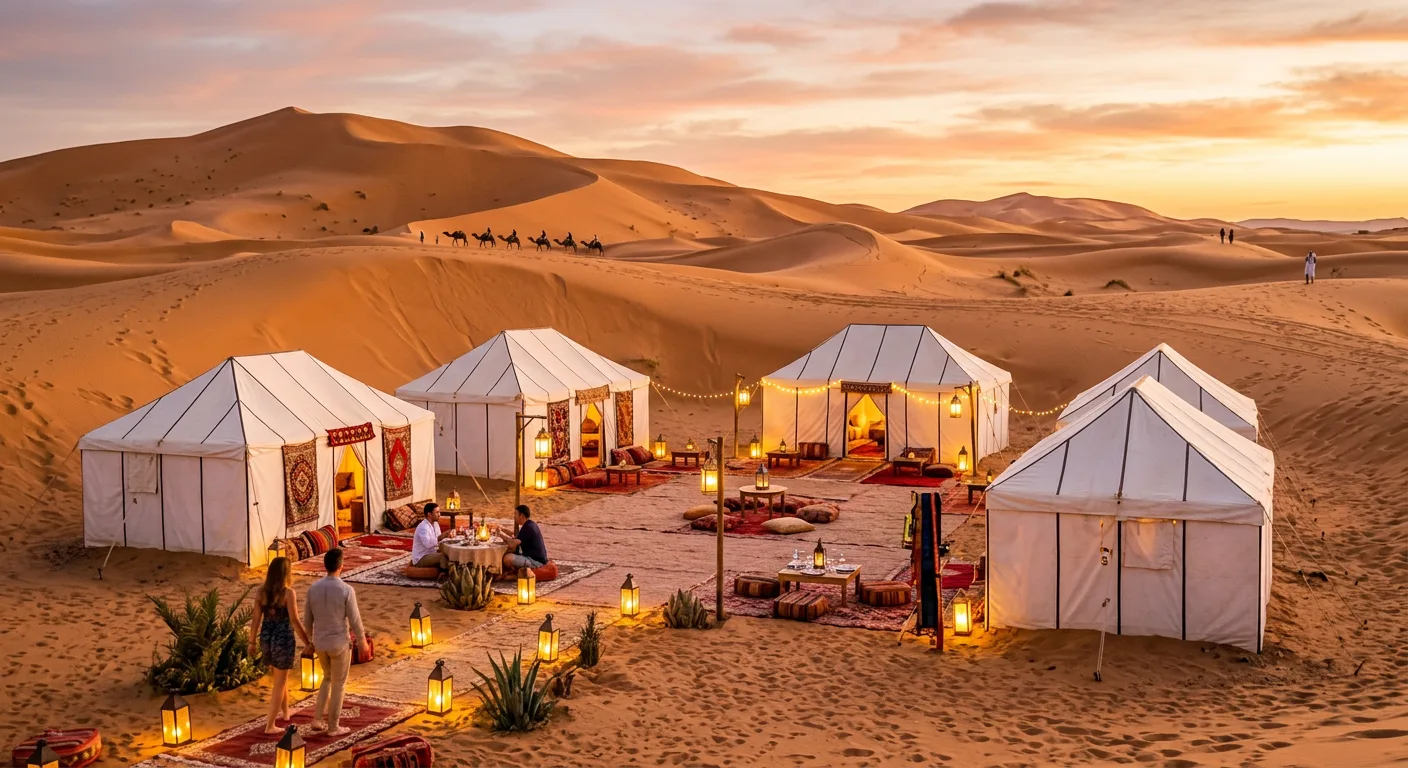
After arriving at camp, you settle into your tent, then gather around the fire for mint tea. Dinner is served communal-style — usually a tagine or couscous with vegetables. After dinner, the camp staff play Berber drums (bendir) and sing traditional songs. At most camps, you can climb a nearby dune for stargazing. The Sahara has some of the darkest skies in North Africa, and the Milky Way is visible to the naked eye on clear nights. Temperatures drop sharply after sundown, so have your warm layers ready.
Sunrise Ride (Morning)
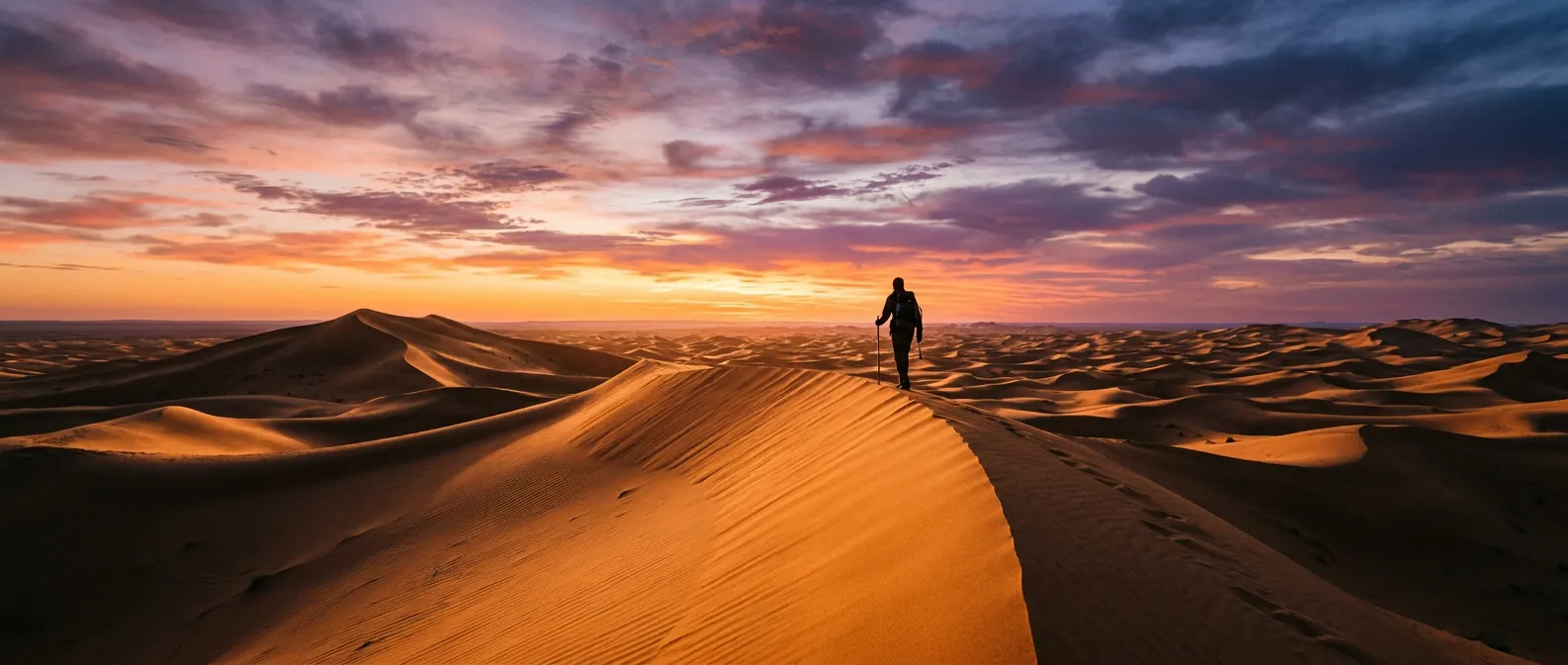
Your guide wakes the camp around 5:30-6:00 AM. You ride or walk up the tallest nearby dune to watch the sun climb over the Algerian border. The light show lasts about 20 minutes — the dunes cycle through purple, pink, orange, and finally gold. This is the best photo opportunity of the entire trip. After sunrise, you ride back to the dune edge and return to Merzouga or Zagora for breakfast and the drive back.
4x4 Desert Excursions
Camels are not the only way in. 4x4 vehicles open up remote areas that are inaccessible on foot or camelback.
Erg Chigaga 4x4 Transfer
The 50 km from M'Hamid to Erg Chigaga has no paved road. Experienced drivers navigate by landmarks and GPS across stony desert and dry lake beds. The drive takes 2-3 hours and is an adventure on its own. This is the only way to reach Chigaga camps.
From 1,500 MAD for a round-trip 4x4 transfer per vehicle
Merzouga Desert Loop
A half-day 4x4 circuit around Erg Chebbi visits a seasonal salt lake (Dayet Srji, which attracts flamingos in spring), an abandoned mine, Berber nomad families, and the Gnawa music village of Khamlia. Stops include mint tea with nomads and a traditional Gnawa music performance.
From 400 MAD per person (group) / from 1,200 MAD private vehicle
Paris-Dakar Rally Tracks
The original Paris-Dakar rally crossed this region, and some operators run adrenaline-focused 4x4 tours along old rally sections near Merzouga. Expect fast driving over flat hamada desert, sharp turns through narrow canyon passages, and plenty of dust.
From 600 MAD per person for a half-day rally experience
Multi-Day 4x4 Expedition
For serious off-road enthusiasts, 5-7 day expeditions run from Ouarzazate through remote oases, dried riverbeds, and desert plateaus to Erg Chigaga and back. These trips use Land Cruisers or Land Rovers and include wild camping under the stars.
From 8,000 MAD per person for 5 days (all-inclusive). Seasonal pricing can change.
Desert Camp Types: Budget to Luxury
Not all desert camps are created equal. Here is what each tier actually provides.
All prices are per person per night in Moroccan Dirhams. Seasonal pricing can change during peak months (October-December, March-April).
Budget / Standard Camp
From 300 MAD per person
Sleeping: Shared Berber tents, foam mattresses on the floor, heavy blankets
Bathroom: Shared (usually 2-3 stalls for the camp), basic toilets
Meals: Tagine dinner, bread, mint tea, simple breakfast
Extras: Campfire with drum music, basic stargazing
Electricity: Limited or none — bring a battery bank
Best for: Backpackers, budget travelers, those who prioritize the experience over amenities
Mid-Range Camp
From 800 MAD per person
Sleeping: Private tents with real beds, sheets, and pillows
Bathroom: Private or semi-private, some with hot water
Meals: Multi-course dinner, breakfast buffet, afternoon tea on arrival
Extras: Berber music, sandboarding, optional quad biking (extra cost)
Electricity: Solar-charged outlets for phone charging
Best for: Most travelers — solid balance of comfort and authenticity
Luxury / Glamping Camp
From 2,500 MAD per person
Sleeping: Spacious furnished tents with king beds, rugs, and private terraces
Bathroom: Full en-suite with hot shower, flush toilet, sink
Meals: Gourmet multi-course dinner (sometimes with wine), fresh juices, cooked breakfast
Extras: Private sunset camel ride, guided stargazing with telescopes, spa treatments at some camps
Electricity: Full power, some tents have air conditioning
Best for: Couples, honeymooners, luxury travelers who want the desert without roughing it
Scenes from the Sahara
Sunrise at Erg Chebbi
Desert Camp at Night
Camel Caravan at Sunset
Desert Packing Checklist
Pack light. Leave your main luggage at your Marrakech hotel and bring only an overnight bag for the desert.
Warm jacket or fleece
Nights drop to 5-10 degrees C, even in October
Headlamp or torch
Camps have minimal lighting; essential for nighttime walks
Scarf or shemagh
Protects face and neck from sand and wind
Sunscreen SPF 50+
No shade in the dunes — UV exposure is intense
Sunglasses with secure fit
Sand glare is blinding, especially at sunrise
Closed-toe shoes + sandals
Boots for dune walking; sandals for camp
Small overnight bag
Leave main luggage in Marrakech; only bring essentials
Portable battery bank
Charging points are scarce at budget and mid-range camps
Camera with extra batteries
Cold nights drain batteries fast; sunrise is unmissable
Toiletries + wet wipes
Budget camps have limited water; wet wipes are invaluable
Best Time for a Desert Tour
The Sahara's extremes make timing critical. October-November and March-April are the prime windows.
October - November
Best25-32 C day / 10-15 C night
The ideal window. Warm days, cool nights, minimal wind. Peak season for camps, so book early. Clear skies almost guaranteed.
March - April
Best22-30 C day / 8-14 C night
Spring brings similar conditions to autumn. Occasional sandstorms in March, but generally excellent. Wildflowers along the Draa Valley.
December - February
Good18-22 C day / 0-8 C night
Comfortable daytime temperatures, but nights can drop near freezing. Bring proper cold-weather layers. Fewer tourists and lower prices. Stargazing is exceptional in winter due to dry, clear air.
May - September
Challenging38-50 C day / 20-28 C night
Extreme heat makes daytime activities difficult. Tours still operate, but camel rides shift to sunrise only. Book luxury camps with air conditioning. Prices drop significantly. Not recommended for first-timers.
Avoiding Desert Tour Scams
The desert tour industry has its share of dishonest operators. These red flags will help you book with confidence.
Suspiciously low prices
A 3-day tour for under 600 MAD per person means the operator is cutting costs on food, camp quality, or driver wages. Fuel alone for the 1,100 km round trip costs several hundred dirhams. Realistic group pricing starts from 1,200 MAD for 3 days.
Bus station and square touts
Anyone approaching you at the CTM station, Supratours, or Jemaa el-Fnaa is a commission-based middleman, not the actual tour operator. They add 30-50% markup. Book directly with the company that owns the vehicles and camps.
No written itinerary
Legitimate operators provide a detailed breakdown: exact stops, camp name, meal inclusions, vehicle type, group size, and cancellation policy. If someone says "trust me, everything is included," walk away.
Bait-and-switch camps
Some operators promise a luxury camp but deliver a basic one. Ask for the camp name upfront and verify it has independent reviews online. Request photos of the specific tents and bathrooms.
Full payment demanded upfront
Standard practice is a deposit (30-50%) to secure the booking, with the balance paid after day one or at the camp. Any operator demanding 100% cash upfront with no refund policy is a risk.
Unscheduled shopping stops
Some drivers earn commissions from carpet shops and fossil dealers. A brief stop is fine if you are interested, but if the driver pressures you to enter shops or makes multiple unannounced stops, the tour has been padded with commission visits.
Desert Tour Pricing Overview
Prices are per person in Moroccan Dirhams. Group tours assume 6-15 travelers. Seasonal pricing can change during peak months.
Service
Group Price (MAD)
Private Price (MAD)
2-day Zagora tour
From 800
From 2,500
3-day Merzouga tour
From 1,200
From 4,000
4-day Merzouga + Draa
From 1,800
From 5,500
Budget camp upgrade
Included
Included
Mid-range camp upgrade
From +300
From +300
Luxury camp upgrade
From +1,500
From +1,500
Solo camel ride (1 hour)
From 200
From 200
Quad biking (1 hour)
From 350
From 350
Sandboarding
From 150
From 150
Practical Desert Tips
Details that experienced desert travelers know but first-timers often miss.
Bring cash for extras
There are no ATMs between Ouarzazate and Merzouga (a 5-hour stretch). Bring enough cash for tips, drinks, quad biking, and souvenirs. Budget from 300-500 MAD in extra cash beyond the tour cost.
Phone signal and WiFi
You will lose mobile signal 30 minutes before reaching Merzouga and regain it in town. Camps have zero signal. Some luxury camps offer satellite WiFi, but it is slow. Prepare to be disconnected for 18-24 hours.
Motion sickness on mountain roads
The Tichka Pass and Dades Gorge roads have relentless switchbacks. Take motion sickness medication before the drive, sit in the front seat if possible, and keep the window cracked for fresh air.
Tip your camel guide
The cameleer who leads your group earns very little from the tour company. A tip of from 50-100 MAD per person is standard and deeply appreciated. Hand it to the guide directly, not to the tour leader.
Protect your camera gear
Fine Saharan sand gets into everything. Keep your camera in a sealed bag when not shooting. Use a UV filter on your lens as a sacrificial protector. Wipe gear down with a microfiber cloth before changing lenses.
Manage expectations on group tours
Group tours mean shared vehicles with 6-15 strangers, fixed schedules, and photo stops decided by the driver. If you want flexibility to linger at Dades Gorge or skip the fossil shop, book a private tour.
Frequently Asked Questions
Real questions from travelers planning their first Sahara desert tour.
How many days do I need for a Morocco desert tour?
A minimum of 2 days/1 night gets you to Zagora with a basic desert camp stay. For Merzouga and Erg Chebbi, you need at least 3 days/2 nights from Marrakech. A 4-day trip allows proper time at Dades Gorge, the Draa Valley, and sunrise/sunset camel rides without rushing. Most travelers say 3 days is the sweet spot.
Is the camel ride painful or uncomfortable?
The ride takes 60-90 minutes each way to reach the camp from the dune edge. Camels sway side-to-side, which can feel awkward at first. Wear long trousers to prevent chafing, and grip the front handle firmly when the camel stands up or sits down (those are the most jarring moments). Most people adapt within 10 minutes. If you have back problems, ask about 4x4 transfers to the camp instead.
What is the difference between Erg Chebbi and Erg Chigaga?
Erg Chebbi (near Merzouga) has dunes up to 150 meters tall, is easier to reach, and has more camp options ranging from budget to ultra-luxury. Erg Chigaga (near M'Hamid) has wider, flatter dune fields, fewer tourists, and a more remote feel. Chigaga requires a 4x4 to access (no paved road), while Chebbi is reachable by regular vehicle. Choose Chebbi for convenience and towering dunes; choose Chigaga for solitude.
Are luxury desert camps worth the extra cost?
Luxury camps (from 2,500 MAD per person) offer en-suite bathrooms with hot showers, proper beds with quality linens, electricity, full-course dinners with wine, and private terraces facing the dunes. Budget camps (from 300 MAD) have shared bathrooms, foam mattresses on the floor, and basic tagine dinners. The sunrise and stargazing are identical at both. If comfort after a long day of driving matters to you, the upgrade is significant.
Can I do a desert tour in summer?
You can, but temperatures reach 45-50 degrees Celsius during the day from June to August. Most reputable tour operators still run trips year-round, but activities shift to early morning and late evening. Many camps have air-conditioned common areas. If summer is your only option, book a luxury camp with proper cooling and plan camel rides exclusively around sunrise.
How do I avoid scams on Morocco desert tours?
Book directly with established operators who have consistent online reviews across multiple platforms. Avoid anyone who approaches you at bus stations or in Jemaa el-Fnaa offering "special deals." Get the full itinerary in writing before paying, including camp name, meal inclusions, and vehicle type. Pay a deposit (not full amount) upfront, with the balance after day one. If a price seems too low (under 600 MAD for 3 days), the operator is cutting corners on food, camp quality, or driver pay.
Do I need a guide or can I drive to the desert myself?
You can drive yourself to Merzouga on paved roads (N10 highway). However, a guide adds massive value: they handle the route through the Atlas passes, know the best photo stops, arrange the camp and camel logistics, and drive on sandy tracks you should not attempt in a rental car. Self-driving to Erg Chigaga is not recommended at all because the last 50 km is unmarked sand track requiring a true 4x4 and desert navigation experience.
What should I pack for an overnight desert camp?
Bring a warm jacket or fleece (desert nights drop to 5-10 degrees Celsius even in spring), a headlamp or torch, sunscreen, sunglasses, a scarf for wind/sand protection, comfortable closed-toe shoes, toiletries, and a portable battery bank for your phone. Leave large suitcases in Marrakech and bring only an overnight bag. Luxury camps provide towels and toiletries; budget camps provide blankets only.
Related Travel Guides
Sahara Stargazing Guide
Dark sky locations, best months for stargazing, and astronomy tours in the Moroccan Sahara.
Read GuideDesert Glamping
Luxury desert camps with en-suite bathrooms, gourmet dining, and private dune experiences.
Read Guide4x4 Tours Morocco
Off-road adventures from Atlas passes to desert tracks, vehicle options, and expedition planning.
Read GuideMorocco Camping Guide
Wild camping, organized campsites, rooftop tents, and camping gear advice for Morocco.
Read GuideReady to Experience the Sahara?
From the towering dunes of Erg Chebbi to the remote silence of Erg Chigaga, Morocco's desert delivers moments you will carry for a lifetime. Start planning your desert adventure today.