Discovering...
Culinary Experiences
Morocco Food Tours:
The Ultimate Culinary Guide
From sizzling Marrakech street food and ancient Fez recipes to Atlantic seafood and Berber mountain cooking. Your complete guide to eating your way through Morocco.
Why Morocco is the Ultimate Food Tour Destination
Morocco sits at one of the world's great culinary crossroads. Berber, Arab, Andalusian, French, and sub-Saharan African influences have merged over centuries to create a cuisine that is both deeply traditional and endlessly varied. From the 1,000-year-old recipes of Fez to the sizzling street grills of Marrakech's Jemaa el-Fnaa, every city and region offers a distinct food identity waiting to be explored.
What makes Moroccan food tours extraordinary is the accessibility. The finest tagine might come from a tiny medina stall passed down through three generations. Street food vendors who have perfected a single dish over 40 years serve masterpieces for a few dirhams. Whether you join an organized food tour or map your own culinary walking route, this guide covers the best food tours by city, must-try street foods, cooking classes, regional specialties, and practical tips for eating well throughout the country.
Best Food Tours by City
Each Moroccan city has its own culinary character. Prices may vary by season.
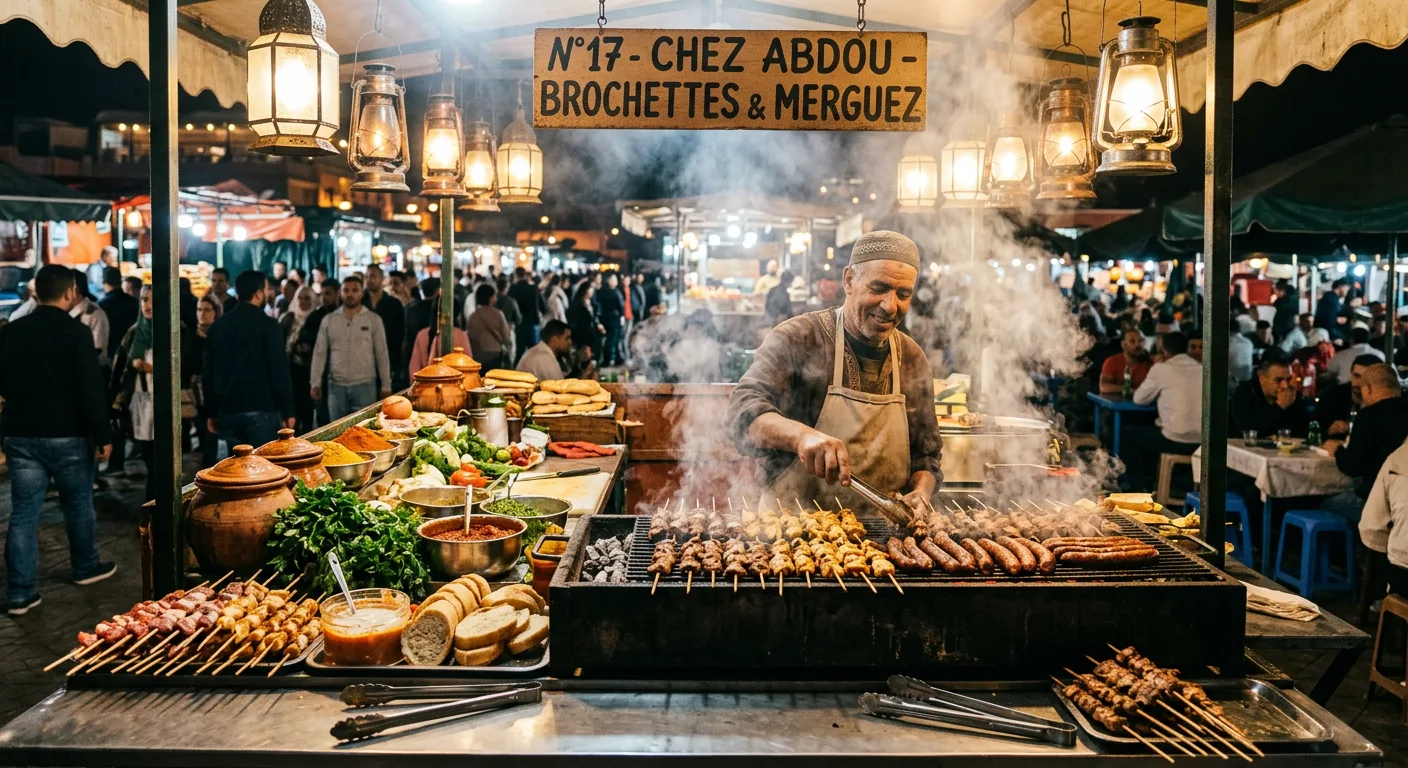
Marrakech
Marrakech Food Tour
The undisputed capital of Moroccan street food. Jemaa el-Fnaa transforms nightly into the world's largest open-air restaurant with over 100 stalls serving grilled meats, snails, fresh juices, and pastries. The medina hides family-run restaurants, hole-in-the-wall tagine joints, and spice-filled souks.
Jemaa el-Fnaa night market
Spice souk tastings
Mechoui Alley (slow-roasted lamb)
Derb Dabachi street food strip
From 350 MAD for group tours, from 900 MAD for private toursBest for: First-time visitors and street food lovers
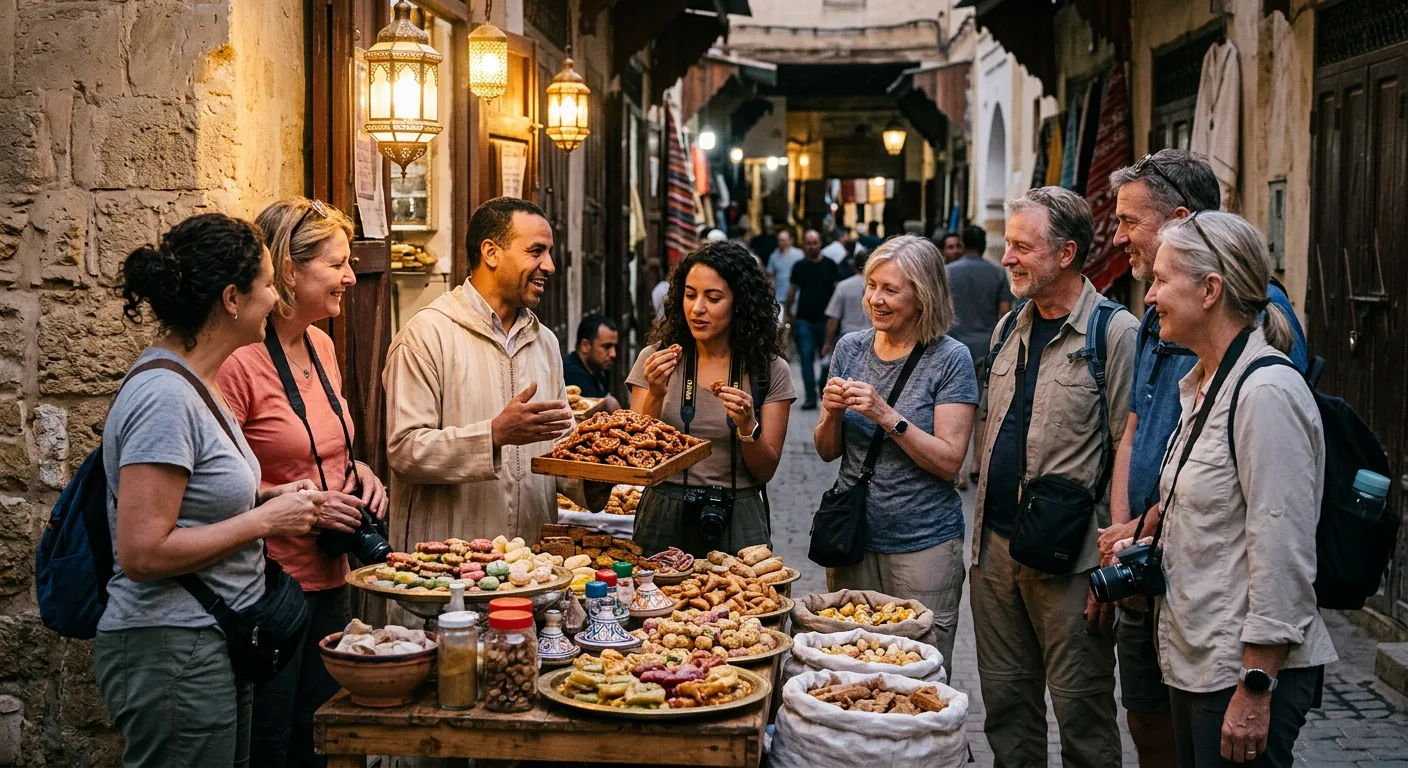
Fez
Fez Food Tour
The spiritual home of Moroccan cuisine. Fez el-Bali preserves food traditions dating back to the 9th century. Find pastilla (sweet-savory pigeon pie), trid (hand-pulled pastry), and rfissa. Deeply traditional and less tourist-oriented than Marrakech.
Rcif Gate food stalls
Talaa Kebira food walk
Traditional pastilla workshops
Fez medina bakeries
From 300 MAD for group tours, from 800 MAD for private toursBest for: Serious foodies and traditional cuisine enthusiasts
Casablanca
Casablanca Food Tour
Morocco's cosmopolitan food capital blends traditional flavors with French bistro culture. The Central Market buzzes with fresh seafood, and the Habous Quarter offers the best pastries in the country. Rooftop restaurants and fusion kitchens rival European cities.
Central Market seafood
Habous Quarter patisseries
Ain Diab seafood restaurants
Quartier Gauthier bistros
From 400 MAD for group tours, from 1,000 MAD for private toursBest for: Modern gastronomy and seafood lovers
Essaouira
Essaouira Food Tour
A seafood paradise on the Atlantic coast. Choose your fish from the morning catch at the port, and grillers cook it on the spot with charmoula sauce. Also known for argan oil products, goat cheese, and laid-back cafe culture.
Port fish grills
Argan oil cooperatives
Moulay Hassan Square cafes
Skala seafood restaurants
From 250 MAD for group tours, from 700 MAD for private toursBest for: Seafood enthusiasts and relaxed food exploration
Tangier
Tangier Food Tour
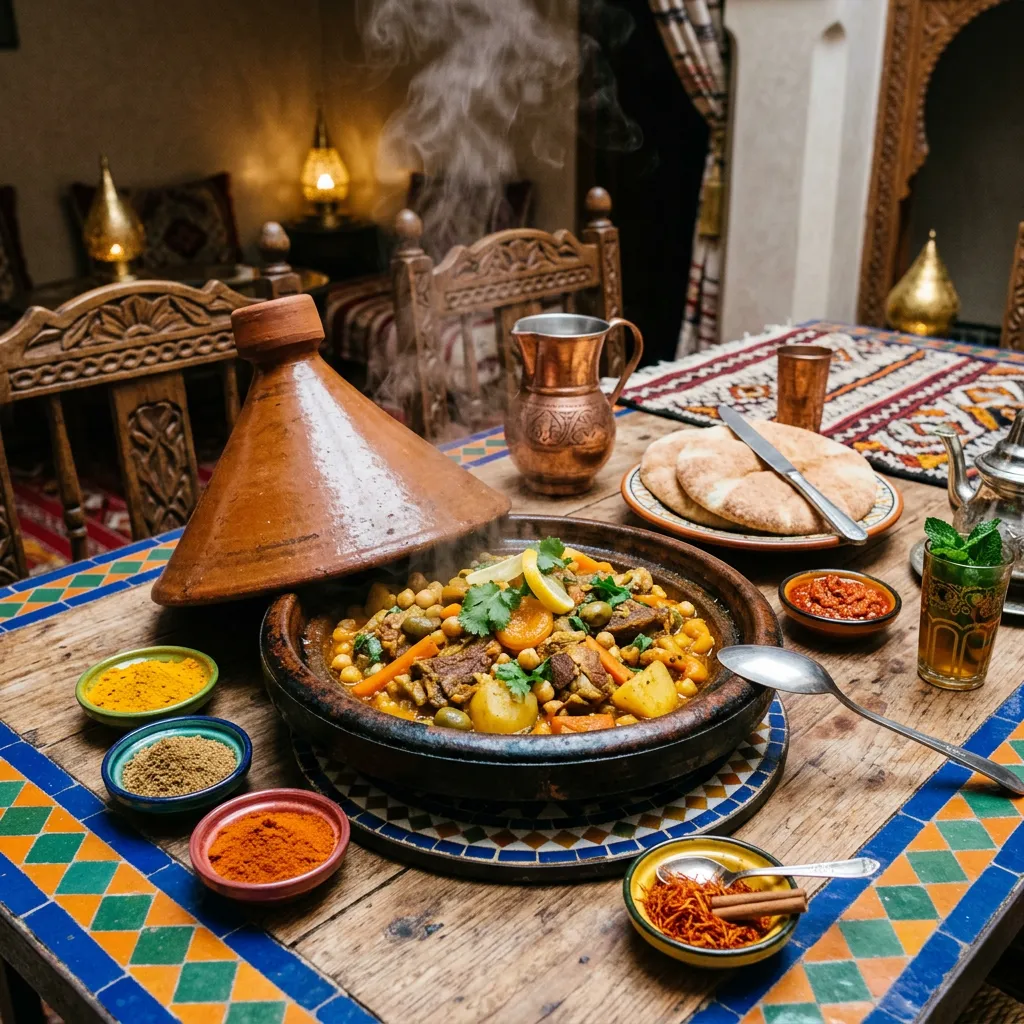
Where Mediterranean and Moroccan flavors collide. Spanish tapas-style small plates, fresh anchovies, and the legendary Cafe Hafa overlooking the Strait of Gibraltar. The Grand Socco and Petit Socco are buzzing food hubs.
Grand Socco market
Petit Socco cafes
Tangier medina food stalls
Spanish-influenced seafood tapas
From 300 MAD for group tours, from 800 MAD for private toursBest for: Mediterranean food lovers and cultural crossroads cuisine
Seasonal pricing note: Prices vary by season, group size, and operator. Peak season (March-May, September-November) may have higher prices. During Ramadan, tours shift to evening iftar experiences.
Moroccan Street Food Must-Tries
The essential dishes every food tour should include.
Msemen
Square-shaped flaky flatbread, pan-fried until crispy and golden. Served with honey and butter for breakfast, or stuffed with kefta and spices. Found at almost every street corner, it is the quintessential grab-and-go food.
From 3 MAD plain, from 10 MAD stuffed
Everywhere; best from street griddle vendors
Sfenj (Moroccan Doughnuts)
Light, airy doughnuts fried fresh and served piping hot. Vendors appear at dawn and sell out by mid-morning. Chewier and less sweet than Western doughnuts. Pair with mint tea for the perfect Moroccan breakfast.
From 2 MAD each
Morning street stalls; best in Fez and Meknes medinas
Harira
Iconic tomato-based soup with lentils, chickpeas, herbs, and often lamb. The traditional Ramadan fast-breaking food, also served year-round. Comes with dates and chebakia (honey-sesame cookies). Every family has their own recipe.
From 5 MAD per bowl
Street stalls and restaurants; everywhere during Ramadan
Boiled Snails (Babouche)
Small snails in a fragrant broth of herbs, spices, licorice root, and thyme. Eaten with a toothpick, slurping the broth is half the experience. The snail carts of Jemaa el-Fnaa are legendary among locals.
From 5 MAD per bowl
Jemaa el-Fnaa and medina squares across Morocco
Mechoui (Slow-Roasted Lamb)
Whole lambs roasted in underground clay ovens until the meat falls off the bone. Served by weight with cumin salt and bread. Mechoui Alley in Marrakech is the most famous spot. Melt-in-your-mouth texture.
From 60 MAD per portion
Mechoui Alley in Marrakech; across Morocco for celebrations
Tangia (Marrakech Urn Stew)
Lamb or beef in a clay urn with preserved lemons, spices, and smen, sealed and slow-cooked 8-12 hours in hammam furnace embers. Traditionally made by bachelor men for Friday gatherings. Only authentic in Marrakech.
From 80 MAD per portion
Marrakech medina restaurants; ask locals for best spots
Market & Souk Food Experiences
Morocco's markets are living museums of culinary tradition.
Jemaa el-Fnaa Night Market, Marrakech
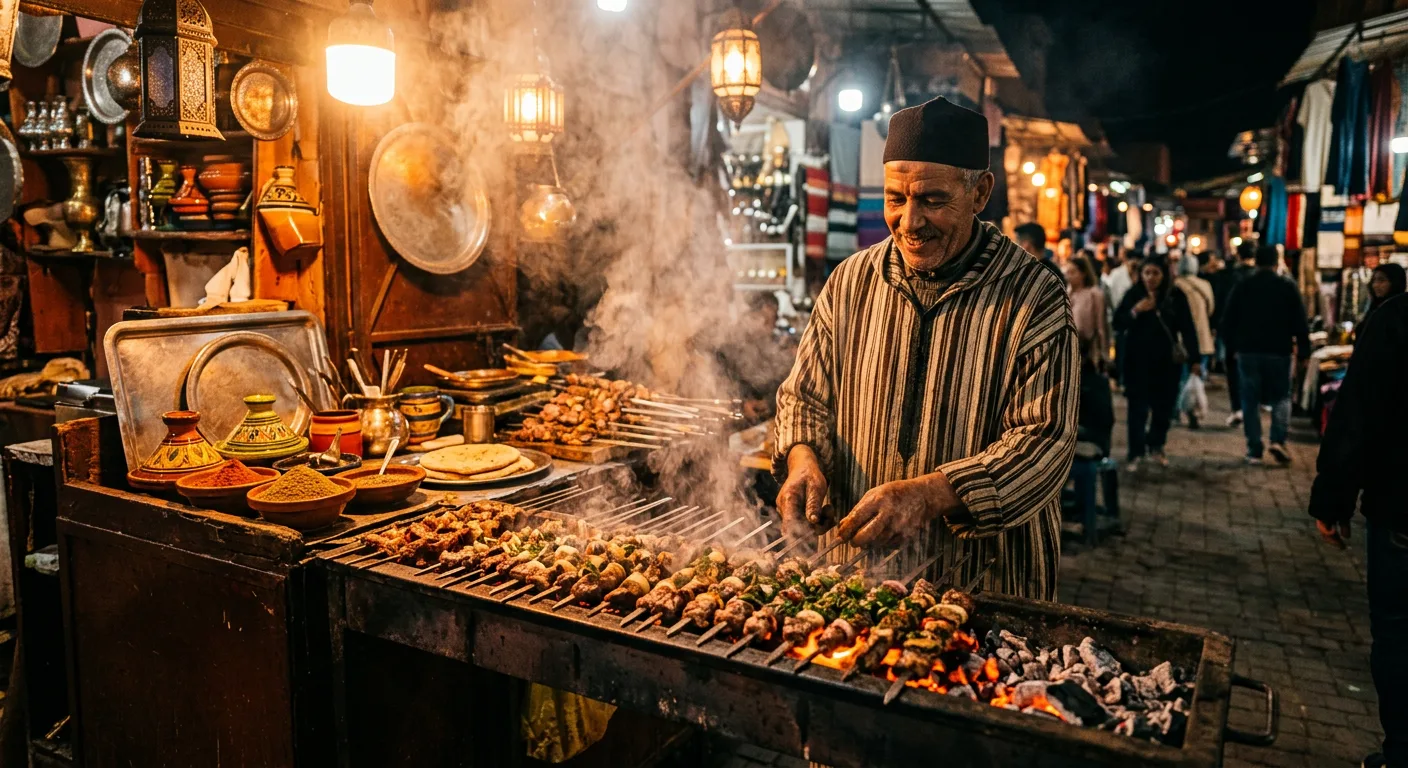
Every evening, Marrakech's main square transforms into the world's most famous open-air food market. Over 100 numbered stalls compete for your attention, each specializing in different dishes. Expect grilled meats, fresh-squeezed orange juice (from 5 MAD), snail soup, sheep head, fried fish, and dessert stalls piled high with chebakia and sellou. Go hungry, arrive around sunset, and eat your way across the square.
Sunset to midnight
From 30-100 MAD
100+ stalls
UNESCO listed
Fez Medina Food Markets
The Fez medina is a labyrinth of food artisans with wood-fired communal ovens, spice pyramids, and honey sellers. The Rcif area is the most concentrated food zone, where locals queue for fresh bread, bubbling harira, and steaming bissara (fava bean soup). Unlike Jemaa el-Fnaa, completely authentic and untouched by mass tourism.
Morning to evening
From 20-80 MAD
Oldest medina in Morocco
Deeply authentic
Spice Souk Tasting Experiences
Every medina has a spice souk with guided tastings. Sample ras el hanout (up to 30 ingredients), cumin, saffron, dried rose petals, and khlii (preserved meat). A good guide explains each spice's role and helps you buy at fair prices. Marrakech's Rahba Kedima and Fez's Attarine souk are the most famous.
Best 9 AM - 1 PM
Free to taste, buy from 10 MAD
Use a guide for best prices
30+ spice varieties
Moroccan Cooking Classes
Hands-on cooking experiences to recreate the flavors at home. Prices may vary by season.
Marrakech Cooking Workshops
Sessions start with a guided market visit to select ingredients, followed by hands-on cooking. Learn tagine, couscous, Moroccan salads, and pastilla. Most classes include a full meal and recipes to take home.
From 400 MAD for group classes, from 1,200 MAD for private sessions
4-6 hours including market visit
Market tour, ingredients, instruction, meal, recipe booklet
Fez Traditional Cooking
Focus on refined, centuries-old cuisine. Learn pastilla, hand-rolled couscous, and slow-cooked rfissa in restored riads. Fez classes emphasize historical context and technique.
From 350 MAD for group classes, from 1,000 MAD for private sessions
4-5 hours including market visit
Medina market tour, ingredients, instruction, meal, recipes
Atlas Mountain Village Cooking
A day trip to a Berber village with a home-cooking lesson. Village women teach bread baked in clay ovens, mountain-herb tagine, amlou, and mint tea in an intimate, unhurried setting.
From 500 MAD including transport from Marrakech
Full day (6-8 hours including travel)
Transport, village visit, cooking lesson, lunch, tea ceremony
Essaouira Seafood Classes
Learn to prepare fresh Atlantic seafood: chermoula marinade, grilled fish tagine, seafood pastilla, and traditional fish soup. Start at the port market selecting the morning catch.
From 450 MAD for group classes, from 1,100 MAD for private sessions
4-5 hours including port market visit
Port tour, fresh seafood, instruction, meal, recipes
Regional Specialties Across Morocco
Understanding regional differences helps you plan a food tour covering the full spectrum.
Marrakech & the South
Bold, spice-forward flavors with preserved lemons and smen. Slow-cooked meats with generous cumin and ras el hanout.
Signature Dishes
Tangia (urn-cooked meat)
Mechoui
Mint tea with orange blossom
Fez & Meknes
Refined ancestral cuisine with complex layered flavors, sweet-savory combinations, and labor-intensive techniques.
Signature Dishes
Pastilla (pigeon pie)
Rfissa
Briouat (stuffed pastry)
Coastal Cities
Fresh Atlantic seafood with chermoula marinade (cilantro, garlic, cumin, paprika). Essaouira and Casablanca lead.
Signature Dishes
Grilled sardines
Fish chermoula
Seafood pastilla
Northern Morocco
Mediterranean and Spanish influences create lighter, herb-driven cuisine with fresh cheeses and Rif Mountain produce.
Signature Dishes
Kefta tagine with eggs
Stuffed sardines
Goat cheese with olive oil
Atlas & Berber South
Hearty Berber cooking with argan oil, wild herbs, and slow-cooking over wood fires. Friday couscous is sacred.
Signature Dishes
Mountain herb tagine
Amlou (Berber Nutella)
Tafernout bread
Vegetarian & Vegan Food in Morocco
Many traditional dishes are naturally vegetarian, making food tours accessible for non-meat eaters.
Naturally Vegetarian Dishes
Zaalouk -- Smoky roasted eggplant and tomato salad with garlic, cumin, paprika
Bessara -- Creamy fava bean soup with olive oil and cumin, a breakfast staple
Vegetable tagine -- With preserved lemons, olives, and seasonal vegetables
Moroccan salads -- Carrot with orange blossom, beet with cinnamon, taktouka
Lentil soup -- Spiced red lentil soup served with bread and lemon
Tips for Plant-Based Travelers
Ask about meat stock: harira and some tagines may use broth even when appearing vegetarian
Vegans note: butter and honey are common in bread and pastries
Cooking classes can be customized for vegan menus on advance request
Key phrases: "bla l7am" (no meat), "bla zebda" (no butter), "nabati" (plant-based)
Food Tour Booking Tips & Best Operators
Practical advice for choosing and booking the right food tour.
How to Choose a Food Tour
Read recent reviews focusing on food quality, not just guide personality
Smaller groups (6-8 max) give better access to tiny stalls and medina passages
Confirm inclusions: number of tastings, drinks, and tip expectations
Local guides have deeper knowledge and vendor relationships than expat guides
Budget vs. Luxury Food Experiences
Budget (from 200-400 MAD)
Self-guided walks, street stalls, local markets. A full day of medina eating can cost from 100 MAD.
Mid-Range (from 400-800 MAD)
Guided walking tours with 8-12 tastings, cultural context, and vetted vendors. Best balance for most travelers.
Luxury (from 1,500+ MAD)
Private tours, exclusive riad dining, chef-led classes, and degustation menus at top restaurants.
Self-Guided Food Walking Routes
Tested walking routes through the best food zones, no tour operator needed.
Marrakech Medina Food Trail
Start at Cafe de France on Jemaa el-Fnaa. Head into the spice souk for ras el hanout. Follow Derb Dabachi for street snacks. Detour to Mechoui Alley for roast lamb. Continue to the olive souk. End at a rooftop terrace for mint tea at sunset.
3-4 hours
6 tasting stops
From 100-200 MAD for all tastings
Fez Medina Culinary Walk
Begin at Bab Boujloud. Walk Talaa Kebira, stopping at bakeries. Visit honey and spice stalls. Try sfenj at a morning vendor. Explore Rcif for harira and brochettes. Find a pastilla maker near Karaouine. End at Cafe Clock for camel burger.
3-5 hours
7 tasting stops
From 80-180 MAD for all tastings
Essaouira Seafood Stroll
Start at the fishing port for the morning catch. Choose your fish at the port grills. Visit spice shops on Avenue de l'Istiqlal. Try argan ice cream near the clock tower. End at Moulay Hassan Square for seafood pastilla.
2-3 hours
5 tasting stops
From 80-150 MAD for all tastings
Moroccan Food Etiquette & Customs
Understanding food customs enhances your experience and shows respect for the culture.
Dining Traditions
Eat with your right hand; the left is considered unclean
Eat from the section directly in front of you, not from the center of shared dishes
Say "Bismillah" before and "Alhamdulillah" after eating; hosts appreciate it
Accept at least one glass of mint tea; refusing is considered impolite
Practical Food Tips
Stick to busy stalls with high turnover for the safest street food
Drink bottled water; avoid raw salads at stalls if you have a sensitive stomach
Tip 10-15% at sit-down restaurants; round up bills at stalls
Carry small bills (10-20 MAD); vendors rarely have change for large notes
Seasonal Food Highlights
Timing your food tour to coincide with seasonal specialties adds another culinary layer.
Spring (March - May)
Fresh fava beans appear in markets for bessara soup. Artichoke and green pea tagines peak. Orange blossom water is freshly distilled in the Dades Valley. Prime time for fresh herbs and first cherries.
Summer (June - August)
Watermelon juices dominate stalls. Fresh figs arrive July-August. Prickly pear vendors appear everywhere. Cold soups and lighter salads replace heavy tagines. Coastal cities offer the freshest seafood.
Autumn (September - November)
Olive harvest brings fresh-pressed oil. Pomegranates and Medjool dates from the Draa Valley peak. New argan oil is pressed. Considered the best overall time for food tours as variety and quality are highest.
Winter (December - February)
Rich, warming tagines return in full force. Citrus from the Souss peaks. Almond blossoms arrive in February. If your visit overlaps with Ramadan, the iftar food scene is an extraordinary culinary event.
A Taste of Morocco
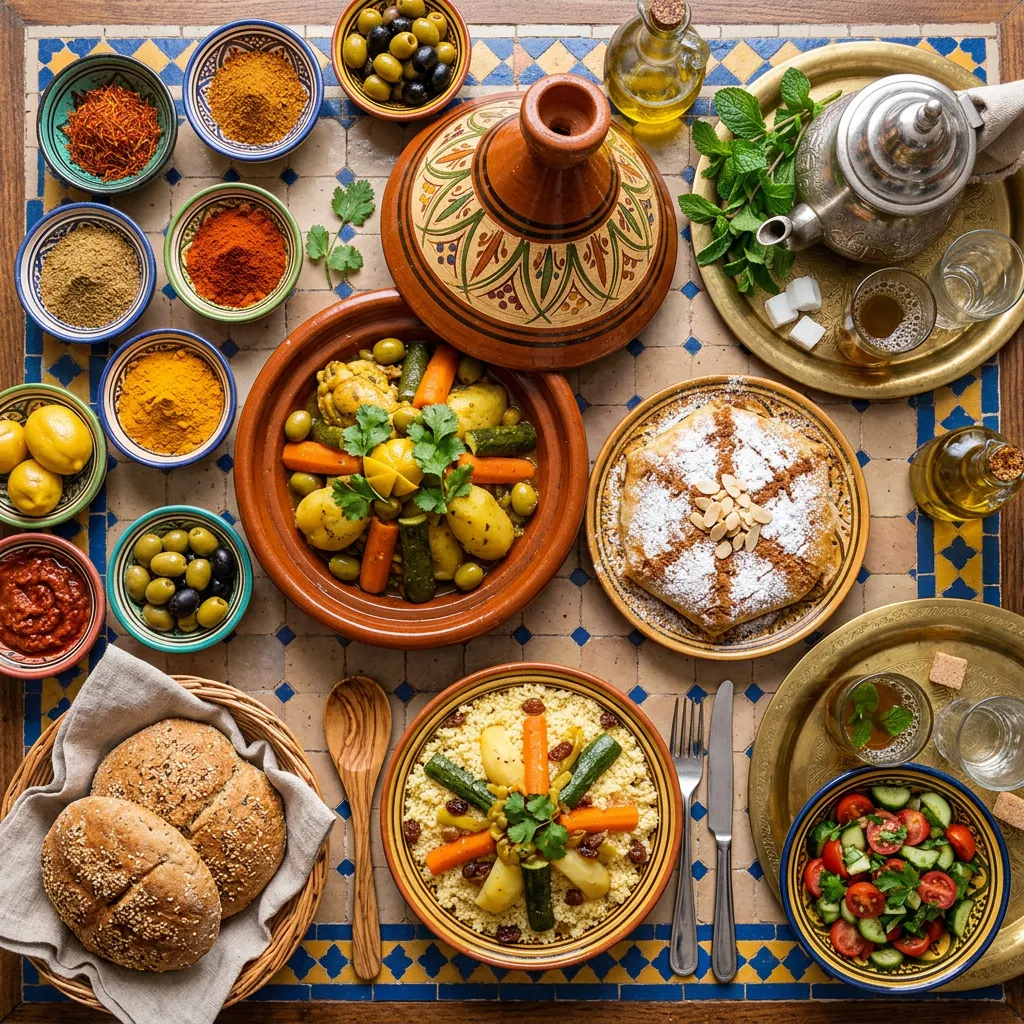
Traditional Moroccan Feast
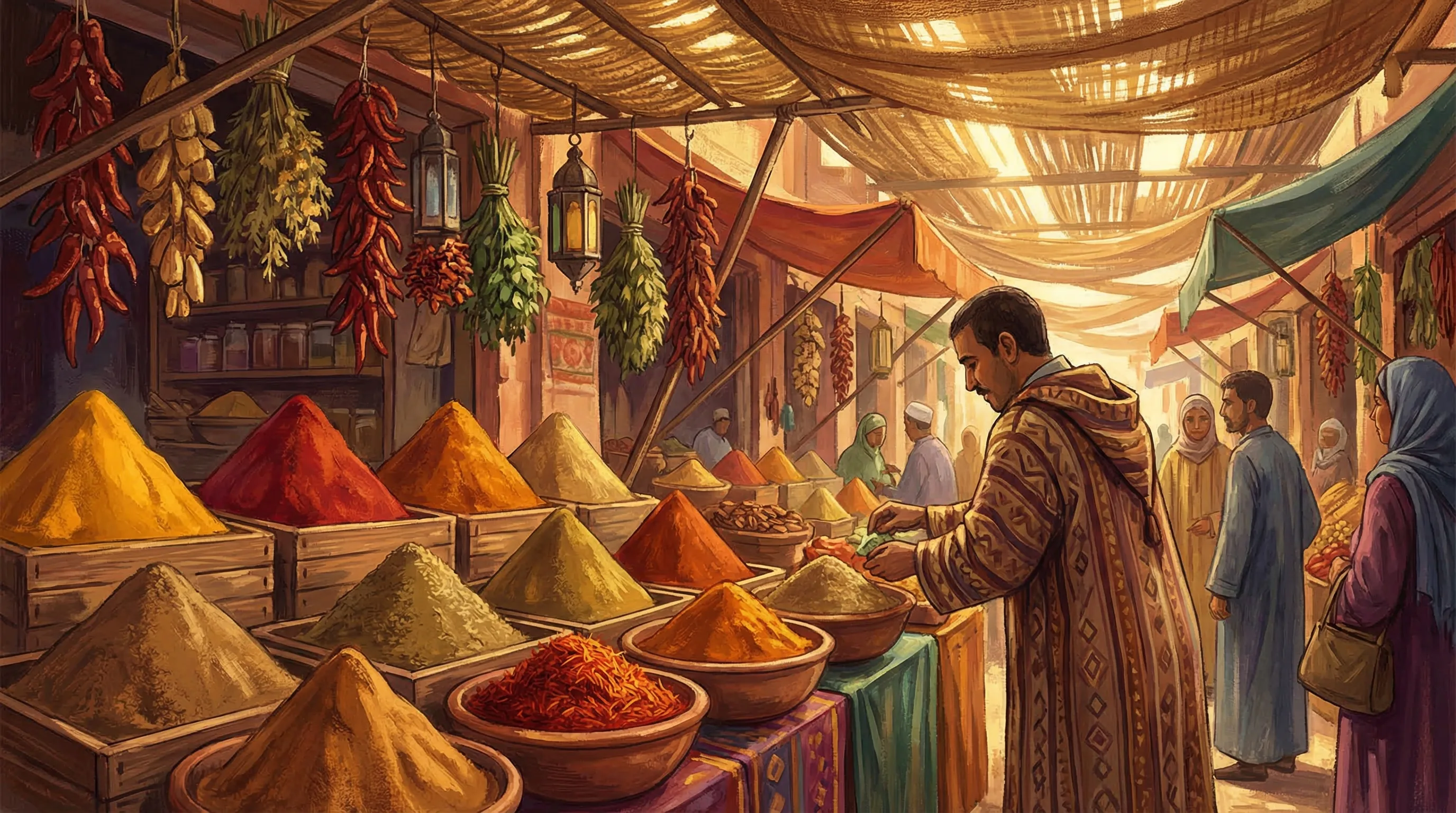
Spice Souk Experience
Jemaa el-Fnaa Night Market
Frequently Asked Questions
How much does a food tour in Morocco cost?
Budget street food tours start from 250 MAD per person. Guided walking tours cost from 400-800 MAD including tastings. Premium experiences with cooking classes range from 800-1,500 MAD. Private tours from 1,500 MAD or more. Prices may vary by season and group size.
Is Moroccan food safe for tourists to eat?
Generally safe, especially at busy stalls with high turnover. Stick to freshly cooked food, avoid pre-cut fruit from street vendors, and drink bottled water. Cooked tagines, grilled meats, and fresh bread are very safe. On organized tours, guides select vetted vendors.
What is the best city for a food tour in Morocco?
Marrakech and Fez are the top two cities. Marrakech offers the iconic Jemaa el-Fnaa night market and diverse street food. Fez has the most authentic ancient food scene with pastilla and trid. Essaouira is best for seafood, Casablanca for modern gastronomy, Tangier for Mediterranean flavors.
Can vegetarians and vegans enjoy food tours?
Yes, many traditional dishes are naturally plant-based: zaalouk, bessara, vegetable tagine, and fresh juices. Most operators offer vegetarian versions. Cooking classes can be fully plant-based on request. Vegans should ask about honey and butter in pastries.
What time of day is best for food tours?
Evening tours (5-6 PM) are most atmospheric, especially in Marrakech at sunset. Morning tours (9-11 AM) are ideal for bakeries and breakfast specialties. During Ramadan, tours shift to after-sunset iftar timing for a uniquely memorable experience.
Should I book in advance or find a tour locally?
Book in advance for peak season (March-May, September-November). Online tours from 300-800 MAD with verified reviews. Local medina guides offer excellent tours from 200-400 MAD. For cooking classes, advance booking is essential due to limited capacity.
What should I wear on a food tour?
Comfortable walking shoes for 2-4 hours on uneven medina surfaces. Dress modestly covering shoulders and knees. Loose, breathable clothing for heat. Bring a small bag for purchases and a light jacket for cooler months.
Continue Exploring Morocco
Moroccan Cuisine Guide
Deep dive into Moroccan dishes, ingredients, spices, and the traditions behind the food.
Read moreMarrakech City Guide
Complete guide to Marrakech including markets, riads, day trips, and essential experiences.
Read moreFez City Guide
Explore the spiritual capital of Morocco with its ancient medina, tanneries, and cuisine.
Read moreBudget Travel Guide
How to experience the best of Morocco on a budget, including cheap eats and free activities.
Read moreReady to Taste Morocco?
From sizzling street food in Marrakech to ancient recipes in Fez, start planning your food tour today.