Discovering...
Culinary Experiences
Morocco Food Tours:
The Ultimate Culinary Guide
From guided medina food walks at from 350 MAD to self-guided street food adventures. Eat your way through the souks, markets, and hidden stalls of Morocco's greatest food cities.
Why Morocco Is a Food Lover's Paradise
Moroccan cuisine is one of the world's great culinary traditions, shaped by Berber, Arab, Andalusian, and French influences over more than a thousand years. Every city has its own specialties, every family its own recipes, and every street stall its own secret spice blend.
A food tour in Morocco is not just about eating. It is about navigating the labyrinthine medinas with someone who knows every hidden stall, understanding the stories behind each dish, and experiencing the warmth of Moroccan hospitality through its most universal language: food.
Whether you join a guided tour with a local expert or follow one of our self-guided routes through the souks, you will discover flavors that no restaurant menu can capture. The best food in Morocco is on the streets, in the markets, and in the homes of the people who have been perfecting these recipes for generations.
Food Tour & Dining Price Guide
What to expect to pay for food tours, street food, and restaurant meals across Morocco.
All prices are starting prices. Seasonal pricing applies during peak tourist months (October-April) and holiday periods, when tour prices may increase by 15-25%.
Service
Price
Note
Guided food tour (group)
From 350 MAD
Per person, 2.5-4 hours, all tastings included
Private food tour
From 800 MAD
Per group, customizable route and duration
Cooking class with market visit
From 400 MAD
Half day, includes lunch you prepare
Street food meal
From 20 MAD
Soup, sandwich, or snack at a stall
Local restaurant meal
From 50 MAD
Tagine or couscous with bread and tea
Mid-range restaurant meal
From 120 MAD
Starter, main course, and dessert
Fine dining meal
From 300 MAD
Multi-course tasting menu at upscale riad
Fresh orange juice
From 5 MAD
Jemaa el-Fnaa and street stalls
Mint tea
From 5 MAD
Street cafes; from 20 MAD at tourist cafes
Bottled water (1.5L)
From 5 MAD
Essential, stay hydrated while walking
Best Guided Food Tours in Morocco
Expert-led culinary walking tours across Morocco's greatest food cities. All tastings included in the price.
Prices shown are starting prices and may vary by season, group size, and availability.
Marrakech Medina Food Walk
Marrakech3.5 hours4.9
From 450 MAD per person
The essential Marrakech food experience. Wind through the narrow alleys of the medina with a local guide, stopping at hidden stalls and family-run kitchens that tourists never find on their own. You will taste everything from slow-cooked tanjia pulled from underground clay ovens to freshly fried msemen drizzled with honey.
Highlights
10+ food tastings
Small groups (max 10)
Local guide born in the medina
Visit spice souk
Included Dishes
TanjiaMsemen with honeyHarira soupLamb mechouiFresh-squeezed orange juiceMoroccan pastries
Meeting Point: Jemaa el-Fnaa, near Cafe de France
Fes Culinary Heritage Tour
Fes4 hours4.8
From 500 MAD per person
Fes is the culinary capital of Morocco, and this tour proves why. Descend into the world's oldest walled medina to discover Fassi cuisine, a tradition refined over 1,200 years. Your guide, a Fassi food historian, takes you through fondouks, bakeries, and spice merchants that have operated for centuries.
Highlights
12+ tastings
Food historian guide
Visit a traditional bakery
Spice blending demonstration
Included Dishes
Pastilla (pigeon pie)RfissaFassi-style tagineSellouChebakiaMint tea ceremony
Meeting Point: Bab Boujloud (Blue Gate)
Casablanca Street Food Safari
Casablanca3 hours4.7
From 400 MAD per person
Casablanca is Morocco's most cosmopolitan city, and its food scene reflects that diversity. This tour explores the Habous Quarter, Central Market, and local neighborhood eateries where office workers and families queue for the best sandwiches, grilled fish, and snails in the city.
Highlights
8+ tastings
Art Deco architecture stops
Central Market visit
Off-the-tourist-path neighborhoods
Included Dishes
Bocadillos (Moroccan sandwiches)Grilled sardinesBabouche (snails)Maakouda (potato fritters)Fresh pastriesAvocado smoothie
Meeting Point: Place Mohammed V, near the fountain
Essaouira Seafood & Spice Trail
Essaouira3 hours4.9
From 400 MAD per person
Essaouira's fishing port is one of Morocco's great food spectacles. This tour starts at the harbor as the day's catch comes in, then follows the fish through the market to the open-air grills where it is cooked to order. You will also explore the medina's spice shops and argan oil cooperatives.
Highlights
Fish market visit at harbor
Choose your own fish to grill
Argan oil tasting
Spice souk exploration
Included Dishes
Grilled sea breamShrimp skewersSardine chermoulaSea urchin (seasonal)Argan oil amlou dipSeafood pastilla
Meeting Point: Essaouira fishing port entrance
Marrakech Night Food Tour
Marrakech2.5 hours4.8
From 350 MAD per person
When the sun sets, Jemaa el-Fnaa transforms into the world's largest open-air restaurant. This evening tour navigates the smoke-filled maze of food stalls with a guide who knows every vendor by name. You will eat where the locals eat, not where the touts direct tourists.
Highlights
Evening atmosphere
Jemaa el-Fnaa stalls
Guide knows vendors personally
Digestive mint tea included
Included Dishes
Lamb head soupGrilled keftaFried eggplant with chermoulaKhobz with dipsSnails in brothChebakia with tea
Meeting Point: Jemaa el-Fnaa, near the Koutoubia Mosque side
Chefchaouen Blue City Food Walk
Chefchaouen2.5 hours4.7
From 350 MAD per person
Chefchaouen's Riffian cuisine is distinct from the rest of Morocco, influenced by Andalusian and Berber traditions. This intimate walking tour through the blue-washed streets visits family kitchens, cheese makers, and the town's best bakery. The pace is relaxed, like the town itself.
Highlights
Riffian cuisine specialty
Family kitchen visit
Local goat cheese tasting
Intimate small groups (max 6)
Included Dishes
Bissara (fava bean soup)Riffian-style couscousFresh goat cheese with olive oilBaghrir (thousand-hole pancakes)Homemade bread from wood ovenMountain herb tea
Meeting Point: Place Outa el-Hammam
Meknes Imperial Food Discovery
Meknes3 hours4.6
From 380 MAD per person
Often overlooked by tourists, Meknes has one of Morocco's most underrated food scenes. The medina's food stalls are almost exclusively patronized by locals, which means better quality and lower prices. This tour visits the olive souk, the honey market, and hole-in-the-wall restaurants serving dishes you will not find on any tourist menu.
Highlights
Least touristy food tour
Olive and honey markets
Roman ruins of Volubilis add-on option
Authentic local prices
Included Dishes
Khlii (preserved meat)Meknes olive varietiesDjaj m'chermel (chicken tagine)Kaab el-ghazal (gazelle horns)Local wine tastingStuffed msemen
Meeting Point: Bab Mansour gate
Tangier Cross-Cultural Food Tour
Tangier3.5 hours4.7
From 420 MAD per person
Tangier sits at the crossroads of Africa and Europe, and its cuisine reflects centuries of Spanish, French, and Moroccan influences. This tour traces the city's culinary history from the ancient medina to the Ville Nouvelle, sampling dishes that tell the story of Tangier's international past.
Highlights
Cross-cultural culinary history
Medina and Ville Nouvelle
View of Spain across the strait
Multilingual guides
Included Dishes
Spanish-Moroccan tapasTangerine-infused dishesFresh anchovy frittersBriouats (stuffed pastry)Tangier-style mint teaSfinj (Moroccan doughnuts)
Meeting Point: Grand Socco (Place du Grand 9 Avril)
Self-Guided Food Routes
Prefer to explore at your own pace? These curated routes let you eat your way through Morocco's best food neighborhoods independently.
Jemaa el-Fnaa Night Circuit
Marrakech2-3 hours1.5 km loop
Navigate the world's most famous food square like a local. Start at the orange juice carts on the north side, work your way through the snail vendors in the center, then hit the grilled meat stalls on the south end. Finish with pastries and tea at the edge of the square.
Route Stops
1
Orange juice carts (north side)
Fresh-squeezed orange juiceFrom 5 MAD
2
Snail vendors (center)
Babouche (snails in spiced broth)From 10 MAD
3
Stall 14 or Stall 1 (south side)
Grilled lamb chops and keftaFrom 40 MAD
4
Harira stands (west side)
Harira soup with datesFrom 10 MAD
5
Pastry vendors (edge of square)
Chebakia and shebakiaFrom 15 MAD
Tips: Go after 7 PM when all stalls are open. Avoid touts who grab your arm. The best stalls are the ones where Moroccans are sitting. Budget from 100 MAD for a full circuit.
Fes Tala'a Kebira Food Trail
Fes2-3 hours2 km (downhill)
The Tala'a Kebira is the main artery of the Fes medina, running downhill from Bab Boujloud to the Kairaouine Mosque. Along its length you will pass bakeries, nut roasters, honey sellers, and some of the oldest food stalls in Morocco. Walk slowly and eat everything.
Route Stops
1
Street bakeries near Bab Boujloud
Khobz (fresh bread from wood ovens)From 2 MAD
2
Nut roasters on Tala'a Kebira
Roasted almonds with salt or honeyFrom 15 MAD
3
Pastilla shops mid-way
Pastilla au pigeon or pastilla au laitFrom 25 MAD
4
Hole-in-the-wall near Medersa Attarine
Bessara (fava bean soup)From 5 MAD
5
Honey and dried fruit shops
Atlas Mountain honey and datesFrom 30 MAD
Tips: Start at Bab Boujloud and walk downhill. The bakeries fire up early, so morning is best for fresh bread. Bring small bills. Most vendors do not have change for 200 MAD notes.
Casablanca Art Deco District Eats
Casablanca2-3 hours3 km
Combine architecture and eating in Casablanca's stunning Art Deco quarter. Starting from the Central Market, where locals buy the freshest produce and seafood, weave through the boulevards stopping at patisseries, juice bars, and the city's best sandwich shops.
Route Stops
1
Marche Central (Central Market)
Grilled seafood at market stallsFrom 50 MAD
2
Patisserie Bennis Habous
Cornes de gazelle and Moroccan pastriesFrom 20 MAD
3
Juice bars on Blvd Mohammed V
Avocado and almond smoothieFrom 15 MAD
4
Snack Amine (Habous Quarter)
Bocadillo with kefta and eggFrom 25 MAD
5
Rick's Cafe area
Moroccan tea and pastriesFrom 40 MAD
Tips: The Central Market is best visited before noon when the seafood is freshest. Patisserie Bennis is a Casablanca institution. Get there early or the best pastries sell out.
Essaouira Port to Medina Trail
Essaouira2 hours1.5 km
Start at the fishing port where the morning catch is auctioned and grilled on the spot. Walk through the medina's narrow streets, stopping for argan oil tastings and local specialties. End at the ramparts with a sea-view tea break. This is Essaouira at its most authentic.
Route Stops
1
Port fish grills
Grilled sardines, prawns, or sea breamFrom 40 MAD
2
Argan cooperative (medina)
Amlou (argan, almond, honey dip)From 20 MAD tasting
3
Bakery on Rue de la Skala
Rghaif with honeyFrom 10 MAD
4
Spice shop near Place Moulay Hassan
Ras el hanout blend to take homeFrom 30 MAD
5
Cafe by the ramparts
Mint tea with ocean viewFrom 15 MAD
Tips: The port grills are best at lunchtime. Point at the fish you want and they will grill it for you. Prices are per plate, not per kilo. Negotiate before they start cooking.
10 Must-Try Moroccan Dishes
These are the dishes that define Moroccan cuisine. Do not leave the country without trying every single one.
#1
Tagine
From 40 MAD at street stalls, from 120 MAD at restaurants
Morocco's most iconic dish. Slow-cooked in a conical clay pot, tagines come in dozens of varieties. The most classic is lamb with prunes and almonds, but chicken with preserved lemons and olives is equally beloved. Every region has its signature version.
Where to eat it: Marrakech and Fes medinas for the most traditional versions. Ask for "tagine beldi" (traditional style).
#2
Couscous
From 35 MAD at local restaurants, from 100 MAD at tourist restaurants
Hand-rolled semolina steamed over a broth of vegetables and meat. Friday is couscous day in Morocco, when families gather for the weekly tradition. The best couscous is light and fluffy, each grain separate, topped with a rich vegetable stew and tender meat.
Where to eat it: Any local restaurant on Friday. The best couscous is homemade, so riad lunches and cooking classes are ideal.
#3
Pastilla (B'stilla)
From 25 MAD for a slice, from 80 MAD for a whole pastilla
A stunning sweet-and-savory pie that defines Fassi cuisine. Layers of flaky warqa pastry enclose a filling of shredded pigeon (or chicken), eggs, and almonds, dusted with cinnamon and powdered sugar. The contrast of flavors is extraordinary.
Where to eat it: Fes is the birthplace and still the best place to eat it. Order at traditional restaurants or buy from medina pastilla shops.
#4
Tanjia
From 80 MAD per person (usually shared)
Marrakech's signature dish, not to be confused with tagine. Lamb or beef is seasoned with preserved lemons, saffron, and cumin, sealed in a clay urn, and slow-cooked for 8 hours in the embers of a public hammam furnace. The meat falls apart at the touch of a fork.
Where to eat it: Exclusively Marrakech. Order from restaurants in the medina that prepare it traditionally in hammam furnaces.
#5
Harira
From 5 MAD at street stalls, from 30 MAD at restaurants
A hearty tomato-based soup with lentils, chickpeas, vermicelli, and herbs. Traditionally the soup that breaks the fast during Ramadan, but served year-round at street stalls. Usually accompanied by dates and chebakia pastries. Deeply nourishing and comforting.
Where to eat it: Street stalls across all cities, especially during Ramadan. The best harira is at humble roadside stalls.
#6
Mechoui
From 60 MAD for a generous portion with bread
Whole lamb slow-roasted in an underground clay pit for hours until the meat is so tender it falls off the bone. Mechoui is typically a celebration dish served at weddings and festivals, but in Marrakech it is available daily from specialized stalls in the medina.
Where to eat it: Mechoui Alley in the Marrakech medina, near Jemaa el-Fnaa. Point at the lamb and they will carve your portion.
#7
Rfissa
From 45 MAD at local restaurants, from 90 MAD at tourist restaurants
A celebratory dish of shredded msemen bread soaked in a rich lentil and chicken broth, flavored with fenugreek. Traditionally prepared for new mothers and served at birth celebrations. The combination of textures and the warmth of fenugreek make it deeply satisfying.
Where to eat it: Fes is the home of rfissa. Many traditional restaurants serve it, but it is best experienced homemade during cooking classes.
#8
Msemen & Baghrir
From 2 MAD each at street vendors
Morocco's beloved breakfast flatbreads. Msemen are square, layered, and pan-fried until crispy and golden, served with honey and butter. Baghrir are round, spongy pancakes with a thousand tiny holes that soak up honey. Both are best eaten fresh from the griddle.
Where to eat it: Street vendors and bakeries every morning across all cities. From 2 MAD each. Look for the women making them fresh on griddles.
#9
Sardines (Grilled)
From 20 MAD for a plate at port grills, from 50 MAD at restaurants
Morocco is the world's largest exporter of sardines, and nowhere are they fresher than at the coastal ports. In Essaouira and Agadir, sardines are grilled whole over charcoal with nothing more than salt, cumin, and a squeeze of lemon. Simple and magnificent.
Where to eat it: Essaouira fishing port for the freshest, Agadir for the most variety. Also excellent in Casablanca's Central Market.
#10
Mint Tea (Atay)
From 5 MAD at street cafes, from 25 MAD at tourist cafes
More than a drink, Moroccan mint tea is a ritual of hospitality. Green gunpowder tea, fresh spearmint, and generous amounts of sugar are brewed in a silver teapot and poured from height to create a frothy top. Refusing a glass of tea is considered impolite.
Where to eat it: Everywhere in Morocco. The experience matters more than the location. Accept every offer of tea you receive.
Dietary Guide for Morocco
Whether you are vegetarian, vegan, halal-conscious, or gluten-free, here is what you need to know about eating in Morocco.
Vegetarian
Good options availableWhile Moroccan cuisine is traditionally meat-heavy, vegetarians have solid options. Vegetable tagines, couscous with seven vegetables, lentil harira, zaalouk (eggplant salad), briouats with cheese, and abundant fresh salads are widely available. Most restaurants can prepare vegetable-only versions of their dishes.
Say "bla lhem" (without meat) when ordering
Friday couscous with seven vegetables is entirely vegetarian
Zaalouk, taktouka, and bakoula salads are always meat-free
Bessara (fava bean soup) is a filling vegetarian street food
Many tagines can be made with vegetables only on request
Vegan
Manageable with planningVegan options require more effort but are achievable. Traditional Moroccan cooking uses butter (smen) and honey frequently, so you need to communicate clearly. Many vegetable dishes are naturally vegan if prepared without butter. Street food staples like bessara, fried potatoes, and fruit are safe bets.
Say "bla lhem, bla hlib, bla beid" (no meat, no dairy, no eggs)
Argan oil amlou without honey is a great vegan protein source
Many Moroccan salads (cooked and raw) are naturally vegan
Fresh fruit and nuts are abundant and affordable
Some riads in Marrakech now offer dedicated vegan menus
Halal
Standard throughout MoroccoMorocco is a Muslim-majority country, and virtually all meat served is halal by default. There is no need to seek out halal-specific restaurants. The only exceptions are some international hotel restaurants that may serve imported non-halal products, but these are clearly labeled.
All local restaurants serve halal meat as standard
Alcohol is available at licensed restaurants and hotels
During Ramadan, eating in public during daylight is culturally sensitive
Pork is not served anywhere in traditional Moroccan cuisine
International chain restaurants in Morocco also serve halal meat
Gluten-Free
Challenging but possibleGluten-free eating in Morocco is the most challenging dietary restriction. Bread (khobz) is central to every meal, couscous is semolina, pastilla and briouats use wheat pastry, and harira contains vermicelli. However, tagines, grilled meats, salads, and rice dishes are naturally gluten-free.
Tagines with meat and vegetables are naturally gluten-free
Grilled meats (mechoui, kefta, brochettes) are safe
All Moroccan salads and dips (zaalouk, taktouka) are gluten-free
Say "andi hassasiya men l-qamh" (I have a wheat allergy)
Carry a translated dietary card in Arabic and French
5 Best Food Markets in Morocco
Morocco's food markets are destinations in themselves. These are the five you should not miss.
Jemaa el-Fnaa Food Stalls
Open-Air Night Market
Marrakech
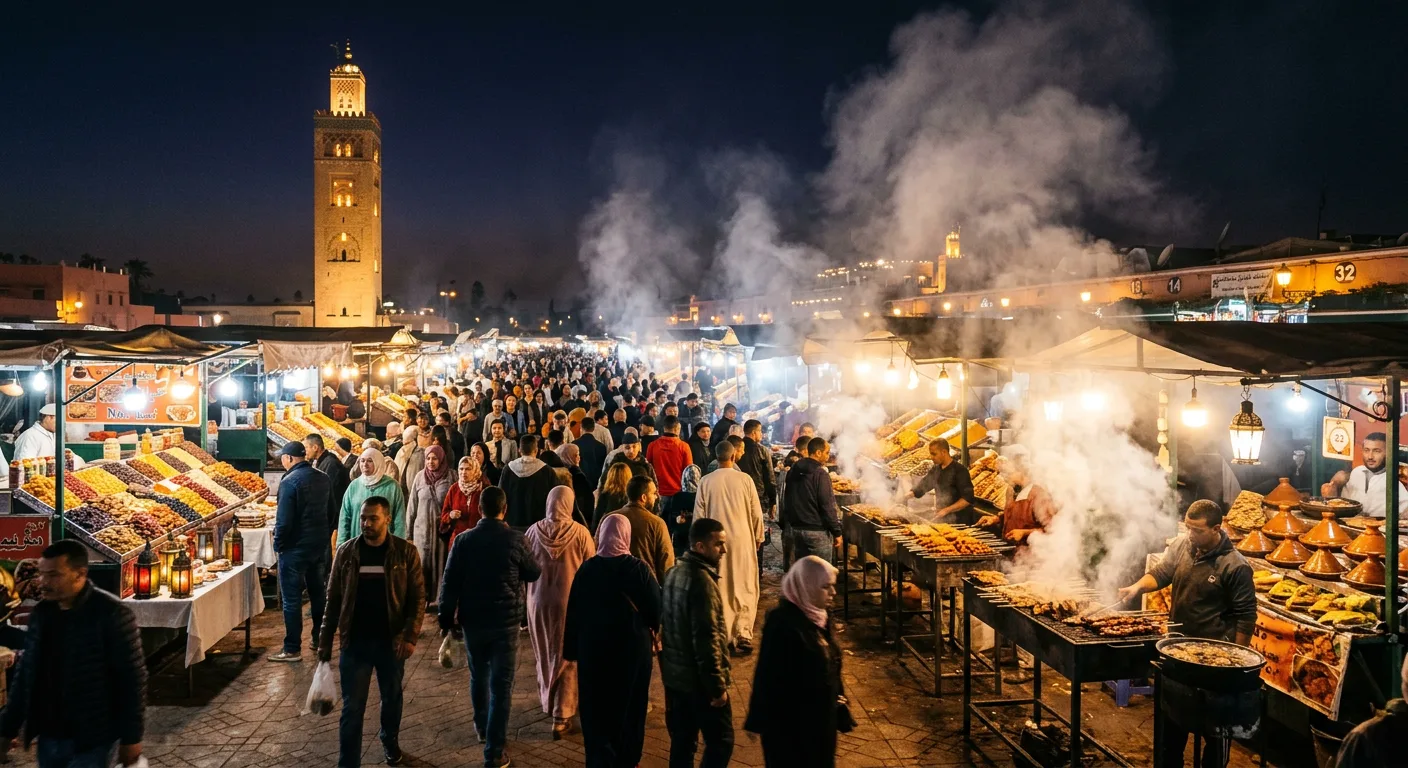
The world's most famous open-air food market. Every evening, over 100 food stalls set up in the main square, serving everything from grilled meats and harira to snails and sheep heads. The smoke, the noise, the energy: there is nothing else like it on earth.
Best for: Grilled meats, harira soup, snails, fresh orange juice
Best time: After 6 PM when all stalls are fully operational
Prices: From 10 MAD per dish
Marche Central (Central Market)
Indoor Market
Casablanca
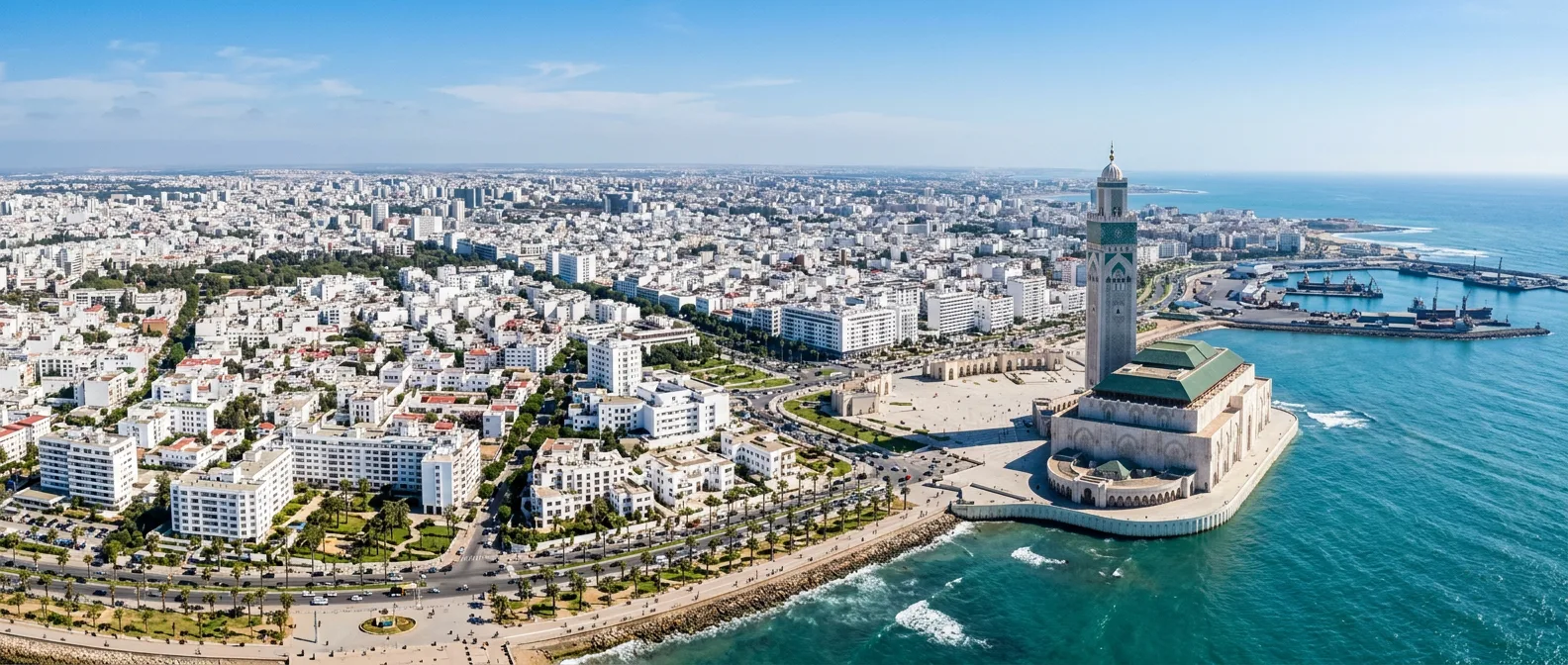
Casablanca's historic Central Market is an Art Deco gem filled with the city's freshest seafood, produce, olives, and spices. The small restaurants inside the market grill fish to order at remarkably fair prices. This is where Casablancans shop and eat.
Best for: Fresh seafood, grilled fish, olives, seasonal produce
Best time: Morning to early afternoon, closed Sundays
Prices: From 30 MAD for a grilled fish plate

Rahba Kedima (Spice Square)
Historic Spice Market
Marrakech
Just off the main medina thoroughfare, this centuries-old square is where Marrakech comes to buy spices, dried fruits, nuts, and traditional remedies. The aromas are intoxicating. Buy ras el hanout blended to order, sample local honeys, and pick up dried figs and dates.
Best for: Ras el hanout, dried fruits, nuts, local honey, traditional remedies
Best time: Morning to late afternoon, daily except Friday afternoon
Prices: From 20 MAD for spice packets
Essaouira Fish Port Market
Fish Market & Grill
Essaouira
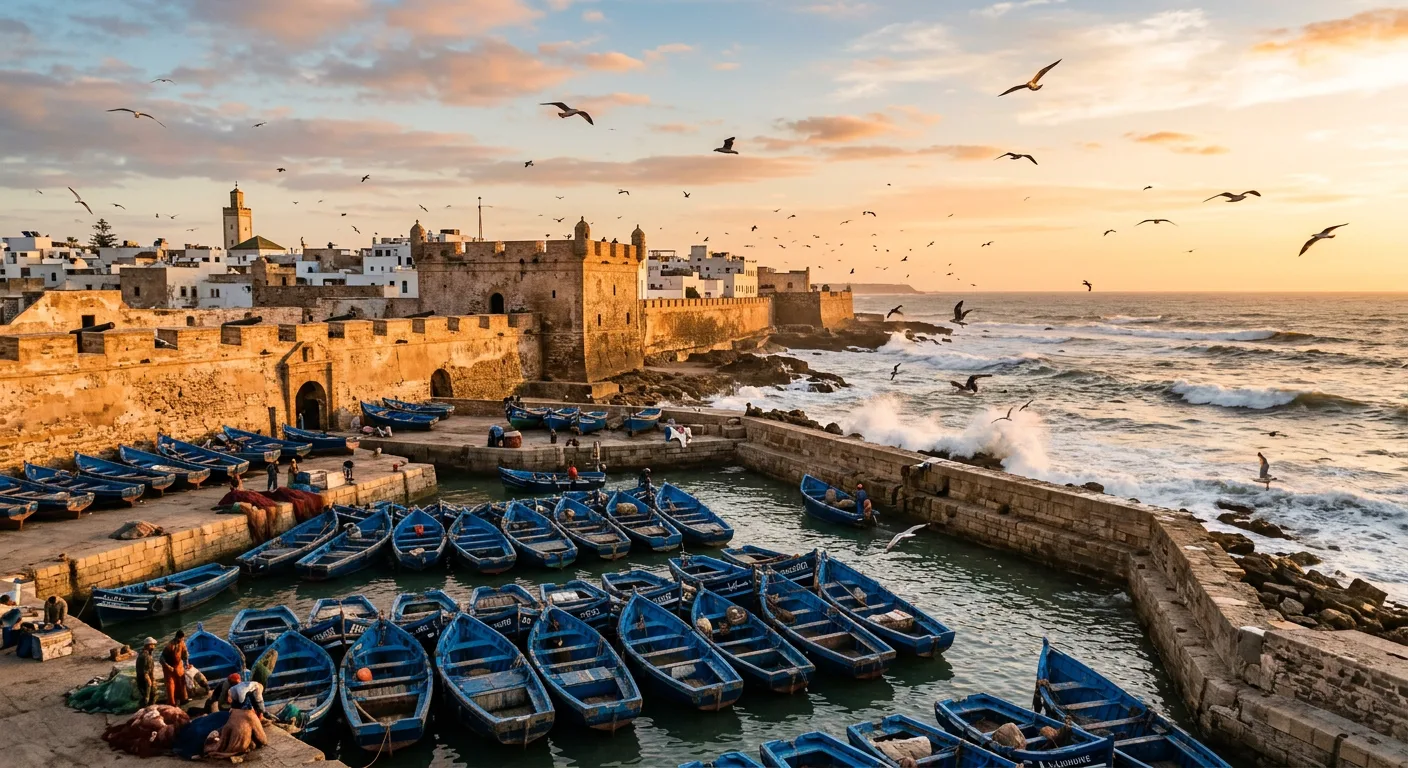
The most theatrical food market in Morocco. Watch the fishing boats unload, browse the catch laid out on ice, choose your fish, and hand it to the grillers who cook it on the spot with charcoal, salt, and cumin. You sit at communal tables overlooking the Atlantic.
Best for: Fresh grilled fish, prawns, lobster, sardines, sea urchin (seasonal)
Best time: Lunchtime (11 AM - 2 PM) when the catch is freshest
Prices: From 40 MAD for a grilled fish plate
Fes Medina Food Souks
Historic Medina Market
Fes
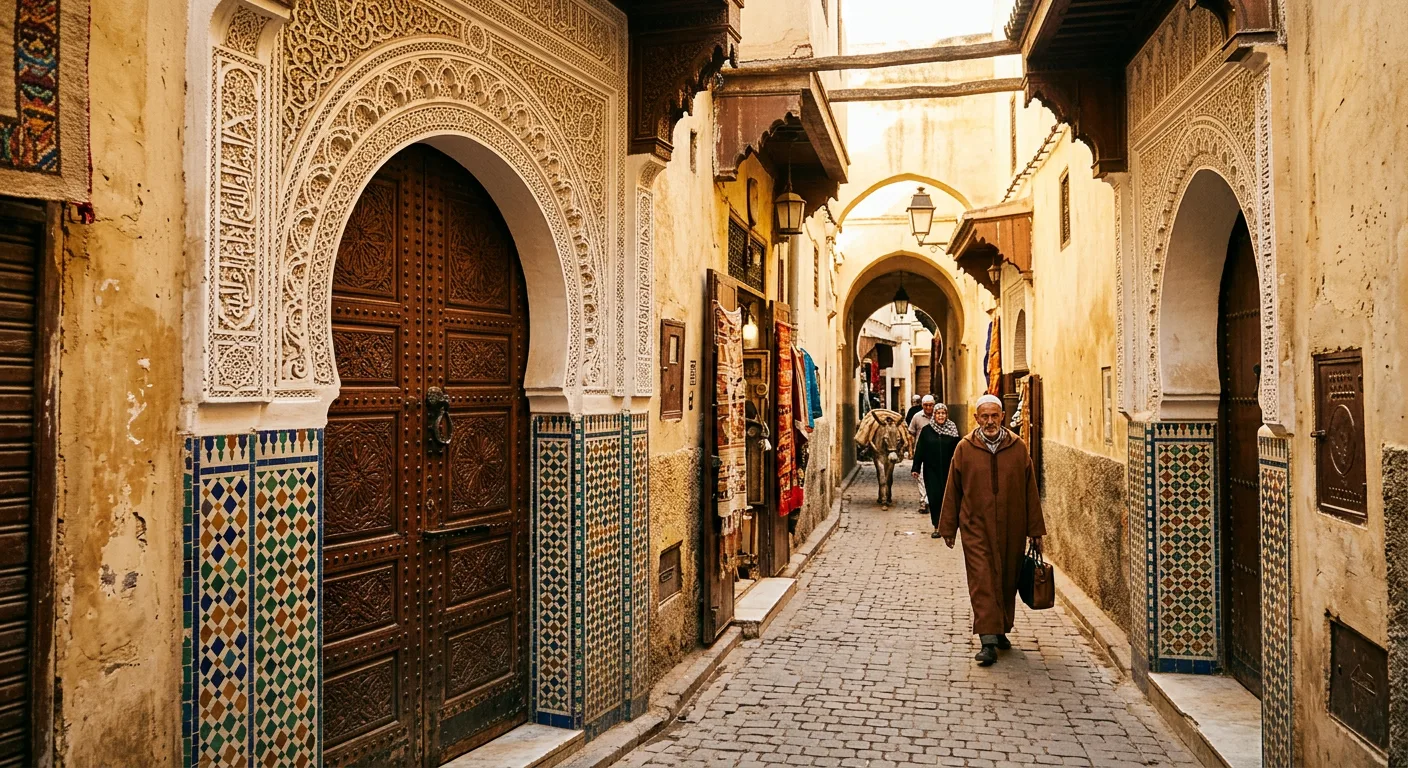
The Fes medina contains the most extensive network of food souks in Morocco. Entire streets are dedicated to single ingredients: one for olives, one for honey, one for dried meats. The bakeries use wood-fired ovens that have not changed in centuries. Navigating without a guide is an adventure in itself.
Best for: Fresh bread, pastilla, olives, preserved meats (khlii), honey, nuts
Best time: Morning to early afternoon for the freshest goods
Prices: From 5 MAD for bread, from 25 MAD for pastilla
Essential Tips for Food Tours in Morocco
Come Hungry
Skip breakfast or lunch before a food tour. Guided tours include 8-12 tastings, and each one is generous. You will eat far more than you expect. Bring antacids if you have a sensitive stomach.
Carry Small Bills
Most food vendors deal in small amounts. Bring plenty of 5, 10, and 20 MAD notes. Many stalls cannot break 200 MAD. ATMs are plentiful in all cities.
Water Safety
Drink bottled water only. The tap water in Morocco is treated but can upset foreign stomachs. Ice in drinks at restaurants is generally made from purified water, but ask if uncertain.
Eat Where Locals Eat
The golden rule of Moroccan street food: if the stall is full of Moroccans, the food is good and safe. High turnover means fresh food. Avoid empty tourist-facing stalls with English menus and photos.
Best Time for Street Food
Breakfast stalls operate from 7-10 AM. Lunch is served from noon to 2 PM. The best street food experience is at night, especially in Marrakech and Fes, when the evening food stalls open around 6 PM.
Bring Hand Sanitizer
Street food in Morocco is generally safe, but hand-washing facilities are limited. Carry hand sanitizer or wet wipes. Most food stalls will have a communal hand-washing station with soap.
Embrace the Adventure
Try everything at least once. Snails, sheep head, tanjia, sardines whole: these are the flavors that define Morocco. The dishes that look the most intimidating are often the most rewarding.
Book Tours Early
Popular food tours sell out, especially during peak season (October-April). Book at least 3 days in advance. Ramadan changes schedules dramatically, so check with tour operators.
Frequently Asked Questions
Is Moroccan street food safe to eat?
Yes, Moroccan street food is generally safe if you follow basic precautions. Eat at stalls with high turnover where food is cooked fresh in front of you. Avoid pre-cooked food that has been sitting out, and drink bottled water. Most travelers experience no issues. If you have a very sensitive stomach, start with cooked foods and avoid raw salads at street stalls for the first day or two.
How much should I budget for food in Morocco?
Morocco offers excellent value for food. Budget travelers can eat well for from 100 MAD per day using street food and local restaurants. Mid-range travelers should budget from 250 MAD per day for a mix of local spots and nicer restaurants. A guided food tour adds from 350-500 MAD for a memorable experience. Fine dining starts from 300 MAD per meal.
Are food tours suitable for children?
Most guided food tours welcome children over 6 years old, and many offer reduced prices. The walking can be tiring for younger children (2-4 km through medina streets). Self-guided routes let you set your own pace. Moroccan food is generally mild, though some dishes use cumin and chili. Tour operators can adjust tastings for children on request.
When is the best time of year for a food tour?
Food tours operate year-round, but the best seasons are spring (March-May) and autumn (September-November) when temperatures are pleasant for walking and seasonal produce is at its peak. Summer (June-August) is very hot, making midday food walks uncomfortable. During Ramadan, daytime food options are limited, but the iftar (sunset) food experience is extraordinary.
Do I need to speak Arabic or French for self-guided food routes?
Not essential but helpful. Most food vendors in tourist areas speak basic English or French. For self-guided routes, learn a few key phrases: "bghit" (I want), "bezzaf" (too much/enough), "sh-hal?" (how much?), and "had shi zwin" (this is delicious). Pointing, smiling, and showing enthusiasm are universal languages that work perfectly.
Can I take a food tour during Ramadan?
Yes, but with significant differences. During Ramadan, most Moroccans fast from sunrise to sunset, so daytime street food options are very limited. Some guided tours shift to evening schedules, starting after iftar (sunset). The iftar experience itself is remarkable: streets come alive with food vendors, and the communal breaking of the fast is a cultural highlight. Check with tour operators for Ramadan-specific schedules.
Continue Exploring Morocco
Moroccan Cuisine Guide
Deep dive into the flavors, techniques, and regional specialties of Morocco's culinary heritage.
Read moreCooking Classes
Learn to make tagine, couscous, and pastilla in hands-on cooking classes across Morocco.
Read moreMarrakech City Guide
Everything you need to know about Morocco's most vibrant city, from souks to riads.
Read more