Discovering...
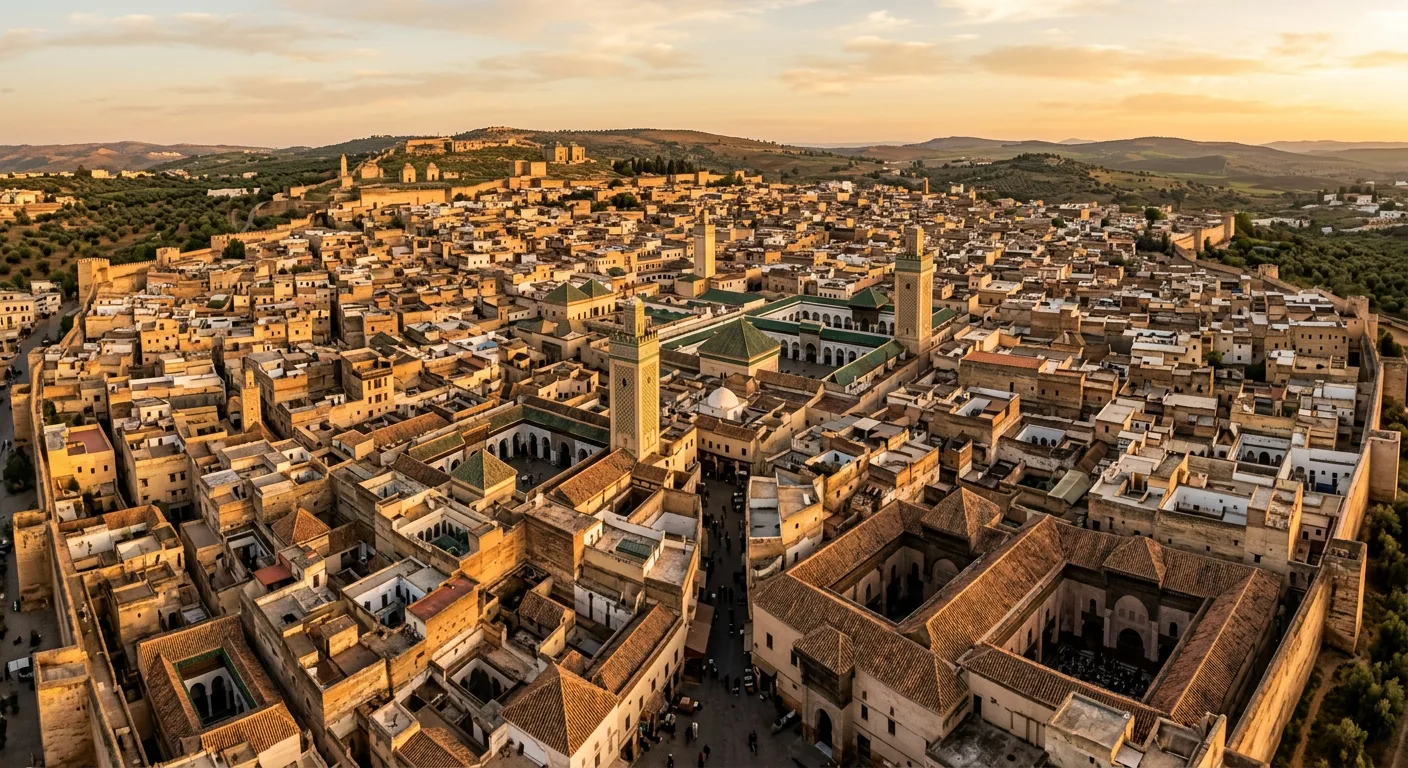
Cultural Heritage
Morocco Jewish Heritage Guide 2026
Over two thousand years of shared history, from ancient Amazigh-Jewish communities to the mellahs of imperial cities, standing synagogues, and a living legacy of coexistence.
A Living History Spanning Two Millennia
Jewish presence in Morocco predates Islam by more than a thousand years. Archaeological traces place Jewish communities in the Maghreb as early as the 3rd century BCE. When the Romans destroyed the Second Temple in 70 CE, further waves of Jewish refugees settled across North Africa, joining communities already rooted in Amazigh (Berber) culture.
For centuries, Jewish Moroccans served as traders, diplomats, jewelers, and scholars. The 1492 expulsion of Jews from Spain brought tens of thousands of Sephardic refugees, adding Castilian language, Andalusian music, and Ladino liturgical traditions. Today, Morocco preserves this heritage with rare dedication. The 2011 constitution recognizes the Hebraic tributary as part of national identity. Synagogues have been restored, cemeteries maintained, and the Museum of Moroccan Judaism in Casablanca remains the only institution of its kind in the Arab world.
Historical Timeline
2,000+ Years of Jewish Life in Morocco
3rd century BCE
Earliest Jewish Presence
Archaeological evidence and ancient accounts suggest Jewish traders and settlers arrived in North Africa alongside Phoenician colonists. Jewish communities took root in what is now northern Morocco, predating the Arab conquest by nearly a millennium.
70 CE
Post-Temple Diaspora
After the destruction of the Second Temple in Jerusalem by Rome, additional waves of Jewish refugees settled across North Africa, strengthening existing communities in Morocco.
7th-8th century
Islamic Conquest & Dhimmi Status
Arab armies brought Islam to Morocco. Jewish communities gained dhimmi (protected minority) status under Islamic law, paying the jizya tax in exchange for religious freedom and communal autonomy. This framework governed Jewish-Muslim relations for centuries.
1438
First Mellah Established in Fes
The Marinid Sultan Abu Said Uthman III relocated the Jewish community of Fes to a new quarter adjacent to the royal palace in Fes el-Jedid. This became the first formal mellah, a model later replicated across Moroccan cities.
1492
Sephardic Expulsion from Spain
The Alhambra Decree expelled Jews from Spain. Tens of thousands of Sephardic Jews (Megorashim) fled to Morocco, joining the existing Toshavim (native Moroccan Jewish) communities. This influx brought Castilian language, Ladino liturgy, and Andalusian cultural traditions that permanently reshaped Moroccan Jewish identity.
16th-18th century
Saadian, Alaouite & Essaouira Eras
Jewish communities expanded under the Saadian dynasty; the Marrakech mellah grew into the largest in Morocco. Under the Alaouites, Jewish advisors served in diplomatic and financial roles. In the 1760s, Sultan Mohammed III recruited Jewish merchants (tujjar al-sultan) to manage the new port of Essaouira, where Jews eventually comprised nearly 40 percent of the population.
1860s-1912
European Influence & Alliance Schools
The Alliance Israelite Universelle established French-language schools across Morocco, offering modern education to Jewish youth. This period saw increasing Jewish participation in international trade, with families in Essaouira, Tangier, and Casablanca building commercial networks spanning Europe and the Americas.
1940-1943
Vichy Period & Mohammed V
Under Vichy French administration, anti-Jewish statutes were formally enacted in Morocco. Sultan Mohammed V resisted the spirit of these laws, limiting their enforcement and publicly expressing solidarity with his Jewish subjects. No Moroccan Jews were deported to European death camps.
1948-1967
Mass Emigration
Following Israeli independence in 1948, large-scale emigration began. The Jewish population dropped from roughly 250,000 to under 50,000 by the mid-1960s. Most emigrated to Israel, with others going to France, Canada, and South America.
2011
Constitutional Recognition
The new Moroccan constitution formally recognized the Hebraic tributary as one of the streams that nourish Moroccan national identity. This constitutional acknowledgment was significant in the Arab world.
2020
Abraham Accords & Heritage Revival
Morocco normalized relations with Israel as part of the Abraham Accords. This led to increased heritage tourism, restoration projects, and direct flights between Casablanca and Tel Aviv. Morocco invested in restoring Jewish cemeteries, synagogues, and cultural sites across the country.
Jewish Quarters
Historic Mellahs Across Morocco
Morocco's mellahs are among the most architecturally distinctive Jewish quarters in the world. Each reflects the era, dynasty, and local conditions under which it was built.
Fes el-Jedid (Fes)
Established: 1438
The first mellah in Morocco, established by the Marinid dynasty in 1438 adjacent to the royal palace. The quarter features distinctive balconied windows facing outward, interior courtyards, and multi-story houses. Today the mellah retains its street layout. The restored Ibn Danan Synagogue, with its mikve (ritual bath) intact in the basement, is the most visited Jewish monument in Fes.
Oldest mellah in Morocco
Ibn Danan Synagogue (restored)
Habarim Jewish Cemetery
Rabbi Vidal Hasserfaty Synagogue
Marrakech
Established: 1557
Established under the Saadian dynasty near Place des Ferblantiers, this grew into the largest Jewish quarter in Morocco. The Miaara cemetery holds thousands of whitewashed tombs across a hillside. The Slat al-Azama synagogue, restored with turquoise tilework and carved stucco, hosts occasional services and is open to visitors.
Slat al-Azama Synagogue
Lazama Synagogue
Miaara Jewish Cemetery (largest in Morocco)
Spice market adjacency
Essaouira (Mogador)
Established: 1760s
Sultan Mohammed III invited Jewish traders (tujjar al-sultan) to develop Essaouira in the 18th century. By the 1880s, Jews made up nearly 40 percent of the population. The mellah was more integrated than in other cities, with families often sharing streets. Bayt Dakira, inaugurated in 2020, serves as a museum preserving the city's Jewish-Muslim shared heritage.
Slat Lkahal Synagogue
Bayt Dakira (House of Memory)
Merchant houses on Rue Siaghine
Jewish cemetery near the beach
Meknes
Established: 17th century
The Meknes mellah was established during Sultan Moulay Ismail's reign. Located near the imperial granaries, the quarter housed artisans, jewelers, and traders. The Jewish cemetery contains graves dating back several centuries, and former synagogue structures remain identifiable by their architecture.
Mellah near the Royal Granaries
Historic cemetery
Adjacent to Moulay Ismail complex
Wartime History
Mohammed V and Morocco's Jews During WWII
When France fell to Nazi Germany in 1940, Morocco came under the authority of the Vichy French administration. The Vichy regime enacted racial laws (the Statut des Juifs) that stripped Jews of civil rights, barred them from professions, and imposed quotas.
Sultan Mohammed V, grandfather of the current King Mohammed VI, took a position of quiet but consistent resistance. According to well-documented accounts, he told French officials: “There are no Jews in Morocco. There are only Moroccan subjects.” In 1941, he invited Jewish leaders to the throne celebration, a deliberate public signal that they remained under his protection.
While historians debate the extent to which Mohammed V could override Vichy edicts under the protectorate system, the consensus is clear: the Sultan used what leverage he had to shield his Jewish subjects. No Moroccan Jews were deported to European concentration camps. His grandson, King Mohammed VI, has continued this legacy through extensive synagogue and cemetery restorations across the country.
0
Moroccan Jews deported to death camps
~250,000
Jewish population in 1940s Morocco
1941
Throne celebration invitation to Jewish leaders
Sacred Spaces
Synagogues Still Standing
Morocco maintains more than 100 identifiable synagogue structures. These six represent the most significant for visitors, ranging from fully active houses of worship to beautifully restored heritage sites.
Slat al-Azama
Marrakech Mellah
Active for special services; open to visitors
Originally built in 1492 by Sephardic Jews expelled from Spain (the Megorashim), this synagogue was restored in the early 2000s. Its name means "Synagogue of the Exiles." The interior features turquoise and white tilework, carved cedarwood ceilings, and a central bimah. Occasional Shabbat services are held when enough community members gather. Entry from 30 MAD.
Ibn Danan Synagogue
Fes Mellah
Museum and heritage site; fully restored
Dating to the 17th century and restored in the late 1990s with support from UNESCO, this synagogue preserves an underground mikve (ritual bath), a carved wooden ark, and painted walls. It is the best-documented synagogue in Fes and provides the clearest picture of Moroccan Jewish liturgical architecture. Entry from 20 MAD.
Temple Beth-El
Casablanca
Active synagogue with regular services
The main synagogue of Casablanca's Jewish community, built in mid-20th-century modernist style. Beth-El holds regular Shabbat and holiday services. Contact the community office in advance for Shabbat visits.
Slat Lkahal
Essaouira Medina
Restored heritage site
Restored as part of the Bayt Dakira complex, Slat Lkahal preserves Essaouira's pluralistic heritage. The adjacent museum contextualizes Jewish life in Mogador with photographs, documents, and ceremonial objects. Entry from 20 MAD.
Lazama Synagogue
Marrakech Mellah
Active with regular prayer services
Founded by Megorashim (Jews expelled from Iberia), it sits behind an unassuming doorway opening onto an Andalusian courtyard. The painted wooden ceiling, carved stucco, and iron-railed bimah make it a masterpiece of Moroccan-Jewish architecture. Entry from 30 MAD.
Must-Visit
Museum of Moroccan Judaism, Casablanca
Founded in 1997 in the Oasis neighborhood of Casablanca, the Musee du Judaisme Marocain is the only Jewish museum in the Arab world. The collection spans centuries through Torah scrolls, Hanukkah lamps (hanukiot), ceremonial textiles, ketubot (marriage contracts), photographs, and a reconstructed synagogue interior. Temporary exhibitions cover themes from Amazigh-Jewish heritage to contemporary art by Moroccan Jewish artists.
Open Sunday to Friday; closed Saturdays and Jewish holidays
Rue Chasseur Jules Gros, Oasis, Casablanca
Admission from 40 MAD (seasonal pricing can change)
Photography permitted inside the museum
Annual Pilgrimages
Hiloula Festivals & Sacred Tombs
The Hiloula (from the Aramaic for “celebration”) marks the anniversary of a revered rabbi's passing. Thousands of Moroccan Jews and their descendants return from Israel, France, and beyond for these annual gatherings at saints' tombs across the country.
Rabbi Amram ben Diwan
Ouezzane (Rif region)
Lag BaOmer (spring, Hebrew calendar)
The largest annual Jewish pilgrimage in Morocco. Rabbi Amram, an 18th-century emissary from Hebron, is buried near Ouezzane. Thousands of Moroccan-Israeli and diaspora Jews return each year for prayers, candle-lighting, and communal meals at his tomb.
Rabbi Haim Pinto
Essaouira
Elul (late summer)
The Pinto family produced several revered rabbis in Essaouira. The Hiloula at Rabbi Haim Pinto's tomb draws Moroccan Jews from Israel, France, and Canada. The Pinto synagogue in the medina has been restored.
Rabbi Shlomo ben Hensh
Ourika Valley, near Marrakech
Spring
Located in the Atlas foothills, this pilgrimage combines religious devotion with scenic mountain landscape. The tomb sits in a village that once had a significant Jewish population.
Rabbi David ou Moshe
Timzrit, Azilal Province (Atlas)
Lag BaOmer
One of the most popular pilgrimage sites in southern Morocco. The annual gathering includes prayer services, music, shared meals, and a festive atmosphere. The Moroccan government has supported infrastructure improvements at the site.
Shared Cuisine
Jewish-Moroccan Culinary Heritage
Moroccan Jewish and Muslim kitchens share most of the same ingredients, techniques, and flavor profiles. The overlap runs so deep that many dishes exist in nearly identical forms across both traditions.
Dafina (Skhina)
A slow-cooked Shabbat stew of meat, potatoes, chickpeas, eggs, wheat berries, and spices, left on a low fire from Friday afternoon through Saturday lunch.
The direct ancestor of the Sephardic hamin/cholent tradition. Moroccan Muslims adopted a parallel dish, also called skhina, prepared for special occasions.
Pastilla (Sephardic Origins)
The flaky, layered pie combining pigeon or chicken with almonds, cinnamon, and powdered sugar originated in Andalusian kitchens.
Many food historians trace pastilla to the Sephardic Jews and Moors who arrived from Spain, blending savory and sweet in a distinctly Andalusian manner.
Matbucha
A cooked salad of tomatoes, roasted peppers, garlic, and chili, served as a mezze or spread.
A staple in both Moroccan Jewish and Muslim households, matbucha traveled with Moroccan Jews to Israel where it became a foundational dish of Mizrahi Israeli cuisine.
Mufleta & the Mimouna
Thin, buttery crepes served during the Mimouna celebration at the end of Passover, with honey and butter. Friday couscous with seven vegetables was another shared tradition.
The Mimouna festival, unique to Moroccan Jews, involved Muslim neighbors bringing flour and butter to Jewish homes after Passover. The shared Friday couscous tradition further symbolizes centuries of cultural overlap.
Mahia (Fig Brandy)
A traditional fig or date brandy distilled by Jewish families for generations, served at celebrations and Hiloula gatherings.
Spirit distillation was a predominantly Jewish trade in Morocco. Mahia production has become rare but a few Casablanca artisans still practice the craft.
Itinerary
10-Day Jewish Heritage Itinerary
A suggested route covering the major Jewish heritage sites across Morocco. Private guided heritage tours can be arranged from 2,500 MAD per day. Seasonal pricing can change during peak travel months.
Days 1-2
Casablanca
- Museum of Moroccan Judaism (from 40 MAD)
- Temple Beth-El & Ettedgui Synagogue
- Jewish cemetery of Casablanca
- Kosher dining in the Oasis neighborhood
Days 3-5
Fes
- Fes el-Jedid mellah (oldest in Morocco)
- Ibn Danan Synagogue & underground mikve (from 20 MAD)
- Habarim Jewish Cemetery
- Mellah artisan workshops
Day 6
Meknes & Sefrou
- Meknes mellah near the Royal Granaries
- Sefrou Jewish quarter ("Little Jerusalem")
Days 7-8
Marrakech
- Slat al-Azama Synagogue (from 30 MAD)
- Lazama Synagogue (from 30 MAD)
- Miaara Jewish Cemetery
- Mellah market and Place des Ferblantiers
Days 9-10
Essaouira
- Bayt Dakira (House of Memory)
- Slat Lkahal Synagogue (from 20 MAD)
- Jewish merchant houses on Rue Siaghine
- Jewish cemetery near Bab Doukkala
- Rabbi Haim Pinto tomb
Practical Tips
Visiting Jewish Heritage Sites in Morocco
Hire a Specialist Guide
Many heritage sites are unmarked or in residential areas. A specialist guide (from 500 MAD for a half day) can locate synagogues, explain architectural details, and share oral histories. Seasonal pricing can change.
Shabbat & Holiday Hours
Active synagogues and the Casablanca museum close on Saturdays and Jewish holidays. Plan visits for Sunday through Friday. Cemeteries are accessible during daylight hours daily.
Dress & Photography
Cover shoulders and knees at synagogues and cemeteries. Men should carry a kippah. Photography is generally permitted but ask first at active synagogues, especially during services.
Best Time to Visit
Spring (March-May) and autumn (September-November) offer comfortable weather and coincide with Hiloula festivals. Contact the Jewish Community Council of Casablanca for current schedules.
Modern Legacy
Constitutional Recognition & Heritage Preservation
Morocco's 2011 constitution includes language unique in the Arab world, stating that Moroccan identity is “nourished and enriched by its African, Andalusian, Hebraic, and Mediterranean tributaries.” Since 2010, King Mohammed VI has directed the restoration of more than 170 Jewish cemeteries, dozens of synagogues, and several mellah quarters. The Bayt Dakira in Essaouira, inaugurated in 2020, is among the most prominent results.
Following the 2020 Abraham Accords normalization with Israel, heritage tourism surged. Direct flights between Casablanca and Tel Aviv brought tens of thousands of Israeli visitors, many of Moroccan descent, seeking family roots. Tour operators now offer dedicated Jewish heritage circuits across the country.
FAQ
Frequently Asked Questions
Are Jewish heritage sites in Morocco open to all visitors?
Yes. Synagogues, mellahs, Jewish cemeteries, and the Museum of Moroccan Judaism in Casablanca welcome visitors of all faiths. Some synagogues may require advance contact with a local caretaker. Cemeteries are generally open during daylight hours. Respectful dress is expected at all religious sites.
How many Jews still live in Morocco today?
Approximately 2,000 to 3,000 Jewish Moroccans remain as of 2026, down from a peak of around 250,000 in the late 1940s. The largest community is in Casablanca, with smaller groups in Marrakech, Fes, Rabat, and Tangier. Morocco has the largest Jewish population of any Arab-majority country.
What is a mellah?
A mellah is a historic Jewish quarter found in Moroccan cities. The word likely derives from the Arabic for "salt," referencing one origin theory tied to salt-trading or salt-preservation duties. Mellahs were established from the 15th century onward. They typically featured narrow streets, balconied houses, synagogues, and cemeteries within or adjacent to the medina walls.
Can I attend a Hiloula festival in Morocco?
Yes, several Hiloula pilgrimages are open to respectful visitors. The largest gatherings occur at the tomb of Rabbi Amram ben Diwan near Ouezzane (typically in spring) and the Lag BaOmer pilgrimage at various saints' tombs. Dates follow the Hebrew calendar. Contact the Jewish community council in Casablanca for current schedules.
Did Mohammed V protect Moroccan Jews during World War II?
Yes. When the Vichy French administration pressured Morocco to enforce anti-Jewish laws, Sultan Mohammed V resisted full implementation. He invited Jewish leaders to the 1941 throne celebration, publicly rejected the distinction between Jewish and Muslim subjects, and worked to limit the impact of Vichy racial statutes. No Moroccan Jews were deported to death camps.
What is the Museum of Moroccan Judaism in Casablanca?
The only Jewish museum in the Arab world, located in the Oasis neighborhood. It houses Torah scrolls, Hanukkah lamps, traditional clothing, photographs, and reconstructed synagogue interiors. Admission from 40 MAD. Open Sunday through Friday, closed Saturdays and Jewish holidays.
Is it safe for Jewish travelers to visit Morocco?
Morocco is widely considered one of the safest destinations in the Arab world for Jewish travelers. The government actively preserves Jewish heritage sites, and the 2011 constitution formally recognizes the Hebraic tributary as part of Moroccan identity. Security is present at active synagogues and community centers. Standard travel precautions apply as with any destination.
How long do I need to explore Jewish heritage sites in Morocco?
A focused itinerary covering Casablanca, Marrakech, Fes, and Essaouira requires 7 to 10 days. Adding Meknes, Ouezzane, and Sefrou means 12 to 14 days. Private guided heritage tours can be arranged from 2,500 MAD per day. Seasonal pricing can change.
Related Guides
Explore Morocco's Jewish Heritage
Walk through ancient mellahs, stand inside restored synagogues, and discover a story of coexistence that spans more than two thousand years. Private heritage tours available from 2,500 MAD per day.