Discovering...
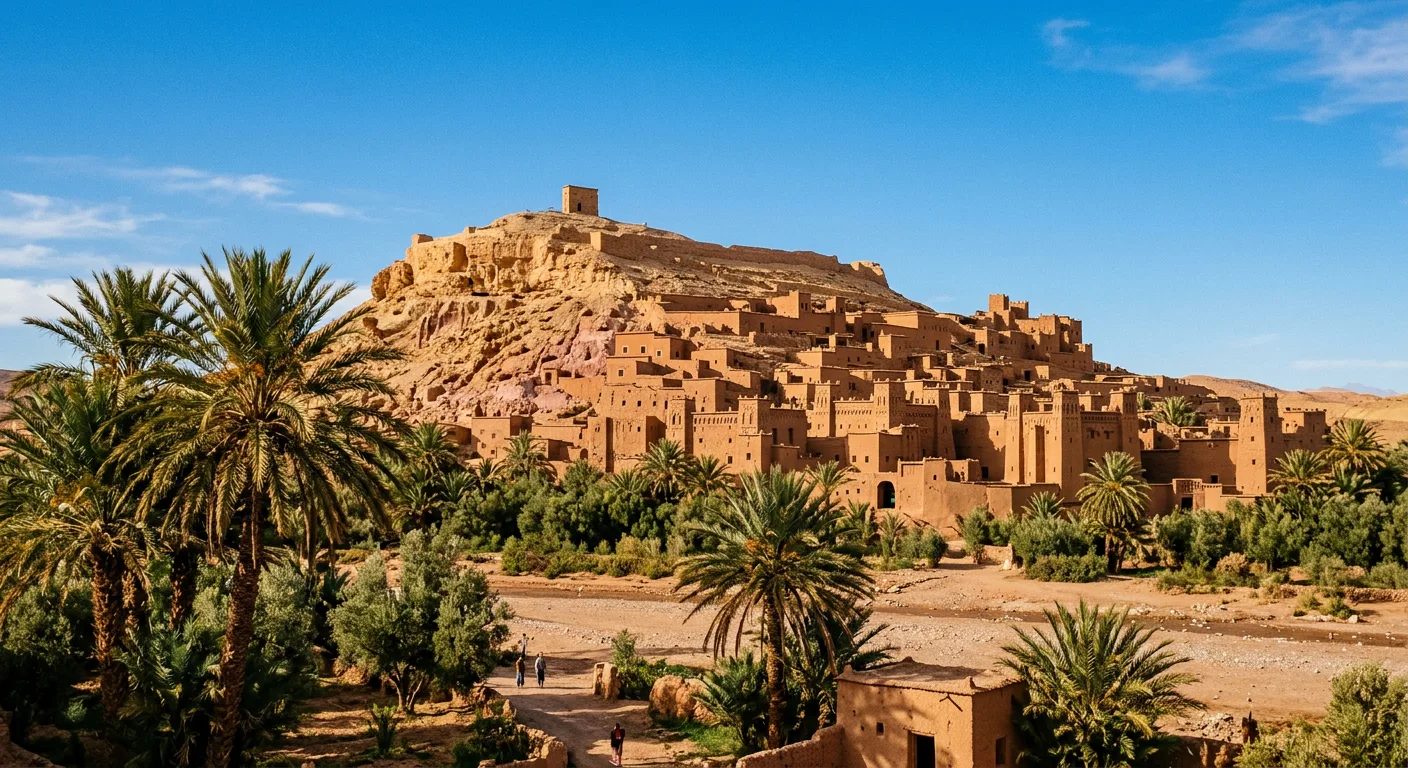
Draa-Tafilalet Region, Morocco
Ouarzazate Travel Guide
Gateway to the Sahara & Hollywood of Morocco
A desert city where ancient kasbahs double as film sets, where the Atlas Mountains meet the Sahara, and where the road south leads to Africa's largest sand sea. Ouarzazate sits at the crossroads of Morocco's most dramatic landscapes.
Why Visit Ouarzazate?
Ouarzazate (pronounced "war-za-zat") controls the junction where the High Atlas range gives way to the pre-Saharan steppe. The Amazigh (Berber) name translates roughly to "without noise" — and the city delivers on that promise. Compared to the sensory overload of Marrakech or Fes, Ouarzazate moves at a slower pace, with wide boulevards, clear skies averaging 300 days of sunshine per year, and air that smells of dust and wild thyme.
The city earned its "Hollywood of Morocco" nickname after filmmakers discovered the region in the 1960s. David Lean shot Lawrence of Arabia here in 1962. Since then, Ridley Scott, Martin Scorsese, and HBO have all used the kasbahs and desert landscapes as backdrops. Two major studios — Atlas Corporation Studios and CLA Studios — operate year-round, and standing sets from Gladiator, Game of Thrones, and Kingdom of Heaven remain open to visitors.
Beyond the film connection, Ouarzazate serves as the staging point for Morocco's grand southern circuits. The Draa Valley stretches south toward Zagora. The "Road of a Thousand Kasbahs" runs east to the Dades and Todra Gorges. And the Erg Chebbi dunes at Merzouga lie a day's drive further east. For travelers crossing the Atlas from Marrakech, Ouarzazate is the first taste of desert Morocco.
300+ Sunny Days
Per year
1,160 m
Elevation
200+ Films
Shot in the region
~72,000
Population
Top 5 Things to Do in Ouarzazate
From a UNESCO World Heritage ksar to Africa's largest film studio, these are the sights that put Ouarzazate on the map.
Ait Benhaddou (UNESCO World Heritage Site)
30 km west of Ouarzazate2-3 hoursFree entry (guides from 150 MAD)
This fortified ksar along the former caravan route between the Sahara and Marrakech is Morocco's most iconic mud-brick village. Six families still live inside. The granary at the summit offers sweeping views of the Ounila Valley. Cross the shallow river on foot or use the footbridge — locals will offer to carry your shoes for a tip.
Film Credits
Gladiator, Game of Thrones (Yunkai), Lawrence of Arabia, The Mummy, Kingdom of Heaven
Tip
Arrive before 9 AM or after 4 PM for the best photography light. The kasbah faces east, so morning sun illuminates the facade beautifully.
Atlas Film Studios (Atlas Corporation Studios)
5 km northwest of center1.5-2 hoursFrom 50 MAD (guide from 100 MAD)
The largest film studio in Africa, spanning over 30,000 square meters. Walk through standing sets from Gladiator's Roman Senate, the Egyptian temple from The Mummy, and Cleopatra's palace. Some sets are actively used for productions. Founded in 1983 by Mohamed Belghmi, the studio has hosted over 200 productions.
Film Credits
Gladiator, The Mummy, Cleopatra (1999), Asterix & Obelix: Mission Cleopatra
Tip
Photography is allowed everywhere except active production areas. The gift shop sells movie posters and props replicas.
CLA Studios (Cinéma Lieu d'Art)
7 km northwest of center1-1.5 hoursFrom 40 MAD
The second major studio complex in Ouarzazate, built for Ridley Scott's Kingdom of Heaven in 2004. Features a reconstructed medieval Jerusalem and a Tibetan monastery set used for Kundun. Smaller and quieter than Atlas Studios, which makes for a more relaxed visit. Some travelers prefer CLA because it feels less touristy.
Film Credits
Kingdom of Heaven, Kundun, Ben-Hur (2016), Prison Break (TV series)
Tip
Combine CLA and Atlas Studios in one morning. Both are on the same road northwest of town.
Taourirt Kasbah
City center1-1.5 hoursFrom 20 MAD
A sprawling 19th-century kasbah built by the powerful Glaoui family, who controlled the trade routes from the Sahara. Partially restored by UNESCO, the interior features ornate stucco ceilings, painted cedar wood, and zellige tilework. The rooftop terrace gives a panoramic view of the city and the Atlas Mountains beyond.
Film Credits
Used as a location for several Moroccan and international productions
Tip
Spend time in the small artisan cooperative next door, where Berber women weave traditional carpets.
Fint Oasis
15 km south of Ouarzazate2-3 hoursFree (4WD recommended)
A hidden palm oasis carved into a dramatic red canyon. Far fewer tourists visit Fint compared to the film studios, making it one of Ouarzazate's best-kept secrets. Date palms, almond trees, and small farms line the riverbed. The approach road passes through barren desert landscape, making the sudden green all the more striking.
Film Credits
Parts of The Hills Have Eyes were filmed in the surrounding desert
Tip
Hire a 4WD or take a taxi from Ouarzazate (negotiate from 200 MAD round trip with wait time). The last 3 km of road are unpaved.
Day Trips from Ouarzazate
Ouarzazate sits at the hub of southern Morocco's road network. These four day trips cover the region's most spectacular gorges, valleys, and palmeries.
Dades Gorge
110 km east (1.5 hours)
A spectacular canyon carved by the Dades River through the High Atlas. The famous "Road of a Thousand Kasbahs" leads here from Ouarzazate through Skoura and Kelaat M'Gouna (the "Valley of Roses"). The gorge narrows to dramatic switchbacks that make for incredible photographs. Overnight stays in cliffside guesthouses are popular.
Highlight: Visit in May during the rose harvest festival in Kelaat M'Gouna.
Todra Gorge
160 km east (2 hours)
Morocco's most famous gorge — a 300-meter-deep slot canyon only 10 meters wide at its narrowest point. Rock climbers come from around the world for the limestone walls. A paved road runs through the gorge floor. The town of Tinghir, 15 km before the gorge, has a beautiful palmery and traditional Jewish quarter worth a stop.
Highlight: Early morning light hits the canyon walls perfectly between 8-10 AM.
Draa Valley
90 km south (1.5 hours via N10)
The longest river valley in Morocco stretches south from Ouarzazate toward Zagora. Date palms, mud-brick ksour, and oasis villages line the road. Agdz and Tamnougalt are key stops along the way. Zagora — the traditional starting point for 52-day camel treks to Timbuktu — sits at the valley's southern end.
Highlight: The palmeries between Agdz and Zagora are most photogenic in late afternoon.
Skoura Palmery & Amerhidil Kasbah
42 km east (40 minutes)
One of Morocco's largest palm groves, with over 700,000 palms sheltering olive, fig, and almond trees beneath their canopy. The Amerhidil Kasbah — printed on the 50 MAD banknote — sits inside the palmery. Rent a bike in Skoura village and cycle through the palm-lined paths for a perfect half-day excursion.
Highlight: The Amerhidil Kasbah appears on the Moroccan 50 MAD banknote.
Getting to Ouarzazate
Most travelers arrive from Marrakech over the Tizi n'Tichka pass — one of Morocco's most scenic drives. Here are all your options.
Prices are approximate and may vary by season. Always confirm current schedules.
By Car (from Marrakech)
4-4.5 hoursRental from 300 MAD/day + fuel
Take the N9 south over the Tizi n'Tichka pass (2,260 m), the highest paved road pass in North Africa. The road is well-maintained but winding, with over 100 hairpin turns. Stop at the top for panoramic views and Berber vendors selling geodes and fossils. In winter (December-February), snow can temporarily close the pass — check conditions before departing.
By Bus
5 hours from MarrakechFrom 80 MAD (CTM/Supratours)
CTM and Supratours operate daily services from Marrakech. CTM runs two departures per day (morning and afternoon). Supratours has one morning departure. Book at least a day ahead in peak season. The bus station is centrally located in Ouarzazate.
By Grand Taxi
4 hours from MarrakechFrom 120 MAD per person (shared)
Shared grands taxis depart from Marrakech when full (6 passengers). Faster than buses but less comfortable. You can also hire a full taxi privately for from 700 MAD. Grands taxis also connect Ouarzazate with Zagora (2 hours) and Tinghir (2.5 hours).
By Air
1 hour from CasablancaFrom 800 MAD one-way
Ouarzazate Airport (OZZ) receives seasonal flights from Casablanca (Royal Air Maroc) and occasional charter flights from European cities. The airport sits 2 km north of the city center. Flight frequency varies by season — check schedules in advance. Most travelers prefer the scenic overland route.
The Tizi n'Tichka Pass: What to Expect
The N9 highway between Marrakech and Ouarzazate crosses the High Atlas at the Tizi n'Tichka pass, reaching 2,260 meters. Built by the French Foreign Legion in 1936, the road cuts through 100+ hairpin turns and covers 200 km. The landscape shifts dramatically — from olive groves and red earth villages on the Marrakech side to barren, rocky terrain descending toward the desert.
Expect the drive to take 4 to 4.5 hours without stops. Most travelers stop at least twice: once near the summit for photographs and to buy geodes from Berber vendors (from 20 MAD — negotiate), and once at a roadside café for mint tea and a view. The final descent into Ouarzazate reveals the city spread across the plateau with the El Mansour Eddahbi reservoir glinting to the east.
Road is paved and well-maintained year-round
Fuel up in Marrakech — limited stations en route
Check winter road conditions (Dec-Feb snow)
Where to Stay in Ouarzazate
Ouarzazate has a smaller hotel scene than Marrakech. Accommodation ranges from five-star resorts to simple guesthouses. Most options cluster along Avenue Mohammed V or the road toward the film studios.
Prices shown are starting rates and vary by season. Book ahead during spring and autumn.
Luxury
Le Berbère Palace
From 1,800 MAD/nightThe top hotel in Ouarzazate. Five-star resort with a large pool, garden, hammam, and views of the Atlas Mountains. Popular with film crews during productions.
Ksar Ighnda
From 1,500 MAD/nightA kasbah-style boutique hotel outside town with stunning desert views, infinity pool, and traditional architecture. Quieter alternative to the in-town hotels.
Mid-Range
Riad Salam
From 600 MAD/nightCentral location with a pool and reliable service. Good base for day trips. Has hosted film crews for decades.
Dar Chamaa
From 450 MAD/nightA riad-style guesthouse with a courtyard garden, home-cooked meals, and helpful owners who arrange desert excursions.
Budget
Hotel La Vallée
From 200 MAD/nightClean, simple rooms with air conditioning. Walking distance to the center and Taourirt Kasbah. No frills but reliable.
Chez Aïcha Guest House
From 150 MAD/nightA family-run guesthouse offering authentic Berber hospitality. Shared terraces and home-cooked tagines at dinner (from 60 MAD).
Where to Eat in Ouarzazate
The dining scene here is straightforward — tagines, couscous, and grilled meats dominate menus. A few spots offer something more creative. Here are the best options.
Restaurant Douyria
Traditional MoroccanMains from 60 MAD
A garden restaurant inside a renovated riad. The lamb tagine with prunes and almonds stands out. Reservations recommended in high season.
Chez Dimitri
Moroccan-EuropeanMains from 80 MAD
Operating since 1928, this is the oldest restaurant in Ouarzazate. Walls covered in photos of actors who dined here during film shoots. The pizza and Moroccan mixed grill both deliver.
Accord Majeur
Moroccan-French FusionMains from 90 MAD
Upscale dining by Ouarzazate standards. Creative dishes blending French technique with local ingredients. The terrace has views over the valley.
La Kasbah des Sables
Traditional MoroccanMains from 50 MAD
Hearty Berber-style cooking at fair prices. The couscous on Fridays draws locals and travelers alike. Simple setting but generous portions.
Café-Restaurant 3 Thés
Café & Light MealsFrom 25 MAD
Good coffee, fresh juices, and pastries. A morning stop before heading out to the film studios. Free Wi-Fi.
Best Time to Visit Ouarzazate
Ouarzazate has a semi-arid desert climate. The key decision is avoiding the extreme summer heat.
Spring (March - May)
20-30°CBest
The ideal window. Warm days, cool nights, almond blossoms in the valleys, and green landscapes after winter rains. The rose harvest in Kelaat M'Gouna (May) adds a spectacular day trip option.
Summer (June - August)
35-45°CHot
Temperatures regularly exceed 40°C. Sightseeing becomes uncomfortable after 11 AM. If you visit in summer, explore early morning and late afternoon. Hotels offer lower rates. The film studios provide some shade.
Autumn (September - November)
22-32°CExcellent
Temperatures ease from the summer peak. October is particularly pleasant. The date harvest in the Draa Valley (October) brings local festivals. Fewer tourists than spring.
Winter (December - February)
5-18°CMild days, cold nights
Daytime temperatures are comfortable for exploring. Nights drop below 5°C — pack warm layers. Snow caps the Atlas Mountains (beautiful backdrops for Ait Benhaddou). The Tizi n'Tichka pass may close briefly during heavy snowfall.
Practical Tips for Ouarzazate
Money & ATMs
Several ATMs line Avenue Mohammed V in the center. Credit cards are accepted at large hotels and restaurants, but smaller guesthouses and rural attractions operate cash-only. Withdraw enough dirhams before heading to Ait Benhaddou or the gorges.
Safety & Scams
Ouarzazate has minimal hassle compared to Marrakech. The main thing to watch for: self-appointed "guides" at Ait Benhaddou who may follow you and demand payment. Politely decline or agree on a fixed price upfront (from 150 MAD for an official guide with badge).
Sun Protection
The UV index in Ouarzazate is extreme, especially April through October. Bring SPF 50+, a wide-brimmed hat, and sunglasses. Dehydration creeps up fast in the dry climate — carry at least 1.5 liters of water when exploring outdoor sites.
Getting Around Locally
The city center is walkable, but you need transport for the film studios (5-7 km out), Ait Benhaddou (30 km), and Fint Oasis (15 km). Petits taxis cost from 10 MAD within town. For day trips, hire a driver (from 600 MAD/day) or rent a car. Ait Benhaddou has no public transport connection.
Photography Tips
Golden hour transforms the kasbahs. The mud-brick walls glow deep amber at sunrise and sunset. Ait Benhaddou faces east — morning light is best for the iconic front-facing shot. The Taourirt Kasbah photographs well from the south side at sunset. Carry a lens cloth; dust gets everywhere.
Opening Hours
Atlas Film Studios: daily 8 AM - 6:15 PM (shorter in winter). CLA Studios: daily 8 AM - 5:30 PM. Taourirt Kasbah: daily 8:30 AM - 6 PM. Ait Benhaddou: accessible 24/7 (no gates), but the community association collects a voluntary donation during daytime hours.
Frequently Asked Questions
How do I get from Marrakech to Ouarzazate?
The most popular route is the N9 highway over the Tizi n'Tichka pass (2,260 m). The drive takes 4-4.5 hours by car or 5 hours by CTM/Supratours bus (from 80 MAD). Shared grands taxis also run the route (from 120 MAD per person). Ouarzazate has a small airport (OZZ) with seasonal flights from Casablanca and Paris.
How many days do I need in Ouarzazate?
Two full days covers the main sights: Ait Benhaddou, Atlas Film Studios, and Taourirt Kasbah. Three to four days lets you add Fint Oasis, the Draa Valley, or a day trip toward Dades or Todra Gorge. Many travelers use Ouarzazate as an overnight stop on a larger Marrakech-to-Merzouga desert circuit.
Is Ait Benhaddou worth visiting?
Without question. Ait Benhaddou is a UNESCO World Heritage Site and one of Morocco's most photogenic locations. The fortified ksar served as a backdrop for Gladiator, Game of Thrones (as the city of Yunkai), and Lawrence of Arabia. Budget at least 2 hours to explore the village, climb to the granary at the top, and take photographs.
What is the best time to visit Ouarzazate?
Spring (March to May) and autumn (September to November) deliver the best conditions. Daytime temperatures sit around 25-30°C with cool evenings. Summer regularly exceeds 40°C. Winter days are mild (15-20°C), but nights drop below 5°C and the Tizi n'Tichka pass may close during snowfall.
Can I visit Atlas Film Studios without a tour?
Yes. Atlas Film Studios is open daily to independent visitors. Entry costs from 50 MAD. You can walk through standing sets from Gladiator, The Mummy, and Cleopatra at your own pace. A local guide at the entrance costs from 100 MAD extra and adds useful context about which scenes were shot where.
Is Ouarzazate safe for tourists?
Ouarzazate ranks among the safest cities in Morocco for travelers. The film industry has brought decades of international visitors, so locals are accustomed to foreigners. There is far less hustle than Marrakech or Fes. Standard precautions apply — keep valuables secure and agree on taxi fares before departing — but violent crime against tourists is extremely rare.
What movies were filmed in Ouarzazate?
The list runs deep: Gladiator (2000), Lawrence of Arabia (1962), Game of Thrones (HBO), The Mummy (1999), Kingdom of Heaven (2005), Babel (2006), Prince of Persia (2010), Ben-Hur (2016), Kundun (1997), and Asterix & Obelix: Mission Cleopatra (2002). Over 200 international film and TV productions have used Ouarzazate and its surrounding landscapes since the 1960s.
Continue Exploring Morocco
Ouarzazate Attractions
Detailed listings and visitor info for every attraction in and around Ouarzazate.
Read more5-Day Desert Itinerary
Marrakech to Merzouga via Ouarzazate, Dades Gorge, and the Erg Chebbi dunes.
Read moreMerzouga & Sahara Experiences
Camel treks, desert camps, and sunrise over the Erg Chebbi dunes — the next stop east.
Read more