Discovering...
Photography & Travel
Morocco Photography Guide 2026
From Chefchaouen's blue streets to Sahara sunrises, this guide covers the best locations, golden hour timing, gear, drone rules, night photography, and cultural etiquette for photographers visiting Morocco.
Why Photographers Return to Morocco
Morocco packs an extraordinary range of photographic subjects into a country smaller than France. Sahara dunes at sunrise, medieval medinas threading through living cities, Atlantic surf crashing against Portuguese-era ramparts, and snow-covered Atlas peaks visible from palm oases all sit within a day's drive of each other.
The light here is different. North African sun at lower latitudes creates harder shadows and warmer tones than European destinations, while the country's position between the Atlantic and the Sahara produces atmospheric haze, dramatic cloud formations, and sunsets that shift from gold to deep crimson. Photographers who visit once almost always come back to shoot a different season or region.
This guide covers specific locations, timing, technique, gear, regulations, and the cultural awareness that turns a tourist snapshot into a photograph worth printing.
Best Photo Locations by City
Five cities and regions offering distinct visual characters and unique opportunities for striking images.

Chefchaouen
Morocco's most photographed city is a labyrinth of blue-washed walls, vibrant doorways, and cascading flower pots. Every corner presents a new composition. The real magic lies beyond the main tourist alleys, in quieter residential streets where the blue palette deepens and local life unfolds undisturbed.
Top Spots:
Plaza Uta el-Hammam for the central blue square framed by the kasbah
Ras el-Maa waterfall area for locals washing clothes in blue surroundings
Spanish Mosque hilltop for sweeping sunset panoramas over the blue medina
Residential side streets for authentic door and window compositions
Akchour Waterfalls for nature photography a short day trip from town
Sunrise (6-8 AM) for empty streets, late afternoon for warm light on blue walls

Marrakech
The Red City delivers sensory overload for photographers. From the chaos of Jemaa el-Fnaa at sunset to serene riad courtyards, Marrakech offers endless compositions. Light and shadow play through narrow medina alleys at every hour, and the souks burst with color from spice pyramids to leather goods.
Top Spots:
Jemaa el-Fnaa at golden hour for food stalls, performers, and smoke trails
Ben Youssef Madrasa for intricate Islamic geometric patterns and stucco
Jardin Majorelle for cobalt-blue walls and cacti against terracotta paths
Bahia Palace for zellige tilework and painted cedarwood ceilings
Medina rooftop terraces for panoramic views with minarets against the Atlas
Early morning (7-9 AM) before crowds, golden hour (5-7 PM) for warm tones
Merzouga & the Sahara
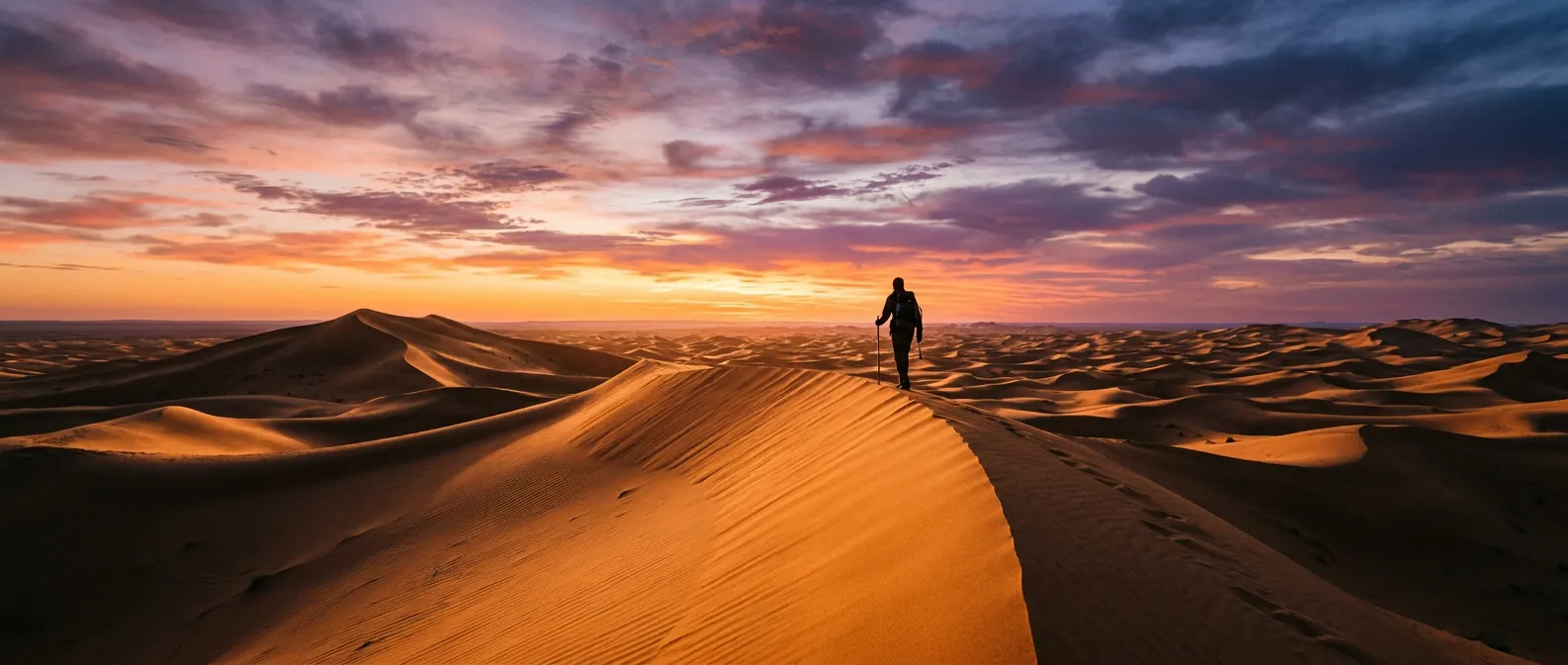
The Erg Chebbi dunes near Merzouga are Morocco's ultimate landscape photography destination. Sand dunes reaching 150 meters shift from gold to orange to deep red as the sun moves. Camel caravans, starlit skies, and vast emptiness create images of timeless scale and beauty.
Top Spots:
Erg Chebbi dune crests for sunrise silhouettes and rippled shadow patterns
Camel caravan trails for classic Sahara compositions with long shadows
Desert camps at night for astrophotography and Milky Way panoramas
Dried lake beds after rare rain for mirror reflections of dune ridges
Nomad encampments for portraits and cultural documentary photography
Sunrise (5:30-7 AM) and sunset (6-7:30 PM) for dramatic dune shadows
Fez
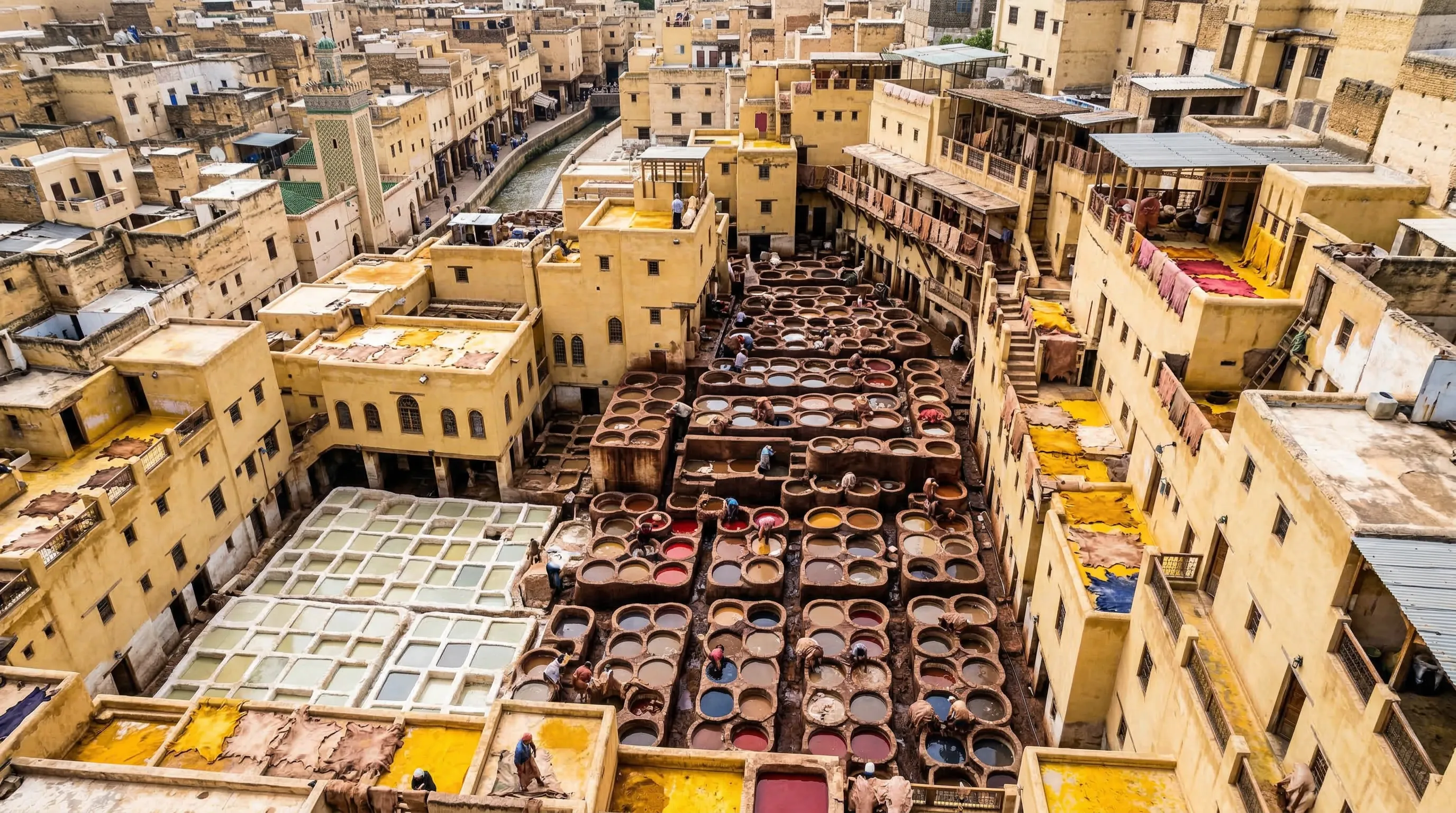
The world's largest car-free urban zone is a labyrinthine photographer's paradise. Shafts of light pierce narrow covered passages, donkeys carry goods through medieval streets, and artisans practice trades unchanged for centuries. Fez el-Bali feels raw and unpolished compared to Marrakech.
Top Spots:
Chouara Tanneries from surrounding terrace viewpoints (best at midday)
Bou Inania Madrasa for carved stucco and cedarwood detail shots
Bab Boujloud (Blue Gate) for the iconic entrance composition
Metalwork and dye souks for vibrant color and artisan portraits
Nejjarine Fountain and Museum for traditional woodworking scenes
Mid-morning (9-11 AM) when light enters the medina alleys
Essaouira
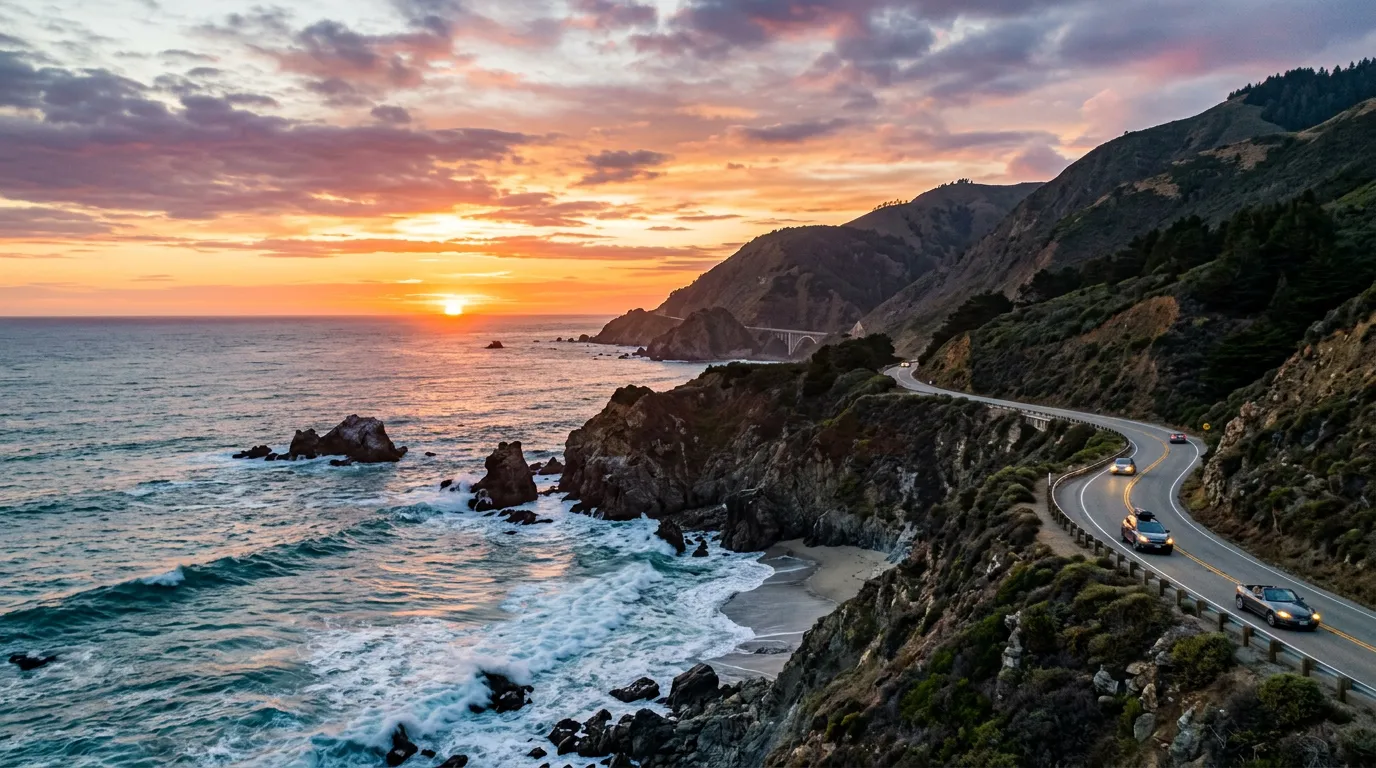
This windswept Atlantic port city offers a different palette entirely: whitewashed walls with blue shutters, weathered fishing boats, swooping seagulls, and dramatic coastal light. The golden hour along the ramparts and harbor is legendary among travel photographers.
Top Spots:
Skala de la Ville ramparts for sunset over the Atlantic with cannons silhouetted
Harbor with blue fishing boats and gulls against whitewashed walls
Medina doorways with the distinctive blue-and-white color scheme
Beach at low tide for reflections and kite-surfer silhouettes
Thuya wood workshops for artisan documentary photography
Late afternoon (4-6 PM) for golden light on the ramparts and harbor
Golden Hour & Blue Hour Locations
The magic hours around sunrise and sunset transform Morocco's landscapes into photographic gold.
Ait Benhaddou Kasbah
Golden HourThe UNESCO kasbah glows amber as the setting sun hits rammed-earth walls. Shoot from across the river for the classic reflection shot, or climb to the top for 360-degree views.
Sunset, facing west from the opposite riverbank
Todra Gorge
Golden HourThe narrow gorge with 300-meter limestone walls catches golden light for a brief window. Warm tones bounce between canyon walls creating natural reflected fill light.
Late afternoon when sunlight penetrates the gorge floor
Hassan II Mosque
Blue HourMorocco's most impressive mosque is stunning at blue hour when the minaret glows against a deep blue sky. The oceanfront setting adds dramatic wave motion to long exposures.
20-40 minutes after sunset for perfect blue-hour balance
Chefchaouen Spanish Mosque
Golden HourThe hilltop viewpoint shows the blue medina nestled in the Rif Mountains. Blue walls take on purple and lavender tones as the golden light deepens toward dusk.
Sunset, arrive 45 minutes early to secure a good spot
Ouarzazate Valley
Golden HourVast landscapes of kasbahs, palm oases, and the distant Atlas Mountains bathed in warm evening light. The Draa Valley road is one of Morocco's most scenic drives.
Both sunrise and sunset for different kasbah perspectives
Essaouira Ramparts
Blue HourThe 18th-century fortifications provide dramatic silhouettes of cannons and arched openings. Crashing waves add motion and energy to long exposures.
30 minutes after sunset for deep blue skies and city lights
Photographing People: Etiquette & Consent
Respectful photography of people in Morocco requires cultural awareness. These guidelines will help you capture honest portraits while maintaining the dignity of your subjects.
Always Ask First
A polite "Mumkin sura?" (Can I take a photo?) is the minimum. Many Moroccans are happy to be photographed, but consent is non-negotiable. Respect anyone who declines without pressing further or trying to sneak a shot.
Women, Children & the Elderly
Extra sensitivity is required. Never photograph women without explicit permission, particularly in rural or conservative areas. Do not photograph children without a parent present. Elderly Moroccans in traditional dress may object on religious grounds.
Build a Connection First
Buy something from a vendor, share tea, or have a brief conversation before reaching for your camera. This approach consistently produces better, more natural portraits. Showing someone their photo on your screen afterward is a gesture that builds goodwill.
Tipping for Portraits
In tourist areas, some people (water sellers in Jemaa el-Fnaa, snake charmers, Gnawa musicians) pose specifically for tips. Agree on the amount beforehand. A reasonable range is 5-20 MAD per photo. This is a legitimate exchange, not a scam.
Street Photography Techniques for Moroccan Medinas
Shoot with a 35mm or 50mm equivalent for natural perspective that does not intimidate subjects
Use zone focusing to pre-set your focus distance and capture candid moments in fast-moving crowds
Medina markets are best in the morning when vendors set up and light streams through overhead gaps
Sit at a cafe, let people get used to your presence, then shoot from a fixed position for candid street scenes
Overcast days diffuse harsh medina shadows and produce more even, flattering light in narrow alleys
Shoot into shafts of light entering dark medina passages for dramatic contrast and silhouette compositions
Landscape Composition in Morocco
Morocco's four distinct landscape types each demand different compositional approaches.
Desert & Dunes
Sand dunes photograph best with strong side lighting that emphasizes texture and ripple patterns. Include a human figure, camel, or single set of footprints for scale. Leading lines formed by dune ridges create natural compositions. A polarizing filter deepens blue skies above orange sand.
Atlas Mountains
Include foreground elements like wildflowers, stone walls, or village rooftops to add depth to mountain panoramas. Atlas passes like Tizi n'Tichka (2,260m) provide sweeping layered perspectives. Snow on peaks contrasts dramatically with green valleys in winter and spring.
Atlantic Coast
Long exposures (1-30 seconds with an ND filter) smooth ocean waves into mist around Essaouira's ramparts and rock formations. The natural arch at Legzira Beach frames sunset compositions. Shoot at low tide for mirror reflections in wet sand.
Kasbahs & Oases
Frame kasbahs with palm trees in the foreground for the classic Moroccan postcard composition. The Rose Valley and Draa Valley offer earth-toned architecture against green oases. Use a telephoto lens to compress layers of kasbahs, palms, and mountains.
Night Photography: Stars & Medina Lights
Morocco offers two distinct night photography experiences: some of the darkest skies on Earth in the Sahara and the warm, atmospheric glow of medina lanterns and street life after dark.
Sahara Astrophotography
The Sahara near Merzouga offers Bortle 1-2 darkness, among the darkest skies accessible by road anywhere on Earth
The Milky Way core is visible from March through October, with the galactic center highest in June-August
Use a fast wide-angle lens (f/2.8 or wider), ISO 3200-6400, and 15-25 second exposures on a sturdy tripod
Include a desert tent, camel silhouette, or dune ridge as a foreground anchor for star compositions
New moon periods are best for Milky Way shooting, but a crescent moon can illuminate dunes for foreground detail
Bring a red headlamp to preserve your night vision while adjusting camera settings between shots
Medina After Dark
Jemaa el-Fnaa in Marrakech transforms after sunset into a field of food stall smoke, lantern light, and motion
Handmade brass and colored glass lanterns in medina shops create warm pools of patterned light on walls
Use a fast prime lens (f/1.4-f/2) and higher ISOs (1600-3200) to shoot handheld in dim medina passages
The illuminated minarets of Fez and Marrakech glow against blue-hour skies for striking architectural shots
Rooftop restaurants and terraces provide elevated vantage points of medina rooftops and lit minarets at night
Long exposures from a tripod can capture the movement of people through lantern-lit alleys as motion blur
Editing Moroccan Colors
Morocco's color palette is its signature. These editing approaches help preserve and enhance the warm earth tones, vivid blues, and rich spice-market hues that define Moroccan photography.
Warm Earth Tones
Marrakech, kasbahs, and the Sahara are defined by terracotta, ochre, and sand. Shift white balance slightly warm (6000-6500K). Increase orange and yellow saturation modestly in HSL. Avoid over-saturating reds, which turns natural earth tones into artificial neon.
Chefchaouen Blues
The blue medina benefits from cooler white balance (5000-5500K) to keep blues vibrant without turning them purple. Use HSL to separate blue hues from aqua tones. Boost luminance in the blue channel to make walls glow. Desaturate orange slightly to prevent warm doorways from competing.
Souk & Spice Colors
Morocco's souks are explosions of turmeric yellow, paprika red, saffron orange, and indigo blue. Shoot in RAW to preserve the full color range. In editing, use vibrance over saturation to boost muted tones without clipping already-vivid colors. Selective adjustments keep individual spice piles distinct.
General Editing Tips for Morocco
Always shoot RAW for maximum latitude in recovering highlights blown by harsh North African sun
Dehaze slider in Lightroom and Camera Raw cuts through atmospheric haze common in desert and mountain shots
Add a subtle warm split tone to shadows (orange/amber) to reinforce the Moroccan earth-tone aesthetic
Use graduated filters to balance bright skies with darker medina interiors in single-frame shots
Resist the temptation to over-process: Morocco's natural colors are already striking and rarely need heavy edits
Create a preset based on your first successful edits, then fine-tune it for each location's unique palette
Architecture & Portrait Photography
Morocco's Islamic geometric patterns, riad courtyards, and artisan workshops provide rich subjects for both architectural detail and human-interest photography.
Architecture Tips
Zellige tilework, carved stucco, and cedarwood ceilings are endlessly photogenic at close range with a macro or standard lens
Riad courtyards provide symmetrical compositions with central fountains and patterned tiled floors
Photograph ornate doors and windows as standalone subjects: every one in the medina is unique
Use a wide-angle lens (16-24mm) for kasbah and mosque exteriors, correcting converging verticals in post
Overcast days work well for detailed architectural surfaces, eliminating harsh shadows that obscure patterns
Medersas like Ben Youssef in Marrakech and Bou Inania in Fez are open to visitors and incredibly detailed
Portrait Tips
Building rapport first leads to more natural portraits: buy something from a vendor, share tea, have a brief conversation
Use a short telephoto (85-135mm) for flattering compression without being physically intrusive
Artisans at work (tanners, weavers, metalworkers) make compelling documentary subjects in their workshops
Show subjects their photo on your camera screen afterward as a gesture of respect and connection
Consider carrying a portable printer to gift instant prints, especially appreciated in rural Atlas villages
Window light in medina doorways and workshops creates natural, directional portrait lighting
Gear Recommendations
What to pack for photographing Morocco, from camera bodies to dust-proofing essentials for desert and medina.
Camera Bodies
Mirrorless (Sony A7 IV, Canon R6 II, Nikon Z6 III): lightweight, excellent autofocus, strong low-light performance
APS-C / Micro Four Thirds: lighter option for long travel days, still excellent image quality for web and print
High-quality smartphone: modern computational photography produces stunning results, especially for social media
Action camera (GoPro): useful for medina walk-throughs, water sports in Essaouira, and camel rides
Lenses
Wide-angle zoom (16-35mm): essential for architecture, riad interiors, landscapes, and narrow medina alleys
Standard zoom (24-70mm): versatile workhorse lens covering street, portrait, and general travel shooting
Short telephoto (70-200mm or 85mm prime): portraits, details, and compressed landscape perspectives
Fast prime (35mm or 50mm f/1.8): low-light capability for dim medina passages, bokeh, and evening scenes
Essential Accessories
Polarizing filter: reduces glare, deepens skies, essential for desert and mountain photography
ND filter: enables long exposures of ocean waves, waterfall motion, and crowd removal in busy squares
Lightweight travel tripod: critical for blue hour, night sky, and long-exposure compositions
Sensor cleaning kit: Sahara sand and medina dust will find their way into your gear within days
Extra batteries and memory cards: charging options can be limited in remote desert camps
Protection & Carrying
Discreet camera bag rather than a branded photo backpack to avoid attracting attention in crowded souks
Cross-body camera strap: more secure than a neck strap in crowded medina streets
Lens cleaning cloths: dust is constant, especially in the Sahara and on windy coastal days in Essaouira
Silica gel packets: protect gear from humidity in coastal cities
Travel insurance covering camera equipment: essential for expensive setups abroad
Drone Regulations in Morocco
Important rules every aerial photographer must understand before attempting to fly in Morocco.
Heavily Restricted: Apply for Permits Well in Advance
Drone use in Morocco requires prior authorization from the Direction Generale de l'Aviation Civile (DGAC). Flying without a permit is illegal and can result in confiscation, fines, and legal consequences. Many travelers have had drones seized at airport customs upon arrival.
Permit Process
Applications should be submitted to the DGAC weeks in advance with flight area details and equipment specifications. The process is bureaucratic and approval is not guaranteed for tourist use.
No-Fly Zones
Military installations, royal palaces, government buildings, airports, mosques, and crowded urban areas are strictly off-limits. Many of Morocco's most photogenic locations sit near restricted zones.
Customs Enforcement
Drones are frequently confiscated at Moroccan airports. If bringing one, carry your DGAC authorization letter. Some small consumer drones pass through, but confiscation risk is real.
Alternatives to Drones
Hire a licensed local drone operator with existing permits. Elevated viewpoints, hilltop vantage points, and rooftop terraces can achieve aerial-like perspectives without legal risk.
Photography Tours & Workshops
Guided experiences designed to help you capture Morocco with expert instruction and insider access.
Prices are starting prices and may vary by season, group size, and operator. Always confirm current rates.
Marrakech Medina Photo Walk
From 500 MAD per personHalf-day (4 hours)
Guided walk through the medina with a professional photographer. Cover Jemaa el-Fnaa, souks, Ben Youssef, and hidden alleys. Small groups of 4-6 people ensure personal attention.
Includes: Local guide, photography instruction, edited highlights
Sahara Desert Photography Expedition
From 4,500 MAD per person3 days / 2 nights
Multi-day trip from Marrakech through the Atlas Mountains and Dades Valley to Erg Chebbi. Camp under the stars, photograph sunrise over the dunes, and capture camel caravans at golden hour.
Includes: Transport, desert camp, meals, camel trek, photography guidance
Fez Artisan & Street Photography Workshop
From 1,200 MAD per personFull day (8 hours)
Immersive workshop in the Fez medina focusing on street photography techniques, artisan portraits, and architectural detail. Includes access to tannery viewpoints and private craft workshops.
Includes: Guide, tannery access, workshop visits, light editing session
Chefchaouen Blue City Photo Tour
From 800 MAD per personFull day (7 hours)
Early morning start to capture empty blue streets at sunrise, followed by portrait sessions with locals and a hike to the Spanish Mosque for panoramic shots. Afternoon covers hidden quarters.
Includes: Local guide, sunrise access, Spanish Mosque hike, composition coaching
Complete Morocco Photography Tour
From 25,000 MAD per person10 days
Comprehensive journey covering Marrakech, Atlas Mountains, Sahara, Fez, Chefchaouen, and Essaouira. Led by professional photographers with daily critiques and editing sessions.
Includes: All transport, accommodation, meals, instruction, post-trip editing workshop
Best Time of Year for Photography
Every season brings different photographic opportunities across Morocco's diverse landscapes.
Spring (March - May)
ExcellentWildflowers carpet the Atlas foothills, almond and cherry blossoms appear in valleys, and temperatures are comfortable for all-day shooting. Occasional rain adds dramatic cloud formations.
Best for: Landscapes, mountain villages, wildflower fields, waterfalls at peak flow
Summer (June - August)
Good (with planning)Intense midday heat limits shooting hours inland. Coastal cities like Essaouira stay pleasant. Long golden hours and dramatic sunset colors compensate for harsh midday conditions.
Best for: Coastal scenes, early morning and late evening shooting, Essaouira, Sahara stargazing
Autumn (September - November)
ExcellentGolden light, harvest scenes, date palms laden with fruit. Clear Sahara skies perfect for astrophotography. Comfortable temperatures and fewer tourists than spring.
Best for: Desert photography, harvest scenes, astrophotography, comfortable all-day shooting
Winter (December - February)
Very GoodSnow-capped Atlas peaks, crisp air, dramatic cloud formations. Sahara temperatures are ideal for photography. Low tourist season means empty landmarks and undisturbed compositions.
Best for: Snow-capped mountains, Sahara at comfortable temps, moody medina scenes
Morocco Through the Lens
Marrakech at Golden Hour
Sahara Desert Sunrise
Chefchaouen Blue Medina
Instagram vs Reality
Those perfectly empty blue streets and untouched dune ridges take planning. Here is what to actually expect at Morocco's most photographed locations.
Chefchaouen Blue Streets
The famous blue alleys are busy from 10 AM to 5 PM with tourists and selfie-seekers. For empty streets, arrive at sunrise (6-7 AM) or shoot during the lunch hour lull. Quieter residential streets away from the main plaza are less crowded all day.
Sahara "Untouched" Dunes
Erg Chebbi is shared by many desert camps and camel tours. For pristine dune photos without footprints, hike 20-30 minutes away from camp at sunrise. Wind often smooths the sand overnight. Erg Chigaga near M'hamid offers more solitude.
Fez Tanneries
Chouara Tannery viewpoints are controlled by shop owners who guide you upstairs and expect you to browse leather goods afterward. The view is genuine but the experience is commercial. A tip of 10-20 MAD is expected.
Jardin Majorelle
One of Morocco's most-shared locations gets crowded by mid-morning. Arrive right at opening (8 AM) for the best chance at unobstructed shots of the iconic cobalt-blue villa. The cactus garden area is usually less crowded.
Frequently Asked Questions
Do I need permission to photograph people in Morocco?
Yes, always ask permission before photographing people, especially women, children, and the elderly. A polite "Mumkin sura?" (Can I take a photo?) is appreciated. Many Moroccans will happily pose, but respect anyone who declines. In tourist areas, some people expect a small tip of 5-20 MAD for posing.
Can I fly a drone in Morocco?
Drone use in Morocco requires prior authorization from the Direction Generale de l'Aviation Civile (DGAC). Many travelers have had drones confiscated at customs. Flying near military installations, royal palaces, and government buildings is strictly prohibited. Apply for permits well in advance or consider hiring a licensed local operator.
What is the best time of year to photograph Morocco?
Spring (March-May) and autumn (September-November) offer the best conditions. Spring brings wildflowers and pleasant temperatures, while autumn delivers golden light and harvest scenes. Winter is excellent for the Sahara with clear skies. Summer is best limited to coastal cities like Essaouira.
Is it safe to carry expensive camera gear in Morocco?
Morocco is generally safe for photographers. Use a cross-body camera strap, keep gear in a discreet bag rather than a branded camera backpack, and be aware of your surroundings in crowded medinas. Avoid displaying expensive equipment unnecessarily and consider travel insurance covering camera gear.
Can I photograph mosques in Morocco?
You can freely photograph mosque exteriors. Non-Muslims cannot enter most mosques (the Hassan II Mosque in Casablanca is a notable exception). Respect worshippers and avoid photographing people during prayer. Minarets, doorways, and geometric tilework make excellent architectural subjects from outside.
What camera gear should I bring to Morocco?
A versatile zoom lens (24-70mm) covers most situations. Add a wide-angle (16-35mm) for architecture and narrow medina streets, and a fast prime (35mm or 50mm f/1.8) for low-light alleys. Bring a polarizing filter, sensor cleaning kit for desert dust, extra batteries, and a lightweight travel tripod for night photography.
How much do photography tours in Morocco cost?
Tours range from 500 MAD for a half-day city walk to from 25,000 MAD for a multi-day guided expedition covering the Sahara, Atlas Mountains, and imperial cities. Group workshops are from 2,000 MAD per day. Private sessions start from 1,500 MAD per half-day. Seasonal pricing may apply.
Can I photograph the Sahara night sky without special equipment?
Modern smartphones can capture the Milky Way with night mode in the Sahara, though results vary. For serious astrophotography, bring a camera with manual settings, a fast wide-angle lens (f/2.8 or wider), and a sturdy tripod. The Sahara offers Bortle 1-2 skies, among the darkest on Earth, making even basic setups produce striking star images.
Related Guides
Morocco Culture Guide
Understand the customs, etiquette, and cultural context that make your photographs more meaningful.
Read moreSahara Desert Guide
Plan your desert expedition with the best camps, camel treks, and stargazing experiences.
Read moreMorocco Stargazing
Dark sky locations, best viewing seasons, and astrophotography tips for Morocco.
Read moreAtlas Mountains Guide
Hiking trails, mountain passes, and dramatic landscapes across the High Atlas ranges.
Read moreReady to Capture Morocco?
From blue medinas in the Rif to golden Sahara dunes, Morocco delivers images that stop people mid-scroll. Start planning your photography trip today.