Discovering...
Ultimate Morocco Desert Guide 2026
Sahara Desert MoroccoMerzouga, Zagora & Beyond
Camel treks from 350 MAD, luxury desert camps under the stars, sandboarding on golden dunes, and nights filled with Gnawa music and a billion stars. Your complete Sahara guide.
Erg Chebbi & Erg Chigaga Camel treks from 350 MAD Desert camps & glamping
Why the Sahara is Morocco's Most Unforgettable Experience
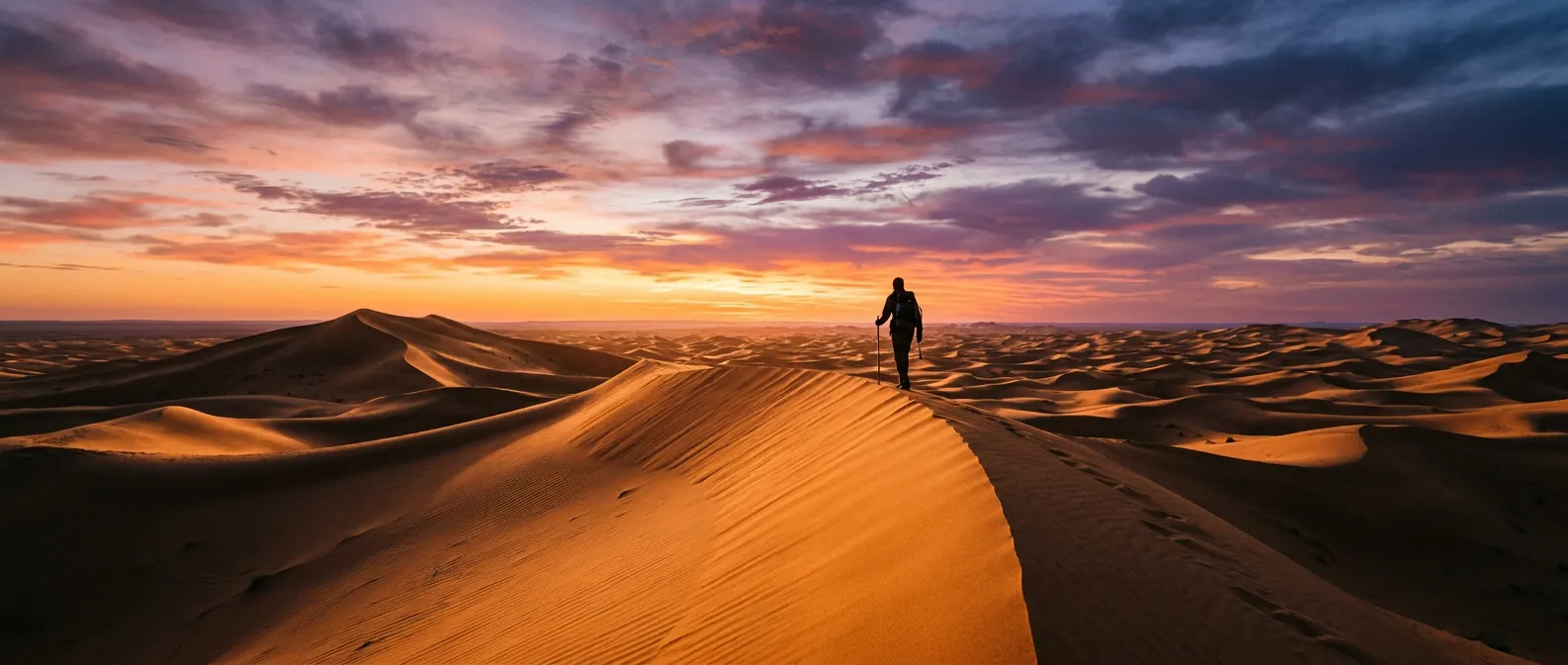
The Sahara Desert is the single experience that defines a trip to Morocco. The world's largest hot desert stretches across 9.2 million square kilometers of North Africa, and Morocco's southeastern frontier offers the most accessible gateway to its magnificent sand seas. From the towering golden dunes of Erg Chebbi near Merzouga to the vast wilderness of Erg Chigaga beyond Zagora, Morocco's Sahara delivers an experience no photograph can fully capture.
Whether you dream of riding a camel across amber dunes at sunset, sleeping beneath a billion stars, sandboarding down 150-meter slopes, or sipping mint tea in a luxury desert camp, this guide covers everything you need to plan your perfect Sahara adventure.
All prices listed are starting prices as of 2026. Seasonal pricing applies, especially during peak tourist months (October-April) and holiday periods.
Erg Chebbi vs. Erg Chigaga
Morocco has two major sand seas (ergs) worth visiting. Here is how they compare to help you choose the right one for your trip.
Location & Access
Erg Chebbi (Merzouga)
Near Merzouga, 550 km from Marrakech (9-10 hrs), 480 km from Fes (7-8 hrs). Paved road to the dune edge.
Erg Chigaga (M'hamid)
Near M'hamid, 600 km from Marrakech (9 hrs). Requires 4x4 for the final 50 km off-road to the dunes.
Dune Height & Scale
Erg Chebbi (Merzouga)
Up to 150 meters tall (highest in Morocco). Compact erg: 22 km long, 5 km wide.
Erg Chigaga (M'hamid)
Up to 100 meters tall. Vast erg: 40 km long, 15 km wide. More expansive landscape.
Crowds & Tourism
Erg Chebbi (Merzouga)
More popular. Merzouga has hotels, restaurants, and shops right at the dune base.
Erg Chigaga (M'hamid)
Far fewer tourists. No permanent town. More secluded and authentic.
Camp Options
Erg Chebbi (Merzouga)
Wide range: budget bivouacs (from 250 MAD) to ultra-luxury (from 3,500 MAD). Over 60 camps.
Erg Chigaga (M'hamid)
Fewer but higher quality. Mostly mid-range to luxury (from 1,200 MAD). About 15 camps.
Best For
Erg Chebbi (Merzouga)
First-timers, families, photographers seeking tall dunes, travelers on tight schedules.
Erg Chigaga (M'hamid)
Experienced travelers seeking solitude, adventure lovers, astrophotography enthusiasts.
Merzouga & Erg Chebbi Guide
The gateway to Morocco's most iconic desert landscape. Everything you need to know about visiting Merzouga and the Erg Chebbi dunes.
About Merzouga
Merzouga is a small Berber village at the foot of Erg Chebbi, Morocco's tallest sand dune system. It now has paved road access, hotels, riads, and organized tourism infrastructure. The real attraction is the wall of golden dunes rising dramatically behind the town. The surrounding area includes Berber and Gnawa communities, seasonal flamingo lakes (Dayet Srji), rich fossil deposits, and the village of Khamlia, where descendants of sub-Saharan Africans maintain the Gnawa musical tradition.
Getting to Merzouga
From Marrakech (550 km)
9-10 hours via Ouarzazate and Erfoud. Most travelers split this into a 2-3 day tour. Private transfer from 3,500 MAD.
From Fes (480 km)
7-8 hours via Ifrane and Errachidia through the Middle Atlas. Supratours bus daily from 200 MAD.
Zagora & the Draa Valley
The southern gateway to Morocco's desert, where the lush Draa Valley gives way to the vast emptiness of the Sahara.
About Zagora
Zagora sits at the edge of the Draa Valley, Morocco's longest river valley and one of the largest date palm oasis systems in the world. Famous for its "Timbuktu 52 Days" sign, it is the starting point for Erg Chigaga trips and the gateway to M'hamid el Ghizlane. The Draa Valley drive from Ouarzazate is one of Morocco's most scenic, passing fortified villages, kasbahs, and endless date palms. At 6-7 hours from Marrakech, it is a good option for travelers with limited time.
M'hamid el Ghizlane — The Last Town
An hour south of Zagora, M'hamid is literally the end of the road. This windswept town is the departure point for Erg Chigaga, 50 km into the desert by 4x4. It hosts the annual Taragalte music festival and a weekly Monday souk. Erg Chigaga excursions start from 1,200 MAD per person for a 2-day trip including camp and meals.
Camel Trek Options
No Sahara visit is complete without a camel ride. Choose from short sunset treks to multi-day expeditions through the dunes.
All prices are starting prices. Seasonal pricing applies during peak tourist months (October-April). Group sizes and private options affect pricing.
Sunset Camel Trek
1.5-2 hours
From 350 MAD per person
The most popular option. Ride into Erg Chebbi as the sun paints the dunes orange and pink, stopping at a dune summit for photos before continuing to camp.
Best for: First-timers, families, photographers
Sunrise Camel Trek
1.5-2 hours
Usually included with overnight camp
Wake before dawn and ride to the highest dunes to watch the sunrise over the Sahara. Early morning light creates extraordinary shadow patterns across the sand.
Best for: Early risers, photographers, romantics
Full-Day Camel Trek
6-8 hours
From 700 MAD per person
Ride through rocky hamada, sandy erg, and dried river beds. Lunch prepared in the shade of the dunes. Experience the true vastness of the Sahara.
Best for: Adventure seekers, experienced riders
Multi-Day Camel Expedition
2-5 days
From 2,000 MAD per person
Travel between remote nomad encampments, sleep under the stars, meals cooked over campfires. The ultimate Saharan adventure revealing the desert's true scale.
Best for: Serious adventurers, cultural immersion seekers
Desert Camp Guide — Budget to Ultra-Luxury
From basic Berber bivouacs to five-star glamping with king beds and gourmet dining, there is a desert camp for every budget.
Prices are per person per night and include dinner and breakfast unless noted. Seasonal pricing applies during peak months.
Budget Bivouac
From 250 MAD per personBasic Berber-style tents with shared mattresses on sand. Communal bathrooms, traditional dinner and breakfast included. Perfect for backpackers seeking authentic desert nights.
Shared tents (4-8 people)
Mattress and blankets
Communal toilets
Traditional tagine dinner
Campfire with drums
Standard Camp
From 500 MAD per personPrivate or semi-private tents with proper beds and bedding. Shared but clean bathrooms, better meals. A good balance of comfort and value for most travelers.
Private tent (2 people)
Real beds with linens
Shared clean bathrooms
Multi-course dinner
Sandboarding included
Luxury Camp
From 1,500 MAD per personWell-appointed tents with furniture, carpets, and lighting. Private en-suite bathroom with hot shower. Excellent dining and professional staff with tailored experiences.
Furnished private tent
En-suite hot shower
Gourmet Moroccan dinner
Cocktails at sunset
Private camel trek
Ultra-Luxury Glamping
From 3,500 MAD per personFive-star desert experience: king beds, luxury linens, full bathrooms, even air conditioning. Gourmet dining, premium drinks, and bespoke desert excursions.
King bed with premium linens
Full private bathroom
Gourmet dining with wine
Personal guide
Sunrise yoga sessions
Desert Activities Beyond the Camel Trek
The Sahara offers far more than camel rides. From adrenaline-pumping sandboarding to serene stargazing, here is what to do in the desert.
Sandboarding
From 150 MAD (or free at many camps)
Surf the dunes of Erg Chebbi on a sandboard. No experience needed. Guides take you to the best slopes and the soft sand makes falls painless.
Stargazing
Free at camps, guided sessions from 200 MAD
The Sahara offers some of the clearest night skies on Earth. Zero light pollution lets you see the Milky Way with the naked eye. Some luxury camps provide telescopes and astronomy guides.
ATV / Quad Biking
From 400 MAD per hour
Rip across the desert on an ATV quad bike. Popular at Erg Chebbi with guided circuits through dunes and hamada (rocky desert). Helmets and instruction provided.
4x4 Desert Excursion
From 800 MAD per vehicle
Visit remote oases, dried lake beds, fossil sites, and nomad settlements unreachable on foot. Essential for reaching Erg Chigaga from M'hamid.
Gnawa Music Evening
From 100 MAD (often included at camps)
Hypnotic rhythms around a campfire under the stars. This UNESCO-recognized musical tradition has its spiritual home in Khamlia village near Merzouga.
Fossil Hunting
Free to explore, guided trips from 200 MAD
The Erfoud-Rissani region has trilobites, ammonites, and orthoceras dating back 350-450 million years. Visit fossil quarries and the Erfoud museum.
Best Time to Visit the Sahara
Timing is everything in the desert. The difference between the best and worst months is the difference between magic and misery.
Peak Season (Oct-Nov)
20-28 C day / 10-15 C night
Ideal
Perfect temperatures and clear skies. The most popular period, so book camps and tours well in advance.
Winter (Dec-Feb)
15-22 C day / 0-5 C night
Great (cold nights)
Comfortable days but cold nights. Fewer crowds. Crystal-clear skies make this the best period for stargazing.
Spring (Mar-Apr)
22-30 C day / 10-18 C night
Excellent
Warming temperatures, longer days. Great before summer heat. Wind can bring occasional sandstorms.
Summer (May-Sep)
38-50 C day / 25-30 C night
Not recommended
Extremely hot and dangerous. Temperatures exceed 45 C. Only venture out at sunrise or sunset. Many camps close.
Sahara Desert Price Guide
What to expect to pay for desert experiences, camps, and tours in Morocco.
All prices are starting prices. Seasonal pricing applies during peak tourist months (October-April) and holiday periods, when luxury camp and tour prices may increase by 20-40%.
Service
Price
Note
Sunset camel trek (1.5-2 hrs)
From 350 MAD
Per person, includes guide
Budget desert camp (per night)
From 250 MAD
Shared tent, meals included
Mid-range desert camp
From 800 MAD
Private tent, en-suite
Luxury glamping camp
From 2,500 MAD
Full luxury, gourmet meals
ATV quad biking (1 hour)
From 400 MAD
Per person, helmet included
Sandboarding
From 150 MAD
Often free at camps
4x4 half-day excursion
From 800 MAD
Per vehicle (up to 4 pax)
3-day Marrakech-Merzouga tour
From 2,500 MAD
Per person, shared group
3-day private tour
From 6,000 MAD
Per person, private vehicle
Fes-Merzouga 2-day tour
From 1,800 MAD
Per person, shared group
Multi-Day Desert Tour Itineraries
The most popular routes to reach the Sahara from Morocco's major cities, with day-by-day breakdowns and pricing.
Marrakech to Merzouga — 3 Days / 2 Nights
From 2,500 MAD per person (shared group tour)Day 1
Marrakech to Dades Valley
Cross the Tizi n'Tichka pass (2,260m), visit Ait Benhaddou kasbah (UNESCO), overnight in the Dades Gorge.
Day 2
Dades Valley to Merzouga
Drive through Todra Gorge, arrive at Erg Chebbi. Sunset camel trek, overnight at desert camp.
Day 3
Merzouga to Marrakech (or Fes)
Sunrise on the dunes, breakfast at camp. Drive back to Marrakech, or continue to Fes (6-7 hours).
Fes to Merzouga — 2 Days / 1 Night
From 1,800 MAD per person (shared group tour)Day 1
Fes to Merzouga via Ifrane & Midelt
Middle Atlas cedar forests, Ifrane, Midelt, Tizi n'Talghemt pass. Sunset camel trek, overnight at desert camp.
Day 2
Merzouga to Fes (or Marrakech)
Sunrise from the dunes, explore Khamlia village. Return to Fes, or continue to Marrakech (add one night).
Grand Desert Circuit — 5 Days / 4 Nights
From 5,500 MAD per person (private tour)Day 1
Marrakech to Ouarzazate
Atlas Mountain crossing, visit UNESCO Ait Benhaddou kasbah, explore Ouarzazate film studios.
Day 2
Ouarzazate to Todra Gorge
Road of a Thousand Kasbahs, hike Todra Gorge, overnight in the Dades Valley.
Day 3
Gorges to Merzouga
Arrive at Erg Chebbi, sunset camel trek, luxury desert camp with Gnawa music.
Day 4
Merzouga to Zagora
Sunrise on dunes, drive through Rissani and Draa Valley date palms, overnight near Zagora.
Day 5
Zagora to Marrakech
Famous "Timbuktu 52 days" sign, drive the Draa Valley, return to Marrakech.
What to Pack for the Sahara
The desert environment demands specific preparation. Pack smart and you will be comfortable; forget something and you will regret it.
Essential Item
Why You Need It
Headscarf / Cheche
Sun and sand protection. Buy a Berber cheche in Merzouga from 30 MAD.
Sunscreen SPF 50+
Reapply every 2 hours. Bring lip balm with SPF as well.
Sunglasses
UV-rated with a strap. The glare off the sand is intense.
Warm layers
Nights drop to 0-5 degrees C in winter. Fleece, warm socks, down jacket.
Closed-toe shoes
For hot sand and rocky terrain. Sandals fine in camp only.
Water bottle (2L min)
Camps provide water but carry extra. Electrolyte packets useful.
Camera + extra batteries
Cold nights drain batteries. Ziplock bag protects from sand.
Headlamp / flashlight
Essential for navigating camp at night. Budget camps have minimal lighting.
Cash in MAD
No ATMs in the desert. From 200 MAD for tips is customary.
Light long-sleeve clothing
Sun protection by day, warmth at night. Cotton or linen.
Practical Tips for Desert Travelers
Health & Safety
Dehydration is the biggest risk. Drink at least 3 liters of water daily. Wear sunscreen and head covering at all times. Carry basic first aid and any personal medications.
Tipping Etiquette
Camel guides: from 50-100 MAD per person. Camp staff: from 50 MAD per night. Tour drivers: from 100-200 MAD per day. Always tip in cash (MAD). Tips are a significant part of desert workers' income.
Photography Tips
Golden hour creates the best dune shadows. Use a UV filter and lens cloth. Keep cameras in sealed bags when not shooting. Cold nights drain batteries fast — carry spares in your sleeping bag.
Booking Advice
Book 1-2 weeks ahead in peak season. Compare multiple operators. Be wary of very cheap offers that cut corners on food and safety. Confirm exactly what is included in the price.
Responsible Tourism
Choose camps that treat camels well and employ local guides. Carry out all rubbish. Ask permission before photographing locals. Buy handicrafts directly from artisans.
Connectivity
Mobile signal works in Merzouga and Zagora but vanishes in the dunes. Most camps are intentionally off-grid. Download offline maps before heading into the desert.
Frequently Asked Questions
How long does it take to get from Marrakech to Merzouga?
Approximately 9-10 hours (550 km) via Ouarzazate and Todra Gorge. Most travelers split the journey over 2 days, stopping in the Dades Valley, making the drive part of the adventure.
What is the best time to visit the Sahara Desert in Morocco?
October to April is ideal, with October-November and March-April being the sweet spots (15-25 C daytime). Winter nights drop to 0-5 C. Avoid June-August when temperatures exceed 45 C.
Is a camel trek in the Sahara safe for beginners?
Yes. The dromedary camels are well-trained and docile, with experienced guides walking alongside. Short 1.5-2 hour sunset treks are perfect for first-timers. Children aged 6+ can join with adult supervision. Bring a cushion or scarf for saddle comfort on longer treks.
What is the difference between Erg Chebbi and Erg Chigaga?
Erg Chebbi (Merzouga) has taller dunes (150m), paved access, 60+ camps. Erg Chigaga (M'hamid) is more remote, needs a 4x4, has fewer but higher-quality camps, and a more authentic uncrowded experience.
How much does a desert camp experience cost in Morocco?
Budget camps start from 250 MAD per person per night. Mid-range with private tents: from 800 MAD. Luxury glamping: from 2,500 MAD. Ultra-luxury can exceed 5,000 MAD. Seasonal pricing applies, with peak season (October-April) being 20-40% more expensive.
Can I visit the Sahara as a day trip?
Not realistically. Erg Chebbi is 9-10 hours from Marrakech. The minimum is 2 nights (one en route, one in the desert). A 3-day / 2-night tour is the most popular option. Zagora is closer (6-7 hours from Marrakech) but still requires an overnight stay.
Related Guides
Desert Glamping Guide
Morocco's best luxury desert camps, from Erg Chebbi to Agafay.
Read moreDay Trips from Marrakech
Atlas Mountains, Ourika Valley, and Agafay Desert excursions.
Read moreDay Trips from Fes
Middle Atlas, Ifrane, Volubilis, and cedar forest adventures.
Read morePhotography Locations
The most photogenic spots from desert dunes to blue streets.
Read moreReady to Experience the Sahara?
From sunrise camel treks to starlit desert camps, the Sahara is an experience that stays with you forever. Start planning your Morocco desert adventure today.
Plan it with a local expert
Travel Morocco with Serenity Morocco Tours
Crafting extraordinary journeys through Morocco's timeless landscapes. 100% private journeys, handcrafted around you.
ONMT Licensed 100% Private Tours 100% private tours since 2018
 from $2,011
 5 days Marrakech → Erg Chebbi
Sahara Desert Luxury Expedition
 from $2,054
 7 days Marrakech · Fes · Meknes · Rabat
Essential Morocco: Imperial Cities Circuit
 from $5,978
 14 days Full-country circuit
Sahara to Sea: Morocco Complete