Discovering...
Desert Camps & Overnight Stays
Morocco Sahara Overnight:
Sleep Under the Stars 2026
From basic bivouacs at 600 MAD to luxury glamping at 8,000 MAD. Compare Erg Chebbi and Erg Chigaga desert camps, plan your overnight itinerary, and experience the magic of sleeping in the Sahara.
Why a Sahara Overnight Is Unforgettable
Spending a night in the Sahara Desert is one of the most transformative travel experiences on earth. As the sun sets and the last golden light fades from the towering dunes, the desert reveals a world few ever witness: a sky so dense with stars that the Milky Way casts shadows on the sand, a silence so complete you can hear your own heartbeat, and a stillness that strips away the noise of modern life.
Morocco offers the most accessible Sahara overnight experiences in North Africa. Whether you choose a simple bivouac where you sleep under the open sky, a comfortable standard camp with private tents, or an ultra-luxury glamping suite with a bathtub overlooking the dunes, the magic of the desert night remains the same. The campfire, the Berber songs, the first hint of pink at dawn: these moments stay with you long after you leave the sand behind.
This guide covers everything for your Sahara overnight: four levels of desert camps with pricing, Erg Chebbi versus Erg Chigaga, a detailed itinerary, desert food, stargazing, temperatures by season, what to pack, and booking tips.
600 MAD
Starting price (basic camp)
4 Types
Camp levels available
300 m
Tallest dunes (Erg Chigaga)
Oct-Apr
Best months for overnight
Types of Desert Camps in Morocco
From sleeping under the open sky to luxury suites among the dunes, choose the camp level that matches your budget and comfort expectations.
All prices are starting prices per person. Seasonal pricing applies during peak months (October-April).
Basic Bivouac Camp
Authentic nomadic-style camping under the stars
Budget travelers, backpackers, and those seeking raw desert authenticity
The most stripped-back desert experience. Simple Berber-style tents with foam mattresses on the sand, shared basic toilet facilities, and communal dining under the stars. Many travelers choose to sleep outside on the dunes rather than in the tents. This is the closest you can get to the nomadic lifestyle without actually being a nomad.
Pricing
Group
From 600 MAD per person (group tour)
Private
From 1,000 MAD per person (private)
What Is Included
Camel ride to and from camp
Foam mattress and thick blankets
Traditional tagine dinner
Mint tea and breakfast
Shared basic toilet
Not Included
No electricity or charging
No hot water or showers
No private bathroom
No heating in tents
Standard Desert Camp
Comfortable tents with private space and better facilities
Most travelers wanting comfort without losing the desert atmosphere
The most popular option, balancing comfort with an authentic experience. Private tents with real beds, proper mattresses, and pillows. Shared bathroom facilities with flush toilets. A communal area with carpets and cushions for dining and socializing. Some have limited solar-powered lighting and charging stations.
Pricing
Group
From 1,200 MAD per person (group tour)
Private
From 2,000 MAD per person (private)
What Is Included
Private tent with real bed and linens
Camel ride both ways
Multi-course Berber dinner
Breakfast and mint tea
Shared flush toilets
Limited solar-powered lighting
Not Included
No private bathroom
No hot showers (some have cold)
Limited or no phone charging
No air conditioning or heating
Luxury Desert Camp
Hotel-quality comfort surrounded by towering dunes
Couples, honeymooners, and travelers who want comfort in the wilderness
A desert experience that rivals boutique hotels. Spacious private tents with proper beds, quality linens, and Moroccan decor. Private en-suite bathrooms with hot showers and flush toilets. A beautifully decorated dining tent with multi-course meals. Some offer a small pool, cocktail service, and generator-powered electricity throughout.
Pricing
Group
From 2,500 MAD per person (group)
Private
From 4,000 MAD per person (private)
What Is Included
Spacious tent with en-suite bathroom
Hot shower and flush toilet
Camel ride or 4x4 transfer
Gourmet multi-course dinner
Breakfast buffet
Berber music entertainment
Sandboarding equipment
Not Included
Alcoholic drinks (available at extra cost)
Spa treatments (some camps offer)
Photography sessions (some include)
Premium Glamping
Ultra-luxury desert suites with five-star amenities
Luxury travelers, special occasions, and those who want the finest desert experience
The pinnacle of Sahara accommodation. Think designer tents with king-size beds, heated floors, private terraces overlooking the dunes, and bathrooms with full-size bathtubs. Some offer private plunge pools, personal chefs, dedicated guides, and telescope-assisted stargazing sessions. These camps typically host no more than 10 to 15 guests for an exclusive feel.
Pricing
Group
From 5,000 MAD per person
Private
From 8,000 MAD per person (exclusive)
What Is Included
Designer suite with luxury furnishings
Private bathroom with bathtub
Personal guide and chef
Premium multi-course dinner with wine
Private sunrise camel ride
Telescope stargazing session
Spa treatments and wellness area
4x4 dune excursion
Not Included
International flights
Travel insurance
Personal shopping
Erg Chebbi vs Erg Chigaga
Morocco has two outstanding locations for a Sahara overnight. Each delivers a distinct landscape, atmosphere, and level of remoteness.
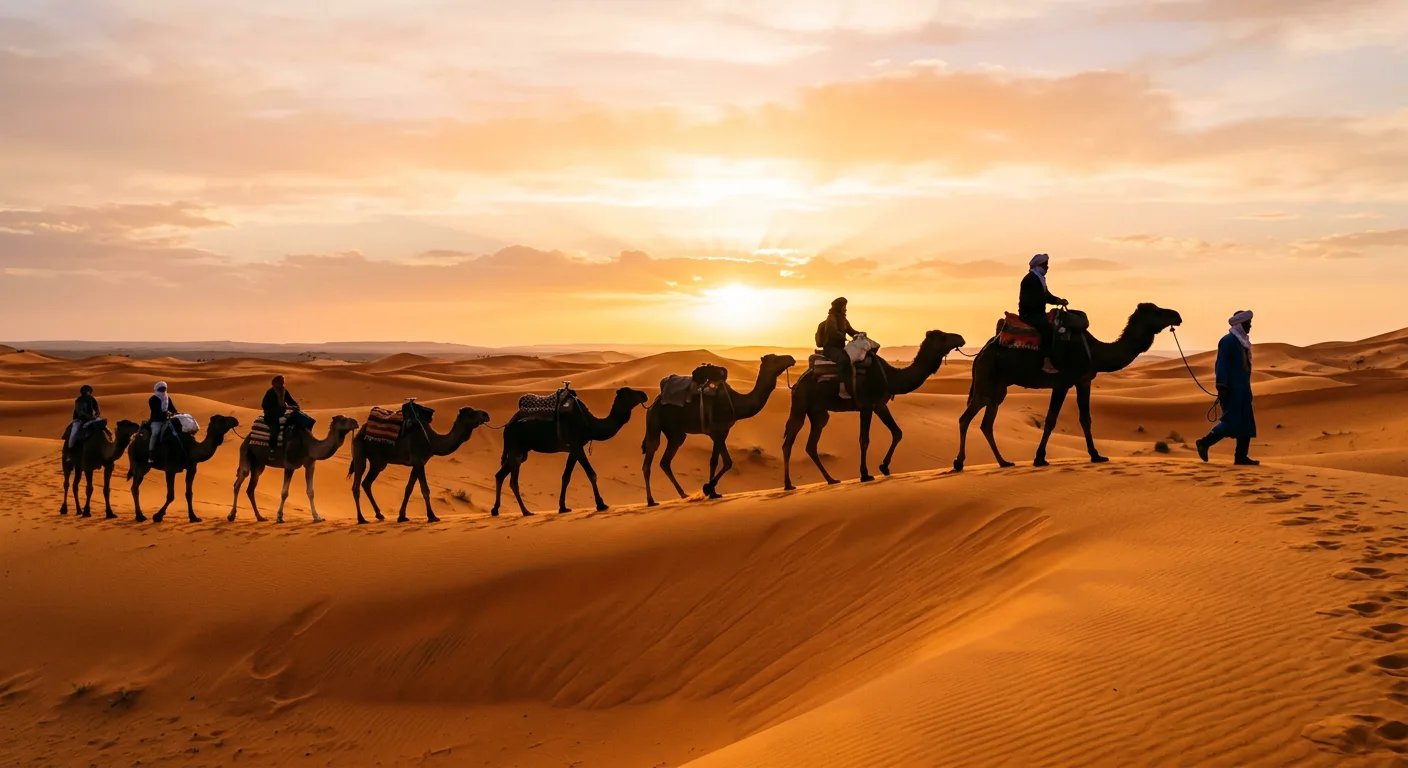
Erg Chebbi (Merzouga)
Dune Height
Up to 150 meters
Camp Options
50+ camps from basic to ultra-luxury
Well-established tourism infrastructure with a wide range of options
Access: Paved road to Merzouga village, then short camel ride
Best for: First-timers, families, photographers, luxury seekers
Highlights
Tallest golden dunes reaching 150 meters
Widest range of camp quality and price
Easy paved road access from Fes (8 hours) or Marrakech (10 hours)
Combine with Khamlia village and Gnawa music
Considerations
More tourists, especially at popular camps
Peak season can feel crowded at sunrise spots
Touts can be persistent in Merzouga village

Erg Chigaga (M'Hamid)
Dune Height
Up to 300 meters
Camp Options
10-15 camps, mostly mid-range to luxury
Remote wilderness with far fewer tourists and genuine desert silence
Access: 50 km off-road by 4x4 from M'Hamid (1.5-2 hours)
Best for: Adventure seekers, couples wanting solitude, repeat visitors
Highlights
Widest dune field in Morocco stretching 40 km
Far fewer tourists for a private experience
Dramatic 4x4 desert crossing to reach camp
Larger dunes reaching 300 meters
Considerations
Requires 4x4 transfer (no camel-only access for most)
Fewer camp options and less price competition
Longer travel time from major cities
Which Location Should You Choose?
For your first Sahara overnight, choose Erg Chebbi. The range of camp options is unmatched, access is easy via paved road, and the golden 150-meter dunes are spectacular. If you have been before or want genuine wilderness solitude, Erg Chigaga delivers a more remote and wild experience with even larger dunes, but requires a 4x4 transfer and has fewer camp choices.
Typical Sahara Overnight Itinerary
From afternoon arrival to morning departure, here is what a typical overnight in the Sahara looks like hour by hour.
3:00 - 4:00 PM
Arrival & Preparation
Arrive at the meeting point in Merzouga or M'Hamid. Meet your Berber guide, receive your cheche head scarf, and prepare for the camel ride. Store your main luggage in the vehicle.
4:00 - 5:30 PM
Camel Ride to Camp
Mount your camel and begin the trek through the dunes. The ride takes 1 to 1.5 hours through ever-changing sand formations. Your guide leads the camel caravan along ancient routes toward the camp.
5:30 - 6:30 PM
Sunset on the Dunes
Arrive near camp in time to climb a high dune for sunset. Watch the sand transform from gold to deep orange to crimson as the sun dips below the horizon. One of the most photographed moments in Morocco.
7:00 - 9:00 PM
Dinner & Berber Entertainment
Gather around the communal area for a traditional multi-course Berber dinner: salad, bread, tagine or couscous, fruit, and endless mint tea. After dinner, your hosts play Berber drums and sing traditional songs around the campfire.
9:00 - 11:00 PM
Stargazing & Desert Silence
Step away from camp for extraordinary stargazing. The Sahara is one of the darkest places on earth. The Milky Way stretches overhead, shooting stars appear every few minutes, and the silence is absolute. Luxury camps may offer telescope sessions.
5:30 - 6:30 AM
Sunrise on the Dunes
Wake before dawn and climb a high dune to watch the Sahara sunrise. The first light paints the dunes in soft pink and gold. The cool morning air and vast silence make this an almost spiritual moment.
7:00 - 8:00 AM
Breakfast & Departure
Return to camp for a traditional Berber breakfast: msemen flatbread, amlou dip, jam, butter, eggs, and coffee or tea. Pack up, mount your camel, and ride back to the meeting point by mid-morning.
The Sunset & Sunrise Experience
The two most magical moments of your Sahara overnight: the fading light of dusk and the first glow of dawn over the dunes.
Desert Sunset
As the sun descends around 5:30 to 6:30 PM, the dunes transform through gold, amber, orange, and deep crimson. Your guide leads you to a high dune with panoramic views. The silence deepens as temperature drops and shadows stretch across the sand.
Shoot toward the sun for silhouettes, or away from it for warm-lit dune ridges.
Desert Sunrise
Wake around 5:30 to 6:00 AM and climb a dune in the cool pre-dawn air. Watch as the horizon shifts from deep blue to pale pink to blazing gold. The first rays catch dune crests and send long shadows cascading down the slopes. Many travelers call this the most beautiful moment of their Morocco trip.
Position yourself with dune ridgelines in the foreground for depth and scale.
Sahara Stargazing
The Sahara is one of the darkest places on earth. After the campfire fades, step into a universe you have never seen before.
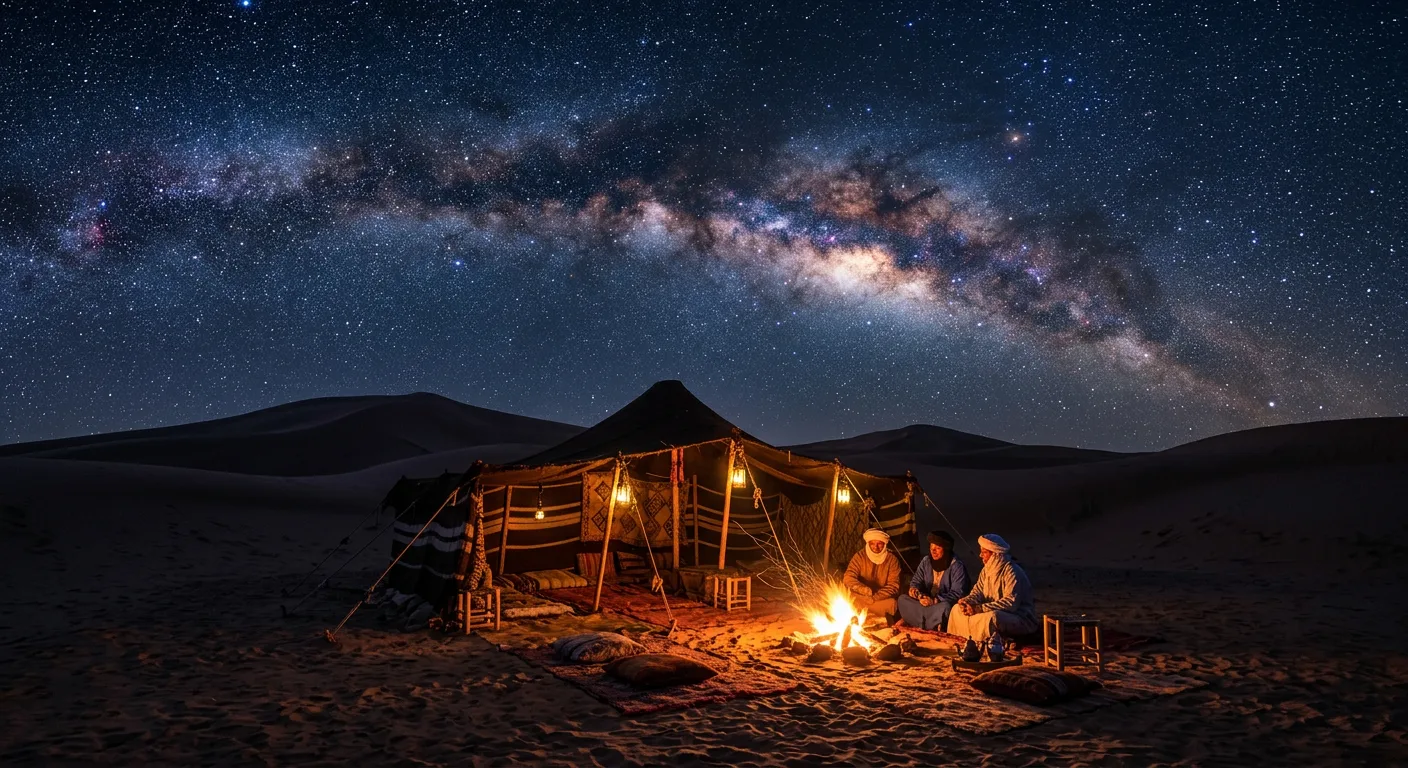
Milky Way Over the Sahara
What You Will See
The Milky Way in vivid detail stretching horizon to horizon
Shooting stars every few minutes on clear nights
Planets, star clusters, and satellites crossing the sky
Constellations your guide can identify and explain
Stargazing Tips
Book around new moon for the darkest skies and best visibility
Allow 20 minutes for your eyes to fully adapt to darkness
Avoid phone screens which destroy night vision instantly
Bring a mini tripod for astrophotography (15-25 second exposures)
Berber Music & Entertainment
After dinner, the campfire becomes a stage for ancient Berber musical traditions passed down through generations.
As darkness falls and the campfire crackles, your Berber hosts bring out traditional drums (bendir and tam-tam) and begin singing songs that have echoed across the Sahara for centuries. The music starts slowly, building in rhythm and intensity. Guests are invited to join in, clapping along and learning simple percussion patterns. Standard and luxury camps offer 30 to 60 minutes of live music. Some luxury camps feature Gnawa musicians from nearby Khamlia village, whose trance-like rhythms have roots in sub-Saharan African traditions. Premium glamping camps may arrange private performances, storytelling sessions, or guided meditation under the stars.
Desert Camp Food & Dining
Meals cooked over campfire coals in the open desert have a flavor that no restaurant can replicate.
Desert Tagine
Slow-cooked in a clay pot over open coals, camp tagines feature chicken or lamb with preserved lemons, olives, and fragrant spices. The desert setting makes every bite taste extraordinary.
Sand Bread (Madfouna)
Known as Berber pizza, this stuffed bread is baked directly in the hot sand beneath the campfire. Filled with spiced meat, onions, and herbs, it is unique to the desert camps.
Berber Couscous
Friday is traditionally couscous day. Hand-rolled semolina steamed with seven vegetables and tender lamb, served family-style from a large communal dish.
Mint Tea Ceremony
The heart of Moroccan hospitality. Gunpowder green tea brewed with fresh mint and sugar, poured from height to create a frothy top. Expect at least three glasses as the Berber saying goes: the first is gentle as life, the second strong as love, the third bitter as death.
Sahara Temperatures by Season
Desert temperatures swing dramatically between day and night. Knowing what to expect helps you pack the right layers.
Winter (Dec-Feb)
Day
18-22°C
Night
0-5°C
Cold nights require heavy layers. Days are pleasant for trekking. Best stargazing with clearest skies.
Spring (Mar-May)
Day
25-35°C
Night
10-18°C
Ideal season with warm days and cool nights. April can have occasional sandstorms.
Summer (Jun-Aug)
Day
40-50°C
Night
25-30°C
Extreme heat makes overnight stays uncomfortable. Not recommended for most travelers.
Autumn (Sep-Nov)
Day
28-38°C
Night
12-20°C
Excellent conditions from October onward. Warm days, cool evenings, minimal wind.
What to Pack for a Sahara Overnight
Pack light in a small daypack. Leave your main luggage in the vehicle. Here is everything you need for one night in the desert.
Clothing Essentials
Warm fleece or down jacket
Desert nights drop to 0-8 degrees in winter and 10-15 in shoulder season
Headscarf or cheche
Protects from sun and sand. Available locally from 30 MAD if you forget
Long lightweight trousers
For camel riding comfort and sun protection. Cotton or linen works best
Warm socks and sleepwear
Camps provide blankets but extra layers ensure a comfortable sleep
Closed-toe shoes
For walking on sand and rocky terrain. Ankle boots give the best support
Overnight Essentials
Headlamp or flashlight
Basic and standard camps have minimal lighting after dark
Portable power bank
Limited or no electricity at most camps. Charge your phone beforehand
Wet wipes and toilet paper
Basic camp facilities may have limited supplies
Earplugs and eye mask
Wind noise and early wake-up calls for sunrise can disrupt sleep
Small toiletry bag
Toothbrush, face wash, deodorant. Keep it minimal for the overnight
Protection & Photography
Sunscreen SPF 50+
Desert sun is intense. Reapply every 2 hours even on cloudy days
Camera with spare batteries
Cold pre-dawn temperatures drain batteries rapidly
Ziplock bags
Protect phone, camera, and electronics from pervasive fine desert sand
Water bottle (1L minimum)
Stay hydrated. Aim for 2-3 liters per day in the desert
Lip balm with SPF
Extremely dry air cracks lips within hours without protection
How to Book Your Sahara Overnight
Follow these five steps to plan and book the perfect desert overnight experience in Morocco.
1
Choose Your Camp Level
Decide between basic, standard, luxury, or glamping. Your budget and comfort expectations will guide this choice. Basic camps start from 600 MAD; luxury starts from 2,500 MAD per person.
2
Pick Your Location
Erg Chebbi for the widest range of options and easy access. Erg Chigaga for remote wilderness and bigger dunes. Most first-timers should choose Erg Chebbi.
3
Check the Moon Phase
New moon provides the darkest skies for stargazing. Full moon illuminates the dunes beautifully but reduces star visibility. Both are magical but different experiences.
4
Verify the Operator
Book with operators who have verifiable reviews on Google, TripAdvisor, or GetYourGuide. Ask for the specific camp name so you can check its reviews independently.
5
Book in Advance
Peak season (October to April) requires booking 1-2 weeks ahead. Luxury camps can sell out a month in advance. Off-season, 2-3 days ahead usually works.
Tips for Choosing a Reputable Camp
Check reviews on Google, TripAdvisor, or GetYourGuide before booking
Ask for the specific camp name so you can verify reviews independently
Get written confirmation of inclusions: meals, transport, and camp level
Never pay full amount upfront to a street tout: use established agencies
Confirm cancellation policy: reputable operators offer 48-72 hour free cancellation
Ask about group size: smaller groups (under 10) ensure a better experience
The Sahara Overnight Experience
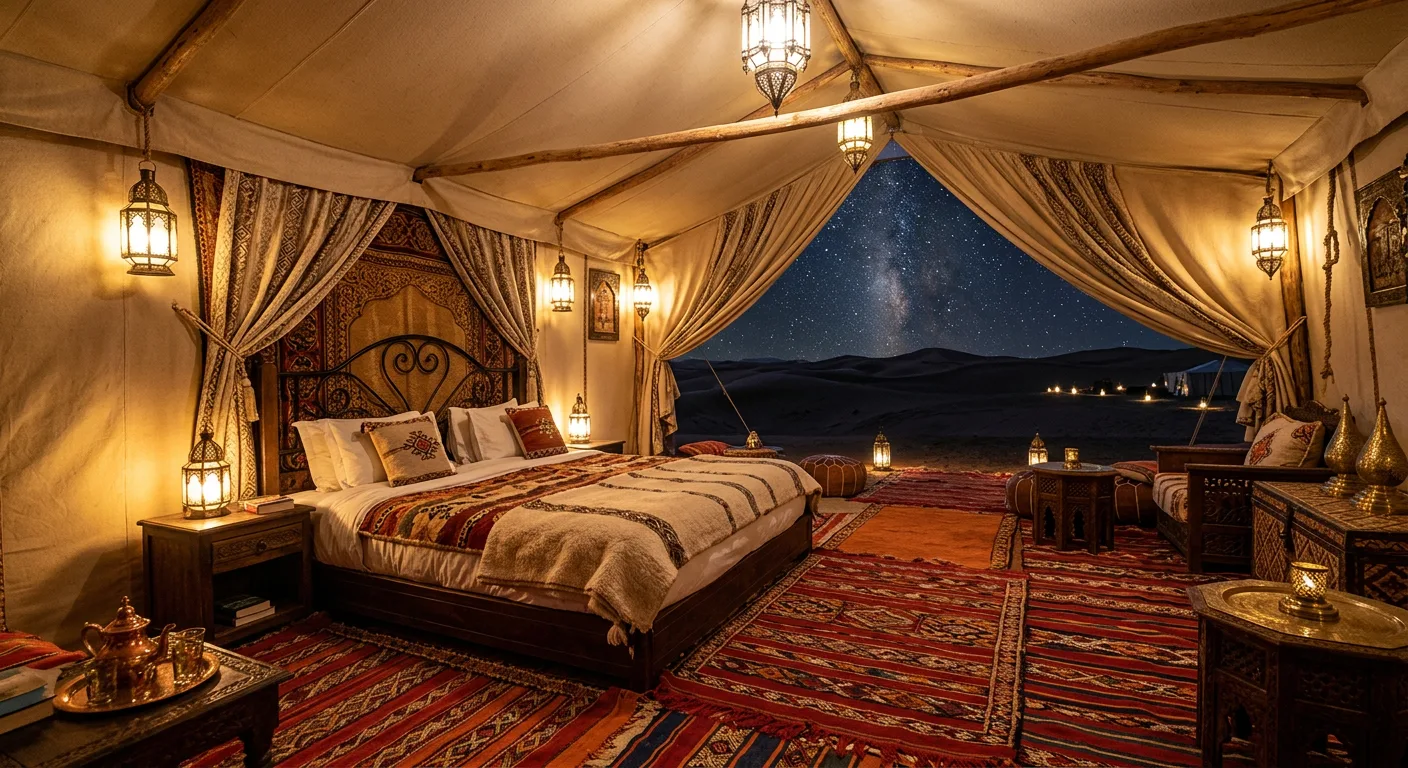
Luxury Desert Glamping
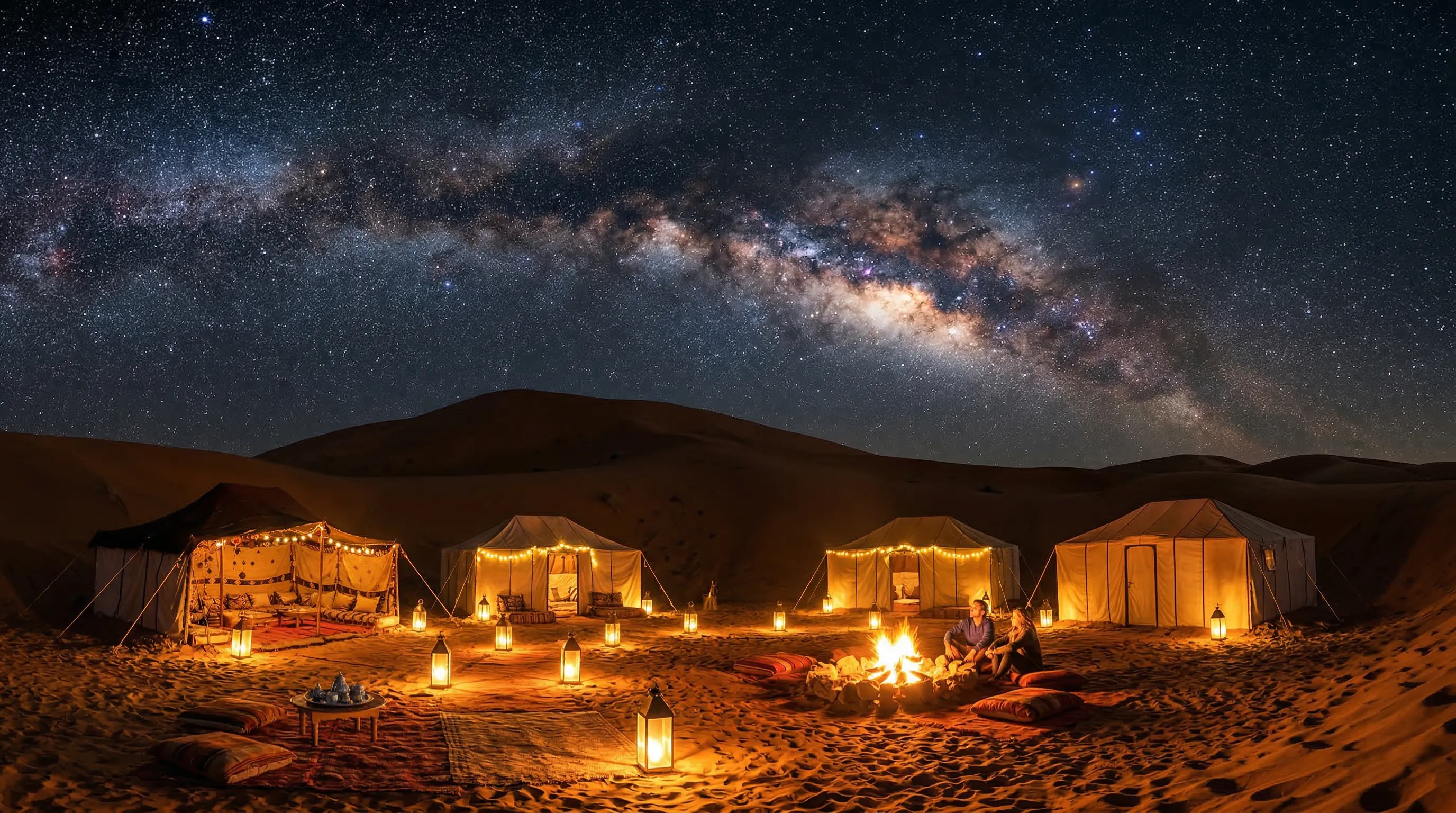
Desert Campfire Night
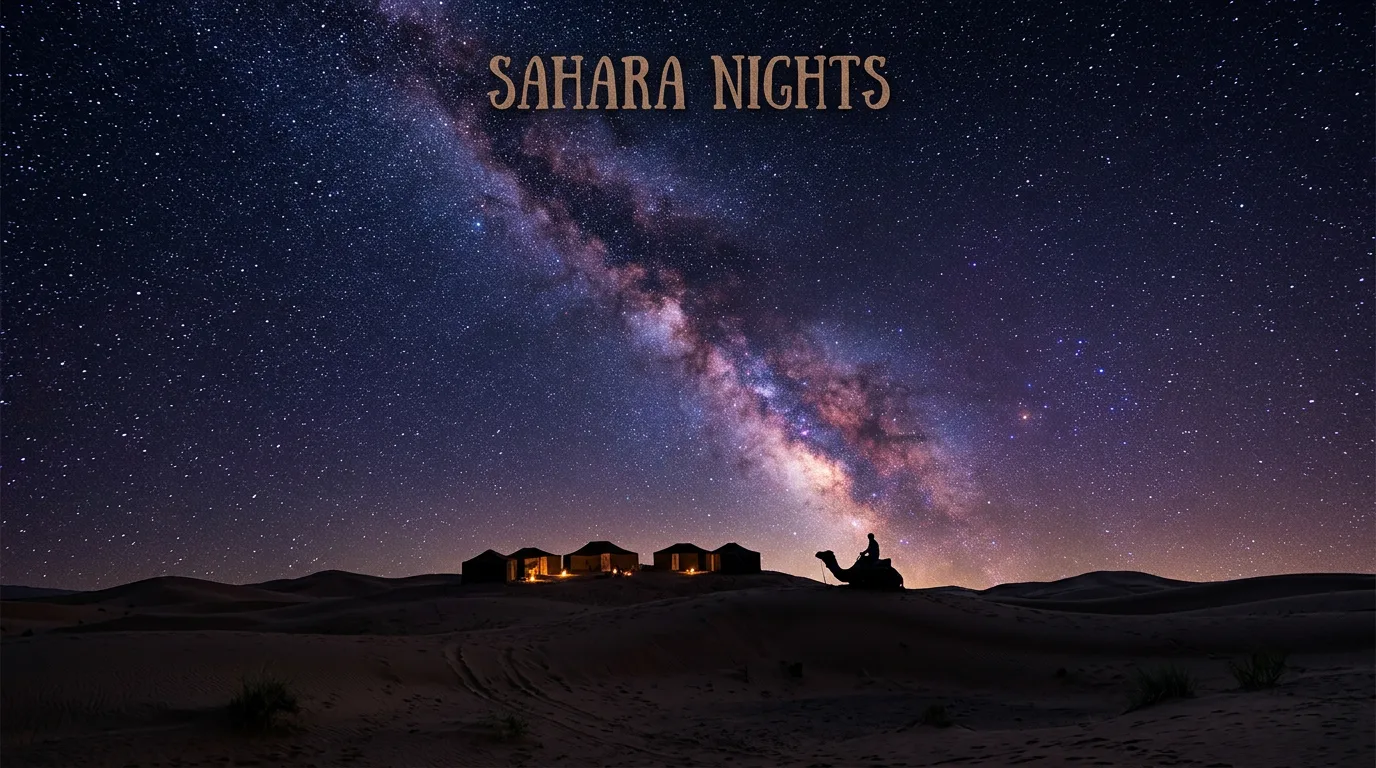
Sahara Stargazing
Frequently Asked Questions
How much does a Sahara overnight cost in Morocco?
Basic desert camps start from 600 MAD per person for a group tour. Standard camps with private tents and better facilities cost from 1,200 MAD. Luxury camps with en-suite bathrooms and hot showers start from 2,500 MAD. Premium glamping experiences cost from 5,000 MAD per person. Prices vary significantly by season, with peak rates applying from October to April. Seasonal pricing can change, so confirm rates when booking.
What is included in a desert camp overnight?
Most packages include a camel ride to and from camp (1 to 1.5 hours each way), sunset viewing from the dunes, a traditional multi-course Berber dinner, overnight accommodation in a tent, breakfast, sunrise viewing, and mint tea throughout. Luxury camps add cocktails, hot showers, private bathrooms, entertainment, and sometimes sandboarding or 4x4 excursions. Always confirm inclusions before booking.
Is it safe to sleep in the Sahara Desert?
Yes, sleeping in the Sahara with an established camp operator is very safe. Camps are staffed by experienced Berber families who have lived in the desert for generations. There are no dangerous predators in the Moroccan Sahara. The main considerations are cold temperatures at night (bring warm layers) and sun exposure during the day (bring sunscreen and a hat). Thousands of tourists enjoy this experience safely every week during peak season.
What is the difference between Erg Chebbi and Erg Chigaga?
Erg Chebbi near Merzouga has golden dunes up to 150 meters, over 50 camp options from budget to ultra-luxury, and easy paved-road access. Erg Chigaga near M'Hamid has wider dunes reaching 300 meters, far fewer tourists, and a genuinely remote wilderness feel. Erg Chebbi suits first-timers and luxury seekers. Erg Chigaga suits adventurers and those wanting solitude. Erg Chigaga requires a 1.5 to 2-hour 4x4 transfer across open desert.
How cold does it get in the Sahara at night?
Winter nights from December to February can drop to 0 to 5 degrees Celsius. Spring and autumn nights range from 10 to 18 degrees. Summer nights stay around 25 to 30 degrees but daytime heat exceeds 45 degrees, making camping unpleasant. All camps provide thick blankets and some offer heated tents, but bringing your own warm layers is strongly recommended for cold season visits.
Can you see the Milky Way from the Sahara?
Yes, the Sahara offers some of the darkest skies on earth with virtually zero light pollution. On clear nights, especially around new moon, the Milky Way is visible in extraordinary detail. You can see thousands of stars, shooting stars appear every few minutes, and you may even spot satellites crossing the sky. The best stargazing months are October to April when skies are clearest. Luxury camps sometimes offer telescope-assisted sessions.
What should I pack for a Sahara overnight?
Essential items include warm layers for cold nights (fleece or down jacket), a headlamp or flashlight, sunscreen SPF 50+, a headscarf for sand protection, comfortable closed-toe shoes, a portable power bank, wet wipes, and a camera with spare batteries. Camps provide bedding, meals, and basic amenities, so you only need personal items. Keep everything in a small daypack you can carry on the camel ride.
When is the best time for a Sahara overnight in Morocco?
October to April offers the best conditions overall. March to April and October to November provide warm days (25 to 32 degrees) and cool nights (10 to 18 degrees) that are perfect for camping. Winter visits from December to February have the clearest stargazing skies but require heavy warm layers for near-freezing nights. Avoid June to September when extreme heat makes the overnight experience uncomfortable.
Related Desert & Adventure Guides
Complete Sahara Guide
Everything about the Moroccan Sahara: geography, culture, Berber traditions, and how to experience this vast desert.
Read moreMorocco Desert Tour Guide
Compare 1-night, 2-night, and 3-night Sahara tours with prices, itineraries, and camp options.
Read moreCamel Trekking Guide
Complete guide to camel rides in Morocco: sunset rides, overnight treks, multi-day expeditions, and prices.
Read moreCamping in Morocco
From Sahara desert camps to Atlas Mountain bivouacs: your complete guide to camping across Morocco.
Read moreStargazing in Morocco
Discover the darkest skies in Morocco for stargazing: Sahara dunes, Atlas peaks, and desert observatories.
Read moreReady to Sleep Under the Sahara Stars?
The silence of the desert, the warmth of the campfire, and a sky so full of stars it takes your breath away. Whether you choose a basic bivouac from 600 MAD or a luxury glamping suite, the magic of a Sahara night will stay with you forever.
Contact us for custom tripsinfo@citytoursmorocco.com
Plan it with a local expert
Travel Morocco with Serenity Morocco Tours
Crafting extraordinary journeys through Morocco's timeless landscapes. 100% private journeys, handcrafted around you.
ONMT Licensed 100% Private Tours 100% private tours since 2018
 from $2,011
 5 days Marrakech → Erg Chebbi
Sahara Desert Luxury Expedition
 from $2,054
 7 days Marrakech · Fes · Meknes · Rabat
Essential Morocco: Imperial Cities Circuit
 from $5,978
 14 days Full-country circuit
Sahara to Sea: Morocco Complete