Discovering...
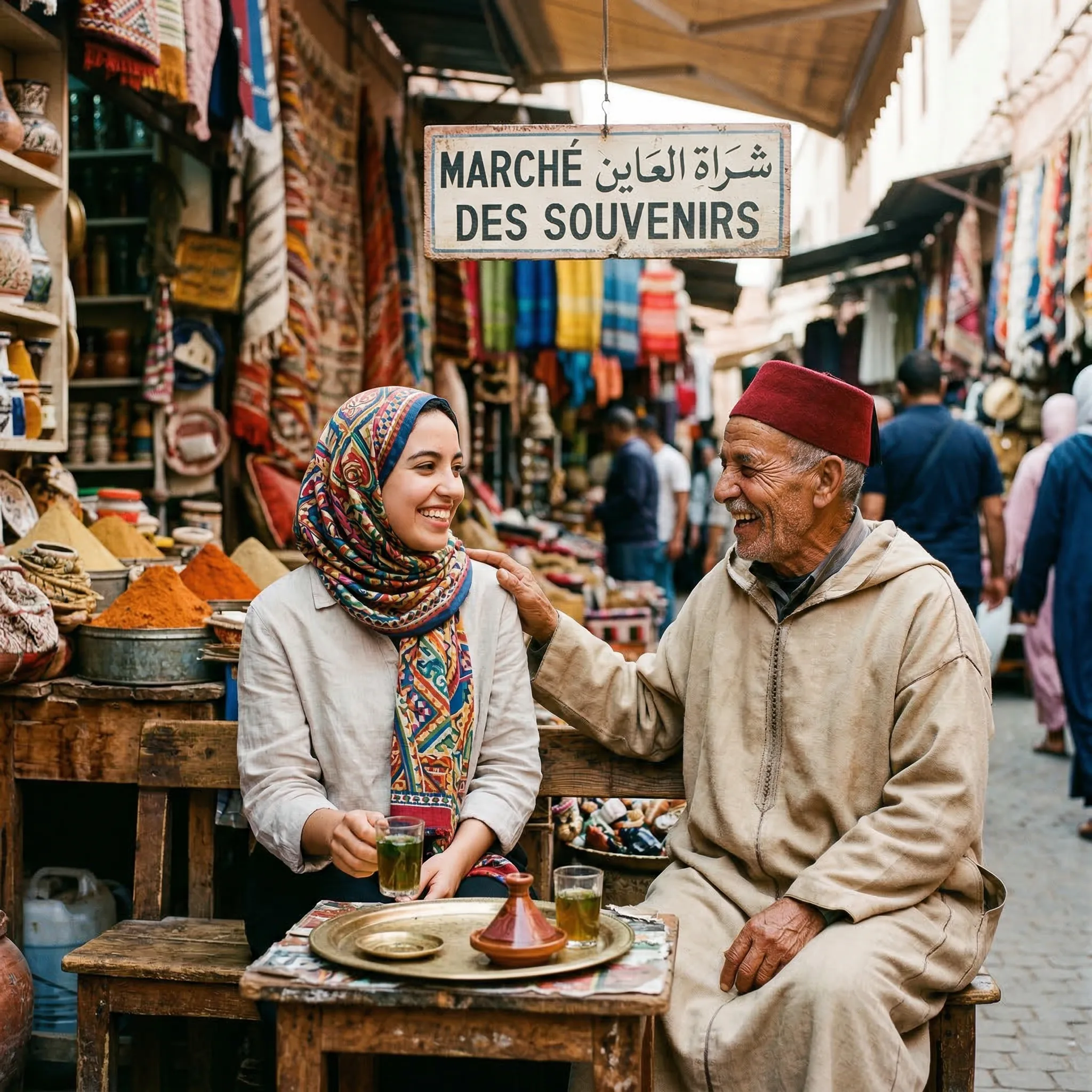
Morocco Tea Culture Guide 2026
The art of Moroccan mint tea is far more than a beverage. It is the country's most enduring social ritual, a daily ceremony of hospitality repeated millions of times from Tangier to the Sahara. This guide covers every aspect of atay, from the leaves in the pot to the etiquette at the table.
15 min read Updated March 2026 6 cities covered
Why Tea Matters in Morocco
National Symbol
Morocco consumes more green tea per capita than any other country. Tea arrived from Britain in the 18th century and became inseparable from Moroccan identity within a generation.
Social Glue
Every meeting, negotiation, family gathering, and shop visit begins with tea. Refusing tea is refusing connection. The ritual creates trust and signals respect between parties.
Daily Frequency
Most Moroccan families brew tea four to six times per day. The morning tea starts the day, after-lunch tea aids digestion, afternoon tea fuels conversation, and evening tea winds down the night.
Economic Weight
Morocco imports more than 75,000 tonnes of Chinese green tea annually, making it the world's largest importer of green tea. Tea is a meaningful line item in household budgets across every income level.
Gender & Tradition
In many households, the man of the house prepares and pours the tea, especially when guests are present. In private, both men and women brew tea. The role of tea preparer carries quiet respect.
Beyond Mint
While mint tea dominates, Moroccans also drink sage tea, verbena tea, thyme tea, and saffron-infused tea depending on region and season. Each variation carries its own cultural significance.
A Brief History of Tea in Morocco
Tea is not indigenous to Morocco. Its arrival, adoption, and transformation into a national symbol spans roughly three centuries of trade, colonization, and cultural reinvention.
1700s
Tea Arrives in Morocco
British merchants introduced tea to Morocco through trade routes via the port of Essaouira (then Mogador). Sultan Moulay Ismail received tea as diplomatic gifts from Queen Anne of England. Initially, tea was a luxury reserved for the royal court and wealthy merchant families.
1800s
Tea Becomes Affordable
As trade volumes increased, Chinese gunpowder green tea prices dropped enough for middle-class Moroccan families to afford it. The practice of adding fresh mint and sugar emerged during this period, transforming an imported product into a distinctly Moroccan creation.
Early 1900s
Tea Reaches Every Household
By the early 20th century, tea had penetrated every level of Moroccan society. Even the poorest families kept tea and sugar on hand. The berrad (teapot) became a standard household item. Tea houses (salons de the) opened in every city and town.
Mid 1900s
Post-Independence Identity
After Morocco gained independence from France in 1956, tea became a symbol of Moroccan cultural identity. While the French had promoted coffee culture, Moroccans reasserted their preference for mint tea as a marker of national pride and tradition.
2000s-Present
Global Recognition
Moroccan mint tea has become internationally recognized as one of the world's distinctive tea traditions. Tourism has spread awareness, and Moroccan tea houses have opened in cities from Paris to New York. Morocco remains the world's largest importer of Chinese green tea.
How to Prepare Moroccan Mint Tea
The six-step preparation process has remained unchanged for generations. Each step affects the final flavor. Rushing any stage produces noticeably inferior tea.
1
2 minRinse the Tea
Place one tablespoon of Chinese gunpowder green tea into the teapot. Add a splash of boiling water, swirl gently for 20 seconds, then pour the water out. This rinse removes dust and bitterness from the tightly rolled tea leaves, leaving a cleaner flavor.
Never skip the rinse. Unrinsed gunpowder tea produces a harsh, overly astringent brew that overwhelms the mint.
2
3 minFirst Steep
Fill the teapot halfway with boiling water. Let the rinsed leaves steep for two to three minutes. This first steep extracts the core green tea flavor without pulling out too many tannins. The liquid should turn a medium amber-gold.
Water temperature matters. Bring water to a full rolling boil. Lukewarm water produces a flat, underwhelming tea.
3
2 minAdd Mint & Sugar
Pack a generous handful of fresh spearmint (nana) into the teapot. Add sugar cones or loose sugar. A traditional pot uses roughly 4 to 5 large sugar cones for a one-liter teapot. Push the mint below the water line with a long spoon.
Moroccan nana spearmint is the standard. If using peppermint or other varieties, reduce the quantity as their flavor is more intense.
4
3-5 minTop Off & Simmer
Fill the teapot to the brim with boiling water and place it on low heat for three to five minutes. This gentle simmer melds the tea, mint, and sugar into a unified flavor. Watch for the first small bubbles at the edges, then remove from heat.
Do not let the tea reach a full boil once the mint is added. Boiling mint releases a bitter compound that spoils the taste.
5
1 minTest Pour
Pour a glass of tea and taste it. Then pour that glass back into the pot. Repeat two or three times. This cycling, called "turning the tea," mixes the ingredients thoroughly and equalizes the strength throughout the pot.
The test pour is non-negotiable. Skipping it results in the first glass being weak and the last glass being excessively strong.
6
1 minThe High Pour
Pour each glass from a height of roughly 30 centimeters. A thin, steady stream of tea falls into the glass, creating a frothy layer of bubbles (rozza) on the surface. This aeration is the hallmark of well-made Moroccan tea.
Practice with water first. The stream should be continuous and precise. Splashing means the angle or height is wrong.
Tea Varieties & Ingredients
Standard Moroccan tea uses three ingredients: gunpowder green tea, fresh mint, and sugar. Regional herbs and seasonal additions create dozens of variations across the country.
Chinese Gunpowder Green Tea
Arabic: atay siniy
The foundation of every pot. Tightly rolled pellets of green tea that unfurl during steeping. The 4011 grade is standard in Morocco. Higher grades (3505, 9375) offer a more refined, less astringent flavor.
from 15 MAD per 250g boxFresh Spearmint (Nana)
Arabic: nana
Moroccan nana is a specific spearmint cultivar with broad, bright green leaves and a sweet, aromatic profile. It grows abundantly across the country and is sold in large bunches at every market.
from 2 MAD per bunchWormwood (Sheeba)
Arabic: sheeba / chiba
Added in small quantities in northern Morocco and the Rif region. Sheeba lends a subtle bitter, herbal edge that offsets the sweetness. Used sparingly as it has a potent flavor.
from 10 MAD per bundleVerbena (Louiza)
Arabic: louiza
Lemon verbena is steeped alone or added to mint tea, particularly in Marrakech and the south. It provides a citrusy, floral note and is believed to calm the stomach after heavy meals.
from 5 MAD per bunchSage (Salmiya)
Arabic: salmiya
Sage tea is a winter favorite, brewed alone or blended with mint. Popular in the Middle Atlas and mountain communities where its warming properties are valued during cold months.
from 8 MAD per bundleSaffron Tea
Arabic: atay zaafrane
A luxury variation from the Taliouine region, where Morocco produces some of the world's finest saffron. A few threads added to green tea create a golden, fragrant infusion served at special occasions.
from 20 MAD per gram of saffronTea Etiquette: The Unwritten Rules
Moroccan tea etiquette is learned by observation from childhood. As a visitor, knowing these customs shows cultural awareness and earns genuine warmth from your hosts.
Accept with your right hand
Always receive and hold tea glasses with your right hand. The left hand is considered unclean in Moroccan culture. You may support the bottom of a hot glass with your left hand if needed.
Drink at least three glasses
Three is the customary minimum. Each glass from the same pot tastes slightly different as the flavors develop. Leaving early signals you are unhappy with the hospitality.
Never pour your own tea
The host or the youngest family member pours for everyone. Pouring your own tea suggests the host is neglecting their duties. Wait to be served each round.
Praise the tea
Compliment the host on the quality of their tea. Saying "had atay bnine" (this tea is delicious) earns genuine appreciation. Tea-making skill is a source of personal pride.
Sip, do not gulp
Tea is meant to be savored slowly over conversation. Gulping your glass and setting it down is considered rushed and disrespectful. Take small sips and let the conversation flow.
Place glass upside down to stop
When you have had enough tea, turn your empty glass upside down on the tray. This is the polite signal that you are finished. Otherwise, the host will continue refilling your glass.
Regional Tea Variations Across Morocco
While the base recipe is universal, each region puts its own signature on the tea. Traveling through Morocco, you will notice the flavor shifting as the landscape changes.
Northern Rif (Chefchaouen, Tetouan)
Sheeba (wormwood) is added to the standard mint tea, giving it a slightly bitter, herbaceous undertone. The sugar level tends to be lower than in the south.
Marrakech & Central Morocco
The classic preparation with heavy sugar and abundant fresh nana mint. Some families add a sprig of verbena (louiza) or orange blossom water for special occasions.
Saharan South (Merzouga, Zagora)
Tea is brewed directly over charcoal or sand-buried coals. The desert version is typically stronger, sweeter, and served in smaller glasses. Three rounds are strictly observed.
Atlas Mountains
Mountain communities add sage (salmiya) or thyme (zaatar) during winter months. The tea is brewed strong to warm visitors after cold treks at high altitude.
Atlantic Coast (Essaouira, Agadir)
Coastal cafes sometimes offer tea with fresh orange blossom or rose petals. The lighter, more floral character complements the seaside atmosphere.
Souss & Taliouine
The saffron-producing heartland occasionally adds a few saffron threads to green tea, creating a golden, fragrant luxury brew served at celebrations and to honored guests.
Types of Tea Houses in Morocco
Morocco has several distinct types of tea-drinking establishments, each offering a different atmosphere, price point, and cultural experience.
Neighborhood Cafe (Qahwa)
The backbone of Moroccan social life. Every neighborhood has at least one. Men dominate the terrace seating; women are welcome but typically sit inside. A glass of mint tea costs from 5 MAD to 10 MAD. The atmosphere is informal, the TV plays football, and conversations range from politics to family.
from 5 MAD per glass
Authentic local atmosphere and people-watching
Rooftop Terrace Cafe
Found throughout the medinas of Marrakech, Fes, and Chefchaouen. These elevated cafes offer panoramic views over the old city rooftops. Tea is the main draw, often served with Moroccan pastries. Prices are higher than street-level cafes but the views justify the markup.
from 15 MAD to 40 MAD per glass
Photography, sunset views, and a tourist-friendly introduction
Riad Tea Salon
Many riads (traditional courtyard guesthouses) serve afternoon tea to non-guests. The setting is intimate: tiled courtyards, fountains, orange trees, and carved plaster walls. Tea is served on silver trays with an assortment of Moroccan cookies and pastries.
from 40 MAD to 80 MAD per pot with pastries
A refined, quiet experience away from the medina bustle
Salon de The (French-Style Tea Room)
A holdover from the French protectorate era. These establishments blend Moroccan and European tea culture, serving both mint tea and patisserie alongside French-style cafe au lait. Found mainly in the Ville Nouvelle (new city) districts of major cities.
from 20 MAD to 50 MAD per pot
Mixed tea traditions and French-Moroccan pastries
Desert & Mountain Camp
In the Sahara and Atlas Mountains, tea is brewed over open flames by Berber guides. There is no menu and no bill. Tea is offered as part of the camp experience. The preparation is slower, the setting is raw, and the ritual feels closer to its historical roots.
Included with camp stays from 300 MAD/night
The most atmospheric and culturally immersive tea experience
Useful Darija Phrases for Tea
Knowing a few words in Darija (Moroccan Arabic) transforms the tea experience. Hosts and cafe owners respond with visible warmth when visitors make the effort.
Atay, afak
Tea, please
Ordering tea at any cafe
Bla sukkar
Without sugar
Requesting unsweetened tea
Shwiya dial sukkar
A little sugar
Requesting lightly sweetened tea
Had atay bnine
This tea is delicious
Complimenting the host's tea
Shukran, bzzaf
Thank you very much
Expressing gratitude for tea
Atay b'naanaa
Tea with mint
Specifying mint tea (standard)
Atay b'louiza
Tea with verbena
Ordering verbena tea
Wahd al-kas zayed
One more glass
Requesting another serving
Best Tea Experiences by City
Every Moroccan city has its own tea personality. These are the standout spots where the setting, the service, and the tea itself come together into something worth traveling for.
Marrakech
The Jemaa el-Fna square teahouses offer ringside views of the nightly spectacle. Rooftop terraces along Rue Riad Zitoun serve tea with panoramic Atlas Mountain views. Cafe des Epices above the spice square and the Maison de la Photographie rooftop are standout choices.
Rooftop tea with Atlas Mountain sunset views
from 15 MAD at cafes, from 40 MAD at riads
Fes
The world's oldest university city serves tea in centuries-old medina cafes where little has changed in generations. Cafe Clock in Fes el-Bali hosts cultural events alongside its tea service. The tannery-view terraces serve tea while you watch the leather-dyeing process below.
Tea at Cafe Clock with live Gnawa music
from 10 MAD at local cafes, from 30 MAD at Cafe Clock
Chefchaouen
The blue city's tea culture centers on Plaza Uta el-Hammam, where cafe terraces face the kasbah. Tea here often includes sheeba (wormwood), reflecting the northern Rif tradition. The pace is slower and conversations longer.
Sheeba-laced tea in the blue-walled medina
from 8 MAD at local cafes, from 25 MAD at tourist terraces
Essaouira
The coastal wind city pairs its mint tea with Atlantic breezes. Rampart-top cafes serve tea overlooking the ocean and Mogador Island. Gnaoua musicians sometimes play in the background. Tea with fresh pastries at a port-side cafe is a quintessential Essaouira morning.
Mint tea on the ramparts with Atlantic views
from 10 MAD at cafes, from 35 MAD at rampart terraces
Tangier
The Grand Socco and Petit Socco cafes carry the legacy of writers and artists who drank tea in these same seats decades ago. Cafe Hafa, perched on cliffs above the Strait of Gibraltar, has served mint tea since 1921. The Rolling Stones and Paul Bowles once frequented this terrace.
Tea at Cafe Hafa overlooking the Strait of Gibraltar
from 10 MAD at Cafe Hafa, from 30 MAD at hotel lounges
Merzouga & Desert Camps
In the Sahara, tea takes on a ritual significance. Berber guides brew tea over open coals in the sand, using a small pot balanced on stones. The desert version is stronger with more sugar. Drinking tea under a canopy of stars in complete silence is an experience unique to the desert.
Berber tea ceremony under Saharan stars
Typically included with desert camp stays from 300 MAD/night
Health Benefits of Moroccan Mint Tea
When consumed without excessive sugar, Moroccan mint tea offers genuine health advantages. The combination of green tea and fresh mint delivers benefits that neither ingredient provides alone.
Antioxidant-rich green tea base
Chinese gunpowder green tea contains catechins and polyphenols that support cardiovascular health and reduce oxidative stress.
Digestive aid from fresh mint
Spearmint relaxes the smooth muscles of the digestive tract, helping relieve bloating, gas, and nausea after heavy meals.
Mental alertness without jitters
Green tea contains L-theanine alongside caffeine, producing a calm focus rather than the spiky energy of coffee. One pot contains roughly the caffeine of one espresso.
Hydration in hot climates
Despite being served hot, mint tea promotes sweating which cools the body. The fluid intake helps maintain hydration in Morocco's arid climate.
Social and mental wellbeing
The tea ritual slows the pace of the day. Sitting with others over three glasses of tea reduces stress and strengthens social bonds, which research links to improved mental health outcomes.
A Note on Sugar
Traditional Moroccan mint tea is heavily sweetened. A standard pot can contain 40 to 60 grams of sugar. If you prefer less sugar, say "shwiya dial sukkar" (a little sugar) or "bla sukkar" (without sugar). Most cafes will accommodate the request. Reducing sugar does not offend; many health-conscious Moroccans now drink lighter tea themselves.
Buying Moroccan Tea & Supplies to Take Home
Bringing the Moroccan tea experience home is straightforward. The essential ingredients are inexpensive, widely available, and easy to pack. The teaware makes a memorable souvenir.
Gunpowder Green Tea
Where to Buy
Supermarkets (Marjane, Carrefour, Acima) or spice shops in the souk
Brands / Type
Sultan, Menara, or bulk 4011 grade
Price
from 15 MAD per 250g, from 50 MAD per kilo (bulk)
Buying Tip
Check the harvest date printed on boxed tea. Fresher stock produces better flavor.
Dried Mint Blends
Where to Buy
Spice shops in the medina, particularly in Fes and Marrakech souks
Brands / Type
No major brands; sold loose by weight
Price
from 30 MAD per 100g bag
Buying Tip
Smell before buying. The mint should be aromatic and bright green, not dusty brown.
Traditional Teapot (Berrad)
Where to Buy
Metalwork shops in the medina, particularly Rue des Teinturiers in Fes
Brands / Type
Handcrafted; look for artisan stamps on the base
Price
from 80 MAD basic, from 300 MAD engraved, from 800 MAD silver-plated artisan
Buying Tip
Test the lid fit and pour before buying. A good berrad pours a clean, thin stream without dripping.
Tea Glasses
Where to Buy
Household goods shops in any medina, or upscale craft stores like Ensemble Artisanal
Brands / Type
Hand-painted or gold-rimmed Moroccan style
Price
from 5 MAD each (plain), from 15 MAD each (painted), from 40 MAD each (gold-rimmed)
Buying Tip
Buy a set of six for a complete traditional service. Wrap carefully for travel; they are fragile.
Silver Tea Tray (Siniya)
Where to Buy
Metalwork souks, antique shops, cooperative stores
Brands / Type
Handcrafted; Fes is known for the finest metalwork
Price
from 150 MAD basic, from 600 MAD engraved brass, from 2,000 MAD antique silver
Buying Tip
Engraved trays with geometric patterns are the most traditional. Round trays are classic; rectangular ones are modern.
Frequently Asked Questions
What is Moroccan mint tea made from?
Moroccan mint tea (atay) combines Chinese gunpowder green tea, fresh spearmint leaves (nana), and generous amounts of sugar. The gunpowder tea provides a robust, slightly bitter base, while the fresh mint adds its distinctive cooling aroma. Some families add other herbs like wormwood (sheeba), verbena, or sage depending on the region and season.
Why do Moroccans pour tea from a height?
Pouring from roughly 30 centimeters above the glass serves two purposes. First, it aerates the tea and creates a light foam (rozza) on the surface, which Moroccans consider a sign of quality. Second, it slightly cools the tea to a drinkable temperature. The higher the pour, the more skilled the host. This technique takes practice and is a point of pride.
Is it rude to refuse tea in Morocco?
Refusing tea in Morocco is considered impolite, especially when offered in someone's home. Tea is a gesture of hospitality and welcome. If you genuinely cannot drink it, accept the glass and take a small sip to show respect. In shops, accepting tea does not obligate you to buy anything, despite what some sellers may imply.
How many glasses of tea should you drink as a guest?
Moroccan custom holds that you should drink at least three glasses. A popular proverb says: "The first glass is gentle like life, the second is strong like love, the third is bitter like death." Each round has a slightly different flavor as the tea steeps longer. Leaving before the third glass can signal displeasure with the host.
Can I buy authentic Moroccan tea to take home?
Yes. Buy Chinese gunpowder green tea (look for brands like Sultan, Menara, or the premium 4011 grade) at any spice shop or supermarket. A 250-gram box costs from 15 MAD. Fresh mint cannot travel, but dried Moroccan mint blends are available at spice shops in the souks from 30 MAD per bag. Brass or silver-plated teapots make excellent souvenirs, starting from 80 MAD for a basic pot to 800 MAD for handcrafted artisan pieces.
What is the difference between Berber whiskey and regular mint tea?
"Berber whiskey" is a humorous nickname for Moroccan mint tea, referencing the fact that Morocco is a Muslim-majority country where alcohol is not widely consumed. The name is used affectionately and you will hear it in tourist areas, particularly in the Atlas Mountains and desert camps. The tea itself is identical to standard Moroccan mint tea.
How much does tea cost at a Moroccan cafe?
At a neighborhood cafe, a glass of mint tea costs from 5 MAD to 10 MAD. At a tourist-area cafe or rooftop terrace, expect from 15 MAD to 30 MAD. At upscale tea houses and riads, a full teapot for two costs from 40 MAD to 80 MAD. In rural areas, tea is sometimes offered free as a courtesy. Seasonal pricing can change.
Is Moroccan mint tea healthy?
Green tea provides antioxidants, and fresh mint aids digestion and can relieve nausea. However, traditional Moroccan tea contains significant sugar, sometimes 4-5 sugar cones per pot. You can request "bla sukkar" (without sugar) or "shwiya dial sukkar" (a little sugar). The unsweetened version retains all the health benefits of green tea and mint without the sugar spike.
Related Morocco Guides
Experience Moroccan Tea Culture First-Hand
From rooftop terraces in Marrakech to Berber camps in the Sahara, tea is the thread that connects every Moroccan experience. Let us help you plan a trip where the tea flows freely and the hospitality runs deep.