Discovering...
Seasonal Travel Guide
Morocco Winter Travel
Guide 2026
Mild days, snow-capped Atlas peaks, uncrowded medinas, and Sahara skies sharp with stars. December through February is Morocco at its most rewarding -- and most affordable.
Why Morocco in Winter Is a Smart Choice
While much of Europe shivers under gray skies, Morocco offers something rare: genuine warmth, cultural depth, and manageable crowds all in one destination that sits just a three-hour flight from most European capitals. Marrakech in January averages 18 degrees Celsius during the day. Agadir stays above 20. Even the northern cities, which see more rain, rarely drop below 12 degrees in daylight hours.
The real advantage of winter travel extends beyond weather. The summer crush that packs Jemaa el-Fna and the Fes medina fades after October. By January, you share the blue streets of Chefchaouen with a fraction of the visitors that mob them in July. Riad owners drop their rates. Tour guides have more time. Restaurants feel local rather than touristic. The country opens up in ways that the peak season simply does not allow.
Winter also unlocks experiences unavailable in other months. Skiing in the High Atlas, the Amazigh New Year celebrations of Yennayer on January 13, the pink almond blossoms carpeting the Anti-Atlas valleys in late January, and Sahara camping under skies so clear that the Milky Way casts visible shadows on the dunes. These are winter-only moments that most visitors never realize Morocco offers.
Winter Weather by Region
Morocco spans coastal plains, mountain ranges, and desert. Winter weather varies dramatically depending on where you go. Plan your route based on the temperatures and conditions that suit your travel style.
Marrakech & Central Plains
Day
18-20°C
Night
5-8°C
Rain
5-6 days/month
Pleasantly warm days with cool evenings. Morning fog is common in December and January. Rain arrives in brief spells. Outdoor sightseeing is comfortable by mid-morning. Pack a light jacket for evenings and a sweater for early mornings.
Medina exploring, day trips to Ourika Valley, cooking classes, hammam visits
Fes, Meknes & Northern Interior
Day
13-16°C
Night
3-6°C
Rain
8-10 days/month
The coldest and wettest of the major tourist cities. Mornings are chilly with damp air. Traditional riads can feel cold inside since central heating is uncommon. Rain is more persistent than in the south. Clear days reveal stunning light on the medieval medina walls.
Tanneries, museums, ceramic workshops, Volubilis day trip on clear days
Tangier & Northwest Coast
Day
14-17°C
Night
8-10°C
Rain
10-12 days/month
Atlantic and Mediterranean influences bring the most rainfall in the country. Wind can be strong along the coast. The upside is green, lush landscapes and dramatic ocean storms that make for striking photography. Indoor attractions like the Kasbah Museum and cafes along the Petit Socco stay dry and inviting.
Cafe culture, art galleries, Kasbah Museum, photographing winter storms
Agadir & Southern Coast
Day
20-23°C
Night
10-13°C
Rain
2-3 days/month
The warmest winter weather in Morocco. Beach days are possible even in January, though the Atlantic water is cool at 17 degrees. This is where European sun-seekers congregate from November through March. Resorts run at reduced rates outside the holiday window.
Beach relaxation, Souss-Massa National Park, Taghazout surfing, Tiznit day trip
Atlas Mountains (above 1,500m)
Day
5-10°C
Night
-5 to 0°C
Rain
Snow above 2,000m
Snow covers the High Atlas peaks from November through April. Passes like Tizi n'Tichka can close temporarily after heavy snowfall. Villages below the snowline experience cold, crisp days ideal for hiking when trails are dry. Oukaimeden ski station operates when snow cover is sufficient.
Skiing at Oukaimeden, winter trekking, snow photography, mountain lodge stays
Sahara Desert (Merzouga, Zagora)
Day
18-22°C
Night
0-5°C
Rain
Near zero
Clear skies, no humidity, and temperatures that allow full days of exploration without heat exhaustion. Nights are genuinely cold, dropping near freezing under cloudless skies that reveal an extraordinary density of stars. Desert camps provide heavy blankets and some offer heated common tents.
Camel treks, overnight camping, stargazing, sunrise dune photography
Month-by-Month Breakdown
December: Festive Season Meets Mild Weather
December starts quiet and builds toward the holiday rush. The first two weeks offer the best combination of mild weather and low prices. Marrakech sits at a comfortable 18-20 degrees during the day. The Sahara is ideal for camping. Snow begins falling on the High Atlas, opening the ski season at Oukaimeden. The Marrakech International Film Festival typically runs in late November or early December, adding cultural buzz to the city.
Pricing: Rates climb sharply after December 20. Book holiday-period accommodation by October to avoid inflated last-minute prices. Riads in Marrakech charge from 400 MAD per night in early December, rising to from 900 MAD during the holiday window. Seasonal pricing can change year to year.
January: Best Deals and Quietest Crowds
January after the first week is Morocco at its quietest and most affordable. Hotels drop rates to fill rooms. Tour operators offer discounted packages. The medinas feel genuinely local. This is the coldest month, with Fes and the north occasionally dipping to near freezing at night. The Amazigh New Year (Yennayer) on January 13 brings traditional celebrations, particularly in Atlas Mountain and Rif communities. Almond trees begin blooming in the Anti-Atlas toward the end of the month.
Pricing: The lowest hotel rates of the year. Riads in Marrakech from 350 MAD per night. Desert tours at their most negotiable. Seasonal pricing can change.
February: Almond Blossoms and Warming Days
February marks the transition toward spring. Temperatures begin rising, with Marrakech approaching 20-22 degrees by month end. The almond blossom season peaks in the Anti-Atlas, centered around Tafraoute, where the Almond Blossom Festival draws visitors to valleys carpeted in pink and white flowers against red granite mountains. Northern cities remain rainy but days grow longer. The ski season at Oukaimeden is often at its best in February with accumulated snow from earlier months.
Pricing: Slightly higher than January as spring approaches. Still 20-30 percent below peak season rates. Seasonal pricing can change.
Skiing in Morocco
Few travelers realize that Morocco has ski resorts. The Atlas Mountains receive reliable snowfall above 2,000 meters, and two established stations offer equipment rental, lift access, and runs suitable for beginners through intermediate skiers.
Oukaimeden
Altitude
2,600m - 3,258m
Distance
75 km from Marrakech (1.5 hours)
Lift Pass
From 100 MAD per day
Rental
From 200 MAD per day for skis, boots, and poles
Africa's highest ski resort sits in the High Atlas above Marrakech. The resort is modest by European standards but offers a surreal experience: skiing with views of Saharan plains to the south and snow-capped Toubkal to the west. Beginners and families find the gentle slopes approachable. Conditions are unpredictable, and some seasons see limited snowfall. Local guides offer equipment rental and basic instruction at the base area.
Tip: Check snow conditions before driving up. The road from Marrakech is winding but paved. Bring your own gear if you have high standards, as rental equipment is basic. A day trip from Marrakech is the most practical approach.
Michlifen
Altitude
1,800m - 2,000m
Distance
17 km from Ifrane (20 minutes)
Lift Pass
From 50 MAD (basic drag lifts)
Rental
From 150 MAD per day from local vendors
Located near the Swiss-style town of Ifrane in the Middle Atlas, Michlifen offers a more laid-back skiing experience. The slopes are gentler and the infrastructure more basic than Oukaimeden. Ifrane itself, with its clean streets and European architecture, feels like a different country from Marrakech or Fes. Cedar forests surrounding the area are home to Barbary macaques, adding wildlife to the winter landscape.
Tip: Combine with a visit to Ifrane and the Azrou cedar forest. The drive from Fes takes about 1.5 hours. Accommodation in Ifrane is comfortable and affordable, with hotels from 500 MAD per night.
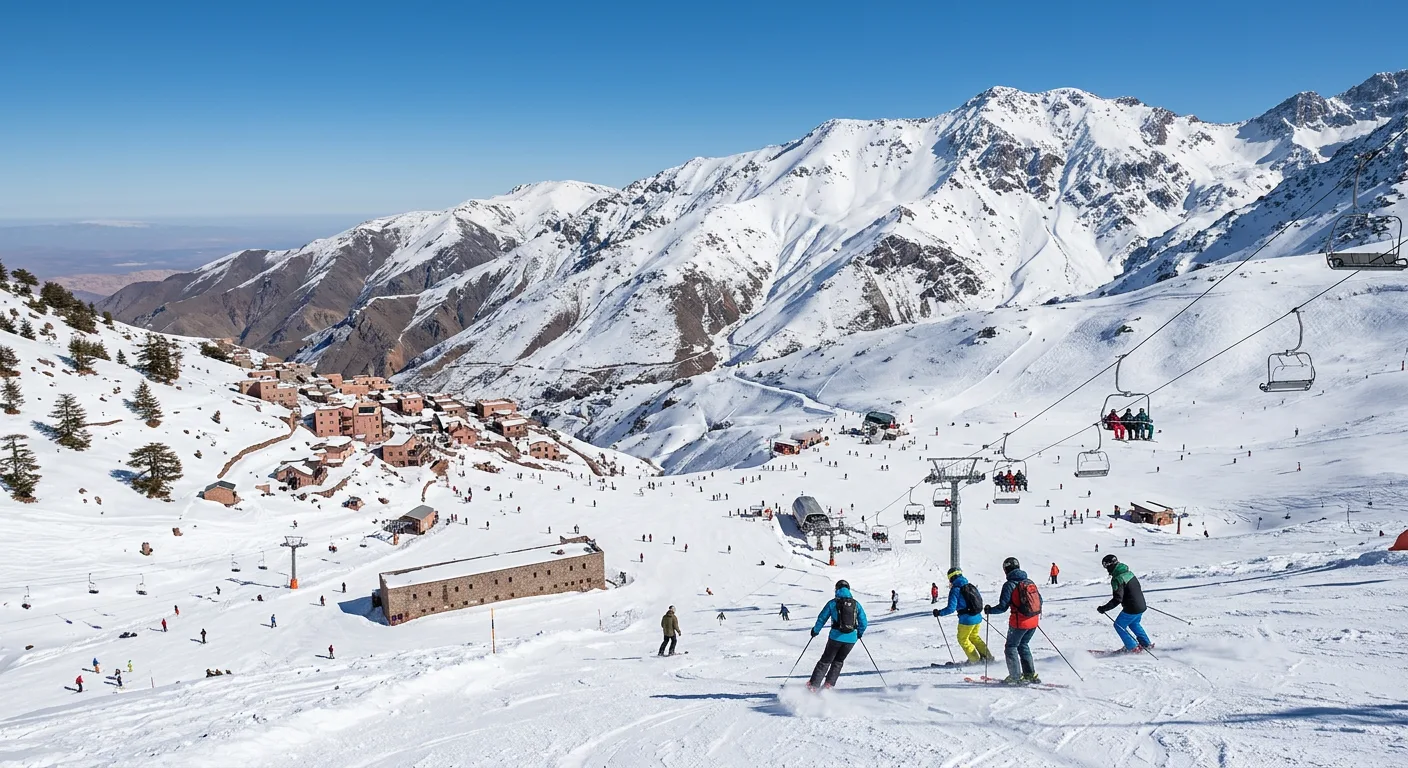
Oukaimeden Ski Resort, High Atlas Mountains
The Sahara in Winter: Peak Season for the Desert
Summer temperatures in the Sahara regularly exceed 45 degrees Celsius, making extended exploration miserable and potentially dangerous. Winter reverses the equation entirely. Daytime temperatures of 18-22 degrees allow full days of camel trekking, dune climbing, and 4x4 exploration without the punishing heat. This is why experienced travelers consider December through February the true high season for the Sahara, even though Morocco overall is in its quiet period.
Nights require preparation. After sunset, temperatures in the Erg Chebbi dunes near Merzouga can drop to near freezing under cloudless skies. Quality desert camps compensate with thick Berber blankets, heated common tents, and hot tagine dinners around fire pits. The cold is worthwhile because winter desert skies deliver some of the clearest stargazing on the planet. The Milky Way stretches in a bright band overhead, and shooting stars are frequent enough that you stop counting.
Merzouga & Erg Chebbi
The iconic towering dunes reaching 150 meters. Two-day tours from Marrakech start from 800 MAD per person including transport, meals, camel trek, and overnight camping. Luxury glamping options with private tents and en-suite bathrooms start from 2,000 MAD. Seasonal pricing can change based on demand.
Zagora & Erg Chigaga
More remote and less touristed than Merzouga. Erg Chigaga requires 4x4 access across 50 kilometers of desert track. The payoff is near-total solitude among massive dunes. Two-day tours from Marrakech start from 1,200 MAD. The extra distance and remoteness make this the choice for travelers wanting an authentic, uncrowded desert experience.
Winter Desert Photography
Winter light in the Sahara is prized by photographers. The sun sits lower on the horizon, casting long shadows that define dune ridges and ripple patterns. Golden hour extends longer than in summer. Sunrise over Erg Chebbi, typically around 7:30 AM in January, is the single most photographed moment on any Morocco trip.
Stargazing Conditions
Winter air above the Sahara carries less Saharan dust than summer, improving visibility. The cold air reduces atmospheric shimmer. Combined with near-zero light pollution, conditions rival dedicated observatory sites. The Geminids meteor shower peaks in mid-December, adding celestial spectacle to an already extraordinary night sky.
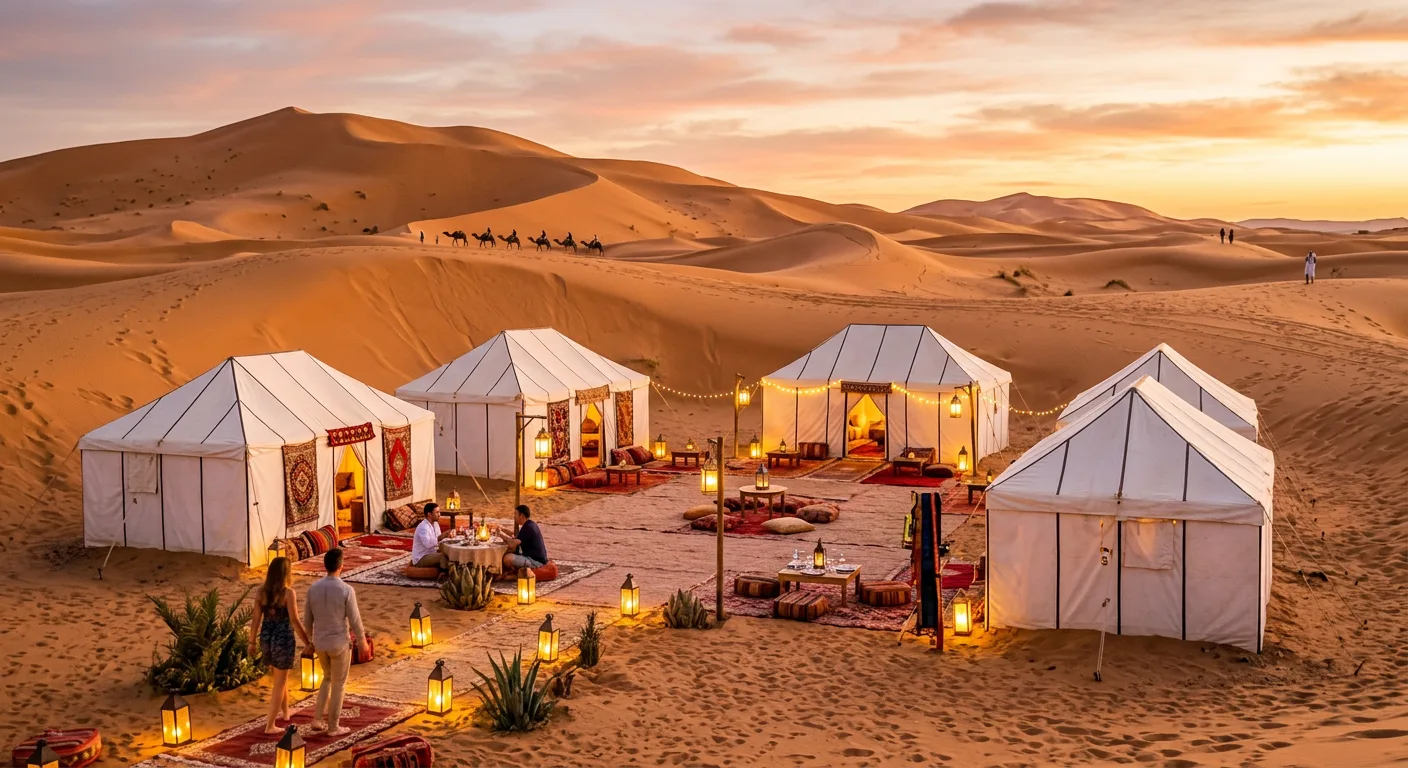
Winter Camp in the Erg Chebbi Dunes, Merzouga
Winter Festivals & Events
Morocco's winter calendar includes film screenings, traditional Amazigh celebrations, and natural spectacles like the almond blossom season.
November/December
Marrakech International Film Festival
Founded by King Mohammed VI, this prestigious festival screens international and Moroccan films across venues in the city. Red carpet events, public screenings, and industry panels bring filmmakers and cinephiles to Marrakech during the early winter.
Marrakech
January 13
Amazigh (Berber) New Year - Yennayer
The Amazigh New Year is celebrated with traditional feasts, music, and dancing in Berber communities across Morocco. Families prepare special dishes including couscous with seven vegetables and dried meats. In 2024, Morocco officially recognized Yennayer as a national holiday.
Nationwide, especially Atlas & Rif regions
Late January - February
Almond Blossom Festival
When almond trees burst into pink and white blossoms across the Anti-Atlas valleys, Tafraoute hosts a festival celebrating the harvest with Amazigh music, folk dancing, and local cuisine. The blooming valleys against red granite mountains create one of Morocco's most photogenic winter scenes.
Tafraoute, Anti-Atlas
December 31
New Year Eve Celebrations
While not a traditional Moroccan holiday, New Year Eve has become a significant event in major cities. Hotels and restaurants host gala dinners. Jemaa el-Fna in Marrakech fills with revelers. Casablanca's waterfront and Agadir's beachfront promenade host fireworks and live music.
Marrakech, Casablanca, Agadir
Varies (often late winter/spring)
Tan-Tan Moussem (if winter dates)
This UNESCO-recognized gathering of nomadic tribes features camel races, traditional music, and displays of Saharan culture. While dates vary, it occasionally falls in the late winter period. Check current schedules before planning around this event.
Tan-Tan, Southern Morocco
Christmas & New Year in Morocco
Morocco is a Muslim-majority country, and Christmas is not a public holiday. You will not find widespread Christmas decorations in medinas or hear carols in the souks. However, Morocco has a long tradition of welcoming international travelers, and the hospitality industry caters to holiday visitors with genuine warmth.
International hotels in Marrakech, Casablanca, Agadir, and Tangier host Christmas Eve and Christmas Day dinners with decorated dining rooms, special menus blending Moroccan and Western cuisine, and festive entertainment. Some luxury riads organize private celebrations for their guests, including gift exchanges and decorated common areas. Expect to pay from 500 MAD per person for a Christmas dinner at a mid-range hotel, and from 1,500 MAD at luxury properties. Seasonal pricing can change.
New Year Eve is more broadly celebrated. Jemaa el-Fna in Marrakech fills with both locals and tourists as midnight approaches. Casablanca's waterfront hosts fireworks visible from the Hassan II Mosque corniche. Agadir's beachfront promenade comes alive with street performers and impromptu celebrations. Hotels across the country offer gala dinners with live music, starting from 800 MAD per person. The period from December 20 through January 5 carries premium pricing, with hotel rates 40-60 percent above the January baseline.
Winter Food Specialties
Moroccan cuisine shifts toward warming, slow-cooked dishes when temperatures drop. These cold-weather staples are deeply satisfying and often cost less than summer fare.
Harira
This hearty tomato-based soup with lentils, chickpeas, and lamb is Morocco's definitive cold-weather dish. Traditionally served during Ramadan to break the fast, it appears on street corners and restaurant menus throughout winter. A bowl costs from 10 MAD at street stalls.
Every city. Best at neighborhood stalls in the medina.
Rfissa
Shredded msemen flatbread layered with lentil sauce and slow-cooked chicken spiced with fenugreek and ras el hanout. This is comfort food at its most warming: rich, aromatic, and filling. Traditionally prepared for new mothers, it appears on winter menus across the country.
Home kitchens and traditional restaurants, especially in Fes and Meknes.
Tanjia (Marrakech Slow-Cooked Stew)
A clay urn filled with beef or lamb, preserved lemon, garlic, saffron, and smen (aged butter), sealed and slow-cooked in the embers of a hammam furnace for 6-8 hours. The result is fork-tender meat in a deeply spiced broth. This dish is uniquely Marrakchi.
Marrakech medina restaurants. Traditionally a weekend dish prepared by men.
Bessara (Fava Bean Soup)
A thick, creamy soup made from dried fava beans, drizzled with olive oil and dusted with cumin and paprika. Served with fresh bread, it is the breakfast of choice for working-class Moroccans during the cold months. Filling, nutritious, and costs from 5 MAD per bowl.
Street-side bessara shops open at dawn in every Moroccan city.
Msemen & Baghrir with Honey
These traditional flatbreads -- msemen is layered and buttery, baghrir is spongy with a thousand tiny holes -- are served warm with honey and butter for breakfast or afternoon tea. In winter, the combination of hot bread and honey is deeply satisfying.
Everywhere. Best from street vendors who cook them fresh to order from 3 MAD.
Mint Tea (Atay)
Morocco's national drink takes on extra importance in winter. Served scalding hot and sweet, the warmth and sugar provide immediate comfort against cold winds. In the mountains, some families add wormwood (chiba) or other herbs for additional warmth and flavor.
Every cafe, restaurant, riad, and home. Offered as a gesture of hospitality.
What to Pack for Morocco in Winter
The key principle is layers. Mornings and evenings demand warmth; midday in Marrakech or Agadir can feel like spring. A versatile wardrobe that covers desert nights, rainy medina walks, and sunny afternoon terraces will serve you well.
Clothing Layers
- Warm fleece or wool sweater for evenings and mountain areas
- Light waterproof jacket with hood for rain in northern cities
- Thermal base layer if visiting the Sahara overnight or Atlas Mountains
- Comfortable walking shoes with good grip for wet medina streets
- Warm hat, scarf, and gloves for mountain excursions and desert nights
- Light layers for warm Marrakech and Agadir afternoons
Weather Essentials
- Sunscreen SPF 30+ (UV remains strong even in winter)
- Sunglasses with UV protection
- Compact umbrella or packable rain jacket
- Moisturizer and lip balm (dry mountain and desert air)
Desert & Mountain Gear
- Headlamp or small flashlight for desert camps
- Camera with long exposure capability for night sky photography
- Warm sleeping socks for desert camp nights
- Daypack for hiking and day trips
Navigating the Rainy Season
Morocco's rainy season runs from November through March, with December and January seeing the most precipitation in northern regions. Tangier, Chefchaouen, and Fes receive the heaviest rainfall, averaging 80-100mm per month. Marrakech is drier at about 30mm per month. The south coast and Sahara barely register any rainfall at all.
Rain in Morocco typically arrives in short, intense bursts rather than the sustained drizzle common in northern Europe. A morning shower may give way to brilliant afternoon sunshine. Medina streets drain quickly due to their stone surfaces, though some older passages can develop puddles that persist for hours.
Indoor Rainy Day Activities
- Cooking classes (from 300 MAD) in Marrakech, Fes, or Essaouira
- Hammam and spa sessions (from 50 MAD public, from 300 MAD private)
- Museum visits: MACMA in Marrakech, Dar Batha in Fes, Kasbah Museum in Tangier
- Covered souks for shopping (rain never reaches the deep medina corridors)
- Ceramic and mosaic workshops in Fes (from 200 MAD)
- Riad tea ceremonies and afternoon reading in courtyard salons
Rain Precautions
- Waterproof shoes with grip (medina cobblestones become slippery)
- Compact umbrella or packable rain jacket in your daypack
- Waterproof phone case or dry bag for electronics
- Avoid wadis and dry riverbeds after heavy rain (flash flood risk)
- Check mountain pass conditions before driving over the Atlas
- Schedule flexible itineraries with indoor backup plans
Winter Hotel Deals & Budget Tips
Outside the December 20 to January 5 holiday window, winter represents genuine value for Morocco travelers. Hotels that charge premium rates in April or October drop prices to attract guests during the quieter months. The savings are most dramatic at mid-range and luxury properties, which rely on occupancy-based pricing.
Budget Riads
From 250 MAD
per night in January
vs from 450 MAD in peak season
Mid-Range Hotels
From 500 MAD
per night in January
vs from 900 MAD in peak season
Luxury Properties
From 1,200 MAD
per night in January
vs from 2,500 MAD in peak season
Booking Strategy for Winter Travel
- Book the December 20-January 5 window at least 3 months in advance
- For January and February, book 2-4 weeks ahead for the best selection
- Contact riads directly for better rates than booking platforms
- Ask about extended stay discounts (3+ nights often brings 10-15% off)
- Confirm heating availability before booking (not all riads have it)
- Seasonal pricing can change based on demand and local events
Essential Winter Travel Tips
Book Riads with Heating
Many traditional riads lack central heating. Ask specifically about heating options before booking. Look for riads with fireplaces, underfloor heating, or portable heaters. Electric blankets are common in better-managed properties.
Drive Cautiously in Mountains
The Tizi n'Tichka and Tizi n'Test passes can receive snow and ice in winter. Carry chains if renting a car. Check road conditions before departing. Some high passes close temporarily after heavy snowfall.
Plan Indoor Alternatives
Have backup plans for rainy days: museum visits, cooking classes, hammam sessions, shopping in covered souks. Morocco's indoor attractions are substantial enough to fill entire days.
Daylight Hours Are Shorter
Sunset comes early in winter, around 5:30 PM in December. Plan outdoor activities for the morning and early afternoon. Medina exploration is enjoyable after dark with the right precautions, but photography requires daylight.
Desert Nights Require Preparation
Do not underestimate Sahara cold after sundown. Temperatures drop rapidly from 20 degrees to near freezing. Bring thermal layers and ask your tour operator about heated tents and extra blankets.
Negotiate Winter Rates
Outside the December 20 to January 5 window, you have significant bargaining power. Hotels, riads, and tour operators are often willing to negotiate. Extended stays of 3+ nights frequently receive additional discounts.
Winter Morocco in Pictures
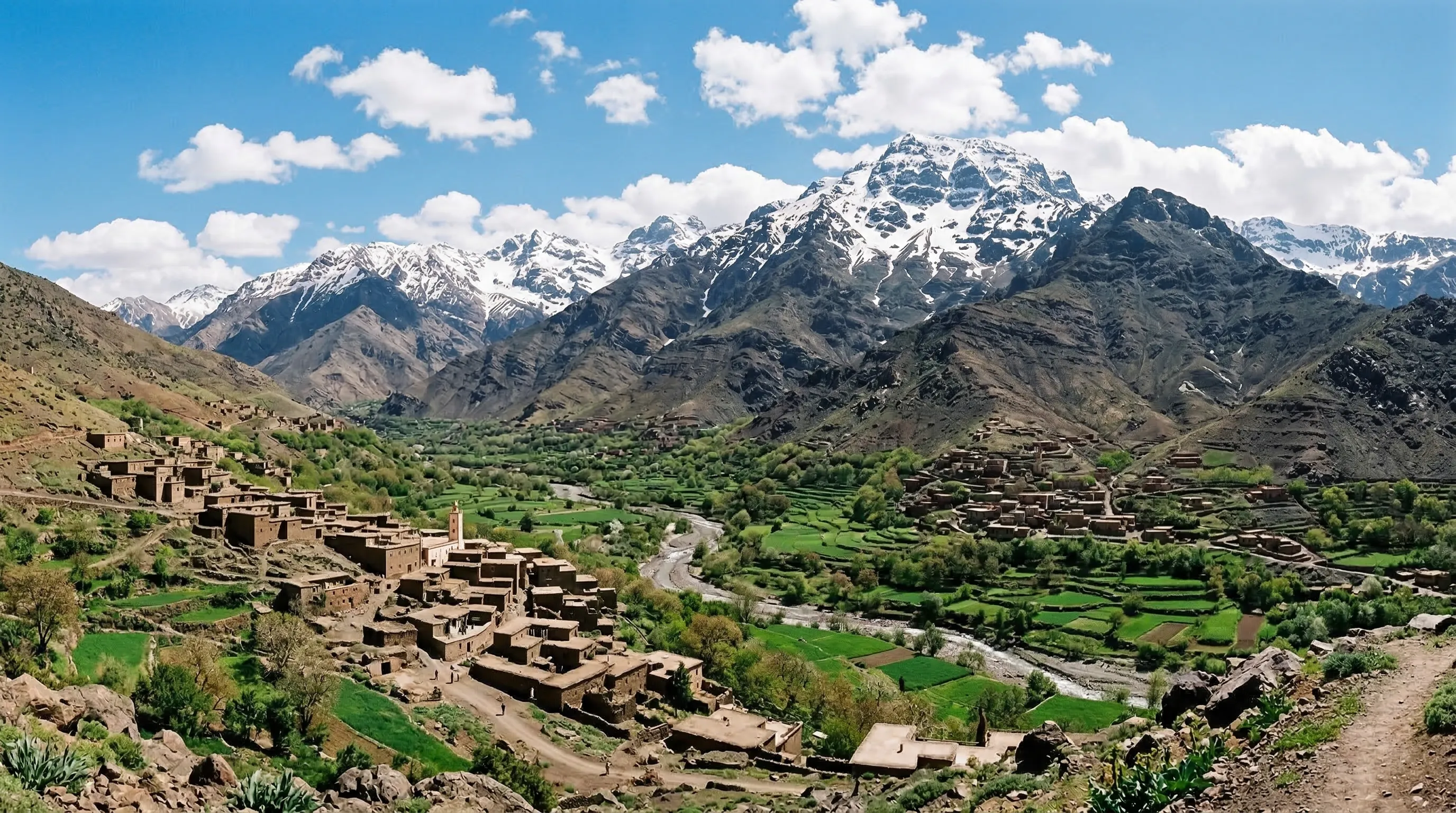
Atlas Mountains in Winter

Winter in the Sahara
Frequently Asked Questions
Answers to the most common questions about traveling to Morocco in winter.
Is Morocco a good destination in winter?
Morocco is one of the best winter destinations accessible from Europe. Coastal cities like Agadir see daytime highs of 20-22 degrees Celsius even in January. The Sahara desert is ideal for camping with cool, comfortable temperatures. Crowds thin out significantly after New Year, and hotel prices drop by 20-40 percent compared to peak season. The only downside is occasional rain in northern cities.
How cold does Morocco get in winter?
It varies dramatically by region. Marrakech averages 18 degrees Celsius during the day and 6 degrees at night in January. Fes and the north are cooler at 14 degrees daytime and near freezing at night. The Atlas Mountains see snow above 2,000 meters, with temperatures dropping below minus 10 degrees at summit level. The Sahara desert reaches 18-20 degrees by day but plummets to 0-5 degrees at night. Agadir and the southern coast stay mild at 20-22 degrees.
Can you ski in Morocco?
Yes. Oukaimeden, 75 kilometers from Marrakech at 2,600 meters, has ski lifts, rental shops, and runs suitable for beginners and intermediates. The season runs from late December through March when snow conditions allow. Michlifen near Ifrane in the Middle Atlas also offers skiing. Lift passes start from 100 MAD and equipment rental from 200 MAD per day. Conditions are unpredictable, so check snow reports before heading up.
Does it rain a lot in Morocco during winter?
Northern cities like Tangier, Chefchaouen, and Fes receive the most rain, averaging 8-12 rainy days per month from November through February. Marrakech gets about 5-6 rainy days per month. The Sahara desert and Agadir are the driest areas. Rain usually comes in short bursts rather than all-day downpours. Pack a waterproof jacket and plan indoor activities like museum visits and cooking classes as backup options.
What should I pack for Morocco in winter?
Pack layers: a warm fleece or sweater for mornings and evenings, a waterproof jacket for rain, comfortable walking shoes with good grip, and a warm hat and scarf for the Atlas Mountains or desert nights. Daytime in Marrakech and Agadir often requires just a light jacket. Bring sunscreen because UV is strong even in winter. If visiting the Sahara, pack thermal base layers for overnight camping.
Are there Christmas and New Year celebrations in Morocco?
Morocco is a Muslim-majority country, so Christmas is not a public holiday. However, international hotels in Marrakech, Casablanca, and Agadir host Christmas dinners, decorated lobbies, and special menus. New Year Eve is more widely celebrated, with fireworks in major cities and special events at restaurants and hotels. Jemaa el-Fna in Marrakech draws large crowds on New Year Eve. Expect higher hotel prices from December 20 through January 2.
Is the Sahara desert worth visiting in winter?
Winter is arguably the best season for the Sahara. Daytime temperatures of 18-22 degrees are comfortable for camel treks and dune exploration, compared to the 45-degree heat of summer. Nights are cold (0-5 degrees) but desert camps provide thick blankets and heated tents. Skies are exceptionally clear for stargazing. Two-day Merzouga desert tours start from 800 MAD per person including transport, meals, and camping.
Are there hotel deals in Morocco during winter?
Yes, outside the December 20 to January 5 holiday window, winter is considered shoulder or low season. Riad rates in Marrakech drop to from 400 MAD per night (compared to from 700 MAD in spring). Beach resorts in Agadir offer packages from 600 MAD per night. Booking platforms show 20-40 percent discounts compared to peak season. January and February offer the best deals, especially midweek.
Related Travel Guides
Best Time to Visit Morocco
Month-by-month breakdown of weather, crowds, pricing, and seasonal highlights across all regions.
Read GuideMorocco Packing List
Complete packing guide for all seasons with specific gear recommendations for desert, mountains, and coast.
Read GuideDesert Adventures
Sahara camping, camel treks, 4x4 tours, sandboarding, and overnight experiences in Merzouga and Zagora.
Read GuideBudget Travel Morocco
How to explore Morocco on a tight budget: cheap riads, street food, public transport, and free attractions.
Read GuideMore Seasonal & Weather Resources
Morocco Weather Guide
Detailed climate data for every region of Morocco with monthly temperature and rainfall charts.
Packing Tips
Season-specific packing lists covering clothing, electronics, medications, and specialty gear.
Atlas Mountains Guide
Trekking routes, mountain villages, Toubkal ascent, and seasonal conditions for the High Atlas.
Sahara Desert Guide
Everything about visiting the Moroccan Sahara: Merzouga, Zagora, camel treks, camps, and logistics.
Morocco Festivals Calendar
Month-by-month calendar of cultural festivals, moussems, and seasonal celebrations across Morocco.
First Time in Morocco
Essential tips for first-time visitors covering culture shock, scams, navigation, and must-see highlights.
Plan Your Winter Morocco Adventure
From skiing the Atlas peaks to sleeping under Sahara stars, winter offers Morocco at its most diverse and affordable. Start planning your trip today.