Discovering...
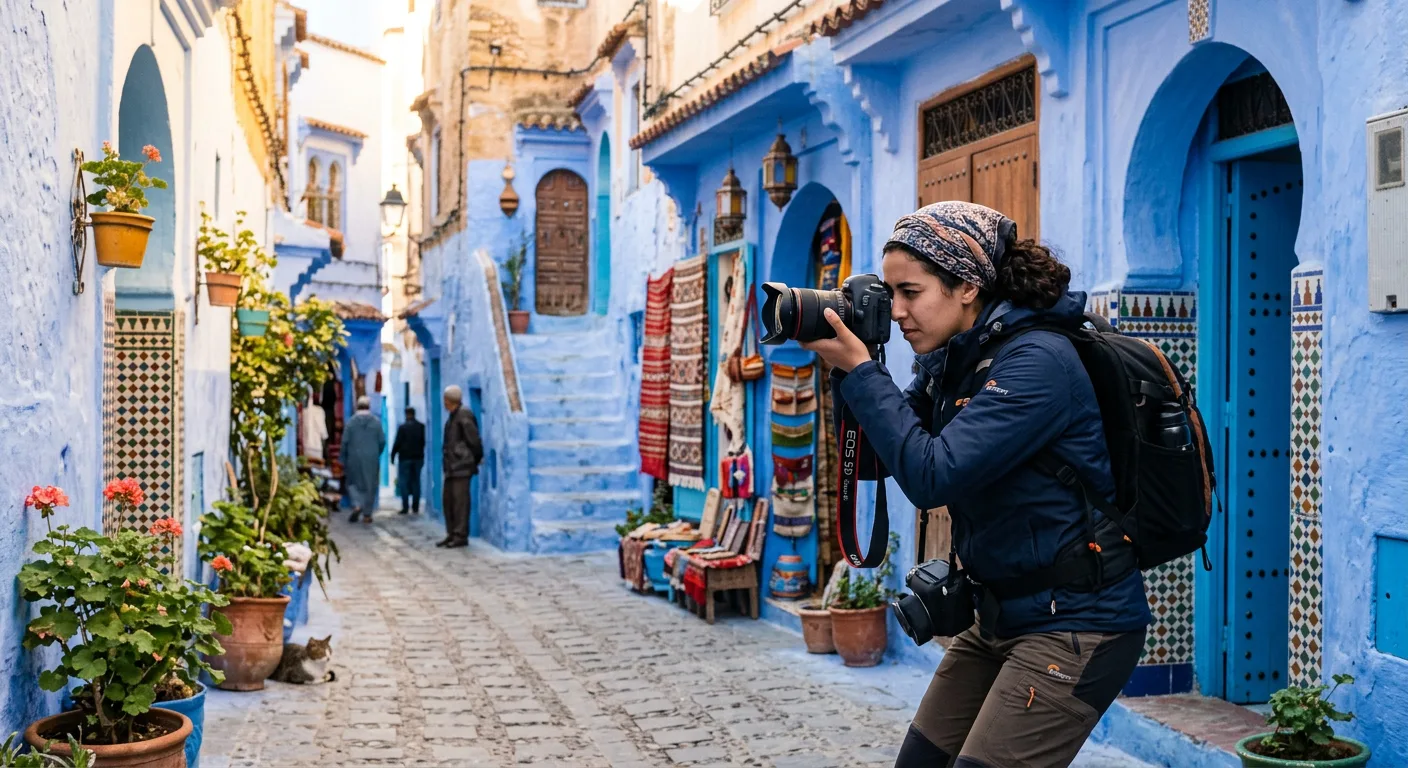
Top 25 Photography Spots in Morocco
From the cobalt-blue alleyways of Chefchaouen to the star-dusted Sahara sky, Morocco is a photographer's paradise. This guide reveals the exact locations, best times, and expert techniques for capturing the most breathtaking images in North Africa.
25 Locations8 Regions25 min read
Morocco: A Photographer's Dream Destination
Few countries on earth offer the visual richness of Morocco. Within a single day of travel, a photographer can move from the terracotta labyrinth of an ancient medina to the electric blue streets of a mountain town, from the cascading green terraces of an Atlas valley to the boundless golden dunes of the Sahara. Morocco is a country that seems to have been designed with the camera in mind: every surface decorated, every light source dramatic, every landscape operatic in scale and color.
The visual culture of Morocco is rooted in centuries of Islamic geometric art, Berber craft traditions, and the extraordinary natural palette of a land that stretches from the Atlantic coast to the edge of the Sahara Desert. The zellige tilework that adorns every mosque and palace creates kaleidoscopic patterns of infinite complexity. The hand-painted cedar ceilings of riads catch the light differently every hour. The Sahara dunes sculpted by wind into sinuous curves offer abstract compositions that change with every sunrise.
This guide is the result of extensive on-the-ground research across every major photographic region of Morocco. We share not just the locations, but the exact times, angles, and techniques that will elevate your Morocco photography from snapshots to portfolio-worthy images. Whether you are shooting with a professional DSLR or a smartphone, these 25 locations will provide unforgettable visual experiences.
25
Photo Spots
8
Cities & Regions
4 Seasons
Golden Hour Tips
6
Night Locations
Marrakech — The Red City
Marrakech offers an extraordinary concentration of photographic subjects within a compact area. The interplay of warm terracotta walls, vibrant market colors, ornate palace architecture, and the ever-present Koutoubia minaret creates an endlessly rewarding environment for photographers of every level.
1
Jardin Majorelle
Marrakech|Difficulty: Easy
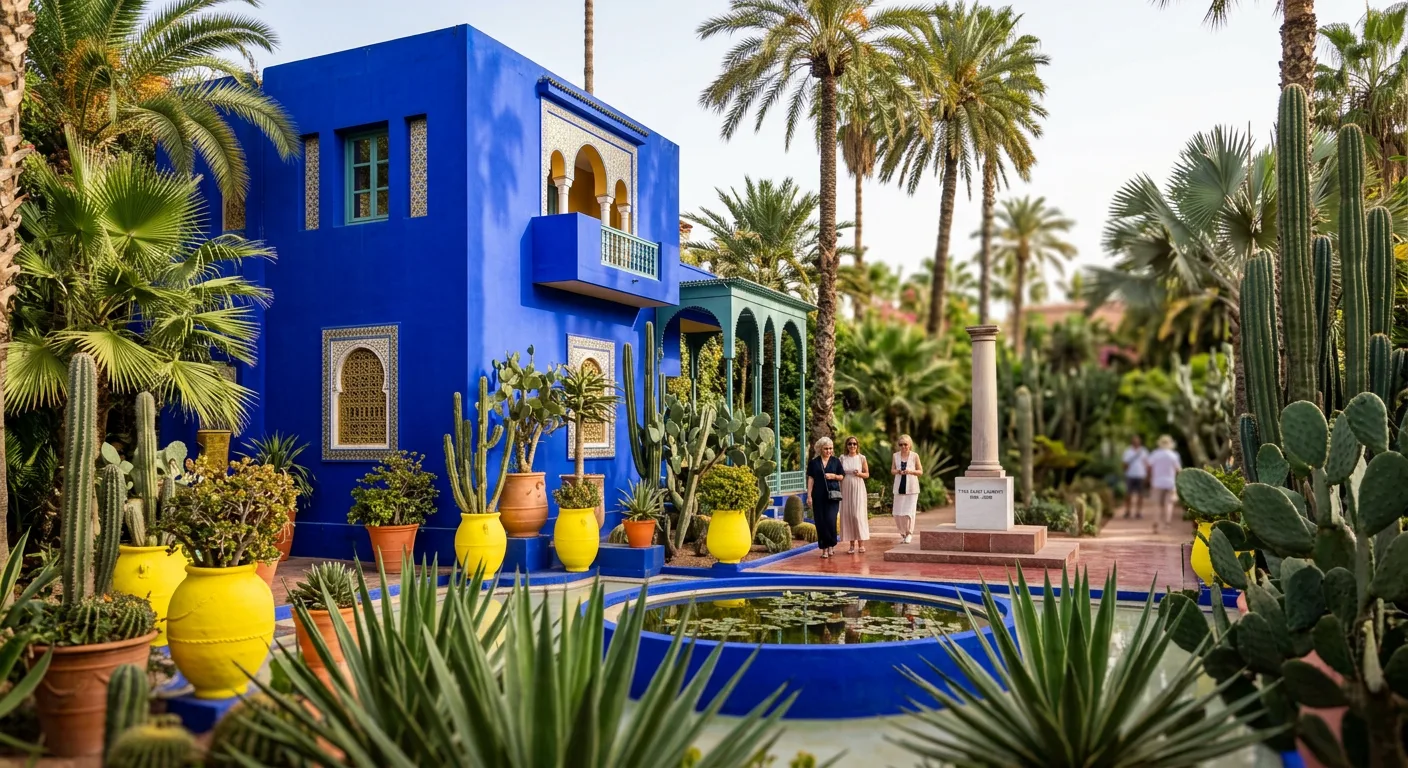
The iconic cobalt-blue walls and vibrant yellow Art Deco building designed by Jacques Majorelle in the 1920s, later restored by Yves Saint Laurent. The garden offers an extraordinary palette of saturated blues, yellows, and greens against terracotta pathways and lush tropical plantings. Every corner reveals a different composition: blue walls draped in bougainvillea, rows of towering cacti, reflective pools surrounded by bamboo groves, and ceramic pots in the signature Majorelle blue that has become synonymous with Marrakech itself.
Best Time
Early morning (opening time at 8 AM) for soft light and minimal crowds. The blue walls photograph best in diffused morning light rather than harsh midday sun.
Pro Tip
Arrive exactly at opening to have 20-30 minutes of relatively empty pathways. Focus on the contrast between the blue walls and the yellow building. The reflecting pool near the entrance creates stunning symmetrical compositions on calm mornings.
Rue Yves Saint Laurent, Gueliz district
2
Bahia Palace
Marrakech|Difficulty: Easy
A 19th-century masterpiece of Moroccan decorative arts with intricately painted cedar ceilings, zellige tilework floors, and carved stucco walls surrounding serene marble courtyards. The palace offers an unending sequence of photogenic rooms, each with different geometric patterns and color schemes. The large central courtyard, paved in white marble and surrounded by rooms with painted wooden doors, is particularly striking when the morning light rakes across the tilework at low angles.
Best Time
Morning light (9-11 AM) creates dramatic shadows across the tilework and illuminates the painted ceilings through the courtyards.
Pro Tip
The small riad courtyard at the back of the complex, with its central fountain surrounded by orange trees, is often overlooked by tour groups. The zellige floor details reward close-up macro photography. Look up constantly as the painted cedar ceilings are among the finest in Morocco.
Rue Riad Zitoun el Jdid, Medina
3
Ben Youssef Madrasa
Marrakech|Difficulty: Easy
The largest theological college in Morocco, dating to the 16th century, with a breathtaking central courtyard that is one of the most photographed spaces in the country. The symmetry of the courtyard, with its large marble ablution basin reflecting the ornate walls, offers perfect compositional opportunities. Three layers of decoration cover every surface: zellige tilework below, carved stucco in the middle, and painted cedar above, creating a visual richness that can take hours to properly document.
Best Time
Late morning when sunlight enters the courtyard creating contrast between illuminated walls and shadowed archways.
Pro Tip
Use the central pool as a mirror for reflections of the ornate walls. The upstairs student cells provide elevated angles looking down into the courtyard. A wide-angle lens (16-24mm) is essential to capture the courtyard in a single frame.
Kaat Benahid, off Rue Assouel, Medina
4
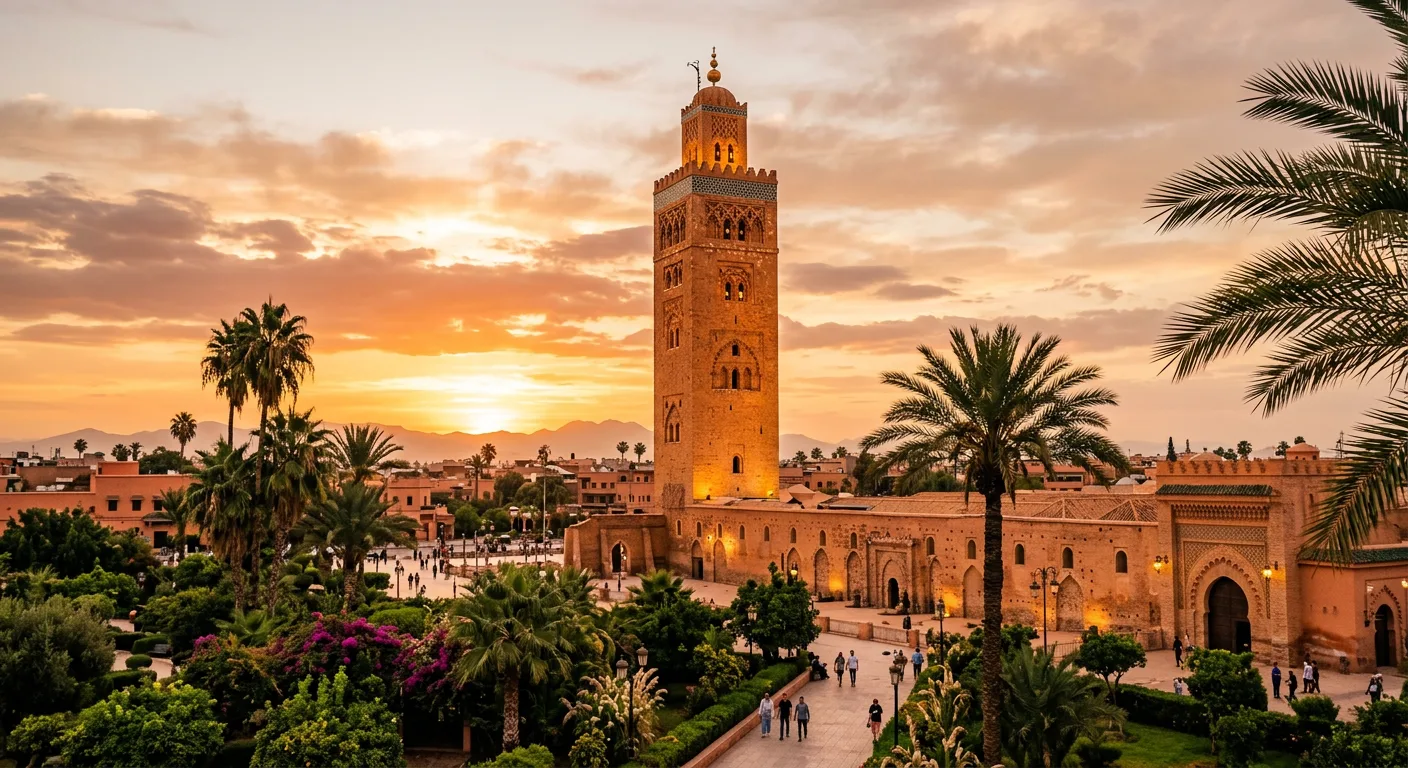
Koutoubia Mosque at Sunset
Marrakech|Difficulty: Easy
The 77-meter minaret of the Koutoubia is the defining symbol of Marrakech and the masterwork of Almohad architecture. At sunset, the sandstone tower glows in warm amber and rose tones against a sky that shifts from gold to deep purple. The surrounding gardens, with their palm trees and rose beds, provide excellent foreground elements. The minaret is visible from countless vantage points across the city, but the gardens directly adjacent offer the most intimate perspective.
Best Time
Sunset (30 minutes before to 20 minutes after). The warm light transforms the sandstone and the sky provides a naturally dramatic backdrop.
Pro Tip
Position yourself in the gardens to the south of the mosque for compositions that include palm trees as foreground framing elements. The minaret looks spectacular shot from across the gardens with a medium telephoto lens (70-100mm) to compress the perspective. Stay for the blue hour after sunset when the mosque is illuminated.
Avenue Mohammed V, near Jemaa el-Fnaa
5
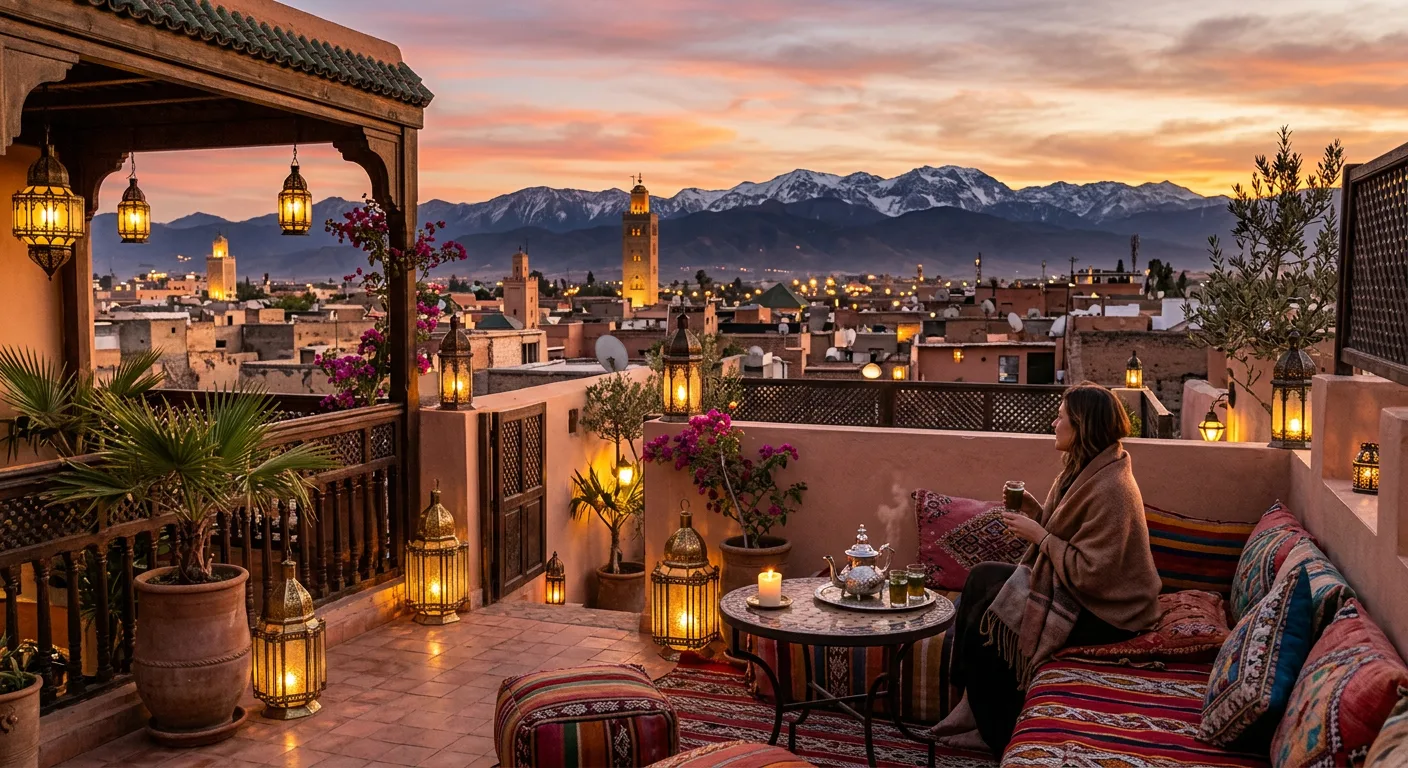
Jemaa el-Fnaa from Cafe de France Rooftop
Marrakech|Difficulty: Easy
The main square of Marrakech transforms throughout the day from a quiet morning market into one of the most extraordinary public spectacles on earth. From the rooftop terrace of Cafe de France (or neighboring rooftop restaurants), you get a sweeping elevated view of the entire square with the Koutoubia minaret rising in the background. At dusk, hundreds of food stalls light up, steam rises from grills, and the square becomes a mesmerizing tapestry of light, smoke, and human activity that is utterly unique in the world.
Best Time
Late afternoon through blue hour (5-7 PM in winter, 6-8 PM in summer) for the transition from daylight to the magical illuminated evening scene.
Pro Tip
Secure a rooftop table at least 30 minutes before sunset. A medium zoom (24-70mm) captures both wide panoramas and details of individual performers below. Shoot both horizontal panoramas and tight vertical compositions of the minaret rising above the steam and lights. Long exposures during blue hour create beautiful light trails from moving people.
Cafe de France, southeast corner of Jemaa el-Fnaa
Chefchaouen — The Blue Pearl
Nestled in the Rif Mountains, Chefchaouen is one of the most visually distinctive towns on earth. The entire medina is washed in shades of blue, from powder to cobalt, creating a dreamlike environment where every alleyway is a potential masterpiece.
6
Blue-Washed Streets of the Medina
Chefchaouen|Difficulty: Easy
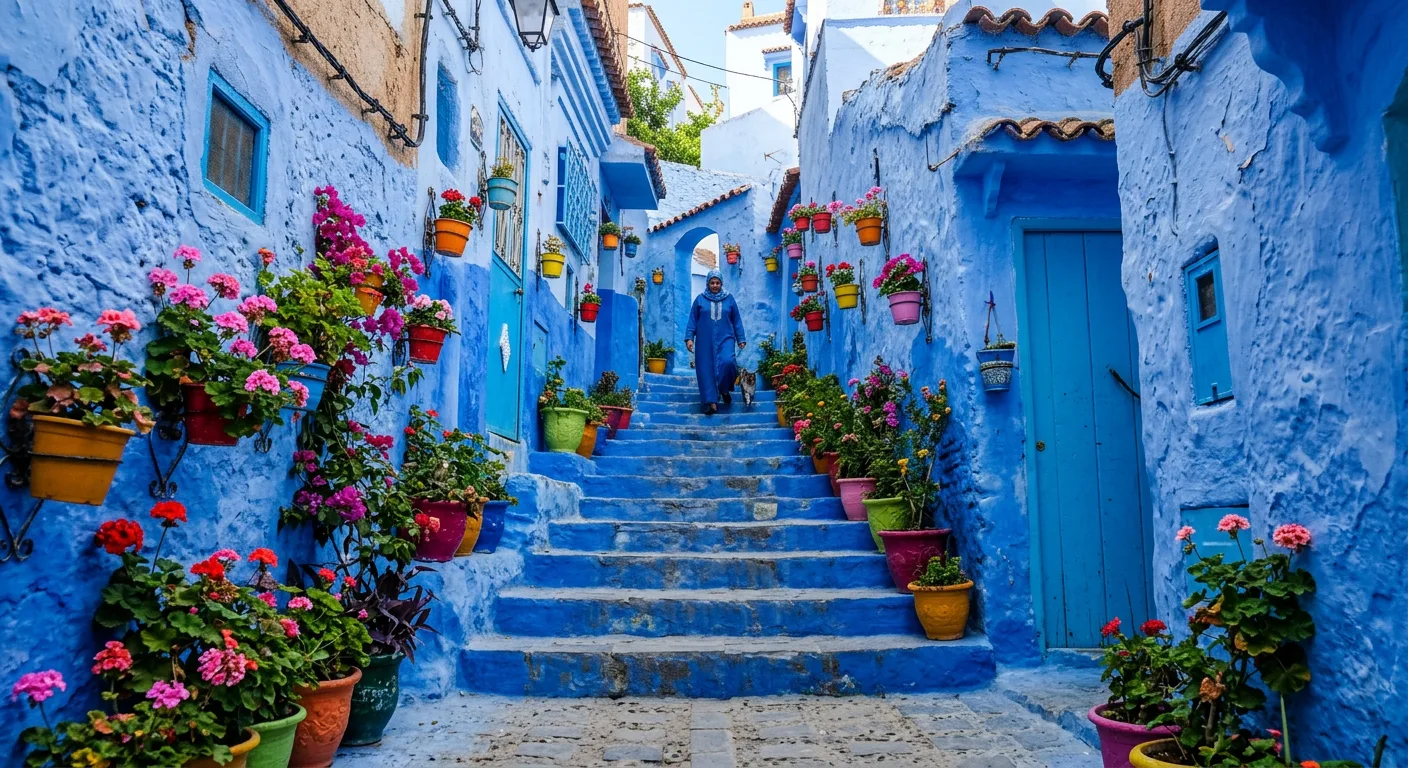
The entire old medina of Chefchaouen is painted in varying shades of blue, from powder blue to deep cobalt, creating one of the most visually distinctive urban environments on the planet. The most photogenic streets are found in the heart of the medina near Place Outa el Hammam, along the stepped alleyways that climb toward the kasbah, and in the residential quarter near Rue Targui. Every turn reveals a new composition: blue walls with terracotta pots of geraniums, arched doorways painted in contrasting blue tones, and narrow stairways that climb between buildings like passages in a dream.
Best Time
Early morning (7-9 AM) before tour groups arrive, or late afternoon (4-6 PM) when the western sun illuminates the blue walls with warm golden light.
Pro Tip
The most famous blue stairway is on Rue Targui near the intersection with Rue Kharrazin. Look for the distinctive blue steps with flower pots on either side. Wear neutral clothing to avoid color clashing in reflections. Wet cobblestones after rain or morning washing intensify the blue tones dramatically.
Rue Targui and surrounding alleyways, Medina
7
Steps Near Ras el-Maa Waterfall
Chefchaouen|Difficulty: Moderate
At the eastern edge of the medina, where the Ras el-Maa spring emerges from the mountainside, a series of blue-and-white stepped pathways lead down to a small waterfall where local women wash clothes and children play. This area offers a more authentic, lived-in perspective of Chefchaouen compared to the heavily photographed tourist streets. The combination of flowing water, blue walls, mountain backdrop, and daily life creates naturally compelling compositions.
Best Time
Mid-morning (9-11 AM) when the area is active with locals and the light is soft and directional from the east.
Pro Tip
Continue past the waterfall on the path that leads up toward the Spanish Mosque for increasingly panoramic views back toward the medina. The bridge over the stream provides a natural frame for the blue houses climbing the hillside behind. Bring a medium telephoto to capture candid moments of daily life from a respectful distance.
Eastern edge of the medina, follow signs to Ras el-Maa
8
Spanish Mosque Viewpoint at Sunset
Chefchaouen|Difficulty: Moderate
A 20-minute uphill hike from the medina leads to an abandoned Spanish mosque perched on a hill overlooking the entire town. This is the definitive viewpoint for photographing Chefchaouen: the blue medina cascading down the valley floor, framed by the Rif Mountains rising dramatically behind. At sunset, the mountains turn purple and the blue town takes on a warm golden glow that is utterly magical. This is one of the most spectacular sunset viewpoints in all of Morocco.
Best Time
Sunset (arrive 45 minutes before to secure a good position and photograph the changing light). Also excellent at sunrise for a completely different mood with mist in the valley.
Pro Tip
The hike is along an obvious trail starting from the Ras el-Maa area. Bring a tripod for sharp sunset and blue hour shots. A 24-70mm zoom covers both the wide panoramic view and details of the medina below. The ruined mosque itself makes an interesting foreground element. Stay 30 minutes after sunset for the blue hour when the town lights begin to twinkle.
Hill northeast of the medina, trail from Ras el-Maa
Fes — The Spiritual Capital
Fes el Bali is the world's largest car-free urban area and a living medieval city of extraordinary visual complexity. The medina's 9,400 alleyways, centuries-old tanneries, and ornate madrasas offer some of the most rewarding and challenging photography in Morocco.
9
Chouara Tannery from Above
Fes|Difficulty: Easy
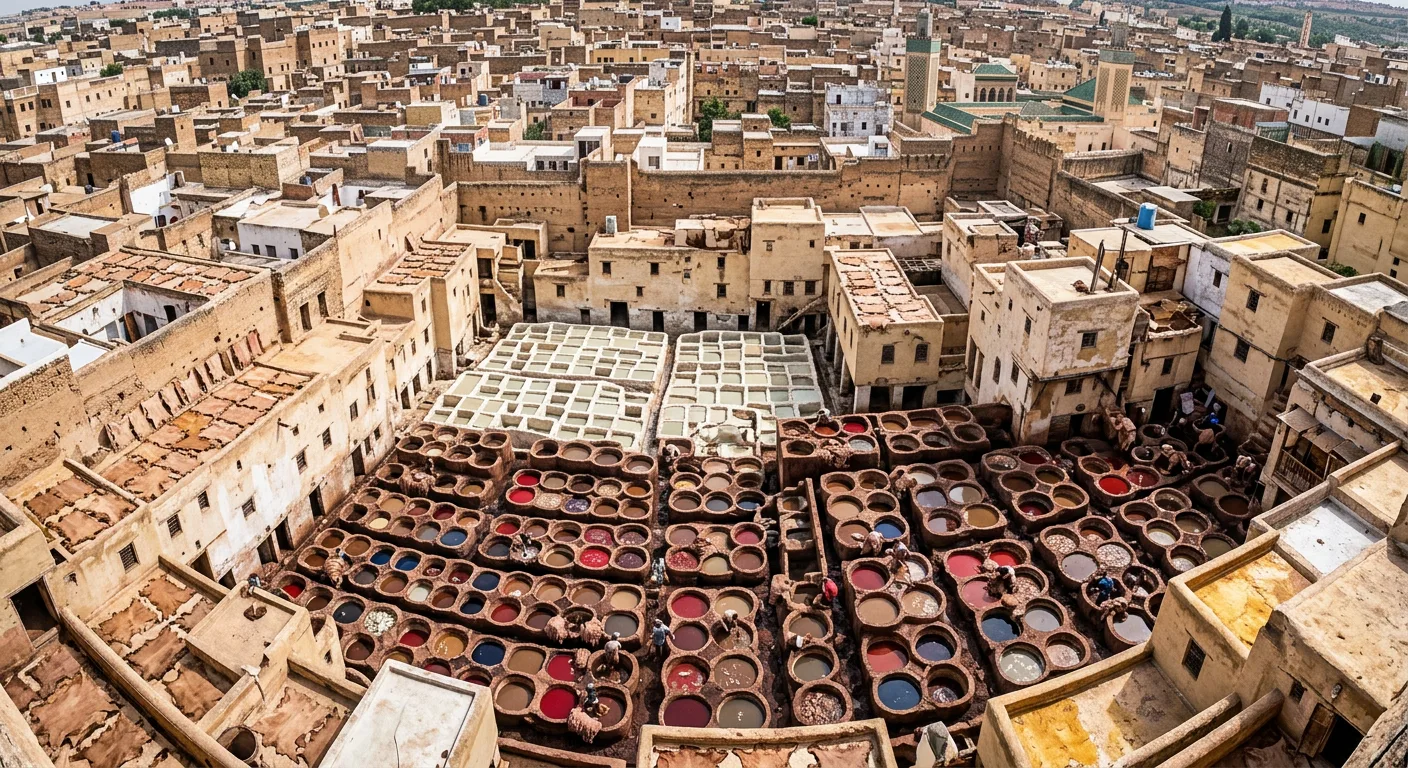
The medieval Chouara Tannery is one of the most iconic visual spectacles in Morocco. From the surrounding leather shops on the upper floors, you look down on a honeycomb of stone vats filled with vivid dyes in white, saffron, amber, rust, and indigo. Workers move between the vats, kneading hides by foot in a process unchanged since the 11th century. The circular vats create extraordinary geometric patterns when viewed from above, and the colors shift throughout the day as dyes are mixed and changed.
Best Time
Late morning (10 AM - 12 PM) when the sun is overhead and illuminates the dye vats most evenly. The tannery workers are most active during this window.
Pro Tip
Access is free through the leather shops that ring the tannery on the upper floors, though shopkeepers may expect you to browse their wares. The terrace at Terrasse de Tanneurs offers the widest view. A telephoto lens (70-200mm) captures intimate details of workers and individual vats, while a wide-angle captures the full mosaic of colors. Accept the sprig of mint offered to counter the powerful smell.
Hay Lablida, Fes el Bali (access through leather shops)
10
Bou Inania Madrasa
Fes|Difficulty: Easy
Widely considered the most beautiful building in Morocco, this 14th-century Marinid theological college features the most exquisite decorative surfaces in the Islamic world. Every centimeter of wall space is covered with three layers of ornament: geometric zellige tilework below, floral carved stucco above, and painted cedar wood at the ceiling. The marble courtyard with its central ablution fountain creates perfect reflections of the ornate walls, and the play of light through the courtyard changes the character of the space throughout the day.
Best Time
Mid-morning (10-11 AM) when angled sunlight enters the courtyard and creates dramatic contrast between illuminated and shadowed surfaces.
Pro Tip
Use a wide-angle lens to capture the full courtyard, then switch to a macro or close-up lens for the extraordinary zellige and stucco details. The symmetry of the courtyard rewards careful centering of your composition. The upstairs gallery provides a rare elevated perspective looking down into the courtyard.
Talaa Kebira, Fes el Bali
11
Bab Boujloud (The Blue Gate)
Fes|Difficulty: Easy
The grand entrance to the Fes el Bali medina is one of the most recognizable landmarks in Morocco. The ornamental gate features intricate blue zellige tilework on the exterior face (facing the new city) and green zellige on the interior face (facing the medina). The massive horseshoe arch frames views deep into the bustling medina, with the minaret of the Bou Inania Madrasa visible through the arch. The gate is a study in color, geometry, and the dramatic transition between the modern and medieval worlds.
Best Time
Late afternoon when the western sun illuminates the blue exterior face. The interior green face is best lit in the morning.
Pro Tip
Photograph the gate from both sides to capture the blue-to-green color change. Use the arch as a natural frame for the medina scene visible through it. At dusk, the gate is illuminated and creates dramatic compositions against the darkening sky. Include pedestrians for scale as the gate is enormous.
Place Boujloud, entrance to Fes el Bali
Sahara Desert — Erg Chebbi
The Sahara is the ultimate destination for landscape and astrophotography in Morocco. The towering dunes of Erg Chebbi, the vast starry skies, and the timeless camel caravans offer images of primal beauty that connect the viewer to something ancient and eternal.
12
Erg Chebbi Dunes at Sunrise
Merzouga, Sahara|Difficulty: Challenging
The towering orange dunes of Erg Chebbi, reaching heights of 150 meters, are the most photogenic desert landscape in Morocco. At sunrise, the interplay of light and shadow across the sinuous dune ridges creates an abstract landscape of warm golds, deep shadows, and razor-sharp ridge lines. The dunes appear to glow from within as the first light strikes them, shifting from deep purple through amber to brilliant gold in the space of minutes. The sheer scale and pristine wind-sculpted forms make Erg Chebbi one of the most photogenic natural landscapes on earth.
Best Time
Sunrise (wake at 4:30-5 AM for the pre-dawn hike to the dune crest). The 30 minutes before and after sunrise produce the most dramatic light and shadows.
Pro Tip
Climb the dunes the evening before to scout your sunrise position. The western face of the dunes catches the first golden light. Use footprints and ripple patterns as leading lines in your compositions. A telephoto lens (70-200mm) compresses the dune layers into abstract graphic compositions. Protect your camera from sand with a rain cover or plastic bag.
Erg Chebbi, near Merzouga, 55 km from Erfoud
13
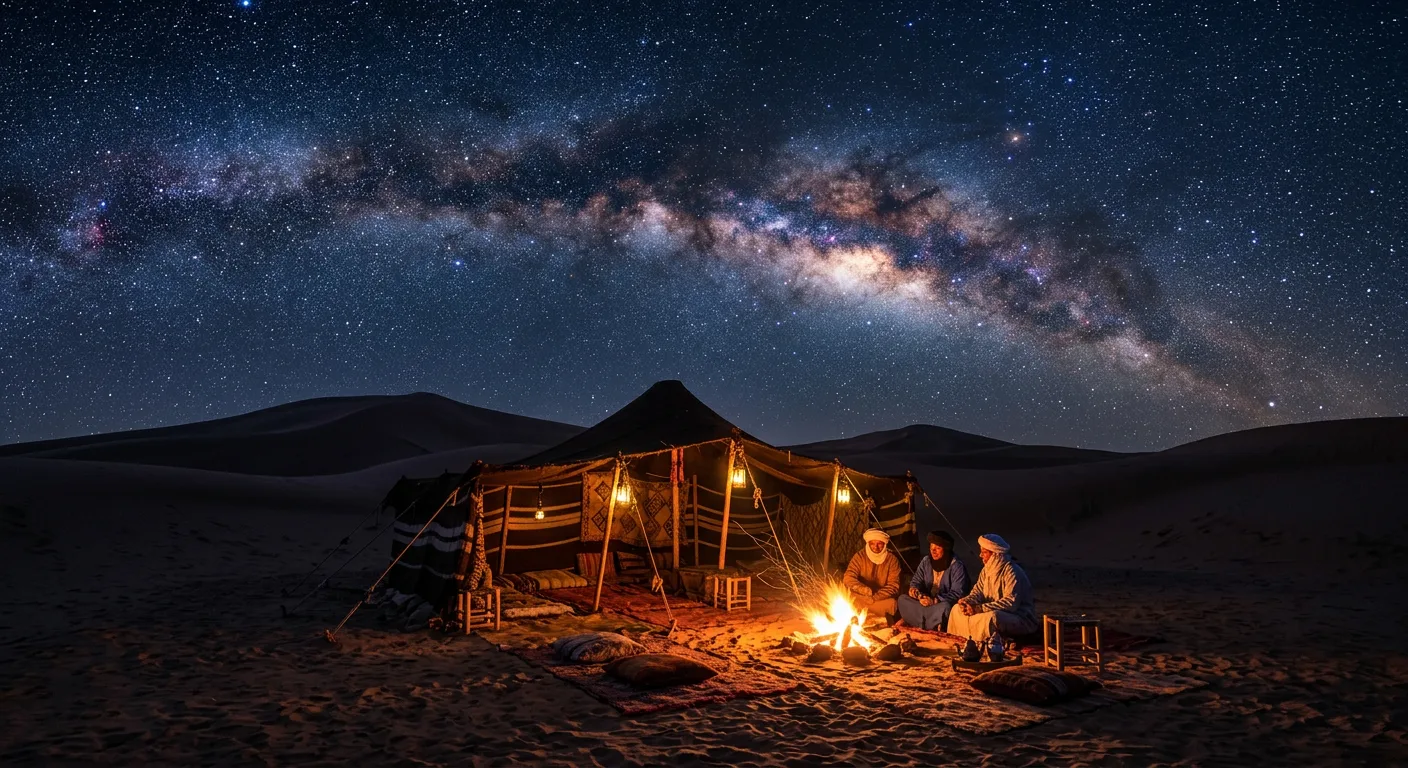
Starry Night Over the Sahara
Merzouga, Sahara|Difficulty: Challenging
The Sahara Desert offers some of the darkest skies accessible from a tourism infrastructure, making it a world-class destination for astrophotography. The Milky Way arcs dramatically overhead from the desert camps near Merzouga, and the total absence of light pollution reveals thousands of stars invisible from any city. The dune silhouettes against the star-filled sky create compositions of extraordinary beauty and scale that remind the viewer of their place in the cosmos.
Best Time
New moon periods provide the darkest skies. The Milky Way core is best visible from April through October. Peak shooting hours are 10 PM to 3 AM.
Pro Tip
A fast wide-angle lens (f/2.8 or faster, 14-24mm) is essential. Use a sturdy tripod pushed firmly into the sand. Shoot at ISO 3200-6400 with 15-25 second exposures. Include a tent, camel, or person with a headlamp as a foreground element to provide scale. A star tracker mount dramatically improves results for serious astrophotographers.
Desert camps east of Merzouga, away from town lights
14
Camel Caravan Silhouettes
Merzouga, Sahara|Difficulty: Moderate
The classic Sahara image: a line of camels and their riders silhouetted against a blazing sunset or sunrise sky, their elongated shadows stretching across the golden dune surface. Every desert tour from Merzouga includes a camel trek to the overnight camps, providing multiple opportunities to capture this timeless scene. The key is positioning yourself to the side of the caravan so the camels are profiled against the sky rather than lost against the dune behind them.
Best Time
Late afternoon camel treks (departing around 4-5 PM) provide the best silhouette opportunities against the setting sun.
Pro Tip
Ask your guide to position you ahead of or to the side of the caravan rather than riding in line. A telephoto lens (100-200mm) compresses the caravan and creates the iconic layered silhouette effect. Shoot against the sun for pure silhouettes, or at a slight angle for warm side-lighting that reveals texture in the camel fur and robes. The long shadows cast on the dunes in the last 20 minutes of light are incredibly photogenic.
Camel trek routes departing from Merzouga hotels
Essaouira — The Wind City
Essaouira's 18th-century Portuguese fortifications, bustling fishing harbor, and dramatic Atlantic coastline create a visual language entirely different from the inland cities. The quality of coastal light here is extraordinary, soft and golden with salt-air haze that gives images a painterly quality.
15
Essaouira Ramparts and Harbor
Essaouira|Difficulty: Easy
The 18th-century Portuguese fortifications of Essaouira offer sweeping views along the Atlantic coast, with rows of bronze cannons pointing out to sea and the fishing harbor filled with blue wooden boats below. The warm sandstone ramparts against the deep blue Atlantic create a natural color palette of gold and blue that is immediately striking. Seagulls wheel overhead and waves crash against the rocks below, adding movement and drama to every frame.
Best Time
Late afternoon (3-5 PM) when the western sun bathes the ramparts in golden light. Sunset provides dramatic skies over the ocean.
Pro Tip
Walk the full length of the ramparts from the Skala de la Ville to the Skala du Port for different perspectives. The cannons make excellent foreground elements. The view looking back toward the medina from the harbor jetty, with fishing boats in the foreground and the fortified walls rising behind, is one of the classic compositions of Morocco.
Skala de la Kasbah, along the ocean-facing walls
16
Skala de la Ville
Essaouira|Difficulty: Easy
The dramatic sea bastion of Essaouira, featured in Game of Thrones as the city of Astapor, offers one of the most cinematic locations on the Moroccan coast. The long gallery of arched openings, each framing a bronze cannon pointing toward the Iles Purpuraires offshore, creates a rhythmic architectural composition with the crashing Atlantic visible through each arch. The weathered stone, the patina of centuries of salt spray, and the dramatic ocean backdrop make this one of the most photogenic fortifications in North Africa.
Best Time
Morning for soft front-lighting on the cannons and arches. Late afternoon for dramatic side-lighting and golden tones.
Pro Tip
Use the repeating arches as a natural leading line drawing the eye through the frame. Position a cannon in the foreground with the row of arches receding into the background for depth. During rough seas, waves crashing against the rocks below the bastion add spectacular drama. A wide-angle lens (16-24mm) captures the full sweep of the gallery.
North bastion, accessible from the medina near Rue de la Skala
Tangier — Gateway Between Continents
Perched at the meeting point of the Atlantic and Mediterranean, Tangier offers a unique blend of Moroccan, European, and cosmopolitan influences. The views across the Strait of Gibraltar to Spain, the historic kasbah, and the dramatic coastal scenery make it a rewarding photography destination.
17
Cap Spartel Lighthouse
Tangier|Difficulty: Easy
Standing at the northwestern tip of Africa where the Atlantic Ocean meets the Mediterranean Sea, Cap Spartel offers panoramic views of two seas meeting in a visible line of contrasting blue tones. The historic lighthouse, built in 1864 and set against rugged coastal cliffs, provides a dramatic subject with the infinite ocean horizon behind. On clear days, the coast of Spain is visible across the Strait of Gibraltar, creating compositions that capture the meeting point of two continents.
Best Time
Sunset for spectacular skies over the Atlantic. The lighthouse is west-facing, making it ideally positioned for sunset photography.
Pro Tip
Arrive early enough to explore the coastal paths leading to cliff-edge viewpoints below the lighthouse. A polarizing filter dramatically enhances the contrast between the Atlantic and Mediterranean waters. The nearby Caves of Hercules offer additional photographic opportunities with their famous Africa-shaped opening to the sea.
Cap Spartel, 14 km west of Tangier center
18
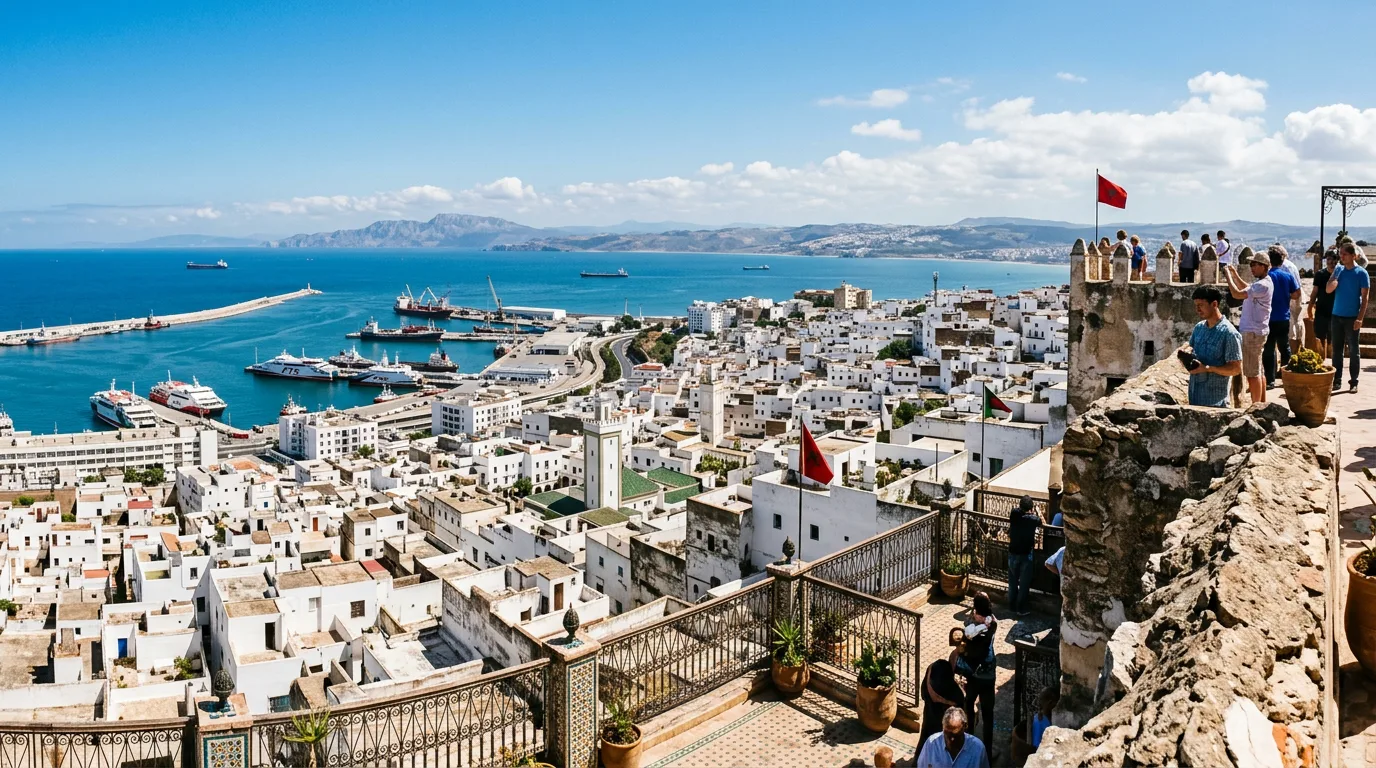
Tangier Kasbah Panorama
Tangier|Difficulty: Easy
The historic kasbah perched on the highest point of Tangier offers commanding views over the medina rooftops, the bustling port, and across the Strait of Gibraltar to the mountains of southern Spain. The white-and-blue painted houses of the old town cascade down the hillside toward the Mediterranean in a photogenic tumble of flat roofs, satellite dishes, and minarets. From the Place de la Kasbah, the panorama encompasses both the ancient medina and the modern city, with the sea providing a unifying backdrop.
Best Time
Morning light from the east illuminates the white buildings of the kasbah beautifully. The strait is typically clearest in the morning hours.
Pro Tip
The terrace of the Kasbah Museum (Dar el-Makhzen) provides the highest public viewpoint. For a wider panorama, walk along the outer walls of the kasbah to the Borj Nord viewpoint. Include the distinctive green-roofed minarets as visual anchors in your compositions. A telephoto lens can pull in the Spanish coastline on clear days.
Place de la Kasbah, upper medina
Ouarzazate & Ait Ben Haddou — Hollywood of Morocco
The gateway to the Sahara and the heartland of Berber kasbah architecture. The dramatic earthen fortifications, desert landscapes, and cinematic light have attracted filmmakers for decades and offer photographers a visual feast of warm earth tones and ancient structures.
19
Ait Ben Haddou Ksar
Ouarzazate|Difficulty: Moderate
This UNESCO World Heritage Site is a fortified village of dramatic earthen kasbahs rising in tiers above the Ounila River, set against an arid mountain backdrop. The rammed earth towers and walls glow in warm ochre, amber, and rose tones that shift throughout the day. Used as a filming location for Gladiator, Game of Thrones, Lawrence of Arabia, and dozens of other productions, Ait Ben Haddou is arguably the single most photogenic human-made structure in Morocco. The reflection of the ksar in the river during the wet season is one of the iconic images of North Africa.
Best Time
Sunrise lights the eastern face of the ksar with warm golden light. Late afternoon produces dramatic shadows that emphasize the three-dimensional structure of the towers and walls.
Pro Tip
Cross the river (stepping stones or the footbridge) to photograph from below for the most dramatic perspective with the ksar towering above. Climb to the summit of the ksar for panoramic views of the surrounding valley and distant Atlas Mountains. The opposite bank provides the classic postcard view with the river in the foreground. A wide-angle lens captures the full sweep while a telephoto isolates individual towers and architectural details.
32 km northwest of Ouarzazate on the N10
20
Atlas Film Studios
Ouarzazate|Difficulty: Easy
The largest film studio in Africa, where sets from Gladiator, Kingdom of Heaven, Asterix, and countless other productions stand in various states of preservation in the desert landscape. The surreal juxtaposition of ancient Egyptian temples, Tibetan monasteries, and medieval European castles against the barren Moroccan desert creates uniquely photogenic scenes found nowhere else. The studio offers a fascinating look at the intersection of cinema and the Moroccan landscape that has doubled for virtually every desert setting in film history.
Best Time
Morning for front-lit views of the outdoor sets. The harsh midday light actually works well here, emphasizing the surreal quality of film sets in the desert.
Pro Tip
The outdoor sets are more photogenic than the indoor studios. Look for compositions that emphasize the artificiality of the sets against the genuine desert backdrop. The Egyptian temple set is particularly striking at sunset. Bring a wide-angle lens to capture the scale of the larger sets.
5 km west of Ouarzazate center on the N10
Bonus Locations — Hidden Gems
Beyond the iconic cities, Morocco rewards the adventurous photographer with dramatic gorges, thundering waterfalls, modernist architecture, and remote coastal formations that few visitors ever capture.
21
Todra Gorge
Tinghir|Difficulty: Moderate
A dramatic canyon where 300-meter limestone walls narrow to just 10 meters apart, creating a cathedral-like natural space flooded with reflected light. The sheer scale of the vertical rock faces, the ribbon of sky visible above, and the river flowing through the narrow gap create awe-inspiring compositions. The warm orange and pink tones of the limestone contrast beautifully with the deep blue sky visible in the narrow strip above.
Best Time
Late morning (10 AM - 12 PM) when sunlight penetrates the narrow gorge and illuminates the rock walls with warm reflected light.
Pro Tip
Walk past the main tourist area at the narrowest point to find more secluded compositions further into the gorge. Include people or vehicles for scale to emphasize the enormous height of the walls. A wide-angle lens pointed straight up captures the vertiginous vertical walls converging toward the sky.
15 km north of Tinghir, end of the paved road
22
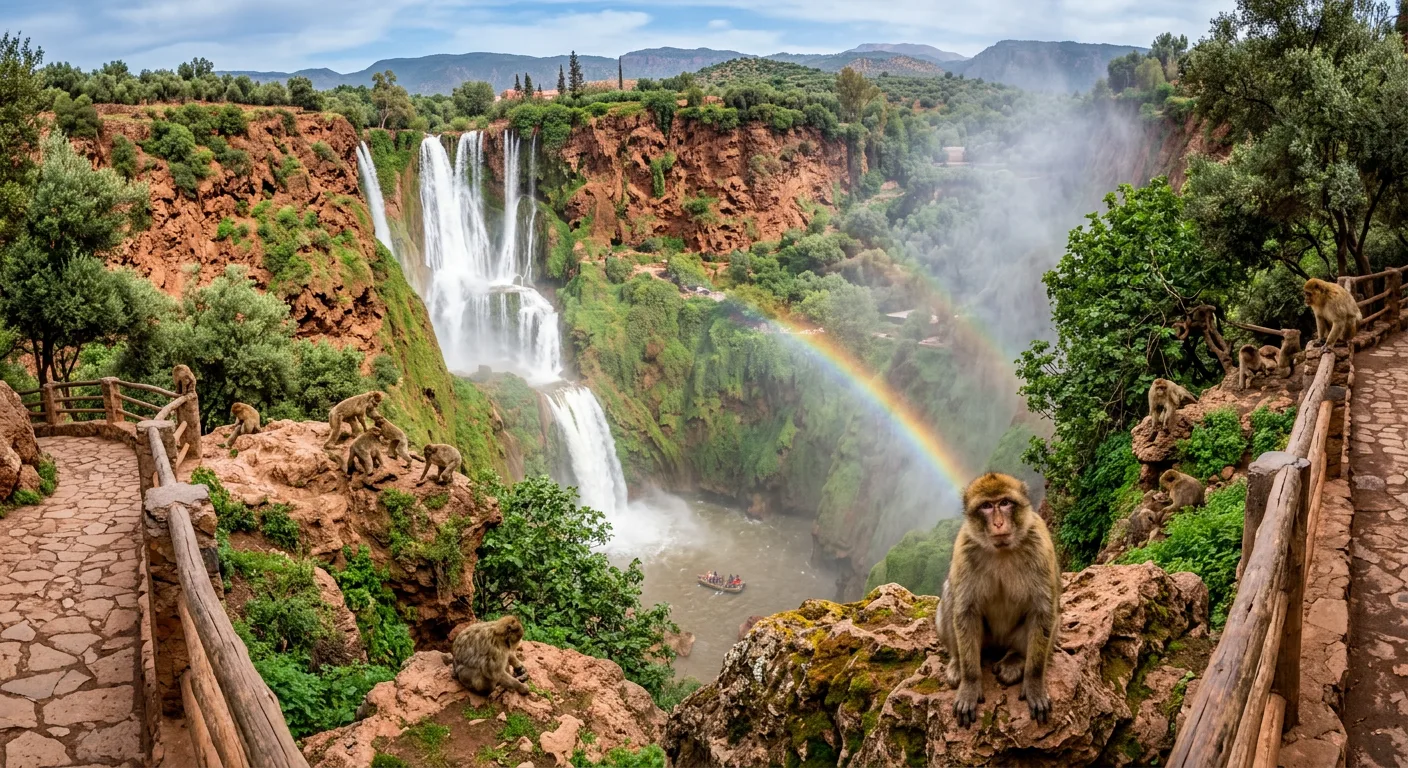
Ouzoud Waterfalls
Atlas Mountains|Difficulty: Moderate
The highest waterfalls in North Africa, cascading 110 meters over red cliffs surrounded by olive groves and inhabited by Barbary macaque monkeys. Multiple viewing platforms and trails provide different perspectives of the three-tiered falls, from the misty base pool to dramatic overhead viewpoints. The red rock, green vegetation, white water, and rainbow mist create a vibrant natural palette unique in Morocco.
Best Time
Mid-morning to early afternoon when sunlight creates rainbows in the mist at the base of the falls. Spring (March-May) for maximum water flow.
Pro Tip
Descend the trail to the base of the falls for the most dramatic perspective looking up at the full cascade. The rainbow that forms in the mist during sunny mornings adds a spectacular element. Use a slow shutter speed (1/4 to 2 seconds) with a tripod and ND filter to create silky water effects. The Barbary macaques in the surrounding trees make charming secondary subjects.
150 km northeast of Marrakech, near Ouzoud village
23
Hassan II Mosque
Casablanca|Difficulty: Easy
The largest mosque in Africa and the tallest religious structure in the world, with a 210-meter minaret visible from across the city. Built on a promontory over the Atlantic Ocean, the mosque offers extraordinary compositions combining monumental Islamic architecture with the crashing waves of the Atlantic. The vast esplanade surrounding the mosque, paved in granite and marble, reflects the building and sky in stunning patterns after rain or when wet from ocean spray.
Best Time
Sunset for dramatic skies behind the minaret. Blue hour for the illuminated mosque reflected in the wet esplanade.
Pro Tip
The corniche walkway to the south of the mosque provides the best angle for capturing the minaret with the ocean in the background. After rain, the wet esplanade creates mirror-like reflections of the mosque that are breathtaking. A wide-angle lens (14-24mm) is essential to capture the enormous scale. Join a guided interior tour for access to the stunning prayer hall and hammam.
Boulevard de la Corniche, Casablanca
24
Dades Valley - Road of a Thousand Kasbahs
Between Ouarzazate and Tinghir|Difficulty: Moderate
The N10 highway through the Dades Valley passes through one of the most visually stunning landscapes in Morocco: a succession of crumbling earthen kasbahs and ksour set against the dramatic backdrop of the High Atlas Mountains. The valley floor is a patchwork of green oases and palm groves contrasting with the arid red-earth hillsides. Every few kilometers, another photogenic kasbah appears, and the famous Dades Gorge road with its dramatic switchbacks offers vertiginous aerial-perspective views.
Best Time
Morning and late afternoon light emphasize the warm earth tones. The switchback road is most dramatically lit in the late afternoon.
Pro Tip
Stop at the famous Dades Gorge switchbacks (about 25 km north of Boumalne Dades) for the classic overhead view of the winding road. The kasbahs near the village of Skoura are among the best-preserved. Rose Valley between El Kelaa M Gouna and Boumalne Dades is blanketed in pink roses during April and May.
N10 highway between Ouarzazate and Tinghir
25
Legzira Beach Arches
Sidi Ifni|Difficulty: Moderate
Dramatic natural stone arches carved by millennia of ocean erosion rise from the golden sand of Legzira Beach. Though the largest arch partially collapsed in 2016, the remaining formations are still spectacular, creating natural frames for the Atlantic sunset. The red-orange stone against the blue ocean and golden sand creates a warm color palette. At low tide, the beach extends dramatically and reflections in the wet sand double the visual impact of the arches.
Best Time
Sunset at low tide for the combination of warm light on the red arches, reflections in the wet sand, and dramatic ocean skies.
Pro Tip
Check tide tables and visit at low tide for maximum beach access and the best reflections. The arch frames the sunset perfectly during certain months. Arrive well before sunset to explore the caves and rock formations along the base of the cliffs. A wide-angle lens captures both the arch and its reflection.
12 km north of Sidi Ifni on the coast road
Golden Hour Guide by Season
The quality of light is the single most important factor in travel photography. Morocco's position between 28 and 36 degrees north latitude produces consistently warm, golden light during the magic hours around sunrise and sunset. Understanding the seasonal variations in golden hour timing will dramatically improve your results.
Winter
December - February
Sunrise
7:15 - 7:30 AM
Morning Golden Hour
7:00 - 8:00 AM
Evening Golden Hour
4:45 - 5:45 PM
Sunset
5:30 - 6:00 PM
Shortest days but often the most dramatic skies. Crisp air in the Sahara produces exceptionally clear conditions. Snow on the Atlas Mountains creates unique contrast with desert landscapes below.
Spring
March - May
Sunrise
6:15 - 7:00 AM
Morning Golden Hour
6:00 - 7:15 AM
Evening Golden Hour
5:45 - 7:15 PM
Sunset
6:30 - 7:30 PM
The best overall season for photography. Wildflowers carpet the Atlas valleys, the air is clear, and the light has a warm quality. Extended golden hours provide generous shooting windows. Rose Valley blooms in April and May.
Summer
June - August
Sunrise
6:00 - 6:30 AM
Morning Golden Hour
5:45 - 6:45 AM
Evening Golden Hour
6:45 - 7:45 PM
Sunset
7:30 - 8:00 PM
Longest days but harsh midday light. Early morning and late evening shooting is essential. Heat haze can affect telephoto shots in the Sahara and southern regions. Coastal cities like Essaouira often have atmospheric fog.
Autumn
September - November
Sunrise
6:30 - 7:15 AM
Morning Golden Hour
6:15 - 7:30 AM
Evening Golden Hour
5:00 - 6:45 PM
Sunset
5:45 - 7:00 PM
Excellent photography conditions with warm golden light and comfortable temperatures. October offers some of the clearest skies of the year. Date palm harvests add cultural interest to oasis photography. Autumn colors appear in the Atlas cedar forests.
Blue Hour Bonus
The blue hour occurs in the 20-40 minutes after sunset (and before sunrise), when the sky takes on a deep blue tone and artificial lights begin to glow. In Morocco, the blue hour is particularly magical for photographing illuminated mosques, medina streets, and the blue city of Chefchaouen. Use a tripod and ISO 400-800 for sharp, atmospheric images during this brief but rewarding window.
Camera Gear Recommendations
Morocco presents a unique combination of challenges and opportunities for camera gear. You need versatility to handle everything from tight medina alleyways to vast desert panoramas, durability to withstand sand and dust, and lightweight portability for long days of walking on cobblestone streets.
Versatile Zoom Lens
24-70mm f/2.8 or 24-105mm f/4
Covers the vast majority of travel photography situations from architecture to street scenes. The 24mm end captures building interiors and wide vistas, while 70-105mm isolates details and provides flattering portraits. This single lens can handle 80% of your Morocco photography.
Wide-Angle Lens
16-35mm f/2.8 or 14-24mm f/2.8
Essential for capturing the grand scale of mosques, madrasas, and palace courtyards. The tight alleyways of medinas often require ultra-wide focal lengths. Also critical for astrophotography in the Sahara and dramatic landscape compositions at Erg Chebbi and Todra Gorge.
Telephoto Lens
70-200mm f/2.8 or f/4
Allows respectful candid photography from a distance in markets and medinas. Compresses layers of Sahara dunes into abstract compositions. Captures architectural details on minarets and walls that are too high or far to reach. Essential for wildlife at Ouzoud Falls.
Tripod
Carbon fiber travel tripod (under 1.5 kg)
Required for sharp images during golden hour, blue hour, and night photography. Essential for the Sahara star shots and long-exposure waterfall photography at Ouzoud. Carbon fiber resists corrosion from sand and salt air in coastal cities.
Dust Protection
Camera rain cover, lens cleaning kit, sealed bags
Sahara sand is the number one gear threat in Morocco. Fine desert sand can penetrate camera seals and scratch sensor elements. Carry microfiber cloths, a rocket blower, and sealed plastic bags for lens changes. A camera rain cover doubles as dust protection during sandstorms.
Filters
Circular polarizer, 3-stop ND filter, graduated ND
A polarizer deepens blue skies, reduces glare on zellige tilework and water surfaces, and is essential at Cap Spartel. An ND filter enables slow shutter speeds for silky water at Ouzoud Falls. A graduated ND balances bright skies with shadowed medina streets.
Memory and Power
Multiple high-speed cards, 2-3 spare batteries, portable charger
Sahara desert camps have limited or no electricity. Cold desert nights drain batteries faster than normal. Bring more storage than you think you need as the photographic opportunities in Morocco are endless and you will shoot more than expected.
Smartphone Considerations
Latest generation flagship with RAW capability
Modern smartphones produce excellent travel photography in good light. RAW shooting apps allow post-processing flexibility. The wide-angle and telephoto lenses on flagship phones cover a useful range. A smartphone is also more discreet for street photography in sensitive situations.
Smartphone-Only Photographers
If you are traveling with only a smartphone, you can still capture stunning images at every location in this guide. The key is to shoot during golden hour, use the built-in HDR mode for high-contrast scenes in medinas, enable the grid overlay for better composition, and shoot in RAW format for maximum editing flexibility. A small clip-on wide-angle lens adapter and a compact phone tripod are worthwhile investments that weigh almost nothing.
Drone Photography Rules in Morocco
Drone regulations in Morocco are strict and actively enforced. Understanding and following the rules is essential to avoid equipment confiscation, fines, or legal issues.
Authorization Requirements
- All drone flights in Morocco require prior authorization from the Direction Generale de l'Aviation Civile (DGAC). Applications should be submitted at least 30 days before your trip through the DGAC website or the Moroccan embassy.
- You must provide detailed flight plans, drone specifications, insurance documentation, and the specific locations and dates where you intend to fly.
- Authorization approval is not guaranteed and commercial drone operations face additional requirements including Moroccan business registration.
Absolute No-Fly Zones
- All royal palaces and residences (severe penalties for violation)
- Military installations and government buildings
- Within 5 km of any airport, including the many small regional airports
- Urban medinas and dense population areas (most of the tourist photography locations in this guide)
- Border zones and the southern provinces near the Western Sahara
Customs and Import
Many travelers have had drones confiscated at Moroccan customs upon entry, even when they had no intention of flying commercially. If you bring a drone, carry your DGAC authorization letter and be prepared for additional screening. Drones confiscated at entry may be returned when you depart, but this is not guaranteed. Our recommendation: unless you have confirmed DGAC authorization, leave your drone at home.
Alternative Aerial Perspectives
For elevated and aerial-style photography without a drone, Morocco offers excellent alternatives: rooftop terraces of riads and restaurants throughout the medinas, the tannery viewing platforms in Fes, the Spanish Mosque viewpoint above Chefchaouen, the summit of Ait Ben Haddou, hot air balloon rides over Marrakech (pre-arranged through licensed operators), and the numerous hilltop viewpoints along mountain roads in the Atlas and Rif ranges.
Photography Etiquette in Morocco
Respectful photography is not just ethically important in Morocco — it will also result in better images. People who feel respected are more likely to share genuine moments, and understanding local customs will open doors that remain closed to insensitive photographers.
Always Ask Permission for Portraits
This is the single most important rule of photography in Morocco. Before photographing any individual at close range, make eye contact and gesture toward your camera with a questioning expression, or learn the Arabic phrase "Momkin nsawrek?" (May I photograph you?). A smile and respectful demeanor go a long way. Many Moroccans are happy to pose, but the ask itself is what matters culturally. Never photograph someone who declines, and never chase anyone with your camera. Be especially respectful when photographing women, elderly people, and children.
Understanding the Photo Tip Culture
In tourist areas, particularly Jemaa el-Fnaa in Marrakech and the tanneries in Fes, some individuals make part of their living by posing for tourist photographs. Snake charmers, water sellers in traditional dress, henna artists, and musicians may expect a small tip of from 10 MAD (1-2 USD) for a photograph. This is a legitimate economic exchange and should be respected rather than resented. Agree on the amount before taking the photo to avoid misunderstandings. Sneaking photos to avoid paying is both disrespectful and likely to produce inferior images compared to a willing, cooperative subject.
Religious Sites and Mosques
Non-Muslims may not enter most mosques in Morocco (the Hassan II Mosque in Casablanca is the notable exception). You may photograph mosque exteriors, minarets, and doorways from public spaces. Do not attempt to photograph through open doors into prayer halls. When visiting open religious sites like madrasas and mausoleums, dress modestly and avoid photographing people at prayer. Remove your shoes before entering any religious space and silence your camera shutter sound if possible.
Market and Medina Photography
The souks and medinas are among the most photogenic environments in Morocco, but they are also workplaces and homes. Photograph the atmosphere, architecture, and products freely, but be mindful of vendors who may not want their stalls documented (some believe photographs of their products bring bad luck or attract competitors). A telephoto lens (70-200mm) allows candid documentation of market life from a respectful distance. If asked not to photograph, comply immediately and move on.
Government and Security Sites
Never photograph military installations, police stations, royal palaces (beyond the public-facing exterior), or security checkpoints. This is taken very seriously in Morocco and can result in equipment confiscation, deletion of your images, or detention. If you are uncertain whether a building is a government facility, err on the side of caution.
The Golden Rule
If someone asks you to stop photographing them or their property, stop immediately. No photograph is worth causing distress or conflict. The best travel photography comes from genuine human connection, not from stolen moments.
Instagram vs Reality — Honest Tips
Morocco is one of the most Instagrammed countries in the world, and the gap between curated social media images and the actual experience can be significant. Here is an honest assessment to help you set realistic expectations and capture genuinely beautiful images.
Chefchaouen: Not Always Empty
Those perfectly empty blue alleyways you see on Instagram are shot at 6:30-7:00 AM before the day-trip buses arrive from Fes and Tangier (typically by 10 AM). By midday, the most famous streets can be crowded with visitors recreating the same poses. Stay overnight in the medina to access the early morning and late evening windows that produce the best images. The residential streets away from the main tourist route offer genuinely quiet blue alleys throughout the day.
Sahara: It Takes Effort to Get There
The stunning Erg Chebbi dunes near Merzouga are a 9-10 hour drive from Marrakech (or a domestic flight to Errachidia plus 2 hours). The camel trek to the desert camp takes 1-2 hours over sand, and the pre-dawn hike for sunrise shots requires waking at 4:30 AM to climb dunes in darkness. The results are extraordinary, but be prepared for the physical effort. Sand gets everywhere, including in camera equipment, so bring dust protection.
Marrakech: Sensory Overload
The medina is noisier, more chaotic, and more intensely stimulating than any photograph can convey. The Instagram images of serene riad courtyards and quiet zellige-lined corridors are real but represent moments of calm within a vibrant, bustling city. Embrace the chaos as part of the photographic experience. The most authentic and compelling images often include the human energy of the medina rather than avoiding it.
Colors: Often Enhanced
Many viral Morocco images have heavily saturated colors that push blues, oranges, and reds beyond what the eye sees. Morocco is genuinely colorful, but the electric blues and blazing oranges in many Instagram posts are the result of post-processing. Our recommendation: capture the genuine warmth and color of Morocco without over-processing. The real colors are beautiful enough. Shoot in RAW format for maximum flexibility to find a natural but vibrant look in post-production.
Timing Is Everything
The photographers who produce the best Morocco images are the ones who wake up earliest, stay out latest, and are patient enough to wait for the right light. Most tourist photographers shoot between 10 AM and 4 PM when the light is flat and harsh. By shifting your shooting schedule to the golden hours (see Section 4 above), you will immediately produce dramatically better images, even with identical equipment and locations.
Night Photography Locations
Morocco transforms after dark. Illuminated mosques, lantern-lit medina streets, and the boundless Sahara starscape offer night photography opportunities that rival anywhere in the world. A tripod and fast lens are essential for this section.
Erg Chebbi Dunes
Sahara|Advanced
Milky Way over sand dunes
New moon periods only. ISO 3200-6400, 15-20 second exposures at f/2.8. Use a dune ridge as a leading line toward the galactic core.
Jemaa el-Fnaa
Marrakech|Intermediate
Illuminated food stalls and street life
Shoot from rooftop cafes during blue hour for the most atmospheric results. Long exposures blur the crowd into ghostly streams of movement.
Hassan II Mosque
Casablanca|Intermediate
Illuminated mosque with ocean reflections
The mosque is dramatically lit after dark. The wet esplanade after rain or high tide creates mirror reflections. Tripod essential.
Chefchaouen Medina
Rif Mountains|Beginner
Blue streets under warm street lighting
The blue walls take on a magical quality under the warm sodium street lights. Late evening (9-10 PM) when streets are quiet produces moody, atmospheric images.
Ait Ben Haddou
Ouarzazate|Advanced
Star trails over the ksar
Minimal light pollution allows excellent star trails. Stack 30-second exposures over 1-2 hours with the ksar silhouette in the foreground.
Essaouira Harbor
Atlantic Coast|Intermediate
Fishing boats under the stars
The harbor lights reflecting on the water create colorful patterns. Blue boats provide foreground interest. A medium ISO (800-1600) captures both ambient light and stars.
Essential Night Photography Settings
City Night Scenes
ISO 400-1600 | f/4-f/8 | 1-15 seconds | Tripod required | Use self-timer or remote release to avoid camera shake
Milky Way / Stars
ISO 3200-6400 | f/2.8 or wider | 15-25 seconds | Sturdy tripod in sand | Manual focus on brightest star using live view
Star Trails
ISO 400-800 | f/4 | 30-second intervals stacked in software | Aim toward Polaris for circular trails | 1-3 hour total capture time
Best Seasons for Photography in Morocco
Morocco is a year-round photography destination, but each season offers distinct advantages depending on what and where you want to shoot. Here is a month-by-month breakdown to help you plan the perfect photo trip.
October - November: The Optimal Window
Overall Rating: Exceptional
The consensus among professional travel photographers is that October and November offer the best overall conditions for Morocco photography. The summer heat has broken, the skies are reliably clear, the light has a warm golden quality, and tourist crowds have thinned after the summer peak. The Sahara is comfortable for overnight camping, the Atlas Mountains are accessible before winter snows, and the Atlantic coast enjoys mild temperatures. Date palm harvests in the oases and autumn colors in the Atlas cedar forests add seasonal visual interest.
March - April: Wildflower Season
Overall Rating: Excellent
Spring brings wildflowers to the Atlas valleys and foothills, transforming the landscape with carpets of poppies, daisies, and wild irises. The Rose Valley near Kelaat M'Gouna erupts in pink roses during April and May, culminating in the annual Rose Festival. Snow still caps the highest Atlas peaks, creating stunning contrasts with the green valleys below. Temperatures are comfortable for hiking and extended outdoor shooting sessions. This is the best season for landscape photography in the Atlas Mountains.
December - February: Dramatic Skies
Overall Rating: Very Good (with caveats)
Winter in Morocco is mild compared to Europe, making it an attractive escape for photographers. The lower sun angle produces warm, directional light throughout the day. The Sahara is at its best in winter: cool, comfortable temperatures, crystal-clear air, and dramatic cloud formations that add atmosphere to desert photography. Cities are less crowded and more authentic. The main caveats are shorter days (sunset around 5:30 PM), occasional rain in the north, and high Atlas passes that may be closed by snow.
May - September: Summer Challenges
Overall Rating: Good for Coast, Challenging Inland
Summer brings extreme heat to inland cities (Marrakech regularly exceeds 40 degrees Celsius) and the Sahara. Photography is best confined to the early morning and late evening hours, with midday rest. However, the Atlantic coast cities of Essaouira, Tangier, and Asilah enjoy refreshing ocean breezes and atmospheric coastal fog that creates moody, unique images. The longest days provide extended golden hour windows. Summer is the best season for Milky Way astrophotography in the Sahara, with the galactic core high in the sky after midnight.
Ramadan Considerations
During the holy month of Ramadan (dates shift annually based on the lunar calendar), many businesses operate on reduced hours and the rhythm of daily life changes significantly. Photography during Ramadan requires extra sensitivity: avoid photographing people eating or drinking (they are fasting), and be aware that some sites may have modified opening hours. The iftar (breaking of the fast) at sunset is a beautiful communal moment, but ask before photographing these intimate scenes.
Frequently Asked Questions
Answers to the most common questions about photography in Morocco, covering permits, gear, cultural considerations, and practical logistics.
Do I need a permit to photograph in Morocco?
No general permit is required for personal photography in public spaces. However, some historic sites charge a small camera or video fee (typically from 10 MAD). Tripods may attract attention at some monuments as they suggest professional/commercial use. Drone photography always requires prior authorization from the Direction Generale de l'Aviation Civile (DGAC). Military installations, police stations, and royal palaces must never be photographed. If in doubt at a specific location, ask a staff member or guard before setting up your equipment.
What is the best time of year for photography in Morocco?
October through April offers the best light and most comfortable temperatures for photography across all regions. The sweet spot is October-November and March-April. October and November provide warm golden light, clear skies, and reduced crowds. March and April bring wildflowers to the Atlas Mountains and valleys, with the Rose Festival in May as a highlight. Winter (December-February) is ideal for Sahara photography with crisp, clear air and dramatic cloud formations, though northern cities can experience rain.
Can I photograph people in Morocco?
Always ask permission before photographing individuals at close range. Many Moroccans are happy to be photographed, but it is culturally important to ask first. A smile and a gesture toward your camera is usually sufficient. In markets and tourist areas, some people (snake charmers, water sellers, henna artists) may expect a small tip of from 10 MAD for posing. Never photograph people who decline, and be especially respectful around women and at religious sites. A telephoto lens allows candid documentation of street life from a respectful distance without intruding on personal space.
Are drones allowed in Morocco?
Drones are heavily regulated in Morocco. You must obtain prior authorization from the Direction Generale de l'Aviation Civile (DGAC) before flying. Applications should be submitted at least 30 days before your trip. Flying without permission can result in confiscation of equipment, fines, or even detention. Many tourists have had drones seized at customs upon entry. Drones are completely prohibited near airports, military zones, royal palaces, and in most medinas. Our recommendation: unless you have confirmed written DGAC authorization, leave your drone at home and use the many elevated viewpoints Morocco offers instead.
What camera gear should I bring to Morocco?
A versatile zoom lens (24-70mm or 24-105mm) covers most situations and should be your primary lens. Add a wide-angle lens (16-35mm) for architecture, palace interiors, and desert landscapes, and a telephoto (70-200mm) for market details, the tanneries, and candid street shots from a respectful distance. A sturdy travel tripod is essential for golden hour, blue hour, and night photography. Dust protection gear (rain cover, rocket blower, sealed bags for lens changes) is critical if visiting the Sahara. Bring more memory cards and batteries than you think you need, as desert camps have limited charging facilities.
Where are the best sunrise and sunset spots in Morocco?
Top sunrise spots include Erg Chebbi dunes in the Sahara (the single most spectacular sunrise location in the country), Ait Ben Haddou for warm golden light on the earthen ksar, and the Spanish Mosque above Chefchaouen for the blue city emerging from morning mist. Best sunset locations are the Koutoubia Mosque gardens in Marrakech, the Essaouira ramparts overlooking the Atlantic, Jemaa el-Fnaa from rooftop cafes, Cap Spartel in Tangier, and riad rooftops throughout the medinas. Every region of Morocco has outstanding sunset viewpoints.
Continue Exploring Morocco
Discover more of what Morocco has to offer