Discovering...
Souvenirs & Shopping
What to Buy in Morocco:
11 Best Souvenirs
From handwoven Berber rugs to fragrant ras el hanout. The definitive guide to Morocco's best souvenirs with real prices, quality tips, and where to find them.
Morocco: A Shopper's Paradise
Few countries in the world offer the sheer variety and artisan quality of Morocco when it comes to souvenirs and handmade goods. From the ancient tanneries of Fes to the spice-laden souks of Marrakech, every corner of Morocco offers something worth bringing home. The craftsmanship here stretches back centuries, with skills passed from master to apprentice in an unbroken chain.
But with so much on offer, knowing what to buy, what to pay, and where to find the real thing versus a factory copy can be overwhelming. This guide breaks down the 11 best categories of Moroccan souvenirs with actual prices in MAD, quality markers to look for, bargaining strategies, and city-by-city recommendations so you shop with confidence and bring home treasures that last.
All prices listed are starting prices. Seasonal pricing applies during peak tourist months (October-April) and holidays, when souk prices tend to run 10-20% higher due to increased demand.
The 11 Best Things to Buy in Morocco
Each item below includes fair starting prices, quality tips, and the best city to buy it.
#1
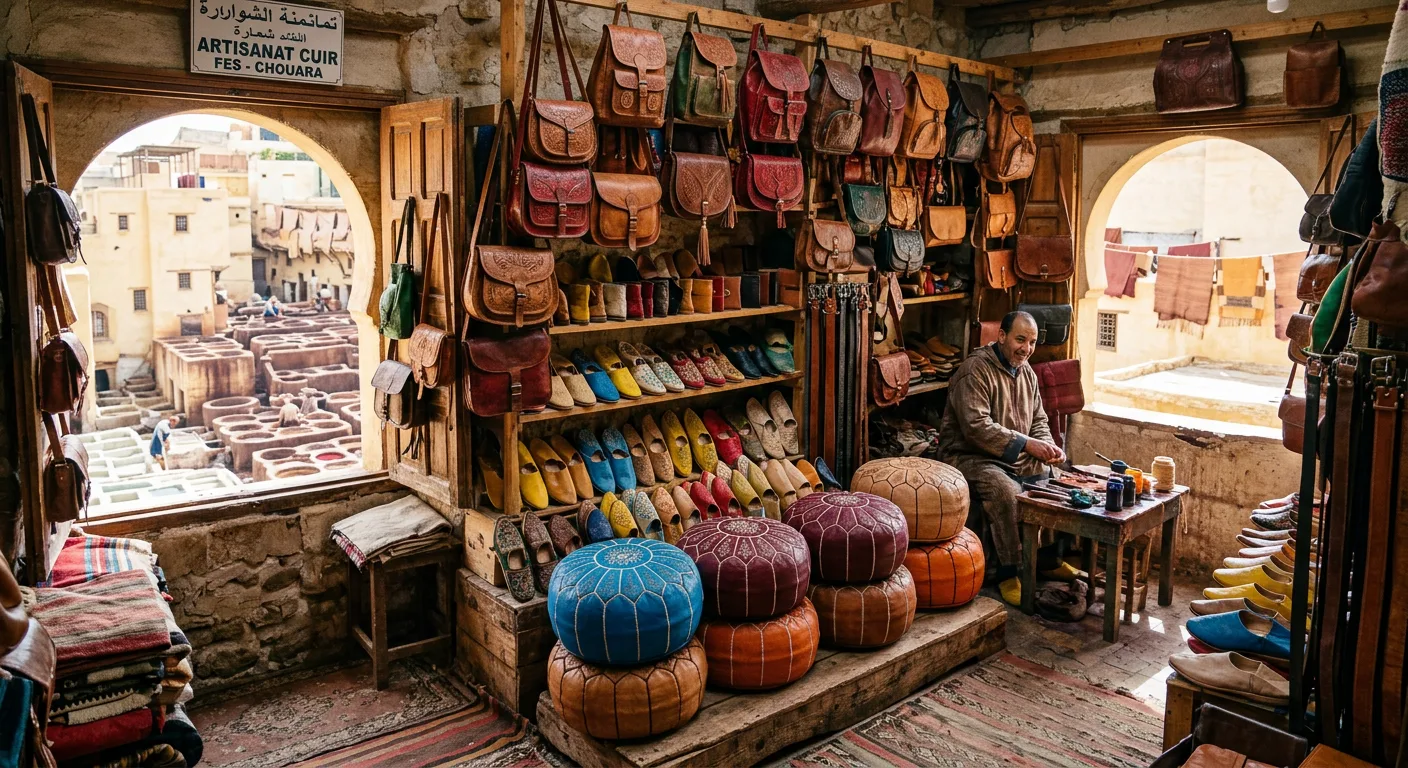
Leather Goods
From 80 MADBest in Fes
Morocco has produced world-renowned leather for over a thousand years. The tanneries of Fes, where hides are dyed in ancient stone vats using natural pigments, remain the gold standard. Look for bags, jackets, poufs, belts, wallets, and journal covers. Goatskin is softer and more supple; cowhide is sturdier for bags and belts.
Top Picks & Prices
Leather pouf (unstuffed)From 300 MAD
Crossbody bagFrom 200 MAD
Custom leather jacketFrom 800 MAD
Hand-tooled beltFrom 100 MAD
Tip: Buy near the Chouara tannery in Fes for the best prices. Genuine leather has a rich, natural scent, not a chemical one. Poufs ship flat, unstuffed, for easy transport.
#2
Ceramics & Pottery
From 50 MADBest in Fes
Each Moroccan region has a signature ceramic style. Fes produces iconic cobalt blue and white geometric designs. Safi is known for colorful hand-painted pieces. Tamegroute in the south creates unique green-glazed pottery. Plates, tagines, bowls, and handcut zellige tiles all make unforgettable souvenirs.
Top Picks & Prices
Fes blue plate (large)From 150 MAD
Decorative tagineFrom 80 MAD
Tamegroute vaseFrom 100 MAD
Zellige tile coaster setFrom 120 MAD
Tip: Ask if a tagine is for cooking or display. Cooking tagines are unglazed and must be lead-free. Tap ceramics gently to check for cracks; a clear ring means solid quality.
#3
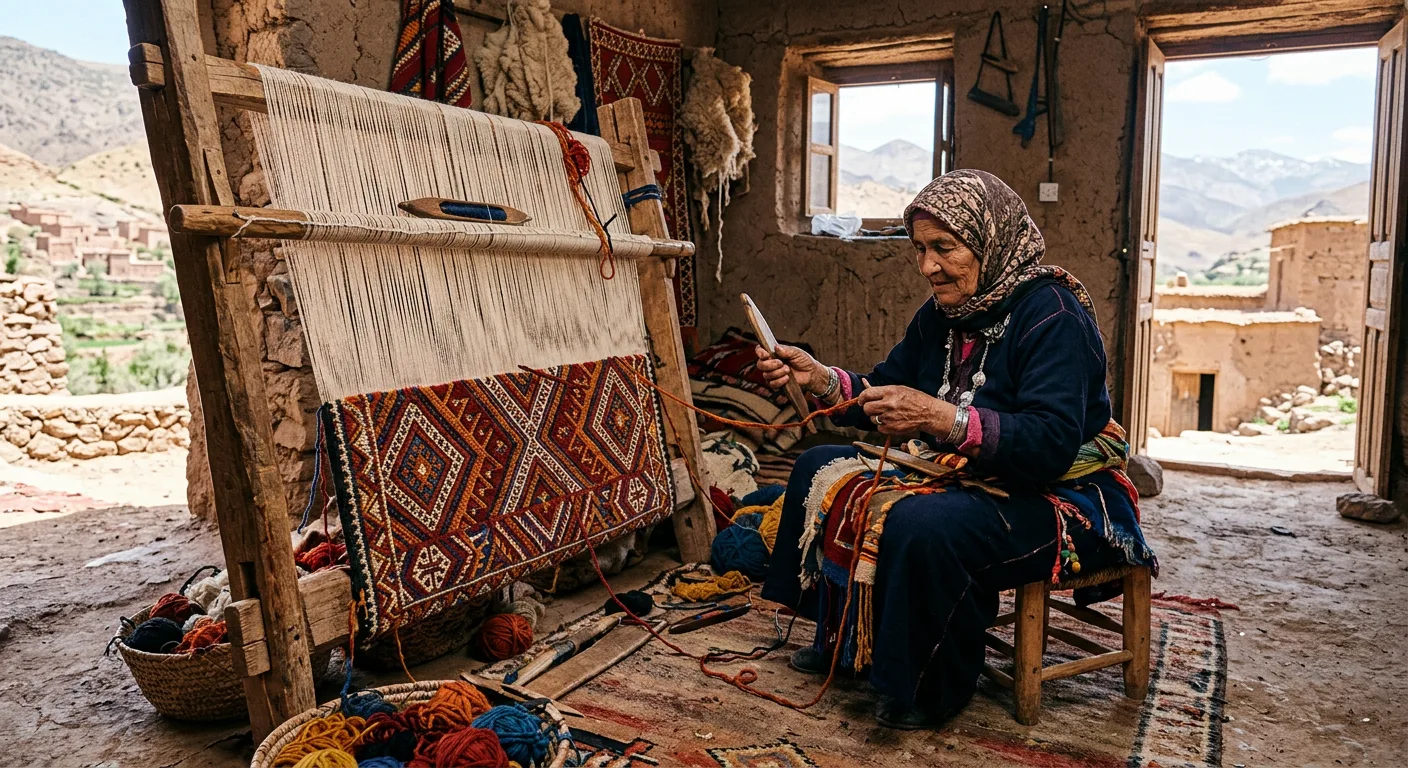
Rugs & Carpets
From 500 MADBest in Marrakech
Moroccan carpets are coveted worldwide. Beni Ourain rugs feature minimalist cream-and-black geometric patterns. Azilal rugs are more colorful and abstract. Kilims are flat-woven and lighter to ship. Boucherouite rugs are recycled-fabric art pieces. Each tribal style tells a different story through its motifs and weaving technique.
Top Picks & Prices
Beni Ourain rug (1.5x2m)From 2,000 MAD
Azilal rug (small)From 1,500 MAD
Kilim (flat-woven, 1x2m)From 500 MAD
Boucherouite rugFrom 800 MAD
Tip: Flip the rug over: handmade rugs show visible knots on the back. Machine-made ones have a flat, uniform backing. View rugs in natural light, not under the shop's flattering lamps.
#4
Argan Oil
From 80 MADBest in Essaouira
Called liquid gold, argan oil is produced exclusively in southwestern Morocco. Cosmetic oil is light, nearly odorless, and cold-pressed from raw nuts. Culinary oil is darker with a rich, nutty flavor, pressed from roasted nuts. Buying from women's cooperatives ensures authenticity, fair prices, and supports local communities.
Top Picks & Prices
Cosmetic argan oil (100ml)From 80 MAD
Culinary argan oil (250ml)From 120 MAD
Amlou (argan butter)From 60 MAD
Prickly pear seed oil (15ml)From 200 MAD
Tip: Real cosmetic argan oil absorbs into skin within a minute without leaving a greasy residue. If it sits on the surface, it is likely diluted or fake. Visit cooperatives near Essaouira for guaranteed purity.
#5
Spices
From 20 MADBest in Marrakech
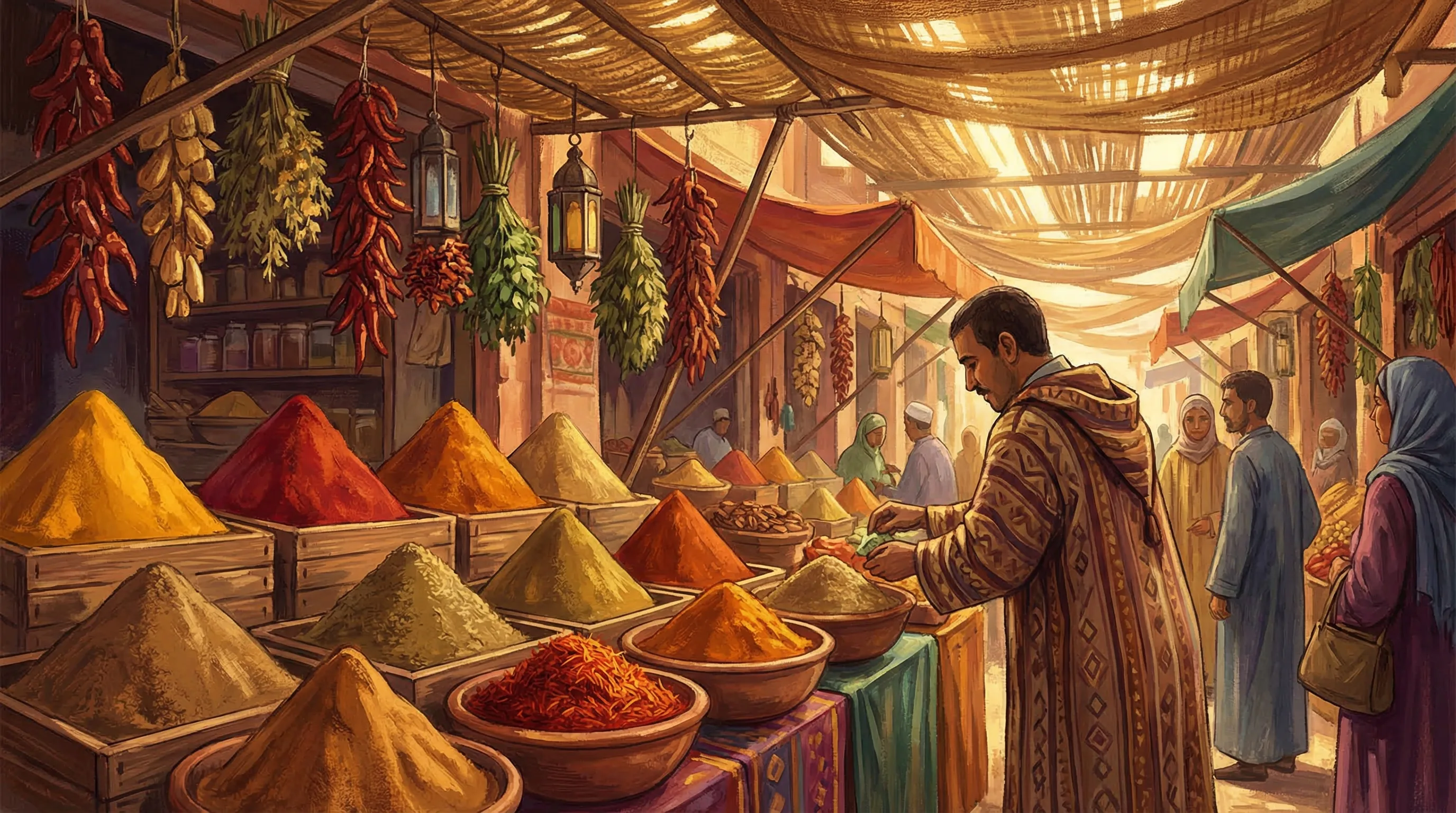
Morocco's spice souks overflow with color and aroma. Ras el hanout, the signature blend, can contain up to 30 ingredients. Saffron, cumin, paprika, turmeric, dried rosebuds, and herbal tea blends are all excellent buys. Spices are sold by weight and remarkably affordable compared to Western retail prices.
Top Picks & Prices
Ras el hanout (100g)From 30 MAD
Saffron (1g genuine)From 20 MAD
Dried rosebuds (50g)From 20 MAD
Herbal tea blend (100g)From 25 MAD
Tip: Real saffron has thin red threads, tastes bitter, and turns water golden-yellow slowly. Fake saffron is thick, dyes water instantly red, and tastes sweet. Ask vendors to vacuum-seal bags for freshness.
#6
Brass Lanterns
From 200 MADBest in Marrakech
Moroccan lanterns cast mesmerizing geometric shadow patterns when lit. Hand-pierced brass or iron, they range from small table lanterns to grand hanging fixtures. The metalworkers of Marrakech's Place des Ferblantiers (Tinsmiths Square) are the acknowledged masters, hammering intricate designs into sheet metal by hand.
Top Picks & Prices
Small table lanternFrom 200 MAD
Medium hanging lanternFrom 500 MAD
Large floor lanternFrom 1,000 MAD
Brass candle holderFrom 150 MAD
Tip: Check the wiring on electrified lanterns; you may need to rewire them at home for your country's voltage. For pure decor, candle lanterns are simpler and cheaper. Negotiate harder if buying multiple pieces.
#7
Babouche Slippers
From 80 MADBest in Fes
The pointed-toe babouche is Morocco's most iconic footwear. Made from soft goatskin or cowhide, they come in every color imaginable. Plain leather babouche are affordable everyday wear, while embroidered, sequined, or dyed versions serve as elegant gifts. They mold to your feet after a few days of wear.
Top Picks & Prices
Plain leather baboucheFrom 80 MAD
Embroidered baboucheFrom 150 MAD
Sequined baboucheFrom 200 MAD
Children's baboucheFrom 50 MAD
Tip: Try on both feet because sizing is inconsistent between artisans. Genuine leather babouche feel slightly stiff at first but soften within days. Avoid plastic imitations that do not breathe.
#8
Silver Jewelry
From 100 MADBest in Essaouira
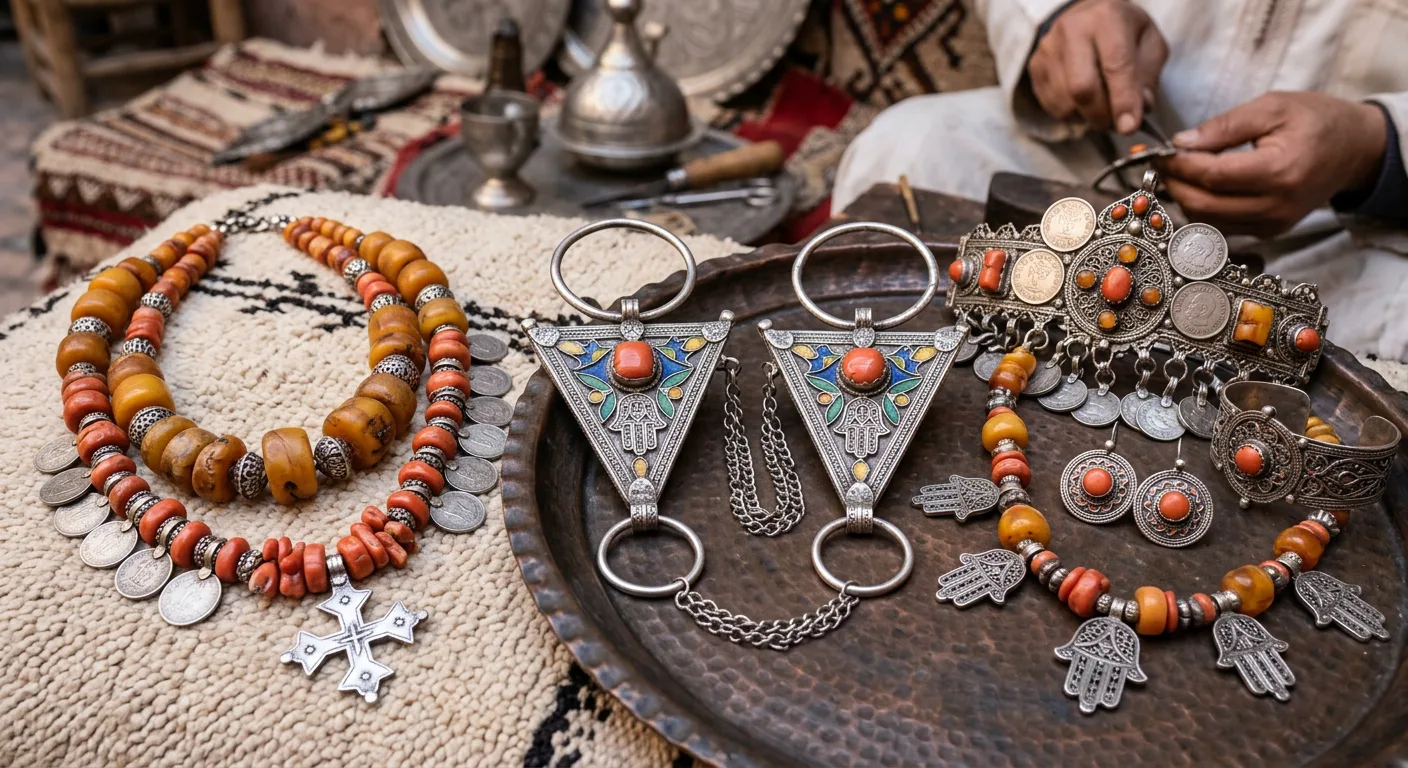
Berber silver jewelry is steeped in symbolism. Chunky bracelets with geometric engravings, Tuareg cross pendants representing Saharan oasis towns, and Hand of Fatima (khamsa) necklaces all carry deep cultural meaning. Tiznit and Essaouira are the traditional centers of Moroccan silverwork.
Top Picks & Prices
Berber silver braceletFrom 150 MAD
Tuareg cross pendantFrom 100 MAD
Hand of Fatima necklaceFrom 80 MAD
Amber and silver necklaceFrom 300 MAD
Tip: Most "silver" in souks is nickel or alloy. Real silver is stamped 925 and is not magnetic. Real amber is warm, lightweight, and floats in saltwater; most souk "amber" is plastic resin.
#9
Textiles & Blankets
From 150 MADBest in Marrakech
Moroccan textiles showcase centuries of weaving tradition. Berber blankets (handira) from the Atlas Mountains, sabra (cactus silk) cushion covers in vivid colors, embroidered caftans, and lightweight djellabas all make remarkable souvenirs. Handwoven pieces show subtle irregularities that distinguish them from factory-made goods.
Top Picks & Prices
Berber blanket (handira)From 300 MAD
Sabra silk cushion coverFrom 150 MAD
Cotton scarf / shawlFrom 80 MAD
Caftan (formal, custom)From 500 MAD
Tip: Check if a blanket is handwoven by examining the back for slight irregularities. Sabra silk is actually a plant fiber, not silk, but it is durable, ethical, and has a beautiful sheen.
#10
Tea Sets & Teapots
From 150 MADBest in Fes
Moroccan mint tea culture is central to daily life, and traditional tea sets make functional, decorative gifts. A complete set includes a silver-plated or stainless steel teapot, ornate tea glasses with gold or colored designs, and a silver or brass serving tray. The glasses are iconic and lightweight, perfect for packing.
Top Picks & Prices
Tea glass set (6 glasses)From 60 MAD
Traditional teapotFrom 150 MAD
Complete tea set with trayFrom 400 MAD
Decorative brass trayFrom 200 MAD
Tip: Silver-plated teapots tarnish over time but polish up beautifully. Stainless steel is more practical for daily use. Wrap tea glasses individually in socks or clothing for safe packing.
#11
Fossils & Minerals
From 50 MADBest in Erfoud
Morocco's Saharan regions are a geological treasure trove. Trilobites, ammonites, and orthoceras fossils dating back 350-450 million years are found near Erfoud and Midelt. Polished fossil plates, ammonite bowls, and geode crystals make striking, unique souvenirs unavailable anywhere else in the world.
Top Picks & Prices
Trilobite fossilFrom 100 MAD
Ammonite plate (polished)From 200 MAD
Orthoceras fossilFrom 50 MAD
Geode crystalFrom 150 MAD
Tip: Real fossils are heavy with natural color variations. Fakes are lightweight plaster with uniform coloring. Buy from reputable fossil shops in Erfoud or Midelt, not from roadside vendors.
How to Bargain in Morocco
Bargaining is an art and a social ritual in Moroccan souks. Follow these 8 steps to negotiate with confidence and respect.
1
Research Prices First
Before entering the souks, check the price ranges in this guide and visit an Ensemble Artisanal (government fixed-price shop) to learn fair baseline values. Knowledge is your most powerful negotiating tool.
2
Never Accept the First Price
The first quoted price is always the starting point, not the real price. In tourist areas, opening prices can be 3-10 times the fair value. Even in quieter areas, expect to negotiate down by 30-50%.
3
Start at 30-40% of the Asking Price
If the vendor says 1,000 MAD, counter with 300-400 MAD. This gives both sides room to meet in the middle. A serious vendor will always counter rather than let you walk away.
4
Stay Friendly and Patient
Bargaining is a social ritual in Morocco, not a confrontation. Smile, accept the mint tea, make conversation. Vendors respect warmth and humor. Aggression never gets you a better price.
5
Use the Walk-Away Technique
If you cannot reach your target price, politely say thank you and start walking. Most vendors will call you back with a lower offer. If they do not, the price may already be at their floor.
6
Bundle for Better Deals
Buying multiple items from one vendor almost always gets you a better per-item price. Negotiate three scarves together, not one at a time. Vendors prefer a larger single sale.
7
Pay Cash in Dirhams
Cash gets better prices than card. Carry small denominations (20 and 50 MAD notes) to avoid the "I have no change" tactic. Most medina vendors do not accept cards anyway.
8
Know When to Stop
Once you reach a price that feels fair based on your research, accept it gracefully. Pushing for another 10 MAD after a long negotiation is disrespectful. A good deal should feel good for both parties.
Where to Buy: City-by-City Guide
Each Moroccan city has its own shopping personality and specialties.
Fes
The Artisan Capital
Over 9,000 workshops operate inside the Fes medina, the world's largest car-free urban zone. Leather from the Chouara tanneries, blue ceramics from Ain Nokbi, and handmade brass are all cheaper than in Marrakech because there is less tourist markup.
Best for:
Leather, blue ceramics, brass, embroidered textiles, zellige tiles
Marrakech
The Shopping Capital
Marrakech offers the widest variety and the most famous souks. Jemaa el-Fna leads into specialized markets: leather souk, spice souk, carpet souk, dyers souk. Prices run higher due to tourist volume, but so does the quality and selection.
Best for:
Carpets, spices, leather bags, lanterns, textiles, caftans
Essaouira
The Relaxed Choice
Compact, easy to navigate, and far less intense than Fes or Marrakech. Essaouira is perfect for first-time souk shoppers. Women's argan cooperatives are nearby, and the Avenue de l'Istiqlal has fixed-price concept shops.
Best for:
Argan oil, silver jewelry, thuya wood, art, relaxed shopping
Chefchaouen
The Blue Boutique
The Blue City is small but packed with unique finds you will not see elsewhere. Woven Rif Mountain blankets, artisanal goat cheese, local honey, and hand-painted ceramics are highlights. Bargaining is straightforward and fair.
Best for:
Rif blankets, goat cheese, honey, handmade soap, woven goods
Meknes
The Hidden Gem
Often bypassed by tourists, Meknes has an excellent medina with minimal tourist inflation. Damascene metalwork (inlaid silver on steel) and embroidery are local specialties. Also the gateway to the Meknes wine region.
Best for:
Damascene metalwork, embroidery, olive oil, regional wine
How to Ship Your Purchases Home
Bought a rug too big for your suitcase? Here are the four main ways to get your treasures home safely.
Barid Al-Maghrib (Post)
From 150 MAD2-4 weeks
Best for: Spices, small leather goods, textiles
DHL / FedEx / UPS
From 500 MAD3-7 days
Best for: Ceramics, valuable items, fragile goods
Shop Shipping
From 200 MAD1-6 weeks
Best for: Carpets, large lanterns, furniture
Carry in Luggage
FreeImmediate
Best for: Babouche, jewelry, spices, scarves, tea glasses
Packing Tips for Fragile Items
Wrap ceramics individually in clothing, socks, or scarves you have also purchased
Ask vendors for bubble wrap; most ceramics and glass sellers carry it
Argan oil bottles over 100ml must go in checked luggage, not carry-on
Leather poufs ship flat, unstuffed; stuff them with newspaper or old clothes at home
Scams & Fakes to Avoid
Morocco's souks are overwhelmingly honest, but knowing these pitfalls helps you shop smarter.
Fake Saffron
Dyed safflower, corn silk, or plastic threads sold as saffron. Real saffron has thin red threads, tastes bitter, and dissolves slowly in water turning it golden-yellow.
How to avoid: Buy from established spice shops. Taste a thread; real saffron is bitter. Expect from 20-40 MAD per gram; anything drastically cheaper is fake.
Machine-Made "Handmade" Carpets
Factory rugs sold as handwoven. Machine-made carpets have perfectly uniform knots and a flat, synthetic backing.
How to avoid: Flip the rug over. Handmade rugs have visible individual knots on the reverse. Pull a fringe thread; wool feels organic, while synthetic is smooth and plastic-like.
Diluted Argan Oil
Argan oil mixed with sunflower or olive oil, or entirely synthetic substitutes. Real argan absorbs quickly with a subtle nutty scent.
How to avoid: Buy from women's cooperatives. Real cosmetic argan oil absorbs into skin within a minute. If it sits greasy on the surface, it is fake or diluted.
Plaster Fossils
Carved plaster painted to look like fossils. Real fossils are heavy with natural color variation; fakes are lightweight with uniform coloring.
How to avoid: Buy from reputable fossil shops in Erfoud. Real trilobites feel stone-heavy. If it is very light or perfectly symmetrical, it is likely plaster.
The "My Friend's Shop" Redirect
A local offers to take you to a "special shop" for "local prices." The guide receives 10-30% commission added to your price.
How to avoid: Politely decline unsolicited guides. Use Google Maps to navigate the souks independently. If you follow a guide, factor the commission into your negotiation.
Fake Silver Jewelry
Nickel or alloy pieces sold as sterling silver. Real silver is stamped 925, is not magnetic, and has a distinct cool weight.
How to avoid: Test with a magnet; silver is not magnetic. Buy from Essaouira or Tiznit where the silver tradition is strongest. Ask for the 925 stamp.
Frequently Asked Questions
What are the best souvenirs to buy in Morocco?
The 11 best souvenirs are leather goods, ceramics, rugs and carpets, argan oil, spices, brass lanterns, babouche slippers, Berber silver jewelry, textiles and blankets, traditional tea sets, and fossils. Each represents authentic Moroccan craftsmanship and ranges from from 20 MAD for spices to thousands of MAD for handwoven rugs.
How much should I budget for shopping in Morocco?
Budget depends on your interests. For small souvenirs (spices, scarves, tea glasses), from 200-500 MAD is plenty. For a mix of leather goods, ceramics, and textiles, budget from 1,000-3,000 MAD. If you want a quality rug or carpet, add from 2,000-5,000 MAD. Serious shoppers spending a week may budget from 5,000-10,000 MAD for memorable purchases.
Is it safe to shop in Moroccan souks?
Yes. Moroccan souks are busy and sometimes overwhelming but safe. Keep valuables in a front pocket or crossbody bag in crowded areas. Vendors may be persistent but are rarely aggressive. A firm "la shukran" (no thank you) and continued walking is enough to disengage from any unwanted sales pitch.
Can I bring food items like spices and argan oil home?
Yes, most countries allow spices and sealed food products. Argan oil is permitted in checked luggage (bottles over 100ml cannot go in carry-on). Have spices vacuum-sealed for freshness and declare food items at customs if required. Check your home country's specific biosecurity rules for plant and food products.
What is the best city for first-time shoppers?
Essaouira. The medina is compact, easy to navigate, and the atmosphere is relaxed. Bargaining is gentler, vendors are less persistent, and there are fixed-price concept shops on Avenue de l'Istiqlal. Build your confidence in Essaouira before tackling the legendary souks of Marrakech and Fes.
When is the best time of day to shop in the souks?
Early morning (9-11am) is ideal. Crowds are thin, vendors are fresh, and some believe the first sale brings good luck and may offer a better price. Late afternoon (4-6pm) is lively but more crowded. Avoid midday in summer when the heat makes shopping exhausting.
Related Guides
Morocco Shopping Guide
In-depth shopping guide with price reference tables, customs limits, and detailed bargaining strategies.
Read moreGuide to Moroccan Souks
Navigate Morocco's famous markets with confidence. Souk etiquette, maps, and what to expect.
Read moreMorocco Scams Guide
Common tourist scams in Morocco and exactly how to avoid them. Stay informed and travel smart.
Read moreMarrakech City Guide
Explore the Red City's legendary souks, riads, and the vibrant Jemaa el-Fna square.
Read moreFes City Guide
Discover the world's largest car-free urban area and Morocco's artisan capital.
Read more