Discovering...
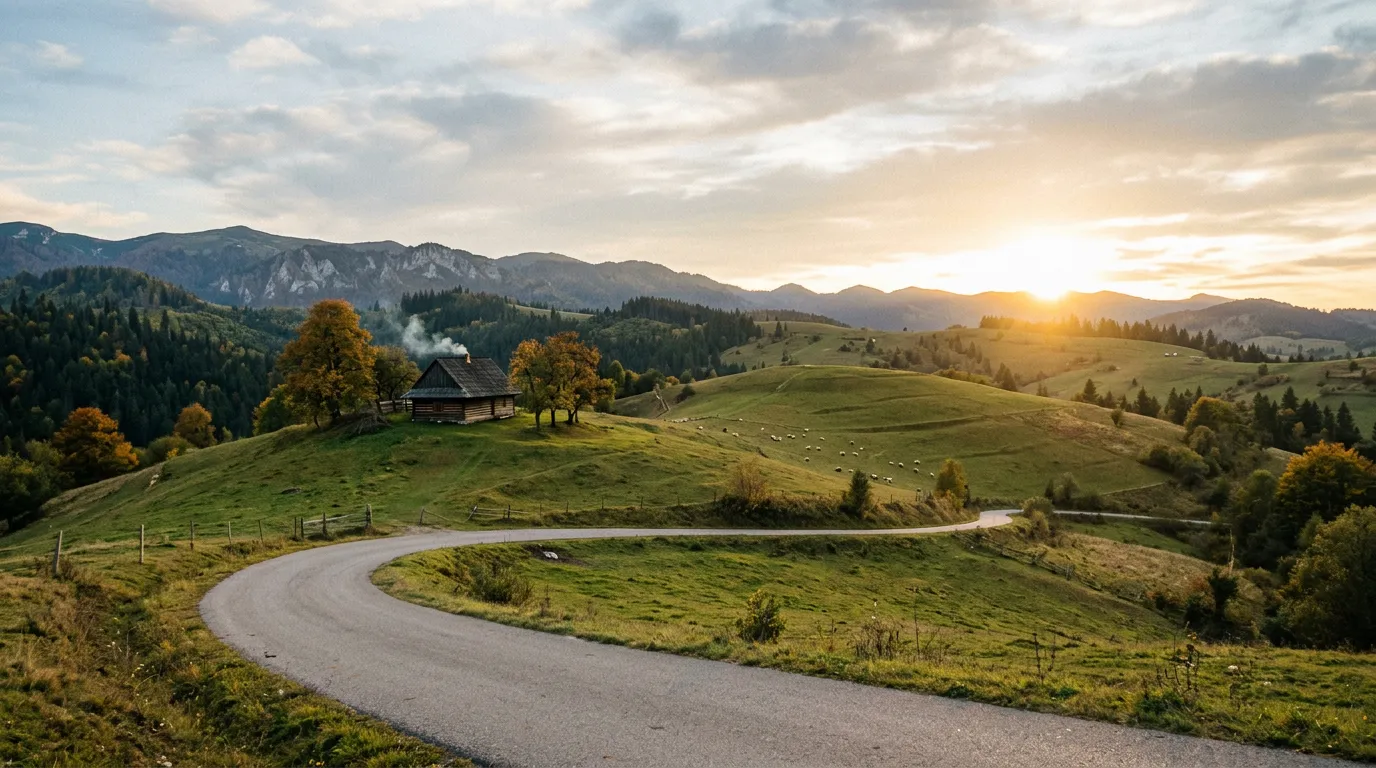
500+ Species3 Migration Flyways
Birdwatching in Morocco
Where the Atlantic, Mediterranean, and Sahara converge to create one of the Western Palearctic's richest birding destinations. Over 500 species across deserts, mountains, wetlands, and ancient forests.
Introduction
Why Morocco Is a Birding Paradise
Morocco sits at one of the world's great ornithological crossroads. Positioned at the northwestern tip of Africa, just 14 kilometers from Europe across the Strait of Gibraltar, this kingdom straddles three major bird migration flyways: the East Atlantic Flyway, the Mediterranean Flyway, and the Saharan Flyway. Twice each year, hundreds of millions of birds funnel through this narrow bottleneck between continents, making Morocco a front-row seat to one of nature's greatest spectacles.
With over 500 recorded species, Morocco ranks among the richest birding destinations in the entire Western Palearctic region. This extraordinary diversity stems from the country's remarkable range of habitats compressed into a relatively compact area: Atlantic and Mediterranean coastlines, tidal lagoons and freshwater marshes, ancient cedar forests, alpine meadows above 3,000 meters, arid steppe and stony desert (hamada), sand dune systems of the Sahara, river valleys and oases, and agricultural plains.
500+
Recorded Species
3
Migration Flyways
24
Ramsar Wetland Sites
What makes Morocco particularly special for birders is the unique combination of Palearctic and Afrotropical species. European birds familiar from gardens and parks occur alongside true African species at the northern edge of their range. Desert specialists from the Sahara meet mountain birds of the High Atlas. Seabirds from the Atlantic overlap with Mediterranean species. This meeting of biogeographic zones creates birding experiences found nowhere else.
The country is also home to one of the world's rarest birds: the Northern Bald Ibis (Geronticus eremita), classified as Critically Endangered with only around 700 individuals surviving in the wild, virtually all in Morocco. Seeing this prehistoric-looking bird at its coastal cliff colony is a bucket-list experience for birders worldwide.
Beyond the birds themselves, Morocco offers practical advantages that make it an ideal birding destination: short flight times from Europe (2-3 hours), excellent road infrastructure connecting all major birding sites, affordable accommodation and food, a welcoming culture, and landscapes of breathtaking beauty that provide a stunning backdrop to every birding outing. Whether you are a seasoned lister aiming for Western Palearctic specialties or a beginner drawn to flamingos and raptors, Morocco delivers.
Where to Go
Top Birding Sites in Morocco
From Atlantic wetlands to Saharan desert, these are the essential birding locations every visitor should consider.
1
Souss-Massa National Park
300+ speciesSouth of Agadir, Atlantic coast30.0167 N, 9.7333 W
Habitat: Coastal cliffs, steppe, river estuary, argan woodland
Key Species
Northern Bald Ibis (critically endangered)Marbled DuckGreater FlamingoAudouin's GullMoussier's RedstartBlack-crowned TchagraStone Curlew
Best Season
Year-round; breeding ibis March-July
Access
Drive south from Agadir (65 km) on the N1, turn west toward the coast at the park entrance. 4WD helpful but not essential. Park entry fee 20 MAD.
Birding Tip
Arrive at dawn for the best ibis viewing as they leave cliff roosts to feed in the steppe. The Oued Massa estuary is a must-visit within the park for waders and waterbirds.
2
Merja Zerga (Moulay Bousselham)
200+ speciesAtlantic coast, Kenitra Province34.8667 N, 6.3167 W
Habitat: Tidal lagoon, saltmarsh, sand dunes, agricultural land
Key Species
Greater FlamingoEurasian SpoonbillSlender-billed GullMarsh HarrierOspreyGreater Spotted Eagle (winter)Marbled Duck
Best Season
November-March for wintering birds; spring migration excellent
Access
Drive from Rabat (150 km north on N1/A1). Hire a local boatman at Moulay Bousselham harbor for a lagoon tour (150-250 MAD per boat). Best views from the eastern shore.
Birding Tip
Hire a boat for the full lagoon circuit - boatmen know where the flamingos, spoonbills, and raptors concentrate. The Ramsar-designated wetland hosts 200+ species. Check the saltpans southeast of town for waders.
3
Oualidia Lagoon
150+ speciesAtlantic coast, between El Jadida and Safi32.7333 N, 9.0333 W
Habitat: Sheltered lagoon, rocky coast, saltpans, sand flats
Key Species
Greater FlamingoKentish PloverSandwich TernLittle TernAudouin's GullBlue Rock ThrushLittle Egret
Best Season
Year-round; peak waders August-April
Access
Easy access from the coastal road. The lagoon is visible from the village. Walk along the eastern shore for best birding. Combine with the famous oyster farms.
Birding Tip
The sheltered lagoon is a reliable flamingo site year-round. Scan the rocky headlands for Blue Rock Thrush and Barbary Falcon. The oyster restaurants here are among Morocco's best, making this a perfect birding-and-lunch stop.
4
Dayet Aoua
120+ speciesMiddle Atlas, near Ifrane33.7000 N, 5.0500 W
Habitat: Freshwater lake, cedar forest, scrubland, agricultural margins
Key Species
Crested CootMarbled DuckRed-knobbed CootLevaillant's WoodpeckerAtlas FlycatcherHawfinchFirecrest
Best Season
April-June for breeding; year-round for forest birds
Access
Located 15 km south of Ifrane on the road to Azrou. The lake is roadside with good viewing from the eastern bank. Cedar forests begin just south of the lake.
Birding Tip
Water levels fluctuate dramatically with rainfall - the lake can dry out completely in drought years. When full, it is one of Morocco's best sites for Crested Coot and Marbled Duck. Combine with cedar forest birding at nearby Cèdre Gouraud.
5
Oued Massa
180+ speciesWithin Souss-Massa National Park30.0500 N, 9.6667 W
Habitat: River valley, tamarisk scrub, estuary, semi-arid steppe
Key Species
Northern Bald IbisBrown-throated MartinBlack-crowned TchagraBarbary PartridgeLaughing DoveRufous-tailed Scrub RobinSardinian Warbler
Best Season
Year-round; spring and autumn migration peaks
Access
Enter from the village of Massa. A track follows the river to the estuary. Walking is the best way to cover the area. Allow 3-4 hours for a thorough visit.
Birding Tip
The riverbed walk from the bridge to the sea is one of Morocco's classic birding routes. Northern Bald Ibis feed along the river banks most mornings. Check tamarisk thickets for Black-crowned Tchagra and warblers. The estuary at the coast is excellent for waders.
6
Tagdilt Track (Boumalne Dades)
80+ speciesEast of Boumalne Dades, Draa-Tafilalet31.3667 N, 5.9667 W
Habitat: Stony desert (hamada), semi-arid scrub, dry wadis
Key Species
Cream-colored CourserThick-billed LarkTrumpeter FinchDesert WheatearRed-rumped WheatearTemminck's LarkHoopoe Lark
Best Season
October-April (cooler); spring for passage migrants
Access
The track starts just east of Boumalne Dades, heading south across the stony hamada. A 4WD or high-clearance vehicle is essential. The track is about 30 km round trip. Hire a local guide in Boumalne for precise species locations.
Birding Tip
This is Morocco's premier desert birding site. Drive slowly and scan the stony plains methodically. Cream-colored Coursers are masters of camouflage on the pale ground. Early morning is best before heat haze builds. Carry plenty of water and fuel.
7
Oukaimeden & Toubkal (High Atlas)
70+ speciesHigh Atlas, south of Marrakech31.2000 N, 7.8667 W
Habitat: Alpine meadow, rocky scree, cliff faces, high altitude scrub
Key Species
Lammergeier (Bearded Vulture)Alpine AccentorCrimson-winged FinchShore LarkAlpine ChoughRed-billed ChoughRock Bunting
Best Season
May-October for high altitude species; winter for Lammergeier
Access
Oukaimeden is 75 km south of Marrakech via the Ourika Valley road. Paved road to the ski station at 2,650m. Toubkal requires trekking from Imlil. Local guides available.
Birding Tip
Oukaimeden ski station is the easiest place in Morocco to see Crimson-winged Finch and Alpine Accentor. Scan the cliff faces for Lammergeier soaring on thermals, especially mid-morning. The endemic Moroccan race of Shore Lark (atlas) breeds above 3,000m. Combine with Toubkal trekking for the ultimate mountain birding experience.
8
Ifrane National Park
120+ speciesMiddle Atlas33.5333 N, 5.1167 W
Habitat: Cedar forest, oak woodland, freshwater streams, meadows
Key Species
Levaillant's WoodpeckerAtlas FlycatcherCoal Tit (atlas subspecies)FirecrestShort-toed TreecreeperLong-eared OwlBooted Eagle
Best Season
April-June for breeding; year-round for residents
Access
Ifrane is 60 km south of Fes via the N8. The national park and Cèdre Gouraud (famous ancient cedar) are easily accessible by car. Walking trails through the forest.
Birding Tip
The cedar forests around Cèdre Gouraud are the best spot for Levaillant's Woodpecker - listen for its distinctive drumming in early morning. The area is also home to Barbary Macaques, which can help locate mixed bird flocks. Atlas Flycatcher breeds in the park from April to July.
9
Khnifiss Lagoon
160+ speciesSouthern Atlantic coast, Tan-Tan Province28.0333 N, 12.2833 W
Habitat: Coastal lagoon, desert steppe, sand dunes, rocky shore
Key Species
Greater FlamingoWestern Reef HeronCream-colored CourserBar-tailed LarkDesert SparrowBrown-necked RavenOsprey
Best Season
November-March for wintering birds; year-round for residents
Access
Remote location between Tan-Tan and Tarfaya on the N1. 4WD essential for access tracks to the lagoon. Bring all supplies including fuel and water. Allow a full day.
Birding Tip
One of Morocco's most remote and rewarding birding sites. The lagoon is a Ramsar site hosting thousands of flamingos and waders. The surrounding desert holds Bar-tailed Lark and Desert Sparrow. Combine with the nearby Saharan coastal habitats for a unique desert-meets-ocean birding experience.
10
Merzouga Lake (Dayet Srij)
100+ speciesErg Chebbi, southeastern Morocco31.0833 N, 4.0167 W
Habitat: Seasonal desert lake, sand dunes, rocky desert, oasis palms
Key Species
Greater Flamingo (when flooded)Fulvous BabblerDesert SparrowBlue-cheeked Bee-eaterPharaoh Eagle-OwlAfrican Desert WarblerSpotted Sandgrouse
Best Season
March-May (if winter rains have filled the lake); year-round for desert species
Access
Drive to Merzouga village (35 km south of Erfoud). The seasonal lake forms west of the Erg Chebbi dunes after good rains. 4WD helpful. Many desert lodges offer birding excursions.
Birding Tip
When winter rains fill Dayet Srij, it creates the surreal sight of flamingos against Saharan sand dunes - one of Morocco's most iconic birding images. Even when dry, the desert around Merzouga holds Pharaoh Eagle-Owl (check rocky outcrops at dusk), Fulvous Babbler, and Desert Sparrow. Ask locally about water levels before visiting.
11
Middle Atlas Cedar Forests
130+ speciesBetween Azrou and Midelt33.3500 N, 5.1000 W
Habitat: Atlas cedar forest, oak woodland, mountain streams, rocky outcrops
Key Species
Levaillant's WoodpeckerAtlas FlycatcherAfrican Blue TitMoussier's RedstartGreat Spotted Woodpecker (mauritanus)Bonelli's EagleEgyptian Vulture
Best Season
April-June for breeding birds; autumn for passage
Access
The N13 between Azrou and Midelt passes through extensive cedar forests. Several stopping points along the road. The forest near Ain Leuh is particularly good.
Birding Tip
The extensive cedar forests of the Middle Atlas are Morocco's richest woodland birding habitat. Drive slowly along forest roads, stopping frequently to listen. Mixed flocks in spring can yield Levaillant's Woodpecker, Atlas Flycatcher, Firecrest, and Short-toed Treecreeper in a single encounter. The Barbary Macaques here are accustomed to visitors.
Species Guide
Key Species of Morocco
The most sought-after and iconic birds that draw birders from around the world to Morocco.
Critically Endangered
Morocco's Signature Bird
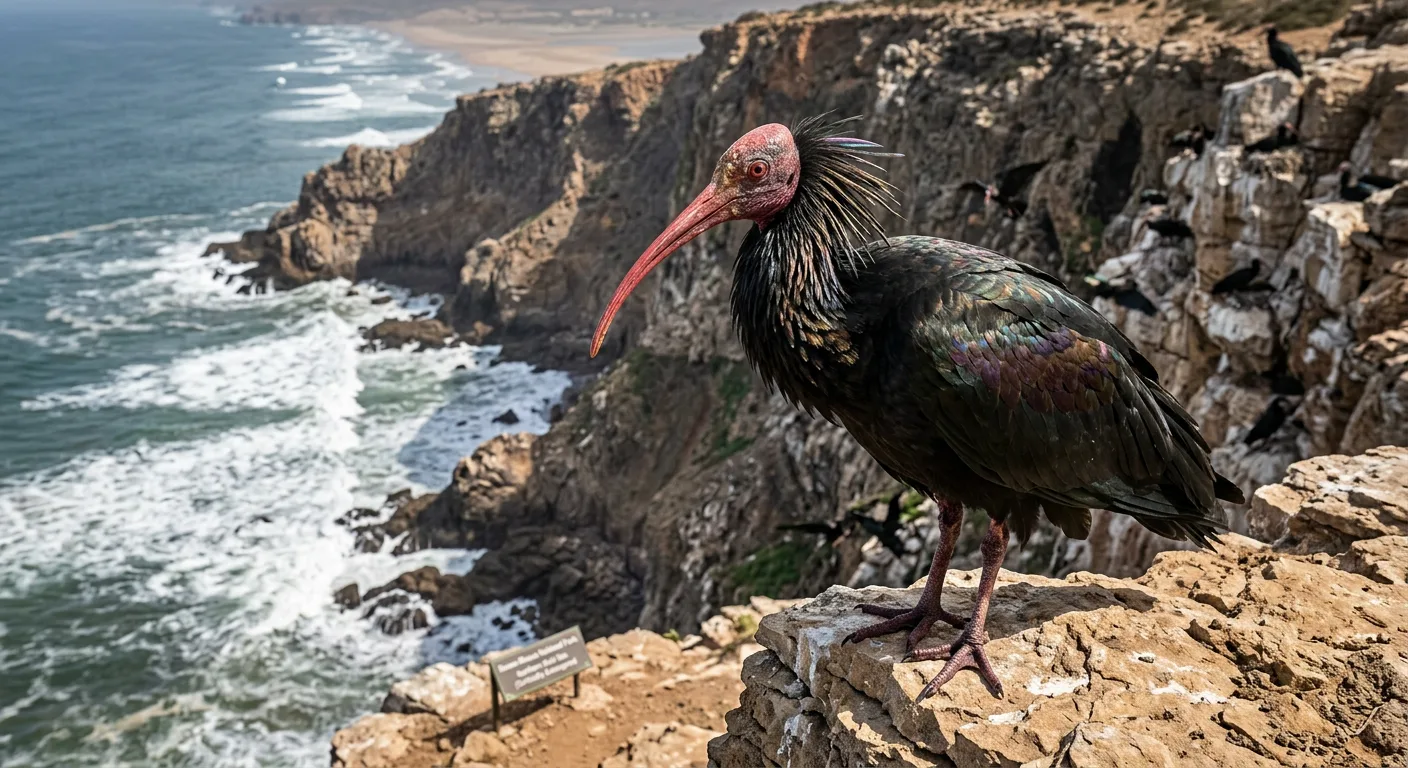
Northern Bald Ibis
Geronticus eremita
Morocco's signature bird and one of the world's rarest. This glossy black ibis with its distinctive bald red head and long curved bill was once found across Europe, the Middle East, and North Africa. Today, only around 700 survive in the wild, virtually all in Morocco's Souss-Massa region. They nest colonially on coastal cliffs and feed in semi-arid steppe, probing for insects and lizards. Morocco's conservation efforts have been a rare success story, with numbers slowly increasing.
Where to See
Souss-Massa National Park, Oued Massa, Tamri
Best Time
March-July (breeding); year-round at roost sites
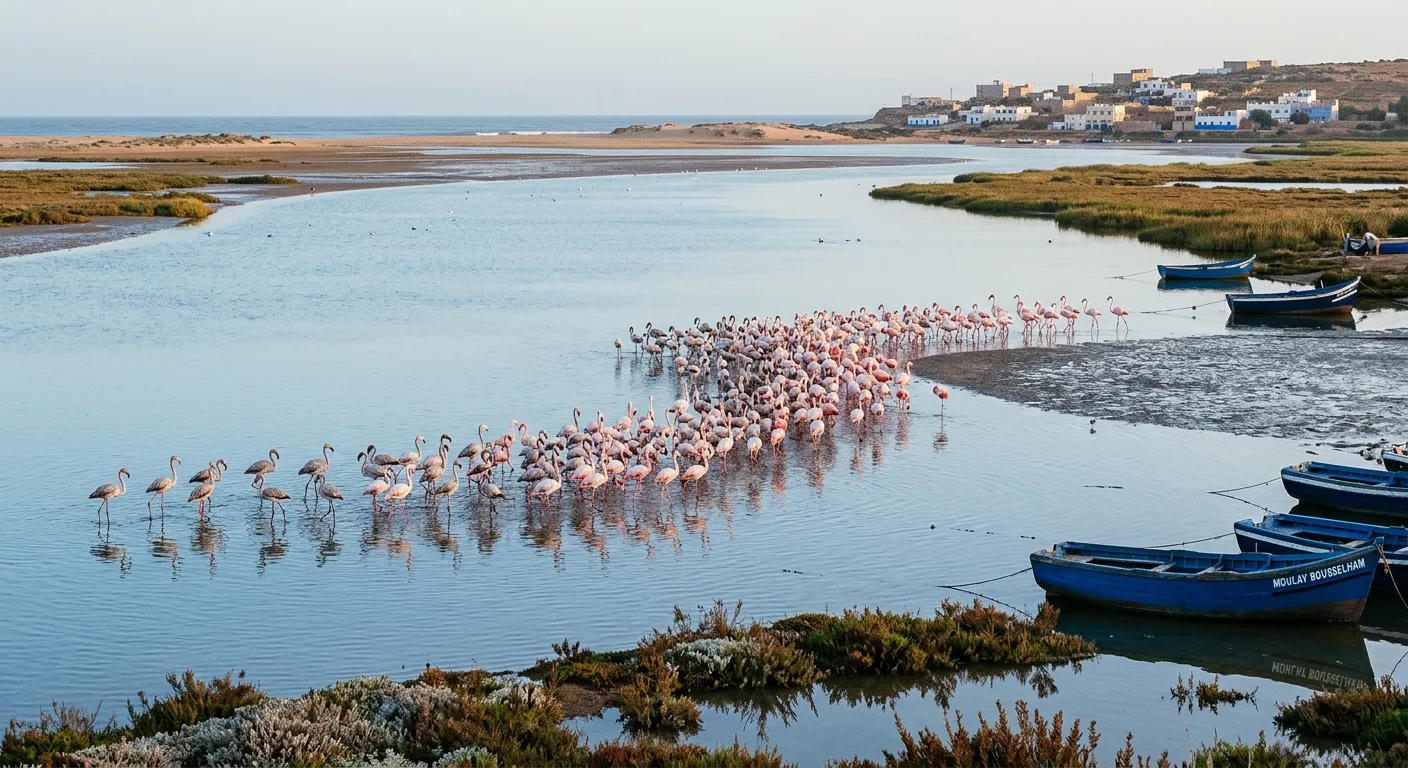
Greater Flamingos at Merja Zerga Lagoon
Thousands gather at Morocco's Ramsar wetlands from November to March
Greater Flamingo
Phoenicopterus roseus
Thousands of Greater Flamingos grace Morocco's wetlands and lagoons year-round. These iconic pink birds are found at every major coastal wetland from Merja Zerga to Khnifiss, and even appear at desert lake Dayet Srij near Merzouga after winter rains - creating one of Morocco's most surreal wildlife spectacles. Morocco is a critical non-breeding site for Western Mediterranean and West African populations.
Merja Zerga, Oualidia, Khnifiss Lagoon, Merzouga (seasonal)
Year-round; largest flocks November-March
Moussier's Redstart
Phoenicurus moussieri
A stunning North African near-endemic and one of the most sought-after species for visiting birders. The male is unmistakable with his black head, white wing patch, and brilliant orange-red underparts. Found in scrubby hillsides, forest edges, and rocky terrain across Morocco from sea level to 3,000m. Relatively confiding and approachable, making it a favorite for photographers. Found only in Morocco, Algeria, and Tunisia.
Widespread; reliable at Oukaimeden, Souss-Massa, Middle Atlas
Year-round resident; most vocal February-May
Tristram's Warbler
Curruca deserticola
A North African specialty found in arid scrubland with dwarf palms and thorny bushes. This small, active warbler has a distinctive rufous-edged wing and pale eye-ring. Named after the Reverend Henry Baker Tristram, it is one of the key target species for birders visiting Morocco. Often found in the same habitat as Spectacled Warbler and Subalpine Warbler, requiring careful identification.
Oukaimeden road, Souss-Massa, Anti-Atlas scrubland
Year-round; easiest to find when singing February-April
Levaillant's Woodpecker
Picus vaillantii
The only green woodpecker in North Africa and a much-wanted species for Western Palearctic listers. This striking bird with its green upperparts, red crown, and dark face mask is the North African counterpart of the European Green Woodpecker. Found in cedar, oak, and pine forests of the Atlas Mountains, it drums loudly and has a distinctive laughing call that echoes through the forests.
Ifrane National Park, Cèdre Gouraud, Middle Atlas forests
Year-round; most vocal and visible March-May
Eleonora's Falcon
Falco eleonorae
This elegant, long-winged falcon breeds late in the year to take advantage of autumn bird migration, feeding its chicks on exhausted migrants crossing the Mediterranean. Morocco's Atlantic islands and cliff coasts host breeding colonies. Both dark and light morphs occur. Named after Eleonora d'Arborea, a Sardinian judge who enacted early bird protection laws in the 14th century.
Essaouira (Mogador Island), Atlantic coast cliffs
July-October (breeding season)
Barbary Falcon
Falco pelegrinoides
Sometimes treated as a subspecies of Peregrine Falcon, this desert-adapted raptor is paler and more rufous-naped than its cosmopolitan relative. It hunts over desert and semi-arid terrain, taking prey in spectacular high-speed stoops. Morocco is one of the most accessible places in the world to observe this bird, particularly around gorges and rocky outcrops in the south.
Todra Gorge, Dades Gorge, Oualidia cliffs, southern gorges
Year-round; nesting February-May
Cream-colored Courser
Cursorius cursor
A true desert specialist and master of camouflage on stony hamada plains. This elegant, sandy-colored bird with its distinctive black-and-white eye stripe runs swiftly across open ground, pausing to pick insects. Its cryptic plumage makes it nearly invisible against the desert substrate. The Tagdilt Track near Boumalne Dades is the classic site for this species in Morocco.
Tagdilt Track, southern plains, Merzouga area
Year-round; easiest October-April when cooler
Desert Sparrow
Passer simplex
A pale, ghostly sparrow of the true Sahara - quite unlike the familiar House Sparrow. Males are striking with their black bib, pale sandy plumage, and white wing bars. Found in small groups around desert oases, palm groves, and desert settlements. In Morocco, the best sites are in the deep south around Merzouga, Zagora, and the oasis towns of the Draa Valley.
Merzouga, Rissani, Zagora, Draa Valley oases
Year-round resident
Thick-billed Lark
Ramphocoris clotbey
One of the most impressive larks in the world, with a massive, heavy bill and boldly spotted breast. This North African and Middle Eastern specialty is found on stony desert plains in Morocco's southeast. Despite its size, it can be surprisingly difficult to spot on the ground. When flushed, its flight is heavy and direct with conspicuous white outer tail feathers.
Tagdilt Track, Midelt plain, southeastern hamada
October-April (cooler months); sings in spring
Lammergeier (Bearded Vulture)
Gypaetus barbatus
One of the world's most spectacular raptors with a wingspan of nearly 3 meters. The adult is unmistakable with its orange breast (stained from iron-rich mud baths), diamond-shaped tail, and the distinctive black "beard" of feathers. Morocco's High Atlas population is the last stronghold in North Africa, with perhaps 10-15 breeding pairs. It feeds primarily on bones, dropping them from height to crack them open - hence its alternative name "Bone-breaker."
Oukaimeden, Toubkal massif, Tichka Pass, Dades Gorge
Year-round; best November-May at nesting sites
Black-crowned Tchagra
Tchagra senegalus
A striking bushshrike with a bold black crown, white supercilium, and rich rufous wings. Its beautiful, liquid song is one of the most characteristic sounds of Moroccan scrubland. Despite its striking appearance, this skulking bird can be frustratingly difficult to observe as it moves through dense vegetation. Patient waiting near a singing bird is usually rewarded with good views.
Souss-Massa, Oued Massa, Agadir region scrubland
Year-round; most vocal and visible March-June
When to Go
Seasonal Birding Calendar
Morocco offers year-round birding, but each season brings different highlights and specialties.
Spring (March - May)
5/5
- Peak migration period - millions of birds pass through Morocco heading north
- Breeding Northern Bald Ibis active at cliff colonies
- Spectacular raptor migration over the Strait of Gibraltar
- Wetlands bustling with passage waders, terns, and herons
- Wildflowers create stunning birding backdrops
- Saharan overshoot migrants possible at coastal sites
Top sites: All sites excellent; Strait of Gibraltar for raptor passage, wetlands for waders
Weather: Pleasant 18-28 C, occasional rain in north, wildflowers in bloom
Summer (June - August)
3/5
- Breeding season for resident species in full swing
- High Atlas alpine specialists most accessible
- Eleonora's Falcon arrives at breeding colonies
- Early autumn wader passage begins in August
- Quieter at most sites - fewer visiting birders
- Desert sites extremely hot - focus on mountains and coast
Top sites: Oukaimeden for alpine birds, Essaouira for Eleonora's Falcon, coast for respite
Weather: Hot 30-45 C inland, 22-28 C on coast, dry everywhere
Autumn (September - November)
4/5
- Southbound migration brings European birds through Morocco
- Raptor passage over Gibraltar peaks in September-October
- Wetlands fill with arriving winter visitors
- Desert sites become accessible again as temperatures drop
- Eleonora's Falcon feeding young on migrant passerines
- First wintering raptors arrive (Greater Spotted Eagle, Hen Harrier)
Top sites: Gibraltar strait, Merja Zerga, Tagdilt Track, Oualidia
Weather: Warm 20-35 C, cooling through the season, first rains in November
Winter (December - February)
4/5
- Massive concentrations of wintering waterbirds at wetlands
- Greater Spotted Eagle and other rare raptors present
- Desert birding at its best - cool temperatures, active birds
- Flamingo flocks at peak numbers
- Lammergeier most visible at nesting cliffs
- Jebel Saghro (Anti-Atlas) trekking and birding season
Top sites: Merja Zerga, Oualidia, Tagdilt Track, Khnifiss, Merzouga
Weather: Cool 8-20 C, rain possible in north, snow in Atlas above 2,000m
Expert Guidance
Birding Tour Operators & Guides
Whether you prefer a fully guided tour or a local expert for a few days, these operators specialize in Morocco's birdlife.
Moroccan Birding
Dedicated Morocco birding tours with expert local guides
Duration
7-14 day set itineraries and custom tours
Price
From 15,000 MAD per person (group tours)
- Locally owned and operated
- Guides know all key sites intimately
- Small groups (max 8)
- All habitats covered
Naturetrek
UK-based nature tour company with regular Morocco departures
Duration
8-10 day structured tours
Price
From 20,000 MAD per person (inc. flights from UK)
- Expert British and Moroccan co-leaders
- Well-established itineraries
- Comfortable accommodation
- Detailed trip reports published
Birdquest
Premium birding tours for experienced birders
Duration
14-day comprehensive Morocco tour
Price
From 35,000 MAD per person
- Maximum species lists
- All major habitats
- Top international leaders
- Trip report tradition since 1981
Local Freelance Guides
Independent Moroccan bird guides for custom trips
Duration
Flexible - hire by the day
Price
500-1,000 MAD per day
- Personalized itineraries
- Unmatched local knowledge
- Flexible scheduling
- Support local communities
Be Prepared
Equipment & Preparation
What to bring and how to prepare for a successful birding trip to Morocco.
Optics
- Binoculars: 8x42 or 10x42 are ideal. Waterproof and fog-proof essential for coastal sites.
- Spotting scope: 20-60x zoom highly recommended for wetlands and open desert. Lightweight tripod.
- Camera: 400mm+ telephoto for bird photography. Dust protection for desert sites is critical.
Field Guides & Apps
- Collins Bird Guide (Svensson et al.) - the essential Western Palearctic field guide covering all Morocco species.
- Where to Watch Birds in Morocco (Bergier) - invaluable site guide with maps and directions.
- Merlin Bird ID app (free) - excellent for call identification. Download Morocco pack before travel.
- eBird - check hotspot data and recent sightings for all Moroccan sites.
Clothing & Protection
- Layers: Temperatures range from near freezing at High Atlas dawn to 40 C+ in the desert. Dress in layers.
- Sun protection: Wide-brimmed hat, high-SPF sunscreen, quality sunglasses. The Moroccan sun is intense.
- Footwear: Sturdy walking boots for mountain sites, lighter shoes for wetlands. Waterproof for coastal birding.
- Dust protection: Buff/scarf for face, sealed bags for optics in desert and windy conditions.
Responsible Birding
Ethics & Conservation
Morocco's birdlife faces real threats. As birders, we have a responsibility to minimize our impact and support conservation.
Northern Bald Ibis Recovery: A Conservation Success
The Northern Bald Ibis was once widespread from Central Europe to the Middle East and North Africa. By the 1990s, hunting, habitat loss, and pesticide use had reduced the wild population to fewer than 250 birds, all in Morocco. It was considered one of the world's most endangered birds.
Thanks to dedicated conservation efforts by Morocco's Haut Commissariat aux Eaux et Forets, BirdLife International, the RSPB, and local NGOs, numbers have gradually recovered to around 700 individuals. Key measures include protection of nesting cliffs, anti-poaching patrols, pesticide management in feeding areas, and community engagement programs that give local people a stake in the ibis's survival.
Birding tourism plays a direct role in conservation. Visitor spending supports local communities near Souss-Massa, demonstrating the economic value of protecting the ibis and its habitat. Every birder who visits contributes to the case for continued conservation funding.
Responsible Birding Code
- Keep a respectful distance from nesting birds, especially Northern Bald Ibis cliff colonies. Use your scope rather than approaching.
- Do not use playback or tape luring near breeding birds or rare species. This is especially important for skulking species like Tchagra and desert warblers.
- Stay on established tracks and paths, particularly in national parks and Ramsar sites. Off-track driving damages fragile desert and wetland habitats.
- Take all litter with you. Desert environments are particularly slow to recover from waste.
How Birders Can Help
- Submit eBird checklists: Your sighting data contributes directly to conservation science and helps monitor population trends.
- Hire local guides: Direct economic benefit to communities living alongside bird habitats incentivizes protection.
- Support conservation: Consider donating to SEO/BirdLife, GREPOM (Moroccan ornithological society), or BirdLife International's Morocco projects.
- Report rare sightings: Notify GREPOM of any rare bird records. Your observations may contribute to protection of important bird areas.
Morocco's Ramsar Wetland Sites
Morocco has designated 24 Ramsar Sites of International Importance, protecting critical wetland habitats for waterbirds. Key birding Ramsar sites include Merja Zerga, Merja Sidi Boughaba, Khnifiss Lagoon, Barrage Al Massira, and the Moulouya estuary. These protected areas form the backbone of Morocco's wetland bird conservation strategy and are among the country's most productive birding locations.
Plan Your Trip
Birding Itineraries
Suggested routes to maximize your species count and birding experiences across Morocco's diverse habitats.
7
One-Week Itinerary: Southern Morocco Circuit
Agadir - Souss-Massa - High Atlas - Desert - Marrakech | Expected: 150-180 species
Day 1
Arrive Agadir - Souss-Massa
Arrive at Agadir airport. Afternoon birding at Oued Souss estuary for flamingos, waders, and gulls. Drive south toward Souss-Massa National Park. Settle into accommodation near the park.
Key birds: Greater Flamingo, Audouin's Gull, Moussier's Redstart
Day 2
Souss-Massa & Oued Massa
Full day in Souss-Massa National Park. Dawn visit to Northern Bald Ibis cliff colony, then walk the Oued Massa from bridge to estuary. Afternoon scan coastal cliffs and steppe habitats.
Key birds: Northern Bald Ibis, Black-crowned Tchagra, Barbary Partridge, Stone Curlew
Day 3
Drive to Ouarzazate via Tizi n'Test
Scenic drive over the High Atlas via Tizi n'Test pass (2,092m). Birding stops en route for mountain species. Arrive Ouarzazate by late afternoon. Optional visit to Ait Benhaddou kasbah.
Key birds: Bonelli's Eagle, Blue Rock Thrush, Black Wheatear, Tristram's Warbler
Day 4
Tagdilt Track & Boumalne Dades
Early morning on the famous Tagdilt Track for desert specialists. Drive slowly across the stony hamada scanning for coursers, larks, and wheatears. Afternoon explore Dades Gorge for cliff-nesting raptors.
Key birds: Cream-colored Courser, Thick-billed Lark, Trumpeter Finch, Barbary Falcon
Day 5
Merzouga & Erg Chebbi
Drive to Merzouga. Check Dayet Srij for flamingos (seasonal). Explore desert edges for Desert Sparrow and Fulvous Babbler. Dusk scan for Pharaoh Eagle-Owl at rocky outcrops. Overnight desert camp.
Key birds: Desert Sparrow, Fulvous Babbler, Blue-cheeked Bee-eater, Pharaoh Eagle-Owl
Day 6
Drive to Marrakech via Ouarzazate
Long drive back to Marrakech with birding stops along the way. Cross the High Atlas via Tizi n'Tichka pass (2,260m) scanning for Lammergeier. Arrive Marrakech evening.
Key birds: Lammergeier, Long-legged Buzzard, Egyptian Vulture, Alpine Chough
Day 7
Oukaimeden & Departure
Early morning drive to Oukaimeden (2,650m) for High Atlas specialties. Search for Crimson-winged Finch, Alpine Accentor, and Shore Lark above the ski station. Return to Marrakech for departure.
Key birds: Crimson-winged Finch, Alpine Accentor, Shore Lark, Red-billed Chough
14
Two-Week Itinerary: Grand Morocco Birding Tour
North to South: Wetlands - Forests - Mountains - Desert | Expected: 200-250 species
Days 1-2
Merja Zerga & Moulay Bousselham
Arrive Casablanca or Rabat. Drive north to Moulay Bousselham. Two full days exploring Merja Zerga lagoon by boat and foot. Scan for wintering raptors, flamingos, spoonbills, and passage migrants.
Key birds: Greater Spotted Eagle, Eurasian Spoonbill, Marsh Harrier, Slender-billed Gull
Days 3-4
Middle Atlas: Ifrane & Azrou
Drive to Ifrane. Cedar forest birding at Cèdre Gouraud and Ifrane National Park. Visit Dayet Aoua lake for waterbirds. Explore oak woodland around Azrou.
Key birds: Levaillant's Woodpecker, Atlas Flycatcher, Crested Coot, Firecrest
Days 5-6
Oualidia & Atlantic Wetlands
Drive to the Atlantic coast. Oualidia lagoon for flamingos and waders. Explore the coastal wetlands south toward Safi. Enjoy legendary oysters between birding sessions.
Key birds: Greater Flamingo, Kentish Plover, Audouin's Gull, Blue Rock Thrush
Day 7
Marrakech & Oukaimeden
Morning drive to Oukaimeden for High Atlas specialties. Afternoon cultural visit to Marrakech medina and Jemaa el-Fnaa. Rest day for birders needing recovery.
Key birds: Crimson-winged Finch, Alpine Accentor, Shore Lark
Days 8-9
Souss-Massa & Agadir Coast
Drive or fly to Agadir. Two days dedicated to Souss-Massa National Park and Oued Massa. Northern Bald Ibis cliff colony, estuary birding, and argan woodland species.
Key birds: Northern Bald Ibis, Black-crowned Tchagra, Brown-throated Martin
Days 10-11
Boumalne Dades & Tagdilt Track
Cross the Anti-Atlas to Ouarzazate and Boumalne Dades. Full day on Tagdilt Track for desert specialists. Explore Dades and Todra gorges for cliff-nesting raptors and rock-dwelling species.
Key birds: Cream-colored Courser, Thick-billed Lark, Trumpeter Finch, Barbary Falcon
Days 12-13
Merzouga & Saharan Edge
Explore Erg Chebbi and surroundings. Check Dayet Srij lake. Desert oases for Desert Sparrow. Rocky outcrops for Pharaoh Eagle-Owl at dusk. Optional camel trek into the dunes at dawn for Hoopoe Lark.
Key birds: Desert Sparrow, Pharaoh Eagle-Owl, Fulvous Babbler, Spotted Sandgrouse
Day 14
Return to Marrakech & Departure
Drive back across the High Atlas via Tizi n'Tichka, with final raptor scanning at the pass. Departure from Marrakech. A two-week Morocco birding trip typically yields 200-250 species.
Key birds: Lammergeier, Long-legged Buzzard, final trip ticks
Beyond the Birds
Combining Birding with Culture
Morocco's birding routes pass through some of the country's most fascinating cultural landscapes. Here is how to make the most of both.
Marrakech & the High Atlas
Base yourself in a Marrakech riad and alternate between morning birding at Oukaimeden and afternoon exploration of the medina, souks, and Jemaa el-Fnaa. The Menara Gardens within the city host White Storks on the old walls and Little Owls at dusk. The drive to Oukaimeden through the Ourika Valley is scenically stunning with birding stops along the river.
Fes & the Middle Atlas
Combine the medieval medina of Fes - the world's largest car-free urban area - with cedar forest birding at Ifrane and Azrou. The leather tanneries, theological schools, and artisan workshops of Fes are just an hour from some of Morocco's best woodland birding. Ifrane itself has a charming European feel and excellent restaurants.
Saharan Kasbahs & Desert
The route from Ouarzazate to Merzouga passes through some of Morocco's most spectacular scenery: the UNESCO-listed Ait Benhaddou kasbah, the Dades and Todra gorges, and the Ziz Valley palm oases. Bird the Tagdilt Track in the morning, explore Todra Gorge at midday, and spend the night in a traditional desert camp under the stars near Merzouga.
Atlantic Coast Towns
Essaouira's windswept medina and harbor host Eleonora's Falcons on Mogador Island in late summer. Oualidia offers flamingo watching followed by world-class oysters. Moulay Bousselham's Merja Zerga lagoon is surrounded by a relaxed fishing village with excellent seafood. These coastal towns combine birding with authentic Moroccan seaside culture.
Traveling with Non-Birders
Morocco is one of the best destinations for couples or groups where not everyone is a birder. While the keen birder is up at dawn, non-birding companions can enjoy hammam and spa experiences, cooking classes, souk shopping, or simply relax by the pool. By mid-morning, everyone regroups for cultural activities and sightseeing. The Sahara desert camp experience is magical for birders and non-birders alike.
Where to Stay
Accommodation Near Birding Sites
Practical accommodation options at each major birding area, from budget guesthouses to comfortable lodges.
Souss-Massa / Agadir
- Budget guesthouses in Massa village (150-300 MAD)
- Mid-range hotels in Agadir with park access (400-800 MAD)
- Eco-lodges near the park boundary (500-1,200 MAD)
Stay in Massa village for dawn access to the ibis colony without a long drive.
Moulay Bousselham / Merja Zerga
- Simple guesthouses in the village (150-300 MAD)
- Hotel Villamaris overlooking the lagoon (400-700 MAD)
- Traditional riads (300-500 MAD)
Book a lagoon-view room to watch flamingos from your terrace at sunrise.
Ifrane / Middle Atlas
- Hotel Chamonix in Ifrane (300-600 MAD)
- Mountain lodges near Azrou (250-500 MAD)
- Guesthouses in Ain Leuh (150-300 MAD)
Ifrane has the most comfortable accommodation; Azrou is closer to the best forests.
Boumalne Dades
- Kasbah-style hotels in Boumalne (200-500 MAD)
- Dades Gorge guesthouses (150-400 MAD)
- Hotel Xaluca Dades (600-1,000 MAD)
Stay in Boumalne town for the earliest start on the Tagdilt Track.
Merzouga
- Desert camps and bivouacs (200-500 MAD)
- Hotel Yasmina (300-600 MAD)
- Luxury desert lodges (800-2,000 MAD)
A desert camp near Dayet Srij lake gives you dawn birding at the water's edge.
Marrakech (base for Oukaimeden)
- Budget riads in the medina (200-400 MAD)
- Mid-range hotels in Gueliz (400-800 MAD)
- Luxury riads (1,000-3,000 MAD)
Oukaimeden is a 90-minute drive from Marrakech - an early start is essential.
Common Questions
Birdwatching in Morocco FAQ
Answers to the most frequently asked questions about birding in Morocco.
1What is the best time of year for birdwatching in Morocco?
Spring migration (March to May) is widely considered the best period, when millions of birds pass through Morocco heading north from Africa to Europe. You can see resident breeders, passage migrants, and lingering winter visitors all at once. Autumn migration (September to November) is also excellent. Winter (November to February) is ideal for wintering waterbirds, raptors, and ducks, while summer offers breeding endemics and sub-Saharan overshoots.
2How many bird species can be seen in Morocco?
Morocco has recorded over 500 bird species, making it one of the richest birding destinations in the Western Palearctic. This includes around 300 regular breeding species, numerous passage migrants from three major flyways (East Atlantic, Mediterranean, and Saharan), plus winter visitors and rarities. A well-planned two-week trip during spring migration can yield 200-250 species.
3Where can I see the Northern Bald Ibis in Morocco?
The Northern Bald Ibis (Geronticus eremita) is best seen at Souss-Massa National Park, south of Agadir, which hosts the largest wild colony with around 700 individuals globally. The birds nest on coastal cliffs and feed in the semi-arid grasslands of the park. Oued Massa within the park is particularly reliable. The Tamri area north of Agadir also has a smaller colony. Visit between March and July for breeding activity.
4Do I need a guide for birdwatching in Morocco?
While experienced birders can find many species independently, a local birding guide dramatically increases your chances, especially for locating skulking desert species, navigating remote sites like Tagdilt Track, and identifying calls. Guides know the precise nesting locations, seasonal movements, and access points. For your first trip, a guided tour or hiring a local bird guide is highly recommended. Expect to pay 500-1,000 MAD per day for a knowledgeable local guide.
5What equipment do I need for birding in Morocco?
Essential gear includes binoculars (8x42 or 10x42 recommended), a spotting scope with 20-60x zoom for waterbirds and distant raptors, a field guide (Collins Bird Guide covers all species), sun protection (hat, sunscreen, sunglasses), and comfortable walking shoes. For photography, a 400mm+ telephoto lens is ideal. Bring layered clothing as temperatures vary greatly between coastal wetlands, mountain passes, and desert sites. A dust-proof bag is essential for Saharan sites.
6Is Morocco good for bird photography?
Morocco is excellent for bird photography. The Northern Bald Ibis at Souss-Massa is remarkably approachable (sometimes within 10 meters), flamingos at Merja Zerga and Oualidia provide stunning pink-on-blue compositions, and the clear desert light at sites like Tagdilt Track and Merzouga creates exceptional conditions. Many species are less wary than their European counterparts. Golden hour photography at wetland sites is particularly rewarding.
7Can I combine birdwatching with other activities in Morocco?
Absolutely. Morocco offers unmatched opportunities to combine birding with cultural experiences. You can bird at Merja Zerga in the morning and explore the medina of Moulay Bousselham in the afternoon. The drive between birding sites passes through spectacular landscapes, historic kasbahs, and vibrant souks. Many birders combine Marrakech cultural tours with High Atlas birding, or add a night in a Saharan camp near Merzouga where desert species and star-gazing complement each other perfectly.
8What are the costs of a birdwatching trip to Morocco?
Morocco offers excellent value for birding trips. Budget travelers can manage on 400-600 MAD per day (accommodation, food, local transport). A two-week guided birding tour typically costs 15,000-30,000 MAD ($1,500-3,000) including accommodation, transport, and guide fees. Independent birders with a rental car spend around 800-1,200 MAD per day. Park entry fees are minimal (20-70 MAD). The biggest expense is usually internal transport between widely spaced birding sites.
9Are there any endemic bird species in Morocco?
Morocco does not have true country endemics, but it hosts several near-endemics and North African specialties found nowhere else in the Western Palearctic. These include Levaillant's Woodpecker, Moussier's Redstart, Tristram's Warbler, and the Atlas Flycatcher (sometimes split as a Moroccan endemic). The Northern Bald Ibis, while also found in a tiny reintroduced population in Syria, has its only self-sustaining wild population in Morocco.
10What birding field guide should I use for Morocco?
The Collins Bird Guide (Svensson et al.) is the essential field guide covering all species found in Morocco. For a Morocco-specific reference, "Where to Watch Birds in Morocco" by Patrick and Fedora Bergier is invaluable for site information. The Merlin Bird ID app by Cornell Lab is excellent for call identification in the field. eBird hotspot data for Morocco is increasingly comprehensive and helps with trip planning and recent sightings.
Ready to Discover Morocco's Birdlife?
From the critically endangered Northern Bald Ibis to flamingos in the Sahara, Morocco offers birding experiences found nowhere else on Earth. Start planning your trip today.
Continue Exploring Morocco
Discover more of what Morocco has to offer