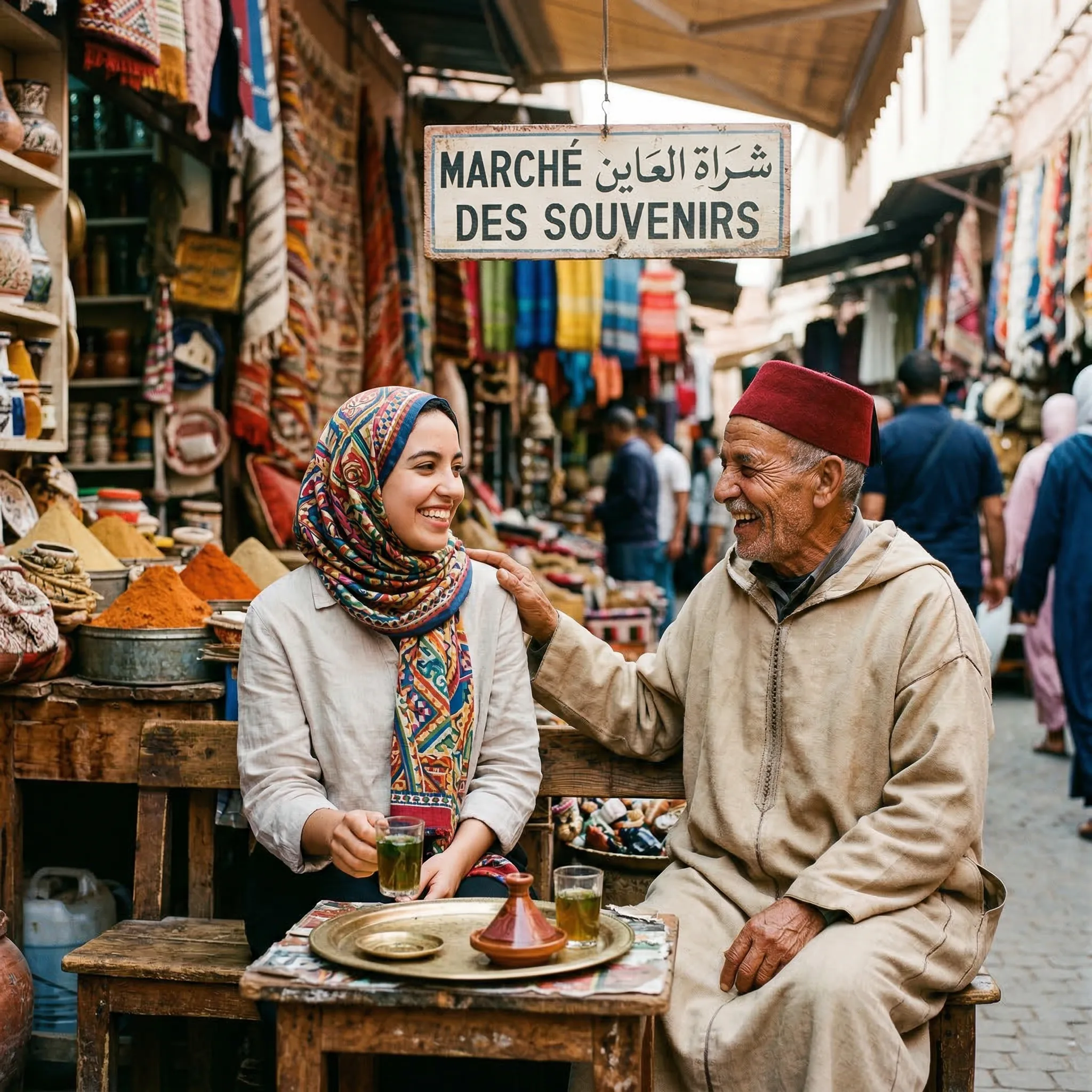
Markets are the beating heart of Moroccan commerce and culture. Each region has its specialties, and this guide helps you find the best markets wherever you travel.
Marrakech Souks: The largest traditional market in Morocco, organized by trade. Spice souk for saffron and ras el hanout, leather souk for bags and babouches, carpet souk for Berber rugs. Open daily, most active in the morning.
Fes el-Bali: The medina itself is one vast market. Highlights include the honey souk, the fabric souk, and the Souk el-Henna for traditional beauty products. Less tourist-oriented than Marrakech, offering better prices.
Chefchaouen Thursday Market: The weekly souk where Rif Mountain farmers bring fresh produce, goat cheese, and handwoven textiles. Arrive early for the best selection.
Rissani Market: The gateway to the Sahara has a massive weekly market (Tuesday, Thursday, Sunday) where desert nomads trade alongside settled farmers. Camels, dates, and fossils are the specialties.
Essaouira Fish Market: Daily auction at the port where the catch comes straight from the boats. Buy fish and have it grilled on the spot. Arrive before 2 PM for the best selection.
Safi Pottery Market: Morocco's pottery capital has a dedicated market and workshops where you can buy directly from artisans. The distinctive blue-and-white Safi ceramics make perfect souvenirs.
Taliouine Saffron Souk: The saffron capital of Morocco. Buy the world's most expensive spice directly from growers at a fraction of international prices. Harvest season (October-November) is the best time to visit.
Taroudant: Known as "Little Marrakech," this walled city has excellent souks with far fewer tourists. Berber jewelry, argan products, and leather goods are the specialties.

Written by
Amina El-Ouafi
Former hotel manager turned tourism advocate. Connects CityGuide with Morocco's best local businesses.