Morocco's Longest River Valley
For centuries the lifeline of southern Morocco, the Draa Valley remains one of the country's most enchanting and least-hurried regions.
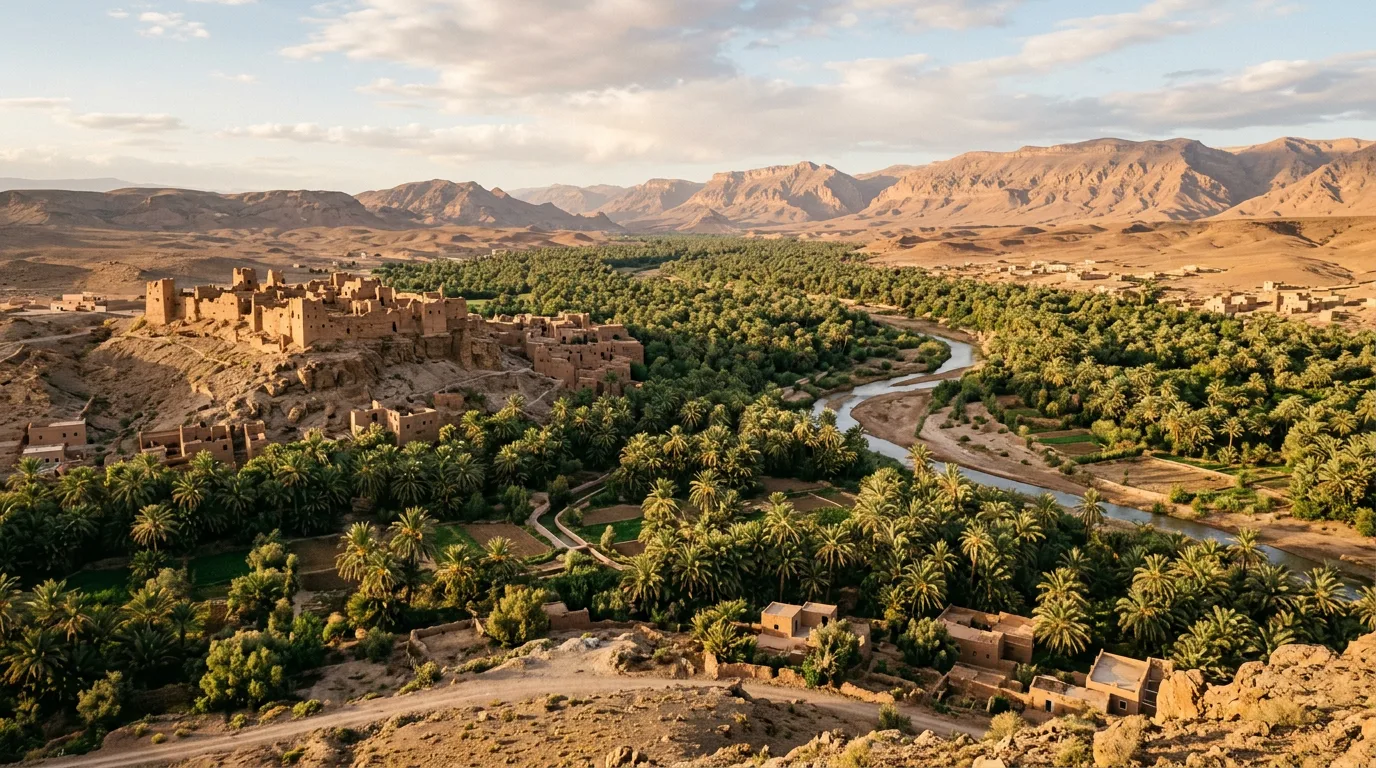
The Draa Valley (Vallee du Draa) is the most extensive oasis system in Morocco, following the Draa River from its source at the confluence of the Dades and Ouarzazate rivers near the town of Ouarzazate, southeast through the pre-Saharan landscape for over 200 kilometers before the river eventually loses itself in the sands near the Algerian border. Along its course, the Draa feeds the largest continuous palm grove in Morocco — an estimated 1.8 million date palms — creating a startling stripe of intense green through an otherwise parched and lunar landscape of dark volcanic rock and pale desert.
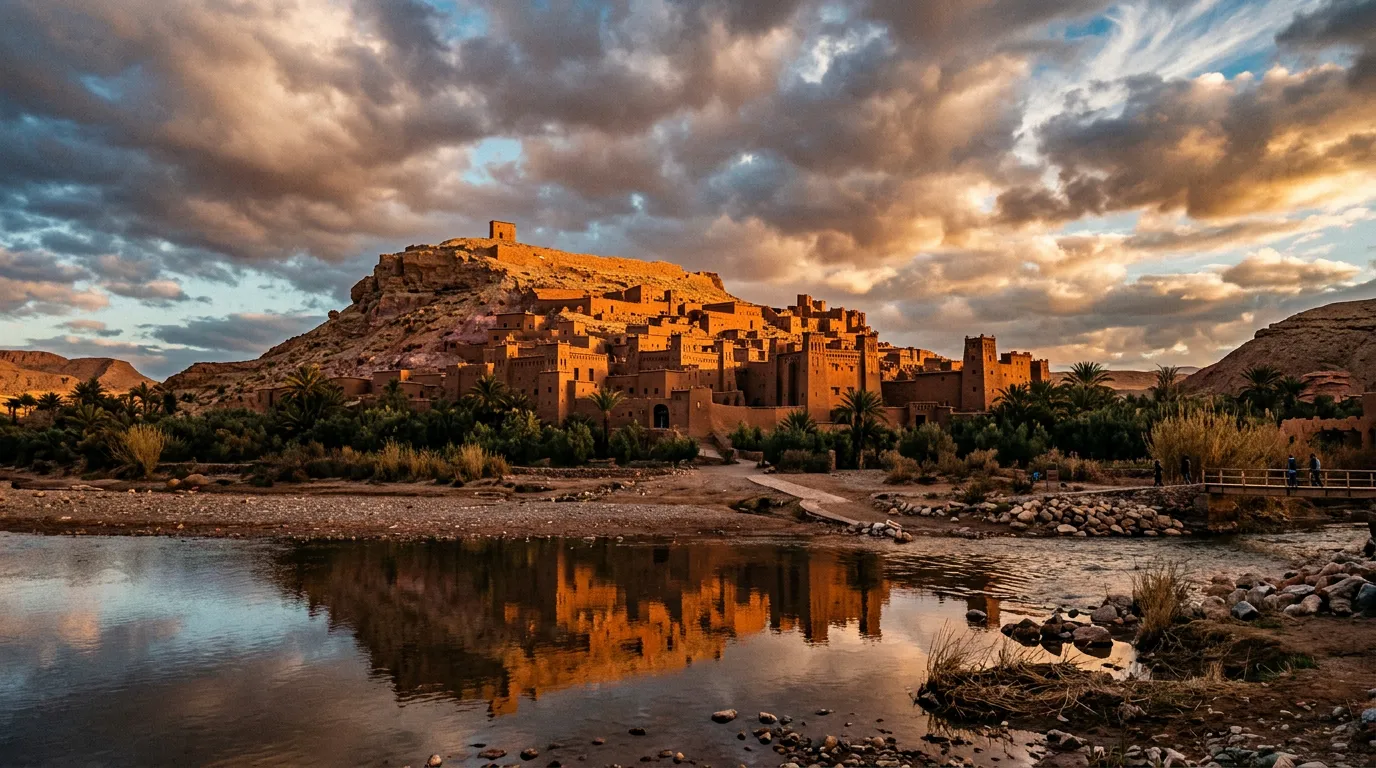
The valley has been inhabited for millennia. Its oases provided crucial water and shade for the trans-Saharan trade caravans that connected sub-Saharan Africa with the Mediterranean world, transporting gold, salt, slaves, spices, and textiles. The wealth generated by this trade built the extraordinary kasbahs and ksour that still line the valley — mudbrick fortresses of astonishing size and complexity that housed powerful Berber and Arab families who controlled the trade routes. Many of these structures, built from the same earth they stand upon, are slowly crumbling back into the landscape, giving the valley a poignant atmosphere of faded grandeur.
Today, the Draa Valley is one of southern Morocco's most rewarding road trip experiences. The drive from Ouarzazate to Zagora follows the N9 highway through constantly changing scenery: over the dramatic Tizi n'Tinififft pass, down through the dense palm groves of Agdz and Tansikht, past ruined kasbahs and living villages, to the Saharan edge town of Zagora with its famous “52 days to Timbuktu” sign. Unlike the more touristic Sahara route to Merzouga, the Draa Valley retains a genuine sense of discovery, with far fewer visitors and a pace of life that has barely changed in centuries.