Discovering...
Water Activity
Fishing in Morocco
From world-class deep-sea fishing off Dakhla to fly casting in Atlas mountain streams and bass fishing on turquoise inland lakes. Morocco's waters hold extraordinary fishing for every style and skill level.
From 500
MAD per session
Sea & Fresh
Water types
Year-round
Somewhere always
Morocco's Untapped Fishing Waters
Fishing in Morocco ranges from around 500 MAD for a freshwater lake or river guide to 2,500 MAD for a full-day deep-sea charter in Dakhla. Saltwater needs no licence, freshwater does, and there is productive fishing somewhere in the country year-round.
Morocco is not widely recognized as a fishing destination, and that is precisely what makes it so compelling. While the country's medinas, desert, and mountains draw millions of visitors annually, its 3,500 kilometers of Atlantic and Mediterranean coastline, extensive network of mountain rivers, and dozens of freshwater lakes remain largely undiscovered by the international angling community. The result is abundant, un-pressured fishing in settings of extraordinary beauty.
The diversity is remarkable. Within a single week-long trip, you could land a 50-kilogram corvina from a Dakhla charter boat, fly fish for brown trout in an Atlas cedar-forest stream, cast for bass in a turquoise mountain lake, and reel in sea bream from the rocks below Essaouira's ancient medina walls. Each body of water has its own character, its own species, and its own particular appeal.
Dakhla has emerged as the star of Moroccan fishing, with its world-class corvina fishing drawing dedicated anglers from Europe and beyond. But the freshwater fishing is equally compelling for those willing to explore -- largemouth bass in Bin El Ouidane, brown trout in Atlas streams, and barbel in lower-altitude rivers offer genuinely excellent sport in magnificent settings.
Where to Cast
Top Fishing Destinations
1Deep-Sea & Lagoon
Dakhla (Deep-Sea Fishing)
Dakhla-Oued Ed-Dahab
Charter: from 2,500 MAD/day
Year-round (peak: October-March)
Corvina, meagre, grouper, barracuda, tuna, wahoo
Dakhla is Morocco's undisputed capital of sport fishing and one of the finest fishing destinations in all of West Africa. The unique geography -- a 40-kilometer peninsula creating a vast, sheltered lagoon alongside the open Atlantic -- means anglers have access to two completely different fishing environments within minutes. The lagoon supports enormous populations of corvina (meagre) that can reach 50kg, while the open ocean offers deep-sea fishing for yellowfin tuna, wahoo, amberjack, and swordfish. Charter boats range from traditional fishing boats with local captains to fully equipped sport fishing vessels with modern electronics, fighting chairs, and professional crew. A typical day on the water includes trolling along the reef edges, jigging over wrecks, and casting in the lagoon shallows where the water is so clear you can sight-fish for individual corvina. The fishing infrastructure in Dakhla has developed rapidly, with several professional charter operations now offering packages that include accommodation, transfers, and full-day fishing trips.
World-class corvina (meagre) fishing Both lagoon and open-ocean fishing Professional charter boats available Sight-fishing in crystal-clear lagoon Year-round fishing destination
2Freshwater Lake
Bin El Ouidane (Freshwater Lake)
Beni Mellal-Khenifra
Boat rental: from 500 MAD/day + license
March-June, September-November
Black bass, pike, carp, barbel
Morocco's most scenic freshwater fishing destination, Bin El Ouidane is a vast reservoir nestled in the Middle Atlas foothills. The lake is renowned for its population of largemouth black bass (introduced in the 1960s and thriving), which provide excellent sport on light tackle. Pike were also introduced and have reached impressive sizes in the nutrient-rich waters. Carp fishing is productive from the banks, with some specimens exceeding 15kg. The setting is extraordinary -- turquoise water surrounded by arid, rust-red hills that change color throughout the day. Fishing is possible from the shore, from boats (available for rent at the dam), or by kayak for a more adventurous approach. A freshwater fishing license from the Eaux et Forets is required (obtainable in Beni Mellal or online). The lake is quietest and fishing most productive in early morning and late afternoon. Several guesthouses on the shore cater specifically to anglers and can arrange boats and guides.
Excellent largemouth bass fishing Scenic turquoise lake setting Shore, boat, and kayak fishing Carp and pike opportunities Angler-friendly guesthouses
3Coastal & Shore
Essaouira Coast (Sea Fishing)
Marrakech-Safi
Boat trip: from 800 MAD/person
Year-round (best: September-April)
Sea bream, sea bass, mackerel, squid, conger eel
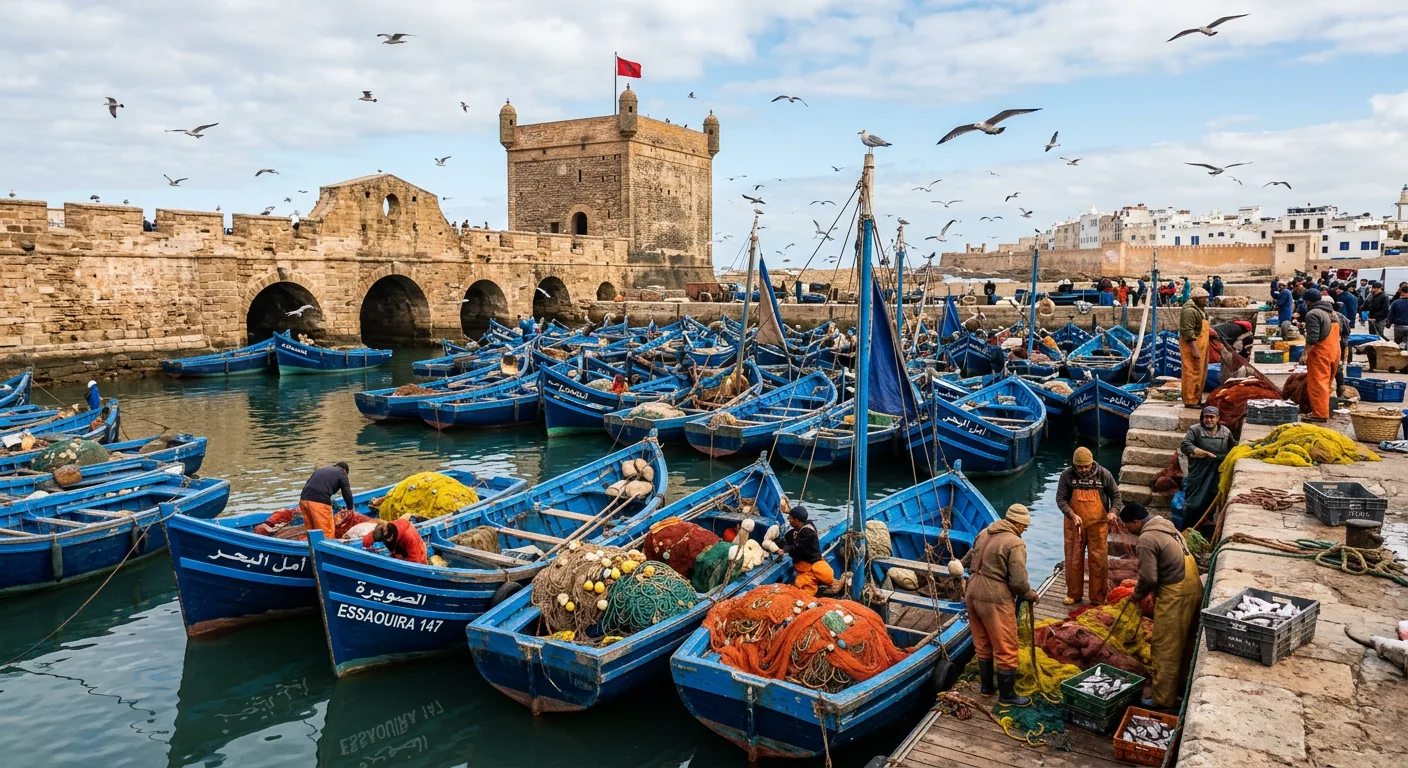
Essaouira has been a fishing port for over two thousand years, and the waters off this wind-swept coast remain abundantly productive. Fishing here ranges from simple shore casting off the rocks below the medina walls to half-day and full-day boat trips targeting larger species further offshore. The most accessible experience is joining a local fishing trip from the port -- small boats with experienced captains who know every reef and sandbar along the coast. The catch varies by season: summer brings mackerel and bonito in thick shoals, autumn is prime for sea bream and bass, and winter offers conger eel and larger offshore species. For a more immersive experience, some operators run overnight fishing trips that anchor near the Ile de Mogador, combining fishing with dawn views of the island bird sanctuary. Shore fishing is free along the coastline, though a license is technically required for using certain methods. The Essaouira fish market, where boats unload their daily catch, is a spectacle in itself.
Historic fishing port atmosphere Shore and boat fishing options Join local fishing trips from port Year-round productive waters Fresh catch cooked at port restaurants
4River (Fly Fishing)
Imouzzer & Atlas Rivers
Various Atlas regions
Guide: from 500 MAD/day + license
March-May, September-November
Brown trout, barbel, trout (stocked)
The rivers and streams of the Middle and High Atlas offer fly fishing in settings that recall the mountain streams of southern Europe. Brown trout were introduced to Moroccan rivers during the French protectorate era and have established self-sustaining populations in the cooler, higher-altitude streams. The fishing is technically demanding -- the streams are often small, clear, and overgrown, requiring precise casting and stealthy approach. The Imouzzer Kandar area south of Fes, the Oum Er Rbia river system near Khenifra, and several streams in the Azrou cedar forests are the most productive trout waters. Barbel fishing is available in lower-altitude rivers and provides excellent sport on light tackle. A freshwater fishing license is mandatory, and catch-and-release is encouraged (and required in some waters). Access to the best fishing often requires hiking in, adding an adventure dimension. A local guide who knows the water is invaluable -- both for finding fish and for navigating the sometimes complex access permissions through village territories.
Fly fishing in mountain stream settings Self-sustaining brown trout populations Technically rewarding for experienced anglers Beautiful Atlas cedar forest surroundings Combine with hiking and nature
Licenses and Regulations
Freshwater fishing in Morocco requires a license. Saltwater is generally unrestricted for recreational anglers.
Freshwater License
Required
Available from Eaux et Forets offices in major cities or online. Annual or seasonal options. Cost: from 100 MAD.
Saltwater License
Not required for recreational
Charter boats handle all permits. Shore fishing is generally unrestricted.
Catch Limits
Vary by species and water
Check local regulations. Catch-and-release is encouraged on all freshwater.
Restricted Areas
Some exist
National park waters, spawning areas, and reservoir zones may be restricted seasonally.
Best Seasons
March - May
15-28C
Outstanding across the board. Freshwater fishing is at its peak as trout are active in warming streams. Lake bass and pike fishing is excellent. Sea fishing picks up with spring migrations. The ideal time for a multi-fishing-style trip.
June - August
25-40C
Freshwater streams can run low and warm. Lake fishing best at dawn and dusk. Sea fishing remains productive, especially for pelagic species. Dakhla is hot but fishable year-round. High-altitude streams above 2,000m remain cool.
September - November
18-32C
Prime season for most types of fishing. Sea fishing peaks with autumn migrations. Lake bass are active. River trout feed aggressively before winter. Dakhla corvina season is building toward its peak.
December - February
8-22C
Dakhla is at its absolute best for corvina and ocean species. Coastal fishing remains productive. Freshwater can be challenging in cold weather but barbel are active. Lake fishing slows but produces larger individual fish.
Seasickness
The Atlantic swells off Morocco can be substantial, especially in winter. If you are prone to seasickness, take medication before boarding (not after symptoms start). Choose a larger charter boat for a more stable ride, and avoid going below deck during rough conditions.
Good to Know
Fishing in Morocco: FAQs
How much does fishing in Morocco cost?
It varies by style. A full-day deep-sea charter in Dakhla starts from around 2,500 MAD and covers the boat, captain, crew, tackle and bait. A coastal boat trip from Essaouira is from about 800 MAD per person, while a freshwater lake or river guide is from around 500 MAD per day plus the cost of a fishing licence (from 100 MAD).
Do I need a fishing licence in Morocco?
For freshwater fishing (lakes like Bin El Ouidane and Atlas rivers) a licence is required and is available from Eaux et Forets offices in major cities or online, from about 100 MAD. For recreational saltwater fishing a licence is generally not required, and charter boats handle all permits. Shore fishing along the coast is mostly unrestricted.
When is the best season to fish in Morocco?
Dakhla deep-sea fishing is year-round and peaks for corvina from October to March. Freshwater bass, pike and trout fishing is best in spring (March to May) and autumn (September to November). The Essaouira coast fishes well year-round, with autumn and winter the strongest months. In short, there is good fishing somewhere in Morocco in every season.
What can you catch fishing in Morocco?
Dakhla is famous for huge corvina (meagre) up to 50kg, plus grouper, barracuda, tuna and wahoo offshore. Bin El Ouidane lake holds largemouth black bass, pike and carp. The Essaouira coast yields sea bream, sea bass, mackerel and squid, and Atlas rivers offer wild brown trout and barbel for fly fishers.
Should I bring my own tackle?
For deep-sea and coastal trips, operators supply all the tackle and bait you need. For freshwater and especially fly fishing, you are best bringing your own rods and gear, as quality tackle is hard to buy locally. Catch-and-release is encouraged on all freshwater and is required in some waters.
Is fishing in Morocco suitable for beginners?
Yes. Dakhla and Essaouira charter boats welcome all levels and the crew will help you fish, so no experience is needed. Lake fishing at Bin El Ouidane is also approachable for beginners. Atlas river fly fishing is the most technical and rewards anglers with some experience.