Discovering...
Water Adventure
Kayaking in Morocco
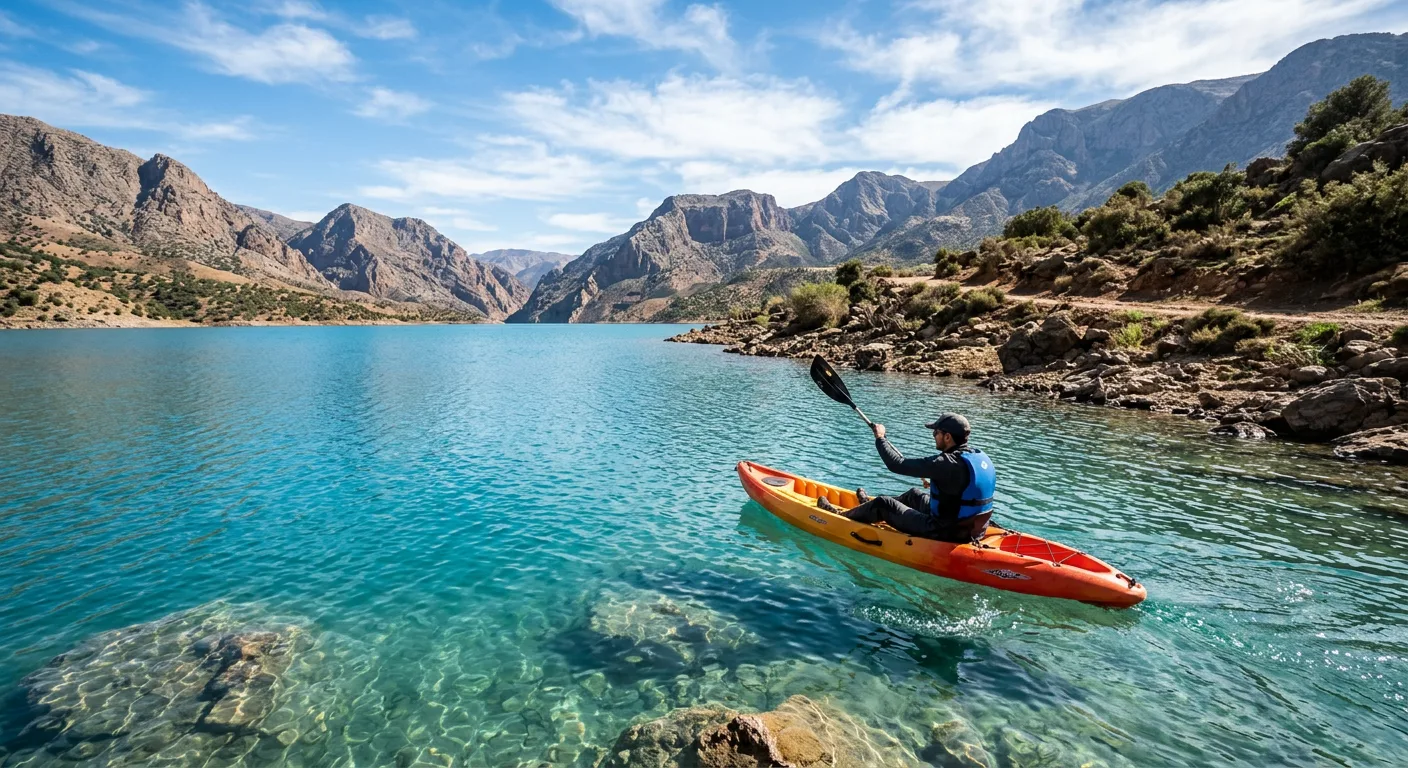
Paddle turquoise mountain lakes, navigate river rapids near Ouzoud Falls, explore the Dakhla lagoon with flamingos, and sea kayak past Essaouira's ancient ramparts.
From 300
MAD per session
2-4 hrs
Session length
Year-round
Available
Morocco's Hidden Waterways
Kayaking in Morocco costs from around 300 MAD per person for a 2 to 3 hour guided session, runs year-round across mountain lakes, rivers and coastal lagoons, and suits everyone from complete beginners to experienced paddlers.
Morocco is not the first country that comes to mind when you think of kayaking, and that is precisely what makes it special. While the crowds flock to the medinas and desert camps, the country's lakes, rivers, and lagoons remain gloriously underexplored by water. From the vast turquoise reservoir of Bin El Ouidane in the Atlas foothills to the crystal-clear lagoon of Dakhla on the Saharan coast, Morocco offers kayaking experiences that combine world-class scenery with an almost total absence of crowds.
The variety is remarkable. In a single trip, you can paddle a glassy mountain lake at dawn, navigate gentle whitewater through red canyons in the afternoon, and the following day find yourself sea kayaking past the fortified walls of a medieval port city with falcons wheeling overhead. Each body of water has its own character, its own ecosystem, and its own particular kind of beauty.
Equipment standards have improved significantly in recent years, with several outfitters now offering quality sit-on-top and touring kayaks alongside traditional canoes. Most operators provide all equipment including life jackets, and guided tours include safety briefings and basic paddling instruction for beginners.
Where to Paddle
Top Kayaking Destinations
1Easy
Bin El Ouidane Lake
Beni Mellal-Khenifra -- Freshwater Lake
from 300 MAD per session
April-October
Morocco's most scenic inland body of water, Bin El Ouidane is a vast reservoir cradled by the foothills of the Middle Atlas. The lake's deep turquoise waters stretch for kilometers between arid, rust-colored hills, creating a striking contrast that feels almost surreal. Kayaking here is a supremely peaceful experience -- the lake is rarely crowded, the water is calm, and the silence is broken only by birdsong and the dip of your paddle. Early morning sessions are magical, with mist rising off the water and the Atlas peaks catching the first light. Several guesthouses along the shore rent kayaks and canoes, and guided half-day tours are available from the town of Bin El Ouidane. The lake is also an excellent spot for swimming from your kayak in summer, when water temperatures become wonderfully warm.
Stunning turquoise lake surrounded by Atlas foothills Calm flat water ideal for beginners Excellent swimming and fishing spots Quiet and uncrowded compared to tourist areas Half-day guided tours available
2Easy to Moderate
Dakhla Lagoon
Dakhla-Oued Ed-Dahab -- Saltwater Lagoon
from 400 MAD per session
Year-round (best October-May)
The Dakhla peninsula creates a massive, shallow lagoon that stretches roughly 40 kilometers along the Saharan coast. The lagoon's protected waters are strikingly clear, revealing sandy bottoms, seagrass meadows, and an abundance of marine life. Sea kayaking here is an extraordinary experience -- you paddle through water so clear it appears bottomless, with flamingos wading in the shallows and rays gliding beneath your hull. The lagoon is sheltered from the Atlantic swell, so conditions are consistently calm. Guided kayak tours explore the lagoon's mangrove-like channels, isolated sandbanks where you can stop for a swim, and the outer edges where dolphins sometimes appear. Sunset kayak sessions are particularly magical, with the Sahara glowing pink and gold to the east while the lagoon mirrors the sky.
Crystal-clear shallow waters with marine life Flamingo and dolphin sightings Saharan sunset backdrop Sheltered from Atlantic waves Combine with kitesurfing or fishing
3Moderate
Ouzoud Area Rivers
Beni Mellal-Khenifra -- River Kayaking
from 350 MAD per session
March-June
The rivers feeding the famous Ouzoud Falls offer Morocco's most accessible whitewater kayaking experience. The Oued El Abid river, which feeds the falls, has sections ranging from gentle Class I-II rapids for beginners to more challenging Class III stretches for experienced paddlers. The scenery is exceptional -- red canyon walls, olive groves clinging to the banks, and Barbary macaque monkeys watching from the trees. Most kayaking here is organized as part of multi-activity day trips from Marrakech that combine kayaking with a visit to the falls. The river is at its best in spring when snowmelt swells the flow, though summer levels remain kayakable in most sections. Local outfitters provide all equipment including helmets and life jackets.
Class I-III rapids depending on season Red canyon and olive grove scenery Barbary macaque monkey sightings Combine with Ouzoud Falls visit Spring snowmelt creates exciting rapids
4Moderate
Essaouira Coast
Marrakech-Safi -- Sea Kayaking
from 400 MAD per session
May-September
Sea kayaking along the Essaouira coast offers a unique perspective on this historic port city and its wild Atlantic surroundings. Launching from the beach near the medina, you paddle past the fortified ramparts of the old city, around the Ile de Mogador (a protected island sanctuary for Eleonora's falcons), and along the dramatic coastline of rocky headlands and hidden coves. The Atlantic here is rougher than the Dakhla lagoon, so a basic level of fitness and comfort in open water is recommended. Morning sessions tend to have calmer conditions before the famous Essaouira trade winds build in the afternoon. The wind-sculpted argan trees along the coastline and the purple-hued Ile de Mogador create a moody, atmospheric seascape that is utterly different from the bright lagoons further south.
Paddle past Essaouira medina ramparts Ile de Mogador bird sanctuary views Atlantic coastline and hidden coves Morning calm before trade winds Historic and atmospheric seascape
Best Seasons for Kayaking
Year-round paddling is possible, with spring and autumn providing the widest range of options.
March - May
18-28C
Ideal conditions across all locations. Rivers run high with spring snowmelt creating exciting rapids. Lakes are calm and warming. Coastal conditions are relatively settled before summer trade winds build.
June - August
25-38C
Lake and lagoon kayaking are excellent. River levels drop but remain paddleable. Essaouira coast gets windy afternoons. Morning sessions recommended everywhere. Lake swimming from your kayak is glorious.
September - November
20-32C
Outstanding conditions return. Water temperatures are at their warmest. Winds moderate, visibility is superb, and tourist crowds thin. The best overall season for Dakhla lagoon.
December - February
10-22C
Lake and river kayaking can be chilly. Dakhla remains excellent with mild temperatures. Essaouira coast is rough. Inland waters are quiet and atmospheric for those who dress warmly.
Safety and Preparation
Always Wear a Life Jacket
Regardless of your swimming ability. Reputable operators provide these automatically, but verify condition and fit before launching.
Sun and Water Protection
Water reflection doubles UV exposure. Apply waterproof SPF 50+ sunscreen, wear a hat with chin strap, and bring polarized sunglasses.
Stay Hydrated
Bring at least 1.5 liters of water in a waterproof container. Dehydration on the water is easy to underestimate, especially in warm months.
Guided First Time
For river and sea kayaking, book a guided tour for your first session. Local guides know the currents, tides, and weather patterns intimately.
River Levels
River kayaking conditions change dramatically with rainfall and snowmelt. Always check current water levels with your operator before heading out, especially in spring. Flash floods can occur in narrow gorges after heavy rain in the Atlas Mountains.
Good to Know
Kayaking in Morocco: FAQs
How much does kayaking cost in Morocco?
A typical guided session runs from about 300 MAD per person on the lakes (Bin El Ouidane), 350 MAD on the Ouzoud-area rivers, and 400 MAD for sea kayaking at Essaouira or the Dakhla lagoon. Most prices cover a 2 to 3 hour session with the kayak, paddle, life jacket and a dry bag included. Full-day and multi-hour tours cost more.
Do I need any experience to go kayaking in Morocco?
No experience is needed for the flat-water lakes like Bin El Ouidane or the sheltered Dakhla lagoon, which are genuinely beginner-friendly. River sections near Ouzoud and open-water sea kayaking at Essaouira are easier if you have a little paddling experience and basic fitness, but guides give a safety briefing and short lesson before you set off.
When is the best time of year to kayak in Morocco?
Spring (March to May) and autumn (September to November) are the best all-round seasons, with warm water and calm conditions everywhere. The Ouzoud rivers are at their liveliest in spring from snowmelt. Dakhla lagoon is excellent year-round and is actually at its best from October to May, while the Essaouira coast is calmest in the morning before the afternoon trade winds build.
Is kayaking in Morocco safe?
Yes, when you paddle with a reputable operator. Life jackets are provided and should always be worn regardless of swimming ability. The lakes and the Dakhla lagoon are very calm; the main thing to watch is sun exposure (water reflection doubles UV) and dehydration. For river kayaking, always check water levels first, as snowmelt and rainfall in the Atlas can cause flash floods in narrow gorges.
What should I bring kayaking and what is provided?
Operators provide the kayak, paddle, life jacket and usually a dry bag. You should bring waterproof SPF 50+ sunscreen, a hat with a chin strap, polarized sunglasses, quick-dry clothing, water shoes or sandals, and at least 1.5 litres of water. A waterproof phone pouch is handy for photos on the lake and lagoon.
Can children go kayaking in Morocco?
Yes. Most operators take children from around 8 years old, with younger kids riding in a tandem kayak seated with an adult. The calm lakes and the Dakhla lagoon are the most suitable spots for families, where the water is flat and the pace is relaxed.